Scores Injured as Israeli Troops Attack West Bank land Day Protests
By George Rishmawi & Ghassan Bannoura | IMEMC | March 30, 2012
 Thousands of Palestinians marked land day, on Friday, Palestinian sources said that 100 civilians were injured when Israeli troops attacked protesters in Ramallah and Bethlehem cities.
Marking the 36th anniversary of land day today Palestinians and their supporters marched for Jerusalem demanding an end to the Israeli occupation of the city. Protests were organized near the Israeli Lebanese borders as well as the borders with Jordan.
The Land day commemoration started in 1976, when Palestinian residents of the Galilee to the Negev protested Israel’s plan to expropriate thousands of dunams of land for security and settlement purposes. Israeli military and police attacked the protests leaving 6 killed, hundreds injured.
Today After the midday prayers, people marched from Ramallah city, central West Bank, towards Qalandiya checkpoint that separates Ramallah from Jerusalem.
Troops fired tear gas and sound bombs then later used rubber-coated steel bullets. 80 Palestinians were injured. Witnesses told IMEMC that among those injured were two Palestinian medics.
In Bethlehem 20 residents were injured, seven were moved to hospitals, when soldiers fired tear gas and sound bombs at land day protesters. The marchers were first stopped by the Palestinian security forces however they managed to reach the gate of the wall separating Bethlehem from Jerusalem. As protestors reach the gate, youth threw rocks and firebombs at the wall and the nearby military tower.
“We are here to tell the Israeli occupation that Jerusalem is Palestinian and will never forget it.” One of the protesters told IMEMC.
Israeli troops responded by firing tear gas and sound bombs. A source from the Palestinian Red Cresent Society told IMEMC that one resident was hit with a tear gas canister in his back causing burns and bruises.
The wounded was identified as Yousef Sharqawi from Bethlehem. Another activist from the US was hit with a tear gas canister in his head and was transferred to the hospital for medical treatment. Field medics said his wound is moderate.
Photo of Land Day Protest in Bethlehem Today – by Ghassan Bannoura
Related articles
- On the eve of Land Day: Al Quds anticipates the Global March (alethonews.wordpress.com)
- Palestinian badly injured after Israelis fire tear gas at head (alethonews.wordpress.com)
- Israel Warns Against Global March to Jerusalem (alethonews.wordpress.com)
- 5 injured in West Bank demonstrations (alethonews.wordpress.com)
Deal reached to free Hana Shalabi
Ma’an – 29/03/2012
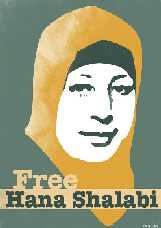 BETHLEHEM — A deal to release Palestinian hunger-striker Hana Shalabi to the Gaza Strip temporarily was reached late Thursday, officials with knowledge of the negotiations told Ma’an.
The officials say Shalabi will be sent to Gaza for three years in exchange for giving up a 43-day strike against Israel’s policy of holding detainees without charge.
The Palestinian prisoners society confirmed the deal in a statement praising Shalabi’s resolve. It expressed its appreciation for her efforts to bring attention to Israel’s policies toward prisoners.
Qadoura Fares of the prisoners society said Shalabi agreed to the deal “in return for ending her strike and being freed. … We reject deportation, but this is her decision and her own life,” Fares said.
Shalabi’s lawyer, Jawwad Boulous, also confirmed the agreement.
According to a high-ranking Palestinian source, the deal was reached after Palestinian officials and Red Cross intervened to confirm that Shalabi approved.
The Palestinian Authority minister of civil affairs, Hussein al-Sheikh, said the leadership in Ramallah was not involved in the negotiations as it rejects Israel’s deportation policy.
The deal apparently followed talks between Shalabi and the Israeli government, he said.
Al-Sheikh added that Israel is responsible for the hunger-striker’s well-being and should instead release Shalabi unconditionally to her home and family in the West Bank, not to Gaza. … Full article
Related articles
- Palestinian hunger striker Hana Shalabi hospitalized (alethonews.wordpress.com)
- Hana Shalabi to continue hunger strike despite sentence reduction (alethonews.wordpress.com)
- Hana al-Shalabi on hunger strike against renewed administrative detention (alethonews.wordpress.com)
- Lawyer: Hana Shalabi’s health is deteriorating (altahrir.wordpress.com)
- Palestinians protest Israeli detention of woman without charges (rt.com)
Israeli settlers storm into Palestinian home, occupy residence
Al Akhbar | March 29, 2012
Israeli settlers invaded a home in a Palestinian-owned building in the occupied West Bank city of Hebron and took up the apartment as their own, residents and Israeli security forces said on Thursday.
“At 1:30am we heard noises and it was the settlers,” Montasser Abu Rajab, who lives on the first floor of the building in Hebron’s Old City, said.
“They broke the main door and brought their furniture in, accompanied by the army, who locked us in our house,” he said.
Palestinian sources in Hebron said that the property belonged to the Abu Rajab family, who had sold the second floor of the house to another Palestinian family.
But the Israeli army – who confirmed the incident – claimed that “the title to the property is contested.”
“The area has been declared a closed military zone, and soldiers have been put in place to keep the calm,” a spokeswoman for the Israeli army said.
Israeli police spokesman Micky Rosenfeld said “police have been dispatched to the scene to verify the legal status of the house and the property titles that are apparently the subject of litigation.”
The settlers also claimed that they had titles to the property, which is located near a prominent religious site for both Muslims and Jews.
Speaking to Israeli public radio, right-wing Israeli lawmaker Michael Ben Ari, of the National Union party, said it was “time to recover all the Jewish homes in Hebron stolen by the enemy.”
Right-wing Israeli politicians and figures often incite violence against Arabs, with Palestinians frequently attacked and harassed by settlers as well as the Israeli military, often with impunity.
House demolitions and evictions are among the serious threats indigenous Palestinians face on their native land, as Israel continues to build Jewish-only settlements in the West Bank, including in Hebron, in defiance of the international community.
Israeli settlements in the West Bank are considered illegal under international law, with the territory being only a fraction of historical Palestine on which the Israeli state is now situated.
Israel maintains a military occupation of the West Bank and Jerusalem, imposing harsh restrictions on native Palestinians while providing privileges to illegal Jewish settlers.
(Al-Akhbar, AFP)
Related articles
- Hebron teen ‘shot by Israeli settler’ (alethonews.wordpress.com)
- Settlers Attack Two Towns Near Hebron (alethonews.wordpress.com)
- Settler Violence: Broken Glass on Shuhada Street (alethonews.wordpress.com)
- Settlers Install New Outpost Near Hebron (alethonews.wordpress.com)
- International Solidarity Movement volunteers encounter settler attack and sexual harassment in Hebron (alethonews.wordpress.com)
- Israeli demolition ‘displaces 120′ in Hebron village (alethonews.wordpress.com)
- Soldiers raid community center, arrest local activist (alethonews.wordpress.com)
Settlers ‘block entrance’ to Nablus village
Ma’an – March 28, 2012
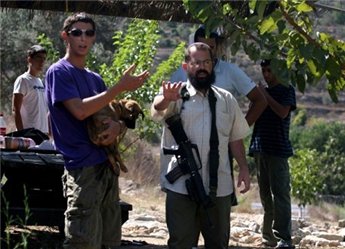 NABLUS – Dozens of Israeli settlers blocked the entrance to a village near Nablus on Wednesday, officials said.
Palestinian Authority official Ghassan Doughlas told Ma’an that residents of Itamar and Elon Moreh settlements arrived at Beit Dajan in around 15 cars and closed the main gate to the village.
The settlers were protesting the reopening of the main road from Beit Dajan to Nablus a day earlier, Doughlas said.
The road had been closed by the Israeli military for 12 years, forcing villagers to take long detours to reach Nablus, the nearest city.
Doughlas said Israeli forces arrived and dispersed the settlers.
An Israeli military spokeswoman did not immediately return a call seeking comment.
Related articles
- Soldiers destroy 5 agricultural sheds in Nablus (altahrir.wordpress.com)
- Israeli forces demolish main road near Nablus (alethonews.wordpress.com)
- Settlers Attack Two Towns Near Hebron (alethonews.wordpress.com)
- Settlers ‘raid Nablus village’ (altahrir.wordpress.com)
Hebron teen ‘shot by Israeli settler’
Ma’an – 27/03/2012
HEBRON — An Israeli settler shot an 18-year-old Palestinian in Hebron’s Old City on Tuesday morning, leaving him moderately injured, locals said.
Medics at Al-Ahli Hospital in Hebron said Muhammad Hisham Abu Aker was shot in his right leg and is undergoing surgery.
On Saturday, a Palestinian man was moderately injured when armed settlers stormed Burqa village east of Ramallah and attempted to vandalize property, witnesses said. Hassan Muatan, 40, was shot in the abdomen, they said.
Settler violence is on the rise. In 2011, the UN Office for the Coordination of Humanitarian Affairs reported that settler attacks had increased by 50 percent over the previous year.
Around 800 Jewish settlers live in Hebron’s Old City, among 30,000 Palestinians in the parts of the ancient city that are under Israeli control.
Related articles
- Settlers Attack Two Towns Near Hebron (alethonews.wordpress.com)
- Settlers Install New Outpost Near Hebron (alethonews.wordpress.com)
- International Solidarity Movement volunteers encounter settler attack and sexual harassment in Hebron (alethonews.wordpress.com)
- Settler Violence: Broken Glass on Shuhada Street (alethonews.wordpress.com)
- Demanding justice for Yousef, a quiet boy killed by Israeli settlers (alethonews.wordpress.com)
- Israeli Settlers Attack Palestinian Boys in Hebron (altahrir.wordpress.com)
- The massacre of 1929 and the War of Narratives (alethonews.wordpress.com)
Eight children from Beit Ummar facing suspension from their village of residence
International Solidarity Movement, West Bank | March 26, 2012
Eight children between the ages of 14 to 17 years old were arrested in Beit Ummar during night raids from 6th to 11th of March conducted by the Israeli occupation forces following a nonviolent solidarity demonstration for the hungerstriker Khader Adnan on the 21st of February.
On Tuesday 20th of March the youth went to court at the Israeli military court at Ofer and faced a sentence of being banned from Beit Ummar, where they live with their families, for a period of 6 months. The youth are being accused of throwing stones at Israeli military installations. The detainees are Ayesh Khalid Sabri Awad (17 years), Basil Khalid Hassan Abu Hashim (15 years), Zain Hisham Khalil Abu Maria (15 years) Sami Amer Ahmed Abo Joudeh (16 years), Emad Mohammed Saed Solaiby (16 years), Mohab Jawdat Adi (14 years), Bilal Mahmud Awad Ayyad (16 years), and Ahmed Ali Mahmoud Solaiby (16 years).
The announcement of the sentence aroused opposition on the part of family members of the accused, leading to removal of the family members from the court and adjournment until the 25th of March. Issa Solaiby, father of Ahmed, says his son was also beaten by 4 soldiers in the court.
Hisham Abu Maria, father of Zain, claims that the children are being pressured to agree to false accusations. He said, “They made him (Zain) say he threw rocks at the soldiers even though there were no soldiers” present at the time noted in the charges.
The village of Beit ummar has around 17,000 inhabitants and is surrounded by illegal, Zionist settlements. According to Issa Solaiby a member of the local Popular Committee, Beit Ummar used to consist of 33,000 dunams of land. The building of the separation wall by Israel and a road that is closed off to Palestinians took 13,000 dunams of the village land.
Since then an additional 3,000 dunams have been stolen by settlers living in illegal Israeli settlements. The inhabitants of Beit Ummar suffer from violence from the settlers living in the surrounding settlements. Issa Solaiby also complains that the settlers prevent the farmers from access to their own land and destroy olive trees and grape vines.
In March the settlers living in the illegal Beit Ain settlement destroyed 14 olive trees, 21 grape vine plants, and 2 citrus trees from the village in an act of incitement.
According to Issa the settlers also enter the village with soldiers and guns to make the villagers aware of their aggressive presence. One year ago 17-year-old Yousef Ikhlayl was shot and killed by Israeli settlers as he was farming with his father. His killers remain unpunished.
Many of the villagers have been arrested and gone to jail. Imprisonment is a problem especially with young people. According to Muhannad Abu Awwad 10,000 villagers have gone to jail and at present 30 inhabitants, most of them under 16, are serving time in Israeli occupation prisoners.
Muhannad himself went to jail for two years from the age 21 until 23 and is now studying law.
Related articles
- Israeli settlers ‘put new homes on Beit Ummar land’ (altahrir.wordpress.com)
- Settlers Install New Outpost Near Hebron (alethonews.wordpress.com)
- Official: Israeli settlers tour Beit Ummar (altahrir.wordpress.com)
- Confined Cruelty: Israeli Treatment of Palestinian Minors (alethonews.wordpress.com)
- Four injured as Beit Ommar marks anniversary of Yousef Ikhlayl’s murder (alethonews.wordpress.com)
Israeli occupation authority demolished 20 Palestinian homes in West Bank last week
Palestine Information Center – 25/03/2012
RAMALLAH — The Israeli occupation authority (IOA) has demolished 20 Palestinian homes in the West Bank over the past week, a report by the UN Office for the Coordination of Humanitarian Affairs in the occupied Palestinian land said on Sunday.
The report said that the demolition streak took place in the Jordan Valley and displaced 60 people including 26 children.
It said that IOA bulldozers damaged 100 dunums in Salfit’s Kufr Al-Deek village and uprooted 100 olive saplings in Beit Dajan village in Nablus at the pretext they were planted in a military area.
OCHA pointed out that 29 Palestinians were wounded in Israeli occupation forces’ crackdown on a peaceful demonstration in Kufr Qadum to the north of Qalqilia last week.
The report also said that a 14-year-old boy was badly injured when Israeli army ordnance exploded near him in the Jordan Valley.
Related articles
- Israeli occupation authority to raze hundreds of Palestinian homes, keep illegal outposts (alethonews.wordpress.com)
- US public radio journalist fired after calling Israeli occupation ‘brutal’ (alethonews.wordpress.com)
- Israel excitedly rejects cooperation with UN over settlements (alethonews.wordpress.com)
- Israeli occupation authority destroys Spanish-financed power station in Al-Khalil village (alethonews.wordpress.com)
Israel Boycotts UN Rights Council over Settlement Investigation Decision
Al-Manar | March 26, 2012
Israel decided on Monday to cut contact with the United Nations Human Rights Council after last week’s decision to establish an international investigative committee on the settlements that the occupation is building in the West Bank, Haaretz reported Monday.
According to the Zionist website, “the Israeli foreign ministry ordered the Israeli ambassador to Geneva to cut off contact immediately, instructing him to ignore phone calls from the commissioner.”
Quoting an un-named official, Haaretz pointed out that this step would enable the Zionist entity to “bar any fact-finding team dispatched by the council from entering Israel and the West Bank to investigate settlement construction.”
“We will not permit members of the human rights council to visit Israel and our ambassador has been instructed to not even answer phone calls,” the official said.
Related articles
- Israel excitedly rejects cooperation with UN over settlements (alethonews.wordpress.com)
- Israel seeks to punish PA over UN human rights probe (altahrir.wordpress.com)
- United Nations Orders First Probe Of Israeli Settlements (altahrir.wordpress.com)
5 injured in West Bank demonstrations
Ma’an – 23/03/2012

(MaanImages/reuters)
RAMALLAH – Five people were injured on Friday in weekly West Bank demonstrations, a local group said.
Three women sustained bruises after Israeli soldiers assaulted them in a weekly demonstration in al-Masara village, Bethlehem, the Popular Committee Against the Wall and Settlements said.
The demonstration began at a cultural center in the village, before heading towards Israel’s separation wall.
In Nabi Saleh, Izz al-Abdul Hazfith Tamimi, 15, suffered facial injuries after being hit by a rubber bullet, the Popular Committee said.
Usama Bilal Tamimi, 16, was hit by a rubber bullet in the leg.
Palestinian and international activists gathered in the village for the weekly protest, which was also dedicated to hunger striking detainee Hana Shalabi, as well as other Palestinians in Israeli jails.
The protest was held on the first anniversary of the arrest of anti-wall activist Bassem Tamimi.
In March, Amnesty International said Tamimi should be released immediately, calling him a prisoner of conscience.
In December, 28-year-old Nabi Saleh resident Mustafa Tamimi died after he was struck in the face by a tear gas canister fired by Israeli forces.
On Tuesday, Israeli troops raided the village, ransacking several homes and confiscating computers and cell phones, according to the local popular resistance movement.
Related articles
- 13 injured in Nabi Saleh demonstration (alethonews.wordpress.com)
- We Are Nabi Saleh, a new film capturing people’s struggle, Mustafa Tamimi (alethonews.wordpress.com)
- Palestinian badly injured after Israelis fire tear gas at head (alethonews.wordpress.com)
- Live sniper-fire injures protester in Nabi Saleh (alethonews.wordpress.com)
- Non-violence activist tells Israeli court charges ‘ridiculous’ (altahrir.wordpress.com)
Featured Video

The Truth About the Trump Shootings with Ken Silva
or go to
Aletho News Archives – Video-Images
From the Archives
The Geopolitics behind the War in Yemen (I)
By Mahdi Darius NAZEMROAYA | Strategic Culture Foundation | 30.03.2015
The United States and the Kingdom of Saudi Arabia became very uneasy when the Yemenese or Yemenite movement of the Houthi or Ansarallah (meaning the supporters of God in Arabic) gained control of Yemen’s capital, Sanaa/Sana, in September 2014. The US-supported Yemenite President Abd-Rabbuh Manṣour Al-Hadi was humiliatingly forced to share power with the Houthis and the coalition of northern Yemenese tribes that had helped them enter Sana. Al-Hadi declared that negotiations for a Yemeni national unity government would take place and his allies the US and Saudi Arabia tried to use a new national dialogue and mediated talks to co-opt and pacify the Houthis.
The truth has been turned on its head about the war in Yemen. The war and ousting of President Abd-Rabbuh Manṣour Al-Hadi in Yemen are not the results of «Houthi coup» in Yemen. It is the opposite. Al-Hadi was ousted, because with Saudi and US support he tried to backtrack on the power sharing agreements he had made and return Yemen to authoritarian rule. The ousting of President Al-Hadi by the Houthis and their political allies was an unexpected reaction to the takeover Al-Hadi was planning with Washington and the House of Saudi. … continue
Blog Roll
 Aletho News
- Pakistan-Iran talks secure LNG shipment to Islamabad through Hormuz
- Black Sea grain crisis puts global wheat supplies under pressure
- IRGC air defenses destroy another US MQ-1 drone over Strait of Hormuz
- Imran Khan’s entire immediate family detained in Pakistan ahead of mass protest demanding his release
- EU nation detains former presidential frontrunner
- Leaked: Britain’s Sham Conviction Of Hashim Thaci
- Seyed M. Marandi: U.S. Strike Imminent – Toward Total War in the Middle East
- Russia Voted Under Fire. Washington Is Loading the Tankers.
- 12 Things Your Oncologist Was Trained Not to Tell You
- Anthrax Attacks Paved Way for COVID-Era ‘Junk Drugs and Vaccines’
- If Americans Knew
- Huckabee aide solicited cash gifts from Israelis
- This isn’t sci-fi, AI is already killing people
- ‘The Most Brutal Thing’: Investigation Reveals Execution of Elderly Woman in Rafah
- Inside Israel’s ‘soft’ ethnic cleansing plan for Gaza through the eyes of its victims
- New online database tracks pro-Israel political donations in the United States
- Israeli president pardons soldier convicted for killing wounded Palestinian
- Singer Ed Sheeran says his ‘heart broken’ by Gaza devastation, addresses Macklemore controversy
- Israel Has Imprisoned Female Journalist Bushra Al-Tawil Without Trial Or Charge In Solitary Confinement For Past Month
- Israel poised to teach West Bank a lesson after one Israeli killed – Daily Update
- Salah Sarsour’s Legal Team Says DHS Has Not Met Its Burden to Prove He Is Deportable
- No Tricks Zone
- 2025 Nature Paper Claiming Worsening Global Drought Gets RETRACTED …Heavily Flawed
- New Study: ‘Global Drought Shows No Detectable Recent Acceleration Under Climate Warming’
- Economic Masterminds: German Socialists Suggest Taxing Productivity Gains Stemming From Using AI
- The South China Sea Has Not Been Cooperating With The Climate Change Narrative
- Energy Crisis: Germany Enters Heating Season With Historically Low Gas Reserve Fill Levels
- New Study: The Antarctic Ice Sheet Gained Mass From 2020-2024 Due To Staggering Snow And Ice Accumulation
- Study: Ocean Heating Rates From Thousands Of Years Ago ‘Dwarf’ Modern Ocean Heating Rates
- Climate Extremists Target, Attack Large-Scale Power Grid Infrastructure In Germany!
- New Study: Antarctic Ice Melt Has Contributed Less Than 1 Centimeter To Sea Level Rise In The Last 30 Years
- Fear Of Debate: Alarmist German Climate Scientist Calls On Mainstream Media To Discredit Skeptic Voices
 Aletho News