Newly expanded Shuhada checkpoint is even more difficult to traverse
International Solidarity Movement | January 6, 2015
Al-Khalil, Occupied Palestine – At the end of December Israeli forces re-opened the newly expanded Shuhada checkpoint in occupied al-Khalil (Hebron). The checkpoint had been closed since December 7th, when Israeli forces had declared they would be conducting “renovations” for a then-unknown period of time.
Officially known as Checkpoint 56, Shuhada checkpoint separates Bab al-Zawiye, a Palestinian neighborhood in the H1 (nominally Palestinian-controlled and administered) part of al-Khalil and Tel Rumeida, part of Israeli military-controlled H2 and currently covered in part by a closed military zone order first issued on November 1st.

Palestinian family leaving Tel Rumeida, crossing toward Bab al-Zawiye
The checkpoint was rebuilt with a high fence blocking the entire street and additional turnstiles and metal detectors. The turnstiles make it very difficult for anyone carrying heavy, bulky luggage or even several bags of groceries to pass. Israeli authorities also added a completely closed off room in the center of the checkpoint, where Palestinians are questioned and searched entirely out of site of any onlookers, media, or human rights monitors.
As in previous versions of the checkpoint, there is no possibility for any car or truck – even an ambulance responding to an emergency – to pass; any vehicle larger than a baby carriage must take a time-consuming detour in order to enter or leave Tel Rumeida.

Shuhada checkpoint as seen from a nearby window in Bab al-Zawiye, an imposing barrier Palestinian families living in Tel Rumeida must navigate
The new checkpoint has already become a flashpoint for Israeli military aggression against Palestinians, which includes the arrest of 38-year-old Wafa’ Sharabati on Monday afternoon by Israeli forces who first claimed she had a discrepancy in her ID then accused her of being a troublemaker and threatened to plant a knife on her. Wafa’s family and local activists staged a sit-in outside Shuhada checkpoint to protest her treatment and the continued humiliation and harassment faced by Palestinians forced to endure the checkpoint and the closed military zone.

Wafa Sharabati’s family staged a sit-in awaiting her release

A large group of local activists and residents gathered after Wafa’s arrest in front of the checkpoint, which has has been the site of countless demonstrations against the Israeli occupation of al-Khalil

He never fired, but this Israeli soldier spent much of Monday afternoon on the roof of Shuhada checkpoint, prepared to attack nonviolent Palestinian demonstrators with potentially deadly rubber-coated metal bullets
A sign on the H1 side of the checkpoint explains the protocols for passing through: metal detector, bag search, no animals allowed through, checkpoint closed if there are any clashes. The 4th instruction reads “wait until the soldier will allow you to pass.” Sometimes people can pass in six minutes; sometimes they must wait for over an hour, outside and exposed to any weather, before being allowed to pass the few meters of turnstiles, metal detectors, fences and walls between them and the streets leading to their homes.

Lines on Monday evening left many, including young children, waiting for nearly half an hour in the cold night. Only Palestinians who are registered in the closed military zone can ever pass through the checkpoint; family members of residents, journalists, human rights defenders and internationals have all been barred. Even Palestinians who are registered have reported being forced to wait for over an hour only to be harassed and threatened by the soldiers inside the checkpoint.

Activists have planned another protest for Thursday morning to continue the struggle against the closed military zone, the even harsher regime at the newly reopened checkpoint, and the continued closure and Israeli military occupation of al-Khalil.
Deceit and Obfuscation: How The NY Times Shields Israel
By Barbara Erickson | TimesWarp | January 4, 2016
As scores of Palestinians have died at the hands of Israeli forces over the past three months, The New York Times has endeavored to hide the full story of this bloodbath, emphasizing Israeli losses, ignoring the majority of Palestinian deaths, and promoting a narrative that shields trigger-happy troops and obscures facts to the point of deceit.
Thus, a recent story about deadly attacks in Tel Aviv tells us that “at least 20” Israelis have been killed since Oct. 1 and about 130 Palestinians, “up to two-thirds of them while carrying out attacks, or attempting to attack Israelis, according to the police. Others have been killed in clashes with the Israeli security forces in the West Bank and East Jerusalem and along Israel’s border with Gaza.”
In other words, the Times is saying that Israeli troops were justified in these killings because they were trying to repel deadly attacks or responding to “clashes” with the army or police. This is the message we are to hear, and readers are unlikely to notice that its source is none other than those responsible for a significant number of Palestinian deaths—the Israeli police.
The Times betrays its claim of neutrality by ignoring other sources. Nothing is said of reports by alternative media and human rights groups that accuse Israeli forces of carrying out extrajudicial executions and killing Palestinians who pose no possible threat to security forces or civilians. Likewise, nothing is said of those victims who were taking no part in demonstrations but were merely bystanders or passers-by when they were killed.
The Times, omitting contrary evidence, thus leaves readers with the impression that all of the Palestinian dead were killed as they participated in acts of violence.
At the same time the Times has been quick to name Israeli casualties but has provided identities for only a fraction of the Palestinians. Virtually every Israeli victim has been identified in stories by Times reporters, while only some 34 Palestinians out of more than 130 were mentioned by name. (Some, however, may have been identified in wire services reports that appear briefly online.)
This tally was based on a search of Times stories out of its Jerusalem bureau, using a published list of those killed since Oct. 1. It shows a grossly lopsided preference for Israeli victims over Palestinians, with the names of more than 100 victims omitted from news reports.
Moreover, in the single instance when an Israeli victim was unnamed, the Times apologized, saying the man “was not immediately identified” but was said to be 45 years old and the father of seven.
By contrast, the Times often failed to report Palestinian deaths or it mentioned them almost as afterthoughts, as in this paragraph tucked into a story about dampened Christmas celebrations in the West Bank: “On Thursday, Israeli forces killed three young Palestinian men who they said were trying to carry out attacks. In one episode, a Palestinian tried to ram his vehicle into soldiers near a Jewish settlement in the West Bank, lightly wounding a man before he was shot dead.”
The man who was said to have “tried to ram his vehicle into soldiers” had a name. It was Wisam Abu Ghweila; he was from Qalandiya refugee camp, and according to the International Middle East Media Center, there is much more to his story than appeared in the Times.
Abu Ghweila drove his car “too close to a roadblock,” IMEMC reported, and lightly struck a soldier in the process. “Instead of addressing the situation as if it were an accident,” the story continues, “Israeli troops immediately began to empty their guns at the suspect, wounding him severely.”
Eyewitnesses told IMEMC that soldiers shot more than 30 rounds at Abu Ghweila’s car and allowed the injured soldier to receive medical care but left Abu Ghweila unattended as he lay dying in his car.
B’Tselem, an Israeli monitoring group, has reported on other cases in which troops have denied medical care to wounded Palestinians, and alternative media often give accounts of ambulances and medics being denied access to injured victims. The Times, however, makes no mention of these charges, even though some are backed by video evidence.
Israeli media have also reported killings that never appear in the Times. One of these involved a teenage girl who was shot as she sat in the back seat of her family car. The story in Haaretz was titled “The Face of Collateral Damage” and carried this subhead: “Samah Abdallah, 18, from a little-known Palestinian village in the West Bank, was shot dead, either on purpose or by accident—but most assuredly without legitimate reason.”
The Times made no mention of this incident, which took place near Nablus, nor did it report on the death of a mother of four, an inexperienced driver, who was killed in a hail of bullets when she drove slowly through a checkpoint and failed to stop in time. Haaretz, however, told her story under this headline: “A Palestinian Mother of Four, Shot 17 Times for Being a Bad Driver.”
This unfortunate woman, Mahdia Hammad, appears in the Times merely as one of the “about 130” Palestinian killed in the past three months. As in dozens of other cases, the fact of her death at the hands of Israeli security forces received no notice at all, not even a brief paragraph citing officials’ claims that they had “neutralized” a would-be attacker.
These incidents expose the deception inherent in the Times’ claim that Palestinian casualties have occurred only during attacks on Israelis or during “clashes” with security forces.
This self-serving narrative, however, is what Israeli officials want us to believe, and the Times is a willing co-conspirator, showing an appalling indifference to the mounting death toll among Palestinians. It gives credence only to the official reports of police and army spokespersons, the groups most responsible for the bloodshed, turning its back on respected sources and betraying its readers and its own stated values of journalistic ethics.
Follow @TimesWarp on Twitter
Israeli forces demolish homes of 2 Palestinian attackers in Jerusalem
Ma’an – January 4, 2016
JERUSALEM – Israeli forces on Monday demolished the family home of a Palestinian attacker killed in October and sealed off the home of another attacker’s family with cement, the families told Ma’an.
The homes, in the Jabal al-Mukabbir neighborhood of East Jerusalem, belonged to relatives of Alaa Abu Jamal and Baha Elayyan who were both shot dead on Oct. 13 after carrying out separate attacks that left four Israelis dead.
Israeli forces reportedly stormed the homes and ordered the families to evacuate them before they proceeded with the demolitions.
Abu Jamal’s family told Ma’an that Israeli forces sealed with cement the home of Safa Abu Jamal, Alaa’s sister, after claiming to have secret information that it belonged to her slain brother.
The home consisted of one floor and three apartments, and was lived in by Safa, her husband, and their two children, the family said.
They added that Israeli authorities had earlier decided not to demolish the home after ruling that it belonged to Safa and not to her brother, Alaa.
Meanwhile, the father of Baha Elayyan told Ma’an that his family had been ordered to evacuate his home while Israeli forces demolished its interior walls.
The home is an apartment on the second floor of a three-story building, measuring 130 square meters and currently housing eight family members.
Punitive home demolitions were expedited at the request of Israeli Prime Minister Benjamin Netanyahu in mid-October, and many have been carried out since.
The move came despite past recommendations by an Israeli military committee that the practice does not deter attacks.
While families who receive demolition orders are given the opportunity to appeal the measures, Israel’s High Court of Justice typically rejects such appeals, according to Israeli watchdog Hamoked.
Israeli rights group B’Tselem condemned the practice in October as “court sanctioned revenge,” carried out on family members who have not committed crimes, amounting to collective punishment.
The Israeli authorities have been holding the bodies of Alaa Abu Jamal and Baha Elayyan since they were shot dead in another controversial Israeli practice that has been seen by some as further raising tensions.
UN monitor on Palestine quits over Israel’s entry denial
Press TV – January 4, 2016
The United Nations expert on the human rights situation in the occupied Palestinian territories has resigned, complaining that the Tel Aviv regime continues to deny him access to the areas he is tasked with monitoring.
In a Monday statement, the UN said Makarim Wibisono submitted his resignation to President of the Human Rights Council Joachim Rucker earlier in the day.
It said Wibisono, who will effectively quit his job as of March 31, had “expressed deep regret that, throughout his mandate, Israel failed to grant him access to the Occupied Palestinian Territory.”
Wibisono has been in charge of monitoring rights violations in the occupied East al-Quds (Jerusalem), the occupied West Bank and the Gaza Strip. The Israeli regime has time and again prevented the UN official from visiting the areas.
In June 2015, Israel denied Wibisono access to the Gaza Strip, where he was to investigate the aftermath of Tel Aviv’s 2014 war that killed over 2,200 Palestinians in the blockaded coastal enclave. The regime said at the time that the mandate handed to the UN official’s team was “anti-Israel,” and that it was exclusively focused on cases of Israeli rights violations.
Last November, Wibisono, and the expert on summary executions, Christof Heyns, slammed Israel for using excessive force and carrying out summary executions against Palestinians amid a surge in tensions in the occupied territories, where Palestinians have held almost daily anti-Israel protests since early October.
The latest wave of tensions was triggered by Israel’s imposition in August of restrictions on the entry of Palestinian worshipers into the al-Aqsa Mosque compound in East al-Quds.
The restrictions have enraged Palestinians, who are also angry at increasing violence by Israeli settlers frequently storming the al-Aqsa Mosque, a place highly revered by the Muslims across the world.
The Palestinian protesters also say Israel has a covert plan for changing the status quo of the al-Aqsa Mosque.
At least 144 Palestinians have been killed since the violence erupted in various towns of West Bank and Gaza. Some of 25 Israelis have also died during the same period.
Ariel university continues to pollute Salfit environment
Palestine Information Center – January 3, 2016
SALFIT – The Ariel settlement university has continued to pour its harmful chemical waste through its sewer system onto Palestinian agricultural land in al-Matwi Valley in Salfit province, local sources complained on Sunday.
Residents from the area told the Palestinian Information Center that the Israeli university persists in disposing of hazardous chemical waste into the valley with no regard for the environment in the surrounding areas.
Palestinian researcher Khaled Ma’ali said that the Israeli human rights group B’Tselem had affirmed in previous reports that Israeli settlements and Ariel university in the West Bank violate international and local environmental protection laws.
Ma’ali invited international and local environmental institutions to visit Salfit province and witness its suffering from the pollution resulting from the flow of wastewater from several settlements, especially Ariel.
Israeli settlers attack Palestinian home near Nablus
Ma’an – January 3, 2015
NABLUS – Israeli settlers on Saturday attacked a Palestinian home in the village of Beit Furik near Nablus in the occupied West Bank, a Palestinian Authority official said.
Ghassan Daghlas, a PA official who monitors settlement activities in the northern West Bank, told Ma’an that settlers threw stones at the home of Nihad Hanani before leaving behind a Molotov cocktail and a letter.
Daghlas said that the settlers — believed to be from the nearby illegal settlement of Itamar — were chased by locals as they fled the scene after attacking the home. The attack is the most recent to be carried out by settlers in the occupied West Bank.
The Nablus area where Beit Furik is located is site to several settlements who have gained a reputation for being home to extremists who regularly carry out attacks on Palestinians and their property, also known as “price tag attacks.”
Palestinian residents in the area have often orchestrated nightly patrols of locals to protect their villages from such attacks, as Palestinian security forces have no jurisdiction over Israeli settlers and Israeli forces rarely intervene in such attacks on behalf of Palestinians.
Last week in the Ramallah area, suspected Israeli settlers threw tear-gas bombs into the home of a Palestinian family and spray-painted the phrases “revenge” and “hello from the detainees of Zion” in Hebrew on the side of the home.
No injuries were reported in the attack, which appeared to be a revenge attack for the arrest of Jewish extremists who carried out a deadly attack on a Palestinian family in the Nablus-area village of Duma last summer.
The US State Department’s 2013 Country Reports on Terrorism included price tag attacks for the first time, citing UN figures of some “399 attacks by extremist Israeli settlers that resulted in Palestinian injuries or property damage” that year.
Such attacks were “largely unprosecuted,” it said.
Israeli occupation authorities revoke ban on fanatic settler to enter al-Aqsa
Palestine Information Center – December 30, 2015
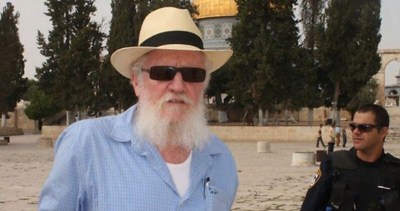 OCCUPIED JERUSALEM – Despite his dark past and his attempt oat bombing al-Aqsa Mosque in the 1980s, Israeli occupation authorities (IOA) allowed settler Yehuda Etzion to enter al-Aqsa Mosque after 30 years of prevention; he was also allowed to raise his hands as an aspect of worship while roaming the Mosque’s courtyards.
However, after the removal of the ban, Etzion breached the term of an agreement between Israel and Jordan with the sponsorship of the USA.
Etzion appealed the decision of denying him access into al-Aqsa Mosque for 15 days. The decision was issued by the Magistrate Court in Jerusalem, because he violated the “terms” of the recent Jordanian–Israeli agreement, which allows settlers to enter al-Aqsa Mosque but not to pray in it; however, Etzion raised his hands after entering the site as part of a religious ritual, prompting Israeli forces to remove him from the Mosque after Aqsa guards protested his act and insisted on him leaving the holy Islamic site.
In view of the serious unprecedented event after the Israeli judiciary allowed the settler to practice an act of worship violating the Jordanian-Israeli agreement, the Islamic Waqf management communicated with the Jordanian ambassador and Jordanian Ministry Of Awqaf and Islamic Affairs and informed them of the serious situation arising from storming the Mosque by such settlers who declare their intention to destroy the Mosque to build the alleged Temple in its place.
Escalation against al-Aqsa
The director of al-Aqsa Mosque, Sheikh Omar Kiswani told Qpress that the District Court’s decision is a serious escalation and a flagrant attack on al-Aqsa Mosque that would affect the region, stressing that the Israeli occupation must stop those settlers if it wants peace as it claims.
Lawyer and specialist of Jerusalem and Al-Aqsa affairs, Khalid Zabarqh, opined that the decision not to ban the settler Yehuda Etzion from al-Aqsa Mosque affects the legal rules that govern al-Aqsa Mosque, which acknowledge the entitlement of Muslims in the Al-Aqsa Mosque and praying there, and at the same time prevent others from doing that.
He charged that the Israeli judiciary has recently cohered with the Judaization schemes of the city of Jerusalem; as the judiciary began making decisions that help the settlement project, noting that, in conjunction with allowing Etzion to raise his hands as a signal of a prayer in al-Aqsa Mosque, the Israeli judiciary is looking into a decision to criminalize the chanting of Thakbir (Allah is the greatest) inside al-Aqsa Mosque.
Judaization dwarfs the Islamic right
Through his follow-up of the conduct of the Israeli courts, Zabarqh said that the occupation is trying through this device to widen the Judaization practice, in addition to dwarfing the Islamic right in al-Aqsa Mosque albeit in simple steps in order to endorse the occupation’s presence in it.
While the Israeli occupation allows the settlers to break into al-Aqsa Mosque knowing their plans and intentions to demolish al-Aqsa Mosque, it prevents many Palestinians from entering the Mosque, he pointed out.
Legitimize settlement
In this context, Sheikh Raed Salah, who has been barred from entering the city of Jerusalem and Al-Aqsa Mosque since 2007, confirmed that it is not permissible for any Israeli court to judge in any issue pertaining to the al-Aqsa Mosque; because it does not have sovereignty over it. Sheikh Salah believes that the Israeli court’s decision is null and void.
Sheikh Salah explained that the court is trying to legitimize through its decisions the incursions of settlers into al-Aqsa Mosque, in addition to legitimizing the construction of the alleged temple in place of the Mosque.
Regarding the renewal of his ban decision yesterday for an additional six months, Sheikh Salah said that the occupation which pretends that it respects the judiciary, issues an administrative military decision to prevent him from entering the city of Jerusalem, which he described as blatant injustice and racism.
The Israeli occupation forces prevented 12 Muslim deputies in the Israeli Knesset from entering the al-Aqsa Mosque, as well as banning 60 Palestinian women from praying in it.
Yehuda Etzion had tried to blow up the Dome of the Rock but al-Aqsa Mosque guards thwarted his attempt when a guard on one of its gates stopped him and searched the bag he was carrying and found it filled with explosives.
Etzion was a member of the Jewish secret movement that planned to assassinate the mayors of the West Bank. It adopted the bombing of the Nablus mayor Bassam Shaka’s car; the bombing resulted in the amputation of his legs.
7-year-old girl chased by notorious Israeli settler in Hebron
Ma’an – December 29, 2015
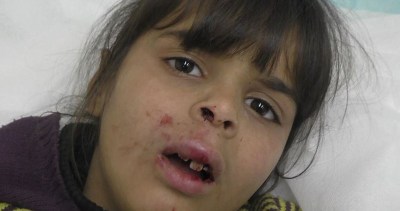
HEBRON – A Palestinian father living in Hebron’s Old City told Ma’an that his 7-year-old daughter was injured while being chased by notorious Israeli extremist Baruch Marzel on Monday.
Raed Abu Irmeileh said that he had to take his daughter, Dana, to the Hebron Governmental Hospital “after she had fallen to the ground while being chased by Baruch Marzel near the Ibrahimi mosque.”
Irmeileh told Ma’an that Israeli forces present in the area did not stop Marzel from chasing his children, and assaulted his 10-year-old son Hutasem as well as two brothers Nabil, 14, and Farhat Nader al-Rajabi, 10.
An Israeli army spokesperson did not have immediate information on the incidents.
Irmeileh is one of thousands of Palestinians living in the Israeli-controlled center of Hebron — the largest city in the occupied West Bank — among hundreds of Israeli settlers living illegally in the area.
Israeli rights group B’Tselem regularly documents Israeli settlers attacking locals under the protection of Israeli forces in Hebron.
Marzel is well-known among Palestinians living in Hebron who fear the right-winger, follower of radical rabbi Meir Kahana and member to the Kach movement — outlawed by Israel in 1994 under anti-terrorism laws.
Hebron’s Old City was declared a closed military zone in November, banning entrance to the area to all except registered Palestinian residents and Israeli settlers.
Palestinian PM Rami Hamdallah following the ban called for the presence of Palestinian security forces in al-Shuhada Street and Tel Rumeida areas of Hebron in order to provide “security and protection” for Palestinians against Israeli settler assaults.
Israeli soldiers kill Palestinian woman in Silwad
IMEMC News – December 25, 2015
 Israeli soldiers killed, on Friday evening, a Palestinian woman while driving her car near the main entrance of Silwad town, northeast of the central West Bank city of Ramallah.
The slain Palestinian woman has been identified as Mahdiyya Mohammad Ibrahim Hammad, 38. She is a married mother of four children.
Although the Israeli army claimed “she attempted to ram soldiers with her car,” eyewitness confirmed she was at least 30 meters away from the military roadblock, when the soldiers opened fire on her.
They added that the woman was not even speeding when the soldiers opened fire on her car, and that the army fired many live rounds at her.
Following the shooting, the soldiers left the woman to bleed to death, and held her body for more than two hours before handing her to the Palestinian side, near the Beit El military roadblock.
The family said the funeral ceremony and procession will be held on Saturday, after the noon prayers in Silwad.
The Palestinian Health Ministry said Hammad was shot with two live rounds in her face, five rounds in the chest and two in the pelvis.
Also on Friday, the army killed a young Palestinian man, identified as Hani Rafeeq Wahdan, 22, east of Gaza City. Wahdan was shot with a live round in the head.
The Palestinian Health Ministry said 137 Palestinians, including 26 children and 7 women, have been killed by Israeli fire since October 1, while more than 15000 have been injured, including 4500 who were shot with live fire and rubber-coated metal bullets.
Bethlehem-area village sealed by Israeli military for weeks
Ma’an – December 23, 2015
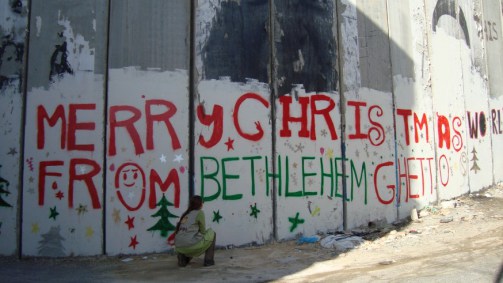
BETHLEHEM – The movement of residents in Ras Al-Wad southwest of Bethlehem has been cut off for weeks by Israeli military forces, locals said Wednesday.
A resident told Ma’an that the forces closed off the main entrance to the small village with large mounds of dirt around three weeks ago, and the road has remained closed since.
The road was used by residents in Ras al-Wad to access a main highway nearby. While they have been able to find an alternate route — a one-way dirt road that connects to the nearby village of Beit Sahour — access to the highway is severely limited, locals said.
“They just don’t want Arabs accessing the highway,” a Ras al-Wad resident told Ma’an.
An Israeli army spokesperson did not have immediate information on the closure of Ras al-Wad, but in the past has told Ma’an that Palestinian towns and roads were sealed in accordance with “security measures” taken in the area.
The isolation faced by Ras al-Wad residents has taken place in Palestinian areas throughout the occupied West Bank and East Jerusalem that have been cut off in recent months.
Following attacks carried out by Palestinian individuals on Israeli military and civilians that began in October and have continued into December, the military has been sealing villages and cities in the area around the attack or hometown of attacker.
In the West Bank, where Palestinian movement is already placed under a myriad of Israeli restrictions, the recent closures have had wide-scale repercussions in what rights groups have termed collective punishment.
The military never contacted residents of Ras al-Wad with warning or reason of the closure, and locals told Ma’an they have no idea how long the dirt mounds will remain in place.
While Palestinians in other areas have removed dirt mounds shortly after their placement, locals told Ma’an that Ras al-Wad residents have yet to remove them.
Ras al-Wad is a relatively quiet village and locals told Ma’an that residents generally avoid confrontation with the military, locals said.
“They’re not confrontational and they’re not political,” a resident told Ma’an. “They would just rather try to live their lives than deal with any trouble.
“No one from the village has gone to move the dirt mounds, everyone here just turned their head and found alternate routes,” the resident continued.
NY Times Jerusalem Bureau Chief Turned a Deaf Ear to Palestinian Suffering
By Barbara Erickson | TimesWarp | December 22, 2015
As Jodi Rudoren exits the Jerusalem bureau of The New York Times, she leaves behind a series of gaping holes in coverage of Palestine-Israel, above all in her failure to expose the treatment of the most vulnerable, who suffer disproportionately under the constant brutality of the Israeli occupation.
Readers of the Times have never been told of the international outcry over the abuse of Palestinian children detained by Israeli security forces. They know nothing about the myriad Israeli breaches of the 2014 ceasefire with Gaza, especially the frequent attacks on fishermen and farmers; and they are uninformed of the cruel measures imposed on struggling Bedouin communities in the Jordan Valley and elsewhere.
Rudoren, who leaves her post as Jerusalem bureau chief at the end of this month, replaced Ethan Bronner nearly four years ago. She has written from inside an Israeli Jewish perspective, giving voice to official Israeli spin and omitting the stories that beg to be told.
Thus, although Rudoren visited Gaza, she had nothing to say about the numerous attacks on defenseless farmers and fishermen there, some of whom have died simply trying to do a day’s work. These attacks are in violation of the truce that ended the assault on Gaza in the summer of 2014 (as well as previous agreements), but Rudoren’s reporting from the enclave has strained to deflect the blame from Israel.
Instead of telling the stories we need to hear, Rudoren has written about individual Gazans who are anything but typical—a woman artist who defies the authorities, a man who goes against the grain by advocating for the two-state solution.
In this way she has given us the appearance of entering into Gazan society, of “balance” in covering both Israeli and Palestinian affairs, while she actually provided a smokescreen to avoid looking at the urgent issues.
The Bedouin of the West Bank received even less attention during Rudoren’s term in Jerusalem, but their stories are equally disturbing and compelling. In the Jordan Valley and east of Jerusalem (and also within Israel, in the Negev), Israeli forces often confiscate and destroy the basic necessities of life in these poverty-stricken communities.
The Israeli Civil Administration, a branch of the army, routinely destroys tents, latrines, animal shelters, water pipes, cisterns, wells, houses, solar panels and storage sheds, usually under the pretext that they lack building permits. Many of the confiscated and destroyed items have been donated by the International Committee of the Red Cross or other aid organizations.
The Israeli human rights organization, B’Tselem, has documented these acts of destruction and the many times Israeli troops have forced entire communities to leave their homes for hours and days at a time under the pretext of needing the area for “military training.” These live fire training sessions have more than once set the Bedouins’ fields on fire, destroying valuable crops and grazing land.
And yet, as she ignored these depredations, Rudoren chose to write about illegal settlers in the Jordan Valley, presenting them as plucky and determined and ignoring the plunder of indigenous communities in the area.
Although B’Tselem, the United Nations, Amnesty International and other monitoring groups have exposed the contemptible actions and policies of the Israeli government and its security forces, Rudoren has almost totally ignored the reports and even worked to undermine them.
Numerous groups, for instance, have raised alarm over the abuse of Palestinian children in Israeli custody, but Rudoren never saw fit to address the issue in the Times—except for a somewhat oblique attempt to defuse the charges. Thus, she wrote about stone throwing as a rite of passage in one West Bank village, presenting the youthful efforts at resistance and the Israeli response as a kind of game, nothing to be taken seriously.
The story mentions the arrests of children and military interrogations, but readers never learn that Israeli courts and security forces have been accused of serious mistreatment, amounting to torture: beatings, forced confessions, sleep deprivation, threats and more.
Instead, Rudoren says that it can be cold in those infamous interrogation rooms, as if that is the worst of it.
In the latest uprising, marked by a series of lone wolf stabbing and vehicular attacks, Rudoren continued to ignore the reports of monitoring groups, saying nothing about the well-documented charges that Israeli security forces are carrying out street executions of Palestinians who pose no threat.
This kind of news is deemed unfit to print in the Times. Rudoren, who goes on the join the international desk at the paper’s headquarters, played her part well, according to Times protocol, which expects that its reporters will maintain the Israeli narrative of victimhood, suppress anything that contradicts this claim and betray its readers under a camouflage of “balanced” reporting.
Israel has ‘deprived 23,000 orphans of monthly sponsorship’

MEMO | December 22, 2015
The Deputy Head of the Islamic Movement in Israel, Shaikh Kamal Al-Khatib, said on Monday that Israel’s banning of the group has deprived 23,000 orphans from their monthly sponsorship payments, Anadolu has reported.
“The Islamic Relief charity run by the movement,” explained Al-Khatib, “used to pay a minimum of $40 monthly sponsorship for each orphan spread around the West Bank, Jerusalem and Gaza Strip.”
The Israeli government banned the Islamic Movement on 16 November. Any person or group which associates with it officially is now subject to criminal penalties, including arrest. The authorities confiscated property belonging to the organisation and its bank accounts were frozen. Seventeen affiliated organisations, including charities, were closed down.
The sponsorships, explained Al-Khatib, were donated by Palestinians. He suggested that a solution for the problem is for wealthy Muslims to take over the orphan sponsorships and pointed out that efforts are being made in this regard, although, understandably, he gave no details.
The Palestinian Islamic Relief charity was established by the movement in 1988 and its main activity was sponsoring orphans; it has no connection to the UK-based Islamic Relief or Islamic Relief Worldwide. The charity has been closed by the Israeli authorities several times. “Israel seeks to crack down on all projects which lie behind the persistence of the Palestinians,” added Al-Khatib. He stressed that the charity’s accounts have always been subject to Israeli monitoring.
Featured Video

Rewriting the risk? Inside the government’s vaccine safety messaging
or go to
Aletho News Archives – Video-Images
Book Review
“Davos Can Really Replace the UN”
Inside the book that maps the architecture behind global governance — from the Epstein files to the Pact for the Future
Lies are Unbekoming | April 1, 2026
On June 13, 2019, the United Nations and the World Economic Forum signed a partnership deal to “accelerate the implementation of the 2030 Agenda for Sustainable Development.” That same evening, WEF president Börge Brende — Norway’s former Foreign Minister — had dinner with Jeffrey Epstein at Epstein’s Manhattan townhouse. The Epstein files, released January 2026, contain an exchange between the two from the previous year. Epstein to Brende: “Davos can really replace the UN. C21, cyber, crypto . genetics… intl coordination.” Brende back to Epstein: “Exactly — we need a new global architecture. World Economic Forum (Davos) is uniquely positioned — public private.”
The next day, the UN General Assembly adopted the framework for restructuring global governance.
That sequence — the partnership signing, the Epstein dinner, the candid admission about replacing the UN with a public-private architecture, and then the formal adoption — opens Jacob Nordangård’s The Digital World Brain. Pages two and three. Footnoted to the UN resolution number, the Epstein files, and the General Assembly record.
I keep coming back to it because it captures what this book does that almost nothing else in the independent research space manages. I’ve followed Jacob’s work for years now and interviewed him about his research. Each book peels back another layer of the same institutional architecture, and each time I think he’s reached the limit of what can be documented, the next one goes further. Nordangård doesn’t speculate. He doesn’t editorialize much. He lays institutional actions next to each other in chronological order and lets the pattern announce itself. … continue
Blog Roll
 Aletho News
- The End of NATO
- 37 days of war on Iran cost US staggering $42bln, tracker shows
- Baghdad tells Asian refiners, traders to begin loading Iraqi crude amid Iranian exemption
- Under fire, Moscow and Tehran close ranks
- Iran, US receive Pakistan-mediated plan for ceasefire then final deal
- Iran submits demands for end to war as mediators scramble ahead of Trump deadline
- Iran Threatens Retaliatory Strike on Stargate AI Project in UAE
- US sent ‘a lot’ of arms to Iranian protesters – Trump
- Barak Ravid Launders Deception To Allow Trump To Back Off Of His Power Plant Threat – Again
- REWRITING THE RISK? INSIDE THE GOVERNMENT’S VACCINE SAFETY MESSAGING
- If Americans Knew
- Trump poised to “blow everything up” (ie. commit war crimes) in Iran – Daily Update
- In Iran, Israel-US take aim at “reason, research, and freedom of thought” – Daily Update
- US loses planes over Iran, Israel downgrades Lebanon war goals – Daily Update
- Israel Is Blocking Palestinians from Easter at Church Where Jesus Resurrected
- Plot to assassinate Palestinian activist follows harassment campaign promoted by Zionist groups and elected officials
- Prominent New York synagogue hosts presentation on why U.S. Jews should support the ethnic cleansing of Gaza
- Tapper vs. Piker: Is the CNN Anchor Auditioning for David Ellison?
- Shouldn’t Democrats Be Able to Condemn Genocide?
- Israel-US kill negotiators, destroy civilian structures, but Iran’s military capabilities still largely intact – Daily Update
- ‘War crime’: Global condemnation as Israeli ministers celebrate death penalty law targeting Palestinian prisoners
- No Tricks Zone
- An Inconvenient Tree: Uncovered In Alps… Europe Much Warmer Than Today 6000 Years Ago
- New Study Reports A 60% Slowdown In Greenland’s Ice Loss Rate In The Last Decade
- Low Intensity Tornado Wrecks Major Solar Farm, Creating A Potential Toxic Dump
- New Study Finds Warming Saves Lives…Cold Temperatures 12 Times More Deadly Than Excess Heat
- German Science Blog Accuses PIK Climate Institute Of Hallucinating Climate Tipping Points
- Devastating Assessment Of Comirnaty Vaccine By Former Senior Pfizer Europe Toxicologist
- New Study: CO2 Is ‘Effectively Negligible’ As An Explanatory Climate Change Factor Since 2000
- Former Pfizer Toxicologist Dr. Helmut Sterz Tells Bundestag Hearing Pfizer Vaccine Should Have Never Been Approved
- Energy Expert: Germany’s Nuclear Phaseout Was A “500 Billion Euro Mistake”
- New Research: South Australia’s Mid-Holocene Sea Surface Temperatures Were 4°C Warmer Than Today
 Aletho News