Israeli forces surround new ‘village’
Ma’an – 21/03/2013
BETHLEHEM – Israeli forces on Wednesday surrounded a new tent village erected by Palestinian activists in Eizariya east of Jerusalem.
An Israeli military spokeswoman said hundreds of Palestinians established “an illegal settlement” and that security forces were in the area “to maintain order.”
She said soldiers arrested the driver of a truck loaded with equipment including tents.
Mohammad Khatib, a spokesman for the activists, said soldiers handed protesters a document declaring the area a closed military zone.
“We are staying. We are Palestinians, and we will stay here. They will have to evacuate us. They will have to use their power to do it, but we will not do it by ourselves,” Khatib told Ma’an.
“We are staying here because this is Palestinian land. This is our land, and no one has a right to evacuate us.”
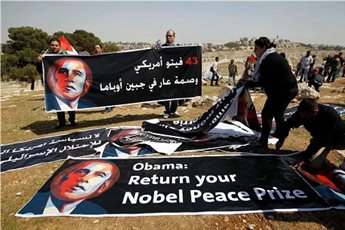
As US President Barack Obama arrived in Israel, activists set up 15 tents on a hillside near the site of the Bab al-Shams protest village that Israeli forces tore down in January.
They have named the new neighborhood Ahfad Younis, after the main character in the novel Bab al-Shams.
In a statement, the activists described the initiative as “first, to claim our right as Palestinians to return to our lands and villages, second, to claim our sovereignty over our lands without permission from anyone.”
The activists said it aimed to highlight their opposition to the Obama administration’s policies in the region, saying that it has been “complicit in Israeli occupation and colonialism.”
“An administration that used the veto 43 times … in support of Israel and against Palestinian rights, an administration that grants military aid to Israel of over three billion dollars annually, can’t have any positive contribution to achieve justice,” the statement said.
Related article
- Palestinians erect new ‘village’ as Obama lands in Israel (alethonews.wordpress.com)
Briefing: Beyond the E-1 Israeli settlement
IRIN | March 18, 2013
JERUSALEM – Last month, an international fact-finding mission on Israeli settlements in the Occupied Palestinian Territory (OPT) commissioned by the UN Human Rights Council found that settlements constituted a violation of international human rights and humanitarian law and called on Israel to stop all expansions immediately and withdraw from settlements.
A controversial Israeli plan, known as E-1, to build thousands of housing units and hotel rooms near the Ma’ale Adummim settlement, has garnered much attention in the media because it would sever Palestinian East Jerusalem from the rest of the West Bank. (See IRIN’s briefing on E-1 here.)
But at the same time, Israel has been moving forward with equally controversial settlement plans under less scrutiny and with unusual speed.
As US President Barack Obama prepares to visit the region this week, IRIN takes a look at some of the details that have been overlooked in the discussion.
What’s the Giv’at HaMatos plan?
According to Israeli NGO Ir Amim (“City of Nations”), which works to preserve Jerusalem as a home for both Jews and Palestinians, one settlement plan of “critical importance” is Giv’at HaMatos.
In a sense, Giv’at HaMatos does in the south what E-1 does in the east. The planned large housing and hotel complex at the southern perimeter of Jerusalem would further disrupt the contiguity of land between East Jerusalem and the rest of the West Bank required for a future Palestinian state, seriously impeding a two-state solution, research and rights groups say. It would also mark the first new settlement construction in Jerusalem since 1997.
“All construction is problematic but there are several plans that are, in our view, more dangerous if implemented,” Hagit Ofran, director of the Settlement Watch project at the Israeli NGO Peace Now, told IRIN. “Giv’at HaMatos is the most dangerous plan that is now approved.”
Part of the plan – to build 2,612 units – was approved by the Jerusalem Regional Planning Committee on 19 December.
Most of Giv’at HaMatos is currently uninhabited, but according to the International Crisis Group (ICG), which recently released a two-part report on the future of East Jerusalem, its build-up would cut off Arab neighbourhoods in southern Jerusalem, like Beit Safafa and Sharafat, rendering them “Palestinian enclaves”.
Giv’at HaMatos would connect the dots of several other planned or expanding settlements along southern Jerusalem – including Giv’at Yael in the southwest; and Har Homa and East Talpiyot in the southeast – forming “a long Jewish continuum severing Bethlehem’s urban continuum from Palestinian Jerusalem”, ICG said. Last year, the Israeli government also approved more than 2,000 new units in neighbouring Gilo.
This kind of attachment to Jewish expansions could make peace negotiations even harder.
“From an Israeli public opinion perspective, Giv’at HaMatos is in the municipal border of Jerusalem,” Ofran said. “It’s considered a legitimate part of Israel.”
Barak Cohen, the Jerusalem Municipality’s adviser for foreign affairs and media, told IRIN Giv’at HaMatos is part of Jerusalem’s “natural and much-needed growth”, allowing both Arab and Jewish landowners to develop their properties.
Indeed, part of the Giv’at HaMatos plan, approved on 18 December, allows for the building of 549 units for Palestinians – though Betty Herschman, director of international relations and advocacy at Ir Amim, points out much of it retroactively legalizes building that has already been completed. The figures, she added, amount to just over one-fifth of the Jewish expansion.
“For many Arab East Jerusalemites, the battle for their city is all but lost.”
Still, Cohen insisted, the development would benefit Jerusalem as a whole: “Not planning and developing Jerusalem neighbourhoods ultimately harms all residents and landowners – Arabs and Jews alike.”
Last year, Israel also issued tenders for the construction of 606 new housing units north of East Jerusalem, in the Ramot settlement, just north of the Green Line marking the border between Israel and the West Bank, and approved another 1,500 units in the neighbouring settlement of Ramot Shlomo, according to Ir Amim.
What other settlements are planned?
Beyond Jerusalem, there was movement on a number of other settlements projects in disputed areas, according to Settlement Watch.
In June 2012, the Israeli government announced it would build 851 new units in the West Bank, including more than 230 in the controversial settlements of Ariel and Efrat. Like Giv’at HaMatos, these two settlements make a contiguous Palestinian territory impossible, Settlement Watch says.
Overall, settlements expanded much faster than usual last year.
In 2012 the Israeli government approved the construction of 6,676 settler housing units in the West Bank, compared with 1,607 in 2011 and several hundred in 2010, according to Peace Now.
For plans that were already approved, it issued more than 3,000 tenders to construction contractors – more than any other year in the last decade, Peace Now said. Construction has actually begun on 1,747 homes.
Regardless of the settlements, Palestinians, especially in Area C, are under immense pressure. Recent weeks have seen a considerable upswing in demolitions of Palestinian structures. According to the Displacement Working Group, a grouping of aid agencies helping displaced families, Israeli forces destroyed 139 Palestinian structures, including 59 homes, in January – almost triple 2012’s monthly average. The demolitions occurred in East Jerusalem and the West Bank – with a majority taking place in Area C – and left 251 Palestinians, including over 150 children, displaced.
The office of the Coordinator of Government Activities in the (Palestinian) Territories (COGAT) told IRIN there was no connection between the removal of unauthorized buildings and the construction of Israeli settlements. “All construction in the West Bank is subject to building codes and planning laws and unauthorized constructions are dealt with accordingly,” the office said in an email.
What are the knock-on effects?
Settlements are often discussed through the lens of their illegality under international law or as obstacles to a peace agreement between Israel and the Palestinians. But everything associated with the settlements – including Israeli-only infrastructure, the separation barrier, military checkpoints, restrictions on Palestinian freedom of movement, suppression of freedom of expression and political life, and control of Palestinian natural resources – causes a ripple effect through Palestinian society, adversely impacting the people.
The UN estimates there are now 520,000 Israeli settlers in East Jerusalem and the West Bank, with 43 percent of the land there allocated to local and regional settlement councils. According to the UN Secretary-General, Israel has transferred roughly 8 percent of its citizens into OPT since the 1970s, altering the demographic composition of the territory and furthering the Palestinian people from their right to self-determination.
Baker, of the Israeli Prime Minister’s Office, said a future Palestinian state should include a Jewish minority. “The assumption behind this… is that Jews have no right to live in the West Bank, an assumption that we reject. In fact we see ourselves as the true indigenous people of this land.”
But Israeli settlements have violated Palestinian rights to equality under the law, to religious freedom and to freedom of movement, according to the UN fact-finding mission. They have also eroded Palestinian access to water and to agricultural assets, and the ability to develop economically, it said.
 Photo: OCHA – View larger version of map here
For example, Bedouins from the Palestinian village of Khan Al Ahmar, northeast of E-1, cannot sell their dairy products at their traditional Souq Al Ahmar market any more. Because of movement restrictions (they hold West Bank IDs and lack the proper permits to enter East Jerusalem), they cannot get there.
The UN secretary-general has said that Palestinians “have virtually no control” over the water resources in the West Bank, with 86 percent of the Jordan Valley and the Dead Sea under the de facto jurisdiction of the settlement regional councils.
There is a statistical correlation between Palestinians’ proximity to settlements and their rates of food insecurity, according to a UN and government survey, which found that one quarter of Palestinians who live in Area C, home to the largest number of settlements in the West Bank, are food insecure. In Areas A and B, the average rate of food insecurity is 17 percent.
In addition, “all spheres of Palestinian life are being significantly affected by a minority of settlers who are engaged in violence and intimidation with the aim of forcing Palestinians off their land,” the mission said.
Operation Dove, an international organization working in the Palestinian village of At-Tuwani and the South Hebron Hills, reported that Palestinian children have a very hard time going to school due to settler attacks.
The UN and rights groups say radical settlers use violence against Palestinians with impunity and their illegal outposts are often recognized and retroactively legalized by the government.
Since the occupation began, Israel has detained hundreds of thousands of Palestinians, some of them without charge, and some of them children. Most of the minors are arrested “at friction points, such as a village near a settlement or a road used by the army or settlers”, the fact-finding mission said.
Israel uses what they term “administrative detention” when it considers the detainee a threat to the security of the state.
Ir Amim’s Herschman says Israel is also attempting to create a “greater Jerusalem” through additional means, for example: the Israeli separation barrier, planned national parks, and the construction of highways dividing villages, dispossessing Palestinians of their land and making it harder for them to access services like schools and mosques.
In recent weeks, residents of the Palestinian village of Beit Safafa have been protesting against the planned extension of the Begin Highway that would divide their village in order to connect major Israeli settlement blocks outside the city to Jerusalem.
The planned root of the separation barrier, in addition to a potential national park around the perimeter of the barrier would also close off nearby Palestinian village al-Wallajeh.
The planned route of the barrier extends all the way around and far beyond Muale Adummim and in other areas south and north of Jerusalem. “These lines are a unilateral declaration of a much greater Jerusalem, a unilateral expanding of the boundaries, an exponential increase,” she told IRIN.
Or as the ICG put it, “for many Arab East Jerusalemites, the battle for their city is all but lost.”
Israel releases hunger striker Sharawneh, arrests his brother
Al-Akhbar | March 18, 2013
Israel arrested the brother of former-Palestinian prisoner Ayman Sharawneh in the West Bank early Monday just hours after the long-term hunger striker was released from Israeli prison and deported to the Gaza Strip, Ma’an News Agency reported.
Israeli forces raided the home of Jihad Sharawneh, 24, at dawn Monday in Deir Samir, southwest of Hebron.
An Israeli military spokesman told Ma’an that Jihad Sharawneh was arrested and taken in for security questioning.
Amjad Najjar, head of the Hebron branch of the Palestinian Prisoners Society, denounced the arrest as an act of revenge to punish the Sharawneh family.
Ayman Sharawneh signed an agreement with Israeli authorities to be deported to Gaza for 10 years, bringing an end to his eight-month-long hunger strike, Qadura Fares, head of the Palestinian Prisoners Society, said in a statement.
He arrived at the Erez crossing Sunday night, where a Palestinian ambulance was waiting to take him into Gaza. Hundreds of people crowded at the Palestinian side of the checkpoint to greet him.
Fares said that Israel had previously proposed to deport Sharawneh outside of Palestine, but then offered to exile him to Gaza after he refused to leave his homeland.
Sharawneh agreed to be deported after months of hunger striking to protest his detention, and after numerous warnings by doctors regarding the severe deterioration in his health, Fares added.
The 36-year-old father of nine had previously demanded that authorities allow him to return to Hebron to be with his family.
The under secretary of the PA Ministry of Detainee Affairs, Ziad Abu Ein, told Ma’an that Sharawneh’s agreement was signed without notifying the ministry.
Earlier Sunday, the Minister of Detainee Affairs Issa Qaraqe said the Palestinian Authority rejected the deportation of prisoners as political blackmail.
Sharawneh was released in the October 2011 prisoner swap deal between Israel and Hamas but was rearrested in January 2012 and accused of violating the terms of his release.
Israeli authorities refused to reveal how Sharawneh violated his release terms, even to his lawyers, and he was jailed without charge or trial.
Israeli prosecutors sought to cancel Sharawneh’s amnesty and jail him for 28 years, the remainder of his previous sentence. He went on hunger strike to demand his release.
Abu Ein said Israeli authorities were pressuring Samer Issawi, who has been on hunger strike for 228 days, to make a similar deal.
(Ma’an, WAFA, Al-Akhbar)
PALESTINE: Tent for school children demolished hours after it was built
CPTnet | March 16, 2013
On 16 March 2013 the South Hebron Hills Popular Committee built a tent to protect school children from Tuba and Maghayir Al Abeed while they wait for their military escort. Hours after the ceremonious construction of the tent — attended by villagers, school children, internationals and various media outlets — was over, the Israeli military demolished the tent and arrested one of the internationals present.
The schoolchildren coming from Tuba and Maghayire Al Abeed walk between the Israeli settlement of Ma’on and the outpost of Havat Ma’on in order to get to school in At-Tuwani. Since 2001 settlers have repeatedly attacked the children along this route, preventing most of the children, who feared for their safety, from being able to attend school. In 2004 volunteers from Christian Peacemaker Teams (CPT) and Operation Dove began accompanying the children along the path, but the violent attacks continued. These attacks brought the matter to the attention of the Children Rights Committee of the Knesset, which established in November 2004 a military escort to protect the children.
Since November 2004, CPT and Operation Dove have constantly monitored the military escort, documenting the failures of the Israeli army as well as settler violence toward the children. During the school year 2011-2012, the volunteers of Operation Dove and CPT published a report, The Dangerous Road to Education, which found that in 35% of cases the military escort was late. In addition, in 48% of cases, the military escort arrived late after school, forcing the children to wait for a total time of about 21 hours. There is nothing to shelter the children, some as young as six years old, from the elements as they wait for their unpunctual military escort.
The Popular Committee wanted to give the children a tent to shelter them while they wait. The event had around one hundred in attendance. These included some of the children whom the tent was being made for, teachers and administrators from the school, CPT and other international organizations, Palestinians from At-Tuwani and surrounding villagers and the media. The crowd was immediately met by soldiers who filmed all the attendees and took down Palestinian flags that children had put up around the building area. The children played and chanted in front of the soldiers while settlers on the next hilltop yelled down at them, “Kill all the Arabs.” The tent was completed and christened “Michele’s tent” after the late daughter of the Italian woman who funded the project.
As the afternoon wore on the crowd started to leave. Two hours after the tent was build the Israeli military demolished it and arrested one of the international volunteers who had remained there. The volunteer was released, but must leave the West Bank for two weeks. The Popular Committee plans to rebuild the tent, but as for now the schoolchildren will have to wait out in the rain when they return to school on Sunday.
Related articles
- Israeli forces demolish in two villages, damage a crucial road in South Hebron Hills (palsolidarity.org)
- P/R: Palestinian village under demolition threat, Firing Zone 918 (ramyabdeljabbar.wordpress.com)
- Soldiers Kidnap Several Palestinian Children in Hebron (nsnbc.me)
- Palestine: Israeli soldiers wreak havoc in Jordan Valley village & confrontations (realisticbird.wordpress.com)
- Jenba, the Frontline. (gregsrole.wordpress.com)
- 12 year old boy beaten by soldiers in Azzun (palsolidarity.org)
Funding and Denouncing Israeli Occupation: Hypocritical EU Must Make a Stand
By Ramzy Baroud | Palestine Chronicle | March 12 2013
More bad news emerged from Israel in recent weeks. Indeed, good news is seldom associated with Israel and its military occupation and institutionalized discrimination and mistreatment of Palestinians.
But now even those international organizations that are often supportive of Israel’s militancy seem to be joining the consensus that Tel Aviv is on an irrevocably perilous course.
Few international law experts would defend Israel’s fervent settlement-building on occupied Palestinian land.
Yet the Western powers, led by the United States, have brought little pressure to bear on Israel to cease its illegal activities.
In fact, without US and European funding it would have been nearly impossible for Israel to build settlements and transfer over half a million Israelis over the years to live on stolen Palestinian land, in violation of numerous international laws including the Fourth Geneva Convention.
Worse still, trade with European and other countries sustained these illegal settlements, allowing them to flourish at the expense of Palestinians who have suffered massive ethnic cleansing campaigns since 1967.
But at last EU diplomats in east Jerusalem and the West Bank are speaking out in unequivocal terms.
In a report released at the end of last month, the diplomats declared that “settlement construction remains the biggest single threat to the two-state solution. It is systematic, deliberate and provocative.”
The report called on EU states “not to support … research, education and technological co-operation” with settlements and to “discourage” investing in Israeli companies that operate in the occupied territories.
Expectedly, the report is non-binding. And even if such recommendations are considered, Israel and its EU friends and lobbyists are likely to find loopholes that would deprive any EU action of substance and vigor.
Without civil society action focused on turning up the heat on European governments, especially die-hard supporters of Israel such as the British government, business with Israel is most likely to carry on as usual.
Not only is Israel flouting international law but the supposed guardians of international law are the very ones that are empowering Israel in carrying out its illegal acts, disempowering and bankrupting Palestinians.
Last January an Oxfam report said that the Palestinian economy, which is currently in utter disarray, could generate urgently needed income – $1.5 billion to be exact – if Israel eased its restrictions in the Jordan Valley alone.
But without suitable access to their own land and to water sources, Palestinians in the valley continue to struggle while the settlers are thriving.
Although the US government is well known to have done everything in its power to defend Israel at any cost and ensure Israel’s superiority and military edge over all of its neighbors, the EU has falsely acquired a more balanced reputation. Nothing could be further from the truth.
In a recent report the Palestinian rights group al-Haq emphasized that trading in produce grown in settlements had “directly contributed to the growth and viability of settlements by providing an essential source of revenue that allows them to thrive.”
The reported value of total EU trade with illegal Israeli settlements amounts to approximately $300 million a year. This may appear small compared with the $39bn of total trade between the EU and Israel reported in 2011, for example, but it does mean that “the EU has some room for leverage given it is Israel’s largest trade partner, and it receives some 20 per cent of total Israeli exports,” as pointed out by Dalia Hatuqa writing for al-Monitor.
The fact is that Europe is ultimately taking part in the subjugation of the Palestinians by funding Israel’s illegal occupation and its massively growing settler population. And no amount of diplomatic “recommendations” or newspeak can alter that fact.
But settlement growth cannot be considered in a vacuum. It makes no sense to talk about boycotting settlements while supporting the main organs that ordered or sanctioned the illegal settlements in the first place.
So differentiating between products made in Israel or those made in the settlements is absurd at best.
The settlers are not self-sustaining autonomous outposts. They are considered part and parcel of the so-called Israel proper.
In the eyes of the Israeli government there is little distinction between settlers from Ma’ale Adumim or residents of Tel Aviv.
Yigal Palmore of the Israeli Foreign Ministry responded to the EU report in withering terms.
“A diplomat’s mission is to build bridges and bring people together, not to foster confrontation. The EU consuls have clearly failed in their mission,” he said.
Nothing is random in Israeli planning. As is already the case in various parts of the occupied territories, Palestinians are becoming an unwanted presence on their own land.
Prime Minister Benjamin Netanyahu’s has decided to develop more settlements in an area known as E1, which is set to cut off east Jerusalem from the rest of the West Bank.
There is unlikely to be a turning back from the construction plans, which include the building of 3,000 settler homes in the land corridor near Jerusalem.
Israel is unrelenting and seems to have no regard for international law. It is emboldened in its actions by the weakness of its neighbors, the unhindered backing of its friends, and the gutlessness of its critics, who all too often are consumed in intellectual tussles over the boundaries of language and proper ways to frame the discourse.
None of this wrangling is of any concern to Israel, which is merely winning time to achieve its own harrowingly ugly version of apartheid.
For those who still feel uneasy with this provocative term, consider the latest Israeli transport ministry’s initiative. It has designated bus line No 210, which shuttles cheap Palestinian laborers to and from the West Bank, to be “Palestinian only.”
Of course this is not an isolated policy but a continuation of a dreadful track record.
Bad news from Israel is likely to continue.
Almost every day there is a new disturbing development in Israeli practices against Palestinians.
All too often this is merely met with feeble international criticism without any substantial action.
Civil society organizations and groups must tell their governments that enough is enough.
While Israel should be held responsible for its own behavior, the EU and other countries should not finance the occupation while decrying the settlements. This hypocrisy can no longer be tolerated.
– Ramzy Baroud (www.ramzybaroud.net) is an internationally-syndicated columnist and the editor of PalestineChronicle.com. His latest book is: My Father was A Freedom Fighter: Gaza’s Untold Story (Pluto Press).
Related article
- Stop EU funding of Israeli military companies and illegal settlements (alethonews.wordpress.com)
Illegal Israeli bullet claims a Palestinian life
 Mahmoud At-Teety – Facebook
Al-Akhbar | March 13, 2013
Israeli forces shot dead a young Palestinian protester Tuesday night using bullets prohibited by international law.
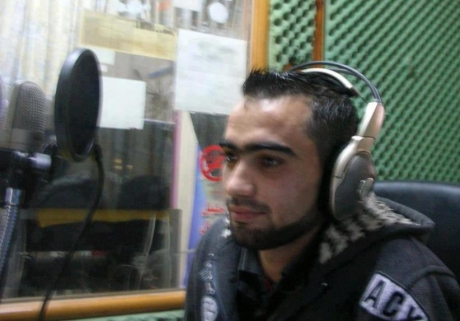
Mahmoud Adel Faris al-Teiti, 25, was hit in the head by expanding “dum dum” bullets during clashes at the al-Fawwar refugee camp near Hebron, according to local media.
“Dum dum” bullets, first made by British colonial forces in India’s Calcutta, expand on impact to limit penetration and produce a larger diameter wound. The use of expanding bullets is prohibited by the 1899 Hague Declaration and is listed as a war crime in the Statute of the International Criminal Court (Article 8(2)(b)(xix)).
Witnesses said Israeli soldiers raided Fuwar and opened fire after coming under a barrage of rocks from local Palestinians. Hospital officials said a 25-year-old man died after being shot in the head and two others were wounded by the Israelis.
Two other young men were shot and injured by live ammunition. Another six were hit by rubber-coated bullets.
Israeli forces say they only shoot live fire in ‘life-threatening situations’, but reports of their use in recent weeks have been abundant.
According to Palestinian officials, al-Teiti was the sixth Palestinian killed by Israeli fire in the Israeli-occupied West Bank since the beginning of this year. A seventh was killed on the Gaza border on January 11.
Palestinians have also taken to the streets to protest against Israel’s extrajudicial jailing of thousands of their countrymen. The resulting confrontations, often bloody, have drawn warnings on both sides that a full Palestinian revolt could be brewing.
(Al-Akhbar, Ma’an, Reuters)
Related article
- Israeli security officer brutally beats unarmed Palestinian shepherd (alethonews.wordpress.com)
9 Year old Palestinian boy attacked by settlers
International Solidarity Movement | March 12, 2013
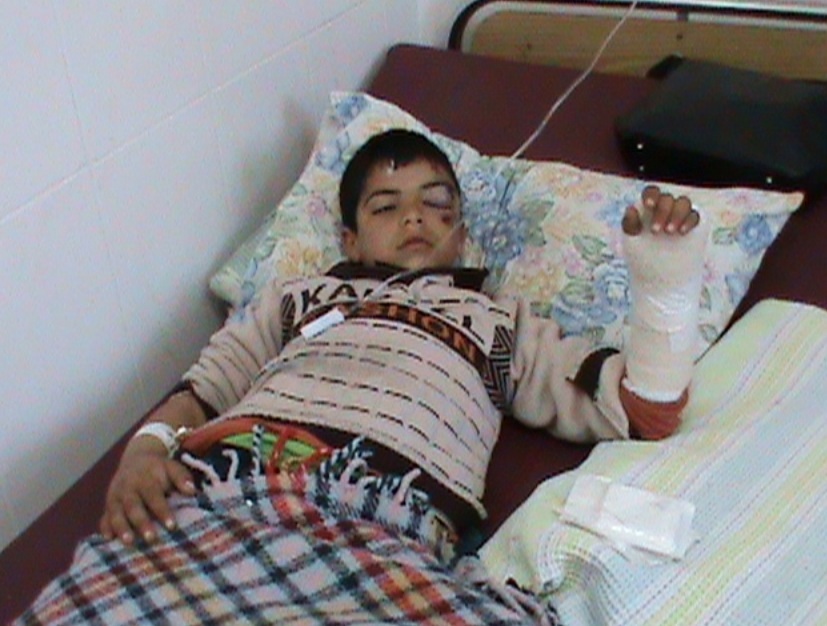
Hebron, Occupied Palestine – On the afternoon of March 12th, Yassin Knaebi was playing on the roof of his house in the old city of Hebron when suddenly stones started falling from the sky. Three young settlers who had been watching him play, began to throw stones from across the street. Yassin, was struck on the head, he lost his balance and fell from the roof of his family home, breaking his left arm in the process. Doctors are fearful of the possibility of long term damage to the young boys eye, though this is still too early to know for sure.
The Knaebi family are terrorised frequently by their neigbours in the Avraham Avinu Settlement. According to Mrs. Knaebi the family is harassed at least three times a week and the Israeli army does nothing to prevent it, despite having an outpost in sight of the house. The message is simple, the settlers in the settlement wish to push the family out and occupy their home, so that the future expansion plans for the neighborhood can go forward without any problems.
Related articles
- Racist attacks are daily reality in Hebron , even for children (palsolidarity.org)
- Continued harrassment of the Nasser family in Madama (alethonews.wordpress.com)
- Stranded in Shuhada: Hebron’s Qurtuba school (alethonews.wordpress.com)
Israeli security officer brutally beats unarmed Palestinian shepherd
By Saed Bannoura | IMEMC News | March 12, 2013
Israeli activists caught on film an attack by an Israeli settlement security guard on a Palestinian shepherd Monday, near the Palestinian village of Susya in the southern West Bank on Monday.
The shepherd was identified as Na’al Abu Aram, but the Israeli security guard, apparently from the Israeli illegal outpost called ‘Avigail’ that was built on stolen Palestinian land, was not identified.
The guard beat, punched, kicked and shoved the shepherd, then ran after his flock of sheep to scare them. Two Israeli soldiers were present at the time of the beating, but they did not intervene.
Avigail was established on stolen land by former Israeli soldiers in 2001. The soldiers entered the land, which belongs to local Palestinians, and installed trailers. They moved in, heavily armed, and began to harass the local villagers and shepherds. No attempt has been made by the Israeli government to remove the trespassing Israelis from the land that they illegally seized by force.
In Monday’s incident, the security guard told reporters with Ynetnews, which obtained and published the video of the incident, that he was being unfairly slandered, and that it was the shepherd who attacked him.
He claimed that the local residents were being accompanied by ‘anarchist activists’ who try to ‘incite provocations’. The guard was apparently referring to Israeli human rights workers who arrived on the scene to try to document abuses reported to them by local Palestinian residents.
Related article
SOUTH HEBRON HILLS: Eight villages face expulsion in Firing Zone 918
CPTnet | March 9, 2013
Imagine that your neighborhood was declared a firing range. You are threatened with forced evacuation. Demolition orders are issued for your home, your church and the school your children attend. Your land will cease to belong to you, and your livestock will be removed.
This is what a thousand Palestinians living in Masafer Yatta face.
Twelve villages lie within the area Israel claims as firing zone 918. Residents of four of the villages have been told they are excluded from the attempted eviction because the ammunition being used by soldiers training for war near their homes is not live. The one thousand residents of the other eight villages, half of them children, could lose their homes, schools, crops and livestock, their mosques and their way of life within the year.
These Palestinian families were forcibly removed by the Israeli military in 1999 and many of their homes, wells and animal shelters were destroyed. Some of the region’s residents returned in 2000 and live under constant threat of home demolition, settler violence and military harassment.
On 16 January 2013 the Association for Civil Rights in Israel (ACRI) filed a petition on their behalf and the Israeli court granted a temporary order preventing forcible transferring of the families pending a further decision. The temporary order is all that is currently preventing the forced removal of the families living in Masafer Yatta.
During the past month soldiers have repeatedly driven large vehicles across planted fields, confiscated residents’ cars, cameras, phones and livestock, landed helicopters next to dwellings and livestock, and threatened families with imminent eviction and destruction of their homes. Children in the region find unexplored ordnance as they walk to and from school, and families are awakened during the night by the sound of repeated firing and by military helicopters and jeeps driving near their homes.
Is there Hope of Justice for a Palestinian family in Israel’s Courts?
International Solidarity Movement | March 9, 2013
Ziad Jilani’s widow and daughters seek Justice for his killing by Israeli Border Policeman Maxim Vinogradov, for the third time. This Wednesday (13 March) Moira Jilani and her three daughters will come face to face with their husband and father’s killer.
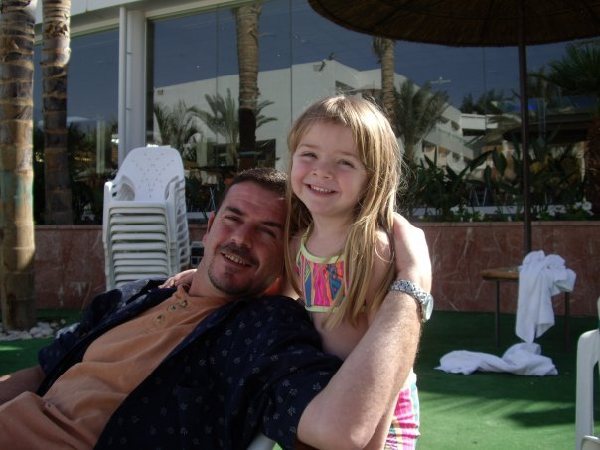 “I am dreading facing them for my daughters,” Says Moira, “I think I could face them myself but I’m afraid that when I see the pain in my daughters eyes it will kill me.” Her husband, Ziad Jilani was killed three years ago by Maxim Vinogradov, an Israeli border patrolman who put his rifle to Jilani’s head and pulled the trigger three consecutive times.
Now, for the third time, the family is appealing to Israeli authorities to press charges against Ziad’s killer. On the 16th of January 2011 the case was closed by police internal investigations (Machash) for the first time, for “lack of evidence”.
In the following month, on the 15th of February 2011, the family submitted an appeal to then Israel Attorney General, Menachem Mazuz. Despite a confession by Vinogradov that he had shot Ziad at zero range when he was lying on the ground because of the initial gunshot wound, an autopsy report pointing to a close range shooting, dozens of eyewitnesses who were also injured that day as a result of the incident, and very clear changes in Vinogradov’s testimonies before and after the autopsy, Mazuz did not see fit to change Machash’s decision to close the case.
With the help of the al-Mazaan Center for Human Rights, on January 4th 2012, the family submitted a second appeal. This time, to the Israeli Supreme Court, through the al-Mazaan Center for Human Rights, demanding that the new state prosecutor, Yehuda Weinstein, bring criminal charges against Ziad’s murderers.
“After Weinstein [Israel’s current Attorney General] had all the evidence we had hope that he would press charges against the killers,” Moira recalls, “but after he decided not to do so for the third time, it is hard to have hope that the court will do justice.”
According to Yesh Din in 2012 the MPCID received 240 complaints and various reports of suspected crimes allegedly committed by Israeli soldiers against Palestinians and their property in the West Bank and the Gaza Strip. Out of these registered complaints, only 103- not even half- have yielded investigations. Not one single indictment has been served to date.
The organization commented on the findings:
“The numerous defects in MPCID investigations of offenses against Palestinians, and in the Military Advocate General Corps’ supervision of the investigations, result in the closure of the vast majority of the files and a minimal number of indictments being served. This creates a feeling of lawlessness on the ground, which may be a central contributing factor in the rise in the number of killings over recent weeks.”
Moira describes this sense of lawlessness, “I still have hope, but its hard when we see everything that’s happening around us,” she says, “my husband’s case is one of what seems to be a systematic sweeping under the rug of violent incidences of Israeli soldiers against the Palestinian population under their authority.
We are not just going to court for Ziad Jilani. We are going to court for all the Palestinians killed before Ziad and those that will be killed thereafter.”
Related article
- Mother of Bilin protestor killed by Israel files court petition (alethonews.wordpress.com)
John Baird, Canada’s Minister of Foreign Affairs, Speaks at AIPAC
By Jim Miles | Palestine Chronicle | March 7, 2013
Canada’s Foreign Affairs Minister, John Baird, was in comfortable territory at the current AIPAC policy conference meeting in Washington, D.C.
I have deconstructed his arguments before, as he reiterates the current Harper government of Canada position in its unqualified support for Israeli occupation of Palestinian land and all that goes along with that. I will not repeat those arguments here as they are the same old-same old regurgitations of support for the militaristic Israeli state from a Canadian government that does not truly represent the majority of the people of Canada.
Baird presents the same arguments about Palestine living up to all previous agreements without recognizing that Israel has a lot to live up to as well; in particular that the UN Security Council has previously recognized withdrawal from occupied territories and the right of return of refugees. And as usual, the fault of the violence is the very nature of Arab/Palestinian social-political life, a mythology that Israel and its western supporters are careful to nurture.
What interested me most about his current statements, apart from the ego flattering standing ovations the AIPAC audience rendered unto him, are his comments about stopping aid to the Palestinian National Authority. Baird threatened a similar stopping of aid during the vote to recognize Palestine at the UN, then backed off after the overwhelming support displayed for Palestine.
These threats are being renewed again, against Palestine taking Israel to the International Criminal Court, but one has to wonder if the Canadian government is really aware of what the consequences of that cut might be.
Most of Canada’s aid to Israel is bound into corporate military research and development, including the realm of security and surveillance. The aid to the Palestinian Authority helps the PA maintain their fragile grip on the Palestinian population as it is used for similar areas of security, surveillance, and support for the few Palestinian elites who harvest the aid supplies for their own benefit. The Canadian military and the Canadian national police force, the RCMP, serve as trainers for the PA authorities own militarized units.
So what happens if the aid to Palestine is cut? Many things are possible, the most counterproductive one from the Israeli perspective would be the decrease in the control that the PA is able to exert over the Palestinian population on its behalf as the money supplies dry up. The Palestinian economy, such as it is, mainly in the West Bank, where the majority of the funds are utilized, would suffer even more.
With more economic weakness, and with a weakened PA no longer able to buy influence among its own people, the Palestinians would certainly be more restive and perhaps more aggressive towards their own elites as well as the Israelis – a third intifada would become more probable. Of course, more Palestinian violence would only make the current Canadian government say, “See, we told you they were a violent people,” and so the mythology of Israeli victimization will continue.
It would be a good thing perhaps to shed the yoke and burden of foreign control bought by the power of foreign dollars manipulating the economy and political scene in Palestine. The outcomes of such a cut are indeterminate, but usually in the world of political manipulation, unexpected outcomes are to be expected. For that reason alone, one can expect John Baird and the Harper government to prevaricate over cuts for some time to come.
– Jim Miles is a Canadian educator and a regular contributor/columnist of opinion pieces and book reviews for The Palestine Chronicle.
Mother of Bilin protestor killed by Israel files court petition
Ma’an – March 4, 2013
 BETHLEHEM – The mother of Bassem Abu Rahmah, who was killed in 2009 during a non-violent protest in Bilin, filed a petition to Israel’s High Court on Sunday to demand justice for the death of her son, B’Tselem said.
The petition was filed jointly with Bilin village council, B’Tselem and Yesh Din, and demands that Israeli Military Advocate General, Major-General Danny Efroni, be ordered to reach a decision in the case and prosecute the soldier and all those bearing command responsibility for the killing of her son.
Bassam Abu Rahman, 30, was killed in 2009 after being shot in the chest with a tear-gas canister during a demonstration against Israel’s separation wall.
Three video segments filmed during the protest prove that Abu Rahmah did not act violently and did not endanger the soldiers in any way, B’Tselem said.
The petition includes opinions from experts who reviewed the videos, stating that the grenade was aimed directly at Abu Rahmah.
Other soldiers in the same video can be seen firing tear-gas canisters directly at protestors in the presence of senior officers and in complete contravention of the open-fire regulations, B’Tselem said.
Despite these findings, the former Military Advocate General initially refused to open an investigation, only changing his mind after a threat to petition Israel’s High Court with expert opinion documenting the “unequivocal conclusion that the firing was aimed directly at Abu Rahmah.”
“The failure to reach a decision is dangerous and conveys the message to IDF and Border Guard personnel engaged in dispersing demonstrations that even if they shoot and kill demonstrators, they will not bear criminal liability,” B’Tselem said.
“Such a message reflects contempt for the lives of Palestinian civilians.”
The death of Bassam Abu Rahmah was featured in the highly praised Palestinian documentary “5 Broken Cameras.”
The film is based on five years of amateur camera work by journalist Emad Burnat as he documented weekly protests against land seizures by Israeli forces and settlers in the village of Bilin.
Related articles
- B’Tselem: The Israeli army uses lethal force against Palestinian protestors (occupiedpalestine.wordpress.com)
- Israel uses deadly weapons on unarmed Palestinian protesters – watchdog (rt.com)
Featured Video

The Truth About the Trump Shootings with Ken Silva
or go to
Aletho News Archives – Video-Images
From the Archives
Trans ‘milk’ as good as the real thing – NHS
RT | February 18, 2024
The drug-induced nipple secretions of trans women are as good as mothers’ breast milk for babies, the University of Sussex Hospitals NHS Trust claimed in a letter to campaigners made public in a report by British think tank the Policy Exchange on Sunday.
The healthcare trust’s medical director, Rachel James, argued that the off-label prescription drug cocktail men transitioning to female take in order to produce milk was “similar to the natural hormones which encourage lactation to develop when the baby is newly born.”
“The evidence which is available demonstrates that the milk is comparable to that produced following the birth of a baby,” James wrote in the letter, sent to Children of Transitioners last August.
Biological men who wish to lactate must first take hormones to grow milk glands and then take high doses of either domperidone or metoclopramide to stimulate milk production. Neither drug is approved for this use, though they are occasionally prescribed off-label to biological women who have trouble lactating.
However, domperidone’s own manufacturer, Janssen, warns patients the drug “may cause unwanted side effects affecting the heart in a breastfed baby” and “should be used during breastfeeding only if your physician considers this clearly necessary.” … continue
Blog Roll
 Aletho News
- Seyed M. Marandi: U.S. Strike Imminent – Toward Total War in the Middle East
- Russia Voted Under Fire. Washington Is Loading the Tankers.
- 12 Things Your Oncologist Was Trained Not to Tell You
- Anthrax Attacks Paved Way for COVID-Era ‘Junk Drugs and Vaccines’
- How Real Is the Impact of Western Sanctions on Israel?
- France, You Are Guilty: How Paris Turned Western Sahara into the Maghreb’s Powder Keg
- 2025 Nature Paper Claiming Worsening Global Drought Gets RETRACTED …Heavily Flawed
- Your Milk Is Not the Problem
- The Truth About the Trump Shootings with Ken Silva
- ARE PATIENTS BEING PROPERLY INFORMED ABOUT OZEMPIC?
- If Americans Knew
- Salah Sarsour’s Legal Team Says DHS Has Not Met Its Burden to Prove He Is Deportable
- An analysis of tax forms by The Intercept show Kraft’s charity and LLC have donated to Friends of the IDF and AIPAC’s super PAC.
- Israeli attacks kill four Palestinians in Gaza – Daily Update
- Inside Gaza’s death trap of collapsing, bombed-out buildings
- The everyday items Israel bans from Gaza every day
- Inside the siege, the ruined buildings of Gaza – Daily Update
- Debunking The Claim That Macklemore Has A “History Of Antisemitism”
- CPJ demands release of arrested Palestinian-US journalist near Bethlehem
- Robert Kraft: The Billionaire Friend of Netanyahu Pulling The Strings Behind the Macklemore/Ed Sheeran Blow Up
- Columbia Administered Fund Gives Big Money to Pro-Israel Groups
- No Tricks Zone
- 2025 Nature Paper Claiming Worsening Global Drought Gets RETRACTED …Heavily Flawed
- New Study: ‘Global Drought Shows No Detectable Recent Acceleration Under Climate Warming’
- Economic Masterminds: German Socialists Suggest Taxing Productivity Gains Stemming From Using AI
- The South China Sea Has Not Been Cooperating With The Climate Change Narrative
- Energy Crisis: Germany Enters Heating Season With Historically Low Gas Reserve Fill Levels
- New Study: The Antarctic Ice Sheet Gained Mass From 2020-2024 Due To Staggering Snow And Ice Accumulation
- Study: Ocean Heating Rates From Thousands Of Years Ago ‘Dwarf’ Modern Ocean Heating Rates
- Climate Extremists Target, Attack Large-Scale Power Grid Infrastructure In Germany!
- New Study: Antarctic Ice Melt Has Contributed Less Than 1 Centimeter To Sea Level Rise In The Last 30 Years
- Fear Of Debate: Alarmist German Climate Scientist Calls On Mainstream Media To Discredit Skeptic Voices
 Aletho News