 Israel, Jordan and the Palestinian Authority (PA) are scheduled to sign an agreement on Monday to build a pipeline from the Red Sea to the Dead Sea. The project will be launched during a ceremony at the headquarters of the World Bank in Washington DC.
A senior reporter for Israel’s Yedioth Ahronoth newspaper, Nahum Barnea, reported that: “according to the plan, also known as the Two Seas Canal agreement, nearly 100 million cubic metres of water will be transferred annually from the Red Sea to the Dead Sea, which will hopefully slow down the Dead Sea’s desiccation.”
Starting in the middle of last century, the Dead Sea began to rapidly shrink, falling roughly one cubic metre a year. Its surface area today is about 30 per cent smaller than it was only 20 years ago. Increasing demands for water, especially for agricultural production in Israel, have exacerbated the problem, in addition to the practice of building dykes that create evaporation ponds to exploit the mineral wealth of the Dead Sea.
According to the new agreement, a joint purification plant will be established and Israel, Jordan and the PA will all share the water.
Israel’s Minister for Regional Cooperation and Infrastructure, Silvan Shalom, will sign the agreement along with the Jordanian and Palestinian ministers of water. Shalom was quoted as saying that: “this is a historic agreement. It is a dream come true.”
According to the agreement, nearly 200 million cubic metres of water will be pumped annually from the Red Sea, with around 80 million cubic metres desalinated in a special distillation plant in Aqaba yet to be established. Israel will receive 30-50 million cubic metres of water for the Eilat area in southern Israel, while Jordan will receive 30 million cubic metres of water for its southern population as well as 50 million cubic metres of grey-water from Lake Tiberias for the north.
According to Yedioth Ahronoth newspaper, the PA had requested a foothold in the northern part of the Dead Sea near Ain Fashukha, but Israel refused. Instead, the PA will receive nearly 30 million cubic metres of water from Lake Tiberias, either desalinated water or grey-water, at production cost.
The entirety of the pipeline will be laid in the Jordanian territories to avoid any disputes with environmental organisations in Israel. The pipeline and the purification facilities are expected to be completed within four to five years.
~
Background:
The undersigned Palestinian NGOs call on the Palestine Liberation Organization (PLO) and the Palestinian National Authority (PNA) to halt all forms of cooperation with the World Bank-sponsored Red Sea – Dead Sea Conveyance Project (RSDSCP) and to take an unequivocal public stance of rejection to the project.
It has become clear beyond doubt that the project is an unacceptable attempt to force the Palestinian population to consent to their own dispossession and to compromise on their own rights.
Any lack of a clear position by the Palestinian leadership on this outrageous project, any stand of ambiguity or positive criticism towards it, contributes to the impunity that for far too long has allowed Israel to appropriate Palestinian water and deny Palestinians their rights.
Five reasons why the RSDSCP must be rejected:
1. The project undermines Palestinian water rights and legitimizes Palestinian dispossession from the Jordan River. Israel unilaterally controls the flow from the upper Jordan River and prevents Palestinians from making use of their rightful share of the lower river’s water. This is the sole cause for the gradual disappearance of the Dead Sea. Instead of addressing Israel’s water theft, the project aims to maintain the unjust status-quo of the river and allegedly “save” the Dead Sea through large scale Red Sea water transfer.
2. The project attempts to replace the river’s natural fresh water appropriated by Israel from the upper Jordan River with desalinated Red Sea water sold at high costs to severely water-dispossessed Palestinians and at pitiful quantities. Even these sales remain merely an “option” and the World Bank studies plan to ‘supply’ only Jericho, which is currently the only water-rich place in the occupied West Bank. With every drop of water that Palestinians purchase, they capitulate to their own deprivation.
3. Neither the World Bank’s Feasibility Study (FS) nor its Environmental & Social Assessment study (ESA) address the grave damage to the West Bank Eastern Aquifer, currently the only source Palestinians have for water supply and development. The Eastern aquifer is rapidly depleting, and its water table is dropping at an alarming rate – both as a direct result of the shrinking Dead Sea. Consenting to the project entails closing an eye to the rapid destruction of the only other water resource in the Eastern West Bank. Instead, Israel should be held accountable for the damage it caused to this vital resource on which over 1 million Palestinians currently depend.
4. Far from “saving the Dead Sea”, the RSDSCP will actually destroy the unique features of the Dead Sea and its ecosystem. Under the project, the Dead Sea is slated to turn into a dead, engineered pool of Red Sea water and desal brines, destroying this Palestinian and world heritage site.
5. Both Red-Dead studies (FS & ESA) and the entire conduct of the World Bank lack credibility and transparency, and make a mockery of the alleged consultation and participation process. Throughout the process, the Bank has systematically turned a blind eye to Israeli violations of Palestinian water rights.
The Bank repeatedly and deliberately ignored key concerns expressed by Palestinians since the project’s inception and during the “consultation” meetings in severe breach of its very own Code of Conduct, as well as the project’s Terms of Reference.
In addition, the Bank management has so far refused to make public the results of the Feasibility and ESA studies. The World Bank’s actions are tantamount to a cover-up.
Palestinian civil society organizations reiterate their rejection of the Red Sea – Dead Sea Conveyance Project and invite Palestinians of all walks to demand that the PLO and the PNA honor their aspirations for self-determination and justice by voicing a clear, loud and unequivocal “No!” to the Red-Dead Sea scam.
This project can only result in further damaging and undermining Palestinian water rights and all cooperation with it should cease immediately. Reparation and compensation for past damages and respect for Palestinian water rights are long overdue and the only way forward.
Endorsing organizations and individuals:
1. Palestinian Environment NGO Network (PENGON)
2. MAAN Development Center
3. Palestinian Wastewater Engineers Group (PalWEG)
4. Stop the Wall
5. Palestinian Farmers Union
6. Applied Research Institute Jerusalem (ARIJ)
7. Land Research Center
8. Media Environmental Center
9. Palestine Hydrology Group (PHG)
10. Palestinian Agricultural Relief Committees (PARC)
11. Union of Agricultural Work Committees (UWAC)
12. Environmental Education Center (EEC)
13. Institute of Environmental and Water Studies – Birziet University
14. Palestinian Center for Human Rights (PCHR)
15. Palestinian Environment Friends (PEF)
16. Arab Center for Agricultural Development (ACAD)
17. Earth and Human Center for Research and Studies (EHCRS)
18. Palestinian Farmers Association
19. The Arab Agronomists Association (AAA)
20. Prof. Dr. Hilmi S. Salem, Palestine Technical University – Kadoorie (PTUK)
21. Clemens Messerschmid, Hydrologist
22. Prof. Dr. Samir Afifi, Environmental & Earth Sciences Department, Islamic University of Gaza
December 9, 2013
Posted by aletho |
Economics, Environmentalism | Dead Sea, Israel, Jordan, World Bank |
Leave a comment
The US has some of the world’s most boring looking money—it’s all green. So we have terms like “greenbacks” for dollars, and “long green”, meaning lots of money.
I offer this as context for what I found when I got to wondering what had happened to the United Nations “Green Climate Fund”. You may recall that the Green Climate Fund was set up by the UN as the only result of the most recent Rio de Janeiro conference on climate idiocy. When the Fund is going full throttle, it is supposed to disburse no less than $200 billion ($200,000,000,000) dollars each and every year to the developing countries.
It turns out that, unlike those of us skeptics who are falsely accused of receiving big bucks from big oil, the “Green Climate Fund” has already raked in millions of dollars to spend on fighting the evil forces of carbon. They have a catchy slogan, viz: “The urgency and seriousness of climate change call for ambition in financing adaptation and mitigation”. Ambition in financing? What’s not to like?
Now, I’ve worked for development organizations before. The rule of thumb is that no more than 15% of the funds should go for administration, the rest needs to go to the eventual intended recipients of the largesse.

So … how many of the millions of dollars that have been “donated” by taxpayers in a variety of countries has gone to the actual poor, to aid them in their battle against the dread CO2?
Let’s start how much money we’re talking about.
Here’s a list of the countries who are both rich and improvident enough to squander their taxpayers’ money on the Green Climate Fund. It’s the usual suspects, my condolences to their citizens who are paying for this:
Australia, $513,000
Denmark, $608,000
Finland, $648,000
France, $326,000
Japan, $500,000
Germany, $1,053,000
South Korea, $2,099,000
Netherlands, $286,000
Sweden, $752,000
UK, $770,000
TOTAL, $7,555,000
The Koreans put in two megabucks … but then, they also negotiated a deal where the Green Climate Fund is headquartered in Seoul. So no tears for them, they’ll make out like bandits. Landing a UN drone hive is like landing a money machine, the local landlords will be overjoyed.
Now, of course, $7.5 million, that’s a long ways from their goal of dispersing $200 billion per year. In fact, it’s about this far from their goal:
 I see this as very good news—perhaps the countries of the world have figured out that they have better things to do with their money.
Anyhow, I started all of this out with a simple question. How much of the $7.5 million went to help the people it’s supposed to help?
Here’s the not-so-simple answer. When you do this kind of thing, first you have to hand out the plum jobs. Among those are the Members of the Board. Of course, then you have to pay for their travel, and a place for them to meet, for their meetings. And it turns out that three Board Meetings cost just under a million dollars. Expensive meetings. Very expensive meetings.
Oh, can’t forget the Board Committees, Panels, and Working groups. They cost just under four hundred thousand. Total, a million three …
The next round of plum jobs are the people who make up the “Interim Secretariat”. From the name, I take it that these folks are just placeholders until we get more parasites for the real Secretariat … in any case, there’s two million in the budget to hire fifteen people. My mathematics makes that $133,000 per person per year.
So one thing is clear. The UN Personnel came to do good for the poor … and they’re doing very well indeed. A hundred and thirty grand per person? You can see why the South Koreans will be the big winners in the deal.
It gets worse. They actually hire themselves to do the work, at incredible rates. For example, from the UN FCCC they are hiring one full-time and one part-time person, plus some administrative support … for a cool half million dollars. One and a half people. Half a megabuck.
And from the UN GEF, same deal, one full-time and one 60% time person, cost, another half million.
Now, you and I might be satisfied by that. But the UN folks are realists. They know that even if all those fifteen UN drones could somehow work together, they still couldn’t organize a booze-up in a frat house. For that, they always hire consultants. You know, people who can actually do the stuff the UN employees can only talk about.
So the Green Climate Fund has three-quarters of a million bucks in the budget for consultants, to make sure something gets done.
Oh, and did I mention $200,000 per year for the Executive Director?
Now, you gotta know that you can’t have fifteen pluted bloatocrats, plus 3.1 loan-drones from other UN agencies, and three-quarters of a million dollars worth of consultants, without renting some executive-type hive to house the worker bees. Plus phones and faxes and the like, that’s a million two …
Of course, you can’t do business by email, phone, and Skype. Gotta have a travel budget … three hundred grand.
Add all that up, and the “Interim Secretariat” costs $5.3 million …
Lastly, a Trust Fund needs an Interim Trustee. The Green Climate Fund hires that service from the World Bank for just under three-quarters of a million dollars per year … one trustee … IT costs … I can hardly believe it myself, but by a strange coincidence, what it costs them to run the Green Climate Fund adds up to … well … about seven and a half million dollars.
And that means that of the $7.5 million dollars donated by taxpayers all over the world, the people in the developing countries will get …
None.
Like I said, while I bemoan the waste of resources, I see all this as good news. Any country that takes a serious look at what’s happened to the first seven plus million that was donated to the Green Climate Fund will certainly have second thoughts about giving them money.
And that’s a good thing, because if they are this profligate with the first seven and a half million … can you imagine these same pack of over-fed fools in charge the dispensing of two hundred billion dollars to the developing world? I shudder to think of the waste, corruption, bribery, blackmail, and tribalism that would be involved in that kind of an industrial-scale goat-rope. The only people who’d be happy if that happened would be corrupt developing world leaders … and of course, Swiss bankers …
DATA: I do give the GCF high marks for one thing: transparency. All relevant documents are here.
October 28, 2013
Posted by aletho |
Corruption, Deception, Science and Pseudo-Science, Timeless or most popular | Green Climate Fund, U.N., United Nations Framework Convention on Climate Change, World Bank |
Leave a comment
By Colin Todhunter | July 30, 2013
On 15 August, India will celebrate Independence Day. There will be the usual celebratory flag waving and nationalist sentiments. The mainstream media will wallow in it, and key figures will indulge in the type of self congratulatory back-slapping that is common across the world when celebrating nationhood. But what will people be celebrating? The throwing off of British colonialism, the development of nationhood? Perhaps both of those things, but maybe neither, for what has ‘the nation’ and ‘independence’ come to mean in 2013?
Forget nations, flags or fly pasts. Freedom and self determination should be about ordinary people, ordinary people who farm and produce, who create genuine wealth, things of genuine worth.
Forget about sound bites referring to ‘the world’s biggest democracy’. Placing an X on a ballot paper every four years or so does not constitute democracy. If people are misinformed, misled and manipulated to think and act in a certain way, while backroom deals are carried out without their knowledge, they are but ignorant links in a chain (1,2).
Then there is no freedom, no self-determination. Someone else has appropriated the freedom and has enslaved. Someone else is determining the agenda.
Look no further to see this in action in that self-anointed bastion of ‘freedom and democracy’, the US.
Influence is bought and paid for by millionaire backers who fund politicians when running for office. And just in case that does not work to full effect, there is the infamous ‘revolving door’ that allows top corporate people to move in and out of the high echelons of government with ease in order to ensure the required policies are enacted. And don’t let the media get in the way of any of this. It won’t. Concentration of media ownership and the integration with armaments companies, banking interests and industry guarantees the public remain blissfully ignorant of issues, not least of how ‘democracy’ really works.
It all serves to ensure that the one percent maintain hegemony over the 99, maintain their unimaginable wealth and privileges and maintain the rest of the population in ignorance, in a state of powerlessness, in a state of poverty, relative poverty or vulnerability.
Yell moronically ‘USA!USA!’ when the authorities protect the people from imaginary or manufactured demons, or sign up and go to kill and die under the patriotic banner of ‘god and nation’. Mission accomplished, manipulation assured, control complete.
Class-based interests
And just who is doing the controlling? Never mind that a select number of companies predominate, dig further and you will find four institutions hold major stakes in most of these top companies and in doing so exert control over international finance and monetary policy via the IMF, World Trade Organisation, World Bank and Central European Bank (3). Control and wealth is highly concentrated in the hands of certain individuals or families.
In India too, a relative handful of families control much of the economy and society and are all too willing to fall in line with Western elite interests (4,5), whose hegemonic strategy lies in depressing wages, exploiting markets and maximising profit. Their interests do not lie with those of the 800 million who live on less than two dollars a day, the bulk of the people residing in the eight states that contain more poor people than 26 sub-Saharan African countries combined or the almost one in two children who are malnourished or their families; nor do their interests lie with the tens of millions across India who are having their lands stolen, their rights trampled on, their villages destroyed, their homelands occupied by paramilitary forces just because the rich require their land, their acquiescence, their mineral rich mountains, their agriculture.
The system cannot remedy this situation. It thrives on it. It produces it. But, of course, in an attempt to justify imperialism and plunder, the lie is forwarded that globalisation or neo-liberalism exists to lift the poor out of poverty, to liberate the masses from their burden.
The reality is that, in the name of ‘economic development’, what is currently happening in India constitutes the biggest land grab since Columbus and the biggest forced removal of peoples from their lands in history (6,7). Elite interests and supporters of their agenda in the media imply that the victims are unfortunate ‘collateral damage’ on the road to the promised land.
Sure, certain people have prospered in India in recent years. Sure, many now have lifestyles that their parents could only have imagined. But even under slavery, the lives of slaves improved over time. Moreover, notwithstanding the massive human ‘collateral damage’, there has been a terrible price to pay in terms of the damage caused in pursuit of an unsustainable model of development that destroys traditional agriculture, destroys the ecology and strips bare natural resources. This type of ‘development’ is warped and wholly unsustainable, whether within India or on a global level.
The poverty alleviation rate in India is more or less the same as it was back in 1991 when the US educated, World Bank/IMF trained Indian bureaucrat politicians began to assume power and shift the country towards the neo-liberalism required by their US backers (5).
India ‘s education system, healthcare system, infrastructure and welfare system has already been sacrificed via illegal ‘capital outflows’ into foreign bank accounts, which has accelerated since the opening up of the economy in ’91. A few have been enriched. At what cost to the rest?
In the West, it’s the same story. The secular theology of neo-liberalism has resulted in what many of us predicted. Tens of millions now bear the brunt of ‘austerity’, as companies rake in record profits and the extremely wealthy increase their wealth again by record amounts (8,9). Call it monopoly capitalism, a ‘new world order’ or some other name. The result is there for all to see: a rich and increasingly internationalised elite and the impoverishment of workers throughout the world.
On Independence Day, or during similar events in other places, we should urge people to think hard before bowing down to the flag, before swelling with pride and saying ‘god save the queen’, ‘the land of the brave’ or ‘mera pyara Bharat’.
Most nation states are run for the benefit of and to protect elite interests. And those interests have little respect for national boundaries or for the people they share the same land mass with. History shows that such interests have no hesitation in sacrificing (their own) national economies (10) or the lives of their compatriots en masse in barbaric wars (11) for ever greater power and ever more profit.
What do freedom, self-determination and patriotism actually amount to when the colonial oppressor is still present and has the compliance of India’s increasingly wealthy elite. Was this always to be India’s fabled ‘tryst’ with destiny?
Don’t be distracted by bogus notions of freedom, self-determination and patriotism.
The colonial oppressor is still there, and he has the compliance of India’s increasingly wealthy elite.
Notes
1) http://www.globalresearch.ca/the-eu-india-free-trade-agreement-corporate-driven-neocolonial-plunder/5338049
2) http://beejbachaoandolan.org/2007/09/
3) http://www.realnews24.com/the-large-families-that-rule-the-world/
4) http://www.worldcrunch.com/business-finance/rahul-gandhi-india-039-s-corporate-elite-and-the-enduring-power-of-family-dynasties/india-family-caste-business-gandhi/c2s11302/
5) http://www.globalresearch.ca/india-s-urban-slums-rising-social-inequalities-mass-poverty-and-homelessness/30756
6) http://www.countercurrents.org/sharma141109.htm
7) http://www.thirdworldtraveler.com/Globalization/War_Against_Nature_VFTS.html
8) http://www.nytimes.com/2013/03/04/business/economy/corporate-profits-soar-as-worker-income-limps.html?pagewanted=all&_r=0
9)http://www.youtube.com/watch?v=jkhmGOxwbhM
10) http://www.globalresearch.ca/the-offshore-outsourcing-of-american-jobs-a-greater-threat-than-terrorism/18725
11) http://www.globalresearch.ca/endless-growth-based-on-consumerism-is-there-an-alternative-to-capitalism-and-oligarchy/5318000
Source
July 30, 2013
Posted by aletho |
Corruption, Economics, Supremacism, Social Darwinism, Timeless or most popular | British Empire, Economic inequality, India, International Monetary Fund, Poverty, Social Inequality, United States, USA, World Bank |
Leave a comment
Thirty years ago, the international development community was abuzz with excitement. This was because it appeared that the perfect solution to poverty, exclusion and under-development had finally been found in the form of microcredit. As originally conceived, microcredit is the provision of micro-loans to the poor to allow them to establish a range of income-generating activities, supposedly facilitating an escape from poverty through individual entrepreneurship and self-help. Perhaps nowhere more than in Latin America was the excitement so intense. Stoked by the uplifting claims of Peruvian economist, Hernando de Soto [1], that a vastly expanded informal economy would prove to be the economic salvation of the continent, the U.S. government through the World Bank and its own aid arm, USAID, along with the Inter-American Development Bank (IDB), led the charge to establish the microcredit movement as the dominant local intervention to address poverty.
However, the sour reality that Latin America faces today is that all the excitement over microcredit was fundamentally misplaced. As I argue in a recent article [PDF] published in the Mexican journal Ola Financiera, the microcredit movement has likely proved to be one of the most destructive interventions brought to Latin America over the last 30 years. A growing number of Latin American governments and international development agencies are now finally reconsidering their once unconditional support for the microcredit model. So what went wrong? Let me point to a few of the most important problems.
First, the overarching outcome of the microcredit model in Latin America has been an increase in the supply of “poverty-push” informal microenterprises and self-employment ventures. Yet rather than creating a De Soto-esque foundation for rapid growth and poverty reduction, the very worst possible foundation for promoting long-term poverty reduction and sustainable development was created. As economists such as Alice Amsden, Robert Wade and Ha-Joon Chang have convincingly shown, the now wealthy developed countries and the East Asian “miracle” economies found that what is really needed to escape poverty is for the state to engineer an entirely different constellation of the “right” enterprises: that is, enterprises that are formalized, large enough to reap important economies of scale, can innovate, can use new technology, are willing to train their workers, can supply larger enterprises with quality inputs, can facilitate new organizational routines and capabilities, and can eventually export. Economic history shows, too, that financing the expansion of the “wrong” sort of informal microenterprises and self-employment ventures will simply not lead to sustainable development. As Ha-Joon Chang brilliantly points out, Africa has more individual entrepreneurs than perhaps any other location on the planet, and many more are being created all the time thanks to rafts of microcredit programs backed by the developed countries, yet Africa remains in poverty precisely because of this fact. Likewise in Latin America: by programmatically channelling its scarce financial resources (savings and remittances) into informal microenterprises and self-employment ventures, and so away from virtually all other higher-value uses, the continent has actually been progressively destroying its economic base.
Mexico exemplifies the microcredit trap created in Latin America. Its financial institutions have all proved to be adept at channelling their funds into hugely unproductive and all too often temporary informal microenterprises and self-employment ventures – so-called “changarros” – leaving the bulk of potentially growth-oriented, but low profit and high risk, small and medium industrial enterprise projects increasingly without financial support. Over the last two decades this “crowding out” trend has undoubtedly undermined Mexico’s once powerful industrial and technological base.
A very similar story emerged in Bolivia since the 1980s, where the U.S. government-supported push for microcredit has played a not-unimportant role in gradually destroying an economy that was once slowly industrializing under Import Substitution Industrialization (ISI) policies. Essentially, Bolivia’s carefully built-up raft of efficient industrial small and medium-sized enterprises was starved of funding and left to collapse. Resources were instead shifted into promoting the hugely unproductive and no-growth informal microenterprise and self-employment sector, which has, not surprisingly, dramatically expanded in recent years. Today, with nearly 40 percent of Bolivia’s financial resources now independently intermediated into these “wrong” sort of (micro)enterprises, the Bolivian government has its work cut out to try to stop the damaging de-industrialization trajectory underway in the country.
The second key problem with the microcredit model in Latin America arises from the fact that in the neoliberal 1990s it was aggressively commercialized and extensively deregulated. The primary motive for this move was to eradicate all government and international development community subsidies from the world of microcredit. The use of subsidies (typically to maintain low interest rates) was felt to be ideologically suspect by the main U.S.-based international development agencies, and it was also thought to unjustifiably add to the tax burden on business elites. With extensive advice and financial support provided by USAID, Bolivia was turned into the “best practice” example of commercialised microcredit, thanks mainly to BancoSol, the world’s first dedicated commercially-driven microcredit bank. Yet turning microcredit into a for-profit business under minimal regulation has proved to be a singular disaster: spectacularly damaging levels of Wall Street-style greed, profiteering and financial market chaos soon ensued. Microcredit effectively became the developing world’s very own version of the USA ’s sub-prime lending crisis.
In Bolivia, the commercialization of microcredit has been a major development disaster for the poor. First, Bolivia’s scarce financial resources were disastrously shifted into the “wrong” enterprises, as I just pointed out. Commercialization also directly precipitated the “microcredit meltdown” that Bolivia experienced across 1999-2000, an event that inflicted very serious long-term damage on the Bolivian economy. Crucially, however, commercialization has been a massive success for those managing and investing in Bolivia’s microcredit institutions. The elite group of individuals involved in running Bolivia’s main microcredit institutions, famously including BancoSol and its predecessor, PRODEM, have all become very rich indeed. High salaries, bonuses and dividends have been important to those most closely associated with the management and ownership of BancoSol. The first employees in PRODEM, an institution that has its origins as an NGO funded by the international community to “help the local community,” eventually made millions of dollars after they gradually took control of PRODEM and then brazenly sold it off to a Venezuelan bank. We should, of course, not be surprised to find that little trust, respect or solidarity exists between Bolivia’s poor and the microcredit sector supposedly established at great expense to help them.
Mexico’s experience also exemplifies the tremendous damage wrought by the commercialization of microcredit in Latin America. Even more so than in Bolivia , it is not the poor that have been benefitting from the increased supply of microcredit, but a small financial elite that has been quietly profiteering to a simply stupendous extent. Probably the best/worst example here is that of Banco Compartamos, an organization founded in 1990 as an NGO and making extensive use of international donor grant funding. Even with laudable goals written into its founding articles, very early on it became clear that the main intended beneficiaries of Compartamos’s operations were going to be its senior staff. After 2000, for example, the senior staff began to reward themselves with Wall Street-style salaries, bonus packages and cheap internal loans which allowed them to buy shares in Compartamos. Then in 2007, when Compartamos underwent the inevitable IPO, key senior staff really hit the big-time, with a number of them pocketing several tens of millions of dollars when they off-loaded their shares into the market. A number of external investors also made vast fortunes from their shareholdings in Compartamos, notably the Boston-based microcredit advocacy and investor body ACCIÓN, which saw an initial $1 million stake in Compartamos (of which $800,000 was actually a grant to ACCIÓN) rise in value to nearly $270 million. Note also that Compartamos generates the revenues to support such high financial rewards to senior staff by charging as much as 195 percent real interest rates on its microloans to mainly poor Mexican women.
Inevitably, the supply of microcredit has begun to reach its saturation point in Mexico. Compartamos’s growth has been nothing short of dramatic, while many other domestic microcredit institutions have also grown very rapidly. Compartamos has been the world’s most profitable microcredit institution for five of the past six years, and its nearly $100 million dividend payout to investors is now larger than the balance sheets of most other microcredit institutions. With such huge financial rewards made possible by lending to Mexico’s poor, the big profit-hungry international banks, such as Citigroup, have entered the market, clearly adding to the lending frenzy underway. However, real fears exist that Mexico cannot now avoid a destructive sub-prime-like “microcredit meltdown” episode not unlike the one that hit the Indian state of Andhra Pradesh in 2010. Indeed, it is well known that multiple lending to households has begun to reach epidemic proportions in many parts of Mexico, especially in the massively over-supplied state of Chiapas.
Nevertheless, the question remains: has microcredit in Latin America in general, and Compartamos specifically, been helping the poor to escape their poverty? If the answer is broadly positive, then the spectacular financial rewards accruing to the providers of microcredit might be justified to an extent if meaningful benefits are accruing to the recipients – the poor. However, the unpalatable answer to this question is a resoundingly negative one: there is not a shred of real evidence to support the claim that Compartamos’s microcredit activities have played a role in resolving poverty. First consider that a U.K. government-funded study of virtually all previous impact evaluations of microcredit dramatically showed there is no empirical evidence anywhere [PDF] to show that microcredit has had a positive impact on poverty. Even long-standing supporters of microcredit now accept this extremely unpalatable fact.
More specifically, consider the findings of a just-released impact evaluation of Compartamos [PDF], financed by Compartamos itself and centrally involving one of the most high-profile microcredit supporters, professor Dean Karlan, who is based at Yale University in the U.S. In spite of Comapartamos’s huge presence in poor communities across Mexico, and its previous claims to be greatly helping Mexico’s poor, the impact evaluation team could only come up with a tiny amount of evidence of any positive impact arising from its activities. This was bad enough. But this tepid conclusion actually hides a much more disturbing fact, which is that the research team could only manage to arrive at this sliver of good news by effectively refusing to adopt/adapt an evaluation methodology that would capture the most important downsides to the microcredit model. One can only presume that this was felt necessary in order to ensure that they could come up with the required (very limited) positive impact result they later disingenuously claimed to have found, and which allowed Compartamos and other institutions involved to inevitably spin into the specious claim that Compartamos “generally benefits (its) borrowers”.”
Notably, the research team entirely overlooked so-called “displacement” effects – that is, the negative impact on incumbent microenterprises in the same community that lost business and income thanks to waves of new Compartamos-supported microenterprises. With most Mexican communities for a long time adequately served by simple informal microenterprises providing retail and other services to the poor, the arrival of rafts of new microenterprises operating in exactly the same sub-sector will inevitably have precipitated very large displacement effects. But these downside impacts were ignored. The team also failed to factor in the impact of exits, which is when a microenterprise fails – which the vast majority actually do, and usually very quickly – and the hapless individuals involved then have to either divert other funds (pensions, remittances, savings, etc.) to continue to repay their microloan, or else they lose assets lodged as collateral when they are forced into outright default.
But perhaps the most egregious downside impact ignored by the research team relates to the fact that they also chose to examine a very short and unrepresentative time period – introducing microcredit into a community where before there was none. This then allowed them to simply aggregate the short-term results in such virgin territory into a generally upbeat assessment of the longer-term impact. This is utter nonsense. By doing this, the research team chose to ignore, first, the fact that Compartamos has contributed to further inflating Mexico’s already over-blown and massively unproductive “changarros” sector, which a growing number of analysts now accept is creating an existential threat to the Mexican economy. Second, there was also no comment on the huge opportunity cost involved when scarce funds are gradually diverted away from the “right” enterprises. This silence prevailed in spite of the fact that even the neoliberal-oriented IDB had the guts to publicly admit in 2010 that this “crowding out” issue actually lies at the heart of Latin America’s recent history of poverty and exclusion. Third, you will find nothing in this impact evaluation that discusses the over-indebtedness problems that are clearly looming on the horizon for Mexico’s poor communities, and particularly for many of Compartamos’s long-standing clients.
The Latin American economies have all been ill-served by the microcredit model, which has provided, and continues to provide, a serious headwind to those governments in Latin America hoping to escape once and for all from poverty, exclusion and primitivizing development trajectories. That microcredit continues to attract such support today thus needs some explanation. I would argue it is down to two factors. First, the politics and ideology; principally the need by the U.S.-led international development community to ensure that individual entrepreneurship and self-help remain the only potential paths out of poverty for the poor in Latin America, and not the exercise of any form of “collective capabilities” through social movements, trade unions, pro-poor governments, or any other similarly “subversive” intervention that the poor might wish to collectively deploy to escape their poverty, and might even have voted for as part of the “pink tide” of leftist governments. Second, there is the issue of the massive wealth that a tiny financial elite has been able to generate for itself thanks to (over)lending to the poor, and which it is now, quite predictably, unwilling to forego. This wealth has allowed, among other things, for the microcredit industry to aggressively lobby governments, mount massive PR campaigns and effortlessly finance deliberately dodgy impact evaluations, all in order to persuade the key actors in Latin America to continue to support the microcredit model.
All told, Latin American governments urgently need to disentangle themselves from the egregious myths and neoliberal-inspired fantasies surrounding microcredit, and begin to completely re-think their (often imposed) allegiance to what has proved to be an ultimately destructive poverty reduction and local development model.
[1] Hernando de Soto (1986): El otro sendero: la revolución informal. Lima: ILD
Milford Bateman is a freelance consultant on local economic development and also, since 2005, a Visiting Professor of Economics at Juraj Dobrila at Pula University in Croatia.
July 24, 2013
Posted by aletho |
Deception, Economics, Timeless or most popular | Africa, Bolivia, Import Substitution Industrialization, Inter-American Development Bank, Latin America, Mexico, Microcredit, United States, World Bank |
Leave a comment
Economy ministers of member countries of Banco del Sur are meeting today in Caracas to define the operational details and implementation of this financial institution – a new regional funding entity independent of the International Monetary Fund (IMF) and the World Bank.
Hernán Lorenzino, the minister of economy and public finance of Argentina, Luis Arce, Bolivian minister of economy and Carlos Marcio Cozendey, secretary of international affairs at the Brazilian ministry of finance, have already arrived to the Venezuelan capital.
Paraguay is the only country that has not confirmed the attendance of any representative at the meeting.
Ministers are expected to establish a ‘start date’, when each country will have to make its contribution to the newly founded institution. As a full member and founder, Argentina will provide US$400 million to Banco del Sur.
Days ago, Ricardo Patiño, Ecuadorian foreign affairs minister, had stated that the new bank “can be used to bail out a country, small or big, and meanwhile not have to submit to the dictates and conditions of the IMF.”
Banco del Sur is a result of an initiative by the late leader of Venezuela, Hugo Chávez, and was formalised in February 2007 when he and then Argentine president Néstor Kirchner signed a memorandum of creation, which also included Bolivia, Ecuador, Uruguay, Brazil and Paraguay.
The South American financial institution aims to promote development, economic growth and improvement of infrastructure in all member countries.
The entity’s constitutive agreement establishes that Banco del Sur will have US$20bn of authorised resources and subscribed capital of US$10 billion, with US$7 billion in initial contributions by partner countries. A member contributes according to the capacity of its economy.
The headquarters of Banco del Sur which began preliminary operations on 3rd June is in Caracas, but also has offices in Buenos Aires and La Paz.
June 13, 2013
Posted by aletho |
Economics, Solidarity and Activism, Timeless or most popular | Argentina, Banco del Sur, Bolivia, Brazil, Ecuador, Hugo Chávez, IMF, International Monetary Fund, Ricardo Patiño, Uruguay, Venezuela, World Bank |
Leave a comment
African agriculture is in need of support and investment. Many initiatives are flowing from the North, including the G8’s “New Alliance for Food Security and Nutrition in Africa” and the Alliance for a Green Revolution in Africa (AGRA). These initiatives are framed in terms of the African Union’s Comprehensive African Agricultural Development Programme (CAADP). This gives them a cover of legitimacy.
But what is driving these investments, and who is set to benefit from them?
The current wave of investment emerges on the back of the gathering global crisis with financial, economic, food, energy and ecological dimensions. Africa is seen as underperforming and in control of valuable resources that capital seeks for profitable purposes. The World Bank and others tell us Africa has an abundance of available fertile land, and that Africa’s production structure is inefficient, based as it is on many small farms producing mainly for themselves and their neighbourhoods (i).
Africa is seen as a possible new frontier to make profits, with an eye on land, food and biofuels in particular. The recent investment wave must be understood in the context of consolidation of a global food regime (ii) dominated by large corporations in input supply (seed and agrochemicals) especially, but also increasingly in processing, storage, trading and distribution.
G8 and AGRA: a new wave of colonialism
Opening markets and creating space for multinationals to secure profits lie at the heart of the G8 and AGRA interventions. Both initiatives are built on the basis of public-private partnerships (PPPs) with the large multinational seed, fertiliser and agrochemical companies setting the agenda, and states and institutions (like the G8, World Bank and others) and philanthropic institutions (like AGRA and others) establishing the institutional and infrastructural mechanisms to realise this agenda.
Multinational corporations like Yara, Monsanto, Syngenta, Cargill and many others want secure markets for their products in Africa. In the first place, security means protection of their private ownership of knowledge in the form of intellectual property (IP) protection. Across Africa, so-called ‘harmonisation’ of laws and policies are underway to align African laws and systems with the interests of these multinationals.
Harmonisation of trade laws means opening borders across the continent to free trade. But this is a skewed free trade, one that favours the ‘formal sector’ of goods and services that have gone through approval and registration processes. Farmers and other producers of goods and services who cannot afford to enter the official approval system are marginalised and trading of their products is rendered illegal.
Private ownership of knowledge and material resources (for example, seed and genetic materials) means the flow of royalties out of Africa into the hands of multinational corporations. In some countries where laws protecting the interests of corporations are well established – for example in South Africa – multinationals have entirely occupied domestic seed and agrochemical sectors with profits flowing out of the country. The same is happening for agricultural services, trade, manufacturing and even selling of food.
The private companies are not acting on their own. They are using investment-friendly government policies and plans to advance their agenda.
CAADP and regional investment policies: facilitating ‘orderly’ processes of colonialism
There are many well-meaning organisations and individuals who view CAADP as an African-based investment plan. But Africa is not isolated from the world. CAADP emerged at the height of neo-liberalism globally in the early 2000s. African governments were mired in the consequences of decades of structural adjustment that saw the net outflow of financial and other resources from Africa to the rest of the world. The New Economic Partnership for Africa’s Development (NEPAD) was an initiative by selected African governments to integrate Africa into global flows of capital. The expectation was that profit-generating investment, and creating the conditions for protection of this investment, were Africa’s chance to catch up with the rest.
African governments, desperate for some financial relief, are willing to make whatever changes are necessary to bring capital into their countries. The multinationals are setting the terms: harmonisation, free trade and protection of private IP or no investment. It is therefore of little use calling for CAADP to be placed at the centre of investment plans. CAADP itself is a compromised instrument, calling for the very policies and programmes favoured by the multinationals.
Food security and corporate-driven investment in Africa
Harmonisation, free trade and the creation of institutions and infrastructure to facilitate multinational penetration into Africa are presented as the answer to food insecurity on the continent. Multinational corporations, African states, states outside Africa, philanthropic institutions, multilateral institutions such as the World Bank and even some non-government organisations are all part of this agenda. Surely so many organisations and people cannot be wrong?
The logic is that of the Green Revolution: introduce yield- and sales-enhancing technologies and systems, provide credit for producers to access these technologies, and anticipate increasing returns from sales to cover the increasing cost of inputs. Expand access to markets globally and regionally to absorb increased production.
This model can benefit some, as Green Revolutions in Asia and to a lesser extent in Latin America have shown. However, it also has negative social and ecological side effects. Green Revolution technologies benefit relatively few farmers, often at the expense of the majority. These technologies produce concentration of land ownership, increasing economies of scale (production has to be at a large scale to get into and stay in markets), and a declining number of food producing households in a context of limited other livelihood options.
Ecological concerns about Green Revolution technologies are rising to the top of the global agenda, especially loss of biodiversity when commercial hybrids and GM seed dominate (especially maize as a staple crop in Africa, and the introduction of soya as the basis of biofuels and commercial intercropping approaches), soil degradation and water pollution caused by excessive use of manufactured chemicals in synthetic fertilisers, and water shortages caused by wasteful water use in irrigation.
The Green Revolution produces uneven benefits, favouring farmers with financial resources of their own, with access to more land, and with some formal education. The majority of resource poor farmers are excluded from public support for agriculture, with infrastructure and institutional frameworks designed for the minority to benefit.
Currently African food security rests fundamentally on small-scale and localised production. The majority of the African population continue to rely on agriculture as an important, if not the main, source of income and livelihoods. In most sub-Saharan African countries, agriculture is the primary economic activity for between 50% and 90% of the population (iii). Even though there is growing urbanisation, the majority will continue to rely on agriculture for their livelihoods for decades to come. The rural population continues to grow in absolute terms even while the urban population grows as a proportion of the total population.
We know that all of these people will not benefit from these new investments. Seen as more inefficient than those producers who are in a position to adopt the new technologies, many will be forced out of agriculture to become passive consumers. Instead of building the broad base of producers, G8 and AGRA investments, supported by African government policies and resources, will narrow the base of producers.
The practical results of the recent surge in investment in African agriculture expose the empty rhetoric of African food security. Blatant land grabs are well known across the continent. Mega projects such as the ProSavanna project in northern Mozambique are displacing farmers from their lands and imposing large-scale production structures for export. Favourable investment terms (for example tax free zones and laws on repatriation of profits) undermine even the questionable benefits increased foreign exchange brings. Meanwhile actual farmers are separated from the land and the only realistic option for a livelihood. African governments and their investment ‘partners’ enable and implement these projects.
Alternatives
First and foremost, differentiated strategies are required, so that local and informal markets, proven low-input and ecologically sustainable agricultural techniques including intercropping, on-farm compost production, mixed farming systems (livestock, crops and trees), on-farm biofuel production and use, and intermediate processing and storage technologies are recognised and vigorously supported. The emphasis here is on individual and household food security first, with trade arising from surpluses beyond this. The International Assessment of Agricultural Knowledge, Science and Technology for Development (IAASTD) provides detailed and scientifically sound proposals in this regard.
Open access technologies are an essential principle, especially seed, where all recent technological advances are based on 10,000 years of collective experimentation and sharing. No-one and no corporations should be allowed to privatise the results of ongoing research. Companies can sell their new varieties, but once sold, they re-enter the common pool that anyone should be able to use and improve on at will.
Green Revolution technological development leads to an ever-increasing gap between conception and execution, that is between the knowledge that goes into producing a new seed variety and those who use the seed. An alternative, based on open source technologies, is a far closer working relationship between decentralised technicians and producers to define the research and development agenda (what traits are farmers looking for in specific locations, what crops are priorities for further development etc). Plant breeders are still able to make profits by selling new varieties to those who want to buy fresh seed, especially commercial farmers. But if farmers choose to reuse and adapt seed once they have bought it, that must be their right.
Notes
i World Bank 2009 “Awakening Africa’s sleeping giant: Prospects for commercial agriculture in Africa’s Guinea Savannah zone and beyond”, World Bank Agriculture and Rural Development Unit, Africa Regional Office
ii McMichael, P. 2009 “A food regime genealogy”, Journal of Peasant Studies, 36: 1, pp.139-169
iii World Bank, “World Databank”, http://databank.worldbank.org/data/home.aspx
June 5, 2013
Posted by aletho |
Economics, Environmentalism, Malthusian Ideology, Phony Scarcity, Supremacism, Social Darwinism, Timeless or most popular | Africa, Alliance for a Green Revolution in Africa, Green Revolution, Monsanto, Sub-Saharan Africa, World Bank |
Leave a comment
The ‘big five’ of the developing world will discuss creating their own global World Bank as their 5th annual summit kicks off Tuesday in sunny Durban.
The move is linked to the developing world’s disillusionment with the status quo of world financial institutions. The World Bank and IMF continue to favor US and European presidents over BRICS nations, and in 2010, the US failed to ratify a 2010 agreement which would allow more IMF funds to be allocated to developing nations.
“Not long ago we discussed the formation of a developmental bank… Today we are ready to launch it,” South African President Jacob Zuma said on Monday.
The ‘big five’- Brazil, Russia, India, China, and its newest addition, South Africa, will come together for the annual conference this year in Durban, South Africa in hopes of establishing a new development bank which will fund infrastructure and development projects in the five member states, and will pool foreign currencies to fend off any impending financial crisis.
“We will discuss ways to revive global growth and ensure macroeconomic stability, as well as mechanisms and measures to promote investment in infrastructure and sustainable development,” Indian Prime Minister Manmohan Singh said on Monday, before heading to Durban.
The BRICS have called for a reconstruction of the World Bank and IMF, which were created in 1944, and want to put forth their own ‘Bretton Woods’ accord. And they are serious.
“Brics is not a talk show. It is a serious grouping,” Zuma told reporters at the presidential guest house in Pretoria.
The new bank will cater to developing world interests and will symbolize a great economic and political union.
“There’s a shift in power from the traditional to the emerging world. There is a lot of geo-political concern about this shift in the western world,” Martyn Davies, chief executive officer of Johannesburg-based Frontier Advisory, told Bloomberg.
“A future BRICS Investment Bank is seen as a mechanism that would help realize where money should go, agree development strategies and coordinate investment,” explained Georgy Toloraya, the executive director of Russia’s national committee for BRICS studies to SA News.
In its nebulous stage, the new BRICS bank is unanimously supported by all five member states. In Durban, problems will arise on how to govern, fund, and operate the grand venture.
“When you set up a bank like this it’s not just a question of opening the doors. There are some issues about where it is going to be located, what the capital contributions are going to be, the rules of deploying that investment. These are the sort of details that are in various stages of discussion and negotiation,” said South African Trade Minister Rob Davies, in a statement.
The leaders may not reach a specific agreement in Durban this week, as each country has its own stipulations on its creation. Russia, for example, wants to cap each side’s initial contribution to $10 billion, according to Mikhail Margelov, part of President Putin’s team in South Africa.
Emergency Currency Fund
Pooling currency to deflect a future crisis is also a high priority topic set for the conference.
Once a loose political affiliation, the BRICS bloc is now a serious economic contender in the world economy, representing 40 percent of the world’s population, and accounting for one fifth of global GDP.
Between the five countries, the bloc holds foreign-currency reserves of $4.4 trillion, and needs an institution to safeguard this amassing wealth. The reserve will also protect members from short-term liquidity volatility and balance-of-payment problems.
Presently, it is proposed the member states contribute an equal share to the fund, but there is still dispute over whether to involve IMF management. India has voiced support for IMF involvement, but other BRICS countries may resist.
“A reserve pool, I think, is still some way off, ” said Davies.
In October, Brazilian Finance Minister Guido Mantega suggested the pool be modeled after the Chiang Mai Initiative, which provides a financial safety blanket to south east Asian countries.
Trade within the group swelled to $282 billion last year and could very well reach $500 billion by 2015, according to Brazilian government data.
Many Firsts
The conference is a benchmark of many firsts. It is the first time the conference has been held on South African soil.
For China, it is President Xi’s first visit to South Africa, where China is a leading trading partner and investor. In 2012, the trade between the two countries was 201bln ZAR ($21bln), according to the South African Revenue Service.
The conference is also President Vladimir Putin’s first international visit in 2013.
For South Africa, which makes up just 2.5 percent of total gross domestic product in BRICS, the summit is a way to showcase its role as an investment gateway to Africa. South Africa is the newest and smallest member of the BRIC bloc. It has the 28th highest ranked GDP in the world: China is 2nd, Brazil 6th, Russia 9th and India 10th.
March 26, 2013
Posted by aletho |
Economics, Solidarity and Activism | BRICS, Chiang Mai Initiative, International Monetary Fund, South Africa, World Bank |
Leave a comment
On March 19 several Non-Governmental Organisations (NGOs) condemned a statement by the World Bank’s International Finance Corporation, IFC [1] which defends the record of a Honduran palm oil company, Grupo Dinant, implicated in dozens of murders as well as other human rights abuses. The IFC statement explicitly admits to supporting training for the company’s armed security guards.
The NGOs are : Friends of the Earth International, Global Forest Coalition, Global Initiative for Economic, Social and Cultural Rights, Urgewald, Rights Action, Rettet den Regenwald/Rainforest Rescue, Global Justice Ecology Project, and Biofuelwatch.
A World Bank Ombudsman [2] is currently investigating an IFC loan of $30 million for Grupo Dinant which was approved in 2009, at least half of which has already been disbursed.
This month, an Open Letter by 17 NGOs [3] and an international petition signed by over 63,000 people [4] have protested the loan and called on the World Bank to immediately cease their support for Grupo Dinant.
Since 2009, international human rights bodies have documented dozens of murders of peasant activists and their supporters in connection with land conflicts involving Grupo Dinant, the company’s armed security guards and Honduran military and police.
The evidence includes a fact-finding mission report by international human rights organisations in March 2011, a hearing before the Inter-American Commission of Human Rights in October 2011, an international public hearing on human rights in the region in May 2012 [5] and a report about human rights abuses attributed to military forces in the region by Rights Action, published this month [6].
The recent Rights Action report confirms that at least 88 members and supporters of peasant movements have been murdered in targeted killings in the Bajo Aguan Valley over the past three years. It documents the direct involvement of Grupo Dinant’s armed security forces in the violence against peasant movements. Contrary to the World Bank’s claims that the violence ended in 2012, two peasant activists were found tortured and murdered in February 2013. [7]
Annie Bird from Rights Action says: “It is a serious indictment of World Bank’s role in Honduras’s land conflicts that their International Finance Corporation admits to directly engaging with the training of Grupo Dinant’s paramilitary ‘security guards’. It is not clear whether this engagement is a response to concerns over human rights abuses but retraining paramilitaries implicated in killings is never an acceptable response. The World Bank must cease such engagement and stop supporting Grupo Dinant at once.”
Almuth Ernsting from Global Forest Coalition and Biofuelwatch adds: “The World Bank’s claims that killings are being investigated by Honduran courts with full cooperation from Grupo Dinant contradict the findings of human rights missions which show a state of total impunity surrounding those murders. Such a state of impunity has been confirmed by the UN Working Group on Mercenaries. Not only must the World Bank cancel its loan but there needs to be a full investigation into their role in human rights abuses in Honduras.”
In 2011, the German development bank, DEG, cancelled a loan for Grupo Dinant due to the company’s involvement in serious human rights abuses.Yet the World Bank continues to back the company and dismiss all independent evidence, as their recent statement shows.
Jeff Conant from Friends of the Earth US adds: “The World Bank’s statement on Bajo Aguan reveals the extent of their complicity with a palm oil company implicated in some of the most serious human rights abuses in Central America today. Years after a damning audit of their palm oil funding and a supposed overhaul of their policies, the World Bank is legitimising the use of armed paramilitaries in land conflicts against peasants who are trying to reclaim their own land, dismissing a vast volume of evidence from independent fact finding missions.”
The NGOs demand cancellation of the World Bank’s loan to Grupo Dinant and an immediate full and independent investigation into the World Bank’s involvement with Grupo Dinant, which must go beyond the remit of the current Ombudsman investigation.
NOTES:
[1] www1.ifc.org/wps/wcm/connect/REGION__EXT_Content/Regions/Latin%20America%20and%20the%20Caribbean/Strategy/Corporacion_Dinant?
[2] A complaint submitted by Rights Action is currently being investigated by the Compliance Advisor Ombudsman (CAO). The CAO is an independent agency which investigates complaints filed by communities affected by project funded by the World Bank’s International Finance Corporation (IFC).
[3] www.fian.org/fileadmin/media/publications/International_Statement_CAO_-_Lower_Aguan_Honduras_-_01-.pdf
[4] www.rainforest-rescue.org/mailalert/909/honduras-world-bank-palm-oil-loans-linked-to-murders
[5] www.fidh.org/IMG/pdf/honduras573ang.pdf; http://hrbrief.org/2011/10/human-rights-situation-in-the-bajo-aguan-honduras/; www.lawg.org/storage/documents/Honduras/declaration%20international%20public%20hearing%20bajo%20aguan.pdf
[6] http://rightsaction.org/sites/default/files//Rpt_130220_Aguan_Final.pdf
[7] See http://www.coha.org/21693/
March 23, 2013
Posted by aletho |
Aletho News | Dinant, Global Forest Coalition, Grupo Dinant, Honduras, Inter-American Commission of Human Rights, International Finance Corporation, Rights Action, World Bank |
Leave a comment
On February 27, the office of the Compliance Advisor/Ombudsman (CAO) for the World Bank’s International Finance Corporation (IFC) launched an audit of the lending arm’s $30 million investment in Tegucigalpa-based Corporación Dinant, which produces palm oil and food products. The audit comes in response to widespread claims of violence, intimidation, and illegal evictions carried out by Dinant’s private security guards in Honduras’ Bajo Aguán valley, the center of the country’s ongoing land struggle. In offering its resources and reputation to the company, the World Bank and its member countries are complicit in the deaths of countless innocent farmers.
The COA’s review began just two days after the United Nations Working Group on the use of mercenaries urged the Honduran government “to properly investigate and prosecute crimes committed by private security guards and to ensure that victims receive effective remedies.” A delegation from the Working Group was in the country from February 18 to 22, when it met with government officials and representatives of civil society and the private sector, including security firms. The delegates voiced their particular concern about the “alleged involvement of private security companies hired by landowners in widespread human rights violations including killings, disappearances, forced evictions and sexual violence against representatives of peasant associations in the Bajo Aguán region.” Dinant is the largest single landholder in the region.
An appointed panel of unnamed experts is currently convened in Washington, D.C., to review both the IFC’s adherence to its social and environmental policies and the role Dinant has played in the abuses. Many human rights observers consider the company’s owner, Miguel Facussé, to be one of the country’s most powerful men and hold him responsible for the killings of dozens of campesinos.
The audit had been a long time coming. On November 19, 2010, the human rights organization Rights Action wrote a letter to the World Bank’s then-president Robert Zoellick demanding that the financial institution suspend its funding to Honduras. The group cited the “context of grave human rights abuses and lack of independence of the justice system” as grounds to withhold funding, and characterized support for Dinant as “a case of gross negligence of the World Bank’s human rights and due diligence obligations.” In the letter, Rights Action also noted that “at least 19 farmers in this region have been killed in the context of conflicts with biofuel industry interests.” (In a new report released two weeks ago, the same group declared that 88 farmers and their supporters have been killed in Bajo Aguán since January 2010, most of them in targeted assassinations.)
In the ensuing period, the office of the CAO maintained discussions with local civil society organizations and in April 2012, CAO Vice President Meg Taylor informed the IFC that her office was initiating an appraisal of the funding group’s investment in Dinant. That appraisal, having found sufficient grounds for further investigation, culminated this August in the decision to conduct the current audit.
A diverse group of international organizations, including Oxfam, Vía Campesina and the Latin American Working Group, welcomed CAO’s decision. In a co-signed letter, though, the groups expressed their firm demand that the IFC halt its financial cooperation with the palm oil company
until a) clear evidence is provided of significant progress in overcoming impunity of crimes and human rights abuses committed against organized peasants and their supporters in the Lower Aguán; and b) a comprehensive, just, peaceful and sustainable resolution is provided to the conflicts over land between the Corporación Dinant, the government of Honduras and the local peasant movements.
The panel is scheduled to conclude its audit on March 8.
On Friday, March 1, while the CAO panel gathered in Washington, journalist Carlos Augusto Lara Cruz was reportedly threatened by a Dinant employee while covering a confrontation between campesinos and a military unit. It must be noted that Honduran human rights defenders have consistently and credibly accused military and police units of collaborating with Dinant security guards in kidnapping, torturing, and murdering land rights activists.
One of the latest assassinations in the area took place on Thursday, February 21, when lawyer José Andrés Andrade Soto was shot dead in the town of Tocoa. Andrade Soto led the regional office of the National Agrarian Institute until former president Manuel Zelaya was deposed in the June 2009 coup. Today, farmer organizations continue to struggle for land titles that the Zelaya government granted to them shortly before it was overthrown.
As part of its Summary of Proposed Investment, written before the program’s approval in order to boost the institution’s transparency, the IFC described its cooperation with Dinant as an opportunity to help small farmers in Bajo Aguán. It also declared that there was no controversy regarding the land in question. “Land acquisition is on a willing buyer-willing seller basis, and there is no involuntary displacement of any people,” the report assured.
Since that report was published, scores of campesinos have been assassinated for efforts to re-appropriate their rightful land. The World Bank and its member countries bear some degree of responsibility for their deaths. No matter the outcome of the CAO audit, the IFC should apologize for the suffering in which it has been complicit and should immediately revoke its support for Facussé and Corporación Dinant.
March 8, 2013
Posted by aletho |
Corruption, Ethnic Cleansing, Racism, Zionism, Subjugation - Torture | Aguán River, Bajo Aguán, Dinant, Honduras, Meg Taylor, Robert Zoellick, World Bank |
Leave a comment
Ancestral land that for generations has served as home and livelihood for hundreds of thousands of indigenous people in Ethiopia is being leased out, on 99-year renewable contracts at nominal sums to foreign corporations. The land giveaway or agrarian reforms as the government would prefer to present them began in 2008 when the Ethiopian government, under the brutal suppressive Premiership of Meles Zenawi invited foreign countries/corporation to take up highly attractive deals and turn large areas of land over to industrial farming for the export of crops. India, China and Saudi Arabia were all courted and along with wealthy Ethiopians have eagerly grabbed large pieces of land at basement prices; rates vary from $1.10 to $6.05 per hectare (HA), comparable land in India would set you back $600 per ha.
A total of 3,619,509 ha, the Oakland Institute (OI), a US based think tank, estimate has been leased out. Land made available by the forced re-location of hundreds of thousands of indigenous people under the government’s universally condemned Villagization progamme, which aims to forcibly re-locate over 1.5 million people from their homes.
Indian corporations have taken the lion’s share, acquiring around 600,000 ha concentrated in Gambella and Afar, split between 10 investing companies. The term ‘investing’ implies benefits for Ethiopia, which is misleading; ‘profiteering’, or ‘exploiting’ sits closer to the truth of these land deals, as the OI make clear, “taking over land and natural resources from rural Ethiopians, is resulting in a massive destruction of livelihoods and making millions of locals [farmers and pastoralist communities] dependent on food handouts”. With small scale farmers being evicted from their land, prices of staples such as Teff, used by millions throughout Ethiopia to make Injera (bread), has rocketed in price, according to Ethiotribune 22/5/2012, increasing fourfold since 2008.
Corporate expansionism: small change big profits
In line with its ambitions of diversity and world food dominance – Karuturi Global, the world’s largest grower of roses, leads the Indian charge, leasing 311,700 ha in Gambella. Not satisfied with this, GRAIN (an international NGO, working to support small farmers) report Mr.Karuturi “wants to set up farming operations [throughout Eastern and Southern Africa] on more than 1 million [ha]” – too much never enough in corporate expansionism.
Almost a quarter of Gambella’s 25 million ha has been earmarked by the federal government for agricultural ‘development’. Karuturi, whose profits “rose 55.13% to Rs 1.21 crore [10 million] in the quarter ended June 2012”, took their chunk without even seeing it, paying only $1.10 per ha. For the Indian giant it is, John Vidal in ‘Land Grab Ethiopia (LGE)’ says, “the sale of the century”. ‘Green Gold’ is how Mr. Karuturi in GRAIN (‘Who’s Behind the Land Deals’), describes his 300,000 ha of Ethiopian soil, “for which he pays $46 per ha per year including water and labour and expects at least $660 [per ha] in profit per year”. (Ibid)
In addition to paddy, Indian farmers are being sub-contracted to grow maize, cereals, palm oil and sugarcane amongst others. All of which are destined for export, either to India or Europe, where companies farming in Ethiopia (and other Sub-Saharan African nations), benefit from lower import duties applied to developing countries, notwithstanding the fact that the land is leased to, and the crops produced and sold by, multi million-rupee rich companies.
Another major Indian company leasing land in Gambella is the decidedly green sounding BHO Bioproducts. Following the corporate rhetoric, BHO Chief Operating Officer Sunny Maker told Bloomberg in 2010 that, they have “plans to invest more than $120 million in rice and cotton production”, which, by 2017, should “generate about $135 million a year from sales divided equally between domestic [Indian] and international markets.” He added that the “incredibly rich fertile land”, will all be “cleared within the next three years”. Cleared yes, violently, indiscriminately and totally; villages, people, forests, woodland, all destroyed, burnt, relocated, displaced, desecrated. The governments promise to such prized investors is that the land is handed over stripped of everything and everyone. Dissent is not allowed and dealt with brutally should it occur, as Anuradha Mittal, Executive Director of OI makes clear. “The repression of social resistance to land investments is even stipulated in land lease contracts, [it is the] state’s obligation to ‘deliver and hand over the vacant possession of leased land free of impediments’ and to provide free security ‘against any riot, disturbance or any turbulent time.”
The ‘rich fertile land’, lovingly cultivated at the hands of the men and women who have farmed it for generations, is unlikely to be nurtured so carefully by Indian (or indeed Chinese or Saudi Arabian) corporations with their thirsty ‘GM seeds’ (Ibid). For as Oxfam in their detailed report ‘Land and Power’ diplomatically point out, “investors short time scales may tempt them into unsustainable cultivation, undermining agricultural production.”
The devolution of development
Land is a prime cut asset in the commercialization of everything, everywhere, and the “rich fertile land” in Ethiopia is cheap, even by Sub-Saharan African standards. Along with long-term leases, the government offers a neat bundle of carrots, including tax incentives and unrestricted export clauses, incentives that the OI state “deny African countries economic benefits” from land deals that the Ethiopian regime wraps up neatly in its complete disregard for the human rights of the indigenous people. Government indifference encouraging corporate irresponsibility – and they need little encouragement. Businesses hardly seem to be grabbing the land, so much as accepting it as a gift, parceled up and ready to be torn open.
In exchange for such attractive deals, the Ethiopian government has been extended, the OI reports “a $640 million line of credit… over five years to boost sugar production in the country’s Lower Omo region”. Not a philanthropic gesture, more a sales trap by India’s EXIM (export and import) Bank, who stipulate, “Ethiopia must import 75% of the value of the credit line in the form of Indian goods and services.”
The government-owned sugar plantations in the Lower Omo are themselves attracting a great deal of concern and criticism from human rights groups, who highlight the environmental and human damage being perpetrated. Government acts of violence and abuse, in the various land deal regions, are justified under the overused and misleading title of ‘development’; a term appropriated by the international monetary machine – the World Bank and International Monetary Fund (IMF) primarily – misunderstood and distorted by government development agencies, acting in line with foreign affairs policies by promoting national self interest and perverted by the corrupt ideologically-blinkered governments of developing nations. An undeveloped ideological trinity whose actions have drained the 21st century sacred cow and its stable mate ‘growth’ – dry of any true and relevant meaning. Far from supporting human and or social development the “unfair terms and near give-away prices [of land deals]… are hindering development…. Foreign corporations and the World Bank are pressuring African leaders to give them exemptions from taxes, import and export duties, and local labor laws – not to mention water and mineral rights that could be worth billions”, the OI confirm.
More concerned with sitting at the top table and cultivating the right international allies than with doing their constitutional duty and serving the needs of the people, the Ethiopian government is in danger of giving away, and for peanuts, it’s ‘rich and fertile’ land to overseas companies who have no interest in Ethiopia, it’s environment, its culture and even less in its people.
Increasing hunger
Hunger and poverty stalk the land of both Ethiopia and India. 12 – 15 million people survive on food aid in Ethiopia, which ranks at the bottom of the World Hunger Index at 76. India, with the highest rate of malnourished children in the world, where 25% (around 270 million) of the world’s hungry live, despite the fact that, according to the World Food Programme (WFP), “the country grows enough food for its people”, comes in 65th of the hungriest nations, below Niger and the Sudan – neither of which, to my knowledge, boast 61 billionaires and 200,000 dollar millionaires unlike India. And whereas “most countries have made consistent progress in reducing hunger, India has seen hunger rise over the last decade compared with the late 1990s.”(Ibid) This so-called economic miracle nation refuses to feed it’s own people.
Food insecurity, the WFP makes clear is caused not by lack of produce, but by an unwillingness to share the Earths bounty equitably. The states in India with the greatest numbers suffering from hunger and malnutrition, as per WFP records, “include Madhya Pradesh, Chhattisgarh, Bihar, Jharkhand, Orissa, Rajasthan and Uttar Pradesh”; these are the states where the poorest (Adivasi – indigenous and Dalit) people in the country and quite possibly in the World happen to live. The poor are dying of hunger not because India cannot feeed everyone, as the United Nations report on regional cooperation makes crystal clear, “the root cause of hunger across the sub-region and the world today is not a lack of food. It is the economic and social distribution of that food which leaves populations undernourished and hungry.”
Men women and children living in dire poverty starve to death, in India, Ethiopia and throughout the world. They starve and die for want of the food that is rotting in warehouses, food served up to rats or destroyed by the Indian government, because it is cheaper to burn it than to distribute it to those in need. As Graziano da Silva, Director-General of the Food and Agriculture Organisation of the United Nations (26/01/13) said, “globally, a third of all food produced is wasted, and… if one could avoid this waste it would be possible to feed all the hungry people [in the world] and have food to spare.” Food to spare!Such is the inhumane ethos that underpins market fundamentalism, that allows men women and children, young and old to starve – simply because the do not have the financial means to feed themselves. Shame on governments Indian and the rest, that allow such inhumane injustice to prevail, as a wise teacher said, “throughout the world there are men, women and little children who have not even the essentials to stay alive; they crowd the cities of many of the poorest countries in the world… My brothers, how can you watch these people die before your eyes and call yourselves men”.
The commercialization of the countryside in India and Ethiopia, which is displacing large numbers of small-scale farmers and concentrating crop production in the hands of multi-nationals, is intensifying existing levels of hunger. Substantive agricultural reform and real development would see the army of skilled small scale producers, with generations of local knowledge and love of the land, supported with the needed capital and technology, given access to markets that corporations bring. Such an agrarian revolution, ethically founded, environmentally healthy and socially sustained, would build long-term food security and feed the hungry.
Soft targets easy profits
India as the WFP makes clear, has no domestic need for food produced by the overseas industrial farms that are causing such far-reaching damage, to the hundreds of thousands of displaced people of Ethiopia as well as the natural environment. The movement in Ethiopia mirrors what is taking place to a much greater degree in India. The government has shifted all support away from Indian farmers and is supporting the transfer of land from the rural poor to large companies – wealthy government benefactors, causing the displacement of millions (60 million to date, according to Arundhati Roy) of indigenous people.
Corporations are targeting countries with “poor governance”, Oxfam 7/02/2013 makes clear, that “allow investors to secure land quickly and cheaply…. [They] “Seem to be cherry picking countries with weak rules and regulations”. Needy nations like hungry people make easy targets for multi-national men, whose pockets governments are desperate to nestle inside. The driving force behind such destructive land developments, undertaken by corporations obsessed by an insatiable desire for growth and world leading economic development, is, as Oxfam suggests, profit and profit alone.
Graham Peebles is director of the Create Trust. He can be reached at: graham@thecreatetrust.org
March 8, 2013
Posted by aletho |
Corruption, Economics, Ethnic Cleansing, Racism, Zionism, Malthusian Ideology, Phony Scarcity, Timeless or most popular | Ethiopia, Gambella, IMF, India, International Monetary Fund, Karuturi, Saudi Arabia, World Bank |
Leave a comment
 International Finance Corporation invests $2.9 billion in the Middle East and North AfricaFigures released by the International Finance Corporation show that its investments for the fiscal year 2012 in the Middle East and North Africa have reached a record $2.9 billion. Fifty-seven projects have been supported across 12 countries as part of the Corporation’s efforts to restore investors’ confidence in the region, with a focus on the long-term possibilities after the end of the political crises. It is the IFC’s highest annual commitment in the region to date, representing a 21 per cent increase over 2011.
Twenty-five advisory projects were launched with a total value of $17.6 million to improve opportunities for obtaining access to finance and strengthen corporate governance and practices of small and medium enterprises. Almost $600 million has been pumped into infrastructure projects in the MENA region. One IFC initiative is the Arab Financing Facility for Infrastructure (AFFI), established in partnership with the World Bank and the Islamic Development Bank to encourage infrastructure investment.
In order to address what it calls the “the mismatch between the needs of the labour markets and the education outcomes in the Arab World”, the IFC pointed to the launch of the e4e (Education for Employment) initiative for Arab youth in Egypt, Jordan, Tunisia and Morocco, in collaboration with the Islamic Development Bank. The e4e team has also sought and received funding for the project from Britain’s Department for International Development among other donors.
February 7, 2013
Posted by aletho |
Economics, Full Spectrum Dominance | International Finance Corporation, Islamic Development Bank, MENA, Middle East, Morocco, Tunisia, World Bank |
Leave a comment
A study shows that a possible nuclear accident in France would cost the country about 430 billion euros ($580 billion), which is equivalent to 20 percent of its economic output.
The study, conducted by the French Institute for Radiological Protection and Nuclear Safety (IRSN), showed that a possible disaster in one of the nuclear reactors in France and a release of radioactivity into the environment would displace an estimated 100,000 people, destroy crops and cause massive power cuts, Reuters reported on Wednesday.
Jacques Repussard, the head of the IRSN, said, “A major accident would have terrible consequences, but we would have to deal with them because the country wouldn’t be annihilated, so we have to talk about it, however difficult it is.”
A nuclear crisis would also take its toll on exports of French delicacies and the tourism industry, costing the country about 160 billion euros ($126 billion), the study indicated.
Patrick Momal, the IRSN economist responsible for the study, said, “Tourism is an important activity for France and direct costs would not only hit the affected region, but the whole country.”
Momal, who is also a former World Bank economist, unveiled two disaster scenarios prompting a core meltdown at a typical 900-megawatt nuclear reactor in France, which include a “major” accident similar to that of Japan’s Fukushima reactor.
In March 2011, a 9.0-magnitude earthquake followed by a devastating tsunami hit the northeastern coast of Japan.
The quake triggered a nuclear disaster by knocking out power to cooling systems at the Fukushima nuclear power plant, resulting in meltdowns and radioactivity release.
France is the world’s most nuclear-dependent country and operates 58 reactors, which supply about 75 percent of its electricity demand.
February 7, 2013
Posted by aletho |
Economics, Nuclear Power | France, Fukushima, Fukushima Daiichi Nuclear Power Plant, Japan, Nuclear reactor, World Bank |
Leave a comment
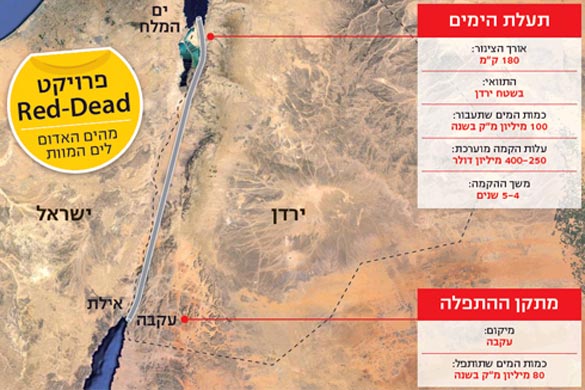 Israel, Jordan and the Palestinian Authority (PA) are scheduled to sign an agreement on Monday to build a pipeline from the Red Sea to the Dead Sea. The project will be launched during a ceremony at the headquarters of the World Bank in Washington DC.
 I see this as very good news—perhaps the countries of the world have figured out that they have better things to do with their money.
 International Finance Corporation invests $2.9 billion in the Middle East and North AfricaFigures released by the International Finance Corporation show that its investments for the fiscal year 2012 in the Middle East and North Africa have reached a record $2.9 billion. Fifty-seven projects have been supported across 12 countries as part of the Corporation’s efforts to restore investors’ confidence in the region, with a focus on the long-term possibilities after the end of the political crises. It is the IFC’s highest annual commitment in the region to date, representing a 21 per cent increase over 2011.
 Aletho News
 Aletho News