Aletho News

ΑΛΗΘΩΣ

UAE-backed militia in Yemen reaches out to Israel for alliance against ‘common foes’: Report

The Cradle | December 18, 2025

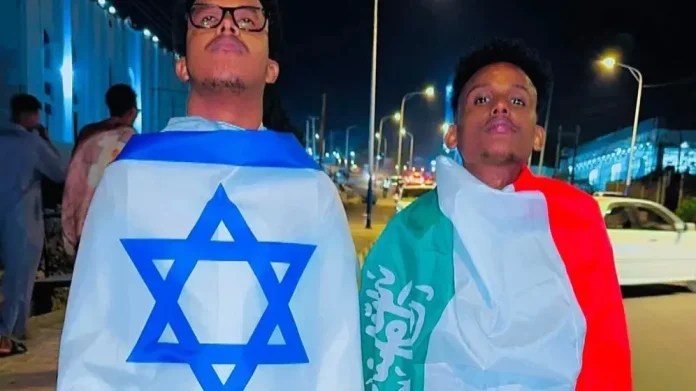
The UAE-backed Southern Transitional Council (STC) has reached out to Tel Aviv and pledged to recognize Israel in the event that its goal of an independent, secessionist state in south Yemen is achieved, Hebrew media reported.

According to Israel’s Broadcasting Corporation (KAN), the STC has called on Israel to support “independence” in southern Yemen, and that this would enhance a common agenda between the two sides.

A diplomatic source close to the STC was cited as saying by KAN that Israeli support for the secessionist cause in southern Yemen could contribute to “protecting maritime routes in the Gulf of Aden and Bab al-Mandab, in addition to combating the smuggling of Iranian weapons to Ansarallah and the terrorist cells affiliated with the Muslim Brotherhood that cooperate with Sanaa.”

The source added that the STC needs Israeli backing in military, security, and economic fields in order to form a “new state,” stressing that the two share “common enemies.”

The STC announced on 15 December the start of a new military operation in the southern Yemeni province of Abyan, tightening its grip on the south.

In recent weeks, UAE-backed STC forces have captured the provinces of Hadhramaut and Al-Mahra, and have seized the presidential palace in the southern city of Aden – where both the STC and the Saudi-backed Presidential Leadership Council (PLC) have been based for the past several years.

This prompted Saudi military forces to withdraw from Aden. Riyadh has since called for an immediate withdrawal of the STC from the areas it has captured – a demand which was rejected by the Emirati-backed group during negotiations last week.

The STC now controls practically all the territory that makes up the secessionist state it aspires to form along the borders of the pre-1990 southern Democratic Republic of Yemen.

The country will “never be unified again,” the STC has told western diplomats, according to a report by The Times from last week.

The report also revealed that the STC has sent delegates to meet with Israeli officials recently and discussed their “common cause” with Tel Aviv. The KAN report was not the first to reveal contact between Israel and the STC.

In December 2023, Hebrew media cited a source close to STC as saying that Israel will earn itself a partner in the fight against Ansarallah if it recognizes the secessionist aspirations of the STC.

The UAE was a major partner in the Saudi-led war launched against Yemen and the Ansarallah-led government in Sanaa, which began in 2015.

Despite this, Riyadh and Abu Dhabi have been embroiled in a rivalry for control and influence in Yemen over the past few years. Critics accuse both countries of seeking to divide Yemen to control its natural resources and strategic ports within their respective spheres of influence.

Since the start of the war, the UAE and Israel have established a joint occupation of the islands surrounding Yemen.

In 2023, Saudi Arabia and the Ansarallah-led government in Sanaa were close to reaching a peace deal. The agreement was never finalized or implemented, and the Saudi military continues to shell Saada and other border areas.

Despite this, the peace process halted a major Ansarallah and Yemeni Armed Forces (YAF) offensive against Marib province, which would have brought Sanaa’s forces to the borders of Hadhramaut and Shabwa.

The STC reportedly took a firm stance against the peace talks between Saudi Arabia and Ansarallah at the time.

After the start of the STC advance across Yemen several weeks ago, Saudi-backed tribal forces called for “all forms of resistance” against the UAE-backed militia.

According to The Guardian, up to 20,000 Saudi-backed troops are gathering on the border. Forces backed by the kingdom are also reportedly withdrawing from their positions in Aden and redeploying elsewhere.

Riyadh supports a tribal alliance of armed factions known as the Hadhramaut Protection Forces. It also backs the Muslim Brotherhood-linked Islah Party and the forces of Yemen’s internationally-backed government – the PLC.

While the PLC and STC are at odds with one another, the two are closely linked. Aidarous al-Zubaidi, the deputy head of the PLC, also serves as the president of the STC.

“We hope this can be resolved peacefully, but what happened in Hadhramaut is a dangerous development and negatively impacts the legitimate state institutions. Irregular forces not under state control have invaded stable and secure governorates throwing everything into chaos. Saudi Arabia is determined that these forces must leave and return to their own places. The legitimate government is being fragmented, and the only beneficiary of these intensified divisions will be the Houthis,” said Islah Party Secretary-General Abdulrazak al-Hijri, adding that Ansarallah “[does] not see Yemenis as people” but rather as “slaves.”

His comments contradicted reports from last year that Sanaa and the Islah Party improved their relations after Ansarallah began pro-Palestine operations against Israel.

December 18, 2025 Posted by | Aletho News | , , , , , | Leave a comment

The UAE’s reverse trajectory: From riches to rags

By Dr Zakir Hussain | MEMO | December 18, 2025

One of the most enduring and widely quoted dialogues in Indian cinema is: “Do not throw stones at others’ houses when your own house is made of glass.” Unfortunately, this wisdom appears to be lost on the United Arab Emirates. Instead of exercising restraint and responsibility, the UAE has increasingly been accused of conspiring with, financing, and backing a wide range of actors and armed groups that have contributed to chaos, instability, and even genocidal violence in several countries.

Over the years, the UAE has steadily expanded the scope of its controversial activities—from Libya and Sudan in North Africa to other mineral-rich Muslim-majority African countries, and further eastward to Afghanistan and Yemen. Its involvement in the Palestinian context also raises serious concerns, as there appears to be no clear moral or political limit to its actions. These interventions have not promoted peace or stability; rather, they have intensified conflicts, deepened humanitarian crises, and prolonged wars.

What makes this approach particularly perplexing is that the UAE itself lacks a credible and robust defensive shield to protect its own territory. It does not possess the capability to fully defend its iconic skyscrapers and critical infrastructure even against relatively unsophisticated, low-cost drones. A coordinated volley of such drone strikes would be sufficient to cause panic among the millionaires and billionaires who have invested heavily in Abu Dhabi and Dubai. Capital, after all, is highly sensitive to risk, and fear alone can trigger massive capital flight.

Against this backdrop, it is difficult to comprehend why Mohammed bin Zayed has chosen to indulge in a strategy of regional destabilisation and proxy warfare. History clearly demonstrates that mercenaries neither win wars nor sustain long, decisive military campaigns. They fight only as long as their financial incentives are met, avoid heavy casualties, and withdraw the moment the cost-benefit equation turns unfavourable.

The UAE has already experienced the consequences of such adventurism in Yemen, where its involvement against the Houthis proved costly and ultimately unproductive. The episode exposed the limits of Emirati military power and underscored its lack of preparedness for prolonged, brutal conflicts. The Emiratis have shown remarkable efficiency in event management, diplomacy branding, and global image-building, but they are ill-suited for sustained warfare or managing the complex realities of civil wars and insurgencies.

Despite these lessons, the UAE continues to deploy mercenaries, supply arms, and push destabilising agendas that risk mass civilian suffering. Such actions not only tarnish its international standing but also make the future of the UAE increasingly uncertain. More importantly, they significantly raise the vulnerability of those who have invested billions and billions of dollars in the country—particularly in real estate and financial assets that depend heavily on perceptions of safety and stability. The UAE has attracted the largest number of high net worth people since the Ukraine war started.

According to one estimate, in 2025 alone, approximately 9,800 high-net-worth individuals moved to the UAE. In 2024, the total number of millionaires who moved to the UAE from Russia, Africa, and the UK is around 130,000, thus fuelling its status as a premier global wealth hub. The reasons are zero tax, stability, and safety, lifestyle.

However, the overindulgence of MBZ and misuse of the sovereign wealth fund is likely to negate all the toil and troubles endured by the forefathers of the Emirates since 1972.

As an Indian, my concern is both professional and moral. A large number of Indians have invested substantial sums in the UAE, especially in real estate. It is therefore necessary to issue a timely warning and provide a realistic assessment of emerging risks, so that Indian interests can be protected before irreversible damage occurs.

I remain open to offering constructive suggestions and responsible assessments, with the sole objective of safeguarding long-term stability and protecting the legitimate interests of investors and the expatriate community.

December 18, 2025 Posted by | Economics, Illegal Occupation, Militarism | , , , , , | Leave a comment

The Myth of Total Victory and the Reality on the Ground: Is Israel Winning Its Seven-Front War?

By Robert Inlakesh | The Palestine Chronicle | December 2, 2025

From the Gaza genocide to the assassination of Hezbollah’s senior leadership, Israel has carried out unprecedented destruction across the region. Yet, despite everything that has happened since October 7, 2023, has Israeli Prime Minister Benjamin Netanyahu truly delivered the “total victory” he promised over his regime’s adversaries?

The current state of play across West Asia has left many in despair. Undoubtedly, the genocide in the Gaza Strip has inflicted a generational psychological wound, not only on the people of the region, but concerned citizens throughout the world.

When the genocide began in October of 2023, many assumptions were made regarding who or what was going to come to the aid of the Palestinian people.

Some trusted in international institutions, others believed that the Arab masses would mobilize or assumed that the rulers of Muslim Majority countries would utilize their trade leverage, resources, and even militaries to rescue the people of Gaza. Then there were those who depended upon the Iranian-led Axis of Resistance.

On the question of the international institutions, the Israelis were brought before the UN’s top judicial organ, the International Court of Justice (ICJ), which found Tel Aviv plausibly guilty of committing genocide. However, when it issued its provisional measures, the court was simply ignored.

The United Nations Security Council (UNSC) even passed resolution 2728 on March 25, 2024, which called for a ceasefire until the end of the Muslim Holy Month of Ramadan, which was supposed to be binding and was again ignored by Israel.

Then came along the International Criminal Court (ICC)’s arrest warrants for Israeli Prime Minister Benjamin Netanyahu and former Defense Minister Yoav Gallant. Tel Aviv and Washington decided to go after the court and its prosecutor, undermining its authority.

The Arab Nations, with the exception of Yemen’s Ansarallah government in Sana’a, refused to lift a finger, as did the rulers of most Muslim Majority nations. The populations of Jordan and Egypt that were expected to act, didn’t even live up to the popular actions taken by European populations. The people in the major cities of the West Bank and in occupied Jerusalem didn’t even stage notable protests.

The only ones who acted were the Axis of Resistance. Lebanese Hezbollah and Yemen’s Ansarallah waged support fronts in solidarity with Gaza, while some Iraqi factions occasionally sent suicide drones and rocket fire from Syria would occur periodically.

Yet the way that the Axis of Resistance dealt with the genocide appeared to be the execution of a strategy to ultimately de-escalate hostilities and bring the assault on Gaza’s people to an end. The Israelis, however, were not interested in a cessation of hostilities and were instead hell bent on destroying the entire Iranian-led Axis once and for all.

Israel broke every tenet of international law and violated all diplomatic norms. They would go on to carry out countless assassinations eventually stretching across Lebanon, Syria, Iraq, Iran, Yemen, with a failed attempt on the lives of Hamas leaders in Doha, Qatar. The consular segment of Iran’s embassy in Syria was even bombed.

Israel carried out the pager terrorist attacks across Lebanon, which wounded thousands and killed dozens, including countless women and children. This not only shook Lebanese society to the core, but also proved a major security and communications blow to Hezbollah itself. The infiltration of Hezbollah allowed Israel to murder the majority of the organization’s senior leadership. Perhaps the biggest psychological blow was the assassination of Hezbollah’s Secretary General, Seyyed Hassan Nasrallah.

Shortly after thousands had been murdered by Israel’s onslaught on Lebanon between September and late November, the next major blow to the Axis of Resistance came in the form of regime change in Syria. Suddenly, a US-backed government had been ushered into power and instantly opened up lines of communication with Israel.

What occurred in Syria was significant for a number of reasons, the most important of which was the collapse of the Syrian military and occupation of vast portions of territory in southern Syria, including the strategic high-ground of Jabal Al-Sheikh (Mount Hermon). It also meant that weapons transfers to Lebanon, to supply Hezbollah and the Palestinian armed factions, were instantly made much more difficult.

The resistance in the West Bank that had been growing in the north of the occupied territory since 2021 was significantly cut down through aggressive Israeli and Palestinian Authority military campaigns. In the Gaza Strip, the resistance forces were also degraded and had no supply lines. Meanwhile, the only consistent front that never buckled and only accelerated their attacks was the Yemeni Armed Forces, but due to their geographical constraints were limited in what impact they could have.

For all of the above-noted reasons, the Israelis have appeared to have gained the upper hand, and this has left many fearing what they have in store next. It is assumed that further attacks on Lebanon and Iran will be aimed at achieving regime change in Tehran, which, if successful, would indeed declare Israel the undisputed ruler of the region.

A Reality Check

Despite the gains that the Israelis have made, they have also suffered enormous blows themselves, which are often left out of many analyses offered on the current situation the region finds itself in. Before delving into this, to avoid accusations of “cope”, it is important to make note of a few different points.

Many refutations offered to the pessimistic view commonly adopted of the region engage in exaggeration, speculation, and refuse to even acknowledge the obvious losses their side has suffered. This is often the practice of those who remain die-hard supporters of resistance against the Israelis and their regional project.

When such positive and romanticized depictions are used to describe the current situation and are heard by those who are convinced that their side has already lost, they often experience a visceral opposition to that sense of optimism. Supporters of the resistance to Israel’s tyranny attempt to rescue morale through slogans and dogmatic rhetoric, which falls on deaf ears, as such explanations lack logical consistency.

This all being said, things are not exactly as doom-and-gloom as the popularized pessimism that prevails across the region suggests.

At this current moment, Israel has not won on any front; the caveat is obviously that the Axis of Resistance has not won either. Every front is a de facto stalemate. This being said, the Israelis have undoubtedly inflicted much greater damage on their adversaries in the short run.

Yes, the Palestinian factions in Gaza have been weakened, and the human cost of the war has been enormous, beyond anyone’s imagination, but they have not been defeated. Instead, they have waged a guerrilla war against the occupying army that has targeted the civilian population as a means of attempting to defeat them by proxy. Are they capable of defeating the Israeli military? No, not by themselves, but this has always been the case.

In Lebanon, the Israelis certainly dealt a massive blow to Hezbollah; there can be no doubt about it. Although they were incapable of collapsing the group and it is clear that they still retained an abundance of arms, something demonstrated throughout the course of the war in late 2024. Today, Hezbollah is rapidly rebuilding its capabilities and preparing for the inevitability of the next round.

One key takeaway from the Israel-Lebanon war was that, beyond assassinations and intelligence operations, the Israelis proved incapable on the ground and were even deterred from conquering villages like Khiam along with the Lebanese border area. Their greatest tactical achievements came at the beginning of the war, while the remainder of the battle proved that Israel’s only edge came through its air force.

The reason why the Lebanon war was a loss for Hezbollah was down to the collapse of Hezbollah’s image. Previously, the propaganda of the organization and the trust commanded by its leader, Seyyed Hassan Nasrallah, had convinced the world that the group was powerful enough to destroy Israel by itself. In his last speech, before he was murdered alongside 300 civilians, Nasrallah had publicly admitted that there is, in fact, no parity between Hezbollah and Israel militarily.

In 2006, just as occurred in 2024, the result of the war was a stalemate. No side decisively beat the other. Instead, it was the combined fact that Hezbollah’s performance was militarily stunning, from a planning and execution point of view, in addition to the fact that nobody expected the group to even survive, let alone force the Israelis to abandon their war plans. If you look at the difference in Lebanese to Israeli casualties in 2006, there is no comparison; in fact, it was even a major achievement for Hezbollah to have hit Haifa with rockets back then.

The 2006 war proved that Hezbollah was a force to be reckoned with, that it would inflict serious blows on Israel if it sought to re-invade and re-occupy southern Lebanon, so Tel Aviv made the calculation that it was best to leave it alone. This is why there were 17 years of deterrence, where Israel would not dare bomb Lebanon.

Fast forward to 2023, Hezbollah was a group capable of striking any target across occupied Palestine, and in 2024 hit Tel Aviv for the very first time. Compared to a force of an estimated 14,000 men in 2006, Hezbollah’s current armed forces consist of over 100,000 men, making them a larger armed group than many of the militaries of various countries.

The difference is that Hezbollah is fighting Israel, which is equipped with an endless supply of the world’s most technologically advanced weapons and equipment that enables it to pinpoint target leaders.

It suffices to say, the two sides are not equal, but by no means is Hezbollah finished or weak; it is simply that the group must suffer immense sacrifices in order to prove victorious in any confrontation with Israel. This is because the equation has changed since October 7, 2023; it is no longer the case that the Israelis can be deterred. It is a long war that will lead to the total defeat of one side or the other. What happens from here is largely down to leadership and the willingness to commit to total war.

Syria is itself a totally different issue. First, we must keep in mind that the government of Bashar al-Assad was not actively engaged in the war against Israel; instead, it allowed for the Axis of Resistance to operate inside its territory and establish a defensive front in southern Syria.

Again, being realistic, the new government in Syria has weakened the entire State and divided it even more than was already the case. Ahmed al-Shara’a is joined at the hip with his US allies and pursues policies that explicitly favor his backers in Western governments. All of the denialism in the world does not change this fact, nor does it change Damascus’s establishing direct communications and even coordination with the Israelis.

To avoid going through what is already well known and beating a dead horse, there are a number of key considerations to make when looking at the situation in Syria, which could lead in various different directions.

I will preface everything below by saying that it is plausible that for the foreseeable future, the Israelis are going to succeed at every turn in Syria, as they have done since the pro-US government took power.

Unfortunately, the Syrian conflict is the top cause of sectarian division in the region. These divisions work on two pillars: tribalism and propaganda. Round-the-clock propaganda is churned out to cause fitnah and you will still hear baseless claims, including totally fabricated statistics, spread to achieve this division. Some would blame these conflicts on religion, yet it is more about blood feuds, corruption, and tribalistic tendencies.

Putting this aside, the Syrian front is now open and various possibilities exist. There is a competition between Turkiye and Israel inside the country, meaning that a proxy conflict is not off the table. It is also very possible that Ahmed al-Shara’a, who has managed to create problems with even his once staunch allies, will be assassinated or ousted from power, creating a bloody power struggle that could pour into the streets of Damascus.

For now, the weapons flow into Lebanon to supply Hezbollah is ongoing and there are also indications that during the final days of the former regime, many advanced weapons fell into various hands. The US is now working alongside the government in Damascus to ensure that these weapons transfers are stopped or at least rendered much more difficult. In addition to this, in the event of a war between Hezbollah and Israel, it is safe to assume that weapons transfers will be put to a halt.

As Israel advances further into southern Syrian territory, more villages will likely choose to resist them, as occurred in Beit Jinn recently; this will happen independent of the government in Damascus. As Ahmed al-Shara’a does not enjoy full control over his country, this also provides opportunities for armed groups to pop up and begin resisting the occupying force, something that the Syrian President will not be able to control, especially if Israel makes mistakes and gets itself embroiled in a crisis.

This story is not over and Syria is a hostile environment for Israeli forces due to the rejection of the people there. Ultimately, just as occurred in southern Lebanon, when the government abandons its duties, the people end up taking matters into their own hands to resist occupation. Does this mean we can expect a robust fighting force there soon? Probably not for now, but various possibilities exist in the foreseeable future.

Then we look to Iran and Yemen, whose capabilities remain and only grow; neither has been defeated. Iraq’s Hashd al-Shaabi have not been mobilized until now, and it is unclear what role they could play in a broader regional war, but it is of note that they exist.

What has happened is that Israel has proven time and time again that it is willing to be daring with the one tactic that they can actually excel in, assassinations and intelligence operations. However, these operations do not win wars; they are undoubtedly blows, but they do not inflict a knockout punch.

When two sides engage in such a war, it is expected that losses will occur on both sides. The Israelis have suffered a battered economy, a divided society, their settlements in the north are still in ruins, they haven’t repaired the damage inflicted on their infrastructure, and they have lost public support across the world, including in the United States. They are a global pariah sustained only by their Western backers, incapable of defeating what was viewed as the weakest link of the Axis of Resistance in Gaza.

In their favor, they have eliminated most of Iran’s influence in Syria, committed one of the worst crimes in modern history against Gaza and weakened the armed resistance there as a result of it. They also took out Hezbollah’s senior leadership, while degrading it and its political standing. In addition to this, many leaders and generals in the Islamic Revolution Guard Corps (IRGC)’s chain of command were killed.

In Iran’s case, the so-called 12 Day War, back in June, had resulted in failure for the Israelis. Instead of achieving regime change and/or the destruction of Iran’s nuclear program, it is clear now that it has only succeeded in driving out international monitors and even united the population in a way previously unimaginable. Tehran has leaned into the growing trend of Iranian nationalism among its people and is preparing for another round. That battle also ended with Iran landing the last real blows.

The Israeli military must be viewed for what it is; it has the military edge in the air, possesses the most advanced weapons in the world [outside of Russia], enjoys full US support and is backed by one of the best intelligence agencies in the world. It also has something else on its side, which is that it does not care for morality or international law at all; it will break any rule to achieve an objective.

At the same time, its ground force is largely incapable, and it is also massively fatigued. The Israeli army was only really prepared to fight very brief battles and is an occupation force, which is why it now struggles to mobilize the soldiers necessary to carry out various offensive actions. It also needs to pay some of its soldiers’ danger money salaries. It has also recruited the private sector and civilians, paid as much as 800 dollars per day, to carry out their demolition missions in Gaza.

There is a reason why, on October 7, 2023, a few thousand Palestinian fighters armed with light weapons managed to collapse the Israeli southern command in a matter of hours and temporarily took control of the Israeli settlements surrounding Gaza. In other words, they are far from invincible.

Is this all to say that “Israel has lost”? No, clearly no side has won yet. There are various conspiracies in the works. In the Gaza Strip, the US is working alongside its allies to find a way to defeat the armed resistance groups. The Israelis clearly have their sights set on new wars against Lebanon and Iran; they will also likely strike Yemen hard again. However, they now find themselves in a much more vulnerable situation and could easily overextend themselves on one front, leading to significant losses.

So, can we say that Benjamin Netanyahu is closer to his “total victory”? The answer to this question is no. Is it possible that the “Greater Israel Project” will be implemented and that Iran will be toppled? This always has to be considered as a threat, because this is clearly Israel’s goal, but it is also just as likely that Tel Aviv will suffer a strategic defeat. It is especially the case because they are fighting an opposition that is more likely to commit to an all-out war, given what they have suffered up until this point.

December 4, 2025 Posted by | Ethnic Cleansing, Racism, Zionism | , , , , , , , , | Leave a comment

Obama Paved the Way for Trump’s Venezuelan Killings

By Jim Bovard | The Libertarian Institute | December 3, 2025

The Trump administration’s killings of scores of Venezuelans are justifiably provoking outrage. Secretary of War Pete Hegseth recently proclaimed, “We have only just begun to kill narco-terrorists.” Donald Trump and Hegseth are cashing a blank check for carnage that was written years earlier by President Barack Obama.

In his 2017 farewell address, Obama boasted, “We have taken out tens of thousands of terrorists.” Drone strikes increased tenfold under Obama, helping fuel anti–U.S. backlashes in several nations.

As he campaigned for the presidency in 2007, then-Senator Barack Obama declared, “We will again set an example for the world that the law is not subject to the whims of stubborn rulers.” Many Americans who voted for Obama in 2008 expected a seachange in Washington. However, from his first weeks in office, Obama authorized widespread secret attacks against foreign suspects, some of which spurred headlines when drones slaughtered wedding parties or other innocents.

On February 3, 2010, Obama’s Director of National Intelligence Dennis Blair stunned Washington by announcing that the administration was also targeting Americans for killing. Blair revealed to a congressional committee the new standard for extrajudicial killings:

“Whether that American is involved in a group that is trying to attack us, whether that American has—is a threat to other Americans. We don’t target people for free speech. We target them for taking action that threatens Americans.”

But “involved” is a vague standard—as is “action that threatens Americans.” Blair stated that “if we think that direct action will involve killing an American, we get specific permission to do that.” Permission from who?

Obama’s first high-profile American target was Anwar Awlaki, a cleric born in New Mexico. After the 9/11 attacks, Awlaki was showcased as a model moderate Muslim. The New York Times noted that Awlaki “gave interviews to the national news media, preached at the Capitol in Washington and attended a breakfast with Pentagon officials.” He became more radical after he concluded that the Geoge W. Bush administration’s Global War on Terror was actually a war on Islam. After the FBI sought to squeeze him into becoming an informant against other Muslims, Awlaki fled the country. He arrived in Yemen and was arrested and reportedly tortured at the behest of the U.S. government. After he was released from prison eighteen months later, his attitude had worsened and his sermons became more bloodthirsty.

After the Obama administration announced plans to kill Awlaki, his father hired a lawyer to file a challenge in federal court. The ACLU joined the lawsuit, seeking to compel the government “to disclose the legal standard it uses to place U.S. citizens on government kill lists.” The Obama administration labeled the entire case a “State Secret.” This meant that the administration did not even have to explain why federal law no longer constrained its killings. The administration could have indicted Awlaki on numerous charges but it did not want to provide him any traction in federal court.

In September 2010, The New York Times reported that “there is widespread agreement among the administration’s legal team that it is lawful for President Obama to authorize the killing of someone like Mr. Awlaki.” It was comforting to know that top political appointees concurred that Obama could justifiably kill Americans. But that was the same “legal standard” the Bush team used to justify torture.   

The Obama administration asserted a right to kill U.S. citizens without trial, without notice, and without any chance for the marked men to legally object. In November 2010, Justice Department attorney Douglas Letter announced in federal court that no judge had legal authority to be “looking over the shoulder” of Obama’s targeted killing. The letter declared that the program involves “the very core powers of the president as commander in chief.”

The following month, federal judge John Bates dismissed the ACLU’s lawsuit because “there are circumstances in which the Executive’s unilateral decision to kill a U.S. citizen overseas” is “judicially unreviewable.” Bates declared that targeted killing was a “political question” outside the court’s jurisdiction. His deference was stunning: no judge had ever presumed that killing Americans was simply another “political question.” The Obama administration’s position “would allow the executive unreviewable authority to target and kill any U.S. citizen it deems a suspect of terrorism anywhere,” according to Center for Constitutional Rights attorney Pardiss Kebriae.

On September 30, 2011, a U.S. drone attack killed Awlaki along with another American citizen, Samir Khan, who was editing an online Al Qaeda magazine. Obama bragged about the lethal operation at a military base later that day. A few days later, administration officials gave a New York Times reporter extracts, a peek at the fifty-page secret Justice Department memo. The Times noted, “The secret document provided the justification for [killing Awlaki] despite an executive order banning assassinations, a federal law against murder, protections in the Bill of Rights and various strictures of the international laws of war, according to people familiar with the analysis.” The legal case for killing Awlaki was so airtight that it did not even need to be disclosed to the American public.

Two weeks after killing Awlaki, Obama authorized a drone attack that killed his son and six other people as they sat at an outdoor café in Yemen. Anonymous administration officials quickly assured the media that Abdulrahman Awlaki was a 21-year-old Al Qaeda fighter and thus fair game. Four days later, The Washington Post published a birth certificate proving that Awlaki’s son was only 16-years old and had been born in Denver. Nor did the boy have any connection with Al Qaeda or any other terrorist group. Robert Gibbs, Obama’s former White House press secretary and a top advisor for Obama’s reelection campaign, later shrugged that the 16-year-old should have had “a far more responsible father.”

Regardless of that boy’s killing, the media often portrayed Obama and his drones as infallible. A Washington Post poll a few months later revealed that 83% of Americans approved of Obama’s drone killing policy. It made almost no difference whether the suspected terrorists were American citizens; 79% of respondents approved of preemptively killing their fellow countrymen, no judicial niceties required. The Post noted that “77 percent of liberal Democrats endorse the use of drones, meaning that Obama is unlikely to suffer any political consequences as a result of his policy in this election year.” The poll results were largely an echo of official propaganda. Most folks “knew” only what the government wanted them to hear regarding drones. Thanks to pervasive secrecy, top government officials could kill who they chose and say what they pleased. The fact that the federal government had failed to substantiate more than 90% of its terrorist accusations since 9/11 was irrelevant since the president was omniscient.

On March 6, 2012, Attorney General Eric Holder, in a speech on targeted killings to a college audience, declared, “Due process and judicial process are not one and the same, particularly when it comes to national security. The Constitution guarantees due process, it does not guarantee judicial process.” TV comedian Stephen Colbert mocked Holder, quipping “Trial by jury, trial by fire, rock, paper scissors, who cares? Due process just means that there is a process that you do.” One purpose of due process is to allow evidence to be critically examined. But there was no opportunity to debunk statements from anonymous White House officials. For the Obama administration, “due process” meant little more than reciting certain phrases in secret memos prior to executions.

Holder declared that the drone attacks “are not [assassinations], and the use of that loaded term is misplaced; assassinations are unlawful killings. Here, for the reasons I have given, the U.S. government’s use of lethal force in self-defense.” Any termination secretly approved by the president or his top advisers was automatically a “lawful killing.” Holder reassured Americans that Congress was overseeing the targeted killing program. But no one on Capitol Hill demanded a hearing or investigation after U.S. drones killed American citizens in Yemen. The prevailing attitude was exemplified by House Homeland Security Committee Chairman Peter King (R-NY): 

“Drones aren’t evil, people are evil. We are a force of good and we are using those drones to carry out the policy of righteousness and goodness.”

Obama told White House aides that it “turns out I’m really good at killing people. Didn’t know that was gonna be a strong suit of mine.” In April 2012, The New York Times was granted access for a laudatory inside look at “Terror Tuesday” meetings in the White House:

“Every week or so, more than 100 members of the government’s sprawling national security apparatus gather, by secure video teleconference, to pore over terrorist suspects’ biographies and recommend to the president who should be the next to die.”

It was a PowerPoint death parade. The Times stressed that Obama personally selected who to kill next:

“The control he exercises also appears to reflect Mr. Obama’s striking self-confidence: he believes, according to several people who have worked closely with him, that his own judgment should be brought to bear on strikes.”

Commenting on the Times’ revelations, author Tom Engelhardt observed, “We are surely at a new stage in the history of the imperial presidency when a president (or his election team) assembles his aides, advisors and associates to foster a story that’s meant to broadcast the group’s collective pride in the new position of assassin-in-chief.”

On May 23, 2013, Obama, in a speech on his targeted killing program at the National Defense University in Washington, told his fellow Americans that “we know a price must be paid for freedom”—such as permitting the president untrammeled authority to kill threats to freedom. The president declared that “before any strike is taken, there must be near-certainty that no civilians will be killed or injuredthe highest standard we can set.”

Since almost all the data on victims was confidential, it was tricky to prove otherwise. But NBC News acquired classified documents revealing that the CIA was often clueless about who it was killing. NBC noted, “Even while admitting that the identities of many killed by drones were not known, the CIA documents asserted that all those dead were enemy combatants. The logic is twisted: If we kill you, then you were an enemy combatant.” Killings are also exonerated by counting “all military-age males in a strike zone as combatants… unless there is explicit intelligence posthumously proving them innocent.” And U.S. bureaucrats have no incentive to track down evidence exposing their fatal errors. The New York Times revealed that U.S. “counterterrorism officials insist… people in an area of known terrorist activity… are probably up to no good.” The “probably up to no good” standard absolved almost any drone killing within thousands of square miles in Pakistan, Yemen, and Somalia. Daniel Hale, a former Air Force intelligence analyst, leaked information revealing that nearly 90% of people who were killed in drone strikes were not the intended targets. Joe Biden’s Justice Department responded by coercing Hale into pleading guilty to “retention and transmission of national security information,” and he was sent to prison in 2021.

Sovereign immunity entitles presidents to kill with impunity. Or at least that is what presidents have presumed for most of the past century. If the Trump administration can establish a prerogative to preemptively kill anyone suspected of transporting illicit narcotics, millions of Americans could be in the federal cross-hairs. But the Trump administration is already having trouble preserving total secrecy thanks to controversies over who ordered alleged war crimes. Will Trump’s anti-drug carnage end up torpedoing his beloved Secretary of War Hegseth and his own credibility with Congress, the judiciary, and hundreds of millions of Americans who do not view White House statements as divine revelations handed down from Mt. Sinai?

December 3, 2025 Posted by | Civil Liberties, Full Spectrum Dominance, Timeless or most popular | , , , , , , , | Leave a comment

Ansar Allah official slams UN sanctions, West’s double standards

Al Mayadeen | November 15, 2025

Mohammed al-Farah, a member of the Political Bureau of Yemen’s Ansar Allah movement, commented on the recent UN Security Council decision to extend sanctions on Yemen, stating that Yemen would respond in kind to anyone who attacks its people’s interests or attempts to undermine its sovereignty.

He emphasized, in this context, that Yemenis will not hesitate to defend their rights, religion, and national dignity by all legitimate means.

In a post on X, al-Farah accused the Security Council of perpetuating “the worst example of double standards,” noting that it has long turned a blind eye to crimes of genocide in Gaza, even supporting “Israel” while ignoring the bloodshed, and covering up the blockade and aggression against Yemen without any moral or legal stance.

He continued, saying the council “continues to apply double standards while Gaza is being devastated under two years of bombing and blockade with US and Western weapons,” reminding how “Yemen has been under siege for a decade.”

Al-Farah described the council as a platform for advancing Western interests, where “human rights are defined only as Western human rights and international interests are reduced to those of Washington alone.”

NGOs; culprits in espionage operations in Yemen

The Ansar Allah official also warned that some NGOs operating in Yemen have engaged in “dangerous practices”, including espionage on behalf of “Israel” under the guise of humanitarian work, exposing what he called the extent of “Zionist exploitation of UN institutions.”

Al-Farah, however, praised Russia and China for refusing to renew sanctions on Yemen, contrasting their stance with what he described as the “moral failure” of the UN Security Council. He said Moscow and Beijing’s positions reflect a “humanitarian and ethical awakening” and awareness of the dangers of US policies that use sanctions to subjugate nations.

At the same time, he expressed hope that Russia and China’s position would amount to a definitive rejection and veto of the resolution, describing it as a stand that “rejects the exploitation of the Security Council and restores some balance against Western dominance.”

Sanctions on Yemen are merely tools for Israeli objectives

Al-Farah also criticized the West and the United States for openly supporting “Israel” with weapons and financial aid while shielding it politically, arguing that the proposed sanctions on Yemen are merely “tools to serve Zionist objectives and punish the Yemeni people for their resilience, independent decision-making, and solidarity with Gaza.”

He concluded by reaffirming Yemen’s steadfast support for Gaza and for oppressed communities across the region, pledging to continue opposing Western and US hegemony over the countries and peoples of the region without hesitation.

UNSC extends sanctions on Yemen

On November 14, the UN Security Council approved a resolution extending financial sanctions and a travel ban on Yemen for another year, until November 14, 2026, while also extending the mandate of the panel of experts supporting the sanctions committee until December 15, 2026.

The resolution, adopted by a 13-member majority with Russia and China abstaining, renews Yemen’s international sanctions under Resolution 2140 for an additional year. It maintains frozen assets and travel restrictions on designated individuals and entities and extends the mandate of the expert panel overseeing Yemen sanctions until mid-December 2026.

The Security Council imposes these sanctions on Yemen under US pressure and under the cover of Chapter VII of the UN Charter, through Resolutions 2140 (2014) and 2216 (2015).

The UN Security Council first imposed sanctions on Yemen in 2014 through Resolution 2140, targeting individuals and entities linked to destabilizing activities during the country’s ongoing conflict.

These measures included asset freezes and travel bans aimed at those accused of threatening Yemen’s stability or obstructing peace efforts.

In 2015, Resolution 2216 expanded the sanctions framework, further restricting financial and travel activities of key figures aligned with armed groups and reinforcing the Council’s oversight through a dedicated panel of experts.

November 15, 2025 Posted by | Ethnic Cleansing, Racism, Zionism, War Crimes | , , , , | 1 Comment

Yemen between two wars: A fragile truce and the shadow of a regional escalation

By Mawadda Iskandar | The Cradle | November 4, 2025

Since mid-October, Yemen has returned to the forefront of the regional scene. Political and military activity has intensified across several governorates, exposing the limits of the current ceasefire. From Sanaa’s view, the phase of “no war and no peace” cannot continue.

Any attack, it warns, will be met with a direct response. Deterrence, it insists, is now part of its core strategy.

Saudi Arabia, meanwhile, is trying to juggle two tracks – military pressure and renewed dialogue through Omani mediation. Riyadh wants to keep its weight on the ground while testing the possibility of a broader settlement.

The US and Israel have again inserted themselves into the mix, each working to block a negotiated outcome that might strengthen the Sanaa government. Washington has revived coordination channels with the coalition, while Tel Aviv watches the Red Sea front and pushes for the containment of Ansarallah-aligned armed forces. Yemen has once more become an overlapping arena of peace talks, foreign manoeuvring, and military threats.

Negotiations under fire 

Oman has returned as the main regional mediator, moving to calm tensions after both Sanaa and Riyadh accused each other of violating the 2024 economic truce – the backbone of the UN “road map.” On 28 October, Muscat announced new diplomatic efforts to prevent a wider clash and reopen a political track.

But the situation on the ground shows little restraint. In Saada governorate alone, monitors recorded 947 violations this year, leaving 153 dead and nearly 900 injured. On 29 October, Saudi artillery shelled border villages in Razeh.

Sanaa affirmed that the “reciprocal equation” remains in place, staging a large military parade near Najran to display readiness. Riyadh, in turn, tested civil-defence sirens in its major cities – a move mocked by Ansarallah figure Hizam al-Assad, who said no siren would protect Saudi cities while the aggression and siege continue.

Speaking to The Cradle, Adel al-Hassani, head of the Peace Forum, points out that the crisis is worsening due to the deterioration of the economic situation and sanctions, which have affected more than 25 million Yemenis, while Oman is intervening as a mediator for the de-escalation.

According to Hasani, the roadmap includes two phases: the first is humanitarian, including the lifting of the blockade, the payment of salaries, and the resumption of oil exports; the second is political – to form a unity or coalition government that would coincide with a declared coalition withdrawal. Only that, he says, could stabilize the situation.

Washington and Tel Aviv’s new strategy

After Operation Al-Aqsa Flood and the ensuing war on Gaza, the US-Israeli approach to Yemen has shifted toward hybrid operations – mobilizing local partners, information warfare, and targeted strikes rather than any open intervention.

Sanaa’s recent warning about hitting Saudi oil sites came after detecting moves to create a US-Israeli front against Ansarallah. Israeli Prime Minister Benjamin Netanyahu called the resistance movement “a very big threat,” and Defense Minister Israel Katz threatened airstrikes on Sanaa itself.

The idea is to keep Saudi Arabia under pressure while allowing Israel to act indirectly. Israeli Finance Minister Bezalel Smotrich said the “Yemeni threat” is unresolved and urged Arab allies to take part in containing it.

Western think tanks have echoed this, urging Washington to rebuild Riyadh’s military role after the failure of the Red Sea naval alliance. The head of Eilat Port, Gideon Golber, admitted that maritime trade has been badly hit, adding that “We need a victory image by restarting the port.” A US Naval Institute report also noted that despite spending over $1 billion on air defense and joint operations, control over the corridor remains weak.

Between November 2023 and September 2025, Yemeni forces carried out more than 750 operations in the Red Sea, Gulf of Aden, and Indian Ocean – part of what Sanaa calls a defensive response. Head of the Supreme Political Council, Mahdi al-Mashat, urged Saudi Arabia to “move from the stage of de-escalation to ending aggression, siege, and occupation and implementing the clear entitlements of peace.”

He further accused Washington of using regional tensions to serve Israel. National Council member Hamid Assem added that an earlier de-escalation deal, signed a year and a half ago in Sanaa, was dropped by Riyadh under US direction after Operation Al-Aqsa Flood.

A source close to Sanaa tells The Cradle:

“The movement’s leadership is firmly convinced that the responsibility for these tools cannot be separated from those who created, armed, and trained them since 2015. Therefore, Sanaa affirms that any movement of these tools in Marib, the west coast, or the south of the country will not remain isolated, and will carry with it direct consequences that will affect the parties that supported and supervised the preparation of these groups.”

The source adds that:

“America has long experience with Yemen and may be inclined to avoid direct ground intervention, as its priorities appear to be focused on protecting Israel by striking Ansarallah’s missile and naval capability without extensive land friction. Therefore, it has begun to implement a plan that adopts hybrid warfare: intensifying media pumping, distortion, information operations, and psychological warfare, in addition to logistical and coordination preparations to move internal fronts through local pro-coalition tools.”

This hybrid strategy may coincide with Israeli military and media steps, the source points out, through threats and statements by officials in Tel Aviv, so that the desired goal becomes to “blow up the scene from within” and weaken Sanaa through internal chaos that paves the way for pressing options or strikes targeting its arsenal without direct American ground intervention.

US and UAE movements in the south

Throughout October, the US, Saudi Arabia, and the UAE expanded their presence in the south, west coast, and Al-Mahra to reorganize coalition factions and tighten control. US and Emirati officers arrived in Lahj Governorate, supervising the restructuring of Southern Transitional Council (STC) units from Al-Kibsi Camp in Al-Raha to Al-Mallah district. Security around these areas was reinforced with barriers and fortifications.

In Shabwa and Hadhramaut, joint committees of American and Emirati officers inspected Ataq Airport and nearby camps, counting recruits, running medical checks, reviewing weapons stock, and mapping command chains. Sources say Latin American contractors and private military firms assisted, ensuring resources stayed under external supervision.

In Taiz, another committee visited Jabal al-Nar to evaluate the Giants Brigades, their numbers, and armaments. On the west coast – from Bab al-Mandab to Zuqar Island – construction work is ongoing: terraces, fortifications, and outposts operated by “joint forces” hostile to Sanaa, including Tariq Saleh’s formations. Coordination reportedly extended to naval meetings aboard the Italian destroyer ‘ITS Caio Duilio’ to secure sea routes and “protect Israeli interests” in the Red Sea.

Hasani, who follows these movements, informs The Cradle that “These committees are evaluation and supervisory, not training, and are directly supervised by the US to ensure the readiness of the forces and perhaps as a signal to pressure Sanaa.”

He adds that British teams have appeared in Al-Mahra, while groups trained on Socotra Island are being redeployed to Sudan and Libya under UAE management.

Saudi-aligned Salafi units known as “Homeland Shield” now operate from Al-Mahra to Abyan and Hadhramaut. “These forces are today a pillar of the coalition to reduce the ability of Ansarallah, taking advantage of its religious beliefs, as part of the coalition’s tendency to turn the conflict into a sectarian war,” Hasani explains.

In Al-Mahra, local discontent is growing. Ali Mubarak Mohamed, spokesman for the Peaceful Sit-in Committee, tells The Cradle that Al-Ghaydah Airport remains closed after being converted into a joint US-British base.

“The committee continues to escalate peacefully through field trips and meetings with sheikhs to raise awareness of the community about the danger of militias,” he says, noting that the US presence has been ongoing since the coalition was established, though the exact nature of its presence is unknown.

A map showing the distribution of control in Yemen

Where is Yemen heading?

These field movements are taking place as Washington and Abu Dhabi coordinate more closely with Tel Aviv. After meetings in October between the US CENTCOM commander and the Israeli chief of staff, a new plan began to take shape: build a joint ground network across southern Yemen to contain Sanaa and safeguard the Bab al-Mandab Strait – one of the world’s most critical shipping lanes.

At the same time, the US State Department appointed its ambassador to Aden’s Saudi-backed government, Steven Fagin, to lead a “Civil-Military Coordination Center” (CMCC) linked to ceasefire efforts in Gaza. Regional observers see this as a move to integrate the Palestinian and Yemeni fronts into one framework of US security control stretching from the Mediterranean to the Arabian Sea.

Reports circulating in Shabwa and Al-Rayyan say Emirati officers have been dispatched to Gaza to help organize local brigades – a claim still unconfirmed but consistent with the UAE’s wider operational pattern. Investigations by Sky News Arabia noted similarities in the slogans and structure of UAE-backed militias in Yemen and armed factions in Gaza, hinting at shared logistics and training links.

Adnan Bawazir, head of the Southern National Salvation Council in Hadhramaut, tells The Cradle that the scenario of recruiting mercenaries to fight in Gaza is not proven, but is possible – especially with the assignment of the interim administration in Gaza by Fagin, linking local moves to broader regional plans.

In Hadhramaut, Fagin’s visits to Seiyun, which includes the First Military Region, indicate preparations for a possible confrontation, especially since the area is still under the Saudi-backed Islah’s control in the face of the STC conflict, while Riyadh seeks to reduce Islah’s influence by transferring brigades and changing leadership.

Bawazir also points to suspicious movements in Shabwa and at Ataq airport, where field reports indicate flights transporting weapons to strengthen the front, given the governorate’s proximity to Marib and the contact fronts with Ansarallah, which makes it a hinge point for any regional or local escalation.

The moves are therefore part of three interrelated scenarios.

First, shifting pressure from Gaza to Yemen to compensate for the political and moral losses of Tel Aviv and Washington, while using the pro-coalition factions as a pressure arena against Sanaa. Second, preparing for possible military action in the event of the failure of the negotiations. Third, reorganizing the pro-coalition factions and building a central command that can be directed by Washington, thus turning the brigades into executive tools, ready to escalate the situation internally with a sectarian character.

Each scenario positions Yemen once again as a test field for foreign ambitions. The country remains divided between two trajectories: the possibility of a political settlement through Oman’s diplomacy, and the risk of a new conflict fed by regional competition and foreign control over its coasts and resources.

Whether the coming months bring a deal or another war will depend less on what Yemenis want and more on how their neighbors choose to use their soil.

November 5, 2025 Posted by | Wars for Israel | , , , , , , , | Leave a comment

The UAE’s War on Muslims: From Sudan to the Gaza Genocide

By Robert Inlakesh | The Palestine Chronicle | October 30, 2025

While the United Arab Emirates advertises itself as both a peacemaker and opponent of so-called “Islamic radicalism”, it is currently involved in genocide in both Gaza and Sudan. Connecting these dots is key to understanding the overarching goals of the regime.

The United Arab Emirates has created its image in the world as an innovator, a builder, and a peacemaker, a carefully calibrated illusion as artificial as the buildings that mesmerize onlookers in Dubai. But behind the architecture and lavish outer shell is a rotten core that continues to aid in the erosion of the surrounding region.

While claiming to oppose “radical Islam” and paying talentless influencers to attack groups like the Muslim Brotherhood, they foster extremist ideologies and back ISIS-linked militant groups to carry out their regional ambitions.

For all of the critiques that can be offered of groups like the Muslim Brotherhood and of Qatar, they are nothing like the orientalist depictions of them that are spread far and wide through Emirati propaganda.

The reason why the UAE attacks the ideology belonging to groups that are either linked to or part of the Muslim Brotherhood has nothing to do with their religious motivations and everything to do with the Emirati opposition to their political agenda.

For them, they fear any politically engaged Islamic movement that is capable of successfully leading a country and organizing democratic institutions, because they are a dictatorship fully beholden to their Western handlers, including Israel.

The reason why the Islamic element of such movements threatens them the most is that it is popular and the religion that the majority of the region adheres to in some shape or form.

If any Islamic anti-imperialist movement proves successful and leads a democratic process, then this could threaten their rule. So, they seek to undermine, infiltrate, and destroy these movements wherever they rear their heads, including inside the Gaza Strip.

Hamas, or the Islamic Resistance Movement, was an outgrowth of the Egyptian Muslim Brotherhood. Its origins begin in the 1970s and the formation of the social/civil-society movement known as the Mujamma al-Islamiyya in the Gaza Strip, at the time colloquially referred to as the Muslim Brotherhood, as it represented Palestine’s wing of the movement.

Therefore, the success and popularity of Hamas, as part of what is viewed by the Emiratis as a wider body of Islamic political movements, is interpreted as a threat to its rule in the region.

As a means of dismantling the prospects of Democratic oriented Islamic political leaderships, the UAE has engaged in military confrontations and intense propaganda campaigns. On the propaganda front, they are joined by other Gulf leaderships who have their own agendas, also and not only fund direct anti-Hamas or anti-Muslim Brotherhood propaganda, but also fuel religious division.

One of the most powerful means of divisive propaganda is directly targeting Muslims themselves, in particular the Sunni Muslim majority of the region. While they certainly push sectarian rhetoric against the Shia too, they seek to pacify the Sunni population, deter them from engaging in anti-imperialist and anti-occupation struggles, or redirect their anger at fellow Muslims.

They do this through pushing divisions between mainstream Sunni schools of thought and employing their Madkhali propagandists to deter action against the so-called Muslim rulers. Without going too deep into the Madkhalis, as with each group of Muslims, there is always nuance; they are a group of Salafist Muslims who adhere to the dictates of their rulers and sometimes will even justify actions taken by those rulers that are prohibited in Islam.

The primary goal here is to fund and fuel division across the Muslim world, channeling hatred and creating debates around any issue that can distract from what Israel, the United States, and their allies are doing to the region. Another major tactic employed here is to Takfir (declare a disbeliever) or undermine any Muslim group that sides with the likes of Iran, Hezbollah, Ansarallah, or any other Shia groups.

Again, none of this opposition has anything to do with any substance that may be behind said arguments they make; these are well-funded propaganda campaigns designed for political purposes to undermine resistance to imperialism, occupation, and genocide. This is where we can begin looking at Gaza and then Sudan.

The UAE professes to oppose so-called “Islamic radicalism”, yet it now stands accused of providing support to the ISIS-linked gangs operating in the Israeli-occupied portion of the Gaza Strip. Not only has the UAE been accused of directly coordinating with these militia groups – composed of hardline Salafists who have links to ISIS and al-Qaeda, drug traffickers and murderers – but there is even evidence of these death squad members driving around in vehicles with registered UAE license plates.

In opposition to Hamas, the UAE is more than happy to back Israeli proxy collaborator groups that contain ISIS and Al-Qaeda minded elements within them.

Going back to the sorts of divisive propaganda that is encouraged by the Emiratis, a leading member of the Israel-backed so-called “Popular Forces” militia in Gaza, Ghassan Duhine, has openly cited ISIS Fatwas declaring Hamas apostates as a justification for killing them. ISIS officially declared war on Hamas back in 2018.

Meanwhile, the UAE has long been backing the Rapid Support Forces (RSF) in Sudan, the group currently accused of committing genocide, and which has re-entered the headlines after it captured Al-Fasher and other areas in North Darfur, resulting in the murder of around 527 people, including civilians who were butchered while sheltering in refugee camps.

RSF leader, Mohamed Hamdan Dagalo (Hemedti), has long collaborated with the Emiratis, and it was even previously pointed out that his official Facebook page was controlled out of the UAE.

Without getting into all of the complexities of the Sudanese civil war, Hemedti is a warlord who has long maintained power over the majority of Sudan’s Gold Mines, slaughtering anyone who dares to get in his way.

His forces have also been accused by the UN and prominent rights groups of committing widespread mass sexual violence, including horrific forms of rape.

Hemedti was additionally supplied with battle-changing technologies through his Israeli Mossad contacts, and despite there being documented rights violations on both the Sudanese Army and RSF sides of the war, there is no doubt that Hemedti’s forces have the most blood on their hands and carry out the most horrific crimes seen in the conflict.

The UAE is not just one of many actors involved in Sudan; it is the primary supporter of the RSF. According to a scoop published by The Guardian this Tuesday, British weapons sold to the United Arab Emirates were even discovered to have been used by the RSF to carry out its genocide.

Despite the United States declaring the horrors in Sudan as a genocide, during the Biden administration, no action has been taken against the UAE for its role in fueling the war. Similarly, the UAE has been involved in countless crimes committed throughout the Horn of Africa and in North Africa too, backing a whole range of extremist militant groups who stand accused of indiscriminately targeting civilians.

Although it is also hidden from the Western corporate media, the UAE even used members of the Sudanese RSF to fight on its behalf as proxy forces against Ansarallah in Yemen, where they were accused of playing a role in what many declared a genocide. Keep in mind that nearly 400,000 people in Yemen were killed due to the inhuman blockade and war of aggression, led by both the UAE and Saudi Arabia.

The Emiratis push propaganda about the Sudanese Military being “Islamists”, accusing them of being part of the Muslim Brotherhood and then linking them to all sorts of other organizations. Ansarallah in Yemen is also branded as “Islamists”, but in their case are accused of being “Iranian proxies”. In essence, this line of propaganda is the typical Israeli-style Hasbara argument for committing egregious war crimes.

Throughout the Gaza genocide, the UAE was one of the only nations that continued its routine flights to Ben Gurion airport and transported materials to aid the Israelis. The Emiratis also turned Dubai into an Israeli safe haven, where soldiers implicated in genocide can go to party, engage in activities like consuming narcotics or hiring escorts, and live in luxury.

The UAE did not lift a finger to force the Israelis to let aid into Gaza, as they blocked all humanitarian aid trucks entering for around three months earlier this year, but will then point to the trickles of aid that they do supply as proof they are helping the people. In their defense, they argue that they were key in achieving a ceasefire, for which there is no evidence, just like there was no evidence that they stopped West Bank annexation when normalized ties with Israel.

Viewing the Emiratis as operating on their own whims, blaming them solely for the actions they commit, is incorrect. These are rulers installed by the West, who work for the West and are simply used as pawns to do the bidding of their masters. If any of their leaders stand up to the crimes that the UAE is inflicting, they will be assassinated and replaced with other members of the ruling bloodline who choose to play ball. They are hostages, posing as rulers and playing their part in the dismantlement of the surrounding region.

October 30, 2025 Posted by | Ethnic Cleansing, Racism, Zionism, Wars for Israel | , , , , , , | Leave a comment

The Role of Snipers in the Arab Spring and Maidan Protests

By William Van Wagenen | The Libertarian Institute | October 15, 2025

As anti-government protests known as the Arab Spring swept through the Middle East in early 2011, observers felt they were witnessing spontaneous, grassroots calls for freedom against decades of tyranny and dictatorship.

While the demands of the protestors were largely sincere, the protests that erupted in Tunisia, Egypt, Yemen, Libya, and crucially, Syria, were nevertheless the product of an unconventional warfare campaign organized by the Barack Obama administration, including the National Security Council (NSC), State Department, CIA, and allied intelligence agencies.

Rooted in Obama’s Presidential Study Directive 11 (PSD-11), the unconventional warfare campaign sought to spark “democratic transitions” in U.S. allied and enemy states alike. The objective was to replace authoritarian, Arab nationalist rulers with Muslim Brotherhood dominated governments even more friendly to American and Israeli interests.

As I have detailed in my book, Creative Chaos: Inside the CIA’s covert war to topple the Syrian government, Obama’s PSD-11 is an outgrowth of the broader American and Israeli effort to topple the government of Bashar al-Assad that began after 9/11.

The unconventional warfare campaign to spark the Arab Spring involved training local activists to use social media and internet privacy technologies such as Facebook and Tor to organize protests highlighting existing grievances.

Snipers were then unleashed to carry out false flag killings of protestors that could be blamed on government security forces.

The killing of protestors created the “martyrs” needed to fuel the fire of the protests and galvanize Arab populations to call for the overthrow of their governments.

Crucially, the false flag killings gave President Obama the necessary pretext to declare that Arab leaders had “lost legitimacy” by “killing their own people” and to demand their ouster.

As Russian military analyst Yuferev Sergey observed, the sniper phenomenon first appeared in Tunisia and then “smoothly migrated” to Egypt, Yemen, Libya, and finally to Syria.

“At first, I didn’t know why people were protesting. Syria was a rich country. Life was very good,” a Christian from Syria who witnessed the early events of the so-called Arab Spring told this author. “But then the government started shooting protestors. It gave people a reason to protest even more.”

The phenomenon appeared again in 2014 in Ukraine when snipers killed more than one hundred protesters, known as the “Heavenly Hundred,” in Kiev’s Maidan square. The killings led to a U.S.-backed coup that ousted the country’s pro-Russian president.

This paper details the role of snipers in efforts to topple governments in Tunisia, Egypt, Libya, Yemen, Syria, and Ukraine.

Presidential Study Directive 11

In August 2010, U.S. President Barack Obama tasked a team of advisors led by National Security Council officials, including Samantha Power, Ben Rhodes, Michael McFaul, and Dennis Ross, to issue a report known as Presidential Study Directive 11.

The report laid the blueprint for regime change in four Arab countries, including Egypt and three others left unnamed.

According to reporting from The New York Times, Obama “pressed his advisors to study popular uprisings in Latin America, Eastern Europe, and Southeast Asia to determine which ones worked and which did not.”

The report, the result of weekly meetings involving experts from the State Department and CIA, then “identified likely flashpoints, most notably Egypt, and solicited proposals for how the administration could push for political change in countries with autocratic rulers who are also valuable allies of the United States.”

The Obama administration was particularly concerned about Egypt due to the expected succession crisis to the rule of the country’s aging and unpopular president, Hosni Mubarak. U.S. officials wanted a way to control who would take Mubarak’s place, rather than leave the outcome to chance or allow Mubarak to place his son in power after him.

The policy advocated assisting the rise to power of Islamist groups, specifically the Muslim Brotherhood.

As David Ignatius of The Washington Post reported in March 2011, after the Arab Spring was well under way, the Obama administration’s “low-key policy” involved “preparing for the prospect that Islamist governments will take hold in North Africa and the Middle East.”

Tacitly endorsing the Brotherhood, a senior Obama administration official argued, “If our policy can’t distinguish between al-Qaeda and the Muslim Brotherhood, we won’t be able to adapt to this change.”

Unconventional Warfare

While states at times engage in direct conflict against one another, they more often wage war covertly through proxies.

To avoid a direct confrontation and the possibility of a nuclear exchange during the Cold War, the United States, Soviet Union, China, France, and the United Kingdom “empowered rebel groups to act as proxies conducting irregular warfare on behalf of the patron state,” wrote Mike Fowler, Associate Professor of Military and Strategic Studies at the U.S. Air Force Academy.

“This empowerment often involved training, equipping, and funding non-state actors to overthrow or undermine governments that supported (whether real or perceived) the opposing power,” he added.

CIA support for Muslim extremists, known as the mujahideen, in Afghanistan to topple the pro-Soviet government in Kabul and to later fight occupying Soviet troops, is well documented.

Turning Members into Martyrs

After the fall of the Soviet Union, American efforts to overthrow post-Soviet states that remained within the Russian sphere of influence involved not only covert military support for “rebel” groups, but also the use of “non-violent” methods to spark anti-government protest movements known as “Color Revolutions.”

The use of non-violence to undermine pro-Russian governments was first theorized by American academic Gene Sharp and implemented by activists from the Center for Applied Non-Violent Action and Strategies (CANVAS) in Serbia.

Inherent to the non-violent strategy is the use of “political jiu-jitsu,” in which activists skillfully make government violence and repression “backfire,” writes Srdja Popovic, the executive director of CANVAS, in Foreign Policy.

Popovic emphasizes that to be successful, a movement must “be ready to capitalize on oppression.”

“Following a repressive act, it’s vital that activists keep the public aware of what has happened and take sustained measures to ensure that they don’t forget. One clever way to achieve this is to turn members of the movement who have faced particular scrutiny by a regime into martyrs,” he explained.

While opposition activists (and the intelligence agencies supporting them) can wait for an oppressive regime to create martyrs to rally around, they can also “create” them through “provocations.”

Employing snipers to carry out false flag killings during protests against an oppressive regime is an effective way to create such martyrs.

Russian analyst Yuferev Sergey stated that the use of snipers is not an effective riot control method for dispersing crowds at protests. If a sniper opens fire at a crowd, demonstrators will not hear or immediately notice the shots. Once they do, they will not know where the shots are coming from, or which way to run to escape them.

But the use of snipers at protests is an effective way to manufacture anger against an existing government or leader.

“[T]he bodies with gunshot wounds to the head or heart are sure to be found by journalists, and all this will go on TV and on the Internet,” Sergey writes. In the confusion of the events, no one will “rush to conduct ballistic examinations, to look for places from which the snipers worked. The answer is ready in advance, and all the blame immediately falls on the head of the ruling regime. This is exactly what the organizers of such provocations are trying to achieve.”

As a result, the presence of snipers has become the “hallmark of unrest” arising in many countries where the United States is seeking to topple an existing government, Sergey adds.

Snipers are used to create the “martyrs” needed by U.S.-trained and funded “non-violent” activists to rally around when calling for a government to be overthrown.

Snipers in Tunisia

The small north African nation of Tunisia was the first country to see its president toppled in the so-called Arab Spring.

The first protests in Tunisia erupted in the city of Sidi Bouzid in December 2010, four months after the Obama administration issued PSD-11.

A few weeks before, on November 28, Wikileaks released more than 250,000 leaked U.S. State Department cables, known as “Cablegate.”

Some of the cables regarded Tunisia, including one from the U.S. ambassador to the country discussing the corruption of President Zine El Abidine Ben Ali, his wife, and a broader circle of government officials.

The release of cables highlighting Ben Ali’s corruption was not part of a random, arbitrary dump of diplomatic documents later seized upon by Tunisians. It was part of a carefully prepared campaign by Wikileaks, which partnered with Tunisian exiles from the dissident website, Nawaat, to promote the cables.

Al-Jazeera reported that Wikileaks provided the cables in advance to Nawaat, whose activists read the documents, added context, translated them to French, and published them on a special website, Tunileaks, to allow Tunisian readers to understand them.

Thanks to this prior coordination, when Wikileaks was ready to release the cables, Nawaat was ready as well.

“As agreed, the first TuniLeaks went live less than an hour after WikiLeaks had published the diplomatic cables on its own site,” Al-Jazeera wrote.

According to Al-Jazeera, “Nawaat helped fertilize the cyber terrain so that when the uprising finally came, dissident networks were in place to battle the censorship regime. Nawaat amplified the protesters’ voices, sending them echoing across the internet and beyond.”

Al-Jazeera Arabic promoted the contents of the leaked cables as well by discussing them in a series of talk shows, helping to ensure Tunisians knew “their government was being run by a corrupt and nepotistic extended family.”

Tom Malinowski, a senior fellow at the McCain Institute, wrote in Foreign Policy that the cables released by Wikileaks had an important effect.

“The candid appraisal of Ben Ali by U.S. diplomats… contradicted the prevailing view among Tunisians that Washington would back Ben Ali to the bloody end, giving them added impetus to take to the streets,” Malinowski wrote.

“They further delegitimized the Tunisian leader and boosted the morale of his opponents at a pivotal moment in the drama that unfolded over the last few week,” he added.

Because the Wikileaks and Nawaat campaign to highlight corruption in Tunisia took place in the context of the PSD-11, this raises the question of whether Wikileaks participated, whether knowingly or unknowingly, in the Obama administration’s unconventional warfare campaign to topple Bin Ali.

On November 30, 2010, two days after Wikileaks released the massive trove of diplomatic cables, Zbigniew Brezinski, former national security adviser in the Jimmy Carter administration, speculated that Wikileaks was being manipulated by foreign intelligence agencies, which likely “seed” the organization’s releases with information to achieve specific objectives.

In July 2010, founder and editor Julian Assange indicated that, for security reasons, Wikileaks prefers not to know the source of leaks to the organization. “We never know the source of the leak,” he told journalists during an event at London’s Frontline Club. “Our whole system is designed such that we don’t have to keep that secret.”

In the past Wikileaks has relied on and promoted privacy software known as Tor, which allows users to browse websites, communicate, and transfer documents anonymously. Journalist Yasha Levine has documented how Tor, although touted as a privacy tool to counter U.S. government surveillance by Assange and National Security Agency (NSA) whistleblower Edward Snowden, was itself developed by the U.S. military.

Tor proved crucial in helping U.S.-trained activists topple Arab governments during the Arab Spring.

On December 17, 2010, roughly three weeks after the release of the Wikileaks cables, a young Tunisian man, Mohammad Bouazizi, lit himself on fire to protest the confiscation of his vegetable cart by a policewoman. He was taken to the hospital, where he died of his burns two weeks later, on January 4.

Anti-government protests erupted following Bouazizi’s act of self-immolation, which was widely viewed as the primary catalyst for the so-called “Tunisian Revolution” that followed.

However, the protests did not gain the momentum needed to force President Ben Ali from power until after snipers killed more than a dozen protestors in the town of Kasserine in western Tunisia between January 8 and 11.

Human Rights Watch (HRW) was able to find hospital and municipal records for seventeen victims killed during protests in Kasserine.

HRW noted the death of Mohammed Amine Mbarki, a 17-year-old son of a mechanic, as typical of the violence there. Mbarki joined an anti-government demonstration on January 8 at the main roundabout in the Zehour district, the poor neighborhood where he lived. While riot police fired tear gas at protestors from the front of a police station, Mbarki was shot by a bullet in the back of the head.

“We were shocked,” said Mbarki’s friend, Hamza Mansouri, who was with him. Mansouri told HRW that police snipers never before seen in Kasserine did the killing.

“Zehour residents quickly sanctified the roundabout with the name Martyrs Square. Young people readily exhibit videos on their mobile phone of chaos and bloody police violence. One shows a frenzied scene in a hospital emergency room, where a victim is shown with his brain blown out,” Daniel Williams of HRW wrote.

Snipers again opened fire at a funeral procession passing through Martyrs Square the next day, January 9. Witnesses told HRW that five or six people died at the roundabout that day, including at least one during the funeral.

Snipers opened fire again on January 10, before “disappearing” from the city that night. “One of the wonders of the uprising is that the more the police shot protesters, the more determined they became,” Williams of HRW concluded.

Al-Jazeera reported that according to witnesses in Kasserine, several people were shot from behind by “unidentified agents wearing different, slicker uniforms” than the regular police or army.

“From the beginning, [the army was] against shooting at people,” said Adel Baccari, a local magistrate.

The Qatari outlet added that the rifles and ammunition were not of the type used by Tunisian security forces.

Al-Jazeera noted that the killing of protestors by live sniper fire made such an impact that President Ben Ali referenced it in his speech on January 13. “Enough firing of real bullets,” Bin Ali said. “I refuse to see new victims fall.”

The speech turned out to be his last.

Tunisian doctor and activist Zied Mhirsi observed that the sniper killings were decisive in shifting public opinion against Ben Ali and pressuring him to resign and flee the country. Mhirsi says that the day after Ben Ali’s speech, January 14, saw a massive protest in the Tunisian capital that was organized through Facebook and which “everyone joined,” including the country’s middle class.

“And that day was crucial in showing that the public opinion has totally shifted and there was nobody supporting [Ben Ali] anymore. And then also that he lost control because he said no more real bullets on January 13th. And on January 14th there were still bullets in the air and snipers,” Mhirsi explained.

As a result, January 14 “was also the day he left,” ending his twenty-three years in power.

Mhirsi explained further to CBS News’ 60 Minutes program, “The turning point, the real one here was the real bullets… And then here we have the ruler, the government asking its police to shoot its own people using snipers, shooting people with real bullets in their heads.”

In addition to helping activists organize protests, Facebook played a key role in spreading awareness of the sniper killings among Tunisians.

“Facebook was the only video-sharing platform that was available to Tunisians. And seeing videos of people shot with real bullets in their heads on Facebook was shocking to many Tunisians,” Mhirsi added.

Before the “revolution,” young activists from Tunisia had joined others from Egypt, Syria, Iran and other Middle East states in attending conferences to learn how to use new technologies such as Facebook, Twitter, and Tor, for these purposes in the years preceding the Arab Spring.

The conferences were sponsored by the U.S. State Department and American tech companies, including Facebook and Google.

The same day Ben Ali was ousted, the White House issued a statement in which Barack Obama condemned the violence against protesters and welcomed Ben Ali’s exit. “I applaud the courage and dignity of the Tunisian people,” Obama claimed, while calling for “free and fair elections in the near future that reflect the true will and aspirations of the Tunisian people.”

As anticipated by Obama’s PSD-11, a new government came to power in Tunisa led by Islamists.

Ben Ali’s rule was replaced by an interim government which removed the ban on Tunisia’s Muslim Brotherhood-linked Al-Nahda party, leading to what Foreign Policy described as the party’s “meteoric rise.”

After Al-Nahda won 41% of the vote in Tunisia’s first parliamentary elections in October 2011, Noah Feldberg of Bloomberg wrote, “It’s official: The Islamists have won the Arab Spring. And the result was as inevitable as it is promising.”

After Ben Ali was toppled, Tunisians called for an investigation to prosecute the officials of the old regime presumed to be responsible for ordering snipers to kill protestors. However, Deutsche Welle (DW) reported in December 2011 that an investigative committee failed to determine the identities of the shooters.

As a result, the mother of one of the victims denounced what she considered a “cover-up” by the transitional government headed by Beji Caid Essebsi for the “killers of the martyrs.”

DW adds that security men in the Ministry of Interior were also angry after being blamed for the sniper killings by members of the Tunisian military. They organized multiple protests in Tunis demanding “the disclosure of the truth about the snipers,” who they said had also killed some security personnel. The men called for the release of their colleagues who had been arrested but not proven guilty of killing demonstrators during the protests.

Snipers in Egypt

After appearing in Tunisia, the sniper phenomenon emerged again two weeks later in Egypt amid anti-government protests seeking to oust President Hosni Mubarak.

The protests in Egypt were spearheaded by activists from the April 6 Youth Movement, which was a member of the U.S. State Department’s Alliance for Youth Movements (AYM).

The AYM was funded by the from the U.S. government-established National Endowment for Democracy (NED) and organized by Jared Cohen, a State Department official working under Secretary of State Hillary Clinton. In September 2010, Cohen left government service to become the first director of Google Ideas, later known as Jigsaw.

According to PBS Frontline, April 6 members had been coordinating directly with the State Department since at least 2008.

According to a diplomatic cable released by Wikileaks, April 6 member Ahmed Saleh visited the U.S. to take part in a State Department-organized “Alliance of Youth Movements Summit” in New York. While at the summit, he discussed techniques with fellow activists to evade government surveillance and harassment.

After the summit, Saleh held meetings with members of Congress and their staffers on Capital Hill in Washington DC. The meetings involved discussions around his ideas for regime change in Egypt before the presidential elections scheduled for 2011.

During the same period, April 6 activist Mohammed Adel traveled to Serbia to take a course on Gene Sharp’s strategies for nonviolent revolutions from activists from OTPOR, Frontline added.

In 2010, activists from the April 6 Youth Movement chose to focus their anti-government organizing campaign around the death of Khalid Said, a young Egyptian man who was brutally beaten to death by police near his home in Alexandria in June of that year.

April 6 activist and Google executive Wael Ghonim created the “We are all Khalid Said” Facebook page, which he used to help organize the first major anti-government protest, the “Day of Revolt” in Cairo’s Tahrir Square on January 25, 2011.

During the Friday “Day of Rage” protest three days later, on January 28, street battles erupted between demonstrators and riot police at Tahrir Square, with police using violent methods, including beating protesters as well as using tear gas, water cannons, rubber bullets, and lethal shotgun ammunition.

But snipers were also present at the January 28 protest. Amnesty International reports, “According to an eyewitness, a boy and his mother, who found themselves in the midst of this chaos, lifted their arms in the air to demonstrate their peaceful intention. Nonetheless, the boy was shot in the neck and fell back on his mother.”

Amnesty reported further, “According to protesters, by 7pm snipers dressed in black or grey standing on top of buildings, including the Prime Minister’s Cabinet office, were among those firing at peaceful demonstrators. According to eyewitnesses, five or six people were shot on Qasr El Einy Street and many more were injured.”

Kamel Anwar, a fifty-six year old doctor with two children, was shot from behind on Qasr El Einy Street. He said snipers opened fire from the Taawun Petrol Station. He saw a teenage boy falling to the ground and remain motionless before he himself was shot.

Snipers appeared again the following day, January 29, as street battles between protestors and security forces escalated near the Ministry of Interior.

“Snipers in the residential buildings on the street also fired at them, shooting a journalist with a camera in the chest, according to an eyewitness… 12 are believed to have been killed,” Amnesty reported.

Evidence later presented in Cairo’s Criminal Court confirmed that snipers were deployed at the height of the eighteen-day revolution.

Al-Ahram newspaper reported, “Evidence included video footage showing men standing atop the ministry building in Cairo’s Lazoughli district on 29 January firing on protesters using live ammunition.”

“Footage also showed an unarmed protester bleeding to death from a head wound. According to medical reports also presented as evidence, the protester died after sustaining two bullet wounds to the head,” Al-Ahram added.

Just three days later, on February 1, President Barack Obama seized on the killings to call for Mubarak to step down. Obama publicly stated that the transition to a new government “must begin now.”

Earlier in the day, Obama had sent a message to Mubarak through Frank Wisner, a former U.S. ambassador to Egypt, telling him to “step down immediately,” Politico reported. Mubarak agreed to give up power ten days later, on February 11.

The deaths of dozens of protestors killed by snipers on January 29 had given Obama the justification to demand a foreign leader and U.S. ally be removed.

While the perception persisted that the Obama administration had sought to keep their old ally in power as long as possible, Politico later reported that a group of White House aides, including Ben Rhodes and Denis McDonough, “gathered for an impromptu party” after Mubarak stepped down. “It was a euphoric night for us, no doubt,” said Michael McFaul, Obama’s top Russia aide and a participant in the PSD-11 strategy meetings.

A year later, in January 2012, the Muslim Brotherhood’s Freedom and Justice Party (FJP) won the largest number of seats in Egypt’s first democratic elections. In June 2012, Muslim Brotherhood candidate Mohammed Morsi was elected president of Egypt.

In March 2013, Morsi’s government commissioned a report claiming that Mubarak’s security forces were responsible for killing eight hundred protesters during the revolution.

“According to the leaked report, police were responsible for most of the deaths—many at the hands of police snipers shooting from the roofs surrounding Tahrir Square,” The Guardian reported.

In 2014, after Morsi had been deposed in a coup by Egyptian general Abdul Fattah Al-Sisi, Judge Mahmoud Al-Rashidy acquitted Mubarak’s former Interior Minister Habib al-Adly and six of his aides on charges of inciting and conspiring in the killing of protesters during the January 25 revolution.

Mada Masr reported that Judge Rashidy said he knew the verdict would “shock many” and therefore released the 280-page judgment to make the evidence of his conclusions public. “The testimonies admitted to the use of live ammunition only around police stations or other strategic buildings [between January 28 and 31], which the judge argues is self-defense and also outside the scope of the case, which specifies the killing of protesters in public squares,” Mada Masr wrote.

Rashidy argued that the Muslim Brotherhood was behind the violence. “It became evidently certain for the court that the group that targeted those security spots occupied by officers and employees went there with a conceived plan by an organized group that hides behind religion to tamper with the security and stability of the country,” the judge stated.

Rashidy’s investigation explains how protestors were confirmed killed by government forces in some places, but not others. This suggests that the Egyptian police may have been responsible for killing protesters with live ammunition to protect ministry buildings, while snipers from unknown parties were killing protestors who died elsewhere, such as at Tahrir Square and on Qasr El Einy Street.

Snipers in Libya

Just one week after Mubarak fell, the sniper phenomenon again appeared, this time in Libya, when protestors took to the streets for another “Day of Rage.”

On February 17, the Human Rights Solidarity campaign group told The Telegraph that snipers on rooftops in the city of Al-Baida had opened fire, killing thirteen protesters and wounding dozens more.

Human Rights Watch (HRW) reported that according to protestors, sixteen attending the demonstrations were killed by gunshot in Al-Baida, while another seventeen were shot and killed in Benghazi, mostly near Abdel Nasser Street.

As in Tunisia and Egypt, it was immediately assumed by western journalists and human rights activists that government security forces were responsible for the killings. “It is remarkable that Gaddafi is still copying the very same tactics that failed Hosni Mubarak so completely just across the border,” said Sarah Leah Whitson, Middle East and North Africa director at HRW, in response to the sniper fire.

On February 18, Salon reported that in Benghazi, snipers killed at least fifteen mourners leaving a funeral for demonstrators killed the day before. “Snipers fired on thousands of people gathered in Benghazi, a focal point of the unrest, to mourn 35 protesters who were shot on Friday,” a hospital official said.

Two weeks later, President Obama again seized on the killing of protestors and repeated the same demand he had made to Mubarak. “Colonel Qaddafi needs to step down from power,” the president said in a press conference at the White House on March 3. “You’ve seen with great clarity that he has lost legitimacy with his people.”

The United Nations passed a resolution for a no-fly zone over Libya two weeks later. Member states voting for the resolution claimed that Qaddafi was “on the verge of even greater violence against civilians,” and “stressed that the objective was solely to protect civilians from further harm.”

NATO then used the UN resolution authorizing a no-fly zone over Benghazi to launch a bombing campaign in support of Al-Qaeda-linked militants on the ground who were seeking to topple Qaddafi.

Members of the February 17 Martyrs Brigade, which was formed by Muslim Brotherhood members, captured the capital Tripoli on August 23. The brigade was led by Abdul Hakim Belhadj, former commander of the Al-Qaeda-linked Libyan Islamic Fighting Group (LIFG).

Unlike Bin Ali and Mubarak, Qaddafi had refused to step down. When he attempted to escape the city of Sirte before it was overrun on October 20, French warplanes bombed his convoy, killing up to ninety-five, including many who burned alive. Qaddafi survived but NATO-backed “rebels” quickly found him hiding in a pipe. He was either murdered on the spot or died while being transported in an ambulance.

The door was now open for the Muslim Brotherhood and other Islamist groups to seek power in a future government, as envisioned by PSD-11.

After Qaddafi’s fall, the country was temporarily governed by the National Transitional Council (NTC), which had been established on February 27, 2011 to act the “political face of the revolution.”

Elections were planned for June of the following year to establish a General National Congress, which would write a constitution and establish a permanent government. In November, the Muslim Brotherhood in Libya held a public conference in Benghazi to restructure its organization, elect a new leader, and form a political party, the Justice and Construction Party (JCP).

The LIFG formed the Libyan Islamic Movement for Change (LIMC), whose members split into two political parties.

U.S. State Department documents obtained under the Freedom of Information Act (FOIA) revealed details of the Obama administration’s support for the Muslim Brotherhood in Libya.

The documents showed that in April 2012, U.S. officials arranged for the Brotherhood’s public relations director, Mohammad Gaair, to visit Washington and speak at a conference hosted by the Carnegie Endowment for International Peace. The conference was entitled, “Islamists in Power.”

An undated State Department cable noted that the ambassadors of the United States, United Kingdom, France, and Italy visited Mohammad Sawan, Chairman of the Brotherhood’s JCP party at his office in Tripoli.

The State Department cable noted, ‘‘On their part, the Ambassadors praised the active role of the [JCP] Party in the political scene and confirmed their standing with the Libyan people and Government despite its weaknesses and they are keen to stabilize the region.”

Ahead of the parliamentary elections in July 2012, The New York Times reported that leading Islamists in Libya had predicted that their parties would win as much as 60% of the seats in the congress. However, the “Islamist wave” that swept through Egypt and Tunisia was broken, the Times noted, when a coalition led by Mustafa Abd al-Jalil, the chairman of the NTC, won the most votes.

Jalil’s success in defeating the Brotherhood owed in part to his own promise to make Islamic law a main source of legislation for the new constitution and through the backing of his tribe, the Warfalla, one of the largest in the country.

Snipers in Yemen

After Libya, the sniper phenomenon soon appeared in Yemen as well, where Arab Spring demonstrations erupted to challenge the rule of President Ali Abdullah Saleh, who had ruled the country for over three decades.

On Friday, March 18, 2011, tens of thousands of protestors gathered in the Yemeni capital of Sana at a large traffic circled dubbed “Taghyir Square” or “Change Square.” The Associated Press (AP) reported, “As snipers hidden on rooftops fired methodically on Yemeni protesters Friday, police sealed off a key escape route with a wall of burning tires, turning the largest of a month of anti-government demonstrations into a killing field in which at least 46 people perished.”

“Many of the victims, who included children, were shot in the head and neck, their bodies left sprawled on the ground or carried off by other protesters desperately pressing scarves to wounds to try to stop the bleeding,” the AP added.

The AP then quoted Mohammad al-Sabri, an opposition spokesman, who immediately attributed the killings directly to President Saleh. “It is a massacre. This is part of a criminal plan to kill off the protesters, and the president and his relatives are responsible for the bloodshed in Yemen today,” Sabri said.

President Obama followed by saying, “Those responsible for today’s violence must be held accountable.”

However, like Ben Ali and Mubarak, President Saleh denied at a press conference that government forces were involved, claiming that the gunmen may have been from among the demonstrators themselves.

The New York Times noted that the sniper massacre would harm the Yemeni president, who had just begun Saudi-brokered negotiations to share power with Yemen’s opposition coalition, which was” dominated” by the Muslim Brotherhood-linked Islah Party.

“It’s not in Saleh’s interest at all to have people get shot,” the Times quoted Charles Schmitz, a Yemen expert at Towson University, as saying. “That fact deepened the mystery over the shootings,” the paper concluded.

The advantage gained by the opposition from the massacre was confirmed by a protestor, Abdul-Ghani Soliman. “I actually expect more than this, because freedom requires martyrs,” said Mr. Soliman. “This will continue, and it will grow.”

In the wake of the massacre, American and Yemeni officials stated that the Obama administration “quietly has shifted positions,” concluding that Saleh “must be eased out of office,” despite his role as a U.S. partner in the so-called Global War on Terror.

“The Obama administration has determined that President Ali Abdullah Saleh, who had his supporters fire on peaceful demonstrators, is unlikely to bring about required reforms,” the Columbus Dispatch wrote, even though “Saleh has been considered a critical ally in fighting the Yemeni branch of al-Qaida.”

The Dispatch wrote further that negotiations for Saleh to hand over power to a provisional government “began after government-linked gunmen killed more than 50 protesters at a rally on March 18, prompting a wave of defections of high-level government officials the following week.”

Notably, the Obama administration was now pushing Saleh to share power with the Muslim Brotherhood-linked Islah Party, which had a relationship with Al-Qaeda.

The Brookings Institution observed that as a result of the transition to a new, post-Saleh government, “Islah enjoyed new opportunities for institutional power,” and “initially seemed ascendant” until it experienced difficulties due to opposition from the Shia Zayid party, Ansar Allah (also known as the Houthis).

The New York Times later noted that Islah was led by Abdul Majid al-Zindani, a onetime mentor to Osama bin Laden who was named a “specially designated global terrorist” by the U.S. Treasury Department in 2004. During protests at Change Square in Sana in March, Zindani gave a speech in which he declared, “An Islamic state is coming!” the Times noted.

Brookings highlighted the relationship as well, writing that Islah’s “murky relationship” with extremist organizations like Al-Qaida in the Arabian Peninsula (AQAP) and the Islamic State (ISIS) also “proved an obstacle to maintain power.”

Snipers in Syria

Arab Spring protests in Syria began in March 2011 after Deraa residents were angered by the detention and alleged torture of several young teenage boys who had written slogans against President Bashar al-Assad on the wall of a school.

Syrian activists and the Arab media promoted exaggerated accounts of the teenage boys’ mistreatment to help spark protests.

“The ‘Daraa children,’ as they were dubbed in the media, weren’t children, and many had nothing to do with the writing on the walls, but tales of their harsh treatment in custody (real and embellished) sparked protests for their release, demonstrations that ignited the Syrian revolution in mid-March and christened Daraa as its birthplace,” Time journalist Rania Abouzeid, who reported from within Syria for several years during the war, noted.

On March 18, the same day snipers killed forty-six in Yemen, protestors gathered at the Al-Omari Mosque in the southern Syrian town of Deraa, for the first large anti-government demonstration in Syria. Four protestors were killed in murky circumstances that evening.

In his book, The Past Decade in Syria: The Dialectic of Stagnation and Reform, Muhammad Jamal Barout reports that according to Abd al-Hamid Tafiq, the Al-Jazeera Damascus bureau chief, “a group of masked militants riding motorcycles opened fire on the demonstrators, killing four people between the hours of six and eight in the evening, including Ahmad al-Jawabra, who was considered the first martyr.”

And who were the masked militants riding motorcycles? Barout takes for granted that they were from the government side. But it is unclear why the government would resort to using masked men on motorbikes in Deraa to suppress protests.

One possibility is that the masked men on motorcycles were “saboteurs” or “infiltrators” from a third party seeking to create martyrs needed to stoke anger, and further protest, against the government.

Five days later, on March 23, Reuters reported the presence of snipers amid the killing of ten more protesters in Deraa, including at a mosque and at the edge of the city during a protest march. “Snipers wearing black masks were seen on rooftops,” Reuters wrote, assuming they were from the government side.

“You didn’t know where the bullets were coming from. No one could carry away any of the fallen, one Deraa resident said.

“Bodies fell in the streets. We do not know how many died,” another witness told the news agency.

Snipers later appeared in the town of Douma in the eastern Ghouta area of the Damascus countryside. The killing of protesters in Douma, coupled with the strong Salafist beliefs of many of its residents, made the town a center of the protest movement in the country.

In his book, Syria: A Way of Suffering to Freedom, Al-Jazeera analyst Azmi Bishara observes that Douma residents organized a small anti-government protest of about one thousand people on Friday, March 25 to show solidarity with demonstrators in Deraa.

AFP reports that six civilians were shot and killed a week later, on April 1, when about three thousand protestors gathered at the Great Mosque in Douma for another protest. Of these events, Bishara writes that, “snipers on the buildings overlooking the square fired live bullets at the protesters, resulting in six martyrs.”

Bishara observed further that, “This was the first time that live bullets were used to suppress protesters in the Damascus countryside” and that it “immediately turned into a catalyst” that pushed the residents “to rise up against the regime” and participate further in demonstrations.

funeral (and de facto protest) for the martyrs was held two days later, on April 3. This time, huge crowds turned out, which Bishara attributes to the work of the snipers, assuming them to come from the government side.

“The scene of the funeral of the martyrs of Douma on April 3, 2011, in which about 60,000 citizens participated, illustrates the adverse effect of the precise solution that the regime followed in confronting the uprising,” Bishara wrote.

In contrast, Syrian state media insisted that an unknown armed group opened fire on the protestors in Douma, killing both civilians and security personnel. However, the killings had a strong effect on how Syrians perceived the chaotic events, turning many against the government.

Yusuf, a Christian from the neighboring town of Irbeen in eastern Ghouta, told this author, “The snipers helped light the fire of the Syrian revolution. After many protestors were killed, the demonstrations got bigger, and more people were against the government.”

Protests spread to many more cities and towns the following week, as did the killings.

On April 8, dubbed the “Friday of Steadfastness,” large demonstrations took place in Deraa and several surrounding villages.

In Deraa, twenty-seven people were killed, Al-Jazeera reported, citing medical sources and witnesses. One witness claimed the security forces opened fire with rubber-coated bullets and live rounds to disperse stone-throwing protesters.

In contrast, state-run SANA news agency reported that nineteen members of the security forces were killed and seventy-five people wounded by “armed groups” in Daraa using live ammunition.

Syrian sociologist Mohammad Jamal Barout stated that demonstrators blamed government affiliated gangs (shabiha) for the killings, while the government blamed “infiltrators.”

Many on the government side began to accept the opposition narrative of government responsibility.

The Deraa representative in the People’s Assembly, Syria’s parliament, held the security services responsible for the killings, while the editor-in-chief of the official Tishreen newspaper was dismissed from her position after questioning the government denial that the snipers came from among its security forces, Barout explained.

During the April 8 demonstration in Deraa, some protestors gathered in front of the Palace of Justice. Most were from the Al-Musalma, Al-Radi, and Aba Zaid families. They were the same families of the protestors killed on March 18 by the masked “motorcycle riders,” Barout noted.

By this time, not only peaceful protestors were being killed, but also armed opposition militants and army soldiers engaged in gunbattles with one another. However, to obscure the nature of the violence and blame it on the government, opposition activists began claiming that dead opposition militants were actually civilian protestors, and that government soldiers were not being killed by the opposition militants, but by fellow soldiers for refusing to fire on protestors and trying to defect.

In one notable case, snipers killed nine soldiers traveling in a bus on the coastal highway near Banias on April 9, the day after the Deraa protests. Opposition activists attempted to blame the army for killing its own soldiers, allegedly for refusing to fire on protestors. But one soldier who survived the attack said he was not shot at by fellow soldiers. He stated that he did not have orders to fire on peaceful protestors, but only at anyone shooting at him first.

By this time, some prominent opposition activists began to acknowledge “infiltrators” may have been behind the killing of some protestors, journalist Alix Van Buren of Italy’s la Repubblica newspaper reported on April 12.

When Van Buren asked eighty-year-old lawyer Haythem al-Maleh, the “father of civil rights” in Syria, about the possibility of “infiltrators,” Maleh spoke of “those who want to poison the relationship between the people and the regime: those who shoot at demonstrators and soldiers, to spread terror.”

On Monday, April 18, opposition activists took the decision to march to the square of the new clock tower in the center of Homs, Syria’s third largest city, and to establish a sit-in there resembling that established in Egypt’s Tahrir Square previously. The sit-in would set the stage for another alleged massacre that was used to suggest that the Syrian government was using appalling levels of violence to suppress peaceful dissent.

Human Rights Watch (HRW) released testimony from an alleged defected intelligence officer who claimed that dozens and dozens of people were killed and wounded at the sit-in in over thirty minutes of shooting by Air Force security, the army, and Alawite gangs.

Shortly after the massacre, “earth diggers and fire trucks arrived. The diggers lifted the bodies and put them in a truck. I don’t know where they took them. The wounded ended up at the military hospital in Homs,” the alleged defector told HRW.

Al-Jazeera similarly reported claims by activists of a “real massacre,” and that “shooting was being carried out directly on the demonstrators.”

Time journalist Rania Abouzeid reported that the alleged clock tower massacre “was a turning point in the struggle for Homs, although years later some of the men present that night would admit that claims of a massacre were exaggerated, even fabricated, by rebel activists to garner sympathy.” But news of the fabricated massacre made an impact on Syrians who believed it to be true.

Ahmed, a man from Homs who owned a shop near the clock tower during the period of the early protests, told this author that when the protests began in 2011, Assad was “beloved.”

However, after seeing that so many protestors had been killed, he became an opponent of the government and joined a Free Syrian Army (FSA) group in Homs. After fighting against the government for two years, he fled to opposition-controlled territory in Idlib to resume his life as a shop owner.

The chaos and killings continued in the weeks after the alleged massacre in Homs. Syrian security forces allegedly killed 103 people across the country during “Great Friday” demonstrations four days later, on April 22. Syrian activists speaking to Al-Jazeera called it the “bloodiest day” of the revolution so far.

In response to the killings, President Obama issued a strong statement, saying the “outrageous use of violence to quell protests must come to an end now.” On May 19, Obama demanded further that Assad either lead the transition to democracy “or get out of the way.”

Snipers soon also appeared in Hama, Syria’s fourth largest city and the site of traditional Muslim Brotherhood opposition to the Assad government, dating back to the events of 1982. On June 4, opposition activists claimed snipers opened fire on protesters gathered in Hama’s old quarter and the nearby Assi Square, killing at least fifty-three.

“The firing began from rooftops on the demonstrators. I saw scores of people falling in Assi square and the streets and alleyways branching out. Blood was everywhere,” one witness told Reuters. “It looked to me as if hundreds of people have been injured but I was in a panic and wanted to find cover. Funerals for the martyrs have already started,” he added.

Finally, on August 18, 2011, President Obama publicly called for Assad to “step aside” while imposing sanctions on the Syrian government, The Washington Post reported.

In a nod to the Muslim Brotherhood, the Post noted that in Syria, the “Sunni majority, however, has an Islamist strain long repressed by the Assads that could demand a larger role in the next government.”

In December 2011, Secretary of State Hillary Clinton declared that the United States viewed the Syrian National Council (SNC) as a “leading and legitimate representative of Syrians seeking a peaceful transition,” after meeting with leaders of the group residing outside Syria.

Reuters later noted that although the public face of the SNC was the secular, Paris-based professor Bourhan Ghalioun, the organization was in fact controlled by the Muslim Brotherhood. “[T]here is little dispute about who calls the shots,” the news agency stated.

As in Tunisia, Egypt, Libya, and Yemen, the bodies of the dead protestors in Syria were paraded on TV and the internet, but no one rushed to conduct a ballistic analysis of who was shooting them.

Instead, the answer was “ready in advance,” and all the blame immediately fell “on the head of the ruling regime,” as the Russian analyst Yuferev Sergey predicted.

However, as journalist Kit Klarenberg observed, “If peaceful protesters were killed in the initial stages of the Syrian ‘revolution,’ the question of who was responsible remains unanswered today.”

Evidence that the Syrian government did not order the killing of protestors in this early period is found in the minutes of the meetings of the Syrian government’s Central Crisis Management Cell, which was organized by Assad to manage the response to the protests.

The Crisis Cell minutes were revealed in the “Assad files,” a massive cache of documents smuggled out of Syria. The documents were preserved by a European funded NGO, the Commission for International Justice and Accountability (CIJA), for the purpose of gathering evidence of the involvement of top government officials in war crimes.

Contrary to what was claimed, the documents do not show that senior Syrian security officials issued orders to shoot protestors. Instead, they contain numerous orders instructing the security forces to avoid shooting civilians, and to only use live fire in cases of self-defense, as the soldier in Banias claimed.

Klarenberg writes that in the days leading up to the mid-March protests, Crisis Cell officials issued explicit instructions to security forces that citizens “should not be provoked.”

Another order from the Crisis Cell states, “In order to avoid the consequences of continued incitement… and foil the attempts of inciters to exploit any pretext, civil police and security agents are requested not to provoke citizens.”

Klarenberg notes further that on April 18, the Crisis Cell ordered the military to only “counter with weapons those who carry weapons against the state, while ensuring that civilians are not harmed.”

In his discussion of the Crisis Cell documents, analyst Adam Larson notes that an order from April 23 states security forces should be “Focusing on arresting inciters, especially those shooting at demonstrators (snipers or infiltrators).”

Because these are internal communications that were never expected to be made public, the Syrian leadership would not have hesitated to discuss orders for snipers to shoot peaceful protestors to suppress the demonstrations, if that had been their strategy.

But they recommended the opposite, perhaps as result of seeing what had already happened in Tunisia, Egypt, Libya, and Yemen.

To supplement the protests, the CIA launched an Al-Qaeda-led insurgency to topple Assad’s government, as detailed in this author’s book, Creative Chaos. War engulfed Syria over the next fourteen years, killing hundreds of thousands and displacing millions.

Known as Operation Timber Sycamore, the CIA effort was finally successful in December 2024 when former Al-Qaeda and Islamic State in Iraq commander Abu Mohammad al-Jolani was installed as president of Syria by the governments of the United States, Israel, the United Kingdom, Russia, and Turkey.

Advisors assigned to Jolani by British intelligence quicky helped him rebrand as Ahmad al-Sharaa, who was warmly greeted by U.S. President Donald Trump in Saudi Arabia in May 2025. The former Al-Qaeda leader then sat down for an intimate talk with a former CIA director, David Petraeus, in New York, not far from the site of destroyed World Trade Center towers, on the sidelines of the UN General Assembly in September 2025.

Snipers in Ukraine

The sniper phenomenon appeared again years later, this time in Ukraine, during U.S.-backed protests in Kiev to topple the pro-Moscow government of President Viktor Yanukovych in February 2014.

Months before, in November 2013, Ukrainian politician Oleg Tsarev accused the U.S. embassy in Kiev of preparing a coup.

While speaking on the floor of the parliament, Tsarov said the U.S. embassy had launched a project called “TechCamp,” which prepares activists for information warfare and to discredit state institutions using modern media. Multiple conferences were organized to train “potential revolutionaries for organizing protests and the toppling of the government,” Tsarov explained.

During the conferences, “American instructors show examples of successful use of social networks to organize protests in Egypt, Tunisia and Libya,” he added.

State Department emails released by Wikileaks report that Alec Ross, the State Department’s Senior Advisor for Innovation, played a key role in organizing the Ukraine Tech Camps.

Along with Hillary Clinton’s State Department advisor, Jared Cohen, Ross had helped train activists from the Middle East to use Facebook and other technologies to organize protests in advance of the Arab Spring.

As part of a delegation of Tech executives, Ross and Cohen visited Syria in 2010 to discreetly explore ways to use new technologies to “create disruptions in society that we could potentially harness for our purposes.”

Shortly after the Syria trip, Fortune magazine noted that Cohen “advocates for the use of technology for social upheaval in the Middle East and elsewhere.”

In December 2013, a month after Ukrainian parliament member Tsarev accused Washington of preparing a coup, activists established a protest camp at Maidan Square in the center of the Ukrainian capital.

On December 13, as anti-government protests were underway, the late U.S. Senator John McCain told CNN during a live interview from Kiev that a U.S. delegation in Ukraine is seeking to “bring about” a “transition” in the country. He expressed how “pleased” he was that Undersecretary of State Victoria Nuland was present in Kiev with him, attempting to achieve the same goal.

Protests continued in the following weeks, with demonstrators maintaining an encampment surrounded by barricades at Maidan Square amid the freezing winter weather.

However, on February 18deadly clashes between police and anti-government protesters in Maidan left at least twenty-five people dead and hundreds injured, the Associated Press reported.

The following day, February 19, Obama said he was watching the violence in Ukraine “very carefully.”

“We expect the Ukrainian government to show restraint and to not resort to violence when dealing with peaceful protesters,” Obama said.

At the same time, Senators McCain and Chris Murphy (D-CT) announced they were preparing legislation that would impose sanctions against Ukrainians who have committed, ordered or supported acts of violence against peaceful protesters. “There must be consequences for the escalation of violence in Ukraine,” they said in a statement. “Unfortunately, that time has now come.”

Unmentioned by Obama, McCain, and Murphy was the fact that thirteen of the victims killed the day before were not protestors, but members of the police.

As Libertarian Institute Director Scott Horton details in Provoked, his exhaustive study of the Russia-Ukraine conflict, false flag snipers from the opposition opened fire on protestors at Maidan just one day after Obama and McCain’s warnings.

The Frankfurter Allgemeine Zeitung (FAZ) later described the events of that day as “a cold-blooded bloodbath.”

“On February 20, a Thursday, the confrontation reaches its climax. Shots lash over the barricades. People collapse… The masked men fire for minutes at anyone who comes into their sights,” reported the FAZ.

Over the course of several days at Maidan, snipers assumed to be from President Yanukovych’s Berkut police units killed 103 protestors. The victims were quickly branded as the “Heavenly Hundred” at a mass funeral the following day.

The “martyrs” needed to topple the pro-Russian Ukrainian government had now been created.

Social media tools promoted at the U.S.-funded TechCamp, in particular Google-owned YouTube, played a key role in publicizing the deaths and establishing the narrative that the Yanukovych government was responsible. “That same day, video images sealing Yanukovych’s fate circulate on YouTube: masked gunmen in police uniforms fire into the crowd,” the FAZ wrote.

Amid the ensuing outrage over the killings, the Ukrainian president fled Kiev to the city of Kharkiv near the Russian border. “Yanukovych was overthrown the very night of the following day, on February 21. The images of the carnage were his downfall,” the German newspaper noted.

Amid attempts by European Union leaders to broker a deal with the opposition that would have kept Yanukovych in power until elections in December, Reuters reported that one of the protestors gave an emotional speech that same night demanding the president be removed in response to the killings.

Speaking at Maidan Square with open coffins behind him, Volodymyr Parasuik stated, “Our kinsmen have been shot, and our leaders shake hands with this killer. This is shame. Tomorrow, by 10 o’clock, he has to be gone.”

As Scott Horton observed, Parasuik publicly mourned the dead at Maidan and accused Yanukovych of their killing, even though he was the same man who commanded snipers to shoot police, and likely fellow protestors, on the morning of February 20 from the Music Conservatory.

The day after Parasuik’s speech, February 22, Ukraine’s parliament passed a resolution stating Yanukovych “is removing himself [from power] because he is not fulfilling his obligations,” and voted to hold early presidential elections.

Just one day later, February 23, Ukraine’s acting interior minister said Yanukovych was wanted for “mass murder,” Reuters added, while calling Parasuik the “toast of Kiev.”

Political scientists Samuel Charap of the Rand Corporation and Timothy Colton of Harvard University note that the U.S. ambassador to Russia at the time, Michael McFaul, later told an audience at the German Marshall Fund in Washington DC that he received numerous “high-five emails” from colleagues in the days after the coup.

As noted above, McFaul participated in the PSD-11 planning meetings as an NSC staffer and celebrated with colleagues when Egypt’s President Mubarak was overthrown.

On May 25, pro-U.S. candidate Petro Poroshenko was elected President of Ukraine. President Obama called Poroshenko the same day to congratulate him on his victory and to “commend the Ukrainian people for making their voices heard.”

Charap and Colton also pointed to the “jubilation in Western capitals” following the coup, as Ukraine’s new government was determined to reverse Yanukovych’s “relatively Russia-friendly foreign policy” and move closer to the EU.

After the successful coup, questions soon arose questioning the identity of the snipers at Maidan.

Scott Horton notes further that in early March, Estonian Foreign Minister Urmas Paet told the EU High Representative for Foreign Affairs and Security, Catherine Ashton, that he was receiving “disturbing” reports from a doctor who treated victims at a first aid station at Maidan.

The doctor said that of the first thirteen gunshot victims brought in, all were shot to the “heart, to neck, to lung.” Crucially, the doctor stated that the bullets that killed protestors were of the same type as those that killed police.

“The evidence appeared to show that the people who were killed by snipers [were] from both sides, among policemen and people in the street. That they were the same snipers killing people from both sides,” Paet stated in a leaked phone call with Ashton.

“So that there is now stronger and stronger understanding that behind the snipers, it was not Yanukovych, but it was somebody from the new coalition,” the Estonian minister concluded.

Just as in Tunisia and Egypt, the new government that came to power courtesy of the snipers showed little interesting in investigating the killings. “And it’s really disturbing that now the new coalition, that they don’t want to investigate what exactly happened,” Paet added.

Commenting on these killings one year later, UN Special Rapporteur on extrajudicial, summary, or arbitrary executions, Christof Heyns, similarly stated that he was “concerned by the apparent shortcomings of the investigation into these events.”

Years later, Ivan Katchanovski, a Ukrainian professor of Political Science at the University of Ottawa in Canada, conducted a detailed forensic investigation of the killings using video and photographic evidence filmed by journalists and protestors and broadcast on TV and on social media.

He concluded that the protestors were not killed by police units loyal to Yanukovych, but by snipers from a far-right opposition group’s occupying positions in the Music Conservatory and upper floors of the Hotel Ukraina above Maidan Square.

“This was the best documented case of mass killing in history, broadcast live on TV and the internet, in presence of thousands of eyewitnesses. It was filmed by hundreds of journalists from major media in the West, Ukraine, Russia, and many other countries as well as by numerous social media users,” Katchanovski wrote. “Yet, to this day, no one has been brought to justice for this major and consequential crime.”

While the Ukrainian and Western governments and mainstream media promoted a narrative placing blame on the Yanukovych government, Katchanovski’s work “found that this was an organized mass killing of both protesters and the police, with the goal of delegitimizing the Yanukovych government and its forces and seizing power in Ukraine.”

The 2014 sniper operation led in part to the current war raging between Ukraine and Russia.

In April 2014, just one month after the Maidan protests, Ukraine’s interim President Olexander Turchynov, launched an “anti-terror” operation to crush ethnic Russian separatists in Donbass in eastern Ukraine who rejected the coup against Yanukovych.

A civil war ensued, leaving 14,000 Ukrainians, civilians and combatants, from both sides dead. The civil war then contributed to Russia launching its invasion in 2022. Hundreds of thousands of Ukrainian and Russian soldiers have since died.

Though the evidence of who killed the Heavenly Hundred at Maidan is clear, the Ukrainian government continues to hide the truth and commemorate them each year as martyrs for the so-called “Revolution of Dignity.”

The Western press also refuses to acknowledge the real culprits, instead blaming Russia.

To commemorate the Maidan events in 2024, Luke Harding of The Guardian wrote that the 103 protesters were killed by “pro-Putin government forces.”

During a trip to Ukraine following the Russian invasion in in 2022, this author had a conversation with a Ukrainian woman, Luba, which illustrated how an unconventional warfare campaign involving false flag killings can influence the political views of the population of a target country. Despite being born in Crimea to ethnic Russian parents and speaking Russian as a first language, Luba was militantly pro-Ukraine and believed that Russian President Vladimir Putin’s 2022 invasion was part of an effort to commit genocide against Ukrainians. Luba said she attended the protests in Maidan in 2014 and that the killing of the protestors by snipers strongly influenced her beliefs about Russia.

Like many Ukrainians, she believed the narrative that police loyal to Yanukovych had killed the protestors. She said she believed the snipers may have even been Russian special forces, sent by Moscow to help Yanukovych suppress the protests to stay in power.

Conclusion

In August 2010, the Obama administration issued Presidential Study Directive 11, calling for “democratic transitions” in Middle East states, including in U.S. allies, that would lead to Islamists from the Muslim Brotherhood taking power. In the following months, protests erupted in Tunisia, Egypt, Libya, Yemen, and Syria, demanding that long-time autocratic rulers be toppled.

The protests were organized and led by activists trained in the use of social media and other technologies, including Tor, Facebook, and YouTube, by the U.S. State Department in cooperation with U.S. technology firms.

In each instance, the phenomenon of the snipers appeared, targeting protestors with precise shots to the head and neck.

The killings were quickly attributed to government security forces, providing the “martyrs” needed to fuel the protestor’s anger further. The protests snowballed as more and more people turned against the Arab rulers they had previously supported.

In each case, the sniper phenomenon gave President Obama the pretext to call for these rulers to leave power, saying the killing of protestors had caused them to lose legitimacy. As a result, opposition movements led by the Muslim Brotherhood either took power, or nearly took power, in each country as well.

Three years later, the same pattern emerged in Ukraine.

In each case, the false flag killings and accompanying activist-backed social media campaigns deeply impacted the views of many people in the target countries. In the cases of Syria and Ukraine, the unconventional warfare campaigns launched by elements within the U.S. government led to major conflicts that have killed hundreds of thousands of people.

Civilians and soldiers in Syria and Ukraine have suffered from crimes carried out by all sides in those conflicts, crimes which would not have occurred had covert measures to effect “democratic transitions” not been implemented by planners in Washington.

October 16, 2025 Posted by | Deception, Timeless or most popular | , , , , , , , , , , , , , | Leave a comment

US sent $21.7 billion to Israel to back Gaza genocide: Study

Press TV – October 7, 2025

An academic study has revealed that the United States has funneled $21.7 billion in financial and military assistance to Israel since the onset of the Gaza genocide on October 7, 2023.

The report released on Tuesday by the Costs of War Project at Brown University’s Watson Institute for International and Public Affairs details how the US State Department and the newly renamed Department of War, under both Joe Biden and Donald Trump administrations, have collectively transferred at least $21.7 billion to support Israel’s genocide in Gaza.

According to the study, the United States supplied $17.9 billion to Israel in the first year of the genocide, during former US president Joe Biden’s tenure, and $3.8 billion in the second year.

A large portion of the assistance has already been delivered, while the remainder will be distributed in the coming years, the report added.

The study notes that Washington is expected to allocate tens of billions of dollars in future funding to Israel through various bilateral deals.

Another analysis, also published by the Costs of War Project, states that the United States has spent approximately $9.65 – $12.07 billion on military operations in West Asia over the past two years.

US spending in the region, such as strikes on Yemen in March and May 2025 and attacks on Iranian nuclear sites on June 22, estimates total costs between $9.65 billion and $12 billion since October 7, 2023, including $2 billion to $2.25 billion for operations against Iran.

Although both reports rely on open-source data, they present detailed assessments of US military support for Israel and estimates of the cost of direct American involvement in the region.

Meanwhile, the State Department has not commented on the amount of military assistance given to Israel since October 2023. The White House referred inquiries to the Pentagon, which oversees only a part of the aid that is given to the Zionist entity.

The studies argue that without US backing, the regime would have been unable to maintain its genocidal campaign in Gaza for two years.

The principal study was produced in collaboration with the Washington-based Quincy Institute for Responsible Statecraft.

Pro-Israel groups have accused the institute of isolationism and anti-Israel bias, allegations the organization firmly denies.

Meanwhile, Israel’s war machine continues its campaign of destruction, claiming countless civilian lives across Gaza and the wider region.

Since October 7, 2023, when Israel launched its genocidal war on the besieged Gaza Strip, more than 76,000 Palestinians, including over 20,000 children and 12,500 women, have been killed or gone missing, while in its 12-day war with Iran last June, the regime killed at least 1,604 people.

October 7, 2025 Posted by | Ethnic Cleansing, Racism, Zionism, Militarism, Wars for Israel | , , , , , , , | Leave a comment

Israeli Strikes on Media Offices Kill At Least 25 Journalists in Yemen

By Kyle Anzalone | The Libertarian Institute | September 12, 2025

An Israeli attack on Yemen hit the offices of two newspapers in Sanaa, killing dozens of journalists and civilians. The Yemeni Journalists Union condemned the attack, labeling it a heinous war crime.

According to the Yemeni Health Ministry, the Israeli strikes hit the offices of the 26 September newspaper and Al-Yemen newspaper, killing at least 25 journalists. 26 September is the military’s media outlet, and Al-Yemen is one of the most read newspapers in Yemen.

The Yemeni Journalists Union said it “strongly condemns the heinous war crime committed by the brutal Israeli aggression on Wednesday, 10 September 2025, through its direct targeting of the offices of 26 September newspaper and Al-Yemen newspaper in the capital.”

Yemeni authorities report that at least 46 people were killed in strikes across Sanaa. A military facility and a fuel station were targeted along with media offices. The death toll is expected to rise as rescue and recovery efforts are ongoing. More than 165 people were injured.

The majority of those killed, 38, died in the strikes on Sanaa, which targeted residential areas.

The latest Israeli strikes in Yemen are part of the ongoing conflict between Tel Aviv and Ansar Allah. Ansar Allah, or the Houthis, control most of Yemen, including the capital city. After Israel began its onslaught and siege of Gaza, Ansar Allah placed a blockade of Israeli-linked shipping in the Red Sea.

In response to the blockade, Israel and the US have repeatedly bombed Yemen, killing a large number of civilians. The strikes have failed to break the blockade, and Ansah Allah has responded by direct attacks on Israel with missiles and drones.

The blockade has caused significant Financial losses to Israel’s Red Sea port. In July, the head of the Port of Eilat warned that the facility may have to shut down without additional financial assistance from Tel Aviv.

Yemeni leaders opposed to Ansar Allah warned US Senators that the strikes in Yemen have only empowered the Houthis. The warning was sent following an Israeli attack that killed political leaders, including the prime minister.

September 12, 2025 Posted by | Ethnic Cleansing, Racism, Zionism, Full Spectrum Dominance, War Crimes | , , , | Leave a comment

Assassination of Yemeni Ministers: How the Media Normalizes Israel’s Crimes

Israel carried out the unprecedented act of assassinating the head of the Sanaa government and 11 of his ministers to punish Yemen for its unwavering solidarity with Gaza, making it one of the few countries in the world to take seriously the obligation to prevent the crime of genocide. The media, complacent or even complicit, never deem it necessary to point out that targeting a civilian administration constitutes a blatant war crime. This silence only encourages Israel to push ever further the limits of its monstrosity.

By Alain Marshal | September 6, 2025

On August 28, a massive Israeli strike on Sanaa, the Yemeni capital, targeted a council of ministers of the de facto authority in Yemen, assassinating Prime Minister Ahmed Ghaleb Nasser al-Rahawi and 11 members of his government: Secretary of the Council of Ministers Zahid Mohammed Al-Amdi, the Prime Minister’s Chief of Staff Mohammed Qasim Al-Kabsi, as well as the Ministers of Foreign Affairs (Jamal Ahmed Ali Amer), Economy (Moeen Hashim Ahmed al-Mahaqri), Justice (Ahmed Abdullah Ali), Energy (Dr. Ali Saif Mohammed Hassan), Information (Hashim Ahmed Abdulrahman Sharaf Al-Din), Agriculture (Dr. Radwan Ali Ali Al-Rubai’i), Social Affairs and Labor (Samir Mohammed Ahmed Baja’ala), Tourism and Culture (Dr. Ali Qasim Hussein Al-Yafei), and Youth and Sports (Dr. Mohammed Ali Ahmed Al-Mawlid).

Yemen’s Martyrs

Israel, which has been perpetrating an openly acknowledged genocide in Gaza and the West Bank — broadcast live for nearly two years — and which has attacked no fewer than five other countries during this period (Lebanon, Syria, Yemen, Iran, Iraq, not to mention all the countries whose airspace it has violated), has clearly claimed responsibility for this attack. War Minister Israel Katz declared that Israel had delivered “an unprecedented knockout blow against the senior-most figures of the Houthi security-political leadership in Yemen, in a daring and brilliant operation […]. The fate of Yemen is the fate of Tehran — and this is only the beginning.” There is therefore little doubt about Israel’s intentions.

Despite this deliberate and acknowledged attack, the word “assassination” was nowhere to be found in the Western media: the AFP dispatch, reprinted by Mediapart (allegedly the most prominent French media outlet supporting Palestine) and many other newspapers, refers only to the “death” of the head of government and members of his cabinet, “killed” in Israeli raids, as if the causal link between the bombings and the deaths were indirect. AFP adopts the terms “Houthis,” “rebels,” and “Iranian-backed,” noting that “the internationally recognized Yemeni government, driven out of Sanaa, has its headquarters in Aden, the major city in the south.” Without specifying that the Aden regime, supported by Saudi Arabia (which itself has been waging a genocidal war against Yemen since 2015, with Western backing), has no more legitimacy to represent Yemen and its people than the Taiwan-based Kuomintang had to occupy China’s seat at the UN (which it did from 1945 to 1971).

Moreover, Israel’s action was rationalized, even legitimized, with AFP categorically stating that the strikes against Yemen were “in response to missile and drone attacks by rebels against Israeli territory.” As for Yemen’s own position — that its attacks are nothing more than a response aimed at ending the genocide in Gaza and the blockade starving its two million inhabitants — the article distances itself and places full responsibility on the Houthis: “The houthis claim to be launching these attacks in ‘solidarity’ with the Palestinians in the Gaza Strip, who are caught up in the war triggered by Hamas’ attack on Israel on October 7, 2023.

The pattern is recurring: whatever Israel says, however grotesque, is taken at face value (Israel is only defending itself, retaliating against Hamas, against Yemen, and against all of humanity if need be), while whatever its adversaries say — even when it is self-evident — is treated with suspicion and put in quotation marks to signal distance. The underlying suggestion is that Israelis are not being targeted as occupiers who dispossess Palestinians of their rights and subject them to systematic extermination, but as Jews, out of pure anti-Semitism or out of hatred for “freedom” and “Western values,” a recurring discourse from Reagan, Bush, Netanyahu, and others. In the media and civil society, so-called “reactionary” voices openly adopt this vocabulary, while so-called “progressive” voices generally do so implicitly — even though the French CGT union spelled it out in its magazine Ensemble, La Vie Ouvrière №19 (November 2023), which described Hamas’ action of October 7 as “ignoble,” denouncing, with regard to the Nova rave party held at the gates of the Gaza concentration camp, a targeting “by religious fanaticism [of] youth and [of] the expression of freedom […] At least 260 people were killed, by gunfire or explosives, because they were Jewish.”

In a recent article, Mediapart’s founder Edwy Plenel himself described Israel’s genocidal campaign in Gaza as “Israel’s war in retaliation for October 7,” a blatantly negationist statement that obscures more than a hundred years of Zionist history — a colonial movement explicitly aimed at the expulsion, even the annihilation, of the indigenous people, a sine qua non condition for its success. The total destruction of the Gaza Strip and the will to empty it of its population are clearly in continuity with the ethnic cleansing of the Nakba (1948) and the Naksa (1967), October 7 having been nothing more than a catalyst, a pretext seized Machiavellianly by Netanyahu’s fanatical government to liquidate the Palestinian cause once and for all and to work openly towards “Greater Israel.” Until then, the sham “peace process” had allowed colonization to progress slowly but surely, but now the time has come for the “final solution.” The media’s complicity in the liquidation of the Palestinian cause did not begin on October 7, and rather than acknowledging their errors, they persist in denial — even as the Israelis have dropped the mask and are stating more clearly than ever that they will never tolerate a Palestinian state or Palestinian sovereignty, even symbolic.

Just as they flout history to pander to Zionist propaganda, our journalists have no regard for international law — otherwise they would point out that targeting a political leadership, even one not recognized by the international community, even in wartime, is an egregious crime. Israel Katz proudly underscores the “unprecedented” nature of these assassinations and fully assumes the targeting of civilians, but our “journalists” do not care. They have thoroughly internalized their duty of loyalty to Israeli talking points, even going so far as to condone the systematic targeting of hospitals (by taking seriously the alleged existence of Hamas command centers beneath them), medical personnel, and even journalists (by crediting their supposed links to the Palestinian Resistance). Corporatism no longer applies when it comes to covering the war crimes and crimes against humanity committed by the occupying army, the armed wing of Western imperialism. Let us recall that the attack on Hezbollah’s pagers was praised by our media — including Mediapart, which described it as “a stroke of tactical genius by the Israeli military and spies” (before discreetly retracting this statement, calling it a mere “strategic success”). Yet, with its implications — potentially turning any everyday object into a bomb — this terrorist attack is even more dangerous than 9/11, threatening to transform the entire world into a dystopia.

To grasp how utterly unacceptable the absence of political reaction (with the exception of the Axis of Resistance) and the complacent media coverage following the decapitation of the Yemeni government — whose role is purely administrative — really are, let us imagine for a moment that a Western head of government and his cabinet were targeted by a foreign power: François Bayrou in France, Friedrich Merz in Germany, Keir Starmer in the United Kingdom, for example. Let us even imagine that Zelensky, whose country is at war (NATO and the EU are regarded as co-belligerents), were killed in a Russian strike. Who would dare doubt the international outrage that this would provoke? Who could ignore the ensuing diplomatic, economic, or even military apocalypse? Who would not be moved to tears at the mere thought of the mournful hagiographies that would flood editorial columns?

A simple alleged GPS jamming of the plane carrying Ursula von der Leyen to Bulgaria (to visit a munitions factory — an act of the highest neutrality), without any evidence (Flight Radar denied any interference with the GPS signal from takeoff to landing), provoked indignation among our politicians and media, who set aside fact-checking and exhausted the vocabulary of outrage: “victim,” “blatant Russian interference,” “We are of course aware of, and in a sense accustomed to, the threats and intimidation that form an integral part of Russia’s hostile behavior,” “The head of European diplomacy, Kaja Kallas, announced that she would summon the Russian ambassador in the wake of the incident.

But when it comes to Yemeni leaders, the structural racism of our societies — especially entrenched among our journalists and editorialists — combined with the abject submission of our capitals and their media echo chambers to Israeli and American interests, suffices to relegate this flagrant war crime to a mere footnote, a veritable carte blanche granted to Israel, encouraging it to continually push back the red line of its crimes and atrocities. Israel’s impunity is guaranteed unconditionally.

Bound only by the demands of our conscience, and not by the fear of losing our job for failing to comply with a tacit or assumed pro-Israeli editorial line, we take the liberty of forcefully reminding everyone that international humanitarian law prohibits the targeting of civilian leaders, by virtue of the fundamental principle of distinction between civilians and combatants:

1949 Geneva Conventions (1977 for the Additional Protocols):

  • “Persons taking no active part in the hostilities […] shall in all circumstances be treated humanely […]. To this end, the following acts are and shall remain prohibited at any time and in any place whatsoever with respect to the above-mentioned persons: violence to life and person, in particular murder of all kinds […].” (Fourth Geneva Convention, Article 3)
  • “In order to ensure respect for and protection of the civilian population and civilian objects, the Parties to the conflict shall at all times distinguish between the civilian population and combatants and between civilian objects and military objectives and accordingly shall direct their operations only against military objectives.” (Additional Protocol I, Article 48)
  • “A civilian is any person who does not belong to [the Armed forces]. In case of doubt whether a person is a civilian, that person shall be considered to be a civilian.” (Additional Protocol I, Article 50)
  • “The civilian population and individual civilians shall enjoy general protection against dangers arising from military operations. […] Civilians shall enjoy the protection afforded by this section, unless and for such time as they take a direct part in hostilities.” (Additional Protocol I, Article 51)

International Criminal Tribunal for the former Yugoslavia, 1993:

  • “If essentially the total leadership of a group is targeted, it could also amount to genocide. Such leadership includes political and administrative leaders, religious leaders, academics and intellectuals, business leaders and others — the totality per se may be a strong indication of genocide regardless of the actual numbers killed. […] Thus, the intent to destroy the fabric of a society through the extermination of its leadership, when accompanied by other acts of elimination of a segment of society, can also be deemed genocide.” (Final Report of the Commission of Experts Established Pursuant to Security Council Resolution 780 (1992), Annex to the Letter dated 24 May 1994 from the Secretary-General to the President of the Security Council, S/1994/674)

Rome Statute of the International Criminal Court, 1998:

  • “The Court shall have jurisdiction in respect of war crimes in particular when committed as part of a plan or policy or as part of a large-scale commission of such crimes. For the purpose of this Statute, ‘war crimes’ means: […] Intentionally directing attacks against the civilian population as such or against individual civilians not taking direct part in hostilities.” (Rome Statute, Article 8, “War Crimes”)

It therefore appears that, even in times of war, a Minister of Defense or a President of the Republic, as head of the armed forces, only loses civilian status if they take a direct part in hostilities — something that remains extremely rare, since operational command lies with military officers. What then can be said of a Prime Minister, a Minister of Justice, or a Minister of Culture? These are purely and simply extrajudicial killings, which by definition have no legal basis.

Furthermore, a “combatant” is only recognized as such on the battlefield or in barracks, and regains civilian status as soon as he is at home. If, as Israel does, we consider that members of Lebanese Hezbollah, Ansar Allah in Yemen, the Palestinian resistance, or Iranian commanders remain combatants even while asleep in their family homes, it would logically follow that targeting soldiers and reservists of regular armies would also be legitimate wherever they are found — even when on leave with their families — even if it means killing, injuring, or maiming their wives and children along with them.

Similarly, Israel’s declared intention to “eliminate” — a term used by certain “journalists,” such as in this article in Le Figaro — the entire Ansar Allah command structure, because of its unwavering support for Gaza, combined with its repeated strikes against the country’s civilian infrastructure (ports, airports, power grids, fuel depots, the presidential palace, industry, residential neighborhoods, etc.), clearly amounts to a war crime or even an intent to commit genocide, as defined by the jurisprudence of the International Criminal Tribunal for the former Yugoslavia.

Robert Fisk, Middle East correspondent for Time (1976–1988) and later for The Independent (1989–2020), held, like Amira Hass (Haaretz), that the role of journalists is to challenge established authority and centers of power, particularly in the context of war. Yet the overwhelming majority of the media does precisely the opposite, working to rationalize, legitimize, and even normalize the unacceptable — from the assassination of political leaders (see this Mediapart article entitled In Iran, the Twilight of the Supreme Leader, a textbook case of incitement to murder), to the mass murder of starving women and children as they try to find food, to ethnic cleansing and genocide.

In conclusion, let us recall that the Convention on the Prevention and Punishment of the Crime of Genocide (1948) establishes in its first article that: “The Contracting Parties confirm that genocide, whether committed in time of peace or in time of war, is a crime under international law which they undertake to prevent and to punish.”

Faced with the inaction of the international community, is it not Yemen, through its naval blockade of Israel and its active support for the Palestinian cause, that takes the obligation to prevent the crime of genocide most seriously? By contrast, the “civilized West” not only fails to impose sanctions on Israel, but refuses to stop providing it with military, economic, and diplomatic support, thereby becoming complicit in the extermination of the Palestinians.

As Israel’s frenzy of bloodshed and destruction continues daily, not only in Gaza but also in the West Bank, Lebanon, Syria, and of course Yemen, it is difficult not to recall the lessons of history: any regime founded on barbarism and hubris is doomed to an ignominious end — and its sycophants and apologists to an equally humiliating fate.

Contact: alainmarshal2@gmail.com

September 8, 2025 Posted by | Ethnic Cleansing, Racism, Zionism, War Crimes | , , , | Leave a comment

Israel Bombs Presidential Palace in Sanaa, Prepares For Large-Scale War in Yemen

By Kyle Anzalone | The Libertarian Institute | August 24, 2025

Israel conducted dozens of strikes in Yemen, including striking the presidential palace. Tel Aviv is collecting a large bank of targets for a widespread bombing campaign in Yemen.

On Sunday, the IDF said more than ten Israeli warplanes dropped 35 bombs in Yemen. Along with the presidential palace, Israel targeted the Hizaz and Asar power plants.

Officials in Tel Aviv said the strikes were in response to a missile fired by Ansar Allah, or the Houthis, at Israel on Friday. The IDF reports it was a new type of missile that contained submunitions.

Ansar Allah, the group that has ruled most of Yemen since 2015, stated a blockade of Israeli-linked shipping in the Red Sea in response to the ongoing genocide in Gaza. Ansar Allah has expanded the operations to missile and drone strikes against Israel and US warships in response to Israel and the US bombing Yemen.

Ansah Allah has maintained that it will not end attacks on Israel or the blockade until Tel Aviv ends the onslaught in Gaza. Following the Israeli strikes, a Yemeni official explained that Ansar Allah will “not retreat from it until the aggression is lifted, the siege is broken, and the starvation of Gaza’s people is stopped.”

Wallaan Israeli outlet, reports that Tel Aviv is preparing for large-scale strikes against Yemen. “A very large effort is underway by the Intelligence and Security Service (MNA) and the Mossad to build a broad target bank in order to strike the Houthis’ centers of gravity,” the outlet explains.

Israeli political officials told Walla, “We need to simultaneously hit their military intelligence system, ports, military capabilities, and defense industry.”

From March to May, President Donald Trump ordered the military to attack Yemen to break the blockade of Israeli-linked shipping. Over ten weeks, the US dropped over 1,000 bombs on Yemen, killing hundreds of civilians.

However, the strikes failed to break the blockade. Ansar Allah downed seven US drones and caused an F-18 to fall off an aircraft carrier. Trump agreed to a truce with Ansar Allah in May to end the attacks on American warships in the Red Sea. The ceasefire did not expand to Israel.

The officials argued to Walla that the Israeli strikes on Yemen must do more damage than the American operations. “It is necessary to accumulate many targets whose combined effects can cause very heavy damage, unlike the American operation that failed to defeat them,” they said.

August 24, 2025 Posted by | Ethnic Cleansing, Racism, Zionism, Militarism, Wars for Israel | , , , , | Leave a comment