Thousands of US airstrikes unaccounted for in Syria, Iraq & Afghanistan – report
RT | February 6, 2017
US Central Command has been misleading the public in its assessment of the overall progress in the war on terror by failing to account for thousands of airstrikes in Afghanistan, Iran, and Syria, a Military Times investigation reveals.
The investigation revealed that open source data of US Air Force strikes does not contain all the missiles fired. That incomplete data, however, continues to be used by the Pentagon on multiple occasions in official reports and media publications.
The publication says that in 2016 alone, American aircraft conducted at least 456 airstrikes in Afghanistan that were not recorded in the database maintained by the US Air Force.
The investigation also revealed discrepancies in Iraq and Syria where the Pentagon failed to account for nearly 6,000 strikes dating back to 2014, when the US-led coalition has launched its first airstrikes against Islamic State (IS, formerly ISIS,ISIL) terrorist targets.
According to the Air Force, coalition jets conducted 23,740 airstrikes through the end of 2016. The US Defense Department, however, puts the number at 17,861 until the end of January 2017.
“The Pentagon routinely cites these figures when updating the media on its operations against the Islamic State and al-Qaida affiliates in Iraq and Syria,” the publication says.
Military Times remains especially puzzled by a statement made by an Air Force official in December who assured the publication that its monthly summary of activity in Iraq and Syria “specifically” represents the entire American-led coalition “as a whole, which is all 20-nations and the US branches.”
“It’s unclear whether this statement was intentionally misleading, or simply indicative of widespread internal ignorance, confusion or indifference about what’s contained in this data,” Andrew deGrandpre, Military Times’ senior editor and Pentagon bureau chief, said in the article.
Military Times says that the “most alarming” aspects of the investigation are that the discrepancies in numbers go back as far as 2001, when the US, under George W. Bush’s administration, struck Afghanistan in response to the 9/11 attacks on American soil.
The publication reveals that the unaccounted-for airstrikes in all three war zones were allegedly conducted by US helicopters and armed drones which are overseen by US Central Command.
“The enormous data gap raises serious doubts about transparency in reported progress against the Islamic State, al-Qaida, and the Taliban, and calls into question the accuracy of other Defense Department disclosures documenting everything from costs to casualty counts,” deGrandpre wrote.
The Pentagon and Army did not immediately respond to requests for comment.
“Those other key metrics include American combat casualties, taxpayer expense and the military’s overall progress in degrading enemy capabilities,” the publication added, wondering whether the military wanted to mislead the American public.
READ MORE:
US report on civilian casualties in Iraq & Syria: ‘Figures plucked out of thin air’
Pentagon acknowledges just 5-10% percent of actual civilian casualties in Syria – Amnesty to RT
Iran sanctions: US Treasury lists 13 individuals, 12 business entities
RT | February 3, 2017
The US government has blacklisted 13 individuals and a dozen businesses under the Iran sanctions authority, a day after President Donald Trump’s administration threatened a response over Tehran’s ballistic missile tests.
The Treasury Department posted a listing on Friday, naming the individuals and the companies added to the sanctions list. Eight of the individuals are listed as Iranian citizens, three appear to be Chinese, and two Arab.
Most of the businesses listed in the announcement are based in Iran, though one of the entities is located in the United Arab Emirates, two are in China, and three are in Lebanon.
“Today’s action is part of Treasury’s ongoing efforts to counter Iranian malign activity abroad,” said John E. Smith, acting director of the Treasury Department’s Office of Foreign Assets Control.
“Iran’s continued support for terrorism and development of its ballistic missile program poses a threat to the region, to our partners worldwide, and to the United States,” Smith said. “We will continue to actively apply all available tools, including financial sanctions, to address this behavior.”
Meanwhile, the guided missile destroyer USS Cole arrived in the waters off the coast of Yemen on Friday, where it will conduct patrols to “protect waterways” from the Houthi rebels, unnamed US officials told reporters.
“Iran is unmoved by threats as we derive security from our people,” Iran’s foreign minister Mohammad Javad Zarif said ahead of the announcement. “We will never use our weapons against anyone, except in self-defense,” he added later.
Gareth Porter: Trump may continue Obama legacy of supporting Saudi war against Yemen
RT | February 2, 2017
We have witnessed big payoffs to the Pentagon in the form of the ability to sell arms to the Saudis – at least to $200 billion estimated over two decades – to American arms makers, Gareth Porter, investigative journalist, told RT.
US House Democrat leader Nancy Pelosi lashed out at the Trump administration’s handling of the conflict in Yemen on CNN, after a Yemeni refugee in one of the programs told the tragic story of her family.
Pelosi said that girl’s family is suffering because the US president “is reckless and his administration is incompetent.”
However, Pelosi failed to acknowledge the Obama administration’s own contribution to the humanitarian disaster unfolding in Yemen due to arms contracts and other forms of cooperation with Riyadh.
RT: Why did US Democrat leader Nancy Pelosi focus on Trump’s travel ban and not the real reasons for the suffering of the girl’s family?
Gareth Porter: Well, Nancy Pelosi is the Democratic leader in the House, the minority leader in the House of Representatives. She is going to support the partisan position on this question of policy toward Yemen, which means that she’s going to be unwilling to acknowledge the responsibility of the Obama administration for the war that has afflicted the population of Yemen, and is now a humanitarian catastrophe, as far as I know, the worst in the world, or at least in that part of the Middle East.
It seems to be much more serious than the crisis in Syria in terms of the actual danger to millions of people; in terms of their access to food. Therefore, we have a situation where there is a great deal of famine already or, at least close to famine-like conditions in Yemen, because of the bombing carried out by the US ally, Saudi Arabia.
RT: In December, just a month before Obama left office, his administration decided to limit military support to Saudi Arabia on concern over civilian casualties. What do you make of the timing of that decision?
GP: Well, I think the point about that decision by the Obama administration is that it was far too little, far too late. It was merely a reduction in US support for the war that is direct support by the US personnel taking part in the assistance to the Saudis in Riyadh. It did not end the really crucial aspects of the Obama administration’s assistance to the Saudis and their allies, which was primarily to provide the refueling for the planes that have carried out the air attacks, which have so completely destroyed the society in large parts of Yemen – in more than half of Yemen. This is the crucial issue, which the Obama administration has never been willing to deal with in terms of its complicity with the war crimes of the Saudi government and its allies.
In addition to that, after months of this bombing which Amnesty International regards as filled with war crimes, because of the deliberate targeting of cities that were regarded as supportive of the Houthis, the US then renewed the agreement to provide bombs to the Saudi government for carrying out this war. So it was in effect a sort of public support for the Saudi war. The US still remains completely complicit in this war…
RT: Critics are branding the US approach to Yemen, one of ‘cautious approval,’ on the one hand, keep supplying the Saudis with arms, on the other staying silent on the country’s growing humanitarian catastrophe. What’s your take on that approach?
GP: Well, my take is that what is happening here – the Obama administration has been essentially tied to the Saudi interests in Yemen, as they have been in Syria to a great extent of the past by the degree to which the permanent government in the US – the Pentagon, the CIA, the NSA – all have very, very close relations with their counterparts in Saudi Arabia. Arrangements which have provided big payoffs to the Pentagon and these other agencies in the form of the ability to sell arms to the Saudis – at least to $200 billion estimated over two decades – to American arms makers, and the contracts with the Saudis to provide intelligence services by the CIA and NSA, which are very lucrative for those agencies.
So these war powers in the US are very unwilling to have any US policy that would criticize, much less take away, support for the Saudi war so that these arrangements can continue. I am very much afraid that the Trump administration will be subject to the same logic, the same political forces that have kept the Obama administration from taking any responsibility for what is going on in Yemen.
US soldiers shoot and kill 8-year-old girl in Yemen
MEMO | January 30, 2017
 While the media attention has been focused on the death of one US serviceman who was killed during a raid in Yemen, one of the most tragic casualties of the assault ordered by President Donald Trump was an eight-year-old girl.
The raid took place over the weekend, as US forces attempted a “site exploitation” attack that attempted to gather intelligence on Al-Qaeda in the Arabian Peninsula (AQAP), the extremist group behind several high-profile terror attacks, including the Charlie Hebdo attack in Paris in two years ago.
Though the United States hailed the operation as a success, reports from Yemen would seem to indicate that the price paid by Yemeni civilians and non-combatants was extraordinarily high.
‘Don’t cry mama, I’m fine’
According to medical sources on the ground cited by Reuters, 30 people were killed by US soldiers, at least ten of them women and children in what appeared to be a case of disproportionate force utilised by the American commando unit who were sent in to retrieve intelligence.
Amongst the casualties was eight-year-old Nawar Al-Awlaki. Nawar is the daughter of US-born preacher Anwar Al-Awlaki who was the first American citizen to be assassinated in a US drone strike in 2011, decried by civil rights groups as an extrajudicial execution that denied him his right to a fair trial.
Two weeks after Anwar’s assassination, his 16-year-old son Abdulrahman was killed in another US drone strike. Abdulrahman was a US citizen said to have been born in Denver, Colorado and was a child at the time he was killed on the authority of the Obama administration.
With Nawar’s murder, it appears that no relative of Anwar Al-Awlaki is safe, regardless of whether they are children or not, or even involved in terrorism or not.
In a Facebook post, Nawar’s uncle and former Yemeni Deputy Minister of the Environment and Water Resources, Ammar Al-Aulaqi said: “[Nawar] was shot several times, with one bullet piercing her neck. She was bleeding for two hours because it was not possible to get her medical attention.”
“As Nawar was always a personality and a mind far older than her years, she was reassuring her mother as she was bleeding out; ‘Don’t cry mama, I’m fine, I’m fine’,” Ammar’s emotional post continued.
“Then the call to the Dawn prayer came, and her soul departed from her tiny body.”
Trump’s fight against ‘Islamic terrorism’
Nawar’s violent death came as a result of the Trump administration’s fight against so-called “radical Islamic terrorism”. In his inaugural speech, Trump vowed to wipe it off the face of the Earth. Trump made no similar vow against other forms of terror, including state terrorism.
“She was hit with a bullet in her neck and suffered for two hours,” Nasser Al-Awlaki, Nawar’s grandfather, told Reuters.
“Why kill children? This is the new [US] administration – it’s very sad, a big crime.”
In a statement, the Pentagon did not refer to any civilian casualties, although a US military official, speaking on condition of anonymity, said they could not be ruled out. Instead, the US was preoccupied with the death of one US serviceman who was killed during the operation that ended up with Nawar and many other children dead.
Hailing the operation as a success, Trump said: “Americans are saddened this morning with news that a life of a heroic service member has been taken in our fight against the evil of radical Islamic terrorism.”
Two more US servicemen were injured when an American V-22 Osprey military aircraft was sent to evacuate another wounded commando, but came under fire and had to be “intentionally destroyed in place,” the Pentagon said.
Social media reacts
Social media was awash with anger at the death of Nawar, blaming the US for “assassinating children”.
Mohammad Alrubaa, an Arab journalist and television show host, tweeted: “This is Nawar Al-Awlaki that the American marines came to Yemen to kill…#American_terrorism.”
Mousa Alomar, a Syrian journalist, tweeted “[US] marines killed Nawar Al-Awlaki and tens of women and children in Yemen. #US_terrorism_kills_Yemenis.”
Commenting on the fact that many civilian fatalities are justified as “collateral damage” by US military and political officials, Yemeni politician Ali Albukhaiti tweeted: “Nawar Al-Awlaki was not killed in an airstrike, but by a bullet fired by a marine and at close range. It is terrorism beyond terrorism, but it is defended and justified by a media that markets [such attacks].”
Though raids like this one in the rural Al-Bayda province in Yemen’s south are rare, the United States habitually utilises drone strikes to target individuals in what many deem to be extrajudicial killings, especially of its own citizens. Civilians are routinely killed in such drone strikes that are largely indiscriminate, but justified as a “legal act of war” by the US Justice Department.
British activists attempt to disarm fighter jets bound for Saudi Arabia

Daniel Woodhouse and Sam Walton (blog.caat )
MEMO | January 30, 2017
Two British activists have been arrested while apparently trying to disarm warplanes bound for Saudi Arabia. Daniel Woodhouse, a Methodist minister from Leeds, and Quaker Sam Walton were released on bail pending charges after breaking into BAE’s Warton site in Lancashire.
The pair were arrested in the early hours of Sunday morning while attempting to disarm fighter jets due to be delivered to the Royal Saudi Air Force for use, it is assumed, in coalition bombing raids on Yemen. The aircraft are part of a multi-billion pound deal between BAE Systems and the Saudi regime, and were due to be shipped to Saudi Arabia within weeks.
“BAE security found us just metres from war planes bound for Saudi Arabia,” the two said on their release. “We’re gutted that we couldn’t disarm a plane and stop it being used to carry out airstrikes in Yemen. We could have saved lives by preventing Saudi war crimes in Yemen.”
They added their belief that the British government has blood on its hands and that there is a need to do everything possible to stop the transfer of weapons and show that such sales are illegitimate. “By providing weapons and support,” insisted the campaigners, “Britain is deeply complicit in Saudi war-crimes, and it’s vital that we bring an end to this immoral, abhorrent trade.”
Speaking to MEMO, Mr Woodhouse mentioned that he and his colleague have been campaigning against British arms sale to human rights violators like Saudi Arabia, Israel and Bahrain for “donkey’s years”. He and Walton were just “metres” away from the aircraft, he said, which they were hoping to “render physically incapable.” When prompted to explain how they had planned to do that, Woodhouse referred to a famous case in 1996 when ten women entered the same site to disable a plane bound for Indonesia to be used in the genocide in East Timor, armed with only a hammer. The two men took this “symbolic act,” he said, “to mirror the rightness of the actions of the three women, which a jury 21 years ago found to be lawful.”
In their statement, the activists stressed that their actions had been planned over many months, adding: “We do not take these steps lightly, but we have no other option. We have been active in opposing the arms trade to Saudi Arabia for years, and in the face of wilful government denial that there is a problem with arming Saudi, including willingness to suspend our own due process of law, and complete unwillingness to consider stopping arming Saudi Arabia, we must take this action.”
Britain has approved over £3.3 billion worth of arms to Saudi forces since the bombing of Yemen began in March 2015, and continues to approve arms licences despite repeated allegations of war crimes being committed.
Middle East: Rapid Tectonic Changes on Regional Chessboard
By Peter KORZUN | Strategic Culture Foundation | 30.01.2017
The Middle East geopolitical scenarios are going through rapid changes with new factors emerging on the regional chessboard.
Cairo’s foreign policy has been given a new twist. It has been announced recently that Egypt is set to receive one million barrels of petroleum per month from Iraq. Saudi Arabia had informed Egypt that shipments of oil products expected under a $23 billion aid deal have been halted indefinitely, suggesting a deepening rift between the countries. From now on, Egypt will enjoy as much oil as it needs at a lower cost, compared to Saudi pricing.
Egyptian President Al-Sisi rejected the Saudi-backed efforts to overthrow the regime of Bashar Assad. He is also reaching out to former-Yemeni president Ali Abdullah Saleh and to his Houthi allies Saudi Arabia is fighting since March 2015. Cairo opened diplomatic channels with the pro-Iranian Lebanese Hezbollah, fighting on the side of President Assad in Syria against the rebel groups supported by Riyadh.
Iraq will provide Egypt with 1 million barrels of Basra light oil each month. The agreement involves extending an oil pipeline from Iraq to Egypt via Jordan. In December, Iraqi petroleum minister Ali al-Luiabi met with the heads of major oil and natural gas companies in Cairo, inviting them to contribute into developing the industry in his country.
Egypt is about to train four Iraqi army units on war against terrorism, in light of the rapprochement between Egypt and the Iraqi-Iranian axis in the region.
It also mulls sending peacekeeping troops to Syria during the coming days to support the ceasefire agreement under the auspices of Russia, Iran, and Turkey. It has been reported that a unit of Egyptian ground forces might deploy to Syria this month. Last October, Syrian National Security Bureau head Ali Mamlouk visited Cairo to meet Khaled Fawzy, the head of Egypt’s General Intelligence Service. The two sides agreed to coordinate political positions and strengthen cooperation in «the fight against terror».
Egypt is a predominantly Sunni nation. Its open support of the Russia-backed coalition in Syria is a game changing event of fundamental importance. It makes the sectarian interpretation of the Syria’s conflict not valid anymore.
Middle East Observer quotes Nziv Net, an Israeli outlet close to intelligence sources, saying that «Egypt has sent a group of officers to Syria for the first time since the relations have frozen during Morsi’s reign».
Last December, Ibrahim al-Eshaiker al-Jaafari, the Iraqi Foreign Minister, called on Egypt to participate in a «strategic project to fight terrorism», which includes Iran.
In September, Egyptian Foreign Minister Samih Shoukry met for the first time with his Iranian counterpart, Jawad Zarif, during their visits to New York to attend the UN General Assembly.
In October, Egypt backed a Russian-backed motion in the UN calling for a ceasefire in Syria. The move angered Saudi Arabia, which suspended oil shipments to Cairo.
Egyptian President Abdel Fattah al-Sisi publicly affirmed his support for the forces of Syrian President Bashar al-Assad.
The relations between Russia and Egypt have been on the rise. In February 2015, Egypt signed a breakthrough agreement on establishing a free trade zone with the Russia’s Eurasian Economic Union.
The progress in military cooperation is tangible. Egypt signed arms deals with Russia worth up to $5 billion by 2015 to include 50 MiG-29M combat aircraft, Buk-M2E and Antey-2500 long range air defense systems and about 50Ka-52K helicopters for Egypt’s new Mistral-class assault ships bought in France. The ships will receive the originally planned Russian helicopters and electronics suite.
The two countries signed several agreements for the renovation of military production factories in Egypt. A protocol is signed to grant Egypt access to GLONASS, the Russian global satellite positioning system. In September, Minister of Defense Sedky Sobhy visited Russia to discuss the issues related to long-term close security relationship. Last October, the militaries held a joint exercise.
Egypt is the most populous country in North Africa and the Arab world, the third-most populous in Africa and the fifteenth-most populous in the world. Last year, the country’s population has just reached 92 million. Its policy shift is well-substantiated. Cairo is fighting the Islamic State on the Sinai Peninsula. The fierce fighting there seldom hits media headlines but the IS poses a grave threat to Egypt. IS militants can also strike Egypt from Libya. The IS presence in Libya brings Egypt and Algeria together as the two great nations face the same threat.
The emerging Iran, Iraq, Russia and Turkey alliance may also include Algeria. In response to the growing menace, Algiers is strengthening ties with Moscow. It has recently purchased 14 Su-30MKA fighters and 40 Mi-28 «Night Hunter» attack helicopters from Russia. Last February, Russia and Algeria laid out a road-map for deepening bilateral economic and military cooperation during Russian Foreign Minister Sergei Lavrov’s visit to Algeria.
Russia’s cooperation with Egypt, Algeria and other countries of the Middle East and North Africa reflects Moscow’s growing clout in the region.
With the Astana process making progress, other large and influential actors, such as Syria, Iraq, Egypt and Algeria, may join the emerging Russia, Iran, Turkey coalition to make the Middle East-North Africa (MENA) region face tectonic and dramatic changes.
‘No legitimate military objectives’: UN panel finds Saudi strikes in Yemen may amount to war crimes
RT | January 29, 2017
An expert UN panel investigating ten separate airstrikes by the Saudi-led coalition in Yemen – in which at least 292 civilians died – has found that most were the result of an ‘ineffective targeting process’ or deliberate attacks on peaceful targets.
“In eight of the 10 investigations, the panel found no evidence that the airstrikes had targeted legitimate military objectives,” the 63-page report presented to the UN Security Council on Friday stated, which has been obtained by Reuters. “For all 10 investigations, the panel considers it almost certain that the coalition did not meet international humanitarian law requirements of proportionality and precautions in attack.”
“The panel considers that some of the attacks may amount to war crimes,” the experts said, echoing statements repeatedly made by independent observers since conflict broke out in the country two years ago.
The small subset of attacks, which took place between March and October last year, resulted in the deaths of over 100 women in children. Earlier this month, the UN humanitarian coordinator for Yemen, Jamie McGoldrick, estimated that more than 10,000 people have been killed in the war so far, with many of them the victims of air strikes.
Saudi Arabia’s UN Ambassador, Abdallah Al-Mouallimi, flatly denied responsibility, saying the coalition – which includes Gulf states such as Qatar and Kuwait – was “exercising maximum restraint and rigorous rules of engagement.”
The panel also stated that the alliance admitted that some of their airstrikes resulted in severe casualties, which was not the desired outcome.
“In some cases errors were acknowledged and responsibility accepted. Corrective measures including compensation to victims were taken,” the authors of the report wrote.
The UN panel said that although it was unable to travel to the bombing sites, it still “maintained the highest achievable standard of proof,” and insisted the specific cases studied were part of a wider trend.
“The panel finds that violations associated with the conduct of the air campaign are sufficiently widespread to reflect either an ineffective targeting process or a broader policy of attrition against civilian infrastructure,” proclaimed the report. “All coalition member states and their allies also have an obligation to take appropriate measures to ensure respect for international humanitarian law by the coalition.”
The UN group also dismissed Saudi explanations that the devastating naval blockade of Yemen had been imposed because Iran was supplying Shia Houthi rebels with weapons.
“The panel has not seen sufficient evidence to confirm any direct large-scale supply of arms from the Government of the Islamic Republic of Iran, although there are indicators that anti-tank guided weapons being supplied to the Houthi or Saleh forces are of Iranian manufacture,” said the report, which said 2,064 weapons seized on boats off the coast, had possible “direct” links with Iran.
The UN criticized the blockade for its “disproportionate impact” on civilians, saying the country, 90 percent of whose food supplies are imported, is on the verge of famine. Yemen was already one of the region’s poorest states before the current crisis, but according to the UN, 14.1 million people – over half of the population – are “food insecure,” and over two-thirds require humanitarian assistance, due to internal displacement, lack of medical supplies and clean drinking water.
Despite the devastating conclusions of the latest UN report, the US and UK, which are not directly taking part in the bombardment and blockade of Yemen, have avoided directly criticizing Riyadh, a longtime ally.
“We urge all sides to take steps to prevent harm to civilians. Ending the conflict in Yemen requires a durable cessation of hostilities and a comprehensive political solution,” the US State Department said in a statement.
The British mission to the UN, while refusing to comment on the specific incidents mentioned in the report said, “We take reports of alleged violations of international humanitarian law by actors in the conflict very seriously.”
Both the US and the UK have been major suppliers of arms to the Saudis. In September 2016, Reuters reports, the US Senate cleared the way for a $1.15 billion sale of tanks and other military equipment to kingdom. Saudi Arabia has also been buying arms from the UK – with estimated purchases at some 3.3 billion pounds. That includes more than 2.2 billion worth of warplanes, helicopters and drones.
Read more:
Severely malnourished Yemeni children in urgent need of help filmed by RT Arabic (DISTURBING IMAGES)
US commandoes attack Yemen’s Bayda, kill 57: Reports
Press TV – January 29, 2017
US forces have carried out a series of ground and air raids against a village in the Yemeni province of Bayda, killing a total of 57 people, among them civilians.
US paratroopers parachuted in Bayda’s Qifah district and raided the Yakla village there, with some 30 aircraft such as Apache helicopters and drones taking part in the operations.
Saudi media said 16 civilians, among them women and children, lost their lives in the US assault.
Reports said the rest of those killed were militants with the al-Qaeda terror group, including three of its ringleaders.
“The operation began at dawn when a drone bombed the home of Abdulraoof al-Dhahab and then helicopters flew up and unloaded paratroopers at his house and killed everyone inside,” an unnamed local told AFP.
The Lebanese al-Mayadeen television channel reported that a US soldier was also killed during clashes with militants.
Two years ago, US troopers conducted a similar operation in Yemen’s Hadhramaut Province to allegedly save an American reporter who was held captive by al-Qaeda. However, the operation was unsuccessful and left the correspondent dead.
Separately on Sunday, Saudi fighter jets mistakenly bombarded positions held by Riyadh’s own mercenaries in Bayda Province.
Arabic-language al-Masirah television network quoted an informed military source as saying that the Saudi warplanes had also targeted homes in Bayda’s al-Quraishyah and Sharyah neighborhoods.
Similar Saudi air raids were also carried out in the districts Harad and Nasim in Hajjah Province as well as the Sirwah neighborhood of Ma’rib Province.
The Saudi jets further targeted al-Amri district of Ta’izz Province with cluster bombs.
Elsewhere, in Shabwah Province, a large number of Saudi mercenaries were killed and injured in the Yemeni army’s rocket attacks.
Additionally, 50 Saudi mercenaries, among them foreign nationals, were killed and injured in clashes with the Yemeni army forces in the port city of Mokha and Dhubab district, both situated in Ta’izz Province.
Three rocket attacks also hit downtown Zanzibar in Abyan Province.
The Riyadh regime has been incessantly pounding Yemen since March 2015 in a bid to reinstall the country’s ex-government and crush the Houthi Ansarullah movement.
The Houthis and the Yemeni army have been defending Yemen against the Saudi offensive for almost two years.
The military aggression has claimed the lives of over 11,400 Yemenis, including women and children, according to the latest tally by a Yemeni monitoring group.
US drone strikes in Yemen, absolutely atrocious: Analyst
Press TV – January 22, 2017
Separate US drone attacks have killed four people in the southwestern Yemeni province of Bayda. The United States carries out drone attacks in Yemen and several other countries, claiming to be targeting al-Qaeda elements, but, local sources say civilians have been the main victims of the attacks. The drone strikes in Yemen continue alongside the Saudi military aggression against the impoverished conflict-ridden country.
A radio host and political commentator says US drone strikes are “absolutely atrocious,” adding that Washington is directly involved in Yemen’s war when it is “actively dropping bombs” on the war-torn country.
“I do not think a lot of the people in the United States even realize that United States is actually bombing Yemen. They think that the United States is simply supplying arms to Saudi Arabia, but the fact is United States is actually in there bombing people themselves with these drone strikes,” Max Igan told Press TV in an interview on Sunday.
He noted that it is “pretty outrageous” and “terrible” that the drone strikes are going on at the time of US presidential transition.
The commentator further argued that if US President Donald Trump wants to deescalate the war on terror and try to bring about stability and peace to the Middle East, he should stop the drone strikes.
Elsewhere in his remarks, Igan criticized the Western media for not reporting anything about the war and the dire humanitarian situation in Yemen.
“It is one of the most unreported wars that we have seen in modern history. Nobody really realizes what is going on there, we do not hear anything about it on the media … we are not hearing about this war and it is an ongoing human rights catastrophe. There are so many people suffering in Yemen, it is almost impossible to get aid to these people and the arms just keep getting poured in there and the bombs just keep getting dropped and the media is not reporting anything about it,” he said.
He concluded by saying that there needs to be some sort of an organization in the world that can do something to stop this ongoing onslaught of the Yemeni people.
The Beatification of Barack Obama
By Kit | OffGuardian | January 15, 2017
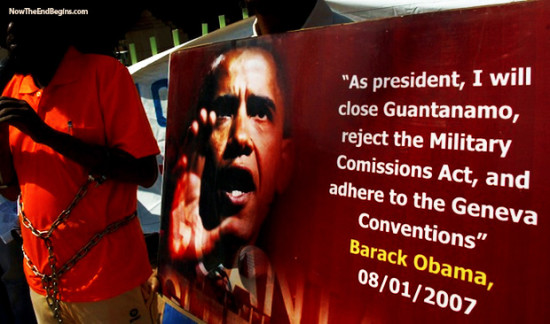
As the eight-year term of America’s first black President draws to a close, the media are already in the process of myth-making. There’s room for an honest autopsy of a man who promised a new kind of world, and delivered merely warmed-over soundbites and a few fake tears.
“With Barack Obama’s exit the US is losing a saint.” writes Simon Jenkins in the Guardian, whilst Ann Perkins praises his “grace, decency and defence of democracy”. Lola Okolosie rhapsodises on his legacy of “warmth, love, resilience”.
Already the storyline is set – Obama was a good man, who tried to do great things, but was undone by a Republican senate, and his own “sharp intelligence”.
These people, as much as anybody, reflect the cognitive dissonance of the modern press. “Liberals”, to use their own tortured self-descriptor, now assign the roles of good guy and bad guy based purely on aesthetics, convenience and fuel for their vanity. Actions and consequences are immaterial.
For the sake of balance, here is a list of Saint Obama’s unique achievements:
- Obama is the first President in American history to be at war for every single day of an 8 year presidency.
- Obama has carried out 10x more drone strikes than Bush ever did. Every Tuesday a military aide presents Obama with a “kill list”, and the “decent, gracious” Obama picks a few names off a list…and kills them. And their families. And their neighbours. These illegal acts of state-sanctioned murder have killed hundreds of civilians in 5 different countries in 2016 alone. The only reason that number isn’t higher, is that the Obama administration re-classified all males over 18 as combatants, regardless of occupation.
- After declaring he wanted to build a “nuclear free world”, Obama committed to spending $1 TRILLION dollars on rebuilding America’s nuclear weapons.
- Under Obama, the NSA et al. were able to spy on, essentially, the whole world. When this was revealed, not a single intelligence officer or government official was prosecuted. Instead…
- Obama’s administration declared a “war on whistleblowers”, enacting new laws and initiating what they call the “Insider Threat Program”. Manning was prosecuted, Snowden sent into exile and Assange was set-up, discredited and (they hoped) extradited. It has never been more dangerous to be a government whistle-blower, than under Barack Obama
- In terms of foreign policy, despite his press-created and non-sensical reputation as a non-interventionist, American Special Forces are currently operating in over 70% of the world’s 138 countries. The great lie is that, where Bush was a warmonger, Obama has sought to avoid conflict. The truth is that Obama, in the grand tradition of the CIA and American Imperial power, has simply turned all America’s wars into covert wars.
- Before Obama came into office, Libya was the richest and most developed nation in Africa. It is now a hell-hole. Destroyed by war, hollowed-out by corruption. The “liberal” press allow him to agonise over this as his “greatest mistake”, and then gently pardon him for his good intentions. The truth is that Libya was not a mistake, or a misjudgment, or an unforeseen consequence. Libya is exactly what America wanted it to become. A failed state where everything is for sale, a base to pour illegal CIA weapons south into Africa and east into the ME. When war is your economy, chaos is good for business. When secrecy is your weapon, anarchy is ammunition. Libya went according to plan. A brutal plan that killed 100,000s and destroyed the lives of millions more. Libya, like Iraq, is a neocon success story. Syria on the other hand…
- Syria, probably the word that will follow Obama out of office as “Iraq” did his predecessor, is a total failure. Both of stated intent and covert goals. Where the press will mourn Obama’s “indecisive nature” and wish he’d “used his big stick”, the real story is one of evil incompetence, so great that it would be almost comical… if it hadn’t destroyed an ancient seat of civilisation and killed 100,000s of people. Syria (along with Libya, Iraq, Somalia, Iran and Sudan) was on the list of the 7 countries America intended to destroy, famously “leaked” by General Wesley Clark. After the fall of Libya, Syria was (essentially) surrounded by American military on all sides. Iraq, Israel, Turkey and America operating out of Libya could pour “freedom fighters” into Syria to bring down “the regime”. When that didn’t work they deployed the trusty “WMD” method, to demand “humanitarian intervention”… the Russians saw that off. Then “ISIS” was created by the CIA, as al-Qaida were before them, and their manufactured barbarism was used as a pretext for invasion. The Russians, again, saw to it that this would not happen.
- Perhaps in the hope of distracting Russia from the ME, or perhaps merely as a short-sighted punitive measure, the Obama administration’s next foreign policy target was Ukraine. Victoria Nuland’s own voice proves how much that “color revolution” was an American creation. Ukraine is broke, even more broke than it was, its people starve and freeze through the winter. The new “democratic government” has shelled 10,000 people to death in the East of the country…. using American weapons.
- In Yemen, the poorest country in the ME is being bombed to shreds by the richest…. again, using American (and British) weapons. Obama’s “defense of democracy” doesn’t extend to criticising, or even discussing, the abhorrent Human Rights record of America’s Saudi Arabian allies, and in an act of brazen hypocrisy, even supported their chairing of the Human Rights Council of the UN.
This is the world Saint Obama has created. Guantanamo is still open, and terrorist “suspects” are still held there without trial or charge (they are probably still tortured). Other “suspects” can be simply declared guilty, and unilaterally executed… anywhere in the world. The NSA and CIA are illegally monitoring the communications of half the world. If any other leader in the world claimed even 1% of this power, they would be decried as “autocratic”, and their country denounced as a “pariah state”.
The Middle-East is ablaze from Libya to Afghanistan, and from Yemen to Turkey. Relations with Russia are as precarious as at any time since WWII, thanks to America’s efforts to break Russia economically and shatter their global influence. There is no sign that America intends to back-down (see the recent red-scare style hysteria in the American press). Likewise America has positioned itself to have a massive conflict with China in the South China Sea. Obama is, in terms of influence, nothing more than a used-car salesman. His job is not to create policy, but to sell neocon ideas to the general public, but his lack of agency cannot excuse his lack of vision or morals. Under Obama’s notional leadership the world has moved to the very brink of self-immolation in the name of protecting American hegemony. Domestically America still crumbles.
He had a nice smile, and a good turn of phrase. He was witty, and cool, and looked good in a suit… but that doesn’t mean he wasn’t just more of the same. He could say the right things, and sound like he meant them, but he was still a monster. As he moves out to pasture, the press will try to spit-shine Obama’s tarnished halo, to try to convince us that he was a good man at heart and that, as politicians go, we can’t do any better.
But yes, we can.
Featured Video
Seyed M. Marandi: Negotiations Collapsed – Return to War
or go to
Aletho News Archives – Video-Images
From the Archives
Wartime internment camps in Australia
National Archives of Australia
World War I
During World War I, for security reasons the Australian Government pursued a comprehensive internment policy against enemy aliens living in Australia.
Initially only those born in countries at war with Australia were classed as enemy aliens, but later this was expanded to include people of enemy nations who were naturalised British subjects, Australian-born descendants of migrants born in enemy nations and others who were thought to pose a threat to Australia’s security.
Australia interned almost 7,000 people during World War I, of whom about 4,500 were enemy aliens and British nationals of German ancestry already resident in Australia.
Records of World War I internment camps
World War II
During World War II, Australian authorities established internment camps for three reasons – to prevent residents from assisting Australia’s enemies, to appease public opinion and to house overseas internees sent to Australia for the duration of the war.
Unlike World War I, the initial aim of internment during the later conflict was to identify and intern those who posed a particular threat to the safety or defence of the country. As the war progressed, however, this policy changed and Japanese residents were interned en masse. In the later years of the war, Germans and Italians were also interned on the basis of nationality, particularly those living in the north of Australia. In all, just over 20 per cent of all Italians resident in Australia were interned. … continue
Blog Roll
 Aletho News
- Seyed M. Marandi: Negotiations Collapsed – Return to War
- Tomorrow’s naval blockade showdown
- ‘Israel’ attacks civilians to hide its embarrassing military failures & out of pure sadism
- Any Foreign Military Vessel Approaching Hormuz Under Any Pretext ‘Will Be Dealt With Severely’: IRGC
- Diplomats slam US negotiators’ performance in Iran talks
- Trump Refuses Exit Ramp, War with Iran will Continue
- Trump Says US Naval Blockade in Strait of Hormuz Will Begin Shortly
- US, Iran end 21-hour talks without agreement
- US IRAN TALKS: Who Are the Crazy Ones Here? /Lt Col Daniel Davis
- Talks with the US end without a deal over excessive US demands: Iran
- If Americans Knew
- US-Iran ceasefire negotiations make zero progress – Daily Update
- Pro-Israel ‘Thinktanks’ and Individuals who Influence U.S. Foreign Policy
- Mearsheimer reveals how Israel dictates US policies on Iran, Gaza – video
- After killing 350+, Israel still has a “score to settle” with Lebanon before ceasefire – Daily Update
- Military aid to Israel emerges as the latest political litmus test for Democrats
- The only Palestinian children’s rights organization closes following years-long Israeli campaign against it
- ‘I Can’t Forget the Smell’: Lebanese Reel After Israel Kills Over 300 in Single Day
- DNC Shoots Down Resolutions Calling Out AIPAC and Limiting Arms to Israel
- TCN: Is Israel Blackmailing President Trump?
- Israel killed at least 303 Lebanese yesterday – who were they? Daily Update
- No Tricks Zone
- Cave Discovery Reveals Today’s Desert Climates Were Recently Far Warmer, Wetter, Teeming With Life
- German Expert: Heat Dome Led To Record Temps In Western USA…Warmer In 1934, 1936
- New Study: No Linear Warming Or Glacier Retreat Along Northern Antarctic Peninsula Since 1980s
- An Inconvenient Tree: Uncovered In Alps… Europe Much Warmer Than Today 6000 Years Ago
- New Study Reports A 60% Slowdown In Greenland’s Ice Loss Rate In The Last Decade
- Low Intensity Tornado Wrecks Major Solar Farm, Creating A Potential Toxic Dump
- New Study Finds Warming Saves Lives…Cold Temperatures 12 Times More Deadly Than Excess Heat
- German Science Blog Accuses PIK Climate Institute Of Hallucinating Climate Tipping Points
- Devastating Assessment Of Comirnaty Vaccine By Former Senior Pfizer Europe Toxicologist
- New Study: CO2 Is ‘Effectively Negligible’ As An Explanatory Climate Change Factor Since 2000
 Aletho News