UK Labor chief urges end to arms supplies to Saudis
Press TV – March 24, 2016
UK Labor Party Leader Jeremy Corbyn says the British government should halt its arms sales to Saudi Arabia over the kingdom’s deadly military aggression against neighboring Yemen.
Corbyn said in a statement on Wednesday that the bombing campaign has been “a human rights tragedy and a violation of international law.”
“The British government should halt arms supplies to Saudi Arabia, now being used for this assault on its neighbor, and it should end its diplomatic and military support for the Saudi intervention,” he added in the statement.
The Labor chief further stressed that London should instead focus on promoting peace in Yemen and providing assistance to the people in the country, which has been under military attack by Saudi Arabia since late March 2015.
At least 8,400 people, among them over 2,230 children, have been killed and 16,000 others injured since March 2015. The strikes have also taken a heavy toll on the impoverished country’s facilities and infrastructure, destroying many hospitals, schools, and factories.
Corbyn has previously challenged the UK government over the issue of arms supplies to the Saudi regime which has been accused of “widespread and systematic” targeting of civilians in its aerial campaign in Yemen.
However, London has stood defiant against calls to suspend its arms sales to Saudi Arabia. In January, Prime Minister David Cameron claimed that the UK has “the strictest rules for arms exports of almost any country anywhere in the world.”
According to Amnesty International, the British government has sold 2,400 missiles and 58 warplanes to Saudi Arabia last year alone, enabling the regime to continue its war against Yemen.
British media reports say that the UK government has licensed £6.7 billion ($9.4 billion) of arms to Riyadh since Cameron came to power in 2010, including £2.8 billion ($3.9 billion) since the bombing of Yemen began.
Meanwhile, a powerful cross-party committee on arms exports has launched a full-scale investigation into British arms sales to Saudi Arabia.
“We have launched this inquiry to understand what role UK-made arms are playing in the ongoing conflict in Yemen,” said the arms control committee’s chairman, Chris White.
The Campaign Against Arms Trade (CAAT) has also brought a high court case against the British government, urging London to suspend all current export licenses and refuse all new licenses to Saudi Arabia.
Andrew Smith of CAAT slammed the UK for standing “shoulder to shoulder” with the Saudis throughout its bloody campaign in Yemen.
Yemen financial and food crisis
The Britain-based international charity group Oxfam said on Thursday that Yemen, the Arab Peninsula’s poorest nation, is in the grip of a looming famine in the face of a domestic financial crisis.
Half of the nation’s residents, or nearly 14.4 million people, already struggle to buy food and need assistance in a crisis going largely unheeded in the international community, it said in a report.
The global charity said the possibilities of tightening credit and a currency devaluation threaten Yemen which imports nearly all its food and needs a functioning economic system to fund those shipments.
The warning was issued after reports said Yemen’s Central Bank might cut credit lines that guarantee payment for incoming wheat and rice cargoes.
The Yemeni riyal also runs the risk of devaluation, which could in turn contribute to a rise in food prices in a poor country that imports nearly 90 percent of its food.
Yemeni men receive food aid provided by the World Food Program (WFP) to help families affected by the ongoing conflict, in the Yemeni capital Sana’a on March 16, 2016. (AFP photo)
“An invisible food crisis … risks turning famine warnings into a reality over the coming months,” Oxfam said.
Sajjad Mohamed Sajid, Oxfam’s country director in Yemen, said Yemenis cannot endure the rising prices for food if importers are unable to trade.
Saudi Arabia began a military campaign in Yemen a year ago with the aim of restoring former president Abd Rubbuh Mansur Hadi to power.
“A catastrophe on top of catastrophe … has created one of the biggest humanitarian emergencies in the world today,” Sajid said. “Yet most people are unaware of it.”
The charity reported instances of people eating only a meal a day in Ta’izz city, which is a regular target of Saudi attacks, and empty market stalls with no vegetables on display.
Yemen Peace Talks Bear Fruit: Idea of Unity Government Agreed
Sputnik – 21.03.2016
Parties to the Yemeni military conflict agreed to hold a new round of peace talks in Kuwait and expressed their readiness to create a national unity government during a meeting in Sanaa, UN Special Envoy for Yemen Ismail Ould Cheikh Ahmed said Monday.
“Fruitful meetings in Sana, and agreement that Kuwait is a place of upcoming Yemeni negotiations…[Parties] agree on political solution and formation of a national unity government,” the special envoy wrote on his official Facebook page.
The date for a new round of intra-Yemeni talks has not yet been announced.
The first round of talks between Yemeni government representatives and Houthi rebels took place in Geneva in December 2015.
Yemen has been engulfed in a military conflict between the government headed by Abd Rabbuh Mansur Hadi and Shiite Houthi rebels, who have been supported by army units loyal to former President Ali Abdullah Saleh. Since late March 2015, a Saudi-led coalition has been carrying out airstrikes against Houthi positions at Hadi’s request.
Saudi airstrike on Yemeni market had no apparent military reason – UN
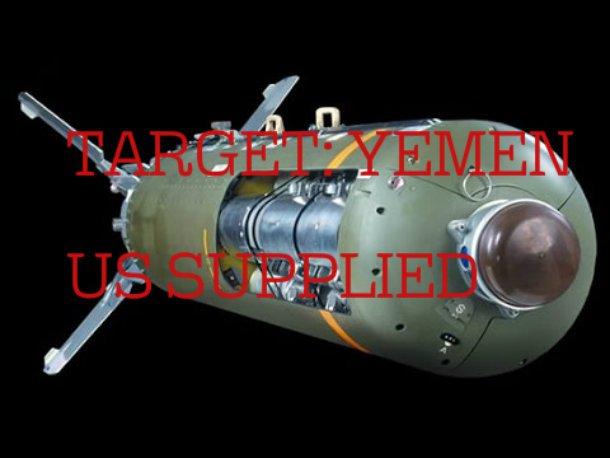
RT | March 18, 2016
UN inspectors, who visited the Al Khamees market in north-western Yemen, where Saudi airstrikes killed over a hundred people this week, found no evidence that the attack could have any military goal.
The closest target of any value to justify the bombing is a small checkpoint some 250 meters from the market, which is manned by a small group of Houthis, UN High Commissioner for Human Rights Zeid Ra’ad Al Hussein said on Friday.
The market attack in Hajja Governorate on Wednesday was one of the deadliest incidents in Saudi Arabia’s year-long campaign in Yemen, Zeid said, describing it as “carnage.” The death toll was reported as 106 people, including 24 children. The high figures are explained by the timing of the airstrikes, which were delivered during the afternoon rush hour at the market. It serves as the main shopping destination for some 15 surrounding villages.
Since the Yemeni campaign was launched in March last year by the Saudi-led coalition of Arab nations, the UN has recorded just under 9,000 casualties in Yemen, including 3,218 civilians killed and a further 5,778 injured, Zeid said.
“Looking at the figures, it would seem that the coalition is responsible for twice as many civilian casualties as all other forces put together, virtually all as a result of airstrikes,” he said.
“They have hit markets, hospitals, clinics, schools, factories, wedding parties – and hundreds of private residences in villages, towns and cities including the capital Sana’a,” he added. “Despite plenty of international demarches, these awful incidents continue to occur with unacceptable regularity. In addition, despite public promises to investigate such incidents, we have yet to see progress in any such investigations.”
He warned that “we are possibly looking at the commission of international crimes by members of the Coalition.”
“I urge both sides to swallow their pride and bring this conflict to a halt,” Zeid said. “The people of Yemen have suffered enough. A very poor country is having its limited infrastructure decimated, and people are struggling desperately to survive.”
Earlier, the Al Khamees market bombing was condemned by UN Secretary General Ban Ki-moon and a number of international organizations. Saudi Arabia said it would scale down its aerial campaign in Yemen and focus on training Yemeni troops.
The campaign’s goal in Yemen was to push back Houthi rebels and forces loyal to former President Ali Abdullah Saleh and bring back to power exiled former President Abd Rabbuh Mansur Hadi.
Toll from Saudi raids on Yemen market hits 119: UN
Press TV – March 17, 2016
A senior UN official says the death toll from recent Saudi airstrikes on a crowded market in the Yemeni province of Hajjah has risen to nearly 120.
Meritxell Relano, deputy representative for the UN Children’s Fund (UNICEF) in Yemen, on Thursday put the number of people killed in the Tuesday’s air attacks on the northern province at 119.
The strikes took place in the northwest of the Yemeni capital Sana’a after two Saudi airstrikes hit al-Khamees market in the district of Mustaba on March 15.
The UN sources say the victims include at least 20 children. Many other Yemenis were injured in the deadly aerial raids in the troubled region.
The UN children’s agency in a statement strongly denounced the deadly airstrikes.
UN Secretary General Ban Ki-moon also on Wednesday described the Saudi aerial raids as “one of the deadliest “ since Riyadh launched a military campaign against the impoverished Arab country in March last year. The UN chief also demanded a probe into the deadly incident.
The world body has already warned of a “human catastrophe unfolding in Yemen.”
Meanwhile, General Ahmed al-Asiri, a Saudi military spokesman, said on Thursday that Riyadh will scale down combat operations in Yemen in an apparent bid to divert mounting criticism of the military aggression.
However, al-Asiri stressed that the kingdom will continue to provide air support to Yemen’s former regime loyalists battling Houthi Ansarullah fighters and allied army units on the ground.
Riyadh has been under fire by international organizations and rights groups over the rising number of civilian casualties in Yemen.
The Saudi military strikes were launched in a failed effort to undermine the popular Ansarullah movement and bring the former fugitive president back to power.
At least 8,400 people, among them 2,236 children, have been killed so far and 16,015 others have sustained injuries.
Germany approves arms exports to Saudi Arabia
Press TV – March 14, 2016
According to disclosed data, the German government has approved several deals for the export of arms to countries in the Middle East, including Saudi Arabia as the kingdom continues its deadly aggression against the impoverished nation of Yemen.
According to an Economy Ministry letter seen by Reuters on Monday, the EU powerhouse will deliver 23 Airbus military helicopters to Riyadh.
In the letter to lawmakers in the economy committee of the lower house of the parliament, Economy Minister Sigmar Gabriel explained that the government’s Federal Security Council had also approved a deal by Heckler & Koch to deliver 130 machine pistols and automatic rifles to the United Arab Emirates and allowed Rheinmetall to export 65,000 mortar cartridges to the country.
The United Arab Emirates is among Saudi Arabia’s allies in their invasion against Yemen.
It also gave the green light for Heckler & Koch’s delivery of 660 machine guns, 660 additional gun barrels and 550 sub-machine guns to Oman.
The government also approved the delivery of five military helicopters by Airbus to Thailand and the export of nearly 490 machine pistols and automatic rifles by Heckler & Koch to Indonesia.
In January, Gabriel had said Germany may look harder at its arms exports to Saudi Arabia after the Persian Gulf kingdom carried out a mass execution causing international outcry.
Saudi Arabia is also widely believed to be financing to Takfiri militants wreaking havoc in the Middle East.
Riyadh has also been engaged in military operations in Yemen since late March last year. At least 8,400 people, among them 2,236 children, have been killed so far in the aggression and 16,015 others sustained injuries. Tens of Saudi solders as well as mercenary forces have been killed in the aggression.
Discussions underway to end Yemen war
American Herald Tribune | March 12, 2016
A Yemeni delegation is apparently in Saudi Arabia at the moment, participating in talks with the Saudis to end the war against Yemen. This appears to be the most serious effort made so far in order to reach a ceasefire, following the talks that took place in Oman, and later in Switzerland.
The talks apparently coincide with a lull in the fighting on the border between the two countries, and in Saudi airstrikes on the embargoed Yemen.
The Yemeni delegation in Saudi Arabia is headed by Mohammad Abdel Salam, who also happens to be Ansarullah’s main spokesman and senior advisor to the leader of Ansarullah, Abdul-Malik al-Houthi. Abdel Salam previously also led the Yemeni delegation that took part in the Oman talks, which paved the way for the U.N. sponsored talks on Yemen in Switzerland.
Moreover, the invitation is said to be at the invitation of the Saudis, who have yet to comment on the matter, and neither has the Saudi foreign ministry. The development is somewhat surprising, as the Saudis previously indicated that they are unwilling to negotiate until the Yemeni capital Sanaa falls in the hands of its allies.
So far, this war has seen more than 6,000 civilians killed, thousands more injured, and hundreds of thousands displaced as homes, hospitals, schools, and other civilian buildings targeted in Yemen in a heavy bombing campaign in which Saudi Arabia has been accused of a number of war crimes and massacres.
Saudi Arabia’s war against Yemen, one of the Arab world’s poorest countries, began in March 2015. Its goals were to destroy the Ansarullah movement and restore Abed Rabbuh Mansour Hadi as president (keeping in mind that he had resigned from this position on January 21st, 2015), the two of which Saudi Arabia has failed to achieve a year into their heavy bombing campaign.
Is the Media an Accomplice in Drone Murders?
By Emran Feroz – teleSUR – March 11, 2016
Since 2001, the United States has been killing people with weaponized drones, most times not knowing the identities of the victims.
The victims of drone strikes are nameless and invisible, despite the fact that most of them are civilians.
The Pentagon announced this week that more than 150 al-Shabab fighters have been killed by a U.S. drone strike in Somalia. The Pentagon spokesmen repeatedly talked about “fighters” and “terrorists” which “posed an imminent threat to the U.S.” But as usual, he offered no proof of his claims.
This kind of language has become normalized when it comes to the U.S. drone war, which is not just taking place in Somalia, but also in countries like Yemen, Pakistan, Afghanistan and Iraq. What is significant regarding the regular attacks in these countries is the media coverage. In fact, it practically does not exist. The many victims of drone strikes are nameless and invisible. And if they appear in any media reports, all of them are completely dehumanized and described as “terrorists,” “suspected militants” or any other similar euphemism.
This was also the case after the latest strike in Somalia, a country the U.S. is officially not at war with. Shortly after the Pentagon’s announcement, many news outlets adopted the U.S. government’s version of the incident. The New York Times, for example, wrote about the killing of “150 fighters who were assembled for what American officials believe was a graduation ceremony.” “Militants” was also the term the Washington Post used to describe all the victims. It is necessary to point out that many other well-known media outlets from all over the world did the very same thing. As usual, there was a huge lack of any critical scrutinizing. Instead, media once again became a mouthpiece of the U.S. government by quoting its military officials and spreading their one-sided views constantly.
Since 2001, the United States has been killing people with weaponized drones, most times not knowing the identity of the victims. As of today, at least 6,000 people have been killed by these drone strikes. According to the London-based Bureau of Investigative Journalism, only 4 percent of drone victims in Pakistan were identified as a-Qaida members. But vastly more than 2,000 people have been killed there by drones during the last years.
Another country which is suffering heavily under drone strikes is Afghanistan, the most drone bombed country in the world. Between 2001 and 2013, 1,670 drone strikes took place in the country. It was in the city of Kandahar, the Taliban’s former stronghold, where the first strike by a weaponized drone took place in October 2001. The target, Taliban founder Mullah Mohammad Omar, was not killed on this day, but many other unknown people have been in the years since.
One of these people was Sadiq Rahim Jan, a 21-year-old food vendor from Paktia, eastern Afghanistan. He was murdered by a drone strike in July 2012. A few days later, media outlets in Kabul described him as a “Taliban commander.” The family members of Aisha Rashid have also been killed by a drone strike. The Afghan girl was four years old when a missile hit the pick-up of her family in Kunar, also in the east of the country. Fourteen passengers, including Aisha’s parents, were murdered. Only she survived – barely – with a ragged face. Initially, all the victims were described as “militants” by Afghan government officials and local media outlets.
Tariq Aziz, from North Waziristan shared a similar destiny. The 16-year-old anti-drone activist was killed by a drone strike in November 2011, together with his 12-year-old cousin Waheed. Unlike the case of Malala Yousafzai, the young Pashtun girl which was nearly killed by a member of the Pakistani Taliban and received a Nobel Peace Prize, Tariq’s case is widely unknown.
In all the mentioned cases, as well as many other, significant media coverage was nonexistent – or it described the victims as terrorists, extremists, militants, al-Qaida members, and so on. This is happening on a daily basis and there are also reasons why it is happening.
In the case of Sadiq, for example, his family became outraged after they noticed that local media outlets described their son and brother as a “Taliban commander.” On that day, the young Afghan was the only person who has been killed in the area. He never had any connection with any insurgent group, not to mention being a commander of them. One of the media outlets which spread these news was Radio Azadi, an Afghan branch of the US government’s external broadcast services. It should be more than obvious that the main aim of such a media platform is not spreading objective information.
Another example for this behaviour is Tolo TV, Afghanistan’s leading mainstream television channel. Last year, the channel’s news website reported that in July 2015 drone strikes in the eastern province of Nangarhar killed “nearly 250 Taliban and Daesh [Islamic State] insurgents.” The main source for this “reporting” was the National Directorate of Security (NDS), the Afghan intelligence service, which was built by the U.S. in the first days of the NATO invasion.
Tolo TV was created in 2004 by Saad Mohseni, an Afghan businessman who is being called an “Afghan Rupert Murdoch” and is considered one of the most powerful men in Afghanistan. The channel’s creation was mainly funded by the notorious United States Agency for International Development (USAID), which is widely known as one of the most important foreign policy tools of the White House.
In general, one can assume that many media outlets in Afghanistan were not created to support journalism and press freedom but to install media institutions who can be useful to represent particular interests. This is also the case in other countries which suffer from drone strikes.
Noor Behram, an investigative journalist from Northern Waziristan, is known for taking pictures of the drone murder scenes and spreading the victims’ faces. After Behram talked with journalists from Islamabad, Pakistan’s capital, he experienced that for them, a beard, long hair and a turban or a pakol, a traditional Afghan cap, is enough to describe male drone victims as “terrorists.” But nearly every man in this area looks like that. According to this logic, everyone, even myself when I am staying there, must be a terrorist.
Besides, Behram’s results fit into Washington’s practice that all military-aged males in a strike zone are considered as “militants.”
The U.S. and its allies needed propaganda organs to construct and justify their war on a medial level. Despite the question if this is moral or not, one should agree that it is also very logical because every war is based on propaganda – it was always like that and probably will never change.
But what remains is the question why so many people still believe such a biased media coverage and its constructed narrative of a good war which is only hitting the bad guys.
Emran Feroz is an Afghan-Austrian journalist, writer and activist currently based in Germany. He is the founder of Drone Memorial, a virtual memorial for civilian drone strike victims.
DynCorp mercenaries to replace Blackwater in Yemen
Press TV – March 7, 2016
The first batch of mercenaries from the private US military firm DynCorp has arrived in the Yemeni city of Aden to replace paid militants from another American company.
Under a USD-3-billion contract between the United Arab Emirates (UAE) and DynCorp, mercenaries from the company are to be deployed to Yemen, where UAE forces are fighting against the Yemeni army and Popular Committees on Saudi orders, Khabar News Agency quoted an official with Yemeni Defense Ministry as saying.
The official, who spoke on condition of anonymity, said the first group of the mercenaries recently arrived in the port city of Aden to replace those of Blackwater, a notorious American group now renamed Academi.
He added that the new militants included special naval forces, who entered the port of Ras Omran southwest of Aden.
DynCorp is a rival of Blackwater, which hires mercenaries and sends them to fight in foreign countries on paid missions.
Blackwater had decided to withdraw from Bab-el-Mandeb region after the Yemeni forces inflicted heavy losses on them. The UAE was forced to bring in the new mercenaries from DynCorp for the same reason.
Yemen has been under military attacks by Saudi Arabia since late March last year. At least 8,400 people have been killed so far in the aggression and 16,015 others sustained injuries. The strikes have also taken a heavy toll on the impoverished country’s facilities and infrastructure, destroying many hospitals, schools, and factories.
GCC not after protecting Lebanon: Hezbollah chief
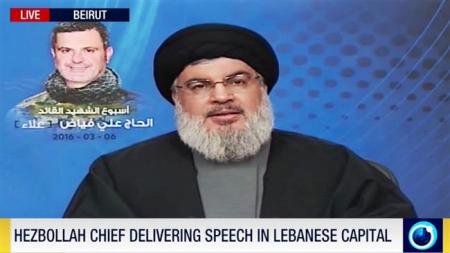
Press TV – March 6, 2016
Sayyed Hassan Nasrallah, the secretary general of the Lebanese resistance movement Hezbollah, says the Arab member states of the [Persian] Gulf Cooperation Council ([P]GCC), which recently listed the resistance group as terrorists, do not have the interests of Lebanon in mind.
During a live televised speech on Sunday, Nasrallah said those who assume that the Arab regimes will protect Lebanon have “pinned their hopes on a fantasy.”
Had Lebanon waited for a unified Arab strategy in the face of Israel instead of opting to resist against the occupying regime, “then the fate of this territory would have been the same as the fate of the territories Israel has taken control of,” he said.
On Wednesday, the six-nation Arab bloc issued a statement labeling Hezbollah a terrorist organization. The [P]GCC comprises Bahrain, Kuwait, Oman, Qatar, Saudi Arabia and the United Arab Emirates.
“Many of these Arab countries today, who designate us as terrorists, what do they have to do with this resistance and these victories and these achievements?” Nasrallah said.
Israel unleashed an all-out offensive on Lebanon 10 years ago under the pretext of releasing Israeli soldiers allegedly captured by Hezbollah in southern Lebanon. The invasion claimed the lives of nearly 1,200 Lebanese people, most of them civilians.
The Tel Aviv regime was, however, forced to retreat without achieving any of its objectives after Hezbollah fighters displayed heavy resistance against the Israeli military.
“Back then, we said to them (the Arab countries) ‘we don’t want anything from you… Today, we also say to them, to these regimes, ‘We don’t want anything from you. We don’t want money, nor do we want weapons, nor do we want support or blessing,” he said. “Just leave this resistance alone, leave this country alone, and leave this people alone.”
He blamed some Arab regimes for conspiring against anyone standing against Israel.
Nasrallah also underlined the assistance provided by the resistance group to the Iraqi government in its fight against the Takfiri terror group Daesh and reminded that Hezbollah did not wait for any orders to initiate its anti-terror fight in Syria and only fulfilled its religious commitment.
The secretary general of Hezbollah also addressed the tension that has been bubbling up between Saudi Arabia and Lebanon, causing the former to take a raft of hostile measures against the latter.
“If it’s angry with us, it has the right to. I understand Saudi Arabia’s anger. Why? Because when one fails, at the very least he will be angry,” Nasrallah said.
He went on to explain that the Saudi rage has emanated from the kingdom’s failures in Yemen and Syria.
“In Syria, there’s a very great Saudi anger because what they had calculated in Syria [was that] in two or three months, ‘Syria would fall into our hands,’” Nasrallah said.
Hezbollah has been successfully aiding the Syrian military against foreign-backed militant groups.
“He, who confronts Saudi Arabia in Syria is the real defender of the Lebanese national interests,” Nasrallah said.
“The same goes for Yemen. The estimations of the new Saudi leadership was that ‘we will decide the battle in Yemen. We will teach a lesson to all the Arab countries and the Arab world… and we will impose ourselves on the Arab world,’” he said.
Saudi Arabia launched a campaign of military aggression against Yemen in late March last year in a bid to bring fugitive former Yemeni President Abd Rabbuh Mansur Hadi, a Riyadh ally, back to power and undermine Yemen’s Houthi Ansarullah movement.
Riyadh has, however, failed in accomplishing either of the two objectives, and has become entangled in a prolonged expensive war, whose adverse economic impacts—along with economic mismanagement—have gradually been giving rise to domestic discontent inside Saudi Arabia.
Riyadh to receive French-made arms intended for Lebanon
Press TV – March 5, 2016
Saudi Arabia will take delivery of French-manufactured arms originally ordered for the Lebanese army, following Riyadh’s recent decision to retract USD four billion in military aid to Beirut.
Saudi Foreign Minister Adel al-Jubeir announced the plan on Saturday during a visit to France.
Last month, the Saudi regime said it had suspended USD three billion in military assistance to the Lebanese military and another USD one billion to the country’s internal security forces.
The aid was cut after Lebanon refrained from endorsing Saudi-crafted statements against Iran at separate meetings held in Cairo and Jeddah.
The move also followed victories by the Syrian army, which is backed by fighters of Lebanon’s resistance movement of Hezbollah, in its battle against Takfiri terrorists battling to topple the government in Damascus.
“We made the decision that we will stop the USD three billion from going to the Lebanese military and instead they will be re-diverted to the Saudi military,” Jubeir told journalists in Paris, adding, “So the contracts (with France) will be completed but the clients will be the Saudi military.”
The aid is vital as the Lebanese army is fighting Takfiri militants from the al-Qaeda-linked Nusra Front and Daesh near the country’s northeastern border with Syria.
France’s arms delivery to Saudi Arabia comes amid Riyadh’s ongoing military aggression against Yemen and its support for militant groups in Syria.
Several European countries including Germany, Britain and France have been engaged in major arms deals with the Saudi regime, turning a blind eye to calls by rights groups to cancel the agreements.
Back in February, the European Parliament passed a resolution calling for the imposition of an arms embargo against Saudi Arabia, and urging EU member states to stop selling weapons to Riyadh as it is accused of targeting civilians in Yemen.
According to a recent report by the Stockholm International Peace Research Institute (SIPRI), Saudi Arabia’s imports for 2011-15 increased by 275 percent compared with 2006–10. The British government has licensed USD 7.8 billion in sales of arms, fighter jets and other military hardware to Riyadh since Prime Minister David Cameron came to power in 2010. France also signed USD-12-billion contracts with Saudi Arabia in 2015 alone.
Yemen has been under military attacks by Saudi Arabia since late March 2015. More than 8,300 people, among them 2,236 children, have been killed. The strikes have taken a heavy toll on the impoverished country’s facilities and infrastructure, destroying many hospitals, schools and factories.
Featured Video

“Historic Russia”: The Land Putin Will Not Give Back
or go to
Aletho News Archives – Video-Images
From the Archive
How Ukraine Tortured and Slaughtered Donbass
By Kit Klarenberg | Al Mayadeen | July 11, 2024
Almost immediately after the proxy war erupted, ISIS-tier footage of the torture and murder of Russians in Ukrainian custody emerged.
On July 6th, the New York Times published an astonishing investigation: In Ukraine, Killings of Surrendering Russians Divide an American-Led Unit. The article documents in grim detail how Chosen Company, an international volunteer battalion for Kiev, routinely executes Russian prisoners of war. It is the very first mainstream admission that this practice – a brazen breach of the Geneva Conventions, and a grave war crime – is widespread among Ukraine’s fighters, both foreign and homegrown. … continue
Blog Roll
 Aletho News
- Burnham tackles Britain’s poverty with aggression in Yemen
- Peace in Ukraine: the easy way – or the hard way
- Trump & the Rrrrussians
- US taxpayer money laundered back through Ukraine – Musk
- Before COVID, an NIH lab chief proposed making a SARS-like bat virus more infectious
- Gates, Bourla on Trial in Netherlands Accused of ‘Great Reset’ Scheme at Vaccine Injury Hearing
- BRITAIN’S WARNING: PREPARE FOR WAR
- “Historic Russia”: The Land Putin Will Not Give Back
- How the Cambridge Analytica scandal still haunts Mark Zuckerberg
- The Ongoing Cancellation Campaign Against a Dissenting Academic in Norway
- If Americans Knew
- DAILY UPDATE: Latest essential news on Palestine, Israel, & region
- Damning report shows the media must confront its failures on Gaza
- BBC senior broadcaster speaks out on Gaza coverage
- Netanyahu vows vast West Bank invasion in response to 20-minute skirmish that left 2 Israeli soldiers and 2 Palestinian fighters dead
- Tied up and tortured: Israel using US-made electroshock weapons on Palestinian detainees
- The outsourced risk: how newsrooms rely on Gaza’s freelancers without protecting them
- Gaza bakeries forced to shut as Israel blocks flour shipments
- Gaza’s breast cancer patients face a deadly wait for treatment amid Israel’s genocide
- DAILY UPDATE: Latest essential news on Palestine, Israel, & region
- The Israel Lobby’s Changing Fortunes
- No Tricks Zone
- Two New Studies Find Thwaites Glacier Melt Cannot Be Driven By Human Activity Or A Warming Ocean
- E-Cars Reduce CO2 Emissions By Only 41% Compared To Internal Combustion Engine Vehicles
- Predictions Made By Renowned Climate Professor Over Past Decades Have Been Proven To Be Poor
- New Study Suggests Large Regions Of The Pacific Ocean Have Been Cooling For The Last 80 Years
- Germany’s Green Energy Debacle: High Energy Costs Force Kahla Porzellan to Close After 182 Years!
- New Study: 50 Years Of The Most Aggressive ‘Net Zero’ Policies Can Only Affect The Global Climate By 0.03°C
- US September “Heat” Was No Record…Many Records Set Decades Ago
- Latest European Green Energy Debacle; Portugal’s Largest Flagship Solar Park Insolvent!
- Green Energy Debacle: German Expert Professor Fritz Vahrenholt Warns Of Severe Economic And Social Consequences
- Two More Paleo Reconstructions Affirm Meters-Higher Sea Levels Across Ireland, Brazil 7000-6000 Years Ago

