UK Home Secretary Signals Tougher Online Censorship Beyond Current Censorship Laws
By Didi Rankovic | Reclaim The Net | February 5, 2025
Judging by the most recent statements made by UK Home Secretary Yvette Cooper, the government feels it will have to implement even more stringent speech-restrictive measures than those contained in the sweeping and controversial censorship law, the Online Safety Act.
Appearing on a BBC political talk show, Cooper kept beating the now well-established drum the ruling Labour has gone for in the wake of last year’s Southport killings, and subsequent mass protests – namely, to try to portray social media companies as somehow “a part of the crime,” which is verbatim how the cabinet minister put it.
One of the recurring themes these last weeks, since the Southport trial saw its conclusion, has been that tech companies are “morally responsible” for not deleting (that request came only last week) one of the violent videos viewed by the killer, Axel Rudakubana.
This request was made even though said companies are under no legal obligation to do that, until the spring of this year and the start of the enforcement of some parts of the Online Safety Act.
The stage set that way, Cooper’s logic – or lack thereof – goes like this: “We are being clear that we are prepared to go further if the Online Safety Act measures are not working as effectively as we need them to do,” she told the host, Laura Kuenssberg.
There is no way to predict how social media firms will act once they are under obligation to remove certain types of content – and yet Cooper is already threatening to make the Online Safety Act even worse.
After the case played out in court, the authorities are now going to organize an inquiry that will broaden the narrative and examine how social media, i.e., the content that third parties can publish there, is influencing “online radicalization” (Cooper mentions Islamist and far-right extremism in the same breath) and “obsession with violence” among young people.
At one point – but well into this attempt to implicate the availability of both illegal and legal content related to violence as an important factor behind the Southport tragedy – the interviewer mentions that Rudakubana was “on the radar of the social services, he was on the radar of Prevent, a Home Office program, and yet no one stopped him.”
When asked whose responsibility it was to stop him before the crime, Cooper danced around the topic (but surprisingly, didn’t name social networks.)
Australian cricket commentator sacked for noting mass deaths in Gaza
By Oscar GRENFELL | Strategic Culture Foundation | February 5, 2025
For the second time, the cricket world has provided a petty, vindictive and downright ridiculous example of the broader campaign by the powers-that-be to silence opposition to the Israeli genocide in Gaza.
In December 2023, the International Cricket Council (ICC) forbade Australian batsman Usman Khawaja from taking the field in international matches with shoes that read “all lives are equal” and “freedom is a human right.” The bureaucrats, who run the game from the ICC’s headquarters in the dictatorial United Arab Emirates, deemed those statements to be “political” because they were regarded as a reference to Israel’s mass murder of Palestinians.
The ICC’s suspicious and hostile attitude to professions of human rights and basic decency has now been matched by the Sports Entertainment Network, which runs the popular SEN sports radio broadcaster.
Over the weekend, SEN unceremoniously dumped Peter Lalor, a widely-respected cricket commentator, over posts he made on his X/Twitter account referencing Gaza. The sacking was done in a hurry. Lalor was in Sri Lanka as a freelance commentator commissioned by SEN to cover the ongoing Australia-Sri Lanka Test cricket series when he was dismissed.
Lalor had commentated the first test in Galle without incident, and was scheduled to cover the second. Why then the sudden rush by SEN to sever all ties with a leading cricket expert? For anyone familiar with the witch-hunts of the past 16 months that have accompanied the Israeli war crimes, inevitably “upset” and “offended” Zionists were in the picture.
As per Lalor’s account, “I was asked by station boss Craig Hutchison, who was civil, if I didn’t care that my retweeting of events in Gaza made Jewish people in Melbourne feel unsafe. I said I didn’t want anyone to feel unsafe.” Predictably, Hutchison reportedly related accusations that Lalor may be an antisemite, which has been the go-to line for shutting down opposition to the assault on Gaza.
Lalor went on: “The following day Hutchison told me that because the ‘sound of my voice made people feel unsafe’ and that people are ‘triggered by my voice,’ I could not cover the cricket for them anymore.”
If Zionists were telling SEN management that Lalor’s measured commentary of a Test cricket match was making them feel “unsafe,” the appropriate response would have been to dismiss the remarks as absurd.
More to the point, SEN should have noted that the complainants were making a cynical bid to have someone sacked for disagreeing with them politically. They should have told the witch-hunters to stop harassing their employee.
But, as has so often been the case with the Zionist witch-hunts, SEN management rolled over.
After Lalor’s sacking, Hutchison issued a nauseating statement. “SEN Cricket is a celebration of differences and nationalities,” it proclaimed, although those “differences” evidently did not extend to opposing the unfolding genocide or referencing the mass killing of Palestinians. To justify its censorship, the statement went on to describe the station as a “a place where our SEN audience can escape what is an increasingly complex and sometimes triggering world.”
Like the saga of Khawaja’s shoes, the most striking aspect of this incident is the complete mismatch between Lalor’s “offence” and the response. Lalor is not accused of ever having mentioned Gaza during a broadcast, so the references to the sound of his voice are presumably because it reminds the Zionists of his X/Twitter feed.
Moreover, the posts on his feed are simply not of a highly controversial character. In any objective assessment, Lalor comes across as a humane and democratically minded man, disturbed by the mass killing of Palestinians and wishing for an end to war.
Most of his posts were retweets from other accounts. As per Lalor’s account, Hutchison indicated that SEN was hit with complaints over Lalor during the first Test match, played from January 29 to February 1. It is difficult to determine when something was retweeted, as against when it was posted by the original account.
But some of Lalor’s X content around that time included retweeting a post reporting that “Palestine Red Crescent teams have recovered another 14 decomposed Palestinian bodies from several areas on the Rashid Coastal Road in Gaza.”
Another was a statement by a Palestinian Christian leader, condemning the invitation by US President Donald Trump for Israeli Prime Minister Benjamin Netanyahu to visit Washington. The pastor wrote, “The man who has an arrest warrant for him from the ICC [International Criminal Court] is invited to the White House as a guest of honor. This is the world we live in. Faith leaders must make their voices heard in times like this.” Other retweets by Lalor have highlighted the plight of Palestinian children and prisoners.
People instigating a witch-hunt over such content, which has nothing whatsoever to do with antisemitism, are simply supporters of war crimes.
Media and cricket figures have spoken out in defence of Lalor.
Khawaja declared on Instagram: “Standing up for the people of Gaza is not antisemitic nor does it have anything to do with my Jewish brothers and sisters in Australia, but everything to do with the Israeli government and their deplorable actions. It has everything to do with justice and human rights.” He concluded: “Pete is a good guy with a good heart. He deserves better.”
As per Lalor’s account of the sacking, “I was told in one call there were serious organisations making complaints; in another, I was told that this was not the case.”
Throughout the genocide, right-wing Zionist lobby groups that collaborate closely with the Israeli state and support its every crime against the Palestinians have fraudulently been depicted by governments and the media as representative Jewish organisations. Their every pronouncement has been reported uncritically and they have had access to the corridors of power.
These groups have repeatedly instigated witch-hunts targeting critics of Israel. Journalist Antoinette Lattouf is currently in the Federal Court, having brought a case against the Australian Broadcasting Corporation (ABC) for unlawful termination. Lattouf was sacked halfway through a week-long fill-in position, after a concerted campaign by Zionist lawyers who barraged the ABC with vexatious complaints.
Lattouf’s sacking, ostensibly because she shared a post to her personal social media from Human Rights Watch condemning Israel’s use of starvation as a weapon of war, occurred in December 2023. The dismissal of Lalor, more than a year later, in such similar circumstances, underscores the normalisation of witch-hunting and politically motivated sackings by the Australian political, media and corporate establishment.
Such repressive measures set a precedent for broader attacks on working people as they enter into struggle against the broader eruption of militarism, including Australia’s transformation into a frontline state for a US-led war against China, completed by the same federal Labor government that has consistently backed Israel’s war crimes in Gaza.
Trump’s Foreign Policy – Strategy Behind the Noise?
Prof. Jeffrey Sachs with Prof. Glenn Diesen
Glenn Diesen | February 5, 2025
Trump’s actions in the international system are defined by the aims to remake US foreign policy, and the tendency to make noise that keeps him in the headlines. A key challenge for analysts is therefore to distinguish between the strategy and the noise. Some of Trump’s messaging has a deliberate purpose while at other times he is seemingly improvising.
US Secretary of State Marco Rubio dropped a bombshell by arguing that the unipolar world order is over and the natural condition is multipolarity. Does this represent Trump’s decision to retire the “hegemonic peace” in Europe through NATO expansion (that triggered a war in Ukraine), or was it simply an independent commentary by Rubio? Trump wants peace with Russia and recognises that NATO provoked the war, but he also attempts to threaten Russia to accept US terms. Trump wants to end the wars in the Middle East, but he also sends 2000-pound bombs to Israel and casually suggests ethnic cleansing of the Palestinians from Gaza. Trump wants to get along with China, but also to end China’s technological leadership. What is foreign policy and what is noise?
What Does Israel Want in The West Bank?
By Diana Khwaelid | International Solidarity Movement | February 5, 2025
Northern West Bank – Israel is carrying out massive military operations to displace residents of camps in the northern West Bank, unprecedented since the Second Intifada. Since the seventh of October, Israeli attacks on West Bank cities, especially in the north, have not stopped. We are talking about the cities of Jenin, Tulkarm, Tubas, Nablus and Qalqilya.
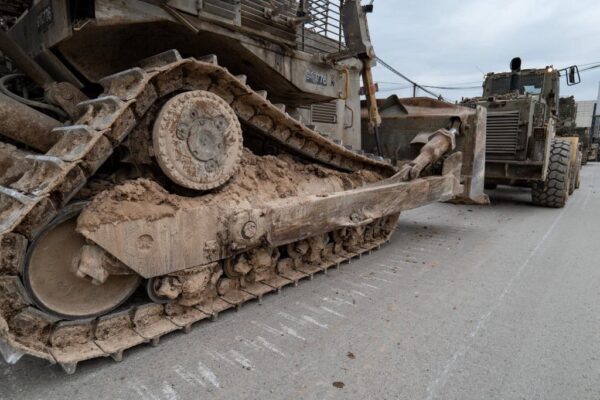
Destruction of Palestinian refugee camps
At the end of January, Israel carried out a large scale military operation in the northern West Bank city of Jenin, which has lasted for ten days so far.
Its military operations are based in the Jenin refugee camp, in various city areas, and in some nearby villages. The Jenin camp has become an unfit place for human habitation, dozens of Palestinian houses have been destroyed and bombed, and the neighborhoods and streets of the camp have already been destroyed. Electricity,water pipes and infrastructure have been destroyed.
A residential block and an entire neighbourhood have been completely destroyed due to aerial bombardment.
Did you succeed in transforming the Jenin camp like Jabalia camp in Gaza?
This is what senior Israeli officials promised before the start of the recent military operation in the West Bank, especially in the Northern West Bank. The Israeli occupation continues its aggression on Jenin, Tulkarm, and Tubas, murdering 29 martyrs, dozens of injuries, arrests, demolition of houses and forced displacement. Amid widespread destruction of property and infrastructure.
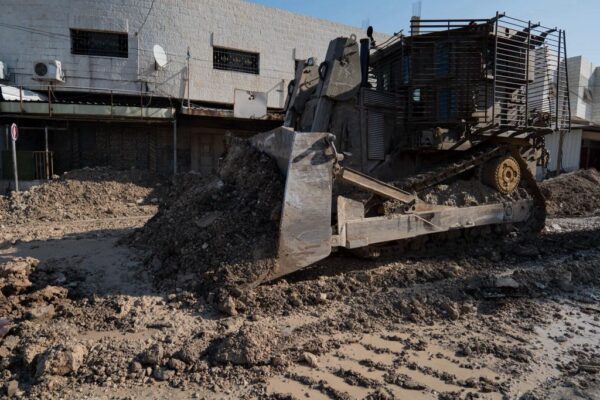
Entrance to Tulkarem
JENIN
Jenin, for the fifteenth day in a row, the occupation continues its aggression against the Jenin city and its camp, which has so far resulted in 25 martyrs, dozens of injuries, arrests, and the demolition of dozens of houses, amid a large displacement process that affected 15 thousand citizens.
Yesterday morning, the occupation army forced residents of the buildings supervising the Jenin camp to evacuate, as several military vehicles were stationed near the buildings demanding evacuation.

Street in Jenin
Residential buildings and apartments are being emptied, forcibly displacing citizens.
The occupation forces in the Jenin camp simultaneously blew up about 20 buildings in the eastern side of the camp, after booby trapping them, which caused damage to some sections of the Jenin government hospital, without injuries being recorded. The occupation continues to push reinforcements to the city of Jenin camp from the Jalama military checkpoint, while its bulldozers continue to destroy houses in the merge lane, with approximately 15 thousand people now displaced from the Jenin camp the target neighborhood, distributed throughout 39 local community bodies in the Jenin governorate and its towns.

Transfer of an injured person in Tulkarem
TULKAREM
For the ninth day in a row, the occupation continues its aggression against the city of Tulkarm and its camp, resulting in the martyrdom of four citizens, amidst extremely difficult humanitarian conditions.
The occupation forces are still pushing more of their vehicles into the city and its camp from the “tasnouz” military camp west of Tulkarm, and deploying infantry patrols in large numbers in the streets, neighborhoods, and the center of the vegetable market, combing and searching between houses and alleys and harassing citizens.
These forces also continue to besiege the martyr Thabit Thabit government and specialized hospitals, obstruct the work of ambulances and their medical crews, and subject them to inspection and field investigation, while they have taken military barracks and places for snipers from the buildings surrounding them.
The occupation forces escalated their violations against citizens in the city and its camp through a series of attacks, which included raiding houses, forcing their owners to flee, vandalizing and stealing their contents, blowing up and destroying a number of them, in addition to restricting movement, while seizing commercial and residential buildings and turning them into military barracks and places for snipers.
In Tulkarem camp, the occupation forces continue to deploy large numbers of infantry soldiers in all its neighborhoods and alleys, raid houses, force residents to leave them, seize high buildings and turn them into sniper platforms and shoot at Citizens, which led to the injury of a citizen (40 years old), shot by an occupation soldier sniper stationed inside one of these buildings.
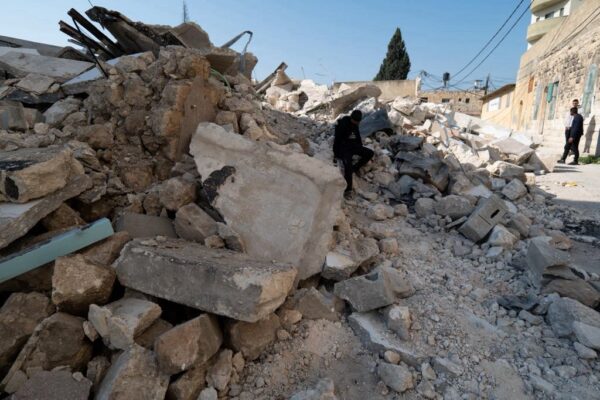
House of the martyr Tamer Fugha
Tulkarem camp is living amid this unprecedented continuous escalation, amid difficult humanitarian conditions, after the occupation bulldozers completely and partially destroyed houses and shops, blowing up a number of them and burning others, coinciding with the destruction of infrastructure, which led to the interruption of water, electricity, communications and the internet, making it difficult for specialized crews from the municipality, and others, to repair them because the occupation prevented them from entering the camp. The situation of citizens who are still in their homes ~ the elderly, the sick, women and children has also been aggravated by the acute shortage of food, medical, drinking water, and infant formula.
TUBAS
For the third day in a row, the occupation is besieging AL- FARA’ camp and the town of Tamoun south of Tubas, amid arrests, bulldozing of infrastructure and forcing citizens to flee.
Since the beginning of the storming, Israeli Occupation Forces forces have bulldozed the roads and infrastructure leading to the AL-FARA’ camp, in addition to closing all entrances to it with earthen berms and raiding houses in the vicinity of the camp, forcing its residents to be displaced, and turning them into military barracks.
Israeli Occupation Forces also raided the homes of citizens on the outskirts of the town of Tamun, forcibly displacing residents, giving them orders not to return within ten days.
Water pipelines have been destroyed between the Town of Tamun and the village of Atouf, in addition to closing of the road connecting the two areas with earthen berms.
The occupation continues to push military reinforcements to Tamun and the AL-FARA’ camp, while the Israeli reconnaissance aircraft continues to fly intensively in the skies of the governorate.

Military reconnaissance aircraft
According to the Palestinian Ministry of Health: the number of Palestinian martyrs in the West Bank since the beginning of this year 2025 has reached 70 martyrs.
38 martyrs in Jenin
15 martyrs in Tubas
5 martyrs in Tulkarem
3 martyrs in Hebron
2 martyrs in Bethlehem
6 martyrs in Nablus
1 martyr in Jerusalem
10 of them are children, 2 are women, 2 are elderly people.
Hamas: Trump’s remarks on Gaza reflect “deep ignorance about Palestine”

Palestinian Information Center – February 5, 2025
DOHA – Member of Hamas’s political bureau Ezzat al-Resheq said that US president Donald’s latest remarks about taking over Gaza and relocating its residents elsewhere reflect “misperception and deep ignorance about Palestine and the region.”
“Gaza is not a common land for any party to decide to control, but rather it is part of our occupied Palestinian land, so any solution must be based on ending the occupation and fulfilling the Palestinian people’s rights and not on the mentality of a real estate businessman or the mentality of muscle and domination,” Resheq said on Wednesday.
Resheq added that Trump’s remarks on Gaza “vindicated further the unlimited US bias in favor of the Israeli occupation regime and the Zionist aggression against the Palestinian people and their legitimate rights.”
The Hamas official affirmed that the Palestinian people and their leaders, backed by their Arab and Islamic nations and the world’s free people, would frustrate all the displacement plans targeting them.
In another statement, the Hamas Movement condemned in the strongest terms Trump’s remarks on Gaza, describing them as “hostile to the Palestinian people and their national cause.”
Hamas said that such remarks by Trump would “not serve regional stability” and would only “pour fuel on the fire.”
“We, alongside our Palestinian people and national leaders, will never allow any country in the world to occupy our land or impose guardianship over our great people whose blood flowed like rivers in order to liberate our land from the occupation and establish our Palestinian state with Jerusalem as its capital,” Hamas said.
Hamas called on the Arab League, the Organization of Islamic Cooperation and the UN to convene urgent meetings to take firm and historic positions that preserve the Palestinian people’s national rights.
In a joint news conference with the Israeli prime minister in the White House on Tuesday, Trump said the US would “take over” and “own” Gaza after resettling Palestinians elsewhere under a redevelopment plan that he claimed could turn the Palestinian coastal enclave into “the Riviera of the Middle East.”
In a flagrant announcement upending decades of US policy towards the Palestinian-Israeli conflict, Trump claimed that his administration would spearhead development in Gaza to “supply unlimited numbers of jobs and housing for the people of the area.”
‘I much prefer a nuclear deal’: Trump dismisses talk of US–Israeli attacks on Iran
The Cradle | February 5, 2025
US President Donald Trump has denied that Washington and Tel Aviv are planning military attacks against the Islamic Republic of Iran, saying that he would “much prefer” a nuclear agreement preventing Tehran from acquiring an atomic weapon.
“I want Iran to be a great and successful Country, but one that cannot have a nuclear weapon. Reports that the United States, working in conjunction with Israel, is going to blow Iran into smithereens, ARE GREATLY EXAGGERATED,” Trump said early on 5 February on his social media platform Truth Social.
“I would much prefer a Verified Nuclear Peace Agreement, which will let Iran peacefully grow and prosper. We should start working on it immediately, and have a big Middle East celebration when it is signed and completed. God Bless the Middle East!” the president went on to state.
In early February, reports said that Trump shot down Israeli plans for an attack on Iranian nuclear facilities.
Trump expressed hope late last month that a nuclear deal could be “worked out without having to go that further step,” referring to an attack.
A Wall Street Journal report in December said Trump’s team was mulling options for strikes on the Iranian nuclear program and that there was a “rare opportunity to counter Iran’s nuclear buildup.”
This week, the US president signed an executive order restoring his “maximum pressure” policy of sanctions on the Islamic Republic, as reports had said he would prior to his second presidential term.
“If the main problem is Iran not having nuclear weapons, this problem can be solved,” Iranian Foreign Minister Abbas Araghchi said on Wednesday, adding that “maximum pressure is a failed experiment and testing it again will lead to another defeat.”
Trump withdrew from the 2015 US–Iranian nuclear deal in 2018 – during his first term – and restored harsh sanctions against Iran.
Tehran is subject to the Nuclear Non-Proliferation Treaty (NPT) of 1970, as well as a religious fatwa outlawing the development and use of any form of weapons of mass destruction.
Former CIA director said last month that “we do not see any sign” that Iran is planning to weaponize its nuclear program.
The Saudi–Israeli normalization ‘delusion’
By Stasa Salacanin | The Cradle | February 5, 2025
On 4 February, when asked if the Saudis demand the establishment of a Palestinian state as a condition for recognizing Israel, US President Donald Trump, sitting alongside Israeli Prime Minister Benjamin Netanyahu in the Oval Office, swiftly replied: “No, they’re not.”
The Saudi Ministry of Foreign Affairs was also quick to respond, stating that its stance on the establishment of a Palestinian state remains “firm and unwavering,” insisting that Riyadh would make no deal with Tel Aviv otherwise:
“His Royal Highness (Crown Prince Mohammed bin Salman – or MbS) emphasized that Saudi Arabia will continue its relentless efforts to establish an independent Palestinian state with East Jerusalem as its capital, and will not establish diplomatic relations with Israel without that.”
The statement further stressed that the Saudi position on this is “non-negotiable and not subject to compromises.”
Despite the fervent optimism of Trump’s newly appointed foreign policy team, the much-touted Saudi–Israeli normalization agreement remains an elusive goal, just as it was for his predecessor, Joe Biden. While Washington insists that such a deal is potentially around the corner, a more sober analysis suggests the pathway to a deal remains rife with obstacles.
Spanner in the works
The Abraham Accords, brokered under Trump’s first term, were hailed in Washington as a historic breakthrough in West Asian diplomacy, bringing the occupation state into official relations with the UAE, Bahrain, Morocco, and Sudan. Yet, the glaring absence of Saudi Arabia – the most influential Arab state – was the missing piece that the US and Israel craved most.
Biden’s tenure, rather than advancing Trump’s initiative, has arguably undermined it. His administration’s unyielding support for Israel’s genocidal war on Gaza and its brutal military campaign in Lebanon has alienated many Arab and Muslim states, further diminishing the likelihood of new normalization deals.
Meanwhile, China has capitalized on Washington’s waning credibility, scoring a major diplomatic coup in 2023 by brokering a historic rapprochement between Saudi Arabia and Iran – a relationship that, against the odds, remains intact.
Despite the changed reality on the ground, this US administration still believes that the deal between the world’s largest oil exporter and Israel is still attainable on its terms. Mike Waltz, the Trump administration’s new national security advisor, has stated that reaching a peace agreement between Riyadh and Tel Aviv is a “huge priority” for the new administration.
Saudis caution: A deal on whose terms?
While the Saudis drew a clear line and maintained it for a very long time by linking normalization with Israel to the establishment of a Palestinian state, neither Israel nor the new Trump administration have shown any willingness to accommodate Saudi intentions.
Many of Trump’s supporters and major donors, such as Miriam Adelson, as well as the Israeli government, not only oppose any form of a Palestinian state, but are openly talking about annexing the entire occupied West Bank. Therefore, it is still unclear how Trump intends to reconcile two vastly opposing views and expectations and expand the Abraham Accords.
According to Giuseppe Dentice, an analyst at the Mediterranean Observatory (OSMED) of the Italian Institute for Political Studies “San Pio V,” Trump will likely fall back on his tried-and-tested approach – leaning on the Abraham Accords as a framework while resurrecting elements of his so-called “deal of the century.”
Dentice explains to The Cradle that the ultimate goal of such efforts is to sideline the Palestinian cause entirely, pushing it to the periphery of both regional and global agendas.
Moreover, many believe that the Trump administration will launch a crusade against the “global intifada” and those who dare to criticize Israel or insist on prosecuting Israeli war crimes.
This approach, Dentice contends, essentially forces a single option in the negotiations: Take it or leave it.
“Trump’s aggressive approach to Riyadh could backfire for the US and its interests in the Middle East (West Asia), especially if the Al-Saud kingdom continues to reject these terms, risking closer alignment with the agendas of other international actors (such as China or Russia, if only in strategic or instrumental terms).”
Saudi investments in the US: Buying leverage or time?
Some observers speculate that Saudi Arabia’s recent announcement that Riyadh plans to invest $600 billion in the US over the next four years could be understood as a certain early bribe to Trump in return for easing his zealous pressure regarding the Saudi–Israeli normalization agreement and other geopolitical issues as well.
While it is true that convincing the Saudis will be a tough nut to crack, Dentice, for one, does not believe that even such a significant economic commitment could distract or dissuade the new government from its goals.
He believes that beyond the issue of normalization agreements with Israel, Riyadh wants to strengthen its understanding and cooperation with Washington, especially with this government. Nonetheless, it remains true that key figures associated with this administration, such as Jared Kushner, Trump’s son-in-law, could undermine Saudi processes and intentions through their own business relationships.
For Dr Paul Rogers, Emeritus Professor of Peace Studies in the Department of Peace Studies and International Relations at the College of Bradford, President Trump is far too unpredictable for anyone to conclude on the chances of a deal with Saudi Arabia, but his recent comments on the option of expelling the Palestinians from Gaza indicate a very close relationship with far-right Israeli political factions.
Dr Rogers tells The Cradle that he suspects “that the Saudis will stay away from any kind of agreement, no matter what offer they make.”
Arab public opinion: A hard sell
Beyond geopolitical calculations, public sentiment in the Arab world remains a major obstacle to normalization. The rejection of a Palestinian state, coupled with an aggressive push for Saudi–Israeli ties, is widely viewed as an attempt to erase the Palestinian cause altogether – an agenda that lacks legitimacy among Arab and Muslim populations.
Furthermore, many observers believe that Israel’s war crimes and the genocide in Gaza have made it very difficult and uncomfortable for Saudi Crown Prince Mohammed bin Salman (MbS) to continue peace talks.
But West Asian views against normalization precede even the brutal 15-month war. According to the Arab Opinion Index from 2022, for example, an average of 84 percent of citizens in 14 countries rejected diplomatic relations with Israel. These figures show that the Arab enforcers of the Abraham Accords ultimately failed to reach or sway wider Arab public opinion.
The war in Gaza has only cemented anti-Israeli views in Saudi Arabia, and an unconditional normalization agreement with Israel would only increase the risk of destabilizing the crown prince’s image in the kingdom and abroad. It would also humiliate MbS, who has publicly condemned Israel’s actions in Gaza, recognizing them as a “genocide.”
A mirage in the desert
Palestinian statehood is by no means a simple issue, even if an Israeli government supported the initiative, which the current one resolutely rejects.
Palestinian national aspirations can lose momentum due to internal divisions, the lack of an organized leadership capable of addressing current and future challenges, and the faltering support of traditional Arab sponsors – notably the loss of Syria following the ousting of former president Bashar al-Assad by Al-Qaeda-linked extremists – Hayat Tahrir al-Sham (HTS) – who now form the new government.
For all the speculation surrounding a Saudi–Israeli deal, the reality is that no proposal for Palestinian statehood has made meaningful progress in the past three decades. As a result, ad hoc unilateral initiatives have increasingly taken center stage, often yielding disastrous consequences.
In this context, the push for a Saudi–Israeli accord seems less like a diplomatic breakthrough and more like a mirage conjured by Washington and Tel Aviv.
Dentice believes that in such a context, and with the prospect of a possible Saudi–Israeli agreement, the Palestinians will have even less political relevance in the future. This will give space for radical and armed groups to gain ground and further exacerbate tensions on the Palestinian and Arab streets.
Trump’s aggressive tactics may succeed in strong-arming some leaders, but they are unlikely to change deep-seated regional attitudes. If anything, the pursuit of an agreement without major concessions for Palestinians could inflame tensions further, pushing the region into even greater instability.
For now, the notion of a Saudi–Israeli deal may be more fantasy than fact – an illusion sustained by wishful thinking rather than political reality.
Trump’s call for US ‘takeover’ of Gaza sparks international backlash
The Cradle | February 5, 2025
US President Donald Trump’s declaration that Washington will “own” the Gaza Strip and expel its residents has sparked widespread backlash and condemnation.
Hamas said in a statement on 5 February that it condemns “in the strongest terms and reject[s] the statements of US President Trump aimed at the United States of America occupying the Gaza Strip and displacing our Palestinian people from it.”
“We confirm that these statements are hostile to our people and our cause, will not serve stability in the region, and will only add fuel to the fire,” the statement added. “We … will not allow any country in the world to occupy our land or impose guardianship over our great Palestinian people.”
“We call on the US administration and President Trump to retract these irresponsible statements that contradict international laws and the natural rights of our Palestinian people in their land,” Hamas went on to say, calling on the Arab League, Organization of Islamic Cooperation (OIC), and the UN to hold urgent meetings to address Trump’s statements.
Secretary-General of the Palestine Liberation Organization (PLO) and top adviser to Palestinian Authority (PA) President Mahmoud Abbas said: “The Palestinian leadership … confirms its rejection of all calls for the displacement of the Palestinian people from their homeland. This is where we were born, this is where we lived, and this is where we will remain. We appreciate the Arab position committed to these constants.”
Several regional countries have also expressed their opposition to Trump’s statements.
“Trump’s statements regarding Gaza are unacceptable. Expelling (the Palestinians) from Gaza is an unacceptable issue neither on our part nor on the part of the countries of the region. There is no need to even discuss it,” said Turkish Foreign Minister Hakan Fidan.
Saudi Arabia said in a statement that it rejects any attempt to displace Palestinians from their land, adding that Riyadh will not normalize ties with Israel until a Palestinian state is established – in response to the US president’s claim that the kingdom is not demanding statehood in exchange for normalization as it has been publicly calling for.
Egyptian Foreign Minister Badr Abdel Aati and Palestinian Prime Minister Mohammad Mustafa jointly rejected “the exodus” of the Palestinian people and called for “accelerated” entry of aid and recovery programs.
The Chinese Foreign Ministry spokesman Lin Jiang responded to Trump, telling reporters Beijing “has always believed that Palestinians governing Palestine is the fundamental principle for postwar governance in Gaza.”
“We oppose the forced displacement and relocation of the population in Gaza,” he added.
Russian Foreign Minister Sergei Lavrov referred to Trump’s remarks as a manifestation “of Western cancel culture.”
The French Foreign Ministry said the future of Gaza must be based on a “future Palestinian state” and not controlled by “a third state.”
UK Environment Secretary Steve Reed said that “it is the view of the [British] Government that Palestinians should be able to return to their homes and rebuild their shattered lives.”
Members of the US Democratic and Republican parties also responded. Democratic senator Chris Murphy said Trump has “totally lost it.”
“A US invasion of Gaza would lead to the slaughter of thousands of US troops and decades of war in the Middle East. It’s like a bad, sick joke,” Murphy said.
Democratic representative Jake Auchincloss called the Trump plan “reckless and unreasonable.”
Former Republican member of the US Congress, Justin Amash, said: “If the United States deploys troops to forcibly remove Muslims and Christians … from Gaza, then not only will the US be mired in another reckless occupation but it will also be guilty of the crime of ethnic cleansing. No American of good conscience should stand for this.”
Dan Shapiro, former US ambassador to Israel during Barack Obama’s presidency, said it “was not a serious proposal” and “would require a huge cost in American money and troops, without the support of key partners in the region.”
Trump’s controversial remarks came during a press conference with Israeli Prime Minister Benjamin Netanyahu on 5 February and during separate statements made during the Israeli premier’s visit.
“The US will take over the Gaza Strip … I see it as a long-term ownership position,” Trump said.
“I have a feeling that the king in Jordan and that … the general president [of Egypt], but the general and Egypt will open their hearts and will give us the kind of land that we need to get this done,” Trump said.
Trump has been insisting that over a million Palestinians in Gaza be expelled and that Jordan and Egypt take them in – which both Cairo and Amman have rejected.
He called Gaza “a symbol of death and destruction” and said that its residents only want to go back there because they have nowhere else to go.
US pulls out of UN human rights council, cancels funding to UNRWA
Press TV – February 4, 2025
US President Donald Trump has signed an executive order withdrawing Washington from the UN Human Rights Council and UNRWA, the refugee agency that works primarily with the Palestinians being oppressed by the Israeli regime.
Trump signed the order in the Oval Office of the White House on Tuesday ahead of his meeting with Israeli prime minister Benjamin Netanyahu who had carried out a 15-month genocidal war against the people of Palestine in Gaza in which more than 47,300 people were killed, mostly women and children.
The ceasefire between the Palestinian resistance group Hamas and Israel was reached after the regime failed to realize any of its wartime objectives, including freeing the captives, “eliminating” the Gazan resistance, and causing forced displacement of Gaza’s entire population to neighboring Egypt.
Hundreds of thousands of displaced Palestinians began returning to the northern part of the Gaza Strip.
Trump’s aide introduced the measures, saying, “Next up, in light of numerous actions taken by a number of bodies of the United Nations which exhibited deep anti-American bias, we have an executive order prepared for your attention that would withdraw the United States from the U.N. Human Rights Council.”
“I would withdraw the United States from the UNRWA, which is a refugee organization, and would also review American involvement in UNESCO, which also exhibited anti-American bias,” he added.
“More generally, the executive order calls for a review of American involvement and funding in the UN in light of the wild disparities in levels of funding among different countries that, as you’ve expressed previously, is deeply unfair to the United States,” the aide concluded before giving the order to Trump to sign.
Following the signing of the executive order, Trump said, “So I’ve always felt that the UN has tremendous potential. It’s not living up to that potential right now. It really isn’t and has been for a long time. It has– there are great hopes for it, but it’s not being well run, to be honest, and not doing the job. A lot of these conflicts that we’re working on should be settled, or at least we should have some help in settling them.”
“But we never seem to get help. That should be the primary purpose of the UN and the United Nations. And again, it’s got great potential. And based on the potential, we’ll continue to go along with it. But they’ve got to get their act together,” he added.
“What would they need to do to get their act together?” a reporter asked Trump.
“Well, they’ve got to be fair to countries that deserve fairness. They have some countries, as you know, that are outliers that are very bad, and they’re being almost preferred as countries to those that do their job and are doing a good job. And they have to really they’re going to end up losing a lot of countries and end up losing their credibility like other organizations,” Trump replied.
Trump also said Palestinians would “love” to leave their embattled homeland in Gaza and live elsewhere if given an option.
They would “love to leave Gaza,” he told reporters at the White House. “I would think that they would be thrilled.”
Last week, Trump suggested cleaning out the Palestinian land and relocating the war-stricken people there to neighboring Arab countries, namely Egypt and Jordan.
“You’re talking about probably a million and half people … I’d like Egypt to take people. And I’d like Jordan to take people,” he said. “[W]e just clean out that whole thing,” he said.
In the meantime, the Palestinian leaders and people in Gaza condemned any attempt to relocate them, saying such a move is reminiscent of a dark page in Palestine’s modern history known as the “Nakba” or catastrophe – when millions of Palestinians were forcibly displaced to create room for Israel’s illegal creation.
Member of Hamas’s political bureau, Bassem Naim, said that Palestinians would “foil such projects” as they have done to similar plans “for displacement and alternative homelands over the decades.”
Hamas says Israel ‘blocking humanitarian protocol’ as talks begin for phase two of Gaza ceasefire
The Cradle | February 4, 2025
Hamas announced in a statement on 4 February that talks for the second phase of the ceasefire agreement in the Gaza Strip have begun, accusing Israel of “obstructing the humanitarian protocol” that comes as part of the deal.
“The contacts and negotiations [with mediators] for the second phase have begun, and we are concerned and interested in the current phase in sheltering, relief, and reconstruction for our people in the Gaza Strip. The occupation is obstructing the humanitarian protocol in the ceasefire agreement and is evading and procrastinating in implementing it,” said spokesman Abdul Latif al-Qanou on Tuesday.
“Shelter and relief for our people is an urgent humanitarian issue that cannot tolerate evasion or procrastination by the occupation. Rebuilding hospitals, repairing roads and water wells will restore life to Gaza after the massive destruction there,” he added.
Israel said it would send a team to the Qatari capital, Doha, in the coming days for discussions.
According to the terms of the ceasefire agreement, negotiations regarding the implementation of the second phase of the deal were supposed to begin on 3 February – the 16th day since the truce began.
The deal is made up of an initial 42-day stage in which 33 Israeli captives are supposed to be released in exchange for around 1,900 Palestinian prisoners. Two more 42-day stages are expected, in which the remainder of the Israeli captives are supposed to be released in exchange for a much larger, undetermined number of Palestinian prisoners.
Over a dozen Israeli captives have been released so far in exchange for over 580 Palestinians who were detained in Israeli prisons.
However, Israel has continued to bar the entry of essentials such as reconstruction materials, equipment to help recover thousands of bodies still trapped under rubble, and tents urgently needed by displaced civilians returning to their destroyed cities – as required in the ceasefire deal.
Israel withdraws from al-Muallaqa town in Syria hours after infiltration
Al Mayadeen | February 4, 2025
Israeli occupation forces withdrew from the al-Muallaqa town in Quneitra, Syria, hours after infiltrating the town, field sources told Al Mayadeen.
During their invasion, the IOF searched civilian houses in the area.
Israeli occupation forces are reinforcing their positions on strategic hills on the outskirts of Kodana, South of the Quneitra countryside.
“Israel” has been preparing for the long haul as it takes over Syrian territories. Satellite images reviewed by The Washington Post revealed buildings and vehicles within a fortified Israeli base and another base toward the South.
The two bases are connected through newly dug dirt roads that lead to the Golan Heights.
Satellite images also show two forward observation bases being built by occupation forces; one in Jubata al-Khassab and another one toward the South.
Another Israeli force invaded 2 kilometers east of the al-Salam town in Quneitra and patrolled in front of the Syrian General Security Headquarters.
Last month, Israeli Air Forces targeted a military convoy between Dara’a and Quneitra in Southern Syria, killing 3 people.
“Israel” took advantage of the collapse of the Assad regime and occupied the demilitarized buffer zone between the Golan Heights and Syria. It also targeted the former Syrian army’s arms and vehicles with violent airstrikes over days, destroying most of the capabilities.
Featured Video

WARNING: Delete TikTok Immediately!
or go to
Aletho News Archives – Video-Images
Book Review
In 2014, Michael Parenti Wrote A Prophetic Article About Ukraine
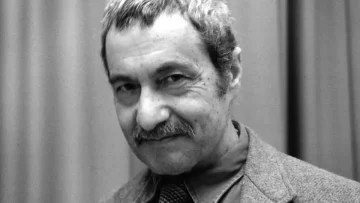
The Dissident | January 28, 2026
This week, the influential left-wing scholar Michael Parenti passed away at the age of 92.
Parenti was well known for his sharp criticism of U.S. foreign policy and U.S. imperialism throughout his life, waking up many to the reality of it and the lies used to justify it.
This is best underscored in one of his last published articles, “Ukraine and Regime Change”, which was published in the book “Flashpoint In Ukraine: How the U.S. Drive for Hegemony Risks World War III”, where he predicted to a tee what the result of the 2014 U.S. backed coup in Ukraine would be. … continue
Blog Roll
Recent Comments
eddieb on WEF Calls for ‘Cultural Revolu… loongtip on Trump wanted to play peacemake… Coronistan on EU member to sue bloc over ‘su… loongtip on Vicious loongtip on EU turns to India for defense… Coronistan on Donald Trump Is No Peace … seversonebcfb985d9 on French court jails pro-Palesti… eddieb on Fourteen Incredible Facts Abou… Bill Francis on European leaders’ shift in the… seversonebcfb985d9 on Villains of Judea: Philip Esfo… loongtip on Report warns that ‘Jewish terr… Craig Nelms on New study shows that toxic gas…


 Aletho News
- In One Of His Final Pieces, Written in 2014, Michael Parenti Wrote A Prophetic Article About Ukraine
- More Bombs, More Talks Zelensky Rejects Trump’s Plan
- WARNING: Delete TikTok Immediately!
- Bari Weiss’ New CBS Hire List Is Full Of Zionists
- As TikTok falls into Zionist hands, UpScrolled fills the vacuum to give voice to Palestine
- Former Biden Advisor, Amos Hochstein, Admits The Biden Administration Is Responsible For the Gaza Genocide
- Not a Trump anomaly: The Board of Peace and America’s crisis-driven power plays
- Manufacturing martyrdom: The west’s cynical use of Iranian protest figures
- Attack on Iran would backfire, causing great losses for US, warns European think-tank
- Davos and Abu Dhabi: How the Ukrainian Endgame Exposed Western Decline
- If Americans Knew
- “The Gaza ceasefire is a minefield” – Not a ceasefire Day 110
- Israel to seek new security deal from US, official says
- Leaked “Board of Peace” Resolution Outlines U.S.-Led Plan to Rule Over Gaza
- Jonathan Greenblatt Rolls Out Plan to Activate Hispanic Evangelical Golems
- Violence against hundreds of Gazan remains to find one Israeli – Not a ceasefire Day 109
- Greenpeace Demonstrator Exposes Folly of Protest Restrictions
- From CBS to TikTok, Pro-Israel Ellison is now in the driver’s seat
- Israel pays for UK advertisements attacking Doctors Without Borders
- Israel accused of extracting billions from Gazan people to pay for their own genocide
- ‘Deliberate Assassination’: 3 Journalists Among 11 Killed by Israeli Forces in Gaza
- No Tricks Zone
- New Study Affirms Rising CO2’s Greening Impact Across India – A Region With No Net Warming In 75 Years
- Germany’s Natural Gas Crisis Escalates … One Storage Site Near Empty …Government Silent
- Polar Colding…Antarctica Saw Its Coldest October In 44 Years!
- New Study: Sea Levels Rose 20 Times The Modern Rate During The Roman Warm Period
- As German Gas Storage Dips Dangerously Low…Shortage Hardly Avoidable
- New Study: Brazil’s Relative Sea Level Was 2+ Meters Higher And SSTs 3-4°C Warmer 6000 Years Ago
- Philosopher Schopenhauer: Climate Science Certainty Stems From Stupidity, Ignorance
- New Study: Species Extinction Rates Declining Since 1980 – ‘Climate Change Is Not An Important Threat’
- Denmark Places Climate Protection Above Animal Welfare, Poisoning And Culling Cows
- New Study: Greenland Was 3-7°C Warmer And Far Less Glaciated Than Today 6000-8000 Years Ago
 Aletho News