Israel authorises electronic tracking of Palestinians

MEMO | January 7, 2026
Israel has authorised the use of electronic tracking devices on Palestinians in the occupied West Bank, formalising real-time surveillance of civilians who have not been charged, tried or convicted of any crime, according to a new directive issued by the Israeli army.
The order allows Israeli authorities to compel Palestinians placed under administrative movement restrictions to wear or carry electronic monitoring devices and criminalises any attempt to tamper with them. The measure embeds electronic tagging within Israel’s system of military rule over the occupied territory, further expanding the regime of surveillance imposed on the Palestinian civilian population.
Significantly in another example of the Israel’s apartheid rule, defence minister, Israel Katz, has explicitly excluded illegal Jewish settlers in the West Bank from the directive, underscoring the discriminatory nature of the policy and its application along ethnic and national lines. The order was issued following coordination between the Israel Defense Forces, the Israel Security Agency, Israel Police, the Ministry of Justice and the military’s legal authorities responsible for the occupied West Bank.
Human rights observers note that the policy applies to civilians subjected to Israel’s system of administrative control, a framework that routinely denies Palestinians due process and relies on secret evidence. Palestinians placed under such measures often face severe movement restrictions, prolonged surveillance and the constant threat of detention without trial.
The new directive reflects what journalist and filmmaker Antony Loewenstein has described as Israel’s “Palestine Laboratory”, a system in which Palestinians are used as testing grounds for advanced military and surveillance technologies later exported abroad. In his work, Loewenstein argues that Israel exports not only weapons but a comprehensive model for controlling what it labels “difficult populations”, combining military force, mass surveillance and spatial domination.
This model is explored in Al Jazeera’s latest documentary How Israel tests military tech on Palestinians, part of The Palestine Laboratory series. The film documents how Israeli checkpoints function as experimental sites for so-called “frictionless” technologies, including AI-enabled remotely operated weapons that fire stun grenades, tear gas and sponge-tipped bullets. These systems are deployed at checkpoints where Palestinians are routinely subjected to intrusive searches and data collection.
The documentary also details Israel’s extensive use of biometric surveillance systems such as Red Wolf and Blue Wolf. Blue Wolf operates on soldiers’ mobile phones, enabling them to photograph Palestinians and instantly access personal data, movement histories and profiling information.
Red Wolf is installed at checkpoints and control rooms, scanning faces and assigning individuals a colour-coded risk score. Palestinians labelled as “red” are flagged for increased scrutiny, harassment or restriction, including journalists and non-violent human rights defenders. According to testimony featured in the film, Palestinians are categorised without consent and subjected to constant monitoring that shapes every aspect of daily life.
The documentary further exposes the close and often opaque partnerships between Israel’s military and private technology firms. Israeli companies have tested facial recognition, behavioural analysis software, CCTV networks, drones and invasive spyware on Palestinians before marketing these systems internationally as “battle-tested”.
Human rights groups warn that the expansion of electronic tracking and biometric surveillance in the occupied West Bank constitutes a serious violation of international law. Under the Fourth Geneva Convention, an occupying power is prohibited from imposing collective punishment or discriminatory measures on a protected population.
Syria is Normalizing Ties With Israel, Here’s Why – Analysis
By Robert Inlakesh | The Palestine Chronicle | January 7, 2026
On January 6, 2026, a joint statement was published by the US State Department, affirming that the Israelis and Syrians had established a “joint fusion mechanism”. Despite being labeled an official normalization deal, this mechanism works as a soft normalization arrangement.
As the topic of Syrian normalization is often one that triggers a rather aggressive reaction from all sides, it is important to cut through the propaganda to establish what just happened.
As a product of a direct meeting between Israeli and Syrian officials in Paris, with the participation of the United States, both Damascus and Tel Aviv have agreed to a quasi-normalization deal of sorts.
The joint statement that was published on the US State Department website makes the issue extremely clear: a “joint fusion mechanism”, or “dedicated communication cell”, has now been established. This mechanism includes facilitating Israeli-Syrian cooperation in the following arenas:
- Intelligence sharing
- Diplomatic engagement
- Commercial opportunities
- Military de-escalation
Some supporters of Syrian President, Ahmed al-Shara’a, have been adamant that what was reached and is being pursued is solely to do with security issues and the issue of southern Syria. Today’s joint statement thoroughly debunks any such claims.
At the same time, no formal normalization agreement has yet to be reached. However, if Syria is directly opening up such communications and striving towards “commercial opportunities” with Israel, it may not be sealed with a signed agreement and ceremony that brings Damascus directly into the so-called “Abraham Accords”, but this would be, for all intents and purposes, a normalization agreement.
There is no longer any space in which reasonable people can argue that Syria’s current leadership has not become a US-aligned force that seeks further cooperation with the Israelis. It is a fact that the US runs the show. The reason why this issue has become so taboo to speak about is that there are many who simply do not want to accept this reality.
According to polling data published by the Foreign Policy political journal on December 6, 2025, only 14% of Syrians said that they support the normalization of ties with Israel.
92% of Syrians also answered that Israel’s illegal occupation of territory in the region was a critical threat to their security. Another telling statistic was that a whopping 66% said they had favorable views of the United States.
These statistics are very telling and can help explain a lot about what is happening publicly, as opposed to privately, when it comes to Syrian-Israeli relations.
For a start, the vast majority of the Syrian people are opposed to normalization, meaning that if President Ahmed al-Shara’a were to publicly attend a signing with Israeli PM Benjamin Netanyahu, it would certainly cause a stir.
In other words, in the interests of stability, reaching a normalization agreement with Israel is best kept out of the spotlight. On the Israeli side, this could also work to their benefit. Netanyahu understands that in the event of signing a formal normalization deal, he may enjoy a propaganda victory, but will also have to make small concessions on his ambitions in southern Syria.
By establishing ties with the Syrian leadership, in the absence of an official normalization agreement, it will provide the Israelis with the ability to maintain freedom of action inside Syria. Meanwhile, the loyalists to the Hayat Tahrir al-Sham government in Damascus will be able to deny the deep ties established between both sides and sell it as a deal comparable to the previous disengagement understandings that Israel tore up in December of 2024.
Another takeaway from the polling data is that a large percentage of Syrians view the US favorably, which explains the rather contradictory takes of some Syrians you may be seeing online. A popular view is that siding with the US is actually a smart idea and that Washington will help Syria rehabilitate itself.
Despite the US overtly being Israel’s closest ally and fueling the genocide in Gaza, which most Syrians oppose, many still manage to delude themselves into believing that in the new Syria that has emerged, the US role is unique in how it has behaved historically and continues to behave in every other country on earth. This is simply a case of mass self-deception and is, in some cases, a protective mechanism that enables people to live safely under a totally illogical worldview.
Where Is This Going?
At this current moment, the Israelis view the government of al-Shara’a as weak and are even anticipating its sudden collapse. Tel Aviv and Washington-based think tanks are also becoming more critical of the current regime in Damascus, after previously celebrating its rise to power. This is largely due to the inability of Ahmed al-Shara’a to bring his own forces and allied militias under control.
From the Syrian military parades late last year, it is very clear that a large contingent of fighters on the side of the Syrian leadership are in favor of a clash with the Israelis and were even filmed chanting for Gaza. Although this won’t result in the HTS leadership backing a defensive war, it is meaningful insofar as it applies enormous pressure and sends strong signals.
This deal is also meaningless to the Israelis, beyond what they are able to force the Syrian side to deliver for them. In all likelihood, we should expect the regime in Tel Aviv to treat the new mechanism like it does its ceasefire with Lebanon. By this, it means that the Israelis will demand that their requests be met by Damascus, some of which won’t be possible, while they continue to act with impunity, whenever and wherever they choose.
There are a number of key components to any security deal that may be signed in the near future between both sides, one of which will be the demand that the south of Syria be demilitarized. Damascus will agree to this, but is incapable of actually achieving such an outcome. The Bedouin tribes will not disarm as long as the Druze militias are armed, the villages and local militias of Dara’a will also refuse to give up their weapons, and so on.
In fact, if the Syrian authorities try to disarm their own people, who are under the direct threat of the Israeli occupation forces, it could even cause major destabilizing clashes. All throughout the country, organized militant groups, separatist movements, and local armed factions have refused to disarm.
The best the Syrian authorities have been able to do is to try to integrate many fighters into the ranks of their own security forces, which has already resulted in major issues for them; in one case, the killing of three US service members late last year.
There were even indications that an assassination attempt had just failed in the past week against Ahmed al-Shara’a, right before the latest round of direct talks with the Israelis was announced last Sunday.
Syria is also on the verge of a major conflict erupting to its northeast, with the Kurdish-led Syrian Democratic Forces (SDF), with both the Alawites and Druze minorities now calling for federalism. While foreign powers have influence within these minority communities, they genuinely do not seem able to coexist in the current Syrian State, which is one that not only fails to protect their rights, but whose security forces themselves are filled with fighters who seek to exterminate them.
It is clear that Syria’s civil war is far from over; the only difference is that the Syrian Arab Army (SAA) no longer exists, and Bashar al-Assad has been removed from the picture. Damascus used to be ruled by a leadership backed by Russia and Iran; now it’s ruled by a leadership that is backed by the US and Türkiye.
Ankara does have power in Syria, yet it has become clear that the US currently holds the major cards. So far, the Turkish government has failed to establish red lines and contest Israel inside the country, something that it needs to do in order to wield serious power. The US, UK, and even Israelis are the ones with the major sway at this current time, none of whom care to see Syria succeed for its own people.
All of this is relevant to the new Israeli-Syrian mechanism, as this deal is not one that the HTS leadership entered into from a position of strength. In fact, Damascus is being bullied by the United States and forced to accept realities imposed on it by the Israelis.
For Israel, it is a win-win deal. Either Syria fails to implement its side of the bargain and Zionism can continue to pursue its expansionist agenda; or, Syria succeeds and becomes more stable, plus it is on Tel Aviv’s side against its enemies in Lebanon and Iran.
For the Syrians, it’s a lose-lose deal. If they fail, the Israelis will batter them and they may even find the agreement further destabilizing the country; if they succeed in implementing their side, the Israelis will still act with impunity where they choose and instead of protecting their homeland, the Syrian people of the south will have no means of defending themselves.
Anyone framing this in a positive way is either lying to their audiences, lying to themselves, or both.
– Robert Inlakesh is a journalist, writer, and documentary filmmaker. He focuses on the Middle East, specializing in Palestine.
Somaliland and the ‘Greater Israel’ project
By Robert Inlakesh | Al Mayadeen | January 7, 2026
More than a simple recognition of Somaliland, “Israel” is hatching a scheme alongside its Emirati allies aimed at a regional expansion agenda. For the so-called “Greater Israel” vision to come alive, dominance must be secured not only across West Asia and North Africa, but also throughout the Horn of Africa.
The recent decision by the occupying entity in “Tel Aviv” to recognize Somaliland as a State has triggered outrage across Africa and much of the Islamic World, while drawing condemnations from most Arab capitals, with the notable exception of Abu Dhabi.
For the most part, analysts have pointed to “Israel’s” desire to use Somaliland as a staging ground for aggression against Yemen as a primary motivation behind the move. Some have further noted that officials of the Zionist regime have expressed interest in ethnically cleansing Gaza’s people and forcibly transferring them to Somaliland. While these factors evidently inform Israeli decision-making, they do not exhaust its strategic calculus; yet the conspiracy goes much deeper.
On November 24, 2025, the influential Israeli think-tank Institute for National Security Studies (INSS) released a report detailing both the benefits and drawbacks of recognizing Somaliland. While the report acknowledged multiple strategic incentives for such a move, it ultimately advised against proceeding before the United States had done so.
The INSS had advocated against the move, hedging that such a declaration would further isolate “Israel” within the framework of the so-called “Abraham Accords”, triggering backlash on the international stage regarding the issue of Palestinian statehood.
So what changed since the Israeli think tank report?
Understanding the Israeli thinking here, such a move would not be made if they saw it as a net negative. Instead, the recognition was offered in a very public and brazen manner. In order to make sense, we therefore have to look at the broader picture.
To begin with, the normalization drive [“Abraham Accords”] has clearly stalled, at least in terms of any major developments in this regard. The last country to enter into the fold of the broader Trump administration-led normalization movement was Kazakhstan. For context, Astana already normalized ties with the Zionist regime back in 1992.
Although US President Donald Trump announced Kazakhstan’s declaration as a development of great significance, the move was clearly seen as a weak attempt at keeping the normalization project alive amid the conspicuous absence of Saudi Arabia. In parallel, an increasingly desperate Israeli entity has launched what it calls the “Isaac Accords”, a separate normalization project with Latin American nations that are client regimes of the US.
In other words, the Israelis were not actually in a position where they necessarily viewed recognition of Somaliland as an impediment to their normalization agenda. In fact, through projecting power in the Horn of Africa, they may even see it as an advancement of this project, especially given that some 6 million people who identify as belonging ethnically to Somaliland are Muslims.
Another element of the move is to assert their dominance and to lash out internationally over the wave of recognition, last September, for the state of Palestine.
In addition, the elephant in the room here is that the Israelis are currently pursuing a joint agenda with the United Arab Emirates, particularly in both the Horn of Africa and Northern Africa. This alliance seeks to co-opt sectarian movements, separatist groups, and to weaponize warlords in order to reshape the continent as a whole.
The Emirati and Israeli agendas are one in this regard. They are inseparable and connected on almost every conceivable level, this is to the point that the de facto head of intelligence operations for the UAE has long been a man named Mohammed Dahlan, well known for his alleged involvement with Mossad and the CIA; particularly in Africa.
The UAE’s proxy in Yemen, the Southern Transitional Council (STC), seized the Hadhramaut and al-Mahra provinces from Saudi-backed forces in early December, bringing around 80% of Yemen’s oil resources under their control. The STC’s militants have even been trained by “Israel”. The UAE’s move, which would not have come without Zionist backing, now threatens the stability of the Arabian Peninsula and triggered major backlash from Riyadh.
While “Israel” is reportedly seeking to build up a military presence near the strategically located port of Berbera in Somalia’s Somaliland, the UAE began constructing the Berbera airbase as early as 2017, securing access to it for a period of 25 years. Similarly, the UAE–Israeli alliance has extended to the establishment of a joint military presence on Yemen’s strategically located island of Socotra.
It is speculated that the Emirati-backed STC, in southern Yemen, may launch an offensive aimed at capturing the Ansar Allah-controlled port city of Hodeidah, likely receiving Israeli aerial support. The coastline of Somaliland lies only 300 to 500 kilometers from Ansar Allah-controlled lands, making such an air campaign much more manageable than launching strikes from occupied Palestine.
Furthermore, turning to “Israel’s” agenda in Somalia itself, it is clear that this is a calculated move that targets Türkiye. Ankara maintains enormous influence in Somalia and remains a strong proponent of the “One Somalia” agenda. Therefore, at a time of heightened regional tensions, especially in Syria, where both Turkish and Israeli forces are seeking to carve out zones of influence and establish red lines, “Tel Aviv’s” move appears to be another attempt to land a strategic blow on Ankara.
Together, the Emiratis and Israelis are adamant about combating the Muslim Brotherhood and any Islamic governments or groups that voice their concerns for the Palestinians, which is why they are lobbying Western governments so hard on these issues and running non-stop propaganda campaigns against so-called “radical Islam”.
In reality, the Israeli-UAE-backed militias in Yemen are riddled with al-Qaeda-linked fighters and hardline Takfiri Salafists. The STC’s toughest fighting force, known as the Southern Giants Brigades, is reportedly led by the core of experienced militants who are former al-Qaeda fighters. In Gaza, meanwhile, the UAE and the Zionist Entity are also backing five separate proxy militias with alleged links to ISIS.
The Emiratis and Israelis are huge fans of these Salafist militants, who are totally obedient to them and adopt a mass Takfir doctrine that they use to justify the mass slaughter of Muslims. This was the same exact strategy adopted inside Syria by the Zionists, using Wahhabi extremists to do their bidding, while dividing the Muslim World and paving the way for their expansionist agenda.
If the Zionist Entity is to achieve “Greater Israel”, the common misconception is that they wish to directly occupy the entire region between the River Nile and the Euphrates. According to the Zionist vision, they would rule as an empire instead, whereby they enter into formal alliances with countries broken up into ethno-regimes and sectarian rump States. Divide and conquer.
So, dividing Somalia, in order to help the Emirati proxy-militias secure a southern Yemeni State, is precisely in line with the Zionist agenda. They will attempt to rule these territories through proxy support, using their puppets to destroy the Palestinian cause. In the case of Somaliland, if they are to succeed, they would also certainly attempt to ethnically cleanse the population of Gaza there. In other words, Somaliland recognition isn’t a small, isolated move; it is a piece being strategically positioned on their wider chessboard.
Pakistan, the Gulf, and the high cost of Zionist alignment
By Junaid S. Ahmad | MEMO | January 6, 2026
Geopolitics is most dangerous not when it erupts, but when it reorganises quietly — when the ground shifts beneath familiar alliances while elites continue to speak the language of yesterday. The Gulf today is in precisely such a moment. What once masqueraded as a coherent bloc has fractured into rival power models, incompatible strategic visions, and diverging relationships to empire, Israel, and popular legitimacy. And Pakistan, true to form, is responding not with strategic intelligence but with institutional reflex — confusing obedience with balance and habit with foresight.
The rift between Saudi Arabia and the United Arab Emirates is no longer a matter of speculation or diplomatic gossip. It is an open contradiction — political, military, and infrastructural. Yemen has exposed it. Israel has radicalised it. The United States, particularly under Trumpism, has weaponised it. And Pakistan’s ruling elite — military and civilian alike — has chosen to drift toward the most toxic pole of this fracture while reassuring itself that it is merely being “pragmatic.” It is not. It is being complicit.
Two Gulf projects, one moral abyss
Saudi Arabia and the UAE are still lazily grouped together by analysts who mistake shared authoritarianism for shared strategy. This is intellectual malpractice. The two monarchies are pursuing fundamentally different regional projects.
Saudi Arabia’s current posture — hardly virtuous, often cynical, and deeply reactionary — nevertheless reflects a begrudging recognition of reality. After years of disastrous interventionism, Riyadh wants consolidation. It wants borders quieted, fires contained, and regional fragmentation slowed. Its outreach to Iran, cautious engagement with the
Houthis, and growing hostility to separatist militias are not gestures of enlightenment but acts of self-preservation. Endless chaos undermines Saudi ambitions at home.
The Emirati project is the opposite — and far more dangerous. Abu Dhabi does not seek order through states; it seeks domination through fragments. Ports, islands, militias, mercenaries, logistics corridors, surveillance hubs — these are its tools. Sovereignty is irrelevant. Fragmentation is not a failure; it is a business model.
If Saudi Arabia is a reactionary status-quo power, the UAE is a hyperactive destabiliser — an empire of nodes, happy to burn regions so long as trade flows and leverage compounds.
Yemen: Where the lie finally died
Yemen is where the fiction of Gulf unity collapsed beyond repair. What began as a joint intervention has devolved into a struggle over whether Yemen will exist at all as a state. The House of Saud — bloodied, embarrassed, and exposed — now insists on a unified Yemeni authority capable of enforcing borders and agreements. The UAE has invested
instead in carving out a southern enclave: separatist militias, port control, island bases, and economic chokeholds.
For Riyadh, this is existential. A fragmented Yemen exports instability directly into Saudi territory and sabotages any negotiated settlement with the Houthis. For Abu Dhabi, fragmentation is leverage — control of chokepoints matters more than Yemen’s survival as a polity.
That Saudi Arabia has now openly bombed weapons shipments linked to UAE-backed forces and issued public warnings is extraordinary. Gulf disputes are traditionally smothered in silence. When they go kinetic and public, it signals not a spat but a structural rupture. Pakistan’s establishment sees this — and chooses denial.
Israel: The cancer at the core
To understand the Emirati recklessness, one must confront the real axis around which it revolves: Apartheid, genocidal Israel.
The Abraham Accords were not peace agreements; they were an integration pact into Zionist regional supremacy. Israel does not merely occupy Palestine; it exports a model — militarised impunity, surveillance capitalism, permanent war dressed as security. The UAE did not normalize with Israel reluctantly. It embraced Israel as a force multiplier.
Israel provides Abu Dhabi with access to Washington’s coercive machinery, advanced surveillance, cyberwarfare, and a propaganda ecosystem that converts mass death into “stability.” In return, the UAE provides geography, ports, islands, mercenaries, and political insulation — doing Israel’s dirty work where Tel Aviv prefers not to appear.
Sudan. Somaliland. Socotra. Cyprus. The Red Sea. These are not isolated projects; they are components of a Zionist–Emirati expansion strategy designed to insulate Israel from economic pressure and accountability while strangling any resistance corridor before it matures.
Israel is the disease. The UAE is its most enthusiastic carrier.
Pakistan’s elite: Zionism in uniform and suits
Pakistan’s tragedy is not that it lacks options. It is that its ruling elite lacks dignity.
Rather than reassess its position amid this fracture, Pakistan’s military–civilian elite clings to the rhetoric of “balance” while deepening structural entanglement with the Emirati–Israeli axis. Ports, airports, logistics terminals, military-linked corporations — these are not neutral investments. They are instruments of alignment.
Pakistan’s generals and their civilian accessories imagine they are playing geopolitics. In reality, they are being used as infrastructure — cheap, deniable, disposable. Their behaviour is not naïveté. It is covert Zionism: collaboration without confession, obedience without ideological honesty. They mouth solidarity with Palestine while embedding Pakistan’s economy and security apparatus deeper into a regional order built to protect Israel from consequences. This is not pragmatism. It is moral and strategic bankruptcy.
Venezuela: When empire drops the mask
The illusion that empire prefers subtlety should have died long ago. Venezuela put the lie to it.
When sanctions failed and proxy pressure proved insufficient, the United States escalated —directly. US special forces were involved in a scandalous operation that culminated in the kidnapping of Venezuelan President Nicolás Maduro. This was not deniable proxy warfare. It was naked imperial contempt for sovereignty.
And what happens if Washington’s decapitation move fails at complete regime change in Caracas? Silence. Zero accountability. Empire simply moves on.
This is the future Pakistan’s elite is courting. When alignment fails to deliver stability, the costs will not be borne by Washington, Tel Aviv, or Abu Dhabi. They will be borne by Pakistan. Empire does not protect collaborators. It discards them.
Saudi Arabia: A lesser evil, still an evil
Saudi Arabia deserves no absolution. The House of Saud remains a reactionary monarchy, structurally hostile to popular sovereignty and deeply entangled with empire. Its version of “stability” is still oppression — merely quieter than the Emirati inferno.
Yet the difference matters. Saudi Arabia understands that Zionist expansionism generates perpetual instability. The UAE celebrates it. Riyadh conceals its servitude; Abu Dhabi flaunts it.
Pakistan’s elite has chosen to tilt slightly more towards the louder master.
Trumpism: Empire without shame
Hovering over this landscape is Trumpism — the ideological nakedness of empire. Trump dispenses with liberal hypocrisy entirely. Loyalty is transactional. Morality is a joke. Strongmen are preferred to institutions. Israel is sacred. Everyone else is expendable.
The UAE fits this worldview perfectly: ruthless, efficient, unburdened by public opinion. Pakistan’s rulers mistake proximity to this axis for relevance. In truth, it entrenches their subordination.
When things go wrong — as they inevitably will — Trumpism will shrug. Pakistan will bleed.
The reckoning Pakistan is avoiding
The Gulf is not merely fracturing; it is sorting. States will be forced to choose — between sovereignty and fragmentation, between justice and normalisation, between dignity and managed submission.
Pakistan’s establishment has already chosen. It just lacks the courage to admit it. History will not judge Pakistan for failing to be the Mafia Don of West Asia. It will judge it for failing to recognise a moral and strategic crossroads when it stood directly upon it.
The UAE will continue to burn regions in service of Zionism. Israel will continue its genocidal project. The United States will continue to kidnap, sanction, and discard. Saudi Arabia will continue to pretend restraint equals virtue.
And Pakistan — unless it breaks from habit — will continue confusing servitude for strategy.
Prof. Marandi on Iran & Venezuela: What’s Next?
TMJ News Network | January 5, 2026
Professor Mohammad Marandi joins TMJ News to break down the latest developments in Iran and Venezuela, unpacking how economic protests, sanctions, and media narratives are being weaponized once again to push long-standing U.S.-Israeli regime change agendas.
Israeli Intrigue in Venezuela?
By W.M. Peterson | Truth Blitzkrieg |January 5, 2026
“The question is: who’s really in charge? I know President Trump appears to be. I’m not convinced that’s the case because remember… you had this giant Israeli flag suddenly appear in the middle of the Republican convention. And certainly in my lifetime… I don’t know of a single instance where either the Democratic or Republican parties held a convention and hoisted a giant foreign flag… I’ve never heard of that before.” — Col. Douglas Macgregor on the Judging Freedom podcast with Judge Andrew Napolitano (Jan. 3, 2026)
Just four days after Benjamin Netanyahu appeared as a guest on Newsmax’s The Record with Greta van Sustern and informed the insufferable newscaster that Iran is “exporting terrorism… to Venezuela. They’re in cahoots with the Maduro regime… this has got to change,” it was announced that U.S. military forces had carried out a large scale operation against Venezuela, capturing President Nicolas Maduro and his wife Cilia Flores, who will both “face the full wrath of American justice” after being indicted on drugs and weapons charges in the U.S. District Court for the Southern District of New York.
The capture of Maduro occurred exactly 36 years to the day after US Delta Forces captured Panamanian President/CIA informant Manuel Noriega, and it’s unlikely that Netanyahu’s recent visit to the U.S.– the fifth in 2025 by the international fugitive — and the American operation are unrelated. While talk of ‘stolen oil’ and ‘narco-terrorism’ currently dominates the mainstream discourse, the fact that Israel has been seeking regime change in Venezuela since the days of Hugo Chavez has gone virtually unreported.
Prior to Maduro’s predecessor Chavez winning Venezuela’s 1998 presidential election, relations between the naturally wealthy South American country and Israel had been relatively good. Venezuela voted in favor of the United Nations Partition Plan for Palestine in 1947 — which allocated 55% of historic Palestine to the as-yet-unfounded Jewish state — and two years later voted in favor of Israeli membership to the UN. By the mid 1960s, Venezuela boasted a robust Jewish population equipped with an impressive communal structure of schools, synagogues and cultural centers organized by middle-to-upper-class members of the community. In 1967, Jewish ethnic solidarity inspired a large number of Venezuelan Jews to travel to Israel to fight alongside their co-religionists in the Six-Day War. Following the conflict, a large influx of Sephardic Jews from Morocco arrived and settled in Caracas contributing to the largest Jewish population in Venezuela’s history, numbering 30,000 at its peak, evenly split between Sephardim and Askenazim.
By the mid-2000s, however, relations between Venezuela and the Synagogue began to fray.
The first notable rift occurred in late 2004 following the assassination of Venezuelan state prosecutor Danilo Anderson, who was killed by a car bomb at age 38. 1
At the time of his death Anderson had been investigating more than 400 people suspected of involvement in the Llaguno Overpass shootout and the failed 2002 coup d’état, during which Chavez was ousted from office for two days before being restored to power by popular support and a number of loyal military men. (Accusations of Jewish involvement in the coup were made at the time by pro-government newspaper Diario VEA, and later by Venezuela’s ambassador to Russia, Alexis Navarro.)
Suspicions of a possible Mossad dimension to the assassination plot were already high when Venezuelan authorities received a tip suggesting that weapons and explosives connected to the murder may have been transferred from the Club Magnum shooting range to the Colegio Hebraica Jewish school in Caracas, prompting Chavez to authorize his investigative police force DISIP to conduct an armed raid on the school on the morning of November 29, 2004. Chavez’s investigators intercepted busloads of kids and evacuated 1,500 students from the building while searching for any materials related to Anderson’s assassination. Ultimately nothing of value was found and the incident was loudly condemned by local and international Jewish organizations like the Simon Wiesenthal Center, who referred to it in typically melodramatic fashion as a “pogrom.”
Throughout the next two years Chavez’s rhetoric concerning Jewish power and influence became considerably more pointed, especially following Israel’s invasion of Lebanon in 2006. It was during this time that Chavez recalled his country’s ambassador to Israel and threatened to sever diplomatic ties with the Jewish state in protest of its military operation, describing it as a “new Holocaust” and “similar or, perhaps worse… than what the Nazis did.” Chavez further inflamed the sensibilities of Jews at home and abroad by traveling to Tehran and affirming that Venezuela would “stand by Iran at any time and under any condition.” 2
In January 2009, Chavez finally made good on his threat when Venezuela severed all diplomatic ties with the Jewish state due to its conduct in the 2009 Gaza War which left 1,400 Palestinians dead and over 5,000 wounded. Once again referring to the violence as a “Holocaust” and a “flagrant violation of International Law,” Chavez expelled Israel’s ambassador to Venezuela and called for Prime Minister Ehud Olmert to be tried for war crimes in the International Criminal Court. Shortly thereafter, foreign minister Nicolas Maduro met in Caracas with representatives from the Palestinian National Authority and Venezuela officially recognized the existence of a Palestinian State on April 27, 2009.
By this time Chavez was facing tremendous pressure from the international Jewish cabal and it was clear he had a target on his back. During a nationally broadcast speech in June 2010, Chavez condemned Israel as a “terrorist and murderous state,” and affirmed that “Israel is financing the Venezuelan opposition. There are even groups of Israeli terrorists, of the Mossad, who are after me trying to kill me.” Hugo Chavez died on March 5, 2013 at the age of 58 after a two year battle with cancer. He was succeeded as President of the United Socialist Party of Venezuela by Nicolas Maduro who blamed his predecessor’s death on “a US plot.” 3
“Narco-Terrorism”
For months the Trump administration has been trying to claim that Maduro is responsible for trafficking boatloads of drugs into the United States; using the unfounded claim to justify deadly strikes on more than 30 small vessels in the Caribbean and what Trump referred to as “the dock area where they load the boats up with drugs.” Initially ‘The Donald’ tried claiming the boats were carrying fentanyl and that each extra-judicial U.S. strike would save 25,000 American lives. However, this outlandish conspiracy theory was hampered by the fact that no evidence exists showing that any significant level of fentanyl is produced in South America, as confirmed by the United Nations Office on Drugs and Crime (UNODC).
With the fentanyl narrative sinking faster than Maduro’s purported drug boats, the Trump administration pivoted seamlessly to talk of purloined oil and cocaine trafficking. While it’s true Venezuela plays a role in the international cocaine trade, the US doesn’t appear to be a significant destination as no direct trade route via sea is known to exist between the countries. In reality, far more cocaine and fentanyl enters America through Mexico and yet, curiously, socialist president Claudia Sheinbaum’s “narco-government” has thus far failed to register a blip anywhere near as noteworthy as Venezuela’s on Uncle Sam’s regime change radar.
Another overt contradiction in Trump’s ‘war on drugs’ narrative is the federal pardon he granted ex-president of Honduras Juan Orlando Hernandez, who had just recently begun serving a 45-year sentence after being convicted in a New York federal court for drug trafficking and firearms offenses and for receiving millions of dollars in bribes from drug cartels, including a $1 million bribe from Joaquin “El Chapo” Guzman. Despite having trafficked an estimated 400 tons of cocaine into the United States over a period of 18 years, Hernandez walked out of prison a free man on December 1, 2025, just days before the Honduran general election in which Trump endorsed Nasry Asfura, the candidate from Hernandez’s Honduran National Party, who himself was indicted by authorities in 2020 on charges of money laundering, embezzling public funds, fraud, and abuse of authority.
Trump’s support for Juan Orlando Hernandez and Nasry Asfura shouldn’t raise any eyebrows coming as it does from the man who pardoned Israeli spy Jonathan Pollard’s handler and is currently engaged in running interference for an international child sex trafficking ring. Indeed, Trump’s entire life has been spent swimming in the same swamp he promised to drain and now he’s being used as a tool for regime change in Venezuela and soon Iran. Disgraced attorney Alan Dershowitz, who staunchly defended Pollard in his 1991 book Chutzpah, recently told the media that “If President Trump wants to be known as the peace president, he has to be in support of regime change.”
I’m familiar with the arguments put forth by starry-eyed MAGA optimists suggesting there’s some America First motivation informing Trump’s decision-making. However, it seems more likely there’s a deeper play involving Israel that’s the driving force behind the conflict. This was hinted at when Fox News published an article claiming Maduro’s Venezuela has become “Hezbollah’s most important base of operations in the Western Hemisphere, strengthened by Iran’s growing footprint and the Maduro regime’s protection” and again when ultra-Zionist Ambassador Mike Huckabee informed the world that the US overthrow of Maduro was good news for Israel because of his country’s partnership with Iran and Hezbollah. Perhaps this explains why Venezuelan Vice President Delcy Rodriguez believes the operation was imbued with a ‘Zionist tint’? When viewed in its entirety it’s hard to disagree. Capturing Venezuela’s vast oil reserves might even portend an immediate escalation in the Middle East by diminishing Iran’s primary geopolitical leverage, e.g., blocking the Strait of Hormuz, and I expect to see an escalation on that front in the coming weeks and months.
Whatever the case may be, you can rest assured knowing that the Trump administration is not waging a war on “narco-terrorism,” a completely meaningless propaganda term designed chiefly to promote regime change in Latin America. The illegal narcotics destroying the bodies and minds of Americans young and old are undoubtedly entering the country under CIA and Mossad auspices, just as they were in the 1980s during Iran-Contra when Arkansas Governor Bill Clinton — a “terrific guy” according to Trump — permitted the use of his Mena airstrip for the transport of an extraordinary amount of cocaine into the United States. A highly-placed conspirator within the Iran-Contra nexus was Jewish neoconservative Elliott Abrams (Trump’s US Special Representative for Venezuela from 2019 – 2021), who recently advocated for regime change in Venezuela for the purpose of — among other things — reducing drug trafficking! Abrams, who crafted the 1998 PNAC letter demanding the removal of Saddam Hussein, was convicted in 1991 on two misdemeanor counts for his role in the Iran-Contra affair after entering into a plea agreement to avoid felony charges of perjury.
Evidentially, international gun/drug running isn’t much of a concern for Trump, so long as the perpetrators play for the right team. But hey, MAGA, be of good cheer, your white knight’s attack on Venezuela isn’t without its supporters…
NOTES:
- The Jewish Telegraph Agency reported on December 7, 2004 that Anderson “was assassinated in his car by a remote bomb planted in his cell phone… Comparisons of the style of Anderson’s assassination to Israeli targeted killings carried out by Israeli commandos abounded. In the best-known example, Israelis assassinated Hamas bomb-maker Yehiya Ayyash in 1996 using a booby-trapped cell phone.” ↩︎
- According to the World Conference Against Anti-Semitism, Chavez’s pro-government media published “an average of 45 [anti-Semitic] pieces per month” in 2008 and “more than five per day” during the January 2009 Operation Cast Lead in Gaza. In early 2013 dozens of documents were leaked to the press showing that SEBIN, Venezuela’s premier intelligence agency, had been collecting “private information on prominent Venezuelan Jews, local Jewish organizations and Israeli diplomats in Latin America.” ↩︎
- The current leader of Venezuela’s opposition party, the Nobel Peace Prize winner Maria Machado, has said that she is ready to take power. In a recent interview with the newspaper Israel Hayom, Machado was quoted as saying: “Venezuela will be Israel’s closest ally in Latin America. We rely on Israel’s support in dismantling Maduro’s crime regime and in the transition to democracy. Together we’ll lead a global struggle against crime and terror.” ↩︎
Petro rejects narco claims, calls US strikes on Venezuela illegal
Al Mayadeen | January 5, 2026
Colombian President Gustavo Petro issued on Monday a series of sharply worded statements rejecting accusations that seek to link him or Venezuelan leaders to drug trafficking, while forcefully condemning US military aggression, political intimidation, and renewed assertion of imperial control over Latin America.
In several posts published on X, Petro responded to remarks attributed to US President Donald Trump and to broader narratives circulating in Washington in the aftermath of the US aggression on Venezuela. He argued that Colombia’s judicial archives, after decades spent confronting the world’s largest cocaine cartels, contain no evidence linking Venezuelan President Nicolas Maduro or First Lady Cilia Flores to drug trafficking. According to Petro, such allegations originate primarily from figures aligned with the Venezuelan opposition rather than from any verifiable judicial findings.
Defamation rejected
Petro noted that Colombia’s judiciary functions independently of the executive branch and is largely influenced by political forces opposed to his government. Anyone genuinely seeking to understand the cocaine trade, he said, should consult Colombia’s court records rather than rely on politically motivated accusations. He added that his own name has never appeared in narcotics-related cases over more than five decades, affirming that he “deeply rejects” uninformed and defamatory claims.
He also stressed that Colombia’s experience with drug violence has been shaped not by state policy but by transnational demand, financial laundering networks, and decades of militarized counter-narcotics strategies promoted from abroad, strategies that, he implied, have failed to curb trafficking while devastating civilian populations.
Addressing personal attacks, Petro said it is unacceptable to “slander” Latin American leaders who emerged from armed struggle and later pursued peace, framing such rhetoric as political coercion aimed at delegitimizing independent leadership in the region. He referenced his own past in the M-19 movement, noting that it laid down arms and became part of Colombia’s peace process, a transition he described as a historic milestone in contemporary Latin American politics and a rare example of negotiated conflict resolution rather than foreign-imposed regime change.
Caracas under bombardment
Petro described the US aggression on Venezuela as the first time in modern history that a South American capital had been bombed by the United States, warning that such an act would remain etched in the collective memory of the continent. “Friends do not bomb one another,” he said, drawing parallels to some of the darkest episodes of 20th-century warfare.
The operation has raised particular alarm due to Washington’s open acknowledgment that it intends to administer Venezuela during a so-called transition period and to assert control over strategic sectors, including energy. Regional observers note that Venezuela’s oil infrastructure remained largely intact during the assault, a fact Petro did not ignore as he warned against war conducted in the name of justice but structured around resource access.
While explicitly rejecting retaliation, Petro argued that the events underline the urgent need for Latin America to rethink its political and economic alignments. He called for deeper regional unity, warning that without cohesion the region risks being treated as a “servant and slave” rather than as a central actor in global affairs. Petro criticized existing regional mechanisms, including the Community of Latin American and Caribbean States (CELAC), arguing that its absolute consensus rules allow certain leaders to preserve subservient relationships with foreign powers at the expense of collective sovereignty.
Scapegoated Dead
Petro also condemned celebratory reactions in some political circles to the bombing of Caracas, accusing them of erasing Latin America’s shared liberation history led by Simon Bolivar.
He further noted the US’ aggression resulted in civilian deaths, including that of a Colombian woman working informally in Caracas to support her daughter, a reminder, he stressed, that military interventions marketed as “precision operations” routinely exact a human toll on the most vulnerable.
Directly addressing Trump, Petro accused the US president of issuing internationally unlawful orders that led to the deaths of Colombian nationals who were later branded “narco-terrorists.” He rejected those labels as false and dehumanizing, arguing that many of the victims came from impoverished communities with no links to organized crime and were instead casualties of a long-standing policy of militarization, criminal profiling, and collective punishment.
Free speech, sovereignty, resistance
Petro defended his right to speak freely on US soil, noting that his remarks in New York and around the United Nations were protected under US law. He explained he had publicly condemned the genocide in Gaza, suggesting that his positions on Palestine, Venezuela, and US foreign policy more broadly triggered retaliatory narratives portraying him as corrupt or complicit in drug trafficking.
Rejecting those portrayals, Petro said he owns no luxury assets abroad and continues to pay for his home through his official salary. He also framed the controversy as part of a wider struggle against injustice, misinformation, and efforts to silence dissenting voices from the Global South through legal intimidation and reputational warfare.
The statements concluded with a call for respect between the Americas, invoking shared liberation traditions associated with figures such as Simón Bolívar and George Washington.
Petro warned against narratives that portray Latin America as inherently criminal, stressing that the region’s political movements are rooted in long-standing struggles for democracy, sovereignty, and social justice, not in the stereotypes imposed by external powers seeking control rather than partnership.
Israel is Having a Party After the Capture of Nicolás Maduro
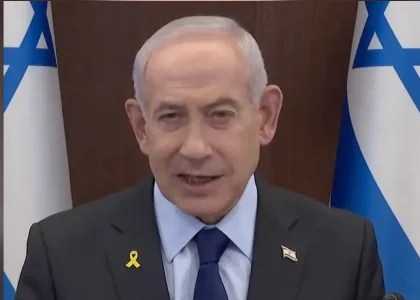
José Niño Unfiltered | January 4, 2026
The recent capture of Nicolás Maduro served as a stark reminder that the true center of gravity in Western power politics is not the White House or the Pentagon, but the interests of a globally dispersed Zionist network that views nation-states as mere instruments in their quest to make the world safe for Jewish supremacy.
Israeli officials across the political spectrum rallied behind President Donald Trump’s successful operation to extract Maduro, with government ministers and opposition figures in the Israeli political establishment celebrating the move as a devastating blow to Iran’s global influence operations.
Prime Minister Benjamin Netanyahu led the praise, posting congratulations on social media that saluted Trump’s “decisive resolve and the brilliant action of your brave soldiers.” Netanyahu’s statement referenced “bold and historic leadership on behalf of freedom and justice” without explicitly naming the Venezuela operation, though the timing left little doubt about his message.
In another press conference, Netanyahu continued to praise the United States’ operation in Venezuela. He proclaimed:
“I express the full support of the Israeli government for the determined decision and decisive action of the United States regarding Venezuela.
This is about restoring freedom and justice to another region of the world.
Across Latin America, we are witnessing a historic shift — countries returning to the American axis and renewing ties with Israel.”
As previously recorded by this author, the strategic reorientation Netanyahu has mentioned is nowhere more evident than in the Isaac Accords, an initiative whose underlying objective is the normalization of a regional order that guarantees Jewish primacy in the Western Hemisphere.
Foreign Minister Gideon Sa’ar issued the most comprehensive endorsement from Tel Aviv, commending what he called America’s role as “leader of the free world” in executing the operation. Sa’ar specifically expressed hope for renewed diplomatic relations between Israel and Venezuela, which Caracas severed in 2009 over Israel’s Operation Cast Lead in Gaza.
“Israel commends the United States’ operation, led by President Trump, which acted as the leader of the free world,” Sa’ar wrote. “At this historic moment, Israel stands alongside the freedom-loving Venezuelan people, who have suffered under Maduro’s illegal tyranny.”
The foreign minister continued with pointed language about regional security threats. “Israel welcomes the removal of the dictator who led a network of drugs and terror and hopes for the return of democracy to the country and for friendly relations between the states,” he stated. “The people of Venezuela deserve to exercise their democratic rights. South America deserves a future free from the axis of terror and drugs.”
Diaspora Affairs Minister Amichai Chikli from the ruling Likud Party drew the most explicit connections between Maduro’s capture and threats facing Israel, framing the operation as a direct message to Iran’s Supreme Leader Ali Khamenei.
“The capture of Nicolás Maduro is not only good news for the people dwelling in Caracas; it is also a devastating blow to the global axis of evil and a clear message to Khamenei,” Chikli declared. He elaborated on Venezuela’s alleged role in funding Iranian proxy networks. “Maduro did not run a country; he ran a criminal and drug empire that directly fueled Hezbollah and Iran.”
Chikli praised Trump’s approach as validation of hardline foreign policy. “President Trump’s decisive steps have once again proven that strong leadership is the only way to subdue dictators,” he wrote. “This is a direct battle between the values of freedom and the West and the dangerous alliance of radical Islam and communism.” He concluded simply that “the world is a safer place today.”
Opposition leader and former Prime Minister Yair Lapid of the Yesh Atid Party joined the chorus with his own warning to Tehran. “The regime in Iran should pay close attention to what is happening in Venezuela,” Lapid posted, issuing what analysts interpreted as a veiled threat amid ongoing protests in Iran over economic collapse.
Israeli security analysts view Maduro’s removal as potentially restricting Iranian Revolutionary Guard operations against Israeli targets throughout Latin America, cutting off weapons flows to the continent, and disrupting extensive oil smuggling operations between Venezuela and Iran that have helped Tehran evade sanctions.
The American political establishment, whose policies are demonstrably subservient to world Jewry, responded with equally fervent praise, viewing the capture of Nicolas Maduro as a significant strategic victory for the state of Israel.
U.S. Ambassador to Israel Mike Huckabee delivered some of the most forceful American praise for the operation, explicitly linking the Venezuela action to security concerns in his diplomatic posting. Speaking on Newsmax, Huckabee opened his reaction with religious fervor. “Well, my first reaction was to say, praise the Lord and thank you, President Trump,” the ambassador stated.
He then explained why Americans should view Venezuela through a Middle Eastern security lens. “A lot of people may not make the connection as to why this matters to us in the Middle East,” Huckabee said. “What they don’t know is that Hezbollah is very active in Venezuela.” The ambassador detailed the Iran connection that Israeli officials had emphasized. “There has been a 20-year partnership between Iran and Venezuela,” he explained. “The ties are deep, and Hezbollah operates in 12 different countries throughout South America.” In his conclusion remarks, Huckabee contended that the operation represented a global victory. “Good news for America, good news for the world,” he declared.
Welcome to Empire Judaica.
The chorus of approval from Israel and its advocates lays bare the grim reality for the American people: they are not citizens of a sovereign nation but unwitting actors in a geopolitical drama where they play supporting roles in a global imperium built for and by organized Jewry.
Israeli police shoot dead Palestinian from Bedouin village in Negev
MEMO | January 4, 2026
Israeli police shot dead a Palestinian from the Bedouin village of Al-Tarabin in the Negev early Sunday, local media reported.
Al-Tarabin is an unrecognized Palestinian Bedouin village located in the Negev Desert in southern Israel.
According to the daily Yedioth Ahronoth, a special police unit and soldiers from the “National Guard” raided the village to arrest Mohammed Hussein Tarabin for his alleged involvement in acts of vandalism against property in nearby Israeli settlements.
The National Guard is a security force formed by far-right National Security Minister Itamar Ben-Gvir and is viewed by the Israeli opposition as a militia under his direct authority.
The newspaper quoted Tarabin’s family as saying that police shot their son “without cause.”
“He is an ordinary man with seven children. There was no need to kill him,” the family said.
“For them (the police), this is a great achievement to please Ben-Gvir, who dances on Arab blood. The situation is dangerous, the behavior of the police is unacceptable, and they must leave the area or they will bear responsibility for anything that happens.”
Ben-Gvir, for his part, said on the US social media company X that he supported the police’s conduct in Al-Tarabin village, claiming that “Mohammed Tarabin” was a “dangerous criminal.”
The Negev Bedouin Leadership condemned the killing and called for Ben-Gvir’s dismissal.
It called for an investigation into the circumstances of the killing and bringing those responsible to justice.
Tens of thousands of Bedouins live in dozens of unrecognized villages in the Negev, with Israeli authorities denying them access to water, electricity, infrastructure, schools and medical clinics.
Palestine advocates praise NYC Mayor Mamdani for revoking pro-Israel decrees
Press TV – January 3, 2026
New York City’s Mayor Zohran Mamdani has been praised by Palestine advocates for revoking pro-Israeli decrees banning the activities of pro-Palestinian advocacy groups.
Within hours of his inauguration ceremony on Wednesday, just before midnight, on his first day in office on Thursday, Mamdani wiped out all the executive orders his predecessor, Eric Adams, implemented after September 26, 2024, the day Adams was charged with bribery and taking illegal campaign contributions from foreign sources.
Adams signed the pro-Israeli decrees less than a month ago and was seen as an attempt to create trouble for the incoming 34-year-old Mamdani.
Adams was also charged with crimes such as conspiracy, wire fraud, and bribery. The 64-year-old Democratic policeman-turned-mayor was accused of doing favors for foreign businessmen in exchange for luxury travel and airline benefits.
Head of the New York chapter of the Council on American Islamic Relations (CAIR), Afaf Nasher, praised Mayor Mamdani for revoking a decree restricting the ability of New Yorkers to criticize, boycott, and stage protest rallies and criticize the Israeli regime for the ongoing racism and human rights abuses against Palestinians, as well as the genocidal war on the Gaza Strip.
Palestinian-American writer YL Al-Sheikh also applauded Mayor Mamdani for the revocation of Adam’s pro-Israeli decrees.
“I think it’s wonderful that Mayor Mamdani took measures on day one to reinforce our rights to free speech, which included our right to criticize and oppose Israeli apartheid and genocide,” Al-Sheikh said.
He said the decrees passed by Adams were “not about combating anti-Semitism, but about stifling dissent, and this should be something all Americans oppose.”
Nasreen Issa, a member of the Palestine Youth Movement – NYC, said, “Mamdani’s rejection of this is a positive step towards protecting the rights of New Yorkers and the dignity of Palestinians.”
Mayor Mamdani is the city’s first Muslim, first South Asian, first African-born mayor, and the first to take the oath of office using Islam’s holy book, the Quran.
The inauguration ceremony was held on Wednesday shortly before the start of New Year’s Day 2026 in the decommissioned City Hall subway station beneath Lower Manhattan.
Israel and the politics of fragmentation: The hidden hand behind secessionist projects in Yemen, Somalia, and Libya
By Ahmed Asmar | MEMO | January 3, 2026
Israel’s malicious, meddling role in the Arab countries has long extended beyond direct military confrontation, as seen in Palestine, Lebanon, and Syria. For long, Tel Aviv has pursued a quieter yet dangerous strategy of encouraging fragmentation, weakening central states, and cultivating ties with separatist actors in fragile and war-torn countries. Today, this pattern is increasingly clear and visible in Yemen, Somalia, and Libya; three countries that suffer from prolonged conflicts, administrative collapse, and foreign interference. In each case, Israel’s footprint is not accidental; it serves a broader strategic doctrine aimed at dividing Arab countries, controlling critical waterways, and reshaping the regional balance of power to its advantage and dominance.
Yemen: secession as a gateway to normalisation
In Yemen, Israel’s indirect involvement surfaces through its alignment with the so-called Southern Transitional Council (STC), a secessionist entity seeking to reestablish an independent state in southern Yemen. While the Yemeni conflict is often framed as a regional proxy war, the STC’s leader, Aidarous al-Zubaidi, has openly, and on several occasions, signaled willingness to normalize relations with Israel. He publicly declared that recognizing Israel is not an obstacle if southern Yemen’s independence is achieved; an extraordinary statement that was slammed by many Yemeni public figures and politicians.
This declaration is not merely rhetorical. Yemen’s southern geography grants access to some of the most sensitive maritime corridors in the world, particularly near the Bab al-Mandeb Strait. For Israel, influence over forces operating near this chokepoint aligns with its long-standing objective of securing Red Sea navigation and countering its perceived regional adversaries. Supporting or encouraging secessionist forces in southern Yemen offers Israel a strategic foothold without formal military deployment, turning internal Yemeni fragmentation into a geopolitical asset, and posing a direct threat against the Arab countries, especially the littoral countries of the Red Sea – Egypt and Saudi Arabia.
Somalia: Somaliland and the militarisation of recognition
Somalia presents an even clearer case of Israel exploiting separatism for strategic gain. The self-declared Republic of Somaliland, unrecognised by the international community, has actively sought foreign backing to legitimise its secession. Israel’s contacts and recognition of Somaliland’s de-facto authorities mark a dangerous precedent in international relations, and against the international law and the UN charter.
The strategic motivation is transparent. Somaliland’s coastline also overlooks the Bab al-Mandeb Strait and the Gulf of Aden, one of the world’s most critical maritime corridors. Somalia’s President Hassan Sheikh Mohamud warned of the Israeli malicious plan behind such recognition, where he said that Israel seeks from recognising Somaliland to resettle Palestinians from Gaza, who experienced a two-year genocide, and most importantly, to host an Israeli military or intelligence base. These plans are added to the dangers of undermining Somalia’s territorial integrity and encouraging further fragmentations across the Horn of Africa.
Israel’s move to recognize a secessionist entity reflects how Israel exploits weak entities and divided states to move ahead with its expansionist and dominance strategies at the expense of the region and its people.
Libya: Haftar and the normalisation through the back door
Not far from the examples in Yemen and Somalia, in Libya, Israel’s role is more discreet but visible too. General Khalifa Haftar, who controls eastern Libya and has long sought international legitimacy, reportedly maintained contacts with Israeli officials as part of efforts to secure external backing. These interactions fit within a wider pattern of covert normalization between Israel and authoritarian or factional actors seeking foreign support in exchange for political concessions.
Libya’s fragmentation has turned it into fertile ground for foreign manipulation. Israel’s engagement with Haftar is surely not about peace or stability, but about influence, leverage, and having a close foot near its surrounding Arab countries.
Fragmentation as a strategic doctrine
Altogether, Yemen, Somalia, and Libya illustrate a consistent Israeli strategy: exploiting internal conflicts to advance a regional agenda based on fragmentation. This approach intersects with Israel’s ongoing territorial expansion and military aggression, from its occupation of Palestinian land to its violations of sovereignty in Syria and Lebanon. Fragmented Arab states are less capable of resisting Israeli policies and more exposed to normalization under opportunistic conditions.
Israel’s encouragement of secessionist movements is not about supporting self-determination; it is about redrawing the region into weaker, smaller entities incapable of collective action. This strategy directly threatens Arab national security as a whole, adding a new dimension to Israel’s expansionism.
At a time when the Arab world faces unprecedented challenges, recognising and confronting this hidden hand of fragmentation is essential. While ignoring Israel’s role in these secessionist projects risks allowing instability to become permanent, solely in favor of Israel in the region and beyond.
U.S. Ambassador To Israel, Mike Huckabee, Boasts That Regime Change In Venezuela Is Good For Israel.
The Dissident | January 3, 2026
On a recent appearance on Newsmax, the American Christian Zionist ambassador to Israel, Mike Huckabee, boasted that Trump’s recent kidnapping of Venezuela’s president, Nicolas Maduro, was good for Israel.
In the interview, Huckabee boasted, “A lot of people may not make the connection as to why this matters to us in the Middle East, what they don’t know is that Hezbollah is very active in Venezuela, there has been a 20-year partnership between Iran and Venezuela… the ties are deep.”
Huckabee boasted that Trump’s regime change operation “Is going to make life for us much safer in the Middle East.”
Israel’s support for American wars in the Middle East is well known, but its support for war in Venezuela is often less discussed.
But just as Israel wants to take out states in the Middle East that were too sympathetic to Palestinians, they have also wanted to take out Venezuela due to the country’s support for Palestinians and Palestinian resistance under Hugo Chavez and his successor, Nicolas Maduro.
As Middle East Eye noted in 2019, “Israel wants to see Maduro overthrown in Venezuela”.
The outlet noted that, “the US-Israeli support for overthrowing Maduro is part of a larger agenda to cement an anti-Palestinian campaign in Latin America at the expense of the Venezuelan people.”
The outlet noted that this was because “Solidarity with the Palestinian struggle for self-determination was at its height during the Chavez years up until today, with the leadership making outspoken criticism of Israel’s flagrant violations of international law. Venezuela severed diplomatic ties with Israel in 2009 over its military campaign in Gaza.”
A recent article in the outlet Israel Hayom, an Israeli newspaper funded by Zionist mega donor Miriam Addison- who Trump recently boasted “gave my campaign $250 million”- explained why Israel wants regime change in Venezuela, writing, “Since Hugo Chávez’s rise to power, Venezuela has become one of the most hostile countries to Israel and Zionism in Latin America” adding that Chavez, “severed diplomatic relations with Israel during Operation Cast Lead in 2009, accused Israel of ‘genocide against the Palestinian people’ and compared its policies to Nazi conduct”.
The outlet added that Maduro, “continued the anti-Israeli line with even more intensity. Thus, Venezuela, which previously maintained warm relations with Israel and even purchased security technologies from it, became a center of hostile propaganda toward Zionism”.
For this reason, Israel long cultivated a close relationship with Maria Corina Machado the U.S. asset in Venezuela who was used as a tool to advance Trump’s recent kidnapping of Maduro, and who hoped to be installed by the U.S. and Israel, only to be snubbed by Trump who said after the operation that she, “doesn’t have the support” to be installed as the leader of Venezuela.
Israel’s ruling Likud party, as far back as 2020, signed a cooperation agreement with Machado’s Vente Venezuela party, which promised to “bring the people of Israel closer to the people of Venezuela while advancing, together, the Western values to which both parties subscribe: freedom, liberty, and a market economy.”
In the aforementioned article in Israel Hayom, Machado promised that Venezuela will be “Israel’s closest ally in Latin America” if Maduro is removed and even heavily implied that Israel was directly taking part in the regime change operation, saying, “We rely on Israel’s support in dismantling Maduro’s crime regime”.
When asked by Israel Hayom how “Israel can support freedom movements in Venezuela without being accused of interference,” Machado signalled that Israel was already interfering in Venezuela and taking part in the regime change operation, saying, “Defending freedom, individual liberties, and democracy isn’t interference … Israel understands this”.
While oil is the most obvious motivation behind the kidnapping of Maduro, getting rid of one of the” hostile countries to Israel and Zionism in Latin America” and returning Venezuela to when it “maintained warm relations with Israel and even purchased security technologies from it” has undoubtedly played a role as well.
Featured Video
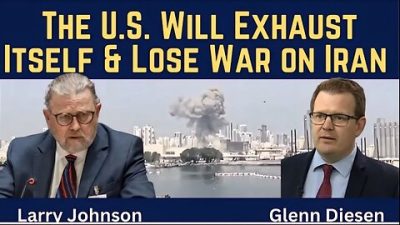
Larry Johnson: The U.S. Will Exhaust Itself & Lose War Against Iran
or go to
Aletho News Archives – Video-Images
From the Archives
Revealed: Israel’s hidden history of attacks on Iran
By Robert Inlakesh | MintPress News | April 17, 2024
Iran’s retaliatory attack on Israel was framed in the West as a reckless attempt to spark a major regional war, but in reality, Israel has been attacking Iran for decades.
As is routinely the case with Western-backed wars, the corporate media’s timeline begins at the moment that suits their narrative. We have seen this play out recently, with the attempt to rob the Gaza war of all contexts before October 7, 2023. Similarly, when it comes to Israel’s conflict with Iran, the two have been embroiled in what is referred to as a “shadow war,” the details of which are pretty shocking. … continue
Blog Roll
 Aletho News
- Forget Oil: Natural Gas Prices Are About to Go Through the Roof If Hormuz Isn’t Reopened Soon
- Hormuz Strait: Iran’s Strategic Trump Card for Forcing Enemies to the Negotiating Table
- Trump bit off more than he can chew with Iran – ex-Pentagon analyst
- Murdering Khamenei Will Kill Trump’s Presidency
- Unexpected Iranian reaction paralyzed Americans and Israelis on the first day of war
- Larry Johnson: The U.S. Will Exhaust Itself & Lose War Against Iran
- In The Name of ‘Helping Iran’, The U.S. And Israel Slaughter Over 100 Iranian Schoolgirls
- Why are Americans killing and dying for Israel, again?
- Timing of US-Israel attack on Iran bears symbolic meaning in Judaism
- 70 martyrs, 90 wounded in US-Israeli strike on elementary school
- If Americans Knew
- Israel, US on a Zionist mission to bring Iran down – Not a ceasefire Day 141
- When Presbyterians Fought Christian Zionism
- Israel starts another war on Iran – Not a ceasefire Day 141
- ‘Terror Was Needed to Make Arabs Leave’: What the Israeli Army Did in 1948, Revealed
- 17,000 Unaccompanied Orphans in Gaza, in World’s Biggest Orphan Crisis
- Israeli leaders want to buy global legitimacy – Not a ceasefire Day 140
- Israel warns of a Ramadan escalation — while doing everything to provoke one
- Democrats Should Release Their 2024 Election Autopsy – and Stop the Gaza Denial
- Israel responsible for 2/3 of press killings worldwide – Not a ceasefire Day 139
- Are the Jews indigenous to Palestine?
- No Tricks Zone
- Glaciers Worldwide Are Suddendly Surging, Experts Blame Warming!
- Surprising Discovery: Sahara Is Greening…Billions Of Trees Where Once Thought To Be Barren
- New Research Reaffirms Clouds, Aerosols, And Surface Solar Radiation Are ‘Driving The Climate System’
- Germany: Electric Car Catches Fire At Charging Station, Sets Off Local “Inferno”, Widespread Damage
- New Study: Canada’s New Brunswick Was 1°C Warmer Than Today During The Medieval Warm Period
- Coal Power Back In Trend As Globe Tries To Keep Pace With Growing Demand For Power
- New Study: A 4°C Warmer Beaufort Sea Had ‘No Sea Ice’ 11,700 – 8200 Years Ago
- Unfudging The Data: Dutch Meteorological Institute Reinstates Early 20th Centruy Heat Waves It Had Erased Earlier
- German Gas Crisis…Chancellor Merz Allegedly Bans Gas Debate Ahead of Elections!
- Pollen Reconstructions Show The Last Glacial’s Warming Events Were Global, 10x Greater Than Modern
 Aletho News