Saudi Arabia’s militarization of Red Sea will not safeguard shipping in waterway: Yemen
Press TV – August 1, 2026
Saudi Arabia’s decision to build an international coalition and militarize the Red Sea will not protect its vessels in the waterway, says a prominent member of Yemen’s Supreme Political Council, warning that such move will mount regional tensions and complicate the security landscape.
Abdulaziz bin Habtour, in a statement issued on Friday, called the proposed Saudi maritime coalition a facade for persisting with the aggression and blockade against Yemen.
He stated that the Bab al-Mandab Strait continues to be accessible for international navigation, emphasizing that Yemen’s maritime measures target only Saudi vessels, calling them a reaction to the blockade placed on Yemen.
Bin Habtour said that earlier warnings to the US-led “Prosperity Guardian” coalition underscored that the Red Sea crisis couldn’t be resolved through military force, but by terminating Israel’s genocidal war in Gaza and removing the blockade.
He noted that removal of the Saudi blockade and cessation of the military campaign against Yemen, instead of militarizing the Bab al-Mandab Strait, is the sole method to ease regional tensions.
Reuters quoted people familiar with the deliberations that Saudi Arabia seeks to form an international coalition against Yemen in the Red Sea.
The coalition’s composition has not been finalized and discussions are ongoing with numerous countries, the sources were quoted as saying.
On July 20, the Sana’a government declared a maritime blockade against Saudi Arabia, stating that its authorities have enforced “an unjust and oppressive siege” on Yemen for almost 12 years, “looting our resources and enforcing a total blockade.”
Since then, the Yemeni Armed Forces said they have launched attacks on Saudi vessels in the Red Sea.
Saudi Arabia and its Arab allies launched the blockade on Yemen as part of a full-scale war since March 2015, with military, political, and logistical support from the United States and other Western states.
The war has killed tens of thousands of Yemenis, while consistently falling short of its main objective of restoring power to Yemen’s former Riyadh-friendly regime.
Following a fragile UN-brokered ceasefire in 2022, the United States, Britain, and the Israeli regime waged many rounds of aggression against Yemen. The attacks sought to cripple Sana’a’s capability to stage solidarity strikes against Israeli targets in response to Tel Aviv’s war of genocide on the Gaza Strip.
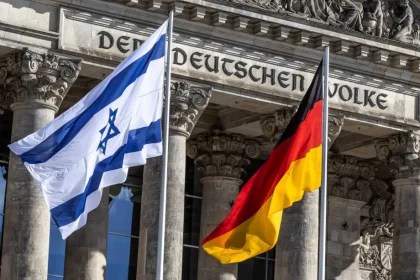
Germany scrambles to evade Nicaragua’s landmark Gaza genocide case at ICJ
The Cradle | August 1, 2026
The International Court of Justice (ICJ) announced on 31 July that it will hold hearings from 7 to 10 September on Germany’s bid to dismiss Nicaragua’s landmark genocide case, hoping to prevent judges from ruling on Berlin’s role in enabling Israel’s ethnic cleansing campaign in Gaza.
Germany filed its preliminary objections to Nicaragua’s case on 21 October 2025, challenging the court’s jurisdiction and arguing that several of Nicaragua’s claims are inadmissible.
The filing automatically froze all proceedings, leaving evidence of Germany’s complicity in genocide unexamined until judges rule on Berlin’s challenge.
Germany will open oral arguments on 7 September, with Nicaragua responding the following day. Berlin will return on 9 September, and Managua will close on 10 September.
In April 2024, the ICJ denied Nicaragua’s request for Germany to stop military exports to Israel and to resume UNRWA funding, which Germany had suspended in January 2024.
On 1 March 2024, Nicaragua filed the case accusing Germany of violating the Genocide Convention, the 1949 Geneva Conventions, and fundamental norms of international law. The charges relate to Germany’s political, financial, and military backing of Israel and its decision to cut off funding to the UN Agency for Palestinian Refugees.
Managua asserts that every party to the genocide convention has a duty to do everything possible to prevent genocide, and that a recognized risk of genocide against Palestinians has existed since October 2023.
Berlin argued that only a small share of its export licenses to Israel covered weapons, yet Germany remains Israel’s second-largest arms supplier after the US, issuing export licenses worth over $571m between October 2023 and May 2025.
Beyond weapons, Berlin has locked in security ties with Israel while moving to stamp out criticism of it at home.
Germany’s upper house approved a bill on 10 July criminalizing the denial of Israel’s “right to exist,” punishable by up to five years in prison, a measure the Bundestag’s own research service warns would breach constitutional protections on free expression.
Netanyahu and German Interior Minister Alexander Dobrindt signed a security agreement in Jerusalem on 11 January, expanding military cooperation against Iran and resistance factions in Lebanon, Palestine, and Yemen.
Lobbying for Zionism reviewed by David Miller
By David Miller | July 30, 2026
Did Zionism begin as a Christian project which was only later a Jewish movement?
This is what Ilan Pappé says in the book Lobbying for Zionism.
In my review of the book, I show this is wrong.
Here is an excerpt:
The contribution of the first section of the book is to unearth the hidden history of the Christian Zionist movement. This is a fascinating and useful account of the contribution of a certain fraction of practical British imperialism to the idea of the construction of a Jewish state in the historic territory of Palestine.
In the conclusion, Pappé mentions that ‘Christian fundamentalists, who, as I’ve shown, were the first Zionists in the modern era’. He also states that ‘Zionism began as a Christian project, and thus the early lobbyists were what we would call Christian Zionists today.’ He goes on to criticise Mearsheimer and Walt, saying they ‘described this Christian lobby as a junior partner in the overall lobbying effort in the USA. This appeared to be the case in 2007 — but the picture was very different nearly a decade later during the Trump era.’
But of course, the picture was not very different either during Trump’s first or second presidency. Christian Zionists do have greater numbers of foot soldiers than do Jewish Zionists, but they have only a handful of representatives at the top of the Trump power matrix (for example, Pence and Pompeo in the first period, and Hegseth and Huckabee in the second). As reporting in the Forward, or JFeed, shows, it is Jews that dominate in terms of power players and finance.
Pappé’s conclusion is predicated on his analysis at the start. The opening words of the book are: ‘Zionism began as an evangelical Christian concept and later an active project.’
The main progenitors of the idea were, according to Pappé, Lord Shaftesbury, Colonel Henry Churchill, and Sir George Gawler from the 1830s onward. Though Jewish Zionists of the time are mentioned, such as Sir Moses Montefiore, this all predates the moment when, as Pappé writes, ‘the first settlers arrived [in Palestine] on 6 July 1882’, a group of 14 Russian Jews who arrived at Jaffa Port.
But, as Pappé surely knows, Jewish settlement in Palestine long pre-dates 1882 (see below). Except for Montefiore, none of these figures are mentioned in Pappé’s index and Pappé does not mention Montefiore’s numerous visits to Palestine, or his role in financing Jewish settlement.
In the end, then, the book appears to be advancing a case which is not supported either by the known facts on Jewish settlement in Palestine or by empirically grounded research on the activities of the Zionist movement.
Read the full review via The Column, the new magazine from @ukcolumn .
With Karim Khan’s dismissal, the elimination of the war crimes court is near-complete

By Jonathan Cook | July 30, 2026
The most important question we should be asking after Karim Khan’s dismissal last week as chief prosecutor of the ICC – the international war crimes court in The Hague – is not whether he is guilty of “sexual misconduct” against another staff member, identified as “Sarah”.
That can only be decided through a legal process – one, let us note, that has already taken place. A fact-finding body carried out a lengthy investigation of Sarah’s allegations over more than a year; its thousands of pages of evidence were then evaluated in detail by three senior judges.
Though you would not know it from the media coverage, they concluded that there was no evidence to suggest any kind of misconduct by Khan, sexual or otherwise.
Strangely, that determination was largely confirmed by an extraordinarily deferential “exclusive” CNN interview with Sarah, aired earlier this month.
She declined to give any meaningful details of what Khan had allegedly subjected her to, and celebrity interviewer Christiane Amanpour delicately avoided pressing her for any clarification.

No matter. The purpose of the CNN interview was never about excavating facts. It was designed to offer face-saving cover as an entirely political body called the Assembly of States Parties, comprising diplomatic representatives of the 125 states signed up to the ICC, entirely ignored the legal findings and dismissed Khan.
Paradoxically, it was the Assembly of States Parties that appointed the judges who had concluded that there was no evidence of misconduct or breach of duty by Khan. That inconvenient judgment was simply reversed, despite the Assembly members being in no position to weigh the evidence themselves.
We should not forget that many of these states have an investment in weakening the only international court that can bring their own senior officials to trial for war crimes.
In May 2024 – shortly before Sarah made her allegations – the ICC demonstrated that it was finally ready to prosecute western leaders for war crimes, not just those from the Global South or from the West’s official enemies, such as Russia’s Vladimir Putin.
Khan issued an arrest warrant for Israeli prime minister Benjamin Netanyahu and his former defence minister Yoav Gallant. Both are accused of crimes against humanity for starving the people of Gaza through a prolonged blockade of food, water and power.
Were Netanyahu ever to face trial – and found guilty, as he almost certainly would be – a lot of other leaders would have good reason to fear they might be found culpable next, not least for their complicity in Israel’s mass slaughter of Palestinians in Gaza.
The question that needs answering now is not whether Khan is guilty of misconduct – that has been decided at a political level, not a legal one. No, we need an answer to an equally political, and far more troubling, question.
“Cui bono?” Or “Who benefits?”
The evidence is hiding in plain sight. The evidence is revealed both in the deeply politicised process that led to Khan’s downfall, and in what that process means for the future of the court.
Covert war
Khan is not the first ICC chief prosecutor to face extreme pressures – and, as with Khan, those pressures surfaced at the very moment Khan’s predecessor tried to take on Israel over its war crimes.
Fatou Bensouda faced a “covert war” waged against her by Israel for the best part of a decade, according to an investigation by the Guardian in May 2024, just as Khan issued his arrest warrant for Netanyahu.
The Guardian’s report, published nearly three years after Bensouda had completed her nine-year term at the ICC, revealed that, during that time, she had faced threats to herself and her family, the monitoring of her communications, and an intimidating visit to her home.
More recently, Bensouda has confirmed these accounts in an interview with Al Jazeera. Bensouda notes that she repeatedly reported Israel’s campaign of intimidation to the Dutch authorities, but they did nothing to investigate the threats or protect her.
She also says certain “authorities” – she does not name them – warned her that she was going too far in investigating Israeli crimes and that “you could be harmed or you could be killed, or family members could be harmed in some way.”
The campaign of threats – instigated by Yossi Cohen, then the director of Israel’s spy agency, Mossad – intensified as Bensouda considered whether to open a formal investigation into Israeli war crimes and crimes against humanity in the illegally occupied Palestinian territories.
Israel’s crimes against the Palestinian people, we should remember, predate – by decades – Hamas’ attack on 7 October 2023. In fact, though no one is supposed to mention it, Israel’s sustained crimes of occupation are the self-evident cause of that Hamas attack.
An Israeli source told the Guardian that “the Mossad’s objective was to compromise the prosecutor or enlist her as someone who would cooperate with Israel’s demands”– that is, scrap the ICC’s investigation into Israeli crimes. Another source admitted that Cohen was acting on Netanyahu’s instructions.
During one contact, Cohen reportedly issued a Mafia-style threat to Bensouda: “You don’t want to be getting into things that could compromise your security or that of your family.”
The Guardian reported that the Mossad “took a keen interest in Bensouda’s family members and obtained transcripts of secret recordings of her husband, according to two sources with direct knowledge of the situation. Israeli officials then attempted to use the material to discredit the prosecutor”.
The paper also noted that there were fears among senior ICC officials that “Israel had cultivated sources within the court’s prosecution division” – the division Khan would inherit from Bensouda.
Cohen was described as “stalking” Bensouda, and personally “ambushed” her in a hotel room in New York in 2018. Afterwards he repeatedly phoned her, in a threatening manner that was said to have escalated over time. When Bensouda asked Cohen how he had obtained her phone number, he reportedly replied: “Did you forget what I do for a living?”
According to the Guardian :
On one occasion, Cohen is said to have shown Bensouda copies of photographs of her husband, which were taken covertly when the couple were visiting London. On another, according to sources, Cohen suggested to the prosecutor that a decision to open a full investigation would be detrimental to her career.
Between 2019 and 2020, the Mossad had been actively seeking compromising information on the prosecutor and took an interest in her family members.
The spy agency obtained a cache of material, including transcripts of an apparent sting operation against her husband.
Israel used the materials to mount a “smear campaign” against her, but one that ultimately proved unsuccessful.
Concerted backlash
When Khan took up the role of ICC chief prosecutor in June 2021, he proved reluctant to pick up where Bensouda had left off on the Palestine case. Presumably, he was only too aware of the retaliation from Israel against her.
Bensouda had announced in December 2019 that she had grounds to open a full criminal investigation into allegations of war crimes in Gaza, the West Bank and East Jerusalem.
However, in the face of a concerted backlash from western states, she delayed opening the investigation. She first sought a ruling from a pre-trial chamber of ICC judges – presumably in the hope it would serve as some kind of insurance policy – on whether the court had jurisdiction over the occupied Palestinian territories.
By February 2021 the judges confirmed what was already self-evident. The court did have such jurisdiction because Palestine had been signed up to the court since 2015.
Bensouda stepped down a few months later.
The door was now open for Khan to prosecute Israeli officials for war crimes. However, the new chief prosecutor gave every appearance – perhaps understandably – of preferring to sit on his hands.
It was not just Israel that had been fearsomely opposed to its officials being tried for war crimes. Washington was equally incensed at the prospect – sometimes, it seemed, more so than over the possibility that US officials might also face arrest warrants for crimes committed by the US military in Afghanistan and Iraq.
Between 2019 and 2020, during Trump’s first presidency, the US imposed severe visa restrictions and financial sanctions on Bensouda. Mike Pompeo, then US secretary of state, linked the sanctions to the Palestine case: “It’s clear the ICC is only putting Israel in [its] crosshairs for nakedly political purposes.”
Khan might well have avoided pursuing Israel indefinitely had it not been for the events that followed 7 October 2023.
Israel’s mass slaughter of Palestinian civilians in Gaza, its devastation of the enclave’s homes and infrastructure, and its starvation of the entire population were actions so criminally abhorrent that UN agencies, major human rights groups and Holocaust scholars were soon all in agreement that they amounted to genocide.
In May 2024, Khan announced arrest warrants against Netanyahu and Gallant, as well as three Hamas leaders subsequently killed by Israel.
Tsunami of threats
Shortly before Khan made that announcement, 12 senior US Senators had sent a threatening letter to the ICC: “Target Israel and we will target you.” The letter ended: “You have been warned.”
Describing Israeli and US sovereignty as inseparable, the senators reminded Khan that Washington had demonstrated “the lengths to which we will go to protect [our] sovereignty.”
A 2002 law, popularly known as “The Hague Invasion Act”, authorises the US president “to use all means necessary and appropriate” to bring about the release US persons and any allies imprisoned or detained by the ICC. Those allies, it goes without saying, include Israeli leaders.
Such threats, it should be noted, are a violation of Article 70 of the Rome Statute.
Following the issuing of the arrest warrants, there followed a tsunami of similar threats – and presumably more that have yet to become public – against Khan and the ICC.
A British-Israeli lawyer within the ICC – one known to have ties to Netanyahu’s legal adviser – warned Khan “they will destroy you and they will destroy the court” if the warrants were not rescinded. He urged Khan to “climb down the tree” and drop the case.
The UK’s foreign secretary of the time, David Cameron, phoned Khan to tell him Britain would defund the court and withdraw from the Rome Statute that founded the ICC if Khan did not back down.
Cameron warned Khan that he was “on the brink of making a huge mistake” and urged him to “take a step back and consider things”. He added that applying for arrest warrants for Israeli officials was tantamount to “dropping a hydrogen bomb”.
Meanwhile, Trump issued an executive order imposing aggressive financial sanctions against Khan and other ICC officials, including several of its judges.
Khan himself received warnings that Israel’s Mossad was continuing its operations in The Hague, where the ICC is located, to monitor and compromise the court’s investigators as they compiled evidence on Israel – just as it had done earlier under Bensouda.
Khan publicly stated that retaliatory threats and intimidation were explicitly targeting members of his own family.
Untouchable criminals
What conclusions should we draw from all of this?
Quite aside from the matter of whether Sarah’s allegations of “sexual misconduct” are true or not, it is clear that Israel and the US have been digging for dirt – and apparently ready to fabricate such dirt – on any chief prosecutor who tries to hold them to account for their crimes.
Both have indicated that they are ready to manipulate legal and political processes to ensure the outcome they desire: that they remain untouchable.
We have a template for how this plays out. Julian Assange, founder of the whistle-blowing site Wikileaks, published details in 2010 of US and British war crimes in Afghanistan and Iraq. Almost immediately he found himself entangled in accusations of sexual misdemeanours – in his case in Sweden – that were similarly amplified by an uncritical western media.
Assange faced years in various forms of confinement while the US and UK pressured Sweden to keep alive an investigation against him Swedish prosecutors at least twice sought to drop for lack of credible evidence.
In fact, the US and UK never wanted the evidence tested – they were quite happy with a permanent, unresolved “investigation” – precisely because they knew it would have been unlikely to withstand judicial scrutiny.
The point was simply to generate constant headlines about “rape”, turning Assange into a pariah, justifying his effective disappearance from public life, severely weakening Wikileaks as a whistleblowing platform, deflecting attention from the all-too-real crimes committed by the US and Britain, and paving the way to a political show trial to extradite him to the US on entirely confected “espionage” charges.
This has been repeated in the case of Khan and the ICC. In Khan’s case, the evidence was tested and found inadequate. So the legal process has been replaced by a flagrantly political one.
Khan has been turned into a legal pariah, even stripped of his right to work as a lawyer in the UK by the British Bar Association.
The ICC has been further weakened, just as Israel and the US have expressly stated they wanted it to be. Marco Rubio, Trump’s secretary of state, has recently launched an official campaign to dismantle the ICC “brick by brick”.
He says: “Now they [the ICC] are going to see the consequences”. Consequences of what? Of seeking to enforce international law against a key US client state.
Meanwhile, accountability for the all-too-real crimes being committed by Israel in Gaza, Lebanon and the West Bank – and actively supported by western states like the US, Germany and Britain – recedes yet further into the background
As each brick protecting the ICC is dismantled, a brick is added to the wall of protection around Netanyahu and Israel’s genocidal war machine.
Israel, meanwhile, is barely concealing that it has been masterminding the effort to destroy the ICC.
According to Guy Azriel, the diplomatic correspondent for i24 News, Israeli foreign Minister Gideon Sa’ar “oversaw a dedicated task force and employed intensive diplomatic efforts aimed at securing Khan’s removal from office”.
Hillel Neuer, director of the Israel apologist group United Nations Watch, cheered what he called “our campaign to remove” Khan, and warned Francesca Albanese, the UN’s legal expert on the occupied Palestinian territories, “you’re next”.
Like Khan, Albanese has been searching for practical, legal ways – not just rhetoric – to hold Israel and its western allies to account for the crimes in Gaza.
Predatory states
The ICC claims its work will not be affected by Khan’s removal and that the arrest warrants against Netanyahu and Gallant will still be pursued under new stewardship. That seems doubtful.
Israel and the US are cranking up the intimidation of the ICC, which has no tools – beyond the support of members states – to enforce its rulings or protect itself from the hostility of a rogue superpower.
Currently the court appears paralysed, allowing Israel to muddy the waters with interminable, and vexatious, appeals against the arrest warrants.
Any lawyer who takes up the post of ICC chief prosecutor will be only too aware of the fate that befell Khan and the campaign of intimidation against Bensouda as soon as each tried to enforce accountability on Israel and its western patrons.
It will take a very brave individual indeed to renew that task. Khan’s successor will understand that, in any further confrontation with Israel and Washington, the US will not hesitate to crush the ICC and, with it, remove the only effective restraint on criminality by powerful states.
More likely, however, the Assembly of States Parties – the political body that ousted Khan – will privately require from his successor reassurances that the new chief prosecutor reliably defer to the principle of Israeli and western impunity. Only someone less willing to ruffle feathers stands any chance of being appointed.
That was the clearest of messages sent by the Assembly when a majority of member states voted to be rid of Khan. The short-lived experiment in creating a mechanism for enforcing international law is over. We are back to the law of the jungle.
Hundred of thousands of people around the world – more likely millions – will now find themselves even more exposed to the criminal actions of predatory states. Unlike Khan’s accuser, they are unlikely to ever get their day in court.
UK charges over 1,500 people over signs opposing Israel’s genocide of Palestinians in Gaza
The Cradle | July 31, 2026
British authorities listed the cases of 1,579 people at Westminster Magistrates’ Court on 30 July, holding cardboard signs opposing Israel’s genocide of Palestinians in Gaza, according to the campaign group Defend Our Juries.
The group said the hearing had been pushed back to October, but that hundreds of defendants were never told, leaving them unsure whether they were required to appear, pointing to the confusion as evidence of a crisis the courts cannot absorb.
One court notice seen by Middle East Eye told the recipient they must attend on 30 July, then instructed them in the same letter not to come to court.
Defendants who arrived were handed a further letter addressed to whomever it may concern, adjourning all cases to 26 October.
The chaos came on the same day the Supreme Court ruled that Palestine Action can challenge its proscription.
Over 3,500 arrests have been made under Section 13 of the Terrorism Act 2000 of people holding cardboard signs reading, “I oppose genocide, I support Palestine Action,” Defend Our Juries said.
Those cases are tried summarily and carry a maximum of six months in prison, and include senior citizens, faith leaders, and first-time protesters.
In the past two months, 96 people have filmed videos inviting support for Palestine Action, with many also declaring membership.
The declaration of membership exposes them to Sections 11 and 12 of the same act, which are heard before juries and carry sentences of up to 14 years.
Eight of those who filmed have been arrested, seven in dawn raids on people’s homes, with another 14 detained outside New Scotland Yard on 5 July.
Home Office figures cited by the group show 92 percent of terrorism arrests in the year to March 2026 were linked to alleged support for Palestine Action, with the average demographic profile of the suspect being a 59-year-old white British woman.
A spokesperson for Defend Our Juries said UK Prime Minister Andy Burnham had inherited the crisis, asking “does he really want to be seen locking up pensioners, priests and 84-year-old Reverend Sue Parfitt while people convicted of violent offenses are released early?”
On 15 June 2026, the Court of Appeal ruled the government’s classification of Palestine Action as a terrorist entity was lawful, overturning the February 2026 High Court judgment that had called it unlawful and disproportionate.
Islamic Jihad says reported deal between Palestinian factions, Israel ‘inaccurate’
MEMO | July 31, 2026
The Palestinian Islamic Jihad movement said Friday that the announced agreement between Palestinian factions and Israel was “inaccurate,” adding that it has reservations over the deal in its current form, Anadolu reports.
In a statement, the movement’s spokesperson said: “What has been announced regarding an agreement between the Palestinian factions and the enemy (Israel) is inaccurate, and we have reservations about it in its currently circulated form.”
The Palestinian group’s statement came after US President Donald Trump announced that an agreement had been reached for the complete disarmament of Hamas and other armed groups in Gaza, with Israeli forces set to withdraw in phases as the process moves forward.
Trump also credited Egypt, Qatar, and Turkiye for helping broker what he described as a “historic breakthrough,” saying the agreement would be implemented gradually, with an International Stabilization Force working alongside a new Palestinian police force to assume responsibility for security in Gaza.
Israel’s genocidal war on Gaza has killed more than 73,000 Palestinians and injured over 174,000 others, most of them women and children, while destroying about 90% of the enclave’s infrastructure.
The ceasefire was brokered under Trump’s 20-point plan for Gaza, which is being overseen by the Board of Peace, which he chairs.
Despite the ceasefire, which took effect on Oct. 10, 2025, Israel has continued daily attacks across Gaza, killing 1,214 Palestinians and injuring 3,977 others, most of them women and children, while causing widespread destruction.
Israeli army detonates 700 tons of explosives near Lebanon’s historic Beaufort Castle

The Cradle | July 31, 2026
Israel carried out massive detonations involving around 700 tons of explosives around Lebanon’s historic Beaufort Castle – a UNESCO World Heritage site – with the huge blasts being heard across large parts of the country’s south late on 30 July.
The violent detonations were carried out under the pretext of alleged Hezbollah infrastructure under the Crusader-era fortress. This has been denied by Lebanese authorities.
“Israeli forces carried out unprecedented bombardment in southern Lebanon, triggering a series of powerful explosions that residents said were unlike anything heard in recent years,” Al Manar TV reported on Friday.
Lebanon’s National News Agency (NNA) also reported the blasts, calling them “massive” and “unprecedented,” while confirming that they were heard across the whole south.
“The blasts echoed across all of south Lebanon with unprecedented intensity, and their shockwaves reached the Iqlim al-Kharroub and Khaldeh regions,” the report said, adding that “violent explosions in the Beaufort Castle area shattered the glass of several windows in homes in the town of Qlayaa.”
Lebanese Parliament Speaker Nabih Berri condemned the violent detonations.
“The shockwaves from these terrorist explosions, caused by 700 tons of explosives, registered 3.8 on seismic monitoring scales and were felt by Lebanese citizens from the South and Mount Lebanon all the way to the outskirts of Beirut,” he said.
Lebanon’s Culture Ministry released a statement saying Beaufort Castle was unharmed.
However, it stressed that because the area remains under Israeli occupation, specialized technical teams have been prevented from accessing the site in order to conduct a proper assessment of any potential damage.
Earlier in July, the castle had been placed on UNESCO’s list of sites “in danger.”
The massive detonations were announced by Israeli Prime Minister Benjamin Netanyahu and Israel’s War Ministry late on Thursday evening.
In a joint statement, Netanyahu and War Minister Israel Katz claimed a Hezbollah tunnel network under the castle was destroyed.
They also confirmed the unprecedented amounts of explosives used in their “operation.”
Israeli occupation forces will “remain in the security zone in southern Lebanon and will continue to destroy all terror infrastructure to prevent any attempt by Hezbollah to restore its capabilities,” they added.
Lebanon’s Directorate General of Antiquities has previously rejected Israeli claims that the site contained Hezbollah infrastructure.
Israeli maps and videos detailing “terrorist infrastructure” are fabricated, and the fortress has been under Lebanese state administration since 2000, placing under enhanced protection in line with the 1954 Hague Convention.
Lebanese geologists have warned that demolitions of this scale near major fault lines could potentially trigger human-induced seismic activity.
Israeli forces occupied the castle in May 2026 and framed the move as a major strategic victory. Hebrew media challenged this narrative at the time.
Israeli forces were unable to maintain a consistent presence in the historic site due to constant resistance operations – namely Hezbollah’s FPV drone strikes that have inflicted heavy casualties and losses on the Israeli occupation forces since March.
Since the violent detonations near the castle on Thursday night, Israel has continued destroying civilian infrastructure across south Lebanon.
Heavy explosions were recorded in Deir Siryan on Friday, while Israeli shelling continued to target the Ali al-Taher Hill.
Over 4,300 have been killed and more than a million displaced by Israel in Lebanon since 2 March.
Tens of thousands of civilian homes and buildings – amounting to practically all of south Lebanon’s border villages – have been eradicated.
Israeli occupation forces refuse to withdraw, and the Lebanese government has signed a US-brokered deal allowing Tel Aviv to maintain its illegal presence in the country.
From Tehran to Riyadh: How Israel Draws the Red Lines America Can’t Cross

By Jamal Kanj | MEMO | July 30, 2026
Israel dragged America into another war, then sat back on the spectator bench and watched U.S. taxpayers foot the bill. Borrowed money burned into bombs. Billions more bled out at gas stations and in inflation, all to reopen a strait that was open before Donald was duped into fighting Benjamin’s war. Now Benjamin Netanyahu watches from a safe distance, gloating as missiles fly between the U.S. forces and Iran in a war he spent years pushing Washington to fight.
At home, flag-draped caskets of American soldiers arriving home from a war Israel instigated and American soldiers carried out. In Congress, Secretary of War Pete Hegseth stood before the Senate requesting more money to keep the war running.
Lawmakers asked to sign the check for a war they never voted to authorize, fought for aims Washington did not set, with no accounting of when — or how— it ends.
In occupied Palestine, Israeli Finance Minister Bezalel Smotrich tells a settler conference that “Israel has no interest in joining the campaign . . . a confined campaign between Iran and the United States, is the correct [situation] and best for us [Israel].” In layman language, let’s sit and watch Americans die and pay for our war.
Exhibit A: the U.S. military is depleting its own missile-defense stockpiles defending its bases across the region, while Israel hoards its interceptors in reserve. Israel isn’t spending down its stockpile. It’s waiting for the moment American stocks run dry and the Gulf states are left exposed. When that moment comes, Israeli interceptors will become prized leverage, offered to the UAE and the rest of the Gulf at a price.
Last Sunday on Fox News, Netanyahu outlined to America his goals for the war against Iran. A foreign prime minister, on American airwaves, essentially setting the terms and the finish line for an American war, fought by American pilots, funded by American taxpayers, and now apparently concluded at Israel’s discretion. Whatever Trump negotiates, whatever Washington decides, Netanyahu has already told America it doesn’t matter. He isn’t waiting to end the war on Israel’s terms. He’s informing it.
But it is not only America’s war policy that runs through Tel Aviv. It is diplomacy and commerce too. When Washington signed a civilian nuclear cooperation agreement with Saudi Arabia, and the deal was announced, ink dry, both governments on record. Within a day, President Trump reversed course, declaring the agreement was contingent on Saudi normalization with Israel.
Israeli officials do not even try to be diplomatic on how they run Washington policy. Before Trump added the new condition, Israel’s Culture and Sports Minister, Miki Zohar, told Army Radio that “Israel has been clear with the United States about its red lines.” Those are the words of a government that understands it holds a veto pen, set red lines, and where America listens.
Think about it, an Israeli minister speaks openly of red lines over an American commercial and strategic agreement with one of the world’s largest oil exporters, a country central to Gulf security architecture Washington has spent decades building. It did not matter that the Saudi deal serves American energy and strategic interests. It mattered only that Tel Aviv had not yet signed off.
The issue isn’t whether Israel tries to shape American war strategy, or whether its leaders draw red lines Washington isn’t allowed to cross. The real question is why American leaders, across the political spectrum, permit a strategically insignificant country to wield such extraordinary influence over the foreign policy of the world’s only superpower.
Israeli red lines prompted America’s Israel-first loyalists to abruptly discover the agreement was a nuclear proliferation threat. For decades, they have defended, excused, or ignored Israel’s undeclared nuclear arsenal. Yet the prospect of a Saudi civilian nuclear program suddenly provokes moral outrage. The issue was never stopping nuclear proliferation. It was about sequencing. They would be willing to kosher a Saudi civilian nuclear program the day after, not before, it recognizes Israel.
If Arab capitals want an American relationship that serves their own security and economic interests, they need to stop mistaking proximity for leverage. For years the strategy has been to buy access, funneling billions to powerful intermediaries like Jared Kushner, treating him as the private door into the Oval Office.
But Kushner is no neutral broker. He is an Israel-first advocate who built his post-White House fortune partly on Arab capital while shaping Middle East policy on Israel’s behalf and now uses his wealth to finance Jewish-only colonies built on stolen Palestinian land.
The United Arab Emirates lived this irony in hard numbers. Kushner sold Abu Dhabi on the Abraham Accords with a promise attached: normalize with Israel, and the most advanced American fighter jet in the world would follow, a $23 billion sale of fifty F-35s. The UAE delivered its half instantly, recognition, embassies, open skies. Washington delivered Israel every benefit of that deal. The jets never came. Years of “technical requirements,” stalled reviews, and quiet reversals later.
Trump wants to sell Saudi Arabia the promise of a commercial agreement, but deliver Israel an immediate recognition. The Arab cow gets milked for capital, investment, and diplomatic goodwill, and when the moment comes to deliver, the payoff is led instead to the Israeli altar. Every dollar spent courting Kushner, every concession made in good faith, has purchased not access but the illusion of it, never enough to collect on.
Arab regimes must understand that neither buying access to the president through Israel-first loyalists like Kushner, nor hosting the American bases that fight wars designed in and for Tel Aviv, will change U.S. policy — not while Israel holds the lobby power to dictate red lines American leaders dare not cross.
Israeli army suicides rise again as two female soldiers die, bringing this year’s total to 16

MEMO | July 29, 2026
Two Israeli female soldiers died by suicide this week, bringing the number of serving Israeli soldiers who have taken their own lives since the start of the year to 16, amid growing concern over rising suicide rates in the military since the war in the Gaza Strip began.
Haaretz reported on Tuesday that a female soldier from the Bardelas Battalion, deployed along the Egypt-Israel border, died by suicide on Tuesday morning at a military base in southern Israel.
The newspaper said she was found injured at the base and taken to hospital, where she was later pronounced dead.
In a separate incident, Haaretz reported that a female soldier serving in Israeli military intelligence died by suicide on Sunday at the Glilot military base near Ramat Hasharon in central Israel. The report said she held a classified position.
According to Haaretz, the Israeli military has opened investigations through the Military Police into the circumstances surrounding both incidents.
Data compiled by the newspaper showed that the number of serving Israeli soldiers who have died by suicide since the beginning of this year has risen to 16.
The report added that at least nine other soldiers, including regular and reserve personnel who had taken part in the war, also took their own lives while off duty.
According to an earlier Haaretz report, 22 serving Israeli soldiers died by suicide in 2025, marking the highest annual figure recorded by the Israeli military in the past 15 years.
Israel rules out withdrawal from occupied Lebanon, wants ‘freedom of action’
Press TV – July 29, 2026
Israel has declared it will not agree to any “additional withdrawals” from Lebanon in the next round of negotiations with the Beirut government, while insisting on retaining “freedom of action” in areas transferred to the Lebanese Armed Forces.
Israel’s Channel 12 reported on Wednesday that Israeli officials conveyed the position to mediators involved in the Beirut-Tel Aviv talks ahead of the next round of negotiations, scheduled to take place in Rome on August 4.
There will be no withdrawal from the “security zone” Israel has established in south Lebanon, which includes dozens of occupied villages, the report said.
“The additional areas will not be on our side, in the defense lines that we have stabilized,” an Israeli official told the channel, claiming, “If the current pilot is successful and additional pilot areas are decided upon later, they will be beyond the Yellow Line. We will not allow further withdrawals of the area on our side. Until Hezbollah is disarmed in Lebanon – that is what was agreed upon.”
According to the report, the Israeli regime will instead insist on retaining “freedom of action” to re-enter areas recently handed over to the Lebanese Armed Forces.
The report came hours after heavy Israeli artillery shelling targeted Ali al-Taher Hill in southern Lebanon, where Israel’s Channel 12 reported that an Israeli D9 bulldozer was seen burning after it was “hit by an explosive Hezbollah drone.”
On June 26, Lebanon and Israel signed a controversial US-mediated framework agreement outlining a phased withdrawal of Israeli forces from all occupied Lebanese territories, beginning with a pilot model in two undisclosed zones.
The agreement sets no timetable for the withdrawal, making its completion contingent on the Lebanese Armed Forces assuming full security responsibility in evacuated areas and the disarmament of resistance groups, specifically Hezbollah.
Hezbollah rejected the agreement, saying the framework effectively legalizes the Israeli occupation of southern Lebanon.
Lebanon’s Amal Movement also rejected the deal, arguing that most of its provisions undermine Lebanon’s national interests while serving those of the Israeli regime.
During a meeting with US President Donald Trump at the White House earlier this month, Lebanese President Joseph Aoun reiterated Beirut’s demand for the complete withdrawal of Israeli occupation forces from Lebanese territory, saying the ceasefire agreement cannot be fully implemented as long as Israeli violations continue.
According to official Lebanese figures, Israeli aggression has killed at least 4,330 people, wounded 12,236 others, and displaced more than one million people across Lebanon since March 2.
Israel continues to occupy areas in southern Lebanon, including territories it has held for years as well as others it seized during the 2023-24 onslaught.
Iraq cancels PM’s Riyadh visit after US-Saudi aggression amid calls for response
Press TV – July 29, 2026
Iraq has postponed Prime Minister Ali al-Zaidi’s planned visit to Saudi Arabia after the joint US-Saudi attack on Popular Mobilization Units (PMU) positions across several Iraqi provinces, as officials and lawmakers called for a military response.
The strikes came as millions of Muslims from Iraq, Iran, Pakistan, Azerbaijan and other countries around the world were converging on the Iraqi city of Karbala to mark Arbaeen, one of the largest religious gatherings in the world.
Some observers have viewed the timing of the attacks as a show of anger toward the gathering, which has been marked by expressions of solidarity with the Axis of Resistance and condemnation of US-Israeli wars and expansionist policies.
According to Iraqi media, al-Zaidi’s trip to Saudi Arabia was postponed indefinitely after the attack. The prime minister also ordered the country’s National Security Council to convene an emergency meeting following the security developments and the airstrikes on several areas across Iraq.
Former Iraqi Prime Minister Mohammed Shia’ al-Sudani said, “We condemn the Saudi-American aggression against the headquarters of the Popular Mobilization Forces in the strongest terms.”
“This aggression is a blatant violation of Iraq’s sovereignty and a clear violation of international law and the United Nations Charter,” Sudani said.
“Iraq reserves all of its legitimate rights guaranteed under international law, including the right to defend its sovereignty, territory and people.”
He added that “any violation of Iraq’s security and stability is unacceptable and cannot be met with silence.”
According to a statement carried by Iraq’s official news agency, the PMU said the casualty toll from the attacks remains preliminary and could rise as special committees continue field assessments and gather more accurate information.
The organization denounced the strikes as a “joint US-Saudi terrorist attack” targeting its official headquarters in the provinces of Baghdad, Wasit, Nineveh, Basra, Kirkuk, Karbala and Diyala.
The assaults caused extensive material damage to PMU headquarters, military vehicles, machinery and equipment in the targeted locations, the statement said.
The Iraqi resistance movement added that its investigative teams remain deployed to assess the full extent of the casualties and destruction, noting that the number of those killed and wounded may increase as rescue and assessment operations continue.
Earlier, the PMU announced that several of its bases in different parts of Iraq had come under attack, describing the strikes as “terrorist” and reporting casualties among its personnel.
The PMU said it viewed the attacks as “a highly dangerous escalation, a blatant violation of Iraq’s territorial integrity, and an attack on the country’s official security institutions.”
The attacks prompted growing calls from Iraqi lawmakers for a decisive response.
Two Iraqi lawmakers called on the government to respond decisively, with one urging military retaliation and another demanding the cancellation of al-Zaidi’s visit to Saudi Arabia.
Saud al-Saadi, a member of the Iraqi Parliament and the Huqooq Movement, called on the commander-in-chief of the armed forces to assume his responsibility and issue an order for a military response to the Saudi-American aggression.
“Show [Saudi Crown Prince] Mohammed bin Salman and the other slaves their true worth and size,” he said, according to Iraqi media.
“The blood of Iraqis is not cheap, and the dark record of Washington and Riyadh in our beloved country will not be erased without a response that preserves Iraq’s dignity. It is not acceptable to settle for disgraceful and humiliating statements,” he added.
Another Iraqi lawmaker, Faleh al-Khazali, described the strikes as “terrorist attacks” carried out by “the Saudi and American enemy,” saying they targeted Iraqi security positions in several provinces.
“The attacks on our security positions constitute blatant aggression and a violation of Iraq’s sovereignty,” al-Khazali said, adding that “the Iraqi government and its prime minister bear the responsibility to courageously defend the Iraqi people and the country’s national interests.”
Iraqi lawmaker Hussein Nima al-Battat also condemned the attacks as a “blatant violation of Iraq’s sovereignty and of international laws and norms,” warning that they constituted a dangerous escalation threatening the country’s security and stability.
Al-Battat urged the government to take all necessary military, political, diplomatic and legal measures to defend Iraq’s sovereignty and protect its people, while also calling for the cancellation of the prime minister’s scheduled visit to Riyadh as a demonstration of Iraq’s rejection of the attacks.
The Iraqi resistance had warned Saudi Arabia earlier against waging such strikes against Iraqi territory following Riyadh’s claims that its oil facilities were targeted from Iraq.
In a statement released on Monday, the resistance rejected the Saudi allegations as “baseless” and urged Saudi authorities to stop blaming Iraq and instead end Riyadh’s blockade on Yemen.
Political analyst Jumaa al-Atwani told Lebanon’s Al Mayadeen television that the joint US-Saudi attack was aimed at weakening the PMU and retaliating against Iraq over its solidarity with Iran.
“The American pressure on Iraq has intensified because of Iraq’s position in solidarity with Iran, especially after the massive funeral procession for the martyred leader of the Ummah,” he said.
Atwani said the millions who participated recently in the ceremonies in Karbala and Najaf for funeral of martyred Leader of the Islamic Revolution Ayatollah Seyyed Ali Khamenei reflected Iraq’s role within the Axis of Resistance.
Al-Atwani said Saudi Arabia maintains close coordination with the United States and described the PMU as “a major problem for Washington.”
He also suggested that regional plans involving Saudi Arabia and Syria have been discussed to justify attacks on Iraqi military positions.
Featured Video
Trita Parsi: Israel Set a Trap for Total War in the Region
or go to
Aletho News Archives – Video-Images
From the Archive
Zionism’s Violent Legacy
By Donald Neff | Washington Report On Middle East Affairs | January 1996
On January 4, 1948, Jewish terrorists drove a truck loaded with explosives into the center of the all Arab city of Jaffa and detonated it, killing 26 and wounding around 100 Palestinian men, women and children.[1] The attack was the work of the Irgun Zvai Leumi – the “National Military Organization,” also known by the Hebrew letters Etzel – the largest Jewish terrorist group in Palestine. The Irgun was headed by Revisionist Zionist Menachem Begin and had been killing and maiming Arabs, Britons and even Jews for the previous ten years in its efforts to establish a Jewish state.
This terror campaign meant that at the core of Revisionist Zionism there existed a philosophical embrace of violence. … continue
Blog Roll
 Aletho News
- Trita Parsi: Israel Set a Trap for Total War in the Region
- Trump’s Iran war is on an Israeli leash
- Saudi oil boss issues global supply warning
- Riyadh Says Its Oil System Is Intact. The Numbers Say Otherwise.
- Trump and Netanyahu Want to “Finish the Job” on Iran
- US ‘one-sided dictation’ not Iran’s beliefs makes rational talks impossible: Baghaei
- Iran’s Next Strike May Not Explode. It Could Shut You Down /Col Doug Macgregor
- Iran: US political targets legitimate if assassinations return
- Iraq shuts key border crossing with Iran under US pressure: Report
- Undersea Internet cables could be targeted in retaliation for attacks on Iran: IRGC deputy chief
- If Americans Knew
- The Israel Lobby’s Changing Fortunes
- AIPAC has become such a political liability that it’s shifting to a more “nimble” approach to buying politicians
- At least 160 Israeli settler attacks in 2 weeks
- Will Gaza’s Ancient Christian Community Disappear Forever?
- Israel’s vision of regional security rests on keeping Arab states weak
- Heidi Levine recounts how Palestinian youths helped save her in settler attack
- DAILY UPDATE: Latest essential news on Palestine, Israel, & region
- Trump’s Intensifying Sabotage of the ICC, for Israel’s Sake
- Israeli military detain US and UK volunteers in West Bank including Democratic NY politician Brad Lander
- Americans at National Conservatism Conference held in Israel this year criticize Israel
- No Tricks Zone
- E-Cars Reduce CO2 Emissions By Only 41% Compared To Internal Combustion Engine Vehicles
- Predictions Made By Renowned Climate Professor Over Past Decades Have Been Proven To Be Poor
- New Study Suggests Large Regions Of The Pacific Ocean Have Been Cooling For The Last 80 Years
- Germany’s Green Energy Debacle: High Energy Costs Force Kahla Porzellan to Close After 182 Years!
- New Study: 50 Years Of The Most Aggressive ‘Net Zero’ Policies Can Only Affect The Global Climate By 0.03°C
- US September “Heat” Was No Record…Many Records Set Decades Ago
- Latest European Green Energy Debacle; Portugal’s Largest Flagship Solar Park Insolvent!
- Green Energy Debacle: German Expert Professor Fritz Vahrenholt Warns Of Severe Economic And Social Consequences
- Two More Paleo Reconstructions Affirm Meters-Higher Sea Levels Across Ireland, Brazil 7000-6000 Years Ago
- New Study: Earth And Venus Surface Warmth Largely Explained By Convection And Lapse Rate, Not CO2 Or Radiation

