Where Will It End? More Israeli Murders
By Stephen Lendman | September 22, 2015
Israel intends imprisoning Palestinian youths and children up to 20 years for stone-throwing. Nonviolent protesters are brutally attacked. Soldiers routinely murder Palestinians unaccountably.
Police now may use live fire indiscriminately, justifying it by inventing pretexts. Settlers commit near-daily violence and/or vandalism with impunity. Investigations when conducted are whitewashed.
Zionist zealots responsible for immolating Dawabsha family members are free to kill again – even though Israeli authorities identified them. Arrests didn’t follow.
On Tuesday, a Palestinian youth named Dia’ Abdul-Halim died – or was he killed? Israeli government officials notoriously lie. So do police and military sources.
The IDF claims the youth was killed trying to throw a grenade, claiming it detonated first. Judge for yourself if true or false. How often do civilians die from grenade explosions? Rare lightning strikes are more common. Palestinian medical sources said he was shot to death.
Soldiers prevented Palestinian Red Crescent medical workers from reaching the scene to help. What did they have to hide?
 On September 22, Israeli forces murdered Palestinian teenager Hadeel al-Hashlamon – shooting her three times in the chest, abdomen and lower body, claiming they foiled a stabbing attack.
Photos released proved otherwise. Soldiers confronted the unarmed woman belligerently, aiming their weapons at her. She turned to walk away and was murdered in cold blood.
An Israeli army spokeswoman lied, claiming “(t)he attacker attempted to stab a soldier.” Live fire aimed at her “lower extremists.” Soldiers shot to kill. None were harmed. No knife was found.
Palestinian PalMedia news agency video showed her left bleeding to death for around 30 minutes before help arrived. Soldiers and heavily armed settlers did nothing to save her.
She’s the 28th Palestinian murdered by Israeli security forces or settlers this year – unaccountably. No prosecutions followed.
Hadeel was taken to Shaare Zedek medical center too late to save her. These incidents happened after Israel mobilized hundreds of police reservists and extra numbers of soldiers in flashpoint areas.
A 2014 Amnesty International report called Israeli forces “trigger happy.” Excessive force is standard practice. Children are abused as violently as adults.
So are international solidarity activists and journalists. Anyone supporting long-suffering Palestinians is vulnerable.
In June through August 2014, over 1,000 West Bank Palestinians were arrested, nearly 600 injured, around two-thirds from live fire. During the same period, Israeli forces murdered 10 others.
Heavy security was deployed ahead of the Yom Kippur atonement period – beginning sundown on September 22, ending 24 hours later.
Vicious Israeli authorities have much to atone for – decades of brutality against defenseless Palestinians, accountability nowhere in sight, nor an end to occupation harshness.
Stephen Lendman can be reached at lendmanstephen@sbcglobal.net.
His new book as editor and contributor is titled “Flashpoint in Ukraine: US Drive for Hegemony Risks WW III.”
How The NY Times Hides the Scandal of US-Israeli War Crimes
By Barbara Erickson | TimesWarp | September 21, 2015
The United States sends at least $3.1 billion in military aid grants to Israel every year, more than the amount given to all the rest of the world combined, and although Americans oppose this excess, their opinion has had no effect: Officials are now in talks to raise the yearly amount by as much as 50 percent.
If you missed that news in The New York Times, there is no reason for surprise. The issue has essentially remained out of sight, glossed over in a smattering of news stories, where readers find murky references to US aid and no enlightening details.
Thus we have a story by Jodi Rudoren this month, a look at how Israeli Prime Minister Benjamin Netanyahu has made a “pivot” after losing his battle against the nuclear agreement with Iran. Several paragraphs into this piece she writes, “Washington is expected to deliver a huge new military aid package to Israel… to appease Mr. Netanyahu and Democratic supporters of Israel who reluctantly backed the nuclear deal.”
This begs for explanation. How much is “huge”? Why is this “expected”? But nothing more is forthcoming.
Times readers have to look elsewhere for a fuller story. Other sources tell us that Israel has been asking for up to $4.5 billion a year in military aid and that talks have been going on “away from the spotlight.” Observers expect announcement of an aid agreement in November, when Israeli Prime Minister Benjamin Netanyahu visits Washington.
The Times did manage to work in the $4.5 billion price tag, in the last paragraph of a story that ran in July. The US has guaranteed Israel $31 billion in military aid grants over 10 years ending in 2017, and Israel now wants a new deal guaranteeing up to $45 billion over another 10 years. The article states that officials will frame the deal that finally emerges as an effort to bolster Israel’s defenses in the face of a resurgent Iran. Thus they will try to defuse the charge that the new deal is a way of “appeasing” Israel.
Since this story appeared, the Times has avoided the subject, except for Rudoren’s reference to a “huge” new package, and brief comments elsewhere about “compensation” for defying Israel on the Iran nuclear deal.
US aid to Israel is a subject that the Times would like to avoid. On many fronts it is difficult to defend and shines a harsh light on the actions of both the US and Israeli governments. For instance:
- Congress has been willing to maintain and even increase military aid to Israel even as it cuts programs for education, food assistance and tax relief for working families in the United States.
- Israel receives US aid even though it is one of the most economically advanced countries in the world.
- US military aid makes up a full 20 percent of the Israeli military budget.
- Israel, a small country, is so well supplied with arms that it is the tenth largest purveyor of weaponry in the world. In other words, Israel receives military aid from the US, and then makes money by selling arms to other nations.
- US aid to Israel amounts to $10.2 million per day or $450 per year for each Israeli citizen.
- Israel receives special perks that other aid recipients are denied, such as the right to use some of the funds to buy weapons from Israeli manufacturers instead of being required to purchase American products.
- Israel spends more on military expenditures than any other country in the world, based on percentage of gross domestic product.
- The annual U.S. military aid package for Palestine is $0.00.
- In addition to the $3.1 billion in direct military aid guaranteed each year, Israel receives other gifts, such as economic grants and immigration assistance, raising the total aid well beyond the stated amount. (Vice President Joe Biden recently cited $7.18 billion for a one-year package.)
- Sixty percent of Americans polled in a survey said the United States “gives too much aid to Israel.”
In addition, human rights organizations and other observers have raised ethical concerns over supplying arms to Israel in view of its deadly attacks on civilians in the occupied Palestinian territories.
Last year, during the assaults on Gaza that left some 2,200 Palestinians dead, Amnesty International called on the United States to stop transferring arms to Israel, citing “growing evidence of war crimes.” In June of this year, Rep. Betty McCollum (D-MN) asked the State Department to review the legality of military aid to Israel in light of evidence that security forces abuse child prisoners and have killed nonviolent demonstrators.
This past week a coalition of 10 organizations—American Muslims for Palestine, Jewish Voice for Peace, Code Pink, Defense for Children International and others—sent out a petition asking President Obama to stop supplying Israel with arms. In particular the petition targets the 50 percent increase in direct aid from $3.1 to $4.5 billion now under consideration.
Within days, by Sept. 21, the petition had reached its goal of 50,000 signatures and reset its sights on 60,000.
The Times, however, has had nothing to say about these protests, although they have been reported elsewhere. Rep. McCollum’s letter, which garnered the signatures of 18 additional members of Congress, was featured in US and Israeli media but found no mention in the Times.
The subject of military aid to Israel demands a fuller treatment in the Times. Readers should know the actual cost to U.S. taxpayers; they should be told of ethical concerns raised by organizations and officials; they are entitled to know more about the lethal effects of Israel’s weaponry; they should find Times analysts willing to discuss the contrast between congressional largess for Israel and the efforts to cut domestic programs.
It is not too much to say that US military aid to Israel is scandalous in light of the devastating effects it has had on innocent Palestinians and also on Americans deprived of basic needs. The failure of the Times to address the issue also amounts to scandal, making it fully complicit in this sordid affair.
Brazil president rejects settler leader as Israel envoy
Press TV – September 21, 2015
Brazilian President Dilma Rousseff has reportedly rejected the appointment of a hardliner as Israel’s envoy to her country, saying it could be understood as support for the illegal Israeli settlements.
According to an article published on Israeli website Ynetnews, Rousseff has sent a message to the Tel Aviv regime, expressing her discomfort with the appointment of Dani Dayan, an extremist in charge of running the affairs of Israeli settlements in the occupied West Bank.
The rejection has been part of some covert communications between Brazil and Israel with Rio de Janeiro warning the Tel Aviv regime that it should not go ahead with Dayan’s nomination to the job or mutual relations could seriously be endangered.
Various organizations and individuals have been pressuring Rousseff to reject Dayan due to his background in opposing the rights of Palestinians and his contribution to the illegal settlements in the Occupied West Bank. A petition in August called the appointment “a violation of the international legitimacy and sovereignty of Brazil.”
From 2007 to 2013, Dayan was the chairman of the Yesha Council, the umbrella organization of settlement councils in the Occupied West Bank. He is also a renowned opponent of the so-called two-state solution.
A group of activists submitted a request to the Brazilian government on Monday, demanding the rejection of Dayan as Israel’s ambassador. According to Israeli daily Haaretz, the activists met with Brazilian envoys to the occupied territories as well as Brazil’s envoy to the Occupied West Bank and reiterated that accepting the appointee would help legitimize the settlement enterprise.
Israeli Prime Minister Benjamin Netanyahu announced Dayan’s appointment three weeks ago. Based on diplomatic protocols, once Dayan’s appointment is officially confirmed by Israel, the Brazilian government will be sent a request to endorse the decision.
It is rare for a host country to reject a foreign envoy but if Netanyahu decides to insist on his choice, he could face a formal rejection. Israel has always sought better relations with Brazil as one of the most prosperous economic countries in the world and a major power in South America.
Palestinian teen shot in Hebron by Israeli forces dies from injuries

A photo of the incident shows an Israeli soldier aiming at the woman. (Youth Against Settlements)
Ma’an – September 22, 2015
BETHLEHEM – A Palestinian teenager shot by Israeli forces at a checkpoint in Hebron died from her injuries on Tuesday, Israeli medical sources said.
The teenager, identified as 18-year-old Hadeel al-Hashlamon, was shot three times by Israeli soldiers after allegedly attempting to carry out a stabbing attack, Israel’s army said.
A spokesperson for the Shaare Zedek Medical Center where she was taken for treatment said the teenager was “terribly injured, and underwent surgery upon her arrival.”
She later died from her injuries, the spokesperson confirmed.
No Israeli soldiers were injured during the incident, and the Israeli army did not release photographs of a knife, as they have done on several other recent occasions.
The army spokeswoman said that the attack had been “thwarted.”
A local activist group Youth Against Settlements later released what it said were photos of the incident, appearing to show Israeli soldiers aiming their weapons at the woman, as first she faced them and afterward turned away from them.
Another photo appeared to show the woman slumped on the street, after she was shot and wounded.
Video footage from Palestinian news agency PalMedia showed al-Hashlamon left bleeding on the pavement, reportedly for up to 30 minutes before she received treatment.
The footage shows the woman being dragged out of camera frame, while soldiers and heavily armed settlers look on.
Al-Hashlamon’s death marks at least 25 Palestinians killed by Israeli forces since the start of 2015, according to UN documentation, not including Palestinian deaths caused by Israeli settlers.
Al-Hashlamon’s father, the head of the Anesthesia Department of the Al-Ahli Hospital in Hebron, and its former General Director, Dr. Salaheddin Hashlamoun, said his daughter is a first-year student at the Hebron University.
Israel gives Jewish names to Arab streets in Jerusalem
MEMO | September 21, 2015
Israel yesterday approved giving Jewish names from the Torah to Palestinian streets in an attempt to give a Jewish appearance to the holy city, Arabs48 reported.
The municipality changed the name of Jabal Al-Zaytoun, the highest mountain in Jerusalem which overlooks Al-Aqsa Mosque, giving it a name from the Torah Har Ha-mishchah.
In addition, the municipality gave a biblical name to the main street in Silwan; Shir Hamalot. An indication of the changes to come at Al-Aqsa Mosque.
Arabs48 said that the Israeli municipality did not announce the names of the area that the street refers to, but it is clear that it is in the Al-Bustan neighbourhood, the closest neighbourhood to Al-Aqsa.
This measure contradicts international law, which objects to changing the names of occupied places. Subsequently, the Palestinian Authority filed a complaint at UNESCO and the ICC as the occupation has so far changed names of 300 streets and alleyways in Jerusalem.
It is widely believed that such actions are part of Israel’s endeavour to Judaise occupied Jerusalem.
Foreign Policy by Intimidation
GOP Candidates Show How It’s Done
By Philip Giraldi • Unz Review • September 22, 2015
The media are anointing former Hewlett-Packard Chief Executive Carly Fiorina as the winner of last Wednesday’s second Republican presidential-aspirant debate. They are saying that she was the best prepared and most convincing speaker, and, indeed, maybe she was. But what is being largely ignored is the actual content of the so-called debate, which was supposed to be focused on foreign policy. Presuming that all the potential candidates had been assiduously primed on the major issues by their advisers, what might have been informed opinion was instead pathetically ignorant and, more than that, dangerous.
Note for example what Fiorina had to say about her policy towards Russia: “Having met Vladimir Putin, I wouldn’t talk to him at all. We’ve talked way too much to him. What I would do, immediately, is begin rebuilding the Sixth Fleet, I would begin rebuilding the missile defense program in Poland. I would conduct regular, aggressive military exercises in the Baltic States. I’d probably send a few thousand more troops into Germany. Vladimir Putin would get the message.”
Yes, Carly would make sure that Putin would get the message that any possible cooperation with the United States would be a non-starter, even in places and situations where there might be common interests. Carly as president promises to take steps that directly threaten Russia on its own doorstep and would lead to a return to the Cold War. And possibly worse than that. Per Fiorina, it would also mean a new budget busting arms race to show how strong we are.
And Fiorina was not winging it alone. Senator Marco Rubio had a fantasy vision that saw him personally flying around the world directly confronting the bad guys. He pledged that “It [Air Force One] would also fly to China, not just to meet with our enemies, not just to meet with those adversaries of ours that are there, but also to meet with those that aspire to freedom and liberty within China. I would even invite them to my inauguration. We would also fly into Moscow and into Russia. And not just meet with the leaders of Russia, but also meet with those who aspire to freedom and liberty in Russia.”
How Rubio would obtain use of the presidential plane before his inauguration and arrange the logistics of flying into capitals of countries that he has labeled enemies to meet with dissidents was not quite clear. And the whole concept of cultivating opposition groups has a vaguely Democratic White House smell to it, a heavy dose of democracy promotion that leads to responsibility to protect, regime change and nation building. I thought Republicans had gone off the boil on that kind of stuff, but Rubio just might be getting bad advice from his posse of neocon advisers which includes Robert Kagan, Eric Edelman and Elliott Abrams.
But the evening’s biggest brouhaha concerned someone who was not even on the stage, GOP gadfly Ann Coulter, who responded to references to Israel by tweeting to her 600,000 fans “How many (expletive) Jews do these people think there are in the United States?” Coulter may have had a point in that American Jews are a small minority of the population who vote heavily Democratic in any event, but she would have been much more accurate if she had stated “Jew” rather than “Jews” as the comments by the potential candidates were really aimed at Sheldon Adelson, casino magnate of Law Vegas, who can literally pay for the entire GOP presidential campaign if he chooses to do so. For Adelson and his Democratic counterpart Haim Saban America’s presidential election is all about Israel.
Coulter understands that talking nice about Israel appeals to evangelical Christians, who many believe to be a sine qua non for any prospective GOP candidate who actually hopes to get nominated. But piqued by the Coulter outburst and out of curiosity I downloaded a transcript of the debate and went through it for any mention of Israel or Jews or even Benjamin Netanyahu. Contrary to Coulter’s assertion, Israel was only mentioned eleven times in the three hour debate and was not cited by Rand Paul, Ben Carson, Scott Walker or Donald Trump. Jews were not discussed at all and Netanyahu only named once, by Fiorina.
But the infrequency of the commentary on Israel should not be interpreted as a suggestion that the discussion of politics as related to the Middle East was any less Israel-centric or even somehow restrained or rational. Indeed, the potential candidates demonstrated an inability to connect with reality and scrupulously avoided basing U.S. policies overseas on actual interests and available resources.
This is Carly Fiorina’s plan for the Middle East and for pressuring reluctant allies in her own words: “You have not heard a plan about Iran from any politician up here, here is my plan. On day one in the Oval Office, I will make two phone calls, the first to my good friend to Bibi Netanyahu to reassure him we will stand with the state of Israel. The second, to the supreme leader, to tell him that unless and until he opens every military and every nuclear facility to real anytime, anywhere inspections by our people, not his, we, the United States of America, will make it as difficult as possible and move money around the global financial system. We can do that, we don’t need anyone’s cooperation to do it. And every ally and every adversary we have in this world will know that the United States in America is back in the leadership business, which is how we must stand with our allies.”
Fiorina does not seem to be aware that by giving her “good friend” Benjamin Netanyahu the ability to draw the United States into a war that he chooses to start she is outsourcing our sovereignty. But perhaps that doesn’t bother her just as she doesn’t seem concerned that baiting Iran will pit the U.S. against the entire world, to include nearly all of America’s allies.
Jeb Bush also focused on the centrality of Israel to contain Iran as part of his foreign policy vision, stating that “the first thing that we need to do is to establish our commitment to Israel which has been altered by this administration. And, make sure that they have the most sophisticated weapons to send a signal to Iran that we have Israel’s back. If we do that, it’s going to create a healthier deterrent effect than anything else I can think of.”
No Jeb, it will do the opposite. It will force Iran to actually develop a nuclear weapon to defend itself. And going far beyond Bush, Mike Huckabee presented a broader nightmarish and largely fantasized view of a clash of civilizations, stating “This is really about the survival of Western civilization. This is not just a little conflict with a Middle Eastern country that we’ve just now given over $100 billion to, the equivalent in U.S. terms is $5 trillion. This threatens Israel immediately, this threatens the entire Middle East, but it threatens the United States of America. And we can’t treat a nuclear Iranian government as if it is just some government that would like to have power. This is a government for 36 years has killed Americans, they kidnapped Americans, they have maimed Americans. They have sponsored terrorist groups, Hamas and Hezbollah, and they threaten the very essence of Western civilization. At the end of my presidency I would like to believe that the world would be a safe place, and there wouldn’t be the threats. Not only to the U.S., but to Israel and our allies, because we would have the most incredible well-trained, well-equipped, well- prepared military in the history of mankind. And they would know that the commander-in-chief would never send them to a mission without all the resources necessary, but people wouldn’t bully us anymore. Because they would know that that would be an invitation to their destruction.”
Huckabee, a former Baptist preacher, presumably would “destroy” bullies just as he destroyed English grammar in his statement. One might observe that if ending international bullying were even vaguely his objective he would start with Washington, which has been abusing the rest of the world since 9/11.
Huckabee’s fellow evangelical Senator Ted Cruz also had something to say, clearly on board with reordering the world in a more muscular Christian fashion, saying “… I also want to respond to several folks up here who said we should trust this Iranian deal, see if the Iranians will comply. Anyone who is paying attention to what Khamenei says knows that they will not comply. There is a reason Khamenei refers to Israel as the little Satan, and America as the great Satan. If I’m elected president our friends and allies across the globe will know that we stand with them. The bust of Winston Churchill will be back in the Oval Office, and the American embassy in Israel will be in Jerusalem.”
Normally semi-rational John Kasich came across as the moderate in the Iran discussion by virtue of not calling for immediate bombs away, stating “Secondly, nobody’s trusting Iran. They violate the deal, we put on the sanctions, and we have the high moral ground to talk to our allies in Europe to get them to go with us. If they don’t go with us, we slap the sanctions on anyway. If they fund these radical groups that threaten Israel and all of the West, then we should rip up the deal and put the sanctions back on.”
Senator Marco Rubio piled on with another complaint, “We are eviscerating our military. And we have a president that is more respectful to the ayatollah in Iran than he is to the prime minister of Israel.” And expanding on his plan to fly around and spread good will to our friends while confounding our enemies the peripatetic presidential wannabe added that “If I’m honored with the opportunity to be president, I hope that our Air Force One will fly, first and foremost, to our allies; in Israel, in South Korea, and Japan. They know we stand with them. That America can be counted on.”
Finally, New Jersey governor Chris Christie, who was clearly out of his depth even though the discussion was not exactly cerebral, iced the cake by concluding the foreign policy debate with “And I will tell you this, around the world, I will not shake hands with, I will not meet with, and I will not agree to anything with a country that says death to us and death to Israel and holds our hostages while we sign agreements with them. It will be an America that be strong and resolute, and will once again be able to stick out its chest and say, ‘we truly are the greatest nation in the world, because we live our lives that way, each and every day.’”
Christie’s rant was a fitting conclusion for the evening, underlining the essential Republican foreign policy message, which is that basically, as the esteemed George W. Bush put it, “you are either with us or against us.” We don’t have to talk to foreign leaders we don’t like and if they persist in the error of their ways we send in the cruise missiles. Only Senator Rand Paul and John Kasich indicated clearly that they would hesitate before the bombs start to drop.
GOP-think also has an underlying racist tone to it, with the presumption that those not quite Caucasian foreign people are not really like us, don’t think like us and can be shot or droned on sight when they fail to heed our advice. It’s not about Israel per se or about anything that would make sense to any disinterested observer. It is all about having a “security zone” that is global in reach and preempts the rights of anyone else. It is coupled with superpower hubris driven by an “exceptionalism”-derived unwillingness to treat people who are not Americans with any respect or consideration. Washington reflexively turns potential friends into enemies at every opportunity and perseveres in a foreign policy based on a whole basket of false premises that has been disastrous vis-à-vis any actual United States interests. Unfortunately for the American people the likely alternative to all this blatant and dangerous nonsense is Hillary.
Israeli forces targeting Palestinian children in al-Khalil (Hebron)
International Solidarity Movement | September 20, 2015
Everyday, Palestinian families get attacked by Israeli forces in their own homes. Sometimes they bang on the door in the middle of the night, scaring children and adults, ransacking the house. On some of these raids, both during the night and in daytime, Israeli forces randomly arrest family members and take them to an unknown destination without any reason.
Last night, Israeli forces entered the Palestinian market in the Old City of al-Khalil (Hebron) and entered a Palestinian family home where they kidnapped an 8-year old girl and arrested 3 more young men. All of them were walked towards the military base in Shuhada street, but then kept behind a fence and military gate for more than 15 minutes before being released. No reason was given for the random arrest.
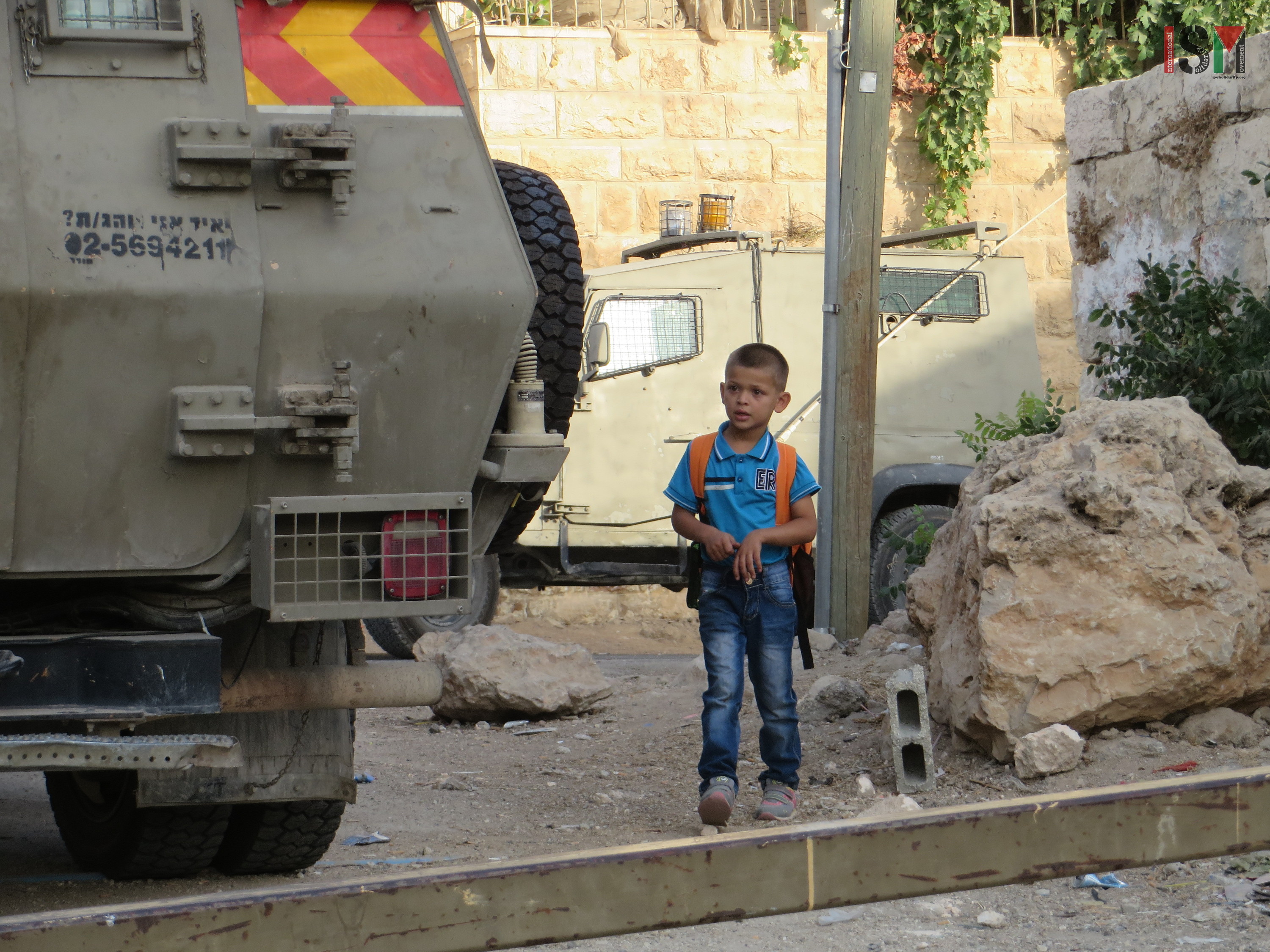
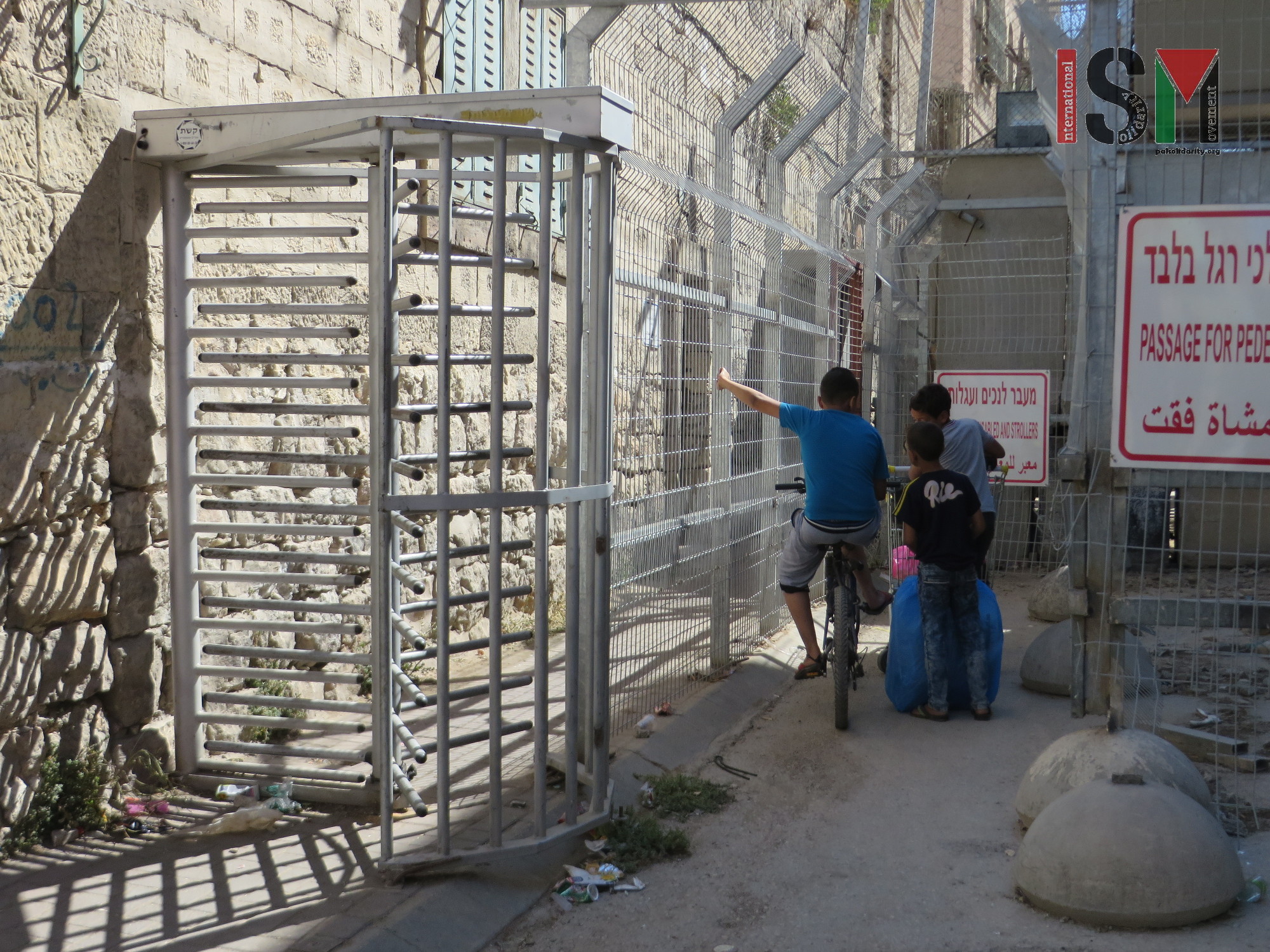
Even the way to school can be a dangerous and perilous journey for children in al-Khalil (Hebron). Having to pass through sometimes multiple checkpoints to get to school, children as young as 4 years old have to pass by heavily armed Israeli soldiers. As if the ubiquitous military presence weren’t scary enough, children are subjected to bag-searches, frisking, detainment and arrests. With Israeli forces using tear gas on children on their way to school and back home after a long school-day, children also have to duck away from tear-gas grenades shot towards them and navigate past clouds of tear-gas lingering on in the alleys.
Arresting children under the age of 11 is illegal even under Israeli law, as it is considered to be too traumatizing and detrimental to a child’s well-being, regardless of the accusations brought forward against a child. However, Palestinian children are detained, frisked, body-searched and arrested by Israeli forces on an every-day basis. As this illegal practice does not result in any consequences for the soldiers or policemen at all, Palestinian children are constantly at risk of maltreatment, abuse and denial of their most basic human rights.
David Hirsh vs. Jeremy Corbyn
David Hirsh (left) and Jeremy Corbyn (right)
By Gilad Atzmon | September 19, 2015
In an open letter published in the Jewish Chronicle, notorious hard core Zionist David Hirsh advises the opposition leader what to do if he seeks ‘the trust of Jewish voters.’ As usual, Hirsh has produced an obscure document that reveals little other than the delusional level of Judeo-centrism symptomatic of Hirsh and his ilk.
Hirsh lists Corbyn’s ‘crimes:’ “You worked for Press TV, the Iranian regime’s propaganda channel and you recommend Russia Today, Putin’s version. You appear in cosy pictures with Hugo Chavez, with Hamas, with Gerry Adams (days after the Brighton bombing) and with Hezbollah. You said that Nato is the aggressor in Ukraine and that Daesh is no worse than the USA. You were the national chair of Stop the War even when it appeared to endorse the killing of British soldiers. You celebrated the anniversary of the Iranian revolution.”
Yet, despite this roster, Corbyn won the Labour leadership in a landslide victory that left the Blairites and the usual Sabbos Goyim far behind, isolated and humiliated. How did this happen? Simple, for the vast majority of Labour members, Corbyn’s ‘crimes’ were not a problem, quite the opposite. Labour party members made Corbyn their leader because they agree with the rationale behind his arguments and affiliations. They chose Corbyn as their leader because they are not happy with the Jewish Lobby hijacking their country’s politics.
Hirsh cites Fascism as a prime concern; but you would expect a Jewish academic to know what Fascism was and is. “You don’t have to be for starting a war with Daesh and Assad; but you do have to make it clear that in principle you side with those struggling against fascism and for democracy.” To this Jewish academic both Asad and Daesh are ‘Fascists.’ I guess that within the solipsistic kosher universe, Fascism is basically everything that Jews hate. But the true definition of Fascism is slightly more nuanced. Fascism is a pretty clear worldview. It is secular, nationalist, socialist and led by a strong government that is often authoritarian. Daesh, or any other Islamic system of government, can never be Fascist by definition.
The fact that Hirsh doesn’t understand Fascism is a little surprising, but let us see what anti Semitism means to the Jewish academic. “There has always been a temptation to imagine Jews as powerful, selling the oppressed to the exploiters for silver. The image of Jews as enablers of injustice, twisters of words and doers of evil runs deep.”
I don’t see how Corbyn is involved with any of the above, and, from an intellectual perspective, I can’t understand why is it more ‘conspiratorial’ to say that Jews are ‘too powerful’ than to claim that Jews are not powerful at all. The question of whether Jews are powerful can easily be measured statistically and demographically. However, if Jewish power is defined as the power to prevent us from looking into Jewish power then the ‘anti Semitism slur’ is the means used to effectuate such power.
“Antisemitism” Hirsh continues, “mobilises around vile myth instead of around rational critique.” I am puzzled again, is it really ‘irrational’ to examine or criticize the politics and culture of the most powerful people in our society? Was Max Weber’s search into the role of Protestants in capitalism irrational? Would examination of the cultural and ideological roots of the British aristocracy be irrational? Zionism was a promise to make Jews like all other people. At a minimum, Zionist Jews should insist that Jewish culture and politics be subject to the same criticism and scrutiny as other cultures.
Hirsh wants Corbyn to show that he understands “the distinction between criticism of Israel and antisemitism.” But this is a false distinction. The Jewish Chronicle that published Hirsh’s letter and rallied against Corbyn for two months claimed to speak in the name of the “majority of British Jews.” But the Jewish Chronicle is not exactly an Israeli paper, it is actually a Jewish paper. The BOD that also claims to represent British Jewry and was highly critical of Corbyn is not an Israeli body either, it is a British Jewish institution. Hirsh’s false distinction ignores the fact that Israel actually defines itself as the Jewish State and it seems that the vast majority of Jewish institutions support Israel and its existence as the Jews only State. The distinction between Jews and their state is far from obvious. In fact, the only person to offer a useful tool to address the topic by making categorical distinctions among Jews, Judaism and Jewishness is yours truly (The Wandering Who?, Zero Books).
Hirsh’s missive seems to express the wish that Corbyn becomes a Zionist Jew like Hirsh: “you say you hate antisemitism. So support those who fight for peace, not Hamas and Hezbollah who fight for victory over the Jews rather than peace with Israel.”
Corbyn won the Labour leadership in spite of a vile Jewish campaign against him run by the Jewish Chronicle and other Jewish outlets. Corbyn won the Labour leadership in part because he sees friends in Hamas and Hezbollah.
Seemingly, Hirsh wants to reinstate to role of the Jews in the party. “At the moment, lots of Jews feel locked out of the party; both the Labour Party and also the carnival of joy and optimism. Your new Labour Party does not feel like a safe place for Jews.”
I suppose that Hirsh may be correct in his observation. But Corbyn has nothing to do with it. The Jewish sense of rejection is clearly self-inflicted and a direct outcome of the usual pre-traumatic stress syndrome (Pre-TSD). British Jewish community leaders may want to look in the mirror and admit to themselves that once again they have managed to corner themselves.
Hirsh writes to Corbyn “you can bring lots of us back,” but he knows that this is a lie. Corbyn cannot bring anyone back. The Jewish hate fest against Corbyn and Labour is not going to stop or fade. However, Corbyn’s victory does indicate a sharp decline of Jewish power. Jewish history teaches us that when Jewish power declines, it happens very fast and the consequences are often tragic. Let us hope that this time things will be different, but for that to happen Jews must learn to self reflect. Instead of telling Corbyn what to do in order to appease the Jews, Hirsh and Jewish community leaders ought to ask themselves why the opposition to Jews is growing. If Jewish community leaders fail to find the answers, I would be happy to make my way to Golders Green and give them a brief lecture in exchange for a bag of shekels.
Nearly 2,000 Palestinian children killed since 2000: Rights group
Press TV – September 17, 2015
An independent non-governmental organization (NGO) says nearly 2,000 Palestinian children have lost their lives at the hands of Israeli military forces and illegal settlers over the past 15 years.
 Defense for Children International-Palestine (DCIP), in a report released on Thursday, criticized the Israeli regime’s policy of land expropriation and consistent development of illegal settlements in the occupied East al-Quds (Jerusalem) and West Bank, warning that such practices are placing Palestinian children and their families against “expanding and often violent Israeli settler communities.”
The Geneva-based NGO further noted that Israel’s ongoing settlement expansion activities are increasingly creating a “hyper-militarized environment” for Palestinian children, where they are highly exposed to disproportionate violence from both Israeli forces and settlers.
The DCIP said Israeli soldiers killed 12 Palestinian children in East al-Quds and West Bank in 2014, and the majority of the fatalities were caused by ammunition.
It highlighted that there is “no evidence that any of the children killed in the West Bank posed a direct threat to Israeli troops or settlers.”
The rights group also revealed that 553 of the Palestinian children killed since 2000 died as a direct result of the Israeli military’s onslaught against the impoverished Gaza Strip in summer 2014, noting that around 68 percent of the victims were under the age of 12.
Israel started its military campaign against the impoverished Gaza Strip in early July 2014. The offensive ended on August 26, 2014. Nearly 2,200 Palestinians, including 577 children, lost their lives in the Israeli war. Over 11,100 others – including 3,374 children, 2,088 women and 410 elderly people – also sustained injuries.
More than half a million Israelis live in over 120 illegal settlements built since Israel’s occupation of the Palestinian territories in 1967.
Palestinians are seeking to create an independent state on the territories of the West Bank, East al-Quds, and the besieged Gaza Strip and are demanding that Israel withdraw from the occupied Palestinian territories.
How did Rawabi get its water?
By Jan Selby | MEMO | September 17, 2015
In February this year, the new Palestinian town of Rawabi at last managed to secure a water supply, after several years of acrimonious negotiations with the Israeli and Palestinian authorities. With the greatest obstacle to populating Rawabi overcome, the first 200 families of this planned “shining city on a hill” have now finally started moving in.
Rawabi’s water woes have received extensive coverage in the Israeli, Palestinian and international media, not least owing to a campaign instigated by the town’s owners, the Bayti Real Estate Investment Company. But why did Rawabi encounter such problems? And how did they eventually get resolved? For all the media coverage, the reasons are not well known.
When I meet Amir Dajani, Deputy Manager Director of Bayti in his Rawabi office, he reserves most of his anger for the Palestinian Authority. “No one did anything to support Rawabi,” he says of the PA. He recognises, of course, that Israel’s occupation poses huge challenges to a billion-dollar investment project, but about these he is pragmatic. The contrast between his visceral anger at the PA and his cool realism about the occupation is striking.
For all that, it is Israeli demands and an Israeli-drafted document which were the ultimate reasons for the hold-up. Under Article 40 of the 1995 Oslo II Agreement – which Palestinian negotiators were simply handed and accepted when they should have known better – all new water facilities in the West Bank require prior approval from a Joint Water Committee, meaning that Israel has complete veto rights over Palestinian water developments in the occupied West Bank.
Worse still, while Article 40 did not directly mention water projects for Israeli settlements, it did not preclude them from being brought to the Committee either. Israel exploited this ambiguity by making its approval of Palestinian water projects conditional on Palestinian approval of settlement water infrastructures. For fifteen years, the PA’s pragmatic policy response – pursued with the full knowledge of Presidents Abbas and Arafat – was to consent, however unhappily, to this blackmail and approve every single water facility proposed by Israel for its settlements.
This changed only in 2010, when the Palestinian Water Authority and later the PLO Executive Committee decided that they would no longer approve settlement water infrastructures. The result has been five years of deadlock within the Committee; the PA refuses to approve settlement water projects, and Israel in turn refuses to approve new wells and pipelines for Palestinian communities.
Until February, this included Rawabi. But then, following a media campaign plus a series of high-profile interventions – including from Israeli President Rivlin – and a very public disagreement between the Coordinator of Government Activities in the Territories (COGAT) head, Major-General Yoav Mordechai and Infrastructure Minister Silvan Shalom, the issue was finally decided by Benjamin Netanyahu. Rawabi became an exception, the site of the only new West Bank Palestinian water infrastructure to have been formally approved by Israel since August 2010.
Contrary to reports, however, this was neither a “goodwill gesture” nor a function of a new era of Israeli “water generosity”; simultaneous to approving Rawabi’s connection, Mordechai and Netanyahu also unilaterally approved a handful of settlement water projects (one source has told me “four or five”, another says “six or seven”). These projects included, for instance, a new water supply line for Tekoa in the Gush Etzion settlement bloc, supposedly needed because of declining groundwater levels in the Herodian area from which Tekoa is currently supplied.
Rather than an act of generosity, approval for Rawabi’s water was an internal Israeli quid pro quo. The Israeli government bowed to domestic and international pressure to provide the new Palestinian town with water, but could only square this with itself by simultaneously accommodating – nay, supporting – the country’s illegal settlements, by providing them with even more.
When I discuss this with Baruch Nagar of Israel’s Water Authority, he offers two justifications: that these settlement projects were “emergencies”; and that the Palestinian Water Authority, by refusing to approve settlement facilities, is acting unreasonably and is disrespecting Article 40. “We can’t understand why they stopped,” he says, as if the PA was just behaving irrationally. “We respect the water agreement,” he claims, “the Palestinians do not.”
This, though, is specious. Israel’s unilateral approval of settlement water facilities is a clear violation of Article 40, and invoking the false label of “emergency” does not alter this. There are scores of Palestinian communities across the West Bank which have no water in their pipes for days, weeks, even months on end each summer, and plenty of others which are not connected at all or whose small water collection systems are routinely demolished by the Israel Defence Forces. If “emergency” is the standard, then the PA would have every right – but not of course the power – to implement water projects unilaterally across the West Bank.
Moreover, no amount of deadlock within the Water Committee gives Israel the right to decide which new water facilities should be allowed to go ahead, and which not. However, this typifies Israel’s approach to the vestiges of the Oslo agreements, which can be summed up as bilateral “cooperation” when possible (i.e. when the Palestinians are compliant), unilateral violations whenever deemed necessary.
At least, though, Rawabi got its water supply, at least for now. For the other far-from-minor detail about this case is that Rawabi’s new water connection is only temporary; it will only supply 300 cubic metres of water per day, sufficient for the town’s first 5,000 residents and the next eighteen months. Thereafter, Rawabi will need another source, which is still being negotiated with Israel and the PA. Expect another raft of headlines about Rawabi’s water problems in a year or so.
Jan Selby is Professor of International Relations at the University of Sussex, UK
Featured Video

“Historic Russia”: The Land Putin Will Not Give Back
or go to
Aletho News Archives – Video-Images
From the Archive
How Ukraine Tortured and Slaughtered Donbass
By Kit Klarenberg | Al Mayadeen | July 11, 2024
Almost immediately after the proxy war erupted, ISIS-tier footage of the torture and murder of Russians in Ukrainian custody emerged.
On July 6th, the New York Times published an astonishing investigation: In Ukraine, Killings of Surrendering Russians Divide an American-Led Unit. The article documents in grim detail how Chosen Company, an international volunteer battalion for Kiev, routinely executes Russian prisoners of war. It is the very first mainstream admission that this practice – a brazen breach of the Geneva Conventions, and a grave war crime – is widespread among Ukraine’s fighters, both foreign and homegrown. … continue
Blog Roll
 Aletho News
- Record Oil, Empty Tanks: The UAE’s Miracle Recovery
- Burnham tackles Britain’s poverty with aggression in Yemen
- Peace in Ukraine: the easy way – or the hard way
- Trump & the Rrrrussians
- US taxpayer money laundered back through Ukraine – Musk
- Before COVID, an NIH lab chief proposed making a SARS-like bat virus more infectious
- Gates, Bourla on Trial in Netherlands Accused of ‘Great Reset’ Scheme at Vaccine Injury Hearing
- BRITAIN’S WARNING: PREPARE FOR WAR
- “Historic Russia”: The Land Putin Will Not Give Back
- How the Cambridge Analytica scandal still haunts Mark Zuckerberg
- If Americans Knew
- An error has occurred; the feed is probably down. Try again later.
- No Tricks Zone
- Two New Studies Find Thwaites Glacier Melt Cannot Be Driven By Human Activity Or A Warming Ocean
- E-Cars Reduce CO2 Emissions By Only 41% Compared To Internal Combustion Engine Vehicles
- Predictions Made By Renowned Climate Professor Over Past Decades Have Been Proven To Be Poor
- New Study Suggests Large Regions Of The Pacific Ocean Have Been Cooling For The Last 80 Years
- Germany’s Green Energy Debacle: High Energy Costs Force Kahla Porzellan to Close After 182 Years!
- New Study: 50 Years Of The Most Aggressive ‘Net Zero’ Policies Can Only Affect The Global Climate By 0.03°C
- US September “Heat” Was No Record…Many Records Set Decades Ago
- Latest European Green Energy Debacle; Portugal’s Largest Flagship Solar Park Insolvent!
- Green Energy Debacle: German Expert Professor Fritz Vahrenholt Warns Of Severe Economic And Social Consequences
- Two More Paleo Reconstructions Affirm Meters-Higher Sea Levels Across Ireland, Brazil 7000-6000 Years Ago

