Male and killed in Gaza – you’re a combatant
By Jonathon Cook | The Blog From Nazareth | June 16, 2015
Experience should have proved that one has to be credulous in the extreme – or brainwashed by Zionism – to take seriously “rebuttals” by the Israeli army of evidence of its abuses and war crimes. But for any who still harbour suspicions that claims by the Israeli army aren’t simply self-serving deceptions, take a look at its latest report into last year’s attack on Gaza.
The number of Palestinian civilians killed during Operation Protective Edge, says the Israeli army, was 761 – or 36 per cent of the total of 2,125 fatalities it registered. The UN has recorded 95 more Palestinian deaths and has twice as many civilians killed by Israel: 1,483, or 67 per cent of the total. Both can’t be right.
Let’s break down the Israeli numbers. According to the army, of those killed, 369 were children under the age of 15 (Israel’s redefinition of childhood for Palestinians) and 284 were women. That’s a total of 653.
That means of the 1,364 boys and men aged between 15 and 100 who were killed according to Israel’s estimates, only 108 are accorded the status of “civilian”. In other words, only 8 per cent of all males over the age of 15 who were killed in Israeli attacks were not suspected by Israel of being actively engaged in combat at the time of their death.
Comfortingly for Israelis, that means that, if you were Palestinian and male and a missile or bomb hit you, or a targeted building collapsed on you, you were almost certainly a combatant.
And if you believe that, I’ve got a bridge to sell you.
Israel’s Race to Economic (and Moral) Bankruptcy
By Jonathan Cook | Dissident Voice | June 16, 2015
Two recent reports suggest that Israel could face catastrophic consequences if it fails to end the mistreatment of Palestinians under its rule, whether in the occupied territories or in Israel itself.
The Rand Corporation’s research shows that Israel could lose $250 billion over the next decade if it fails to make peace with the Palestinians and violence escalates. Ending the occupation, on the other hand, could bring a dividend of more than $120 billion to the nation’s coffers.
Meanwhile, the Israeli finance ministry predicts an even more dismal future unless Israel reinvents itself. It is likely to be bankrupt within a few decades, the finance ministry report says, because of the rapid growth of two groups who are not productive.
By 2059, half the population will be either ultra-Orthodox Jews, who prefer prayer to work, or members of Israel’s Palestinian minority, most of whom are failed by their separate education system and then excluded from much of the economy.
Both reports should be generating a tidal wave of concern in Israel but have caused barely a ripple. The status quo – of occupation and endemic racism – still seems preferable to most Israelis.
The explanation requires a much deeper analysis than either the Rand Corporation or Israel’s finance ministry appears capable of.
The finance ministry report points out that with a growing population not properly prepared for a modern, global economy, the tax burden is falling increasingly heavily on a shrinking middle class.
The fear is that this will rapidly create a vicious cycle. Wealthier Israelis tend to have second passports. Overwhelmed by the need to make up the revenue shortfall, they will leave, plunging Israel into irreversible debt.
Despite this doomsday scenario, Israel seems far from ready to undertake the urgent restructuring needed to salvage its economy. Zionism, Israel’s official ideology, is predicated on core principles of ethnic separation, Judaisation of territory and Hebrew labour. It has always depended on the marginalisation at best, exclusion at worst, of non-Jews.
Any effort to dismantle the scaffolding of a Jewish state would create a political crisis. Reforms may happen, but they are likely to take place too slowly and incrementally to make much difference.
The Rand report also raises the alarm. It notes that both peoples would benefit from peace, though the incentive is stronger for Palestinians. Integration into the Middle East would see average wages rise by only 5 per cent for Israelis, compared to 36 per cent for Palestinians.
But, while its economists may have found it easy to quantify the benefits of ending the occupation, it is much harder to assess the costs in shekels and dollars.
Over the past six decades, an economic elite has emerged in Israel whose prestige, power and wealth depends on the occupation. Career military officers earn large salaries and retire in their early forties on generous pensions. Nowadays many of these officers live in the settlements.
The army top brass are the ultimate pressure group and will not release their grip on the occupied territories without a fight, one they are well placed to win.
Backing them will be those in the hi-tech sector who have become the engine of the Israeli economy. Many are former soldiers who realised the occupied territories were the ideal laboratory for developing and testing military hardware and software.
Israel’s excellence in weaponry, surveillance systems, containment strategies, biometric data collection, crowd control, and psychological warfare are all marketable. Israeli know-how has become indispensable to the global appetite for “homeland security”.
That expertise was on show this month at a Tel Aviv armaments expo that attracted thousands of security officials from around the world, drawn by the selling point that the systems on offer were “combat proven”.
To end the occupation would be to sacrifice all this and revert to the status of a tiny anonymous state with no resources or notable exports.
And finally the settlers are among the most ideologically committed and entitled sector of Israel’s population. Were they moved out, they would bring their group cohesion and profound resentments back into Israel.
No Israeli leader wants to unleash a civil war that could rip apart the already-fragile sense of unity among the Jewish population.
The reality is that most Israelis’ perception of their national interests, both as a Jewish state and as military superpower, are intimately tied to a permanent occupation and the exclusion of Israel’s Palestinian minority from true citizenship.
If there is a conclusion to be drawn from these two reports it may be a pessimistic one.
Israel’s internal economy is likely to grow gradually weaker, as the ultra-Orthodox and Palestinian labour forces are under-utilised. As a result, the focus of Israel’s economic interests and activity is likely to shift even more towards the occupied territories.
Far from Israelis rethinking their oppressive policies towards the Palestinians, the ideological blinkers imposed by Zionism could push them to pursue the benefits of the occupation even more aggressively.
If the watching world really wants peace, economic wishful thinking will not suffice. It is past the time simply for carrots. Sticks are needed too.
The Deep Rabbit Hole of Israel Spying on America
By Naji Dahi | ANTIMEDIA | June 15, 2015
In 2014, it was revealed that Israel was spying on the secret negotiations between Iran and the five permanent UN Security Council members (China, France, Russia, the U.K., and the United States plus Germany—together known as P5+1) regarding Iran’s nuclear program. More recently, it was revealed that Swiss and Austrian authorities are investigating the extent of said spying. Israel has denied any involvement in the matter, but a spying virus linked to the Israelis was found on the computers of three hotels where the negotiations are hosted.
It may come as a shock to some Americans, but Israel has a long history of spying on the U.S. government, its military, and private sector corporations. While it is common for allies to spy on each other, Israel’s spying is unprecedented in its depth and intensity. According to Newsweek,
Israel’s espionage activities in America are unrivaled and unseemly, counterspies have told members of the House Judiciary and Foreign Affairs committees, going far beyond activities by other close allies, such as Germany, France, the U.K. and Japan. A congressional staffer familiar with a briefing last January called the testimony ‘very sobering… alarming… even terrifying.’
Another staffer called it ‘damaging.’
The spying is even more shocking given the extent of America’s generosity towards Israel. By all accounts, Israel has received $233.7 billion in direct military aid (among many other benefits) from the U.S. over the last six decades. According to If Americans Knew, an independent research institute, since the early 1970s,
The US has given more aid to Israel than it has to all the countries of sub-Saharan Africa, Latin America, and the Caribbean combined—which have a total population of over a billion people… In all, direct US disbursements to Israel are higher than to any other country, even though Israelis only make up 0.1% of the world’s population. On average, Israelis receive 7,000 times more US foreign aid per capita than other people throughout the world, despite the fact that Israel is one of the world’s more affluent nations.
So how far back does Israeli spying go? According to one source, Israeli surveillance of the United States dates back to 1954 when “the U.S. Ambassador in Tel Aviv discovered in his office a hidden microphone ‘planted by the Israelis.’”
In 1965, it was revealed that 100 kilograms of weapons-grade uranium was missing from a U.S. research facility. Israel was suspected of stealing the material for its nuclear weapons program. The Bulletin wrote that “The evidence available for our 2010 Bulletin article persuaded us that Israel did steal uranium from the Apollo, Pennsylvania, plant of the Nuclear Materials and Equipment Corporation (NUMEC).”
Closely related to the smuggling of uranium was the most infamous case of Israeli spying—that of U.S. naval intelligence officer, Jonathan Pollard, and his wife. On November 21, 1985, Jonathan Pollard was arrested for espionage while trying to seek asylum at the Israeli Embassy in Washington D.C. Thus began one of the most damaging thefts of American national security documents. According to one source, Pollard stole “an estimated 800,000 code-word protected documents from inside the CIA, the Defense Intelligence Agency, and numerous other U.S. agencies.” Pollard and his wife pleaded guilty. She was sentenced to two five-year prison terms but was released early because of her illness. She has since left for Israel and campaigns on behalf of an early release of her husband. Jonathan Pollard was sentenced to life in prison but is eligible for parole in 2015. Israel granted Pollard citizenship and has pressured presidents Bush, Clinton, and Obama for his early release. The damage to U.S. national security was such that whenever the subject was brought up, a number of high-ranking national security officials threatened to resign. Pollard has yet to be released.
Another spy that also helped Israel in its quest for nuclear weapons was the 84-year-old Ben-Ami Kadish. After two decades of providing an unnamed Israeli official with sensitive information about the U.S.’ nuclear secrets and weapons programs, Kadish was arrested. He plead guilty and paid a $50,000 fine, but did not serve time due to old age and infirmity. One wonders why the FBI took so long to find and arrest the spy. Curiously, both Pollard and Kadish allegedly had the same Israeli handler. Even the sentencing judge wondered “[why] it took the government 23 years to charge Mr. Kadish.”
Finally, there is the case of Lawrence Franklin, who was arrested in 2005 and charged under the Espionage Act. In January 2006, he was convicted and sent to jail for 12 years for passing secret Department of Defense documents to two high-ranking AIPAC (American Israel Public Affairs Committee) officials. The two AIPAC officials were also indicted in 2005 as co-conspirators, but the charges against them were dropped four years later after a court required a “higher level of proof of intent to spy. The court said the prosecution would have to prove not only that the accused pair had passed classified information but that they intended to harm the US in doing so.” One wonders why the court all of a sudden required a higher burden of proof. Justin Raimondo suggests that the dropping of charges is indicative of the power of AIPAC.
As can be seen from the few cases highlighted here (there are more), there is a long history of Israeli spying on the U.S. What is new about the spying on the nuclear negotiations is the involvement of other actors (Britain, France, Russia, China, and Germany). Unlike the United States, which has tolerated and condoned Israeli spying (Israel apologized and promised not to do it again after the Pollard case), these other actors may not take kindly to Israeli spying and might inflict punitive diplomatic and/or criminal sanctions against Israel. That remains to be seen, pending the results of the Austrian and Swiss investigation. This story is far from over given Israel’s intense opposition to the P5+1 nuclear negotiations with Iran.
University of Illinois Slammed with Censure Over Salaita Firing
By Lauren McCauley | Common Dreams | June 14, 2015
In a decision that may have long-lasting repercussions for the university’s reputation, a leading university group on Saturday voted to censure the University of Illinois at Urbana-Champaign (UIUC) for firing Professor Steven Salaita after he made comments critical of Israel’s attack on Gaza last summer.
The university rescinded Salaita’s tenured faculty appointment at school’s the American Indian studies program after he issued a series of Tweets condemning those who defended Israel’s military actions against Palestinians in Gaza.
“If it’s ‘antisemitic’ to deplore colonization, land theft, and child murder, then what choice does any person of conscience have?” was among the comments made last July.
The school board’s dismissal of Salaita received widespread condemnation by groups accusing the university of having a pro-Israel bias.
After its own internal investigation, at the annual meeting on Saturday, the American Association of University Professors elected to censure the institution on the grounds that the dismissal “violated Professor Salaita’s academic freedom and cast a pall of uncertainty over the degree to which academic freedom is understood and respected at UIUC.”
Such a censure “informs the academic community that the administration of an institution has not adhered to generally recognized principles of academic freedom and tenure,” the group explains.
The AAUP currently has 56 institutions on its censure list.
In January, Salaita filed a lawsuit against the school charging that it violated his First Amendment rights. According to the Associated Press,
“The censure vote came one day after a judge ordered the university to turn over thousands of pages of documents sought by Salaita.”
Following the decision, Salaita’s attorneys issued a statement calling the censure “a serious blemish on the university’s record.”
The statement continued:
The association censured UIUC not only for its summary dismissal of Professor Salaita in violation of academic freedom, due process, and shared governance, but also for its continued refusal to rectify its actions. The university’s stubbornness continues in spite of academic boycotts, department votes of no confidence in the UIUC administration, student walk-outs, tens of thousands of petition signatures, a federal lawsuit, and the AAUP’s reprimand, suggesting that the UIUC administration is more beholden to donors than it is to due process, academic freedom, and the First Amendment.”
As war report looms, UN envoy blocked from Gaza
Press TV – June 15, 2015
As the prospect of a UN report on Israel’s 2014 bloodletting in Gaza draws nearer, the world body’s point man on human rights situation in the occupied territories is kept outside the Palestinian territory by Israel.
Tel Aviv once again prevented Makarim Wibisono from visiting the coastal enclave last week, with Israeli foreign ministry spokesman Emmanuel Nahshon saying outright on Monday, “We didn’t allow this visit.”
“Israel cooperates with all the international commissions and all (UN) rapporteurs, except when the mandate handed to them is anti-Israeli and Israel has no chance to make itself heard,” the official said, despite the age-old and unflinching US-led support for the Israeli regime on the international arena, most visibly at the United Nations.
Wibisono reports to the UN Human Rights Council. The council has been investigating the war and whose relevant report is expected to be published in the coming days.
Israel had also barred Wibisono from entering last year for a similar visit.
Nearly 2,200 Palestinians lost their lives and some 11,000 were injured in the July-August 2014 assaults. Gaza Health officials say the victims included 578 children and nearly 260 women with more than 3,100 children injured in the offensive.
The UN has said Israel was responsible for the deadly bombing of several UN institutions, including schools, in which displaced Palestinian civilians were sheltering.
In a report released Sunday, Israel defended its conduct in the war, calling it both “lawful” and “legitimate.”
The regime has been invariably justifying its incessant attacks on the impoverished sliver by alleging it has a duty to defend itself against the rockets fired from Gaza. The projectiles are seldom known to have caused injury or damage.
Israeli forces try to violently suppress protest in Jalazone
International Solidarity Movement | June 14, 2015
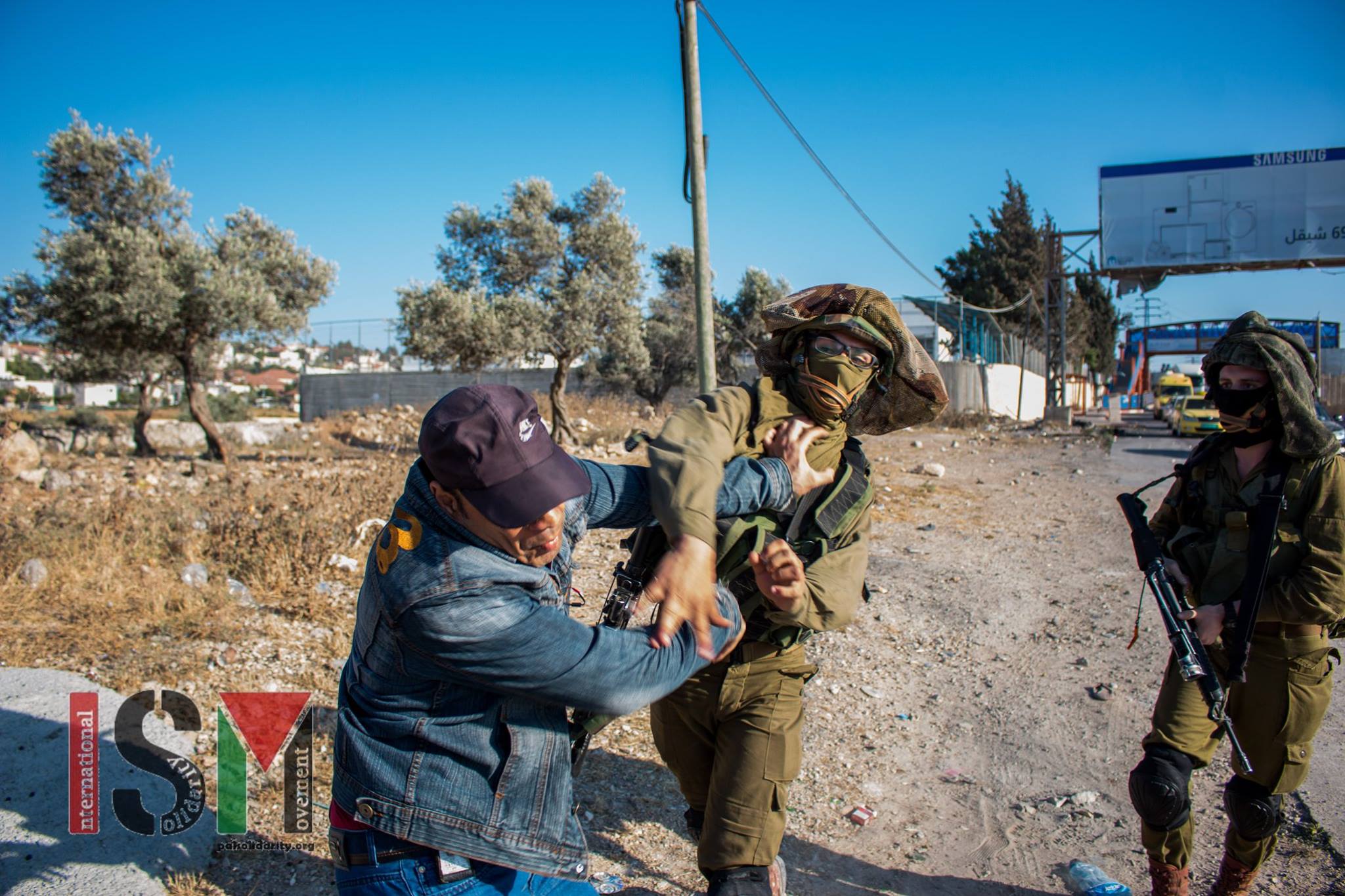
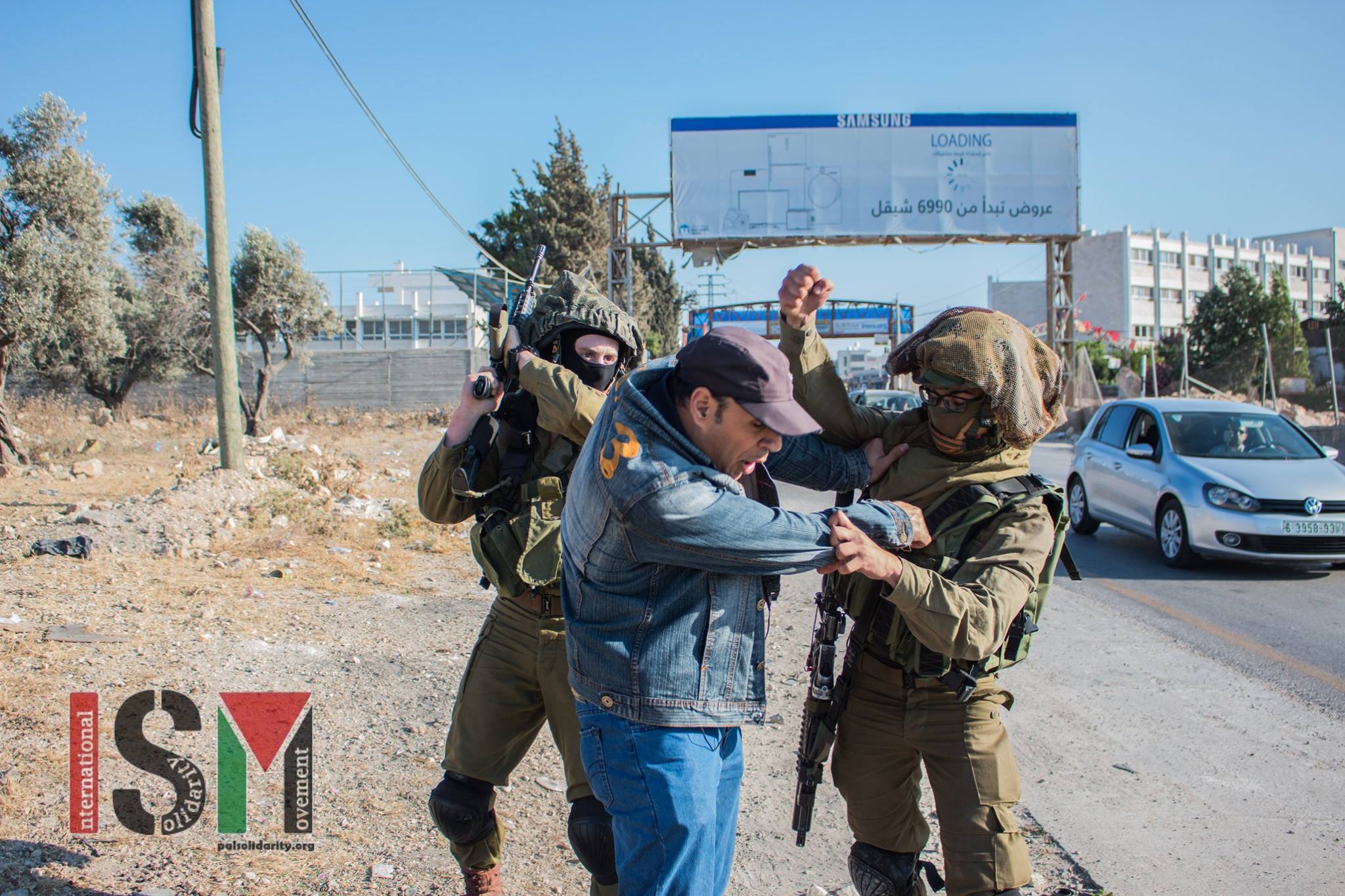
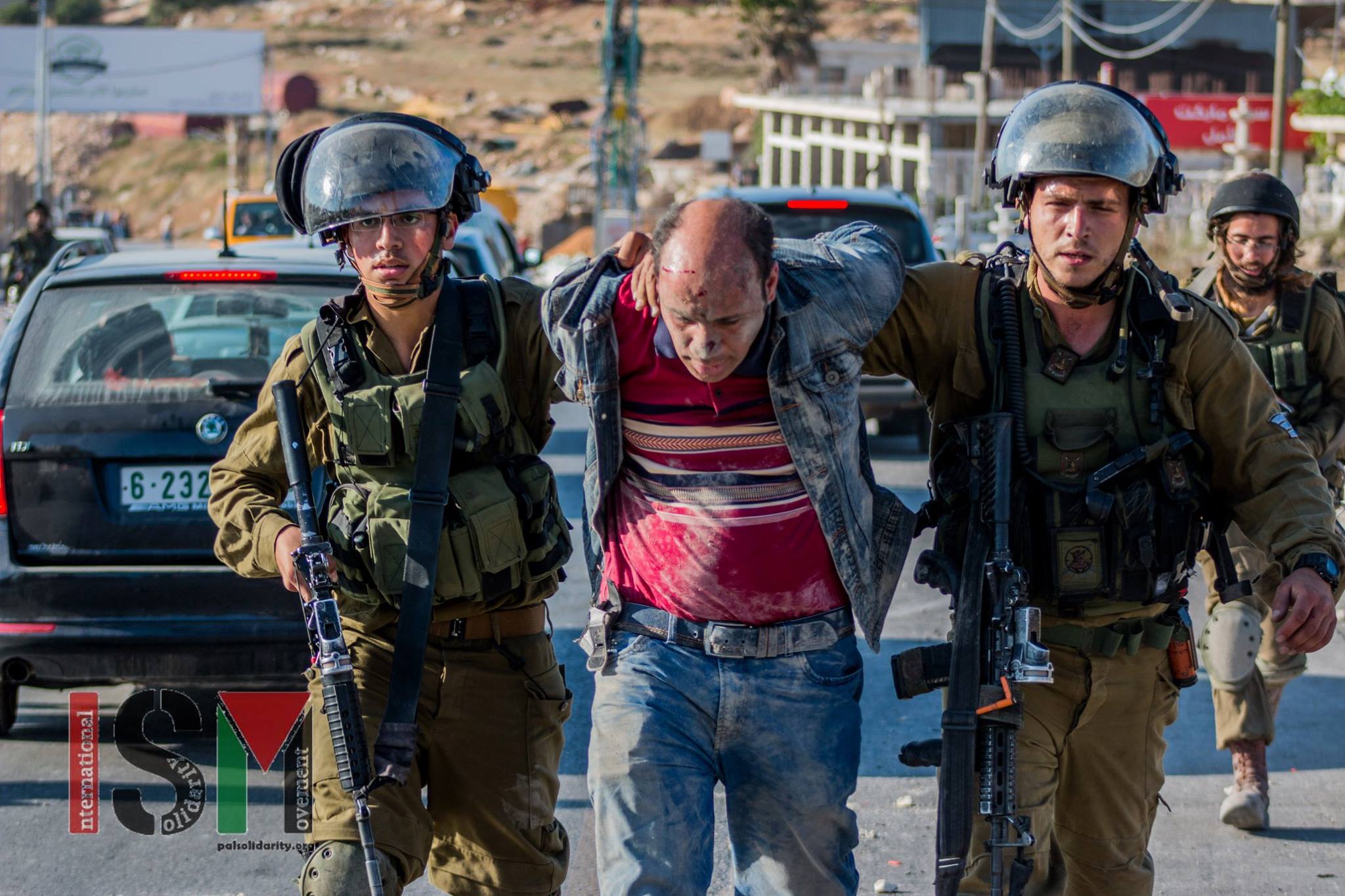
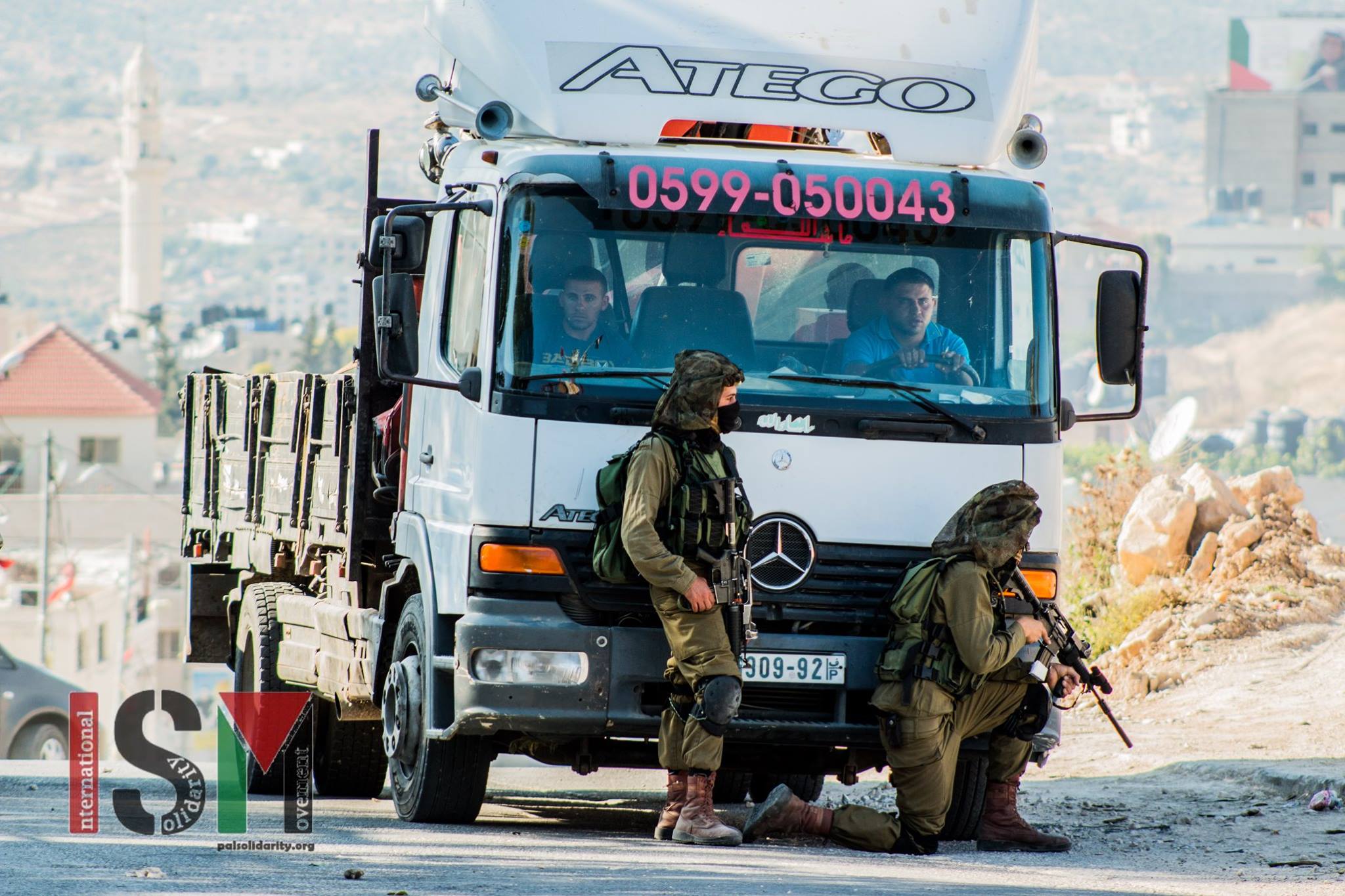
Jalazone, Occupied Palestine – On Friday, June 12, the youth of Jalazone were protesting against settlements, soldiers started shooting rubber bullets, tear gas, stun grenades and live ammunition.
The Israeli military were using the cars as shields by taking the keys and leaving the people inside. They detained more than 20 cars during the protest in different time periods.
Israeli forces attacked a man and hit him with their guns before they arrested him. He was bleeding from his head.
At least three people were shot with live ammunition during the demonstration.
Below is a video recorded by ISM of the violence from the Israeli soldiers in Jalazone:
Photos below








Attacks on fishermen continue in Gaza
By Valeria Cortés | International Solidarity Movement | June 13, 2015
Gaza, Occupied Palestine – During the last weeks, the Israeli military has been shooting at the fishermen of Gaza almost daily with rubber coated steel-bullets and live ammunition. They also kidnapped 15 fishermen. Three of the injured and seven of the kidnapped belong to the Baker family, who are also the family of the 4 boys who were murdered by the Israeli military while they were playing football on the beach during the last massacre in Gaza. Yesterday, in Deir el Balah, the army stole 37 fishing nets and today the shooting went on all along the Strip.
ISM met some of the recently released fishermen from Baker family.
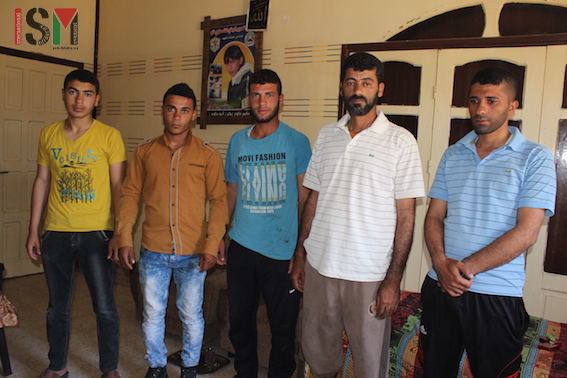
One of members of the family is Ziad Fahed Baker, 21 years old. Three weeks ago, he left the port on his small boat along with four other fishermen. As they were fishing at less than three miles away, the Israeli navy approached and ordered them to leave without taking the nets with them. They answered that they would leave but not without the nets. Ziad knew that abandoning the nets would leave his family without any income, so they ignored the soldiers and started collecting them. At this point the soldiers shot Ziad in the leg, and the 5 fishermen decided to flee to the port. Unfortunately the Israeli gunboat followed them and when they were just a mile and a half from the shore shot the engine of Ziad’s boat. With the boat stopped they ordered Ziad and the other four fishermen, two of whom were also injured, to swim towards their ship. Once in the gunboat they were blindfolded and handcuffed to a metal bar, “What are they afraid of? That we would leave flying?”

They were then taken to Ashdod, where Israeli forces subjected them to the usual routine of insults and humiliations before sending them back to Gaza.
They also explain how the Israeli military bombs the waters where they are working in order to scare away the fish and how the blockade prevents the entrance of all the tools needed for their activity, engines, fiber glass, hooks…
From the 1500 boats that laboured in the past, just 150 are still working today. This year the income of the fishing sector has decreased an 80% regarding the past year.
Ziad’s cousin, Mohamed Zied Baker, 30 years old, was also attacked last week while labouring in Sudania, north of Gaza. They ordered him to stop, shot him with rubber-coated steel bullets, kidnapped him and once in the Israeli boat they handcuffed him and stepped on his head with their boots.
Ziad, Mohamed, Fahed, Walid and Emad – this one, just 16 years old, also got shot with live ammunition and kidnapped – have similar stories to tell.
“They are now targeting the youngest fishermen, almost children”. “They want to scare us, but they can’t, we are Palestinians”.
Photos by Valeria Cortés
Activists stop Israeli-Palestinian conference in East Jerusalem
Ma’an – June 12, 2015
JERUSALEM – A group of activists on Friday stopped a conference in occupied East Jerusalem from going ahead that they accused of contributing to the “normalization” of the Israeli occupation.
The conference had been organized by the “Creativity for Peace” group and was set to take place in the Legacy Hotel.
However, the hotel reportedly cancelled the event after they were contacted by the activists.
The hotel management had apparently been unaware of the conference, believing instead that a tourism company had booked the hall.
Creativity for Peace is a non-profit organization that works with young Israeli and Palestinian women on “collaborative leadership and peacemaking,” according to the organization’s website.
Some activists allege that organizations aiming to facilitate dialogue and understanding between Jewish Israelis and Palestinians without addressing political realities “normalize” the Israeli occupation.
The Palestinian Campaign for the Academic and Cultural Boycott of Israel argues that partnership and dialogue groups often ignore the stark inequalities between Jewish Israelis and Palestinians living under occupation.
They claim that this approach normalizes the Israeli occupation by promoting co-existence at the expense of acknowledging the right of Palestinians to resist oppressive policies of the Israeli government.

5 injured, 2 critically as Israeli forces fire on Kafr Qaddum march

Ma’an – June 12, 2015
QALQILIYA – Five Palestinians were injured, two critically, when Israelis forces opened live fire on the Kafr Qaddum weekly march Friday.
A coordinator for the village’s popular resistance committee, Murad Shtewi, said that Muhammad Majid, 20, had been shot in the stomach and chest with live rounds and is in critical condition.
Ibrahim Mousa, 35, is also in critical condition after he was shot in the abdomen while in his house.
Shtewi also said that Muhammad Nidal, 20, and Mouiz Khader had been shot in the leg, and Ayman Farouq, 38, in the hand.
Dozens others suffered from excessive tear gas inhalation.
Israeli forces had closed down the village’s entrance since the early morning after they declared it a closed military zone. As a result, those injured had to be evacuated from the village in private cars using dirt roads.
An Israeli army spokeswoman contacted by Ma’an said she would look into it.
Israeli forces routinely suppress weekly marches by violent means.
In Kafr Qaddum, they also regularly declare the village a closed military zone in order to prevent the weekly march from taking place.
The march is carried out to protest the Israeli separation wall and Israeli settlement activity, both illegal under international law.
The internationally recognized Palestinian territories of which the West Bank and East Jerusalem form a part have been occupied by the Israeli military since 1967.
Featured Video

BRITAIN’S WARNING: PREPARE FOR WAR
or go to
Aletho News Archives – Video-Images
From the Archive
How Ukraine Tortured and Slaughtered Donbass
By Kit Klarenberg | Al Mayadeen | July 11, 2024
Almost immediately after the proxy war erupted, ISIS-tier footage of the torture and murder of Russians in Ukrainian custody emerged.
On July 6th, the New York Times published an astonishing investigation: In Ukraine, Killings of Surrendering Russians Divide an American-Led Unit. The article documents in grim detail how Chosen Company, an international volunteer battalion for Kiev, routinely executes Russian prisoners of war. It is the very first mainstream admission that this practice – a brazen breach of the Geneva Conventions, and a grave war crime – is widespread among Ukraine’s fighters, both foreign and homegrown. … continue
Blog Roll
 Aletho News
- Pentagon designates Chinese cultural centers national security threat
- Israel Demolishes Home Of Lebanese Journalist Whose Viral Film Exposed Pager Attack
- Record Oil, Empty Tanks: The UAE’s Miracle Recovery
- Burnham tackles Britain’s poverty with aggression in Yemen
- Peace in Ukraine: the easy way – or the hard way
- Trump & the Rrrrussians
- US taxpayer money laundered back through Ukraine – Musk
- Before COVID, an NIH lab chief proposed making a SARS-like bat virus more infectious
- Gates, Bourla on Trial in Netherlands Accused of ‘Great Reset’ Scheme at Vaccine Injury Hearing
- BRITAIN’S WARNING: PREPARE FOR WAR
- If Americans Knew
- An error has occurred; the feed is probably down. Try again later.
- No Tricks Zone
- Two New Studies Find Thwaites Glacier Melt Cannot Be Driven By Human Activity Or A Warming Ocean
- E-Cars Reduce CO2 Emissions By Only 41% Compared To Internal Combustion Engine Vehicles
- Predictions Made By Renowned Climate Professor Over Past Decades Have Been Proven To Be Poor
- New Study Suggests Large Regions Of The Pacific Ocean Have Been Cooling For The Last 80 Years
- Germany’s Green Energy Debacle: High Energy Costs Force Kahla Porzellan to Close After 182 Years!
- New Study: 50 Years Of The Most Aggressive ‘Net Zero’ Policies Can Only Affect The Global Climate By 0.03°C
- US September “Heat” Was No Record…Many Records Set Decades Ago
- Latest European Green Energy Debacle; Portugal’s Largest Flagship Solar Park Insolvent!
- Green Energy Debacle: German Expert Professor Fritz Vahrenholt Warns Of Severe Economic And Social Consequences
- Two More Paleo Reconstructions Affirm Meters-Higher Sea Levels Across Ireland, Brazil 7000-6000 Years Ago

