By making impossible demands, Netanyahu seeks to paint the Palestinians as intransigent and deflect international pressure
By Samira Shackle | MEMO | March 11, 2014
“Israel is the nation-state of the Jewish people, where the civil rights of all citizens, Jews and non-Jews alike, are guaranteed,” Israeli Prime Minister Benjamin Netanyahu said at a speech in Washington earlier this month. “The land of Israel is the place where the identity of the Jewish people was forged…We never forget that, but it’s time the Palestinians stopped denying history.”
He went on to make his demand in no uncertain terms: “Just as Israel is prepared to recognize a Palestinian state, the Palestinians must be prepared to recognize a Jewish state.”
It throws a new stumbling block into a peace process that was already struggling to overcome the long-term sticking points of security, borders, the status of Jerusalem, and the plight of refugees. Many observers have suggested that Netanyahu, by making a demand he knows to be impossible, is attempting to paint the Palestinians as intransigent and deflect growing international pressure to reach a peace agreement.
Recognising the right of Israel to exist is not the same as recognizing Israel’s right to be a Jewish state. Netanyahu’s demand is untenable for Palestinian leaders because of the political implications. Accepting Israel’s definition of itself as a Jewish state would be to indirectly forgo the right of return for at least five million Palestinian refugees. (In his speech, Netanyahu advised Abbas to tell “Palestinians to abandon their fantasy of flooding Israel with refugees”).
It would also tacitly accept that Israeli Arabs have less right to citizenship or less stake in the state. And, indeed, it would be to accept Israel’s argument that biblical history gives them the right to the land. This strikes at the very heart of the conflict: Palestinians maintain that the events of the Bible do not override the thousands of years that they inhabited the land. Palestinian leaders have compromised a lot, but it is unlikely that they will concede that their version of history is incorrect. “This is like telling the Palestinians they did not exist all these hundreds and thousands of years, that this historically has been a Jewish land,” said Hanan Ashrawi, a senior member of the Palestine Liberation Organisation (PLO).
Not everyone in the Israeli political establishment agrees with this piece of political manoeuvring by Netanyahu. Israeli president Shimon Peres has queried the wisdom of the stipulation, while Yair Lapid, Finance Minister and leader of the second-largest coalition party, has also challenged it.
Writing in Haaretz, the newspaper’s former editor, David Landau points out that many Jews in Israel and elsewhere do not agree with Netanyahu’s “imperious” version of Zionism, nor the decision to try to force Palestinians to agree with it. “Regarding the present Israeli-Palestinian impasse, many Israelis and Palestinians believe that Netanyahu’s broaching of the ‘Jewish state’ issue was intended deliberately to slow the negotiations or thwart an agreement,” he writes.
This recent push is not the first time that Netanyahu has made the demand that Palestine recognize Israel as a Jewish state. He made similar statements in Washington in 2011. Then, as now, US officials largely supported him.
Historically, though, this has not been a major issue in peace negotiations. The requirement was – in the words of UN resolution 242 – for Palestine to recognize “Israel’s right to live in peace within secure and recognized boundaries free from threats or acts of force”, which the PLO did in 1993. The idea that the Palestinian leadership should formally recognize Israel as a Jewish state was raised at the Annapolis Conference in 2007, and even George W Bush – a staunch defender of Israel – did not adopt it, referring to Israel in his speech as “a homeland for the Jewish people”.
Yet by 2011, Netanyahu was telling Congress: “It is time for President Abbas to stand before his people and say… ‘I will accept a Jewish state.’ Those six words will change history.” This is despite the fact that the issue was not raised during Israel’s peace negotiations with Egypt and Jordan, nor indeed at all during Netanyahu’s first term in office.
Writing in Foreign Policy magazine in 2011, Hussein Ibish pointed out that it is a strange demand, even apart from the political connotations: “The idea that a state – or in this case a potential state – should participate in defining the national character of another is highly unusual, if not unique, in international relations. The Palestinian position, stated many times by President Mahmoud Abbas, is that the PLO recognizes Israel, and that Israel is free to define itself however it chooses.”
Given this context, the suggestion of Landau (and many others) that Netanyahu is cynically playing for time and attempting to shift the emphasis of discussion – and deflect growing international pressure to reach a deal – seems highly plausible.

ISM volunteers attacked by Zionist tourists in Hebron
International Solidarity Movement | March 11, 2014
Two International Solidarity Movement activists walking on Shudaha Street area were brutally attacked by French Zionist tourists who were visiting to attend the weekly settler tour of the Palestinian part of Hebron.

Zionist perpetrator responsible for the attack.
At around 1:30 PM the activists were walking in the direction of Shuhada Street when the 6 young men rounded the corner, upon seeing the activists they spread across the road. Within seconds, the group attacked the ISM activists, chasing one back in the direction of the Ibrahim Mosque and continued to attack while soldiers leveled their weapons at the attacker.
The other activist was chased, tripped and kicked in the body and face by the Zionist assailant until he was chased away by the two soldiers. On gaining his feet, the activist was punched in the face by the man who had just chased his companion away. The activist ran and the army stopped his pursuer.
The incident was reported to the police, who found two of the attackers in Shuhada Street and took their details. They were not detained as it was the Sabbath when religious Jews are rarely arrested. The activists were taken to a local Police station to make a statement and overheard aggressive integration of a Palestinian prisoner.
We also received a report that an Italian tourist was attacked by 10 religious Zionists in the city on the same day of the attack. After his beating, was told that if he wants to come back he must wear a Kippah.
Witness: Allenby victim shot 3 times in chest
Ma’an – 11/03/2014
JERICHO – A man who was with Raed Zeiter, who was shot dead Monday by Israeli troops at the Allenby Bridge crossing with Jordan, says he suffered three gunshot wounds to the chest.
Mohammad Zayd told Ma’an that about 8 a.m. he, Zeiter and another woman were late to return to the bus after the first Israeli inspection point.
When they were returning, an Israeli soldier pushed Zeiter, they started scuffling and Zeiter was brought to the floor. Zeiter then stood up and shoved the soldier, who in turn fired a shot that barely missed Zeiter, Zayd said.
The soldier then proceeded to fire three shots that hit Zeiter in the chest, leaving him dead on the floor, Zayd added, explaining that he tried to resuscitate Zeiter to no avail.
Zayd added that medics arrived almost an hour later, and covered Zeiter’s body, while Israeli police closed the scene and unloaded passengers off the bus and ordered them to the ground in order to search them.
Israeli soldiers then recorded accounts from people on the bus, and asked them about Zeiter, he added.
Earlier, an Israeli army spokeswoman said “a Palestinian attempted to the seize the weapon of an Israeli soldier at the Allenby Bridge crossing with Jordan. Israeli soldiers opened fire and a hit was identified.”
Army commander Yaron Beit On, speaking in a conference call with reporters later in the day, said that as the man attempted to snatch an Israeli soldier’s gun, another soldier shot him in the leg.
The man then managed to grab a metal bar from one of the Israeli troops, Beit On said. When he tried to use it as a weapon, a soldier shot and killed him.
He said that the incident occurred at around 9:30 a.m., and that the man was carrying two suitcases with him.
Related articles


Palestinian killed after occupation forces open fire on his car
Al-Akhbar | March 11, 2014
A Palestinian died and a second was injured Tuesday after Israeli occupation forces fired on their car near Tulkarem in the northern West Bank, Palestinian security sources said.
The sources told AFP that the car then veered off the road, and it was not clear whether the gunfire or the subsequent crash led to the casualties.
There was no immediate comment from the Israeli army.
Abdullah Kamil, Tulkarem governor, identified the man who died as Fidaa Muhye Addin Majadlah, and his passenger as Ibrahim Adnan Shukri, both from the Tulkarem village of Attil, according to Palestinian news agency Ma’an.
The latter was reported to have suffered moderate to serious wounds, and is in Israeli custody. Occupation authorities are also holding Majadlah’s body, the Ma’an report added
The death comes one day after occupation forces shot dead two Palestinians in separate incidents in the West Bank.
In the first of Monday’s killings, a Jordanian-Palestinian judge was shot dead by Israeli troops at the Jordan border, with the Israelis claiming that he tried to snatch a weapon and “strangle” a soldier.
But Palestinian witnesses said the man was shot following an argument over a cigarette in an incident which prompted a furious response from the Palestinian Authority and Amman.
The man was identified as 38-year-old Raed Zeiter who worked as a judge in Amman. Jordan’s justice ministry said he worked at a magistrate’s court in the capital.
Several hours after Zeiter’s death, occupation forces shot dead a 20-year-old Palestinian, identified as Fadi Sayel Darwish, near the West Bank city of Ramallah. The army said he had been throwing stones at soldiers.
(AFP, Al-Akhbar)
Israeli airstrike kills 3 Palestinians in southern Gaza

Ismail Abu Judah, Shahir Abu Shanab, and Abd al-Shafi Muammar.
Ma’an – 11/03/2014
GAZA CITY – An Israeli airstrike killed three Palestinians in the southern Gaza Strip on Tuesday, an official said.
Gaza Ministry of Health spokesman Ashraf al-Qidra told Ma’an that three Palestinian resistance fighters were killed by the airstrike in southeast Khan Younis near the Sufa crossing.
Al-Qidra identified the victims as Ismail Abu Judah, 23, Shahir Abu Shanab, 24, and 33-year-old Abd al-Shafi Muammar.
The bodies were taken to the European Hospital in Khan Younis, al-Qidra said.
Al-Quds Brigades, the military wing of the Islamic Jihad movement, said in a statement that the victims were militants affiliated to the group.
“They were in confrontation with the occupation trying to stop the progress of Israeli military vehicles which were approaching the area,” the statement said.
The Israeli army said in a statement that “terrorists affiliated with the Palestinian Islamic Jihad in the southern Gaza Strip fired a mortar shell at IDF forces.”
“An IAF aircraft responded immediately in order to prevent further attacks on Israeli civilians and targeted the terrorist squad. Direct hits were confirmed, the army statement said.
Earlier on Tuesday morning, an Israeli drone fell in the area of the attack.
The airstrikes came just hours after Palestinian security sources said a man died after Israeli soldiers fired at him while he was driving near the West Bank city of Tulkarem.
The Israeli army also killed two Palestinians in the West Bank on Monday.
Israeli soldiers shot and killed 18-year-old Saji Darwish near Ramallah late Monday, after he allegedly threw stones at Israeli vehicles.
Earlier, Israeli forces shot and killed a Palestinian-Jordanian judge at the Allenby Bridge crossing with Jordan.
Israeli troops harass the residents of Qaddum, and poison a baby with CS gas while they’re at it
By Yossi Gurvitz | Yesh Din | March 9, 2014
The security forces have a problem with the village of Qaddum. We’re not quite sure why. Perhaps it’s the weekly demonstrations that its residents are holding. What is clear is that they have decided to teach the village a lesson. Recently, a mysterious officer, who according to testimonies of the residents calls himself Captain Sabri, walks around telling people he will come and teach them a lesson. Some of the residents suspect him of being an ISA (Israeli Security Agency, AKA Shin Bet) officer.
Whatever Sabri’s organizational loyalty may be, he keeps his word. The Friday demonstrations are dispersed with an iron fist, and beyond that the residents also report recurring attacks on the village, even on days when no demonstrations are held. These attacks include the throwing of stun grenades and CS gas canisters, CS gas being the more aggressive form of tear gas.
In one case which actually made the Israeli media – of course, under the utilitarian fear that one more person killed by the IDF will make the kettle boil and cook us a new intifada – an old man from Qaddum, Saeed Gasser Nassar Ali, aged 85, died after inhaling gas which seeped into his house following a demonstration. The doctor who treated Ali found it hard to give him the best treatment possible, since he too was suffocating from the gas. Let’s say that again: the man suffocated in his house, and died shortly after in the hospital. Not during a demonstration. In his house.
Three weeks before Ali died, M., a resident of Qaddum, woke up at about 1 AM. His brother warned him that the army was raiding the village, and that all windows must be closed. Soon after, even though he thought he had closed all the windows, gas seeped into the house. The first to feel it was seven year old A., who began screaming that he can’t breathe. Then four year old R. began complaining he was feeling ill. The gas came through the windows of the bathroom, which is close to the children’s room and was forgotten.
M.’s wife was in the bedroom, holding H., a two month old baby, in her arms. When the gas reached the bedroom, she too had trouble breathing. M. noticed H. was turning blue and throwing up. He called an ambulance, and reached the village’s doctor – the same doctor that, a few weeks later, himself under gas attack, would have trouble treating the late Ali. The doctor gave H. an injection and hooked him with oxygen, and soon afterwards he was evacuated to a hospital in Qalqiliya. The doctors told the parents H. was in critical condition; happily, by the morning he was significantly better.
None of this will make the news. No one died. It’s just two children and an infant, poisoned by tear gas in the peace of their home. That’s the way occupation works: it requires terror, and effective terror necessitates the knowledge that no place is safe, that even the peace of the children’s room may be violated at any moment, by a cloud of something burning and suffocating. Don’t look away, my dears: this is what we finance. This is what the flying shards, flying as the tree is cut, look like. Like the broken egg without which no omelet can be made, and all the other clichés we tell ourselves when we say – “there’s nothing we can do”. Perhaps we can begin by not suffocating babies with gas?
Fear not: no IDF soldier will be harmed as a result of complaints filed after such events. As apparent in the case of Jawahar Abu Rahma, killed after inhaling gas three years ago, in which case we still lead a legal struggle so that the IDF will begin an investigation (!) into her death, the soldiers have nothing to fear. They’re covered. In our case, M., the father, does not intend to lodge a complaint. The rhetoric of “the most moral army in the world” failed to convince him. He knows there is no point in the effort and the heartache. And who knows, if you complain, maybe you’ll be targeted for harassment. So what’s the point? Better to make sure all windows are properly closed. Maybe, next time, it won’t be your baby.
Related articles


Israeli government lashes out, as evangelicals’ pro-Israel consensus thing of the past
MEMO | March 10, 2014
Israel’s Ministry of Foreign Affairs (MFA) has issued an unprecedented attack on a Christian conference taking place in Bethlehem this week, accusing organisers of “using religion for the purpose of incitement”.
Christ at the Checkpoint (CATC), hosted by Bethlehem Bible College, is the third such gathering following successful conferences in 2010 and 2012. Delegates predominantly hail from Protestant communities in Europe and North America, and in particular from evangelical churches and organisations.
As such, the Israeli government and its lobby groups see CATC as threatening the pro-Israel support long characteristic of much of the evangelical community. As an Israel MFA official told Christian Zionist publication Israel Today, the conference “is particularly problematic, because it is designed for the evangelical Christian leadership – an extremely important audience to us.”
The Israeli government statement released to Israel Today reads as follows:
The attempt to use religious motifs in order to mobilize political propaganda and agitate the feelings of the faithful through the manipulation of religion and politics is an unacceptable and shameful act. Using religion for the purpose of incitement in the service of political interests stains the person who does it with a stain of indelible infamy.
In addition, the Israeli government claimed to have “already actively targeted specific participants in the conference, as well as leaders of the groups who will attend the event, in a coordinated effort to expose them to our side of the story”.
Prior to the MFA statement, groups known for attacking human rights defenders and supporters of Palestinian rights such as NGO Monitor and Christians United for Israel had already lambasted the conference.
There was no sign that the attacks would have a detrimental effect on the conference programme, with speakers and delegates beginning a full schedule of events, many of which will be streamed online.
Palestinian Prisoners: Imprisoned for their Love of Freedom
By Reham Alhelsi • April 18, 2009
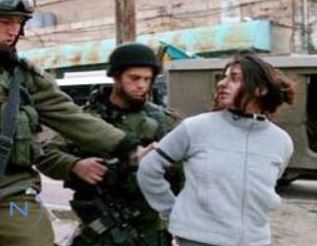
Every year, on April 17, Palestinians commemorate the Palestinian Political Prisoners Day. On 17.4.1974 the first Palestinian political prisoner, Mahmoud Baker Hijazi, was released from Israeli prisons in the first prisoner exchange deal with Israel. That same year, the Palestinian National Council declared the 17th of April a day of solidarity with Palestinian political prisoners, to be commemorated every year. In Occupied Palestine prison and imprisonment are as common as sunrise and sunset. There is almost no family that had not been subjected to Israeli imprisonment one way or the other. Palestinians are being detained on a daily basis, making them the most imprisoned people on earth. It is difficult to estimate their number, but several sources put the number of Palestinians detained or imprisoned by Israel since 1967 at over 750,000 Palestinians, making 20% of the total Palestinian population in the Occupied Territories, and approximately 40% of the total Palestinian male population. With the outbreak of the 2nd Intifada in September 2000 until September 2008 some 65,000 men, 750 women and 7,500 children were arrested by Israel. According to the ICRC, in October 2008 there were 10,500 Palestinians in Israeli prisons. Addammeer puts the number at 9,493, 750 of which are administrative detainees, 349 aged 18 and under, and 75 are females. Among those detained are political figures and some 47 Palestinians parliamentarians.
The Israeli Occupation Forces (IOF) can arrest anyone and anywhere, without giving a reason. Palestinians are arrested at home, on the way to school or work, at universities, in hospitals, at checkpoints. Mass arrests, as form of collective punishment, are also very common. Curfews would be imposed on villages, towns or refugees camps, houses would be raided and Palestinians arrested. I have witnesses a number of these mass arrests, but never did the IOF bother to tell the residents why they were forced to leave their homes in the middle of the night and stand in the cold and the darkness for long hours. Under the cover of darkness and the curfew, the IOF would demand with loudspeakers that all men, usually those between 16 and 45, gather in the school yard or on the main street. We used to sit in the darkness at the windows and try and recognize the men standing in line and questioned by the IOF; relatives, friends and neighbours. Sometimes the men are blindfolded and handcuffed. They would wait for this to end, while being harassed, shouted at and kicked by the Israeli soldiers. We would wait with them, behind windows, hoping that they would all be released soon and come home safe. Sometimes, they are all sent back home after a night of harassment, but often this ends with mass arrest for no given reason.
Another form of collective punishment is house arrests. I have witnessed so many house arrests, and all were accompanied by violence and harassment and the wilful destruction of property by the IOF. They would turn the house over, destroying the furniture and even the food, as if the person they are searching for would be hiding in the wheat or the sugar, and if there was any money or valuables in the house, it was sure they would never be found again after the IOF had left the house. Family members trying to protect their home or their children are beaten. We would tell them that the person they are looking for is not in the house, we would try and reason with them, but it is all useless. They come on a mission to harass, destroy and arrest. Often I thought they knew they wouldn’t find what or who they are looking for, and that the whole operation of house raid is purely to punish the family and pressure it to hand over their son. During such house searches, the IOF would push us against the wall, kick us with their boots and beat us with the butts of their rifles. They didn’t care that they were beating children and elderly.
Upon arrest, detainees are often blindfolded and handcuffed. Not only is the detainee physically abused and humiliated, but other members of the family as well. Also, it is common practice by the IOF to use family members as human shields during such raids. The detainee is taken without informing the family about where he is taken to. Usually it takes days, if not more, before the family finds out where a detainee is. There are many incidents where families realized that their sons were in a certain prison months after they were arrested, and only after another detainee was released and informed that family about their son. One summer afternoon, my uncle and I were playing football in the garden. He was on the IOF list of wanted persons and was staying in our house. Nearby, there was a huge fruit tree, and when I was a child my father told me as way of a joke that a soldier was buried under that tree. At nights, when the leaves of the tree would move with the wind, I used to imagine the sound they made the murmuring of that soldier, and with all the Russian books we had in our library, I gave that imaginary soldier the name Yuri. My uncle and I made bets as to who would win the football game, we joked and laughed and I remember telling my uncle that Yuri would come and take him. After I explained to him what I was talking about, he said: I think you mean Uri and not Yuri, meaning that if any soldier came to take him away, it would be an Israeli soldier, not a Russian. That night at 2 in the morning, I was awakened by hurrying footsteps outside the window. The minute I fully woke up and stood, there was loud knocking on the front door. My father asked who it was, and removed the side of the curtain to see who stood outside. Standing near him, I could see the face of my grandfather and behind him nothing but darkness, complete darkness. The minute my grandfather said it was him, my father opened the door immediately, only to see grandfather practically thrown inside the house. In a matter of seconds, the house was full of IOF soldiers, some in army uniform, others in civil uniform. They had finally figured out were my uncle was hiding and had come to arrest him. They brought my grandfather, an old man, in the middle of the night as a human shield, in case anything happened. My uncle was still in bed, and the minute the Bethlehem area commander saw him, he jumped on the bed and held his throat in his arms, wanting to strangle him, shouting repeatedly: you were here the whole time. My mother tried to get them off my uncle, but the commander pushed her away. And while my uncle was putting on his clothes and shoes, the commander was slapping him and kicking him. The other area commander, responsible for Sawahreh and the surroundings, told his colleague not to do any beating in his area, meaning that since the prisoner was from the Bethlehem area, the beating was okay once they reached that area. I remember we had a huge poster on the wall, one of “Guevara Gaza”, and the commander asked my sister if she knew who it was. The name was written on the poster for all to see, so when she replied yes, he ordered her to remove the poster. When they left, we realized that they had surrounded the whole area around our house. IOF vehicles had blocked the way in case anyone thought of escaping, and I am sure that if an ant moved in the darkness that night, it would have been shot dead immediately. My uncle was taken to interrogation and tortured to confess to things he never did, and when they failed to get a confession from him, he was held in administrative detention, which is a detention without trial or charge, often used by Israel. When he was finally released, he told us that they couldn’t wait for the interrogation to start the torture, and that he was beaten by the soldiers all the way from Sawahreh till they reached the Israeli detention facility.
Sometimes, injured or sick prisoners are taken from their homes, from hospitals, or after being wounded in a demonstration. They rarely get the needed medical help, and often get Aspirin as treatment for everything. Health examinations are conducted through a fence and additional medical treatment or hospital transfers are often postponed for long periods of time. Withholding medical treatment is one method used to pressure detainees into collaboration. There are more than 800 Palestinian detainees who suffer from bad health conditions, much of which as a result of the arrest or the interrogation. According to Palestinian researcher Abdul-Naser Farawna, 196 Palestinian detainees have died in Israeli prisons since 1967 due to medical negligence and torture, 49 of whom died due to medical negligence. Alone last year, 2 detainees died because they were not given the needed medical assistance. During the 2nd Intifada 72 Palestinian detainees have died in detention, 17 due to medical negligence, 3 as a result of torture, 51 were executed by the IOF after being arrested and 1 prisoner was killed during prison protests.
Often Palestinians are arrested for breaking one of the over 2,000 military orders governing the Occupied Palestinian Territories, some of which they have never heard of before their arrest. Women and children are often arrested to pressure detained family members into confessing or pressure other family members wanted by Israel to hand themselves in. The Palestinian Prisoners Society reports that between September 2000 and September 2008 some 750 women and 7,500 Palestinian children were arrested by Israel. In September 2008 there were 69 Palestinian female political prisoners held in Israeli prisons, 2 of them in solitary confinement and 5 in administrative detention. There are 6 female child prisoners and 4 detainees imprisoned as well as their husbands. One detainee has her baby with her who was born in prison. Palestinian female prisoners are placed in 2 Israeli prisons: Hasharon-Telmond and Neve Tertza prison, where they are detained in the same section as Israeli female criminals accused of murder, drug use and prostitution. Like Palestinian male prisoners, Palestinian female prisoners face torture and humiliation. Strip search, brutal body searches and sexual harassment are frequent.
Contrary to the UN Convention on the Rights of the Child, which defines a child as being under 18, Israeli military orders consider a child over 16 an adult, to be treated, tried and sentenced as such. In practice, Palestinian children as young as 12 may be arrested, charged and sentenced in Israeli military courts, since there are no juvenile courts. According to several reports, there are over 400 Palestinian children in Israeli prisons today, including 7 girls and 6 administrative detainees. These child detainees are aged between 13 and 18, more than 54 of whom are not older than 16. They are detained in Israeli prisons together with adults. 50 of these child prisoners are held in Ofer, 100 in Magiddo, 7 in Atzion, 22 in the Negev, 105 in Hasharon-Telmond and the rest in other prison facilities. Today, more than 450 Palestinian adult prisoners were children upon arrest and turned 18 in Israeli prisons. Like adult prisoners, Palestinian child prisoners are subjected to physical and psychological torture to extract confessions from them. During interrogation, they are not allowed to have any family member or a lawyer attending. Although I was practically a child when arrested, I was placed in a small empty room. I had been separated from my sister, and didn’t know where they had taken her. I stood waiting for a life sign from anyone, and I didn’t know how long I stood there, but I remember well how tired I was of standing and how thirsty I was. After some time, I could hear the cries of a boy in the room next to where I was. I thought, they were either torturing him or someone was making these noises to make me scared before it was my turn to be interrogated. I kept thinking of everything I ever heard, of how to keep still, stay brave and remember that they are only playing games with us to scare us into confessing to things we didn’t do. When I was finally led into a room with a number of IOF soldiers, all males, the soldier in charge checked my school bag and found my biology textbook. He looked through the book and saw a drawing of the anatomy of a human tooth. He showed it to me and asked smirking in a disgusting way if I knew what it was. I knew what it was and knew what he thought it was and what his plan was by asking me about it. At that moment I didn’t feel scared anymore, because I realized how stupid they are. Not only didn’t he know it was a tooth, the textbook was in English and it was written below the drawing what it was, but most probably he didn’t know a word of English and was acting so superior. I looked at him and said: yes, this is a tooth. My suspicions were confirmed when, upon not believing me, he asked one of the other soldiers in the room and the other confirmed what I said.
Child prisoners are held up in overcrowded cells, face torture and solitary confinement and don’t receive the needed medical treatment. In the last couple of months there has been an increase in the number of Palestinian children arrested. They are either arrested at home, at checkpoints or in streets, and are often accused of throwing stones without any proof. DCI-Palestine reports that the number of children brought before Israeli military courts in pre-trial hearing in the first two weeks of January was twice as high as in 2008. It added that its legal department receives a monthly average of 10 to 15 new cases of children for legal representation in Military courts, and that alone for the first two weeks of January 2009 it received 10 new cases. In one incident, 7 children were arrested in Toura Al Gharbieh in Jenin on 20.1.2009 and were detained at the Salim detention and interrogation centre. Two of the children were 12, two 13, two were 15 and the last 17 years old. Under pressure and with no lawyer present, the children confessed they had thrown stones at the Apartheid Wall. In another incident, during an invasion of Hares in the West Bank on the night of 12/13.3.2009, the IOF arrested a 17 year old boy suffering from kidney malfunction.
Palestinians prisoners are held in facilities run by the Israeli Prison Services (IPS) or the IDF. There are 30 detention centres that include 21 prisons and military camps, 5 detention and holding centres and 4 interrogation centres. Also, there is at least one known secret prison, Facility 1391, which is renowned for its severe torture methods. The exact location of this prison is unknown and lawyers and the ICRC have no access to it. The majority of these facilities are located outside the West Bank and Gaza Strip, and transferring Palestinian prisoners to these facilities constitutes a violation of the 4th Geneva Convention, and making family visits almost impossible. Some of these facilities are buildings while others are tents within military camps like the Ketzion Military prison camp in the Negev, exposing detainees to harsh weather conditions. They are all overcrowded, with little hygiene, prisoners have to sleep on wooden planks and covers are often provided by the families or human rights organizations. The food provided is insufficient and of poor quality. Palestinian detainees have to live in appalling conditions in these facilities, are humiliated and subjected to inhuman treatment. In some cases, detainees are deported, either abroad or to the Gaza Strip. After the siege of the Nativity Church in 2003, Israel deported 13 Palestinian detainees to Europe and 26 to the Gaza Strip. During the Gaza war, hundreds of Palestinian civilians were arrested, including minors. They were handcuffed and blindfolded, and had nothing to shelter them from the harsh weather. Many held for days in pits dug in the ground. Reports added that some of the detainees were held near tanks and in combat area, making them human shields for the IOF.
Prison visits usually take the whole day, although the visit itself lasts less than an hour. We would set off in the very early morning, when it was dark outside and everyone else was still sleeping. The bus of the ICRC would be full with Palestinians from everywhere, mostly elderly women and children, all anxious to see their relatives. And before we would finally be able to see our loved ones, we would undergo one checkpoint after the other and one search after the other. I remember during one visit, when we were finally allowed into the visit room, I walked quickly looking for my uncle. I hadn’t seen him in years, and after I finally sat opposite him, we started talking through the barbed wire. We were both so happy. It was after a few minutes that someone from my family came and told me to come and say hello to my uncle. I was talking to the wrong person, and I was so embarrassed I didn’t even say goodbye or look back to see if that prisoner had any visitors that day. Later, I thought he too might have not seen his family since so long that he too mistook me for a relative, or maybe he was just anxious to speak to someone. During another visit, I remember sitting and talking to my uncle and at the same time trying to ignore the rain drops that were seeping through the roof and hitting me on the head and running down my face. My uncle must have found it amusing, because every time a raindrop would hit me in the face he would smile, but I would ignore it and continue talking, and by the end of the visit my hair was totally soaked and I was freezing. There was no possibility of kissing or hugging a relative, and the only thing we could do in way of shaking hands was to stretch our fingers through the barbed net separating us. Saying goodbye was always difficult, because we knew we were going back to our homes, to the relatively bigger prison, while leaving them behind in the small overcrowded cells. And when we finally reached home, it would be dark again and most people would be sleeping, a day spent between checkpoints and searches for a 45 minute visit of loved ones.
One time, on the way to my aunt’s house in Dheisheh, a friend of mine and I passed a young man, who was walking up and down one narrow alley of the refugee camp. The man was most probably mid twenty and was good looking. He was walking that alley and was arguing with someone. I looked around and saw no one in the whole area. I looked up to see if he was addressing someone sitting at a window or on the roof, but could see no one. I pointed the man to my friend, who told me not to worry. She said the young man had been recently released from an Israeli prison, where he was tortured. Since then he had been roaming the streets of Dheisheh, arguing with an invisible friend. As I listened closer, I realized he was talking politics with himself, discussing the occupation and life in prison. They had not released him, for he was still in that Israeli cell, being tortured every minute. Last winter when I was in Palestine, I wanted to take some photos of old UNRWA rooms, built for the Palestinians in 1949. Most old UNRWA rooms were being destroyed to build new houses, and I wanted to keep a record of the last remaining rooms that are a synonym to the Nakba and refugee camps. The wife of one of my uncles accompanied me in my search since she was born and grew up in Dheisheh and knew where to find a few old rooms. Most of these tiny rooms are deserted now, standing empty near larger family houses. I would take photos from the outside and if the room had no door or the door was open, I would take photos from the inside. As we came to inspect one room, we were surprised to find an old man lying on the ground, wrapped in a torn out winter coat. The old man opened his eyes as he saw us, he made a move as if to stand up, but my uncle’s wife told him not to leave and apologized for disturbing him, since we thought the room was deserted. A few minutes later, my mother’s aunt saw us invited us for some tea. Inside, we told her about the old man, and as she and my uncle’s wife talked about the old man and giving him something to eat and warm himself, since they knew who he was, I realized it must be the young man I saw long time ago. He was still imprisoned in that cell, a whole life wasted, and all I could do was to shake my head at the injustice of it all.
Under international humanitarian law, torture is strictly forbidden. The world was shocked when the torture in Abu Ghreib came to light, there were condemnations from everywhere and demands were made to close that prison. But the Zionist state, which conducts one war crime after the other, never hesitates in using torture. The forms of torture used in Abu Ghreib were not new to Palestinians, because they have been used since decades by the IPS against Palestinians. Was it not revealed that Israeli IOF and Shin Bet interrogators were hired by the Pentagon to brutally interrogate prisoners in Abu Ghreib? Was it not revealed that the American interrogates implicated in the torture had attended an “anti terror” training camp in Israel, and that many of the torture methods used in Abu Ghreib resembled those applied by Israel against Palestinian detainees? Much is documented about torture in Israeli prisons, but we rarely hear of any condemnation or demand to close these torture facilities. According to B’Tselem, 85% of the Palestinian detainees have been subjected to torture, adding that “Since 1987, the GSS (Israeli General Security Service) interrogated at least 850 Palestinians a year by means of torture …. (a)ll governmental authorities – from the Israeli army to the Supreme court – take part in approving torture, in developing new methods, and in supervising them.” In 1999 the Israeli High Court superficially outlawed the use of arbitrary torture as an interrogation method, but in reality it did not ban it and till today torture is still used by Israel. Physical ill treatment combined with humiliation begins with the arrest, whether at home or in the street. Palestinian detainees can be interrogated for 180 days, and can be denied a lawyer for a period of 60 days. During interrogation, torture is used and has led to the death of the detainee in some cases and confessions extracted under torture are admissible in Israeli courts.
Palestinians may be held for days without being brought before a judge or informed of the reason for the arrest, during which they are interrogated, which can last up to 180 days, or are administratively detained. Administrative detention is a detention without trial or charge or the continuation of imprisonment after the completion of a sentence. It is often used by Israel and is authorized by an administrative order of the IOF rather than by a judicial decree. Israeli Military Order 1229 of 1988 empowers IOF military commanders to detain Palestinians for up to 6 months, which can be extended indefinitely. Over the years, thousands of Palestinians, men and women and of all ages, have been held in administrative detention for periods ranging from 6 months to over 8 years, without being tried or charged. Families of detainees are not informed of a person’s arrest or the arrest location. Theoretically, detainees can appeal, but in reality neither they nor their lawyers are informed of the reason for the detention or examine the evidence, which makes defending their clients very difficult. The Orders governing administrative detention were also modified in 1999. MO 1466 – Temporary Order, Modification 13 states that a detainee must be brought before a military judge within 10 days of his arrest, and authorizing the military judge to approve, cancel or decrease the time of administrative detention order. This modification is also superficial, since the judges are military personnel who give legal legitimacy to the illegal actions of the IOF and the IPS. In reality, Palestinians are tried by Israeli military courts consisting of a panel of 3 judges appointed by the IOF. These judges often have no legal background and thus don’t fulfill international standards of a fair trial. Since the beginning of the 2nd intifada in September 2000 some 20,000 Palestinians were held in administrative detention. By April 2009 there were more than 560 Palestinian administrative detainees, held in Israeli prisons without trial. 372 of these detainees have been held without trial or charge for at least two consecutive periods, 47 of them for over two years, and 23 for over two and a half years including two who have been imprisoned for over four and a half years.
While a Palestinian may be held in custody for 18 days before being brought to a judge, an Israeli can be held in custody for a maximum of 48 hours before being brought before a judge. While a Palestinian can be held for 30 days without charges which can be extended indefinitely, an Israeli can be held for 15 days without a charge which can be extended for only another 15 days. Palestinians brought to court on accusation of murder are always convicted, even without evidence, and are always sentenced to life imprisonment. Most cases against Israeli soldiers or illegal Jewish settlers accused of murdering Palestinians are closed without any charges, even with the existence of evidence or witnesses. The few who do get sentenced are imprisoned for short periods ranging from 6 months to 7 and a half years or to community service. Palestinian Prisoners have been used by Israel at politically convenient moments, whereby Palestinians who had already served out their sentences with only a few days remaining would be released as “gestures of good will”. At the same time hundreds others would be arrested. For example, on 25.8.2008 Israel released 198 prisoners as a “gesture of good will”, however statistics for August 2008 show that another 338 Palestinians were arrested. Today there are some 81 “old detainees” i.e., detainees who are in continuous imprisonment since over 20 years, 2 of whom since over 30 years, and some 290 prisoners who have been in prison since over 15 years.
Although they have modern deadly weapons, are top recipients of military assistance, have their war crimes justified by a biased western media, and their interests protected by Zionist lobbies all over the world, the Zionists still fear us because they know we are the rightful owners of the land and that alone by existing we are defying them and their power and countering the myths and lies on which their state is built. Israeli Foreign Minister, Avigdor Lieberman said on the release of Palestinian prisoners: “It would be better to drown these prisoners, in the Dead Sea if possible, since that’s the lowest point in the world.” They not only deny us our rights and our freedom, they want to kill our spirit and see us dead. What they haven’t understood by now is that the more they humiliate us, harass us, imprison us, take away our freedom from us, the more we value that freedom and the stronger becomes our belief in our just cause and our will to be free.
Sources:
www.addameer.org
www.sumoud.tao.ca
www.btselem.org
www.imemc.org
www.dci-pal.org
www.ppsmo.org
www.palestinemonitor.org
80,000 Palestinians in Jerusalem without water for three days
MEMO | March 8, 2014
The Israeli water company Jihon said on Friday that 80,000 Palestinians in East Jerusalem have been without water for more than three days.
In a statement Jihon said: “About 80,000 Palestinians in four Arab neighbourhoods in Jerusalem and its outskirts have been suffering from complete loss of water for three days.”
The Israeli company said that it would like to supply water for all consumers in Jerusalem, including Jewish and Arab citizens, but the water infrastructure in the Arab areas is decaying. It also said that the increasing number of inhabitants contributes to the problem.
Meanwhile, the Arab inhabitants at the Palestinian refugee camps of Su’fat, RasKhamis and Ras Shihadeh, as well as Al-Salam Suburb, said they have been suffering from a complete water shortage for several days.
The residents said in a statement issued on Saturday that tens of thousands of Palestinian refugees and citizens in the three residential gatherings in Jerusalem have been without water since the beginning of last week.
According to the statement the Palestinians said that they did not know the reason why the water supply stopped.
The statement also blamed the company Jihon, which is the only body that has a permit to supply water to Jerusalem, for the water shortages. “It started reducing water portions two weeks ago,” the statement said. “And in the end it completely stopped the water.”
Deputy head of the Popular Committee in Su’fat Refugee Camp, Khalid al-Khaldi said: “There are about 23,000 Palestinian refugees and citizens in the camp and they have not had water for three days. In Ras Shihadeh, there has been no water for 20 days.”
He reiterated that there has been no water in Ras Khamis and Al-Salam Suburb for a long time either.
Al-Khaldi blamed the UNRWA, which is responsible for the Palestinian refugees, for the water problem. He called for it to immediately move to solve the problem.
Netanyahu: I did not commit to freeze settlement construction
MEMO | March 7, 2014
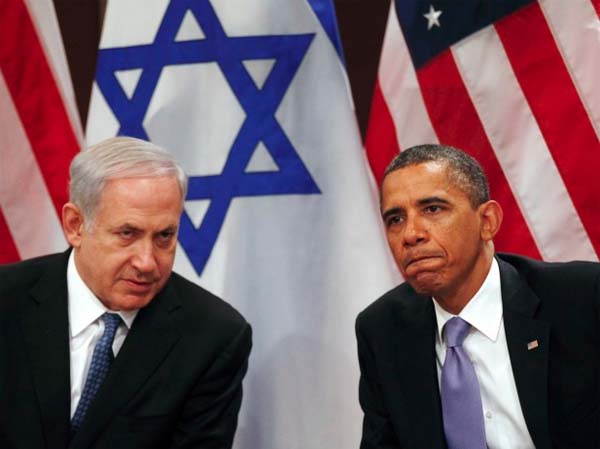 Israeli Prime Minister Benjamin Netanyahu said that he did not commit to freezing settlement construction during his meeting with US President Barack Obama and that he will reject any agreement with the Palestinians that does not meet Israel’s security needs.
Israel Radio quoted Netanyahu on Friday, on his way back to Israel, telling Israeli journalists that he considered extending the negotiating period between the Israelis and Palestinians in US Secretary of State John Kerry’s framework agreement unlikely to make a difference for the Israeli coalition government, as most of its members reject the idea of establishing a Palestinian state.
He added that he will reject any agreement with the Palestinians that “does not meet Israel’s needs and poses a threat to its security, even if there are attempts to impose such an agreement on Israel.”
Netanyahu refused the possibility of unilateral withdrawal from the West Bank territories if the negotiations fail, stating that he does not prefer this possibility and that “the unilateral withdrawals (from south Lebanon and the Gaza Strip) have not justified themselves nor did they provide security stability for Israel”.
Netanyahu returned to Israel today following his visit to the US which started on Sunday in which he met with Obama in the White House and gave a speech to the American Israel Public Affairs Committee (AIPAC) on Tuesday.
Palestinian President Mahmoud Abbas announced, while receiving a delegation from the Israeli left-wing party Meretz a few days ago, that he is not opposed to extending the negotiations period, but demands that settlement construction is suspended and prisoners are released.
Related article

My Home
Housing demolitions carried out under the pretext of unlicensed construction are a common occurrence in occupied East Jerusalem. Palestinians are rarely granted permits by the Israeli authorities to build houses in the city. Apartments prices have risen drastically in Jerusalem — 120 m apartment would cost approximately $350,000. As a result, they are forced to build without a permit, which often results in the Israeli authorities issuing demolition orders on unlicensed buildings.
In 2013, 82 houses owned by Palestinians in Jerusalem were demolished, effecting 281 people. In recent years, self-demolition of houses has become common in East Jerusalem as the Palestinian owners of “unlicensed” houses are forced to choose between demolishing the houses themselves or paying the Jerusalem municipality to do so for them.
In this video Muhammad ‘Amireh speaks of his experience of having to demolish his own house.
Related article

Progress in Iran Nuclear Talks Depends on the Israeli Government Coming Clean on its Nuclear Disinformation Campaigns
By Dr. Yousaf Butt | Arms Control Law | March 4, 2014
One of the sticking points in the on-going Iran nuclear negotiations is the fate of the so-called “Possible Military Dimensions” (aka “Alleged Studies”) file. This is a compendium of allegations against Iran’s nuclear program – largely gathered by third-party intelligence agencies – that the IAEA would like Iran to respond to. Not only are the allegations largely outside the IAEA legal authority and expertise (because they do not directly deal with nuclear material diversion), but Iran has not been allowed to see much of this secret evidence that is being used against it. Such a process is, of course, not consistent with normal Western legal practice. Iran has responded to what little it has been shown of the PMD file by saying that the evidence thus far shown is fabricated.
Though this Iranian response is often cast as Iran “not cooperating with the IAEA” (or “refusing to discuss the matter”), another possibility must be considered: that Iran is correct. That is, that at least some the evidence has indeed been cooked-up by an adversarial Intelligence service (or by an agent recruited by such an Intelligence service).
A wonderful new book by Gudrun Harrer on the IAEA inspections in Iraq sheds some light on which countries could be involved in fabricating and planting such fake nuclear “evidence”. On p. 185 of the book, it is confirmed that Israel provided the IAEA with false information on Laser Isotope Separation activities in Iraq. The reference for this information is the author’s interview with David Albright of ISIS (see at this insert the relevant scanned pages from the book):
Israel has, of course, long been suspected of being behind some of the forged and suspect evidence against Iran: the neutron initiators, AP graphs, etc., but until now it was hard to definitely pin the blame on that country. Thanks to David Albright at ISIS, we now know that Israel has been guilty of planting disinformation with the IAEA in the past.
The German intelligence agency has also discredited much of the secret evidence against Iran.
Having myself analyzed some of what is (evidently) in this PMD file – with Dr. Ferenc Dalnoki-Veress of the James Martin Center for Nonproliferation Studies – I can say that the evidence is certainly of poor quality and/or an amateurish forgery. It does not look like anything a state-level research scientist would produce. There are large and conspicuous mathematical and physical errors in the material.
Similarly, Robert Kelley has assessed that at least some of the evidence purporting to show weaponization research work continuing past 2004 is less than compelling:
[The] evidence, according to the IAEA, tells us Iran embarked on a four-year program, starting around 2006, to validate the design of a device to produce a burst of neutrons that could initiate a fission chain reaction. Though I cannot say for sure what source the agency is relying on, I can say for certain that this project was earlier at the center of what appeared to be a misinformation campaign…. Mohamed ElBaradei, who was then the agency’s director general, rejected the information because there was no chain of custody for the paper, no clear source, document markings, date of issue or anything else that could establish its authenticity…
David Albright’s confirmation of Israeli nuclear disinformation goes hand-in-glove with statements from former IAEA director, and Nobel Prize winner, Mohammed ElBaradei. In his biography, ElBaradei says that the documents that the IAEA had about the alleged neutron initiators in Iran circa 2008 were given to the Agency by Israel. He further states that Israel gave him permission to show the evidence to Iran.
So the question is, why has the IAEA not cooperated with Iran in evaluating material like they did with Iraq circa 1995, in the incident mentioned by Harrer?
Iran could be genuinely helpful if they were allowed to see the original evidence and comment on it. When the IAEA worked with Iraq to evaluate documents, the Iraqis helpfully pointed out mistakes that the IAEA could independently confirm. Isn’t that the example we would like to see with Iran?
Being charged with secret evidence also goes against every notion of Western justice. The IAEA either needs to drop the PMD file, or amend their procedures.
Unfortunately, it is quite likely that the Israeli government is once again carrying out nuclear disinformation, possibly in collaboration with the MEK, an Iranian terrorist – in some nations, formerly terrorist – organization opposed to the current Iranian regime.
Over the past weekend, it was also confirmed that Israel masterminded the assassinations of Iranian nuclear scientists. These assassinations, too, perhaps were carried out with local MEK collaboration. If the Israeli government is capable of assassinating civilian Iranian scientists, would fabricating nuclear intel on Iran trouble their consciences? Presumably not. Especially as they have done it in the past, according to David Albright at ISIS.
Before further pursuing Iran on the PMD file – which may contain substantial forged evidence – it would make sense to ask Israel to come clean about any fabricated intelligence it may have planted with the IAEA. It is quite possible that some of the PMD file is not fake. Israel’s assistance and cooperation in identifying what is fake and what is not would be most helpful. If David Albright of ISIS has further insight into this – as he did in the Iraqi case – his involvement would also, of course, be very welcome.
It is becoming increasingly difficult to give credibility to hyperbolic Israeli statements about Iran’s underhandedness in pursuing its nuclear program, when Israel itself has been underhanded in pursuing clandestine disinformation campaigns against NPT states, while itself remaining resolutely outside the NPT.
There are several points for the IAEA to consider in light of these recent developments:
1. Should the IAEA reject all evidence from Israel against Iran and other adversarial states now?
2. Should the IAEA, generally, not accept intelligence from non-NPT states?
3. The IAEA should show Iran any evidence it wants an Iranian response on. Anything less is not consistent with Western notions of justice. Furthermore such cooperation could unveil the origin of any possible forgeries in the PMD file.
4. The IAEA and the US should ask Israel to come clean on any fabricated “evidence” it may have inserted into the PMD file.
5. As I have suggested previously, it would be best to simply drop the PMD file as it relates to decade old unauthenticated allegations of possible research. It is not even clear that what is in the PMD file – even if true – would be a violation of the NPT or the safeguards agreement.
6. If the IAEA really wants to pursue the content of the PMD in a legal way they can initiate special inspections or undertake arbitration as provided for in the CSA. The IAEA does not even have the technical expertise in-house to undertake investigations of missiles, warheads etc. which are mentioned in the PMD file.
7. Since Iran is now in compliance with its safeguards agreement, Iran’s nuclear file – currently hung-up in the Security Council – should return to the IAEA. The referral to the Security Council was unorthodox and politicized to begin with, and there is no rationale for Iran’s nuclear file to remain there post-2008. (Footnote 38 of the latest IAEA report on Iran makes clear that the remaining issues are not IAEA safeguards issues but extraneous UNSC ones).
8. This also means that the UNSC nuclear-related sanctions on Iran should now be dropped. In fact, they ought to have been dropped in 2008.
David Albright must be commended for his helpful insight into fabricated Israeli intelligence in Iraq, and hopefully can assist in tracking down similar disinformation in the case of Iran.
Relatedly, we must thank him and ISIS also for showing the international community expensive satellite pictures of Parchin, in which one can see that west of the paving activity, the site is untouched, and so the IAEA could get environmental samples there (if they even needed those). This undercuts ISIS’ own conclusion that the site has been magically “sanitized” by paving. Normally, of course, the IAEA would take such swipe samples from within the buildings where any suspect U naturally collects: in the corners and at the places where the walls meet the floor.
The technical weaknesses in ISIS’ and IAEA’s approach to Parchin were previously commented on.
The IAEA’s technically unsound obsession with environmental sampling at Parchin may also mean they are confusing the site at Marivan (where open-air implosion tests may have taken place) with the site at Parchin (where implosions in a chamber are alleged).
From the May 2008 Board report, referring to the Marivan site:
A.2. High Explosives Testing
[………….]
Document 3: Five page document in English describing experimentation undertaken with a complex multipoint initiation system to detonate a substantial amount of high explosive in hemispherical geometry and to monitor the development of the detonation wave in that high explosive using a considerable number of diagnostic probes.
And the alleged weapons’ studies annex Nov 2011:
43. Information provided to the Agency by the same Member State referred to in the previous paragraph describes the multipoint initiation concept referred to above as being used by Iran in at least one large scale experiment in 2003 to initiate a high explosive charge in the form of a hemispherical shell. [……] Further information provided to the Agency by the same Member State indicates that the large scale high explosive experiments were conducted by Iran in the region of Marivan.
So what is the point of carrying out environmental sampling at Parchin (where chamber experiments are alleged) and not at Marivan where open-air experiments were allegedly done? Is the IAEA – and ISIS – confused between Marivan and Parchin?
The IAEA’s unprofessionalism in vetting the content of the PMD file, and in the obsession over Parchin (which the IAEA visited twice already) vs. Marivan smacks of an agenda to target Iran rather than any sound technical analysis. It is likely to blow up the Iran nuclear deal for no good reason. Iran has cooperated with the IAEA on the PMD file by saying that the material it was shown was fabricated – this may be true. Now Israel should also cooperate and come clean about what forged material – or material from compromised sources like “Curveball” – may be within this file. David Albright, with his past knowledge and evident expertise in fabricated Israeli intelligence should also step up to the plate.
And, certainly, Iran should be shown any evidence it is being asked to answer to by the IAEA. The Agency should also spend about half an hour and check whether the site it is interested in for environmental sampling is Marivan or Parchin. Environmental sampling at Parchin makes little sense. At Parchin, swipes would be taken from within the buildings since chamber-based implosions are alleged. While it is at it, the IAEA should also review the technical basis of their conclusions on Syria.
It is hard to take the Agency seriously when it persists in being blatantly unprofessional.
Dr Jim Walsh, a research associate at MIT, has an excellent suggestion about what to do with Iran’s “PMD” file – as paraphrased by Mark Hibbs: “If the nuclear activities were in the past, I don’t care. It’s dead, and it’s regretful, but let’s do a deal with Iran that moves forward.”
But before we do that, the IAEA should ask Israel to come clean about its potential role in fabricating some of the “evidence” within the PMD file.
Given its historical misuse, the IAEA should also re-visit whether it will continue to accept intelligence from third-parties, especially non-NPT member states.
Dr. Yousaf Butt, a nuclear physicist, is Director of the Emerging Technologies Program at the Cultural Intelligence Institute, a non-profit organization dedicated to promoting fact-based cultural awareness among individuals, institutions, and governments. The views expressed here are his own.
Featured Video

Weaponized Journalism: 2021 Sayer Ji Interview with NPR
or go to
Aletho News Archives – Video-Images
From the Archives
How Rothschild Banking Clan Uses Its Vast Wealth to Influence World Events and Control Governments

By Ilya Tsukanov – Sputnik – 15.09.2024
How powerful is the Rothschild banking family? How did they amass their fortune? Just how rich are they? Do they secretly control the world? Sputnik explores. … continue
Blog Roll
 Aletho News
- Dockworkers launch global strike against Israeli and US military shipments
- Europe facing gas price shock – Gazprom chief
- Ukraine continues recruiting people with disabilities
- Weaponized Journalism: 2021 Sayer Ji Interview with NPR
- Beyond Netanyahu: what Israel’s election means for Palestinians
- Lithuania plans universal conscription
- Lies, Damn Lies, and Ukraine News
- Financial Times rejects Nordic demands to correct Putin call story – media
- The Case for Less Unity in Europe
- Ukraine expands minority rights under EU pressure – but Russians remain excluded
- If Americans Knew
- An error has occurred; the feed is probably down. Try again later.
- No Tricks Zone
- Germany’s Green Energy Transition Becoming Increasingly Expensive…Another 6 Trillion Euros!
- Sudden Stratospheric Warming, Powerful El Niño Combination May Lead To Extreme Europe Cold, Energy Crisis!
- Two New Studies Find Thwaites Glacier Melt Cannot Be Driven By Human Activity Or A Warming Ocean
- E-Cars Reduce CO2 Emissions By Only 41% Compared To Internal Combustion Engine Vehicles
- Predictions Made By Renowned Climate Professor Over Past Decades Have Been Proven To Be Poor
- New Study Suggests Large Regions Of The Pacific Ocean Have Been Cooling For The Last 80 Years
- Germany’s Green Energy Debacle: High Energy Costs Force Kahla Porzellan to Close After 182 Years!
- New Study: 50 Years Of The Most Aggressive ‘Net Zero’ Policies Can Only Affect The Global Climate By 0.03°C
- US September “Heat” Was No Record…Many Records Set Decades Ago
- Latest European Green Energy Debacle; Portugal’s Largest Flagship Solar Park Insolvent!

