It’s kind of one of those pictures that are “worth a thousand words,” don’t you think? What you’re looking at is Obama onstage with media mogul and Israeli dual national Haim Saban, who has stated previously, “I’m a one issue guy, and my issue is Israel.” The photo was taken last weekend at the Saban Forum, held in Washington. During the event Saban and Obama appeared together for what was billed as a “conversation” on the Middle East, but basically it was a one-on-one press conference—with Saban doing the grilling and Obama doing the answering. Do the facial expressions in the photo, the body language, suggest anything to you—like for instance which of the two figures is dominant and which is submissive?
Saban, of course, has lots of money. In 2002 he provided a $13 million grant which established the Saban Center for Middle East Policy, and which is part of the larger Brookings Institution think tank. Today he is a major funder of political candidates, particularly of the Democratic Party. You can go here and watch a 48-minute video of his “conversation” with Obama, which includes a few questions from the audience towards the end (all of the people selected to ask questions in that closing segment, coincidentally, happen to be Israelis). At one point, Saban jokingly remarks upon how “obedient” Obama is. A little later in the video, Obama states the following:
“The one thing I will say to the people of Israel is that you can be assured, whoever is in the office I currently occupy, Democrat or Republican, that your security will be uppermost on our minds. That will not change.”
Does it not strike you as a curious comment? Why would the security of a foreign nation be “uppermost” in the minds of the leaders of a supposedly sovereign country? But then maybe America is no longer a sovereign nation.
Obama indeed proves his “obedience” by never once bringing up Israel’s nuclear weapons. Much of the conversation is dominated by talk about Iran’s domestic nuclear energy program. The president at one point repeats the standard, stock-in-trade “options-on-the-table” remark—which in essence is nothing more than a threat to attack Iran—yet nowhere, in the entire 48-minute video, does the subject of Israel’s nuclear weapons come up.
A report on the Saban Forum was posted recently at the Mondoweiss blog. While the article mentions the “conversation” between Obama and Saban, much of the piece is devoted to the remarks of John Kerry, who delivered the keynote address for the event. Allison Deger, the author of the report, notes that Kerry expressed the view that Palestinians in the West Bank are deserving of “state institutions” (as opposed to an actual state) of their own, a comment which seems to have prompted Deger to draw the conclusion that “Palestinian statehood is not on the table in the current round of peace talks.” It is a not unreasonable conclusion to draw.
Kerry also referred to Palestinians as a “demographic time bomb” threatening to jeopardize Israel’s “future as a democratic, Jewish state”—apparently the secretary of state’s first public expression of concern over the so-called “demographic threat.” But perhaps most interesting is what Deger reports on comments by Israeli Foreign Minister Avigdor Lieberman, who also attended the event:
Even though Lieberman was amongst a crowd of Washington and Israeli officials familiar with his anti-Arab diatribes, audible gasps could be heard throughout the room when he called to expel Palestinian citizens of Israel. A diplomat from the Russian embassy seated next to me even choked. Another moment of discontent between the plated-dinner audience and Lieberman passed when the foreign minister made a forlorn pun at Sen. Joe Lieberman. Otherwise the foreign minister was amongst allies.
Much has been made of the recent bone of contention between Obama and Netanyahu over the negotiations with Iran, with some suggesting that the US president is beginning to assert himself and to defy the Israeli lobby on some key, important issues. Is it simply wishful thinking on the part of some commentators? I don’t pretend to know the answer to that, but if there was any note of defiance struck at last weekend’s Saban Forum, all I can say is it is extremely difficult to detect.
*
Update-12/11/13: The following information on Saban comes from Wikipedia:
In March 2008, Saban was among a group of major Jewish donors to sign a letter to Democratic Party house leader Nancy Pelosi warning her to “keep out of the Democratic presidential primaries.” The donors, who “were strong supporters of Sen. Hillary Rodham Clinton presidential campaign”, “were incensed by a March 16 interview in which Pelosi said that party ‘superdelegates’ should heed the will of the majority in selecting a candidate.” The letter to Pelosi stated the donors “have been strong supporters of the DCCC” [Democratic Congressional Campaign Committee] and implied, according to The Jewish Telegraphic Agency, that Pelosi could lose their financial support in important upcoming congressional elections.
And also this:
Regarding Jane Harman AIPAC Controversy, in April 2009, New York Times, quoting anonymous sources, said a caller promised her that Saban would withhold campaign contributions to Representative Nancy Pelosi if she did not select Ms. Harman for the intelligence post.”
And additionally this:
Saban says his greatest concern is to protect Israel. At a conference in Israel, Saban described his formula. His three ways to influence American politics were: make donations to political parties, establish think tanks, and control media outlets.
Dutch water supplier Vitens has ended a partnership with Israeli water company Mekorot due to the “political context,” the Dutch company said on Wednesday.
The abrupt decision comes days after a visit to the Mekorot offices in Occupied Palestine by the Netherland’s trade minister Lilianne Ploumen was abruptly cancelled.
In a statement, Vitens said it had come to the conclusion that it was “extremely hard” to work with Mekorot on future projects “because they cannot be taken out of the political context.”
The company visit was part of a larger tour of Occupied Palestine by Prime Minister Mark Rutte that was marred by a dispute over a Dutch-made security scanner on the Gaza border.
Rutte was to have inaugurated the scanner on the frontier with the Gaza Strip, but the ceremony was broken off.
The focus of the dispute is trade between Gaza and the West Bank, which is controlled by the Palestinian Authority under president Mahmoud Abbas.
Israel’s defense ministry wants to isolate the two Palestinian regions, while Dutch officials had hoped the scanner might boost commerce between them.
Mekorot, which provides water to Israeli towns and to Jewish settlements in the occupied Palestinian territories, has been accused by Dutch media of denying water access to Palestinians.
According to the World Bank, a third of Palestinian territories are cut off from the Israeli water system and Israelis draw out a far bigger share of the water supply than agreed in the 1995 Oslo II accord.
Israeli deputy Foreign minister Zeev Elkin said he was “blindsided” by the pullout “and a few more European companies have made similar decisions in the past months, which have blindsided us exactly in parallel with the peace process.”
In talks last week, Israel, Jordan and the Palestinian Authority signed a historic water-sharing initiative at the World Bank that could protect water resources in the region amid rising demand.
The deal will see Israel, working through Mekorot, boosting its annual sales of water to the Palestinian Authority by 20-30 million cubic meters a year, up from the current level of 52 million cubic meters.
Zeev, speaking to Israeli military radio, said that peace initiatives should mean “that people don’t breathe down our neck,” but “unfortunately this doesn’t work.”
Vitens said the decision to end the Mekorot tie-up was made after conferring with the Dutch foreign ministry and other “concerned parties.”
The news comes a day after Romania reportedly refused to allow Romanian construction workers to be employed in Israel’s illegal West Bank settlements.
The row comes in the wake of tensions between Israel and the European Union over new guidelines that bar EU funding for any Israeli entity operating in the internationally recognized occupied Palestinian territories.
There is no remission to Washington’s belligerence towards Iran and no deal seems to be an antidote to this venom of spite secreted out on the part of the US officials on a daily basis.
In a tone not unfamiliar to Iranian ears, US Defense Secretary Chuck Hagel on board the USS Ponce, just 120 miles off the coast of Iran once again reminded the military men that the “threat of US military force still exists even though the Obama administration is pursuing a six-month long diplomatic process with Iran to freeze its nuclear program.”
There was some hope that the nuclear deal between Iran and the six world powers would considerably alleviate the tensions on Iran, relieve the inhumane sanctions against the Iranian population and offset future internal and external attempts directed at imposing more illegal sanctions against the Islamic Republic.
However, the sanctions are not only still in place but there is also a perceptibly powerful force at work in Washington to intensify the sanctions that have already taken human toll in Iran.
According to reports, the Democratic chairman of the Senate Foreign Relations Committee, Robert Menendez, and Republican Senator Mark Kirk are on the verge of “agreeing on legislation that would target Iran’s remaining oil exports, foreign exchange reserves and strategic industries.”
Widely considered the major engineers of the anti-Iran sanctions, these two senators are at the beck and call of the Zionists and their efforts are certainly aimed at gratifying their Iranophobic desires.
Quite naturally, Iran’s Foreign Minister Javad Zarif has warned Washington of imposing new sanctions as they would definitely kill the nuclear deal.
A top Republican Senate aide has told Reuters that the legislation is “an insurance policy to protect against Iranian deception.”
Time and again, Sen. Robert Menendez has proved to be cravenly submissive to Tel Aviv and has frequently warned Washington of the impending danger Iran poses towards the entity. For instance, in September, he recklessly said that Iran and Hezbollah “could possibly” strike Israel.
“The Iranians and Hezbollah… ultimately could possibly strike against neighbors in the region, including our ally, the state of Israel.”
Apart from playing an extremely effective role in imposing sanctions on Iran, he has resorted to any brute means to instill a sense of threat and phobia about Iran.
Also, in his AIPAC address, he clearly said that he would make every endeavor to safeguard the interests of Israel.
“The committee has helped every American president, from Harry Truman to Barack Obama, protect and defend our fundamental promise to stand with Israel and the Israeli people in a strong and lasting and enduring alliance. And as chairman, I can say without hesitation I will keep that promise as I always have. There will never be any daylight between the United States and Israel on my watch. Never. Not on my watch.”
Prominent among his numerous political hunger games are designing anti-Iran sanctions after sanctions under the aegis of Tel Aviv, authorizing the US President the use of military force in Afghanistan and his refusal to vote against the Iraq Resolution, which terminated in an invasion of Iraq.
In this diabolical league comes in Sen. Mark Kirk, who tries in a similar way to disseminate fear of Iran in the world. During an invitation-only phone briefing for supporters, Kirk said, “It’s the reason why I ran for the Senate, [it] is all wrapped up in this battle. I am totally dedicated to the survival of the state of Israel in the 21st century. This has been very much a one-senator show, unfortunately.”
After all, Sen. Mark Kirk is a darling of the Zionists. In 2002, when he was still home recovering from a stroke that incapacitated him from making an appearance at AIPAC, Israeli Prime Minister Benjamin Netanyahu voiced his “sincere request” during his keynote and said, “I want to send a special message to a great friend of Israel who is not here tonight: Senator Mark Kirk, the co-author of the Kirk-Menendez Iran Sanctions Act. Senator Kirk, I know you’re watching this tonight. Please get well soon. America needs you; Israel needs you. I send you wishes for a speedy recovery. So get well and get back to work.”
Indeed it is not hard to imagine that these well-financed marionette-handlers in Washington are playing in the hands of Tel Aviv to advance their ultimate goals regarding Iran, which is clearly regime change. As time passes and realities come to surface, one acquires conviction that the rift that keeps deepening more and more between Iran and the West has nothing to do with a West concerned about Iran’s intention in trying to build a nuclear bomb; rather, it is an ulterior motive long cherished and shaped by the West and the Zionists: uprooting a tree of truth.
The confrontational attitude of these senators against Iran and the unfortunate and powerful sway they exercise on the powers-that-be in America leave no room for optimism in restructuring a politically correct attitude on the part of Washington towards Iran.
Be that as it may, global awakening is on the horizon. Manipulation of public opinion has run its course. Distorting the realities on the ground is a threadbare ploy. It is now generally acknowledged that the West’s narrative on Iran’s intention to produce nuclear weapons is but a thumping big lie and a fairy tale forcefully woven into the warps and wefts of public opinion. Indeed, it is, in Shakespeare’s words, “a tale told by an idiot full of sound and fury signifying nothing.”
BEIRUT — The Hamas movement has expressed its total rejection of the agreement linking the Red Sea with the Dead Sea, considering it a normalization and legalization to the Israeli occupation.
Hamas warned of the agreement’s serious impacts on the Palestinian cause in light of the open Israeli war on the Palestinian people and holy sites.
In a controversial step, Israel, Jordan and PA signed in Washington an agreement linking between the Red Sea and Dead Sea.
Israeli officials have described the agreement as an historic development that could achieve Herzl’s dream, while environmental groups warned of its serious impacts.
The movement stressed that the PA is not entitled to give up or compromise on any inch of the Palestinian land or water resources, calling on Palestinian factions to refuse such agreements that strengthen the Israeli occupation.
The Islamic movement called on the Palestinian Authority not to take unilateral decisions in violation of the national consensus under the illusion of peace negotiations.
The undersigned Palestinian NGOs call on the Palestine Liberation Organization (PLO) and the Palestinian National Authority (PNA) to halt all forms of cooperation with the World Bank-sponsored Red Sea – Dead Sea Conveyance Project (RSDSCP) and to take an unequivocal public stance of rejection to the project.
It has become clear beyond doubt that the project is an unacceptable attempt to force the Palestinian population to consent to their own dispossession and to compromise on their own rights.
Any lack of a clear position by the Palestinian leadership on this outrageous project, any stand of ambiguity or positive criticism towards it, contributes to the impunity that for far too long has allowed Israel to appropriate Palestinian water and deny Palestinians their rights.
Five reasons why the RSDSCP must be rejected:
1. The project undermines Palestinian water rights and legitimizes Palestinian dispossession from the Jordan River. Israel unilaterally controls the flow from the upper Jordan River and prevents Palestinians from making use of their rightful share of the lower river’s water. This is the sole cause for the gradual disappearance of the Dead Sea. Instead of addressing Israel’s water theft, the project aims to maintain the unjust status-quo of the river and allegedly “save” the Dead Sea through large scale Red Sea water transfer.
2. The project attempts to replace the river’s natural fresh water appropriated by Israel from the upper Jordan River with desalinated Red Sea water sold at high costs to severely water-dispossessed Palestinians and at pitiful quantities. Even these sales remain merely an “option” and the World Bank studies plan to ‘supply’ only Jericho, which is currently the only water-rich place in the occupied West Bank. With every drop of water that Palestinians purchase, they capitulate to their own deprivation.
3. Neither the World Bank’s Feasibility Study (FS) nor its Environmental & Social Assessment study (ESA) address the grave damage to the West Bank Eastern Aquifer, currently the only source Palestinians have for water supply and development. The Eastern aquifer is rapidly depleting, and its water table is dropping at an alarming rate – both as a direct result of the shrinking Dead Sea. Consenting to the project entails closing an eye to the rapid destruction of the only other water resource in the Eastern West Bank. Instead, Israel should be held accountable for the damage it caused to this vital resource on which over 1 million Palestinians currently depend.
4. Far from “saving the Dead Sea”, the RSDSCP will actually destroy the unique features of the Dead Sea and its ecosystem. Under the project, the Dead Sea is slated to turn into a dead, engineered pool of Red Sea water and desal brines, destroying this Palestinian and world heritage site.
5. Both Red-Dead studies (FS & ESA) and the entire conduct of the World Bank lack credibility and transparency, and make a mockery of the alleged consultation and participation process. Throughout the process, the Bank has systematically turned a blind eye to Israeli violations of Palestinian water rights.
The Bank repeatedly and deliberately ignored key concerns expressed by Palestinians since the project’s inception and during the “consultation” meetings in severe breach of its very own Code of Conduct, as well as the project’s Terms of Reference.
In addition, the Bank management has so far refused to make public the results of the Feasibility and ESA studies. The World Bank’s actions are tantamount to a cover-up.
Palestinian civil society organizations reiterate their rejection of the Red Sea – Dead Sea Conveyance Project and invite Palestinians of all walks to demand that the PLO and the PNA honor their aspirations for self-determination and justice by voicing a clear, loud and unequivocal “No!” to the Red-Dead Sea scam.
This project can only result in further damaging and undermining Palestinian water rights and all cooperation with it should cease immediately. Reparation and compensation for past damages and respect for Palestinian water rights are long overdue and the only way forward.
Endorsing organizations and individuals:
1. Palestinian Environment NGO Network (PENGON)
2. MAAN Development Center
3. Palestinian Wastewater Engineers Group (PalWEG)
4. Stop the Wall
5. Palestinian Farmers Union
6. Applied Research Institute Jerusalem (ARIJ)
7. Land Research Center
8. Media Environmental Center
9. Palestine Hydrology Group (PHG)
10. Palestinian Agricultural Relief Committees (PARC)
11. Union of Agricultural Work Committees (UWAC)
12. Environmental Education Center (EEC)
13. Institute of Environmental and Water Studies – Birziet University
14. Palestinian Center for Human Rights (PCHR)
15. Palestinian Environment Friends (PEF)
16. Arab Center for Agricultural Development (ACAD)
17. Earth and Human Center for Research and Studies (EHCRS)
18. Palestinian Farmers Association
19. The Arab Agronomists Association (AAA)
20. Prof. Dr. Hilmi S. Salem, Palestine Technical University – Kadoorie (PTUK)
21. Clemens Messerschmid, Hydrologist
22. Prof. Dr. Samir Afifi, Environmental & Earth Sciences Department, Islamic University of Gaza
That was the response of Munir, a Palestinian who is faced with Israeli soldiers at the checkpoint opposite his shop in Hebron every day, when I asked him how he thought being in Hebron must affect the soldiers.
I have had so many encounters with Israeli soldiers during my time in Hebron – it is impossible not to, due to the intensity of the military occupation.
I have passed the time of day and talked with some of them about what we are each doing here. Some have told me of their boredom, that they would much rather be on the beach. One helped keep a stray dog away from Palestinian school children who were frightened and I thanked him. Another told the police to leave me alone when they were harassing me about where in the street I was standing during the school run, and I thanked him too.
They have also spat at me, shouted at me, threatened to arrest me and called me stupid in Hebrew and a “sharmoota” (“whore” in Arabic). I have refused to follow their orders to move or stop taking photos. I have watched heavily armed soldiers throw stun grenades, and tasted the tear gas they shoot at Palestinian children on their way to school in response to small stones being thrown at their checkpoint. I have seen them harass and detain Palestinians trying to go about their lives, push kids for “facing the wrong direction” as Israeli settlers walk past, and arrest children. I have watched them laughing and joking many times in situations that are far from funny – most recently in the aftermath of an extremely serious attack by Israeli settlers against a Palestinian family.
An Israeli soldier fires tear gas at Palestinian children on their way to school after small stones were thrown at a fence near checkpoint 29 in Hebron
I have come to know some of the Givati Brigade of the Israeli army, currently serving in Hebron, by sight and a few by name. You can often tell how many schoolbags will be searched or Palestinians detained for ID checks by who is on duty. Almost without fail, the local Palestinians say that their treatment on a given day depends on the mood of the soldiers. I have often wondered what must be going through their minds and wished that I could talk to them properly about what they think. Amidst the tension and violence of Hebron, this is normally impossible.
One Friday night settlers blockaded a Palestinian family’s gateway and stopped them from leaving their home at Tel Rumeida in Hebron. I asked the nine watching Israeli soldiers to please help. They wouldn’t. One of them, whose name is Kawalski*, said “everything is fine.” 34 Israeli settlers were stopping a Palestinian family from walking down the street and thus from entering or leaving their home. Many of the settler children were shouting abuse, hitting our cameras and spitting at us.
An Israeli settler child hits my camera during the incident when settlers blockaded Palestinians in their home, and went on to attack us. Soldiers stand stand by in the background
They went on to throw two buckets of water at us, followed by a bucket of bleach. It was an awful scene and I cannot see how he could have thought it was fine.
Most of the soldiers in Hebron are young, ranging from 19-22 years old, and are conscripted into military service for three years. This is compulsory with a few exceptions, so most of them have not made a positive choice to be in the army. Yet in Israeli society there is real kudos attached to being a combat soldier like those in Hebron – just take a look at the Israel Defense Forces Facebook page. Only a tiny minority ever refuse to serve and spend time in prison as a result. Kawalski, the soldier on that Friday night, must be no more than 22 years old. After the incident, I wondered a lot about his “everything is fine” comment and thought maybe it was actually his internal reasoning – him trying to persuade himself it was all OK and he was in control (he most definitely was not).
An Israeli soldier gives first aid to our journalist colleague after refusing to intervene in a situation which culminated in the settlers throwing bleach in her eyes
Later, when he called an ambulance for my colleague after the attack on us that he had failed to prevent, he must have been forced to acknowledge that everything had not been fine.
Israeli soldiers tell a young Palestinian boy he is not allowed to ride his bike in H2 in Hebron. Israelis can drive on this street but Palestinian are not allowed to
Thousands of settlers and their supporters came to Hebron recently for Shabbat Chayei Sarah, which commemorates Sarah of biblical times, who is buried in Hebron. It was a difficult weekend, with heightened tensions and violence. Movement restrictions were even tighter than usual – the Ibrahimi Mosque and nearby Palestinian shops were forcibly closed. Most of Shuhada Street, which Palestinians are never allowed to walk down, was closed to my colleagues and I as well – “Jews only” as the enforcing soldier told me. Extra soldiers drafted into H2 checked the ID of Palestinian men every 50 metres.
Me intervening to stop Israeli soldiers harassing young Palestinians who were sitting on a wall chatting as Israeli settlers walked past on Shabbat Chayei Sarah
I was patrolling with a colleague and we went to an area with a few Palestinian homes and many settlers nearby. I felt nervous because large groups of settlers, some armed and some drunk, are not normally a great thing to encounter. A Palestinian family was harvesting olives on a hill where many settlers were hanging around. We checked if the family was OK and sat down under a tree, hoping to deter the settlers from coming to bother them, throw things at them etc (there was a fence between us and the Palestinians so we couldn’t help with the olives). A couple of Israeli soldiers were standing nearby.
After a bit, a group of male settlers tried to make their way towards us and I stood up, worried about what would happen next. But rather than standing back and letting them come over, the soldier stepped in the way and asked the settlers to leave. They did. I had never seen such a thing before and, when the settlers had moved away, I thanked the soldier. “Don’t worry” he said. Shortly after, a second group of settlers tried to come and the soldier and his colleague again turned them away. After this the soldiers came to ask if we were OK. I was slightly stunned that they were looking out for us and for the Palestinians. I thanked them both and said that we would move on soon. They told us there was no need for us to leave and not to worry, they would make sure everything was OK with the Palestinians. This was the opposite of what I am used to in Hebron, where the soldiers will often do whatever they can to get rid of us, and simply stand by as settlers harass and attack Palestinians. The first soldier told me that his name was Yossi* and he was not normally based in Hebron.
Later, when there were no settlers watching, I bumped into Yossi again. I asked him if he understood what I was doing there. “You want peace” he said, and told me that he wanted peace too. He told me that after my colleague and I had gone, the settlers had pushed him and thrown stones at him. He was astonished by this and couldn’t understand it. I asked what he knew about Hebron – not much. His orders that day had been to keep the Jewish and the Palestinians apart. I told him what it is like in Hebron – the settler violence, the soldiers refusing to help, the clashes, and showed him pictures. It was all news to him. “It’s good that you are telling me this, I will tell my commander”, he said. I really appreciated this but told him I didn’t think it would help – his commander was 24 years old and decisions about what happens in Hebron are made high up in military and political circles. None of those in charge will be unaware of what actually goes on in Hebron.
Yossi told me that he loved being in the army. He told me that he loved his gun. “Why do you love your gun?!” I asked him, “It’s for killing people.” “No!” he said, “I love target practice, I don’t want to kill anyone.” “But why do you think they give you a gun?!” I asked. I learned that Yossi was 19 years old. He seemed like a good, decent young man and I believed him when he said he wanted peace and didn’t want to kill anyone. But, as I have previously written about other discussions I’ve had with Israelis, I was surprised by his lack of understanding about the facts of the conflict he is part of. I asked him to keep being nice to the Palestinians and he told me to take care in Hebron.
My encounter with Yossi really made me think. That I was so surprised at his fair conduct says a lot about the norm for soldiers in Hebron.
An Israeli soldier detains Palestinian boys aged 8 and 10 years. Photo by Maria Schaffluetzel
I wonder how it comes to be that so many of the young soldiers behave in the morally unacceptable ways I have so often observed or seen evidence of: arresting children and beating them up; demolishing Palestinian houses with bulldozers and then preventing tents and emergency aid from being delivered; even deliberately shooting innocent people, as veterans’ organisation Breaking the Silence has documented. Sometimes they will be following their orders in doing these things, and sometimes not. Mohaned, a 13 year old from the town of Beit Ummar, told me how soldiers raided his house at 3am, blindfolded and arrested him wearing only his underwear. He was held for 10 days, in which he was slapped, hit with the butt of a rifle, beaten and then released.
An 11 year old Palestinian boy arrested by Israeli soldiers in Hebron
Surely it is important to ask how young men, most of whom start off as normal, decent guys like Yossi, end up doing these things?
On a day off I visited the Golan Heights and got talking to some soldiers about their jobs. One of them said that they themselves had been discussing these issues, “Some of us were talking – we are children and they give us guns.” I met another soldier in Haifa, Israel. He was 23 years old and had previously served in the Golani Brigade in Hebron. He recalled an army education week when there had been a discussion about putting the heads of dead Palestinians on poles. He had been in the minority 20:1 to say that such things were wrong. Another former Golani soldier simply refused to speak about what he had done when he served in the army.
A Palestinian looks out of his window to find armed Israeli soldiers using the roof of his home in Al Arrub refugee camp near Hebron
My friend Sam is Jewish, an Israeli of British origin who I got to know in our student days. After my blog about my some of my experiences in Israel, he emailed me saying, “I think another big reason why it’s hard to convince Israelis about what’s going on in the territories is that almost every Israeli knows somebody who serves in the territories… it’s hard for us to believe that they are monsters.”
His use of the word “monster” really stuck with me. I don’t believe the soldiers are monsters – perhaps with a few exceptions, as with all people. But sometimes they end up doing monstrous things on a regular basis. They are born into a system which takes apparently normal teenagers and seemingly trains them to behave in these ways.
One soldier who served in Hebron told Breaking the Silence, “In Hebron, I was disturbed and frightened most of all by the unregulated and uncontrolled power, and the things it made people do.” Another said, “Another thing that has stayed with me from Hebron? I think of myself as a little injured maybe, I don’t know. Not physically injured. More emotionally injured.”
Rather than monsters, I think it makes the young soldiers part of the tragedy of the conflict. I am pretty sure that it will damage them too, that they will suffer in the long run. Aside from the terrible harm that the military occupation does to the Palestinians, I am sure that Israel also hurts itself and its own young people in what it does. What kind of society, what kind of country, will Israel end up as?
Avraham Shalom is in a position to know. He led the Shin Bet, the Israeli intelligence service, between 1980-86 and in the film The Gatekeepers he says,
“We have become cruel. To ourselves as well, but mainly to the occupied population.” The Israeli army has become “a brutal occupation force.”
Every month or so I drive for three hours from Ramallah to my native village in Upper Galilee to hike in the olive orchards engulfing my village and to reminisce about my childhood. My village, which was perched alone on that hill under the cold drift from Mount Hermon, as I remember it, now is forced to share the surrounding hills with Jewish-only colonies. One morning, one of those Saturday hiking mornings, two Jewish colonists from a nearby colony passed me on their dirt bikes on their way to promenade in our olive orchards and hurled at me a soft and humane “boker tov” (good morning), to which I responded, equally softly and humanely. They continued their ride, and I was forcefully left with my unanswered questions about the nature of our “living together.”
On the face of it, the “boker tov” greeting was natural and expected. But why did it upset me? Something did not settle well with me. By itself, it was a natural human greeting, but in an unnatural context and environment: these two men were there, on my land, only because they happened to be Jews (and, most likely, Zionists). Thus, they were rendered privileged to live in a subsidised house that was built for them on stolen Arab land, while people in my village are not even permitted to build or expand their houses on their very own land in order to meet the need of their extended families, only because they happened to be Palestinian Arabs. This is what did not settle well with me. Because, as they passed me on that October Saturday morning, we were not equal under this Zionist-Jewish system, nor did we have access to the same resources – economic, legal, political, etc. – in a place where I should have been “more equal” and more privileged, having been born on this very land. My narrative has been undermined by force and mythology.
How do I interpret what I might call our expropriated narrative? And how can we, as a people – individuals and collectives – repossess this narrative?
I begin by posing two interrelated questions: What does it mean to be a Palestinian Arab living in Israel? And what does it mean to be part of an indigenous minority that is a remaining fragment of the Palestinian people, living in a country that is directly responsible for this historical evil?
To heighten our Palestinian narrative, I propose to look at three interconnected events in our very recent history, threaded by the same historical sequence, and underpinned by the same racist ideology. The focus on these events will shape the answer to the above two questions. The three events are Yawm al-Ard (Land Day) of March 1976, Habbet October (the October uprising) of October 2000, and the Zionist-Jewish attack on Palestinian Arab Citizens in Akka of October 2008.
Yawm al-Ard, 1976
Yawm al-Ard refers to the day of the general strike that was held on 30 March 1976 among the Palestinian communities in Israel to protest the new wave of government-approved expropriation of Arab-owned lands, hitting at the heart of Arab villages in Central Galilee. The decision to strike was an exercise of the Palestinian community’s right to protest and civil disobedience, as a means of affirming the indigenous Palestinian struggle against the gradual dispossession of their patrimony, the “Judaisation” (tahweed) of historical Palestine, and the “de-indigenisation” of their native place. Through protest and public strike, the Palestinians in Israel sought to halt the vicious and determined process aiming toward their ethnic cleansing. The Israeli security apparatus made a conscious attempt to forcefully put down the strike by deploying police, “border guards,” and army units in the heart of Palestinian communities. As a result, 6 Palestinian civilians were killed, about 50 injured, and about 300 arrested.
Israel’s colonisation plans for the Galilee were explicitly expressed in 1976 in what became known as the “Koenig Memorandum,” which was submitted to and approved by the Israeli government. The Memorandum detailed the “Judaisation of the Galilee Project,” whose objective was to expropriate Arab lands in the Galilee and develop 58 additional Jewish colonies by the end of the decade, increasing the Jewish population of the Galilee by 60 percent. The explicit purpose of this “development” was to break up the concentration of the Palestinian Arab population in large contiguous areas by infusing them with new Jewish colonies.
Since the breakup of the indigenous demographic contiguity of the Galilee and al-Naqab and their transformation from Arab majority areas have not yet been completed, the Israeli government created in 2005 a new portfolio for its deputy prime minister at the time (Shimon Peres) to “develop” al-Naqab and the Galilee. In a follow-up speech, Peres stated, “The development of al-Naqab and the Galilee is the most important Zionist project of the coming years.” Thus, the responsible ministerial committee allocated US$ 450 million “to building Jewish majorities in the Galilee and al-Naqab over the coming 5 years.”
Habbet October, 2000
Habbet October (or the October uprising) refers to the subsequent events that occurred during the general strike and protest marches of the Palestinian community in Israel on 1 October 2000, heeding the call of the “Higher Follow-up Committee of the Arab Masses” a week after Sharon’s insistent entry to al-Haram al-Sharif, which resulted in the killing of 80 Palestinians and the injuring of hundreds in the West Bank and Gaza during the week following Sharon’s visit.
As for the protest marches during the day of the general strike of the Palestinian communities inside Israel, the police were instructed by Ehud Barak, the minister of internal security at the time, to use all means possible to quell the protest. As a result, the police used live ammunition, rubber-coated bullets, and snipers, which resulted in the killing of 13 Palestinian civilian citizens. According to documented testimonies, the police used violent means to “inflict the maximum damage possible.” To avert severe protests from all quarters, and with the approach of elections for the prime minister, the government appointed an official commission of inquiry headed by a judge of the Supreme Court (Theodore Orr) eleven months later.
The Orr Commission laid the blame for what happened on the Palestinian community in Israel and its political leadership, on the basis that the protest marches were illegal and unjustified and that they were only intended to disrupt the public order; on the other hand, the Commission maintained that the response of the police was equally illegal and unjustified. Thus, in their “balanced” response, the Commission blamed the victim.
The allusions in the Commission’s conclusions are very telling. I shall focus only on two: the first has to do with the relationship of the police with the Palestinian community in Israel, and the second has to do with what is referred to as “Arab-Jewish relations.”
Regarding the first: the Commission emphasised the need for “conceptual transformation” in how the police deal with the “Arab sector.” The police are viewed in the Arab sector not as an agent of support, or assistance provider, but as an “enemy agent that serves an enemy authority.” The Commission emphasised the need for re-training and re-indoctrination among the police, stressing that the Arab communities in the state are not an enemy and that they should not be treated as such.
As for the conclusion regarding “Jewish-Arab relations,” the Commission stated, as summarised two years later by the academic member of the Commission (Shamir’s lecture, Tel Aviv University, 19 September 2005, p. 6):
· The Arab minority population of Israel is an indigenous population which perceives itself subject to the hegemony of a society that is largely not indigenous.
· The Arab minority in Israel is a majority transformed; it bears a heritage of several centuries of belonging to the majority, and views with disapproval its minority status, forced upon it with the establishment of the state.
· This reversal was the result of a harsh defeat suffered by the Arabs which, in their historical memory, is tied to the Nakba – the most severe collective trauma in their history.
· There was a continuous dynamic aspect to the decisive outcome gained by the Zionist movement in the struggle over the establishment of the State, reflected primarily in the takeover of extensive lands, clearing space for the masses of new immigrants. This fact fostered a feeling among the Arabs that the Israeli democracy is not as democratic toward the Arabs as it is toward the Jews.
Regarding the two events above, it is worth remembering that in all previous violent confrontations with Jewish protest movements in Israel, e.g., Black Panthers, the Rabbi Uzi Meshulem Movement, etc., never before was live ammunition used to quell a protest by Israeli Jews; and never was a Jew killed by the agents of the state.
The Zionist-Jewish attack on Palestinian Arab citizens in Akka, October 2008
This refers to the events that happened in Akka (Acre) on the eve of the Jewish Yom Kippur (the Day of Atonement). The sequence of events went this way (based on a meticulously documented report by the Akka Residents Coalition):
A 48-year-old Arab citizen of Israel from Akka rides in his car to the house of relatives … who live in the eastern part of the city (with a Jewish majority), to pick up his daughter … He drove slowly and quietly with no radio or speakers turned on (to respect the solemn Jewish holiday). Jewish youth attacked the car with stones.…
After Yom Kippur ended (9 October,) a large group of Jewish residents, estimated at 1,500, gathered around the train station in the eastern and northern parts of the city (where a small minority of Palestinian Arabs live in Jewish-majority neighbourhoods) … The Jewish rioters threw stones, clashed with the police, and attacked Arab passersby.
In these areas of the city, there is a Jewish majority; about twenty Arab families live there in total. The Jewish rioters gathered in the streets and cried “death to the Arabs.” They attacked Arab family homes trying to make their inhabitants flee; they damaged the homes and set them on fire … A text message distributed to Jewish residents called for a boycott of Arab tradesmen and shopkeepers.
Violent harassment by Jewish-Zionist extremists against Arab residents of the city of Akka did not start on Yom Kippur 2008; it started at least since 2002 when slogans such as “death to Arabs” started appearing on walls, elevators of apartment buildings, etc. This is not accidental vandalism; it is part of a trend to establish Jewish “purity” in the so-called Arab-Jewish mixed cities such as Akka, Lod, Ramleh, and Yaffa, which Jewish-Zionists consider areas of “demographic risk.” This trend is being pushed by the national right-wing party called “the seeds of the settlements” in recent years, by transplanting Jewish “yeshivas” and settlers into the Arab areas, brought in generally from the most extreme racist Jewish colonies in the West Bank. Today there are around 200 yeshivas in Akka, in addition to approximately 1,000 settler-extremists. The clear and overt purpose is to “Judaise” these cities.
In an interview (on Channel 7), the head of the Hesder Yeshiva in Akka, Rabbi Yosi Stern, stated:
“Akka is a national test. Akka today is Israel in ten years’ time. What happens in Akka today is what will happen in Israel.…
“Co-existence is a slogan. Ultimately Akka is a town like Raanana, Kfar Saba, or Haifa, and must safeguard its Jewish identity. I think everyone would agree that Akka is the capital city of Galilee, of thousands of years of Jewish history. We are here to preserve that Jewish identity and to reinforce that spirit, to stand for our nation’s honour.”
Concluding remarks
How are these three events that happened over the last thirty-some years interconnected? And how do they shape the answer to the two questions I posed earlier?
The ideological underpinnings of the three events are the same and focus on two levels with overt objectives: one is the Judaisation of the entire country through the Jewish colonisation of the land and the prevention of the existence of any Arab majority concentration (hence, the targeting of Galilee, al-Naqab and the Triangle, etc.). The second is the forced disconnection in identity and shared future between the Palestinian minority in Israel and the Palestinians in the West Bank and Gaza and in the shatat (diaspora).
The only future for us, as an indigenous national minority that can exercise our inherited basic human rights on our land and that can achieve true justice and equality, is to reclaim and re-assert our narrative. We should seek to regain our status as part of our national Palestinian majority, in historical Palestine, as we struggle for the dismemberment and dissolution of the Zionist racist system and its transformation into a “normal” democratic system, responsive to the needs of all its citizens. Our future, as a national minority in and on our land, and as part of the Arab nation, is organically connected to the future of the Arab nation and to the entire Palestinian people – the communities in the West Bank and Gaza, the refugees, and all those dispersed throughout the world; and it has to be realised in a democratic society in historical Palestine, where we would be ready to co-exist with non-Zionist Jews. Our repossessed narrative cannot be a reinterpretation of our history as a dull shadow of Jewish-Zionist narrative. Our repossessed narrative must be based on the deconstruction of the racist Zionist-Ashkenazi system, which itself is a precondition for such a just solution. The existing Israeli system is, by definition, racist and exclusivist, and it is inherently and structurally incapable of providing justice and genuine equality to my Palestinian people.
Dr. Khalil Nakhleh is a Palestinian anthropologist, writer, and independent development and educational consultant from Galilee who resides in Ramallah. He is the editor of The Future of the Palestinian Minority in Israel (Ramallah: Madar Center, 2008). He may be reached at abusama@palnet.com
BEERSHEBA – A Palestinian organization based in the Negev has released a documentary depicting what the organization called the “ongoing Nakba (catastrophe) against the population of the Negev since 1948.”
The film brings to light the suffering and embittered lives of the Palestinian Bedouin residents of Negev, especially those villages which the government of Israel doesn’t recognize.
Those residents, according to the film “Negev … Land and Man,” have been deprived of basic life requirements including water and electricity networks as well as schools and clinics.
The documentary warns of Israeli plans to displace the population and “steal their land” through heavy restrictions to make their lives unbearable. The film warns in particular of the Prawer displacement plan which will “bring back the Palestinian Nakba on the land of Negev” while the world watches.
Documented scenes of home demolitions, land bulldozing and displacement of residents by Israeli forces are included in the film.
The film also sheds light on the major role Palestinians who live in Israel play to support the Bedouin residents of the Negev and help strengthen their determination to remain on their land. These efforts include construction projects, relief activities and voluntary work to defy Israeli plans.
The film was directed by Muhammad Abu Rizqa and produced by Sanabil Productions.
The Nakba is commonly perceived around the world and even, unfortunately, by Palestinians themselves, as a discrete historical event which happened in the late 1940s when Jewish terrorists established a Zionist state in Palestine. However, looking back at what has transpired in Palestine over the last six decades, it would be more accurate to describe the Nakba as an ongoing political process in which the racist state has continually implemented its policy of ethnically cleansing and moved ever closer to its long term goal of becoming a Jews-only state.
Adam Horowitz linked to an article suggesting that the Jews’ current military operation in Gaza could be regarded as a new Nakba as if, with the passing of time, this too will be seen as another discrete historical phenomena. “Palestinians reported that many families have left their homes in Beit Lahiya’s al-Atatra neighborhood and are staying with relatives in “safer” areas. Hundreds of residents, who are afraid to travel in their own cars for fear of IDF strikes, could be seen leaving the neighborhood on foot toward central Jabalya. “It was a difficult site and reminded us of images we saw on television during the 1948 Nakba (displacement of Palestinians following Israel’s inception),” one resident who left his home told Ynet. “The sense is that of a new Nakba.”” (‘Gazans say experiencing ‘another Nakba’ January 05, 2009).
Philip Weiss has added to the perception of the Nakba as a discrete historical event by demanding that more effort should be given to commemorating the political disaster that befell the Palestinians in the late 1940s. Given the way that the Zionist dominated media in the western world has pushed the Nakba into an historical ‘hole of oblivion’ it seems laudable trying to remind the global community about what befell the Palestinians in the late 1940s. However, treating the Nakba as an isolated historical event which happened long ago in the mists of time gives the impression that the racist Jewish state has never since resorted to such an odious war crime as ethnic cleansing.
In a recently published article Ilan Pappe fell victim to such a fallacy in an otherwise invaluable essay. He pointed out that Zionism is an ideology based on ethnic cleansing and that current events in Gaza were being airlifted out of their historical context. “It seems that even the most horrendous crimes, such as the genocide in Gaza, are treated as discrete events, unconnected to anything that happened in the past and not associated with any ideology or system.” And yet in the preceding paragraph he’d talked of the Nakba as precisely such a discrete historical event! “And yet, we cannot allow 2009 to be just another year, less significant than 2008, the commemorative year of the Nakba, that did not fulfill the great hopes we all had for its potential to dramatically transform the Western world’s attitude to Palestine and the Palestinians.” (Ilan Pappe ‘Israel’s righteous fury and its victims in Gaza’ ).
Pappe rightly argues that it is imperative that the historical context of the slaughter in Gaza is understood. “Therefore, it is the role of an activist academia and an alternative media to insist on this historical context. These agents should not scoff from educating the public opinion and hopefully even influence the more conscientious politicians to view events in a wider historical perspective.” (Ilan Pappe ‘Israel’s righteous fury and its victims in Gaza’ January 02, 2009). But what seems to elude Pappe is that the best way of providing such an historical context is by suggesting that every single Jewish attack on Palestinians over the last sixty years has been part of an ongoing Nakba whose ultimate goal is a Jews-only state in Palestine. In other words, it is imperative to see the Nakba as an ongoing political process not a one-off historical event.
From its formulation Zionism was intent on removing all Palestinians from Palestine. This had to be done either by murdering Palestinians, terrorizing them into leaving their homes and their own country, or by making the areas in which they lived uninhabitable whether by stealing water resources, damaging sewage systems, or simply by militarily pulverizing Palestinian infrastructure and buildings. The Zionist project is intent on ethnic cleansing and everything the Zionists have done since they established their racist state has been to move remorselessly towards a Jews-only country.
The assumption underlying the two Nakba thesis (if for the moment we accept the proposition that Gaza is a second Nakba) is that the period in between these two political disasters was a time of peace and tranquility when the Zionists made little effort to implement their ethnic cleansing ideology. Of course, in reality during this period the Jewish separatists were all too successful in advancing their piecemeal ethnic cleansing campaign. They have stolen a massive proportion of Palestinian land during this period but always taking care to keep within the bounds of what is acceptable to political and public opinion in the Western world.
But, it might be argued, if the Zionists were really pursuing their goal of ethnic cleansing then surely they would not only have stolen huge amounts of Palestinian land, they would also have dramatically reduced the Palestinian population. At present the population of Palestinians and Jews is roughly equal. But this demographic equality is highly deceptive. The Jews have been pursuing their ethnic cleansing campaign by pushing Palestinians into smaller and smaller enclaves. This leaves the Palestinian population extremely vulnerable to economic blockade and military attack. Jewish society can be visualized as a broadly based pyramid spread out over large areas of Palestinian land. In comparison Palestinian society can be visualized as an inverted pyramid. All the Jews have to do is quietly make these ghettoes less and less inhabitable and eventually these intense concentrations of Palestinians will collapse leading to mass emigration. The Zionist policy seems to have been first, steal their land, then corral Palestinians into ghettos, then make these ghettos increasingly uninhabitable until Palestinians are confronted only with the option of emigrating.
The differences between the political implications of these two characterizations of the Nakba are profound. The implication of the Nakba as an historic event is that Palestinians have a chance to create peace with the Jews because Jews haven’t been vile enough to pursue ethnic cleansing. The implication of the Nakba as ongoing event is that Palestinians do not have any chance of creating peace with such racist monsters and that any peace efforts they make, or hopes they may have, are an error, and a dangerous one because it leaves them highly vulnerable to annihilation. Of the two diametrically opposed perspectives the latter seems far more realistic, far truer to historical realities. The Zionists have never had any intention of allowing the Palestinians to create a Palestinian state. They stopped the Palestinians from forming a state in 1948 and ever since they have sabotaged all peace negotiations between the two sides to prevent the creation of a Palestinian state. Jennifer Loewenstein is but the latest commentator to reach this obvious conclusion. “The answer is because Israel has no intention of allowing a viable, sovereign Palestinian state on its borders.” (Jennifer Loewenstein ‘If Hamas Did Not Exist Israel Has No Intention of Granting a Palestinian State’ January 01, 2009). But it has to be suggested even this view does not get to the whole truth. Jewish racists have no intention of allowing Palestinians to remain in Palestine.
The great advantage of treating the Nakba as a continuing political process is that the so-called ‘Jewish Holocaust’ is precisely what the Nakba is deemed to be: a discrete historical event. (I say ‘so-called’ because I dispute the way the holocaust industry has transformed this event into humans’ greatest ever tragedy and not because I dispute the facts outlined by those such as Hannah Arendt). The Nakba is more important politically than the Holocaust for the simple reason that it is an ongoing political process affecting real people and not a distant historical event. It is remarkable, and exasperating, that on the one hand the Jews have resurrected a dead historical event and are able to use it as an important factor in current political events while, on the other hand, Palestinians have allowed their ongoing tragedy to lapse into a long forgotten historical event which is entirely without political relevance. The Jews have hyped up their historical tragedy to such an extent that in the Western world it is deemed to be more politically significant than the Jews’ ongoing ethnic cleansing campaign against the Palestinians. Indeed, this historical event continues to be the Jews’ best propaganda weapon for justifying whoever they might wish to slaughter whether they are Palestinians, Lebanese, Syrians, or Iranians. The Nakba should be accorded moral superiority over the ‘Holocaust’ since it affects millions of real people whereas the Holocaust is a mere chapter in human history. There is therefore no moral equivalence between the two because the Holocaust is a long gone historical event whilst the Nakba is a current event.
Pappe is correct, “By connecting the Zionist ideology and the policies of the past with the present atrocities, we will be able to provide a clear and logical explanation for the campaign of boycott, divestment and sanctions.” But the best means of doing this is by talking about Israel continuing to inflict a Nakba on the Palestinians for the sake of a racially pure Jewish state in Palestine. Every time Palestinians are held up at checkpoints they are being forced to endure another manifestation of the Nakba; every time pregnant Palestinian women are denied medical facilities they are suffering because of the Nakba; every time that Palestinians are assassinated this is because of the Zionists continuing Nakba on the Palestinians. Jews have turned ‘the Holocaust’ into a potent conceptual weapon which now bears considerable propaganda clout: the Zionists pretended they were being threatened by another holocaust by Saddam Hussein’s and Iran’s non-existent nuclear weapons. The Palestinians don’t have to hype up their Nakba in the same lurid way. All they have to do is show that the Nakba still continues after six decades. The Nakba should be treated as something that started in the late 1940s not that it finished soon after.
Over the last six decades or more, the efforts of Jewish racists to create a racially pure Jewish state have been highly successful. They have slaughtered tens of thousands of Palestinians. They have stolen the overwhelming majority of the land in Palestine not to mention virtually all of its resources. They have waged wars against their Arab neighbours causing, whether directly or indirectly, the slaughter of millions of Arabs. On the international front their political triumphs have been even more overwhelming. This rogue state pursuing Nazi policies has managed to convince the Western world to join its racist ‘war against terrorism’. This war against Islamic people was invented and then branded by Jewish supremacists who have persuaded the Western world to buy the brand. Conversely, Western politicians have totally failed to abolish the Jewish apartheid state and bring it within the fold of the multicultural, multi-ethnic, democratic, societies in the Western world. On the contrary, Western countries have adopted the rogue state’s racist ideology. Zionism has become the world’s dominant ideology determining the world’s political agenda. It is hyping up Islamophobia in order to pressure the Western world into engaging in world war three against the Islamic world.
Jewish racists have been laughing all the way to the land bank. Surely Zionist success in portraying the Nakba as an historical event of no current political importance is their greatest ever political conjuring trick. What is so frightening about the current dominance of racist Zionist ideology throughout the Western world is that even the victims of Jewish racism seem convinced that Jewish racists are not involved in ethnic cleansing and that the Nakba was a one-off event which has never been repeated.
US Congress has threatened giant oil companies with “severe financial penalties” should they resume business with Iran following an interim nuclear agreement.
In interviews with Foreign Policy Magazine, several American officials expressed concerns about the international firms’ interest to enter the Iranian oil market in the next six months.
Chairman of the House Homeland Security Committee Rep. Michael McCaul said that companies examining their options for “resuming business relationships” with Iran are “acting prematurely at best.”
Hawkish anti-Iran Senator Mark Kirk also warned foreign firms that they “must be on notice that sanctions are coming back stronger than ever” if the nuclear deal does not lead to a comprehensive resolution.
“It is far too premature for any international energy company to contemplate re-entering the Iranian market,” said a spokesman for Rep. Eliot Engel, the top Democrat on the House Foreign Affairs Committee.
The warning came after Royal Dutch Shell, Italian company Eni, and Austrian oil and gas company OMV said they were looking for the possibility of renewing their operations in Iran.
Under the six-month accord reached in Geneva last month, Tehran has agreed to limit some aspects of its nuclear energy program in exchange for the easing of economic sanctions against the country. However, oil sanctions are still in place.
Earlier this week, some international oil companies began talks with Iranian counterparts on the sidelines of an OPEC meeting in Vienna in order to restart their cooperation.
Eni Chief Executive Paolo Scaroni confirmed the negotiations, saying the two sides “discussed specific projects that we had been looking at for many years before sanctions were imposed.”
“We plan to continue to be in Iran and possibly increase our activity as long as the sanctions regime is lifted,” Scaroni said. “There are so many opportunities in Iran both in oil and gas that we will certainly find a common area of interest.”
Former US State Department official Suzanne Maloney said the process is not surprising.
“It’s not surprising that we’re seeing this from the companies that have some experience in Iran like Eni and Total,” she said.
BETHLEHEM – Dutch Foreign Minister Frans Timmermans’ visit to Hebron on Sunday was marred by the refusal of Israeli authorities to allow him to visit the Old City without an Israeli military escort, the Palestinian ambassador to the Netherlands told Ma’an.
Ambassador Nabil Abuznaid told Ma’an in an interview on Sunday that the Dutch minister had planned to visit sections of Hebron’s Old City but Israeli authorities imposed conditions on his visit.
When the foreign minister refused these conditions, which the ambassador described as “unprecedented” for visiting dignitaries, he was forced to cancel his visit.
“The occupation (authorities) tried to make some conditions, but he did not accept them,” Abuznaid told Ma’an on Sunday.
“We appreciate that he fought for his principles,” by refusing to accept the Israeli authorities’ condition, he added.
Abuznaid highlighted that by refusing to visit the Old City of Hebron under Israeli escort the Dutch minister made it clear that “he did not want to set a precedent” of only entering escorted by the Israeli military.
“We respect the Dutch and their decisions,” which show “their support for human rights and Palestinian rights,” he added.
“We are mad at the occupation,” for imposing these conditions, Abuznaid stressed, “as we the hosts cannot even receive a special guest in our homes.”
Expressing his frustration with the Israeli-imposed restrictions, the ambassador lamented, “We cannot show him our own city and our suffering.”
The Dutch foreign minister was able to visit sites outside of the Old City in Hebron, including a meeting with the Temporary International Presence in Hebron, a civilian observer mission based in the city.
But the Israeli authorities’ refusal to allow the Dutch leader to visit the Old City with a Palestinian escort meant he was unable to see the areas that witness some of the highest incidences of Israeli settler violence against Palestinian civilians.
Hebron is a frequent site of clashes due to the presence of 500 Israeli settlers in the heart of the Palestinian Old City, many of whom have illegally occupied Palestinian houses and forcibly removed the original inhabitants. They are protected by thousands of Israeli forces.
A 1997 agreement split Hebron into areas of Palestinian and Israeli control.
The Israeli military-controlled H2 zone includes the ancient Old City, home of the revered Ibrahimi Mosque — also split into a synagogue referred to as the Tomb of the Patriarchs — and the once thriving Shuhada street, now just shuttered shop fronts and closed homes.
More than 500,000 Israeli settlers live in settlements across the West Bank and East Jerusalem, in contravention of international law.
The internationally recognized Palestinian territories of which the West Bank and East Jerusalem form a part have been occupied by the Israeli military since 1967.
Here we go again. On Israel and the US losing their UNESCO voting rights, ‘Israel’s ambassador to UNESCO, Nimrod Barkan, ‘said in an interview that his country supports the U.S. decision [to suspend contributions], “objecting to the politicization of UNESCO, or any international organization, with the accession of a non-existing country like Palestine.” (AP 8-11-13)
Palestine-denial, next to straight out violent ethnic-cleansing, is Israel’s sinister stratagem to wipe Palestinians off the face of their own ancestral land in order to lay a fictitious claim to the whole of historic Palestine.
Like the boy who cried ‘wolf’, Israel’s frenetic cries of ‘delegitimisation’ or’ anti-semitism’ at criticism of its illegal occupation and apartheid policies, are falling on the skeptical ears of the decent masses fed up with Israel’s double standards of delegitimising Palestine and dehumanising Palestinians as non-people.
In between the years spanning Golda Meir’s “There were no such things as the Palestinians… They did not exist.” (June 15, 1969) to the regurgitation by US Presidential nominee candidate, Newt Gingrich, Sheldon Adelson’s ventriloquist dummy, “Remember, there was no Palestine as a state — (it was) part of the Ottoman Empire. I think we have an invented Palestinian people who are in fact Arabs” (10 12- 11) and up to Barkan’s present absurdity, are torrents of similar Zionist gibberish in the media.
Just as the English people evolved over millennia through the assimilation of indigenous folk and conquering colonisers and migrants, ie Picts, Celts, Britons, Romans, Angles, Saxons and Normans, so too modern Palestinians descended from sundry peoples; Canaanites, Edomites, Eremites, Moabites, Assyrians, Egyptians, Philistines, Hebrews, Greeks, Romans, Arabs, Europeans,Turks.
In fact the nation of England didn’t manifest from multiple kingdoms until the 10th century CE and English identity only began to develop after the Norman conquests in the 12th century. At that time Palestine was part of the Arab Caliphate that took over from 600 years of Roman rule in 634 and held Palestine until 1516 three times longer than the sum of historic Jewish control sans the fictitious monarchies of Saul, David and Solomon:
“There is no evidence of a United Monarchy no evidence of a capital in Jerusalem or of any coherent, unified political force that dominated western Palestine, let alone an empire of the size the legends describe. We do not have evidence for the existence of kings named Saul, David or Solomon; nor do we have evidence for any temple at Jerusalem in this early period. What we do know of Israel and Judah of the tenth century does not allow us to interpret this lack of evidence as a gap in our knowledge and information about the past, a result merely of the accidental nature of archeology. There is neither room nor context, no artifact or archive that points to such historical realities in Palestine’s tenth century. One cannot speak historically of a state without a population. Nor can one speak of a capital without a town. Stories are not enough.” The Bible in History: How Writers Create a Past, Thomas L Thompson
Thus the Israeli claim to Palestine on historic grounds has much less validity than a claim by modern Italians or Greeks on Palestine, or say Italians or Danes on England or Germans on France or the Syrians on Spain. In his book, ‘The Invention of the Land of Israel’, Israeli historian Prof. Shlomo Sand ‘argues that for 2,000 years the Jews did not constitute a people and that only religion, belief and culture united them.’(Haaretz 24-5-13)
To alchemise the myth that Palestine is the birthplace of the Jewish people into ‘reality’, Israel fused two elements, the Bible and archeology. As the Hebrew Bible is the basis of Christianity, which itself is a pillar of western civilisation, Biblical archeology then becomes the focus and front for a fabricated and dominant Zionist history, a ‘master story’ totally obscuring the rich heritage of Palestinian history. In short, Palestine-denial:
“Appropriations of the past as part of the politics of the present… could be illustrated for most parts of the globe. One further example which is of particular interest to this study, is the way in which archeology and biblical history have become of such importance to the modern state of Israel. It is this combination which has been such a powerful factor in silencing Palestinian history.” ( p.16 The Invention of Ancient Israel: the silencing of Palestinian history, Keith W Whitelam)
The findings of Biblical archeology have gone unquestioned until recently with the advent of The Copenhagen School which challenged the Bible’s literal value as history.
These scholars agree that the heroic biblical accounts of David and Solomon were written between the 5th and 3rd centuries BC; hundreds of years after the so-called Iron Age united monarchy. Much the same as Homer’s heroic Iliad and Odyssey were written 400 years after its Bronze age setting. Nevertheless, the state of Israel has invested heavily in the David myth for its false historic claim to Jerusalem as its capital because it was the city of David.
Indeed, archaeology has become a state apparatus for the ethnic cleansing of Palestinians in the Zionist fairyland aka the City of David Archaeological Park located in the Palestinian village of Silwan in East Jerusalem,
‘De-Arabizing the history of Palestine is another crucial element of the ethnic cleansing. 1500 years of Arab and Muslim rule and culture in Palestine are trivialized, evidence of its existence is being destroyed and all this is done to make the absurd connection between the ancient Hebrew civilization and today’s Israel. The most glaring example of this today is in Silwan, (Wadi Hilwe) a town adjacent to the Old City of Jerusalem with some 50,000 residents. Israel is expelling families from Silwan and destroying their homes because it claims that king David built a city there some 3000 years ago. Thousands of families will be made homeless so that Israel can build a park to commemorate a king that may or may not have lived 3000 years ago. Not a shred of historical evidence exists that can prove King David ever lived yet Palestinian men, women, children and the elderly along with their schools and mosques, churches and ancient cemeteries and any evidence of their existence must be destroyed and then denied so that Zionist claims to exclusive rights to the land may be substantiated.’ — Miko Peled, Israeli dissident.
Furthermore Prof. Ze’ev Herzog at Tel Aviv University in Deconstructing the walls of Jericho debunks a historic Exodus myth, “This is what archaeologists have learned from their excavations in the Land of Israel: the Israelites were never in Egypt, did not wander in the desert, did not conquer the land in a military campaign and did not pass it on to the 12 tribes of Israel.” The emergence from the desert and creating a unified state where the desert blooms and the brave pioneering Jews prosper lies at the core of Israeli identity and echoed here by President Shimon Peres:
“I remember how it all began. The whole state of Israel is a millimeter of the whole Middle East. A statistical error, barren and disappointing land, swamps in the north, desert in the south, two lakes, one dead and an overrated river. No natural resource apart from malaria. There was nothing here. And we now have the best agriculture in the world? This is a miracle: a land built by people” (Maariv, 14 -4-2013).
The old ‘there was nothing here’ strikes agin! Peres knows this is charlatanry. Palestinian agriculture and trade was booming when the Zionist colonists arrived and was vibrant, booming, and plenteous for centuries.
Guy Le Strange, in 1890, translated in his fascinating book, Palestine Under the Moslems; From AD 650 to 1500, the works of 20 medieval Muslim geographers including the famous Jerusalemite, Al Mukaddasi and Ibn Battuta:
“Filasîn is watered by the rains and the dew. Its trees and its ploughed lands do not need artificial irrigation; and it is only in Nâbulus that you find the running waters applied to this purpose. Filastîn is the most fertile of the Syrian provinces.
“From Palestine come olives, dried figs, raisins, the carobfruit, stuffs of mixed silk and cotton, soap and kerchiefs. “ From Jerusalem come cheeses, cotton, the celebrated raisins of the species known as ’Ainûnî and Dûrî, excellent apples, bananas—which same is a fruit in the form of a cucumber, but when the skin is peeled off, the interior is not unlike the water-melon, only finer flavoured and more luscious—also pine nuts of the kind called ‘ Kuraish-bite’ and their equal is not found elscwhere; further, mirrors, lamp-jars, and needles. “ From Jericho is brought excellent indigo. “ From Sughar and Baisân come both indigo and dates, also the treacle called Dibs. “
“Unequalled is this land of Syria for its dried figs, its common olive-oil, its white bread, and the Ramlah veils; also for the quinces, the pine-nuts called ‘ Kuraish-bite,’ the ’Ainûnî and Duri raisins, the Theriack-antidote, the herb of mint, and the rosaries of Jerusalem. And further, know that within the province of Palestine may be found gathered together six-and-thirty products that are not found thus united in any other land. Of these the first seven are found in Palestine alone; the following seven are very rare in other countries; and the remaining two-and-twenty, though only found thus gathered together in this province, are, for the most part, found one and another, singly, in other lands. Now the first seven are the pine-nuts, called ‘ Kuraish-bite,’ the quince or Cydonian-apple, the ’Ainûnî and the Duri raisins, the Kâfûrî plum, the fig called As Sabâ’i, and the fig of Damascus. The next seven are the Colocasia or water lily, the sycamore, the carob or St. John’s bread (locust-tree), the lotus-fruit or jujube, the artichoke, the sugar-cane, and the Syrian apple. And the remaining twentytwo are the fresh dates and olives, the shaddock, the indigo and juniper, the orange, the mandrake, the Nabk fruit, the nut, the almond, the asparagus, the banana, the sumach, the cabbage, the truffle, the lupin, and the early prune, called At Tarî; also snow, buffalo-milk, the honey-comb, the ‘Âsimî grape, and the Tamri—or date-fig. Further, there is the preserve called Kubbait; you find, in truth, the like of it in name elsewhere, but of a dififerent flavour. The lettuce also, which everywhere else, except only at Ahwâz (in Persia), is counted as a common vegetable, is here in Palestine a choice dish.
What is intriguing in these Muslim chronicles is their acknowledgement of the Jewish and Christian narratives, “In the middle of the Lake of Tiberias is a projecting rock, which they say is the tomb of Solomon, the son of David. Now, the sinking together of the waters of the Lake of Tiberias will be a sign of the coming of the Antichrist, called Ad Dajjâl.” and according to Sand, “it was not until the arrival of the armies of Islam in the early seventh century that Jews were finally allowed to freely enter and reside in their ancient holy city.”
So unlike Israel’s perpetual denial that Palestine ever existed as a nation that disregards the definition of ‘nation’ includes both the legal entity of nation as state and also nation as ‘a community of people who share a common language, culture, ethnicity, descent, or history inhabiting a particular country or territory.’ For example in Australia there are over 200 Indigenous nations and over 500 in America.
There are countless historic references to Palestine to counter Israeli denial such as:
1150 BC: “Peleset transliterated from hieroglyphs as P-r-s-t referring to the people and land of the Philistines during Egypt’s Twentieth Dynasty.
800 BC: The Assyrians referred to region as Palashtu
5th Century BC: “The first known occurrence of the Greek word Palaistine is in the Histories of Herodotus, written near the mid-fifth century B.C. Palaistine Syria, or simply Palaistine, is applied to what may be identified as the southern part of Syria, comprising the region between Phoenicia and Egypt.”
306 -337 CE: Of the Roman Emperor Constantine, Eusebius the Palestinian writes in his Vita Constantini: In this manner, then, the emperor executed in Palestine the noble works I have above described: and indeed in every province he raised new churches on a far more imposing scale than those which had existed before his time. Chapter xlvii book III and includes a letter from Constantine to “”Victor Constantinus, Maximus Augustus, to Macarius, and the rest of the bishops in Palestine “ LII
Arab Caliphate 650-1500: “the early division of Syria into five Junds. These corresponded very nearly with the old Roman and Byzantine provinces, such as the Arabs found in existence at the time of the conquest, and which are described in the Code of Theodosius, a work that dates from the fifth century A.D. Palæstina Prima, with Cæsarea for its capital, comprising Judsea and Samaria, became the Arab Jund of Filastîn, with Ramlah for capital. Palæstina Secunda, with Scythopolis (Beth Shean, Baisân) for its capital, comprising the two Galûees and the western part of Persea, became the Jund of Al Urdunn (the Jordan), with Tiberias for the new capital. Palæstina Tertia, or Salutaris, including Idumsea and Arabia Petraea, was absorbed partly into the Damascus Jund, and partly was counted in Filastîn. ( le Strange)
“ The population of Palestine consists of Arabs of the tribes of Lakhm, Judhâm, ’Âmilah, Kindah, Kais ( le Strange)
Circa 1603: Shakespeare’s Othello, Act4 Sc.3 ll38-9
EMILIA: I know a lady in Venice would have walked barefoot to Palestine for a touch of his nether lip.
1896: Even the father of Zionism, Theodor Herzl, recognised Palestine within the Ottoman Empire,”If His Majesty the Sultan were to give us Palestine, we could in return undertake to regulate the whole finances of Turkey.” (The Jewish State,)
1915-8: The Australian War memorial and the official Australian Light Horse website recognise the WW1 Sinai and PALESTINE campaigns.
1927: “the Currency Board put into circulation a new currency which in 1928 became the sole legal currency. This was the Palestine pound, equivalent in value to the pound sterling and divided into 1,000 mils. The notes in current circulation in Palestine are £P ½, 1, 5, 10, 50, 100 and 500. There are also silver coins of 50 and 100 mils and bronze and nickel coins of 5, 10 and 20 mils.”
February 1927: ultra Zionist David Ben Gurion said
“The right which the Arabs in Palestine have is one due to the inhabitants of any country . . . because they live here, and not because they are Arabs . . . The Arab inhabitants of Palestine should enjoy all the rights of citizens and all political rights, not only as individuals, but as a national community, just like the Jews.”
The same Ben Gurion who, according to Prof. Ilan Pappe, was the “architect of ethnic cleansing” during the 1948 Nakba (Catastrophe) when, 500 Palestinian villages were destroyed by Zionist militias and 750,000 Palestinians were forced to leave their ancestral land while thousands of innocents were murdered.
Israel has compelled the criminalisation of Holocaust denial in Europe and elsewhere even though it has enacted domestic laws criminalising Nakba commemoration. The flaccid reaction of world governments to Israel’s galling double standards is as ethically contemptible as Israel’s effrontery to expunge an oppressed people and their lineal land.
Dr. Vacy Vlazna is Coordinator of Justice for Palestine Matters. She was Human Rights Advisor to the GAM team in the second round of the Acheh peace talks, Helsinki, February 2005 then withdrew on principle. Vacy was coordinator of the East Timor Justice Lobby as well as serving in East Timor with UNAMET and UNTAET from 1999-2001.
Zahhar made his remarks during a special session held on Wednesday by the Palestinian legislative council to discuss the report that was submitted by its political committee on the negotiations between the PA and the Israeli occupation regime.
Zahhar called for forming a national front opposing the peace negotiations with the occupation and addressing their detrimental impacts on Palestinian rights and constants.
“The Palestinian negotiators are illegitimate, they neither represent the national consensus nor have the majority that allows them to speak on behalf the Palestinian people,” the Hamas official stated.
He affirmed that the Fatah faction took the Palestinian cause to a dangerous level in its negotiations with the Israeli occupation and waived many Palestinian rights, noting that the results of the negotiations had been settled in advance by the US sponsor in favor of the occupation.
Fatah chose to obey America in order to protect its presence as a representative of the people and insure financial support, he stressed.
Continuation of negotiation condemned
Dr. Ismail Radwan, Minister of Religious Affairs in Gaza, condemned the continuation of negotiation between Israeli and Palestinian authorities despite the national consensus on its rejection.
During his participation in a workshop concerning the current Palestinian situation, Radwan said that the Palestinian situation is “painful” in light the continued detention of thousands of Palestinian behind Israeli bars, escalated Judaization schemes, and security coordination between Israeli and Palestinian forces, in addition to the Islamic nations preoccupation with their internal problems.
Radwan praised the workshop, which contained participants from all Palestinian political parties, considering it a contribution to national reconciliation.
Radwan pointed to the Israeli settlers’ escalated break-ins into al-Aqsa mosque under Israeli forces’ protection in total disregard of Muslims’ feelings and freedom of religion.
He said that the continued Israeli violations in al-Aqsa Mosque aim at imposing a new fait accompli in al-Aqsa Mosque and toward building their alleged Temple on its ruins, stressing that what is happening to Jerusalem is a shame on leaders of the Islamic nations.
He praised the steadfastness of the Palestinian people in Jerusalem who continue to defend al-Aqsa Mosque.
Radwan said that the unfair Israeli siege on Gaza aims at undermining Palestinian resistance, praising Gazan people’s steadfastness.
Radwan called on the Fatah movement to implement Doha and Cairo agreements that stipulate the formation of a national unity government and achieving national reconciliation.
Commenting on a statement by one of the participants, Radwan stressed that resistance is a “red line”, adding that it is a strategic option for the Palestinian people.
Freedom is guaranteed to all Palestinian people under the rule of law, he finally said in response to a question by one of the participants.
How powerful is the Rothschild banking family? How did they amass their fortune? Just how rich are they? Do they secretly control the world? Sputnik explores. … continue
This site is provided as a research and reference tool. Although we make every reasonable effort to ensure that the information and data provided at this site are useful, accurate, and current, we cannot guarantee that the information and data provided here will be error-free. By using this site, you assume all responsibility for and risk arising from your use of and reliance upon the contents of this site.
This site and the information available through it do not, and are not intended to constitute legal advice. Should you require legal advice, you should consult your own attorney.
Nothing within this site or linked to by this site constitutes investment advice or medical advice.
Materials accessible from or added to this site by third parties, such as comments posted, are strictly the responsibility of the third party who added such materials or made them accessible and we neither endorse nor undertake to control, monitor, edit or assume responsibility for any such third-party material.
The posting of stories, commentaries, reports, documents and links (embedded or otherwise) on this site does not in any way, shape or form, implied or otherwise, necessarily express or suggest endorsement or support of any of such posted material or parts therein.
The word “alleged” is deemed to occur before the word “fraud.” Since the rule of law still applies. To peasants, at least.
Fair Use
This site contains copyrighted material the use of which has not always been specifically authorized by the copyright owner. We are making such material available in our efforts to advance understanding of environmental, political, human rights, economic, democracy, scientific, and social justice issues, etc. We believe this constitutes a ‘fair use’ of any such copyrighted material as provided for in section 107 of the US Copyright Law. In accordance with Title 17 U.S.C. Section 107, the material on this site is distributed without profit to those who have expressed a prior interest in receiving the included information for research and educational purposes. For more info go to: http://www.law.cornell.edu/uscode/17/107.shtml. If you wish to use copyrighted material from this site for purposes of your own that go beyond ‘fair use’, you must obtain permission from the copyright owner.
DMCA Contact
This is information for anyone that wishes to challenge our “fair use” of copyrighted material.
If you are a legal copyright holder or a designated agent for such and you believe that content residing on or accessible through our website infringes a copyright and falls outside the boundaries of “Fair Use”, please send a notice of infringement by contacting atheonews@gmail.com.
We will respond and take necessary action immediately.
If notice is given of an alleged copyright violation we will act expeditiously to remove or disable access to the material(s) in question.
All 3rd party material posted on this website is copyright the respective owners / authors. Aletho News makes no claim of copyright on such material.


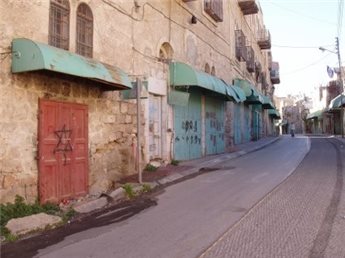



 Aletho News

