Egypt floods Gaza lifeline tunnels
Al-Akhbar | February 13, 2013
Egyptian forces have flooded smuggling tunnels under the border with the Palestinian-ruled Gaza Strip in a campaign to shut them down, Egyptian and Palestinian officials said.
The network of tunnels is a vital lifeline for Gaza, bringing in an estimated 30 percent of all goods that reach the enclave and circumventing a deadly blockade imposed by Israel for more than seven years.
Reuters reporters saw one tunnel being used to bring in cement and gravel suddenly fill with water on Sunday, sending workers rushing for safety. Locals said two other tunnels were likewise flooded, with Egyptians deliberately pumping in water.
“The Egyptians have opened the water to drown the tunnels,” said Abu Ghassan, who supervises the work of 30 men at one tunnel some 200 meters (yards) from the border fence.
An Egyptian security official in the Sinai told Reuters the campaign started five days ago.
“We are using water to close the tunnels by raising water from one of the wells,” he said, declining to be named.
While Gaza’s rulers have been reluctant to criticize Mursi in public, ordinary Gazans are slightly more vocal.
“Egyptian measures against tunnels have worsened since the election of Mursi. Our Hamas brothers thought he would open up Gaza. I guess they were wrong,” said a tunnel owner, who identified himself only as Ayed, fearing reprisal.
“Perhaps 150 or 200 tunnels have been shut since the Sinai attack. This is the Mursi era,” he added.
Dozens of tunnels had been destroyed since last August following the killing of 16 Egyptian soldiers in a militant attack near the Gaza fence.
Cairo said some of the gunmen had crossed into Egypt via the tunnels – a charge denied by Palestinians – and ordered an immediate crackdown.
The move surprised and angered Gaza’s rulers, the Islamist group Hamas, which had hoped for much better ties with Cairo following the election last year of Egyptian President Mohamed Mursi, an Islamist who is ideologically close to Hamas.
A Hamas official confirmed Egypt was again targeting the tunnels. He gave no further details and declined to speculate on the timing of the move, which started while Palestinian faction leaders met in Cairo to try to overcome deep divisions.
The tunnelers fear the water being pumped underground might collapse the passage ways, with possible disastrous consequences.
“Water can cause cracks in the wall and may cause the collapse of the tunnel. It may kill people,” said Ahmed Al-Shaer, a tunnel worker whose cousin died a year ago when a tunnel caved in on him.
Six Palestinians died in January in tunnel implosions, raising the death toll amongst workers to 233 since 2007, according to Gazan human rights groups, including an estimated 20 who died in various Israeli air attacks on the border lands.
Israel imposed its vicious blockade on the coastal strip in 2007. Food imports to Gaza were cut by nearly 75 percent, from 400 trucks per day to 106 by the start of the blockade.
At one stage an estimated 2,500-3,000 tunnels snaked their way under the desert fence but the network has shrunk markedly since 2010, when Israel eased some of the limits they imposed on imports into the coastal enclave.
All goods still have to be screened before entering Gaza and Israel says some restrictions must remain on items that could be used to make or to store weapons.
This ensures the tunnels are still active, particularly to bring in building materials. Hamas also prefers using the tunnels to smuggle in fuel, thereby avoiding custom dues that are payable on oil crossing via Israel.
(Reuters, Al-Akhbar)
Palestinians’ Life in the Shadow of the Barrier Wall
By Hasan Afif El-Hasan | Palestine Chronicle | February 12, 2013
Since 1967 Israeli-Arab war, the Palestinians in the occupied lands have to contend in their daily lives with Jewish-only settlements, settler-only highways, check points and roadblocks, earth mounds and trenches, land confiscation, house demolition, raids, detention, extrajudicial assassinations, and daily attacks on besieged Gaza. And in 2002, Israel started building the barrier wall in and around the West Bank delineating unilaterally a de facto Israeli border. The wall delivered settlements and land for their growth on the Israeli side of the wall. The Arab League managed to bring the subject to the attention of the UN Security Council, but the US vetoed a resolution condemning the construction of the wall as a violation of international law. The wall, many observers refer to as the ‘Apartheid wall’, was declared illegal by the International Court of Justice in a 2004 advisory opinion because it was built in the West Bank Palestinians’ land.
The Israelis call the wall ‘a fence’ arguing that ‘good fences make good neighbors’, but unlike this structure, fences are not built in the neighbor’s land. Even the infamous Cold War Berlin Wall that was constructed by the East German Communist regime was built on East Germany’s territory. The Israeli barrier wall is made of precast concrete slabs, twenty-five feet high capped with surveillance towers and cameras. It has been erected in the West Bank lands mostly three to five miles to the east of the defunct Green Line (the border of Israel proper), creating many Palestinian enclaves and cutting off access to Palestinians’ agricultural land and water resources in closed areas on the other side of the barrier.
The wall created enclaves in Greater Jerusalem area, Ramallah, Bethlehem, Qalqilya and Tulkarm hinterlands where families are divided and communities are denied access to schools, health services and workplaces. ‘More than 49,000 Palestinians have been trapped between the wall and the Green Line’; their human rights are being violated by restricting their liberty of movement. Palestinians wishing to visit friends or families on the other side of the wall require permits to go through guarded gates, and they need special permits to stay overnight. 200,000 Palestinians are enclosed by the wall in East Jerusalem area that had been annexed by Israel immediately after the 1967 war.
The oppressive structure that snakes around large population and urban centers carves more than 450-mile path through the West Bank creating economic hardship and inhumane conditions on the Palestinian population. Building the wall in Palestinian lands is part of Israel’s master-plan of annexing major settlement blocks and security zones and dividing the Palestinian-populated parts of the West Bank into non-contiguous cantons. According to the Israel’s human rights organization, B’Tselem, ‘major parts of the wall route were set with the [settlements] expansion plans in mind.’ The wall was described by Yedioth Ahronoth daily newspaper on May 26, 2003 as the largest infrastructure project in Israel’s history.
In the area of Qalqilya town, the path of the wall was planned to expropriate thousands more acres of Palestinian land for nearby Alfei Zahran settlement and its satellites. Qalqilya, home for 45,000 Palestinians, is located in the north of the West Bank on rich lands and water reserves. After the 1948 war and the border adjustment of the Jordanian-Israeli truce agreement, Qalqilya lost most of its best farmland to Israel including thousands of acres of citrus groves, and the town became home for thousands of Palestinian refugees who fled or were expelled from the territories that became Israel.
The people of Qalqilya proved their resilience and survival spirit by starting from scratch, clearing their remaining land for cultivation and extracting water from underground Western Aquifer; and through hard work, they re-established their town as a major agriculture producer in the West Bank and services center for the thirty villages in its district. Its citrus fruits and vegetable products were sold in the West Bank markets and exported to Jordan and the Gulf States.
Qalqilya’s location only fifteen miles from the Mediterranean and its proximity to Israel’s narrow ‘waist’ has been a liability. In 1967 Israeli-Arab war, seventy percent of the Qalqilya town was destroyed by Israel’s tanks and air-force bombardment as an attempt to cleanse the city. The Israeli military rounded thousands of its residents and bussed them to the border with Jordan. The Israeli occupation authorities confiscated Qalqilya’s land as they did everywhere in the occupied lands, built Jews-only settlements, imposed quotas on the town’s existing water wells and restricted drilling for agricultural use. At the same time, drilling of underground water for the Jewish settlements has been limitless. Nineteen settlements have been built in Qalqilya district cultivated farmland today. And in 2003, the town people were horrified when the Israeli military revealed that their town would be encircled by the barrier wall.
The wall cuts Qalqilya city off from neighboring villages and isolates it from the land and water resources on which the town’s people livelihood depends. Like many communities in the wall path, Qalqilya has become a town caged in by concrete slabs and electronic fences linked to depleted hinterlands via underpasses and tunnels while the settlers travel without restrictions on Jews-only roads. Farmers have to travel miles to reach their land across the wall causing decline in cultivation and productivity. The wall and the land confiscation deprived Qalqilya of its role as a regional commercial center, made life in the town and surrounding villages too difficult, and work opportunities hard to get. The once vibrant commercial area workshops and stores in Qalqilya are closed down due to the declining economic conditions. The role of agriculture as an earner diminished, thousands of families whose bread-winners cannot find work in agriculture or commerce anymore depend on social assistance for survival today. The brutality of the occupation and the deteriorating economic conditions must have taken their toll on civil life with families splitting and children traumatized.
‘More than 4000 of Qalqilya’s citizens had migrated [after the wall has been built]’, writes Ray Dolphin in his book ‘Unmaking Palestine’. The effect of the wall on Qalqilya Town is no different from its impact on many West Bank communities. Many youth from communities impacted by the wall had to leave to other West Bank cities or to neighboring Arab countries, thus the wall might have accomplished cleansing much of its path, something Israel tried and failed to achieve in the 1967 war.
– Hasan Afif El-Hasan is a political analyst. His latest book, Is The Two-State Solution Already Dead? (Algora Publishing, New York), now available on Amazon.com and Barnes & Noble.
Related articles
- Israeli Authorities Change Route Of Wall To Fully Annex Jerusalem For Israel (alethonews.wordpress.com)
- Israel greenlights construction of hundreds of settlement homes (alethonews.wordpress.com)
Jewish settler’s ‘bio-war’ against the ancient city of Sabastiya
International Solidarity Movement | February 12, 2013
Sabastiya, Occupied Palestine – Sabastiya is an ancient city located just 10 km north of Nablus, West Bank. It contains Canaanite, Israelite, Hellenistic, Herodian, Roman and Byzantine ruins as well as the tomb of John the Baptiste. The winding city streets along with its history make Sabastiya an ideal place to visit. Yet, as charming and beautiful as the old city is, the nearby Israeli settlement of Shafi Shamrom is making lives of Sabastiya’s residents very difficult: settlers uprooted olive trees, introduced wild boars into the environment to damage the land, and most recently, sewage has started leaking from the settlement flooding Palestinian fields.
In 2001 settlers uprooted and destroyed around 1000 olive trees, substantially damaging the land of several families. In 2006 the army put up a fence in an attempt to confiscate the land where the trees had originally been. Sabastiya’s farmers acted: they pulled the fence down in a defiant act of resistance and since that time there have been no further attempts to install it again.
The most recent and disturbing action on the part of illegal settlers of Shafi Shamron is pumping their raw, untreated sewage directly onto Palestinian fields. As the sewage is absorbed into the land, olive and apricot trees are rendered diseased and, according to the residents, “poisoned”. The flow of human waste begins from a pipe on the perimeter of the settlement, creating a sort of reservoir which then runs through the adjacent Palestinian fields, compelling each subsequent land owner to create a canal in order to drain the sewage water on to his neighbors land and further away.
Residents of Sabastiya are currently bringing legal action against Shafi Shamron in order to stop the settlement from dumping its sewage on Palestinian lands. The malodorous sewage running through the fields must remind a regular visitor of non-violent protests of a very effective strategy used by the army; the “skunk” water, which is chemical liquid smelling of excrement commonly sprayed on protesters. Settlers are evidently using a similar technique to make local residents’ lives even more difficult.
Related articles
- Farming Injustice (alethonews.wordpress.com)
- Resist the land grab: donate a tree (palsolidarity.org)
- Israel’s Colonial Terrorism: Settlers drench Palestinian land with wastewater (occupiedpalestine.wordpress.com)
- Israel must remove all Jewish settlers from occupied West Bank – UN inquiry (alethonews.wordpress.com)
Israeli forces arrest Hamas-affiliates across West Bank
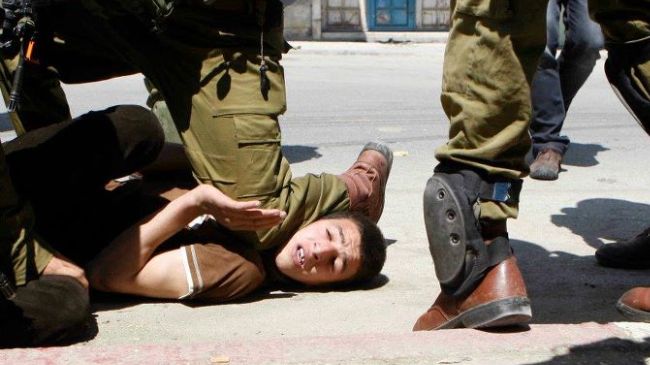
Ma’an – 12/02/2013
BETHLEHEM – Israeli forces launched multiple arrest raids overnight Monday against Hamas affiliates in the West Bank, Hamas sources and locals said.
Hamas leader Rafat Jamil Nasif, 45, was detained in Tulkarem in an arrest raid on his home, sources in the Islamist movement said. Nasif’s family were forced to stand outside in the cold while sniffer dogs searched his home.
Musab al-Ashqar, Abdullah Ismail al-Khalil and Ammar Jihad Ameir, students at al-Khadouri university, were also arrested in Tulkarem, together with the local Imam’s son Qitad Amar Bidawi.
In Nablus, Israeli forces detained a local Islamist student leader Muthanna Jamil Eshtayeh and students Osama Khalid Yamin and Walid Jamal Asida from An-Najah university, locals said.
Mousa Ahmad Yamin and Abed al-Ghani Ayesh Samara were also detained in nearby villages.
Four people were arrested in Qalandia refugee camp in Ramallah, including two ex-prisoners, and in Hebron two other students were detained.
An Israeli army spokeswoman said that 13 people were detained overnight, including four in Nablus, five in Tulkarem, three in Bethlehem and one in Hebron.
Another military spokesman said nine people arrested were affiliated with Hamas.
The latest detentions follow a sweep of arrests of Hamas-affiliated officials in the West Bank over the past week.
Last Tuesday, Israeli forces arrested 12 people including at least three Hamas-affiliates.
A day earlier, Israeli soldiers arrested 23 members of Hamas, including three lawmakers — Ahmed Attoun in al-Bireh, Hatem Qafisha in Hebron and Mohammed al-Tal in al-Dhahiriyya.
Hamas condemned the arrests as a “criminal act.”
Related article
- Israel arrests 22 Hamas members ahead of Fatah-Hamas talks (alethonews.wordpress.com)
Securing the ethnic cleansing of Silwan: Settlements in Wadi Hilweh using Pelco security equipment

Pelco camera system being used by illegal settlement in Silwan
Corporate Watch | February 10, 2013
The Palestinian neighbourhood of Silwan is experiencing harassment and home demolitions at the hands of the Israeli state and settler organisations. This ethnic cleansing is enforced by security companies and surveillance technology and facilitated by revenue from international donors and from tourism. Corporate Watch will be writing a series of articles over the coming months exposing the companies and charities carrying out this ethnic cleansing and those organisations who are funding it and profiting from it.
The communities of Wadi Hilweh and Al Bustan in Silwan in East Jerusalem are watched over by hundreds of Closed Circuit Surveillance (CCTV) cameras installed by settlers and the settler/colonial organisation El Ad.
These cameras watch over the creeping colonisation of the area which has been going on since the 1990s. Much of this has centred around the seizing of Palestinian property by the El Ad organisation and the undermining of the Palestinian community through archaeological excavations carried out by the same organisation with the complicity of the Israeli National Parks Authority and the Israeli antiquities Authority (read more about El Ad and the excavations here).
During the 1990s the Israeli state and the Jewish National Fund gave one third of the land of Wadi Hilweh to El Ad. Since then settlers have moved in and El Ad has used a series of dirty tricks to acquire more and more properties in Wadi Hilweh. At the same time Palestinian homes are subject to demolitions under planning regulations, such as the demolitions that took place on 2nd February 2013.
On Wednesday 23rd and Thursday 24th January 2012 Corporate Watch researchers photographed dozens of Pelco security cameras being used by the settlements in Silwan including those at the El Ad compound close to the ‘City of David’ Visitors Centre in Wadi Hilweh.
The cameras included those in use at the Tirah House settlement, a Palestinian home occupied by Israeli settlers.
Pelco is a manufacturer and supplier of security cameras based in Clovis, California. The company has 2,200 employees worldwide and resellers in 130 coutries.
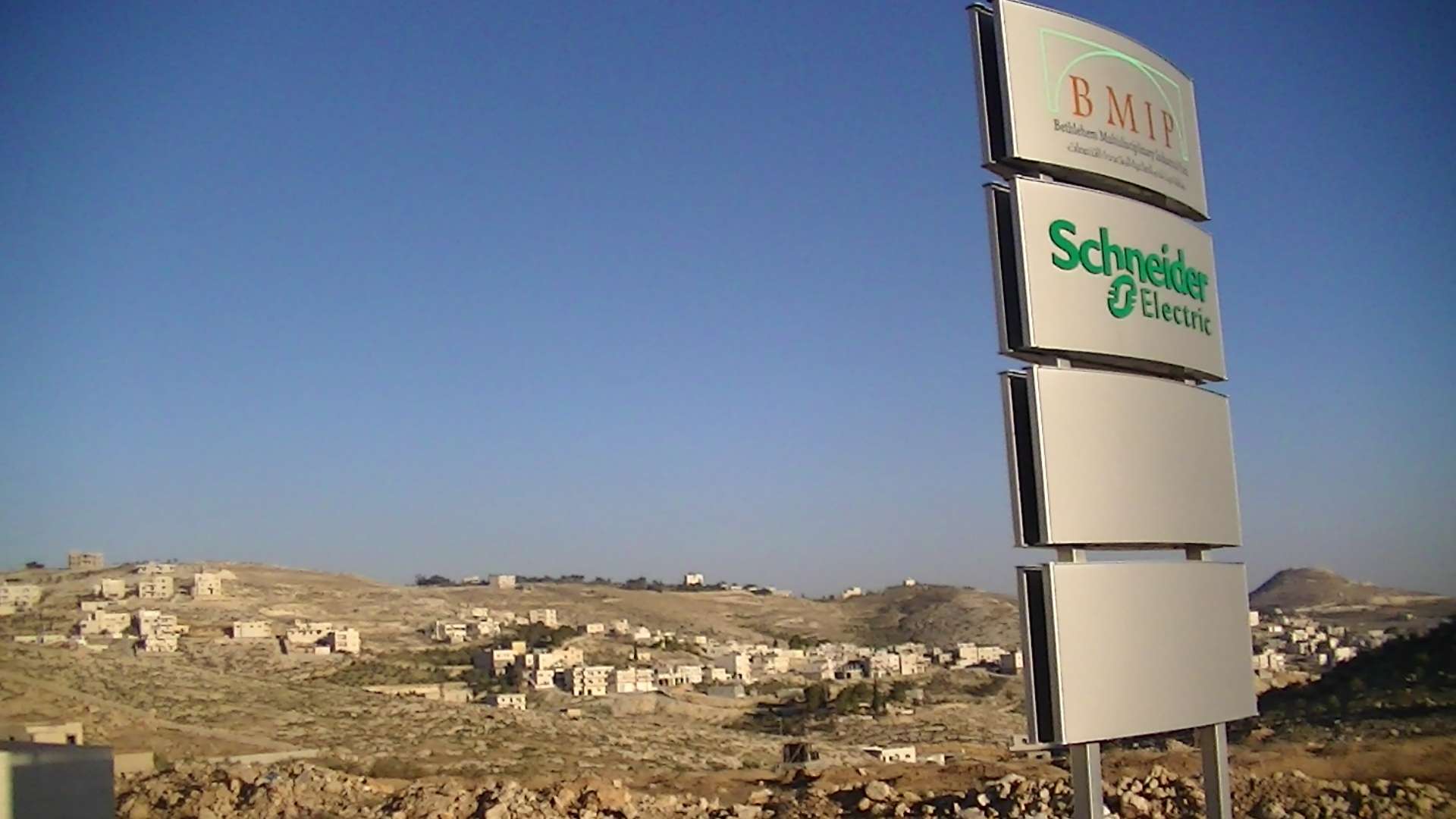 Since 2007 Pelco has been part of Schneider-Electric, a French multinational company headquartered in Rueil-Malmaison. Schneider-Electric has 130,000 employees and 2011 sales totaling 22.4 billion Euros. It operates in 190 countries.
Schneider-Electric is one of the only companies to have shown interest in the joint French-Palestinian Authority (PA) industrial zone in Bethlehem, the Bethlehem Multidisciplinary Industrial Park. It seems the PA have chosen poor partners for its flagship industrial zone.
Schneider-Electrics global operations are listed here
To contact Pelco click here
For more information on Silwan click here.
Photos taken by Corporate Watch researchers
Related articles
- VIDEO | Demolition in Wadi al-Arababe – Bulldozers and attack dogs in Silwan Jerusalem (occupiedpalestine.wordpress.com)
- Attacks Continue Against Silwan (imemc.org)
- Report: Israeli escalation in detaining children and house demolitions (altahrir.wordpress.com)
- Undercover Forces Kidnap Children, Youths, In Silwan (imemc.org)
Historic buildings around Al-Aqsa continue to be demolished
MEMO | February 9, 2013
For the third day in a row, Israeli bulldozers are demolishing historic arches and facades of Islamic buildings dating back to the Mamluk and Ottoman eras on the north side of Buraq Square. The site lies just 50 metres from the Noble Sanctuary of Al-Aqsa.
Details of the architectural vandalism by the Israeli occupation authorities were provided by Al-Aqsa Foundation for Religious Endowments and Heritage in a press statement. The Israeli demolition work is a prelude to the establishment of a centre promoting the state’s Judaisation policies in the occupied Palestinian territories. The buildings in question formed part of the Moroccan Quarter of the Old City, which was demolished by the Israelis in 1967 at the start of the occupation of Jerusalem, the West Bank and the Gaza Strip.
The foundation said that it will use exclusive maps and documents to show how the Israelis plan to establish a synagogue, a police station, a reception area and show rooms on the site, all of which will be linked to tunnels under Al-Aqsa Mosque. A press conference will be held on Sunday for that purpose which will be attended by the head of the Islamic movement in Israel, Sheikh Raed Salah. Among the other speakers will be the Chairman of the Islamic Supreme Council and the Imam of Al Aqsa Mosque, Dr Sheikh Ikrima Sabri, and Hatem Abdel Qader, who deals with the Jerusalem file for Fatah, as well as the foundation’s director, Amir Khatib.
According to the documents held by Al-Aqsa Foundation, the development will necessitate the destruction of noted Islamic landmarks. It is worth noting that the State of Israel pledged in its Declaration of Independence that it “will safeguard the Holy Places of all religions; and it will be faithful to the principles of the Charter of the United Nations”. The State of Israel regularly breaks both pledges with apparent impunity.
Related articles
- Palestine: Occupation continues to falsify al-Aqsa’s history, protest villages continue & violations against Gaza’a fishermen (realisticbird.wordpress.com)
- Palestine: Hundreds of Israelis storm Nabi Yusuf tomb, part of Buraq Square destroyed, a crime against Al Aqsa & demolitions (realisticbird.wordpress.com)
Canaan protest village
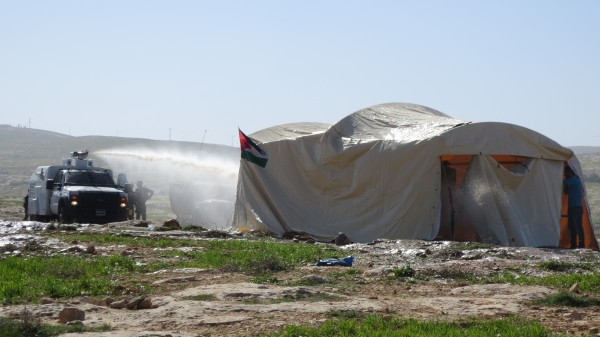 Canaan tent being skunk watered (Photo: ISM)

Beit Ommar Popular Movement | February 10, 2013
South Hebron Hills, Occupied Palestine – Today, the South West Popular Committee along with international activists embarked on a new effort to establish a village, Canaan, on Palestinian land in South Hebron Hills. The village’s name was not accidental. We wanted to declare that we are the indigenous people of Palestine. We are the descendants of the Canaanites and our ties to the land can never be broken or taken away. Early last night, various Palestinian activists from a wide array of villages in the South West Bank area along with international activists met in a home to discuss plans for the coming day.
Signs were prepared which stated ‘Our Land is Our Right’, ‘Canaan Village’ and a declaration of intent which stated that “we are the sons and daughters of the Cananites, we establish Canaan Village on endangered Palestinian land.” “We declare that it is our natural right to develop, reclaim, improve, use and live on all our lands free and without threat from occupiers/colonizers.”
In the early morning hours, following a night of planning, we established Canaan as our first attempt, in the south of Yatta (the entrance to Twani). Within less than a minute, while we barely managed to establish the tent, an occupation jeep arrived. The occupation soldiers encircled us and told us we must leave. We refused to obey such a racist demand. An officer of the occupation army then went on to demolish our tent, steal our additional tents and equipment and violently prevent us from reclaiming our land and our belongings.
Several hours later, we went on with a much larger group of activists, international supporters and an especially large number of journalists, to east Yatta, near Ein Mai’in, Hazawai, we established a large tent and began building a room from stones of the land. Within half an hour, we were heavily encircled by at least 6 jeeps of the occupation forces. A large military vehicle which fires skunk water was brought in. We were told that we have 10 minuets to leave the area and that the land was a ‘closed military zone’. We did not yield of course and were immediately showered upon by heavy skunk water.
Occupation soldiers then went on to attack journalists and arrest them. They beat an elderly woman and other activists. In several instances, activists jumped in and prevented with their bodies the arrest of two people. After several hours of struggling with the occupation soldiers which numbered more than 50, 4 journalists, 8 Palestinians and 2 international activists were arrested, our tent was destroyed and we were prevented from returning to our land. For many hours during the hot afternoon, hundreds of activists remained in the area and demanded the right to return to the Canaan Village.
Related article
Farming Injustice
International day of action – February 9th
Palestinian farmers organisations and campaigners in Europe are this weekend taking action to call for an end to trade with Israeli agricultural export companies over their role in Israeli violations of Palestinian human rights. Read the call to action here.
In Gaza, Palestinian fishermen held a press conference and rally on February 6 to draw attention to Israel’s attacks on fishermen. Farmers and activists will march towards the buffer zones near the border with Israel on February 9 to protest Israel’s destruction of farmland and attacks on farmers.
In the West Bank, a conference and other actions will be held in Salfit to discuss a boycott of Israeli goods and resistance to Israel’s colonisation and systematically implemented restrictions on Palestinian agriculture.
All of the major Palestinian agricultural organisations have marked the day of action by publishing an appeal for action for the launching of campaigns against Israeli agricultural companies and an accompanying briefing, which aims to shed light on the role of Israeli agricultural companies in the destruction of of Palestinian agriculture.
Solidarity campaigners, trade unionists and NGOs across Europe are holding actions and launching campaigns against Israeli agricultural export companies such as Mehadrin and Arava, who export fresh produce from illegal Israeli settlements and are among the primary beneficiaries of the destruction of Palestinian agriculture.
There will be events, flash mobs and protests in more than 40 cities across 9 European countries including France, the UK, the Netherlands, Belgium, Sweden, Switzerland, Luxembourg, Germany and Italy. Campaigners are calling on governments to ban settlement trade and on retailers to adopt the position of the Co-Operative supermarket in the UK, which refuses to trade with any Israeli company that operates in settlements.
You can follow the actions on Twitter using the hashtag #FarmingInjustice.
Actions taking place across the world
Palestine
Dozens of Palestinian farmers and fishermen rallied in the Gaza seaport this week, launching several days of actions across the Strip to support boycotts of Israeli agricultural corporations.
Upcoming events will include a march by farmers, ending with the planting of olive trees, near the “buffer zone” around Gaza’s boundary with Israel on Saturday.
In the West Bank, a conference and other actions will be held in Salfit to discuss a boycott of Israeli goods and resistance to Israel’s colonisation and systematically implemented restrictions on Palestinian agriculture.
Also in the West Bank, the villagers of Madama, the centre for the Martyr Billal Najar from Burin and International Solidarity Movement activists will plant Olive trees on the land of Madama village where illegal settlers cut down hundreds of olive trees.
France
Activists in Montpellier occupied the customs offices to protest the import of produce from Israeli agricultural companies that operate in settlements on Thursday. Actions are planned in 14 other French cities on Saturday.
UK
Protests and actions are planned in more than XX cities as part of a new campaign to pressure major supermarket Sainsbury’s to end trade with any Israeli company that from settlements.
Belgium
Creative ‘Boycott Carnival’ action and demonstration in central Brussels
Sweden
Pickets at Coop-stores in Stockholm and Hässleholm as part of the campaign to pressure the supermarket to end trade with complicit Israeli companies
Netherlands
A creative protest action in the ‘Black Market’ Bazar, Beverwijk, at which goods from Israeli companies such as Mehadrin and Arava are often present
Luxembourg
Actions at supermarkets in several cities.
Italy
Actions and demonstrations in Rome and Trento
Actions are also planned in Germany and Switzerland, with more details to follow.
Related articles
Featured Video

Thomas Fazi: NATO’s Hybrid Warfare – Deception & Permanent War
or go to
Aletho News Archives – Video-Images
Book Review
The Zeolite Book — First Edition, 2026, Paperback
The volcanic mineral medicine will not patent — for the toxic burden medicine will not name
Lies are Unbekoming – October 30, 2026
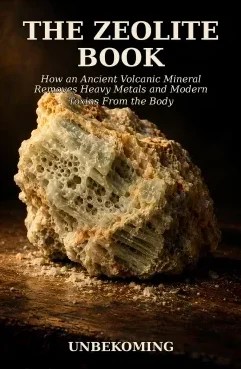 Zeolite is old. It is in Roman concrete that has held for two thousand years. It’s in the water filters of ancient cisterns. It’s in the stomachs of Pacific livestock whose keepers knew, somehow, that this grey crumbling rock made the animals healthier. It’s in Soviet clinical protocols from the 1960s. It’s in the standard emergency response to the Chernobyl explosion.
In 1986, after the Chernobyl reactor failure, the Soviet Union manufactured and distributed natural zeolite at industrial scale — for soil remediation, for livestock feed, for human consumption, for the cleanup itself. Karl Hecht, who had been director of the Institute for Experimental and Clinical Pathophysiology at the Charité of Humboldt University Berlin, spent the six decades after that building the clinical research base — on silicon’s role in human health, on zeolite’s clinical safety, on its applications in ageing. In 2018, Pavelić and colleagues published a comprehensive clinical safety review of natural clinoptilolite in Frontiers in Pharmacology. In 2019, Mastinu analysed its binding affinities. In the Western medical literature, these works sit largely uncited.
What has not been treated at book length, until now, is how a volcanic mineral with six decades of Soviet clinical work behind it, two major peer-reviewed Western reviews, and ongoing clinical use across the former Eastern Bloc, remains almost entirely absent from Western medical practice — and what the toxic burden it’s meant to address actually is.
The Zeolite Book gathers the Soviet clinical record, the Western peer-reviewed studies, three contemporary practitioner voices, and three serious counterviews into one honest treatment. That’s why the book runs to seven appendices. 288 pages, four parts, three practitioner voices, three counterviews, seven appendices. The honest treatment is the argument.
Blog Roll
 Aletho News
- UAE security forces tortured, killed journalist for opposing Israel normalization: Report
- They Compared the Spice to the Drug. The Spice Won — Again. (Part 2)
- Thomas Fazi: NATO’s Hybrid Warfare – Deception & Permanent War
- Wrong, AP and NPR: Europe’s 50,000 Heat Deaths Are a Computer-Model Estimate, Not a Real Body Count
- Questioning Your Doctor Is Now Considered A Psychological Problem (Seriously)
- London tourism expo promotes Israeli agency linked to theft of Palestinian land
- Dockworkers launch global strike against Israeli and US military shipments
- Europe facing gas price shock – Gazprom chief
- Ukraine continues recruiting people with disabilities
- Weaponized Journalism: 2021 Sayer Ji Interview with NPR
- If Americans Knew
- An error has occurred; the feed is probably down. Try again later.
- No Tricks Zone
- Germany’s Green Energy Transition Becoming Increasingly Expensive…Another 6 Trillion Euros!
- Sudden Stratospheric Warming, Powerful El Niño Combination May Lead To Extreme Europe Cold, Energy Crisis!
- Two New Studies Find Thwaites Glacier Melt Cannot Be Driven By Human Activity Or A Warming Ocean
- E-Cars Reduce CO2 Emissions By Only 41% Compared To Internal Combustion Engine Vehicles
- Predictions Made By Renowned Climate Professor Over Past Decades Have Been Proven To Be Poor
- New Study Suggests Large Regions Of The Pacific Ocean Have Been Cooling For The Last 80 Years
- Germany’s Green Energy Debacle: High Energy Costs Force Kahla Porzellan to Close After 182 Years!
- New Study: 50 Years Of The Most Aggressive ‘Net Zero’ Policies Can Only Affect The Global Climate By 0.03°C
- US September “Heat” Was No Record…Many Records Set Decades Ago
- Latest European Green Energy Debacle; Portugal’s Largest Flagship Solar Park Insolvent!

