Knesset member demands expulsion of Palestinian leader Salah
Palestine Information Center – 28/10/2010
 UMM AL-FAHM — Far-right Knesset member Baruch Marzel called for the expulsion of the head of the Islamic Movement Sheikh Ra’ed Salah from occupied Palestine during his participation in a provocative march held on the outskirts of Umm Al-Fahm city.
Palestinian residents of Umm Al-Fahm and nearby towns had stood by since early morning hours to confront the extremist Jewish settlers who staged a protest outside the house of Sheikh Salah.
The Israeli policemen deployed throughout the city started without prior notice to disperse the Palestinian crowds attacking them with batons and firing tear gas and stun grenades. Many injuries and suffocation cases were reported among the Palestinians including Arab Knesset members Hanin Zoabi and Afo Igbariya.
Deputy head of the Islamic Movement Sheikh Kamal Al-Khatib told journalists during the events that the Zionist extremist right-wing which is led by Marzel does not just represent itself but also the Israeli government which was established on hatred and racism against everything Palestinian.
The Israeli high court had allowed Marzel’s group, which is notorious for extremism, to stage a march in Umm Al-Fahm in protest at Sheikh Salah’s participation in Freedom Flotilla aid convoy.
Sheikh Salah is still in Israeli jails and serving a five-month sentence after the Israeli occupation authority (IOA) fabricated lies against him claiming he assaulted an Israeli police officer during events that erupted years ago at the Aqsa Mosque.
For his part, secretary-general of the Palestinian legislative council (PLC) Dr. Mahmoud Al-Ramhi condemned the Jewish settlers’ march as provocative and racist showing the extremism of its organizers and protectors.
“The recent Zionist practices against the Palestinians in the territories occupied in 1948 are happening in the context of the restrictions imposed on the Palestinians there to force them to leave their land and Arab-Palestinian property to the Zionist occupier who came from outside Palestine, and from the whole region in fact,” lawmaker Ramhi stated on Wednesday.
The lawmaker hailed the Palestinians in the 1948 occupied lands for courageously standing up to the Jewish extremists and police forces that protected them in Umm Al-Fahm city.
The Hamas lawmakers in the West Bank also denounced the Israeli police for brutally attacking Palestinian citizens during the settlers’ provocative march in Umm Al-Fahm, saying such acts were a clear indication of Israel’s sadistic policy.
They warned in a statement yesterday that Israel escalated its ethnic cleansing policy against the Palestinians in the 1948 occupied lands in order to end the Arab presence completely in this occupied area of Palestine.
The lawmakers noted that the Israeli occupation state has recently targeted dozens of Palestinians through its racist laws and arbitrary measures in order to force them to leave their homes and place of residence.
What Are They Hiding? Obama Administration Defending Black Site Prison at Bagram Airbase
Dave Lindorff | This Can’t Be Happening | 10/26/2010
A victory for the government in a federal court in New York City Monday marks another slide deeper into Dick Cheney’s “dark side” for the Obama Administration.
In a lawsuit filed by the American Civil Liberties Union, which has been seeking to force the Pentagon to provide information about all captives it is holding at its huge prison facility at Bagram Airbase outside Kabul in Afghanistan, Federal District Judge Barbara Jones of the Southern District of New York has issued a summary judgement saying that the government may keep that information secret.
The lingering question is: Why does the US government so adamantly want to hide information about where captives were first taken into military custody, their citizenship, the length of their captivity, and the circumstances under which they were captured?
Says Melissa Goodman, staff attorney with the ACLU’s National Security Project, “The military says that they can’t release the information because it would be a threat to national security, but they provided that information for the prisoners at Guantanamo.”
And of course, as our leaders informed us repeatedly, those captives at Guantanamo, who hailed from all over the globe, including Afghanistan, were allegedly “the worst of the worst”–at least until it turned out that many of them were wholly innocent of anything. Had been framed and turned in for a bounty, or were mere children when picked up, like Omar Khadr, the 24-year old Canadian man who just copped a guilty plea to avoid a sham tribunal before 7 officers and potential life imprisonment, after being captured at 15, tortured at Bagram, and held for nine years at Guantanamo (on a charge of killing an American soldier in battle).
The court ruling keeping the information about the thousands of prisoners held at Bagram secret may be a victory for the government, but it is hardly a victory for America’s image in the world, or for the troops battling in Afghanistan, who will be attacked all the harder by people induced to fight to the death to avoid capture and consignment to the hellhole in Bagram (now known as Parwan Prison), which has become Afghanistan’s Abu Ghraib and Guantanamo rolled into one.
One of the things that concerns the ACLU is that by not even making public the circumstances under which Bagram detainees were brought into the prison, it appears likely that the administration is hiding the reality that many “probably don’t deserve to be there,” says the ACLU’s Goodman. She explains, “There could be plenty of people sitting there who were just caught up in house sweeps in Kabul, for instance.”
As well, she says that by withholding information about citizenship and about the place of initial capture, the government may be hiding the fact that it is using Bagram as it used to use Guantanamo, as a so-called “black site” for “rendering,” or bringing, people captured all around the world.
Making matters worse is a string of continuing reports from people released from Bagram, including some which are very recent, that it is a site where torture is routinely applied to prisoners.
Significantly, a second part of the court’s ruling was that the CIA does not have to confirm or deny whether it too is holding captives at Bagram. This is a serious blow too to America’s reputation and to democratic values, since when President Obama, early in his presidency, signed an executive order outlawing torture by the military, he left some major loopholes. Most significantly, he applied that order only to persons captured during “armed conflict.” Since the US doesn’t consider captives in the loosely-defined “War on Terror” to be legitimate combatants, that means many of the people held at Bagram may be considered outside of the president’s ban. The order also says captives in counterterror operations do not have to be reported to the Red Cross.
Goodman says, “Despite concerns that Bagram has become the new Guantánamo, the public remains in the dark when it comes to basic facts about the facility and whom our military is holding in indefinite military detention there. The public has a right to know how long the U.S. has kept people locked up in military detention and under what circumstances. The lack of transparency about these key facts is even more disturbing considering the possibility that the U.S. will continue holding and interrogating prisoners at Bagram well into the future. Unfortunately, today’s ruling will allow the government to continue hiding this vital information.”
When the ugly sadistic goings on at Abu Ghraib were exposed, it caused massive damage to the US, and, according to government statements at the time, ended up helping recruit more future terrorists. It seems the Obama adminstration is heading down the same road now at Bagram, with the blessing of a Judge Jones.
Arundhati Roy on Kashmir’s Independence
Democracy Now! |October 27, 2010
The award-winning Indian author Arundhati Roy is facing possible arrest in India on sedition charges after publicly advocating for Kashmir independence and challenging India’s claim that Kashmir is an “integral part of India.” If charged and convicted of sedition Roy could face up to life in prison.
For interview transcripts, podcast and more information, see http://www.DemocracyNow.org.
Haifa activist accepts plea deal
By Jared Malsin | Ma’an | October 27, 2010
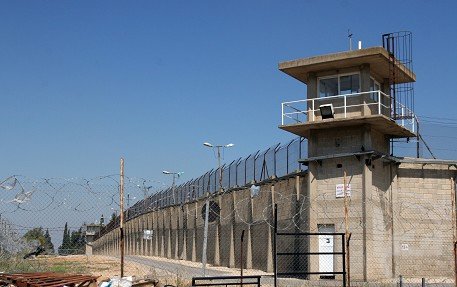
GAZA — Ameer Makhoul, the Palestinian activist from Haifa, accepted a plea bargain on Wednesday, confessing to espionage charges leveled by the Israeli state.
Makhoul, an Israeli citizen, was detained by authorities during a nighttime raid on his home in May. He and his lawyers maintain that the charges against him are political, and that he was tortured while in prison. Makhoul was also banned from seeing a lawyer for the first 12 days of his detention.
The charges include conspiring to assist an enemy, contact with a foreign agent and spying for Hezbollah.
Orna Kohn, one of Makhoul’s lawyers from the legal rights group Adalah, said Makhoul decided to accept the plea deal after consultation with his defense team.
Under the deal, she said, the content of the indictment was reduced. The state is asking for 10 years imprisonment, while the defense is asking for seven, Kohn added.
Kohn said the decision to accept the deal was made after taking into consideration “the political climate now and the legal situation under Israeli law with so-called security charges, and given the history rulings in Israeli courts dealing with such charges.”
Kohn said she met Makhoul earlier on Wednesday. Asked about his condition, she said, “He’s well. He’s hopeful the court will rule for the minimal number of years.”
“He understands his chances of being acquitted are slim,” she added. She said the charges against him “in any other country should not have been basis for indictment.”
A hearing is set for 5 December, when the court will decide whether to accept the plea deal reached between the prosecution and the defense.
Makhoul is the director of Ittijah, the Union of Arab Community-Based Organizations, and also chaired the High Arab Monitoring Committee’s panel on defending Arab citizens’ freedoms. He was arrested in May along with Omar Saeed, an activist with the Balad party.
The plea bargain was agreed upon in the Haifa District Court after being submitted on Tuesday.
A representative for the prosecution told the Israeli newspaper Haaretz: “The plea bargain was approved by the highest ranking levels of prosecution, including the state prosecutor. Most importantly Makhoul, who claimed he was being politically persecuted at the beginning of this, now stands in front of the court and admits to the charges attributed to him.”
99% of separation wall built on ’67 occupied land
Palestine Information Center – 27/10/2010
CAIRO — The Arab League warned that the separation wall built by Israel will devour fertile farmland in the West Bank province of Qalqiliya, within the framework of a systematic plan to take control of Palestine’s most fertile and strategically important lands.
The report, issued by the Arab League’s Palestine department, confirmed that Israel is currently building the eastern section of the apartheid wall in order to annex a larger area of fertile land in Qalqiliya.
The report said that Israeli authorities closed off wall gate no. 1037 built in north Qalqiliya along the Tsofim colony in the beginning of last March, obstructing the passage of Palestinians as a service to the settlers, and damaging at least 3,500 dunums of Palestinian land behind the wall.
The 13,606 meter long wall surrounding the city from several directions has had a negative impact on the lives of 47,000 Palestinians and has left four villages and three nomadic groups without access to their land.
The Arab League said 500 kilometers of the wall have been built so far and that 99 per cent of it was built on Palestinian land occupied in 1967.
The report warned that more land could be confiscated for “security purposes” or other false pretenses. Under the pretext that the lands are military or training zones, or natural reserves, Israeli authorities hinder Palestinian access to 26 per cent of the West Bank’s land area.
The military sets up each month at least 310 mobile checkpoints intended to control civilian movement between West bank cities and villages.
The Israeli military has also imposed heavy restrictions on Palestinians in much of the land in the West Bank through the wall and imposed a travel permit system subject to strict security standards.
The Source of America’s wars, Neocons Zionists
Rys2sense | October 27, 2010
Whose interest are we spending trillions of dollars on wars and bankrupting America for? Certainly not America’s interests.
It’s not a blame Israel chorus (Alex) or some abstract group. It’s facts. The pre-war hype that led to war with Iraq was not generic corporatism. The lies specifically came from a zionist cabal in the DOD.
It wasn’t oil companies faking Niger documents it was Ledeen and Franklin. It wasn’t weapons companies lying about witnessing a transfer of anthrax in a meeting that didn’t even happen, it was Woolsey Barns and Schmit.
It wasn’t security companies lying about WMDs or spying on the US it was AIPAC It was the god damn Israeli moles Perle, Kristol, Fieth, Frum, Abrams, Libby, Wolfowitz, Kagan, Goldberg, and Grossman.
This is not some vague blame game. We have very specific facts as to who did what and it WAS the Israelis and this IS Israel’s war.
Chemical Engineer Mark Basile discusses his discovery of thermite in WTC dust
ae911truth | October 26, 2010
Chemical Engineer Mark Basile – The first scientist who found thermite in the World Trade Center dust discusses in depth his process of discovery using the scientific method.
This interview is some raw footage of one of the world class experts appearing in architects and engineer’s upcoming hard hitting documentary “9/11:Explosive Evidence – Experts speak out”
CCTVs put in Birmingham Muslim areas
Press TV – October 27, 2010
Two hundred surveillance cameras were put up “by mistake” in largely Muslim areas of Birmingham, West Midlands Police Authority have admitted. The cameras, some of which were hidden, were paid for with £3 million of government money earmarked for tackling terrorism, according to state-funded BBC.
The police had to apologize after angry Muslim residents said they had not been informed.
The scheme, called Project Champion, was made up of the city council, police and agencies in the Washwood Heath and Sparkbrook districts. It involved cameras being put up by the Safer Birmingham Project (SBP).
Last month, West Midlands Police Chief Constable Chris Sims apologized after the report by Thames Valley Police said the force showed “little evidence of thought being given to compliance with the legal or regulatory framework” before the cameras were put up, according to the BBC.
In a statement, Derek Webley, chairman of the West Midlands Police Authority, said, “We acknowledge that we did not get things right and want to take a positive approach to addressing what the report has found.”
He also said that it is wise for the authority to work with the community in order to consider this matter as an important issue in order to rebuild the trust and confidence of those in the area.
“Without this we know that we cannot deliver the policing that the public want to keep them safe from harm.”
Civil liberties groups have warned authorities that they would take legal action if all the cameras are not removed in two weeks.
How Much Money is Needed to Stop the BDS Movement?
By Alex Kane | October 27, 2010
$6 million dollars: enough to combat a largely grassroots, bottom-up and growing boycott, divestment and sanctions (BDS) movement targeting Israel? That’s what the Jewish Federations of North America and the Jewish Council for Public Affairs are hoping.
The Jewish Telegraphic Agency reports:
The Jewish Federations of North America and the Jewish Council for Public Affairs are launching a multimillion-dollar joint initiative to combat anti-Israel boycott, divestment and sanctions campaigns.
The JFNA and the rest of the Jewish federation system have agreed to invest $6 million over the next three years in the new initiative, which is being called the Israel Action Network. The federations will be working in conjunction with JCPA, an umbrella organization bringing together local Jewish community relations councils across North America.
The BDS movement–whose demands are based on international law–is clearly scaring Israel and the Jewish establishment, who have labeled the movement “the second most dangerous threat to Israel, after Iran’s pursuit of nuclear weapons.”
The article also reports that the new anti-BDS initiative sprung from the urging of the Israeli government, which “has been advocating for this, especially over the past six months or eight months,” as Jerry Silverman, the head of the Jewish Federation of North America, told JTA.
It appears that the Jewish Federations of North America and the Jewish Council for Public Affairs are following the recommendations of the Reut Institute, an Israeli think tank with close ties to the Israeli government, who called on the Israeli government to “sabotage” and “attack” the BDS movement in a February 2010 report.
The investment of a large amount of money to combat what is essentially impossible to combat as long as Israel continually flouts international law is a recognition of the powerful effect the BDS movement is having. Members of the Israeli Knesset certainly see BDS as a threat, having introduced a bill that would make it illegal for Israelis to “launch or incite” a boycott against Israel.
When $6 million is apparently needed to attempt to halt the BDS movement, that means something. But all the money in the world can’t stop the movement for Palestinian justice. Couldn’t someone tell that to the Jewish Federations of North America and the Jewish Council for Public Affairs? Their money would be better spent on something else.
Israeli flotilla probe ‘a sham’
By Sherine Tadros | Al-Jazeera | October 26th, 2010
Turkel Schmerkel.
For the past few days I’ve had the delightful task of hanging around the Yitzhak Rabin Guest House in West Jerusalem. I was covering the latest round of questioning by (Israeli) judges, appointed by the (Israeli) government to examine the legality of their deadly raid on the Gaza-bound aid ship last May. The inquiry is called the Turkel Commission, named after retired Justice Turkel – the big chief.
Now, I could tell you how, at various points, I saw every member of the panel fall asleep during the testimonies.
Or, I could describe the humiliating and condescending way in which the panelists spoke to the Arab-Israeli passengers who came to testify (compared to the respect they showed whilst interviewing Opposition leader Tzipi Livni and military chief Gabi Ashkenazi).
I could even explain how for 45 minutes I watched the panelists argue with the Arab passenger about how, being that “he seemed like a reasonable man,” he could breach Israeli law (as an Israeli citizen) and decide to get on a ship to Gaza. Indeed – a Palestinian going to a Palestinian territory seemed more absurd to these judges than the actual policy that stops him getting there (and by extension anyone getting out).
Every step of the way it was obvious that this commission, which was tasked with determining whether Israel is in breach of international law in blockading Gaza, had made up their minds long before they stepped into the Rabin Guest House.
But put all that aside, here are five simple reasons why this Commission is a sham.
1) The average age of the five original panelists is 84. They have all spent their careers defending the state of Israel and between them have very little expertise in international law…
2) …Except for one of the panelists – Proff Rosenne – but sadly he died a few weeks ago. He was 93-years-old and he was not replaced, so the panel has now gone down to four.
3) The panelists were all hand picked by Binyamin Netanyahu, the Israeli prime minister, and Ehud Barak, the defence minister. The two token international observers on the panel are also widely known as sympathetic to Israel.
4) The coverage of the Turkel Commission in the Israeli papers is virtually non existent. Apart from a local TV channel, Al Jazeera English was the only outside channel broadcasting the proceedings the last two days.
5) Turkel said two weeks ago, during proceedings, that “the people of Gaza have brought this hardship on themselves”. Another panelist stated, despite the mass of data provided to the Commission by Israeli human rights groups on the situation in Gaza, “there is no humanitarian crisis in Gaza”.
Case closed.
Collective Punishment or not? Gaza Blockade illegal (Part I)
By Noura Erakat | Jadaliyya | October 22, 2010
Israel’s blockade of Gaza is illegal irrespective of the manner in which it is imposed because a blockade is an act of war and an occupying power cannot declare war upon the territory it occupies. To do so would conflate the right to initiate war (jus ad bellum) with the laws of occupation (jus in bello) and render useless the distinction of the permissible use of force in each case. This analysis is different in kind from the one that characterizes the blockade as illegal for its contravention of Article 33 of the Fourth Geneva Convention prohibiting collective punishment.
The prohibition on collective punishment stipulates that if indeed Israel is imposing the blockade in order to repress and prevent Hamas mortar and rocket fire then it should do so in a way that does not severely harm the civilians to whom it owes a duty to protect as an Occupying Power. Several humanitarian and human rights law organizations, (e.g., ICRC , Gisha, Amnesty International, OPT Special Rapporteur) have established the blockade’s illegality for its contravention of Article 33 at considerable length. Significantly, this duty is not unique to occupying powers as non-occupying belligerents also have the duty to ensure the welfare of the civilian population. Accordingly, Israel has a duty to protect the civilians in Gaza irrespective of whether or not it remains an Occupying Power. However, specifically because Israel remains an Occupying Power, its blockade is illegal even if Israel were to ensure the welfare of Gaza’s 1.5 million inhabitants. Israel’s status as an Occupying Power prevents it from invoking legal self-defense, and from using force beyond that permissible during police operations, against Gaza-the territory it occupies.
As it stands, the existing legal order prohibits an occupying power from initiating force against its occupied territory because where there exists a belligerent occupation, presumably, an armed attack has already occurred in response to which a belligerent initiated force. Therefore Article 51 self-defense is not available to Israel because “the time when self-defense could be invoked has passed: the resort to force has already occurred, and the situation is now governed by the different regime of international humanitarian law.”
That regime is jus in bello, and in particular, the laws of occupation. The laws of occupation place the responsibility for maintaining law and order, and for breaches of said order in Occupied Territories, upon the Occupying Power. The permissible use of force available to an Occupying Power to do so is derived from Article 43 of the Hague Regulations and is significantly more restricted than the force available to belligerents during hostilities. Article 43 limits permissible force to law enforcement or policing purposes. According to Marco Sassoli,
Police operations are subject to many more restrictions than hostilities. To mention but one example, force may be used against civilians only as a last resort after non-violent means have proved unsuccessful in maintaining law and order. As for the use of firearms it is an extreme measure in police operations, while it is normal against combatants in hostilities.
Accordingly, Israel has the right and the duty to police the Gaza Strip but it can neither use force permitted during hostilities, nor can it invoke Article 51 self-defense. As a blockade amounts to an act of war under international customary law, its imposition on Gaza both breaches the limitation on Israel’s permissible use of force as well as flagrantly challenges the definition of Article 51 self-defense. Israel dismisses these restrictions arguing that on the one hand, it is no longer an occupying power in Gaza, and on the other, that even if it was, it would still have the right to legal self-defense.
Upon its unilateral disengagement from Gaza in 2005, Israel declared its occupation over and its responsibility for Gaza’s civilian population, expired. However according to in international law, occupation hinges on the something called “effective control” which is derived from Article 42 of the 1907 Hague Regulations. The “effective control” test does not require the military presence of the Occupier throughout the territory but rather “the extent to which the Occupying Power, through its military presence, is exerting effective control over the territory and limiting the right of self-determination of the occupied population.” The controlling element is whether a belligerent has established its authority and has the ability to exercise it.
Consider that in its Disengagement Plan, Israel reserved the right to use force against Palestinians living in Gaza in the name of preventive and reactive self-defense. Since 2005, Israel has conducted several military operations in the Strip in the name of such self-defense. Consider also that Israel has maintained control of its air space, its seaports, its telecommunications network, its electromagnetic sphere, its tax revenue distribution, and its population registry. Finally, Israel has complete control of Palestinian movement as it controls its five border crossings with Gaza and therefore the ingress and egress of all its goods and people. The confluence of its ongoing control, its continuous military operations, as well as its capacity to redeploy its troops within a reasonable time, demonstrate that Israel remains in effective control of the Gaza Strip. There exists general international consensus affirming the Gaza’s ongoing status as an occupied territory and Israel’s status as an occupying power. Accordingly, the laws of occupation remain in force.
Israel argues that even if it is still an occupying power that it can invoke Article 51 self-defense and to complete its circle, Israel frames its argument within the framework of the U.S.’s War on Terror. In direct response to Al-Qaeda’s attacks on the United States on September 11, 2001 the UN Security Council passed Resolutions 1368 and 1373. The Resolutions affirm that terrorist acts amount to threats to international peace and security and therefore trigger the “inherent right of individual or collective self-defense as recognized by the Charter of the United Nations.” Israel has deliberately worked to first cast all acts of Palestinian violence as terrorist acts; secondly to frame those acts as amounting to armed attacks; and thirdly to argue that such armed attack triggers Article 51 self-defense pursuant to Resolutions 1368 and 1373 irrespective of the West Bank and Gaza’s status as Occupied Territories.
The International Court of Justice dealt with this challenge in its Advisory Opinion on the Legal Consequences on the Construction of a Wall in the Occupied Palestinian Territory. There, the Court reasoned that Article 51 contemplates an armed attack of one State and against another State and “Israel does not claim that the attacks against it are imputable to a foreign state.” Moreover, the Court held that because the threat to Israel “originates within, and not outside” the Occupied West Bank, “the situation is thus different from that contemplated by Security Council resolutions 1368 (2001) and 1373 (2001), and consequently, the Court concludes that Article 51 of the Charter has no relevance in this case.” While there is considerable controversy about whether an armed attack must be imputed to a foreign state, beyond the challenge posed by Israel and its political agents, there is no controversy that where the laws of occupation apply, Article 51 self-defense cannot be imposed.
To assert otherwise is arguably unfair as it affords the occupying power both the right to use police force in a Territory and, if and when it feels that those powers are inadequate, it expands its use of force by invoking a broader right to self-defense. Moreover, an occupying power should not be able to justify its use of military force as self-defense in response to a breakdown in order within a Territory for which it is responsible for maintaining order. In doing so an occupying power would be conflating, and rendering useless, two otherwise distinct legal regimes of jus in bello and jus ad bellum. Nonetheless, Israel continues to challenge the legal order and to insist that international law is not mature enough to handle its security concerns. To this end, Israel’s challenge and insistence is a deliberate attempt to change the law. For more on this challenge and its implications, come back to read Part II.
*This is based on a paper entitled, “Is it Wrong or Illegal? Israel’s Blockade of Gaza in International Law” to be published by the Issam Fares Institute, American University of Beirut.
Will Fatah choose reconciliation or collaboration?
Raja Abdulhaq, The Electronic Intifada, 26 October 2010
Clashes between the main Palestinian movements Hamas and Fatah date back to the late 1980s when Hamas was officially founded and the early 1990s when Fatah took control of the Palestinian Authority, newly established under the 1993 Oslo accords.
In the wake of the first Palestinian intifada, there were confrontations between Hamas and Fatah supporters over the leadership of the intifada. Fatah refused to admit that a new Islamic movement was rising from within the occupied West Bank and Gaza Strip and taking part in leading the struggle, which Fatah had been leading for decades from neighboring countries. After Fatah was forced to leave Jordan and Lebanon, it recognized that the next stage of the Palestinian struggle would take place inside the occupied West Bank and Gaza Strip and therefore tried to diminish Hamas’s influence in the area.
Hamas’s attacks against Israeli soldiers escalated in response to the Oslo accords and its terms, which in Hamas’s opinion was biased in Israel’s favor and abandoned basic Palestinian rights. It is worth noting that Hamas initiated its first suicide bomb attack against Israeli civilians just weeks after Israeli settler Baruch Goldstein massacred dozens of Palestinians praying in Hebron’s Ibrahimi Mosque on 25 February 1994. Since then, Hamas has continuously offered Israel to come to an agreement to avoid civilian deaths on both sides, but Israel has always refused.
The main dispute between Hamas and Fatah is the result of what is known in the Oslo accords as “security coordination” between the Palestinian Authority and Israel. Article XV of the 1995 Israeli-Palestinian Interim Agreement states: “Both sides shall take all measures necessary in order to prevent acts of terrorism, crime and hostilities directed against each other, against individuals falling under the other’s authority and against their property and shall take legal measures against offenders.”
Moreover, Article XVI states: “Palestinians who have maintained contact with the Israeli authorities will not be subjected to acts of harassment, violence, retribution or prosecution. Appropriate ongoing measures will be taken, in coordination with Israel, in order to ensure their protection.” This article can be interpreted as offering a guarantee of protection to those Palestinians who work with the Israeli occupation forces.
The “Roadmap” plan promoted by US President George W. Bush in 2002 also stressed the importance of ending “Palestinian violence.” This ideology of persecuting those who resist Israel and protecting those who spy for Israel created friction within Palestinian society.
While some people strive to use all necessary means to resist the occupation, a right recognized for all occupied peoples under international law, others make every effort to sabotage them and treat them as criminals, in an attempt to follow the terms of the “peace process.” The Palestinian Authority’s actions, it must be stressed, do not target only those who have engaged in attacks on Israeli civilians, but any and all resistance against the occupation, even the Israeli army.
Furthermore, the Palestinian Authority has sentenced, tortured and even killed some members of Hamas, Islamic Jihad, and even Fatah back in the 1990s. And immediately after Hamas took full control of Gaza in 2007, Fatah began persecuting Hamas activists in the West Bank at the behest of the United States and Israel as a required step to “advance the peace process.”
The heads of the Palestinian security forces, in private meetings, clarified to the Israeli army that there is no rivalry between them. Instead, they both agreed that they are at war against Hamas, the leader of the Palestinian resistance movement. Recently, they made clear their close ties when PA security officials received the chief of staff of the Israeli army, General Gabi Ashkenazi, as their guest in Bethlehem and gave him a guided tour of the city (“Israeli army chief visits Bethlehem,” Ma’an News Agency, 3 October 2010).
Such statements and actions — which have become all too common — clearly portrays that the Palestinian security forces have become a replica of the South Lebanon Army (SLA). Israel’s collaborator militia during its two-decade-long occupation of Lebanon, the SLA was paid to fight against Lebanese and Palestinian resistance in that country.
The PA is very keen to fulfill its security commitments to the Israeli occupation because that is the basis of its relationship with Israel. Therefore, the PA is compelled to continuously hunt down and jail any resistors to the occupation, and to provide Israel with security information. Keeping Hamas members in jails, restricting their movement in the West Bank, or shutting down their grassroots movement makes it all but impossible for Hamas to proceed with a national reconciliation, which it has long sought and which the Palestinian public overwhelmingly wants.
In addition, the US, along with Israel, will not give Fatah — which is dependent on them for political and other kinds of support — the green light to have a unity agreement with Hamas. The US has spent millions of dollars to build a strong Palestinian security force in the West Bank that has worked to bring security for Israel since 2007.
It is very clear that if Fatah decides to halt its work with the Israeli army, the US and other donors will cut off financial aid to the PA. This leaves Fatah leaders in a critical position where they must choose between returning to the national Palestinian camp, or remaining on good terms with Israel and its occupation army.
Raja Abdulhaq is a Palestinian activist who has worked with Al-Awda New York: The Right to Return Coalition, founder of GUPS (General Union of Palestine Students) in New York, and currently works with American Muslims for Palestine.
Featured Video

The 1964 Coup in Brazil
or go to
Aletho News Archives – Video-Images
Frlom the Archives
70 Neocons Petition Congress To Effectively Allow Israel To Say When The US Should Attack Iran
By Damian Lataan | January 10, 2014
Seventy senior Israeli-centric neoconservatives have written an open letter to Congress imploring them to do more to ensure Iran complies with the conditions of any agreement finally reached with the P5+1 over Iran’s nuclear program.
While the neocons are ostensibly asking Congress to ensure compliance, it is clear that their real aim is to convince members of Congress to support the bill currently passing through the Senate which calls for tighter sanctions against Iran in the event of any waywardness on Iran’s part.
The neocons are eager to see the bill currently passing through the Senate with enough support to make it veto-proof, not so much because they are concerned about Iran’s so-called nuclear weapons program – there’s still not a skerrick of hard evidence that Iran has a nuclear weapons program – but, rather, because embedded within the bill is this clause:
… if the Government of Israel is compelled to take military action in legitimate self-defense against Iran’s nuclear weapon program, the United States Government should stand with Israel and provide, in accordance with the law of the United States and the constitutional responsibility of Congress to authorize the use of military force, diplomatic, military, and economic support to the Government of Israel in its defense of its territory, people, and existence…
Essentially, the clause is an automatic trigger for the US to attack Iran at any time the Israelis choose to launch a first strike – regardless of whether President Obama is in favour or not.
Partial list… continue
Blog Roll
 Aletho News
- Aramco CEO warns ‘catastrophe’ imminent if Strait of Hormuz remains shut
- What If Iran Says No?
- Trump Threatens to ‘Hit’ Iran ‘Twenty Times Harder’ Over Strait of Hormuz Oil Flows
- Spare the hypocrisy: Baghaei slams Ursula’s support for US
- Iran War Supporters Invent a New and Absurd Justification: It Is All About China
- Corporate Media Go All Out To Support The US-Israeli War on Iran
- Trump press conference reveals a man who wants out of war
- When Tel Aviv decides, Washington fights
- Top official: Iran ready for a long war with US, no more diplomacy
- How Iran’s Toxic Rain Reveals US-Israel Discord
- If Americans Knew
- Threats and missiles fly, death tolls soar in Iran, Lebanon, Gaza – Not a ceasefire Day 151
- Lebanon: Israel’s White Phosphorous Use Risks Civilian Harm
- Corporate Media Go All Out To Support The US-Israeli War On Iran
- US-Israel war on Iran is creating a steady growing number of amputees
- Israel planned this war on Iran for 40 years. Everything else is a smoke screen
- The wrong question about the war in Iran
- ‘Your Tax Dollars Being Used to Raise Your Gas Prices’: US-Israel Bomb Major Iranian Oil Depots
- ‘Bogus Evidence’: Former Nuclear Watchdog Head Debunks US Justification for Iran War
- EXPLAINER – Dimona: What to know about Israel’s nuclear site
- Fires and toxic air in Iran (thanks, Israel) – Not a ceasefire Day 150
- No Tricks Zone
- Wake-up Call: Survey Shows Majority Of Germans Now Favor Postponing Climate Targets!
- Televised! Leading German Political Candidate Tells Schoolchildren CO2 Makes Sun Hotter!
- New Study: A Century Warming Of 1.1°C Is ‘Commonplace’ And ‘Not Unusual’ During This Interglacial
- New Study: ‘Internal Noise’ And Volcanic Forcing Can Trigger 10-15°C Warming Within Decades
- Glaciers Worldwide Are Suddendly Surging, Experts Blame Warming!
- Surprising Discovery: Sahara Is Greening…Billions Of Trees Where Once Thought To Be Barren
- New Research Reaffirms Clouds, Aerosols, And Surface Solar Radiation Are ‘Driving The Climate System’
- Germany: Electric Car Catches Fire At Charging Station, Sets Off Local “Inferno”, Widespread Damage
- New Study: Canada’s New Brunswick Was 1°C Warmer Than Today During The Medieval Warm Period
- Coal Power Back In Trend As Globe Tries To Keep Pace With Growing Demand For Power
 Aletho News