Bahrain: Hospital razed for treating protesters
Press TV – March 25, 2011
Bahraini authorities have razed a hospital for providing medical services to injured anti-government protesters.
The Shahrakan Maternity Hospital was bulldozed by army forces on Friday and there are no reports about the condition or whereabouts of the injured.
Bahraini authorities earlier destroyed the Pearl Square in the capital Manama, which was the epicenter of anti-government protests.
Also on Friday, Bahraini security attacked anti-government protesters in the city of Sitra using teargas, buckshot and stun grenades. Many protesters have been reportedly injured.
Witnesses say authorities have closed all medical centers in the area and no ambulance is allowed to take wounded protesters.
Reports coming from Bahrain say at least 30,000 people attended the protest rally in Sitra.
Thousands of anti-government protesters have also poured into the streets in Bilad al Qadem, a village on the outskirts of Manama, to attend the funeral procession of Hani Abdulaziz, a protester who was killed earlier this week.
According to witnesses, mourners were surrounded by hundreds of security troops and an army helicopter was hovering over the funeral procession in Bilad Qadem. However, there were no reports of clashes between anti-government protesters and security forces in the village.
The recent brutal crackdowns in Bahrain come as the United Nations’ human rights office has called on Manama not to use military force on protesters.
Thousands of anti-government protesters poured into the streets across Bahrain on Friday, dubbed the “Day of Rage.”
Since the beginning of anti-government demonstrations in Bahrain at least 20 protesters have been killed and many others have gone missing.
Saudi Arabia urged to release protesters
Press TV – March 25, 2011
The Saudi-based Human Rights First Society has called for the release of 100 protesters amid reports that some of those arrested have been tortured.
The rights group has called for a full investigation into the allegations of physical and psychological torture of the detainees, AFP reported.
It says the protesters were mainly arrested in the cities of Safwa, Qatif, and Hassa in the east of the country during peaceful rallies last week.
Saudi Arabia’s Interior Ministry has declined to comment on the report. Riyadh has recently stepped up its clampdown on anti-government protesters in response to protests in the kingdom.
The anti-government demonstrators are demanding political reforms and the immediate release of political prisoners, whom protesters say are being held unjustly and without trial, some for as long as 16 years.
The protesters also condemned Saudi Arabia’s military intervention in Bahrain and called for the withdrawal of Saudi forces from the country.
Shias, a minority in Saudi Arabia, say that they face discrimination in getting government jobs and benefits. The Saudi monarchy denies the allegations.
King Abdullah announced last week that the country would hold the second municipal elections next month, already delayed for two years. He also allotted $136 billion to tackle unemployment and housing problems and ordered the establishment of an anti-corruption body.
Activists say the state should take up real political reforms including an elected parliament with legislative powers, public freedoms and true independence for the judiciary.
They say that instead of carrying out the reforms, the government has stepped up security to suppress demonstrations.
Biofuel terrorism in Guatemala
By Annie Bird | Upside Down World | 23 March 2011
Internationally-funded Guatemalan bio-fuel interests evict Mayan Qeqchi families from their historic lands, destroying homes and crops, killing one, injuring more, while thousands are without food or shelter. On March 15, 16 and 17, hundreds of security officers from the Guatemalan National Civil Police, Army and Anti-riot Squads entered 14 small Maya Qeqchi villages in the municipality of Panzos, Alta Verapaz, shooting live ammunition and dispersing tear gas.
Reports from the region indicate that police and soldiers were followed by masked and armed employees of the Chabil Utzaj sugar cane company, who destroyed homes and crops. Families pleaded, to no avail, with plantation ‘owners’ and State authorities to spare the crops because they were close to harvest and families would face starvation without their harvest.
In the first community, Aguas Calientes, 72 families awoke at 5 a.m. surrounded by troops. They were given an hour to gather possessions and food. They begged for more time to gather what crops they could, but were not allowed. The day before, on March 14, a delegation from the community had attended a government sponsored negotiation meeting with farm ‘owners’ in Guatemala City, and were given no notice of the pending eviction. Those too slow in the scramble to leave were attacked with violence, resulting in five injured and four hospitalized. Families with registered land titles in a neighboring farm were also attacked.
The next community, of 32 families, was Miralvalle. The eviction began at approximately 10 a.m., and proceeded in a similar manner. Witnesses report that Antonio Beb Ac, a 35-year-old father of three, was shot in the head by anti-riot troops, though justice system authorities, notoriously corrupt in this region of the country, claim he was killed by a rock.
Evictions continued the evening of March 16 in the community of Quinich. On March 17 reports indicate that evictions occured in Semau, Finca Parana, Tinajas, San Miguelito, Los Recuerdos, Bella Flor, La Isla, Santa Rosa, San Paolo, Rio Frio, El Rodeo and 8 de Agosto. Thousands of people, including thousands of children, are camped out many on the side of the roads with no shelter or food, in the rain.
BIOFUEL-RELATED REPRESSION BUILDS ON 1978 “PANZOS” MASSACRE
This is not the first time the landholders who claim to own the land from which these communities are being evicted have called out the armed forces against the communities.
During the military governments ushered in by the 1954 CIA-sponsored coup, a handful of non-Qeqchi families gained access to land and land titles in the fertile Polochic Valley where Panzos is located, in large part through a combination of violence and fraud. The communities did not accept the validity of these claims, and made every effort they could, under military governments, to have their land and labor rights recognized.
One man, Flavio Monzon, who was named as mayor in 1954 by the military government and remained in office for 20 years, is reported by community leaders to have amassed approximately 200,000 acres of land while acting as mayor, including much of the area being evicted today.
The historical tension between the large landholders and the Qeqchi communities culminated in 1978 when, according to testimonies, the mayor and landholders convoked communities to a meeting in the town square on May 29. On approximately May 24, a contingent of 30 soldiers, invited by the mayor and landholders, occupied the municipal hall. Early in the morning on May 29, workers hired by plantation owner Flavio Monzon used a tractor to dig a large hole in the Municipal cemetery.
By 9:00 a.m., hundreds of people from the summoned communities had arrived in the town square of Panzos, to find it surrounded by soldiers and police. The army was stationed around the square and on the roofs of the buildings surrounding it. They had blocked all the exits. At the mayor’s signal, they opened fire on the unarmed crowd. Soldiers went after those who tried to escape one-by-one to kill them. Monzon’s hired workers then used the municipal truck to carry at least three loads of bodies to the cemetery and dump them in the hole they had prepared beforehand. The United Nations-sponsored Commission for Historical Clarification registered 53 people killed that day. Local people say there were actually many more killed and injured.
Extreme repression continued, with constant kidnappings, torture and extrajudicial executions of community leaders throughout the late 1970s and 1980s. Mass graves are reported in the area where the forced evictions are today occurring, and a torture center used by the military was located that was evicted, Las Tinajas.
Following the Panzos massacre and the ensuing extreme repression, communities abandoned their homes and fled into the mountains, the Sierra de las Minas, surviving unimaginable hardship.

BIOFUELS & MULTILATERAL “DEVELOPMENT” BANKS IN THE POLOCHIC VALLEY: THE NEXT CHAPTER IN THE VIOLENCE
Between 1985 and 2005 the situation slowly improved as the nation transitioned into ostensible “civilian” rule, as the international community accompanied the peace process, ending the 36-year armed conflict in 1996. Communities returned to farming lands some had fled from during “the violence.”
Under the framework of the peace accords, a national fund for land was created to provide access to credit to allow rural communities to buy land. Based on a model being implemented throughout Latin America with the goal of facilitating stable land markets, the fund was highly problematic. Nonetheless it was the only apparent alternative for thousands of communities seeking secure tenure of their land.
Throughout the Polochic Valley dozens of communities sent in their paperwork, requesting to buy lands from the land “owners.” By the mid 2000’s dozens of communities believed they were on the brink of gaining security over their lands, when the possibility of massive agri-business profits appeared in the form of biofuels.
Though sugar cane and palm oil producers may argue that their production is for human consumption, the current investment in these sectors is geared toward generating sufficient production to supply the biofuel markets expected to skyrocket as climate change mitigation strategies mandate consumption and subsidize production of biofuels.
WEALTHY FAMILY CONNECTIONS
In 2006, Carlos Widmann, brother-in-law of then recently-elected president Oscar Berger and owner of the sugar cane refinery Ingenio Guadalupe, secured loans totaling $31 million from the Central American Bank for Economic Integration (CABEI) (a smaller version of the World Bank and the Inter-American Development Bank), with which he moved his refinery operation across the country from the traditional sugar lands of the south-west Coast to the Polochic Valley, where the refinery was renamed Chabil Utzaj.
BIOFUEL INTERESTS PROVOKE ENVIRONMENTAL DESTRUCTION
The Widmann family was not a traditional landholder in the Polochic, but Widmann brokered deals with the landholders to rent and then allegedly buy the farms. Mass evictions of communities began, in what the Qeqchi farmers describe as being just like the 1980s, when communities were forced to flee to the mountains. Many again were displaced into terrible conditions in the Sierra de las Minas, like in the 1980s.
Between 1998 and 2006, a large landholding family in Polochic of German descent, the Maegli’s, experimented with African Palm oil production, and by 2006 had 5,000 hectares under palm fruit production in Alta Verapaz, and then began rapidly expanding plantations, and therefore also illegally, forcibly displacing small farmers.
Though studies should be undertaken, it was obvious to observers that forests were significantly impacted by this displacement as hungry families were forced to cultivate forest lands either bordering or within the Sierra de las Minas biosphere.
The new palm and sugar cane plantations needed large scale irrigation. Carlos Widmann and his Chabil Utzaj company literally re-routed the Polochic river while the palm oil producers reportedly changed existing irrigation systems connected to tributaries of the Polochic, wreaking massive havoc throughout the region, particularly due to the re-routing of the river.
Each year since 2006 immense extensions of land have been flooded as the river seeks to return to its natural course, flooding out crops and even flooding portions of the large town of Teleman. The river often deposits 60cm or more of sand on top of large expanses of formerly agricultural lands outside of the cane and palm plantations, strangling all crops and trees. Small farmers throughout the region have been devastated, and ecosystems in the Polochic River and Izabal Lake have been devastated. People have been killed crossing the river.
In late 2009, the Widmann sugar cane operation apparently collapsed, and the lands were abandoned. The reasons are not clear. Mayan Qeqchi communities, most having lived and worked (as almost slave-labour) for generations on these lands, then returned to farm the lands, building huts and sowing subsistence, survival crops. In August 2010 newspapers reported that lands and equipment belonging to Chabil Utzaj were to be auctioned by a Guatemalan bank, Banco Industrial, which managed a trust fund set up to facilitate CABEI funds for Chabil Utzaj.
However, a solution was negotiated between Chabil Utzaj and CABEI, in which at the urging of the bank Chabil Utzaj brought on new investors to recapitalize the company. In the region rumors are circulating that cane plantations would be converted to African palm.
In February 2011, local radio stations ran advertisements apparently from Chabil Utzaj calling on former cane workers to illegally evict the families farming the former cane plantations.
GREENWASHING STARVATION AND ENVIROMENTAL DESTRUCTION
Small farmers in the Polochic live from harvest to harvest. When the harvest is not good, families know they must pass a few weeks when food will be scarce because they must buy or forage for it. When a harvest is lost completely, like when the company destroys their crops by provoking flooding, chopping down crops or kicking families off lands, they face starvation conditions, now rampant in one of Guatemala’s most fertile river valleys.
Recent studies have demonstrated that virtually all the families in the villages affected by the introduction of biofuel production spend significant periods of time feeding five to seven people with only five pounds of corn a week, and nothing else.
Claims that the production of biofuel crops (African palm, sugar) generates jobs are false and misleading. While a large number of jobs are generated for labor during harvest, the cane company brought in outside seasonal labors. One reliable source reported that workers had been brought in from Nicaragua.
Most significantly, the only study of production patterns in the region found that other cash crops produced, such as chili and okra, as well as corn and beans, all require much more intense labor than cane or palm, often double or triple work input per land unit, and in this way maintain much higher and more constant employment levels. These crops also contribute to food security and are cultivated by small producers, while the economic benefits are distributed more equitably. This clearly demonstrates that palm and cane plantations reduce employment, income and food security, even though they may raise the national Gross Domestic Product.
WELFARE FOR THE WEALTHY: SUBSIDIZING ENVIRONMENTAL DESTRUCTION & RIGHTS VIOLATIONS
Biofuels, however, are apparently more profitable for large plantation ‘owners,’ in part because they are being subsidized by Clean Development Mechanism and favorable loans from multilateral development banks.
Between 2006 and today, a handful of cane and palm oil producers have received funding from the CABEI, and the IDB’s (Inter-American Development Bank) private sector lending agency, the Inter-American Investment Corporation. In May 2007, the IDB held its Annual General Meeting in Guatemala City, promising financing for biofuel production through funding projects that had been in the planning for several years.
The Ingenio Magdelena, like the Ingenio Guadelupe, received CABEI funds. The Pantaleon sugar operation, of which the Widmann family is a large shareholder, benefitted from an IDB loan.
Given that both the CABIE and the IDB are government-sponsored and -controlled funding agencies, the fact that close relatives of the then president benefit from these resources raises red flags of corruption and nepotisim. Carlos Widmann’s sister was the First Lady, and Widmann’s nephew, son of then President Berger, was on the board of the Guatemalan bank that facilitated the more than $30 million in CABEI funds.
INTERNATIONAL INVESTORS PROFITEERING FROM RIGHTS VIOLATIONS AND PUBLIC FUNDS
But the wealthy and powerful in Guatemala are not the only beneficiaries of the enormous windfalls from the massive public spending on market incentives for initiatives purportedly aimed at curbing climate change or from funding from multinational, public development banks.
Central American corporations are taking on business partners from throughout the region, and stock and bond holders in the US, Europe, the Middle East and Asia are profiting from this new ’emerging market.’
In 2006, the CABEI, for just the second time in its existence, issued publicly traded bonds, placing $200 million worth on the New York market. Since 2006, CABEI has embarked on an aggressive strategy of capitalizing the bank with series of bond releases sold in the US, Europe and Asia, while prioritizing so called “renewable” energy investments like biofuels.
Multilateral banks have participated in creating a burgeoning new array of “mezzanine” investment funds, in which public funds from the WB and the IDB provide seed capital for investment funds deposited with private investment corporations used to levy private sector investment in the funds, which in turn finances a range of private sector investments in infrastructure and “renewable” energy.
For example, the Central America Mezzanine Infrastructure Fund, created in 2005 with WB and IDB investments, was deposited with the Bahrain based “EMP” investments which was later purchased by a Brunai based investment firm.
In January 2009, the WB and IDB collaborated to create the Latin American Capital Management LLC (LACAM), managed by Reservoir Capital Group, described as managers of university endowments and individual investors.
LACAM is dedicated to sugar cane financing!
The “Clean Development Mechanism”, managed by the United Nations Framework Convention for Climate Change, has certified carbon emissions reduction credits for projects undertaken by cane and palm oil companies to reduce their emissions or generate electricity.
The Extractora del Atlantico palm oil refinery received CDM certification in April 2008; the Agroamerica palm oil plant in April 2009; the Ingenio Magdalena cane mill in July 2009; the INDESA palm oil plant in July 2009; and the Olmeca palm oil plant in November 2009.
Agroamerica and INDESA produce palm oil from the Polochic Valley. In August 2010, INDESA received certification from the Round Table on Sustainable Palm Oil (RSPO), certifying it as being an ecologically sustainable product.
RSPO certification is being strongly promoted by the World Wildlife Fund (WWF) and the WB.
In recognition that biofuel production is devastating environments and communities around the world, the WB and the IDB put a freeze on biofuel loans while they prepared sector strategies. RSPO is seen as a “safeguard” which can separate out the environmentally friendly palm oil; experience in the Polochic Valley shows RSPO is nothing more than greenwashing.
The WB plans to present its palm oil strategy in this month. In May 2010 they held “stakeholder consultations” in Costa Rica with palm oil producers and NGOs. Agroamerica, a Polochic Valley palm oil producer, among other Guatemalan palm oil producers such as Palmas del Ixcan and Agroindustrias Hame, participated. It seems that Polochic Valley palm oil producers are poised to benefit from the WB’s private sector funding agency, the International Finance Corporation.
Defensores de la Naturaleza, a highly criticized environmental NGO that “administers” the Sierra de las Minas biosphere, receives funding from WWF and Conservation International. As part of the “payment for environmental services” scheme they also receive funding from palm oil producers.
USAID sponsored a project to promote “Ecotourism” involving the Defensores de la Naturaleza and INDESA.
Under the new REDD+ initiative, advanced in the Copenhagen COP16 summit, palm oil plantations may be eligible to earn carbon capture credits. In Copenhagen, agreements were advanced to define mandatory national percentages of fossil fuel replacement by biofuels, and for the creation of multinational public funding for technology conversion, which could generate trillions of dollars of potential markets for northern corporations.
These measures will stimulate the expansion of biofuel production on unprecedented levels and strengthen already politically powerful financial and corporate interests in biofuels, some of which appear to have little concern for the real environmental, or human, impacts of biofuel production.
The environmental damages by cane and palm production are already being reported around the world. In the Polochic valley the damages from the destruction of wetlands, the rerouting of the Polochic River and the displacement of families has not been quantified, but observers and communities alike know it is enormous. The corporations earning money through the Clean Development Mechanism and enjoying access to public funds are generating environmental destruction and climate change, not curbing it. It also appears that climate change funds attract investors to initiate these environmentally destructive activities.
WHY DO MAYAN QEQCHI COMMUNITIES THINK THEY HAVE RIGHTS TO THIS LAND?
How communities, who have lived for generations on their lands, are today called ‘land invaders’ and are being charged with trumped up crimes of land usurpation and then brutally evicted by the military, police and private security forces, is the result of a historical process enabled by violence and racism, international investment and by US political and military intervention, and it is ongoing.
In the late 1880s, the Guatemalan government created the National Land Registry. It is not a coincidence that this occurred as the government was promoting international investment to try to boost exports. Around the same time the Guatemalan national army was formed, and from the beginning its focus was controlling the population of Guatemala, enforcing land grants, not defending borders.
The Land Registry allowed people, or communities with existing land titles, most of which had been granted by the Spanish crown prior to Guatemalan independence in 1821, to register them with a centralized national authority. It was established that any lands not registered with the Land Registry were considered to be ‘baldios,’ essentially property of the nation. Anyone could stake a claim on the land by having it measured, and paying a fee to the government. However, laws stipulated that if someone was already using the land, they had prior rights. Over the ensuing years these rights were often ignored, especially in the fertile Polochic valley.
The creation of the Land Registry ushered in a land rush in which outsiders came into the Polochic valley, and by 1915 had claimed over 300,000 acres of land. The Mayan Qeqchi communities, which had been farming the area, became the plantation laborers, following the colonial pattern that tied indigenous laborers to land grants in slave-like conditions.
Large tracts were given to German settlers to begin large scale cultivation of coffee and to US owned banana plantations. The coffee and banana planters had a strong presence, which was followed by an influx of mixed Spanish descent immigrants who also took control of land, usually by a combination of force and fraud.
The 1940s and 1950s were a turning point in the Polochic valley. Many of the descendants of the German planters were expelled during World War II, due to a perceived allegiance to Nazi Germany. The land reform program initiated during Guatemala’s ten year reformist government (1944-1954), and a banana blight, impelled United Fruit Company to leave the area.
From the 1950s to the 1980s, Mayan Qeqchi communities and landholders of mixed Spanish and German descent struggled for control of the fertile flatlands in the valley. During most of that time a man named Flavio Monzon served as mayor of Panzos, first named in 1954 by the bloody regime ushered in by the CIA sponsored invasion. During the 20 years he acted as mayor, he and other non Qeqchi families amassed massive landholdings using a combination of fraud and violence.
Elders today describe how, while Mayor, Flavio Monzon offered to help communities obtain registered land titles, they brought him the documentation they had to back up their land rights, and the lands then appeared registered in his name. Sources claim Monzon left office with title to approximately 200,000 acres of land.
During the 1970s, land rights and agricultural worker rights movements grew in Panzos and across Guatemala. By the end of the 1970s, Monzon had turned over the Mayors’ office to Walter Overdick. According to investigations and testimonies from community members, Monzon then took the lead in organizing landholders (of which he was now a major landowner), in close coordination with the Mayor, to put an end to the demands for land titles and better working conditions on plantations.
Judge Cites Privacy Concerns in Rejecting Google Books Settlement
By Nicole Ozer | ACLU | March 23, 2011

What you read says a lot about what you think and believe. That’s why the ACLU, Electronic Frontier Foundation (EFF), and the Samuelson Clinic at the University of California, Berkeley, filed an objection to the proposed Google Book Search settlement on behalf of authors and readers concerned about inadequate privacy safeguards in the book service. Now a federal court has rejected that proposed settlement. In today’s court opinion, the judge wrote that “[t]he privacy concerns [with Google Book Search] are real.”
We urged the court to reject the proposed settlement unless Google took several important steps to protect user privacy:
- Promise to protect book records from disclosure by complying with demands for information only when those demands are embodied in a search warrant or civil court order and by informing users whose records are sought as soon as legally permissible.
- Limit tracking of users who choose to browse, read, and search books anonymously, including allowing users to use the service without registering or providing any personal information.
- Provide user control over reading and purchasing data, including the ability to maintain privacy settings for “bookcases” and to transfer a digital book to another user without a permanent record.
- Be transparent about the information that the service collects and maintains about users and when and why that information has been disclosed to any third party.
As we pointed out in Digital Books: A New Chapter for Reader Privacy, our recent issue paper, digital book services are growing in popularity. These services may collect detailed information about readers and the books they browse, the pages they read, and even the notes they write in the “margins.” The time is now to retain and strengthen reader privacy in the digital age and ensure that sensitive browsing and reading history does not improperly end up in the hands of the government or third parties.
To address this challenge, we are working with EFF to introduce landmark digital book privacy legislation in California. (Stay tuned!) But we need companies like Google to support these efforts — and to ensure that their digital book products protect reader privacy.
As the court noted today, Google has an opportunity to incorporate additional privacy protections into its Book Search product. Please let Google know that you demand strong reader privacy protections for the digital age by signing our petition today.
Learn more about privacy: Subscribe to our newsletter
Turkey defers purchase of F-35 jets
Press TV – March 24, 2011
Turkey has postponed the purchase of 100 US-made F-35 warplanes in objection to the American’s refusal to share the aircraft’s technology.
Turkish Defense Minister Vecdi Gonul said on Tuesday that negotiations with Pentagon officials over procurement of source codes used in the software designed for F-35 Joint Strike Fighter (JSF), and codes used externally to operate the military aircraft had not yielded “satisfactory results,” Today’s Zaman newspaper reported on Thursday.
He said a range of topics has been covered in the talks but stressed that it did not yield sufficient grounds to convince Turkey to purchase the jets.
“We will evaluate the order in the next meeting of Turkey’s Defense Industry Implementation Committee,” Gonul said.
Turkish engineers reportedly would not be able to make any changes to the software that operates F-35 fighter jets without the source codes. The external flight codes are also necessary to navigate the jets.
The fifth-generation Lockheed Martin F-35 Lightning II — also known as Joint Strike Fighter or JSF — is a single-seat, single-engine and multi-role fighter. The aircraft can conduct air-to-air and air-to-ground combat missions.
The F-35 Lightning II is manufactured in three different main versions; conventional takeoff and landing (CTOL), carrier variant (CV) as well as a short takeoff/vertical landing (STOVL). A fourth variant, the F-35 I, is a version exclusively manufactured for the Israeli regime.
The United States, the United Kingdom, Italy, the Netherlands, Canada, Turkey, Australia, Norway and Denmark have contributed financially to the development of F-35. Israel and Singapore have joined the project as security partners.
Why are They Making War on Libya?
Reasons and False Pretexts
By DIANA JOHNSTONE | CounterPunch | March 24, 2011
Reason Number One: Regime change.
This was announced as the real objective the moment French president Nicolas Sarkozy took the extraordinary step of recognizing the rebels in Benghazi as “the only legitimate representative of the Libyan people”. This recognition was an extraordinary violation of all diplomatic practice and principles. It meant non-recognition of the existing Libyan government and its institutions, which, contrary to the magical notions surrounding the word “dictator”, cannot be reduced to the personality of one strongman. A major European nation, France, swept aside all those institutions to proclaim that an obscure group of rebels in a traditionally rebellious part of Libya constituted the North African nation’s legitimate government.
Since factually this was clearly not true, it could only be the proclamation of an objective to be reached by war. The French announcement was equivalent to a declaration of war against Libya, a war to defeat Qaddafi and put the mysterious rebels in power in his place.
False Pretext Number One: “to protect civilians”.
The falsity of this pretext is obvious, first of all, because the UN Resolution authorizing military action “to protect civilians” was drawn up by France – whose objective was clearly regime change – and its Western allies. Had the real concern of the UN Security Council been to “protect innocent lives”, it would have, could have, should have sent a strong neutral observer mission to find out what was really happening in Libya. There was no proof of rebel claims that the Qaddafi regime was slaughtering civilians. Had there been visible proof of such atrocities, we can be sure that they would have been shown regularly on prime time television. We have seen no such proof. A UN fact-finding mission could have very rapidly set the record straight, and the Security Council could then have acted on the basis of factual information rather than of claims by rebels seeking international aid for their cause.
Instead, the Security Council, now little more than an instrument of Western powers, rushed ahead with sanctions, referral of alleged present or expected “crimes against humanity” to the International Criminal Court, and finally an authorization of a “no-fly zone” which Western powers were certain to interpret as a license to wage all-out war against Libya.
Once the United States and its leading NATO allies are authorized to “protect civilians”, they do so with the instruments they have: air strikes; bombing and cruise missiles. Air strikes, bombing and cruise missiles are not designed to “protect civilians” but rather to destroy military targets, which inevitably leads to killing civilians. Aside from such “collateral damage”, what right do we have to kill Libyan military personnel manning airports and other Libyan defense facilities? What have they done to us?
Reason Number Two: Because it’s easy.
With NATO forces bogged down in Afghanistan, certain alliance leaders (but not all of them) could think it would be a neat idea to grab a quick and easy victory in a nice little “humanitarian war”. This, they can hope, could revive enthusiasm for military operations and increase the flagging popularity of politicians able to strut around as champions of “democracy” and destroyers of “dictators”. Libya looks like an easy target. There you have a huge country, mostly desert, with only about six million inhabitants. The country’s defense installations are all located along the Mediterranean coast, within easy reach of NATO country fighter jets and US cruise missiles. Libyan armed forces are small, weak and untested. It looks like a pushover, not quite as easy as Grenada but no harder than Serbia. Sarkozy and company can hope to strut their victory strut in short order.
False Pretext Number Two: Arabs asked for this war.
On March 12, the Arab League meeting in Cairo announced that it backed a no-fly zone in Libya. This provided cover for the French-led semi-NATO operation. “We are responding to the demands of the Arab world”, they could claim. But which Arab world? On the one hand, Sarkozy brazenly presented his crusade against Qaddafi as a continuation of the democratic uprisings in the Arab world against their autocratic leaders, while at the same time pretending to respond to the demand of… the most autocratic of those leaders, namely the Gulf State princes, themselves busily suppressing their own democratic uprisings. (It is not known exactly how the Arab League reached that decision, but Syria and Algeria voiced strong objections.)
The Western public was expected not to realize that those Arab leaders have their own reasons for hating Qaddafi, which have nothing to do with the reasons for hating him voiced in the West. Qaddafi has openly told them off to their faces, pointing to their betrayal of Palestine, their treachery, their hypocrisy. Last year, incidentally, former British MP George Galloway recounted how, in contrast to the Egyptian government’s obstruction of aid to Gaza, his aid caravan had had its humanitarian cargo doubled during a stopover in Libya. Qaddafi long ago turned his back on the Arab world, considering its leaders hopeless, and turned to Africa.
While the Arab League’s self-serving stance against Qaddafi was hailed in the West, little attention was paid to the African Union’s unanimous opposition to war against the Libyan leader. Qaddafi has invested huge amounts of oil revenues in sub-Saharan Africa, building infrastructure and investing in development. The Western powers that overthrow him will continue to buy Libyan oil as before. The major difference could be that the new rulers, put in place by Europe, will follow the example of the Arab League sheikhs and shift their oil revenues from Africa to the London stock exchange and Western arms merchants.
Real Reason Number Three: Because Sarkozy followed BHL’s advice.
On March 4, the French literary dandy Bernard-Henri Lévy held a private meeting in Benghazi with Moustapha Abdeljalil, a former justice minister who has turned coats to become leader of the rebel “National Transition Council”. That very evening, BHL called Sarkozy on his cellphone and got his agreement to receive the NTC leaders. The meeting took place on March 10 in the Elysée palace in Paris. As reported in Le Figaro by veteran international reporter Renaud Girard, Sarkozy thereupon announced to the delighted Libyans the plan that he had concocted with BHL: recognition of the NTC as sole legitimate representative of Libya, the naming of a French ambassador to Benghazi, precision strikes on Libyan military airports, with the blessings of the Arab League (which he had already obtained). The French foreign minister, Alain Juppé, was startled to learn of this dramatic turn in French diplomacy after the media.
Qaddafi explained at length after the uprising began that he could not be called upon to resign, because he held no official office. He was, he insisted, only a “guide”, to whom the Libyan people could turn for advice on controversial questions.
It turns out the French also have an unofficial spiritual guide: Bernard-Henri Lévy. While Qaddafi wears colorful costumes and dwells in a tent, BHL wears impeccable white shirts open down his manly chest and hangs out in the Saint Germain des Près section of Paris. Neither was elected. Both exercise their power in mysterious ways.
In the Anglo-American world, Bernard-Henri Lévy is regarded as a comic figure, much like Qaddafi. His “philosophy” has about as many followers as the Little Green Book of the Libyan guide. But BHL also has money, lots of it, and is the friend of lots more. He exercises enormous influence in the world of French media, inviting journalists, writers, show business figures to his vacation paradise in Marrakech, serving on the board of directors of the two major “center-left” daily newspaper, Libération and Le Monde. He writes regularly in whatever mainstream publication he wants, appears on whatever television channel he chooses. By ordinary people in France, he is widely detested. But they cannot hope for a UN Security Council resolution to get rid of him.
~
Diana Johnstone is the author of Fools Crusade: Yugoslavia, NATO and Western Delusions.She can be reached at diana.josto@yahoo.fr
New Egyptian law criminalizes protests
Al-Masry Al-Youm | March 23, 2011
The Egyptian Cabinet on Wednesday ordered a law criminalizing protests and strikes. Under the new law, anyone organizing or calling for a protest will be sentenced to jail and/or a fine of LE500,000.
The new law will be enforced as long as the current Emergency Law is in place, said the cabinet in a statement on Wednesday. The Emergency Law has been in force since 1981 following the assassination of former President Anwar Sadat.
The new law will apply to anyone inciting, urging, promoting or participating in a protest or strike that hampers or delays work at any private or public establishments.
Since the overthrow of former President Hosni Mubarak on 11 February, Egypt has witnessed nationwide labor strikes and political protests. Among those protesting have been university students, political activists, railway workers, doctors, pharmacists, lawyers, journalists, pensioners, and the police force.
“Nakba Law Incites against Arab Population”
Israel’s Knesset approved the Nakba Law, mandating fines for state funded bodies that commemorate the Nakba, the 1948 Palestinian catastrophe of death, displacement and dispossession. Palestinian public in Israel will continue to commemorate its national days and history, despite this legal threat.

The Israeli Knesset approved on Tuesday night (22 March) the second and third readings of the controversial “Nakba Law.”
37 Knesset members voted in favor of the bill, which would require the state to fine local authorities and other state-funded bodies for holding events marking Israeli Independence Day as the “Nakba” (“catastrophe” in Arabic) or for supporting “racism” against Israel. 25 others opposed the law.
The bill, initiated by Knesset Member Alex Miller of the ultra right-wing Zionist party Yisrael Beiteinu, will now become law, unless the decision is overturned by the Israeli High Court.
The Nakba is the term for the events of 1948 that left hundreds of thousands of Palestinians as refugees, dead, and homeless.
The final version of the law will require the state to fine local authorities and other state-funded bodies for holding events commemorating the Nakba, supporting armed resistance or racism against Israel, or desecrating the state flag or nation symbols.
A statement released by the Follow-Up Committee on Arab Education- Israel, following the vote, says, “The Palestinian Arab public in Israel has every right to observe national days and preserve the national collective memory, including content in school curriculum.”
“The Follow-up Committee on Arab Education will continue to target Arab schools, specifically on Nakba Day, Land Day, the massacre in Kafr Qasem and other important historical events, to enhance the national and cultural affiliation of Arab students and present the denied Palestinian narrative, and will continue to fight for inclusion in the curriculum.”
The AIC spoke with Raja Za’atra the spokesperson for the Committee on Arab Education Issues, which said it will continue to commemorate the Nakba Day in schools.
“This law has no practical effect on the committee itself because it receives no funding from the state, but it is meant to intimidate schools, local councils and other bodies that are giving services to the public and dealing with Palestinian nationalism in general,” Za’atra said.
“This law is an attempt to incite against the Arab population,” he added.
The Abraham Fund responded to the Nakba Law, warning that “Knesset members are mistaken to think that one can force the Arab minority to celebrate Israel’s Independence Day. It is important to allow Arab citizens to learn about and acknowledge their painful past. It is also important that mutual understanding of the other’s historical narrative exists between the Jews and Arabs in Israel.”
Prior to the final vote, Attorney Dan Yakir, ACRI’s Chief Legal Counsel, sent a letter to Members of Knesset, urging them to oppose the Nakba Law. In his letter, Attorney Yakir states that the law will limit specific forms of expression, while attempting to dictate one ideological and historical truth: “This bill severely damages freedom of political expression, freedom of artistic expression, and freedom of protest, which are all basic rights and are essential to the very existence of a democracy.”
Two civilians wounded in new Israeli air raids on Gaza
Palestine Information Center – 24/03/2011
GAZA — Two Palestinian civilians have been wounded Thursday morning during Israeli aerial attacks north of the Gaza Strip.
For its part, Salahuddin Brigades, the armed wing of the popular resistance committees, said one of its fighters miraculously survived an air raid.
Local sources told the Palestinian information center (PIC) that Israeli warplanes launched two raids this morning on a group of civilians east of Beit Lahia district, north of Gaza, which led to the injury of one citizen.
Another civilian was transferred to hospital after a similar raid on an area near Al-Khazndar station in Beit Lahia.
Salahuddin Brigades claimed responsibility for firing three homemade rockets on Karmiya settlement, south of Ashkelon city and one mortar shell on the Israeli military post Abu Safiya.
The firing of rockets and mortar shells at Israeli settlements and military posts near Gaza comes in retaliation to Israel’s military escalation against the Strip.
~
One settler killed and 39 others injured in an explosion in Jerusalem
Palestine Information Center – 23/03/2011
OCCUPIED JERUSALEM — One Israeli settler was killed and 39 others were injured as a result of the explosion that took place on Wednesday evening at a bus station in occupied Jerusalem, according to Israeli occupation sources.
Israeli occupation medical sources said that about half of those injured are in moderate condition.
Yedioth Ahranoth said that the Israeli occupation suspects that the explosion was as a result of a bomb placed in a rubbish bin and detonated by remote control and suspect that Palestinians were behind it.
~
Israeli occupation says retaliatory rocket attacks from Gaza injured settlers
Palestine Information Center – 23/03/2011
OCCUPIED JERUSALEM — The Israel occupation state admitted on Wednesday that 26 Israeli settlers were wounded when two grad rockets landed in the vicinity of Beersheba city in the early morning hours.
The Hebrew radio said the injured settlers were transferred to Soroka hospital for medical treatment.
It described the injuries of three of them as moderate and the others as slight, and noted that all of them are in a state of panic.
Al-Quds Brigades, the armed wing of Islamic Jihad, declared its responsibility for firing two grad rockets at Beersheba in response to the assassination of four of its resistance fighters, and the massacre of children and civilians in Shuja’ia neighborhood.
~
Israeli occupation killed 10 Palestinians and wounded 43 since Sunday
Palestine Information Center – 23/03/2011
GAZA — Israeli occupation forces launched more than 17 airstrikes and fired more than sixty artillery missiles between Sunday 20 March to Wednesday 23 March killing ten Palestinians and wounded 43 others.
Palestinian medical sources in Gaza confirmed these figure and added that the number of martyrs is likely to rise as a number of those wounded are in critical condition.
Adham Abu Selmeyyah, spokesman for the emergency services said in a statement on Wednesday evening that the number of martyrs reached 10, five of them children and the number of wounded is 43 people, 15 of them are children and six of them are women.
He further said that more than sixty bombs were fired and 17 airstrikes were carried out against 30 civilian targets in the Gaza Strip.
Featured Video
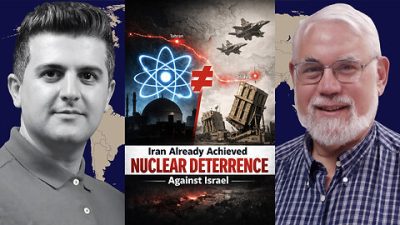
Prof. Ted Postol: Iran Already Achieved Nuclear Deterrence Against Israel
or go to
Aletho News Archives – Video-Images
From the Archives
How the occupied mentality syndrome works
Saudi Arabia on the American chessboard – Part 3
By B. J. Sabri | American Herald Tribune | June 27, 2016
Read part 2: “The occupied mentality Syndrome“
Previously I argued whether Saudi Arabia’s repeated involvements in U.S. interventions and wars stem from free national will or in response to a specific condition. For starters, in Saudi Arabia there is no national will. In Saudi Arabia, the national will is the will of the Al Saud clan. Still, when a major Arab state allies itself with a superpower that committed unspeakable crimes against humanity in almost every Arab country, then something is wrong. This fact alone should compel us to examine the U.S.-Saudi relation for one exceptional reason. As a result of the U.S.-Saudi wars, hundreds of thousands of people in Afghanistan, Iraq, Iran, Libya, Syria, Yemen, and Somalia have lost their lives. Millions became displaced in their own homelands. And millions more rendered refugees.
Attributing the Saudi policies to the bonds of “partnership” with the U.S. is frivolous. There are no bonds between these two thugs except those of business, military deals, secret plots, and wars. Proving this point, bonds such as these have no space for the American and Saudi peoples to share significant cultural or societal exchanges. If partnership is not the reason for the Saudi contribution to the U.S. strategy of empire and imperialism, then another reason must exist.
This leads to three possibilities. … continue
Blog Roll
 Aletho News
- Hezbollah hits Israeli warship off Lebanon’s coast, sets it aflame
- Iran slams US strikes on B1 bridge, Mahshahr petrochemical plants as ‘blatant acts of state terrorism’
- In letter to UN chief, Araghchi warns of dire consequences of US-Israeli attacks on Iran’s nuclear facilities
- Why the CIA conspiracy to invade Iran with Kurdish militias failed
- Why Are Upbeat US Claims About Mission to Rescue Pilot ‘Highly Questionable’?
- Aircraft destroyed during US ‘rescue’ of downed F-15 pilot cost more than $100 million each
- Washington University removes professor who condemned US-Israeli war on Iran
- Russia Warns of Retaliation as UK Authorizes Seizure of Vessels
- Serbia thwarts plot to bomb Russia-Hungary gas pipeline – Vucic
- Al Mayadeen voices solidarity with Dr. Marandi amid death threats
- If Americans Knew
- In Iran, Israel-US take aim at “reason, research, and freedom of thought” – Daily Update
- US loses planes over Iran, Israel downgrades Lebanon war goals – Daily Update
- Israel Is Blocking Palestinians from Easter at Church Where Jesus Resurrected
- Plot to assassinate Palestinian activist follows harassment campaign promoted by Zionist groups and elected officials
- Prominent New York synagogue hosts presentation on why U.S. Jews should support the ethnic cleansing of Gaza
- Tapper vs. Piker: Is the CNN Anchor Auditioning for David Ellison?
- Shouldn’t Democrats Be Able to Condemn Genocide?
- Israel-US kill negotiators, destroy civilian structures, but Iran’s military capabilities still largely intact – Daily Update
- ‘War crime’: Global condemnation as Israeli ministers celebrate death penalty law targeting Palestinian prisoners
- 7 Ways Israel Is Turning Lebanon Into Gaza
- No Tricks Zone
- An Inconvenient Tree: Uncovered In Alps… Europe Much Warmer Than Today 6000 Years Ago
- New Study Reports A 60% Slowdown In Greenland’s Ice Loss Rate In The Last Decade
- Low Intensity Tornado Wrecks Major Solar Farm, Creating A Potential Toxic Dump
- New Study Finds Warming Saves Lives…Cold Temperatures 12 Times More Deadly Than Excess Heat
- German Science Blog Accuses PIK Climate Institute Of Hallucinating Climate Tipping Points
- Devastating Assessment Of Comirnaty Vaccine By Former Senior Pfizer Europe Toxicologist
- New Study: CO2 Is ‘Effectively Negligible’ As An Explanatory Climate Change Factor Since 2000
- Former Pfizer Toxicologist Dr. Helmut Sterz Tells Bundestag Hearing Pfizer Vaccine Should Have Never Been Approved
- Energy Expert: Germany’s Nuclear Phaseout Was A “500 Billion Euro Mistake”
- New Research: South Australia’s Mid-Holocene Sea Surface Temperatures Were 4°C Warmer Than Today
 Aletho News