JAPAN: RADIATION ‘SAFE’, PRESS EVACUATES, INVESTORS SCARED
NO RADIATION THREAT SAYS MEDIA: REPORTERS PULLED OUT OF JAPAN
Meanwhile, Frightened Investors in the USA and Europe Seek Protection
by keith harmon snow | 20 March 2011
Reporting about the nuclear crises in Japan and around the world is getting curiouser and curiouser. Western media are heavily downplaying the threat of radiation in what amounts to an Alice in Wonderland fable of disinformation straight out of the rabbit hole.
Worried about profits and the the destabilization of the YEN and NIKKEI Index, the media is doing damage control to help keep people from flooding out of Japan and further destabilizing the Japanese economy. Given the evidence, the history of disasters and epidemics of disease, reporting that downplays Japan’s radiation threat is criminal.
Meanwhile, back in the U.S.A., frightened investors are seeking protections and insurances from industry and government. Wall Street is worried. This is getting curiouser and curiouser.

The irony: “art project” photographed in Tokyo depicts humans in states of decay, resembling images of children with deformed limbs born near Chernobyl. © Keith Harmon Snow, 1992
For example, on 20 March 2011, CNN ran a video story, “Facts whisper, fears scream during crises,” where their experts proclaim that fears of radiation are unfounded and misinformation abounds. CNN’s latest nuclear expert — Dan Polansky — calls this radiophobia: an irrational fear of radiation with no basis in fact. Even for the Japanese nuclear workers who are closest to the Fukushima hot zone, says CNN reporter Stan Grant, “radiation might make people sick, but it won’t kill them.”
Meanwhile, CNN describes Dan Polansky as a “nuclear expert”, who “specializes in weapons of mass destruction and knows about radiation.” What they don’t tell us is that Polansky works for the Georgia (USA) Department of Community Health, he studied at the Lawrence Livermore National Laboratory (LLNL) and the Idaho National Engineering Laboratory (INEL), and is a recent graduate of Radiological Emergency Planning at the Harvard School of Public Health.
Pretty good credentials, no doubt. Must be telling the truth. [Quack.]
However, LLNL and INEL are two of the Department of Energy and Department of Defense top classified weapons laboratories, both also SUPERFUND sites of massive toxic nuclear waste. Work at national laboratories like INEL and LLNL requires high-level national security clearances: it looks like Daniel Polansky is another spook.
The Harvard School of Public Health (HSPH) has produced some studies that show some incidence of disease around the Yankee Rowe reactor (Rowe, MA, U.S.A.), which is now decommissioned; but they have also helped to whitewash nuclear (and other) risks of modern day society.
This is indeed very curious.
The Harvard Center for Risk Analysis (HCRA) was founded by John D. Graham and specializes in advocating forms of risk-assessment widely criticized by community groups and legitimate health professionals. The Center gained funds from both industry and government agencies, including nuclear interests like: General Electric, the Edison Electric Institute, Electric Power Research Institute, New England Electric System (at least five nukes on the New England power grid) and Westinghouse Electric. GE and Westinghouse are two of the U.S.A.’s biggest nuke companies, and EPRI is a pro-nuke think tank that has produced propaganda about nukes for more than four decades.
Harvard School of Public Health and the Harvard Center for Risk Analysis are not the same thing. Harvard School of Public Health supports the nuclear industry and helps to downplay radiation threats at many levels. However, Harvard Center for Risk Analysis is an industry front producing junk science — spurious information posited as science — and debunking truth everywhere in the corporate media.
Looking a little deeper down the rabbit hole we find, for one curious example, that David Ropeik is an Instructor in the Harvard University School of Continuing Education, Environmental Management program. Ropeik is also a former affiliate at the Harvard Center for Risk Assessment (which he says he left in 2004).
According to his own public relations biography advertised on the BAYER CropScience web page [Bayer is the big German multinational pharmaceutical corporation], Ropeik has also worked closely with the Harvard School of Public Health (HSPH) and he “has been interviewed on risk perception by ABC Nightline, National Public Radio, NBC Dateline, ABC 20/20, Fox News, CNN, CNN International, BBC, CBC, CNBC, Voice of America, and dozens of regional radio stations nationwide.”
He has also “taught courses on media coverage of risk issues at the Harvard School of Public Health, the Kennedy School of Government, the Neiman Fellowship Program at Harvard, the Knight Science Journalism Fellowship program at MIT, Boston University’s Program in Science Journalism, the Emerson College program in Health Communication, and to the National Association of Science Writers, the Council for the Advancement of Science Writers, and the Society of Environmental Journalists.”
A long-time member of the Society of Environmental Journalists, David Ropeik is now a private consultant in Risk Perception, Risk Communication, and Risk Management with Ropeik & Associates, whose nuclear clients include Entergy Power Corporation (owns the dangerously unsafe Vermont Yankee Nuclear Power Station), Edison Electric Institute, the Electric Power Research Institute, the American Nuclear Society, the Egyptian Nuclear Authority, the International Atomic Energy Agency, the Nuclear Institute, the Massachusetts Department of Public Health (who did a study on the incidence of disease on the radiation ‘pathways’ from the Yankee Rowe Nuclear Power Station), The Veterans Board for Dose Reconstruction, Department of Defense, and etc., and etc., and etc.
“Risk is a subjective affair,” reads the home page of Ropeik & Associates. “It’s not just a matter of the facts, but also how those facts feel. Understanding why some risks feel more frightening, and some less, is essential for communicating about risk effectively, and for tackling the human behavioral aspects of overall risk management.”
As far as the Society of Environmental Journalists, this is just another trade industry group, like any ‘Society of Professional This-or-That’, which maintains deep ties to industry and the media corporations that have censored and distorted the truth about radiation, nuclear weapons and nuclear power. For example, a look at their sponsors and foundation donors quickly leads to a large list of corporate interests, including nuclear corporations.
What a curious world we live in.
Given that there is “so little threat from radiation” in Japan, it is very curious that NBC pulled their entire news team out of Japan. Curiously, it seems that CNN’s Anderson Cooper also pulled out of Japan — and who could blame him! — and is now reporting on Libya from somewhere else (Hong Kong?).
On March 20, 2011, Japanese Officials confirmed radiation food poisoning. “Chief Cabinet Secretary Yukio Edano said checks of milk from Fukushima prefecture, where the plant is located, and of spinach grown in Ibaraki, a neighbouring prefecture, surpassed limits set by the government… It was the government’s first report of food being contaminated by radiation since the March 11 quake and tsunami unleashed the nuclear crisis.”
Thousands of U.S. military families have also been evacuated from Japan under the U.S. Department of Defense ‘voluntary evacuation’ program initiated because of radiation concerns.
Meanwhile, on March 19, 2011 financial media began reporting that U.S. investors seeing the nuclear industry in Japan crash, burn and melt are frightened of Financial Losses due to Boring Utility Debt.
Curiouser and curiouser.
“Investors are seeking protection from a public backlash against nuclear power producers as the threat from earthquake-damaged reactors in Japan stokes calls by U.S. lawmakers to limit plants in this nation,” reported Bloomberg News.
“Utility companies, typically considered a haven among credit investors because of their resilience in economic downturns, are being punished as Tokyo Electric Power Co. struggles to cool damaged reactors. Environmental groups want limits on U.S. nuclear plants, and Representative Edward Markey is seeking a moratorium on facilities in seismically active areas. Nuclear-power executives say the nation’s reactors can withstand such disasters.”
Behind the scenes, corporations and money markets managers and futures investors are swapping debt portfolios and jockeying to maximize profits and minimize losses.
While the people of Japan suffer the fate of massive radiation emissions — ‘leaks’ is another term invested by the industry and used by media to downplay the invisible radiation dispersed near any reactor — the utility companies are portrayed as the victims. Utility companies are “being punished” and “investors seeking protection” are now the victims.
Curiouser, and curiouser, and curiouser.
~
March 23, 2011
Guns and Butter KPFA radio program interviews Kieth Harmon Snow
See also:
Disappeared on a Ukraine Train
Mossad Snatches Gaza’s Power Plant Boss

A photo of Abu Sisi displayed by his daughter. (Aljazeera)
By Jonathan Cook – Palestine Chronicle – March 23rd, 2011
Israel admitted this week that it was behind the abduction of a Gazan engineer who went missing more than a month ago while travelling on a train in the Ukraine.
Israeli officials confirmed that Dirar Abu Sisi, 42, was being held in Israel’s Shikma prison, near Ashkelon, after a judge partially lifted reporting restrictions late on Sunday. However, the reasons for Abu Sisi’s abduction are still covered by the gag order.
The whereabouts of Abu Sisi, the operations manager of Gaza’s only power plant, have been the subject of intense speculation since he disappeared on February 18 as he travelled on a train to the Ukrainian capital, Kiev.
Suspicions that he might have been spirited to Israel were raised by the Ukrainian spokesman of the United Nations High Commissioner for Refugees earlier this month.
A few days after his disappearance, Abu Sisi’s wife, Veronika, a Ukrainian national, accused the Israeli spy agency Mossad of kidnapping him to extract information that could be used to disable Gaza’s power station in a future confrontation with the enclave’s Hamas rulers.
Israel bombed the plant during its three-week military assault, Operation Cast Lead, in winter 2008, causing blackouts across much of Gaza. Israel also targeted the power station in June 2006, cutting power to 700,000 Gazans for several months while it was fixed at a cost of more than $5 million.
Abu Sisi’s family suggested another reason why Israeli might consider him a high-value target. They say he had recently developed a method to reduce the plant’s dependency on high-grade diesel fuel, the flow of which Israel controls into Gaza.
In January Hamas officials announced that the station’s turbines had been modified to work on regular diesel, which is cheaper and can be smuggled in through tunnels from Egypt.
The Israeli media, on the other hand, have speculated that Abu Sisi must be a senior Hamas activist to have secured an important post at the plant. The family have denied the claim, saying he was not involved in any political faction and was appointed because of his skills as an engineer.
One of his Israeli lawyers, Smadar Ben Nathan, who met him for the first time at the court hearing on Sunday to lift the gag order, said she believed Israel had carried out the operation based on false information.
She called the abduction a “miscalculation”, saying interrogators had dropped their original line of questioning. She said the gag order meant she could not discuss the case further.
No charges have been brought yet. Ben Nathan said her client had lost a great deal of weight and his health was deteriorating after more than a month incommunicado. His family is concerned that he is being tortured.
Although the Mossad is suspected of carrying out many assassinations on foreign soil — including a hit on a Hamas leader, Mahmoud al Mabhouh, in a Dubai hotel last year — there are few examples of it seizing individuals in foreign countries to bring them to trial.
Ben Nathan said she could identify only two similar cases: Israeli agents captured the Nazi war criminal Adolf Eichmann in Argentina in 1960, and smuggled Mordechai Vanunu, a nuclear whisteblower, out of Italy in 1986.
Victor Kattan, an international law expert at the School of Oriental and African Studies at London University, said Israel had broken several human rights laws in seizing him rather than invoking treaty agreements between the Ukraine and Israel and requesting his extradition.
The Palestinian Centre for Human Rights, based in Gaza, said it had learnt the details of how Abu Sisi was seized from another Israeli lawyer who had access to him. They did not name him, apparently because the information was a violation of the gag order.
In a statement, the Centre said three men, two of them apparently wearing official Ukrainian uniforms, had dragged Abu Sisi, hooded and handcuffed, from his carriage at a stop en route to Kiev, where he was due to meet his brother.
He was later interrogated in an apartment by six people who identifed themselves as Mossad agents, before being put on a plane. The flight took about four hours. The plane then made another flight of about an hour to Israel, the PCHR said.
Abu Sisi’s brother, Yousef, accused Ukraine of being “deeply involved”, adding that he had spent three weeks being “kicked like a football from one office to another” as he sought help from the police and various intelligence agencies. “At one point an official even threatened to make me disappear,” he said.
Abu Sisi was in Ukraine to apply for citizenship so that he and his wife could immigrate with their six children, his brother said. “He was desperate to leave Gaza and take his children to Ukraine away from the Israeli bombs and attacks. How could he be a threat?”
According to Veronika, her husband had encountered problems at an interior ministry office in the city of Kharkiv earlier on the day of his disappearance. Officials there had briefly refused to return his passport.
So far Ukraine has kept a low profile on the incident.
During an official visit to Israel last week by the Ukrainian prime minister, Mykola Azarov, reporters due to cover his meeting with Benjamin Netanyahu, Israel’s prime minister, had their invitations withdrawn at short notice and without explanation.
However, during an interview with Israel’s Haaretz newspaper while he was in Israel, Azarov responded to a question about Abu Sisi’s disappearance: “We don’t have clear information right now … I don’t want to imagine that such things are carried out on the soil of a friendly state.”
Abu Sisi’s kidnapping was first brought to light by Richard Silverstein, an American blogger.
The Association of Civil Rights in Israel, which sought the removal of the gag order, said in its petition to the court: “It is inconceivable that the authorities in a democratic country be able to secretly arrest people and ‘vanish’ them from the public eye.”
~
Jonathan Cook is a writer and journalist based in Nazareth, Israel. His latest book is Israel and the Clash of Civilisations: Iraq, Iran and the Plan to Remake the Middle East (Pluto Press)
What They’re Covering Up at Fukushima
By HIROSE TAKASHI | CounterPunch | March 22, 2011
Introduced by Douglas Lummis
Okinawa
Hirose Takashi has written a whole shelf full of books, mostly on the nuclear power industry and the military-industrial complex. Probably his best known book is Nuclear Power Plants for Tokyo in which he took the logic of the nuke promoters to its logical conclusion: if you are so sure that they’re safe, why not build them in the center of the city, instead of hundreds of miles away where you lose half the electricity in the wires?
He did the TV interview that is partly translated below somewhat against his present impulses. I talked to him on the telephone today (March 22 , 2011) and he told me that while it made sense to oppose nuclear power back then, now that the disaster has begun he would just as soon remain silent, but the lies they are telling on the radio and TV are so gross that he cannot remain silent.
I have translated only about the first third of the interview (you can see the whole thing in Japanese on you-tube), the part that pertains particularly to what is happening at the Fukushima plants. In the latter part he talked about how dangerous radiation is in general, and also about the continuing danger of earthquakes.
After reading his account, you will wonder, why do they keep on sprinkling water on the reactors, rather than accept the sarcophagus solution [ie., entombing the reactors in concrete. Editors.] I think there are a couple of answers. One, those reactors were expensive, and they just can’t bear the idea of that huge a financial loss. But more importantly, accepting the sarcophagus solution means admitting that they were wrong, and that they couldn’t fix the things. On the one hand that’s too much guilt for a human being to bear. On the other, it means the defeat of the nuclear energy idea, an idea they hold to with almost religious devotion. And it means not just the loss of those six (or ten) reactors, it means shutting down all the others as well, a financial catastrophe. If they can only get them cooled down and running again they can say, See, nuclear power isn’t so dangerous after all. Fukushima is a drama with the whole world watching, that can end in the defeat or (in their frail, I think groundless, hope) victory for the nuclear industry. Hirose’s account can help us to understand what the drama is about. Douglas Lummis
Hirose Takashi: The Fukushima Nuclear Power Plant Accident and the State of the Media
Broadcast by Asahi NewStar, 17 March, 20:00
Interviewers: Yo and Maeda Mari
Yo: Today many people saw water being sprayed on the reactors from the air and from the ground, but is this effective?
Hirose: . . . If you want to cool a reactor down with water, you have to circulate the water inside and carry the heat away, otherwise it has no meaning. So the only solution is to reconnect the electricity. Otherwise it’s like pouring water on lava.
Yo: Reconnect the electricity – that’s to restart the cooling system?
Hirose: Yes. The accident was caused by the fact that the tsunami flooded the emergency generators and carried away their fuel tanks. If that isn’t fixed, there’s no way to recover from this accident.
Yo: Tepco [Tokyo Electric Power Company, owner/operator of the nuclear plants] says they expect to bring in a high voltage line this evening.
Hirose: Yes, there’s a little bit of hope there. But what’s worrisome is that a nuclear reactor is not like what the schematic pictures show (shows a graphic picture of a reactor, like those used on TV). This is just a cartoon. Here’s what it looks like underneath a reactor container (shows a photograph). This is the butt end of the reactor. Take a look. It’s a forest of switch levers and wires and pipes. On television these pseudo-scholars come on and give us simple explanations, but they know nothing, those college professors. Only the engineers know. This is where water has been poured in. This maze of pipes is enough to make you dizzy. Its structure is too wildly complex for us to understand. For a week now they have been pouring water through there. And it’s salt water, right? You pour salt water on a hot kiln and what do you think happens? You get salt. The salt will get into all these valves and cause them to freeze. They won’t move. This will be happening everywhere. So I can’t believe that it’s just a simple matter of you reconnecting the electricity and the water will begin to circulate. I think any engineer with a little imagination can understand this. You take a system as unbelievably complex as this and then actually dump water on it from a helicopter – maybe they have some idea of how this could work, but I can’t understand it.
Yo: It will take 1300 tons of water to fill the pools that contain the spent fuel rods in reactors 3 and 4. This morning 30 tons. Then the Self Defense Forces are to hose in another 30 tons from five trucks. That’s nowhere near enough, they have to keep it up. Is this squirting of water from hoses going to change the situation?
Hirose: In principle, it can’t. Because even when a reactor is in good shape, it requires constant control to keep the temperature down to where it is barely safe. Now it’s a complete mess inside, and when I think of the 50 remaining operators, it brings tears to my eyes. I assume they have been exposed to very large amounts of radiation, and that they have accepted that they face death by staying there. And how long can they last? I mean, physically. That’s what the situation has come to now. When I see these accounts on television, I want to tell them, “If that’s what you say, then go there and do it yourself!” Really, they talk this nonsense, trying to reassure everyone, trying to avoid panic. What we need now is a proper panic. Because the situation has come to the point where the danger is real.
If I were Prime Minister Kan, I would order them to do what the Soviet Union did when the Chernobyl reactor blew up, the sarcophagus solution, bury the whole thing under cement, put every cement company in Japan to work, and dump cement over it from the sky. Because you have to assume the worst case. Why? Because in Fukushima there is the Daiichi Plant with six reactors and the Daini Plant with four for a total of ten reactors. If even one of them develops the worst case, then the workers there must either evacuate the site or stay on and collapse. So if, for example, one of the reactors at Daiichi goes down, the other five are only a matter of time. We can’t know in what order they will go, but certainly all of them will go. And if that happens, Daini isn’t so far away, so probably the reactors there will also go down. Because I assume that workers will not be able to stay there.
I’m speaking of the worst case, but the probability is not low. This is the danger that the world is watching. Only in Japan is it being hidden. As you know, of the six reactors at Daiichi, four are in a crisis state. So even if at one everything goes well and water circulation is restored, the other three could still go down. Four are in crisis, and for all four to be 100 per cent repaired, I hate to say it, but I am pessimistic. If so, then to save the people, we have to think about some way to reduce the radiation leakage to the lowest level possible. Not by spraying water from hoses, like sprinkling water on a desert. We have to think of all six going down, and the possibility of that happening is not low. Everyone knows how long it takes a typhoon to pass over Japan; it generally takes about a week. That is, with a wind speed of two meters per second, it could take about five days for all of Japan to be covered with radiation. We’re not talking about distances of 20 kilometers or 30 kilometers or 100 kilometers. It means of course Tokyo, Osaka. That’s how fast a radioactive cloud could spread. Of course it would depend on the weather; we can’t know in advance how the radiation would be distributed. It would be nice if the wind would blow toward the sea, but it doesn’t always do that. Two days ago, on the 15th, it was blowing toward Tokyo. That’s how it is. . . .
Yo: Every day the local government is measuring the radioactivity. All the television stations are saying that while radiation is rising, it is still not high enough to be a danger to health. They compare it to a stomach x-ray, or if it goes up, to a CT scan. What is the truth of the matter?
Hirose: For example, yesterday. Around Fukushima Daiichi Station they measured 400 millisieverts – that’s per hour. With this measurement (Chief Cabinet Secretary) Edano admitted for the first time that there was a danger to health, but he didn’t explain what this means. All of the information media are at fault here I think. They are saying stupid things like, why, we are exposed to radiation all the time in our daily life, we get radiation from outer space. But that’s one millisievert per year. A year has 365 days, a day has 24 hours; multiply 365 by 24, you get 8760. Multiply the 400 millisieverts by that, you get 3,500,000 the normal dose. You call that safe? And what media have reported this? None. They compare it to a CT scan, which is over in an instant; that has nothing to do with it. The reason radioactivity can be measured is that radioactive material is escaping. What is dangerous is when that material enters your body and irradiates it from inside. These industry-mouthpiece scholars come on TV and what to they say? They say as you move away the radiation is reduced in inverse ratio to the square of the distance. I want to say the reverse. Internal irradiation happens when radioactive material is ingested into the body. What happens? Say there is a nuclear particle one meter away from you. You breathe it in, it sticks inside your body; the distance between you and it is now at the micron level. One meter is 1000 millimeters, one micron is one thousandth of a millimeter. That’s a thousand times a thousand squared. That’s the real meaning of “inverse ratio of the square of the distance.” Radiation exposure is increased by a factor of a trillion. Inhaling even the tiniest particle, that’s the danger.
Yo: So making comparisons with X-rays and CT scans has no meaning. Because you can breathe in radioactive material.
Hirose: That’s right. When it enters your body, there’s no telling where it will go. The biggest danger is women, especially pregnant women, and little children. Now they’re talking about iodine and cesium, but that’s only part of it, they’re not using the proper detection instruments. What they call monitoring means only measuring the amount of radiation in the air. Their instruments don’t eat. What they measure has no connection with the amount of radioactive material. . . .
Yo: So damage from radioactive rays and damage from radioactive material are not the same.
Hirose: If you ask, are any radioactive rays from the Fukushima Nuclear Station here in this studio, the answer will be no. But radioactive particles are carried here by the air. When the core begins to melt down, elements inside like iodine turn to gas. It rises to the top, so if there is any crevice it escapes outside.
Yo: Is there any way to detect this?
Hirose: I was told by a newspaper reporter that now Tepco is not in shape even to do regular monitoring. They just take an occasional measurement, and that becomes the basis of Edano’s statements. You have to take constant measurements, but they are not able to do that. And you need to investigate just what is escaping, and how much. That requires very sophisticated measuring instruments. You can’t do it just by keeping a monitoring post. It’s no good just to measure the level of radiation in the air. Whiz in by car, take a measurement, it’s high, it’s low – that’s not the point. We need to know what kind of radioactive materials are escaping, and where they are going – they don’t have a system in place for doing that now.
Douglas Lummis is a political scientist living in Okinawa and the author of Radical Democracy. Lummis can be reached at ideaspeddler@gmail.com
Abducted Palestinian Engineer: Mossad Snatched Me, Handcuffed Me, Hooded Me
Al-Manar | March 22, 2011
Dirar Abu Sisi, the Palestinian engineer abducted from the Ukraine by Israeli Mossad agents last month gave an account of the incident in which he was arrested to a lawyer from the Palestinian Center for Human Rights (PCHR) earlier this week, the NGO reported on Monday.
On Sunday, Petah Tikva Magistrate’s Court partially removed a publication ban and confirmed that Abu Sisi was being held at the Shikma Prison in Ashkelon.
PCHR said that Abu Sisi told the lawyer that on February 19 he was traveling by train from Kharkov to Kiev to meet with his brother Yousef when three persons, two in military uniforms, entered his room on the train. They asked him to show his passport but he refused. Then they threatened him and forcefully took his passport. They forced him to get off the train at the nearby station of Poltava.
Abu Sisi said that he was handcuffed, hooded and transported in a car to Kiev. Once in Kiev he was held in an apartment where there were another six persons who introduced themselves to be members of the Mossad. Abu Sisi said that the Mossad members immediately questioned him.
The Palestinian engineer said he was then put on a flight that lasted between four and five hours before landing in a place unknown to him. Approximately thirty minutes later, they took off again and the flight lasted for approximately one hour. Upon landing Abu Sisi found himself in “Israel”.
Abu Sisi told the PCHR lawyer that he was denied contact with a lawyer for fourteen days. This denial was extended for another eleven days. He said that he was placed under intensive interrogations and that he was denied his legal rights.
After speaking with Abu Sisi, PCHR expressed doubts about previous reports that Ukrainian authorities had colluded in the abduction. He was not legally arrested by Ukrainian authorities and made no appearances in Ukrainian courts.
The human rights organization expressed concerns with Abu Sis’s physical and mental health and called for his immediate release.
Abu Sisi is the manager of the only power plant in the Gaza Strip. He is not known to have any direct ties with Hamas or other organizations, although it is likely that his senior position was the result of political affiliation.
In interviews to foreign reporters, Abu Sisi’s wife Veronica, blamed the kidnapping on the Mossad, saying they did it to sabotage the Gazan power plant.
Israeli forces detain journalist in Awarta
Ma’an – 22/03/2011

RAMALLAH — Sources at Voice of Palestine Radio told Ma’an that the station’s director of programming was detained by Israeli forces in the village of Awarta, after the village was locked down under a military curfew.
Kamal Sharab’s home was searched during a raid, and soldiers detained him and two of his sons – Fadi, 17, and Ra’fat, 16.
Earlier in the week, Sharab’s brother was also detained, in a round up that saw 40 men and youth from Awarta taken by Israeli forces.
The sources told Ma’an that Israeli forces detained Kamal’s brother a few days ago.
The Palestinian Journalist Syndicate condemned the detention of journalists and called for his immediate release.
Israeli forces re-entered Awarta at sunrise Tuesday, announcing via loudspeaker that the community was under curfew the for a second time this month.
The village had been under a military curfew from March 12-16 as Israeli police, military and intelligence forces searched the area for evidence relating to the murder of five settlers in the adjacent illegal settlement Itamar.
An as yet unknown attacker or attackers stabbed five members of the Fogel family, including two children and a baby. Israeli leaders immediately blamed Palestinian militant groups, and put a total gag order on the investigation for the Israeli press.
A military spokeswoman confirmed that there was a curfew in place, but said she could not disclose how long it would remain on the village. She said the search was in relation on the ongoing investigation into the Itamar murders, and that troops were trying not to disrupt normal life in the village.
Head of the Awarta village council Qays Awwad told Ma’an that a large number of Israeli forces entered the town and set up checkpoints at all of its entrances.
Villagers were told they were prohibited to leave their homes and enter the streets.
“So far, we have not been informed about the motive behind the incursion,” the Awwad said.
The last closure of the village prevented patients in need of medical treatment from getting to hospital. Villagers reported that at least two children suffered bites from sniffer dogs. Teenagers sustained broken bones after attempting to stave off an attack by settlers who marched into the village and threw rocks and bottles at homes.
Although militant groups in the West Bank have denied involvement in the murders, accusations by Israeli officials sparked a string of settler attacks against Palestinian civilians.
On Monday, one settler in the southern West Bank opened fire on a funeral procession in Beit Ummar, injuring one man critically and hospitalizing a second with a gunshot wound to the thigh.
Further south, a settler from the Ma’on outpost stabbed a Palestinian man on a donkey en route to a local clinic for treatment.
Two Palestinians were stabbed earlier in the week as they went to work in the industrial area of the Shilo settlement.
Dozens of acts of vandalism and harassment have also been reported.
‘Isolated Saleh under pressure to quit’
Interview with Zayd al-Isa, a Middle East expert in London
Press TV – March 22, 2011
Democratic protesters in Yemen now seem to be gaining the advantage against a dictator that is losing political and military support. Press TV talks with Zayd al-Isa, a Middle East expert in London on the latest developments in Yemen and about where President Saleh can turn for additional support.
Press TV: How do you see the situation in Yemen? We have Yemeni ambassadors in Europe, the Arab League, the UN and in China all stepping down and calling for the resignation of President Ali Abdullah Saleh. This presumably would leave him more isolated. How much do you think this would pressure Saleh to step down?
Zayd al-Isa: Saleh is becoming increasingly isolated, beleaguered and embattled. Support is waning away from him and he is under unprecedented pressure. The massacre that his forces have perpetrated has piled on the pressure for him to resign and step down. People have hardened their rhetoric ad toughened their language against him. They want him to be ousted and not only that, but to stand trial for crimes committed against unarmed peaceful civilians.
This has followed the massacre by Saudi forces on the people of Bahrain and we can say that Saleh too is following the green light given by the US. Saudi Arabia considers Yemen to be its backyard garden – both Yemen and Bahrain. Americans have given them a license to kill in those two countries.
Saleh’s policy of shooting to kill the protesters has backfired and we are witnessing the backlash from the tribe’s people, which is highly significant because Yemen is a tribal nation. These tribes are now standing against him and most importantly we now see the army, high ranking Generals, pull the rug from under his feet turning against him.
Without warning some of the army’s troops have been ordered on the ground, tanks included, to come to the defense of the innocent people of Yemen.
We have seen support come from the defense minister who has pledged his loyalty and called Saleh a constitutional president. This is all a critical and highly dangerous development that may show divisions within the high ranks of the military, which is something different to what occurred in Egypt, which was stable and united. We also saw a different situation in Tunisia where the army stood firmly against Ben Ali and remained as a stable unit.
The situation in Yemen has deteriorated further with Saleh becoming isolated amid an unprecedented number of diplomats defecting. This highlights the beginning of a new phase where the protesters are gaining the upper hand and the movement is gathering momentum.
This is to the contrary of what Saleh had expected. Protesters have flouted the imposed curfew and numbers have substantially escalated, spreading to all parts of Yemen. Saleh is now in a terrible position and I believe he now has to step down. France has said that the fall of Saleh has become unavoidable. We haven’t heard such noises coming from the US as Saleh is again considered one of the key allies of the US.
I think Saleh depends on three important pillars: the support of the tribes, the support of the US and aid that is allocated to military; and finally the backing and support of the Saudi regime. Saleh has been a loyal and obedient defender of the Saudi Monarchy.
Press TV: Regarding the three pillars of Saleh’s ability to stay in power that you mentioned, President Saleh’s own tribe has called upon him to step down.
Zayd al-Isa: That’s right and support of that tribe is absolutely crucial. Using a policy of divide and conquer he heavily relied on this tribe in the earlier war against the Houthis, which was backed by Saudi Arabia. That tribal support now is waning.
The aid from the US goes to Saleh’s military in order to fight al-Qaeda, which we know the Saudi regime has been a major factor in the supporting and the flourishing of al-Qaeda. Al Qaeda has flourished during those dictatorships and the oppression forced on the people of those countries, in Yemen, and of course in Saudi Arabia, which is the mother of all dictatorships.
Press TV: Let’s talk about the support of Saudi Arabia for Saleh – Do you think there will be Saudi troops deployed to Yemen as they were deployed to Bahrain?
Zayd al-Isa: I wouldn’t call it a deployment of forces. What you have in Bahrain is a clear cut occupation; an outright invasion of a sovereign country.
Yemen though is a huge massive country with a very difficult terrain. And we’ve seen Saudi Arabia actually try to invade Yemen before to impose its own will on the Houthis and to actually commit genocide against them; committing crimes against humanity and ethnic cleansing against them. They used their superior military ground forces and supremacy in the air – advanced equipment supplied to them by the US.
They picked on the Houthis, a simple militia and now we see them once again taking on a tiny country (Bahrain) which is ruled by a ruthless dictator the so-called king of Bahrain who is no king (by definition). He was never elected and has subjected his people to intolerable discrimination. He has tried to change the makeup of the country by luring thousands of mercenaries giving them citizenship if they commit crimes against his own people.
Saudi now has its trigger happy forces inside Bahrain to quash the revolutionary forces of democracy also and with utter silence from the US. The US has condemned the situation in Bahrain, but has not lifted a finger to help prevent the occupation of Bahrain. We can see through this discussion that what they have done in Bahrain they cannot duplicate in Yemen.
Press TV: We have reports that Houthi fighters are now in control of Yemen’s Northern provinces. This raises a question of – What are the chances of Yemen falling into a civil war?
Zayd al-Isa: The situation is incredibly volatile and there are so many tribes. And what makes it even more dangerous is the division (potential) between the army generals and this could lead to civil war unless the army sits down and unites, that is, a united front against Saleh. He has the loyalty of the Defense Minister, but I do believe that Saleh is running out of allies and supporters; he is relying now on the backing and support of Saudi Arabia. That’s why he has sent his foreign minister to Saudi Arabia to get whole hearted support and the king of Saudi Arabia has emphatically supported the dictators in the region. He gave shelter to Ben Ali to live in his country and he tried to influence Egypt into allowing Mubarak to remain in power and oversee a transition. They have been the bastion of dictatorship.
5 dead, others injured as Israel shells Gaza
Ma’an – 22/03/2011
GAZA CITY — A child, teenager and three adults were killed and ten others injured by Israeli aritllery fire which hit a home east of Gaza City on Tuesday afternoon, the second shelling and third hit of the day.
Earlier, two were injured in the same area in separate incidents involving artillery fire and a drone strike.
An Israeli military spokeswoman said investigations into the most recent incident were ongoing.
Medics collected bodies from a home on An-Nazzaz Street in the eastern part of the Ash-Shaja’iya neighborhood in Gaza City.
Adham Abu Salmiya, spokesman of the higher committee of ambulance and emergency services, said members of the Al-Hilu family were playing football outside of their home when the shell hit.
Eyewitnesses said ambulances took the injured to Ash-Shifa hospital in Gaza city.
Medics identified the dead as:
Muhammad Jihad Al-Hilu, 11
Yasser Ahed Al-Hilu, 16
Muhammad Saber Harara, 20
Yasser Hamer Al-Hilu, 50
A fifth remains unidentified.
Shortly before 10 a.m. artillery fire injured one man in the Ash-Shuja’iyya neighborhood, just after witnesses reported Israeli vehicles penetrating the Gaza Strip in the area.
The injured man was identified as a 21-year-old Gaza resident. Medics did not say if he was a civilian or member of resistance factions which have recently been engaged in ramped-up activity near the border against Israeli forces operating there.
In a second incident that took place before noon, a man was critically injured by a drone strike in the same area.
An Israeli military statement said the fire was aimed at a group “of terrorists preparing to launch an anti-tank missile at an adjacent force, and thwarted the attempt by firing towards it, confirming a hit.”
The statement said the Israeli military would “respond with determination to any firing or other terrorist activities emanating from the Gaza Strip, and will not tolerate any attempt to harm Israeli civilians and IDF soldiers. The IDF warns Hamas not to continue its aggression.”
Shortly before midnight the day before, a series of Israeli air strikes injured 18, including women and children.
‘Yemeni president seeks Saudi asylum’
Press TV – March 22, 2011
Yemen’s President Ali Abdullah Saleh has reportedly requested asylum from Saudi Arabia after announcing he will step down by the end of the year.
On Monday night, Saleh told Saudi King Abdullah bin Abdul Aziz during a telephone conversation that he will be forced to give up power and requested him and his family’s asylum to Saudi Arabia, nahrainnet reported.
Earlier Tuesday, Saleh had expressed his willingness to step down by the year’s end to prepare a peaceful transfer of power in the impoverished Arab nation.
The announcement came as a reversal of Saleh’s recent comments in which he had said he would remain in power until the end of his term in 2013.
During talks with the Saudi officials, Saleh discussed the defection of senior military officials to the opposition and the resignation of many other officials from their posts.
A senior Saudi official is expected to visit Sana’a in the next 24 hours to plan Saleh and his family’s departure to Riyadh.
Saleh has been in office for more than three decades, with several opposition members arguing that his long-promised reforms have not materialized.
Protests began to sweep Yemen in January. Dozens of people have been killed and hundreds more have been injured in a brutal crackdown by security forces.
Some 40 percent of Yemen’s population lives on under $2 a day or less, and a third is wrestling with chronic hunger, reports say.
Life, Death and Anxiety in the Fallout Zone
What is the Meaning of “Safe”?
By BARBARA ROSE JOHNSTON | CounterPunch | March 21, 2011
In a nuclear crisis, life becomes a nightmare for those people trying to make sense of the uncertainties. Imaginably, the questions are endless.
Radiation is invisible, how do you know when you are in danger? How long will this danger persist? How can you reduce the hazard to yourself and family? What level of exposure is safe? How do you get access to vital information in time to prevent or minimize exposure? What are the potential risks of acute and chronic exposures? What are the related consequential damages of exposure? Whose information do you trust? How do you rebuild a healthy way of life in the aftermath of nuclear disaster?
And the list of unknowns goes on.
These questions are difficult to answer in the chaos and context of an ongoing disaster, and they become even more complicated by the fact that governments and the nuclear industry maintain tight control of information, operations, scientific research, and the biomedical lessons that shape public-health response.
This regulation of information has been the case since the nuclear age began, and understanding this helps to illuminate why there is no clear consensus on what Japan’s nuclear disaster means in terms of local and global human health.
Nuclear secrecy in context. In the initial hours after the earthquake and tsunami, the Japanese government and Tokyo Electrical Power Company issued statements reporting minor damage at the Fukushima nuclear power plant. In the days that followed, government and industry officials reported the “venting of hydrogen gas”, but that there was “no threat to health.” This reassurance of health safety was echoed when hydrogen gas explosions occurred at the power plant.
In fact, the hydrogen released is tritium water vapor, a low-level emitter that can be absorbed in a human body through simply breathing, or by drinking contaminated water. Tritium decays by beta emission and has a radioactive half-life of about 12.3 years. As it undergoes radioactive decay, this isotope emits a very low-energy beta particle and transforms to stable, nonradioactive helium. Once tritium enters the body, it disperses quickly, is uniformly distributed, and is excreted through urine within a month or so after ingestion. It produces a low-level exposure and may result in toxic effects to the kidney. As with all ionizing radiation, exposure to tritium increases the risk of developing cancer.
So, then, why no mention of tritium in the government or industry statements? Relatively speaking, the health effects of a low-level emitter like tritium are minor when compared to the other radiogenic and toxic hazards in this nuclear catastrophe. Such omission is a standard industry practice, designed to reassure the public that the normal operating procedures of a nuclear power plant represent no significant threat to human health.
The assertion that low-level exposure to radiation represents no human threat is an artifact of Cold War-era science that was shaped to meet government and industry needs.
During the Cold War, scientific findings on health effects to nuclear fallout that contradicted the official narrative were typically censored. Scientists were not only punished for their work, they were also blacklisted — one example of this was American anthropologist Earle Reynolds whose work for the Atomic Bomb Casualty Commission was censored in 1953 by the US government. His research showed that Japanese children who were exposed to fallout were not only smaller than their counterparts, but had less resistance to disease in general and were more susceptible to cancer, especially leukemia. The consequences of this censored history was examined in 1994 by the US Advisory Commission on Human Radiation Experimentation, which concluded that the radiation health literature of the Cold War years was a heavily sanitized and scripted version meant to reassure and pacify public protests while achieving military and economic agendas.
Decades of such control reinforced, again and again, the core message: Humans have evolved in a world where background radiation is present and is natural and beneficial at some level; any adverse heath effect of radiation exposure is the occasional and accidental result of high levels of exposure.
Cold War classification and the close nature of government, military, and industry agendas made it difficult to challenge the assumptions that underlie the “trust us” narrative. For example, the assumption that radiogenic health effects must be demonstrated through direct causality (one isotope, one outcome) meant science on cumulative and synergistic effects was not pursued. Discounting or ignoring the toxic nature of varied radioisotopes meant health risks were assessed and regulations promulgated on the basis of acute exposures and outcomes (radiation poisoning and deadly cancer).
There are other sources of conclusive data that allow a very different interpretation of the health hazards posed by a nuclear disaster. Several of these sources document radiogenic health outcomes that sharply contrast mainstream reports: Declassified records of US human radiation experiments and similar Soviet records; Atomic Bomb Casualty Commission records; new research conducted by Japanese scientists; long-term research on Chernobyl survivors; and research done for the Marshall Islands Nuclear Claims Tribunal proceedings.
But what does this mean? From this record of studied and lived experience, there are a few things that we know. For example, fallout and the movement of radionuclides through marine and terrestrial environments ultimately get into the food chain and the human body. The toxicity of contaminants and radioactivity in fallout represent significant health risks. Acute exposures are further complicated when followed by chronic exposure, as such assaults have a cumulative and synergistic effect on health and well-being. Chronic exposure to fallout does more than increase the risk of developing cancers, it threatens the immune system, can exacerbate pre-existing conditions, affects fertility, increases rates of birth defects, and can retard physical and mental development, among other things. And we know the effects of such exposures can last for generations.
Japan’s nuclear disaster demonstrates in powerful and poignant terms the degree to which the state prioritizes security interests over the fundamental rights of people and their environment. Japan’s response to its nuclear disaster — similar to other government responses to catastrophic events like Katrina and Chernobyl — has struggled to control the content and flow of information to prevent wide panic (and the related loss of trust in government), reduce liability, and protect nuclear and other industry agendas.
There are many lessons to be learned here, not the least of which is how to respond, adjust, and adapt to the hazards and health risks associated with life in this nuclear world. These responses will most assuredly include a demand for transparency and accountability — that is, governance that truly secures the fundamental rights of its citizens to life and livelihood.
As the world’s nations reassess nuclear power operations and refine energy development plans, now — more than ever — we need to aggressively tackle this question: How do we define the word “safe”?
~
Barbara Rose Johnston is an anthropologist and senior research fellow at the Center for Political Ecology. She is the co-author of The Consequential Dangers of Nuclear War: the Rongelap Report. Look for her latest book from Left Coast Press, Life and Death Matters: Human Rights, Environment, and Social Justice, released in July 2009. She can be reached at: bjohnston@igc.org.
Featured Video
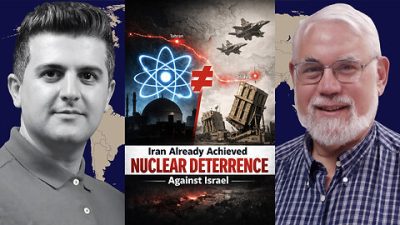
Prof. Ted Postol: Iran Already Achieved Nuclear Deterrence Against Israel
or go to
Aletho News Archives – Video-Images
From the Archives
How the occupied mentality syndrome works
Saudi Arabia on the American chessboard – Part 3
By B. J. Sabri | American Herald Tribune | June 27, 2016
Read part 2: “The occupied mentality Syndrome“
Previously I argued whether Saudi Arabia’s repeated involvements in U.S. interventions and wars stem from free national will or in response to a specific condition. For starters, in Saudi Arabia there is no national will. In Saudi Arabia, the national will is the will of the Al Saud clan. Still, when a major Arab state allies itself with a superpower that committed unspeakable crimes against humanity in almost every Arab country, then something is wrong. This fact alone should compel us to examine the U.S.-Saudi relation for one exceptional reason. As a result of the U.S.-Saudi wars, hundreds of thousands of people in Afghanistan, Iraq, Iran, Libya, Syria, Yemen, and Somalia have lost their lives. Millions became displaced in their own homelands. And millions more rendered refugees.
Attributing the Saudi policies to the bonds of “partnership” with the U.S. is frivolous. There are no bonds between these two thugs except those of business, military deals, secret plots, and wars. Proving this point, bonds such as these have no space for the American and Saudi peoples to share significant cultural or societal exchanges. If partnership is not the reason for the Saudi contribution to the U.S. strategy of empire and imperialism, then another reason must exist.
This leads to three possibilities. … continue
Blog Roll
 Aletho News
- NIAID/NIH and USDA Fund Bioengineered Chimeric Influenza Viruses Built Using Pandemic H1N1 Components: Journal ‘Science Advances’
- Hezbollah hits Israeli warship off Lebanon’s coast, sets it aflame
- Iran slams US strikes on B1 bridge, Mahshahr petrochemical plants as ‘blatant acts of state terrorism’
- In letter to UN chief, Araghchi warns of dire consequences of US-Israeli attacks on Iran’s nuclear facilities
- Why the CIA conspiracy to invade Iran with Kurdish militias failed
- Why Are Upbeat US Claims About Mission to Rescue Pilot ‘Highly Questionable’?
- Aircraft destroyed during US ‘rescue’ of downed F-15 pilot cost more than $100 million each
- Washington University removes professor who condemned US-Israeli war on Iran
- Russia Warns of Retaliation as UK Authorizes Seizure of Vessels
- Serbia thwarts plot to bomb Russia-Hungary gas pipeline – Vucic
- If Americans Knew
- In Iran, Israel-US take aim at “reason, research, and freedom of thought” – Daily Update
- US loses planes over Iran, Israel downgrades Lebanon war goals – Daily Update
- Israel Is Blocking Palestinians from Easter at Church Where Jesus Resurrected
- Plot to assassinate Palestinian activist follows harassment campaign promoted by Zionist groups and elected officials
- Prominent New York synagogue hosts presentation on why U.S. Jews should support the ethnic cleansing of Gaza
- Tapper vs. Piker: Is the CNN Anchor Auditioning for David Ellison?
- Shouldn’t Democrats Be Able to Condemn Genocide?
- Israel-US kill negotiators, destroy civilian structures, but Iran’s military capabilities still largely intact – Daily Update
- ‘War crime’: Global condemnation as Israeli ministers celebrate death penalty law targeting Palestinian prisoners
- 7 Ways Israel Is Turning Lebanon Into Gaza
- No Tricks Zone
- An Inconvenient Tree: Uncovered In Alps… Europe Much Warmer Than Today 6000 Years Ago
- New Study Reports A 60% Slowdown In Greenland’s Ice Loss Rate In The Last Decade
- Low Intensity Tornado Wrecks Major Solar Farm, Creating A Potential Toxic Dump
- New Study Finds Warming Saves Lives…Cold Temperatures 12 Times More Deadly Than Excess Heat
- German Science Blog Accuses PIK Climate Institute Of Hallucinating Climate Tipping Points
- Devastating Assessment Of Comirnaty Vaccine By Former Senior Pfizer Europe Toxicologist
- New Study: CO2 Is ‘Effectively Negligible’ As An Explanatory Climate Change Factor Since 2000
- Former Pfizer Toxicologist Dr. Helmut Sterz Tells Bundestag Hearing Pfizer Vaccine Should Have Never Been Approved
- Energy Expert: Germany’s Nuclear Phaseout Was A “500 Billion Euro Mistake”
- New Research: South Australia’s Mid-Holocene Sea Surface Temperatures Were 4°C Warmer Than Today
 Aletho News