Uranium tumbles on Japan crisis
By Carolyn Cui | People’s Daily | 2011-3-20
The most volatile market since the Japanese earthquake isn’t Japanese or U.S. stocks. It is uranium, which until Friday was a little-noticed pocket of the commodities markets.
Trading in uranium is often sporadic, with just a few dozen transactions taking place each month, and trading on the spot market totaling about $2.5 billion last year.
But the earthquake and tsunami in Japan, which have crippled a key nuclear plant and raised questions about the future of the nuclear-power industry, has changed all that—at least for now. Trading has soared as some hedge funds and banks unload their positions, traders said.
Almost three million pounds of uranium have changed hands in the spot market for the metal so far this week, five times more than the average volume, brokers said.
The result is that after an 80% run-up over the past eight months, uranium prices have tumbled. They reached a three-year high of $73 a pound in February, but dropped $13 earlier this week and fell to $49.25 on Wednesday, according to Ux Consulting Co.
Michael Goldenberg, director of nuclear fuels at Evolution Markets, a commodity broker, said the past few days have been “the busiest days” he has had since he started brokering uranium trades three years ago.
The flurry of activity in the uranium market reflects the divided thinking among market participants toward the future of nuclear power. Explosions and radiation leaks in Japan have worried some traders, who are dumping their uranium holdings amid fears that the Japanese crisis could stall expansion of the world’s nuclear programs.
At the same time, some utilities and even producers have stepped in to buy the metal in the belief that the demand for more nuclear plants will remain. A total of 65 nuclear units are under construction, mostly in China and Russia, according to the Nuclear Energy Institute.
Utilities haven’t been among the big sellers in recent days, said Jeff Faul, chief executive of Nukem, Inc., a trader of physical uranium. Mr. Faul said Nukem, of Danbury, Conn., hasn’t made any changes to its positions.
Most of the uranium traded in the physical market is in the form of uranium oxide concentrate, which is several steps away from being used as nuclear fuel. It isn’t very radioactive and buyers often store it at one of the four major uranium-storage facilities around the world.
After utilities buy uranium on the spot market, these facilities convert the oxide into a gas form of pure uranium, called uranium hexafluoride.
The gas, which is radioactive, is then enriched to become nuclear fuel. It is then transported to fabrication centers to convert into a pellet, which is put into a fuel rod that goes into a nuclear reactor.
Robert Mitchell, who manages the $36 million Green Energy Metals Funds, says uranium represents “a big position” of the fund, which owns both physical uranium and uranium-related stocks.
Though it has been a “tough time,” Mr. Mitchell hasn’t sold any of his uranium holdings. “No one knows how this movie is going to play out in Japan, but I think eventually rational thought will prevail,” he said.
Despite the bearish news in recent days, traders note that more than 400 reactors are still operating, consuming about 180 million pounds of uranium a year. The Japanese crisis prompted a drop of about 3% of the total uranium consumption. Nuclear power accounts for 14% of global electricity output, the Nuclear Energy Institute said.
“The world is not going to stop burning uranium tomorrow,” said Kevin Smith, director of uranium trading at Traxys Group, a New York-based physical trader and market maker of uranium.
Uranium Participation Corp., a $680-million Canada-listed fund that is invested in physical uranium, has lost about 26% of its market capitalization in recent days.
“UPC will continue to hold,” said Ron Hochstein, president of Denison Mines Inc., which runs the fund.
“It’s just a short-term impact. The fundamentals for the market are still very strong,” he said.
The Danger of Spent Nuclear Fuel
By ROBERT ALVAREZ | CounterPunch | March 21, 2011
The spent fuel pools at Units 3 and 4 at the crippled Fukushima Dai-ichi nuclear complex are exposed to the open sky and might be draining. The radioactive dose rates coming off the pools appear to be life-threatening. Lead-shielded helicopters trying to dump water over the pools/reactors could not get close enough to make much difference because of the dangerous levels of radiation.
If the spent fuel is exposed, the zirconium cladding encasing the spent fuel can catch fire releasing potentially catastrophic amounts of radiation, particularly cesium-137 (Here’s an article I wrote in January 2002 in the Bulletin of Atomic Scientists about spent fuel pool dangers.)
In October 2002, Washington Gov. Christine Gregoire, serving at that time as her state’s attorney general, organized a group letter to Congress signed by her and 26 of her counterparts across the nation. In it, they requested greater safeguards for reactor spent-fuel pools. The letter urged “enhanced protections for one of the most vulnerable components of a nuclear power plant its spent fuel pools.” It was met with silence.
In January 2003, my colleagues and I warned that a drained spent fuel pool in the U.S. could lead to a catastrophic fire that would result in long-term land contamination substantially worse than what the Chernobyl accident unleashed. An area around the Chernobyl site roughly half the size of New Jersey continues to be considered uninhabitable.
The Nuclear Regulatory Commission (NRC) and the nuclear energy industry strongly disagreed. Congress then asked the National Academy of Sciences (NAS) to referee this dispute.
In 2004, after the NRC tried unsuccessfully to suppress its report, the NAS panel agreed with our findings. The Academy panel stated that a “partially or completely drained pool could lead to a propagating zirconium cladding fire and release large quantities of radioactive materials to the environment.”
Over the past 15 years, NRC has become too co-dependent on the industry it regulates. This has a lot to do with Congress, the nuclear industry lobby and its large amounts of money, which successfully rolled back the post Three Mile Island regulatory reforms of the early 1980s.. NRC is now much more dependent on industry self-reporting, much like what happened with the SEC and the banking industry before the economic collapse.
U.S. reactors are each holding at least four times as much spent fuel as the individual pools at the wrecked Daiichi nuclear complex in Fukushima. According to the Energy Department, about 63,000 metric tons of spent fuel has been generated as of this year, containing approximately 12.4 billion curies. These pools contain some of the largest concentrations of radioactivity on the planet. Merely 14 percent of U.S. spent fuel is in dry storage.
At this stage it’s critical that:
* The NRC hold off on renewing operating licenses for nuclear reactors, given our new found certainty that many sites in earthquake zones could experience greater destruction than previously assumed.
* The NRC promptly require reactor owners to end the dense compaction of spent fuel, and ensure that at least 75 percent of the spent fuel in pools operating above their capacity be removed and placed into dry, hardened storage containers on site, which are more likely to withstand earthquakes.
In our 2003 study, we estimated that it would take about 10 years to do this with existing technology, at an expense of $3.5 to $7 billion.
~
Robert Alvarez, an Institute for Policy Studies senior scholar, served as senior policy adviser to the Energy Department’s secretary from 1993 to 1999.
Settlers stab Palestinian south of Hebron
Ma’an – 21/03/2011
HEBRON — A 32-year-old from the south Hebron hills told Ma’an he was stabbed in the chest on Monday by settlers from the Ma’on settlement.
Speaking by phone from hospital, Mahmoud Ibrahim Ali Awad said he was treated for moderate stab wounds.
The father of two lives in Khirbet Toubeh. Family members told the Palestinian Authority shortly after the incident that he was attacked while riding his donkey toward the nearby town of Yatta, where he was to receive treatment for kidney problems.
As he passed by the Havat Maon outpost settlers accosted him and one stabbed him several times in the chest, head and left arm, a PA statement said. He was moved to Alia hospital in Hebron.
Medical sources said Awad was scheduled for surgery Monday afternoon.
Christian Peacemaker Teams said a villager witnessed the attack, and recognized the assailant from a settler riot on 19 March, the day after an unknown knife man stabbed five settlers including two children and in infant in the northern West Bank.
From Ramallah, the PA said it holds the “Israeli Government responsible for tolerating settler violence against Palestinians,” noting the injury of six Palestinian workers earlier in the week by settlers in the Shilo settlement.
“This action was part of the ‘price tag’ policy of settlers that has been escalating, while the Israeli government remains tolerant and provides immunity for settlers committing crimes against Palestinians. Palestinians safety and security is an immediate demand and need,” the statement said.
The day before, residents of the south Hebron hills village of At-Tuwani were reportedly harassed by settlers from the Havat Ma’on outpost, during a protest action overseen by Christian Peacemaker Teams observers.
According to a statement from CPT, residents went out to fields in the Humra valley to graze flocks, plant olive trees and gather herbs at 9 a.m., and were observed by Israeli military jeeps, and later accosted by settlers who intimidated the locals.
“Settlers from the Havat Ma’on outpost, some of them masked, began to approach and provoke the Palestinians. They walked among their flocks and close to the women who were gathering herbs in the fields. At about 10:30, three young settlers chased a Palestinian man who was returning home with his donkey through Meshaha hill. Luckily, the Palestinian man was just scared by the settlers,” the CPT statement said.
“The soldiers tried to keep the settlers away, repeatedly asking them to return in the outpost. At around 10:50 an officer of the Border Police brought an evacuation order” forcing both settlers and locals out of the area.
As the parties left the area, CPT observers said, some of the settlers “attacked the Palestinians and their flocks on their way back to the village, while others headed toward At-Tuwani masked and accompanied by dogs, threatening the house closest to the outpost.”
During the ensuing confrontation, the military detained two Palestinians, while a third was transported to hospital with light injuries.
Settler opens fire on funeral procession
Ma’an – 21/03/2011
HEBRON — Two Palestinians were shot Monday afternoon when a settler disembarked from his car on the Jerusalem-Hebron road and opened fire on a funeral procession heading to the Beit Ummar cemetery.
Medics said two were injured in the shooting, including 59-year-old Muhammad Ali Abu Safiyya who was in critical condition after being shot in the chest, and 32-year-old Bassam Zaq’aqiq, who was shot in his right thigh. Both were evacuated to hospital.
According to Palestinian Authority officials, Abu Safiyya is in critical condition at the Al-Ahli Hospital, while Zaq’aqiq is in the Alia Hospital in stable condition.
According to eyewitnesses, Palestinians from Beit Ummar and the area were walking in a funeral procession, when a settler arrived and opened fire at Abu Safiyeh and Za’aqiq.
An eyewitness told Ma’an that a settler stopped his car near the town and walked toward the local cemetery where mourners were escorting the body of a loved one for burial.
As he approached the cemetery, the witness said, the settler drew out a gun and began shooting indiscriminately at the mourners.
According to a report on the Israeli news site Ynet, the settler opened fire at the group “probably after [they were] hurling stones at a settler’s vehicle.”
Commenting on the shooting, Hebron Governor Kamil Hmeid said “The situation is dangerous and there are systematic attacks. Settlers have declared war and they want to disturb the peace in Hebron district after a period of unprecedented tranquility.”
The attack follows an early morning stabbing in the south Hebron hills that witnesses say was perpetrated by a settler from the Ma’on settlement outpost near Tuba.
PA officials said that Israel is held responsible for the continued settler violence targeting Palestinians in the West Bank.
~
… Eyewitnesses said that Israeli soldiers, who were in that area and who had a military watch tower, didn’t pay attention to what the settler had done although they had cameras inside their tower pointing at the main road and the cemetery.
The eyewitnesses added that the soldiers didn’t chase the settler who ran away and drove towards Jerusalem.
Instead of trying to apprehend the settler, the soldiers apprehended local residents and interrogated.
Chileans protest Obama visit, Nuke deal
Press TV – March 21, 2011
Chileans have held demonstrations to protest the upcoming visit of US President Barack Obama to the country following a recent nuclear deal between the two nations.
“This demonstration is to reject Barack Obama’s militaristic policies,” said a protest organizer.
The angry protesters organized two peaceful rallies on Sunday, complaining that the nuclear agreement was signed despite major nuclear crisis that developed in Japan following the huge earthquake and tsunami that struck the country on March 11, AFP reported Monday.
Chilean opposition lawmakers and environmentalists argue that the Friday agreement is too risky for their country, which lies on the Pacific Ring of Fire, and like Japan, is quite prone to devastating earthquakes.
The devastating 9-magnitude earthquake, followed by a monstrous tsunami that hit Japan earlier in March, caused radioactive leakage due to explosions in the nuclear power plants that resulted from malfunctioning cooling systems.
Chile experienced its own 8.8-magnitude earthquake just last year, which was also followed by a tsunami that claimed the lives of more than 500 people.
The Chilean demonstrators, numbering close to 2,000, held signs that read, “Nuclear energy is energy of death.”
Chilean President Sebastian Pinera and President Obama are set to meet Monday in the capital Santiago, where Obama is scheduled to deliver a speech on the Latin America.
Israel admits to abduction of Gaza engineer
Ma’an – 20/03/2011
TEL AVIV — Israeli media released details on the abduction of Gaza engineer Dirar Abu Sisi on Sunday, after the country partially lifted its gag order on the plight of the Power Plant official who went missing in the Ukraine in February.
In a report released in the Israeli daily news site Haaretz, said only that “Sisi was arrested by Israel as part of an investigation. Much of the rest of the details remain under gag order.”
Earlier in March, an Israeli court in Petah Tikva upheld a ban on publishing any information from Israel about the mysterious disappearance of Abu Sisi on February 19, when he boarded a train in the Ukraine during a visit to his wife’s family. Relatives said he was seeking to establish Ukrainian citizenship during the trip.
Two weeks ago, the Ukrainian interior ministry said it had received a request from Abu Sisi’s wife “to establish the whereabouts of her husband who disappeared in unknown circumstances,” spokesman Sergiy Burlakov said.
He said Abu Sisi was reported to have disappeared on a train between Kiev and the northern city of Kharkiv and that his wife said he could be in Israel.
Fresh protests break out in Morocco
Press TV – March 20, 2011
Amid escalating unrest in Middle East and North of Africa, Moroccans have also taken to the streets to protest corruption in Morocco and demand better civil rights.
Thousands of pro-democracy protesters gathered in Rabat and Casablanca on Sunday shouting “the Moroccan people demand change!” and holding up placards reading “For the freedom and dignity of the Moroccan people.”
Protests in Morocco began earlier this year following revolutions in Egypt and Tunis which led to the overthrow of the governments in both countries.
In February thousands of Moroccans staged peaceful demonstrations across the country, prompting Morocco’s King Mohammed VI to emphasize his commitment to “pursuing the realization of structural reforms.”
The king announced on March 9 that he had appointed a committee to draft a reform of the constitution widening the prerogatives of elected officials and ensuring officials are accountable and the judiciary independent.
Mohammed VI added that the new proposals would be announced in June and the draft constitution will be put to a referendum.
On March 14, however, Morocco’s riot police armed with truncheons broke up peaceful protest in Casablanca in an unusual show of violence, injuring 13 people and arresting 54 others.
Libya, Egypt and Tunisia as seen from New Jersey
Why not set them at war with each other?
Michael Walzer | Dissent | March 7, 2011
… The point of calling in an army would be to overthrow the dictator and help move Libya toward a democratic transformation. And that is just the kind of intervention that [John Stuart] Mill opposed and that international law rules out….
What if it looks as if Qaddafi is going to win? Would we be willing to go all the way with Mill and say that if the rebels lose, it’s because the country isn’t ready, isn’t “fit,” for democratic government? I don’t think I am tough enough for that. But if there is to be, somewhere down the road, a military intervention, let it not be an American intervention. Ideally, I suppose, it should be an Italian intervention. According to post-colonial theory, the Italians are responsible for everything bad that has happened in Libya since they left. But if they tried to fix things, it wouldn’t be a post-post-colonial effort; it would look very much like the old colonialism. In any case, they could act effectively only as part of a NATO force, and NATO is second-worst to the United States as a potential intervener. United Nations auspices would provide a little cover, but it would almost certainly be vetoed in the Security Council. So why not call in the Egyptian and Tunisian armies? A high-tech force isn’t necessary here; with logistical help, these two armies could do the job. And who knows? Promoting democracy in Libya might push them to do the same thing, a bit more eagerly than they are doing now, in their own countries.
When intervention is necessary, neighbors are the best substitute for insiders. But when does “necessity” kick in—when the rebels have been utterly defeated, or when they are on the brink of defeat, or when too many of them are being killed? I would like to say, we will know necessity when we see it—except that so many people see it too soon, and so many never see it. We should begin that argument right now.
~
Michael Walzer is co-editor of Dissent. A professor emeritus at Princeton University in New Jersey, he is the author of many articles and books–including Just and Unjust Wars, Spheres of Justice, and On Toleration. He is also a contributing editor to the New Republic.
Kennedy’s Blunder, Free Trade Turned Sour for America
By Ian Fletcher | The People’s Voice | March 20, 2011
How did America end up in its present trade pickle? NAFTA? No way. The WTO? I wish. To understand our present predicament, you need to go back much further than that.
In retrospect, America’s decisive wrong turn on trade was probably John F. Kennedy’s Trade Expansion Act of 1962.
Quantitatively, the so-called Kennedy Round of tariff cuts was large enough to be noticed, but not earth-shaking: as this legislation was phased in, our average duty on dutiable imports fell from 14.3 percent in 1967 to 9.9 percent in 1972.
But this was one of history’s small yet decisive turning points, occurring as it did at the same moment that America’s trading partners were getting into high gear economically and the 1944-71 Bretton Woods system of fixed exchange rates was beginning to falter.
And tariff cuts were exceptionally steep on high technology goods, increasing their impact. It mattered that we were letting Japan, for example, even further into our market for serious manufactured goods like cars and electronics.
Furthermore, the Trade Expansion Act should be evaluated not simply in terms of its before and after tariff levels, but contrasted with the alternative of turning back from free trade, which is what we should have done.
There were certainly warnings at the time. The famous liberal economist John Kenneth Galbraith bluntly told President Johnson in 1964,
- “If we are screwed on tariffs, this will have an enduringly adverse effect on the balance of payments. It will be a serious problem for years to come.”
-
Prescient.
And, lo and behold, the first serious trade-related cracks in the American economy began to appear in the late 1960s. Black-and-white television production left for Japan. So did cameras, transistor radios, and toys.
Our trade went into deficit in 1971. We have not run a surplus since 1975.
There has, of course, been a simmering revolt against free trade ever since. Organized labor, which had actually supported the Kennedy tariff cuts when proposed in 1962, turned against free trade by the end of the decade.
In 1968, Senators Ernest Hollings (D-SC) and Norris Cotton (R-NH) managed to pass a protectionist trade bill in the Senate with 68 votes. President Johnson had it killed by House Ways and Means Committee chairman Wilbur Mills. 1969 saw the first consideration, by Commerce Secretary Maurice Stans, of creating an American agency to coordinate industrial policy. Nixon abandoned the effort for lack of Congressional support.
In 1971, a trade deficit of one-half of one percent of GDP (about a tenth of today’s level) was enough to frighten Nixon into imposing a temporary 10 percent surcharge tariff on all dutiable goods. In 1972, the AFL-CIO endorsed the Burke-Hartke bill, which would have imposed quotas on imports in threatened industries and restricted the export of capital by multinational corporations.
But free trade survived all these challenges. Fundamentally, protectionist forces in Congress fumbled the ball. In the words of one scholar describing the failure of the big protectionist push in the last days of the Nixon administration:
- Even in Congress, protectionist industries failed to utilize their potential resources. During negotiations over general trade bills in Congress, protectionists exerted weak influence because they lacked an umbrella association to represent them. Instead, protectionists were divided along industrial lines, each promoting its own distinct objectives….The logic of selective protectionism did not encourage industries to cooperate with each other, since the chances for congressional support increased if protectionist bills were narrowly constructed. In addition, protectionist industries did not cooperate with organized labor. [Nitsan Chorev, Remaking U.S. Trade Policy]
The failure of this protectionist effort carries important lessons for tactical thinking about free trade today. Sen. Hollings tried again under President Carter, but Carter preferred the Cold War priority of free trade. Ronald Reagan vetoed two protectionist trade bills, in 1985 and 1988. George H.W. Bush vetoed one, in 1990.
It is not yet too late to turn back from our disastrous free trade experiment, but the longer we wait, the higher the cost will be.
-###-
Ian Fletcher is Senior Economist of the Coalition for a Prosperous America, a nationwide grass-roots organization dedicated to fixing America’s trade policies and comprising representatives from business, agriculture, and labor. He was previously Research Fellow at the U.S. Business and Industry Council, a Washington think tank founded in 1933 and before that, an economist in private practice serving mainly hedge funds and private equity firms. Educated at Columbia University and the University of Chicago, he lives in San Francisco. He is the author of Free Trade Doesn’t Work: What Should Replace it and Why
Featured Video
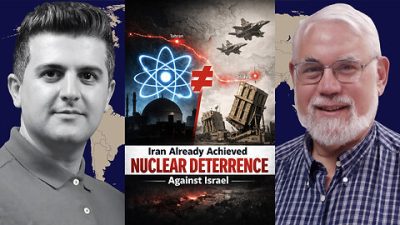
Prof. Ted Postol: Iran Already Achieved Nuclear Deterrence Against Israel
or go to
Aletho News Archives – Video-Images
From the Archives
How the occupied mentality syndrome works
Saudi Arabia on the American chessboard – Part 3
By B. J. Sabri | American Herald Tribune | June 27, 2016
Read part 2: “The occupied mentality Syndrome“
Previously I argued whether Saudi Arabia’s repeated involvements in U.S. interventions and wars stem from free national will or in response to a specific condition. For starters, in Saudi Arabia there is no national will. In Saudi Arabia, the national will is the will of the Al Saud clan. Still, when a major Arab state allies itself with a superpower that committed unspeakable crimes against humanity in almost every Arab country, then something is wrong. This fact alone should compel us to examine the U.S.-Saudi relation for one exceptional reason. As a result of the U.S.-Saudi wars, hundreds of thousands of people in Afghanistan, Iraq, Iran, Libya, Syria, Yemen, and Somalia have lost their lives. Millions became displaced in their own homelands. And millions more rendered refugees.
Attributing the Saudi policies to the bonds of “partnership” with the U.S. is frivolous. There are no bonds between these two thugs except those of business, military deals, secret plots, and wars. Proving this point, bonds such as these have no space for the American and Saudi peoples to share significant cultural or societal exchanges. If partnership is not the reason for the Saudi contribution to the U.S. strategy of empire and imperialism, then another reason must exist.
This leads to three possibilities. … continue
Blog Roll
 Aletho News
- NIAID/NIH and USDA Fund Bioengineered Chimeric Influenza Viruses Built Using Pandemic H1N1 Components: Journal ‘Science Advances’
- Hezbollah hits Israeli warship off Lebanon’s coast, sets it aflame
- Iran slams US strikes on B1 bridge, Mahshahr petrochemical plants as ‘blatant acts of state terrorism’
- In letter to UN chief, Araghchi warns of dire consequences of US-Israeli attacks on Iran’s nuclear facilities
- Why the CIA conspiracy to invade Iran with Kurdish militias failed
- Why Are Upbeat US Claims About Mission to Rescue Pilot ‘Highly Questionable’?
- Aircraft destroyed during US ‘rescue’ of downed F-15 pilot cost more than $100 million each
- Washington University removes professor who condemned US-Israeli war on Iran
- Russia Warns of Retaliation as UK Authorizes Seizure of Vessels
- Serbia thwarts plot to bomb Russia-Hungary gas pipeline – Vucic
- If Americans Knew
- In Iran, Israel-US take aim at “reason, research, and freedom of thought” – Daily Update
- US loses planes over Iran, Israel downgrades Lebanon war goals – Daily Update
- Israel Is Blocking Palestinians from Easter at Church Where Jesus Resurrected
- Plot to assassinate Palestinian activist follows harassment campaign promoted by Zionist groups and elected officials
- Prominent New York synagogue hosts presentation on why U.S. Jews should support the ethnic cleansing of Gaza
- Tapper vs. Piker: Is the CNN Anchor Auditioning for David Ellison?
- Shouldn’t Democrats Be Able to Condemn Genocide?
- Israel-US kill negotiators, destroy civilian structures, but Iran’s military capabilities still largely intact – Daily Update
- ‘War crime’: Global condemnation as Israeli ministers celebrate death penalty law targeting Palestinian prisoners
- 7 Ways Israel Is Turning Lebanon Into Gaza
- No Tricks Zone
- An Inconvenient Tree: Uncovered In Alps… Europe Much Warmer Than Today 6000 Years Ago
- New Study Reports A 60% Slowdown In Greenland’s Ice Loss Rate In The Last Decade
- Low Intensity Tornado Wrecks Major Solar Farm, Creating A Potential Toxic Dump
- New Study Finds Warming Saves Lives…Cold Temperatures 12 Times More Deadly Than Excess Heat
- German Science Blog Accuses PIK Climate Institute Of Hallucinating Climate Tipping Points
- Devastating Assessment Of Comirnaty Vaccine By Former Senior Pfizer Europe Toxicologist
- New Study: CO2 Is ‘Effectively Negligible’ As An Explanatory Climate Change Factor Since 2000
- Former Pfizer Toxicologist Dr. Helmut Sterz Tells Bundestag Hearing Pfizer Vaccine Should Have Never Been Approved
- Energy Expert: Germany’s Nuclear Phaseout Was A “500 Billion Euro Mistake”
- New Research: South Australia’s Mid-Holocene Sea Surface Temperatures Were 4°C Warmer Than Today
 Aletho News