Netanyahu Slams West: Rhetoric on Iran Should be Matched with Deeds
Al-Manar | December 27, 2011
 Israeli Prime Minister Binyamin Netanyahu criticized Western powers for ineffective sanctions against Iran, telling a Foreign Ministry gathering certain unnamed countries are not backing their “tough rhetoric on Iran with a willingness to apply crippling sanctions.”
According to The Jerusalem Post, Netanyahu told Israel’s ambassadors and head of missions abroad meeting in the Foreign Ministry in a closed address Monday that the expressed desire by certain countries, led by the US, to strengthen sanctions on Iran was “welcome and important”, but the test of stiffening the sanctions is to take action against both Iran’s petrochemical industry and central bank, he said.
“There is no possibility of talking about crippling sanctions without these steps being taken immediately and with force,” he said.
Netanyahu said that while he didn’t know whether such “crippling” sanctions would stop Iran’s nuclear program, he was certain they would make things “difficult enough for the Iranian government that it would have to reconsider its actions.”
“But if the sanctions were not imposed, it would be interpreted by the Iranians as a sign the West did not truly have the will or intent to stop them,” Netanyahu added.
Netanyahu’s National Security Council head, Yaakov Amidror, addressed the same gathering Monday, and said Israel’s “number one mission” was to prevent Iran from “obtaining nuclear arms”. If Iran gets the ‘bomb’, he warned, it would be a different Middle East and a different world.
The Los Angeles Times Selling Old Canned News
Moon of Alabama | December 27, 2011
The Los Angeles Times is selling an old story as news.
Syria refugees find sanctuary in Libya
By Ruth Sherlock, Los Angeles Times
December 26, 2011
Reporting from Benghazi, Libya— Even as it recovers from its recent civil war, Libya is fast becoming a place of sanctuary for thousands of refugees fleeing the bloodshed in Syria.Buses from Damascus, crammed with Syrian families, are arriving daily in the eastern city of Benghazi, the cradle of the effort to oust the late Libyan leader Moammar Kadafi.
“Up to 4,000 Syrian families have sought refuge in Libya in the last weeks, and the numbers are increasing every day,” said Mohammed Jammal, a Syrian community leader in the city. “The buses arrive full and go back empty. There used to be two a week, but now there are two a day.”
…
That story is somewhat familiar to me. Where did I read it before?
[search, search]
The Daily Telegraph:
By Ruth Sherlock in Benghazi
9:00PM GMT 09 Dec 2011
Buses from Damascus, crammed with Syrian families, are arriving daily into the east Libyan city of Benghazi.”Up to 4,000 Syrian families have sought refuge in Libya in the last weeks, and the numbers are increasing every day” said Dr Mohammed Jammal, a Syrian community leader in the city. “The buses arrive full and go back empty. There used to be two a week, but now there are two a day.”
…
Except for a bit of editing the story in the LA Times and the Telegraph are identical but were published seventeen days apart. The writer, Ruth Sherlock, is: “a freelance journalist and an intern for Haaretz.com” or whatever.
The LA Times seems to believe that such news deserves publishing even weeks beyond it sales date. The editors probably kept it canned so they could publish something over the holidays without having to leave their homes.
The story itself is, by the way, fishy. It is clearly written to hype the success in Libya and to plant grueling tales about Syria.
But the reality is something else. Further down into it we find that the whole issue is likely less about Syrians fleeing to Libya but about Syrian expats, who worked in Libya and fled from there when the civil war broke out, returning to their workplaces. The December 26 LA Times version:
Before the Libyan civil war, thousands of Syrians worked in the country. The Libyan Red Crescent Society estimates they numbered about 12,000 when the war began.”Many left, but now they are returning and bringing their families with them,” said Ziad Dresi, a refugee coordinator for the Libyan Red Crescent Society.
The December 9 Telegraph version:
Prior to the Libyan civil war thousands of Syrians had worked in the country. The Libyan Red Crescent estimates that 12,000 Syrians were in the country at the start of the Libyan uprising. “Many left but now they are returning, and bringing their families with them, ” said Ziad al Dresi, a refugee coordinator for the Libyan Red Crescent.
Back to the LA Times. It is supposed to be a daily newspaper. How long does it expect their customers to continue paying when they find out that it is selling stale propaganda pieces as news?
Egypt to try Israelis for arms trafficking
Press TV – December 27, 2011
Egyptian authorities have charged two Israelis as well as a Ukrainian national with smuggling weapons into Egypt.
Egypt’s State Prosecutor said in a statement on Monday that the three would be put on trial in a security court usually used for terrorism cases, although no date has yet been set for the trial.
According to the statement, the smuggled weapons were to be used in “illegal operations aimed to implicate Egyptian security.”
In June, Egypt arrested an Israeli for spying during the revolution. The Israeli spy was later freed in a swap deal with Tel Aviv.
The development comes as more than one hundred people have been killed in clashes between protesters and security forces as well as in sectarian violence since former President Hosni Mubarak was ousted in February.
The deaths, coupled with the brutality committed by army forces against the protesters, have prompted some activists to consider suing the ruling generals in local courts or have them put on trial before the International Criminal Court in The Hague.
27 December 2008: The Al Ashi family
27 December 2011 | Palestinian Center for Human Rights

Khawla and Faris Al Ashi photographed next to the picture of their deceased father. (Photo: Palestinian Center for Human Rights)
On the morning of 27 December 2008, at approximately 11:30, Israeli F-16’s targeted a Gaza police initiation ceremony being held in the forecourt of “Arafat City”, a government complex located in Gaza City. The attack resulted in over 60 deaths and 150 injuries. This incident formed part of the wave of attacks which marked the commencement of Israel’s 23 day offensive on the Gaza Strip codenamed “Operation Cast Lead”. Amongst those killed was 33 year old Faris Al Ashi, a member of the Gaza police force who was on duty at the time of the attack.
Like many of the wives who lost husbands during the offensive, Amna Al Ashi was left with sole responsibility for bringing up her and her deceased husband’s young children, Khawla, 6, Osama, 5, Yomna, 3, and Faris, 2, whom she was five months pregnant with at the time of the attack. Amna’s reaction to her challenging circumstances has been defiant, “I am a woman and I have the right to live my own life, many men have proposed but I choose to dedicate myself entirely to the cause of my children”. Discussing the last three years of her life, Amna is keen to press upon the mini victories that have kept her going along the way.
It is clear that Amna has thought carefully about the solutions to the problems faced by her children following the loss of their father. “After he lost his father Osama was very traumatised”, says Amna, “he didn’t want to interact with others and he developed speech problems as a result. Even though he was very young I enrolled him in a local martial arts course. At first he didn’t not want to go, but slowly he gained confidence and now he is an orange belt and has overcome a huge amount of his shyness”. Likewise, Amna has found a novel means to allow her children to express their trauma. “I registered Osama and Khawla in a course for movie animation. Of course their movies are based around their lives and those of their siblings and reflect a lot of what they are thinking and feeling. The movies give me an insight into their problems and allow me to talk with them about it”. She plans to enrol all the children in traditional Palestinian Dabka (Dance) classes to make sure they grow up strong and healthy.
Nevertheless, Faris’ killing has left an empty space in the family life of the children and Amna . “My children see their cousins with their fathers, they hear them calling him “Baba” and they are deeply aware of the absence of a relationship with their own father” says Amna, “sometimes I try to make up for this by getting them to call me Baba, but it’s not the same, they need the feeling only their father could give them”. The loss of her husband has also led to feelings of loneliness and isolation for Amna. “During the day I am strong for the children but at night I become weak, I need the arms of Faris, I need everything he gave to me”.
Amna describes the initial year after Faris’s death as being the most traumatic. “At first I had huge trouble sleeping. The problem thankfully improved but I still find it difficult at times to sleep at night”, says Amna. One way Amna has looked to keeping her outlook positive is to keep busy on projects and hobbies. “I want to keep myself busy with good goals for my life. Currently I’m busy setting up a Kindergarten, which I have already received funding for.” “For the upcoming anniversary of the war, me and other women who lost husbands in the attack plan to give gifts to orphans who lost their fathers during the war. The gifts will be inscribed with the words “On this day you are the beloved ones of your mother”. We want children to remember they still have their mothers and they will always love them”.
During the offensive, Israel illegally classified members of the civilian police force as combatants: this classification constitutes a wilful violation of the principle of distinction, a key component of customary international law. Hamas is a multi-faceted organisation, exercising governmental control of the Gaza Strip. As an organisation, it cannot be considered an armed group. Rather, a distinction must be made between Hamas’ armed and political/civil components. The Izz ad-Din al-Qassam Brigades are the military wing of the Hamas organisation, they are an armed group, and are considered combatants according to IHL. However, Hamas’ political and civil wings are comprised of civilians, who are legally entitled to the protections associated with this status, provided they do not take an active part in hostilities. Civil police, and governmental officials cannot be considered combatants. Attacks intentionally directed against these individuals constitute wilful killing, a grave breach of the Geneva Conventions, and a violation of customary international law.
PCHR submitted a criminal complaint on behalf of Fares Al Ashi on 5 May 2009. To-date, no response has been received.
Arab League Observers Hold Talks in Homs
Al-Manar | December 27, 2011
Arab monitors visited Homs on Tuesday. Syria’s third largest city that has witnessed fierce clashes between security forces and militants.
The Arab League mission met Homs governor Ghassan Abdel Al, Syria’s Dunia television reported.
The mission also due to travel to the central city of Hama and Idlib in the northwest, close to the border with Turkey, the television added, without giving a timetable.
The head of the mission, Sudanese military intelligence officer General Mohammed Ahmed Mustafa al-Dabi, said that the authorities were so far affording every assistance.
“Till now, they have been very cooperative,” Dabi told AFP.
Last week Syria signed with the Arab League a protocol in which it permitted the observers to examine the situation in the country.
Syrian foreign ministry spokesman Jihad Makdisi said the observer “mission has freedom of movement in line with the protocol”. Under that deal, the observers are to be banned only from sensitive military installations.
The mission is part of an Arab plan endorsed by Syria on November 2 that calls for a halt to violence and the release of detainees.
For his part, Syrian Foreign Minister Walid Muallem has said he expects the observers to vindicate his government’s contention that armed terrorists are behind the violence.
Antiwar.com: Helping to do today what was done covertly 45 years ago by the CIA
By Maidhc Ó Cathail | The Passionate Attachment | December 27, 2011
What is Stephen Zunes, the well-paid chair of the academic advisory committee of Peter Ackerman’s International Center on Nonviolent Conflict, doing on the radio show of Antiwar.com, whose self-proclaimed “initial project was to fight against intervention in the Balkans”?
As William I. Robinson, the author of the seminal critique of the democracy-manipulating establishment, Promoting Polyarchy: Globalization, US Intervention, and Hegemony, has written:
That Ackerman is a part of the U.S. foreign policy elite and integral to the new modalities of intervention under the rubric of “democracy promotion,” etc., is beyond question. There is nothing controversial about that and anyone who believes otherwise is clearly seriously misinformed or just ignorant.
Dirty War suspect extradited to Argentina
Press TV – December 26, 2011
Bolivia has extradited former Argentinean military officer Luis Enrique Baraldini, who is wanted for human rights abuses during Argentina’s military dictatorship.
Bolivian Interior Minister Wilfredo Chavez announced on Sunday that Baraldini “was delivered to the Argentine authorities in [the border city of] Bermejo.”
Baraldini is accused of crimes he committed in Argentina’s La Pampa province, where he served as chief of police during the Dirty War, which lasted from 1976 to 1983.
The former officer has been “very much sought after as a longtime fugitive… for personally torturing people, according to witness accounts,” Argentine Security Minister Nilda Garre said at a press conference held after Baraldini was handed over.
Bolivian authorities apprehended the suspect on Saturday in Santa Cruz, about 900 kilometers (approximately 560 miles) east of the Bolivian capital La Paz. They said Baraldini had been living there for several years under the pseudonym Marco Antonio Aponte.
Buenos Aires had offered a reward of about $23,000 for information leading to his arrest.
According to human rights groups, an estimated 30,000 people — mostly leftist dissidents — died in Argentina’s Dirty War.
Protests held at Lacoste stores across France against “racism” and censorship of Palestinian artist
Ali Abunimah – 12/26/2011
Palestine solidarity activists staged protests on Christmas Eve at Lacoste clothing stores in several French cities to protest the censorship and expulsion of Palestinian artist Larissa Sansour from a prestigious art competition sponsored by the French luxury clothing firm.
The scandal led last week to the cancelation of the 2011 Lacoste Elysée Prize by the Musée de L’Elysée in Lausanne, Switzerland.
At actions in Paris, Lyon, Lille and Bordeaux, activists picketed stores, handed out flyers and told Christmas shoppers about Lacoste’s censorship, calling on them to boycott the company. Protestors held signs and prints of Sansour’s censored work and called out slogans condemning Lacoste’s “racism” against Palestinians.
The protests against Lacoste come just days after 12 French activists were acquitted of “inciting hate and discrimination” by a French court for having staged protests at Carrefour supermarkets calling on shoppers to boycott Israeli goods.
The Israeli occupation the world forgot: the Golan Heights
By Mya Guarnieri | Alternative Information Center | December 26, 2011
While the mainstream media commonly refers to the West Bank and Gaza as the Occupied Palestinian Territories, it often incorrectly calls the Golan Heights part of Israel. How has the occupation impacted the Golan? And why has the world forgotten it?
Earlier this month, The Atlantic published “2011: The Year in Photos.” It included a picture of Palestinian protesters climbing the fence that separates, according to The Atlantic, the “Israel-Syria border… near Majdal Shams.” The caption explained that Majdal Shams is located in “northern Israel.”
Imagine the fury if mainstream media outlets referred to the occupied West Bank as “Judea and Samaria.” That would be equivalent to calling the Golan Heights, which also lies beyond the Green Line, “northern Israel.” Calling the Golan “northern Israel” tacitly legitimizes the 1981 Israeli annexation, which has been rejected by the United Nations on numerous occasions in numerous resolutions and goes unrecognized by the international community.
It is this kind of blind repetition of the Israeli government line that has caused both Israeli citizens and the world to forget that the Golan Heights is occupied territory, not unlike East Jerusalem. Those who live in both East Jerusalem and the Golan Heights are not citizens of the state but residents who pay taxes to the Israeli government and receive next to nothing in return. The residents of the Golan run their own hospitals. They build their own schools. And, as is the case in East Jerusalem and Area C in the West Bank, they usually build without permits as Israel will not allow for natural population growth.
As is the case in the West Bank, Arab residents of the occupied Golan Heights have faced restricted access to their lands, land confiscation, and tight water restrictions that impede their farming. According to the NGO Jawlan- Golan for the Development of the Arab villages, the area’s Israeli settlers use as much as 17 times more water per capita than the indigenous inhabitants of the Golan.
As is the case with Gaza, the West Bank, East Jerusalem, and the Palestinian citizens of Israel, Israeli expulsions and expansion has split Golan families into two. In 1967, 130,000 Arab inhabitants were expelled from the Golan Heights, leaving only 6000 residents behind. As a number of Majdal Shams residents told me, every house in the Golan is divided. Everyone has family in Syria, loved ones they see through binoculars at Shouting Hill, cousins they talk to through bullhorns, brothers they have never met.
As is the case with the Palestinians, residents of the Golan have resisted Israeli occupation. Many a member of the Golan Heights’ community has been held in Israeli jails as political prisoners.
But The Atlantic isn’t the only media outlet to forget the occupation of the Golan. For reasons I don’t quite understand, a number of journalists I’ve spoken to consider the Golan “different” from the Palestinian territories. Perhaps it’s easier for journalists to talk about “Israel and the Occupied Palestinian Territories” or the “Israeli-Palestinian conflict.” But to do so is an oversimplification that ignores the broader regional context that includes the Golan Heights.
Or, perhaps, journalists have bought into Israel’s line that the Golan residents aren’t Arab, they’re Druze, and the Druze are “different.” But, talk to most Druze in the Golan and they’ll tell you that they are Druze only by religion. Most identify as Arab, Syrian, or both.
The Golan Heights serves as yet another reminder that the conflict on the ground is very different than the story Israel offers up to the world. The conflict isn’t about the Western world battling the Muslim world; it’s not a clash of cultures or a clash of values; the occupation isn’t a security measure, meant to protect Israel from “terrorists.” And while the Palestinians are the people who, as a whole, suffer the direst consequences of the conflict and the occupation, the conflict and the occupation isn’t necessarily about the Palestinians—it’s about the Jewish state privileging Jewish interests and rights over those of non-Jewish “others.”
Racist outburst by Israeli minister in charge of ‘combating antisemitism’
By Ben White – The Electronic Intifada – 12/26/2011
In a shocking, racist outburst, an Israeli cabinet minister has described Arabs as a “damaged nation”, in remarks reportedly made at a conference in the Tel Aviv-area city Or Yehuda on Sunday.
Israel’s Minister of Information and Diaspora Affairs Yuli Edelstein, who posted the comments on his Facebook profile, said:
As long as the Arab nation continues to be a damaged nation that continues to invest in terror infrastructures, in education to hatred, and in the welfare of families of martyrs, there will be no peace.
Edelstein, a member of Netanyahu’s ruling Likud party, lives in the illegal West Bank settlement of Neve Daniel. Not only is Edelstein a settler, but he also supports initiatives like the ‘Lobby for Greater Israel’, whose members want “to hold onto all of Judea and Samaria”.
Ironically, given how it would be received if a member of Congress or European minister said similar remarks about “the Jewish nation”, Minister Edelstein plays a crucial role in the Inter-parliamentary Coalition for Combating Antisemitism (ICCA) as a member of the body’s steering committee.
In October, he was in London for an ICCA meeting hosted by Labour MP John Mann, co-founder of the ICCA and chair of the UK-focused All-Party Parliamentary Group Against Antisemitism (APPGAA).
Edelstein is committed to the conflation of political actions like Boycott, Divestment, and Sanctions (BDS) and antisemitism. At an international “combating antisemitism” conference he co-organised with Foreign Minister Avigdor Lieberman in December 2009, Edelstein told delegates:
We must repeat again and again these basic facts – TO BE ‘anti-Israel’ IS TO BE ANTI-SEMITIC. TO BOYCOTT ISRAEL, ISRAELI PROFESSORS and ISRAELI businesses, these are not political acts, these are acts of hate, acts of anti-Semitism! Anti-Israel hysteria is anti-Semitic hysteria. They are one and the same. [Ed: Upper case letters in the transcript]
He has also drawn parallels between the Goldstone Report and the rise of Hitler, saying that the UN investigation into war crimes is “simply a type of anti-Semitism”.
While none of this has dissuaded members of the ICCA from working with the Minister, how will they react now, given the unapologetically anti-Arab views of someone apparently coordinating a fight against racism?
[h/t to Mya Guarnieri for finding the Facebook status]
Report: Israeli air-force attacked targets in South Sudan
Ma’an – 25/12/2011
TEL AVIV, Israel – Sudanese media sources have been reporting that Israel’s air-force launched attacks on vehicles in South Sudan last week, Israeli news site Ynet said Sunday.
Al-Intibaha reported last week that two vehicles were hit, killing four people. In a second alleged attack on Dec. 18, a car was bombed.
It is thought that the vehicles belonged to arms smugglers. The reports were not confirmed by Sudanese officials.
Featured Video
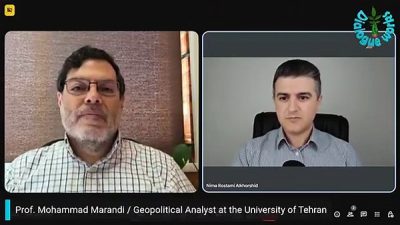
Seyed M. Marandi: U.S. Military DIVIDED? Iran’s Secret Defense EXPOSED
or go to
Aletho News Archives – Video-Images
From the Archives
‘Israel sees Iran as obstacle to its policies’
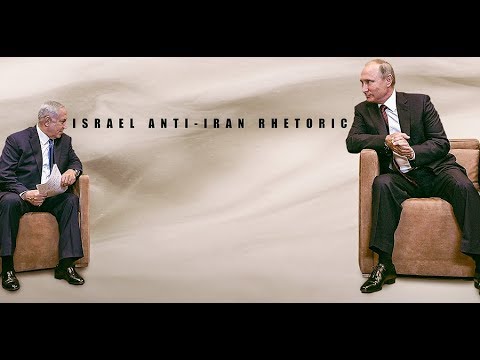
Press TV – August 25, 2017
Prime Minister Benjamin Netanyahu has said that Israel felt threatened by Iran’s growing influence in the Middle East. Netanyahu expressed his Iranophobic view in a meeting with Russian President Vladimir Putin in Russia’s Black Sea resort of Sochi on Wednesday. Press TV has asked Scott Rickard, former American intelligence linguist from Tampa, Florida, and Brent Budowsky, a columnist at The Hill from Washington, to give their thoughts on the issue.
Rickard said Tel Aviv is concerned about the fact that the regime could not carry out its old project to spread sectarian divisions and pave the way for dismemberment of the countries in the Middle East region because of the Iranian-led resistance against Israeli policies, not only in the occupied territories of Palestine but also in the whole region.
“Iran is not a threat to Israel whatsoever. The threat that Israel sees is the fact that their Oded Yinon Plan is being put to a hold by Iran,” the intelligence linguist said on Thursday night.
“They (the Israelis) look at Iran as a threat only because they have no influence on their governments and Iran is autonomous and is not under the Zionist influence,” he added.
Since the victory of the Islamic Republic of Iran in 1979, Tehran has been critical of Israel’s policies in the region, whereas “no leaders [of other states] even dared to speak out against Zionism,” Rickard argued. … continue
Blog Roll
 Aletho News
- What’s Behind U.S./Israeli Strikes On Iranian Pistachio Factories?
- Seyed M. Marandi: U.S. Military DIVIDED? Iran’s Secret Defense EXPOSED
- How I fell foul of the BBC thought police
- The End of NATO
- 37 days of war on Iran cost US staggering $42bln, tracker shows
- Baghdad tells Asian refiners, traders to begin loading Iraqi crude amid Iranian exemption
- Under fire, Moscow and Tehran close ranks
- Iran, US receive Pakistan-mediated plan for ceasefire then final deal
- Iran submits demands for end to war as mediators scramble ahead of Trump deadline
- Iran Threatens Retaliatory Strike on Stargate AI Project in UAE
- If Americans Knew
- U.N. experts demand Israel release prominent Gaza doctor after reports of ‘severe torture’
- Israel’s Latest Genocide Is Against the Shias of Lebanon. Why Is the World Silent?
- How Eliot Cohen’s influence over U.S. war-making paved the way for Trump’s war crimes in Iran
- Israelis don’t pay for the weapons we ‘sell’ to them — US taxpayers do
- While Distancing from AIPAC, Most 2028 Democratic Hopefuls Are Still Embracing Israel
- A brief history of the Israeli nuclear program, the open secret at the heart of the Iran war
- Israeli Settlers Killed a Palestinian Farmer on His Own Land, in Front of His Father. Yes, Again
- The US-Israeli War on Science is an Assault on our Future
- 100+ International Law Experts Say US Strikes on Iran Violate UN Charter, Could Be War Crimes
- ‘Vile, Horrifying, Evil’: Trump Threatens to Bomb Nation of 90 Million People ‘Back to the Stone Ages’
- No Tricks Zone
- An Inconvenient Tree: Uncovered In Alps… Europe Much Warmer Than Today 6000 Years Ago
- New Study Reports A 60% Slowdown In Greenland’s Ice Loss Rate In The Last Decade
- Low Intensity Tornado Wrecks Major Solar Farm, Creating A Potential Toxic Dump
- New Study Finds Warming Saves Lives…Cold Temperatures 12 Times More Deadly Than Excess Heat
- German Science Blog Accuses PIK Climate Institute Of Hallucinating Climate Tipping Points
- Devastating Assessment Of Comirnaty Vaccine By Former Senior Pfizer Europe Toxicologist
- New Study: CO2 Is ‘Effectively Negligible’ As An Explanatory Climate Change Factor Since 2000
- Former Pfizer Toxicologist Dr. Helmut Sterz Tells Bundestag Hearing Pfizer Vaccine Should Have Never Been Approved
- Energy Expert: Germany’s Nuclear Phaseout Was A “500 Billion Euro Mistake”
- New Research: South Australia’s Mid-Holocene Sea Surface Temperatures Were 4°C Warmer Than Today
 Aletho News