Most Homeowners Compensated for Bank Foreclosure Misdeeds will Receive just $300
By Noel Brinkerhoff | AllGov | April 12, 2013
Most homeowners wronged during the foreclosure fiasco will receive only a few hundred dollars in compensation from a settlement reached between the federal government and banks.
About 2.4 million borrowers of the almost 4 million eligible homeowners will receive $300 after lenders gave out misinformation, lost documents and committed other misdeeds.
Two years ago, the Independent Foreclosure Review proclaimed homeowners who suffered “financial injury” could get as much as $125,000.
It now turns out only 1,135 borrowers will see this amount. This small group mostly includes members of the U.S. military who had their homes taken away from them, as well as 53 non-military homeowners who endured foreclosure even though they didn’t default on their loans.
Related article
- Obama Administration Asks Banks to Regulate Their Own Foreclosure Abuses (alethonews.wordpress.com)
Air Force General who Overturned Sexual Assault Conviction Says Accused was Too Good a Husband and Father to be Guilty
By Noel Brinkerhoff and David Wallechinsky | AllGov | April 12, 2013
Lieutenant General Craig A. Franklin, commander of the Third Air Force in Europe, shocked political leaders in Washington with his decision on February 26 to overturn the sexual assault conviction of a celebrated fighter pilot, saying the defendant was just too good a husband and father to be guilty.
“Letters from Lt Col and Mrs Wilkerson’s family, friends and fellow military members,” wrote Franklin in a letter to his superiors, “painted a consistent picture of a person who adored his wife and 9-year old son, as well as a picture of a long-serving professional Air Force officer…. Some letters were from people who did not personally know the Wilkersons, but wanted to convey their concerns to me about the evidence and the outcome of the case”
When the testimony of Wilkerson and his wife were in conflict, Franklin interpreted this as proof that they had not colluded in creating a cover story.
Wilkerson was convicted by an all-male jury of raping a woman while she slept in his home. He was sentenced to a year in the brig and discharged from the Air Force.
Franklin used his authority to overturn the court’s decision, which allowed the accused to return to active duty.
Members of Congress and advocacy groups have strongly criticized Franklin’s interference with the ruling, with some saying it is yet another sign of how the U.S. military refuses to take sex crimes seriously and punish those responsible.
Trans-Pacific Partnership: Free Trade vs. Democracy
By Cliff DuRand | Americas Program | April 12, 2013
As closed-door negotiations concluded in Singapore on the Trans-Pacific Partnership, opposition begins to build in many countries. At the urging of the United States, Canada and Mexico have joined the nine countries in the talks and now Japan has announced it too wants to be part of this new free trade pact of Pacific rim countries, described by its critics as “NAFTA on steroids”.
Going into its 17th round of negotiations, the Obama administration aims to wrap up an agreement by October, hoping to push ratification through the Senate on a fast- track basis. Called Trade Promotion Authority, fast track would mean an up or down vote without amendments or even hearings on the agreement presented to it. It is a profoundly anti-democratic procedure because it shuts down debate.
But from start to end, TPP has been thoroughly anti-democratic. On the first day of the Singapore talks a broad range of civil society organizations issued an open letter to Congress calling for greater transparency in the proceedings. The agreement is being hammered out in secret discussions among trade ministers. Even Senators have been denied a look at its draft provisions.
However, some 600 transnational corporations are in the inner circle. They are writing the rules for trade in their own interests without any democratic input from the people whose lives will be profoundly affected. If adopted, TPP will deny citizens their democratic rights to shape public policies on a host of domestic issues, conceding those decisions to the large corporations.
Some sections have been leaked. They reveal “an agreement that actually formalizes the priority of corporate power over government,” according to Lori Wallach of Public Citizen’s Global Trade Watch. Only 5 of the 29 chapters have to do with trade. Wallach says the rest of the draft “include[s] new rights for the big pharmaceutical companies to expand, to raise medical prices, expand monopoly patents, limits on Internet freedom, penalties for inadvertent noncommercial copying, sending something to a friend. There are the same rules that promote off-shoring of jobs that were in NAFTA that are more robust that literally give privileges and protections if you leave. There is a ban on ‘buy American’ and ‘buy local’ or ‘green’ or sweat-free procurement. There are limits on domestic financial stability regulations. There are limits on imported food safety standards and product standards. There are limits on how we can regulate energy towards a more green future – all of these things are what they call ‘Behind the Borders’ agenda. And the operating clause of TPP is: ‘Each country shall ensure the conformity of its domestic laws, regulations and administrative procedures with these agreements.’”
Global Class War
Free trade is about more than trade. It is about favoring corporations over the democratic rights of citizens and the sovereignty of nations. As the former Director-General of the WTO, Renato Ruggiero, said in 1995, “We are no longer writing the rules of interaction among separate national economies. We are writing the constitution of a single global economy.”# What is being created is a global governance order in which corporations are the citizens, not flesh and blood humans like you and me. With free trade, corporations are making an end run around democracy.
TPP is the latest offensive in a global class war. For nearly 40 years now, since the mid 1970s, corporations have been rolling back the popular gains of the New Deal era and the 1960s. Democracy has been the target of a class war to restore the class power of capital. And there has been weak resistance, at best, by the popular classes. But the stakes have become increasingly clear to more and more. Indeed, on the issue of free trade, there is now a broad public sentiment against this aspect of the corporate offensive.
The US has become the world advocate of “free trade,” promoting it through trade agreements like NAFTA and other bi-lateral agreements as well as through global governance institutions it has sponsored such as IMF, World Bank and WTO. The US has promoted free trade for much the same reason Great Britain promoted it in the 19th century, viz. the economically strongest country in the world benefits from free trade. It is the weaker countries that seek tariff protection for their infant industries, protection from competition with cheaper and higher quality imports. That protection is what enabled the US to industrialize in the last half of the 19th century. But then when the US became economically strong enough to compete regionally and eventually globally, it became an advocate of free trade and demanded that others abandon protectionism.
The justification for free trade rests on the theory of comparative advantage. This is the view that if countries trade free of government impediments, the market will tend to direct each to export that which they can produce most efficiently and import what can be produced more efficiently and thus more cheaply elsewhere. The invisible hand of the market will guide each to specialize in producing what they have a comparative advantage in. Thus a rational production and trading system will emerge that maximizes efficiency.
Free trade agreements like NAFTA were sold to the US public by appealing to consumer’s interest in having access to cheaper goods imported from Mexico. What was deliberately soft-pedaled was their interest as workers in having jobs. Organized labor opposed NAFTA, fearing it would pit US workers in competition with low wage Mexican workers. Independent presidential candidate Ross Perot warned of “a giant sucking sound” as jobs would be off-shored to Mexico.
But the Clinton administration said US exports to Mexico would create new jobs. And so, ignoring opposition from its traditional base in the unions, new Democrat Clinton pushed ratification of NAFTA through the Senate as his first priority. Perot proved to be correct as US companies shifted production to low wage Mexico – until even lower wage Chinese workers were brought into play when China joined WTO. But Clinton was also right as cheaper consumer goods from abroad filled the shelves of Wal-Mart with bargains welcomed by US workers who found their wages reduced. Free trade proved to be a mixed blessing.
Capital Becomes Global
One important point about free trade that is often overlooked is that it is not only about the free, frictionless movement of goods and services across borders, unrestricted by tariffs, quotas and regulations. It assures the free movement of capital, as corporations are freed to invest abroad. The mobility of investment capital is of utmost importance, with profound economic consequences and consequences for democracy.
Unable to find sufficiently profitable venues for investment in the overdeveloped US economy, large corporations have increasingly moved abroad. They sought not just new outlets to sell their commodities, but low wage workforces that would decrease their production costs and thus boost their profits. Frequently that would involve locating different stages of the productive process in different countries so as to take optimal advantage of local conditions. The assembly lines of US industry were disaggregated and disbursed across the globe.
Global assembly lines emerged. These global production chains have become a signature feature of contemporary capitalism. Components may be manufactured in Singapore, transported to China for subassembly and then shipped to Mexico for final assembly before sale in the United States. Although global assembly lines are geographically dispersed, they overcome the limitations of the fixed assembly lines of the Fordist era in that they no longer have to rely on a fixed labor force that can organize itself to effectively claim a share of the surplus they create.
Instead, the global assembly line gives capital the flexibility to seek out the lowest wage workforce and friendliest business environment available anywhere in the world. This has been made possible by the development of a global computerized network of instant communications via satellite. That and the computerization of banking have made money transfers and the movement of capital both easy and instantaneous. The communications network also allows the decentralization of technological development and design. Technicians can work at points distant from the processes of production to which they address themselves. And the entire process can be coordinated by management located anywhere on the globe. The limitations of space and time have been overcome by digital communications and cheap energy for transporting goods to their ultimate consumers.
For such globalized production to be possible, capital must be able to flow freely across national borders and products have to be able to move with minimum friction across those borders, unhampered by tariffs or quotas or non-uniform standards. In other words, there must be free trade for transnational capital to optimize accumulation.#
But transnational corporations also need legal protection of their investments. They need protection from expropriation of their assets, laws and governments that can ensure their property is secure. A crucial part of free trade agreements is protection of what are called investor rights. This involves more than just protection from expropriation, as happens with revolutions. It also involves protection from governmental actions that might reduce the value of their property or potential profits by environmental and health regulations, labor laws or other such measures even though they might be for the public good. What in US law is called “regulatory takings” are seen as tantamount to expropriation.
When such governmental actions do occur, free trade treaties give the foreign corporation the recourse to sue. The suit is not adjudicated in a national court, but by a transnational body of experts operating in secret. States are expected to enforce its decisions on their own nation’s taxpayers and consumers. This favors investor rights (i.e. the interests of transnational corporations) over the democratic rights of a nation.
Super NAFTA
As corporations have globalized, morphing into transnational corporations, they have promoted free trade agreements to get national governments to assist them. But when “investor rights” trump the democratic rights of citizens, the transnational corporations become the real citizens of the emerging global order. TPP is a further step in this direction, making an end run around a number of important issues –banking regulation, extension of patent protection, food inspection, environmental protection, food sovereignty, internet freedom, health care, job creation policies, and more, denying voters the opportunity to decide such matters when they impinge on corporate profit making.
Here are a few of the issues around which opposition to TPP is beginning to emerge.
* Doctors Without Borders (Medecins Sans Frontieres, MSF) is concerned that TPP would “enhance patent and data protections for pharmaceutical companies, dismantle public health safeguards enshrined in international law and obstruct price-lowering generic competition for medicines.” The intellectual property provisions would give pharmaceutical companies prolonged monopoly protection for medicines and delay access to cheaper generic versions. This would have disastrous consequences in poorer countries.
* Internet freedom is also in danger. The Council of Canadians and OpenMedia have warned that the TPP would “criminalize some everyday uses of the Internet,” including music downloads, making no distinction between commercial and non-commercial copyright infringement. The TPP imposes a “three strikes” system for copyright infringement, where three violations would result in the termination of a household’s Internet access.
* Japanese farmers are concerned that TPP will force removal of protections from Japan’s agriculture needed to maintain food sovereignty for the country. They are protesting Japan’s decision to enter into TPP negotiations at all.
* Guaranteed compensation for loss of “expected future profits” from health, labor or environmental regulations.
* Corporate performance requirements are banned.
* Capital mobility is to be guaranteed, preventing capital controls in event of a financial crisis. TPP will require countries to let capital flow in and out without restriction, not allow the banning or regulation of risky investments like derivatives and credit-default swaps and will prevent the formation of much-needed public banks
Democratic sovereignty
Most fundamentally what is at stake with TPP and existing free trade treaties is the sovereignty of nations and the ability of their peoples to make democratic decisions. This is a concern on both the Left and the Right, suggesting the possibility of a broad coalition opposing TPP, bridging our otherwise polarized politics.
A major NBC News-Wall Street Journal poll from September of 2010 revealed that “the impact of trade and outsourcing is one of the only issues on which Americans of different classes, occupations and political persuasions agree,” with 86% saying that outsourcing jobs by U.S. companies to poor countries was “a top cause of our economic woes,” with 69% thinking that “free trade agreements between the United States and other countries cost the U.S. jobs.” Only 17% of Americans in 2010 felt that “free trade agreements” benefit the U.S., compared to 28% in 2007.
Arthur Stamoulis, executive director of Citizen Trade Campaign said: “If they were to negotiate an agreement that put human rights ahead of corporate profit, creating more just and sustainable social policy, the TPP could be a tool for incredible good. But if you look at who has a seat at the table, with the public shut out and more than 600 corporate lobbyists included, there is nothing to indicate that’s the deal we’re going to get.”
The developing opposition to the corporate coup that the TPP represents has the potential to win. It’s about time for the people to win one victory in the corporate class war. Our first chance in this campaign will be over granting fast track Trade Promotion Authority. And that battle will be followed by the fight over Senate approval of TPP itself. This is one that we can win. The stakes are high. The alternatives are democracy or plutocracy.
******
Cliff DuRand is a Research Associate at the Center for Global Justice and a contributor to the CIP Americas Program http://www.cipamericas.org. He is co-author and co-editor of Recreating Democracy in a Globalized State (Clarity Press, 2012). Contact him at global.justice.cliff@gmail.com
For More Information:
Public Citizen’s Global Trade Watch http://www.citizen.org/trade
on TPP http://www.citizen.org/TPP
Citizens Trade Campaign www.citizenstrade.org
A coalition of labor, environmental, religious, family farm, and consumer organizations united in the pursuit of socially and environmentally just trade policies.
It’s Our Economy www.itsoureconomy.us
It’s Our Economy seeks to educate, organize and mobilize Americans to shift the power from concentrated capital to the people. http://itsoureconomy.us/occupy-the-tpp-stop-the-global-corporate-coup/
Related article
- NAFTA at 20: The New Spin (alethonews.wordpress.com)
Controlled Opposition
By GILAD ATZMON | April 12, 2013
In his new book, “The Invention of the Land of Israel”, Israeli academic Shlomo Sand, manages to present conclusive evidence of the far fetched nature of the Zionist historical narrative – that the Jewish Exile is a myth as is the Jewish people and even the Land of Israel.
Yet, Sand and many others fail to address the most important question: If Zionism is based on myth, how do the Zionists manage to get away with their lies, and for so long?
If the Jewish ‘homecoming’ and the demand for a Jewish national homeland cannot be historically substantiated, why has it been supported by both Jews and the West for so long? How does the Jewish state manage for so long to celebrate its racist expansionist ideology and at the expense of the Palestinian and Arab peoples?
Jewish power is obviously one answer, but, what is Jewish power? Can we ask this question without being accused of being anti-Semitic? Can we ever discuss its meaning and scrutinize its politics? Is Jewish power a dark force, managed and maneuvered by some conspiratorial power? Is it something of which Jews themselves are shy? Quite the opposite – Jewish power, in most cases, is celebrated right in front of our eyes. As we know, AIPAC is far from being quiet about its agenda, its practices or its achievements. AIPAC, CFI in the UK and CRIF in France are operating in the most open manner and often openly brag about their success.
Furthermore, we are by now accustomed to watch our democratically elected leaders shamelessly queuing to kneel before their pay-masters. Neocons certainly didn’t seem to feel the need to hide their close Zionist affiliations. Abe Foxman’s Anti Defamation League (ADL) works openly towards the Judification of the Western discourse, chasing and harassing anyone who dares voice any kind of criticism of Israel or even of Jewish choseness. And of course, the same applies to the media, banking and Hollywood. We know about the many powerful Jews who are not in the slightest bit shy about their bond with Israel and their commitment to Israeli security, the Zionist ideology, the primacy of Jewish suffering, Israeli expansionism and even outright Jewish exceptionalism.
But, as ubiquitous as they are, AIPAC, CFI, ADL, Bernie Madoff, ‘liberator’ Bernard Henri-Levy, war-advocate David Aaronovitch, free market prophet Milton Friedman, Steven Spielberg, Haim Saban, Lord Levy and many other Zionist enthusiasts and Hasbara advocates are not necessarily the core or the driving force behind Jewish power, but are merely symptoms. Jewish power is actually far more sophisticated than simply a list of Jewish lobbies or individuals performing highly developed manipulative skills. Jewish power is the unique capacity to stop us from discussing or even contemplating Jewish power. It is the capacity to determine the boundaries of the political discourse and criticism in particular.
Contrary to popular belief, it is not ‘right wing’ Zionists who facilitate Jewish power, It is actually the ‘good’, the ‘enlightened’ and the ‘progressive’ who make Jewish power the most effective and forceful power in the land. It is the ‘progressives’ who confound our ability to identify the Judeocentric tribal politics at the heart of Neoconservatism, American contemporary imperialism and foreign policy. It is the so-called ‘anti’ Zionist who goes out of his or her way to divert our attention from the fact that Israel defines itself as the Jewish State and blinds us to the fact that its tanks are decorated with Jewish symbols. It was the Jewish Left intellectuals who rushed to denounce Professors Mersheimer and Walt, Jeff Blankfort and James Petras’ work on the Jewish Lobby. And it is no secret that Occupy AIPAC, the campaign against the most dangerous political Lobby in America, is dominated by a few righteous members of the chosen tribe. We need to face up to the fact that our dissident voices are far from being free. Quite the opposite, we are dealing here with an institutional case of controlled opposition.
In George Orwell’s 1984, it is perhaps Emmanuel Goldstein who is the pivotal character. Orwell’s Goldstein is a Jewish revolutionary, a fictional Leon Trotsky. He is depicted as the head of a mysterious anti-party organization called “The Brotherhood” and is also the author of the most subversive revolutionary text (The Theory and Practice of Oligarchical Collectivism). Goldstein is the ‘dissenting voice’, the one who actually tells the truth. Yet, as we delve into Orwell’s text, we find out from the Party’s ‘Inner Circle’ O’Brien that Goldstein was actually invented by Big Brother in a clear attempt to control the opposition and the possible boundaries of dissidence.
Orwell’s personal account of the Spanish Civil War “Homage To Catalonia” clearly presaged the creation of Emmanuel Goldstein. It was what Orwell witnessed in Spain that, a decade later, matured into a profound understanding of dissent as a form of controlled opposition. My guess is that, by the late 1940’s, Orwell had understood the depth of intolerance, and tyrannical and conspiratorial tendencies that lay at the heart of ‘Big Brother-ish’ Left politics and praxis.
Surprisingly enough, an attempt to examine our contemporaneous controlled opposition within the Left and the Progressive reveals that it is far from being conspiratorial. As in the case of the Jewish Lobby, the so-called ‘opposition’ hardly attempts to disguise its ethnocentric tribal interests, spiritual and ideological orientation and affiliation.
A brief examination of the list of organisations founded by George Soros’ Open Society Institute (OSI) presents a grim picture – pretty much the entire American progressive network is funded, partially or largely by a liberal Zionist, philanthropic billionaire who supports very many good and important causes that are also very good for the Jews. And yet, like staunch Zionist Haim Saban, Soros does not operate clandestinely. His Open Society Institute proudly provides all the necessary information regarding the vast amount of shekels it spreads on its good and important causes.
So one can’t accuse Soros or the Open Society Institute of any sinister vetting of the political discourse, stifling of free speech or even of ‘controlling the opposition’. All Soros does is to support a wide variety of ‘humanitarian causes’: Human Rights, Women’s Rights, Gay Rights, equality, democracy, Arab ‘Spring’, Arab Winter, the oppressed, the oppressor, tolerance, intolerance, Palestine, Israel, anti war, pro-war (only when really needed), and so on.
As with Orwell’s Big Brother that frames the boundaries of dissent by means of controlled opposition, Soros’ Open Society also determines, either consciously or unconsciously, the limits of critical thought. Yet, unlike in 1984, where it is the Party that invents its own opposition and write its texts, within our ‘progressive’ discourse, it is our own voices of dissent, willingly and consciously, that compromise their principles.
Soros may have read Orwell – he clearly believes his message – because from time to time he even supports opposing forces. For instance, he funds the Zionist-lite J Street as well as Palestinian NGO organisations. And guess what? It never takes long for the Palestinian beneficiaries to, compromise their own, most precious principles so they fit nicely into their paymaster’s worldview.
The Visible Hand
The invisible hand of the market is a metaphor coined by Adam Smith to describe the self-regulating behaviour of the marketplace. In contemporary politics. The visible hand is a similar metaphor which describes the self-regulating tendency of the political-fund beneficiary, to fully integrate the world view of its benefactor into its political agenda.
Democracy Now, the most important American dissident outlet has never discussed the Jewish Lobby with Mersheimer, Walt, Petras or Blankfort – the four leading experts who could have informed the American people about the USA’s foreign policy domination by the Jewish Lobby. For the same reasons, Democracy Now wouldn’t explore the Neocon’s Judeo-centric agenda nor would it ever discuss Jewish Identity politics with yours truly. Democracy Now will host Noam Chomsky or Norman Finkelstein, it may even let Finkelstein chew up Zionist caricature Alan Dershowitz – all very good, but not good enough.
Is the fact that Democracy Now is heavily funded by Soros relevant? I’ll let you judge.
If I’m correct (and I think I am) we have a serious problem here. As things stand, it is actually the progressive discourse, or at a least large part of it that sustains Jewish Power. If this is indeed the case, and I am convinced it is, then the occupied progressive discourse, rather than Zionism, is the primary obstacle that must be confronted.
It is no coincidence that the ‘progressive’ take on ‘antisemitism’ is suspiciously similar to the Zionist one. Like Zionists, many progressive institutes and activists adhere to the bizarre suggestion that opposition to Jewish power is ‘racially motivated’ and embedded in some ‘reactionary’ Goyish tendency. Consequently, Zionists are often supported by some ‘progressives’ in their crusade against critics of Israel and Jewish power. Is this peculiar alliance between these allegedly opposing schools of thoughts, the outcome of a possible ideological continuum between these two seemingly opposed political ideologies? Maybe, after all, progressiveness like Zionism is driven by a peculiar inclination towards ‘choseness’. After all, being progressive somehow implies that someone else must be ‘reactionary’. It is those self-centric elements of exceptionalism and choseness that have made progressiveness so attractive to secular and emancipated Jews. But the main reason the ‘progressives’ adopted the Zionist take on antisemitism, may well be because of the work of that visible hand that miraculously shapes the progressive take on race, racism and the primacy of Jewish suffering.
We may have to face up to the fact that the progressive discourse effectively operates as Israel’s longest arm – it certainly acts as a gatekeeper and as protection for Zionism and Jewish tribal interests. If Israel and its supporters would ever be confronted with real opposition it might lead to some long-overdue self-reflection. But at the moment, Israel and Zionist lobbies meet only insipid, watered-down, progressively-vetted resistance that, in practice, sustains Israeli occupation, oppression and an endless list of human rights abuses.
Instead of mass opposition to the Jewish State and its aggressive lobby, our ‘resistance’ is reduced into a chain of badge-wearing, keffiyeh-clad, placard-waving mini-gatherings with the occasional tantrum from some neurotic Jewess while being videoed by another good Jew. If anyone believes that a few badges, a load of amateur youtube clips celebrating Jewish righteousness are going to evolve into a mass anti-Israel global movement, they are either naïve or stupid.
In fact, a recent Gallup poll revealed that current Americans’ sympathy for Israel has reached an All-Time High. 64% of Americans sympathise with the Jewish State, while only 12% feel for the Palestinians. This is no surprise and our conclusion should be clear. As far as Palestine is concerned, ‘progressive’ ideology and praxis have led us precisely nowhere. Rather than advance the Palestinian cause, it only locates the ‘good’ Jew at the centre of the solidarity discourse.
When was the last time a Palestinian freedom fighter appeared on your TV screen? Twenty years ago the Palestinians were set to become the new Che Guevaras. Okay, so the Palestinian freedom fighter didn’t necessarily speak perfect English and wasn’t a graduate of an English public school, but he was free, authentic and determined. He or she spoke about their land being taken and of their willingness to give what it takes to get it back. But now, the Palestinian has been ‘saved’, he or she doesn’t have to fight for his or her land, the ‘progressive’ is taking care of it all.
This ‘progressive’ voice speaks on behalf of the Palestinian and, at the same time, takes the opportunity to also push marginal politics, fight ‘Islamism’ and ‘religious radicalisation’ and occasionally even supports the odd interventionst war and, of course, always, always, always fights antisemitism. The controlled opposition has turned the Palestinian plight into just one more ‘progressive’ commodity, lying on the back shelf of its ever-growing ‘good-cause’ campaign store.
For the Jewish progressive discourse, the purpose behind pro-Palestinian support is clear. It is to present an impression of pluralism within the Jewish community. It is there to suggest that not all Jews are bad Zionists. Philip Weiss, the founder of the most popular progressive pro-Palestinian blog was even brave enough to admit to me that it is Jewish self -interests that stood at the core of his pro Palestinian activity.
Jewish self-love is a fascinating topic. But even more fascinating is Jewish progressives loving themselves at the expense of the Palestinians. With billionaires such as Soros maintaining the discourse, solidarity is now an industry, concerned with profit and power rather than ethics or values and it is a spectacle both amusing and tragic as the Palestinians become a side issue within their own solidarity discourse.
So, perhaps before we discuss the ‘liberation of Palestine’, we first may have to liberate ourselves.
Gilad Atzmon’s latest book is: The Wandering Who? A Study of Jewish Identity Politics
Related articles
- Jewish Voice for Weizmann (alethonews.wordpress.com)
- Is Palestinian Solidarity an Occupied Zone? (alethonews.wordpress.com)
- Is the Anti-Occupation Movement Driven by Defenders of Genocide? (alethonews.wordpress.com)
Honduras: Terror in the Aguán
By Greg McCain | Upside Down World | April 11, 2013
During the first week of April, the Honduran daily newspaper La Prensa ran a series of articles that included photos, a video and a link to a montage of past articles entitled Terror en el Bajo Aguán. The major thrust of the series is that there are heavily armed clandestine groups of men training in the region. The photos and video show them with AK47s, M16s, and .223 assault rifles, all of which are military issue. All of the men are wearing ski masks over their faces and they appear to be playing to the camera, running in defensive stances, crawling on the ground and being sure to showoff their heavy firepower, all at the direction of whoever is holding the camera. An April 1 article states that there have been more than 90 deaths in the Aguán attributed to people with high caliber arms like the ones shown in the photos. It states that the latest one was a campesino, but it fails to point out that these more than 90 deaths since the coup in 2009 were all campesinos who have been murdered by sicarios: assassins who mainly perform drive by shootings.
Not unexpectedly, the new propaganda campaign being orchestrated by Colonel German Alfaro, commander of Operation Xatruch III and graduate of the School of the Americas, has been carried out with the help of the pro-ruling elite, pro-coup mainstream media. In a further attempt to criminalize the campesino movements, the La Prensa series, by implication and by direct assertions, links the struggles of the campesinos to acquire land that is rightfully and legally theirs to these mysterious armed groups that are roving the Aguán and allegedly terrorizing the private security forces of the rich landowners.
The video of the alleged training maneuvers would be laughable in its obvious staging if the repression that has befallen the campesinos at the hands of the private security guards, the Honduran military, and the National police wasn’t so tragic and ever present. These forces are not just working side-by-side, but are also interchangeable since the security companies that Dinant contracts often hire police and military personnel.
Colonel Alfaro states several times to La Prensa that the identities of these clandestine groups are known and that they even know who the leaders are. In a March 1, 2013 La Prensa article, he asserts that they are being trained by Nicaraguans’ with combat training. He declares that these groups go into the fincas owned by the rich landowners, such as Miguel Facussé’s Paso Aguán, “to terrorize and scare off the security guards. Later, the campesinos go into the plantations to steal the fruit and then money is exchanged at some later date.” No explanation is given as to why it is that campesinos are being killed in overwhelming numbers if this symbiotic relationship truly exists.
The La Prensa “exposé” raises more questions than it answers. If it is the security guards who are being terrorized then why aren’t there huge numbers of their deaths? Furthermore, why are they only a tiny fraction of the campesino deaths, and often found to be the result of infighting among the guards? Why are the campesinos from MARCA who have successfully fought in the courts to retain possession of their land being assassinated? Their lawyer, Antonio Trejo, was assassinated last November in Tegucigalpa after successfully winning the case that secured the land for three of MARCA’s collectives. His brother was later assassinated in Tocoa while investigating his murder. While denying any responsibility, Facussé told an L.A. Times reporter in a December 21, 2012 interview that he certainly had reason to see the lawyer dead. The National Police have attempted to raise spurious claims that the Trejo’s were involved with different less than desirable elements, creating red herrings to take the focus off of Facussé.
There are further questions raised by Alfaro’s claims of there being a connection between armed groups and campesinos. Why are the leaders of MUCA being stopped at every police checkpoint as they drive from Tocoa on their way to a meeting in Siguatepeque in the south. At one checkpoint an officer said to another, “It’s them… they are here.” Later, when they decide that it is safer not to drive any further, they stop at a hotel to rest and then take a bus at 3am to their destination. A group of armed men was seen by the campesino’s driver, who stayed behind, pulling up to the hotel at 3:30 a.m. and question the receptionist about them. Further, why are Facusse’s guards and police and military on a regular basis harassing the MUCA collectives. A truck full of soldiers drove through the community of La Confiansa on the eve of the internal elections shouting out “we’re hunting for Tacamiches” a derogatory term used by the upper classes and police and military to denote campesinos? Why have the military been surrounding the campesino community of La Panama, which borders the Paso Aguán finca, and in which two bodies of members of the community have been dug up near where the private security guards camped? Meanwhile, more are suspected buried there, but why won’t the police and private security, and indeed, the military allow the community to search for the bodies of those missing?
These are questions that neither the mainstream media will ask, nor will Colonel Alfaro answer. Instead they work in concert to manufacture a connection between alleged criminal groups and the campesinos. Alfaro’s motives are made clear when he states that they are there to protect the property and the palm fruit of the rich landowners. Soldiers are often seen riding in or along side Facusse’s Dinant trucks and they along with the National Police intermingle on a regular basis with Facussé’s and the other rich landowner’s guards, who have often been described by those living in the Aguán as paramilitaries.
Alfaro claims that, after the National Congress passed a decree in 2012 that banned all firearms from being possessed except by the police, military and private security, they captured 200 weapons in the first month (he does not specify if they were of high caliber like AK47s or if they were .22 rifles or handguns), and then an average of about 14 per month since then. It is evident from his boast that the military has greatly disarmed the general public, while it is evident just by driving up and down the roads between Tocoa and Trujillo that the arms of gruesome caliber, as the newspaper describes them, are in the hands of the police, military and paramilitary of Facussé and the other rich landlords.
There are both police and military checkpoints that randomly stop cars and buses along the main road between these two cities. When a bus is stopped all the men are told to leave and keep their bags and backpacks on board along with the women. The men are then told to press up against the bus with arms and legs spread while the very young soldiers of the 15th Battalion, with their rifles strapped across their chests, do a body pat down while looking at IDs. Other soldiers search the personal belongings on the bus. Off to the side of the road is a military personnel carrier that has a mounted machine gun pointed toward the street. Alfaro doesn’t explain if this is the method that has led to the discovery and confiscation of so many weapons, but it has been successful in labeling every citizen as a potential criminal and preparing the streets for Martial Law as the country prepares for the general elections in November.
In late February, several hundred police, military, and security guards surrounded the community of La Panama, as they have done various subsequent times since then. They proceeded to knock down a security gate that had been erected to keep the paramilitary guards from invading the community. In July of 2012, La Panama found it necessary to put up the gate after one of the community’s leaders, Gregorio Chavez, was disappeared and his corpse later found in the Paso Aguán. His shallow grave was a ten-minute walk from where Facussé’s paramilitary guards had set up an encampment. The community, after pleading with police to accompany them onto the finca, and after international human rights observers had visited and taken testimonies from the community, finally were allowed access. As Señor Chavez’ son and brother pulled the cadaver from the ground it was apparent from marks on the body that he had been tortured. Previous to Chavez’ murder the guards had been harassing him, shooting his chickens, and threatening to do the same to him and his family. They often drove up and down the road that goes through the community with their guns pointing out at the children who played in the yards.
Dinant had put up a building in the middle of the community that functioned as both a guardhouse and a parking space for their palm fruit trucks. A week before his disappearance Gregorio Chavez had gone to this building to complain to someone in charge about the threats and the killing of his chickens. It was also in this building that many in the community had seen the bicycle of one of the disappeared after he went missing. It is suspected that he is buried in the Paso Aguán. It could be the remains that were recently found on April 3. A security guard who had connections to the community tipped them off as to where they could find the body. The community is hoping, with the help of COFADEH and other human rights groups, to get an international forensic team to positively identify who it is.
This latest news was revealed at a press conference in Tegucigalpa held on the April 3 by the Agrarian Platform of the Campesinos of the Aguán (PARCA, in its Spanish acronym). PARCA is a new initiative formed by 13 campesino movements to better support each other as they face ever-increasing threats to their rights to the land. The press conference was called in response to the La Prensa stories. Yoni Rivas, Secretary General of MUCA, reasserted that the campesinos have no connection to any armed groups. In fact, it was the campesinos who had gone to the press in 2011 to point out that there were armed thugs killing campesinos in the Aguán and he showed pictures of armed men with automatic weapons wearing uniforms that matched the clothes worn by Dinant’s security forces.

The ultimate question is, if Colonel Alfaro and Operation Xatruch are simply doing what they say they are, “maintaining the peace and harmony of the people of Colon,” then why is he conducting press conferences denouncing both Honduran and international human rights groups? On February 18, 2013, in a clear act of aggression toward these groups and in a further attempt at criminalization of the campesinos, he called out human rights observers and campesino leaders. He published the phone numbers of international human rights observers in the US and Europe, and attempted to set up a confrontation between what he refers to as the “Laboriosa población,” the hard working people of the department of Colon against the aforementioned campesino groups referring to them as “a minority”, who create permanent friction and a constant problem of disrespect for the legally established laws and legal authorities. Alfaro’s and the Honduran military’s disdain for the campesinos is further illustrated in the report, Human Rights Violations Attributed to Military Forces in the Bajo Aguan Valley in Honduras written by Annie Bird of Rights Action where she states that her report, “describe[es] the abuses, many of them grave human rights violations, in which soldiers from the 15th Battalion were present and/ or direct participants [in the killings of campesinos]; in either case the 15th Battalion is a responsible party to the violations.” The 15th Battalion is where Xatruch III and Colonel Alfaro are stationed.
In a further indictment of Alfaro’s disingenuousness, during Xatruch’s raid of La Panama in February, there was, coincidentally, a human rights delegation from the US-El Salvador Sister Cities organization visiting the community. This forced the military, police and security guards to retreat. Much of the military force moved into the Paso Aguán finca. Later, members of the community who didn’t want their names made public stated that Alfaro attempted to “negotiate” with the community, but told them to stop talking to human rights groups. They of course denied his request. Today, the tensions between the community and the heavily armed forces continue as the military remain in the finca protecting Facussé’s palm fruit.
Related articles
- Will the World Bank Stop Investing in Campesino Assassinations? (alethonews.wordpress.com)
- Killings Continue in Bajo Aguán as New Report Documents Abuses by U.S.-Trained Honduran Special Forces Unit (alethonews.wordpress.com)
- Honduras: Murdered Lawyer’s Brother Killed in Aguán (alethonews.wordpress.com)
- Step by Step: Honduras Walk for Dignity and Sovereignty (alethonews.wordpress.com)
- World Bank Must End Support for Honduran Palm Oil Company Implicated in Murder (alethonews.wordpress.com)
Official Honduran Report on May 11 Shooting Incident is a New Injustice to Victims
By Dan Beeton | CEPR Americas Blog | April 11, 2013
CEPR has released a new paper, along with the human rights organization Rights Action, examining the Honduran Public Ministry’s official report on the May 11, 2012 shooting incident last year in which four local villagers were killed in Ahuas in Honduras’ Moskitia region during a counternarcotics operation involving U.S. and Honduran agents. This is also the first time that the Public Ministry’s report has been made available to the public, posted to Scribd in English here, and Spanish here.
The Honduran Public Ministry’s report deserves special scrutiny because thus far it represents the official version of events according to the Honduran authorities. And since the U.S. government has declined to conduct its own investigation – despite the wishes of 58 members of Congress – it also represents by default the version of events tacitly endorsed by U.S. authorities as well. The DEA and State Department didn’t allow Honduran investigators to question the U.S. agents and contractors that participated in the May 11 operation. At the same time a U.S. police detective working for the U.S. Embassy reportedly participated in the Public Ministry’s investigation, so the U.S. also bears some responsibility for the report’s flaws.
The CEPR/Rights Action paper found that the Public Ministry’s report:
- Makes “observations” (not conclusions) that are not supported by the evidence cited;
- Omits key testimony, that would implicate the DEA, from police who were involved in the May 11 incident;
- Relies on incomplete forensic examinations of the weapons involved, improper forensic examinations of the victims’ bodies and other improperly gathered evidence;
- Does not attempt to establish who is ultimately responsible for the killings;
- Ignores eyewitness reports claiming that at least one State Department-titled helicopter fired on the passenger boat carrying the shooting victims;
- Does not attempt to establish whether the victims were “in any way involved in drug trafficking” as both Honduran and U.S. officials originally alleged;
- Does not attempt to establish what authority was actually in charge of the operation;
- Appears to be focused on absolving the DEA of all responsibility in the killings.
The CEPR/Rights Action report represents the first such public critique of the Public Ministry’s report. As we have previously noted, there are significant discrepancies between different accounts of the May 11 events, including those of Honduran police officers who participated in (and say the DEA was in charge of) the operation. These discrepancies – cited in a separate report published by the Honduras National Commission of Human Rights (CONADEH) – are not mentioned in the Public Ministry report. Nor does the report include police testimony indicating that a DEA agent ordered one of the State Department helicopters to open fire on the passenger boat in which four people were killed.
The report concludes by calling for the U.S. government to carry out its own investigation of the Ahuas incident to better determine what occurred and to determine what responsibility, if any, DEA agents had in the killings. It also calls on the U.S. government to cease being an obstacle to an already flawed investigation by making the relevant DEA agents, weapons and documents – including an aerial surveillance video of the Ahuas operation in its entirety – available to investigators.
The new CEPR/Rights Action paper follows the “Collateral Damage of a Drug War” report released last year which was based on eyewitness testimony and other evidence the authors obtained in Honduras and concluded that the DEA played a central role in the shooting incident.
Related article
- Obama Administration Refuses to Investigate Alleged DEA Killing of Women and Child in Honduras (alethonews.wordpress.com)
IRS Plans to Cut Back Auditing of Large Corporations
By Noel Brinkerhoff and Danny Biederman | AllGov | April 11, 2013
The Internal Revenue Service (IRS) has decided to spend less time auditing multi-million dollar corporations.
Under a new plan revealed to Syracuse University’s Transactional Records Access Clearinghouse (TRAC), the IRS will expend 18% less effort auditing businesses with assets of $10 million or more compared with just two years ago.
The agency also sees itself devoting 14% less time for specialized revenue agents to conduct corporate audits in FY 2013, compared to what was allocated in FY 2011.
There has been less of a drop in the rate of individual taxpayer audits—5.3% in FY 2012, moving to 7% due to an increase in number of filed returns.
TRAC—which obtained the IRS planning document through a Freedom of Information Act request—noted that the reductions were decided upon before sequestration, which could result in the IRS implementing more cuts in the months ahead.
The IRS responded to the release of the TRAC report by pointing out that its budget was cut by $1 billion in 2010, and that its staff was reduced by 7,000 employees in 2011. It insisted that it maintains a fair balance between individual and corporate audits.
Related articles
AL-KHALIL (HEBRON): New report documents the loss of childhood
CPTnet | April 11, 2013
A newly released report compiled by internationals working in the West Bank city of Hebron documents an alarming rate of abuse of the rights of children. Human rights workers in H2, the portion of the city under Israeli military control, have witnessed 47 detentions or arrests of children age fifteen and under by soldiers since the start of February. Other violations documented in the report include conducting war training when children are present, delaying children and teachers as they pass checkpoints to access schools, detaining children in adult facilities, questioning children without the presence of an adult, and blindfolding children in detention.
Occupied Childhoods: Impact of the actions of Israeli soldiers on Palestinian children in H2 (Occupied Hebron) during February, March and April 2013 documents the alarming regularity of soldiers violating the rights of children to access education, to play, to have a parent, guardian or lawyer present when detained, and to move freely on their streets.
Documentation in the report was collected by three human rights organizations working in Hebron. Christian Peacemaker Teams, International Solidarity Movement, and Ecumenical Accompaniment Programme in Israel and Palestine all maintain teams in Hebron in order to provide protective presence and documentation in civilian neighborhoods.
The arrest on March 20, 2013, of 27 children outside a Hebron Elementary school has drawn attention to the extreme vulnerability of children living in occupied Hebron. Human rights workers in the city point out, however, that the mass arrest is far from an isolated event. All of the children in the neighborhoods in and around Hebron’s Old City must pass through military checkpoints to reach school, clinics and markets.
The report calls upon duty bearers to assure the human rights of children are respected. As Occupying Power the State of Israel is responsible for abiding by international law and for protecting the specific rights of children. Rights workers in Hebron call upon relevant UN agencies and non-governmental organizations to carry out their mandate by providing protection for children, and to pressure the State of Israel to change its policy vis-à-vis children in the Old City and H2.
In releasing the report, human rights workers in Hebron call upon consulates, churches and human rights organizations to formally protest the human rights crisis faced by children in Hebron and demand that the rights of children be protected.
Full report: http://cptpalestine.files.wordpress.com/2013/04/occupied-childhoods-impact-of-the-actions-of-israeli-soldiers-on-palestinian-children-in-h2-during-february-march-and-april-20131.pdf
Photos: http://www.flickr.com/photos/94802096@N05/sets/72157633209785476/show/
Video links:
- https://www.facebook.com/photo.php?v=490965807623666&set=vb.271582992877955&type=2&theater
- www.youtube.com/watch?feature=player_embedded&v=ng_xqfs3YZM
Twitter: https://twitter.com/btselem/status/314395213185572864
Related articles
- Israeli soldier shoots disabled man in Hebron (alethonews.wordpress.com)
- Mass arrest of schoolchildren (alethonews.wordpress.com)
- Zionists attempt to intimidate International Solidarity Movement (alethonews.wordpress.com)
- Journalists detained in Hebron, leading to two arrests and threats to restrict Palestinian movement (alethonews.wordpress.com)
- Israeli forces kill woman near Hebron (maannews.net)
Featured Video
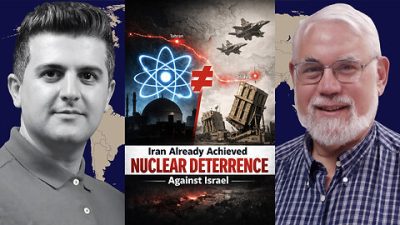
Prof. Ted Postol: Iran Already Achieved Nuclear Deterrence Against Israel
or go to
Aletho News Archives – Video-Images
From the Archives
How the occupied mentality syndrome works
Saudi Arabia on the American chessboard – Part 3
By B. J. Sabri | American Herald Tribune | June 27, 2016
Read part 2: “The occupied mentality Syndrome“
Previously I argued whether Saudi Arabia’s repeated involvements in U.S. interventions and wars stem from free national will or in response to a specific condition. For starters, in Saudi Arabia there is no national will. In Saudi Arabia, the national will is the will of the Al Saud clan. Still, when a major Arab state allies itself with a superpower that committed unspeakable crimes against humanity in almost every Arab country, then something is wrong. This fact alone should compel us to examine the U.S.-Saudi relation for one exceptional reason. As a result of the U.S.-Saudi wars, hundreds of thousands of people in Afghanistan, Iraq, Iran, Libya, Syria, Yemen, and Somalia have lost their lives. Millions became displaced in their own homelands. And millions more rendered refugees.
Attributing the Saudi policies to the bonds of “partnership” with the U.S. is frivolous. There are no bonds between these two thugs except those of business, military deals, secret plots, and wars. Proving this point, bonds such as these have no space for the American and Saudi peoples to share significant cultural or societal exchanges. If partnership is not the reason for the Saudi contribution to the U.S. strategy of empire and imperialism, then another reason must exist.
This leads to three possibilities. … continue
Blog Roll
 Aletho News
- NIAID/NIH and USDA Fund Bioengineered Chimeric Influenza Viruses Built Using Pandemic H1N1 Components: Journal ‘Science Advances’
- Hezbollah hits Israeli warship off Lebanon’s coast, sets it aflame
- Iran slams US strikes on B1 bridge, Mahshahr petrochemical plants as ‘blatant acts of state terrorism’
- In letter to UN chief, Araghchi warns of dire consequences of US-Israeli attacks on Iran’s nuclear facilities
- Why the CIA conspiracy to invade Iran with Kurdish militias failed
- Why Are Upbeat US Claims About Mission to Rescue Pilot ‘Highly Questionable’?
- Aircraft destroyed during US ‘rescue’ of downed F-15 pilot cost more than $100 million each
- Washington University removes professor who condemned US-Israeli war on Iran
- Russia Warns of Retaliation as UK Authorizes Seizure of Vessels
- Serbia thwarts plot to bomb Russia-Hungary gas pipeline – Vucic
- If Americans Knew
- In Iran, Israel-US take aim at “reason, research, and freedom of thought” – Daily Update
- US loses planes over Iran, Israel downgrades Lebanon war goals – Daily Update
- Israel Is Blocking Palestinians from Easter at Church Where Jesus Resurrected
- Plot to assassinate Palestinian activist follows harassment campaign promoted by Zionist groups and elected officials
- Prominent New York synagogue hosts presentation on why U.S. Jews should support the ethnic cleansing of Gaza
- Tapper vs. Piker: Is the CNN Anchor Auditioning for David Ellison?
- Shouldn’t Democrats Be Able to Condemn Genocide?
- Israel-US kill negotiators, destroy civilian structures, but Iran’s military capabilities still largely intact – Daily Update
- ‘War crime’: Global condemnation as Israeli ministers celebrate death penalty law targeting Palestinian prisoners
- 7 Ways Israel Is Turning Lebanon Into Gaza
- No Tricks Zone
- An Inconvenient Tree: Uncovered In Alps… Europe Much Warmer Than Today 6000 Years Ago
- New Study Reports A 60% Slowdown In Greenland’s Ice Loss Rate In The Last Decade
- Low Intensity Tornado Wrecks Major Solar Farm, Creating A Potential Toxic Dump
- New Study Finds Warming Saves Lives…Cold Temperatures 12 Times More Deadly Than Excess Heat
- German Science Blog Accuses PIK Climate Institute Of Hallucinating Climate Tipping Points
- Devastating Assessment Of Comirnaty Vaccine By Former Senior Pfizer Europe Toxicologist
- New Study: CO2 Is ‘Effectively Negligible’ As An Explanatory Climate Change Factor Since 2000
- Former Pfizer Toxicologist Dr. Helmut Sterz Tells Bundestag Hearing Pfizer Vaccine Should Have Never Been Approved
- Energy Expert: Germany’s Nuclear Phaseout Was A “500 Billion Euro Mistake”
- New Research: South Australia’s Mid-Holocene Sea Surface Temperatures Were 4°C Warmer Than Today
 Aletho News