Canada: Hypocrites ‘R Us
By Yves Engler | Dissident Voice | September 16, 2013
Somewhere in the Lester B. Pearson Building, Canada’s foreign affairs headquarters, must be a meeting room with the inscription “The World Should Do as We Say, Not As We Do” or perhaps “Hypocrites ‘R Us.”
With the Obama administration beating the war drums, Canadian officials are demanding a response to the Syrian regime’s alleged use of the chemical weapon sarin.
Last week Prime Minister Stephen Harper claimed “if it is not countered, it will constitute a precedent that we think is very dangerous for humanity in the long term” while for his part Foreign Affairs Minister John Baird declared: “If it doesn’t get a response it’s an open invitation for people, for Assad in Syria, or elsewhere to use these types of weapons that they’ve by and large refrained from doing since the First World War.” The Conservatives also signed Canada onto a White House statement claiming: “The international norm against the use of chemical weapons is longstanding and universal.”
While one may wish this were the case, it’s not. In fact, Canada has repeatedly been complicit with the use of chemical weapons.
During the war in Afghanistan, Canadian troops used white phosphorus, which is a chemical agent that can cause deep tissue burning and death when inhaled or ingested in significant amounts. In an October 2008 letter to the Toronto Star, Corporal Paul Demetrick, a Canadian reservist, claimed Canadian forces used white phosphorus as a weapon against “enemy-occupied” vineyards. General Rick Hillier, former chief of the Canadian defence staff, confirmed the use of this defoliant. Discussing the difficulties of fighting the Taliban in areas with 10-foot tall marijuana plants, the general said: “We tried burning them with white phosphorous — it didn’t work.” After accusations surfaced of western forces (and the Taliban) harming civilians with white phosphorus munitions the Afghan government launched an investigation.
In a much more aggressive use of this chemical, Israeli forces fired white phosphorus shells during its January 2009 Operation Cast Lead that left some 1,400 Palestinians dead. Ottawa cheered on this 22-day onslaught against Gaza and the Conservatives have failed to criticize Israel for refusing to ratify the Chemical Weapons Convention and Biological Weapons Convention.
For decades the massive Suffield Base in Alberta was one of the largest chemical and biological weapons research centres in the world. A 1989 Peace Magazine article explained, “For almost 50 years, scientists from the Department of National Defence have been as busy as beavers expanding their knowledge of, and testing agents for, chemical and biological warfare (CBW) in southern Alberta.”
Initially led by Canadian and British scientists/soldiers, gradually the US military played a bigger role in the chemical weapons research at Suffield. A chemical warfare school began there in 1942 and it came to light that in 1966 US Air Force jets sprayed biological weapons simulants over Suffield to figure out how best to spray potentially fatal diseases on people. Until at least 1989 there were significant quantities of toxins, including sarin, stockpiled at the Alberta base. In 2006 former Canadian soldiers who claim to have been poisoned at Suffield launched a class action lawsuit against the Department of National Defense.
During the war in Vietnam, the US tested agents orange, blue, and purple at CFB Gagetown. A 1968 U.S. Army memorandum titled “defoliation tests in 1966 at base Gagetown, New Brunswick, Canada” explained: “The department of the army, Fort Detrick, Maryland, has been charged with finding effective chemical agents that will cause rapid defoliation of woody and Herbaceous vegetation. To further develop these objectives, large areas similar in density to those of interest in South East Asia were needed. In March 1965, the Canadian ministry of defense offered Crops Division large areas of densely forested land for experimental tests of defoliant chemicals. This land, located at Canadian forces base Gagetown, Oromocto, New Brunswick, was suitable in size and density and was free from hazards and adjacent cropland. The test site selected contained a mixture of conifers and deciduous broad leaf species in a dense undisturbed forest cover that would provide similar vegetation densities to those of temperate and tropical areas such as South East Asia.”
Between 1962 and 1971 US forces sprayed some 75,000,000 litres of material containing chemical herbicides and defoliants in Vietnam, Laos and Cambodia. One aim was to deprive the guerrillas of cover by defoliating forests and rural land. Another goal of these defoliation efforts was to drive peasants from the countryside to the US dominated cities, which would deprive the national resistance forces of their food supply and rural support.
In addition to assisting chemical warfare by testing Agent Orange, during the Vietnam war Canadian manufacturers sold the US military “polystyrene, a major component in napalm,” according to the book Snow Job. A chemical agent that can cause deadly burns, Napalm was widely deployed by US forces in their war against Southeast Asia.
This deadly chemical agent was also used during the Korean War, which saw 27,000 Canadian troops go to battle. A New York Times reporter, George Barrett, described the scene in a North Korean village after it was captured by US-led forces in February 1951: “A napalm raid hit the village three or four days ago when the Chinese were holding up the advance, and nowhere in the village have they buried the dead because there is nobody left to do so. This correspondent came across one old women, the only one who seemed to be left alive, dazedly hanging up some clothes in a blackened courtyard filled with the bodies of four members of her family.
“The inhabitants throughout the village and in the fields were caught and killed and kept the exact postures they had held when the napalm struck — a man about to get on his bicycle, fifty boys and girls playing in an orphanage, a housewife strangely unmarked, holding in her hand a page torn from a Sears Roebuck catalogue crayoned at Mail Order No. 3,811,294 for a $2.98 ‘bewitching bed jacket — coral.’ There must be almost two hundred dead in the tiny hamlet.”
This NYT story captured the attention of Canadian External Affairs Minister Lester Pearson. In a letter to the Canadian ambassador in Washington, Hume Wrong, he wondered how it might affect public opinion and complained about it passing US media censors. “[Nothing could more clearly indicate] the dangerous possibilities of United States and United Nations action in Korea on Asian opinion than a military episode of this kind, and the way it was reported. Such military action was possibly ‘inevitable’ but surely we do not have to give publicity to such things all over the world. Wouldn’t you think the censorship which is now in force could stop this kind of reporting?”
No one denies that tens of thousands of liters of napalm were employed by UN forces in Korea. The use of biological weapons is a different story.
After the outbreak of a series of diseases at the start of 1952, China and North Korea accused the US of using biological weapons. Though the claims have neither been conclusively substantiated or disproven — some internal documents are still restricted — in Orienting Canada, John Price details the Canadian external minister’s highly disingenuous and authoritarian response to the accusations, which were echoed by some Canadian peace groups. While publicly highlighting a report that exonerated the US, Pearson concealed a more informed External Affairs analysis suggesting biological weapons could have been used. Additionally, when the Ottawa Citizen revealed that British, Canadian, and US military scientists had recently met in Ottawa to discuss biological warfare, Pearson wrote the paper’s owner to complain. Invoking national security, External Affairs “had it [the story] killed in the Ottawa Journal and over the CP [Canadian Press] wires.”
Price summarizes: “Even without full documentation, it is clear that the Canadian government was deeply involved in developing offensive weapons of mass destruction, including biological warfare, and that Parliament was misled by Lester Pearson at the time the accusations of biological warfare in Korea were first raised. We know also that the US military was stepping up preparations for deployment and use of biological weapons in late 1951 and that Canadian officials were well aware of this and actively supported it. To avoid revealing the nature of the biological warfare program and Canadian collaboration, which would have lent credence to the charges leveled by the Chinese and Korean governments, the Canadian government attempted to discredit the peace movement.”
International efforts to ban chemical weapons and to draw a “red line” over their use are a step forward for humanity. But this effort must include an accounting and opposition to Canada and its allies’ use of these inhumane weapons.
To have any credibility a country preaching against the use of chemical weapons must be able to declare: “Do as I do.”
~
Yves Engler is the author of Lester Pearson’s Peacekeeping: The Truth May Hurt. His latest book is The Ugly Canadian: Stephen Harper’s foreign policy.
Rockets Launched by Syrian Militants Hit Lebanon’s Bekaa
Al-Manar | September 15, 2013
Three rockets launched by mercenaries deployed across the Lebanese border with Syria hit the Bekaa valley Saturday, the state-run National News Agency reported.
“Three Syrian 107 mm Grad Rockets hit Baalbek District without causing any injuries,” the Army Command said confirming the news in a released communiqué.
“A military expert has inspected the scene and the necessary security measures were adopted in the area,” it added.
The NNA said the rockets hit an area that lies between the villages of Labweh and Jabbureh, 30 kilometers (20 miles) north of the city of Baalbek.
“A huge fire erupted as a result in plains near Deir Jabbureh,” it stated, adding that two people were wounded when rockets landed on the Bekaa’s al-Labweh plains.
“Two people, Ali Hasan al-Mawla and a second whose family name is Khazaal, were injured in the attack,” it said, remarking that a rocket fell on an orchard that belongs to the Khazaal family while another landed in the outstrips of al-Labweh.
The third rocket landed on a road in Zboud, according to the same source.
Saturday’s is the latest in a string of cross-border rocket attacks that have recently escalated.
Since the eruption of the Syrian conflict in 2011, Lebanese towns in the North and the Bekaa regions have repeatedly witnessed shelling and gunfire coming from Syria, wounding many people and causing major material damage.
Related article
- Rocket fire wounds one near Baalbek (dailystar.com.lb)
“Our hands have not shed this blood”? Give me a break
The IDF insists on not indicting the security officer who killed Bassem Abu Rahme, even though we provided it with enough details to find him
By Yossi Gurvitz | Isolated Incident | September 15, 2013
In April 2009, an Israeli uniformed officer fired a gas canister, using dead reckoning, into the chest of demonstrator Bassem Abu Rahme, during the weekly demonstration in the village of Bil’in, and killed him. The killing was carried out in the presence of senior officers. Firing a canister using dead reckoning is contrary to the orders of the IDF itself, not to mention the moral meaning of shooting an unarmed man; but Abu Rahme was a Palestinian, and it would seem the IDF would do anything possible to avoid meting justice to his killer – even though he can find his identity easily.
Last week, hours before Rosh Ha’shana – classic news-killing move – the government announced that the Judge Advocate General decided to close the case, citing “lack of evidence” for an indictment.
This argument is rubbish, and I’ll be back with it soon. But first we need to give a brief history of the case. Several days after the killing, B’Tselem wrote to the military prosecution, demanding an MPCID investigation of the shooting; at about the same time, Atty. Michael Sfard made the same demand.
But even though an unarmed civilian was shot to death by a security officer – a fact which is not contested – the military prosecution refused to open a criminal investigation, insisting instead on a military debriefing process. On 28th March, 2010 – some 11 months after Abu Rahma was killed – the military prosecution announced that it would not open an MPCID investigation. They used a creative excuse: They claimed the canister may have hit the fence and ricocheted towards Abu Rahma, and hence there was no guilt. And perhaps, they mused, the fact that Abu Rahme was standing on a rock “caused a convergence” between him and the arc of the canister.
These are precisely the sort of questions an MPCID investigation would have answered. And yet, the prosecution refused to open one. There is another critical point here: The prosecution claimed that, despite the debriefing, it does not know who the shooter was. If an IDF debriefing can’t answer this basic question, every Israeli should wonder what this process is good for.
So we happily solved this riddle for the prosecution. On June 3rd, 2010, Attys. Michael Sfard and Emily Schaeffer demanded the military prosecution open an MPCID investigation, adding to their demand an opinion based on a technology called Forensic Architecture. The death of Abu Rahme was documented by three different video cameras; from the merging and rebuilding of the images [see video; the shooting is just after 3:40], you can plainly see where the soldier who shot him stood, and you can see that the shooting was dead reckoning. We don’t know the identity of the shooter, but we found out where he stood during the shooting. Any self-respecting investigative outfit ought to be able to answer this question rather easily – particularly after a military debriefing.
It should be further noted that according to a testimony gathered by the NGO Breaking the Silence (Hebrew) one of the soldiers involved documented the killing by video, and “some soldiers had this video on their mobile phone. They sent it to one another and laughed about it a bit. The guy who shot him, I don’t remember his name, personally I don’t know him too well but I sort of knew who he was, he was rather happy with the story. He put an X on his grenade launcher.” Somehow, all this evaded the debriefing, and the MPCID investigation as well. Was it incompetence or a case of following the spirit of the commander?
The forensic architecture finding left the prosecution with little choice, and about a month later, on July 11th 2010 – some 15 months after the shooting, but who’s counting – it ordered an MPCID investigation. This carried on and on and on, perhaps expecting us to take the hint and go bark up another tree. This was just a Palestinian, after all, and furthermore one who caused the hasbara system some embarrassment by starring in “Five Broken Cameras.”
So we were left with no choice, and on March 3rd 2013, we appealed, together with B’Tselem, to the High Court of Justice, demanding two remedies: That the prosecution should reach a decision in the case; and that it should indict, at a minimum, for unlawful use of a weapon.
And, as mentioned, last week we got the answer: the military prosecution still insists it is ignorant of the identity of a shooter documented in three cameras, even after we specifically noted his location. Therefore it asks the Court to reject the appeal, close the file without any indictments, and offers us to appeal its decision – a process which can easily drag on for a year or two.
To sum: In April 2009, a person wearing Israeli uniform shot an unarmed demonstrator. Four years later, the IDF’s glorious investigative organs – a debriefing and an MPCID investigation – claim “lack of evidence” for an indictment. Didn’t you get the hint, you bleeding hearts? What, do you seriously think we would indict a soldier for killing a Palestinian, and worse – screw up his superior’s career? As our data sheet showed, the rate of indictment of soldiers and officers for killing Palestinians is very low, and the conviction rate is also rather sparse.
“If one be found slain in the land which the Lord thy God giveth thee to possess it, lying in the field,” orders the Bible, “and it be not known who hath slain him: Then thy elders and thy judges shall come forth, and they shall measure unto the cities which are round about him that is slain: And it shall be, that the city which is next unto the slain man, even the elders of that city shall take an heifer, which hath not been wrought with, and which hath not drawn in the yoke; And the elders of that city shall bring down the heifer unto a rough valley, which is neither eared nor sown, and shall strike off the heifer’s neck there in the valley: […] And all the elders of that city, that are next unto the slain man, shall wash their hands over the heifer that is beheaded in the valley. And they shall answer and say, Our hands have not shed this blood, neither have our eyes seen it. Be merciful, O Lord, unto thy people Israel, whom thou hast redeemed, and lay not innocent blood unto thy people of Israel’s charge.” During the misty days of the descent of the Second Temple, the writers of the Talmud repealed this decision, as the killers multiplied and acted openly.
Here is one found slain in the field. The IDF cannot wash its hands, cannot say “our hands have not shed this blood,” cannot say “neither have our eyes seen it,” since it insists on averting its eyes. And what about “lay not innocent blood unto thy people,” the basic demand, universal to all human societies, that a death should be atoned for, what of it?
Don’t worry. He was just a Palestinian.
Related article
North Carolina police shoot dead unarmed car crash victim
RT | September 15, 2013
A North Carolina policeman has been detained after shooting dead an unarmed African-American man, who was trying to get help following a car crash.
On Saturday morning, three police officers in Charlotte, NC responded to a 911 call from a woman, who said that an unknown male was knocking on the door of her house, the local media reports.
When the patrol arrived at the scene, the man – later identified as Jonathan Farrell, 24 – rushed at the officers, making them believe that he may be dangerous.
The policemen tried to neutralize the suspect with a tazer, but when it didn’t work out, one of them used his gun, firing several shots.
Farrell died of his wounds on site. The body search revealed that he had no weapon on him.
Several hours later a wrecked car belonging to the deceased man was discovered at a nearby embankment.
The crash was serious as Farrell had to climb out of the back window of the vehicle, Charlotte-Mecklenburg Police Chief, Rodney Monroe, said.
Monroe stressed at a news conference that he didn’t think that the victim was trying to rob the woman, who called the police.
“I don’t believe threats were made,” the law enforcement chief is cited as saying by AP.
The investigators suggest that Farrell, who used to be a football player at Florida A&M University, may have been involved in an accident and was knocking on a nearby houses in order to get help.
Officer Randall Kerrick, 24, was arrested and charged with voluntary manslaughter for shooting the unarmed victim.
Kerrick, who has been with Charlotte-Mecklenburg Police since April 2011, is “pretty shook up” and “devastated” by what has happened, Monroe added.
The two other policemen on the scene have been placed on paid administrative leave until the investigation of the tragic incident concludes.
Egyptian navy attacks fishermen in Palestinian waters
Palestine Information Center – 15/09/2013
GAZA — The Egyptian naval forces opened fire on Saturday evening at Palestinian fishermen and physically assaulted two of them during an incursion into the territorial waters of the Gaza Strip.
Dean of the Gazan fishermen Nizar Ayyash told the Palestinian information center that Egyptian naval soldiers detained fisherman Omar Bardawil, 40, along with his son Ziyad, 13, and brutally beat him before confiscating the outboard motor of his boat.
Ayyash said this incident was the second of its kind after the Egyptian navy had wounded two weeks ago two Gazan fishermen and kidnapped five others during an armed attack on them in Gaza territorial waters.
He expressed his grave concern that the Egyptian army started to follow the steps of its Israeli counterpart and engage in hostile practices against the fishermen of Gaza.
The Gazan fishermen confirmed that two Egyptian gunboats entered the Gaza territorial waters and started to shoot them at close range during their presence near Rafah port before capturing and assaulting Ayyash and his son off the coast.
For its part, the Hamas Movement strongly denounced the Egyptian navy for violating the Palestinian maritime borders and launching a wanton attack on Gazan fishermen.
“The Hamas Movement deplores the opening of fire at Palestinian fishermen inside the Palestinian waters by Egyptian naval boats and the detention of some of them,” its spokesman Sami Abu Zuhri stated in a press release.
Related articles
Yom Kippur – Illegal Israeli settlers attack Palestinian farmer attempting to harvest almonds
International Solidarity Movement | September 15, 2013
Kafr Qalil, Occupied West Bank – Late Friday night we received a call to accompany a farmer to harvest almonds early the following morning in Kafr Qalil, a village south of Nablus. This is a completely normal activity, harvesting crops when they are ripe and ready-to-pick; however, in Palestine, simply trying to tend to one’s land can be a life-risking event.
At times, international activists and observers accompany Palestinian farmers whose lands are close to settlements and who are at great risk for attack. For some settlers, though a limited minority, international presence can act as a deterrent against violence. For the settlement of Bracha, widely known for its unfettered brutality against Palestinians, there seems to be little that can influence the scope and scale of their attacks.

Photo of Bracha settlers taken after running for our lives (Photo by ISM)
As soon as we received the call, our team began to scramble a bit- rereading our fellow activists’ reports from a few weeks ago in which the same farmer and his family were violently assaulted by the settlers from Bracha, his almond harvest and donkey stolen. We discussed our plan should the settlers attack again and reassured ourselves that the majority would likely be in synagogue all day, as it was the holiday of Yom Kippur, the Jewish day of atonement.
The following morning we arrived to Kafr Qalil around 6:30 to meet the farmer and international observers from EAPPI. After a few quick rounds of tea, we set off for the almond and olive groves in the south of the village. The farmer’s young son led our convoy, riding a donkey and carrying the tools and bags necessary for the harvest. As we walked and chatted about the general situation in the area, the farmer kept close watch over his son, calling him back anytime he rode too far in advance.
We walked the long, windy hills until we reached the groves where we split into two groups, two of us taking the higher hill and four, including the farmer and his son, taking the lower. As my partner climbed the highest hill to look for trees ready to pick, I waited down below, inspecting those badly damaged by fires set two months before by the settlers. The leaves crumbled in my hands to dust.
No more than five minutes later, in a flash of white, the settlers attacked. Without warning, around 15 men and teenage boys began running through the trees, shouting abuses and hurling massive stones toward the farmer, his son and the members of EAPPI. As I called to my partner to warn him, the settlers also began charging toward me, also throwing stones and screaming. Needless to say, and not at all an overstatement, we all ran for our lives. From the corner of my eye, I managed to spot the farmer ahead of me, struggling to run quickly as he walks with a cane. His son and the donkey were even farther ahead. One of the EAPPI volunteers was hit in the back with a stone. The settlers continued chasing us through the trees until we reached an area closer to the village, out of breath, panicked and exhausted. Eventually, when they tired of shouting at us to leave, they settled under a tree, dashing any chance of returning to harvest.
Nearly 20 minutes after the assault, the farmer got in touch with the army commander of the area, who just happened to be sitting in a military jeep on the settler road below the olive grove. The commander insisted that we walk down the steep, rocky terrain to talk to him and explain the situation. After a brief discussion, one of the soldiers arrogantly declared that they “kicked the settlers’ asses back to the settlement,” (conveniently) well after the attack and botched harvest. They assured us that they would stay in the area so that the farmer would be able to work. The volunteer from EAPPI asked where she could make a complaint about the assault, an inquiry which was met by some laughter from the soldiers who told her she was welcome to make a complaint at the Ariel police department (a futile journey, indeed).

Settlers shouting across the olive and almonds groves (Photo by ISM)
Slowly, we marched back up the hill, listening to the farmers advice to stay quiet and keep our eyes on the horizon, should the settlers return. Unsurprisingly, the army remained quite far away, seemingly unconcerned about the potential for another assault. As we sat under the tree to make a new plan, the farmer told us about all the attacks before, the stolen equipment and donkeys, the many fires that had burned most of the trees that surrounded us. It was hard to understand how a man could remain so calm and kind after a mob of religious nationalist extremists attacked him and his family yet another time.
It felt like a failed day, as not even a single almond was picked. Only the farmer managed to keep a positive attitude. He said that the almonds that we would have harvested are not the most important thing. He came to show both the settlers and the army that this is his land, just as it belonged to his father and his grandfather before him. This is his land and he will continue to plant it and to harvest his crops. This is his land and no violence by the settlers, no violence supported by the army, will ever drive him away.
I feel really uncertain as to what would have happened if the settlers had managed to catch any of us, particularly the farmer and his son. I keep going over the event in my mind, trying to piece together an attack that happened so quickly, but was so extreme in its violence and intensity. In the end, I feel sure that if we ran a bit slower, if the farmer or his son had been caught, the day would have ended quite differently, with someone badly hurt or even killed. It is not uncommon here in Palestine, where farming one’s land must be considered a brave and courageous act.
Related articles
- Jewish settlers seize Palestinian lands in Bethlehem (alethonews.wordpress.com)
- Journal: The day of the stolen donkey (palsolidarity.org)
- Join ISM for the 2013 Olive Harvest Campaign (alethonews.wordpress.com)
US-Russia reach landmark deal on destruction of Syria chemical weapons arsenal
Providing this framework is fully implemented it can end the threat these weapons pose not only to the Syrian people but also their neighbors – John Kerry
RT | September 14, 2013
Russia and the United States reached a deal on a framework that will see the destruction or removal of Syria’s chemical weapons by mid- 2014. Under the plan, the Assad government has one week to hand over an inventory of its chemical weapons arsenal.
Russian Foreign Minister Sergey Lavrov and his US counterpart John Kerry announced the plan on putting an end to Syria’s chemical weapons program following their third day of negotiations in Geneva, Switzerland.
Kerry outlined several points of the plan, which would see the “rapid assumption of control by the international community” of Syria’s chemical weapons. He further stressed US-Russia commitment to the complete destruction of not only of Syria’s chemical weapons arsenal, but also its production and refinement capabilities.
Syria will also become a party to the Organization for the Prohibition of Chemical Weapons (OPCW), which outlaws their production and use.
Damascus must submit within a week’s time – “and not 30 days” – a complete inventory of related arms, “including names, types, and quantities of its chemical weapons agents, types of munitions, and location and form of storage, production and research and development facilities.”
The Syrian government should provide the OPCW, the UN and other supporting personnel “with the immediate and unfettered right to inspect any and all sites in Syria.” Lavrov later said that security for all international inspectors on the ground should be provided for not only by the government, but opposition forces as well.
It remains undecided who will actually be tasked with destroying the stock, although their destruction “outside of Syria” and under “OPWC supervision” would prove to be optimal.
On the timetable, Kerry said UN inspectors must be on the ground no later than November, while the destruction of chemical weapons must be completed by the middle of 2014.
“Providing this framework is fully implemented it can end the threat these weapons pose not only to the Syrian people but also their neighbors,” Kerry said adding that Russian and US teams of experts had reached “a shared assessment” of the existing stockpile and that Syria must destroy all of its weapons. It was possible that the Syrian rebels have some chemical weapons, he acknowledged.
If Damascus fails to comply with the plan, a response in accordance with UN Charter Chapter 7 will follow, Kerry said, in a reference to the use of military force. The chapter provides for “action by air, sea, or land forces as may be necessary to maintain or restore international peace and security” in the event other measures fail.
But Russia’s Foreign Minister, Sergey Lavrov, said the agreement did not include any potential use of force against Syria. He however said that deviations from the plan, including attacks on UN inspectors, would be brought to the UN Security Council, which would decide on further action.
There is no prior agreement about what form the Security Council’s measures might take if Syria does not comply, Kerry said.
Kick starting Geneva II
Meanwhile, both sides reiterated previously stated intentions to meet with Lakhdar Brahimi, the United Nations and Arab League Special Envoy to Syria, on the margins of the UN General Assembly on September 28.
Speaking alongside Kerry and Lavrov in Geneva on Friday, Brahimi said ongoing work to put Syria’s chemical weapons under international control was a necessary step for convening the Geneva II conference. The conference, which is intended to hammer out a political solution to the brutal civil war which has embroiled Syria for over two years, could be held in October, Lavrov told reporters.
On Monday, UN Secretary-General Ban Ki-moon is expected to present a report to the Security Council which sources say contains overwhelming evidence that “chemical weapons were used” in an August 21 attack in a Damascus Suburb which killed between 355 and 1,729 people.
The government of Bashar Assad strongly denied government forces were responsible for the attack, while the West overwhelmingly blamed Damascus, prompting US Barack Obama’s threat of military action.
Obama has threatened to strike Syria unilaterally, prompting Russia’s Saturday’s joint proposal which will see Syria’s chemical weapons brought under international control.
Although President Assad immediately acquiesced to the Russian-backed plan, rebel forces have resisted efforts which have staved off Western intervention in the country.
On Saturday, the Free Syrian Army rejected a US-Russian deal as a stalling tactic and vowed to continue fighting to topple the Assad government.
“The Russian-American initiative does not concern us. It only seeks to gain time,” said Salim Idriss, the chief of the FSA command, said.
“We completely ignore this initiative and will continue to fight to bring down the regime,” he told a press conference Saturday in the Turkish city of Istanbul.
Turkish prosecutors indict Syrian rebels for seeking chemical weapons
RT | September 14, 2013
A court indictment by the Turkish prosecutors into the alleged use of chemical weapons by the Syrian rebels has once again highlighted fears this week that sarin toxic gas was used by the opposition and not the Assad government.
The prosecutor in the Turkish city of Adana has issued a 132-page indictment, alleging that six men of the al-Qaeda-linked al-Nusra Front and Ahrar ash-Sham tried to seek out chemicals with the intent to produce the nerve agent, sarin gas, a number of Turkish publications reported.
The main suspect in the case, 35-year-old Syrian-national Hytham Qassap has been charged with “being a member of a terrorist organization” and “attempting to acquire weapons for a terrorist organization.” The other 5, all Turkish nationals are being charged with “attempting to acquire weapons for a terrorist organization.”
The indictment alleges that Qassap tried to setup a network in Turkey in order to obtain chemical materials for the al-Nusra Front and Ahrar al-Sham Brigades. Citing telephone calls made by the cell, the prosecution believes that the group ordered at least ten tons of chemicals, Al-Alam News Network reports.
The prosecution also dismissed claims that the suspects were unaware of their wrong doing. “The claim that the suspects didn’t know about the possibility of producing sarin nerve gas from the chemicals they tried to buy is not true which was established when they were testifying,” the document reads.
Meanwhile all six suspects have pleaded not guilty. “The suspects have pleaded not guilty saying that they had not been aware the materials they had tried to obtain could have been used to make sarin gas. Suspects have been consistently providing conflicting and incoherent facts on this matter,” the indictment said.
If convicted, Qassab faces a 25 year prison sentence, while his accomplices face 15 years prison terms.
The six men were a part of a group of 11 people arrested in their safe house in Adana on May 23, 2013. Their apprehension came about after surveillance by Turkish police who’d received a tip that Syrian jihadists were trying to acquire two government-regulated military-grade chemical substances. Five of the detained were released from custody after questioning, background checks and after lab tests proved that chemicals seized during the arrest were not sarin gas.
The international community has long been ignoring worrying reports that the rebel fighters in Syria might be capable of carrying out a chemical attack. Russian President, Vladimir Putin also reiterated this week that while no one doubts that poison gas was indeed used in Syria, there is “every reason to believe it was used not by the Syrian Army, but by opposition forces, to provoke intervention by their powerful foreign patrons.”
Evidence that chemical weapons were used by the opposition was also highlighted by the two European hostages that were freed from Syrian rebel captivity last Sunday. In a phone conversation overheard by hostage Pierre Piccinin da Prata, he said it was clear the rebels used gas on civilians in an August 21 attack near Damascus.
“I don’t think that Bashar Al-Assad and the Syrian government are to blame for the chemical attack in Al-Ghouta,” Piccinin told RT. “It would have been absurd for the Syrian government to use chemical weapons.”
The Syrian government has always rejected any accusations of using chemical weapons. After one of the first alleged incidents in Aleppo in March, it was the government that called on the UN to send in chemical experts. Another alleged chemical weapons use was reported in Homs in December 2012.
Russian experts flew out to the site of the attack in March to collect samples from the incident. On 9 July 2013, Moscow submitted the results of its inquiry into the use of chemical weapons at Aleppo to the United Nations. Russian scientists analyzing the 19 March 2013 attack found that it was most likely launched by opposition forces, and not the Syrian government.
“It was determined that on March 19 the rebels fired an unguided missile Bashair-3 at the town of Khan al-Assal, which has been under government control. The results of the analysis clearly show that the shell used in Khan al-Assal was not factory made and that it contained sarin,” UN envoy Vitaly Churkin has said.
The United Nations independent commission of inquiry on Syria into the attack in March concluded that no evidence of the use of sarin by Syria’s government troops has so far been uncovered. The lead investigator, Carla Del Ponte, did hint that it was the rebels that most likely used the chemical weapons.
“The Independent International Commission of Inquiry on the Syrian Arab Republic wishes to clarify that it has not reached conclusive findings as to the use of chemical weapons in Syria by any parties to the conflict. As a result, the Commission is not in a position to further comment on the allegations at this time,” the statement read.
Meanwhile, the UN chemical weapons inspection team has completed the report on the latest chemical attack in Syria on August 21 and will deliver it to UN Secretary General Ban Ki-Moon over the weekend.
“I believe that the report will be an overwhelming report that chemical weapons (were) used, even though I cannot publicly say at this time before I receive this report,” Moon said.
Although the team was not authorized to draw any conclusions on who was the perpetrator of the attack, a number of US officials speaking to the media on condition of anonymity over the last couple of days indicated that the report would hint the Assad government was responsible.
Obama: US will continue threatening Syria
Press TV – September 14, 2013
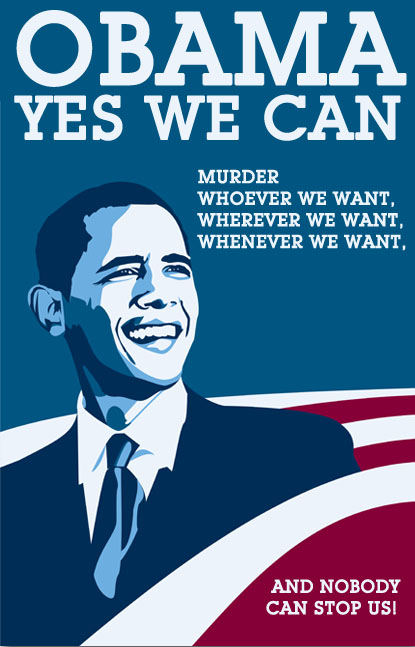 US President Barack Obama has said the US will continue to threaten Syria with the use of force as the government of Syrian President Bashar al-Assad has agreed to put its chemical weapons under the control of the United Nations.
“We need to see concrete actions to demonstrate that Assad is serious about giving up his chemical weapons … And since this plan emerged only with a credible threat of US military action, we will maintain our military posture in the region,” Obama said in his weekly address to Americans on Saturday.
The threat came after the Syrian ambassador to the UN said on Thursday that his country became a full member of the international treaty prohibiting chemical weapons.
After Russia offered a diplomatic proposal for putting Syria’s chemical weapons under international control on Monday, Obama called on Congress to delay a vote on his call for a military action against Syria.
Nevertheless, in his weekly address to Americans, Obama said, “If diplomacy fails, the United States and the international community must remain prepared to act.”
Obama’s talk of “the international community” comes as senior officials within his administration have said he would not push for a United Nations Security Council resolution threatening Syria with the use of force.
This comes as Russian President Vladimir Putin said in an op-ed published by The New York Times on Wednesday that a possible US attack on Syria “is unacceptable under the United Nations Charter and would constitute an act of aggression.”
Meanwhile, recent polls have revealed a growing opposition to military action against Syria both within the US military and America’s war-weary public.
Related article
Featured Video

Meet The Ellisons: Zionists, Technocrats, Moguls
or go to
Aletho News Archives – Video-Images
Frlom the Archives
With apparently fabricated nuclear documents, Netanyahu pushed the US towards war with Iran
By Gareth Porter | The Grayzone | April 29, 2020
President Donald Trump scrapped the nuclear deal with Iran and continued to risk war with Iran based on Israeli Prime Minister Benjamin Netanyahu’s claim to have proven definitively that Iran was determined to manufacture nuclear weapons. Netanyahu not only spun Trump but much of the corporate media as well, duping them with the public unveiling of what he claimed was the entire secret Iranian “nuclear archive.”
In early April 2018, Netanyahu briefed Trump privately on the supposed Iranian nuclear archive and secured his promise to leave the Joint Comprehensive Plan of Action (JCPOA). That April 30, Netanyahu took the briefing to the public in a characteristically dramatic live performance in which he claimed Israel’s Mossad intelligence services had stolen Iran’s entire nuclear archive from Tehran. “You may well know that Iran’s leaders repeatedly deny ever pursuing nuclear weapons…” Netanyahu declared. “Well, tonight, I’m here to tell you one thing: Iran lied. Big time.”
However, an investigation of the supposed Iranian nuclear documents by The Grayzone reveals them to be the product of an Israeli disinformation operation that helped trigger the most serious threat of war since the conflict with Iran began nearly four decades ago. This investigation found multiple indications that the story of Mossad’s heist of 50,000 pages of secret nuclear files from Tehran was very likely an elaborate fiction and that the documents were fabricated by the Mossad itself. … continue
Blog Roll
 Aletho News
- Meet The Ellisons: Zionists, Technocrats, Moguls
- US failures in Iran reveal Russia is key to South Korea’s strategic security
- ‘All ports in Persian Gulf will be legitimate targets if Iranian ports are attacked’
- 40 Years of Endless War, Data Point by Data Point
- Department of War Using Palantir AI to Pick Targets in Iran
- American bases do not protect – they attack the peoples of the Persian Gulf
- ‘We’ve Obliterated Their Missiles’
- Syrian president vows ‘absolute support’ to disarm Hezbollah
- Ukraine attacking Russian gas pipeline to stop deliveries to Europe – Defense Ministry
- ‘Heinous crime’: Iran denounces Israeli assassination of 4 Iranian diplomats in Lebanon
- If Americans Knew
- Israeli strategic plans to “remake the Middle East” from the 1950s and since
- Honoring Gaza’s women who refused to let the world look away
- 97% of victims of war on Iran are Iranian, 98% of victims in war on Gaza are Gazans – Not a ceasefire Day 152
- Early Iran strikes cost $5.6 billion in munitions, Pentagon estimates
- Israel Decided the War, But Trump’s America Fights and Pays the Bill
- Conscientious Objector Group: Phone ‘Ringing Off Hook’ As Huge Mobilization Underway
- U.S. support for Israel continues to plummet, despite media’s best efforts
- Threats and missiles fly, death tolls soar in Iran, Lebanon, Gaza – Not a ceasefire Day 151
- Lebanon: Israel’s White Phosphorous Use Risks Civilian Harm
- Corporate Media Go All Out To Support The US-Israeli War On Iran
- No Tricks Zone
- Destructive Green New Deal: German Energy And Metal Group Warns Of Drastic Crisis
- New Study Documents A 20-Year Pause In Arctic Sea Ice Decline – Driven By Internal Variability
- Wake-up Call: Survey Shows Majority Of Germans Now Favor Postponing Climate Targets!
- Televised! Leading German Political Candidate Tells Schoolchildren CO2 Makes Sun Hotter!
- New Study: A Century Warming Of 1.1°C Is ‘Commonplace’ And ‘Not Unusual’ During This Interglacial
- New Study: ‘Internal Noise’ And Volcanic Forcing Can Trigger 10-15°C Warming Within Decades
- Glaciers Worldwide Are Suddendly Surging, Experts Blame Warming!
- Surprising Discovery: Sahara Is Greening…Billions Of Trees Where Once Thought To Be Barren
- New Research Reaffirms Clouds, Aerosols, And Surface Solar Radiation Are ‘Driving The Climate System’
- Germany: Electric Car Catches Fire At Charging Station, Sets Off Local “Inferno”, Widespread Damage
 Aletho News