The Libyan Bedlam: General Hifter, the CIA and the Unfinished Coup
By Ramzy Baroud | Palestine Chronicle | February 19, 2014
On Friday, Feb 14, 92 prisoners escaped from their prison in the Libyan town of Zliten. 19 of them were eventually recaptured, two of whom were wounded in clashes with the guards. It was just another daily episode highlighting the utter chaos which has engulfed Libya since the overthrow of Muammar Ghaddafi in 2011.
Much of this is often reported with cliché explanations as in the country’s ‘security vacuum’, or Libya’s lack of a true national identity. Indeed, tribe and region seem to supersede any other affiliation, but it is hardly that simple.
On that same Friday, Feb 14, Maj. Gen. Khalifa Hifter announced a coup in Libya. “The national command of the Libyan Army is declaring a movement for a new road map” (to rescue the country), Hifter declared through a video post. Oddly enough, little followed by way of a major military deployment in any part of the country. The country’s Prime Minister Ali Zeidan described the attempted coup as “ridiculous”.
Others in the military called it a “lie.” One of those who attended a meeting with Hifter prior to the announcement told Al Jazeera that they simply attempted to enforce the national agenda of bringing order, not staging a coup.
Hifter’s efforts were a farce. It generated nothing but more attention to Libya’s fractious reality, following NATO’s war, branded a humanitarian intervention to prevent imminent massacres in Benghazi and elsewhere. “Libya is stable,” Zeidan told Reuters. “(The parliament) is doing its work, and so is the government.”
But Zedian is not correct. His assessment is a clear contradiction to reality, where hundreds of militias rule the country with an iron fist. In fact, the prime minister was himself kidnapped by one militia last October. Hours later, he was released by another militia. Although both, like the rest of the militias, are operating outside government confines, many are directly or loosely affiliated with government officials. In Libya, to have sway over a militia is to have influence over local, regional or national agendas. Unfortunate as it may be, this is the ‘new Libya.’
Some will find most convenient ways to explain the chaos: ‘East Libya is inherently unruly’, some would say; ‘it took a strong leader like Ghaddafi to maintain the national cohesion of a country made of tribes, not citizens,’ others would opine. But the truth is oftentimes inconvenient and requires more than mere platitudes.
Libya is in a state of chaos, not because of some intrinsic tendency to shun order. Libyans, like people all over the world, seek security and stability in their lives. However, other parties, Arab and western, are desperate to ensure that the ‘new Libya’ is consistent with their own interests, even if such interests are obtained at the expense of millions of people.
The New York Times’ David Kirkpatrick reported on the coup from Cairo. In his report, “In Libya, a Coup. Or Perhaps Not,” he drew similarities between Libya and Egypt; in the case of Egypt, the military succeeded in consolidating its powers starting on July 3, whereas in Libya a strong military institution never existed in the first place, even during Ghaddafi’s rule. In order for Hifter to stage a coup, he would need to rely on more than a weak and splintered military.
Nonetheless, it is quite interesting that the NYT chose to place Hifter’s ‘ridiculous’ coup within an Egyptian context, while there is a more immediate and far more relevant context at hand, one of which the newspaper and its veteran correspondents should know very well. It is no secret that Hifter has had strong backing from the US Central Intelligence Agency (CIA) for nearly three decades.
The man has been branded and rebranded throughout his colorful and sometimes mysterious history more times than one can summarize in a single article. He fought as an officer in the Chadian-Libyan conflict, and was captured alongside his entire unit of 600 men. During his time in prison, Chad experienced a regime change (both regimes were backed by French and US intelligence) and Hifter and his men were released per US request to another African country, then a third. While some chose to return home, others knew well what would await them in Libya, for reasons explained by the Times on May 17, 1991.
“For two years, United States officials have been shopping around for a home for about 350 Libyan soldiers who cannot return to their country because American intelligence officials had mobilized them into a commando force to overthrow Col. Muammar el-Qaddafi, the Libyan leader,” NYT reported. “Now, the Administration has given up trying to find another country that will accept the Libyans and has decided to bring them to the United States.”
Hifter was then relocated to a Virginia suburb in the early 1990’s and settled there. The news is murky about his exact activities living near Washington D.C., except for his ties to Libyan opposition forces, which of course, operated within a US agenda.
In his thorough report, published in the Business Insider, Russ Baker traced much of Hifter’s activities since his split from Ghaddafi and adoption by the CIA. “A Congressional Research Service report of December 1996 named Hifter as the head of the NFSL’s military wing, the Libyan National Army. After he joined the exile group, the CRS report added, Hifter began ‘preparing an army to march on Libya’. The NFSL, the CSR said, is in exile ‘with many of its members in the United States.”
It took nearly 15 years for Hifter to march on Libya. It also took a massive war that was purported to support a popular uprising. Hifter, as Baker described, is the Libyan equivalent of Iraq’s Ahmed Chalabi, a discredited figure with strong allies in Washington D.C. Chalabi was sent to post-Saddam Iraq to lead the ‘democratization’ process. Instead, he helped set the stage of the calamity underway in that Arab country.
It is no wonder why Hifter’s return was a major source of controversy. Since the news of his CIA affiliation was no big secret, his return to Libya to join the rebels in March caused much confusion. Almost immediately, he was announced by a military spokesman as the rebels’ new commander, only for the announcement to be dismissed by the National Transitional Council as false. The NTC was largely a composition of mysterious characters that had little presence within Libya’s national consciousness. Hifter found himself as the third man in the military ladder, which he accepted but apparently grudgingly so.
Despite the coup failure, Libya will subsist on uncertainty. Arab and Western media speak of illegal shipments of weapons arriving into various Libyan airports. The militias are growing in size. The central government is growing irrelevant. Jail breaks are reported regularly. And Libyans find safety in holding on tighter to their tribal and clan affiliations. What future awaits Libya is hard to predict, but with western and Arab intelligence fingerprints found all over the Libyan bedlam, the future is uninviting.
~
Ramzy Baroud is an internationally-syndicated columnist, a media consultant and the editor of PalestineChronicle.com. His latest book is “My Father Was a Freedom Fighter: Gaza’s Untold Story” (Pluto Press, London).

Nuclear Weapons: Hope at Last
By Jim McCluskey | Dissident Voice | February 19, 2014
The US, the UK, Russia, China and France are rebuilding or upgrading their arsenals of nuclear weapons. The other four nuclear states too are ‘improving’ their arsenals. As we discuss the statistics and strategies of ‘nuclear arsenals’ and ‘nuclear deterrence’ it can be hard to keep in mind the reality underlying the abstract discussions. The nine nuclear states have over 10,000 nuclear weapons in their stockpiles. This is enough to wipe out the entire population of the planet many times over together with all other life forms. Is this sane? Has the human race lost its senses? A single United States thermonuclear warhead, designated W88, has an estimated ‘yield’ of 475 kilotons. The ‘yield’ is the destructive power expressed in tons of TNT equivalent. The W88 is over 30 times more destructive than the bomb which wiped out Hiroshima. A single W88 could completely destroy London, Moscow or New York. Each bomb on a major city would kill millions of people; women, children, babies, old people, everyone. The suffering would be indescribable and for many would go on for months and years before death. No emergency services could begin to cope There would be no relief. What sort of people would do such a thing? What kind of human would threaten such an atrocity?
The US government has 5 nuclear submarines on patrol at all times carrying 1000 times the destructive power of the Hiroshima bomb. Is it possible to imagine the degree of paranoia represented by such a standing threat? The UK government has started to spend one hundred billion pounds on rebuilding its Trident fleet of nuclear submarines, each one with the capacity to incinerate over 40 million people. This is being done at a time when many citizens are suffering from inadequate defences against flooding and when the social services are being radically cut back.
The situation is being rendered even more insanely dangerous by the US and Russia which keep 1,800 weapons on high alert atop long-range ballistic missiles that are ready to launch 5 to 15 minutes after receiving an order!
It is ironic that the worst offenders are the five permanent members of the Security’ Council of the United Nations. They have had 69 years to get rid of their nuclear weapons while all that the citizens of the world hear from them are windy speeches around purported good intentions which never come to fruition.
Citizens of the world have simultaneously become aware that the nuclear states do not intend to get rid of their nuclear weapons and that their existence imposes a permanent and intolerable threat to us all. The existence of nuclear weapons means they could be used by accident, by misunderstanding or by malicious intent. How can we ever be sure that some deranged psychopath will not gain power in one of the nuclear states and deceive him/herself into believing that it is in their best interests to make a first strike? How can we ever be sure that some terrorist organisations will not hack into the electronic control systems and carry out the launching themselves? And we now know that even a small nuclear exchange could be a lethal threat to everyone on the planet. In a limited nuclear war between India and Pakistan 20 million people would die from the nuclear blasts, fires, and radioactive fallout. And the fallout would have global consequences that would kill millions of people, disrupt climate patterns, and threaten global agricultural collapse.
Furthermore decent people round the globe know that the existence of nuclear weapons is a brooding evil which undermines the moral integrity of humankind. As the great moral leader Desmond Tutu wrote “Nuclear weapons are an obscenity. They are the very antithesis of humanity”…
The only remedy is an enforced world ban on the existence of nuclear weapons. The other weapons of mass destruction have already been banned. It is the turn of the last and most destructive of them all.
And finally there is hope. The huge burgeoning of awareness in the citizens of the world is bearing fruit.
There are 9 nuclear states and there are 183 non-nuclear states. The security of the non-nuclear states is threatened by the irresponsible and self-focused behaviour of the 9 others. But these 9 are outnumbered by 20 to one. The non-nuclear majority which do not feel the need for a lethal ‘security’ crutch have decided to take the initiative. And rather than focus on the numbers and ‘yields’ of the weapons it was wisely decided to concentrate on the effects on humanity of the use of nuclear weapons. The next logical development, as the nuclear states continue to deny their obligations to shed their arsenals, is for the non-nuclear states to proceed independently to enact a treaty outlawing these weapons internationally. By focusing attention on the humanitarian consequences of their use they are well on their way to doing so.
The first International Conference on the Humanitarian Impact of Nuclear Weapons was held in 2013. Humanity owes a great debt to Norway for this initiative.
This ground-breaking and historic conference was attended by delegates from 127 countries and 70 nongovernmental organizations. The nuclear states were invited but declined to attend. It is not easy to face up to the implications of these arsenals especially if you bear the primary responsibility. India and Pakistan sent observers.
After hearing presentations from a wide range of experts on the various effects of nuclear weapon detonations the conference concluded that “it is unlikely that any state or international body could address the immediate humanitarian emergency caused by a nuclear weapon detonation in an adequate manner and provide sufficient assistance to those affected.” Conference members also agreed that the effects of a nuclear weapon detonation will not be constrained by national borders but will produce significant negative regional and global effects.
Mexico offered to host a follow-up meeting to this conference and such is the vital importance of this approach that other states declared their intention to organise additional events on this subject.
The Second Conference on the Humanitarian Impact of Nuclear Weapons was held in Nayarit, Mexico, on 13 and 14 February 2014. It included delegations representing 146 States, the United Nations, the International Committee of the Red Cross, the Red Cross and Red Crescent movement and civil society organizations.
The powerful summary statement of the conference Chair pointed out that the broad participation of states and civil society reflected the burgeoning awareness that this issue is of the utmost importance to all the peoples of the world. Due to “…proliferation, the vulnerability of nuclear command and control networks to cyber-attacks and to human error and potential access to nuclear weapons by non-state actors, in particularly terrorist groups” the risks are “growing globally”. The risks of “accidental, mistaken, unauthorised or intentional use is growing significantly due to more countries holding weapons on higher levels of combat readiness”. As awareness of the humanitarian impact grows hearts and minds are being changed worldwide. These weapons must be outlawed. “In the past, weapons have been eliminated after they have been outlawed. We believe this is the path to achieve a world without nuclear weapons”. He called for a “legally binding instrument” and declared that the “time has come to initiate a diplomatic process conducive to this goal. Our belief is that this process should comprise a specific time frame, the definition of the most appropriate fora, and a clear and substantive framework, making the humanitarian impact of nuclear weapons the essence of disarmament efforts. It is time to take action.”
The Third Conference on the Humanitarian Impact of Nuclear Weapons will be held in Austria later this year. The movement for an international ban is unstoppable.
The International Campaign Against Nuclear Weapons (ICAN) is a coalition of over 350 organisations in 90 countries. Ray Acheson, in his closing statement on behalf of ICAN to the Second Conference included the words: “The claim by some states that they continue to need these weapons to deter their adversaries has been exposed by the evidence presented at this conference and in Oslo as a reckless and unsanctionable gamble with our future.”
He went on to explain that the use against cities of less than one percent of existing weapons would put billions of lives in jeopardy and have a long lasting detrimental effect on both the planet’s climate and agriculture. He insisted that we must act to get rid of them or they will be used by accident, misunderstanding or malicious intent. Getting rid of them will take courageous leadership by states but such leadership will have the support of civil society. He concluded: “It is time to change the status quo. It is time we ban nuclear weapons.”
So with these and other major forces at work there is an unstoppable movement towards banning these Armageddon machines. The nuclear states have become a sorry sight. Frozen in a realm of outdated thinking which was always inhuman; their leaders frightened and paranoid and prepared to put the survival of humanity in jeopardy simply in order to feel important and powerful as they strut, uncomprehending, on the world stage.
Their brief and nightmarish ascendancy is over. The world has moved on.
~
Jim McCluskey is the author of The Nuclear Threat.
Related article

Colombia: Who Is Really In Charge?
By John I. Laun | Colombia Support Network | February 18, 2014
In the last several days a number of stunning disclosures have surfaced concerning the role of the Colombia military. First, the Colombian news magazine Semana revealed that military intelligence had conducted wire-tapping and surveillance for an operation called Andromeda from a listening post set up in a site disguised as a small restaurant named “Buggly Hacker” located in Galerias, a Bogota commercial district. Among the phone calls tapped and overheard it appears there may have been calls of members of the Colombian Government’s delegation involved in peace talks with the FARC guerrillas, whose delegation’s conversations may likewise have been tapped and overheard. When news broke of this activity, President Juan Manuel Santos declared publicly that these wiretaps (chuzadas, as they are referred to in Colombia) were illegal and had to be investigated at once. The President said publicly that he did not authorize and knew nothing about this activity. But the next day, President Santos declared that the chuzadas had been done legally!
Two things are very clear. First, that the President of Colombia is not aware of what a significant part of his government is doing, and that’s all right with him. And second, that the military are (quite literally) calling the shots in Colombia. It appears obvious that Mr. Santos changed his opinion overnight on the legality of the secret wire-tapping activity by military intelligence because military officers told him he could not call the activity illegal. In other words, they’re in ultimate control of the government in Colombia!
How could Mr. Santos determine that this activity was legal? There are laws which have provided great leeway to military intelligence. But they certainly do not extend to overhearing conversations between Colombian Government representatives and FARC representatives meeting in Havana supposedly aimed at arriving at a broad peace agreement through which the guerrilla war would be ended. Who would speak freely his or her ideas on what a peace agreement should consist of—a necessary part of peace conversations if they are to be productive— if he or she knew a third party was overhearing what was being said? No one. Particularly if the party overhearing the conversations is the Colombian military, which has a long record of abusive conduct, and even has a representative at the peace talks, General Mora. The chuzadas are a serious impediment to frank and open dialogue between the Colombian Government and the FARC. One suspects that former President Alvaro Uribe Velez is likely the recipient of the information gained from the chuzadas, as he utilizes his close relationship with military officers to obtain information with which to undercut the peace talks, which he has publicly opposed. He earlier obtained the coordinates for movement of two FARC leaders as they came out of their bases to go to Havana—secret information he could only have gotten through a leak from a military or governmental source. Of course, President Santos has not moved seriously to investigate this leak. Why? Because he is not in control of the Colombian government.
This has been made clear by events in the last couple of days. Semana, much to their credit, has carried out and now published the results of an extensive investigation of corruption in the Colombian military. The investigation found military officers discussing how to skim off funds for their personal benefit from monies received by the military, the likely source of which was the United States Government. One of the persons involved in the recorded conversations is the current Commander of the Colombian Armed Forces, General Leonardo Barrero. Another article reported how supposedly disgraced General Rito Alejo del Rio, confined to a military installation in Bogota for his support of illegal paramilitary forces during his time as Commander of the Seventeenth Brigade in Carepa, near Apartado, essentially commands the installation, freely making supposedly-prohibited cell phone calls. And other military personnel who misbehaved had been involved in the “false positives” scandal in which military officers ordered the kidnapping of young men, had them killed, and then falsely presented them as guerrillas killed in combat.
The reports by Semana show an astonishing level of corruption in the Colombian military. President Santos has promised an investigation of these activities, of which he says he had no knowledge. Again, we see Mr. Santos as being out of the loop, heading a government he does not control. The conclusion is inescapable that the military controls the government and Mr. Santos is an uninformed bystander. He seems to believe that his job is to hob-nob with representatives of multinational corporations, as he did on a recent visit to Spain, inviting them to invest in Colombia and remove its valuable mineral resources for a pittance. The Colombian people deserve much better than this!
There is another aspect of the military’s current “dance of the millions” which is very troubling. The funds that are being stolen by military personnel are almost certainly provided by the United States government (i.e., U.S. taxpayers) as a part of the bloated budget of funds the U. S. government provides to the Colombian military. An obvious question is: Did the U.S. government personnel, such as the country’s military attache and Ambassador in Colombia, know what has been going on? And, if not, why not? This scandal calls for a full review of the U.S. aid program to Colombia and an immediate freezing of any funds in the aid pipeline. We in the human rights community have long known of the pervasive corruption in the Colombian military, though we did not know of the brazen theft of funds which Semana uncovered. It is high time that President Obama, Secretary of State Kerry and Secretary of Defense Hagel give their undivided attention to the Colombia situation. And the members of Congress should insist upon a thorough investigation, dismissal of those government personnel who overlooked these very serious problems, and prosecution of those who may have collaborated with the Colombian military to their own advantage.
Powerful Bombings Rock Bir Hassan, South Beirut
Al-Manar | February 19, 2014
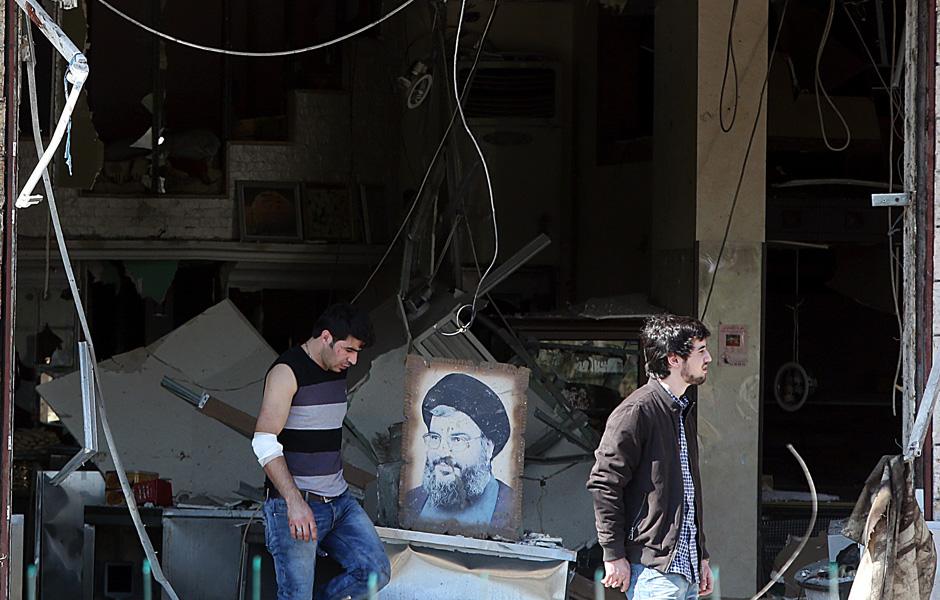
Two terrorist blasts hit southern Beirut on Wednesday near the Kuwait embassy in Bir Hassan, leaving dozens of martyrs and injured.
Security sources confirm that the bombings were suicide attacks adding that they coincided and that they were targeting the cultural center of the Iranian embassy in Beirut.
The Al-Manar correspondent reported that the first explosion took place near Gondoline sweets which lies in the building of the Iranian cultural center.
The second took place near a restaurant facing an army base.
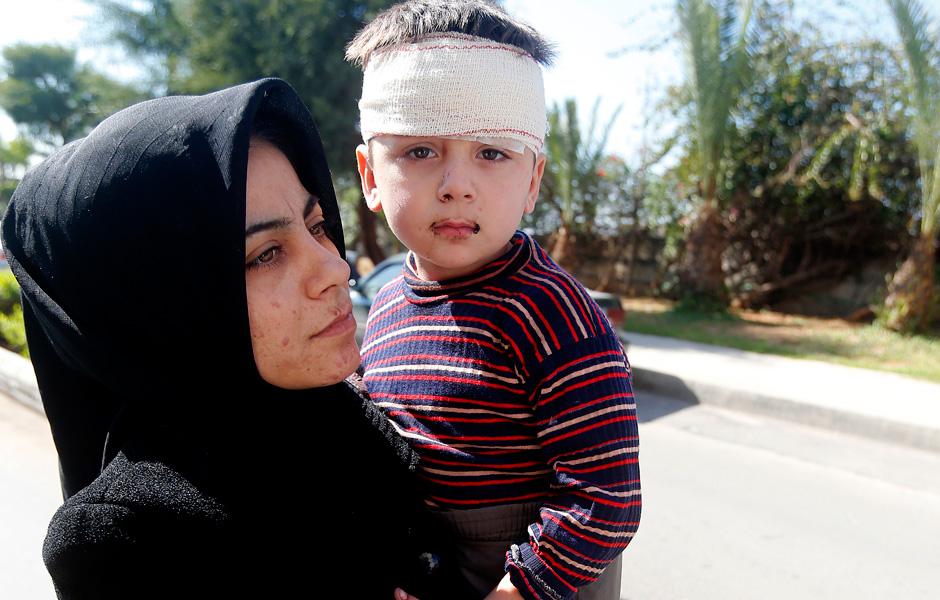 Shortly after the blasts ambulance and Civil Defense vehicles rushed to the scene.
Health minister Wael Abu Faour visited the blast scene and said that the suicide bombings left at least five martyrs and 103 injured.
State Commissioner to the Military Court Judge Saqr Saqr also arrived in blast scene, confirming that the attacks were suicide bombings.
The first blast was carried by a BM X5 4×4 vehicle, rigged with 90 kgs of explosive materials, Saqr said. He noted that the second explosion was carried out by a Mercedes car rigged with 75 kgs of explosive materials.
For its part, the Iranian embassy in Beirut confirmed all staff were safe.
Photo credits – Haytham Moussawi and Marwan Bou Haydar
Ukraine crisis: EU Parliament’s MP urges to impose sanctions on Russia
Voice of Russia | February 19, 2014
A member of the ruling faction in the European Parliament has come up with an initiative to impose sanctions against Russia that he said was supporting Ukraine’s regime. Russia has been in a waiting stance ever since the escalation on Tuesday, when Ukraine’s capital Kiev descended into more chaos.
This came today from Poland’s MEP Jacek Sariush-Volsky of the center-right European People’s Party at a press conference in the EU parliament.
However, a spokesperson with the European Commission ruled out the possibility of sanctions against Russia ahead of the EU foreign chiefs’ meeting on February 20.
Conversely, the spokesman said that the 28 foreign policy heads of EU member countries were going to engage in consultations with Russia in order to clear up all controversies that exist between Moscow and Brussels on the possible outcome of an association deal between Ukraine and the EU.
Russia blames ‘extremists’ for Ukraine crisis, suggests attempted coup
Russia has apportioned all blame for the deteriorating situation in Ukraine on the extremists. This is according to President Putin’s spokesman Dmitry Peskov.
“The president believes that the ongoing situation in Ukraine is the fault of the extremists,” Mr. Peskov said today.
He added Russia wished that its Ukrainian partners would “ensure the settlement of the situation that has taken shape as soon as possible.”
“Moscow strongly condemns violence of radical elements, who in the breach of all agreements previously reached actually used the implementation of the conditions on amnestying previously detained people and returned to violent actions immediately,” Peskov told reporters.
“Besides, their actions can be treated and are treated in Moscow solely as an attempt at a state coup,” Peskov said. “Together with the seizure of state organizations in various cities of Ukraine, the seizure of law enforcement facilities and attempts to seize arms occurs as well,” he said.
Russia biding its time on Ukraine
Moscow is keeping tabs on Ukraine but will not interfere with the crisis for now, President Putin’s spokesman has said Wednesday. Russia has been in a waiting stance ever since the escalation on Tuesday, when Ukraine’s capital Kiev descended into more chaos as death toll rose to 25 people.
“The Kremlin is closely watching the ongoing situation in Ukraine, and we will definitely speak on it a bit later,” Putin’s spokesman Dmitry Peskov said today in an interview with online magazine Slon.
“The idea is not to intervene in the Kiev unrest. We’ve said that many times, the Kremlin will stay true to this stance.”
Militants’ actions in Kiev on Fe 18-19 not spontaneous, but staged – Russian diplomat
Chairman of the Federation Council’s International Affairs Committee Mikhail Margelov believes that militants’ actions on Kiev streets on February 18-19 are not spontaneous, but staged.
The senator noted the common delusion that the so-called Maidan and its battle squad is not stage-managed, it is Cossak outlaws and “national power”. “The very events at Grushevsky Street disproved it: the militants dealt with law enforcers’ attacks too skillfully, refilled armory of shields, casks and clubs, and added cocktail bombs to convert it into napalm. The course of street riots February 18-19 showed that the militants fight in the so-called “Halych format” — it came to gunfire, and there are fatalities on both sides. There is evident organized nature behind the fighting,” Margelov believes.
In addition, he said that “after a fragile truce, the Maidan gains momentum in provinces: in Lvov, Ternopol, Ivano-Frankovsk”. “They not only occupy state offices there, but storm police wards and dismantle Berkut officers,” the Russian senator stated.
Margelov expressed confidence that “debacles and shooting that John Kerry dubbed “fight of the Ukrainian majority for Europe’s democratic future” are fairly staged and managed by experienced specialists in street fighting”. “Klitschko and Yatsenyuk hardly possess such military talents,” he assumed, adding that the job of these politicians is “to compose joint plans with the West to make up an oppositionist government and carry out a constitutional reform, which ought to be followed by western financial aid”.
Chairman of the Federation Council’s International Affairs Committee says it’s early to make any forecasts yet. “It would be a great achievement to stop the street mayhem and start a responsible political dialogue. Still, even this may not consolidate the Ukrainian society. It’s split: I cannot remember a single Ukrainian parliament that hadn’t fistfights,” the senator concluded.
Related article

Ex-US soldier guilty of rape, murder found hanged in prison
Al-Akhbar | February 19, 2014
A former US soldier, sentenced to life imprisonment for the 2006 rape and murder of a 14-year-old Iraqi girl as well as the murder of her parents and six-year-old sister, has been found hanged in his cell.
According to American media reports, prison officials said the death of Steven Dale Green, found hanging in his Arizona cell last week, was currently being investigated as an act of suicide.
Green, 28, was convicted in 2009 for the rape and murder of 14-year-old Abeer Qassim Hamza al-Janabi and the deaths of her father, mother and six-year-old sister in Mahmudiya, more than 30 kilometers south of Baghdad.
He was sentenced to life in prison after a federal jury in Kentucky could not decide whether he should be given the death penalty.
Prosecutors portrayed Green as the ringleader of five soldiers that plotted to invade the home of the family of four in order to rape the girl. They had later bragged about the crime to their peers in the army.
The four other soldiers were taken to military courts. Three of the soldiers pleaded guilty in the attack and the fourth was convicted. They received sentences ranging from five to 100 years.
Green, on the other hand, was tried as a civilian because he was arrested after he was discharged from the army.
Moscow blames radicals for deadly clashes in Ukraine, EU leaders ponder sanctions against government
RT | February 19, 2014
Moscow believes the deadly clashes in Kiev were an attempt at a coup by radicalized protesters. EU leaders have quite an opposite view, calling for sanctions against Ukrainian government officials.
In a statement issued on Wednesday, Russia’s Foreign Ministry described the violence in Ukraine as an attempt at a coup d’etat and a “brown” revolution, accusing European politicians and institutions of “refusing to admit that all of the responsibility for the actions of radical forces in Ukraine rests with the opposition.”
“The Russian side is demanding the leaders on the streets to stop the violence in their country, immediately resume dialogue with the lawful government without threats and ultimatums,” the statement reads.
The Kremlin has also interpreted the violence in Ukraine as a coup attempt. President Putin’s spokesman said that “from the point of view of the Russian leadership”, all of the responsibility for the bloodshed could be laid at the door of “the extremist forces.”
Twenty-six people were killed overnight in the most violent clashes yet to have occurred between security forces and protesters since the opposition took to the streets of Kiev in November 2013. Ten of the casualties are Ukrainian police officers, who died of gunshot wounds, as did the rest of the victims, the Interior Ministry reported.
It added that up to 700 people were injured, more than 70 of those being policemen.
The Ukrainian Health Ministry officially confirmed that a journalist from the local Vesti newspaper, Vyacheslav Veremey, died in Kiev after a gunshot wound.
The Ukrainian Ministry of the Interior believes the casualties in the clashes could have been killed by the radicals, because the police do not use fire arms.
“Taking into consideration the nature of the dead civilians’ wounds and also the nature of the weapons, which have been confiscated, we can assume that these wounds were inflicted by violent protesters,” a statement at the Ministry’s website says. “Police officers and interior troops do not use fire arms. Law enforcers are only using non-lethal weapons.”
Some of the European leaders have not been convinced and have been quick to lay the blame for the violence on the Ukrainian president. The Swedish Foreign Minister said on Twitter that blood was on Yanukovich’s hands.
British Foreign Secretary William Hague was less emotional, but also accused the government of allowing the bloodshed to happen.
Several EU leaders have already spoken of introducing sanctions against the Ukrainian leadership, who they view as responsible for the crisis.
Germany, which previously refused to back Washington’s calls for sanctions against Ukraine’s government, could soon have a change of heart, according to German Foreign Minister Frank-Walter Steinmeier .
“Whoever is responsible for decisions that lead to bloodshed in the center of Kiev or elsewhere in Ukraine will need to consider that Europe’s previous reluctance for personal sanctions must be rethought,” he said, according to AP.
Polish Prime Minister Donald Tusk said on Wednesday he would be pressing European Union leaders to impose sanctions on Ukraine’s government.
“I will today hold talks with the leaders of the biggest EU countries and institutions, and persuade them to impose sanctions – personal and financial,” Tusk told a special session of the Polish parliament, Reuters reports. “I hope that such a stance from Poland will help the EU as a whole in taking fast decisions.”
Belgian Foreign Minister Didier Reynders has also supported sanctions against the Ukrainian government, according to Itar-Tass.
Earlier, US Ambassador to Ukraine Geoffrey R. Pyatt blamed Viktor Yanukovich for the escalation of the crisis.
“From this moment on, the USA holds Yanukovich responsible for everything that happens in Ukraine,” he told the Zerkalo Nedeli newspaper, following a meeting with Foreign Minister Leonid Kozhara.
Moscow believes that this accusatory position of the US could have, in fact, contributed to the escalation of violence Kiev has been witnessing, and, holding the president solely responsible for the crisis, is giving carte blanche to extremist radical forces out on the streets.
The Russian Foreign Ministry said on Tuesday it considered the crisis “a direct result of the permissive policy exercised by those western politicians and European structures, who from the very beginning turned a blind eye to the aggressive actions of the radical forces in Ukraine.”
The right of return is for individuals to decide, not for Abbas to concede
By Ibrahim Hewitt | MEMO | February 19, 2014
Yet again, we hear that President Mahmoud Abbas has more or less conceded the lawful right for Palestinian refugees to return to their homeland. Last year he told Israelis that although he would like to visit his birthplace in Safed, which is now in Israel, he did not expect to live there. Now he has told a group of Israelis visiting Ramallah that he has no wish to “drown the Jewish character” of Israel with returning refugees. This is an astonishing thing for him to say because its implications are so serious.
For a start, let us make it clear that the right to return is an individual right so it is not within the Palestinian Authority leader’s power to concede it on behalf of anyone other than himself. It may be that he was well aware of that when he signalled his own reluctance to return to Safed but his latest statement is worrying for the millions of refugees festering in squalid UN-run camps around the region.
One journalist said that Abbas’s comments “seemed to signal a significant concession on the so-called right of return – the Palestinian demand that several million descendants of 700,000 refugees expelled during Israel’s 1948 war of independence be allowed to go back to their homes.” For the benefit of the Daily Telegraph’s Robert Tait, it should be remembered that the right to return is not a “Palestinian demand”, it is enshrined in UN General Assembly Resolution 194 dated 11 December 1948: “… refugees wishing to return to their homes and live at peace with their neighbours should be permitted to do so at the earliest practicable date…” Israel’s membership in the UN was conditional inter alia on it implementing this resolution, something which, of course, it has never done.
Israel’s unilateral “Declaration of Independence” of 1948 is clear that it was established as “the Jewish State in Palestine”. Among other things, the founding document insists that Israel “will loyally uphold the principles of the United Nations Charter”, among which is a commitment to implement resolutions; Israel has ignored more UN resolutions than it has ever implemented.
This “Jewish State” was recognised implicitly by the Palestine Liberation Organisation (PLO) in 1993 when the former “terrorist” group came in from the cold and recognised Israel’s “right to exist”. That being the case, it must be asked why Benjamin Netanyahu is insisting on Palestinian recognition of the “Jewish character” of Israel as a pre-condition for a peace agreement.
Experience shows that Israel is an expansionist state; it has never declared its borders and has grown exponentially ever since it was created. Indeed, even by then it had morphed itself from the “national home for the Jewish people” in Palestine mentioned in the infamous Balfour Declaration of 1917 to a “Jewish State” by 1948. The land it occupied by the 1949 armistice was greater in area than the allocation of the UN Partition Plan of 1947; this was increased yet again when Israel launched the Six-Day War in 1967 and occupied all of historic Palestine. While not occupying the Gaza Strip physically since 2005, Israel controls its borders, territorial waters and air space; it is an occupation legally and in all but name. As the “negotiations” (a euphemism for Palestinian concessions) drag on for 20 years and counting, Israel creates more facts on the ground, grabbing ever more land for its illegal settlements, settler-only roads, military zones and “nature reserves”. I think that it is fair to say that Israel’s leaders have no intention whatsoever of giving up any land upon which Jews are now living as they push to create “Eretz Israel”, the Greater Israel that is Zionism’s dream.
Recognition of the “Jewish character” of Israel will give it the green light to complete the ethnic cleansing started in 1948, with the 20 per cent of non-Jewish Israeli citizens being “transferred” to the rump statelet of Palestine that may or may not come into being; ideally, from a Zionist perspective, the transfer won’t end there and life will be made so miserable for Palestinians in the West Bank that they will cross into what many Israelis already call the state of Palestine; the rest of us know this as the Hashemite Kingdom of Jordan. This is the “alternative homeland” scenario dreaded by Palestinians who have no wish to leave their historic homeland.
Israel will cite “security” concerns in order to get its way, though, and willing dupes like US Secretary of State John Kerry, ever-ready to do the pro-Israel Lobby’s bidding, will put pressure on the Palestinian Authority to concede even more than it has already. This includes agreement to a strong Israeli military presence in the Jordan Valley, so that an “independent state of Palestine” will be nothing of the sort; it will have an army of occupation on its territory from Day One.
Once Israel is cleared of the “demographic time-bomb” of its Palestinian citizens it can claim, with hand on heart, that it is indeed both Jewish and democratic in nature. Fear of being an obvious apartheid state with a democratic façade is genuine; Jewish students in America are already being coached about how to defend the case for declaring a Jewish state while basically disenfranchising 1-in-5 of Israel’s citizens and implementing a raft of discriminatory laws.
That is why Mahmoud Abbas needs to wake from his stupor and understand that while he is free to give up his own right of return, he has no right whatsoever to concede that right for all Palestinian refugees. Israel and its Western backers will, of course, continue to ignore the UN resolutions in any case and so won’t mind that the legal niceties are chewed up and spat out as long as what Israel wants, Israel gets. But that will never produce a just and lasting peace in the region. Maybe that doesn’t bother the military-industrial complex upon which Israel is so reliant; it certainly won’t bother the neoconservatives running America. Their plans for the Middle East don’t include a state of Palestine; they want to see US-Israeli hegemony at any cost.
More than anything else, Abbas’s ill-advised statements demonstrate the ridiculous nature of the whole peace process, which is producing neither peace nor much of a process at the moment. The one-state solution is being talked about in all sorts of circles these days, as more and more people realise and accept that two-states are a non-starter. If the message can get through to Mahmoud Abbas and his cronies in Ramallah on board the Palestinian Authority gravy train, maybe peace will have a chance after all.
Related articles
Featured Video
America Racing to Strategic Defeat in Iran
or go to
Aletho News Archives – Video-Images
From the Archives
Should Europeans ‘Thank’ the Americans for Destroying Nord Stream?
By Robert Bridge | Strategic Culture Foundation | September 29, 2022
With an investigation continuing into the destruction of the Nord Stream gas pipeline that provided energy supplies to Europe from Russia, there appears to be just one prime suspect, and that should surprise nobody.
Following the sabotage of the Nord Stream 1 and 2 gas pipelines, former Polish Foreign Minister Radoslaw Sikorski already seemed to know the identity of the perpetrator when he tweeted out: “Thank you, USA.”
At first glance, it seemed that Sikorski was speaking sarcastically, berating Washington for carrying out an attack that will have severe repercussions for the people of Europe. After all, how could anyone see any good coming from the termination of Europe’s primary source of gas reserves with winter just around the corner? It was Sikorski’s homeland of Poland, after all, that urged its citizens to collect firewood in the face of dwindling gas reserves.
In fact, the Polish diplomat was speaking one-hundred percent literally… continue
Blog Roll
 Aletho News
- Growing insecurity, soaring prices fuel protests in north as regime bans evacuation: Sources
- Iran denies responsibility for ‘depraved’ attack on Kuwait desalination plant
- Bring The Troops Back. End This War Now!
- Can we please stop calling Israel the ‘only democracy in the Middle East’ now?
- US should start removing its troops for Germany, proposes AfD co-leader Chrupalla
- Iran Red Crescent: 600 educational centers attacked in US-Israeli ‘war crimes’
- Russian Oil Tanker Arrives in Cuba Amid U.S. Blockade
- America Racing to Strategic Defeat in Iran: Lt Col Daniel Davis
- FTC Warns Visa, Mastercard, PayPal, Stripe Over Political Debanking
- Russian tanker approaches Cuba despite US oil blockade
- If Americans Knew
- Israeli police block Catholic cardinal from entering Church of the Holy Sepulchre on Palm Sunday
- Israel is assassinating journalists again, more than any other nation, anywhere, ever – Not a ceasefire Day 170
- Over 300 US service members wounded, majority have brain injuries – Not a ceasefire Day 169
- Researchers at Human Rights Watch Resign Over Blocked Report on Palestinian Refugee Return
- Jewish Groups Are Backing a War Americans Don’t Want
- Eric Fingerhut Thinks He’s the President of the Jews
- Top Jewish Philanthropists, Rabbis Urge Israeli President to Take Action Against ‘Jewish Extremists’
- Don’t Be Fooled. Zionist Leaders Have Always Wanted to Control Southern Lebanon
- Israel’s widespread use of torture is a core element of its genocide against the Palestinian people
- In Israel’s War on Iran, Many Middle East US Bases Rendered “All But Uninhabitable”
- No Tricks Zone
- New Study Finds Warming Saves Lives…Cold Temperatures 12 Times More Deadly Than Excess Heat
- German Science Blog Accuses PIK Climate Institute Of Hallucinating Climate Tipping Points
- Devastating Assessment Of Comirnaty Vaccine By Former Senior Pfizer Europe Toxicologist
- New Study: CO2 Is ‘Effectively Negligible’ As An Explanatory Climate Change Factor Since 2000
- Former Pfizer Toxicologist Dr. Helmut Sterz Tells Bundestag Hearing Pfizer Vaccine Should Have Never Been Approved
- Energy Expert: Germany’s Nuclear Phaseout Was A “500 Billion Euro Mistake”
- New Research: South Australia’s Mid-Holocene Sea Surface Temperatures Were 4°C Warmer Than Today
- Storing Green Energy To Last Germany 10 Days Would Require A 60-Million Tonne Battery
- New Studies: UK Sea Levels Were 4 Meters Higher Than Today During The Mid-Holocene
- Destructive Green New Deal: German Energy And Metal Group Warns Of Drastic Crisis
 Aletho News