Israeli forces launch major detention campaign in Nablus camps

Ma’an – 21/01/2015
NABLUS – Israeli forces launched a major detention campaign in the northern West Bank refugee camps of Balata and Askar in Nablus district overnight, Palestinian security sources said.
More than 15 young men were seized after forces ransacked many houses.
Palestinian security sources told Ma’an that more than 20 Israeli military jeeps stormed Balata and Askar refugee camps near Nablus at midnight and broke into dozens of houses.
Locals said most of the houses belonged to Fatah supporters. Among those whose houses which were ransacked are Fayiz Arafat, Nasser al-Khatib Abu Aziz, Ahmad Naji Abu Hamada, Muhammad Abu Dari, Abu Mahyub abu Leil, Muhammad Abu Zaabal, Hatim abu Riziq, Talal abu Thira, Abu Hazim Kharma, Atallah Hashash, Bashir Hashash, Hasan Sharaya, Abu Nasim Arayshi and Mahir Ayyad.
The sources identified some of the detainees as Ayman abu Kharma, Muhammad Saqir, Muhammad Murshid, Shahir Ali Mutlaq, Ammar Mithqal, Abed al-Salam Abu Riziq, Mahmoud abu Ayyash, Muhammad Ali Hashash, Hasan al-Ashqar, Kamal abu Rayya, Mujahid Mashayikh, Zuhdi Abu Kharma and Muhammad Abu Arab.
An Israeli army spokeswoman said she was looking into the reports.
14-year-old arrested again after testifying to torture at Egyptian detention camp
Mada Masr | January 20, 2014
Fourteen-year-old Akram al-Sawy was detained in the early hours of Tuesday along with his father, following testimony he gave on torture at a Central Security Forces camp in Banha, according to Nadeem Center for Rehabilitation of Victims of Violence.
Sawy had been held at the camp since last September and was only released from the camp on January 8.
Following his release, Sawy gave testimony on his incarceration, detailing torture and abuse that he and other children were subjected to since they were arrested and during their time at the camp.
Sawy said he was arrested from his home on September 22 when police mistakenly thought that he was at a protest with his friends. Sawy said that he and his friends were actually at a private lesson.
According to his testimony, he spent two days at the police station where he and his friends were severely beaten, kicked and electrocuted before they were moved to the Banha camp, which he said holds 200 detainees, the oldest of whom is 20 years old and youngest of whom is 13 years old.
Sawy said the cell holds 25 detainees, who weren’t allowed to leave the cell unless they were being taken to prosecution. He added they weren’t allowed visitations, but their families were allowed to send blankets for them.
In the same testimony published by Nadeem, Sawy’s father, Ibrahim Mohamed al-Sawy, said he and his son were also beaten at State Security headquarters when he went to pick him up after his release. He said he and his son were blindfolded, handcuffed and beaten. He said he is a member of the Muslim Brotherhood and that they wouldn’t let them leave until he said that Mohamed Morsi is not returning.
The Nadeem Center reported the incarceration of 600 children between the ages of 14 and 17 in a Central Security Forces camp in Banha.
The Interior Ministry, however, continues to deny that this camp exists in the first place.
Independent rights group “Free the Children” claims that at least 1,000 minors have been detained in Egypt’s prisons over the last year and a half. Marwa Arafa, the group’s coordinator, says most of these minors have been randomly arrested during clashes between protesters and police across the country.
UK government accused of sponsoring human rights abuses in Ethiopia

RT | January 21, 2015
A development project funded by the UK government and run by the World Bank could be facilitating a violent resettlement program in Ethiopia that has been dogged by allegations of forced displacement, physical assaults and rape, a leaked report suggests.
Britain’s Department for International Development (DfID) is the primary sponsor of the World Bank’s foreign aid initiative, supposedly set up to improve basic health, education and public services in Ethiopia. It has attracted over £388 million in UK taxpayer’s money to date.
According to a leaked report, obtained by the International Consortium for Investigative Journalists, the seemingly benign aid program is facilitating a controversial resettlement scheme driven by the Ethiopian government.
The scathing report, carried out by the Bank’s in-house watchdog, warns of poor oversight, inadequate auditing and a failure to adhere to its own regulations which has bred links between the development program and the forced displacement of the Anuak people.
The Anuaks are a marginalized minority Christian group in Ethiopia.
Severe human rights abuses
The Ethiopian government’s resettlement program has been condemned by human rights groups worldwide who warn it has led to the destruction of thousands of Ethiopians’ livelihoods.
The initiative, known as ‘villagization’, aims to relocate 1.5 million rural families from their homesteads to villages across Ethiopia.
Since its launch in 2010, the program has been the centre of allegations of rape, physical assaults, forced evictions and disappearances.
Many of those who are uprooted from their homes and resettled elsewhere are forced to reside in substandard living conditions in refugee camps in Southern Sudan.
While the World Bank’s top brass have long denied any links to the Ethiopian government’s villagization program, an inquiry conducted by the Bank’s internal watchdog indicates otherwise.
The inquiry’s leaked findings, which surfaced this week, said the Bank’s inadequate auditing controls created a situation whereby over £300m of the DfID’s foreign aid funding could have been siphoned directly into the contentious resettlement scheme.
The report did not examine allegations the resettlement program is responsible for human rights abuses in Ethiopia, however, stressing that such an inquiry was not within its remit.
Nevertheless, it uncovered a slew of failures in the planning and implementation of the World Bank’s foreign aid program, particularly the Bank’s failure to carry out risk assessments.
The watchdog also found the Bank did not adopt necessary safeguards to protect marginalized indigenous peoples.
Uneven economic development
Anuradha Mittal, founder of the Oakland Institute, a Californian development NGO that is active in Ethiopia, said the DfID participated in the World Bank’s development initiative, and should therefore take responsibility for the scheme’s failings.
“Along with the World Bank and other donors, DfID support constitutes not only financial support but a nod of approval for the Ethiopian regime to bring about ‘economic development’ for the few at the expense of basic human rights and livelihoods of its economically and politically most marginalized ethnic groups,” she told The Guardian.
David Pred of Inclusive Development International, an NGO that works to defend the rights of the Anuak people, said the World Bank has facilitated the forced displacement of “tens of thousands of indigenous people from their ancestral lands.”
“The Bank today just doesn’t want to see human rights violations, much less accept that it bears some responsibility when it finances those violations,” he told the Guardian.
A spokesman for the World Bank declined to comment on its internal watchdog’s leaked report.
Probed on the watchdog’s findings, the DfID also declined to comment.
A marriage of convenience?
In March 2014, an Ethiopian farmer secured legal aid to sue the British government following his claim UK taxpayers’ funds were sponsoring Ethiopia’s resettlement scheme.
He said murder, rape and torture were employed by Ethiopian authorities, as part of the forced displacement program.
The 34 year-old farmer, known as Mr. O, had been forced to flee Ethiopia after he was tortured and beaten for trying to protect his land.
He said the British government were contributing to the devastation of some of Ethiopia’s poorest people rather than assisting them.
In June, Britain’s DfID faced a judicial inquiry over its alleged funding of human rights abuses in Ethiopia.
A High Court judge ruled at the time that Mr. O had a case against the British government, and his legal challenge was upheld. His lawsuit is still ongoing.
Ethiopia’s single-party government is a core ally in the West’s war on terror.
It is also a leading recipient of UK aid, despite human rights groups’ repeated allegations the funding is used to crush dissent in the troubled state.
Houthi leader sets conditions to end Yemeni crisis
MEMO | January 21, 2015
The Houthis have outlined four conditions to end Yemen’s political crisis, the Anadolu Agency reported the group’s leader as saying.
In a televised speech broadcasted by Yemen’s Al-Maseera satellite channel yesterday, Abdul-Malik Al-Houthi called for a speedy reformation of the National Supervisory Authority which was tasked with overseeing the results of the National Dialogue Conference and which ceased to be active in January 2014.
He also called for amendments to the country’s draft constitution to be expedited, the implementation of the peace and partnership agreement and to conduct comprehensive security reform.
Al-Houthi accused Yemeni President Abd Rabbuh Mansour Hadi of “protecting corruption and lack of seriousness in implementing the peace and partnership agreement, which brought the country to the current situation”.
He also accused him of supporting Al-Qaeda and supplying it with weapons. “President Hadi refused to allow the army to fight Al-Qaeda and gave the group the opportunity to rob banks,” he said.
The Yemeni capital Sanaa was been rocked by violent clashes for the second consecutive day on yesterday between presidential guards and Al-Houthi militants who are said to have seized the presidential palace with Prime Minister Khaled Bahah inside.
Al-Houthi said: “There is a conspiracy against Yemen and its people that is led by forces targeting the entire region. Yemen in on the verge of political, security and economic collapse. The Yemeni leadership is mired in corruption” he said.”
The Houthis seized control of Sanaa in September.
Exonerating the CIA
When the Establishment Investigates Itself
By BINOY KAMPMARK | CounterPunch | January 21, 2015
Exonerating spooks for improper conduct is a regular feature of the establishment. After all, you don’t convict your own, turning your nose at activities pursued under the grand, catch-all term of national security. From the start, the CIA review, established to investigate its own activities into spying on the Senate Select Committee on Intelligence, was always predictably constituted, with predictable outcomes.
The “accountability board” was chaired by former Sen. Evan Bayh (D-Indiana), along with former Obama White House attorney Bob Bauer and, as anticipated, three senior CIA officers. The originating source of its convening was yet another predictable feature: the CIA itself. (The board was convened in August 2014 by CIA Director John Brennan.)
Its task: to investigate alleged misconduct of five CIA employees who improperly accessed computer data belonging to the SSCI under the Computer Fraud and Abuse Act and the Wiretap Act, and make recommendations that “future instances of the miscommunication and confusion that led to this controversy” do not occur again.
The background to the review proved acrimonious. The SSCI had an issue over the CIA prying into its material on the agency’s rendition and torture program. The CIA, in turn, felt that the senators and their staff had obtained unauthorised access to agency documents and improperly dealt with classified material. The Department of Justice, sensing trouble, evaded the issue.
Last March, Sen. Dianne Feinstein (D-CA) suggested that the CIA search may have violated a range of legal provisions, citing the Fourth Amendment, the Computer Fraud and Abuse Act, and Executive Order 12333 prohibiting the agency from conducting domestic searches or surveillance.
The CIA, according to Feinstein, had become a power onto its own, effectively subverting the constitution. From the start, it hired “a team of outside contractors – who otherwise would not have had access to these sensitive documents – to read, multiple times, each of the 6.2 million pages of documents produced, before providing them to a fully-cleared committee staff conducting the committee’s oversight work.” Naturally, it “proved to be a slow and very expensive process” (Truthdig, Mar 12, 2014).
Wednesday’s redacted report by the review board, termed the “Final Report of the Rendition, Detention and Interrogation Network Agency Accountability Board”, concluded in rather bland fashion that the entire affair had been a misunderstanding. That blandness also involved a good deal of hair splitting, riddled by legal dissembling. “The Board determined that while an informal understanding existed that SSCI work product should be protected, no common understanding existed about the roles and responsibilities in the case of a suspected security incident.”
It found that the “core” of that misguided understanding centred on “the establishment of SSCI shared drives that would be walled-off but also accessible to CIA IT staff for the purpose of IT network administration.” While “SSCI work product was often cited as protected… these were not clearly defined or agreed to by both parties.”
Evidently, areas of cognition vary in relationships between the intelligence community and the community that oversees it – understanding differs on whether it is informal, which can lead to breaches of trust, or “common”, in which case, it is assumed to be firmer. Truth be told, the CIA did not particularly like senatorial staff digging in a rather dirty intelligence backyard.
Accordingly, the board found that “none of the five individuals under review by the board was responsible for this mistake, and two of them – the most senior – had expressly counselled that care be taken to avoid accessing [SSCI] work product.”
Read between the lines, and you can only deduce that the senators and staff had to assume that they would be spied upon. (The names of who authorised such conduct have been redacted.) In the pecking order of the Republic, political figures investigating a body for alleged criminal conduct were the ones to be monitored. This attitude is outlined in so far as the CIA had “obligations under the National Security Act”, with a pressing legal duty to search the computers “for the presence of Agency documents to which SSCI staff should not have access.”
Various recommendations were made regarding the use of shared computer networks having classified material, though the agency retains the prerogative to define how those boundaries are to be charted. Expect more misunderstandings in due course. A specific omission from the review is the failure to explain the disappearance of material off the system, including the now famed Internal Panetta Review.
A standout feature that somehow undermines the constitutionally motivated anger of SSCI committee members lies in its inconsistent attitude to surveillance. Bulk gathering of data on US citizens, and non-citizens, has its uses, but keeping an eye on Congress, a body which has also taken its eye off constitutional erosions, doesn’t. The question is one of degree: who are the greater rogues?
The exoneration of CIA employees may well sting, but it has its own institutionalised justifications. Even the president agrees. According to Barack Obama’s spokesman, Jay Carney, the president expressed “great confidence in John Brennan and confidence in our intelligence community and in our professionals at the CIA” (Truthdig, Mar 12, 2014). The establishment simply got off the hook, again.
Dr. Binoy Kampmark was a Commonwealth Scholar at Selwyn College, Cambridge. He lectures at RMIT University, Melbourne. Email: bkampmark@gmail.com
Lavrov on Obama speech: Efforts to isolate Russia will fail
RT | January 21, 2015
Attempts at isolating Russia will not work, Foreign Minister Sergey Lavrov said at a press conference on the outcome of 2014.
“We hear from our Western partners that Russia has to be isolated,” Lavrov said. “Specifically, Barack Obama has just repeated that. These attempts won’t be effective. Russian President Vladimir Putin said that Russia will never resort to self-isolation.”
The minister said Moscow is calling on Washington to resume cooperation that was thwarted last year. “Relations between Moscow and Washington significantly deteriorated in 2014. We call for resuming effective cooperation at a bilateral and international level. But dialogue is only possible if based on equality and respect for each other’s interests,” he said.
Cutting ties with NATO was not Russia’s choice, according to Lavrov.
“NATO followed the US in its drive for confrontation. NATO made an absolutely politicized decision to halt civil and military cooperation. Almost all projects have been frozen,” Lavrov said. Moscow “will not allow a new Cold War,” he added.
Commenting on US President Barack Obama’s State of the Union Speech, Lavrov said it showed Washington wanted to dominate the world and required all the rest to acknowledge their superiority.
“Americans are absolutely non-critical in assessing their own steps, and yesterday’s speech by Obama shows that the core of their philosophy is: ‘we are number one’. And all the rest should accept that.”
Lavrov described US “aggressive” foreign policy as “outdated.”
Lavrov has denied allegations of a Russian military presence in southeastern Ukraine, calling on those who believe the opposite to prove their point. “I say it every time: if you are so sure in stating that, confirm it with facts. But no one can or wants to provide them,” he said.
Lavrov said he would try to negotiate an immediate ceasefire in eastern Ukraine at talks in Berlin due to take place later in the day. The foreign ministers of Ukraine, Germany and France are expected to be present.
He said it was now vital to withdraw heavy artillery from the line separating militia-held territories from those under Kiev’s control. The move would prevent civilian casualties. “Russia has already persuaded the self-defense fighters to withdraw heavy artillery,” he said. “Now the Ukrainian authorities should do their bit.”
Ukrainian President Petro Poroshenko is, according to Lavrov, ready to discuss the peace plan offered by President Putin on January 15, despite earlier reports of its rejection.
“Judging by the reaction of President Poroshenko, we feel he’s ready to discuss it, but raises certain questions, some of those quite technical. They can all be agreed upon equitably.”
Recent days have seen an escalation of violence in eastern Ukraine. Government troops launched a massive assault on militia-held areas, in accordance with a presidential order.
Residential areas have come under fire with reports of several civilian casualties.
UK’s Iraq war report delayed until after 2015 general elections
Press TV – January 21, 2015
The publication of a long-awaited inquiry into the UK’s participation in the 2003 invasion of Iraq and its aftermath has once again been postponed until after the country’s general elections later this year.
On Wednesday, British media cited government sources as saying that the inquiry chairman, John Chilcot, will in an exchange of letters with Prime Minister David Cameron later in the day explain the reasons for the new postponement.
Deputy Prime Minister Nick Clegg reacted angrily to the news, saying the further delay is “incomprehensible.”
Clegg’s Liberal Democrats also suggested that the inquiry report is being “watered down” after those criticized in the report, such as then Prime Minister Tony Blair, were given the opportunity to respond to the findings.
The judge-led inquiry into how Blair led Britain into war in Iraq was ordered by former Prime Minister Gordon Brown in 2009 and was expected to publish its findings within 18 months.
The Chilcot report had previously been delayed by rows over its criticism of leading figures in the Blair government. The report had also been delayed due to diplomatic negotiations between the US and the UK about what can be revealed from correspondence between Blair and former US President George W. Bush.
The report is believed to be highly critical of Blair, who is accused of misleading the British public about the reasons for joining the 2003 US-led Iraq war.
The US and Britain invaded Iraq in blatant violation of international law in 2003 over the allegation that the regime of then Iraqi dictator Saddam Hussein possessed weapons of mass destruction (WMD). No WMDs, however, were ever found in Iraq.
Russia and Iran sign defense deal, ‘may resolve’ S300 missile delivery issue
RT | January 20, 2015
Moscow and Tehran have signed military cooperation deal that implies wider collaboration in personnel training and counter-terrorism activities. It may also resolve the situation concerning the delivery of Russian S300 missiles, Iranian media reported.
Russia’s Defense Minister Sergey Shoigu and his Iranian counterpart Brigadier General Hossein Dehghan, signed the document during a visit by Russia’s top brass to Iran’s capital on Tuesday.
Under the new agreement, the broadened cooperation will include military personnel training exchanges, increased counter-terrorism cooperation and enhanced capabilities for both countries’ Navies to use each other’s ports more frequently.
According to the Iranian news agency FARS, the two sides have also resolved problems concerning the delivery of Russia’s S300 missile defense systems to Iran. However, Moscow is yet to make an official comment regarding the defense system.
The $800 million contract to deliver S300 air defense missile systems to Iran was cancelled in 2010 by then Russian President Dmitry Medvedev, to fall in line with UN sanctions imposed on Iran due to its disputed nuclear program. In turn, Tehran has filed a currently pending $4 billion lawsuit against Russia to Geneva’s arbitration court.
“The two countries have decided to settle the S300 issue,” Iran’s Defense Ministry said, as cited by the Interfax news agency. No further details have been provided.
The possible renewal of talks concerning missile sales has been confirmed by a former head of the Defense Ministry department of international cooperation, according to the RIA Novosti news agency.
“A step has been taken in the direction of economic and military technologies cooperation, at least such defensive systems as the S300 and S400 we would probably be delivering,” Colonel General Leonid Ivashov, who is also the president of the International Center for Geopolitical Analysis, said, which was reported by RIA. Sanctions from the West have brought the two countries’ positions on defense cooperation closer, Ivashov added.
The new agreement is aimed at creating a “long-term and multifaceted” military relationship with Iran, Russia’s Defense Minister Shoigu said, stressing that “a theoretical basis for cooperation in the military field has been created.”
The Iranian side believe, “durable impacts on regional peace and security” can be provided by the deal, FARS reported. “As two neighbors, Iran and Russia have common viewpoints towards political, regional and global issues,” Dehghan said, as cited by AP.
For Iran, the deal to boost military cooperation could also mean support in opposing American ambitions in the Middle East, with the two countries to “jointly contribute to the strengthening of international security and regional stability.”
“Iran and Russia are able to confront the expansionist intervention and greed of the United States through cooperation, synergy and activating strategic potential capacities,” Iran’s Defense Minister said, which was reported by AP.
Moscow has maintained close ties with Tehran for years, particularly in the field of nuclear power. The first Iranian nuclear power plant in Bushehr became operational, with control of the station having been handed over to Iranian specialists in September 2013. Last autumn, a deal to build more reactors in Iran was signed.
Anti-nuclear MPs debate Trident, call renewal ‘waste of money’
RT | January 20, 2015
The future of Britain’s nuclear deterrent was debated in Parliament on Tuesday, hours after a Scottish opinion poll found nearly half of Scots oppose renewing the Trident program.
Parliament’s debate on Trident comes weeks after the Ministry of Defence (MoD) published a report revealing the cost of the program’s “assessment phase” will increase by an additional £261 million this year.
Renewal of Trident, which is based just 25 miles west of Glasgow, is expected to cost £20 billion.
The cost of the overall program over the next 25 years, however, is estimated to be £80 billion.
Tuesday’s debate was called by the Scottish National Party (SNP), Green Party, and Welsh national party Plaid Cymru, with the intention of demonstrating “opposition to Trident renewal in Westminster.”
It was boycotted by most members of the Labour Party, which officially supports Trident renewal.
Tuesday’s poll, conducted by Survation and commissioned by SNP, found that 47 percent of Scots oppose Trident renewal, 32 percent support it, and 21 percent “don’t know.”
The results, along with revelations of Trident’s rising costs, will boost SNP confidence, as the party pledges to oppose nuclear weapons ahead of May’s general election.
Angus Robertson MP, a member of the SNP, opened the debate in the House of Commons.
“Today’s debate is an opportunity to show there is opposition to Trident renewal in Westminster,” he said.
Robertson emphasized the ethical case for scrapping nuclear weapons.
“Each warhead [on Trident submarines] has an explosion eight times the power of the atomic bomb dropped on Hiroshima in 1945,” he said.
He also cited recent debates on austerity and food banks, saying “there is an alternative.”
In a press statement, the SNP criticized Labour’s boycott of the debate given the party’s support for austerity.
“Labour’s refusal to take part in the debate on Trident comes less than one week after the party voted along with the Tories for a further £30 billion of austerity cuts,” the SNP said.
“That Scottish Labour MPs support wasting another £100 billion on weapons of mass destruction while foodbank use is rocketing, and more and more children are being pushed into poverty, is simply indefensible,” they added.
A handful of Labour MPs did attend the debate, however. Speaking to the Commons, rogue Labour MP Dame Joan Ruddock supported scrapping Trident.
The former chair of the Campaign for Nuclear Disarmament (CND) asked how Britain can justify trident renewal “when we cannot raise millions out of poverty or fund our precious National Health Service.”
Ruddock described proponents of Trident renewal as being stuck in “Cold War thinking.”
“The threats that were part of the Cold War scenario are very different from the threats we face today,” she said.
“Real security lies in nuclear disarmament,” she added.
Her comments echo those of current CND General Secretary Kate Hudson.
“[Trident] is the wrong answer to the security challenges facing the UK. And when that wrong answer comes with a £100 billion price-tag, it’s no wonder it’s deeply unpopular with the British public,” Hudson said.
“[Prime Minister] David Cameron claims it’s the ultimate insurance policy – but even the former head of the Armed Forces has conceded that it is ‘completely useless’ to [sic] the threats we face.”
“It’s time the government recognized the colossal waste of money that Trident constitutes, and committed instead to investing the money in health, jobs and education,” she added.
Defence Secretary Michael Fallon defended the planned renewal of Britain’s nuclear weapons program, calling it “the ultimate guarantor of our freedom and independence.”
“Whether we like it or not, there remain approximately 17,000 nuclear weapons globally,” he said.
“We cannot gamble with our country’s national security, we have to plan for a major, direct nuclear threat to this country or to our NATO allies,” he added.
Fallon cited Russia, North Korea and Iran as potential nuclear threats given their desire to build or maintain nuclear weapons programs.
Parliament will vote on whether to upgrade Britain’s nuclear weapons program in 2016.
A mass demonstration against replacing Trident will take place in London on Saturday, January 24.
Organized by CND, the protest will begin at 12pm outside the Ministry of Defence on Horseguards Avenue.
READ MORE:
Nuclear ultimatum: Scottish National Party challenges Labour on Trident
‘Ticking time bomb’: Watchdogs slam UK nuclear weapons maker over safety practices
Five Surprises About American Internment During World War II

By Jan Jarboe Russell | Disinformation |January 20, 2015
The general history of America’s internment of its own citizens during World War II has focused on the incarceration of 120,000 Japanese, 62 percent of them American-born, who were forcibly evacuated from the Pacific coast after the bombing of Pearl Harbor.
But few people know that Executive Order 9066, signed by President Roosevelt, which permitted the roundup of Japanese and their American-born children, also paved the way for the arrest of Germans and Italians who the FBI considered security risks and labeled as “enemy aliens.” Indeed the day before Roosevelt signed the order FBI agents had arrested 264 Italians, 1,296 Germans, and 2,209 on the East and West Coast. The hunt for perceived enemies was on.
Here are five surprising facts about the extent of FDR’s internment program:
Fact One: The arrests of suspected enemies extended far beyond our national borders. Under provisions of the Enemy Alien Act of 1798, the same act that allowed Presidents George W. Bush and President Obama to intern modern-day suspected terrorists, Roosevelt orchestrated the removal of 4,058 Germans, 2,264 Japanese and 288 Italians from thirteen Latin American countries — and locked them up around the United States, many in a secret government internment camp located in Crystal City, Texas, an isolated desert town located at the southern tip of Texas, only thirty miles from the Mexican border. His reason? Roosevelt feared security threats from Germans and Japanese in Latin America.
Fact Two: Incredibly, among those taken from Latin America included a small number of Jews who had fled persecution in Germany. In his book, Nazis and Good Neighbors, Max Paul Friedman documented 81 Jews in Latin America who were part of the roundup. One Jewish family — the Jacobis from Columbia – was interned in the camp in Crystal City.
Fact Three: The entire political and military establishment applied pressure on Roosevelt to pursue a vigorous internment policy. The only person close to him who opposed it was Eleanor Roosevelt who believed the case against immigrants was driven by wartime hysteria. “These people were not convicted of any crime but emotions ran too high, too many people wanted to wreak vengeance on Oriental looking people,” she wrote of the evacuation order for the Japanese.
Shortly after the attack on Pearl Harbor, Roosevelt told Attorney General Francis Biddle to arrest Italians and Germans. “I don’t care so much about the Italians. They are a lot of opera singers, but the Germans are different: they may be dangerous.” In response, Biddle widened the net of suspicion.
Fact Four: One reason for the internment program was to create a pool of people of hostages to exchange for Americans trapped behind enemy lines in Europe and in the Pacific. FDR created a secret division within the Department of State called the Special War Problems Division, which negotiated numerous prisoner exchanges with Japan and Germany.
Fact Five: The Crystal City Internment Camp was at the center of those exchanges. Some former internees, who were children in the camp, refer to it as The Kidnap Camp. Thousands of internees in Crystal City, including their American-born children, were exchanged for ostensibly more important Americans — diplomats, businessmen, soldiers, physicians, and missionaries — behind enemy lines in Japan and Germany.
The first of four exchanges in Crystal City took place in June 1942 and the second on September 2, 1943. During those exchanges, more than 2000 Japanese and Japanese Americans were traded for Americans caught in Japan. In February 1944, 634 German immigrants and their children, were sent from Crystal City into Germany. On January 2, 1945, 428 more in Crystal City were traded into war.
The tableau of today’s headlines about government surveillance, internment and prisoner exchanges was written more than seventy years ago in Crystal City, Texas.
~
Jan Jarboe Russell, author of The Train to Crystal City, is a former Nieman Fellow, a contributing editor for Texas Monthly, and has written for the San Antonio Express-News, The New York Times, Slate, and other magazines. She lives in San Antonio, Texas, with her husband, Dr. Lewis F. Russell, Jr. For more information please visit http://www.janjarboerussell.com, and follow the author on Facebook and Twitter
The FBI’s Dubious Record on Prosecuting Terror Plots
Fake plots get busted, real ones get a pass
By Dave Lindorff | ThisCantBeHappening! | January 19, 2015
If you’re planning to commit an act of terror in the US and want to be left alone by the FBI, make sure your target is something, or someone, that the US government doesn’t like or care about.
Consider these two terrorist plots.
Just last week, on Jan. 14, the FBI announced that it had arrested Christopher Lee Cornell, a guy in Ohio the bureau alleges had plans to attack Congress with pipe bombs and guns. Apparently acting alone, Cornell is alleged by the FBI to have “researched how to make pipe bombs” (there’s no indication that he actually made or tested any actual bombs), and to have purchased a pair of M-15 semi-automatic rifles and ammunition. How Cornell, who is described as a self-styled “jihadist,” but one with no real connection with foreign Islamic militants, planned to get past the metal detectors and tight security at the Capitol Building in Washington, was not explained, and probably was not known to Cornell himself. It also appears that the FBI was watching Cornell all along, and no doubt encouraging him too, as it was working with a snitch — a man facing prosecution who was in communication with Cornell and may well have been a provocateur, given the Bureau’s prior history of luring vulnerable people into planning terror acts which it then busts.
Compare this case with one we reported on earlier here, which was in the works in the fall of 2011. I’m referring to a terrorism plot in Houston, TX, which the FBI never did report publicly, but which was instead disclosed only thanks to some documents obtained through the Freedom of Information Act in 2012 by the Washington, DC-based public interest law firm Partnership for Civil Justice, and which involved an apparently well-developed plan to assassinate leaders of the Houston Occupy Movement. Those documents — internal memos sent out by FBI offices in Houston and Gainesville, FL — refer to “one identified [deleted]” that “planned to engage in sniper attacks against protesters in Houston, Texas if deemed necessary.”
The initial memo, sent to FBI headquarters in Washington from the Houston FBI office, went on to say that the “identified” plotters “had received intelligence that indicated the protesters in New York and Seattle planned similar protests in Houston, Dallas, San Antonio and Austin, Texas,” and that they “planned to gather intelligence against the leaders of the protest group and obtain photographs, then formulate a plan to kill the leadership by suppressed sniper rifles.”
A second memo, sent out by the Gainesville, FL FBI office, says that the Houston assassination plot, while not executed, was actually just put on hold. As that memo states: “writer sent via email an excerpt from the daily [DELETED] regarding FBI Houston’s [DELETED] to all IAs, SSRAs and SSA [DELETED] This [DELETED] identified the exploitation of the Occupy Movement by [LENGTHY DELETION] interested in developing a long-term plan to kill local Occupy leaders via sniper fire.”
That’s a lot of rich detail about an evidently serious plot that never resulted in any arrests.
Yet as we reported in an article which just won a 2015 Project Censored Award, the FBI never pursued this plot and never arrested anyone. Indeed when Paul Bresson, the senior public affairs officer for the Bureau in Washington, was asked by this reporter for an explanation for this bizarre lack of interest in a known plot to murder innocent protesters, and for the identity of the terrorist plotters, he evasively replied, “The FOIA documents that you reference are redacted in several places pursuant to FOIA and privacy laws that govern the release of such information so therefore I am unable to help fill in the blanks that you are seeking. Exemptions are cited in each place where a redaction is made. As far as the question about the murder plot, I am unable to comment further, but rest assured if the FBI was aware of credible and specific information involving a murder plot, law enforcement would have responded with appropriate action.”
Actually, the response of the US Homeland Security Department to journalists who looked into the federal government’s involvement in the violent suppression of the 2011 Occupy movement shouldn’t make anyone feel like “resting assured” about anything. In 2014, we learned that our publication, in fact, had been the subject back on Nov. 18, 2011, of an alert sent out by Homeland Security’s Washington Office of Threat Assessment to all Fusion Centers around the country, saying ThisCantBeHappening! had published an article exposing the Homeland Security’s central role in orchestrating the wave of local police violence against Occupy encampments across the country.
The conclusion, hard to avoid, is that the FBI and Justice Department are playing a double game when it comes to terrorism. On one hand they have been aggressively pursuing a campaign of entrapment and outright incitement, actively promoting and assisting in the development of bogus terror plots by naive or mentally unbalanced individuals, so that they can later “bust” those plots, thereby justifying their expansive police-state tactics while keeping the public in a constant state of fear. On the other hand, they are either turning a blind eye towards genuine plots aimed against activists and radical protests, such as the one “identified” in Houston in the fall of 2011, or worse, are maybe actively involved in the development of those plots, which they then do not prosecute or prevent from happening.
This is something we need to keep in mind as we watch the trial of Dzhokhar Tsarnaev, the only surviving suspect or witness in the Boston Marathon bombing — an actual terrorism act that has many rational people wondering how much the government knew in advance, or wondering if they were just patsies who were set up to look that way.
Delaware man: Police probing Biden shooting ‘beat the daylights out of me’
RT | January 20, 2015
A Delaware man said that local police violently accosted him before he was arrested, as law enforcement officials investigated reports of multiple gunshots near the home of Vice President Joe Biden in Greenville, Delaware.
 There has been an ongoing investigation into the shooting incident near Biden’s home, but the man, Rock Peters, was arrested roughly 30 minutes after the gunshots were reported. Peters said he was left with a swollen nose, rib injuries, multiple face abrasions and a black eye after New Castle County police beat him.
The incident occurred on Saturday night when Peters had been driving a car near the entrance to Joe Biden’s estate, as officers were closing traffic after reports of the gunfire incident. An officer advised Peters to turn around, but Peters told him it was the only way he knew.
The police officer began to walk away but returned after he thought he heard Peters say something, at which point Peters sped away.
Shortly afterwards, Peters was pulled over by another police officer who radioed for assistance. The police officer signaled for Peters to step out of the vehicle and, as he did, Peters put his right hand in his right jacket pocket, according to police.
At this time the officer placed his left hand on Peters’ arm and forced him to the ground. With another officer, the two cops struggled with Peters, and one of the officers struck him on his shoulder, neck and head with is knee.
“They beat the daylights out of me,” Peters told The News Journal, adding that he did nothing wrong during his interaction with police. He also denied being connected in any way to the shooting incident, and was not charged in connection with the gunfire.
Police didn’t find a weapon on him, but Peters does face reckless endangerment and resisting arrest charges after fleeing from one officer and scuffling with two others, according to a police affidavit.
“That’s a lie,” Peters told the News Journal. “This is what they did to me,” he said, showing the newspaper’s reporter the bloody, stained clothes from when he says a New Castle police officer punched him in the face.
Regarding the shooting, the Secret Service and New Castle County police had no update on Monday, but they have continued to search for a suspect and witnesses. Joe Biden and his wife, Dr. Jill Biden, were in the state over the weekend but not at home at the time of the shooting incident.
Featured Video
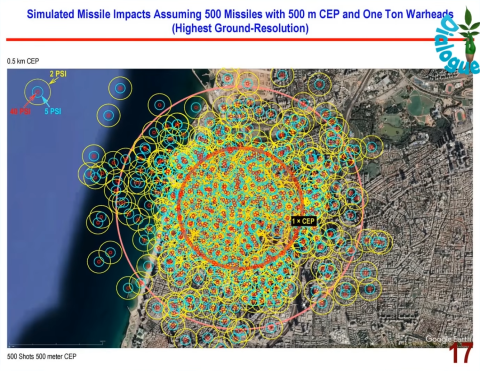
Prof. Ted Postol: US–Iran War? Israel’s Fatal Gamble
or go to
Aletho News Archives – Video-Images
From the Archives
Neocon Max Boot: Legal and illegal aliens need to enlist in the US army and die for Israel

By Jonas E. Alexis | Veterans Today | October 16, 2107
In 1973 Irving Kristol, the godfather of the Neoconservative movement, made a stunning statement which is still relevant to understanding the Israeli influence in US foreign policy. Kristol said:
“Senator McGovern is very sincere when he says that he will try to cut the military budget by 30%. And this is to drive a knife in the heart of Israel… Jews don’t like big military budgets. But it is now an interest of the Jews to have a large and powerful military establishment in the United States…
“American Jews who care about the survival of the state of Israel have to say, no, we don’t want to cut the military budget, it is important to keep that military budget big, so that we can defend Israel.”
Read the statement again very carefully. A big military budget, said Kristol, is only good for Israel, not America or much of the Western World. In other words, precious American soldiers who go to the Middle East to fight so-called terrorism are just working for Israel, not for America.
So, whenever the Neocons use words such as “democracy” or “freedom,” they are essentially conning decent Americans to support Israel’s perpetual wars. … continue
Blog Roll
 Aletho News
- Macron: French citizens fighting for Israel cannot be labeled ‘genociders’
- US eyes Gaza security force drawn from armed gangs
- The Only Motive Behind The ‘Imminent’ U.S. War With Iran Is The Zionist Lobby
- Trump eyes 350-acre US military base housing 5,000 troops in Gaza
- Israel Pushing US Toward a Big and Damaging War With Iran – Ex-Pentagon Analyst
- Meet The Liberal Zionist And Ukraine War Supporter Advising AOC On Foreign Policy
- Buck Dancing for Zion: Kenya’s and Nigeria’s Growing Love Affair With Israel
- Israel installed, oversaw security system at Barak-Epstein residence in New York: Report
- ‘Britain’s Index of Repression’ documents 964 incidents of anti-Palestinian crackdown
- Prof. Ted Postol: US–Iran War? Israel’s Fatal Gamble
- If Americans Knew
- Tucker Carlson interrogated in Israel, has passport seized after interviewing US ambassador
- 6,000 Amputees in Gaza Face Impossible Recovery amid Israeli War Ultimatum
- The Lancet: Gaza death toll far higher than reported – Not a ceasefire Day 132
- Compliant aid: Who are the Israel-approved NGOs scaling up in Gaza?
- Why won’t Trump’s “Board of Peace” bring peace? – Not a ceasefire Day 131
- Help end the injustice against Shadi
- Israel’s Favorite American President
- Israel’s “Yellow Line” Is a Death Trap for Palestinians. We Drove Into It.
- Why Israel’s expanding occupation in Syria presents a critical legal test
- Gaza is not a natural disaster. It is the victim of genocide enabled by global inaction
- No Tricks Zone
- Coal Power Back In Trend As Globe Tries To Keep Pace With Growing Demand For Power
- New Study: A 4°C Warmer Beaufort Sea Had ‘No Sea Ice’ 11,700 – 8200 Years Ago
- Unfudging The Data: Dutch Meteorological Institute Reinstates Early 20th Centruy Heat Waves It Had Erased Earlier
- German Gas Crisis…Chancellor Merz Allegedly Bans Gas Debate Ahead of Elections!
- Pollen Reconstructions Show The Last Glacial’s Warming Events Were Global, 10x Greater Than Modern
- Germany’s Natural Gas Storage Level Dwindles To Just 28%… Increasingly Critical
- New Study Rebuts The Assumption That Anthropogenic CO2 Molecules Have ‘Special’ Properties
- Climate Scientist Who Predicted End Of “Heavy Frost And Snow” Now Refuses Media Inquiries
- Polar Bear Numbers Rising And Health Improving In Areas With The Most Rapid Sea Ice Decline
- One Reason Only For Germany’s Heating Gas Crisis: Its Hardcore-Dumbass Energy Policy
 Aletho News