After Helping Bankers Dodge Personal Responsibility for Financial Collapse, Eric Holder Returns to Law Firm that Represents Biggest Banks
By Noel Brinkerhoff and Steve Straehley | AllGov | July 8, 2015
Eric Holder is back where he appears to be most comfortable, helping big bankers.
The former U.S. attorney general who failed to bring criminal prosecutions against any of the nation’s largest banks for causing the 2008 financial collapse has rejoined his old law firm, Covington & Burling, which he left in 2009 to join the Obama administration. The firm is well known for being a defender of Wall Street with a client list that has included Bank of America, Citigroup, JPMorgan Chase and Wells Fargo, according to The Intercept. Wells Fargo is still a client.
The Intercept also noted that during Holder’s time in charge of the Department of Justice, the agency not only “failed to pursue criminal prosecutions of the banks responsible for the mortgage meltdown, but in fact de-prioritized investigations of mortgage fraud, making it the ‘lowest-ranked criminal threat,’ according to an inspector general report.”
Holder will make at least seven figures at Covington & Burling. In addition, it will be a kind of Justice Department reunion for him. His former enforcement chief, Lanny Breuer, decamped for the firm in 2013. Breuer’s company biography states that “he specializes in helping clients navigate financial fraud investigations, anti-corruption matters, money laundering investigations, securities enforcement actions, cybercrime incidents . . .” Just the kinds of crimes that often weren’t pursued under Holder.
To Learn More:
Eric Holder Returns As Hero To Law Firm That Lobbies For Big Banks (by Lee Fang, The Intercept )
Holder’s Return to Covington Was Six Years in the Making (by Katelyn Polantz, National Law Journal )
Holder Deadline for Prosecuting Wall Street Executives for Financial Crisis Passes without a Single Charge (by Noel Brinkerhoff and Danny Biederman, AllGov )
Eric Holder’s Last Chance to Prosecute Financial Meltdown Bankers (by Noel Brinkerhoff, AllGov )
Holder Claims Big Banks are Too Big to Jail (by Noel Brinkerhoff, AllGov )
Ukraine unrecognized republics demand international tribunal on Kiev actions
RT | July 8, 2015
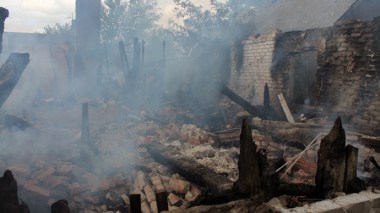
The heads of the Ukrainian unrecognized Donetsk and Lugansk republics have asked the United Nations Security Council to establish an international tribunal to investigate and prosecute those responsible for waging civil war in eastern Ukraine.
“Donetsk People’s Republic [DNR] and Lugansk [LNR] People’s Republic are addressing the UN Security Council with a plea to establish an international tribunal for legal prosecution of those responsible for violation of the International Humanitarian Law and crimes against humanity in Ukraine,” the DNR head, Aleksandr Zakharchenko, and LNR head Igor Plotnitsky said at a joint press conference.
Those found responsible should be brought to trial, they stressed.
The heads of the unrecognized republics are calling for the leaders of Russia, the US, China, Great Britain and France to consider this proposal at the next UNSC session.
“Expecting your soonest reply to the proposal,” Plotnitsky said.
Aleksandr Zakharchenko said Kiev’s operation in Donbass is “a direct violation of the Geneva convention.”
The military operation in eastern Ukraine began in spring last year after residents in the Donetsk and Lugansk regions refused to recognize the coup-imposed government in Kiev.
On February 12, in Minsk, peace negotiations between the two sides resulted in a second ceasefire agreement. The first was signed in summer 2014 and was violated practically immediately. The current ceasefire is also being violated on a frequent basis. Shelling in the self-proclaimed Donetsk and Lugansk People’s Republics happens every other day, with both sides pointing the finger at each other.
Aleksandr Zakharchenko said the prosecutors’ offices of both republics have collected copious evidence of war crimes committed by Kiev troops.
“There is a considerable volume of evidence of the Ukrainian National Guards’ involvement in torture and killing of civilians. Dozens of mass graves have been found on territory that was occupied by Ukrainian troops,” Zakharchenko said.
The DNR and LNR also have evidence of Ukrainian troops using weapons prohibited by the international arms conventions, including cluster and phosphorous bombs.
Since the beginning of 2015 an estimated 1,212 civilians, including 25 children, have died in shelling incidents.
New Online Terrorism Reporting Bill Will Harm Minorities, Chill Speech
By Gabe Rottman | ACLU | July 7, 2015
If there’s one thing the First Amendment stands for, it’s that vigorous debate about the issues of the day—even, and perhaps especially, uncomfortable debate about things like racism or terrorism—should be free from government interference. Tragically, that principle has been betrayed repeatedly over the past decade and a half, as law enforcement agencies continue to single out individuals for scrutiny based on speech or association protected by the First Amendment.
And, if the Senate intelligence committee gets its way, we’ll be chalking one more betrayal up on that blackboard. Last week, the press reported that the committee had secretly inserted a provision in a spending bill that would require social media companies to report posts about “any terrorist activity” to the government.
The bill is hopelessly vague on what that means. That’s because it goes far beyond a reporting requirement for wrongful conduct—terrorist activity—and will invariably result in the reporting of speech about terrorism—including by activists and other peaceful people with forceful opinions.
In practice, were this to become law, websites will likely do a couple of things.
First, they will over-correct and start taking down content wholesale. They will monitor posts for keywords like ISIS or “don’t tread on me” (a libertarian slogan that some identify with white supremacist and anti-government ideology) and pull them. That will chill an enormous amount of online debate over sensitive and important topics like the propriety of the Confederate flag memorial in South Carolina.
This is not a theoretical concern. There are numerous cases of large internet content companies taking down uncomfortable—but perfectly legal—speech because of government pressure (far less than the mandatory reporting requirement in this bill). For example, Apple voluntarily blocked applications that permitted users to identify the sites of overseas U.S. drone strikes. Say what you will about the legality, ethics, or wisdom of overseas drone strikes themselves (and we’ve had a lot to say), the free flow of information about drone strikes—such as their locations—is essential to feed vigorous and unfettered debate about this critical issue. One can just imagine what would disappear from the online debate in the face of a must-report law.
Second, and perhaps worse, companies—faced with the proposal’s utter lack of guidance on what the law requires them to report—will apply it inconsistently. Our nation’s history and its recent post-9/11 practices tell us that sensitive issues of particular interest to vulnerable minorities—religious, racial, ethnic, social, political, etc.—will receive more scrutiny, and therefore more censorship.
Consider, for instance, online discussion about the spate of police shootings of unarmed African-American men, and claims by many in law enforcement that the growth of a protest movement against police violence is feeding violence against the police. There have been several indications that the FBI is quite literally treating activists in the #blacklivesmatter initiative as suspected terrorists. Undoubtedly, some social media platforms are going to follow that lead, report that content to the FBI, and thus perpetuate the targeting of minority groups for law enforcement scrutiny based on First Amendment activity.
Free speech means ensuring the public square—which is increasingly migrating online—is open to viewpoints and arguments that we disagree with or find objectionable. Oftentimes, the hurly burly of public debate includes opinions that may make us squirm, but that nevertheless have an important place in a country that values truth above comfort in the marketplace of ideas. We have a right to discuss any issue, even sensitive ones, without fear that our internet provider, social media platform or telephone company is monitoring and reporting what we say. This bill language would lead to the improper monitoring and suppression of constitutionally protected speech.
Israeli Minister to Decide on Deportation of Palestinian MPs
Ma’an – July 7, 2015
The Israeli Minister of the Interior was given 30 days by the Supreme Court on Monday to reach a final decision on the possible deportation from East Jerusalem of three Palestinian lawmakers and a former Palestinian Authority Jerusalem affairs minister.
Monday’s hearing was a follow-up to a previous hearing in the same court on May 5, 2015 that discussed the possibility of revoking the Jerusalem residency rights of officials Muhammad Abu Teir, Ahmad Attun, Muhammad Tutah and Khalid Abu Arafeh.
While Abu Arefeh formerly served as the PA’s minister of Jerusalem affairs, the other three are members of Palestine’s parliament, the Palestinian Legislative Council.
All four live in occupied East Jerusalem.
The Israeli Ministry of the Interior has been threatening to deport the lawmakers and former minister since Hamas won Palestinian legislative elections in 2006.
The pretext for the ruling is disloyalty to the Israeli state, the lawmakers said last year.
The four were initially detained along with other lawmakers and, after their release, Israeli police seized their identity documents.
The permanent residency status of 107 Palestinian residents of East Jerusalem was revoked in 2014, adding to the 14,309 revoked by Israel since 1967.
Donald Neff: a Journalist Erased From History for Reporting on Palestine
By Alison Weir | Washington Report on Middle East Affairs | July 8, 2015
One of the top journalists to report on Palestine-Israel has died.
Donald Neff passed away on May 10 in his hometown of York, Pennsylvania, at the age of 84. The cause of death was heart disease and diabetes.
Neff was a luminous writer and meticulous reporter. From humble beginnings, he had reached the top ranks of American journalism. When he then turned his formidable talents to writing books and articles about Palestine, his contracts with mainstream American publishers dried up, his income plummeted, and his fame faded.
Today, even many activists in the growing Palestine solidarity movement are unaware of Neff’s groundbreaking work. This is unfortunate, since he exposed critical facts about Palestine with unparalleled precision and elegance. Much of the information he uncovered is still significant today.
During his long career, Neff reported on the Vietnam War from Tokyo and Saigon and was TIME magazine bureau chief in Houston, Los Angeles and Jerusalem. One of the first reporters on the scene at the Jonestown Massacre in Guyana, he also covered the Apollo moon landing and reported on the nuclear accident at Three Mile Island (not far from his hometown). In 1980 he won the Overseas Press Club of America’s prestigious Mary Hemingway Award for best magazine reporting from abroad for a 1979 cover story about Colombia’s cocaine network.
Neff was at TIME from 1965-1979. While based in Jerusalem, he exposed an incident that would change the course of his life.
In “Epiphany at Beit Jala,” an in-depth essay written for the November-December 1995 issue of The Link , Neff wrote about this incident and other eye-opening experiences covering the region.
Like most Westerners, Neff had arrived profoundly sympathetic to Israel. However, he wrote, “As my tour extended into years, I could not ignore a disturbing blindness in some of even the most gentle Israelis. They did not seem to see the Palestinians all around them… In general, this was just as well because when most Israelis did notice Palestinians their reaction to them was one of loathing or fear that quickly could escalate into violence.”
Neff’s experiences also revealed a power dynamic between the U.S. and Israel that he found astonishing.
He reported on Secretary of State Henry Kissinger’s frantic attempts to convince Israel to relinquish Egyptian land Israel had acquired through its 1967 war of conquest and had managed to retain through American support during the 1973 “Yom Kippur” war. The U.S. was calling on Israel to return it to Egypt. Israel refused.
“The extent of Israel’s ability to resist U.S. advice,” Neff wrote, “was my first great eye-opener in Israel. I had had little appreciation of the astounding depth and strength of Zionism’s influence in Washington. I was stunned that a country completely beholden to the United States could thumb its nose at Washington.”
Various encounters through the years caused Neff “deep uneasiness” about the views and beliefs of some Israel partisans in the U.S., raising “the question of dual loyalty to a level I had never realized existed.”
A man who had been serving in the U.S. Navy when Israel tried to sink the USS Liberty, killing 34 and injuring over 170 Americans, told Neff that he had been “torn by the dilemma of whether he could actually participate in a U.S. retaliatory attack against Israel.” (This never came.)
Another American Zionist showed Neff his Israeli passport alongside his U.S. one. Neff was taken aback; it had been illegal for Americans to hold dual citizenship. The man proudly informed him that the policy had been changed in 1967 by the Supreme Court, adding with emphasis that the case had been brought by an Israeli and the swing vote was cast by Abe Fortas.
In later researching Fortas, Neff discovered that Fortas was a Zionist and that among his first thoughts when he left the Supreme Court had been to visit Israel. “There was nothing wrong with that,” Neff wrote, “but it did indicate an attachment of such personal importance that he should have recused himself from the dual citizenship case.” This ruling, Neff wrote, “had destroyed a 200-year tradition.”
Neff’s most intense experience, the “epiphany” of his essay title, came in March 1978, when a freelance reporter called to say that she had “heard reports that Israeli troops had just conducted a cruel campaign throughout the West Bank against Palestinian youth. Many Palestinians had suffered broken bones, others had been beaten and some had had their heads shaved.”
When Neff repeated the report to his TIME bureau staff, all Jewish Israelis, they were indignant. The report was obviously false, they said, because “that is what was done to us in the Holocaust.”
Neff decided to check out the facts for himself, taking along a skeptical Jewish American friend who was living in Israel.
“We went into the small hospital and a young Palestinian doctor who spoke English soon appeared. Yes indeed, he said matter-of-factly, he had recently treated a number of students for broken bones. There were 10 cases of broken arms and legs and many of the patients were still there, too seriously injured to leave. He took us to several rooms filled with boys in their mid-teens, an arm or leg, sometimes both, immobile under shining white plaster casts.”
When TIME published Neff’s report, it provoked outrage from both Israeli authorities and American Zionists. The New York Times failed to report on the incident, making it seem for awhile that Neff’s report was inaccurate. It wasn’t until an Israeli official investigated the incident and confirmed Neff’s facts that other journalists finally reported on it.
As a result of his reporting, Neff was made an honorary citizen of Bethlehem.
After Neff returned to the U.S. he eventually decided to leave periodical journalism in order to write books. He signed a contract with Simon & Schuster and wrote the first in what was to be a trilogy about the Israeli-Arab wars of 1956, 1967 and 1973
The book, Warriors at Suez: Eisenhower Takes America into the Middle East (1981), received wide acclaim. It was a National Book Award finalist and an alternate selection for both the Book of the Month Club and the History Book Club.
The Chicago Tribune Book World described it as “A true thriller” and said that the story was “as sobering as it is fascinating…. important and compelling reading.”
The Tribune review, however, was to be among the few exceptions to a pattern later described by Ambassador Andrew Killgore, publisher of the Washington Report on Middle East Affairs.
Books on the Middle East that editors disliked, Killgore noted, would be assigned to “a Zionist reviewer… the reviewer usually is Jewish, never a Muslim and only occasionally a Christian. If none of the facts presented in the book can be refuted, the book’s substance has to be ignored.” Often they would simply go un-reviewed.
Neff’s second book, Warriors for Jerusalem: The Six Days That Changed the Middle East, came out in 1985 and was again praised by experts. Former Undersecretary of State George Ball called it indispensable to anyone who wanted to understand “why we are in such a dangerous mess in the Middle East.”
While the Christian Science Monitor called it “one of the most significant contributions to modern historical literature,” most newspapers ignored it.
American Zionists had long disliked Neff’s work. When his report on the Beit Jala incident came out, even some TIME colleagues had complained. Neff was called an anti-Semite to his face, while others shunned him.
The book industry included such Israel partisans, as well. Simon & Schuster did not renew its contract with Neff, and his final book in the trilogy, Warriors Against Israel: How Israel Won the Battle to Become America’s Ally, was published in 1988 by Amana, a much smaller publisher.
Once again, Neff produced a powerful volume. Archibald B. Roosevelt, Jr., a grandson of President Theodore Roosevelt, a polyglot who spoke 20 languages, and a former CIA officer with considerable expertise in the Middle East, wrote: “As an observer of Middle Eastern affairs for more than four decades, I was impressed by the originality of Neff’s presentation and surprised by his devastating conclusions, assembled from facts previously known to most of us only piecemeal. It is not only a good read, but essential background for serious students of developments in the Middle East today.”
Neff’s next book, on the history of U.S.-Israel relations, was published in 1995 by the Institute for Palestine Studies, headquartered in Lebanon. A second, updated edition was published in 2002.
Neff himself, and many others, considered this his most important book. Fallen Pillars: U.S. Policy Towards Palestine and Israel Since 1945 provides a detailed history of how Zionists overcame the recommendations of U.S. diplomats, the Pentagon, and intelligence agencies to create today’s uniquely special relationship with Israel.
Citing a multitude of memos and official studies, Neff’s opus details U.S. officials’ failed attempts and frequent frustration at a special interest lobby that held more influence over U.S. policies than they did. Already by 1949 “Israeli officials were openly bragging about the power of the Jewish American community to influence U.S. policy.”
Fallen Pillars shows the deep roots of many current issues. “By 1968,” Neff reported, “the CIA was convinced Israel had produced nuclear weapons, or was capable of doing so, and informed President Lyndon Johnson. His response was to order the CIA not to inform any other members of the administration, including Defense Secretary Robert McNamara and Secretary of State Dean Rusk.”
Although, again, scholarly reviewers praised Neff’s book, most mainstream media chose not to review it. An exception was The Washington Post, which assigned it to Tad Szulc, a Jewish American journalist whose primary expertise was Latin America and Eastern Europe. Szulc called Pillars “deeply flawed” and charged Neff with being “more Palestinian than the Palestinians.”
Neff’s final book, Fifty Years of Israel, was published on the 50th anniversary of Israel’s creation. A collection of the “Middle East History” columns Neff wrote for this magazine beginning in 1993, its short, footnoted chapters were based on a detailed handbook compiled daily of events related to Israel and Palestine from 1947 to the end of the 20th century. (See excerpt in sidebar here.)
Long before Google and other Internet search engines made their appearance, Neff’s computerized database was a frequently called upon source of information for authors and journalists. As the Washington Report’s late executive editor, Richard H. Curtiss, noted in his introduction to Fifty Years: “Over the phone I could hear the ‘click, click’ as he entered into his computer—which seemingly always was turned on—the key words that brought up almost instantaneous answers to whatever questions I asked.”
Donald Neff brought honesty, precision, and courage to a topic of world-shaking significance that most top journalists feared or obfuscated. For this, he paid dearly.
Those working to rectify one of the world’s most significant injustices and causes of ongoing tragedy owe deep gratitude to Donald Neff.
I personally am profoundly indebted. I first stumbled across Neff’s books when I visited the Washington Report bookstore in Washington, DC in the spring of 2001. While I had already seen at first-hand Israel’s ferocious treatment of Palestinians, I was largely unaware of Israel’s power in and over the United States. Neff’s work was as enlightening as it was disturbing.
A few years later I had the honor of meeting Donald Neff in person and conducting a long interview with him about his work. (A few minutes from this are on a video If Americans Knew subsequently released.)
I expect that eventually Neff’s books and articles, like those of other journalists who worked to tell Americans about Palestine but were largely erased from public awareness, will be rediscovered, as a new generation intent on justice discovers the power and relevance of his pioneering work.
Neff is survived by his companion of 15 years, Washington Report managing editor Janet McMahon, as well as son Gregory Neff of York; two stepdaughters, Victoria Brett of Northampton, MA, and Abigail Miller of Portland, ME; a granddaughter; and two great-grandsons.
 This article was originally published in the Washington Report on Middle East Affairs, which contains an excerpt from Neff’s unpublished Middle East Handbook.
Alison Weir is executive director of If Americans Knew, president of the Council for the National Interest and author of Against Our Better Judgement. Upcoming book talks can be seen on the book’s website.
Israeli committee approves expansion of Jerusalem settlement
Ma’an – July 8, 2015
 JERUSALEM – A researcher said Tuesday that an Israeli committee for zoning and planning has allocated private Palestinian land to expand the illegal French Hill settlement in East Jerusalem.
Ahmad Sub Laban, a settlement affairs researcher, told Ma’an that 25 dunams (6 acres) of land from Shufat and al-Issawiya has been allocated to the the settlement area to establish a commercial zone.
Palestinian residents of Shufat had been trying to obtain licenses to build on the land which was confiscated, but were denied permission by Israel’s Jerusalem municipality.
Palestinians in occupied East Jerusalem suffer from a chronic lack of services and severe unemployment as a result of Israeli municipal policies which allocate few resources to the community.
Over 75 percent of Palestinians, and 82 percent of children, live below the poverty line in East Jerusalem, according to the Association for Civil Rights in Israel.
Only 14 percent of East Jerusalem is zoned for Palestinian residential construction, ACRI says, while one-third of Palestinian land has been confiscated since 1967 to build illegal Jewish-only settlements.
NY Times Whitewashes Israel’s Racist Justice System
By Barbara Erickson | Times Warp | July 7, 2015
Three Israeli civilians are standing trial for killing a Palestinian teenager in a brutal murder last summer, and The New York Times is on hand to report the details. It is all meant to carry a clear message to readers: that democracy is at work in Israel and the law is on hand to deal out justice.
So we read that Israeli prosecutors are pressing defendants to admit their intent to kill, that the families of defendants and the victim are on hand and that the “cramped courtroom” in Jerusalem is crowded with judges, lawyers and observers.
But for all its detail, this story by Isabel Kershner is missing some crucial context: the fact that Israel runs a blatantly racist system of justice, with strikingly different treatment for Israelis and Palestinians. The present trial—for the murder of 16-year-old Muhammad Abu Khdeir, who was doused with gasoline, beaten and burned in a wooded area a year ago—is far from typical.
In reality, Israeli civilians and security forces rarely stand trial for attacks on Palestinians. A study by the Israeli human rights monitoring organization, Yesh Din, released this May, shows that Palestinian complaints against Israeli civilians lead to indictments only 7.4 percent of the time, and only a third of these (or 2.5 percent of the complaints) result in even partial convictions.
Security forces are also shielded from prosecution. Yesh Din notes that criminal investigations against soldiers are rare and even when they do take place, they are closed without indictments 94 percent of the time. And, Yesh Din states, “In the rare cases that indictments are served, conviction leads to very light sentencing.”
In the Times story Kershner quotes the parents of the victim, who are skeptical of the Israeli justice system. “It is all an act,” the boy’s father says. “They burned Muhammad once. Every day we are burned anew.”
Readers are likely to dismiss his misgivings as rhetoric and prompted by anger and grief. In fact, Palestinians have reason for doubting that they can find justice in Israeli courts.
West Bank settlers, for instance, are tried in civilian courts, while their Palestinian neighbors—even the children—face trial in military courts, which are notorious for their lack of due process and impossibly high conviction rates. As UNICEF noted in an extensive report on the abuse of Palestinian children in Israeli custody: “In no other country are children systematically tried by juvenile military courts that, by definition, fall short of providing the necessary guarantees to ensure respect for their rights.”
Palestinians tried in Israeli military courts are convicted 99.74 percent of the time, according to Israeli Defense Force data. Knowing this, most Palestinians and their lawyers opt for plea bargains and give up even the faintest hope of receiving a fair trial.
None of this appears in Kershner’s story, but the context of Israeli justice as it applies to Palestinians is crucial to understanding what is really happening here. The fact is, Israeli officials know the world is watching this trial, just as it watched events unfold after Abu Khdeir was abducted and killed. We can expect at least the appearance of justice to be on display.
The Times, which has ignored the hundreds of cases that show Israel in a far different light, is ready here to present Israeli prosecutors pressing for justice. Readers will not suspect that the newspaper has failed to inform them of other, less savory, outcomes to Israeli crimes against Palestinians.
We can name a few:
- This past April, two years after 16-year-old Samir Awad of the West Bank village of Budrus was killed with three bullets to his back and head, the State Attorney’s Office opted to charge his accused assailant with the minor offense of a “reckless and negligent act using a firearm.” B’Tselem, the Israeli rights organization, called this decision “a new low in Israeli authorities’ disregard for the lives of Palestinians.”
- In January Israel closed an investigation into the killing of Musad Badwan Ashak Dan’a, 17, in Hebron, four years after the event, saying there was no evidence available. In fact, the army investigating unit had plentiful evidence, including medical documents and eyewitness accounts.
- Israel forces shot and killed Yusef a Shawamreh, 14, in March last year as he collected herbs near the Separation Barrier in the West Bank. Three months later, investigators closed the case, saying there was no breach of military rules involved. Videos of the incident show that the boy and his companions posed no possible threat to the soldiers or Israeli security.
All of these (and dozens of others) were newsworthy items, fit to print in the Times, but the newspaper has preferred to look away. Only Samir Awad’s name appeared briefly in an online Reuters story that never made it into print; the others received no mention.
Now, however, Israel knows that the world is aware of the Abu Khdeir case, and a trial is in progress. It is likely that the prosecutors and judges will remain on their best behavior throughout the proceedings.
The Times, as well, is ready to present a narrative of Israeli justice at work. We can expect more reports from the Jerusalem courtroom, but readers are unlikely to learn that the trial is a rare event, an aberration in a system of flagrant inequality.
Putin to Obama: No one has the right to ask Assad to resign
MEMO | July 8, 2015
 Vladimir Putin has insisted that Bashar al-Assad is the “legally-elected” president of Syria and no one is entitled to ask him to resign. The Russian president made his comment in response to statements by Barack Obama, who said that the only way to achieve stability in Syria is through the formation of a new government without Assad, Anadolu has reported.
According to Putin’s adviser Dmitry Peskov, this conversation took place during a phone call between the two leaders on 26 June. He stressed that the Russian position on Assad is known to everyone and the Russian president said nothing new to his US counterpart.
In a related context, Syria’s ambassador in Moscow, Riad Haddad, has revealed that Russia will host the third consultative meeting between Syrian parties involved in the conflict. He said that the date of the meeting will be linked to the schedule of the UN Secretary-General’s special envoy for Syria, Staffan de Mistura. No further details were reported.
If Daesh, why not Zionist Occupation Forces?
By Jonathon Cook | The Blog From Nazareth | July 8, 2015
There’s something truly disturbing about the fact that British prime minister David Cameron’s efforts to decide how the media refer to Islamic State are being taken seriously. So seriously, in fact, that 120 MPs have backed the idea that the BBC should not use the name Islamic State and refer to the group by the Arabic acronym “Daesh” instead. Cameron’s argument is that Islamic State is neither Islamic nor a state.
The coverage has implied that the BBC is taking a brave editorial stand and refusing to kowtow to Cameron’s diktat. But there are already signs that the BBC may capitulate. In a statement, the BBC said: “We call the group by the name it uses itself, and regularly review our approach. We also use additional descriptions to help make it clear we are referring to the group as they refer to themselves, such as ‘so-called Islamic State’.”
Let’s put this debate in a little perspective. The Israeli army calls itself the “Israel Defence Forces”, or “IDF” for short. And yet it is not “Israeli” in the sense that it does not respresent all Israelis, especially the fifth of the population who are Palestinian, and it is not a defence force because its primary role is to enforce a belligerent occupation of Palestinians. So according to Cameron’s logic, he and the media should be referring to it as the “Zionist Occupation Forces”. I wonder if he can get 120 MPs to sign up to that idea.
Meanwhile, can we imagine the BBC issuing a statement saying that, though they refer to the Israel Defence Forces by the name they use for themselves, the broadcaster tries when possible to be clearer by using additional descriptions such as “the so-called Israel Defence Forces”?
And while we are on the subject, the world might look a very different place if groups could only call themselves names that reflected their true character. Not least Cameron’s own party would have to abandon its name the “Conservatives”. Since Margaret Thatcher began leading the party in the mid-1970s, there has been nothing “conservative” about the party in the sense that it believes in conserving tradition. At that point it became a party of neoliberal revolution, breaking up British society’s major institutions and implementing changes to allow financial speculators to sell off the family silver.
So let us agree that Cameron can insist on the BBC calling Islamic State “Daesh” when he also insists on the broadcaster referring to the Conservatives as the “Revolutionary Neoliberal Party”.
Why does the Obama administration neglect American national interests?
Sputnik – 07.07.2015
Paradoxically, US President Barack Obama, a Nobel Peace Prize winner, has finally found himself lured into an open-ended war in the Middle East, tense confrontation with China, and a new Cold War with Russia.
Director of the Economic Growth Program at the New America Foundation Sherle R. Schwenninger pointed out that although Barack Obama vowed to end the “wars of occupation” in Iraq and Afghanistan and to reset Russo-American relations, he has finally found himself fighting on multiple fronts.
“Now, after being “pulled back in” by liberal interventionists and neoconservative hawks both inside and outside his administration, he finds himself pursuing a new open-ended war against the so-called Islamic State, prosecuting an expanded counterterrorism campaign from Central Asia to North Africa, overseeing a new Cold War with Russia, and pivoting toward what could become one with China in East Asia,” the scholar elaborated.
The expert noted that “many of the people,” which contributed to the shift in US foreign policy, “are the same ones who cheered us into the war in Iraq.”
Mr. Schwenninger underscored that while the US President’s critics are accusing Barack Obama of hesitancy, “the failure of Obama’s foreign policy” is that “it has embraced many of the very positions that Obama’s interventionist opponents have advocated.”
“In so doing, it has failed to protect America’s most important national interests,” the expert stressed.
According to Mr. Schwenninger, it was not in the US’ interest to topple Syrian President Bashar al-Assad or to change Ukraine’s nonaligned status, or to alienate Russia and China. It was also not in America’s interest to help to escalate the civil war in Ukraine “by unconditionally supporting Kiev’s various military offensives this past year, when such offensives would only further bankrupt Ukraine and cause even more unnecessary bloodshed.”
Blaming the White House for its Middle Eastern policy, US experts point to Washington’s role in the Yemeni crisis.
“Yemenis have good reason to hold the US responsible for the war that has devastated their country. The US is particularly responsible for the campaign’s attacks on civilian areas because it is actively aiding the Saudis in their operations. US officials are understandably embarrassed to talk about this,” US conservative publicist Daniel Larison noted.
However, it is just the tip of the iceberg. While pursuing its ambitious global goals, Washington has undermined its own strategic foreign policy goals.
While Washington was beefing up its military presence in Eastern Europe, citing Russia’s imaginary “threat,” Moscow and Beijing have jumped at the opportunity to reshape the Eurasian economy, bringing under their umbrella a vast number of Central/South Asian and former Soviet states.
Furthermore, when the United States was speculating about its “Asian pivot” and teasing the Chinese Dragon, Beijing kicked off its ambitious New Silk Road project, aimed at cementing Eurasia’s heartland and gradually expelling Washington from the region.
As a result the United States risks losing its dominant positions in both Eurasia and the Asia Pacific.
And that is not all. Preoccupied with its foreign policy, the Obama administration neglected the country’s most important domestic tasks: namely, to reduce inequality and rebuild the American middle class.
“We should be working with our international counterparts to strengthen the world economy and create jobs. In this way, we might be able to break our downward drift toward endless war in the Middle East and new Cold Wars in Europe and Asia,” Mr. Schwenninger noted.
In order to realign Washington’s foreign policy to support its domestic agenda, Obama would have better considered curtailing military commitments and promoting programs to expand investments and jobs inside the country.
Or as American conservative political commentator Patrick Joseph “Pat” Buchanan put it: “Our agenda in that decade was — stay out of wars that are not our business, economic patriotism, secure borders, and America first.”
Russia: Iran to join SCO after sanction lifted
Press TV – July 8, 2015
Iran will join the Eurasian economic, political and military bloc, the Shanghai Cooperation Organization (SCO), after sanctions are lifted on the country, a Russian presidential aide has said.
The announcement came after foreign ministers of the organization met ahead of a summit by SCO and BRICS leaders in the Russian city of Ufa.
“The Iranian application is on the agenda for consideration. Sooner or later, the application will be granted after the UN Security Council sanctions are lifted,” Interfax quoted Russian presidential adviser Anton Kobyakov as saying.
Iran and the P5+1 group of world countries are currently involved in make-or-break talks in order to reach a nuclear agreement which would have sanctions lifted on Tehran.
Russian Foreign Minister Sergei Lavrov told Interfax that the removal of a conventional arms embargo on Iran is a “major problem” in the negotiations.
“I can assure you that there remains one major problem that is related to sanctions: this is the problem of an arms embargo,” he said in Vienna.
Iranian President Hassan Rouhani will head to Russia on Thursday to participate in the summit of SCO and BRICS nations.
Iran has an observer status on SCO, awaiting the removal of sanctions to become a full-fledged member.
SCO currently consists of China, Kazakhstan, Kyrgyzstan, Russia, Tajikistan, and Uzbekistan. Kobyakov said the organization has received 11 new applications for membership, including from Egypt.
Russian officials have said India and Pakistan will join SCO as full members after years of holding observer status as Prime Ministers Narendra Modi and Nawaz Sharif will join regional leaders in Ufa.
The Iranian president will attend the BRICS summit of Brazil, Russia, India, China and South Africa as a special guest and will also deliver a speech to the event.
The BRICS accounts for almost half the world’s population and about one-fifth of global economic output. Its New Development Bank is seen on course to challenge the dominance of US-led World Bank and International Monetary Fund.
Featured Video
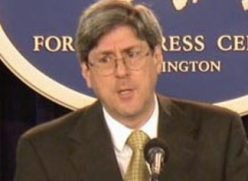
Pentagon insider says high US official Douglas Feith reported to Netanyahu
or go to
Aletho News Archives – Video-Images
Frlom the Archives
Who’s to blame for the Iraq war?
A not-so-trivial quiz
By Maidhc Ó Cathail | 14 March 2010
Maidhc Ó Cathail names and shames the top 19 politicians, academics and policy makers – all con men and all Zionist Jews – who lied and conspired to steer the US toward aggression against the Iraqi people. … continue
Blog Roll
 Aletho News
- Pentagon insider says high US official Douglas Feith reported to Netanyahu
- The Sludging of Rural America
- Lawyers’ groups demand end to British military bases in Cyprus
- CIA Assessment: The Resistance Cannot Be Crushed
- Hezbollah Returns: It Didn’t Start a War, It Is Ending One
- EU states seek ‘talks’ with Iran for access to Strait of Hormuz: Report
- Trump on Hormuz: “Others must take care of it” after US falters
- Who Is closer to collapse?
- A War that Backfired: Why the US-Israeli Campaign Is Strengthening Iran
- How Zionist Control Is Hurting US Interests
- If Americans Knew
- As US-Israel war on Iran rages, Gaza faces massive dust storm – Not a ceasefire Day 156
- No let-up in attacks on Gaza as Israel takes on Iran, Lebanon – Not a ceasefire Day 155
- ‘Of Course’: IDF Drops Case Against Soldiers Accused of Raping Palestinian Prisoner
- Don’t Fall for the Regime Change Talk. Israel Is ‘Mowing the Lawn’ in Iran
- Will Israel and the US wreck the Gulf States along with Iran?
- US so far burned through ‘years’ of munitions in Iran war: Report
- How the Israeli Tail Wags the American Dog
- Outdated intel likely led to deadly U.S. strike on Iranian elementary school, sources say
- Pentagon insider says high U.S official Douglas Feith reported to Netanyahu
- In fond memory of Walid Khalidi, the historian of Palestine
- No Tricks Zone
- Storing Green Energy To Last Germany 10 Days Would Require A 60-Million Tonne Battery
- New Studies: UK Sea Levels Were 4 Meters Higher Than Today During The Mid-Holocene
- Destructive Green New Deal: German Energy And Metal Group Warns Of Drastic Crisis
- New Study Documents A 20-Year Pause In Arctic Sea Ice Decline – Driven By Internal Variability
- Wake-up Call: Survey Shows Majority Of Germans Now Favor Postponing Climate Targets!
- Televised! Leading German Political Candidate Tells Schoolchildren CO2 Makes Sun Hotter!
- New Study: A Century Warming Of 1.1°C Is ‘Commonplace’ And ‘Not Unusual’ During This Interglacial
- New Study: ‘Internal Noise’ And Volcanic Forcing Can Trigger 10-15°C Warming Within Decades
- Glaciers Worldwide Are Suddendly Surging, Experts Blame Warming!
- Surprising Discovery: Sahara Is Greening…Billions Of Trees Where Once Thought To Be Barren
 Aletho News