Featured Video
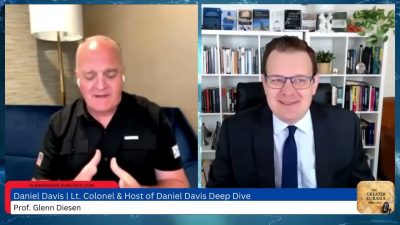
No More Ukraine Proxy War? You’re a Traitor!
or go to
Aletho News Archives – Video-Images
From the Archives
The lies about the 1967 war are still more powerful than the truth
By Alan Hart | June 4, 2012
In retrospect it can be seen that the 1967 war, the Six Days War, was the turning point in the relationship between the Zionist state of Israel and the Jews of the world (the majority of Jews who prefer to live not in Israel but as citizens of many other nations). Until the 1967 war, and with the exception of a minority of who were politically active, most non-Israeli Jews did not have – how can I put it? – a great empathy with Zionism’s child. Israel was there and, in the sub-consciousness, a refuge of last resort; but the Jewish nationalism it represented had not generated the overtly enthusiastic support of the Jews of the world. The Jews of Israel were in their chosen place and the Jews of the world were in their chosen places. There was not, so to speak, a great feeling of togetherness. At a point David Ben-Gurion, Israel’s founding father and first prime minister, was so disillusioned by the indifference of world Jewry that he went public with his criticism – not enough Jews were coming to live in Israel.
So how and why did the 1967 war transform the relationship between the Jews of the world and Israel? … continue
Blog Roll
Recent Comments
Bill Francis on Chris Minns Defends NSW “Hate… Sheree Sheree on I was canceled by three newspa… Richard Ong on Czech–Slovak alignment signals… John Edward Kendrick on Colonel Jacques Baud & Nat… eddieb on Villains of Judea: Ronald Laud… rezjiekc on Substack Imposes Digital ID Ch… loongtip on US strikes three vessels in Ea… eddieb on An Avoidable Disaster Steve Jones on For Israel, The Terrorist Atta… cleversensationally3… on Over Half of Germans Feel Unab… loongtip on Investigation Into U.S. Milita… loongtip on Zelensky’s Impossible De…


 Aletho News
- How Policies From The Bi-Parisian Foreign Policy Establishment Led To Trump’s Venezuela War
- No More Ukraine Proxy War? You’re a Traitor!
- Sexual Blackmail Makes the World Go ‘Round
- Powerful Israeli Strikes on South Lebanon and Bekaa
- UAE-backed militia in Yemen reaches out to Israel for alliance against ‘common foes’: Report
- The UAE’s reverse trajectory: From riches to rags
- Chris Minns Defends NSW “Hate Speech” Laws Linking Censorship to Terror Prevention
- Majority of Belgians oppose theft of Russian assets – poll
- Czech–Slovak alignment signals growing dissatisfaction with Brussels’ authoritarianism
- Colonel Jacques Baud & Nathalie Yamb Sanctioned: EU Goes Soviet
- If Americans Knew
- Amnesty: ‘Utterly preventable’ Gaza flood tragedy must mobilize global action to end Israel’s genocide
- Israel Propagandists Are Uniformly Spouting The Exact Same Line About The Bondi Beach Shooting
- Ha’aretz: Free the Palestinian Activist Who Dared to Document Israel’s Crimes in the West Bank
- Garbage Is Poisoning Gaza
- Palestinian journalist recounts rape and torture in Israeli prison
- Gaza is crumbling, but its people persevere – Not a Ceasefire Day 69
- Pro-Israel billionaire Miriam Adelson green-lights a Trump 3rd term
- Australians Being Massacred Shouldn’t Bother Us More Than Palestinians Being Massacred
- Garbage, stench, sewage, and rats plague Gaza – Not a Ceasefire Day 68
- The Zionist Billionaire Circle Hiding in Plain Sight
- No Tricks Zone
- New Study: 8000 Years Ago Relative Sea Level Was 30 Meters Higher Than Today Across East Antarctica
- The Wind Energy Paradox: “Why More Wind Turbines Don’t Always Mean More Power”
- New Study Reopens Questions About Our Ability To Meaningfully Assess Global Mean Temperature
- Dialing Back The Panic: German Physics Prof Sees No Evidence Of Climate Tipping Points!
- Astrophysicist Dr. Willie Soon Challenges The Climate Consensus … It’s The Sun, Not CO2
- Regional Cooling Since The 1980s Has Driven Glacier Advance In The Karakoram Mountains
- Greenland Petermann Glacier Has Grown 30 Kilometers Since 2012!
- New Study: Temperature-Driven CO2 Outgassing Explains 83 Percent Of CO2 Rise Since 1959
- Climate Extremists Ordered By Hamburg Court To Pay €400,000 In Damages
- More Evidence NE China Is Not Cooperating With The Alarmist Global Warming Narrative
 Aletho News
“Aid” from America is all part of their Grand Plan for American Corporations to take financial control of the ‘target’ country. The only country to get REAL UNCONDITIONAL ‘Aid’ from the USA is its master, Israel……..
https://www.youtube.com/watch?=RVsB07CcSNw
LikeLike
https://www.youtube.com/watch?vRVsB07CcSNw
LikeLike
For some reason, you won’t allow me to provide a You Tube link to “Confessions of an Economic Hitman” by John Perkins. Why not? Is he completely banned in the USA?(for telling the truth)
LikeLike
I have no idea what the problem is but why don’t you try posting the url with a break in the middle and we can copy it into our url bars and delete the gap.
Reliance on the internet and google, facebook, twitter and wordpress also is going to bite us big time.
LikeLike
I tried 3 times, and it will not let me……………..are you being censored ??
LikeLike
LikeLike
Well done. Thank you.
https://www.youtube.com/watch?v-a6jzU0YgQ
LikeLike