9-year old girl got shot with live ammunition during Friday demonstrations in Kafr Qaddum
International Solidarity Movement | January 24, 2016
Kafr Qaddum, Occupied Palestine – On the 22nd of January, when villagers of Kafr Qaddum carried out their weekly demonstration against the surrounding settlement of Kedumim, Israeli forces attacked them with the use of tear gas and live ammunition. Two men got shot in their legs and 9-year old Ayat Zahi Ali was shot in her arm, all of them with live bullets. Earlier that morning in the same village a farmer was ambushed and beaten when he was going out to work his land.
Since 2011 the people of Kafr Qaddum have protested the theft of their land and the Israeli closure of the village main road with weekly demonstrations. The villagers stated that they had a strange feeling on Thursday night, suspecting that Israeli forces may have entered the village in the cover of the dark to prepare for an ambush during the Friday demonstration. Their worries were verified in the morning when a farmer who was walking onto his land got ambushed and beaten by soldiers that were hiding in the bushes.
In fear of more soldiers hiding in the village the route for the demonstration was changed and people were extra cautious. One hour after the protest started Israeli soldiers showed up and immediately started shooting live ammunition towards the crowd. Two men, Hamza Abu Khaled, 21 and Abd Allah Anwar, 40, were shot in their legs. According to villagers one of the bullets shattered the bone.
Ayat Zahi Ali, 9 years old, was shot in her left upper arm with live ammunition while she was inside her father’s house. Her uncle and family members carried her to a red crescent ambulance. Israeli forces entered the village with a military bulldozer armed with snipers and continued to fire tear gas and live ammunition at the protesters and nearby the houses.

Ayat Zahi Ali is being carried after being shot by Israeli forces. Photo credit: ISM

Military bulldozer entering the village, with a sniper in the right window. Photo credit: ISM
Ayat is not the first young girl that has been injured by Israeli live bullets in Kafr Qaddum in recent times. In September 2015, Israeli soldiers shot the 3 year old Maram Abed al-Latif al-Qaddumiwaa in her head while she was standing on her balcony. When er father rushed to help her he also got shot in the head.
The main road that leads to Kafr Qaddum is cut off by a permanent roadblock, making the journey to the main road three times longer than necessary. This again is illegal according to an Israeli court decision from 2010, but the road is still kept closed.
Peace talks between Damascus & opposition to start January 29 – UN Syria envoy
RT | January 25, 2016
Talks between Damascus and the Syrian opposition will begin on January 29, the UN’s Syria envoy Staffan de Mistura has told journalists in Geneva. The negotiations will focus on a broad ceasefire, stopping Islamic State militants and increasing aid, he added.
De Mistura said the process of finalizing the list of participants “is still ongoing,” particularly regarding clarification of the opposition groups which will not be considered “terrorist.”
He added that the UN will start sending invitations on Tuesday. “I’m going to send the invitations given by the mandate of the UN Security Council,” he said.
The peace talks were originally due to start on Monday, but were postponed.
“We want to make sure that when and if we start, to start at least on the right foot. It will be uphill anyway,” de Mistura said.
He added that the “proximity talks” between the two sides are expected to last six months. According to the UN official, “this will not be Geneva-3.”
The Geneva II peace conference which took place in 2014 focused on bringing the two sides – the government and opposition – to the negotiation table to agree on forming a transitional government.
De Mistura told reporters that the sides will not talk directly to each other and will be mediated by negotiators.
The first part of the talks will last from two to three weeks, the envoy said, adding that the focus will be on negotiating a ceasefire, stopping Islamic State (IS, formerly ISIS/ISIL) and increasing humanitarian aid.
“The condition is it should be a real ceasefire and not just local,” de Mistura said. “Suspension of fighting regarding ISIL and al Nusra is not on the table. However (there are) plenty of other suspensions of fighting that can take place.”
Among the priorities will also be the issues of governance, a constitutional review and future UN-backed election.
“The participation will be as inclusive as possible, including women, civil society and other marginalized groups,” said Mistura, answering a question concerning the composition of the delegations.
The Syrian government has said that Damascus’s delegation will be headed by the Syrian ambassador to the United Nations, Bashar al-Jaafari.
The disagreement over which opposition groups will take part in the peace talks and who will represent them has been impeding the start of negotiations.
On Wednesday, a Syrian opposition coalition, the so-called ‘High Negotiations Committee,’ named an Islamist chief as their top negotiator. The decision to appoint Mohammed Alloush, the leader of Jaysh al-Islam (Army of Islam), a powerful jihadist group operating in the suburbs of Damascus, as one of the negotiators drew criticism, even from among other members of the Syrian opposition.
544 Egyptians arrested ahead of revolution anniversary
MEMO – January 25, 2016
Some 544 people have been arrested in Egypt since the start of the year, human rights activists have reported.
In exclusive comments to the Anadolu Agency, Ezzat Ghoneim, of the Egyptian Coordination for Rights and Freedoms, said: “Since the beginning of 2016, this association has flagged 544 detained people, including 34 cases of arrests that took place yesterday [Saturday] and 17 on Sunday, with all of the people involved in such cases still imprisoned.”
He pointed out that Saturday’s arrests were over “seven provinces: one in Cairo, two in Giza, 19 in Al-Gharbia, three in Al-Behairah, four in Aswan, four in Monoufia and one in Kafr El-Sheikh.”
Yesterday, “seven people were arrested in Alexandria and 10 in Ismailia,” Ghoneim said, adding that the organisation is monitoring all arrests.
“The charges range between issues related to demonstrations, incitement of violence, membership of an outlawed group, preparing to commemorate the January 25 Revolution of 2011, or taking part in the January revolution itself. However, we are not concerned with the detainees’ affiliations in our work,” Ghoneim added.
Turkey Drifts Towards Israel
By Stanislav Ivanov – New Eastern Outlook – 25.01.2016
As is well known, the current foreign policy of the Turkish leadership in the region widely known as “zero problems with neighbours” has failed completely and in fact become “zero relations with neighbours.” The sharp deterioration in the Russian–Turkish relations after the launch of the Turkish missiles on the Russian military aircraft has completed the process of Turkey’s political isolation across its borders. Today, almost all states bordering with Turkey are among its enemies or competitors (Syria, Iraq, Iran, Greece, Cyprus, Armenia). The only exception are the good-neighbourly and mutually beneficial relations between Turkey and Iraqi Kurdistan as an entity of the Federation of Iraq. Yet, relations between Ankara and Baghdad have significantly deteriorated and even become aggravated after the Turkish authorities flagrantly violated the sovereignty of the country by bringing military units with artillery and armoured vehicles to Nineveh province without the permission of the central authorities. Ankara has made it clear that it is dissatisfied with the pro-Iranian Shiite government in Baghdad, which, to make the matters worse, supports the regime of Bashar al-Assad in Syria. […]
On the eve of the new year of 2016, Recep Erdogan visited Riyadh and tried to strengthen the existing partnership with the leadership of Saudi Arabia. The main points of contact between Ankara and Riyadh are a common hatred of the regime of Bashar al-Assad in Syria, their desire to limit the influence of Iran and Shiite communities in the region by all means, as well as their alliance with Washington. The same reasons can explain the expected renewal of relations between Turkey and Israel. It is no coincidence that during a visit to Saudi Arabia, Erdogan stressed, that “Israel needs an ally such as Turkey. And we must admit that we also need Israel.”
The restoration of diplomatic relations and the reopening of the Turkish-Israeli cooperation under the auspices of the United States in the current circumstances satisfy many parties. In December 2015, the Turkish authorities confirmed that they had reached a preliminary agreement with Israel during negotiations in Switzerland to normalize bilateral relations. According to the agreements reached, Israel is to create a fund worth 20 million dollars to pay compensation to the victims of Israeli commandos, while Turkey is waiving all the claims against Israel in this matter. In addition, Israel is obliged to ease the blockade of the Gaza Strip. The latter is obviously mentioned to “save face” of Mr. Erdogan before his supporters; in fact, nothing is likely to change in the maritime border of Gaza. One should not forget that the other ally of Israel – Egypt – absolutely opposes the lifting of the blockade. Representatives of Turkey allegedly promised the Israelis that they would stop the activities of Hamas on its territory should the blockade be lifted in the Gaza Strip.
Amid the strengthening of Iran’s positions in Syria and the region and the revitalization of the Lebanese political-military group Hezbollah, Israel is extremely interested in finding new allies and partners in the Arab and Muslim world. Recently, Jerusalem has managed to establish links and contacts with Saudi Arabia, and strengthen relations with the new Egyptian regime by way of secret diplomacy behind the scenes. Turkey may become yet another important link in the system of regional security of Israel. Today, Turkey and Israel have many more common interests and points of contact than grounds for confrontation. In addition, their mutual trade and economic benefit from this cooperation is evident. Turkey is considered the most important investor in the development programs of the Israeli military industrial sector, as well as of the long-term project on the development of Leviathan gas deposit and construction of the underwater pipeline, through which Israeli gas will be supplied to Turkey. According to Turkish media, Ankara intends to restore military cooperation with Israel and purchase its advanced observation and surveillance systems and modern unmanned devices.
Stanislav Ivanov, leading research fellow of the Institute of World Economy and International Relations and the Institute of Oriental Studies of the Russian Academy of Sciences.
Media More Outraged by Possible Murder by Putin Than Definite Murder by Obama
By Matt Peppe | Just the Facts | January 24, 2016
The British government, whose foreign policy is overtly hostile to their Russian counterpart, declared last week that their investigation into the killing of a former Russian intelligence agent in London nearly a decade ago concluded there is a “strong probability” the Russian FSB security agency was responsible for poisoning Alexander Litivenko with plutonium. They further declared that Russian President Vladimir Putin “probably approved” of the act. The British investigation, which was likely politically motivated, seemingly raised more questions than it answered. But American corporate media were quick to use the accusations against Putin to demonize him, casting him as a pariah brazenly flaunting his disregard for international conventions.
The Washington Post (1/23/16) editorial board wrote that “Robert Owen, a retired British judge, has carefully and comprehensively documented what can only be called an assassination… Mr. Owen found (Andrei) Lugovoi was acting ‘under the direction’ of the FSB in an operation to kill Mr. Litivenko – one that was ‘probably approved’ by the director of the FSB and by Mr. Putin.”
Actually, Owen did not find that former KGB operative Lugovoi was acting under the direction of the FSB to kill Litivenko. He found there was a “strong probability” this was the case. This means that even in Owens’s view, there is not near certainty, which would meet the legal standard of reasonable doubt that would preclude a guilty judgement. There is even more doubt that even if it were the case the FSB ordered the murder, they did so on Putin’s orders.
The New York Times editorial board (1/21/16) finds the investigation’s results “shocking.” For the Times, this confirms a pattern of Putin’s rogue behavior. They claim Putin’s “deserved reputation as an autocrat willing to flirt with lawlessness in his global ventures has taken on a startling new aspect.”
Both of the prestigious and influential American newspapers argue that the British findings impugn Putin’s respectability in international affairs. The Times says:
Mr. Putin has built a sordid record on justice and human rights, which naturally reinforces suspicion that he could easily have been involved in the murder. At the very least, the London inquiry, however much it is denied at the Kremlin, should serve as a caution to the Russian leader to repair his reputation for notorious intrigues abroad.
The more hawkish Post says: “This raises a serious question for President Obama and other world leaders whose governments do not traffic in contract murder. Should they continue to meet with Mr. Putin as if he is just another head of state?”
Putin’s alleged “sordid record on justice and human rights,” which is taken for granted without providing any examples, is seen as bolstering the case for his guilt in the case of the poisoning death of Litivenko. This, in turn, adds to his “notorious” reputation as a violator of human rights.
The Post draws a line between the lawless Putin and the respectable Western heads of state, such as Obama. Though they frame their call to treat Putin as an outcast as a question, it is clearly intended as a rhetorical question.
It is curious that The Post draws a contrast between Putin and Obama, whose government is supposedly above such criminality. The newspaper does not mention the U.S. government’s drone assassination program, which as of last year had killed nearly 2,500 people in at least three countries outside of declared military battlefields. Estimates have shown that at least 90 percent of those killed were not intended targets. None of those killed have been charged with any crimes. And at least two – Anwar al-Awlaki and his 16-year-old son Abdul Rahman – were Americans.
Obama himself is personally responsible for those killed by missiles launched from unmanned aircraft over the skies of sovereign countries. Several news reports have indicated that Obama is presented in meetings each week by military and national security officials with a list of potential targets for assassination. Obama must personally approve each target, at which point they are added to the state-sanctioned “kill list.”
The British government has also assumed for itself the power to assassinate its own citizens outside a declared battlefield. Last fall, Prime Minister David Cameron ordered the deaths of two British citizens in Syria, who were subsequently disposed of in a lethal drone strike.
The Washington Post editorial board (3/24/12) claimed that Obama was justified in carrying out lethal drone strokes that kill American citizens “to protect the country against attack.” Their lone criticism was that “an extra level of review of some sort is warranted.”
After it was revealed that an American hostage was inadvertently killed in a drone strike in Pakistan, The Post (5/1/15) said that the issue of whether the American government continues to conduct drone strikes should not be up for debate. “(T)here is little question that drones are the least costly means of eliminating militants whose first aim is to kill Americans,” they wrote.
While they tacitly accept the legal rationale for Obama’s assassination program, the New York Times editorial board at least demonstrated some skepticism. In “A Thin Rationale for Drone Killings” (6/23/14), they called the memo “a slapdash pastiche of legal theories – some based on obscure interpretations of British and Israeli law – that was clearly tailored to the desired result.” They say that “the rationale provides little confidence that the lethal action was taken with real care.”
Yet they do not chastise Obama for his “intrigues abroad” nor do they condemn this as an example of his “sordid record on justice and human rights,” language they used for Putin. The idea that relying on what are transparently inadequate legal justifications for killing an American citizen without due process would merit prosecution is clearly beyond the limits of discussion for the Times.
Recently Faheem Qureshi, a victim of the first drone strike ordered by Obama in 2009 (three days after his induction as President), who lost multiple family members and his own eye, told The Guardian that Obama’s actions in his native lands are “an act of tyranny. If there is a list of tyrants in the world, to me, Obama will be put on that list by his drone program.”
Surely both The New York Times and Washington Post disagree with Qureshi, because they believe the U.S. government is inherently benevolent and its motives are beyond reproach. But based on their editorials about the British investigation of the Litivenko poisoning, if Putin was responsible and was described by Qureshi in the same way, they would wholeheartedly agree.
The U.S. government and its allies in NATO, like Great Britain, have a clear agenda in vilifying Russia and its President. The US-NATO alliance supported the government that came to power in Ukraine in 2014 through a coup. After provinces in Eastern Ukraine – the vast majority of whose population is ethnically Russian and Russian-speaking – refused to recognize the NATO-backed coup government in Kiev, the Russian government supported them.
It should be easy to see how, from Russia’s perspective, the Ukranian conflict can be understood as an extension of NATO encroachment towards Russia’s borders that has continued unabated since James Baker told Mikhail Gorbachev in 1991 NATO would move “not an inch east.”
“We’re in a new Cold War,” Stephen Cohen, professor of Russian studies and politics, told Salon. “The epicenter is not in Berlin this time but in Ukraine, on Russia’s borders, within its own civilization: That’s dangerous. Over the 40-year history of the old Cold War, rules of behavior and recognition of red lines, in addition to the red hotline, were worked out. Now there are no rules.”
Additionally, Russia’s support for Syrian President Bashar al-Assad since 2011 throughout that country’s civil war, and more recently its direct military intervention in the conflict that has turned the tide against US-backed rebels, has strongly rankled Washington.
The language used by top government officials to describe Russia has been astoundingly combative. Defense Secretary Ash Carter, the man in charge of the entire US military, claimed Russia is responsible for aggression and is “endangering world order.”
The U.S. government’s hyping of the Russian “threat” has been used to justify massive spending on the U.S. space program and other military expenditures, such as the $1 trillion to upgrade nuclear weapons,
One could even argue that the narrative of an aggressive and belligerent Russia is the principal justification for the continued existence of the NATO itself, two and a half decades after the breakup of the Soviet Union. The alliance allows the US military to be stationed in hundreds of bases throughout Europe under the guise of a purely defensive organization.
The U.S.’s most prominent media organizations should demonstrate the strongest skepticism towards the policies and actions of their own government. At the very least, they should hold their own country’s leaders to the same standards as they do others. But time and again, the media choose to act as a mouthpiece to echo and amplify Washington’s propaganda. They do the government’s bidding, creating an enemy and rallying the public towards a confrontation they would otherwise have no interest in, while allowing the government to avoid accountability for its own misdeeds.
Saudi-led airstrike kills family of 8, incl. Yemeni judge who presided over Pres. Hadi treason case
RT | January 25, 2016
A Houthi-appointed national security court judge and seven members of his family were killed in a Saudi-led coalition airstrike in the Yemini capital Sanaa, according to local residents.
The Sunday bombing partially destroyed the home of Yahya Rubaid, a judge who had prosecuted cases against militant groups including Al-Qaeda. He had also presided over treason cases against President Abd-Rabbu Mansour Hadi and other ousted opponents of the Houthis.
Seven members of Rubaid’s family – everyone except one of his sons – were also killed in the bombing, residents told Reuters.
Supported by the US, the Saudi-led coalition has been bombing the Houthi rebels – who control Sanaa – since March 2015.
The coalition sides with exiled President Hadi, while the Houthis are aligned with former President Ali Abdullah Saleh, who resigned in 2012 following a popular uprising against his rule.
Nearly 6,000 people have been killed since the bombing began in March, around half of them civilians, according to UN figures. The United Nations High Commissioner for Human Rights told the UN Security Council in December that although all parties to the conflict were responsible, “a disproportionate amount” of attacks on civilian areas “appeared to be the result of airstrikes carried out by coalition forces.”
The coalition has been criticized numerous times for the way it conducts airstrikes. Earlier this month, it was blamed for hitting a hospital in the southern Bayda province, just one day after one of its missiles killed four people at a Medecins Sans Frontieres (MSF) hospital. The coalition was also blamed for targeting a center for the blind.
Just last week, MSF stated that hospitals in Yemen are seen as targets, noting that over 100 facilities have witnessed attacks since the Saudi-led coalition began its bombing campaign.
“People still consider hospitals a target and try to avoid them as much as possible. The only cases that we are receiving are emergencies and mass casualties following attacks,” Juan Prieto, general coordinator of Medecins Sans Frontieres (MSF) projects in Yemen, said in a statement.
Congress is Writing the President a Blank Check for War
By Ron Paul | January 24, 2016
While the Washington snowstorm dominated news coverage this week, Senate Majority Leader Mitch McConnell was operating behind the scenes to rush through the Senate what may be the most massive transfer of power from the Legislative to the Executive branch in our history. The senior Senator from Kentucky is scheming, along with Sen. Lindsey Graham, to bypass normal Senate procedure to fast-track legislation to grant the president the authority to wage unlimited war for as long as he or his successors may wish.
The legislation makes the unconstitutional Iraq War authorization of 2002 look like a walk in the park. It will allow this president and future presidents to wage war against ISIS without restrictions on time, geographic scope, or the use of ground troops. It is a completely open-ended authorization for the president to use the military as he wishes for as long as he (or she) wishes. Even President Obama has expressed concern over how willing Congress is to hand him unlimited power to wage war.
President Obama has already far surpassed even his predecessor, George W. Bush, in taking the country to war without even the fig leaf of an authorization. In 2011 the president invaded Libya, overthrew its government, and oversaw the assassination of its leader, without even bothering to ask for Congressional approval. Instead of impeachment, which he deserved for the disastrous Libya invasion, Congress said nothing. House Republicans only managed to bring the subject up when they thought they might gain political points exploiting the killing of US Ambassador Chris Stevens in Benghazi.
It is becoming more clear that Washington plans to expand its war in the Middle East. Last week the media reported that the US military had taken over an air base in eastern Syria, and Defense Secretary Ashton Carter said that the US would send in the 101st Airborne Division to retake Mosul in Iraq and to attack ISIS headquarters in Raqqa, Syria. Then on Saturday, Vice President Joe Biden said that if the upcoming peace talks in Geneva are not successful, the US is prepared for a massive military intervention in Syria. Such an action would likely place the US military face to face with the Russian military, whose assistance was requested by the Syrian government. In contrast, we must remember that the US military is operating in Syria in violation of international law.
The prospects of such an escalation are not all that far-fetched. At the insistence of Saudi Arabia and with US backing, the representatives of the Syrian opposition at the Geneva peace talks will include members of the Army of Islam, which has fought with al-Qaeda in Syria. Does anyone expect these kinds of people to compromise? Isn’t al-Qaeda supposed to be our enemy?
The purpose of the Legislative branch of our government is to restrict the Executive branch’s power. The Founders understood that an all-powerful king who could wage war at will was the greatest threat to life, liberty, and the pursuit of happiness. That is why they created a people’s branch, the Congress, to prevent the emergence of an all-powerful autocrat to drag the country to endless war. Sadly, Congress is surrendering its power to declare war.
Let’s be clear: If Senate Majority Leader McConnell succeeds in passing this open-ended war authorization, the US Constitution will be all but a dead letter.
Why the US anti-terror coalition is failing
By Finian Cunningham | American Herald Tribune | January 21 ,2016
There was an underwhelming sense when Pentagon boss Ashton Carter met this week in Paris with other members of the US-led military coalition supposedly fighting the ISIL terror group.
The US-led coalition was set up at the end of 2014 and in theory comprises 60 nations. The main military operation of the alliance is an aerial bombing campaign against terrorist units of IS (also known as ISIL, ISIS or Daesh).
At the Paris meeting this week, Secretary of Defense Carter was joined by counterparts from just six countries: France, Britain, Germany, Italy, Netherlands and Australia. Where were the other 54 nations of the coalition?
Carter and French defense minister Jean-Yves Le Drian patted themselves on the back about “momentum”in their campaign against the terrorist network. However, platitudes aside, there was a noticeable crestfallen atmosphere at the meeting of the shrunken US-led coalition.
One telling point was Carter exhorting Arab countries to contribute more. As a headline in the Financial Times put it: “US urges Arab nations to boost ISIS fight”.
Carter didn’t mention specific names but it was clear he was referring to Saudi Arabia and the other oil-rich Persian Gulf Arab states, including Kuwait, Qatar, United Arab Emirates and Bahrain.
When the US initiated the anti-IS coalition in 2014, fighter jets from the Sunni Arab states participated in the aerial campaign. They quickly fell away from the operation and instead directed their military forces to Yemen, where the Saudi-led Arab coalition has been bombing that country non-stop since March 2015 to thwart an uprising by Houthi revolutionaries.
But there is an even deeper, more disturbing reason for the lack of Arab support for the US-led coalition in Iraq and Syria. That is because Saudi Arabia and the other Sunni monarchies are implicated in funding and arming the very terrorists that Washington’s coalition is supposedly combating.
Several senior US officials have at various times admitted this. Democrat presidential hopeful Hillary Clinton labelled Saudi Arabia as the main sponsor of “Sunni extremist groups”in diplomatic cables when she was Secretary of State back in 2009, as disclosed by Wikileaks.
Vice President Joe Biden, while addressing a Harvard University forum in late 2014, also spilled the beans on the Persian Gulf states and Turkey being behind the rise of terror groups in the Middle East.
So there is substantial reason why the US-led anti-terror coalition in Iraq and Syria has not delivered decisive results. It is the same reason why Carter was joined by only six other countries in Paris this week and why there was a glaring absence of Saudi Arabia and other Arab members. These despotic regimes –whom Washington claims as “allies”–are part of the terrorist problem.
Not that the US or its Western allies are blameless. Far from it. It was Washington after all that master-minded the regime-change operations in Iraq and Syria, which spawned the terror groups.
In fact, we can go further and point to evidence, such as the testimony of Lt General Michael Flynn of the Defense Intelligence Agency, which shows that the US enlisted the terror brigades as proxies to do its dirty work in Syria for regime change.
The US and its Western allies conceal this collusion by claiming that they are supporting “moderate rebels”–not extremists. But the so-called moderates have ended up joining the terrorists and sharing their US-supplied weapons. The distinction between these groups is thus meaningless, leaving the baleful conclusion that Washington, London and Paris are simply colluding with terrorism.
US Republican presidential contenders and media pundits berate the Obama administration for not doing enough militarily to defeat IS. Or as Donald Trump’s backer Sarah Palin would say to “kick ass”.
The unsettling truth is that the US cannot do more to defeat terrorism in the Middle East because Washington and its allies are the source of terrorism in the region. Through their meddling and machinations, Washington and its cohorts have created a veritable Frankenstein monster.
The “coalition”that is actually inflicting serious damage to IS and its various terror franchises is that of Russia working in strategic cooperation with the Syrian Arab Army of President Bashar al-Assad. Since Russia began its aerial bombing campaign nearly four months ago, we have seen a near collapse of the terror network’s oil and weapons smuggling rackets and hundreds of their bases destroyed.
Yet Ashton Carter this week accused Russia of impeding the fight against terrorism in Syria because of its support for the Assad government. Talk about double think!
If we strip away the false rhetoric and mainstream media misinformation, Washington’s “anti-terror”coalition can be seen as not merely incompetently leading from behind.
The US, its Western allies and regional client regimes are in the front ranks of the terror problem.
Good News, World! You Can Stop Worrying About the South China Sea!
By Peter Lee | China Matters | January 23, 2016
There has been a concerted campaign to depict the South China Sea as an indispensable artery for commercial shipping and, therefore, a justifiable object of US attention and meddling.
This flagship of this effort is invoking the “$5 trillion dollars” worth of goods that pass through the SCS each year. Reuters, in particular, is addicted to this formula.
Here’s seven Reuters news stories within the last month containing the $5 trillion figure:
China Says South China Seas militarization depends on threat
China seeks investment for disputed islands, to launch flights
China defends South China Sea reef landings after Vietnam complaint
Philippines files protest against Chin’s test flights in disputed sea
China again lands planes on disputed island in South China Sea: Xinhua
Filipino protestors land on disputed islands in South China Sea
South China Sea tensions surge as China lands plane on artificial island
What interests me is that these seven articles reflect the work of six reporters and seven editors (seven to six! Glad to see Reuters has a handle on the key ratios!) in five bureaus and they all include the same stock phrase. How’s that work? Does headquarters issue a ukaz that all articles about the South China Sea must include the magic $5 trillion phrase? Does the copyediting program flag every reference to the South China Sea omitting the figure? Or did the reportorial hive mind linking Beijing, Manila, Hanoi, Hong Kong, and Sydney spontaneously and unanimously decided that “$5 trillion” is an indispensable accessory for South China Sea reporting?
I guess it’s understandable. A more accurate characterization of the South China Sea as “a useful but not indispensable waterway for world shipping whose commercial importance, when properly exaggerated, provides a pretext for the United States to meddle in Southeast Asian affairs at the PRC’s expense” is excessively verbose and fails to convey a sense of urgency.
The kicker, of course, is that the lion’s share of the $5 trillion is China trade, and most of the balance passes through the South China Sea by choice and not by necessity. … Full article
Turkish PM Tries to Frame Syrian Kurds for Istanbul Bombing
By Joris Leverink | teleSUR | January 23, 2016
On Tuesday, Jan. 12 a big explosion took place in the heart of Istanbul’s tourist district of Sultanahmet. The explosion was caused by a suicide bomber who blew himself up next to a group of mainly German tourists, instantly killing ten and injuring 15 others. Soon, the bomber was identified as a Saudi born Syrian man who had recently entered Turkey and had registered himself as a refugee only days prior to his suicide mission.
According to the Turkish authorities the man was linked to the Islamic State group (IS, or ISIS/ISIL), making this the terrorist group’s fourth deadly suicide bombing in Turkey in one year. Previous attacks that have been ascribed to – but haven’t been claimed by – IS occurred in Diyarbakir in June, Suruc in July and Ankara in October, with a total death toll of around 140.
What set this latest attack apart from the others, however, is the explicit targeting of foreign nationals holidaying in Turkey. Previous attacks were all directed against Kurdish groups and their supporters, indicating a spillover from the wars in Syria and Iraq where Kurdish forces are seen as some of the most effective and reliable opponents of IS.
The Kurdish groups and organizations targeted by the Islamic State group were at the same time actively opposing the ruling Justice and Development Party (AKP). This sparked rumors of the terror group being in cahoots with the Turkish government. Accusations ranged from the two parties actively cooperating with each other to the government’s willful neglect of the safety of its Kurdish citizens.
That the Turkish government considers the Kurds at home and abroad as a bigger threat to the national security than IS has never been a secret. Moreover, the fact that IS is fighting against two of Turkey’s key enemies in Syria – the Assad government and local Kurdish forces – means that Turkey has always been hesitant about seriously and directly confronting the jihadists.
Questions and irregularities
It is in this context that the attack in Istanbul seems out of place. Why would the Islamic State group risk antagonizing one of the few parties in the region with which it has at least some shared goals? What is there to be gained from dealing a blow to Turkey’s already hampered tourist industry and forcing the country’s hand in taking a firm stance against the terrorist group?
There are a number of questions and irregularities that come up when looking at the facts that have thus far come out.
The first matter is the timing of the attack. If the aim of the attack is to hit Turkey by targeting its US$30 billion tourist industry, the bomber couldn’t possibly have chosen a worse time than a cold Tuesday morning in mid-January. The site of the attack is the exact location where during the holiday season thousands of tourists line up every day to visit the Blue Mosque. The number of victims would undoubtedly have been many times higher if the attack would have taken place a few months later, with an absolutely devastating effect on Turkey’s tourist industry.
Then there is the matter of the bomber’s identity. Mere hours after the attack the identity of the man who blew himself to pieces was already known and released. Nabil Fadli was a 28-year-old, Saudi-born Syrian man who had joined IS’ ranks after the terror group had occupied his hometown of Manbij, north of Aleppo.
According to unnamed Turkish officials Fadli had been part of a plot to attack the New Year’s celebrations in Ankara, but this mission had to be aborted after two of his collaborators were exposed and arrested. Fadli moved to Istanbul where he registered himself as a refugee, in the process giving away his fingerprints that would eventually lead to his identification as the bomber one week later.
The curious thing is, why would a member of the Islamic State group who has come to Turkey with the intention of committing a suicide bomb attack make himself known to the authorities – especially after two of his companions have just been arrested? Why have your picture and fingerprints taken and give away the address where you’re staying – which he did, according to the official reports – instead of laying low for a few days before executing the plan for the attack?
Finally, there is the curious issue of IS never actually having claimed responsibility for the attack. Nor for any of the other attacks mentioned above, which all have been attributed to the terrorist group by the Turkish government. The past year has seen a sting of terror attacks committed by the Islamic State group outside of the territories that are under its control – from Jakarta to Paris, Tunis to Beirut – and each and everyone of them has been claimed by the terror group. Oddly enough, not a single attack in Turkey that has been ascribed to IS has actually been claimed by them.
Raising these questions and irregularities is not done for the purpose of pointing fingers at one party or another. They simply serve as a mental exercise to remind one that, especially when entering the realm of terror and counterterrorism, the reality is rarely how it is presented to the public.
Shifting the blame
The day after the attack, Turkish prime minister Ahmet Davutoglu suggested that “certain powers could be using Daesh,” while referring to the Islamic State group by its Arab acronym. Which“certain powers” he had in mind became clear when anonymous government sources told Reuters that Fadli might have been “coerced by the PYD or by Syrian intelligence into the Istanbul bombing.”
These baseless allegations serve no other purpose but to frame the party of the Syrian Kurds, the Democratic Unions Party, or PYD, as the terrorist organization Turkish authorities claim it to be. Immediately after the Ankara bombings in October, similar attempts at spreading false propaganda were made. Prime minister Davutoglu coined the term “cocktail terrorism” and claimed on national television that the attack was the work of a coalition between the PYD, the Islamic State group, Syrian secret services and the PKK.
The Istanbul attack, regardless of who did it, will be used as propaganda by all the parties involved. For Turkey, which had come under increasing international pressure for failing to step up against IS, the attack firmly places them once again at the heart of the anti-terror coalition dominated by the US and Europe. Reports about retaliation attacks against IS in which supposedly 200 terrorists were killed in cross border artillery fire – an incredible (literally) high number – are meant to erase all doubts that Turkey is now seriously confronting IS.
The attack has also provided Turkey with the necessary pretext to launch attacks further into Syria, at the town of Manbij – the bomber’s hometown – to be precise. This is a highly strategic target because it’s location in the heart of the proposed “security zone” Turkey has wanted to establish for a long time. Coincidentally, Manbij is also the next stop for a coalition of Kurdish forces and their allies who have been gaining significant ground at the cost of the Islamic State group after a recent string of important victories.
Judging from the news, the Istanbul attack has certainly led to renewed efforts by the Turkish government to confront and attack IS. Targets in Syria have been hit, and dozens of alleged IS members have been arrested in the country. However, the fact that part of the blame has been tried to be placed on the Syrian Kurds shows that, besides a deeply tragic event, the suicide attack is at the same time a good opportunity to frame the public perception and pursue a very specific political agenda.
Joris Leverink is an Istanbul-based political analyst and writer with an MSc in Political Economy. He is an editor for ROAR Magazine. You can follow him on Twitter via @Le_Frique.
WaPo’s Jennifer Rubin: More Regime Change, Please!

By Daniel McAdams | Ron Paul Institute | January 21, 2016
Most normal people look at the smoldering cemetery that is post-“liberation” Libya, the gruesome graveyard of an almost-“liberated” Syria, the 14 year slow-motion failed regime change in Afghanistan, blood-drenched Iraq, and they are horrified. Washington Post’s neocon nag Jennifer Rubin looks across that bloody landscape and sees a beautiful work in progress.
She writes today in the online edition of the Post that despite what we might be hearing from some “libertarian/populist pols masquerading as conservatives,” the interventionist enterprise is chugging along just fine. Democracy promotion at the barrel of a gun is every American’s “white man’s burden” whether he likes it or not.
Never mind that Syria has been nearly leveled by almost five years of an Islamist insurgency that was but a few weeks from success when Russia stopped it in its tracks. The real villain is the secular Bashar al-Assad, writes Rubin. After all, he “is partnered with Iran and spurs support for Islamist rebels…”
Assad “spur[s] support for Islamist rebels” by waging war on them for six years? Or does she somehow deny that Assad is fighting the insurgents who seek to drive him from power? Both cannot be true.
And on Planet Rubin, funding, training, and arming Islamist rebels, as the US and its allies have done, can in no way be seen as spurring them on.
“It has become fashionable in some circles to pooh-pooh support for democracy,” Rubin moans. Not so fast, she says. This is not a failed project. Her evidence? From all the countries destabilized by US democracy promotion schemes there is “one encouraging success story” — Tunisia!
Yes, after the destruction and killing in places like Egypt, Libya, Syria, Iraq, and the rest, it is the great success in little Tunisia that makes it all worthwhile!
Unfortunately for Rubin, even her little Tunisian success story looks to have an unhappy ending. As reported by BBC News, unrest is spreading throughout Tunisia as demonstrators are clashing with police. Tunisians are in far worse economic shape now than before the US-backed “Arab Spring” brought them their “liberation.” One-third of young people are unemployed in post-liberation Tunisia and 62 percent of recent college graduates cannot find work.
“We have been waiting for things to get better for five years and nothing has happened,” Yassine Kahlaoui, a 30-year-old jobseeker, told the AP as reported by the BBC.
Here is the ugly truth that regime change enthusiasts like Rubin will never admit: it is very easy to destabilize and destroy a country from abroad in the name of “promoting democracy,” but those recipients of America’s largesse in this area soon find that it is all but impossible to return a country to even pre-“liberation” economic levels. They are left missing their “dictator.”
What does Rubin care: she doesn’t have to live in these hellholes she helps create.
Featured Video
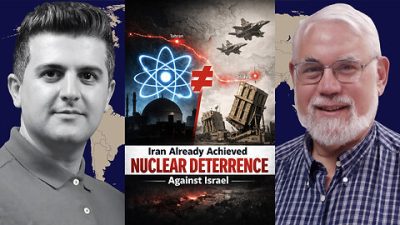
Prof. Ted Postol: Iran Already Achieved Nuclear Deterrence Against Israel
or go to
Aletho News Archives – Video-Images
From the Archives
How the occupied mentality syndrome works
Saudi Arabia on the American chessboard – Part 3
By B. J. Sabri | American Herald Tribune | June 27, 2016
Read part 2: “The occupied mentality Syndrome“
Previously I argued whether Saudi Arabia’s repeated involvements in U.S. interventions and wars stem from free national will or in response to a specific condition. For starters, in Saudi Arabia there is no national will. In Saudi Arabia, the national will is the will of the Al Saud clan. Still, when a major Arab state allies itself with a superpower that committed unspeakable crimes against humanity in almost every Arab country, then something is wrong. This fact alone should compel us to examine the U.S.-Saudi relation for one exceptional reason. As a result of the U.S.-Saudi wars, hundreds of thousands of people in Afghanistan, Iraq, Iran, Libya, Syria, Yemen, and Somalia have lost their lives. Millions became displaced in their own homelands. And millions more rendered refugees.
Attributing the Saudi policies to the bonds of “partnership” with the U.S. is frivolous. There are no bonds between these two thugs except those of business, military deals, secret plots, and wars. Proving this point, bonds such as these have no space for the American and Saudi peoples to share significant cultural or societal exchanges. If partnership is not the reason for the Saudi contribution to the U.S. strategy of empire and imperialism, then another reason must exist.
This leads to three possibilities. … continue
Blog Roll
 Aletho News
- Al Mayadeen voices solidarity with Dr. Marandi amid death threats
- US dismantling international law in its war against Iran while claiming ‘false’ victory: Legal scholar
- One martyr, 5 injuries in US attack on Iraqi border crossing with Iran
- ‘This war is Israel’s war’: World facing ‘security breakdown’, says Qalibaf
- IRGC decries attack on US embassy in Riyadh, says executed by ‘Israel’
- Iran blasts EU hypocrisy as EU invokes international law over Hormuz
- There is no military solution to Strait of Hormuz
- NATO’s structural collapse – the outcome of deviation from reality
- Poll finds world views China better than US
- One Of America’s Leading Neo-Cons Has Turned Against The Iran War And Israel
- If Americans Knew
- US loses planes over Iran, Israel downgrades Lebanon war goals – Daily Update
- Israel Is Blocking Palestinians from Easter at Church Where Jesus Resurrected
- Plot to assassinate Palestinian activist follows harassment campaign promoted by Zionist groups and elected officials
- Prominent New York synagogue hosts presentation on why U.S. Jews should support the ethnic cleansing of Gaza
- Tapper vs. Piker: Is the CNN Anchor Auditioning for David Ellison?
- Shouldn’t Democrats Be Able to Condemn Genocide?
- Israel-US kill negotiators, destroy civilian structures, but Iran’s military capabilities still largely intact – Daily Update
- ‘War crime’: Global condemnation as Israeli ministers celebrate death penalty law targeting Palestinian prisoners
- 7 Ways Israel Is Turning Lebanon Into Gaza
- World’s Leading Football Bodies Under Fire Over Israel Policies
- No Tricks Zone
- An Inconvenient Tree: Uncovered In Alps… Europe Much Warmer Than Today 6000 Years Ago
- New Study Reports A 60% Slowdown In Greenland’s Ice Loss Rate In The Last Decade
- Low Intensity Tornado Wrecks Major Solar Farm, Creating A Potential Toxic Dump
- New Study Finds Warming Saves Lives…Cold Temperatures 12 Times More Deadly Than Excess Heat
- German Science Blog Accuses PIK Climate Institute Of Hallucinating Climate Tipping Points
- Devastating Assessment Of Comirnaty Vaccine By Former Senior Pfizer Europe Toxicologist
- New Study: CO2 Is ‘Effectively Negligible’ As An Explanatory Climate Change Factor Since 2000
- Former Pfizer Toxicologist Dr. Helmut Sterz Tells Bundestag Hearing Pfizer Vaccine Should Have Never Been Approved
- Energy Expert: Germany’s Nuclear Phaseout Was A “500 Billion Euro Mistake”
- New Research: South Australia’s Mid-Holocene Sea Surface Temperatures Were 4°C Warmer Than Today
 Aletho News