Mossad-linked Israeli law firm loses anti-BDS case in US labour tribunal
MEMO | January 24, 2016
An Israeli law firm with links to Mossad has lost a case it brought against the United Electrical, Radio and Machine Workers of America (UE), after the trade union endorsed the Boycott, Divestment and Sanctions (BDS) movement at its national convention in August 2015.
A report on the UE website states that, on January 12, the National Labor Relations Board dismissed an unfair labour practice charge brought by Shurat HaDin. UE, an independent union representing some 35,000 workers in a manufacturing, public sector and private non-profit sector jobs, was the first national US union to endorse BDS.
The Israeli law firm had filed the charge on October 13, alleging that UE’s resolution violated the prohibition in US labour law against ‘secondary boycotts’. UE, meanwhile, argued that “Shurat Hadin’s action was an attempt to interfere with the First Amendment rights of the union and its members to express opinions on political and international issues.”
Responding to the decision by the National Labor Relations Board, an independent agency of the US government, UE National President Peter Knowlton said that the union had “withstood attempts by the US government to silence us during the McCarthy era in the 1950s,” and was “unbowed by the latest attempt of a surrogate of the Israeli government to stifle our call for justice for Palestinian and Israeli workers.”
He added: “The NLRB’s decision is a victory for the growing BDS movement across the US, which faces increasing political attempts to silence and intimidate critics of the Israeli government. As Americans who have a constitutional right to criticize our own government, we certainly have a right to criticize and, if we choose, boycott a foreign government that is heavily subsidized by US taxpayers.”
Shurat HaDin, in the words of the UE report, “is an Israeli organization that uses legal cases to harass supporters of Palestinian rights and critics of Israel.” Its director has “privately admitted to taking direction from the Israeli government over which cases to pursue.”
According to one Israeli journalist, Shurat HaDin “files lawsuits at the behest of the Israeli government”, yet still “dares to define itself as a ‘human rights organisation’.” The firm’s track record of failure includes a lawsuit against Jimmy Carter, and an ‘anti-discrimination’ case brought against a pro-boycott Australian academic.
Israeli forces detain Palestinian lawmaker, former minister in Hebron
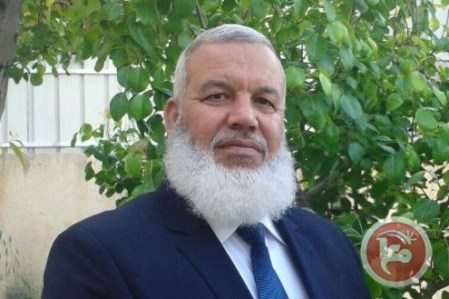
Palestinian security sources said Israeli forces detained Hatim Qafisha, a Hamas-affiliated member of the PLO’s Palestinian Legislative Council, from his home. (MaanImages)
Ma’an – January 24, 2016
HEBRON – Israeli forces detained at least six Palestinians, including a Palestinian lawmaker and a former Palestinian Authority minister, from their homes in the southern occupied West Bank district of Hebron overnight Sunday, Palestinian and Israeli sources told Ma’an.
Palestinian security sources said Israeli forces detained Hatim Qafisha, a Hamas-affiliated member of the PLO’s Palestinian Legislative Council, from his home in the Wadi al-Hariyya neighborhood of Hebron city.
Security sources added that unidentified assailants set fire to Qafisha’s private vehicle after he had been detained and Israeli forces had left the area.
Israeli forces also raided the Nimra neighborhood around dawn and detained Issa al-Jaabari, who served as the PA’s Minister of Local Governance in 2006.
Sources said Israeli forces blew the front doors off of al-Jaabari’s home before raiding the dwelling and detaining the former minister.
Furthermore, Israeli forces carried out a predawn raids in the al-Sheikh neighborhood of Hebron city and detained a former prisoner identified as Ibrahim Jamil Hassan after ransacking his home, along with several others in the neighborhood.
An Israeli army spokesperson did not confirm specific detentions, but said Israeli forces detained four Palestinians in Hebron city, all of which were reportedly detained for being “Hamas operatives.” The spokesperson added that two more Palestinians were detained in areas north and west of the city.
Israel to allow settler takeover of Palestinian homes in Al-Khalil

MEMO | January 24, 2016
Israeli Prime Minister Benjamin Netanyahu on Sunday gave his support to a group of Jewish settlers who were filmed forcefully taking over Palestinian homes in the city of Hebron (Al-Khalil) in the Israeli-occupied West Bank.
Though Israeli border police removed the settlers from the homes on Friday, Netanyahu on Sunday confirmed that they would be allowed to move into the structures once paperwork for their purported “secret purchase” was complete.
“The government supports the settlements, especially in days like these, when they are under terror attacks,” Netanyahu declared at a weekly cabinet meeting, referring to heightened levels of violence in Hebron.
“The moment that the purchase process [for the confiscated homes] is authorized, we will allow the [settlers to take possession] of the two houses in Hebron,” he added.
Earlier Sunday, local media quoted an Israeli Radio report that the settlers were negotiating with the government for ownership of at least one of the homes and assurances that none of the entryways faced Palestinian neighbours.
On Thursday, a widely-circulated video showed dozens of Israeli settlers forcing open two Palestinian homes in Hebron, drawing the ire of many Palestinians.
The West Bank city is notorious for its heavy Israeli military presence due to long-running tensions between Palestinians and Jewish settlers, who – unlike in most other cities – live in close proximity to one another.
Hebron has been at the epicenter of a months-long wave of violence that has seen more than 160 Palestinians – along with 29 Israelis or foreigners – killed since October 1 of last year.
Read:
Settlers seize a house near Ibrahimi Mosque in Hebron
Israel razes EU-built West Bank humanitarian buildings, announces land grab
Israeli Rabbi Calls for Execution of Palestinians
“We must eradicate this evil from within our midst”
IMEMC News & Agencies | January 24, 2016
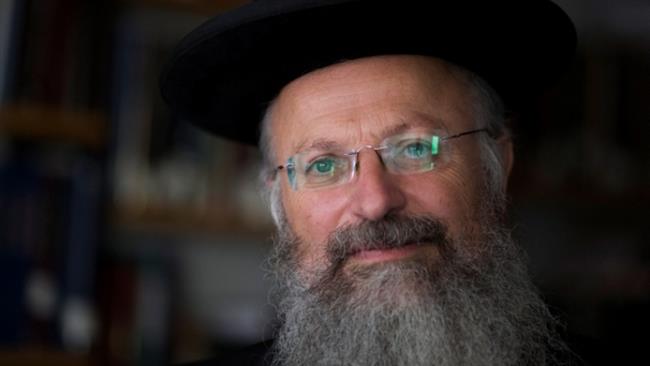
Chief Israeli Rabbi Shmuel Eliyahu announced Tuesday, on Facebook, that Palestinians should be executed in order to establish safety in Israel.
“Israeli army has to stop arresting Palestinians,” he posted on his Facebook wall, “but, it must execute them and leave no one alive.”
According to the PNN, Eliyahu is well known for his racist behavior and controversial statements about Arabs and Muslims. He has been calling on the government to carry out state-sanctioned revenge against Arabs in order to, in his words, “restore Israel’s deterrence.”
The hard-right wing and bloodthirsty Chief Rabbi of Safed, and also a member of the Chief Rabbinate Council additionally declared that the Palestinians are the enemy of the Israeli occupation state and they “must be destroyed and crushed in order to end violence.”
In 2007, according to the Jerusalem Post, Eliyahu was quoted saying that “If they don’t stop after we kill 100, then we must kill a thousand. And if they do not stop after 1,000 then we must kill 10,000. If they still don’t stop we must kill 100.000, even a million.”
In 2012, Eliyahu was charged for racist statements. Among these were, according to Israel national news: “The Arab culture is very cruel,” and “The Arabs behave according to different codes, and violent norms that have turned into ideology.”
The rabbi allegedly stated that examples of this new Arab “ideology” now include stealing farm equipment from Jews and blackmailing farmers for protection against thefts. He also supposedly said that “the minute you make room for Arabs among Jews, it takes five minutes before they start to do whatever they want.” The justice ministry dropped the charges because the statements ‘may’ have been altered by reporters.
The Jerusalem Post reported him saying: “Should we leave them alive in order to then free them in another gesture to Palestinian Authority President Mahmoud Abbas? The fact that they still have a desire to commit terrorist attacks shows that we are not operating strongly enough,” he said.
Explaining more about his fatwa, Eliyahu wrote, on his facebook, page that “the Israel Police officers who do keep terrorist Palestinians alive should be prosecuted under the law.”
He went on: “We must not allow a Palestinian to survive after he was arrested. If you leave him alive, there is a fear that he will be released and kill other people.” He added: “We must eradicate this evil from within our midst.”
Also of interest: 2015: 130 Palestinians Detained for Social Media Posts
Yemen’s Plight and Britain’s “Creative Clout”
Arms Sales and Advice on Killing
By Felicity Arbuthnot | Dissident Voice | January 23, 2016
Today, I want to speak about the once-in-a-generation chance we have, together, to improve the way we enhance the cause of human rights, freedom and dignity.
— David Cameron. Speech on the European Court of Human Rights, January 25. 2012
In June of 2014, speaking in his official residence,10 Downing Street, Prime Minister David Cameron gave a speech on business:
“Britain has huge creative clout around the world … From Asia to America, they’re dancing to our music, watching our films and wearing our designers’ latest creations”, he trilled.
He omitted to say “and dying under our bombs.”
In December, United Nations High Commissioner for Human Rights, Prince Zeid Ra’ad Al-Hussein warned, regarding the Saudi-led bombing of Yemen:
I have observed with extreme concern the continuation of heavy shelling from the ground and the air in areas with high a concentration of civilians as well as the perpetuation of the destruction of civilian infrastructure – in particular hospitals and schools …
Yemen’s Ministry of Education’s data shows more than 1,000 schools inoperable, 254 completely destroyed, 608 partially damaged and 421 being used as shelter by those displaced by the Saudi-led, UK-assisted onslaught. Some destroyed schools were attacked repeatedly. Thus they were not errors, or that obscene US dreamt up whitewash for atrocities: “collateral damage.” The US also supplies “intelligence” for air strikes.
Three Medecines Sans Frontier medical facilities have also been destroyed and this month the Noor Center for the Blind was hit – twice. Abdullah Ahmed Banyan, a patient, said:
People with disabilities are being struck in their residence. Around 1.30 am, two missiles hit the live-in quarters of a home for the blind. Can you imagine they are striking the blind? What is this criminality? Why? Is it the blind that are fighting the war?
As in Afghanistan and Iraq, those other favourite targets of the US, UK and their allies, wedding parties, have again become victims. One gathering in two large tents bombed last September, killed thirty eight people. Another wedding celebration attack reportedly killed one hundred and thirty. In the country’s capitol, Sanaa a wedding party hall was also destroyed – what is this criminal obsession about weddings? The Chamber of Commerce was also destroyed.
Definition of war crimes include “intentionally directing attacks against buildings dedicated to religion, education, art, science or charitable purposes, historic monuments, hospitals and places where the sick and wounded are collected …” and “attacking or bombarding, by whatever means, towns, villages, dwellings or buildings which are undefended and which are not military objectives.”
None of which deters the UK from joining in. Foreign Secretary Philip Hammond has confirmed to Parliament that UK troops are helping the Saudi military identify targets. He said there had been “no evidence of deliberate breach of international humanitarian law.” He clearly has not bothered to do the research.
There is worse. Apart from aiding and abetting potential war crimes, the British government is profiting in eye watering sums from the human misery, deaths and destruction with arms sales to Saudi Arabia increasing by 11,000 percent in one three month period alone.
In spite of the United Nations stating that civilians are being disproportionately killed in Yemen, in just one three month period last year arms sales rose to over one Billion £s, up from a mere nine million £s from the previous three months.
The exact figure for British arms export licences from July to September 2015 was £1,066,216,510 in so-called “ML4” export licences, which relate to bombs, missiles, rockets, and components of those items.
Angus Robertson, Leader of the Scottish National Party in Parliament, is outraged, accusing during Prime Minister’s Questions this week, that:
Thousands of civilians have been killed in Yemen, including a large number by the Saudi air force and they’ve done that using British-built planes, with pilots who are trained by British instructors, dropping British-made bombs, who are coordinated by the Saudis in the presence of British military advisors.
Isn’t it time for the Prime Minister to admit that Britain is effectively taking part in a war in Yemen that is costing thousands of civilians lives and he has not sought parliamentary approval to do this? (Independent, January 20th, 2016. Emphasis added.)
Allan Hogarth for Amnesty International again confirmed that British advisors are “… actually located in the Saudi control room.”
David Cameron waffled inadequately with dismissive arrogance and supreme economy with the truth, that Britain was insuring that “… the norms of humanitarian law” were obeyed. Comments redundant.
Two days ago at Yemen’s Ras Isa port on the Red Sea, an oil storage facility was hit killing five people. The attack destroyed the part of the compound used to load tanker trucks with refined products for domestic distribution. So now a people, many of whom the UN has warned are facing near starvation, will face further shortages to cook what little they have and to heat
So much for Cameron’s vow to “improve the way we enhance the cause of human rights, freedom and dignity.”
MSF paramedic, civilian first responders killed in Saudi double-tap airstrike in Yemen
RT | January 22, 2016
Almost two dozen people, including civilian rescuers and an ambulance driver from an MSF-affiliated hospital, have reportedly been killed after Saudi-led coalition planes carried out repeated airstrikes on the same target in Sa’ada province, Yemen.
Médecins Sans Frontières (MSF) confirmed the fatal air raids in Sa’ada, saying the “planes went back to bomb areas already hit.”
“An ambulance driver from an MSF hospital [was] killed,” the NGO wrote, explaining that the first responders at the scene had been trying to help those wounded in the first round of strikes.
The ambulance had just picked up the victims when a direct strike killed everyone inside it, said the director of the Jumhuriya Hospital in Sa’ada province, according to the New York Times.
Yemen’s Health Ministry has strongly condemned the coalition’s actions as a “heinous massacre” that first targeted a residential building in Sa’ada, Saba news agency reports, citing ministry spokesperson Dr. Nashwan Attab.
According to reports, at least 20 people were killed and another 35 wounded, in what the medics claim was a deliberate attack. Following the initial air raid in the Dhahyan district of Sa’ada, first responders rushed to the scene to care for the wounded. But the planes soon returned to strike again in an attempt to “completely eliminate the few remaining medical staff in the province,” Dr. Attab said.
WARNING! DISTURBING VIDEO, VIEWER DISCRETION IS ADVISED!
“There are still people under the rubble and it is difficult to get them as a result of targeting by Saudi aggression of paramedics and medical personnel in the region,” he added.
Earlier this week, MSF said that the Saudi coalition continues to engage civilian targets on the ground, in particular medical treatment facilities, noting that over 100 hospitals have witnessed attacks since the Saudi-led intervention began last March.
The constant bombing of health clinics in Yemen has created conditions in which locals fear for their lives and try to avoid hospitals at all costs, MSF said. The United Nations has criticized the Saudi-led bombing campaign in Yemen for the disproportionate number of civilian deaths and the destruction of infrastructure.
The UN estimates that the violence has resulted in a dramatic increase in civilian casualties, with more than 5,800 people killed in Yemen since March.
READ MORE:
Yemeni hospitals seen as targets, people ‘avoid them as much as possible’ – MSF
Russia, US agree to have 2 rebel delegations at Syria peace talks – reports
RT | January 24, 2016
Moscow and Washington are close to reaching a compromise on the participants of the Syria peace talks set to start next week. Two separate Syrian opposition delegations are expected to be invited to the negotiations in Geneva, according to media reports.
United Nations-sponsored negotiations between the Syrian government and the opposition have already been postponed over disagreements between the US and Russia, which could not reach agreement on which opposition groups should be represented. The talks are being arranged to try to bring an end to Syria’s five-year civil war.
Washington supports the participation of the Saudi-backed Islamist militia Jaysh al-Islam (Army of Islam) – something Moscow has strongly objected to. Russia insists that political figures it deems more moderate, such as Qadri Jamil, a former Syrian deputy prime minister, and Saleh Muslim, co-head of the Syrian Kurdish group PYD, should join the negotiations, Kommersant daily reported Saturday.
A compromise has allegedly now been reached, however, with Moscow agreeing to the presence of Jaysh al-Islam at the talks. In return, Washington will not object to a separate Syrian opposition delegation being invited, Bloomberg reports, citing three Western and UN diplomats who spoke on condition of anonymity.
The ‘main’ opposition delegation was rubber-stamped in the Saudi capital Riyadh in December, and represents opposition groups sponsored by Saudi Arabia and the West.
Staffan de Mistura, the UN special envoy for Syria, is now likely to send invitations to two opposition groups – one proposed by Washington, another recommended by Moscow.
“We are confident that with good initiative in the next day or so, those talks can get going,” US Secretary of State John Kerry told reporters on Saturday in Riyadh, where he has been seeking a deal on the Syria talks.
De Mistura is expected to elaborate on the latest details of the peace process at a press-briefing in Geneva on Monday, his spokeswoman Jessy Chahine said.
Russian Foreign Ministry spokeswoman Maria Zakharova made no comments in a press conference on Friday regarding which opposition groups will attend the talks in Geneva.
The nations assisting the Syria peace talks have reached an agreement to form a transitional government in Syria by mid-2016, with an aim to hold elections in 2017. According to Russian and Western diplomats, Moscow has managed to shutter Washington’s previously indispensable prerequisite that Bashar Assad must leave his presidential post before the transition process can start.
Moscow has always insisted that it is up to the Syrian people to decide whether President Assad should stay or go, and the participation of the acting president in the next elections remains on the table.
At the moment there are two anti-Islamic State (IS, formerly ISIS/ISIL) coalitions operating in Syria – one headed by the US, the other by Russia.
The Russian military’s air operation against IS in Syria began four months ago, and has significantly disrupted terrorist communications and supply routes. Islamic State’s illegal trafficking of stolen Syrian and Iraqi oil has been crippled to such an extent that the terrorists have been forced to compensate the shortfall in profits by increasing taxes, cutting salaries to militants and attempting to take drug production in Afghanistan under its control.
The Syrian Army loyal to President Assad is also conducting an offensive on terrorist positions, and has liberated a number of settlements. The spearhead of the assault is directed against the borders with Turkey and Jordan, in order to cut terrorist supply routes and prevent reinforcements from abroad from infiltrating Syria.
Turkey ‘threatens to withdraw’ from Syria talks over Syrian Kurds
RT | January 23, 2016
Ankara may boycott the upcoming Syria talks in Switzerland if Syrian Kurds are invited, media reports said, citing UN sources. Earlier, Turkey said their support for the peace process can only be ensured if there is no “representation of terrorist groups around the table.”
Turkey has privately warned that it might pull out from the Geneva talks now scheduled for January 25 if Saudi-backed Kurds and related parties are present, Foreign Policy reported Saturday citing UN-based officials.
Ankara is unwilling to cooperate with Syria’s Democratic Union Party (PYD) and its affiliate People’s Protection Units (YPG) since these leftist movements are allegedly linked to the Kurdistan Workers’ Party (PKK), which is considered a terrorist organization by Turkey.
The conflict between the Turkish government and Kurdish insurgent groups demanding greater autonomy for the large ethnic group has been going on for decades. With several failed ceasefires between the sides, Ankara has been blamed for putting civilians lives in Turkey’s mainly Kurdish southeast at risk by a number of international human rights groups.
Earlier this week, President Erdogan reaffirmed his unwillingness to search for a peaceful solution to the conflict, saying that “those with guns in their hands and those who support them will pay the price of treason,” meaning the Kurdish militants who are considered terrorists by the government.
Apart from Turkey, the historical Kurdistan region also includes territories in Iran, Iraq and northern Syria, where Kurdish fighters have proved to be some of the most effective forces in helping to combat Islamic State (IS, formerly ISIS/ISIL). Still Ankara believes that struggling against IS “does not grant them legitimacy,” according to the Turkish Prime Minister Ahmet Davutoglu. Turkey has carried out several attacks on Kurdish forces in northern Syria.
Moreover, Davutoglu accused Russia of as much as compromising Geneva talks by inviting the representatives of YPG – Syrian Kurdish forces – to join the peace process.
“Some circles, including Russia, want to spoil the opposition side, putting some other elements in the opposition side like the YPG, which has been collaborating with the regime and attacking the moderate opposition,” the PM said earlier this week.
“There should not be any representation of terrorist groups around the table,” he insisted.
Geneva talks on the Syrian crisis have recently become a bone of contention between international negotiators: the key issue is who would attend.
A resolution providing for the beginning of talks between the Syrian government and opposition groups was adopted by the UN Security Council in December. Scheduled to take place in Switzerland in January, the talks became known as Geneva III (Geneva II happened in January 2014), and are aimed at finding a solution to end the Syrian civil war, which has been ongoing in the country since 2011, with IS gaining strength in the region. While a number of countries, including Russia, the US, Saudi Arabia, Iran and Turkey are backing the peace talks, there is no apparent agreement on who should represent the Syrian opposition, and which fighting groups should be excluded for being proclaimed “terrorists.”
Turkey wouldn’t welcome a Kurdish presence at the talks. However, the US government still believes there is hope of changing Ankara’s opinion on the subject, according to Foreign Policy. Vice President Joe Biden arrived in Istanbul to discuss national security questions with the Turkish leaders on Saturday.
At the same time, US State Secretary John Kerry traveled to Riyadh in order to press Saudi officials to reconsider on a similar matter. Saudi Arabia previously threatened to boycott Geneva talks if certain pro-regime Syrian groups allegedly backed by Russia and Egypt were invited. In their turn, the opposition representatives urged UN special envoy Staffan de Mistura in a letter to disqualify Riyadh from peace talks as it was picking delegates for its own delegation talks “under obscure conditions,” Russia’s Sputnik agency reported.
As a result, de Mistura, responsible for issuing the invitations to the talks, accused a few states of jeopardizing the peace process by insisting that their opposing faction is more important than others.
“I would expect all sides to recognize my mandated responsibility to finalize a list of invitees to the process, to include all those I deem appropriate,” de Mistura reportedly said at a private UN briefing on January 18.
Russia and the US still hope that the talks will eventually take place on January 25. Foreign Minister Sergey Lavrov and State Secretary John Kerry had a phone talk on Saturday to discuss arrangements for the Geneva meeting, Russian foreign authority said. Both officials agreed that the International Syria Support Group format might be useful for holding further peace talks on Syria.
Israeli sniper shoots Canadian citizen in West Bank
American Herald Tribune | January 21, 2016
In describing what she calls a lack of symmetry in recent escalations in Israel and the West Bank, Canadian-Palestinian artist and PhD student Rehab Nazzal told The Real News, “You have the Israeli occupation forces armed with all forms of weapons, and you have the youth, mainly the youth in their 20s, mostly they were born during what’s called, between quotations, the peace process.”
Nazzal is describing Palestinians born during the Oslo Accord negotiations of the 1990s, who have been protesting across Israel, the occupied West Bank and Gaza since the summer–and suffering for it.
Since 1 October 2015, 155 Palestinians have been killed by Israeli forces. 24 Israelis have been also been killed, many in stabbing or car ramming attacks.
Nazzal was photographing an Israeli skunk truck in the West Bank–an armored crowd control vehicle that shoots putrid water–when an Israeli sniper shot and wounded her on 11 December, 2015. Medics were prevented from attending to her because rounds of teargas were shot consecutively at them by Israeli forces.
She is recovering still in the West Bank, and plans to continue her Canadian federal government research council-funded research into “non-lethal” and crowd-control weapons.
Nazal contextualizes her shooting among the countless other shootings across the West Bank. “I am one of over 16,000 Palestinians who were injured during the past three months. Among these, over 6,000 with live bullets. Just yesterday, here in my neighborhood where I am now, there were tens of Palestinians who were injured, one seriously with live bullets, and one was killed. He was shot in the chest and was killed yesterday. Today was his funeral. And the city is just buried with tear gas and all forms of aggression,” she said.
She continues to speak about the inequity of aggression between Palestinian youths throwing stones and Israeli forces quelling the demonstrations with live bullets and the inability of nations–even her own nation–to act. “It’s very difficult. And the worst part of it, that the world is silent.”
According to Nazzal’s lawyer Dimitri Lascaris, there is little legal recourse to take because of “something called a State Unity Pact, which effectively bars a lawsuit against the government of Israel or any other government for human rights violations,” Lascaris said, clarifying that he is referring to the Canadian courts. He adds that what is “appalling about this law is that it does not provide immunity for states when they engage in commercial activities. But they could commit crimes against humanity, war crimes, you know, some of the most heinous offenses under international human rights law, and they’re completely immune from suit in the domestic courts of our country.”
Nazzal and Lascaris do intend to painstakingly document the event of Nazzal’s shooting, and in particular the impediment of medics by Israeli forces. And using political power, Lascaris said, “we’re going to call upon the government of Justin Trudeau to fulfill its promise of a more principled foreign policy than the predecessor Harper government, which was absolutely and unequivocally committed to supporting the government of Israel, no matter what atrocities it committed.”
As yet, the new Canadian prime minister Justin Trudeau has not provided a statement of support for the Palestinian struggle and continues to remain a close ally of Israel.
Trudeau is also principally opposed to the Boycott, Divestment and Sanctions movement, a Palestinian civil society-led grassroots movement to call on companies to end their complicity with the Israeli occupation.
Nazzal describes her disappointment with the Canadian government’s lack of response–she is a Canadian citizen–as well as the lack of response from the Canadian ambassador to Israel.
“Not even a condemnation to what happened… If we suppose that the Israeli soldiers don’t know I am a researcher doing work, but I am an unarmed civilian and standing away, far from protesters, even this, we haven’t heard any word… from the Canadian ambassador in Israel or the foreign minister.
Which brings that hypocrisy to our human rights violations in other countries. Why, why Israel is not being questioned. I am, again, a Canadian citizen. I have my career, my children there. I have my life there. Yeah, I am just in disbelief, as well.”
Turkey vs ISIS: Where’s the new caliphate now? Part II
By Eric Walberg | American Herald Tribune | January 22, 2016
In Part I, Erdogan’s mounting dilemmas—ISIS terrorism, Kurdish resistance, Assad’s Syria alive and well—showed how his bid for regional hegemony has gone awry. His pact with the ISIS devil, as long as they target Kurds, just made things worse. Davutoglu’s dream of a “common history and a common future” for the Middle East under Turkish guidance is now in history’s dustbin. The Turkish plan for a “global, political, economic and cultural new order” in the Middle East remains in the hands of the US and, of course, Israel.
Israeli rationale
Israel has been noncommittal about Syria since the uprising in 2011, not joining the western chorus for Assad’s head. Israeli indifference to the outcome can be explained easily enough. First, Israeli public support for anyone would be a kiss of death for the beloved. On the other hand, the Assads have been the biggest thorn in Israel’s side since 1971 when Hafiz Assad consolidated power, and Israel would be delighted to see the last of Bashar. But Israel was worried about what might emerge from a post-Assad Islamic state.
With Israeli Justice Minister Ayelet Shaked’s bold call for an independent Kurdish state, a radical new claim for regional hegemony is unfolding, not by a neo-Ottoman Turkey, but by the Jewish state. “We must openly call for the establishment of a Kurdish state that separates Iran from Turkey, one which will be friendly towards Israel,” Shaked told the Institute for National Security Studies conference in Tel Aviv. This sounds novel, but it really only reflects age-old plans for a Jewish state to control the Middle East which have been on the drawing board since Lord Shaftesbury first made it a British imperial objective in 1839. 1948 got the project off to a savage start, 1967 added the entire Holy Land to the map, and let the settler state move into high gear.
The Yinon Doctrine of 1980 set out how to consolidate Israel’s theft, by playing various ethnic and religious forces among its Arab neighbors against each other—Maronite and Orthodox Christian, Sunni and Shia Muslim, Druze, etc—in order to undermine Arab nationalism, and keep the Middle East weak and unstable. In Syria, that even meant quietly supporting the Muslim Brotherhood during its ill-fated uprising in 1981, not because Israel wanted an Islamist Syria, but to keep the Syrian government off-balance.
Syria and Egypt fought a war with Israel in 1967. These secular nationalist governments were the big threat, and it was only natural to try and cripple them, even if that meant working with Islamists. After Egypt made peace with Israel in 1978, it had only Iraq, Syria and Iran as its main enemies—the Arab nationalism of the first two and the Persian nationalism in Iran had proved immune to Israeli intrigues.
Israeli ‘friendship’ with the Kurds is merely the ethnic variable in the Yinon formula. There have always been contacts with Iraqi Kurds, which went into high gear in 1991 when northern Iraq was made a ‘no-fly’ zone, allowing Israeli agents relative freedom. The US invasion of Iraq in 2003 fit the bill, though bungled by the dismantling of the Iraqi army, creating a bit too much Yinon for comfort.

Middle East borders, as reimagined by Lt. Col. (ret.) Ralph Peters (2006)
US-Israeli Plan B
When Israeli fears about what a post-Assad Syria might look like were proven justified, it was ready with plan B: a new, improved Yinon Doctrine, featuring the creation of a pro-Israeli Kurdish state, keeping Turkey, Iraq, Syria, and—what the hell—Iran off-base?
This has been plan B for US-Israel since at least 2006, when a plan for restructuring the Middle East published in the Armed Forces Journal in 2006 stated, “Iraq should have been divided into three smaller states immediately” creating a “Free Kurdistan” carved out of Turkey, Iran and Iraq, which “would be the most pro-western state between Bulgaria and Japan.” The Saban Center for Middle East Policy issued a similar policy recommendation in 2007, and in 2008, Joseph Biden, Obama’s future vice president, also called for the partition of Iraq into three autonomous regions.
Israel gets it right (for the wrong reasons)
ISIS and Turkey came to the rescue with their own wild schemes, leaving the Kurds as “the only ones fighting ISIS as their highest priority,” as Yadlin told the Israeli security conference. “We Kurds and Jews have a long history. The 20 million Kurds who didn’t get a state [at the Treaty of Versailles], and nobody takes care about them. They are the only ones fighting ISIS as their highest priority.”
Every one of Erdogan’s moves has backfired. He flip-flopped on Libya and Syria. He turned a blind eye on ISIS. He stubbornly continues a policy of oppression against the Kurds. He abruptly broke relations with Israel in 2011 over Israel’s killing of nine Turkish peace activists. But it’s better to at least speak with your enemy. Israel wouldn’t have been quite so bold about advocating a Kurdish state if it realized that it would forfeit a working relationship with Turkey. But there is nothing to lose now.
Like Turkey these days, Israel is also running out of friends, and this call for an independent Kurdistan is really a rather far-fetched plan to establish at least one Muslim ally for the Jews. The travail of Turkish Kurds (20 million, 20% of the population) is well known. They are not allowed to speak Kurdish or have Kurdish names, let alone Kurdish language education.
In comparison, Iraqi Kurds (7 million, 20%) live a privileged life, with the ruling Kurdistan Democratic Party (KDP) in the autonomous government tilting towards Saudi Arabia, and its key rival, the Patriotic Union of Kurdistan (PUK), supporting the Iranian-led camp.
Kurds are culturally and linguistically so closely related to the Iranians, they are sometimes classified as an Iranian people. Of the more than 6 million Iranian Kurds (9% of the population), a significant portion are Shia. There are tensions in Iran, as the majority of Kurds are Sunni, but the strong Iranian roots of Kurds culturally and linguistically, and the lack of the suppression of their culture, language and political rights, mean there is no strong movement for independence.
There is a silver lining in the Israeli chutzpah in reviving Plan B. No major Kurdish faction calls for the Yinon plan for independence, even among Iraqi Kurds. Why bother when you already have virtual independence now? Syrian Kurds also have de facto autonomy as a result of western bungling. They won’t be stuffed back into a one-size-fits-all Syria. Iranian Kurds are just getting on with life. Turkish Kurds would love to just have basic human rights in their Turkish state. Erdogan could undercut Israel’s latest wild plan easily by using his still robust political power to push for a genuine peace deal with his Kurds.
Featured Video
Prof. Ted Postol: Iran Already Achieved Nuclear Deterrence Against Israel
or go to
Aletho News Archives – Video-Images
From the Archives
How the occupied mentality syndrome works
Saudi Arabia on the American chessboard – Part 3
By B. J. Sabri | American Herald Tribune | June 27, 2016
Read part 2: “The occupied mentality Syndrome“
Previously I argued whether Saudi Arabia’s repeated involvements in U.S. interventions and wars stem from free national will or in response to a specific condition. For starters, in Saudi Arabia there is no national will. In Saudi Arabia, the national will is the will of the Al Saud clan. Still, when a major Arab state allies itself with a superpower that committed unspeakable crimes against humanity in almost every Arab country, then something is wrong. This fact alone should compel us to examine the U.S.-Saudi relation for one exceptional reason. As a result of the U.S.-Saudi wars, hundreds of thousands of people in Afghanistan, Iraq, Iran, Libya, Syria, Yemen, and Somalia have lost their lives. Millions became displaced in their own homelands. And millions more rendered refugees.
Attributing the Saudi policies to the bonds of “partnership” with the U.S. is frivolous. There are no bonds between these two thugs except those of business, military deals, secret plots, and wars. Proving this point, bonds such as these have no space for the American and Saudi peoples to share significant cultural or societal exchanges. If partnership is not the reason for the Saudi contribution to the U.S. strategy of empire and imperialism, then another reason must exist.
This leads to three possibilities. … continue
Blog Roll
 Aletho News
- Hezbollah hits Israeli warship off Lebanon’s coast, sets it aflame
- Iran slams US strikes on B1 bridge, Mahshahr petrochemical plants as ‘blatant acts of state terrorism’
- In letter to UN chief, Araghchi warns of dire consequences of US-Israeli attacks on Iran’s nuclear facilities
- Why the CIA conspiracy to invade Iran with Kurdish militias failed
- Why Are Upbeat US Claims About Mission to Rescue Pilot ‘Highly Questionable’?
- Aircraft destroyed during US ‘rescue’ of downed F-15 pilot cost more than $100 million each
- Washington University removes professor who condemned US-Israeli war on Iran
- Russia Warns of Retaliation as UK Authorizes Seizure of Vessels
- Serbia thwarts plot to bomb Russia-Hungary gas pipeline – Vucic
- Al Mayadeen voices solidarity with Dr. Marandi amid death threats
- If Americans Knew
- In Iran, Israel-US take aim at “reason, research, and freedom of thought” – Daily Update
- US loses planes over Iran, Israel downgrades Lebanon war goals – Daily Update
- Israel Is Blocking Palestinians from Easter at Church Where Jesus Resurrected
- Plot to assassinate Palestinian activist follows harassment campaign promoted by Zionist groups and elected officials
- Prominent New York synagogue hosts presentation on why U.S. Jews should support the ethnic cleansing of Gaza
- Tapper vs. Piker: Is the CNN Anchor Auditioning for David Ellison?
- Shouldn’t Democrats Be Able to Condemn Genocide?
- Israel-US kill negotiators, destroy civilian structures, but Iran’s military capabilities still largely intact – Daily Update
- ‘War crime’: Global condemnation as Israeli ministers celebrate death penalty law targeting Palestinian prisoners
- 7 Ways Israel Is Turning Lebanon Into Gaza
- No Tricks Zone
- An Inconvenient Tree: Uncovered In Alps… Europe Much Warmer Than Today 6000 Years Ago
- New Study Reports A 60% Slowdown In Greenland’s Ice Loss Rate In The Last Decade
- Low Intensity Tornado Wrecks Major Solar Farm, Creating A Potential Toxic Dump
- New Study Finds Warming Saves Lives…Cold Temperatures 12 Times More Deadly Than Excess Heat
- German Science Blog Accuses PIK Climate Institute Of Hallucinating Climate Tipping Points
- Devastating Assessment Of Comirnaty Vaccine By Former Senior Pfizer Europe Toxicologist
- New Study: CO2 Is ‘Effectively Negligible’ As An Explanatory Climate Change Factor Since 2000
- Former Pfizer Toxicologist Dr. Helmut Sterz Tells Bundestag Hearing Pfizer Vaccine Should Have Never Been Approved
- Energy Expert: Germany’s Nuclear Phaseout Was A “500 Billion Euro Mistake”
- New Research: South Australia’s Mid-Holocene Sea Surface Temperatures Were 4°C Warmer Than Today
 Aletho News