Turkey introduces draft law to strip ‘terrorist’ lawmakers of immunity
RT | April 13, 2016
Parliamentary critics of the ongoing crackdown on Kurdish militias, particularly members of the People’s Democratic Party (HDP), might be stripped of their immunity from prosecution over their “support to terrorism” under a draft proposal submitted by the Turkish government.
“Turkey is conducting its largest and most comprehensive fight ever against terror, while some lawmakers made statements giving support to terrorism before or after being elected, some gave de facto support and help and some lawmakers called for violence, which created great public disgust,” Thursday’s draft proposal said, according to Reuters.
All 316 lawmakers from Turkey’s ruling Justice and Development Party (AKP) reportedly signed the proposal. The collection of signatures was initiated last week in favor of an amendment to the Constitution’s Article 83 that reads “a deputy who is alleged to have committed an offence before or after election shall not be detained, interrogated, arrested or tried unless the General Assembly decides otherwise.”
Turkish President Tayyip Erdogan has repeatedly urged for the prosecution of his critics, generally from among the ranks of pro-Kurdish HDP members, accusing them of being a political umbrella for the Kurdistan Workers’ Party outlawed by Ankara. Intolerant to any public criticism of his policies, Erdogan even submitted a personal complaint against a German comedian for libel.
Meanwhile Prime Minister Ahmet Davutoğlu claimed that the move to strip MPs of their immunity is aimed at “so-called lawmakers who lend support to terror and terrorists,” in an apparent reference to HDP members.
Currently the third largest party in the parliament, the HDP grabbed 59 seats in last year’s election. At the same time more than half of roughly 550 parliamentary complaints urging for the revocation of immunity were filed against HDP members.
Lawmakers in Turkey are protected from prosecution, however back in 1994, amid the previous escalation of the conflict with Kurds, several opposition MPs were stripped of immunity, and four of them landed in jail for a decade.
The current military campaign began in mid-2015, after Ankara ended a two-year ceasefire agreement and revived a conflict that has claimed more than 40,000 lives since 1984. Since then, the operation has been condemned by European leaders and human rights organizations. RT also launched a petition urging the UN to investigate claims of alleged mass killing of Kurdish civilians.
Kurdish militants are fighting for the right to self-determination and greater autonomy for Kurds – demands which Ankara rejects. Since July, almost 400 soldiers and police and several thousand militants have been killed in the conflict, according to government figures. Opposition parties say up to 1,000 of those killed in the crackdown were Kurdish civilians.
European parliamentarians urge release, EU action on case of Khalida Jarrar

samidoun – Palestinian Prisoner Solidarity Network | April 12, 2016
23 Members of European Parliament directed a letter today, 12 April, to Federica Mogherini, High Representative of the European Union for Foreign Affairs, expressing their “great concern with the arrest, detention and sentencing of the Palestinian Legislative Council member Khalida Jarrar.” Jarrar, a prominent Palestinian leftist, feminist and advocate for political prisoners, is serving a 15-month term in Israeli prison; she was arrested on 2 April 2015.
The MEPs called on Mogherini to raise Jarrar’s case with the Israeli government and demand her immediate release, that the issue of Palestinian political prisoners is raised and investigated, and that the EU mission in Israel and future EU delegations visit Jarrar and fellow Palestinian prisoners.
Further, they raised the overall situation of Israeli military courts, which convict Palestinians at a rate of over 99%, the transfer of Palestinian prisoners inside Israel, and new legislation threatening heavy sentences for children and stone-throwers, as well as the legislation allowing force-feeding of hunger strikers.
The letter, signed by members of the Socialists & Democrats (S&D), European United Left/Nordic Green Left (GUE/NGL), Alliance of Liberals and Democrats for Europe (ALDE), Greens/European Free Alliance (Greens/EFA), and Europe for Freedom and Direct Democracy (EFDD) groups in the Parliament, highlighted the injustice of Israeli military courts and the nature of “prohibited organization” charges which deny Palestinian freedom of association and criminalize Palestinian politics. The letter discussed the nature of the charges against Jarrar, which focused on public political activity and speeches, and the use of alleged secret evidence to jail Jarrar and deny her bail.
Download letter here: Letter on Khalida Jarrar’s situation
Israel On a Rampage of Destruction In the West Bank
By Barbara Erickson | TimesWarp | April 12, 2016
Israeli bulldozers are tearing up Palestinian structures at a rapid pace this year, destroying more than 500 houses and other buildings and displacing more than 650 men, women and children in three short months. The demolition spree is outpacing last year’s rate by more than three to one, and monitoring groups are raising the alarm.
Representatives of the European Parliament have spoken out against the destruction, saying Israel is violating international law. The United Nations and the Israeli human rights group B’Tselem have issued several reports and called for a halt to the demolitions; even the U.S. state department has expressed “concern” over the campaign.
The New York Times, however, has given short shrift to this story, relegating it to wire service reports, which appear neither in print nor in the featured headlines of Middle East news on the website. Only readers who search the site for specific news about demolitions can read about the recent rampage of destruction taking place in the West Bank.
No Times reporter has found it worthwhile to visit Khirbet Tana, for instance, a herding community near Nablus. The Israeli army has carried out demolitions there four times since February of this year, most recently just this past week, when they destroyed tents, houses and animal shelters and confiscated a car, a tractor and a water tank.
Earlier, on March 2 the authorities demolished a two-room schoolhouse with its playground equipment and toilets (as well as nine homes, two tents, 16 animal shelters and one solar panel).
The Khirbet Tana school had been built in 2011 with funds donated by an Italian aid organization. According to the United Nations Office of Humanitarian Affairs, it was one of more than 100 structures “provided as humanitarian assistance to families in need,” which have been destroyed so far this year.
This has become a heated issue with many donor groups, including members of the European Parliament. After a recent EP delegation to Palestine, Irish parliamentarian Martina Anderson stated, “We are incensed by Israel’s increasing number of demolitions of humanitarian structures funded by EU taxpayers. People are losing their homes in the cold and the rain. Israeli policies violate international law and show disrespect for the EU, Israel’s biggest trade partner.”
Her words had no effect on Israeli authorities, who went on to bulldoze the school at Khirbet Tana two weeks later and then spent the next two days destroying structures in eight other communities.
Writer Amira Hass described this follow-up operation in the Israeli newspaper Haaretz: “The Israelis destroyed tents people were living in, huts, pens, herd enclosures, an access road (which makes it very hard to deliver humanitarian aid to the families), a two-kilometer pipe meant to provide water to 50 families in the area, storage facilities and a dairy. Some of the tents and the pipe were donated by international organizations. Fifty-nine people, including 28 minors, were left without a roof over their heads.”
As of April 4, according to the UN, Israel had destroyed 500 Palestinian structures and displaced 657 individuals this year, compared with 521 structures and 663 persons in all of 2015. As B’Tselem has noted, this is “an unusually massive demolition campaign.”
All this is disturbing enough, but the news that Israeli politicians are shamelessly pushing for continued destruction of the vulnerable herding communities is even more appalling. As Hass reports in Haaretz, Knesset members “have openly pressured Civil Administration officials to step up the demolitions and evict Palestinian communities from Area C.” They have also “demanded that the authorities destroy buildings that international organizations, particularly European ones, have donated.”
The Times, however, has little interest in exposing the illegal and inhumane actions of Israeli officials and the consequent suffering (and stubborn resilience) of vulnerable Palestinian families clinging to their land and livelihoods. To do so would expose the lie at the heart of the Israeli narrative—the claim that Israelis are the innocent victims of Palestinian terrorism.
The demolition campaign, however, reveals the helplessness of Palestinian communities, the cruelty of the occupation forces and the criminal actions of government officials. From the Times’ point of view it is all best left unsaid.
US Nuclear Rearmament Under Guise of World Peace
By Finian CUNNINGHAM – Strategic Culture Foundation – 12.04.2016
This week US Secretary of State John Kerry visited Hiroshima, where nearly 71 years ago the US dropped the first ever atomic weapon killing 140,000 people. It was the first visit by a senior American official to the Japanese city owing to immense sensitivity surrounding that notorious event.
However, the occasion this week was said to underscore US President Obama’s vision of a nuclear weapons free world, said Kerry’s State Department.
The Japanese government of Shinzo Abe also got some good public relations value out of Kerry’s landmark visit to the Hiroshima peace memorial. As Voice of America noted, the occasion «helps to soften its global image» as Abe’s government steps up its military posture in recent years.
Obama is due to go to Japan in May to attend a G7 summit. It is being mooted that he too may pay respects to Hiroshima victims of the US atomic bombing, which occurred on August 6, 1945.
By the time Obama arrives in Japan, a shipment of Japanese radioactive plutonium is due to land on the US east coast. The highly dangerous cargo of 331 kilograms of weapons-grade plutonium reportedly left Japan on March 22 onboard an armed ship as part of an agreement with the US to act as a depository for the radioactive material. The cargo is reportedly sufficient material for the production 50 nuclear warheads.
The two-month seaborne transfer is a highly classified matter, the itinerary kept secret for security reasons. It is reportedly the first major transport of weapons-grade material from Japan since 1992. The plutonium is intended to be disembarked at a nuclear facility in Savannah, South Carolina.
The intake of plutonium from Japan by the US is supposedly part of a 2010 accord between the US and Russia which calls on both parties to begin disposal of highly enriched plutonium for the purpose of aiding weapons non-proliferation. Both sides are obligated to dispose of 34 tons of weapons-grade plutonium. Notwithstanding, on the US side the commitment has been largely unfulfilled, according to Professor Peter Kuznick, director of the Nuclear Studies Institute at American University in Washington DC.
Kuznick «estimates that on Obama’s watch little more than a ton of nuclear materials has been removed», reported the Guardian. Kuznick even went as far as accusing the American president of espousing the «height of hypocrisy» in light of his famous speech in Prague 2009 when he pledged to rid the world of nuclear weapons, and for which he was awarded the Nobel Peace Prize.
Further anomaly is in the fact that the Obama administration has committed Washington to spend $1 trillion over the next three decades in upgrading the country’s entire nuclear arsenal. A central part of the task is to replace the plutonium cores in all warheads – of which the US has roughly 1,500, on parity with Russia’s stockpile.
Therefore, it is very hard to see how Washington is implementing «Obama’s vision» of a nuclear-weapons-free world. The opposite is more to the point.
At the end of last month, Obama hosted 50 world leaders in Washington for a nuclear security summit. It was the fourth such event under his nearly eight-year presidency. Just before the gathering, Obama wrote an op-ed piece in the Washington Post which headlined: «How we can make our vision of a world without nuclear weapons a reality».
Notably, Russian President Vladimir Putin skipped the conference in Washington. The Kremlin said that was because the US side did not consult beforehand with Russian counterparts on what the agenda of the summit would be.
In his op-ed piece, Obama appeared to re-write his «Prague vision» by saying now that the «central pillar» is «preventing terrorists from obtaining and using a nuclear weapon». The president went on to say: «We’ll review our progress, such as successfully ridding more than a dozen countries of highly enriched uranium and plutonium».
So Obama deftly shifts the focus from international disarmament by nuclear powers – and his own county’s tardiness in particular to implement the nearly 50-year-old Non-Proliferation Treaty – to one of «preventing terrorists obtaining nuclear weapons».
This is where the shipment of plutonium from Japan comes into good public relations effect. As noted above, the cargo left Japan about a week before Obama’s nuclear security summit was held in Washington. That shipment tends to bolster the narrative that the US is «ridding more than a dozen countries of highly enriched uranium and plutonium» – thus ostensibly contributing to non-proliferation.
Obama also plugged the P5+1 accord with Iran in the same self-serving vein. He wrote: «We’ve succeeded in uniting the international community against the spread of nuclear weapons, notably in Iran. A nuclear-armed Iran would have constituted an unacceptable threat to our national security and that of our allies and partners. It could have triggered a nuclear arms race in the Middle East and begun to unravel the global non-proliferation regime».
Again, the intended effect is that Nobel Laureate Obama is seen to be doing his bit for world peace and nuclear disarmament. But with a trillion-dollar upgrade of the US nuclear arsenal underway, as designated by Obama, it should be evident that the exact opposite is the case.
Japan has reportedly accumulated about 50 tons of plutonium over several decades, with supplies sent there from Britain, France and the US, supposedly for the purpose of research and use as reactor fuel. There are apparently security concerns that such nuclear material could be hijacked by terror groups. And so the US has presented itself as stepping up to the plate to receive this stockpile from Japan on to its territory for «safe disposal».
But the alleged disposal of weapons-grade plutonium in the US does not stand up to scrutiny. Waste facilities in the US for nuclear storage have reached critical capacity limits. Major sites at Hanford, Washington, Lawrence Livermore, California, Rocky Flats, Colorado, and Oak Ridge, Tennessee, have been plagued for years with radioactive leakages. The main disposal facility at Savannah is straining at full capacity. South Carolina’s Governor Nikki Haley is threatening to sue the US Department of Energy in a multi-million-dollar lawsuit over delays in relieving the Savannah site from its toxic load.
Environmentalists in New Mexico state are alarmed that the federal government is now planning to shunt highly radioactive plutonium to an existing underground storage facility there as a contingency measure. The New Mexico site has been operating for 16 years and is the US’s only underground nuclear waste facility. However, the Waste Isolation Pilot Plant (WIPP) near Carlsbad is suitable solely for low-level nuclear waste.
It’s not only local environmentalists who are anxious. Former Secretary of Energy Bill Richardson has expressed concerns that the New Mexico site is being recklessly lined up to take the nuclear waste load off the site in Savannah.
«This is not a good idea for a variety of reasons, but mainly that WIPP is not suitable to be a high-level waste dump and New Mexico has done its share of accepting nuclear waste», wrote Richardson in an op-ed for the Las Cruces Sun News.
The obvious conclusion is that the US is in no position to «safely dispose» of weapons-grade plutonium from Japan, or anywhere else for that matter, since it doesn’t even have storage capacity for its own Cold War legacy of nuclear waste.
Taking in Japanese nuclear waste is dangerously adding more environmental burden to US communities. Tragically, the population of New Mexico appears to be set for a precarious experiment in disposing highly toxic nuclear material that it is not equipped to deal with.
It was 71 years ago, on July 16, 1945, that the US first tested its atomic weapon in the desert of New Mexico at the Trinity explosion site. Three weeks later the bomb was dropped on Hiroshima.
History appears to be turning full circle as New Mexico is once again being used to expand US nuclear weapons – under the guise of «disposing» plutonium. But the real reason for the «disposal» is to give the US the international image of working towards non-proliferation, when in reality it is scaling up its own nuclear arsenal – in complete violation of the Non-Proliferation Treaty that was first signed all the way back in 1968. Nearly half a century on, the US is paving the way for extending its weapons of mass destruction, not eliminating them.
Kerry’s «historic» visit to Hiroshima this week thus seems to be part of a carefully choreographed and ultimately cynical public relations exercise by the US government. Solemn words for the victims of America’s nuclear holocaust and lofty visions of disarmament jar with Washington’s conduct of rearming itself to the teeth.
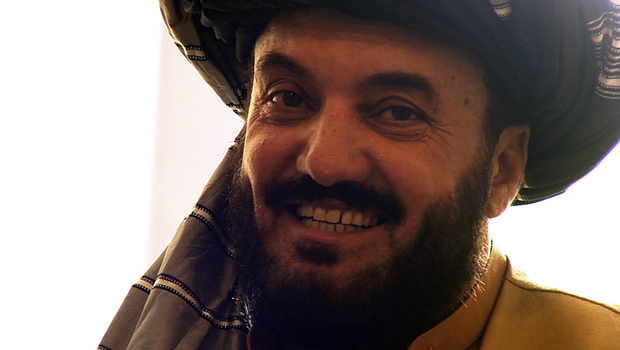
‘Stop Trying to Kill Me’: Man Urges UK, US to Remove Him From ‘Kill List’
Sputnik – April 12, 2016
A man claiming to be on a western “kill list” of people to be targeted by US airstrikes has appealed to both the British and American governments to stop trying to kill him.
Malik Jalal, a tribal elder from Waziristan, a border region between Pakistan and Afghanistan, says he has been targeted in at least four drones strikes, narrowly missing what he believes are attempts on his life.
Traveling to Britain following an invitation from Lord Ken MacDonald, the former Director of Prosecutions, Malik Jalal told BBC Radio 4 that he had been warned by various authorities in Waziristan that he is on a western “kill list” adding that his children are “terrified” of dying in an attack.
In one close call, he says a missile hit a car traveling behind him.
“I heard the explosion and the back window of my car shattered. The car behind was in flames and the passengers were in pieces.”
A tribal elder of the region, Malik Jalal believes he is being targeted because of his connection with the North Waziristan Peace committee (NWPC) — a group facilitating peace talks between the Taliban and the Pakistani government.
While Malik Jalal says he plays an important role in trying to bring peace to the region, there have been criticisms of the NWPC, with some suggesting the committee provides Taliban members with a safe haven in Waziristan.
‘I Came Close to Being Bombed Four Times’
In a letter, addressed to UK Home Secretary Theresa May, who is responsible for MI5 and the National Crime Agency (NCA), and Foreign Secretary Philip Hammond, who has responsibility for GCHQ and MI6, Malik Jalal has called for a meeting to clear up concerns that he may be on a government kill list.
“I had a special role to improve security and we were making progress and that’s why I think Americans targeted us […] I came close to being bombed four times, so in the end I realized they were on to me,” he told the BBC.
“I have had to leave Waziristan. In my own family there are six people who are mentally destabilized because of the strikes. In Waziristan there are more than 400,000 people who have mental problems because of the drones. My own son is too scared to go back to Waziristan.”
The US ambassador to the UK has also been copied into the letter, with Malik Jalal calling on Britain to try and influence the US to stop what he believes have been attempts on his life and others in Waziristan.
“I have a peaceful role in Pakistan. I am not involved in terrorism. I came to Britain because I feel like Britain is like a younger brother to America. I am telling Britain that America doesn’t listen to us, so you tell them not to kill Waziristanis.”
Concerns Over Long-Term UK Involvement in US ‘Kill List’
The comments follow the release of an explosive report, accusing British law enforcement and intelligence agencies of drawing up an extra-judicial kill list targeting some of the world’s most wanted terror suspects and drug smugglers.
The report, released by human rights organization Reprieve, claimed that the UK has been a long-time partner in the US’ “shoot to kill” policy in Afghanistan and Pakistan, with the report alleging that drug smugglers, as well as terrorists were among those targeted.
The findings follow a separate Vice News investigation that claimed that UK military personnel were exploiting a legal loophole to play a “critical” role in the US drone kill list program in Yemen.
Citing interviews with more than two dozen current and former British, American and Yemeni officials, UK forces were alleged to have taken part in so-called “hits” in Yemen, “triangulating” intelligence for kill lists, and preparing “target packages.”
The reports of long-time collaboration with the US shoot to kill policy have led to suggestions that UK Prime Minister David Cameron misled parliament on September 7, 2015, when he said that the assassination of two British nationals in Syria was a “new departure” for the UK.
Commenting on the latest developments, Clive Stafford Smith, Director of Reprieve, said: It is horrifying that, in the 21st Century, we have drawn up a list of people we want to kill.
“For a country that loudly proclaims its opposition to the death penalty even after a fair trial, the notion that we would execute him without a trial at all stunningly hypocritical. Malik Jalal puts a very human face on the horror of this policy.”
The UK government has said they don’t comment on matters of intelligence.
Hillary Clinton Justifies her Support for 2009 Coup in Honduras
 (Photo – Gage Skidmore on Flickr)
teleSUR – April 11, 2016
Democratic presidential frontrunner Hillary Clinton did not express any regret Monday about her support for the 2009 coup in Honduras, despite the deteriorating human rights situation, recently highlighted with the murder of prominent Indigenous activist Berta Caceres.
In fact, in an interview with the New York Daily News, in her opinion, the U.S. aid to military and police forces in Central America will eventually pay off just like Plan Colombia.
Plan Colombia was established under the administration of Bill Clinton in 1999 under the guise of fighting the war on drugs. The U.S. aid package, totalling almost US$2 billion, gave 78 percent of the funds to the Colombian military and police for counternarcotics and military operations against the rebel forces.
Despite a long list of studies and evidence that shows that Plan Colombia contributed to human rights abuses by security forces and the rise of paramilitary forces, Clinton took most of the credit for the current peace talks between the government and the FARC rebels, suggesting Plan Colombia brought peace to Colombia.
“I didn’t like the way it looked or the way they did it but (the coup leaders) had a very strong argument that they had followed the constitution and the legal precedence,” she said in an interview with the New York Daily News.
Democratically-elected president Manuel Zelaya was forcibly put on a plane and sent out of the country by the Honduran military in June 2009.
Clinton justified the move despite opposing advice from her top aides, who urged her to declare it a military coup, and to cut off U.S. aid, as some emails leaked in July revealed.
She admitted that the coup leaders “really undercut their argument by spiriting (Zelaya) out of the country in his pajamas, where they sent the military to take him out of his bed and get him out of the country.”
Nevertheless she strongly rejected the idea of cutting U.S. aid for Honduras, claiming this would have harmed the Honduran people, although it is mainly directed to the country’s security forces. It is used to keep the drug war within Honduran borders – as well as to keep Central American migrants running away from drug violence from reaching the United States.
59 Journalists Murdered in Honduras Since Clinton-Backed Coup
teleSUR – April 11, 2016
Since the 2009 U.S.-backed coup that removed President Manuel Zelaya, 59 journalists have been assassinated in Honduras, with four of them being murdered just in 2016 alone.
The most violent year until now has been 2015, with 218 alerts registered and 12 journalists assassinated.
In April 2015, the Honduras National Congress approved the Journalist Protection Law, which included measures like providing police protection when a journalist receives a threat. The law also planned the creation of a center monitoring threat follow-ups, although the government has not yet approved the budget.
In four years of former President Profirio Lobo’s government, 30 journalists were murdered, while in the current government headed by President Juan Orlando Hernandez, 22 journalists have been assassinated in the two years and three months since he took office. These two post-coup presidencies have been accused of systematic human rights abuses and corruption.
The Attorney General’s office has only processed six cases, while only four people have been prosecuted and sent to jail. There has not been any investigation into who ordered these crimes and the motivations behind each one.
Boycott campaign launched against Dutch delivery service TNT
Ma’an – April 12, 2016
HEBRON – Activists called for a boycott campaign against Dutch international courier company TNT Express after its staff reportedly refused to deliver parcels to Palestinian recipients, allegations the company denied.
Boycott campaign co-organizer Suhaib Zahdah told Ma’an on Monday that “the issue surfaced after TNT employees refused to deliver mail parcels to their Palestinian recipients.”
The recipients contacted the company, which reportedly said company policy doesn’t allow work with the Palestinians, and suggested the recipients “use addresses in Jerusalem or Nazareth [in Israel] instead,” Zahdah said, referring to the reply of TNT’s headquarters in the Netherlands as “negative.”
“This is a violation of international law as the company discriminates by employing people refusing to work with Palestinians while they work with the illegal Israeli settlements,” he said.
The boycott campaign was launched under the slogan “TNT, the people discrimination,” a play on the company’s slogan “the people network.”
In response to the allegations, the company told Ma’an that TNT makes regular deliveries to Palestine, “including Ramallah, Gaza, East Jerusalem, Hebron, and the West Bank.”
While the company said TNT’s Israel branch “delivers shipments to Israeli towns, including those in the West Bank,” referring to Israeli settlements, shipments to Palestinians in the occupied Palestinian territory are handled through TNT’s Jordan branch, and delivered by a subcontractor once “for the final delivery.”
TNT in response to the case brought up by the campaign said: “We’ve had email exchanges with a customer who was disappointed because TNT Israel wasn’t able to make a delivery at the address he specified.”
“Security restrictions may at times limit our ability to serve certain destinations or addresses. This is what we explained to one of our customers today,” TNT said, emphasizing the company did not have a political agenda.
The boycott, divestment, and sanctions (BDS) movement against Israel has gained momentum over the past year, with activists increasingly targeting companies that act in compliance with Israel’s illegal occupation of East Jerusalem and the West Bank.
Israeli settlements in East Jerusalem and the West Bank are considered illegal by the majority of the international community, and companies who either operate out of settlements or in cooperation with settlement-based companies are seen by the BDS movement as supporting illegal Israeli policies.
Two Smooth Faces of Evil
By Craig Murray | April 12, 2016
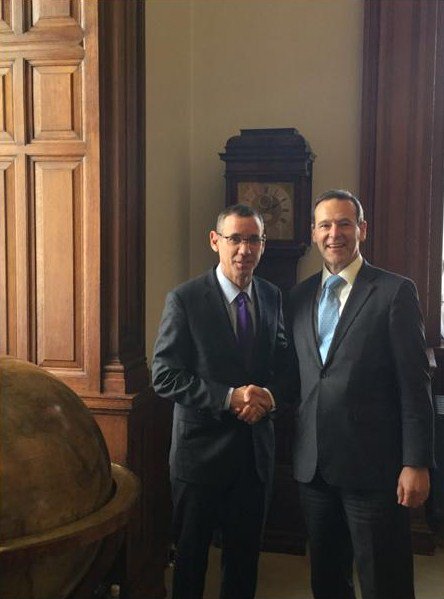
Many of you will recognise one of the faces in this photograph, Mark Regev. He is Israel’s new Ambassador to London and of course was the Israeli government spokesman who justified the massacre of more than 600 women and children in Gaza, and the murder of peace activists aboard the Mavi Marmara.
The other face of evil is Simon McDonald, head of the UK Diplomatic Service. You probably now think I am indulging in hyperbole. But no, I am not.
Simon McDonald was the Foreign Secretary Jack Straw’s Private Secretary at the time of the implementation of the British government’s extraordinary rendition and intelligence from torture programmes. When I became the only member of the UK’s senior civil service to make formal objection to these programmes, it was Simon McDonald who managed Jack Straw’s response in continuing to use torture.
I have indisputable documentary evidence of this, plain despite redactions by the British government censors (redactions which primarily remove all references to the CIA).
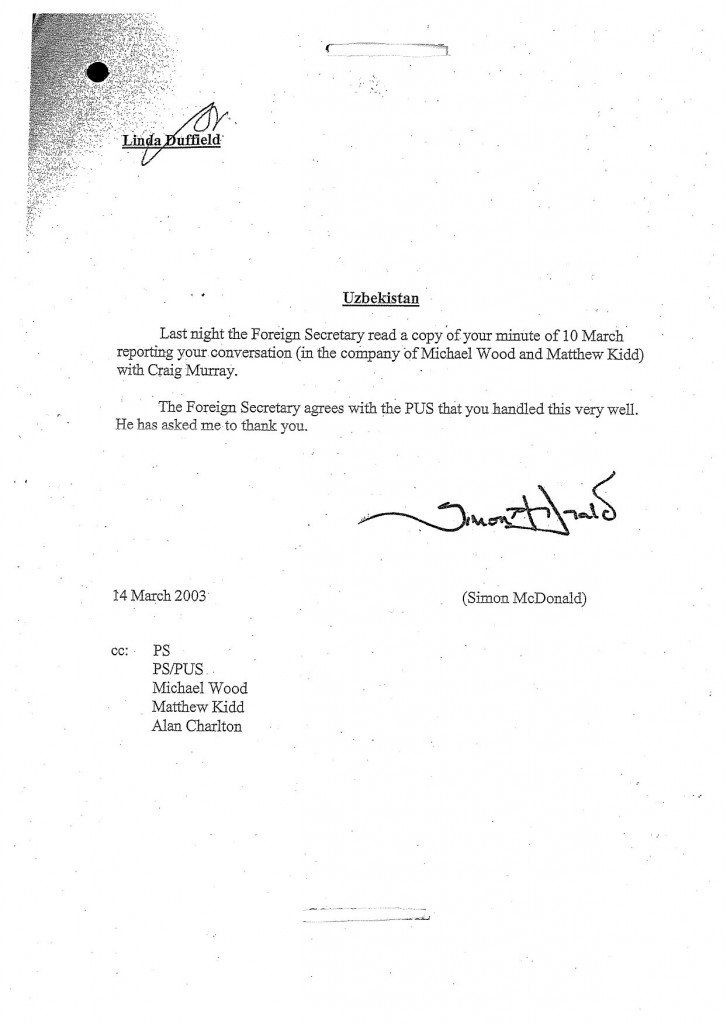
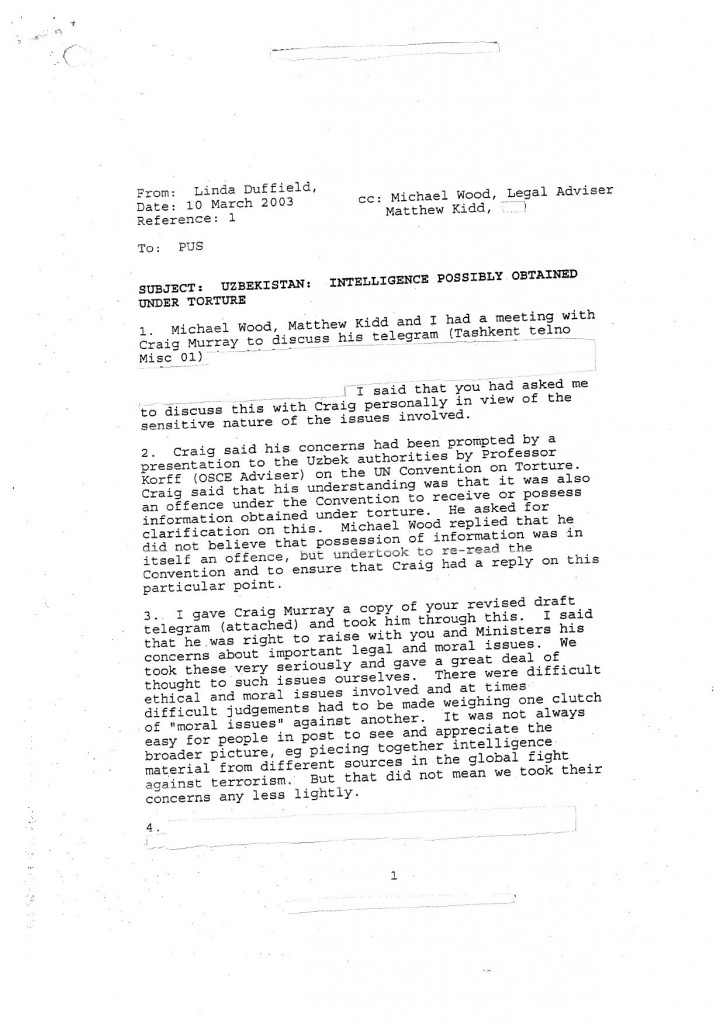
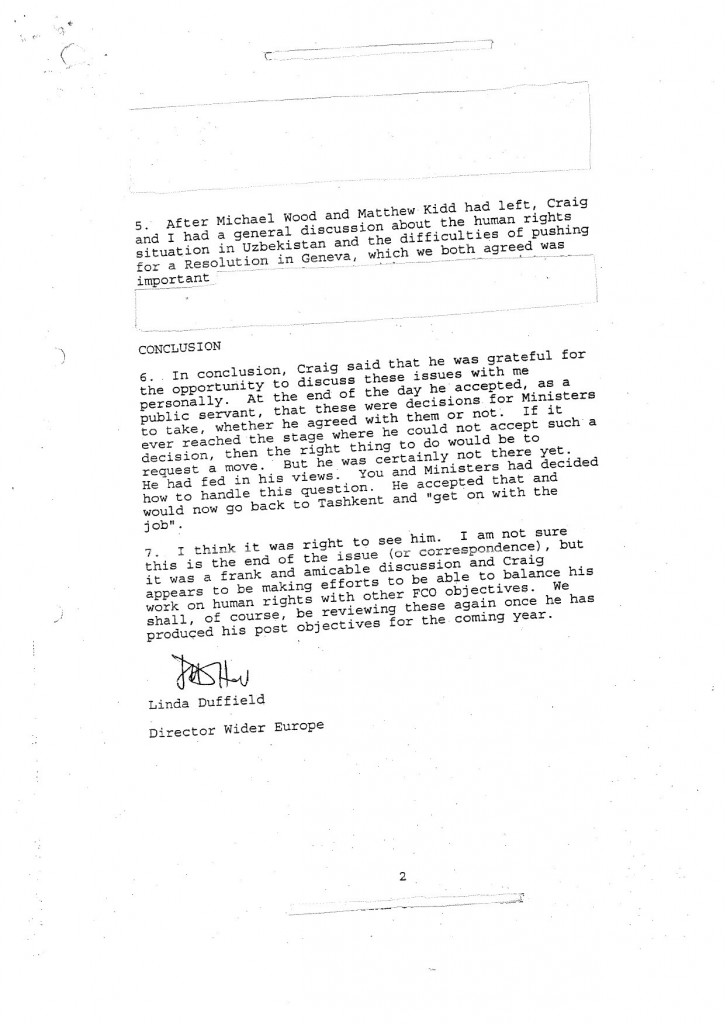
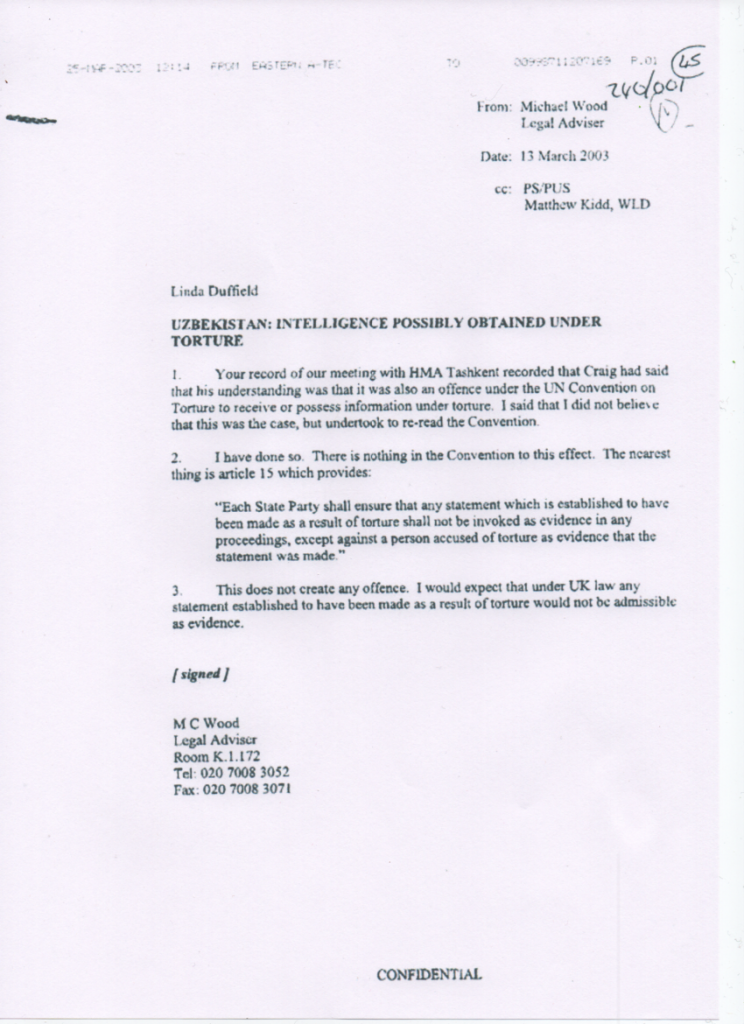
It is put to me frequently that people like McDonald, who were merely implementing a policy of torture, are not evil. That of course is the age old “only doing my job” defence. As somebody who was sacked for refusing to go along with torture, I think I have walked the walk and can describe him as evil. It is also worth noting that, while McDonald meets all new Ambassadors to London, he went far further with Regev than with anybody else. He tweeted out their photo with the message “Happy to see Mark Regev newly arrived Israeli Ambassador, an old friend from Tel Aviv ten years ago.”
Ten years ago, when they were friends in Tel Aviv, was of course the year in which Israel invaded Lebanon and Mark Regev was the chief Israeli spokesman justifying that attack, with its mass civilian casualties. Regev also defended the bombing by Israel of a United Nations observation post.
It is hardly surprising McDonald and Regev became friends at this time, as Gordon Brown’s government were doing everything possible behind the scenes to assist the Israeli invasion. As I wrote at that time
I have just watched on television sixty bodies being buried in a mass grave in Tyre, victims of Israeli bombing. At the same time I saw the odious Kim Howells, Foreign Office minister, arguing that a ceasefire would not solve the problem.
British diplomats at the UK Mission to the United Nations in New York – people I know personally – are putting massive effort into working against a ceasefire. They have the ultimate weapon that they and the US can veto any resolution at the Security Council, but are bending their backs into heading the subject off the agenda.
I hope they are proud of their succesful efforts. For every hour they prevent a ceasefire, on average two more Lebanese children are dying. Israel claims now to have killed 100 Hizbollah fighters. Even if true, that means they are killing two children to every fighter.
McDonald and Regev. Torture meets child-killing. Don’t they make a lovely couple?
Featured Video
The Source of America’s Wars – Kristol Clear
or go to
Aletho News Archives – Video-Images
From the Archives
Is Israel to blame for the Iraq War?
American Goy | March 10, 2008
I am so tired of this old canard that “Israel had nothing to do with USA’s war with Iraq – in fact, it officially advised America against it”.
Bullshit. … continue
Blog Roll
 Aletho News
- Europe’s quiet role in the war on Iran
- Forty days that shook the Empire: How Iran turned the tables on US and prevailed
- Netanyahu unilaterally declares Lebanon outside of ceasefire deal
- Israeli leaders: ‘Not a single goal’ achieved in war with Iran
- What on earth just happened? Trump, Iran, and the unlikely ceasefire
- Alberta Bill Would Fine Political Deepfakes $10,000 Without Satire Exemptions
- Iran declares ‘historic victory’ over US, says enemy forced to accept its proposal
- Trump Claims Ceasefire, Reopening of Strait of Hormuz Agreement with Iran
- Israeli tank fire killed UN peacekeeper in Lebanon, UNIFIL investigation finds
- Russia, China block Bahrain-sponsored UN resolution on Strait of Hormuz
- If Americans Knew
- A sigh of relief over Iran, but Gaza and Lebanon in dire straits – Daily Update
- Thousands dead and neighborhoods razed to the ground: Aid agencies fear southern Lebanon is becoming the new Gaza
- The war the US is fighting for Israel could cost trillions
- ‘Cigarette Burns, Nail Wounds’: Toddler Tortured in Gaza to Coerce Father
- Trump Says US Sent ‘a Lot of Guns’ to Protesters in Iran
- Israeli forces destroy 17 UN peacekeeper cameras in south Lebanon
- US-Israeli strikes ‘completely destroy’ synagogue in Tehran
- Archbishop for US Military Says Iran War Is Unjust Under Catholic Teaching
- Iranian leaders’ Open Letters to the American People
- Trump says Iranians appreciate bombs, WHO warns of nuclear risks – Daily Update
- No Tricks Zone
- An Inconvenient Tree: Uncovered In Alps… Europe Much Warmer Than Today 6000 Years Ago
- New Study Reports A 60% Slowdown In Greenland’s Ice Loss Rate In The Last Decade
- Low Intensity Tornado Wrecks Major Solar Farm, Creating A Potential Toxic Dump
- New Study Finds Warming Saves Lives…Cold Temperatures 12 Times More Deadly Than Excess Heat
- German Science Blog Accuses PIK Climate Institute Of Hallucinating Climate Tipping Points
- Devastating Assessment Of Comirnaty Vaccine By Former Senior Pfizer Europe Toxicologist
- New Study: CO2 Is ‘Effectively Negligible’ As An Explanatory Climate Change Factor Since 2000
- Former Pfizer Toxicologist Dr. Helmut Sterz Tells Bundestag Hearing Pfizer Vaccine Should Have Never Been Approved
- Energy Expert: Germany’s Nuclear Phaseout Was A “500 Billion Euro Mistake”
- New Research: South Australia’s Mid-Holocene Sea Surface Temperatures Were 4°C Warmer Than Today
 Aletho News