Pakistan and Saudi Arabia: the Balance of Relations
By Natalya Zamarayeva – New Eastern Outlook – 01.04.2016
For the second time in 2016, Pakistani Prime Minister, Mian Muhammad Nawaz Sharif, paid an official visit to Riyadh in March. He took part in the closing ceremony of the Northern Thunder military exercise in the Saudi desert. The intensity of the visits is dictated by the importance of the Kingdom of Saudi Arabia (KSA) in the foreign policy of Pakistan, as well as the need to maintain a balanced approach to the countries of the region as a whole, given the recent intensification of relations with Iran. It is noteworthy that it is also the second time that the Prime Minister was accompanied by Chief of Army Staff, General Raheel Sharif on a foreign trip to the KSA. Much remains yet to be clarified.
Military contacts between Islamabad and Riyadh have been maintained for several decades. The first bilateral agreements were signed back in the 60’s; in the 80’s, two teams of Pakistani ground troops were stationed in Saudi Arabia. In recent years, the commands of the two capitals hold annual joint military exercises, for example, Al Shihab-1 in 2015.
Despite the significant financial support from the KSA of social, economic, military and other projects in Pakistan, the relationship between the royal dynasty and the military and civil administration of Islamabad were not always smooth. The most recent failure occurred in March 2016. The royal family appealed to the Prime Minister, N. Sharif (and he publicly promised) to post part of the Pakistani army in the zone of military conflict in Yemen against Huthis Shiite in support of the KSA. But after ten days under the pretext of protecting only the holy places, the National Assembly of Pakistan (the lower house of parliament) refused. The Pakistani media wrote about a certain pressure the generals applied to parliamentarians.
The latest of Riyadh’s military appeals to Islamabad, announced in December 2015 as part of an alliance of 34 countries to combat the terrorist threat in the region, once again caused a lot of questions from the military leadership of Pakistan, as well as Malaysia and Lebanon about the goals and objectives of the new military campaign, the place and role of each participating country. For a long time, issues remained unclear related to the operational strategy, antiterrorist working methods, management, control and composition of the proposed cooperation. For two months, Islamabad did not comment. Sharif’s visit to Riyadh in March lifted the veil. According to the Pakistani media, Rawalpindi (the location of the Army headquarters) plans for its participation to include the exchange of intelligence information, the supply of military equipment and the development of counter-extremist propaganda.
Pakistan once again refused to participate in the armed conflict, putting forward several arguments: first, the reluctance to get involved in a so-called “foreign” war; secondly, the desire to avoid the explosion of separatist and sectarian movements within Pakistan; and thirdly, that new and promising markets (Iran) and possibilities are opening up, given the recent geopolitical developments in the region.
In the February issue of this year’s Pakistani military magazine Hilal, the author of the article entitled ‘Balanced Approach Towards the Middle East’ underlines the importance as never before, of the diplomatic efforts to solve the “raging” conflicts. It’s hard not to agree with Mr. Masood Khan and his statement: “it is not clear, in which direction the Middle East will move in 2016 … fine balancing is required … in order to prevent a major war in the region, protect our interests and save Pakistan from sectarian faults.” Thus, in contradiction to the centrifugal tendencies conducted by KSA in the vast region, Pakistan, on the contrary, promotes and supports centripetal forces. Its policy of non-participation in armed conflict puts obstacles in the way of splits, the formation of secessionist movements and / or fragmentation of its territory. Islamabad experienced the disease of separatism in 1971, allowing the separation of the Eastern Province and the proclamation of the independent Republic of Bangladesh on the territory in 1973.
At the same time, Pakistan is aware of the need to preserve traditional solidarity with the Saudi royal family, yet maintain that the time of its leadership in the region is in the past.
Islamabad is opening itself to radically new transnational projects of the 21st century in the region. Islamabad regards rapprochement with Tehran as a positive direction, despite the fact that, in general, Teheran’s step towards the Western world has made the region “feverish” (in the words of Mr. Masood Khan). In February 2016, Pakistan also lifted sanctions against Iran, supporting the decision of the “Six” (the permanent UN Security Council members and Germany). In addition to the prospective energy and hydrocarbon supplies to the country, Pakistan is set to earn a huge profit by using its strategic geographical position. The area will act as a transport bridge from the Chinese border and further to Central Asia, Iran, and then to the West under the revived China’s Silk Road project (one belt – one road). In February 2016, Beijing and Tehran signed a series of agreements.
Despite the fact that in January 2016 the Minister of Defense of the KSA rejected the mediation efforts of Pakistan in resolving the crisis with Iran (after the rift in diplomatic relations in early January 2016), Islamabad, for various reasons, remains one of Riyadh’s few opportunities to maintain civilized dialogue with Tehran and to stabilize the situation in the region.
The position of neutrality, which Pakistan upholds, and above all, the Army generals (given that the Pakistani army is one of the strongest in the region), is a guarantee their own security.
At the same time, the Northern Thunder military exercise (participated in by 21 states), led by the KSA, is a kind of demonstration of military force of the Sunni wing of Islam to the Shiites, in particular the leadership of Iran and the Yemeni Huthis.
The non-interference policy of a number of states in the region, in particular, Islamabad, is a deterrent to the further military ambitions of the new leaders of the Saudi dynasty and thus counteracts the emerging destabilization mechanisms. The Middle East will not sustain another armed conflict.
Natalia Zamaraeva, Ph.D (History), Senior Research Fellow, Pakistan section, Institute of Oriental Studies of the Russian Academy of Sciences.
Colombia: ‘Armed Strike’ Forced on Residents by Paramilitaries
teleSUR – April 1, 2016
As the possibility of a peace deal is becoming more certain, a surge of paramilitary violence in the country raises concerns of lasting peace.
In what’s being called an “armed strike” the Usuga Clan, a nacro-paramilitary outfit, ordered local residents in three northern departments in Colombia to stop all their activities for two days. Flyers distributed beforehand threatened them with retaliation if they dared to leave their homes.
They also forced local shops to shut down and intimidated children not to go to school, while blocking roads and rivers, said Colombia’s Ombudsman Alfonso Cajiao.
In the department of Sucre, education centers were shut down and two people were assassinated since the beginning of the forced strike, reported a local organization.
An assassination attempt on human rights activist and ex-senator Piedad Cordoba Friday is believed to be the work of paramilitaries. The Usuga Clan also killed a policeman and a military officer Thursday. Both officers were unarmed and dressed as civilians when they were killed.
President Juan Manuel Santos strongly condemned what he called a “criminal group” in a press conference.
“I insist that the Usuga Clan is a criminal organization, and will not be granted any political treatment. I can only recommend that they hand themselves over to the country’s justice,” he added, reporting that security forces arrested 56 members belonging to the armed group Friday, who were allegedly intimidating the local population on social media and in the streets.
The armed strike comes as various far-right sectors and paramilitary groups are calling for a national mobilization Saturday to protest against the peace deal currently being negotiated between the Colombian government and the Revolutionary Armed Forces of Colombia in Havana.
On Thursday, far-right leader and ex-president Alvaro Uribe, criticized the peace deal, saying the deal was “not a peace deal, it is an impunity deal,” in an interview with the Spanish-based journal, ABC.
“The agreement could end up sending to prison all those who fought terrorism,” he dramatically warned, denying any form of state terrorism or paramilitary violence like the scandal of “false positives” carried out during his presidency.
As the agreement is gets closer, a surge of paramilitary violence has also raised concerns among progressive sectors and activists in the country who fear that the Colombian state will be unable to guarantee their security even after the peace deal is signed.
As Saudi and Allies Bombard Yemen US Clocks up $33 Billion Arms Sales in Eleven Months
By Felicity Arbuthnot | Dissident Voice | April 1, 2016
Sometimes even to the most towering cynic, American hypocrisy is more than breathtaking.
As they lambast their latest “despot”, Syria’s President al-Assad — a man so popular in his country and the region that the US Embassy in Damascu had, by the end of 2006, devised a plan to oust him — arms sales to countries where human rights are not even a glimmer on the horizon have for the US (and UK) become an eye watering bonanza.
The latest jaw dropper, as Saudi Arabia continues to bombard Yemen with US and UK armaments dropped by US and UK-made aircraft, is sales worth $33 Billion in just eleven months to the Gulf Cooperation Council (GCC) according to Defense News.
The GCC, a political and economic alliance of six Middle East countries, comprises of Saudi Arabia, Kuwait, the United Arab Emirates, Qatar, Bahrain and Oman. It was established in the Saudi Capital, Riyadh, in May 1981.
Weapons sold to the alliance since May 2015 have included: “… ballistic missile defense capabilities, attack helicopters, advanced frigates and anti-armor missiles, according to David McKeeby, a spokesman for the State Department’s Bureau of Political-Military Affairs.”
“In addition, the U.S. government and industry also delivered 4,500 precision-guided munitions to the GCC countries in 2015, including 1,500 taken directly from U.S. military stocks – a significant action given our military’s own needs,” he added, stressing: “that the US government would like to continue to strengthen partnerships with Kuwait and Qatar through defense sales and other security cooperation activities.”
A metaphor for our times that “partnerships” are “strengthened” with lethal weapons, not in trade of goods, foods, medical, educational or intellectual exchanges.
A fly or two in the oil of the wheels of the US arms trade is the two year delay in approval of sales 40 F/A-18 Super Hornets to Kuwait and Qatar and also 72 F-15 Silent Eagles to Qatar.
Suspicion has been voiced that this has something to do with a pending US-Israel military financing deal, a suggestion emphatically denied by Washington.
In the meantime as Yemen continues to be blitzed, with the UN stating that eighty percent of the population are in need of humanitarian assistance, 2-4 million are displaced and approaching four thousand dead.
It seems Saudi and its allies have more than enough ordinance to continue the slaughter and more than enough US and UK military advisors to help them in the decimation.
Felicity Arbuthnot is a journalist with special knowledge of Iraq. Author, with Nikki van der Gaag, of Baghdad in the Great City series for World Almanac books, she has also been Senior Researcher for two Award winning documentaries on Iraq, John Pilger’s Paying the Price: Killing the Children of Iraq and Denis Halliday Returns for RTE (Ireland.)
Venezuelan Socialist Politician Slain in ‘Vile’ Killing
By Ryan Mallett-Outtrim | Venezuelanalysis | April 1, 2016
Venezuelan authorities announced Friday they were investigating the killing of a socialist politician in Trujillo state.
Marco Tulio Carrillo was “shot repeatedly” outside his home in Trujillo Thursday night, according to a statement from Venezuela’s public prosecutor’s office. Carrillo was the mayor of the La Ceiba municipality, and a member of President Nicolas Maduro’s socialist party, the PSUV.
The prosecution said Carrillo was hit by eight bullets fired from a passing car. No suspects have yet been named.
The killing has been condemned by other socialist politicians.
“Another worthy revolutionary has been vilely felled,” tweeted PSUV legislator Hugbel Roa.
Carrillo is the third pro-Maduro political figure to be killed in the past week.
Over the weekend, Haitian Venezuelan political figure and solidarity activist Fritz Saint Louis was gunned down in his home. Saint Louis had served as the international coordinator for the United Haitian Socialist Movement, as well as secretary-general of the Haitian-Bolivarian Culture House of Venezuela. It’s unclear whether Saint Louis’ killing was politically motivated, though in 2015 he ran as a candidate in the PSUV’s National Assembly election primaries.
His death followed the suspected assassination of another socialist politician last Thursday. Legislator Cesar Vera was shot in Tachira state, in what local authorities say may have been a paramilitary attack.
Vera was a member of the Great Patriotic Pole, a political coalition of parties aligned with the PSUV. He was also a prominent figure in the leftist militia, the Tupamaro movement.
In another incident of political violence, two police officers were killed by right-wing militants earlier this week. The officers were killed while responding to a protest in Tachira state. Witnesses have said the pair were run over by a bus that had been hijacked by militants.
American lawyers request investigation into the Jewish National Fund status

PNN/Bethlehem – March 31, 2016
The U.S. National Lawyers Guild (NLG) on Wednesday submitted a regulatory challenge to the Internal Revenue Service (IRS) requesting an investigation into the charitable status of the Jewish National Fund (JNF) on grounds of discrimination and contravention of U.S. policy.
According to the NLG, the JNF enjoys tax-exempt status as a charitable organization in the United States even though the reality of its work- supporting Israel’s ongoing ethnic cleansing of Palestine – is anything but charitable.
The JNF’s mandate is to promote racist and discriminatory policies such as forcibly displacing Palestinians from their lands to make way for Jewish-only housing developments, including inside Israel’s pre-1967 borders.
The JNF’s support for illegal settlement activity in the occupied West Bank and in occupied East Jerusalem also means its activities violate longstanding official U.S. policies against settlements, as well as international law.
“The IRS has an obligation to revoke the JNF’s status because of its involvement in displacing Palestinian Bedouins from the Negev Desert and elsewhere, and because of its support for illegal Israeli settlements in the West Bank,” said Andrew Dalack, one of the co-chairs of the NLGIC’s Palestine Subcommittee. “How can the IRS certify with a straight face that the JNF is organized for a charitable purpose when it engages in conduct that violates international law and well-established U.S. foreign policy?”
The regulatory challenge is part of a larger international Stop the JNF Campaign that seeks to end the JNF’s role in Israel’s continuing displacement of Palestinians.
Efforts targeting the JNF are part of a growing boycott, divestment, and sanctions (BDS) movement in support of the Palestinian struggle for freedom, justice, and equality.
The campaign is calling for people to take part in Days of Action from March 30-April 18 (Tax Day) to pressure the IRS to respond to the regulatory challenge and launch an investigation into the JNF.

“The JNF is complicit in Israel’s ethnic cleansing of Palestinians and it is completely unacceptable that an organization engaging in war crimes is considered to be a charity in the United States,“ said Ramah Kudaimi of the US Campaign to End the Israeli Occupation. “It is also confusing how U.S. policy is clear about settlements being a primary obstacle to peace but Americans are allowed to give money to an organization that supports these very same settlements.”
Founded in 1901, the JNF is a quasi-governmental Israeli agency that has played a major role in the dispossession of the Palestinians people, planting forests to help cover the reality of the more than 400 Palestinian towns and villages destroyed when Israel was created in 1948.
Today the JNF continues to play an important role in the dispossession of Palestinians in both in the 48 territories -Israel– and the in the occupied West Bank.
The complaint was filed on Land Day because on this day Palestinians commemorate the day in 1976 when the IOF killed six Palestinians who were peacefully protesting the appropriation of their land.
“For nearly 70 years Palestinians have been resisting Israel’s continued theft of our land,” said Nick Sous of the US Palestinian Community Network. “So many Palestinians have been directly impacted by Israel’s stealing their land with the support of the JNF and it is shameful that the IRS actually awards people who donate to support these illegal actions by allowing them to get a tax write-off.”
Trump Way to the Left of Clinton on Foreign Policy – In Fact, He’s Damn Near Anti-Empire
By Glen Ford | Black Agenda Report | March 30, 2016
If the Bernie Sanders campaign has propelled the word “socialism” – if not its actual meaning – into common, benign American usage, Donald Trump may have done the world an even greater service, by calling into question the very pillars of U.S. imperial policy: the NATO alliance; the U.S. nuclear “umbrella”; the global network of 1,000 U.S. bases; military “containment” of China and Russia; and U.S. “strategic” claims in the Persian Gulf. Were the U.S. to actually rid itself of these strategic “obligations,” the military hand on the doomsday clock would immediately be rolled back, giving humanity the breathing space to tackle other accumulated crises.
Of course, Donald Trump may over time rephrase, reverse or “clarify” out of existence some of his profoundly anti-imperial, “America First” foreign policy points, elicited in extended interviews with major U.S. media. However, if Trump’s tens of millions of white, so-called “Middle American” followers stick by him, despite his foreign policy heresies – as seems likely – it will utterly shatter the prevailing assumption that the American public favors maintenance of U.S. empire by military means. If the rank and file right wing of the Republican Party is not a pillar of such policies, then who is? – rank and file, Black, white and brown Democrats? If the Trump candidacy can continue to thrive while rejecting the holiest shibboleths of the bipartisan War Party, then we must conclude that the whole U.S. foreign policy debate is a construct of the corporate media and the corporate-bought duopoly political establishments, and that there is no popular consensus for U.S. militarism and no true mass constituency for war in either party.
If Donald Trump is to be the catalyst for such a revelation, then may all the gods bless him – because lots of assassins will be out to kill him.
Trump’s language is sloppy, but there can be no mistaking the thrust of his position on key points. He calls NATO, the globe-strutting Euro-American military juggernaut that extended its domain to Africa with the 2011 war of regime change in Libya, an alliance that is “unfair, economically, to us.” Trump told the New York Times that NATO should focus on “counter-terrorism” – clearly a fundamentally scaled-down mission.
He repeated his often-expressed willingness to withdraw U.S. forces from Japan and South Korea, where American troops have been stationed since the end of World War Two, unless both countries pay a lot more money to maintain them. Trump actually seems eager to get out of the region, based on the number of times he has brought the subject up in his campaign. As with everything else in the Trump paradigm, he hooks the alliance to his quest for a “better deal” – but the point is that he doesn’t think the “price” of the far-flung U.S. military commitment is “worth it.” Trump’s stated intention to renegotiate virtually all of the “deals” the U.S. has made around the world – the military architecture of imperialism – means he is pointedly applying a cost-benefit test to the 1,000 U.S. bases around the globe. He is reluctant to offer other nations the “protection” of U.S. nuclear weapons.
The crucial point is: Trump does not accept the fundamental premise that these bases exist for U.S. “security” interests, but rather, he frames them as a kind of “service” that the clients should pay for. Once the “national security” veneer is withdrawn, the military-imperial rationale evaporates and all that is left is a business transaction – not enough to call a nation to war, or to risk a world over.
Trump appears to welcome a strategic break with Saudi Arabia, threatening to cut off U.S. purchases of oil from the kingdom unless it “substantially reimburse[s]” Washington for fighting the Islamic State, or unless the Saudis and the other rich oil states commit troops to the anti-jihadist battle – at their own expense. It’s all nonsense, of course, since Washington and Saudi Arabia have been partners in global jihadism for two generations – but so what? Trump seems to relish the idea of severing the Saudi connection. “If Saudi Arabia was without the cloak of American protection, I don’t think it would be around,” he said. His threat to withdraw the “cloak” unless the potentates pay for protection would negate the U.S. “national security” rationale in the Persian Gulf going back to President Franklin Roosevelt’s 1943 declaration that “the defense of Saudi Arabia is vital to the defense of the United States.” President Carter, another Democrat, upped the ante in 1980 with his doctrine that the United States would use military force if necessary to defend its “national interests” in the Persian Gulf. Bush presidents One and Two were simply building on these previous national security rationales. Trump recognizes no such imperative, without which U.S. imperial policy in the region has no political basis.
Trump plays the trade card rather than the military gambit in dealing with China. He would threaten economic retaliation for China’s fortification of islands in the China Sea – not military encirclement. “We have tremendous economic power over China, and that’s the power of trade,” he said. The same, presumably, would apply to Russia.
The presidential candidate shows no interest in “spreading democracy,” like George W. Bush, or assuming a responsibility to “protect” other peoples from their own governments, like Barack Obama and his political twin, Hillary Clinton. On the contrary, Trump has stated that the U.S. should not have invaded Iraq and Libya and killed their leaders, Saddam Hussein and Muammar Gaddafi, because they killed terrorists – in contrast to Hillary Clinton’s macabre cackling over Gaddafi’s body. He opposed the U.S. proxy war against the al-Assad government in Syria, for similar reasons.
He even briefly defied the ultimate taboo, using the word “neutral” to describe the stance he would take on Palestine.
In sum, albeit sloppily, and with no guarantee that he won’t change his mind at any moment, Trump has rejected the whole gamut of U.S. imperial war rationales, from FDR straight through to the present. For who knows what reason, Trump is busily delegitimizing U.S. imperial policy since World War Two.
It’s not that the Empire has no clothes, but that it is being stripped of its rationale to march around the planet in battle gear. Thanks, not to Bernie, but to The Donald.
Trump has reduced white American nationalism to Race, his “trump” card – but without his hero, Teddy Roosevelt’s Great White Fleet sailing the world to plant the flag on distant shores.
The first effect of Trump’s intervention in the Republican primaries was to demonstrate that his white hordes really don’t give a damn for the GOP establishment’s corporate agenda; indeed, Trump gave them a chance to show they hated what global capitalism has done to “their” jobs. The fact that this cohort despises and fears non-whites of whatever citizenship status is nothing new – it’s a constant in U.S. politics, which is why there has always been a White Man’s Party. What makes this electoral season different – and, hopefully, a turning point in U.S. history – is that much of the rank and file of the White Man’s Party, the GOP, is rejecting the economic agenda of its corporate masters. If the Republican voters accept Trump’s assault on the ideological rationale undergirding U.S. foreign policy and its imperial structures, there will be nothing left of the GOP for the corporate rulers to defend. The Republican house of cards is collapsing, inevitably throwing the whole duopoly system out of whack.
The job of the Left, at this historic juncture, is to ensure that the two-party duopoly is permanently broken, to create the space for a much broader national discourse and, especially, to free Black America from the “trap within a trap” of the corporate-controlled Democratic Party. As we have written before in these pages, the best scenario of 2016 would be a fracture at both ends of the Rich Man’s Duopoly. It is insane – although perfectly explainable – that the most leftish constituency in the nation, Black America, is aligned with the right wing of the Democratic Party in the person of Hillary Clinton, while white Democrats man the barricades for the nominal socialist, Bernie Sanders. Blacks are the most pro-peace ethnicity in the nation, but have also been the indispensable bloc behind Hillary Clinton, the warmonger who is on her way to becoming the sole candidate of both Wall Street and the Pentagon.
It is magnificent, grand and glorious that the duopoly system is in deep trouble. But it is sad beyond measure that the near-extinction of independent Black politics has placed African Americans in the most untenable position imaginable at this critical moment: in the Hillary Clinton camp. Fortunately, key elements of the Movement for Black Lives have pledged not to endorse any candidates this election season. We hope that they stick with that commitment, continue to build a grassroots movement, and resist the corporate Democratic hegemony that has strangled and subverted Black politics for the past 40 years. The Black Left, broadly defined, must engage in a thorough reassessment of its politics and practice, in light of the great fissures that are occurring in the structures of the rulers’ system. That’s why the Black Is Back Coalition for Social Justice, Peace and Reparations is holding a National Conference on the 2016 U.S. Presidential Election and the Struggle for Black Self-Determination, on April 9th, in Harlem, New York City. This electoral season will see massive realignments of parties and coalitions – events that will happen whether Black people are organized or not. But Black self-determination is only moved forward if people push it. The most optimum time to press issues of Black self-determination is when the larger polity is in flux, such as exists today – thanks, in great measure, to the racist billionaire, Donald Trump.
Actually, there’s no need to thank him. That wealth-born son-of-a-rich-developer has already been paid. And by his own standards, that’s all that matters.
BAR executive editor Glen Ford can be contacted at Glen.Ford@BlackAgendaReport.com.
Hamas slams Twitter for closing of accounts
Press TV – April 1, 2016
Hamas has slammed Twitter for closing several accounts linked to the Palestinian resistance movement, saying the company is biased in favor of the Israeli regime.
The Hamas military wing, Ezzedine al-Qassam Brigades, said in a statement on Friday that its English- and Arabic-language accounts had been shut down for the third time in a fortnight.
Twitter is showing a “clear bias to the Israeli occupation where it should (adopt a) neutral position toward both sides,” the statement added.
It said that the closure comes while Twitter allows Israeli officials to encourage “racism, extremism and terrorism” on the social networking site.
Qassam also urged Twitter to reopen its accounts, saying one of those closed accounts had been followed by over 140,000 followers.
Twitter declined to comment, saying in a statement that the company does not comment on individual accounts citing “privacy and security reasons.”
Since its establishment in December 1987, Hamas has refused to recognize Israel and adopted resistance against the Israeli occupation, which it believes is the sole way of bringing about the liberation of occupied Palestinian territories. The movement says its goal is to liberate the entire Palestine.
The Palestinian resistance movement scored a landslide victory in Palestinian elections in 2006. Hamas has ruled the Israeli-blockaded Gaza Strip, while Fatah has set up headquarters in the occupied Palestinian territories in the West Bank.
Israel has waged three large-scale aerial and ground wars on Gaza in the past seven years. In its latest act of aggression in the summer of 2014, which lasted for 50 days, the regime killed about 2,200 Palestinians and inflicted heavy damage on Gaza’s infrastructure and economy. In that latest Israeli aggression, Twitter shut down most of Hamas’ accounts.
Why do Palestinians commemorate Land Day?
Palestinian Information Center – April 1, 2016
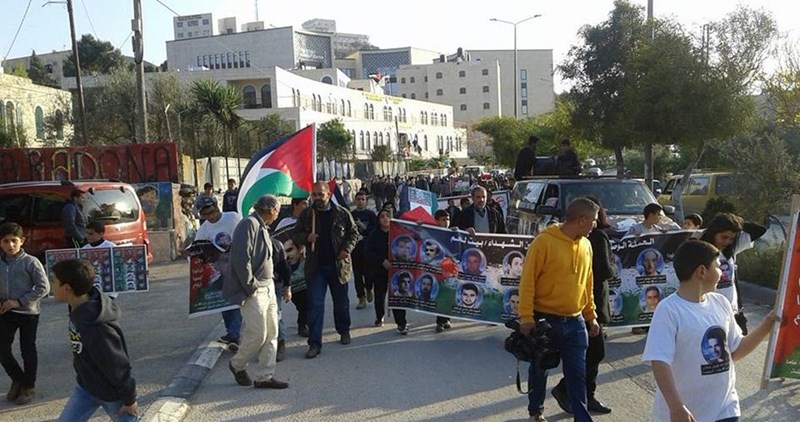
Palestinians commemorated the 40th anniversary of the Land Day on Wednesday, March 30 with various events. To understand the importance of that Day and why it is observed each year we should go back a little bit in history.
In 1976, the Israeli authorities confiscated large areas of Palestinian lands in the Galilee triggering large-scale protests that ended with killing 6 Palestinians and the injury of more than 100 others.
Palestinians all over the world commemorate the Day in marches and rallies to reflect their resilience in facing the Israeli occupation.
The events actually date back to the establishment of Israel in 1948, also known as the Palestinian Nakba (catastrophe), when around 150,000 Palestinians remained in their homes in historical Palestine.
Israel granted them the Israeli nationality, but it kept confiscating their lands and restricting their rights to encourage their migration out of their homeland.
In 1976, the Israeli authorities confiscated vast areas of the lands of these Palestinians in regions with Palestinian majority in the Galilee, a region in northern Palestine.
Israel reacted to the nonviolent protests of Palestinians by gunfire and brutal force. Six Palestinians were slaughtered, more than a hundred injured, and many more arrested.
Resistance Day
Dr. Ghassan Wishah, head of the Department of History and Archeology at the Islamic University of Gaza, stressed the need of informing the world about the importance of this Day, saying, “When Zionists declared the establishment of their state in 1948, they expelled two thirds of the Palestinian people and took over 78% of the their land.”
He added that a significant number of Palestinians persisted in their homes, and Israel started attempts to brainwash them so they would forget about Palestine.
Wishah pointed out, “This Day shows the world that Palestinians insist on their demands, that Israel has failed, and that the new generation is stronger than the older one.”
Demands
Ghassan al-Shami, a political analyst and a specialist in the Palestinian history, said, “We can never forget our land especially with the Israeli occupation stealing thousands of acres and building settlements on a daily basis.”
He stated that hard work is required so that Palestinians would devote more time and effort toward their lands through events on the ground and on social media to put pressure on Israel to stop the Judaization attempts of the Palestinian lands.
Al-Shami stressed the importance of delivering the Palestinian message to the world in all possible ways to win international support for regaining the Palestinian lands and rights.
Turkey is key supplier of weapons, military hardware to ISIS – Russian envoy to UN
RT | April 1, 2016
Moscow has submitted data on Turkey’s illegal arms and military hardware supply to Islamic State in Syria to the UN Security Council. Supplies are supervised by the Turkish intelligence service, Russian UN envoy Vitaly Churkin said as cited by Russian media.
“The main supplier of weapons and military equipment to ISIL fighters is Turkey, which is doing so through non-governmental organizations. Work in this area is overseen by the National Intelligence Organization of Turkey,” Churkin wrote.
According to the envoy, transportation “mainly involves vehicles, including as part of humanitarian aid convoys.”
The letter mentioned several NGOs, which are funded from Turkish and foreign sources, which sent different cargo, including military equipment, to Syria last year.
“The Besar foundation (President — D. Şanlı) is most actively engaged in pursuing these objectives and, in 2015, formed around 50 convoys to the Turkmen areas of Bayırbucak and Kızıltepe (260 km north of Damascus),” Churkin stressed, adding that Iyilikder Foundation and The Foundation for Human Rights and Freedoms were also involved.
In total, the terrorists were delivered 2.5 thousand tons of ammonium nitrate (worth around $788,700), 456 tons of potassium nitrate ($468,700), 75 tons of aluminum powder ($496,500), sodium nitrate ($19,400), glycerin ($102,500) and nitric acid ($34,000 thousand) via Turkey in 2015, Churkin wrote.
‘Scandal of privatized aid’: Free-market consultants cream off £450mn in UK govt funds
RT | April 1, 2016
Free-market consultants in Britain are taking hundreds of millions of pounds ring-fenced to alleviate poverty in the developing world, as the government continues with its agenda of privatizing aid, a damning report has warned.
A study conducted by British NGO Global Justice Now (GJN) raises grave concerns over the sheer amount of aid money the Department for International Development (DfID) has given to consultants Adam Smith International (ASI) for overseas aid projects.
The report, titled The Privatization of UK Aid, was published on Friday.
It found that ASI has won a minimum of £450 million (about US$640 million) in aid-funded contracts over the last five years. DfID funneled almost £90 million of its budget through the consultancy firm, more than the total amount given to human rights and women’s rights groups. This figure is almost double that spent on projects to tackle Aids and HIV, according to the report.
The study examined how much of DfID’s work was geared towards supporting market-based development and the private sector in poor states. Recent projects included backing for a “business advocacy capacity development program” in Zimbabwe, and projects to increase private schooling in Kenya.
The report also analyzed a number of existing case studies on ASI projects, such as the consultancy firm’s role in privatizing Nigeria’s energy system and making Afghanistan “investor friendly” by helping to rewrite energy extraction legislation there.
The NGO said the legislation, which was later passed into law, lacks transparency and does not protect local citizens’ rights. ASI has also helped to develop new mining legislation and regulations in Papua New Guinea, where the energy extraction technique has a legacy of violent conflict. GJN’s report says the laws have been branded “authoritarian and regressive” by critics.
The NGO argues that Westminster’s increasing use of consultancy firms forces out smaller companies in impoverished states and highlights DfID’s tendency to embrace private partnerships and back private-sector development schemes that risk jeopardizing communities in the developing world. It has called on DfID to explain why it chooses to hire profit-driven British firms like ASI rather than using its own employees or companies in the developing world.
GJN also urged DfID to be more transparent on contractors’ costs, and to release a robust plan on spending more through organizations in developing countries.
DfID defended its use of private contractors, arguing British aid is assisting highly vulnerable people in crisis-ridden states.
“UK aid is focused on tackling extreme poverty, helping people in some of the most fragile and dangerous places on Earth, including war zones and disaster areas,” a spokeswoman for the government department told the Guardian.
“We draw on specialist expertise from charities, NGOs and the private sector to get the job done and get the best value for taxpayers.”
Labour’s Shadow Secretary for International Development Diane Abbott said the government must take a serious look at how aid money is spent.
“UK aid is being used to pay for consultants instead of alleviating poverty in the global south. We must look beyond simply spending 0.7 percent of UK GNI on aid, but look at how it is spent. UK aid should be first and foremost about tackling poverty and inequality and not benefitting the UK,” she said.
“We need to critically assess if the sort of free market reforms that Adam Smith International are enabling in the developing world, using UK taxpayers’ money, are actually helping to alleviate poverty or if they are making it worse.”
ASI defended itself against the allegations in the report.
“The vast majority of the world’s poor are in the informal private sector. To bring people out of poverty, one must address the factors that are keeping them poor,” the firm said in a statement.
“We engage with the private sector to reduce poverty by helping create jobs and make markets more accessible. This type of development is widely reflected in donor strategies and recognized in the 8th sustainable development goal.”
ASI stressed its “expert associates” and employees hail from diverse backgrounds, and are “all committed to poverty alleviation.” The think tank went on to claim the projects mentioned in GJN’s study had been misreported and “taken out of context.”
However, GJN’s campaigns and policy officer, Aisha Dodwell, hit back, saying British taxpayers would be shocked if they knew how much UK aid money was given to free-market consultants.
“UK aid could be used to strengthen public services, support civil society, and build democratic and accountable institutions,” she said.
“Instead of padding the pockets of big UK contractors like Adam Smith International.”
ASI describes itself as a transparent, objective organization dedicated to making public services more robust. It also claims to support economic growth and civil society, while building “democratic and accountable institutions.”
Featured Video
The First Pyrrhic Victory of the Vietnam War
or go to
Aletho News Archives – Video-Images
Frlom the Archives
The 52 Major Jewish American Organizations and Israel Celebrate Passover with the Slaughter of 25 Muslim, Christian and Secular Palestinians
By James Petras • Unz Review • April 8, 2018
Introduction
As of April 7, nearly three thousand unarmed Christian, Muslim and secular Palestinians have been wounded, over three dozen are in critical condition and at least twenty-five unarmed protestors, including children have been assassinated by hundreds of Israeli snipers and heavily armed troops shooting tank shells into crowds of civilians protesting their decades of incarceration by the racist Israeli state.
The Israeli government praised the ‘restraint and morality’ of the IDF, as did the fifty-two Major Jewish American Organizations (MJAO) who largely control the US Congress. These grotesque massacres began during the Christian Holy Week on Good Friday and Easter, coinciding with the Jewish Passover. The self-righteous officials of the MJAO and their relatives and friends broke matzos at joyful Seders as the blood of Palestinians soaked into ground at the fence containing the largest open-air prison camp in history, Gaza.
While tribal loyalties bonded the Israeli and Jewish American leaders, the politicians of the Western oligarchic electoral regimes refrained from criticizing the shocking display of brute force and even defended Israel’s cold blood mass killings of Palestinian civilians in their Gaza prison.
This paper will discuss and analyze the reasons for Israel’s willing Western accomplices and the centrality of its fifth column in the United States. … continue
Blog Roll
 Aletho News
- No time for losers: Why the war meant to save Israel may destroy it
- Top US Counterterrorism Official Resigns in Protest of Operation Against Iran
- Just Get Out! Now!
- Unpacking glaring contradictions in US-Zionist justifications for war against Iran
- Iranian model of warfare bleeds US dry while Persian Gulf states watch and learn: Analyst
- IRGC orders ‘defeated’ US to evacuate industrial facilities in region
- Hegseth’s call for ‘no mercy’ to Iranians deemed war crime
- Iran War Exposes Limits of US Military Power – Journalist
- Even The Neo-Cons Admit The Iran War Is Failing
- Inside the Caucasus Drone Corridor Fueling Tensions With Iran
- If Americans Knew
- Top US counterterror advisor resigns in protest of “war manufactured by Israel” – Not a ceasefire Day 158
- ‘I Liked the House’: When Israeli Soldiers Turn Palestinian Homes into Barracks
- ‘They Were All I Had’: Lebanese Father Buries Parents, 4 Daughters Killed by Israeli Bombing
- Israel and its supporters are causing attacks on Jewish institutions. Case in point: Michigan synagogue tragedy.
- These are the casualties and cost of the war in Iran 2 weeks into the conflict
- Chicago Teachers Union accuses AIPAC of swaying elections with ‘dark money’
- Predictions of another 9/11, amid Israel-US killing spree – Not a ceasefire Day 157
- As US-Israel war on Iran rages, Gaza faces massive dust storm – Not a ceasefire Day 156
- No let-up in attacks on Gaza as Israel takes on Iran, Lebanon – Not a ceasefire Day 155
- ‘Of Course’: IDF Drops Case Against Soldiers Accused of Raping Palestinian Prisoner
- No Tricks Zone
- Storing Green Energy To Last Germany 10 Days Would Require A 60-Million Tonne Battery
- New Studies: UK Sea Levels Were 4 Meters Higher Than Today During The Mid-Holocene
- Destructive Green New Deal: German Energy And Metal Group Warns Of Drastic Crisis
- New Study Documents A 20-Year Pause In Arctic Sea Ice Decline – Driven By Internal Variability
- Wake-up Call: Survey Shows Majority Of Germans Now Favor Postponing Climate Targets!
- Televised! Leading German Political Candidate Tells Schoolchildren CO2 Makes Sun Hotter!
- New Study: A Century Warming Of 1.1°C Is ‘Commonplace’ And ‘Not Unusual’ During This Interglacial
- New Study: ‘Internal Noise’ And Volcanic Forcing Can Trigger 10-15°C Warming Within Decades
- Glaciers Worldwide Are Suddendly Surging, Experts Blame Warming!
- Surprising Discovery: Sahara Is Greening…Billions Of Trees Where Once Thought To Be Barren
 Aletho News