Glyphosate and Atrazine: EPA posts, then retracts, reports on top herbicide chemicals
RT | May 6, 2016
The EPA recently posted online reports on two disputed herbicide chemicals, only to pull them offline shortly afterwards. The reports said glyphosate was not a human carcinogen and atrazine caused reproductive harm to mammals.
On April 29, the EPA’s cancer assessment review committee (CARC) posted an 86-page report on the agency’s regulations.gov website that stated glyphosate, the main ingredient in Monsanto’s Roundup weed killer that was deemed a “probable” human carcinogen by the World Health Organization last year, “was not likely to be carcinogenic to humans,” Reuters reported.
On May 2, the EPA pulled the report offline, saying the action was taken “because our assessment is not final,” and that the “preliminary” documents were “inadvertently” published.
“EPA has not completed our cancer review,” the EPA told Reuters. “We will look at the work of other governments as well as work by (the U.S. Department of Health and Human Services’) Agricultural Health Study as we move to make a decision on glyphosate.”
However, the cover page of the documents was titled “final Cancer Assessment Document,” Reuters reported, and the word “FINAL” was printed on each page of the report, dated October 1, 2015. The EPA said the assessment — part of the first comprehensive safety review of the chemical since 1993, which will determine glyphosate use in the US over the next 15 years — will be complete by the end of 2016.
Critics of glyphosate ridiculed the EPA for its short-lived assessment, while the chemical’s supporters, including agribusiness giant Monsanto, hailed the report for endorsing glyphosate’s safety. Monsanto even posted a copy of it on its website.
“Pulling the report indicates lack of confidence in the outcome,” tweeted Nathan Donley, a scientist for the Center for Biological Diversity. “Can’t blame them, the analysis is terrible.”
The glyphosate documents indicated that the EPA was “relying heavily on unpublished, industry funded studies” in its assessment that glyphosate is not a human carcinogen, the Center for Biological Diversity said. In contrast, the World Health Organization’s view that glyphosate is a “likely” human carcinogen included studies that were publicly available and that took into account consumer products.
“All they’re doing is reviewing studies that are funded by the industry,” Jennifer Sass, a senior scientist at Natural Resources Defense Council, told Reuters.
In 1974, Monsanto began selling the chemical in Roundup, which has become a top bioicide for farming, especially involving genetically-engineered crops, and home and garden uses.
“No pesticide regulator in the world considers glyphosate to be a carcinogen, and this conclusion by the U.S. EPA once again reinforces this important fact,” said Hugh Grant, Monsanto’s CEO.
The use of glyphosate in herbicides has increased by more than 250 times in the United States over the last 40 years, according to the New England Journal of Medicine. Long-term exposure to glyphosate has been linked to kidney and liver damage, as well as cellular and genetic diseases. Monsanto and defenders of glyphosate use called the World Health Organization’s carcinogen classification too “dramatic” and have pointed to assurances that the chemical is safe.
In April, the European Parliament approved the seven-year reauthorization of glyphosate, though it recommended the chemical should be used only by professionals and not in public places.
Atrazine
Around the same time it pulled the glyphosate assessment off its website, the EPA similarly published and retracted a less-flattering report on the herbicide atrazine, which was banned in Europe in 2004. Atrazine is legal in the US, where it is second only to glyphosate among most-used agricultural herbicides.
Atrazine is manufactured by agrochemical corporation Syngenta. At least 60 million pounds of the chemical is used in the US each year, mainly on corn fields, according to the Natural Resources Defense Council. US agencies and other researchers have found high levels of atrazine in groundwater and drinking water near agricultural and rural areas. Atrazine is known to be an endocrine disruptor and has been linked to hormonal defects and some types of cancer in humans.
On April 29, an EPA assessment on atrazine was posted on the agency’s website but subsequently taken down. The documents are available here. The assessment said atrazine was found to cause reproductive harm to birds and mammals, exceeding by 200 times the EPA’s “levels of concern.” Amphibians were found to be especially at-risk from atrazine exposure, echoing research by scientists at the University of California, Berkeley, who found that about three-quarters of male frogs are castrated by the chemical.
“When the amount of atrazine allowed in our drinking water is high enough to turn a male tadpole into a female frog, then our regulatory system has failed us,” said Donley, the Center for Biological Diversity scientist. “We’ve reached a point with atrazine where more scientific analysis is just unnecessary — atrazine needs to be banned now.”
Like glyphosate, atrazine is undergoing a 15-year safety review by the EPA. The previous of such assessments on atrazine occurred in 2003.
Syngenta, atrazine’s maker, touts the chemical’s safety on its website, claiming it is not “physically possible to dissolve enough atrazine in water to have any impact on hormones or human health.”
“No one has, ever will, or ever could be exposed to enough atrazine in the natural environment to affect their reproductive health,” the chemical giant says.
Read more:
Quaker Oats sued for use of glyphosate in ‘100% natural’ products
Syria, ISIS, and the US-UK Propaganda War
By Eric Draitser | New Eastern Outlook | May 6, 2016
With the war in Syria raging in its fifth year, and the Islamic State wreaking havoc throughout the Middle East and North Africa, it’s clear that the entire region has been made into one large theater of conflict. But the battlefield must not be understood solely as a physical place located on a map; it is equally a social and cultural space where the forces of the US-UK-NATO Empire employ a variety of tactics to influence the course of events and create an outcome amenable to their agenda. And none to greater effect than propaganda.
Indeed, if the ongoing war in Syria, and the conflicts of the post-Arab Spring period generally, have taught us anything, it is the power of propaganda and public relations to shape narratives which in turn impact political events. Given the awesome power of information in the postmodern political landscape, it should come as no surprise that both the US and UK have become world leaders in government-sponsored propaganda masquerading as legitimate, grassroots political and social expression.
London, Washington, and the Power of Manipulation
The Guardian recently revealed how the UK Government’s Research, Information, and Communications Unit (RICU) is involved in surveillance, information dissemination, and promotion of individuals and groups as part of what it describes as an attempt at “attitudinal and behavioral change” among its Muslim youth population. This sort of counter-messaging is nothing new, and has been much discussed for years. However, the Guardian piece actually exposed the much deeper connections between RICU and various grassroots organizations, online campaigns, and social media penetration.
The article outlined the relationship between the UK Government’s RICU and a London-based communications company called Breakthrough Media Network which “has produced dozens of websites, leaflets, videos, films, Facebook pages, Twitter feeds and online radio content, with titles such as The Truth about Isis and Help for Syria.” Considering the nature of social media, and the manner in which information (or disinformation) is spread online, it should come as no surprise that a number of the viral videos, popular twitter feeds, and other materials that seemingly align with the anti-Assad line of London and Washington are, in fact, the direct products of a government-sponsored propaganda campaign.
In fact, as the authors of the story noted:
One Ricu initiative, which advertises itself as a campaign providing advice on how to raise funds for Syrian refugees, has had face-to-face conversations with thousands of students at university freshers’ fairs without any students realising they were engaging with a government programme. That campaign, called Help for Syria, has distributed leaflets to 760,000 homes without the recipients realising they were government communications.
It’s not hard to see what the British Government is trying to do with such efforts; they are an attempt to control the messaging of the war on Syria, and to redirect grassroots anti-war activism to channels deemed acceptable to the political establishment. Imagine for a moment the impact on an 18-year-old college freshman just stepping into the political arena, and immediately encountering seasoned veteran activists who influence his/her thinking on the nature of the war, who the good guys and bad guys are, and what should be done. Now multiply that by thousands and thousands of students. The impact of such efforts is profound.
But it is much more than simply interactions with prospective activists and the creation of propaganda materials; it is also about surveillance and social media penetration. According to the article, “One of Ricu’s primary tasks is to monitor online conversations among what it describes as vulnerable communities. After products are released, Ricu staff monitor ‘key forums’ for online conversations to ‘track shifting narratives,’ one of the documents [obtained by The Guardian ] shows.” It is clear that such efforts are really about online penetration, especially via social media.
By monitoring and manipulating in this way, the British Government is able to influence, in a precise and highly targeted way, the narrative about the war on Syria, ISIS, and a host of issues relevant to both its domestic politics and the geopolitical and strategic interests of the British state. Herein lies the nexus between surveillance, propaganda, and politics.
But of course the UK is not alone in this effort, as the US has a similar program with its Center for Strategic Counterterrorism Communications (CSCC) which describes its mission as being:
…[to] coordinate, orient, and inform government-wide foreign communications activities targeted against terrorism and violent extremism… CSCC is comprised of three interactive components. The integrated analysis component leverages the Intelligence Community and other substantive experts to ensure CSCC communicators benefit from the best information and analysis available. The plans and operations component draws on this input to devise effective ways to counter the terrorist narrative. The Digital Outreach Team actively and openly engages in Arabic, Urdu, Punjabi, and Somali.
Notice that the CSCC is, in effect, an intelligence hub acting to coordinate propaganda for CIA, DIA, DHS, and NSA, among others. This mission, of course, is shrouded in terminology like “integrated analysis” and “plans and operations” – terms used to designate the various components of the overall CSCC mission. Like RICU, the CSCC is focused on shaping narratives online under the pretext of counter-radicalization.
It should be noted too that CSCC becomes a propaganda clearinghouse of sorts not just for the US Government, but also for its key foreign allies (think Israel, Saudi Arabia, Britain), as well as perhaps favored NGOs like Human Rights Watch, Amnesty International, or Doctors Without Borders (MSF). As the New York Times noted:
[The CSCC will] harness all the existing attempts at countermessaging by much larger federal departments, including the Pentagon, Homeland Security and intelligence agencies. The center would also coordinate and amplify similar messaging by foreign allies and nongovernment agencies, as well as by prominent Muslim academics, community leaders and religious scholars who oppose the Islamic State.
But taking this information one step further, it calls into question yet again the veracity of much of the dominant narrative about Syria, Libya, ISIS, and related topics. With social media and “citizen journalism” having become so influential in how ordinary people think about these issues, one is yet again forced to consider the degree of manipulation of these phenomena.
Manufacturing Social Media Narratives
It is by now well documented the myriad ways in which Western governments have been investing heavily in tools for manipulating social media in order to shape narratives. In fact, the US CIA alone has invested millions in literally dozens of social media-related startups via its investment arm known as In-Q-Tel. The CIA is spending the tens of millions of dollars providing seed money to these companies in order to have the ability to do everything from data mining to real-time surveillance.
The truth is that we’ve known about the government’s desire to manipulate social media for years. Back in February 2011, just as the wars on Libya and Syria were beginning, an interesting story was published by PC World under the title Army of Fake Social Media Friends to Promote Propaganda which explained in very mundane language that:
… the U.S. government contracted HBGary Federal for the development of software which could create multiple fake social media profiles to manipulate and sway public opinion on controversial issues by promoting propaganda. It could also be used as surveillance to find public opinions with points of view the powers-that-be didn’t like. It could then potentially have their “fake” people run smear campaigns against those “real” people.
Close observers of the US-NATO war on Libya will recall just how many twitter accounts miraculously surfaced, with tens of thousands of followers each, to “report” on the “atrocities” carried out by Muammar Gaddafi’s armed forces, and call for a No Fly Zone and regime change. Certainly one is left to wonder now, as many of us did at the time, whether those accounts weren’t simply fakes created by either a Pentagon computer program, or by paid trolls.
A recent example of the sort of social media disinformation that has been (and will continue to be) employed in the war on Syria/ISIS came in December 2014 when a prominent “ISIS twitter propagandist” known as Shami Witness (@ShamiWitness) was exposed as a man named “Mehdi,” (later confirmed as Mehdi Biswas) described as “an advertising executive” based in Bangalore, India. @ShamiWitness had been cited as an authoritative source – a veritable “wealth of information” – about ISIS and Syria by corporate media outfits, as well as ostensibly “reliable and independent” bloggers such as the ubiquitous Eliot Higgins (aka Brown Moses) who cited Shami repeatedly. This former “expert” on ISIS has now been charged in India with crimes including “supporting a terrorist organisation, waging war against the State, unlawful activities, conspiracy, sedition and promoting enmity.”
In another example of online media manipulation, in early 2011, as the war on Syria was just beginning, a blogger then known only as the “Gay Girl in Damascus” rose to prominence as a key source of information and analysis about the situation in Syria. The Guardian, among other media outlets, lauded her as “an unlikely hero of revolt” who “is capturing the imagination of the Syrian opposition with a blog that has shot to prominence as the protest movement struggles in the face of a brutal government crackdown.” However, by June of 2011, the “brutally honest Gay Girl” was exposed as a hoax, a complete fabrication concocted by one Tom MacMaster. Naturally, the same outlets that had been touting the “Gay Girl” as a legitimate source of information on Syria immediately backtracked and disavowed the blog. However, the one-sided narrative of brutal and criminal repression of peace-loving activists in Syria stuck. While the source was discredited, the narrative remained entrenched.
And this last point is perhaps the key: online manipulation is designed to control narratives. While the war may be fought on the battlefield, it is equally fought for the hearts and minds of activists, news consumers, and ordinary citizens in the West. The UK and US both have extensive information war capabilities, and they’re not afraid to use them. And so, we should not be afraid to expose them.
Sweatshop Turkey
By Stephen Lendman | May 6, 2016
Turkey shamelessly exploits its Syrian refugee population. Hundreds of thousands of adults and children work for sub-poverty wages under deplorable conditions.
State-authorized sweatshops exist in many parts of the world, Turkey a notorious example, a hugely repressive police state, profiting from human misery.
London’s Guardian reported on Syrian child refugees in Turkey, many unable to go to school, forced to choose between harsh sweatshop labor or war at home.
They work 12 hours a day, six days a week, earning sub-minimum wage pay and no benefits. Syrian Relief Network (SRN) director Kais al-Dairi explained “irreversible” harm done to vast numbers of young Syrian refugee children.
“Even if everything stopped now and we had peace, we would just be doing damage control. We have lost a generation. We are trying not to lose a second one.”
Children in Turkish refugee camps are forced to work to help their families survive. They earn less than $10 a day. Syrian families in Turkey spend more than they earn, so are forced to borrow to get by and have their children work.
They’re victims of laws benefiting employers at workers’ expense, denied rights afforded Turkish nationals.
Sub-poverty pay prevents adult workers from caring for family members properly. It gets worse.
Many adults can’t find work. Research shows in nearly half of Hatay, Turkey, Syrian refugee families, a child is the only breadwinner, earning far too little for members to survive.
Many employers prefer hiring easily exploitable children at less pay than adults for maximum profits. They’re entitled to education in Turkey but don’t get it.
The Guardian said legal loopholes “give headmasters the right not to admit Syrians if their presence would conceivably affect the learning of Turkish students.”
Child workers are often ill-treated. Sexual and physical abuse are common, SRN’s Kais al-Dairi saying “I have interviewed kids and they say in their innocent way, ‘this guy held my hand. This guy tried to lead me here. This guy tried to touch me here.’ “
One child reported his sweatshop boss “beat(ing) (him) with a screwdriver, metal, whatever is in his hand. Once… he threw a bottle at me.”
UNICEF said Syrian “(c)hildren report being actively encouraged to join the war” at home at much higher pay than from sweatshop labor. According to al-Dairi, child soldiers have no futures, able only to fight and die as warriors.
Despite enormous hardships most people can’t imagine, many Syrians see Europe as their best option – for themselves and their children. Disappointment awaits them.
Stephen Lendman lives in Chicago. He can be reached at lendmanstephen@sbcglobal.net.
His new book as editor and contributor is titled Flashpoint in Ukraine: US Drive for Hegemony Risks WW III.
Gun attack on Turkish editor outside court during his trial for exposing Turkey-Syria weapons convoy

RT | May 6, 2016
An assailant has tried to shoot the editor-in-chief of Turkey’s Cumhuriyet newspaper Can Dündar , before the court was to announce the verdict on his case, Reuters reported, citing witnesses. The paper had published reports implicating the Turkish government in having links with extremists.
An assailant has tried to shoot the editor-in-chief of Turkey’s Cumhuriyet newspaper Can Dündar , before the court was to announce the verdict on his case, Reuters reported, citing witnesses. The paper had published reports implicating the Turkish government in having links with extremists.
The gunman shouted “traitor” before firing at least three shots at the journalist, an eyewitness told Reuters, adding that Dündar, who was unarmed, was not injured in the incident.
Reportedly at least one journalist who was covering Dündar’s trial was injured, however.
Dündar, 54, and his colleague, chief of Ankara bureau of Cumhuriyet, Erdem Gul, 49, stand accused of trying to topple the government, something they allegedly attempted to do in May 2015 by publishing a video purporting to reveal truckloads of arms shipments to Syria overseen by Turkish intelligence.
The Cumhuriyet report in May 2015 claimed that Turkey’s state intelligence agency was helping to transfer weapons to Syria by trucks.
Both Dündar and Erdem spent 92 days in jail, almost half of that time in solitary confinement, before the Constitutional Court ruled in February that their pre-trial detention was a violation of their rights.
President Recep Tayyip Erdogan repeatedly stated that the trucks really belonged to the MIT intelligence agency, but were carrying aid to Turkmens in Syria, who are fighting both Assad’s forces and Islamic State (IS, formerly ISIS/ISIL).
The journalists remain under judicial supervision and are banned from leaving the country, according to the state-run Anatolia news agency.
Their detention fuelled criticism from international human rights groups, as well as from the EU. US Vice President Joe Biden said that Turkey was setting a poor example for the region by intimidating the media.
The journalists’ arrests and trial prompted numerous protests across Turkey.
READ MORE:
‘Govt. trying to hide’: Turkey closes then postpones trials of two leading opposition journalists
Jailed Turkish journalists say arrests were aimed at sending ‘clear message’ to the press
Erdogan: ‘I don’t respect court ruling to free Cumhuriyet journalists’
#IsraelSaudi: A Match Made in Hell
By Alli McCracken and Raed Jarrar | CounterPunch | May 6, 2016
For decades, Saudi Arabia has been a stalwart advocate of Palestinian statehood rights and a voracious critic of the Israeli occupation of the West Bank and Gaza. Saudi Arabia’s commitment to Palestine has defined the geopolitical contours of the Middle East for decades. But now that the Iran nuclear deal has been struck and as the war in Syria ravages on, those political lines are being redrawn, bringing together unexpected bedfellows: Saudi Arabia and Israel.
Marketed as a “pathbreaking public dialogue between senior national security leaders from two old adversaries,” May 5, 2016 will feature a high-profile meeting in Washington DC between officials from Saudi Arabia and Israel. Prince Turki bin Faisal, Saudi Arabia’s former intelligence chief and one-time ambassador to Washington, and retired Israeli Defense Forces (IDF) Major General Yaakov Amidror, former national security advisor to Prime Minister Benjamin Netanyahu, will be speaking together at the Washington Institute for Near East Policy, a pro-Israel organization funded by AIPAC donors, staffed by AIPAC employees, and located down the hall from AIPAC Headquarters.
Saudi Arabia has never engaged in diplomatic relations with Israel since the Nakba in 1948, and at one point even led efforts to boycott the state of Israel. And although this is not the first meeting of its kind (Saudi Arabia and Israel had a former official speak at a Council on Foreign Relations panel last year), it is definitely the highest profile meeting and it is taking place.
While having like-minded human rights abusers such as Saudi Arabia and Israel mingle and meet publicly might come as no surprise to most of us, this event is still bad news: it signals a new era of normalization by the official sponsor of the Arab Peace Initiative.
The Arab Peace initiative, also known as the “Saudi Initiative”, is a 10-sentence proposal for an end to the Arab–Israeli conflict. It was endorsed by the Arab League in 2002 and re-endorsed in 2007, and it is supported by all Palestinian factions, including Hamas. The initiative calls for normalizing relations between the Arab world and Israel in exchange for a complete withdrawal by Israel from the occupied territories (including East Jerusalem). Until now, it has been the most viable blueprint for a two-state solution. The deal also addressed the issue of Palestinian refugees and called for a “just settlement” based on UN Resolution 194.
So, at this political moment when Netanyahu is not showing any willingness to withdraw from the Occupied Palestinian Territory and some of his ministers are calling for the official annexation of the West Bank, Saudi Arabia seems to be giving up on its historic commitments. By normalizing relations with Israel without demanding a just solution to the Israeli-Palestinian conflict, Saudi Arabia is diminishing its leverage in negotiating a two-state solution.
In a way, this meeting marks the official demise of the Arab Peace Initiative, but more importantly, as the last standing mechanism for a regionally negotiated resolution, it is yet another indicator that a two-state solution is officially dead.
Alli McCracken is co-director of the peace group CODEPINK based in Washington DC. Raed Jarrar is an Arab-American political advocate based in Washington DC.
The Labour Party witch hunt: Will the real fomenters of anti-Semitism please stand up?
By Michael Lesher | American Herald Tribune | May 6, 2016
The so-called “anti-Semitism row” embroiling the United Kingdom’s Labour Party under its new leader, Jeremy Corbyn, is a fraud – a cynical fraud at that. Despite the best efforts of the notoriously tireless Israel lobby, not to mention an abundance of circling media sharks eager to seize upon the lobby’s every lurid accusation, not one actual anti-Semitic statement from a Labour politician has emerged to date.
Indeed, if the campaign has any effect at all, it will not be to eject anti-Semitism from British politics. On the contrary, it is likely to foment anti-Semitism where, up to now, little or none has existed.
It’s hard to exaggerate how ridiculous the witch hunt around Jeremy Corbyn has become. But you don’t have to take my word for that. If Anshel Pfeffer’s tortuous attempt this week to rationalize the charges of “anti-Semitism” is any indication of the merits of the smear campaign, not even its purveyors actually believe their own accusations.
Pfeffer – who published his piece in Israel’s liberal daily, Ha’aretz on May 1 – is a veteran reporter with a number of genuine stories to his credit. It stands to reason that if there were anything real behind the so-called anti-Semitism scandal, Pfeffer would find it. But not even Pfeffer can locate a single anti-Semitic slur to latch onto.
Instead, he’s reduced to redefining anti-Semitism – redefining it so broadly that it includes all criticism of Israel’s government. Pfeffer’s argument is that condemning crimes committed by Israel’s leadership is, in effect, an accusation against all Israelis, and that, since most Israelis are Jews, this means an implicit attack on Jews everywhere. Pfeffer doesn’t spell out this approach too carefully, and no wonder – if it were true, it would mean that any statement critical of, say, Bashar al-Assad would make the speaker an Islamophobe. But without this bowdlerized definition of anti-Semitism (according to Pfeffer, a critic of Israel’s illegal occupation is simply “someone who only hates Jews living in Israel”), Pfeffer’s whole attack on the Labour left would collapse.
Not even neutering the meaning of anti-Semitism is enough for Pfeffer’s purposes. To demonize critics of Israel he has to coin the peculiar notion of “anti-Jewish theories” as well. That is, to mention the Zionist movement’s early efforts to cooperate with Hitler’s government – as former mayor of London Ken Livingstone did in an off-the-cuff way while defending his colleague Naz Shah – is more or less historically accurate; certainly it isn’t an expression of bigotry. But if Jews don’t like to hear about such facts, that makes the comment an “anti-Jewish theory,” and of course anyone who would espouse an anti-Jewish theory must be an anti-Semite. Pfeffer complains that Corbyn and his supporters “are incapable of comprehending” this logic. I wonder why.
Pfeffer has more to say, but not a word of it is factual – it’s a low-rent right-wing conspiracy theory about how all socialists secretly hate Jews because they’re, well, white. Pfeffer can’t for the life of him imagine any other reason why some politicians might object to mass murder, apartheid or ethnic cleansing of Palestinians – he calls this a “Marxist class-warfare perspective” and the product of “revised history” – but he does get good and sore over the fact that Labour MP John Mann, who had the “decency” (Pfeffer’s word) to smear Livingstone on television as a “Hitler apologist,” actually got a mild reprimand for the slander. Frankly, people with moral priorities like those give me the creeps.
But again, nobody has to take my word for any of this. The facts – which people like Pfeffer studiously ignore – speak for themselves. There is no anti-Semitism scandal in the U.K. A poll conducted by the highly respected Pew Research Center just last year found that only 7% of respondents in that country held an “unfavorable view” of Jews, as compared with 19% – nearly three times as many – who expressed such views about Muslims. And as for Labour, the hysterical rush to suspend Shah and Livingstone on the flimsiest of charges (not to mention Shah’s groveling apologies for some innocuous statements made long before she even ran for office) hardly bespeaks an anti-Jewish bias.
What’s more, for all Pfeffer’s posturing, neither Zionism’s past nor Israel’s present is above critical scrutiny. The Zionist movement, though certainly not allied with Nazism, did agree with Hitler on one important point: namely, that Jews are a nation – not a religious group – and consequently do not really belong in any European country. That’s why much of established British Jewry spoke out sharply against the Balfour Declaration in 1917: they recognized it as a blow to the hopes of British Jews who wanted equal rights in their own country. For Zionists, as for Nazis, such hopes were dangerous.
That’s a matter of history, but Israel’s crimes – including the wanton killing of civilians in Gaza less than two years ago – are urgent contemporary realities. The witch hunt for Labour Party “anti-Semites” is really a crude attempt to silence the critics of those crimes. And let’s not delude ourselves: the targets of that campaign understand this perfectly well.
That’s the ultimate irony about the “anti-Semitism” canard. The witch hunt isn’t uncovering any anti-Semitism. But it may go a long way toward creating it. As the redoubtable scholar Norman Finkelstein recently said, the attacks on left-Labour politicians, supported at every step by Israeli hasbara, are “fanning the embers of hate and creating new discord between Jews and Muslims by going after Naz Shah… [S]he’s being crucified, her career wrecked, her life ruined, her future in tatters, branded an ‘anti-Semite’ and a closet Nazi, and inflicted with these rituals of self-abasement. It’s not hard to imagine what her Muslim constituents must think now about Jews.”
Syria: Saudi, Turkey, Qatar Defy International Law
Al-Manar | May 6, 2016
Syria on Thursday lashed out at Saudi Arabia, Turkey and Qatar, stressing that the regimes are defying international law over their backing of terrorists organizations operating in Syria.
In a letter sent to the UN Secretary-General and head of the UN Security Council, the Syrian foreign ministry said violations of the truce in Aleppo and attacking safe residential neighborhoods prove once again that the regimes of Riyadh, Ankara and Doha keep defying UN Security Council resolutions.
“Armed terrorist groups breached a truce in Aleppo that culminated tough efforts to which the Syrian Arab Army has fully committed since Thursday morning May 5 2016 as agreed,” SANA news agency cited the Syrian letter.
The ministry explained that a few hours after the truce took effect early on Thursday, the armed terrorist groups shelled the safe residential neighborhoods in Aleppo city including al-Khalediya, al-Zahraa, al-Suleimaniyeh, Sallahu-Eddin , al-Azeeziya and al-Midan with heavy barrage of rocket shells, explosive gas cylinders (Hell cannon) and mortar shells.
The terrorist attacks on the residential neighborhoods and Dar al-Farah school resulted in killing three civilians, injuring others and causing massive devastation to private and public properties, the Syrian foreign ministry said.
The ministry confirmed that the crime of violating the truce in Aleppo reveals the real face of the terrorist armed groups, adding that these terrorist groups which are backed by Turkey, Saudi Arabia, Qatar and other countries have no other aim but to kill Syrians and destroy their country, yet some insist on calling them ‘moderate opposition.’
“On Thursday morning, May 5 2016, ISIL terrorist organization detonated a car and motorcycle bombs in the main square of al-Mukaram al-Fouqani city in Homs province, killing 12 civilians and injuring 40 others including children, women and elders,” added the ministry, referring to the Takfiri group.
NAM slams US court ruling on Iran’s frozen assets
Press TV – May 5, 2016
The Non-Aligned Movement (NAM) has denounced the US Supreme Court’s recent ruling that allows for the seizure of frozen Iranian assets, describing the measure as violation of the international law.
The movement, which is comprised of 120 member states, in a statement released on Thursday called the decision a violation of Washington’s international and treaty obligations concerning “the sovereign immunity of states.”
It also lambasted the ruling as an illegal US practice and in defiance of the international law, urging the US administration “to respect the principle of state immunity.”
NAM also warned that Washington’s failure to adhere to this principle will have “adverse implications, including uncertainty and chaos in international relations.”
The movement further criticized the US Congress for paving the way for illegal confiscation of foreign assets, and the actions by the US government to unlawfully hold them.
The US Supreme Court ruled on April 20 that Iran’s assets frozen in a bank account, which are worth around $2 billion, should be turned over to American families of those killed in a 1983 bombing in Beirut and other attacks blamed on Iran. Tehran has denied any role in the attacks.
The money, which belongs to the Central Bank of Iran (CBI), had been blocked under US sanctions before the court ruling.
Iranian Foreign Minister Mohammad Javad Zarif has denounced the seizure of the frozen assets as “highway robbery,” vowing that the Islamic Republic will retrieve the sum anyway.
“It is a theft. Huge theft. It is highway robbery. And believe you me, we will get it back,” Zarif told The New Yorker magazine in an interview published on April 25.
The chairman of Iran’s parliamentary National Security and Foreign Policy Committee, Alaeddin Boroujerdi, said on Tuesday that Iranian nationals can file more than 190 cases with domestic courts against Washington compared to the 90 cases pending against Iran in US courts.
“In the world of politics, one should possess counter-pressure levers. Iran should therefore respond to the American move. We possess the means to take action against the US,” he added.
A Need to Clear Up Clinton Questions
By Ray McGovern | Consortium News | May 5, 2016
“Some people think they can lie and get away with it,” said former Defense Secretary Donald Rumsfeld with feigned outrage. And, of course, he has never been held accountable for his lies, proving his dictum true.
The question today is: Will former Secretary of State Hillary Clinton’s Teflon coat be as impermeable to deep scratches as Rumsfeld’s has proven to be?
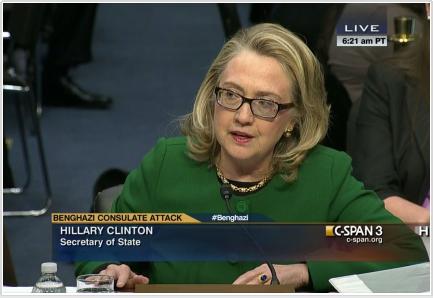
With the “mainstream media” by and large giving Hillary Clinton a pass on her past, few Americans realize how many Pinocchio faces need to be tacked onto many of her statements. Clinton is said to be “unquestionably” the frontrunner for the Democratic nomination, essentially the presumptive nominee. That is unquestionably true – but only because she has not been questioned with much rigor at all. And on those few occasions when she has been asked hard questions, she has often ducked them.
For example, at the March 9 debate in Miami, Jorge Ramos, the longtime anchor for Noticiero Univision, asked Secretary Clinton whether she would quit the presidential race if she were indicted for putting classified information on her private email server.
She replied: “Oh, for goodness sake, it’s not going to happen. I’m not even answering that question.” [See Consortiumnews.com’s “Is Hillary Clinton Above the Law?”]
Not so fast, Madame Secretary. It is looking more and more as if you will, after all, have to answer that question.
Those “Damn Emails” Again
On Wednesday in Washington, DC, a federal judge issued an order that may eventually require Clinton to testify under oath in a lawsuit related to the private email server she used while Secretary of State.
The judge gave Judicial Watch, a conservative watchdog group, permission to take sworn testimony from close Clinton aide Huma Abedin and others over the next eight weeks. It is possible that Clinton herself will have to testify under oath on the serious email issue before arriving at the Democratic convention in July.
One key issue in question is whether all relevant documents have been provided to Judicial Watch. My guess is that – given lawyers’ propensity, and often their incentive, to secure delay after delay in such proceedings – there may not be much likelihood of all this happening that quickly.
More precarious for Secretary Clinton, in my view, is the possibility that FBI Director James Comey will be allowed to perform a serious investigation and pursue Clinton on sworn testimony she has already given; for example, on whether she was aware of an operation run out of Benghazi to deliver Libyan weapons to rebels in Syria.
During her marathon testimony on Oct. 22, 2015, to the House Select Committee on Benghazi chaired by Rep. Trey Gowdy, R-South Carolina, Rep. Mike Pompeo, R-Kansas, was very specific in his questioning, leaving Clinton little wiggle-room:
Pompeo: Were you aware or are you aware of any U.S. efforts by the U.S. government in Libya to provide any weapons, directly or indirectly, or through a cutout, to any Syrian rebels or militias or opposition to Syrian forces?
Clinton: No.
Pompeo: Were you aware or are you aware of any efforts by the U.S. government in Libya to facilitate or support the provision of weapons to any opposition of Gadhafi’s forces, Libyan rebels or militias through a third party or country?
Clinton: No.
Did Secretary Clinton think we were “born yesterday,” as Harry Truman used to say? From what is already known about the activities of the U.S. “mission” and “annex” in Benghazi and the role played by the late Ambassador Christopher Stevens there, it seems quite likely that Clinton perjured herself in answering No.
And I believe this will become quite clear, if the FBI is allowed to pursue an unfettered investigation – and even clearer if the National Security Agency shares the take from its dragnet surveillance.
But those are big IFs. If I read President Barack Obama correctly, he will be more inclined to tell Attorney General Loretta Lynch to call off the FBI, just as he told former Attorney General Eric Holder to let retired General (and CIA Director) David Petraeus off with a slap on the wrist for giving his mistress intelligence of the highest classification and then lying about it to the FBI.
As for Clinton, perjury is not the kind of rap that she would welcome as she pursues the presidency. Trouble is, not only FBI investigators but also NSA collect-it-all snoopers almost certainly have the goods on whatever the truth is, with their easy access to the content of emails both classified and unclassified. [See Consortiumnews.com’s “Hillary Clinton’s Damning Emails.”]
Sadly, Comey and his counterparts at NSA are likely to cave in if the President tells them to cease and desist. Indeed, like legendary FBI Director J. Edgar Hoover, they may relish the prospect of being able to hold their knowledge of Hillary Clinton’s possible perjury and other misdeeds like a sword of Damocles over her head if she becomes president.
Whistleblower Needed
Thus, unless another patriot with the courage of an Edward Snowden or a Daniel Ellsberg recognizes that his primary duty is to honor his/her oath “to support and defend the Constitution of the United States against all enemies foreign and domestic,” and acts accordingly, the country could end up with a compromised President beholden to Hoover’s successors and the NSA sleuths who “collect everything,” including the emails of the Secretary of State – and those of the President.
Those at the FBI and NSA with the courage to consider whistleblowing need to be aware of the proud tradition they would be joining. The first recipient of the Sam Adams Award for Integrity in Intelligence (2002) was Coleen Rowley of the FBI, and in 2004 the award was given to FBI analyst and translator Sibel Edmonds.
As for signals intelligence, no fewer than four Sam Adams whistleblower awardees have come from NSA and its British counterpart GCHQ: the UK’s Katharine Gun (2003), and three from NSA itself – Thomas Drake (2011), Edward Snowden (2013), and William Binney (2015).
More distinguished company among people of integrity would be difficult – if not impossible – to find. In a few months, we will be considering nominations for the award to be given in 2017.
If Russia Had ‘Freed’ Canada
By Joe Lauria | Consortium News | May 5, 2016
As the United States plans to move thousands of NATO troops to Russia’s borders and continues to bolster a fiercely anti-Russian regime in neighboring Ukraine, the official line in Washington and its subservient corporate media is that beneficent America is simply seeking to curtail Moscow’s “aggression.” But the U.S. government and media might look at things quite differently if the shoe were on the other foot.
What, for instance, would the U.S. reaction be if Russia instead had supported the violent overthrow of, say, Canada’s government and assisted the new Ottawa regime’s “anti-terrorist operations” against a few rebellious “pro-American” provinces, including one that voted 96 percent in a referendum to reject the new Russian-backed authorities and attach itself to the U.S.?
If the U.S. government tried to help these embattled “pro-American” Canadians – and protect the breakaway province against the Russian-installed regime – would Washington see itself as the “aggressor” or as simply helping people resist anti-democratic repression? Would it view Russian troop movements to the U.S. border as a way to stop an American “invasion” or rather an act of “aggression” and provocation by Russia against the United States?
The Ukraine Reality
Before playing out this hypothetical scenario, let’s look at the actual scene in Ukraine today as opposed to the gross distortion of reality fed the American people by the U.S. mainstream media the past two years. The reality is not the State Department’s fable of a pro-democracy “revolution” cleaning up corruption and putting Ukrainian people first.
In the real world instead, extreme right-wing nationalists took control of a popular protest by mostly western Ukrainians to spearhead a violent coup that succeeded on Feb. 22, 2014, in overthrowing President Viktor Yanukovych, a man whom I interviewed in 2013 after he had been democratically chosen in an election certified by the Organization for Security and Cooperation in Europe.
Proof of the U.S. role in the coup came in a leaked telephone conversation several weeks earlier between U.S. Assistant Secretary of State for European and Eurasian Affairs Victoria Nuland, and Geoffrey Pyatt, the U.S. ambassador to Ukraine. In the conversation, Nuland and Pyatt discussed how the U.S. could “midwife” the unconstitutional change of government and they rated which Ukrainian politicians should be put in charge, with Nuland declaring “Yats is the guy,” a reference to Arseniy Yatsenyuk.
As for the European Union’s less aggressive approach to the Ukraine situation, Nuland declared: “Fuck the E.U.”
Nevertheless, after the coup, Western governments denied there ever was a coup, peddling the line that Yanukovych simply “ran away,” as though he woke up one morning and decided he didn’t want to be president anymore.
In fact, on Feb. 21, to contain the mounting violence, Yanukovych signed a European-brokered deal to reduce his powers and to hold early elections. But the next day, as right-wing street-fighters overran government buildings, Yanukovych fled for his life – and the West moved quickly to consolidate a new government under anti-Russian politicians, including Nuland’s choice—Yats as prime minister. (Yatsenyuk remained prime minister until last month when he resigned amid complaints that his stewardship had been disastrous for the Ukrainian people.)
A Resistance Emerges
Since the vast majority of Yanukovych’s support came from the ethnically Russian eastern half of the country, some Yanukovych backers rose up to challenge the legitimacy of the coup regime and to defend Ukraine’s democratic process.
Instead the West portrayed this resistance as a Russian-instigated rebellion against the newly minted and U.S.-certified “legitimate” government that then launched a violent repression of eastern Ukrainians who were deemed “terrorists.”
When Russia supported the resisters with weapons, money and some volunteers, the West accused Russia of an “invasion” and “aggression” in the east. But there has never been satellite imagery or other proof of this alleged full-scale Russian “invasion.”
In the midst of the Kiev “anti-terrorist” offensive in the east, on July 17, 2014, a Malaysian commercial airliner, Flight MH-17, was shot out of the sky, killing all 298 people on board. The United States, again offering no proof, immediately blamed Russia.
Over the past year, the fighting has been largely contained after Russian, Ukrainian and European leaders negotiated the Minsk Accords, though they are far from being implemented and widespread violence could break out again at any time.
Throughout the entire crisis the United States has insisted its motives are pure, including its new plans for deploying some 4,000 NATO troops, including about half American, on Russia’s Eastern European borders north of Ukraine.
President Barack Obama told the U.N. General Assembly last year that the U.S. had no economic interests in Ukraine. But former State Department official Natalie Jaresko served as Ukraine’s finance minister until recently and Vice President Joe Biden’s son sits on the board of a major Ukrainian company. U.S. investment also has increased since the coup.
Yanukovych’s overthrow occurred after he chose a Russian economic plan rather than sign an association agreement with the European Union, which Ukrainian economic analysts warned would cost the country $160 billion in lost trade with Russia.
The E.U. plan would also have opened Ukraine to Western neoliberal economic strategies designed to exploit the country for the benefit of Western capital and local oligarchs (one of whom, Petro Poroshenko, emerged as the new president).
Turning the Tables
To help American readers better understand what has transpired in Ukraine, it may be useful to see what it would be like if the tables were turned. What would the story be like if Russia played the role of the U.S. and Canada the role of Ukraine? Most Americans would not be pleased.
In this reverse scenario, the world’s mainstream media would follow Moscow’s line and present the story as a U.S. “invasion” of Canada. The media would explain the movement of Russian troops to the U.S. border as nothing more than a peaceful step to deter U.S. “aggression.”
But Americans might see matters differently, siding with the breakaway Maritime provinces resisting the Moscow-engineered violent coup d’etat in Ottawa. In this scenario, Prince Edwards Islanders would have voted by over 90 percent to secede from the pro-Russian regime in Ottawa and join the United States, as Crimea did in the case of Ukraine. People in Nova Scotia and New Brunswick – stressing their close historic ties to America – also would make clear their desire not to be violently absorbed by the Ottawa coup regime.
In this alternative scenario, Moscow would condemn Prince Edwards Island’s referendum as a “sham” and vow never to accept its “illegal” secession. The popular resistance in Nova Scotia and New Brunswick would be denounced as “terrorism” justifying a brutal military crackdown by Russian-backed Canadian federal troops dispatched to crush the dissent. In this “anti-terrorist operation” against the breakaway region, residential areas would be shelled killing thousands of civilians and devastating towns and cities.
In this endeavor, the Canadian army would be joined by Russian-supported neo-fascist battalions that had played a crucial role in the overthrow of the Canadian government. In the Maritime city of Halifax, these extremists would burn alive at least 40 pro-U.S. civilians who took refugee in a trade union building. The new government in Ottawa would make no effort to protect the victims, nor conduct a serious investigation to punish the perpetrators.
Ignoring a Leak
Meanwhile, proof that Russia was behind the overthrow of the elected Canadian prime minister would be revealed in a leaked conversation between Moscow’s foreign ministry chief of the North America department and the Russian ambassador to Canada.
According to a transcript of the leaked conversation, the Moscow-based official would discuss who the new Canadian leaders should be several weeks before the coup took place. Russia would launch the coup when Canada decided to take a loan package from the U.S.-based International Monetary Fund that had fewer strings attached than a loan from Russia.
Russia’s ally in Beijing would be reluctant to back the coup. But this would seem to be of little concern to Moscow’s man who is heard on the tape saying, “Fuck China.” Although this conversation would be posted on YouTube, its contents and import would be largely ignored by the global mainstream media, which would insist there was no coup in Ottawa.
Yet, weeks before the coup, the Russian foreign ministry official would be filmed visiting protesters camped out in Parliament Square in Ottawa demanding the ouster of the prime minister. The Russian official would give out cakes to the demonstrators.
The foreign ministers of Russian-allied Belarus and Cuba would also march with the protesters through the streets of Ottawa against the government. The world’s mainstream media would portray these demands for an unconstitutional change of government as an act of “democracy” and a desire to end “corruption.”
In a speech, the Russian foreign ministry official would remind Canadian businessmen that Russia had spent $5 billion over the past decade to “bring democracy” to Canada, much of that money spent training “civil society” activists and funding anti-government “journalists.” The use of these non-governmental organizations to overthrow foreign governments that stand in the way of Russia’s economic and geo-strategic interests would have been well documented but largely ignored by the global mainstream media.
But recognizing the danger from these “color revolution” strategies, the United States would move to ban Russian NGOs from operating in the U.S., a tactic that would be denounced by Russia as America’s rejection of “democracy.”
The Coup Succeeds
The Canadian coup would take place as protesters violently clashed with police, breaking through barricades and killing a number of police officers. Snipers would fire on the police and the crowd from a nearby Parliament Square building under the control of hardline pro-Russian extremists. But the Russian government and the mainstream media would blame the killings on the embattled Canadian prime minister.
To stem the violence, the prime minister would offer to call early elections but instead would be driven from office violently by the pro-Russian street gangs. Russia and the global mainstream news media would praise the overthrow as a great step for democracy and would hail the pro-Russian street fighters who had died in the coup as the “Heavenly Hundred.”
Following the coup, Russian lawmakers would compare President Barack Obama to Adolf Hitler for allegedly sending U.S. troops into the breakaway provinces to protect the populations from violent repression, and for accepting the pleas of the people of Prince Edward Island to secede from this new Canada.
Obama would be widely accused of ordering an “American invasion” and committing an act of “American aggression” in violation of international law. But the Maritimes would note that they had long ties to the U.S. dating back to the American Revolution and didn’t want to live under a new regime imposed by a faraway foreign power.
Russia would claim intelligence proving that U.S. tanks crossed the Maine border into New Brunswick, but would fail to make the evidence public. Russia would also refuse to reveal satellite imagery supporting the charge. But the claims would still be widely accepted by the world’s mainstream news media.
For its part, Washington would deny it invaded but say some American volunteers had entered the Canadian province to join the fight, a claim met with widespread media derision. Russia’s puppet prime minister in Ottawa would offer as proof of an American invasion just six passports of U.S. soldiers found in New Brunswick.
Taking Aim at Washington
When – during one of the new regime’s “anti-terrorist” offensives – a passenger jet would be shot down over Nova Scotia killing all on board, Russia would accuse President Obama of being behind the outrage, charging that the U.S. had provided the powerful anti-aircraft missile needed to reach a plane flying at 33,000 feet.
But Moscow would refuse to release any intelligence to support its claim, which would nevertheless be accepted by the world’s mainstream media.
The plane’s shoot-down would enable Russia to rally China and other international allies into imposing a harsh economic boycott of America to punish it for its “aggression.”
To bring “good government” to Canada and to deal with its collapsing economy, a former Russian foreign ministry official would be installed as Canada’s finance minister, receiving Canadian citizenship on her first day on the job.
Of course, Russia would deny that it had economic interests in Canada, simply wanting to help the country free itself from oppressive American domination. But Russian agribusiness companies would take stakes in Albertan wheat fields and the son of Russia’s prime minister as well as other well-connected Russians would join the board of Canada’s largest oil company just weeks after the coup.
Russia’s ultimate aim, beginning with the imposition of the sanctions on the U.S. economy, would appear to be a “color revolution” in Washington, to overthrow the U.S. government and install a Russia-friendly American president.
This goal would become clear from numerous statements by Russian officials and academics. A former Russian national security adviser would say that the United States should be broken up into three countries and write that Canada would be the stepping stone to this U.S. regime change. If the U.S. loses Canada, he would declare, it would fail to control North America.
But the world’s mainstream media would continue to frame the Canadian crisis as a simple case of “American aggression.”
This fictional scenario perhaps lays bare the absurdity of the U.S. version of events in Ukraine.
Joe Lauria is a veteran foreign-affairs journalist based at the U.N. since 1990. He can be reached at joelauria@gmail.com and followed on Twitter at @unjoe.
Featured Video

10 Hard Facts About the Holocaust
or go to
Aletho News Archives – Video-Images
From the Archives
How Taiwan Became an Issue
By Joseph Solis-Mullen | The Libertarian Institute | August 22, 2024
Given that official Washington seems increasingly determined to fight Beijing over Taiwan, concerned Americans are right to wonder: how did the question of Taiwan come to be of such purported importance to these global powers? … continue
Blog Roll
Recent Comments
loongtip on Scott Ritter says he was … loongtip on Eilat port faces worst crisis… loongtip on British minister dreams of kid… loongtip on Kiev awards major mining proje… loongtip on UK believes it can seize any t… loongtip on Pirates of the Caribbean loongtip on Australian festival boycotted… loongtip on Kiev seeks to ban Russian musi… seversonebcfb985d9 on Somaliland and the ‘Grea… John Edward Kendrick on Kidnapped By the Washington… aletho on Somaliland and the ‘Grea… John Edward Kendrick on Somaliland and the ‘Grea…


 Aletho News
- Figures behind massacre of starving Gazans now shaping US Gaza plan
- “Real men go to Tehran” — The Zion-Con fantasy of regime change in Iran
- Why are EU leaders suddenly being nice to Russia?
- South Korean court sentences former president Yoon to five years in prison over martial law bid
- France Escalates Warmongering by Expanding Intelligence Support for Ukraine
- Venezuela Has Right to Have Relations With China, Russia, Cuba, Iran – Acting President
- Attacks in the Black Sea aim to destabilize relations between Russia and the Turkic world
- US Sending Troops to Middle East Over Trump’s Threats Against Iran – Reports
- The anti-Iran human rights bazaar
- Congratulations On Your Diagnosis
- If Americans Knew
- 30 tons of rubble for every resident of Gaza – Not a ceasefire Day 98
- ‘My leg went to heaven before me’: Israeli war extinguishes Gaza childhoods
- Founders of deadly GHF ‘shaping’ new US-backed administration for Gaza: Report
- Genocide isn’t a mistake. Which is why the media can’t tell you the truth about Gaza
- “Praise Allah, There Are Still People Like You”: Jeffrey Epstein Nurtured Israel-Emirates Ties Before Abraham Accords
- 41% drop in Gaza births may be “reproductive violence” – Not a ceasefire Day 97
- Trump family has long record of supporting Israeli causes
- Militant Pro-Israel Group Agrees to Halt Operations in New York
- During “ceasefire,” at least 100 Gaza children killed – clearly NOT a ceasefire Day 96
- Israel Has Demolished 2,500 Buildings in Gaza Since Signing Ceasefire Deal
- No Tricks Zone
- Philosopher Schopenhauer: Climate Science Certainty Stems From Stupidity, Ignorance
- New Study: Species Extinction Rates Declining Since 1980 – ‘Climate Change Is Not An Important Threat’
- Denmark Places Climate Protection Above Animal Welfare, Poisoning And Culling Cows
- New Study: Greenland Was 3-7°C Warmer And Far Less Glaciated Than Today 6000-8000 Years Ago
- German Media Report That Current Frigid Weather Can Be Explained By Arctic Warming!
- Berlin Blackout Shows Germany’s $5 Trillion Green Scheme Is “Left-Green Ideological Pipe Dream”
- Modeling Error In Estimating How Clouds Affect Climate Is 8700% Larger Than Alleged CO2 Forcing
- Berlin’s Terror-Blackout Enters 4th Day As Tens Of Thousands Suffer In Cold Without Heat!
- Expect Soon Another PIK Paper Claiming Warming Leads To Cold Snaps Over Europe
- New Study: Human CO2 Emissions Responsible For 1.57% Of Global Temperature Change Since 1750
 Aletho News