The Washington Post & The “Super Hot” Arctic
By Paul Homewood | Not A Lot Of People Know That | November 20, 2016

Daily mean temperature and climate north of the 80th northern parallel, as a function of the day of year.
http://ocean.dmi.dk/arctic/meant80n.uk.php
There has been much excitement about much of the Arctic being warmer than usual at the moment.
The Washington Post describes it as “insane”. (The 36 degrees is Fahrenheit, by the way).

Chris Mooney is well known for biased and misleading reporting where climate change is concerned, but it is always sad to see otherwise respectable meteorologists such as Jason Samenow, one of the Capital Weather Gang, roped in as well, something that has become more frequent in recent years.
The simple reality, as Samenow should know, is that such departures above “normal” are not unusual during the colder months in the Arctic.
DMI have records back to 1954 for Arctic temperatures, and a quick trawl uncovers several similar instances, for instance 1972, 1974 and 1976:


http://ocean.dmi.dk/arctic/meant80n.uk.php
The only difference was that these occurrences took place in January/February, rather than November. We should bear in mind that the 1970s were a time of expanding Arctic ice.
The Washington Post article actually explains what has been going on:
The Arctic is super-hot, even as a vast area of cold polar air has been displaced over Siberia…..
It’s about 20C [36 degrees Fahrenheit] warmer than normal over most of the Arctic Ocean, along with cold anomalies of about the same magnitude over north-central Asia,” Jennifer Francis, an Arctic specialist at Rutgers University, said by email Wednesday.
“The Arctic warmth is the result of a combination of record-low sea-ice extent for this time of year, probably very thin ice, and plenty of warm/moist air from lower latitudes being driven northward by a very wavy jet stream.”

The key is the comment about warm/moist air. Because of latent heat, when that moist air turns back to water, heat is given off, thus warming the atmosphere disproportionately.
Jennifer Francis has long claimed that the “wavy jetstream” is caused by melting Arctic ice. Yet HH Lamb found the same phenomenon in the 1960s and 70s, and believed it was caused by a colder Arctic!
Indeed, if we check out the GISS global temperature maps for the three years I have highlighted above, 1972, 1974 and 1976, we find very similar weather patterns, with very cold polar air displaced over Siberia and North America, along with warm air invading the Arctic.


http://data.giss.nasa.gov/gistemp/maps/
The truth is that there is nothing unusual or unprecedented going on here. It is simply weather.
4,000 NATO troops take part in Lithuania’s largest exercise near Russia’s border
RT | November 20, 2016
Eleven NATO countries have sent 4,000 troops to Lithuania, the largest Baltic nation, to participate in this year’s Iron Sword exercises. The war games are meant to test the country’s ability to rapidly deploy a large number of troops.
The exercise, which started on Sunday and is set to last till December 2, involves training at two separate sites in Lithuania.
“This time poses new unexpected challenges before our military. We have to prepare units and their commanders to efficiently respond to conventional military threats,” General Waldemar Rupšys, the head of Lithuania’s Land Forces, told journalists ahead of the exercise.
This year’s Iron Sword maneuver, which is the third and, by far, largest held so far, involves almost 4,000 troops from the US, the UK, Germany, Canada, Poland, Romania, Slovenia, Luxemburg, and the three Baltic states. The exercises held in the last two years had 2,500 and just over 2,000 troops participating, respectively.
The troops will train to execute offensive and defensive operations, rapid deployments, and other tasks, Lithuania’s Defense Ministry said.
Iron Sword 2016 is Lithuania’s first chance to test its new Žemaitija (Iron Wolf) brigade, which was formed earlier this year. It currently has two battalions and support units, but is to add two more battalions next year. The brigade consists of soldiers conscripted after Lithuania reinstated mandatory military service in March of 2015.
NATO is placing additional military assets in Eastern Europe and conducting intensified training there, claiming that such measures are necessary to deter what it calls “Russian aggression.” However, Moscow denies threatening its neighbors and says the alliance is using the notion as a pretext to justify increased military spending and encroach on Russia’s border.
Lithuania, like some other European NATO members, is struggling to meet its obligation to spend two percent of its GDP on defense, but the government says it will be able to meet this benchmark by 2018.
Egypt jails 3 anti-coup presenters for ‘false news’
MEMO | November 20, 2016
An Egyptian court on Saturday slapped three anti-coup TV presenters with a 3-year jail term each in absentia for spreading false news.
Egyptian authorities accuse Mohamed Naser, a presenter at the Mekameleen satellite channel, and two other colleagues of incitement and spreading false news.
The presenters, for their part, say they expose human rights abuses committed by Egypt’s military-backed authorities.
Saturday’s verdict, which still can be appealed, came shortly after an Egyptian court slapped the head of Egypt’s press syndicate and two board members with a 2-year jail term each for harbouring two journalists sought by the authorities at the syndicate’s headquarters.
In May, police raided the syndicate’s premises in Cairo, arresting the two journalists for allegedly “inciting protests” and “plotting to overthrow the ruling regime”.
Syndicate officials have decried the raid – the first in the syndicate’s history – as a “blatant assault on journalists’ dignity” and have demanded the interior minister’s dismissal.
Egyptian authorities have launched a harsh crackdown on dissent following the 2013 coup against Mohamed Morsi, Egypt’s first freely elected president.
Last year, the New York-based Committee to Protect Journalists (CPJ) said more than 20 journalists had been detained by Egyptian authorities since the coup.
John Kirby quotes terrorists to lie about Russia
By Adam Garrie | The Duran | November 19, 2016
Recently, John Kirby lost his rag when challenged to name the sources which gave him ‘information’ implying that Russia had helped the Syrian Arab Army bomb civilian targets such as hospitals. His reaction was typical of Shakespeare’s dictum, “The lady doth protest too much, methinks”.
As it turns out, Kirby was not quoting any government sources, he admitted as much. He claimed that the United States, her allies, Russia or Syria did not provide the information upon which he relied. Instead he stated that the claims he was making were based on findings from ‘aid organisations’. Such a phrase, whilst linguistically innocuous, implies something very different in the context of the Syrian conflict. Many groups calling themselves ‘aid organisations’ are actually either terrorist sympathisers or terrorist organisations in all but name.
One such organisation is the western funded White Helmets, an organisation whose crimes against humanity The Duran was among the first to expose.
It is this organisation who filmed the savage, medieval beheadings of prisoners before disposing of the mutilated bodies. It is this organisation whose bearded members jump for joy, holding guns, whilst chanting for the death of legitimate political leaders like President Assad, it is this organisation which acts on behalf of Al-Qaeda’s surrogate in Syria, al-Nusra. It is this organisation that provided the United States with false information about Russia which John Kirby was all too happy to parrot as though it was fact.
Russian Defence Ministry spokesman Major General Igor Konashekov spoke of Kirby’s insincerity in the following way:
After three days it is absolutely clear for everyone that the allegedly bombed “hospitals” and “mobile clinics” in Aleppo exist only in US State Department spokesman John Kirby’s imagination. This ‘information blooper’ will certainly remain a stain on Admiral Kirby’s biography.
He continued:
We have repeatedly asked representatives of the United States, Great Britain, France, Germany, other countries and international organisations to provide any information on the location of medical aid posts (hospitals) or schools in Syrian areas controlled by terrorists… The answer is always the same—no one has such information. There are only reports by the ‘White Helmets’ or anonymous local “journalists’.
Kirby’s outburst and the false report which he based his previous statements on, demonstrates not just a lack of transparency on behalf of the United Sates, but a totally dishonest position. To think that the most powerful country in the world has to rely on off-shoots of terrorist organisations in order to obtain false information with which to slander Russia, is beyond absurd and beyond pathetic, it is disgraceful.
If the United States is as powerful as the world knows it is, the fact that it is relying on terrorist groups like the White Helmets for information, is demonstrative of a wanton act of deception. US intelligence could find the facts if it was the facts which they were interested in. Clearly, this is not the situation. They are interested in parroting terrorist propaganda which conforms to President Obama’s wicked agenda.
What’s even more disgraceful is that many western mainstream media outlets take people like Kirby at face value when they speak of amorphous ‘aid organisations’. They do not bother to investigate the fact that such ‘aid organisations’ are actually parts of terrorist syndicates working with a stated mission to wage war against the legitimate government of Syria.
We now know the real reason John Kirby went insane when asked some sensible questions by RT’s Gayane Chichakyan. He was caught relying on false information by terrorist sources.
The sooner he and his ilk are gone forever, the better. Although it is still early days, I find it personally hard to believe that Donald Trump, who appears to be genuinely interested in fighting terrorism, would allow his inferiors to spout such lies.
Time will tell, but nothing could be as bad as this.
Will Trump Dump The Wahabbi Autocrats?
By Caleb Maupin – New Eastern Outlook – 20.11.2016
US leaders almost always justify their foreign policy with words about “democracy” and “human rights.” Especially when talking about the Middle East, the insincerity of such words are blatantly obvious. While US leaders criticize Iran and Syria for alleged human rights violations, the entire world can see that the US allies in the region are serial human rights violators.
Israel has been widely condemned for its treatment of Palestinians. Saudi Arabia is a country where even the basic notion of human rights does not exist. The Kingdom is an absolute monarchy where people can still be executed by beheading or crucifixion in the 21st century. Crimes punishable by death under the Saudi regime include “sorcery” and “insulting the King.” Under Saudi law, the people are not citizens with rights, but rather “subjects” who are essentially the King’s property.
Qatar is yet another repressive regime. Like Saudi Arabia, it is an absolute monarchy, where a King serves as the unelected autocrat.
Bahrain is known not only for its lack of democratic structures, but for its repression of the Shia Muslim majority who frequently take to the streets, demanding their rights.
The United Arab Emirates, Kuwait, Jordan, and almost every other US-aligned regime in the Arab world has a primitive political system, centered on an autocratic monarchy. These regimes are known to torture, behead, flog, repress free speech, oppress religious minorities, and do all kinds of things US leaders claim to oppose.
This does not prevent the United States from selling weapons to these regimes, or from purchasing their oil. This also does not prevent the USA from establishing military bases on their soil, and otherwise coddling them.
In fact, the Financial Times describes how the United Arab Emirates is becoming a beloved “tax haven” for the rich and powerful in the western world. While western leaders love to talk about human rights, they have no problem with autocratic emirates handling their money.
The Roots of Wahabbi Terrorism
More shockingly, the involvement of these regimes in terrorism has not deterred US support. It took 15 years for the classified 28 pages of the 9/11 Commission report to be released. The pages revealed that Saudi government officials had collaborated with the 9/11 hijackers. It furthermore revealed that Saudi Arabia had been uncooperative and offered minimal support to US officials with their investigations during the aftermath of the attacks.
The Saudi Royal family owes its reign to the British Empire. During the 1900s the British discovered that the House of Saud were useful allies against the Ottoman Empire, and were more than willing to sell their oil at a reasonable price. The Saudi monarchy professes a particularly conservative brand of Islam known as “Wahabbism.”
While not every Wahabbi has been involved in terrorism, Al-Queda, ISIS, Al-Nusra, Osama Bin Laden, Omar Mateen, and nearly every Middle-Eastern or Central-Asian terrorist who has menaced the world in recent years has been an adherent of Wahabbism. Wahabbism is particularly anti-Western and anti-American. Opponents of the Saudi ideology often call it “Takfirism,” a term that refers to Wahabbi’s willingness to kill other Muslims with whom they disagree.
The relationship between Wahabbi fanatics and Britain’s wealthy has not ended. A recent article in the Financial Times describes how British Houses of Finance now specialize in “Islamic Banking.” While many Islamic scholars describe the very concept as fraudulent, many financial institutions are accommodating sultans, emirates, and princes who adhere to strict Wahabbi laws. Islam forbids lending money for interest, so many financial institutions have invented loopholes with hidden fees, investment returns, and other mechanisms that can accommodate strict adherents.
During the 1980s, the CIA worked with the heir of a wealthy Saudi construction dynasty to build a Wahabbi army. Osama bin Laden was sent to Afghanistan to build an army of “Mujihadeen” to topple the People’s Democratic Party. The US worked closely with the fanatical Wahabbi terrorists to battle the Marxist government of Afghanistan and their Soviet allies.
Currently, the United States works with Saudi Arabia to fund a Wahabbi insurgency against the secular Syrian Arab Republic. ISIS and Al-Nusra are known to be terrorists inspired by the Saudi ideology. The Saudis have been caught directly helping them out. Among the US backed “moderate rebels,” many Wahabbis can also be found.
Most of the various US-aligned autocracies in the Middle East can be linked to the Wahabbi forces in Syria. Bahrain, Qatar, Kuwait, and other regimes have made the goal of “regime change” in Syria a priority, and many ISIS fighters have emerged from their respective populations.
Is The Tide Turning?
While the past three presidencies of Bush, Obama, and Clinton have involved massive coddling of the Saudi regime, Donald Trump often spoke against Saudi Arabia during his Presidential campaign. Furthermore, in a recent move, the US Congress dramatically overrode Barack Obama’s veto, and passed the controversial JASTA bill, allowing victims of terrorism to sue the Kingdom of Saudi Arabia in US courts.
While Trump often appealed to ignorant and Islamophobic sentiments among Americans, he also appealed to an isolationist desire to stop meddling around the world. Trump made fighting ISIS, the Wahabbi extremist group unleashed amid US-Saudi regime change efforts, a key plank of his campaign.
Will Trump live up to his words? Will the USA end its alliance with Pro-Wahabbi autocratic regimes that are linked to terrorism?
Though Trump spoke against the Saudis and talked of fighting ISIS, his campaign included reckless denunciations of the Islamic Republic of Iran. Trump’s speeches often seemed to lump Iran in with ISIS, ignoring the fact that Iranian Revolutionary Guards are on the battlefield each and every day, risking their lives to defeat ISIS.
Iran is greatly threatened by ISIS terrorism. ISIS and most Wahabbis consider the Islamic Republic of Iran to be led by “Shia Apostates.” ISIS and other anti-government forces in Syria have recruited fighters from around the world on the basis of toppling Syrian President Bashar Assad because of his Alawi faith, which Wahabbis consider to be a variation of Shia apostasy.
Contradictory Middle East Positions
For too long, the USA has been targeting secular, nationalist governments like the Baathist regimes of Iraq and Syria, the Islamic Republic of Iran, or Gaddafi’s Libya. In doing so they have been passively helping and strengthening the bloodthirsty Wahabbi fanatics who these regimes have held back, and whose ideological foundation is promoted by Saudi Arabia.
If Trump is serious about stopping ISIS and the surrounding wave of Wahabbi terrorism, he will immediately end the US financial and military relationship with the Saudi regime, as well as the nearby, pro-Wahabbi autocracies.
Furthermore, Trump will need to end his irresponsible demonization of the Islamic Republic of Iran, and join with the Iranians, the Russians, the Syrian government, and China in the fight against ISIS terrorism.
If Trump were to do this, it would be one of the most dramatic shifts ever seen in US foreign policy.
During his campaign, Trump has taken two somewhat contradictory positions in relation to the Middle East. While he has denounced Saudi Arabia and talked about how US “regime change” policies have strengthened terrorism, he has also repeated the anti-Iranian talking points of Netanyahu, and spoken with great admiration for Israel.
Israel has been the greatest direct beneficiary of the US policy in the Middle East. Each regime the US has targeted in the region–Syria, Iraq, and Iran–have been outspoken opponents of Israel who directly support Palestinian resistance. Meanwhile, the Wahabbi-linked autocrats denounce Israel in words, but do very little to threaten its existence or strength.
Israel’s primary enemies, Iran and Syria, are also the primary target of the Wahabbi fanatics and the Saudi monarchy. Israel and Saudi Arabia may denounce each other, but their foreign policies both center on hostility to what the Saudis call “the Shia crescent.”
Regarding the Middle East, the new President will be forced to decide whether he seeks to continue aligning US and Israel foreign policies, and targeting Iran and Syria, or whether he wants to end Wahabbi terrorism, and stop cooperating with the regimes actively linked to it.
Trump is often perceived as quite unpredictable. Whichever choice he makes, it is likely to surprise many people.
Caleb Maupin is a political analyst and activist based in New York. He studied political science at Baldwin-Wallace College.
Eyewitnesses Say Fallen FARC Rebels Were Ambushed by Sniper

Two FARC rebels, identified as Joaco (L) and Monica, were allegedly killed Wednesday by a government sniper. | Photo: Prensa Rural
teleSUR | November 18, 2016
Eyewitnesses told a verification team that the two rebel fighters with the Revolutionary Armed Forces of Colombia killed earlier this week in the northern department of Bolivar died as a result of an ambush by government forces, Prensa Rural reported Friday.
The Ministry of Defense claimed that the armed guerrilla rebels were killed in combat after carrying out criminal activities.
Meanwhile the leaders from the Revolutionary Armed Forces of Colombia, known as the FARC, said they were merely making their way to “pre-concentration” areas where members of the rebel army are gathering ahead of the final process of demobilization as part of the ongoing peace process.
Members of the Association of Agroecological and Mining Brotherhoods of Guamoco, a local organization, spoke to witnesses in the municipality of Santa Rosa del Sur, where the incident took place to collect testimonies.
According to these witnesses, the two victims, FARC rebels who went by the names Joaco and Monica, were standing near two houses near a section of town known as the “Y” when suddenly Joaca, who was on the phone, was struck by a bullet and fell to the ground. Monica then bent down to check on him when she too was struck by a bullet.
The testimonies were collected from people who were inside one of the houses and witnessed the entire series of events. Prensa Rural reported that the house contained four men, two women, a child, and an infant.
Government troops, who were positioned approximately 40 meters away, then fired two bursts of rounds into the air. Troops then ordered a third rebel fighter to the ground and subsequently detained him.
The government troops then harassed the locals, storming into their homes, reportedly insulting those present and demanding they produce identification. They further accused the civilians of being FARC collaborators. Locals reported that they fear reprisals from state security forces after being labeled collaborators.
Witnesses reported that two of the government soldiers wore masks to hide their identities. Others said they recalled seeing some of the government troops, in civilian clothing, visiting the house near where the killings took place.
The testimony from witnesses matched early statements from the FARC. Spanish lawyer Enrique Santiago, who has served as a legal advisor to the FARC during the peace negotiations in Havana, wrote Wednesday on his Twitter account that the two rebels were killed “by a sniper.”
The Tripartite Monitoring and Verification Mechanism, which forms part of the bilateral cease-fire agreement, was activated in order to conduct formal investigation of the events.
However, this early report raises serious questions about the conduct of the government soldiers. It is widely known within Colombia that there are high-ranking officials in the armed forces who oppose the peace process and may try to sabotage efforts to end the five-decade-long conflict.
Witness testimony belied the government’s version of events in an incident in April 2015 that left 13 dead. There the government claimed troops were ambushed but witnesses said the deaths were the product of a lengthy gun battle and that locals had warned the government soldiers not to make camp in the area. That incident took place before a bilateral cease-fire had been established and threatened to derail peace talks.
The details surrounding this latest incident, such as the presence of government troops in civilian clothing days earlier, suggests the killings were not the product of a chance encounter but rather a pre-planned operation.
The killing of the two FARC rebels marked the first documented break in some 80 days of the official bilateral cease-fire and, according to the Center for Resources for Analysis of the Conflict.
The Tripartite Mechanism is expected to issue a series of recommendations to avoid any future incidents.
FARC and government negotiators signed a new peace deal in Havana Saturday, just six weeks after a previous peace plan was narrowly rejected in a nationwide plebiscite. The new agreement includes modifications made after consultations with the “No” side as well as other sectors of Colombian civil society.
RELATED:
Exclusive: 2nd Colombia Deal ‘More Inclusive’ Says FARC Lawyer
Bottling the Demon of Free Trade: Trumpism and Protectionism
By Binoy Kampmark | Dissident Voice | November 18, 2016
The election of Donald J. Trump on Tuesday, November 8 terrified many who consider themselves notionally progressive or traditional republicans. It also terrified free trade ideologues, and those who believe that opening borders to boundless consumer goods and services eradicates poverty.
There are few better exponents of this idea on trade than Australian Prime Minister Malcolm Turnbull, whose insistence that protectionism remains an evil to be combated has sounded pious. Keep the markets open, while shutting borders to people desperately seeking refuge. In other words, keep such monsters as the Trans-Pacific Partnership Agreement on the table for full implementation, while flouting the UN Refugee Convention.
This view is featherbedded by other leaders ahead of the Asia-Pacific Economic Cooperation group summit taking place in Peru, all insisting with numbing acceptance that free trade is as natural as breathing air, axiomatic to the smooth functioning of a global economic and financial system.
Peru’s President Pedro Pablo Kuczynski decided to make his opening address to the leaders of the summit a platform for his fears about how “protectionism” was “taking over” in the UK and the United States.
Rather than addressing the reasons for pro-protectionist movements, the glorious assumptions of free trade are presumed. “It is fundamental,” suggested Kuczynski, “that world trade grow again and that protectionism be defeated.” His solution was to make APEC the ultimate critic, rather than interrogator, of such movements.
Japan’s trade minister, Hiroshige Seko, was similarly inclined. “We agreed to push forward free trade to counter protectionist sentiments.” Rather than actually addressing the core shibboleths of free trade that have seen a spike of criticism of its tenets, Seko presumed it to be a non-starter as an argument.
Ditto his colleague in government, Foreign Minister Fumio Kishida. “It’s time for APEC to show a strong commitment to free trade and contribute to sustainable growth and prosperity in the Asia-Pacific region.”
It never has been, nor will it ever be, but the politics of trade and the enriching of the corporate classes at the expense of social and public policy (medicine, environment) has taken place along one axis, ignoring the effects and views on those it supposedly benefits.
In Trumpland, and the world of Brexit, these supposed beneficiaries have roared their disapproval. They look at their bank balances and see diminishing returns. They fear the cost of increasing medication. Others are concerned about environmental degradation. All are concerned by surrendering sovereignty through the death of a thousand cuts.
The nonsense of free trade as a magic pudding of delight and gifts has populated the thinking of economic establishments for decades, and has only received a good bashing in recent years. Studies have been produced on specific free-trade deals showing that the trade engaged in is never that free, and never that competitive. No matter – ideology manufactures the necessary blinkers for free traders to insist on the virtues of such arrangements.
Amidst such Trump promises as the building of a defiant wall to keep unruly Mexicans out of the land of the free, or withdrawing funding from sanctuary cities who shelter undocumented immigrants, lies a promise to those not associated with the neo-liberal traditionalists. The Trans-Pacific Partnership, he promised, would be scrapped.
Once Hillary Clinton’s campaign effectively pulled the rug of calculation from under rival Bernie Sanders’ campaign, Trump intensified focus on the TPP and the notion of the unfair trade deal that would fail to deliver for American workers.
The response was not purely populist – the problems of such a trade deal provide a neat illustration on how modern governments treat their citizens relative to corporations. Notorious for unprecedented levels of secrecy, the entire base for negotiating a deal intended to influence countries through the Asia-Pacific rejected the very idea of civil society.
The message, in other words, is simply not getting through, despite the election result. The patrician classes feel they know better. Bloomberg View columnist Mihir Sharma provides a typical view, preferring to see trade in its global context: American workers bemoaning their returns from free trade, along with critics from the left, ignore “the obvious benefits of trade for workers in poorer countries, and thus barely deserves to be called progressive.”
Take the big view, and the long road, insists Sharma. That road, however, has become a vaguer one, with President Barack Obama admitting on Wednesday in Athens that the effects of globalisation on those “who feel they’re losing control of their future” had to be dealt with.
Despite such a statement, the status-quo, at least till Trump thunders into the White House, remains, shining a light on free trade enthusiasts. This can be gathered from the joint opinion piece by Obama and German Chancellor Angela Merkel, published by the German daily Wirtschaftswoche: “Germans and Americans must seize the opportunity to shape globalization according to our values and ideas.” (Be wary of Chinese efforts to do the same, in other words.)
Furthermore, “We have an obligation to our companies and our citizens – in fact, to the entire global community – to broaden and deepen our cooperation.” The ease of universalising a local or national project is irresistible in such messages.
For Trump, this pompous assertion of universality needs to end. Be openly self-interested; keep things distinct to the American program. To make America great again may require bruising trade battles precisely done to preserve perceived values. If necessary, raise tariffs and toughen the stance on China’s currency policy. Many who voted for him will find such views hard to fault, whatever their tangible consequences.
Binoy Kampmark was a Commonwealth Scholar at Selwyn College, Cambridge. He lectures at RMIT University, Melbourne and can be reached at: bkampmark@gmail.com.
Zuckerberg hints at third-party news verification to fight ‘fake news’ on Facebook
RT | November 19, 2016
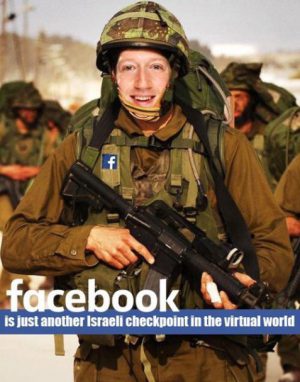 Facebook may entrust a third party with verifying content to stop so-called ‘fake news’ from spreading, its head said in a post. The social network, which is many people’s primary source of news, has recently been criticized for spreading misinformation.
Outgoing US President Barack Obama launched the war on ‘fake news’ last week, complaining that it may have had an adverse effect on the presidential election. He claimed that social media hosts “much active misinformation” that “looks the same when you see it on a Facebook page or you turn on your television.”
There is speculation that fake news about presidential candidates may have played a considerable role in swaying the minds of voters who ultimately elected Republican Donald Trump. Facebook head Mark Zuckerberg initially dismissed the notion as “pretty crazy,” but this week Facebook and Google both said they would change their ad policies to prevent fake news websites from using their systems.
In a Friday post, Zuckerberg gave an update on how his network is planning to fight misinformation.
“Historically, we have relied on our community to help us understand what is fake and what is not,” he said, explaining that the reporting mechanism already in place on the site fights fake news along with clickbait, spam, and scams.
This may be not enough to combat inaccurate news content, however, so Facebook is considering engaging “trusted third parties” to filter out fake news.
Another possible approach would be to have Facebook police itself, which would mean installing “better technical systems to detect what people will flag as false before they do it themselves,” the FB head said.
Links to news stories classified by the network as untruthful would be flagged as fake for people trying to share or read them, according to Zuckerberg.
False stories circulating on Facebook during America’s presidential election campaign included one claiming that anchor Megyn Kelly had been fired from Fox News, another alleging an FBI agent involved in the Clinton investigation had been murdered, and even an announcement that the Pope had endorsed Trump.
At least 17 killed, dozens injured in E. Aleppo as rebels disperse protesters with machine gun fire
RT | November 19, 2016
At least 17 people were killed by heavy gunfire and about a dozen more were rounded up and executed after hundreds of civilians trying to leave eastern Aleppo protested against the rebel blockade of exit routes, the Russian Defense Ministry said.
Some 500 civilians took part in several protests in the rebel-occupied eastern part of Aleppo on Thursday, and at least 200 of them were trying to reach the Syrian government-controlled area at the time they were violently dispersed with live fire, Russian Defense Ministry spokesman Igor Konashenkov said.
“The militants dispersed the demonstration, shooting at the protesters from a heavy machine gun and then mined all the approaches to the checkpoint and placed snipers on the roofs of nearby houses,” Konashenkov said, as quoted by Sputnik news agency.
“Seventeen people died at the site, including two teenagers of 13 and 15 years of age, over 40 people were wounded,” he added.
Upon quelling one of the rallies, militants launched a hunt for the presumed organizers of the protests, the ministry spokesman said.
“Terrorists detained about 10 men, who they held to be ‘organizers’ of the riots, and drove them away in an unknown direction. They were shot dead the same evening,” Konashenkov said.
On Wednesday, the Defense Ministry’s spokesman said that about 1,500 civilians had taken to the streets of eastern Aleppo to protest against the militants’ occupation. Unconfirmed footage has emerged online in which people can be seen chanting slogans and calling on the local council to take action against the rebel groups.
Tuesday’s demonstrations were also violently suppressed by the militants, who killed and injured dozens of people, Konashenkov said, citing intelligence.
Civilians in the rebel-held part of the city are believed to be held as human shields as the humanitarian situation and drastic food shortages worsen. The terrorists have mined the streets approaching the humanitarian corridors to prevent civilians from using them to leave and threaten to kill any who defy their orders.
If Washington had ceased pursuing its agenda in Syria a year ago, the situation that exists in Aleppo today would never have arisen, investigative journalist Patrick Henningsen told RT.
“These are Syrian people on both sides, east Aleppo and west Aleppo. They are not pro-rebel, they are not pro-Assad. They are Syrian citizens and they clearly want to get some … life: they need food, they need shelter, and they try to protest and look what happened,” he added.
US spent $585mn on ‘promoting democracy’ worldwide in past year
RT | November 18, 2016
Washington invested $585 million in promoting democracy across the globe in the past year, the US Department of State’s financial report for fiscal year 2016 revealed.
According to the paper, the State Department’s total assets equaled $93.8 billion in the last fiscal year, which concluded on September 30, increasing by $3.2 billion compared to 2015.
Of this amount, $585 million was spent by the State Department under the article ‘Democracy, human rights and governance’ – $70 million down on the 2015 figure.
The report didn’t specify the projects funded by the agency abroad, but Secretary of State John Kerry wrote in the preface that “we have supported important democratic gains in Sri Lanka, Nigeria, and Burma.”
Kerry also stressed that “in an era of diffuse and networked power, we (the US) are focusing on strengthening partnerships with civil society, citizen movements, faith leaders, entrepreneurs, innovators, and others to promote democracy and good governance and address gender-based violence.”
In later pages, the authors of the report explained that the State Department promotes democratic values because “stable democracies are less likely to pose a threat to their neighbors or to the US.”
Washington achieves its goals through leveraging trade agreements, pursuing meaningful sanctions, fostering people-to-people ties and encouraging responsible business conduct, which respects human and labor rights, the paper said.
According to the report, the State Department always back those who strive for justice and accountability in “post-conflict states.”
“Activists and organizations in authoritarian countries rely on our support as they work toward peaceful democratic reforms, democratic institutions, respect for minority rights, and dignity for all,” it stressed.
Prior to the Russian parliamentary election in September, the US Agency for International Development (USAID), which works closely with the State Department, allocated $3 million to non-governmental organizations in Russia.
The investment was listed under the heading “For activity in Russia”, according to government website US Spending.
Since June, Russia has banned over a dozen NGOs from operating in the country as “undesirable” foreign groups.
The Soros Foundation, the US National Endowment for Democracy and Senator John McCain’s International Republican Institute were among the outlawed organizations.
“Today Russia faces its strongest attack in the past 25 years, targeting its national interests, values and institutes,” the Russian Senate said in its ruling.
“[The attack’s] main goal is to influence the internal political situation in the country, undermine the patriotic unity of our people, undermine the integration processes within the CIS space and force our country into geopolitical isolation,” the ruling added.
Russian President Vladimir Putin also criticized Washington for its attempts to democratize foreign states via military or other means.
“I’ve always been of the opinion that you can’t change things from the outside, regarding political regimes, power change,” Putin said in September.
“I’m sure – and the events of the past decade add to this certainty – in particular the attempts of democratization in Iraq, Libya, we see what they led to: the destruction of the state system and the rise of terrorism,” the president said.
Featured Video

Michael von der Schulenburg: Europe’s Self-Defeating Iran War Policy
or go to
Aletho News Archives – Video-Images
Frlom the Archives
Provoking a Path to Persia
The Saban Center’s prescient paper on war with Iran
By Maidhc Ó Cathail | October 20, 2011
In June 2009, the Saban Center for Middle East Policy published “Which Path to Persia?—Options for a New American Strategy toward Iran.” Writing in a tone strikingly reminiscent of the Project for a New American Century’s infamous pre-9/11 paper “Rebuilding America’s Defenses,” the six co-authors noted that, “It seems highly unlikely that the United States would mount an invasion without any provocation or other buildup.” For a think tank specifically established by media mogul Haim Saban to protect Israel, this could prove to be a formidable obstacle impeding their desired march—of U.S. troops—to Tehran.
“In fact, if the United States were to decide that to garner greater international support, galvanize U.S. domestic support, and/or provide a legal justification for an invasion, it would be best to wait for an Iranian provocation, then the time frame for an invasion might stretch out indefinitely,” Saban’s think-tankers ruefully observed.
“With only one real exception, since the 1978 revolution, the Islamic Republic has never willingly provoked an American military response, although it certainly has taken actions that could have done so if Washington had been looking for a fight. Thus it is not impossible that Tehran might take some action that would justify an American invasion. And it is certainly the case that if Washington sought such a provocation, it could take actions that might make it more likely that Tehran would do so (although being too obvious about this could nullify the provocation). However, since it would be up to Iran to make the provocative move, which Iran has been wary of doing most times in the past, the United States would never know for sure when it would get the requisite Iranian provocation. In fact, it might never come at all.”
Seemingly undeterred by Iran’s frustrating unwillingness to provide the requisite provocation, the analysts continued to examine this option… continue
Blog Roll
 Aletho News
- Hosting Washington’s war: Bahrain faces the consequences
- The US fell for its own Iran propaganda
- Seyed M. Marandi: Threat of Seizing Kharg Island & the Use of Nuclear Weapons
- Is there even an off ramp?
- Michael von der Schulenburg: Europe’s Self-Defeating Iran War Policy
- Sorry, The New Republic, Climate Change Isn’t Causing Somali Migration. Blame Civil Strife and Poverty.
- Expert Guts Claims That HPV Vaccine Reduces Cancer Risk
- No evidence Russia sabotaged Baltic cables – Finnish intel
- The Strategic Folly of a (Serious) US Ground Invasion of Iran
- US-Israeli war of aggression on Iran meant to reshape region: Omani FM
- If Americans Knew
- Are we on the precipice of World War III?
- ‘Catastrophic,’ Says UNICEF: 1,100+ Children Killed or Wounded in Mideast Since US-Israel Launched Iran War
- The Unbelievable Madness of Our War With Iran
- World Council of Churches calls on govts to hold Israel accountable for violations of intl law
- How to end the war on Iran that costs US taxpayers $1M per minute – Not a ceasefire Day 153
- Israeli strategic plans to “remake the Middle East” from the 1950s and since
- Honoring Gaza’s women who refused to let the world look away
- 97% of victims of war on Iran are Iranian, 98% of victims in war on Gaza are Gazans – Not a ceasefire Day 152
- Early Iran strikes cost $5.6 billion in munitions, Pentagon estimates
- Israel Decided the War, But Trump’s America Fights and Pays the Bill
- No Tricks Zone
- New Studies: UK Sea Levels Were 4 Meters Higher Than Today During The Mid-Holocene
- Destructive Green New Deal: German Energy And Metal Group Warns Of Drastic Crisis
- New Study Documents A 20-Year Pause In Arctic Sea Ice Decline – Driven By Internal Variability
- Wake-up Call: Survey Shows Majority Of Germans Now Favor Postponing Climate Targets!
- Televised! Leading German Political Candidate Tells Schoolchildren CO2 Makes Sun Hotter!
- New Study: A Century Warming Of 1.1°C Is ‘Commonplace’ And ‘Not Unusual’ During This Interglacial
- New Study: ‘Internal Noise’ And Volcanic Forcing Can Trigger 10-15°C Warming Within Decades
- Glaciers Worldwide Are Suddendly Surging, Experts Blame Warming!
- Surprising Discovery: Sahara Is Greening…Billions Of Trees Where Once Thought To Be Barren
- New Research Reaffirms Clouds, Aerosols, And Surface Solar Radiation Are ‘Driving The Climate System’
 Aletho News