Colombian Human Rights Leader Assassinated

Colombian human rights defender Emilsen Manyoma | Photo: Conpaz
teleSUR – January 18, 2017
On Tuesday police in the Pacific coast city of Buenaventura announced they had discovered the body of Afro-Colombian human rights activist Emilsen Manyoma, 32, and her partner Joe Javier Rodallega, who had been missing since Saturday.
A prominent leader in the Bajo Calima region since 2005, Manyoma was an active member of the community network CONPAZ where she was an outspoken critic of right-wing paramilitary groups and the displacement of local by international mining and agribusiness interests.
For the past year Manyoma played a key role in documenting attacks on human rights leaders in the region as part of the recently created Truth Commission.
The police said they had found the bodies in an advanced state of decomposition in a jungle area beside the highway. The Justice and Peace Commission, an ecumenical human rights group, reported that both bodies were severely wounded, with Rodallega’s hands reported tied. Radio Contagio reported that both bodies were beheaded.
While police did not release the names of any suspects, just days before their disappearance on Saturday, Rodallega reported being threatened and said a truck had been circling Manyoma’s house.
According to the human rights organization Front Line Defenders, at least 85 human rights defenders were murdered in Colombia in 2016 alone.
US-led coalition air raids breach Syria sovereignty: Cuba
Press TV – January 18, 2017
Cuba has denounced US-led coalition airstrikes in Syria, saying they violate the Arab country’s sovereignty as they are not permitted by Damascus.
Cuban Ambassador to the United Nations Humberto Rivero made the criticism during a UN Security Council meeting in New York on Wednesday.
“We demand the cessation of the violations of Syrian sovereignty and the foreign military presence without the consent and the coordination of operations with the Syrian government, the only legitimately elected authority in the country,” Rivero said.
He further condemned the “politicization” of the crisis in Syria and “the tampering of the humanitarian crisis and the suffering” of people in the Middle Eastern country.
Those who are “supplying weapons, money and patronage to terrorist groups are responsible for the thousands of civilian victims of the conflict and the humanitarian situation,” the Cuban diplomat said, expressing his opposition to “the promotion of an interventionist agenda” in Syria.
The US-led coalition has been conducting air raids against what are said to be Daesh terrorists inside Syria since September 2014 without any authorization from the Damascus government or a UN mandate. Analysts have assessed the strikes as unsuccessful as they have led to civilian deaths and failed to counter terrorism.
The US Air Force is also carrying out airdrops of weapons, ammunition and other equipment to militants fighting against the pro-government forces in Syria.
UN chief optimist on ‘conflict freeze’
Separately on Wednesday, United Nations Secretary General Antonio Guterres warned that the consequences of the Syria crisis had become “too dangerous.”
Speaking in a briefing at the UN office in the Swiss city of Geneva, Guterres stressed that the conflict had fueled instability in the Middle East region and terrorist attacks across the globe.
Touching on the upcoming Syria peace talks in the Kazakh capital Astana, the UN chief further expressed hope that the discussions could “lead towards a consolidation of the ceasefire and a freeze in the conflict.”
The cessation of hostilities took effect on December 30, following an agreement between Syria’s warring parties.
Mediated by Russia and Turkey with the support of Iran, the truce is the first of its kind that has been largely holding in Syria for almost three weeks now. Earlier attempts by the US to broker such a long-lasting ceasefire had failed.
Elsewhere in his remarks, Guterres underlined that the success of the Syria talks could “help create the conditions for a political process” regarding the Syria crisis.
The Astana talks, which are scheduled to be held on January 23, were brokered by Moscow, Ankara and Tehran.
Marine Le Pen: Crimea Was Never Ukrainian, I Will Recognize Crimea as Part of Russia

American Herald Tribune | January 18, 2017
The French presidential candidate Marine Le Pen has reiterated her support for Russia’s claim on Crimea in a newspaper interview in which she made another decisive tilt towards Moscow.
With three months before France goes to the polls, the Front National leader said she recognised Crimea as being part of Russia and if elected, she would push for a dropping of sanctions against Russia which France had backed simply because it was following German orders.
She told the Russian newspaper, Izvestia, that the referendum in the peninsula in 2014 to become part of Russia showed the “agreement of the people to join Russia”.
“Ukraine’s ownership of Crimea was just an administrative issue from Soviet times, the peninsula was never Ukrainian,” she said.
“I regret that the referendum, organised as a demonstration of the will of the people of the peninsula, was not recognised by the international community and the UN.”
Le Pen had made the comments about Crimea on French television earlier in January after which the Ukrainian security service SBU proposed banning her from entering the country for five years.
She described sanctions against Russia as “senseless” and “a pretty stupid method of diplomacy” and that “all countries should show respect for each other, to negotiate on equal terms and to accept a compromise solution acceptable to all”.
“We don’t have to have a situation whereby the major powers impose their policies on other states, behaving like stubborn children,” she told the paper.
( Image Credit: European Parliament/ flickr).
From Mumia to Peltier, US Political Prisoners Still Locked Up
teleSUR | January 18, 2017
Many members of the Black Panthers and New Afrika party remain behind bars, some under dubious circumstances.
In the wake of U.S. President Barack Obama commuting the sentence of Chelsea Manning and Oscar Lopez Rivera, teleSUR takes a look at some of the more prominent political prisoners who remain behind bars for their activism and fight for justice.
Mumia Abu-Jamal

Mumia Abu-Jamal was arrested and charged with killing white police Officer Daniel Faulkner in Philadelphia in December 1981. One year later, he was tried, convicted, and sentenced to death.
In 2011, the United States Supreme Court declared the death penalty unconstitutional in his case, and he was re-sentenced to life in prison without parole. He and many activists have maintained that he is innocent.
Leonard Peltier

Indigenous activist Leonard Peltier, who was convicted under the dubious murder of two FBI agents on the Pine Ridge Reservation in 1975, has continually maintained his innocence. In the 40 years since his trial, evidence continues to surface showing that Peltier was in fact convicted under false pretenses
Simon Trinidad

Simon Trinidad joined Colombia’s FARC rebel group in 1987, rising through the ranks to eventually serve as the group’s de facto foreign minister. On a diplomatic visit to Ecuador in 2004, Trinidad was arrested and deported to Colombia, where on trumped up charges he was extradited to the U.S. After two hung juries Trinidad was ultimately convicted of conspiracy charges related to the kidnapping of two Plan Colombia agents and sentenced to 60 years at a supermax prison. Speaking of the sacrifices he’s made for his beliefs Trinidad said, “If I don’t do this, what am I? A traitor. That’s why I put up with pain and suffering to fight for what we lack. That’s why I took up the guerrilla struggle.”
Mutulu Shakur

Mutulu Shakur, a Black Liberation Army and Republic of New Afrika member who was stepfather to the late rap artist Tupac Shakur, was jailed in 1988 on charges of “conspiracy to aid bank expropriation.” Due to his activism, he had previously been placed on the FBI’s illegal COINTELPRO surveillance program, which was also used against Martin Luther King Jr. and other radical Black activists.
“Sonia” aka, Omaira Rojas Cabrera

Born to a Colombian peasant family, Omaira Rojas Cabrera, known by her nom de guerre “Sonia,” joined the FARC rebel group as a teenager and rose to become one of their top female commanders. She was kidnapped by Colombian special forces in 2004, and eventually extradited to the U.S. where she was put on trial over drug charges. She was convicted in 2007 and sentenced to 16 years, a fraction of the 55 to 60 years the prosecutors had asked for. Both she and Simon Trinidad were the subject of prisoner exchange negotiations between the FARC and then Colombian president Alvaro Uribe, launched by Venezuelan President Hugo Chavez.
David Gilbert

David Gilbert is a radical U.S. leftist organizer and member of the Weather Underground Organization, who worked with members of the Black Liberation Army. In 1983, he was convicted and sentenced to 75 years for three counts of felony murder over an attempted bank robbery attempt along with the activists.
Russell ‘Maroon’ Shoatz

Russell “Maroon” Shoatz was convicted back in 1970 for the first-degree murder of a Philadelphia police officer, in an attack that was conducted at the Philadelphia police station. A former member of the Black Panther Party and “soldier” of the Black Liberation Army, he was held in solitary confinement for 22 years, only being returned to the general prison population in 2014.
Sundiata Acoli

Black Panther Sundiata Acoli was convicted of killing a state trooper during a 1973 shootout on the New Jersey Turnpike. Acoli is one of at least 15 former members of the Black Panther Party who are still in prison.
Jamil Abdullah Al-Amin

Jamil Abdullah Al-Amin was a Black activist who worked with the Black Panthers, and was previously known as H. Rap Brown. He was convicted of shooting two deputies in March 2000 as they approached him with an arrest warrant for offenses including impersonating a police officer. He is serving a life sentence.
Al-Amin and his supporters have long argued that he was framed by a government that has feared him since his days in radical anti-racist politics.
Black Panthers

Ever since its founding in Oakland in 1966 the Black Panthers were ruthlessly persecuted by the FBI and other domestic security forces. From the illegal Cointelpro program to the infamous Panther 21 trial, when 21 members of the Party were tried on 156 charges which were all eventually dropped, the U.S. government set out to destroy the grassroots movement. In addition to the former Panthers listed above, there are 11 Black Panthers who remain in jail on a variety of charges: Romaine “Chip” Fitzgerald in California; Ed Poindexter in Nebraska; Joseph Bowen in Pennsylvania; Jalil Muntaqim in New York; Romaine Fitzgerald jailed since 1969; Herman Bell imprisoned in New York since 1971; Veronza Bowers, in prison since 1973; Robert Seth Hayes, jailed since 1973; Zulu Whitmore, in prison in Louisiana since 1977; Maliki Shakur, jailed since 1979; and Kamau Sadiki, imprisoned since 2002.
BBC’s Laura Kuenssberg ‘misreported’ Corbyn story… but no evidence of bias, says Trust
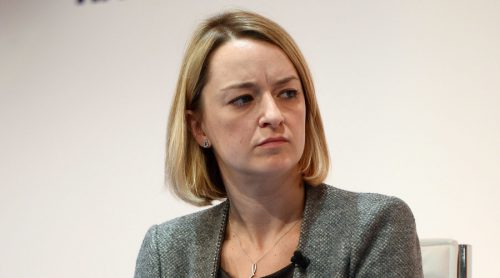
Laura Kuenssberg © ZUMAPRESS.com / Global Look Press
RT | January 18, 2017
Award winning BBC political editor Laura Kuenssberg has been reprimanded by the BBC Trust for inaccurately reporting Labour leader Jeremy Corbyn’s views on shoot-to-kill policies in the aftermath of the Paris attacks.
The Trust concluded that Kuenssberg breached the BBC’s impartiality and accuracy guidelines at a time of “extreme national concern,” but insisted there was no evidence of bias or of intent on the part of the journalist.
The report was broadcast for the News at Six in November 2015, shortly after terrorists attacked the Bataclan and other sites in Paris.
The news package included a clip of Corbyn saying: “I am not happy with a shoot-to-kill policy in general. I think that is quite dangerous and I think can often be counterproductive. I think you have to have security that prevents people firing off weapons where you can.”
Kuenssberg had presented Corbyn’s response as an answer to a question on whether he would be “happy for British officers to pull the trigger in the event of a Paris-style attack.”
However the BBC Trust concluded Corbyn had been responding to a question asking whether he would be happy to order police or military “to shoot to kill” on Britain’s streets – and not specifically in response to a Paris-style attack.
A viewer complained to the Trust about the broadcast after four separate complaints were rejected by the BBC.
The Trust found the inaccuracy was “compounded” when Kuenssberg went on to state that Corbyn’s message “couldn’t be more different” to that of then-prime minister David Cameron.
In its report, the Trust concluded the inaccuracy was particularly important when dealing “with a critical question at a time of extreme national concern.”
“According to this high standard, the report had not been duly accurate in how it framed the extract it used from Mr Corbyn’s interview.”
BBC News director, James Harding, rejected the Trust’s ruling and defended Kuenssberg as “an outstanding journalist and political editor with the utmost integrity and professionalism.”
He said: “While we respect the Trust and the people who work there, we disagree with this finding.”
Thousands of Corbyn supporters launched a campaign last May against Kuenssberg’s perceived bias against the Labour leader.
Some 35,000 people signed a petition calling for the journalist to be sacked.
The reporter was named Broadcaster of the Year by the Political Studies Association last November and Journalist of the Year by Press Gazette last December.
Israeli Bedouin Kills Border Policeman Ethnically-Cleansing His Village
By Richard Silverstein | Tikun Olam | January 18, 2017
When is “terror,” terror? When is it something else? Who defines what is “terror?”

Um al Hiran several weeks ago (Nov. 2016) in happier times
Tonight’s post will be difficult to write because it will try to parse the linguistic thicket defining “terrorism” in the Israeli context. Most of us understand terror as an act of violence by individuals or groups aggrieved for their treatment at the hands of others. In some cases, the target is a nation which rules over them. In others, terror is used to eliminate perceived political, religious or ethnic enemies.
In Israel, terror is used by both Israeli Jews and Palestinians. Among Israeli Jews there is ad hoc terror perpetrated by settlers. But there is also state-sponsored terror, which is based on historical policies of theft, oppression, ethnic cleansing, assassination and murder. Israelis seem to think that states, or at least their state, are outside the definition of “terror” since they’re not individual actors or oppressed groups. This simply isn’t the case. In Israel’s case, its state policies are terror because they employ mass violence to uphold a regime systematically oppressing the Palestinians in violation of international law. Keep in mind that approximately 40,000 Palestinians have been killed by Israeli forces since 1948.
In that sense, today’s ethnic cleansing of the Bedouin village of Um al Hiran was an act of state terror. Hundreds of police brandishing weapons, tear gas and other forms of repression assaulted the village and began destroying its residences. The village had been founded in 1956 when the IDF sent its residents there to live after their previous village had been destroyed during the 1948 War. Unlike other Bedouin communities which were established by the residents themselves under their own initiative, Um al Hiran was founded by State authority.
But now, the Judaizing policies of the current Israeli regime plan to remove thousands of Bedouin from their ancestral homes in favor of new domestic settlements for Jews. This village is slated for demolition as are many others. The Bedouin “refusers” will be forcibly moved to urban towns artificially decreed for the habitation of Bedouins. No attempt has been made to consult with Bedouin about any of this (the Prawer Plan was a State attempt to negotiate Bedouin acquiescence to the expulsion, which the Bedouin rejected). They’re merely plopped down in the middle of an environment that is totally alien to their way of life; then told to make do.
This is an act of cultural dispossession. It is a throwback to the colonial era when ruling powers could treat native peoples arbitrarily and such policies often resulted in acts up to, and including genocide. I am not using that term in connection to the Bedouin. But the echo of earlier powers who did engage in it is not accidental on my part as a warning of what the future might hold.

MK Ayman Oudeh after being shot by Border Police rubber bullet
The native Bedouin residents of this village appealed to the Israeli Supreme Court asking for their right to their homes. The Court, which has now been eviscerated of any previous sympathy for the civil rights championed by former justices like Aharon Barak, turned down the appeal. That exhausted the legal remedies of the Bedouin. And set the stage for this morning’s tragedy.
As the police began their destruction, a Bedouin schoolteacher named Musa Abu Alqiyan plowed his car into a group of them. One policeman was killed and another seriously wounded. Abu Alqiyan was shot and killed. Israeli Palestinian MK, Ayman Oudeh, was also shot in the face by a Border Police rubber bullet. The bullet which struck his temple (from what I can tell in pictures) could easily with a millimeter’s difference, have struck his eye and blinded him. I can’t recall any other instance in Israeli history when an official representative of the state shot and injured a member of Knesset. Of course, being a Palestinian MK excludes him from the circle of protection the authorities would afford Jewish MKs. Which is a further confirmation of the level of racism in Israeli society.
The Border Police in willing collaboration with Israeli media are spreading the lie that Oudeh was struck by a rock thrown by Bedouin protesters. You might just as well claim Oudeh threw the rock at himself and struck his own head. The idea that a protester would strike a Palestinian MK is not only preposterous, it’s offensive. The idea that the Border Police would shoot at a Palestinian MK is not only credible, but likely. The whole sordid show is typical of the lies of the Israeli police (remember when they said Mohammed Abu Khdeir was murdered by his family in an honor killing because he was gay? ‘Nuff said) and hasbara apparatus.
The family of the attacker claimed he was murdered in cold blood and that he was neither a terrorist or an Islamist. Apparently, according to my sources this is not true. A security source tells me he was an Islamist. Israeli reports have variously associated him with the Islamist Movement and Islamic State. Those are two entirely different entities, but ones about which most Israelis don’t make any distinction.

Israeli forces arrest Bedouin protesting destruction of his home village
But for the purposes of this discussion, I think it hardly matters whether the man was an Islamist or not. His village was being destroyed by the Israeli state. To him this was an act of state terror. He responded in the most dramatic fashion he could.
While I don’t endorse violence myself, I simply cannot call his act unjustified. When a state blocks every avenue of redress for a people who are being robbed of their homes and lives, what should they expect? Silent and sullen acceptance? No, Israel is at fault in this. It brought the residents to this place then tried to steal it from them. It denied them any legal or peaceful recourse. I don’t see any other outcome that was possible under the circumstances.
Oh, and I’ll offer a deal to all the Israel-defenders out there who are screaming bloody murder about this new “terror attack.” If you’ll call the systematic dispossession of tens of thousands of Negev Bedouin an act of State terror, then I’ll agree to call this killing an act of terror. Any takers?
The world should rally round the Negev Bedouin. It should declare their ethnic cleansing to be a violation of international law. It should add this crime to the long list which will sometime be sent to the Hague for deliberation. It should add this to the list of crimes which should be addressed in UN resolutions and sanctions.
Syria Rejects Qatar, Saudi Chairs in Astana Talks: No Place for Terrorism Sponsors
Al-Manar – January 18, 2017
Syrian deputy Foreign Ministry rejected on Wednesday the participation of Saudi Arabia and Qatar in the Astana peace talks on Syria next week, stressing that negotiations should not include every party that supports, arms and funds terrorism.
“Once Qatar and Saudi Arabia halt their support to terrorism, then we can discuss their participation in the talks,” he said.
Speaking to Al-Mayadeen TV, Moqdad said that Washington should prove its sincerity to deal with solutions for the Syrian crisis, prevent the support of armed terrorist groups, and exert pressure on Turkey to close its border with Syria.
On the participation of the United States in Astana negotiations, the Syrian official said “anyone who wants to work in good will to resolve the crisis in Syria can take part,” calling to “punish those who finance and arm terrorism, including Saudi Arabia and Qatar.”
Featured Video
America Racing to Strategic Defeat in Iran
or go to
Aletho News Archives – Video-Images
From the Archives
Should Europeans ‘Thank’ the Americans for Destroying Nord Stream?
By Robert Bridge | Strategic Culture Foundation | September 29, 2022
With an investigation continuing into the destruction of the Nord Stream gas pipeline that provided energy supplies to Europe from Russia, there appears to be just one prime suspect, and that should surprise nobody.
Following the sabotage of the Nord Stream 1 and 2 gas pipelines, former Polish Foreign Minister Radoslaw Sikorski already seemed to know the identity of the perpetrator when he tweeted out: “Thank you, USA.”
At first glance, it seemed that Sikorski was speaking sarcastically, berating Washington for carrying out an attack that will have severe repercussions for the people of Europe. After all, how could anyone see any good coming from the termination of Europe’s primary source of gas reserves with winter just around the corner? It was Sikorski’s homeland of Poland, after all, that urged its citizens to collect firewood in the face of dwindling gas reserves.
In fact, the Polish diplomat was speaking one-hundred percent literally… continue
Blog Roll
 Aletho News
- Growing insecurity, soaring prices fuel protests in north as regime bans evacuation: Sources
- Iran denies responsibility for ‘depraved’ attack on Kuwait desalination plant
- Bring The Troops Back. End This War Now!
- Can we please stop calling Israel the ‘only democracy in the Middle East’ now?
- US should start removing its troops from Germany, proposes AfD co-leader Chrupalla
- Iran Red Crescent: 600 educational centers attacked in US-Israeli ‘war crimes’
- Russian Oil Tanker Arrives in Cuba Amid U.S. Blockade
- America Racing to Strategic Defeat in Iran: Lt Col Daniel Davis
- FTC Warns Visa, Mastercard, PayPal, Stripe Over Political Debanking
- Russian tanker approaches Cuba despite US oil blockade
- If Americans Knew
- As Iran targets US military bases, will they be relocated to Israel? Not a ceasefire Day 171
- Will Trump Go Kamikaze?
- Is the University of Florida Shutting Down College Republicans over Israel Criticism?
- Jewish extremist arrested over alleged plot to firebomb Palestinian activist Nerdeen Kiswani’s home
- More than half of Palestinian child detainees have no charges
- The More Murderous Israel Gets, The More We Hear About “Antisemitism”
- Land Day and the Palestinian struggle after 30 months of genocide
- The Iran War Is About Palestine
- Israeli soldiers echo settler ideology, talk of revenge after targeting Palestinians and detaining CNN crew in the West Bank
- Israeli Policies Threaten Future of Christian Schools in Jerusalem
- No Tricks Zone
- New Study Finds Warming Saves Lives…Cold Temperatures 12 Times More Deadly Than Excess Heat
- German Science Blog Accuses PIK Climate Institute Of Hallucinating Climate Tipping Points
- Devastating Assessment Of Comirnaty Vaccine By Former Senior Pfizer Europe Toxicologist
- New Study: CO2 Is ‘Effectively Negligible’ As An Explanatory Climate Change Factor Since 2000
- Former Pfizer Toxicologist Dr. Helmut Sterz Tells Bundestag Hearing Pfizer Vaccine Should Have Never Been Approved
- Energy Expert: Germany’s Nuclear Phaseout Was A “500 Billion Euro Mistake”
- New Research: South Australia’s Mid-Holocene Sea Surface Temperatures Were 4°C Warmer Than Today
- Storing Green Energy To Last Germany 10 Days Would Require A 60-Million Tonne Battery
- New Studies: UK Sea Levels Were 4 Meters Higher Than Today During The Mid-Holocene
- Destructive Green New Deal: German Energy And Metal Group Warns Of Drastic Crisis
 Aletho News