Fake News Calls Russia’s Envoy to Washington a Spy
By Stephen Lendman | March 2, 2017
Reckless US Russia bashing is reminiscent of US propaganda preceding all its wars, vilifying targeted countries and their leaders before attacking them.
The possibility of the world’s dominant nuclear powers clashing militarily should terrify everyone. Nuclear armageddon could follow.
Permanent wars reflect longstanding US policy. The Russian Federation never attacked another nation, fostering world peace and stability instead, threatening no other countries, despite Big Lies claiming otherwise.
Russia’s ambassador to Washington, Sergey Kislyak, is a distinguished diplomat, not an intelligence agent. He joined the Soviet Foreign Affairs Ministry in 1977, serving in many positions – most recently as Deputy Foreign Affairs Minister from 2003 – 2008, since then as envoy to America.
Yet CNN outrageously called him “one of Russia’s top spies and spy-recruiters in Washington” – a disgraceful fake news accusation, related to its coverage of Attorney General Jeff Sessions, having spoken to Kislyak one or more times while serving on the Senate Armed Services Committee.
CNN’s alleged sources: the usual unnamed US officials, past and present, reporting no evidence, the aim part of a diabolical anti-Russia, anti-Trump plot.
The stakes are huge. If officials close to him are eliminated, he’ll be too weak to govern effectively, perhaps more vulnerable to impeachment and removal from office than already.
If he goes, the last vestiges of a free society will go with him, coup d’etat dictatorship replacing him.
If Russia bashing passes a threshold of no return, war between the world’s dominant nuclear powers could follow.
Most Americans are mindless about what’s going on, manipulated by relentless fake news, failing to distinguish between fact and fiction.
Most oppose Trump, according to polls. Most nonsensically believe Russia threatens America. The notion is pounded into the public mind constantly, in NYT and other broadsheet feature stories, round-the-clock on cable television.
Putin spokesman Dmitry Peskov blasted accusations about Kislyak, saying “(y)ou and I have not heard a single statement by the US special services about our ambassador” – just “bogus media speculations that keep fanning tensions,” adding:
“The only piece of advice that I can give is that in a situation like this, avoid reacting to all such anonymous, baseless fake news stories and rely only on official statements by genuine officials.”
If Americans don’t awaken to the clear and present dangers they face and resist, the price for their indifference will be full-blown tyranny – perhaps nuclear war to follow, the ultimate nightmare.
Bahrain approves military trials for civilians
Press TV – March 5, 2017
Bahrain has approved trial of civilians at military tribunals in a measure blasted by human rights campaigners as being tantamount to imposition of an undeclared martial law countrywide.
The Consultative Council, the upper house of the Bahraini parliament, voted for the measure Sunday, less than two weeks after it was approved by the Council of Representatives, the lower house.
The move saw Manama manipulating part of its constitution, which defines the identities of those who can stand trial at such courts.
Neighboring Saudi Arabia, whose influence radically sways Bahrain, has likewise redefined its anti-terror laws to expand the powers of its security forces in the face of political dissent.
Bahrain has been witnessing peaceful anti-regime protests since 2011. High-handed suppression of the rallies has led to widespread imprisonments and scores of deaths.
Hundreds of the detainees have already faced summary proceedings at military courts.
Britain ignores Bahrain’s human rights record to pursue business interests with dictatorship
By Marwa Osman | RT | March 5, 2017
Britain’s multi-million pound trade and aid strategy for programs in Bahrain needs exposed as the tiny gulf kingdom continues its chain of tyranny and torture against the Shia majority.
The British government’s unreserved condemnation of torture and inhumane treatment and punishment seems to vanish when it comes to making more money. As kidnaps, imprisonments and political executions are on the rise in Bahrain, activists and Bahraini opposition figures are troubled by the fact that the UK government is spending taxpayers’ money on these trade and aid programs, especially given the clear risk of complicity in abuse.
Habib Mohamed Habib is the latest Bahraini civilian to be kidnapped from his home the morning of Friday March 3rd 2017 as security forces deployed armored vehicles in and around Diraz, in a continuation of the Al Khalifa Monarchy’s oppression against the Shiite Friday prayers as part of their uninterrupted crackdown on civilians since 2011 in the Bahraini capital Manama.
As Habib’s family struggle to know the whereabouts of their son, traveling in and around Diraz is nothing less than a nightmare with traffic jams at every entry point of the town, which is witnessing an increase in tightened security at its checkpoints.
Meanwhile, since last June the citizens of Diraz have been experiencing an internet blockade every day between 7pm and 1am as a result of a service restriction order from the Bahraini authorities. The citizens of Diraz are increasingly being cut off from the outside world. They cannot even contact emergency services, and if somebody is caught aiding a fellow citizen he/she will disappear like Habib and hundreds of others like him.
Last week alone, the Bahrain Center for Human Rights BHRC documented a total of 17 arbitrary arrests, among whom were six children. In the same week, 129 marches took place in 40 villages in Bahrain to denounce the chain of repressions and kidnappings targeting peaceful protestors and Friday prayers’ attendees. BHRC reported that 26 marches during the same week were attacked by the Bahraini riot police and a total of 19 persons were judged in 6 politically motivated cases.
It is an open secret in Bahrain that after 6 years of constant crackdowns on millions of protestors who clamored for social justice and political self-determination, the ruling Al Khalifa regime has managed to get away with brutalizing, imprisoning, torturing and killing their own civilians under nonsensical pretexts. Although the monarchy has often expressed its desire to negotiate a political solution, promises of change have translated on the ground to a systematic crackdown.
The Al Khalifa regime has utterly failed to bear its responsibility in creating a space of dialogue in order to foster harmony, cohesion and tolerance. Instead of pushing for respect of cultural diversities amongst its citizens as a fundamental basis of democracy and peace-building, the authorities have politicized freedom of religion and successfully used it as a pretext for the incitement of hatred, violence and racial discrimination against groups of individuals and religious minorities.
International community’s deafening silence
Despite the fact that the Bahraini authorities have been only tightening restrictions on the rights to freedom of expression and association and continuing to curtail the right to peaceful assembly while detaining and charging several human rights defenders, banning others from traveling abroad, dissolving the main opposition group and stripping more than 80 people of their Bahraini citizenship, the United Nations Human Rights Council (UNHRC) has largely remained silent on the situation in Bahrain.
According to a joint NGO letter to Permanent Representatives of Member and Observer States of the UN Human Rights Council, Bahrain’s courts continued to play a key role last year in issuing repressive orders and granting the authorities broad discretionary powers to revoke Bahrainis’ citizenship, in some cases leaving them stateless.
The ultimate repressive order was issued on January 9, 2017 by Bahrain’s Court of Cassation upheld death sentences against three protestors convicted of killing police including three police officers in a bomb attack.
Sami Mushaima (42), Ali Al-Singace (21) and Abbas Al-Samea (27), who were executed on the morning of January 15, 2017 by firing squad, were reported by Bahrain Center for Human Rights BHRC to have been tortured during interrogation to force them to confess to the bomb attack. According to the BHRC, the lawyers of the executed men were not given access to all the hearings against the defendants, nor allowed to cross-examine prosecution witnesses during court hearings.
The shocking part about the atrocities inflicting the Bahrainis is no longer the blatant violations of the Al Khalifa monarchy as much as it is the international community turning a blind eye to the Bahraini people’s legitimate struggle for democratic rights.
UK government complicit in oppression
The US and the UK are two major western states supposedly committed to supporting human rights, democratic values, free speech and political self-determination, while, at the same time, are flagrantly partnering with dictatorships like that of the Bahraini Monarchy to advance their foreign agenda.
For instance, the government of the United Kingdom signed what the Foreign and Commonwealth Office (FCO) called a “landmark defense agreement” with the Gulf island kingdom of Bahrain in 2014. Clearly ongoing human rights abuses committed by those partners on their own citizens are not considered a shared strategic and regional threat especially when Bahrain is home to a major Royal Navy base. The multi-million-pound Royal Navy facility in Bahrain, which was founded in November 2016 housing up to 600 UK military personnel, became the staging-post for Britain in the Middle East and is designed to assert influence over the Gulf. Bahrain has paid most of the £30million-plus cost, with the UK contributing around £7.5million.
During the opening of the new Naval Support Facility (NSF) in Manama, Britain’s first permanent military base in the region since 1971, the Telegraph published an OpEd by Fawaz bin Mohamed Al Khalifa, Bahrain’s Ambassador to London, who claimed that King Hamad bin Isa Al Khalifa outlined the Gulf Cooperation Council’s interest in a free trade agreement between the UK and the GCC, which would significantly increase the UK’s access to the GCC’s £1.3 trillion market; a market estimated to grow by a further £400 billion by 2020.
Relative to its size, Bahrain already hosts a large number of British companies. The Bahraini Ambassador to London put the figures at “500 British brands, 90 British company branches, and 350 Bahraini-British business partnerships”. These businesses operate in some of Bahrain’s key sectors, including banking, accounting, law and industry. Meanwhile bilateral trade between Bahrain and the UK generated a staggering £432 million in 2015 alone, which would simply explain why the UK would choose to remain silent on all the human rights violations in the tiny gulf kingdom.
These bilateral relations are signed and sealed with Bahraini blood, says Ali Alaswad, former Bahraini Member of Parliament who was elected in October 2010, but resigned in February 2011 in response to the Governments’ crackdown on peaceful democracy protesters.
After his home was targeted by security forces, AlAswad left Bahrain and now resides in London where he continues his political work to achieve a democratic Bahrain. As I spoke with MP AlAswad, he emphasized that the UK’s current disappointing stance towards ignoring the human rights violations in Bahrain provides “a green light to the Bahraini government to abuse the basic human rights of the civilians which permits it to become more violent against the Shia majority and the Bahraini opposition.”
AlAswad told me “it doesn’t matter who you are in Bahrain, if you dare to demand for your basic rights then you will be in grave danger, which is why if the UK government as a strategic ally to the Bahraini government doesn’t use its ties as a strong card to support the oppressed Bahraini people to at least secure their basic human rights as enlisted in the declaration of human rights, then the UK is whitewashing the Bahraini authorities’ shocking human rights record by deliberately blocking official criticism of the Kingdom especially at international forums like the UN”.
The UK government is now seen by human rights activists and Bahraini opposition figures as a complicit in the tiny gulf kingdom’s tyranny against the outcry of the legitimate and basic demands of the Bahraini civilians until an official statement is issued from the UK government to condemn the acts of oppression of the Bahraini monarchy against its people.
“How do you expect the majority of the population to react when they see their leaders and clerics being detained, unlawfully imprisoned and even sometimes deported from their own country?” asks MP AlAswad.
Sheikh Ali Salman, a Shiite cleric and head of the Al-Wefaq opposition party, is now sentenced to serve nine years in jail for allegedly inciting hatred and calling for regime change by force.
The Bahraini authorities then went overboard when they stripped the highest religious authority in the country Sheikh Isa Qassim, a 79-year-old cleric, of his citizenship in June 2016 over accusations that he used his position to serve foreign interests and promote sectarianism and violence. This happened a week after the government of Bahrain suspended the Shia opposition group al-Wefaq.
The implications of this arrest is sending shockwaves on the streets of Manama, Diraz, Sanabes, Karbabad, Karzakan and Barbar with protestors refusing to back down. This resistance is prompting even more oppression and kidnapping from the Bahraini authorities.
Earlier this week, Al-Wefaq Deputy Secretary General, Sheikh Hussein al-Daihi, said through his twitter account, that targeting Ayatollah Qassim is triggered by his brave and firm stances, to demand legitimate rights for the oppressed Bahraini people. The deputy SG also stressed that Ayatollah Qassim is a red line, and the repercussions of crossing that line would go beyond the country’s borders.
Ms. Marwa Osman. PhD Candidate located in Beirut, Lebanon. University Lecturer at the Lebanese International University and Maaref University. Political writer/commentator on Middle East issues with many international and regional media outlets.
RT Editor-in-chief comments on Macron’s ‘Fake News’ allegations
Sputnik – 05.03.2017
 RT’s and Sputnik’s Editor-in-chief Margarita Simonyan commented on the recent “fake news” accusations by French presidential candidate Emmanuel Macron’s office toward the two media outlets.
Earlier, Macron’s ally Richard Ferrand claimed that RT and Sputnik were publishing false rumors about the candidate and favoring other participants of the presidential race.
Macron’s advisor Munir Manzhubi also accused the media outlets of spreading false information, however, without providing any evidence to support his allegations.
“We are flattered that Macron’s team continues to build its election campaign solely on lies about RT and Sputnik. Not comme il faut, but quite funny,” Simonyan said, commenting on the issue.
Following the allegations, Sputnik’s press service released a statement, saying that the statements made by Macron’s team are another attempt to manipulate public opinion. Sputnik stressed that it always covers facts and real opinions expressed by people involved in election campaigns regardless of whether anyone finds them unacceptable.
Earlier, French lawmaker and member of the Republican party Nicolas Dhuicq told Sputnik that, in his opinion, journalists of Sputnik news agency and the RT broadcaster are often more professional than their western colleagues when it comes to the fair transmission of speakers’ comments and news.
“Personally, I have no difficulties with RT or Sputnik. When I am interviewed by those two broadcasters in French or in English, I am asked a variety of questions and always have the time to express my ideas and my words, most of the time, are faithfully transmitted. In a contrary, when I recently encountered French TV teams, I had an experience when out of 30 minutes-long interview only seconds were taken and, of course, the parts which were taken had no links to the context or the rest of my speech,” Dhuicq told Sputnik on Friday.
Sputnik and RT have repeatedly become subjects of criticism among European politicians for allegedly producing fake news and spreading propaganda. At the same time, many European residents and experts view the media outlets as alternative sources of information and classify the West’s attempts to undermine their credibility as censorship and crackdown on the freedom of speech.
Facebook begins ‘fake news’ crackdown with ‘disputed’ story tag roll out
RT | March 5, 2017
Facebook has begun rolling out its much hyped ‘fake news’ crackdown initiative, launching its ‘disputed’ news tag on stories deemed false by fact checking organisations working with the social media giant.
The tool appears to have been unveiled without fanfare in the US, but some users have shared screenshots of it in action on Twitter.
Facebook has added a question to its help center page entitled “How is news marked as disputed on Facebook?.” The section notes, however, that this feature is not yet available to everyone. It is unclear how many people currently have access to the ‘fake news’ debunking feature.
Facebook introduced their solution to false stories last December amid outcries that so-called fake news influenced the outcome of the US presidential election. These unproven claims have been disputed by a Stanford University/NYU study.
As part of the plan, the tech giant partnered with fact checkers that are signatories of Poynter’s International Fact Checking Code of Principles. These include ABC News, FactCheck.org, the Associated Press, Snopes and Politifact.
Stories flagged by Facebook users as ‘fake news’ are passed on to these fact checkers for verification. If the fact-checkers agree that the story is misleading, it will appear in News Feeds with a “disputed” tag, along with a link to a corresponding article explaining why it might be false.
These posts then appear lower in the news feed and users will receive a warning before sharing the story.
Similar efforts are planned in Europe amid threats from the EU to clamp down on the spread of misinformation. Facebook recently revealed fact checking partnerships in Germany and France ahead of respective elections in each country.
Concerns have been raised, however, over the implications of such practices on freedom of speech.
Project Censored, a non-profit that aims to fight censorship through promoting media literacy, views Facebook’s fake news crackdown as “problematic.”
“What Facebook, and the Washington Post’s ill advised list of fake news sites, has attempted to do is make lists of news outlets that are “fake,” Nolan Higdon, faculty advisor at Project Censored told RT.
“However, this is problematic because some news sites have both journalists doing credible work and those disseminating propaganda. While some consumers may be swayed by the digestible notion of “these sites good, these sites bad” lists; it does not solve the problem of people consuming propaganda, “ he added.
The key is education, Higdon insisted, explaining the importance of teaching individuals to examine a media outlet critically.
“Simply creating an arbitrary list of whose websites can and cannot be viewed on Facebook or considered ‘news’ is normalizing censorship instead of informing individuals.”
Of course Donald Trump’s phones were tapped!

Image from popularresistance.org
By Kit | OffGuardian | March 4, 2017
The ongoing clashes between the factions that make up the US political elite keep getting more and more absurd. And annoyingly, as no particular fan of Donald Trump, I keep finding myself in the position of having to fight his corner.
In this instance it is about wire-tapping. Donald Trump tweeted out that the Obama’s previous administration had pulled a Watergate and had his office phones monitored during the election. As yet there is no proof, something everyone from CNN to the Guardian to The NYT were very eager to point out.
In fact, every single MSM source that covered this story mentioned the lack of evidence in the headline:

Somebody get these guys a thesaurus.
Whilst simultaneously quoting the other side of the story, without feeling the need to be quite so thoroughly honest:

Don’t worry everyone… Obama denied it. So that settles that.
And honestly, yes, there is (as yet) no proof. There may not be any proof, ever. It’s a possibility that Trump simply made it up. Politicians make things up all the time. I doubt one word in fifty spoken in Washington DC has any kind of basis in fact.
There is, indeed, no proof. However, there is quite a large piece of evidence, one that the media seem to have neglected to mention.
This is where we need to have a quick reality check, because it seems our friends in the media have forgotten:
The Obama administration spied. A lot.
They spied on American civilians, foreign nationals, domestic political figures, and international heads of state. They monitored our internet histories and our phone calls and read our e-mails. None of this is disputed. Obama did one of his hokey phony apologies about it. He almost certainly used the word “folks”.
This was famously reported exclusively in the Guardian just 4 years ago. They stood by their serious journalism back then… right up until GCHQ told them to smash their hard drives with a sledgehammer. Edward Snowden (perhaps you remember him?) is currently hiding-out in Russia for telling us all about it. Luke Harding, a Guardian star reporter, wrote a not-very-good book about it. It seems odd they’ve all forgotten.
The refutation of Trump’s claim, offered by former Obama admin. officials went roughly as follows:
No President can order a wiretap. Those restrictions were put in place to protect citizens from people like you. https://t.co/lEVscjkzSw
— Ben Rhodes (@brhodes) March 4, 2017
There was also this statement from an Obama spokesperson.
The argument being that Barack Obama can’t have ordered a wire-tap on Donald Trump… because it would exceed his legal authority. Now, I’m all for living in a world where the US Government, and all the elected and unelected officials there-in, act only according to their legal authority. It would be a nice world…a lot of people would still be alive that, currently, are not.
But time has shown, hundreds (if not thousands) of times over the past few decades, that legality is not an obstacle to an American political establishment driven to protect their financial interests and military empire.
Torture camps, extraordinary renditions, drone executions, funding of terrorist groups, targeting of civilians, use of cluster munitions, use of chemical weapons, use of depleted uranium, terrorist attacks, mass surveillance and all out wars of conquest are all very, very illegal. That has never been a problem.
To suppose that adding illegal wire taps on presidential candidates to this list is a line they would not cross is naive to the point of insanity.
It is inherently ridiculous to openly acknowledge the existence of a massive (illegal) surveillance network, and not assume that bombastic, populist political opponents would be at the top the target list.
In summary: of course the Obama administration spied on Donald Trump. They spied on everybody.
It’s very important we don’t let them shove that fact down the memory-hole.
Another Indigenous Human Rights Activist Killed in Colombia

Colombian Indigenous activist Alicia Lopez Guisao | Photo: Congreso de los Pueblos
teleSUR | March 3, 2017
Colombian Indigenous and campesino leader Alicia Lopez Guisao was killed in Medellin on Thursday, adding to the growing list of recently murdered human rights activists in the South American country.
The number of social and human rights defenders killed in the last 14 months now stands at at least 120, according to a Friday press release from the Defense of the People.
“The retreat of the FARC from the zones where they previously exercised control has allowed for the entrance of new armed actors who fight for territorial and economic dominance,” states the report. This marks a concerning trend requiring immediate action since the attacks are “pertaining to groups with similar characteristics, and which occurred in the same period and geographic area,” it adds.
Guisao, who was shopping at a grocery store at 8:45 am local time, was shot repeatedly by two unknown gunmen who entered the store, El Tiempo reports.
The People’s Congress, the left-wing organization that Guisao worked for organizing Indigenous peasants, believes the gunmen may have been connected to right-wing paramilitary groups.
“With great sadness and indignation we received and transmitted the news of the murder of comrade Alicia Lopez Guisao,” The People’s Congress said in a statement.
“Her murder is an example of the fact that the right-wing organizations that operate today in the city of Medellin are the same paramilitaries who have murdered others in recent years.”
Guisao, a leader of Colombia’s Indigenous Asokinchas community, organized the Agrarian Summit Project, which distributed land and food for 12 Indigenous and Afro-descendant communities in the department of Choco.
Originally from the rural Uraba Antioquia, Guisao and her family were displaced from the region by U.S.-backed paramilitaries in the late 1990s, forcing them to move to Medellin.
In 2002, after opening a family-led community health and education center, she and her relatives were once again forced out by police and right-wing paramilitaries in a “counter-terrorism operation.”
Operation Orion, the campaign which displaced Guisao and her family, was a joint paramilitary and police offensive that targeted left-wing rebels accused of supporting Colombia’s guerilla movement. Prior to her death, Guisao lived in Choco where she performed community service work.
Her death in the same area from where she was displaced “shows that it’s (paramilitary activity) a structure that persists in the city and that it’s not only general delinquency or criminal gangs like state institutions say,” wrote an open letter signed by dozens of Colombian social justice organizations denouncing her murder.
The letter says that Guisao’s sisters were warned that they and their parents would be next if they show up to her burial. The groups call on the government to ensure the protection of her family and the prosecution of those responsible.
Marcha Patriotica, the leftist political party that worked closely with Guisao and The People’s Congress, says that during the first two months of 2017, more than 20 Colombian social leaders, including six women, were killed. Most of those killed, they say, were Indigenous campesino activists fighting for human rights.
Last January, Indigenous human rights activist Yoryanis Isabel Bernal Varela was murdered in Valledupar by suspected paramilitaries. Eyewitnesses said that she was threatened with a gun by several people on a motorcycle, who then shot her in the head. Varela, a member of Colombia’s Wiwa tribe, fought to protect Indigenous and women’s rights in her community.
“Indigenous people are being threatened and intimidated,” said secretary of the Wiwa Golkuche organization Jose Gregorio Rodríguez shortly after her murder on January 26. “Today they murdered our comrade and violated our rights. Our other leaders must be protected.”
The retreat of the FARC and other left-wing guerrilla groups that have historically defended Indigenous campesino groups has created a power vacuum in areas across the country that right-wing paramilitaries are exploiting.
Report: Israeli forces detained 420 Palestinians in February
Ma’an – March 4, 2017
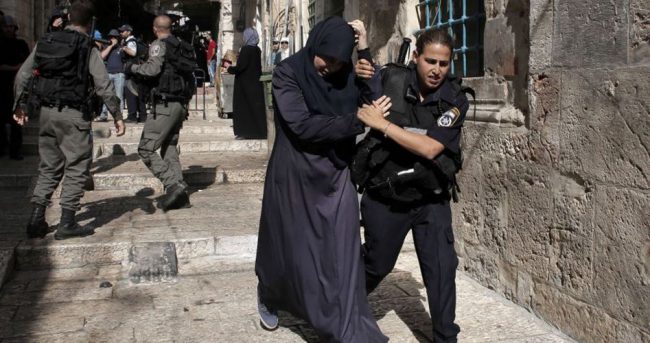
RAMALLAH – Israeli forces detained 420 Palestinians during the month of February, including 70 minors and 22 women and girls, according to a statement released on Saturday by the Palestinian Prisoners’ Center for Studies.
The center said in its monthly report that 12 of the detentions were carried out in the besieged Gaza Strip, including five fishermen whose boats were destroyed by Israeli forces before their detention, two who were detained at the Beit Hanoun crossing, and five who were detained after Israel alleged they attempted to cross the border fence between the besieged enclave and Israel.
A journalist was also among the detainees, identified by the center as Humam Muhammad Hantash from the southern occupied West Bank district of Hebron. He was sentenced to Israel’s widely condemned policy of administrative detention — imprisonment without charge or trial based on undisclosed evidence.
The center added that 88 administrative detention orders were issued by Israeli courts in the same period, 23 of which were issued for the first time, while 65 were renewed orders. Meanwhile, 32 administrative detention orders were issued against Palestinians from Hebron.
While Israeli authorities claim the withholding of evidence during administrative detention, which allows detention for three- to six-month renewable intervals, is essential for state security concerns, rights groups have instead claimed that the policy allows Israeli authorities to hold Palestinians for an indefinite period of time without showing any evidence that could justify their detentions.
Rights groups say that Israel’s administrative detention policy has also been used as an attempt to disrupt Palestinian political and social processes, notably targeting Palestinian politicians, activists, and journalists.
According to Addameer, as of January, 6,500 Palestinians were being held in Israeli prisons, 536 of whom were being held under administrative detention.
Drastic Changes in the Middle East Happen Unbelievably Fast
By Peter KORZUN | Strategic Culture Foundation | 04.03.2017
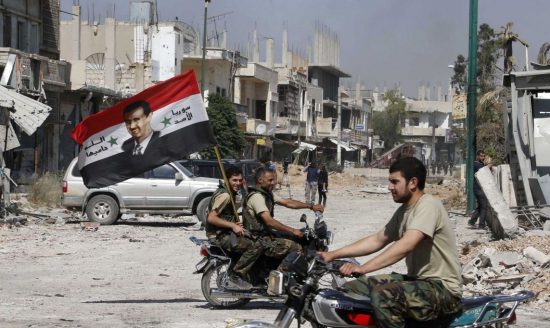
The situation in the Middle East is changing at an incredible speed. The things unbelievable yesterday, become reality today. Each of the events becomes part of a bigger picture, with the region gradually moving away from abyss to become a better place.
On March 1, Iraqi forces were reported to have taken control of the last major road out of western Mosul, preventing Islamic State (IS) militants from fleeing the city. The route leads to Tal Afar, another IS stronghold that is 40 km further west. They have since driven militants from the international airport, a military base, a power station and a number of residential areas. IS fighters began to flee. Total control over the city by Iraqi forces seems to be a matter of a few days, maybe hours.
Being almost defeated in Iraq, the IS has nowhere else to go but Syria – the country where they have just suffered a defeat, with Palmyra retaken by Syria’s government forces. Russia’s support has been crucial in the Syrian army’s push. Raqqa, the last remaining stronghold of the IS, will be the place of the final battle the extremist group is doomed to lose as many influential actors want it to be wiped away from the earth.
Turkey has announced its intent to launch an offensive to retake Raqqa but only after taking control of Manbij, the town held by the Kurds-dominated Syria Democratic Forces (SDF). The parties were in for a fight to benefit the IS and other terror groups. The US was at a loss as to how to prevent a clash between the NATO ally and the Kurds – the force it relies on in the fight against the IS. That’s when Moscow stepped in to avoid the worst, using its unique position as a mediator. It managed to do what nobody thought was possible. The military council in Manbij said on March 2 it will hand over areas west of the flashpoint town to Syrian government troops, after an agreement brokered by Russia.
Now the town is in Arab hands and Turkey has no reason to attack it. Syria and Turkey are not at war.
The United States had promised Turkey that Kurdish forces would withdraw from Manbij to the east of the Euphrates, but it never happened. Now Russia did what America had failed to do.
As a result of Russia’s effective mediation, Turkey can double down on its plans to advance to Raqqa, while Syria’s government has greatly strengthened its position. Turkey’s President Erdogan has just said he is ready to fight the IS together with Russia. He is coming to Moscow on March 9. It means no clash between Turkey and Syria will take place.
Many things are changing for the Syrian government and it has been going on for some time. It’s not a coincidence that voices get louder, calling for inviting Syrian President Assad to the March 29 Arab Summit in Amman – five years after Syria was expelled from the 22-member organization. Russia, Jordan and Egypt are applying efforts to reconcile the Arab community with the Syrian government. Last month, Egypt’s parliamentary committee for Arab affairs called for the return of Syria to the Arab League. This would signify the reconciliation between Saudi Arabia which backed the Syrian rebels – something unthinkable some time ago.
In 2015, then US President Obama predicted Russia would get stuck in Syria’s quagmire. He appears to have been wrong. Thanks to Russia’s involvement, one can see the light at the end of the tunnel to make the quagmire a thing of the past.
Moscow can facilitate the process of Iran joining with Arab states in the effort to reach agreement on Syria, bringing it to some mutual understanding with Saudi Arabia. Not much has been reported about some recent events of special significance. Iranian President Hassan Rouhani visited Kuwait and Oman on February 15. Saudi Arabian Foreign Minister Adel Al-Jubeir made a trip to Iraq on February 25, to be received by Iraqi Prime Minister Haider Al-Abadi. The trend is visible – Shia and Sunni are on speaking terms again and they are discussing something very important. It would have sounded incredible a short time ago but these are the facts.
All these events and emerging trends are taking place against the background of the ongoing UN-brokered Geneva talks on peaceful settlement in Syria. Here too we have an unexpected turn of events – the Syrian opposition seeks to meet with Russian officials!
According to Paul Vallely, a retired US Army Major General and senior military analyst for Fox News, Russia-US consultations on Syria are to start in two months after the presidents hold a summit. He said Russia is to play a key part in any scenario.
The recent days have literally shaken the Middle East. So many unexpected things happen to push things forward. Right in front of our eyes the impossible becomes possible.
As said before, Moscow is in a unique position to act as an intermediary and it plays its role aptly to achieve tangible results. If the current trend continues in the same direction, leading to the desired outcome, Russia’s effort will go down in history as an extraordinary achievement of military success combined with effective diplomacy.
Doping scandal: Putin responds to WADA’s retreat
By Alexander Mercouris | The Duran | March 3, 2017
Following apparent admission by IOC and WADA that there may not have been a state sponsored doping conspiracy in Russian sport, President in conciliatory comments suggests a way forward.
Russian President Putin, in comments made in the Siberian city of Krasnoyarsk where he oversaw preparation for the 2019 World Winter Universiade (a student sports meet), set out the Russian response to the admission – reported in a leaked IOC letter – that the claims in the McLaren report are insufficient as evidence against any individual athlete and that Professor McLaren seems to be retreating from his claim that there was a massive state sponsored conspiracy to carry out doping in Russian sport.
Putin’s words were firm but conciliatory, and were in line with what the Russians have been saying all along.
Firstly, it is important to stress that Putin admitted that there has been widespread doping in Russia. This is a point that some people have been resisting, or which they have been seeking to relativise by saying that doping is also widespread in other countries.
The second point is undoubtedly true, and there is no doubt the Russians have been treated differently from others. I question whether the picture would appear much better if the athletes of any other country were subjected to the same sort of relentless investigation to which Russian athletes have been.
The fact nonetheless remains that this is an illegal activity, and it is never an excuse for an illegal activity that there are others also guilty of committing it. Putin and the Russian authorities fully understand this, and they have been saying it all along, ever since the scandal first broke in the autumn of 2015. Putin said it again in his comments in Krasnoyarsk
… we need to acknowledge that there are established and identified cases of doping here, and this is a totally unacceptable situation.
What this means is that our existing anti-doping monitoring system has not worked effectively, and this is our fault, and is something we need to admit and address directly. I hope very much that the Investigative Committee will see the needed investigation through to its completion and will identify all those responsible for this situation.
However Putin’s most interesting comments were about some of the more sensational allegations in McLaren’s report.
First of all, Putin knocked on the head the very idea that there was a state sponsored conspiracy. In doing so he homed in on the words in the leaked IOC letter that appeared to concede the point
We know the latest assessments from the officials at WADA and our colleagues from the IOC, who note that the McLaren Commission had inaccurate translations or inadequate evidence. Let me say again, and we said it repeatedly, that Russia has never had, and I hope never will have, a state system supporting doping. On the contrary, Russia will only combat doping.
Compare this with my own recent comments about the WADA admission in the IOC letter
What is however by far the most interesting thing in the IOC’s letter is that it homes in on the growing doubts that the doping conspiracy in Russian sport which Professor McLaren claims to have uncovered was really state sponsored. Here is what the IOC says about that
The complexity of the Schmid Commission’s work is considerable since for instance, in his first interim report, Professor McLaren describes a “state sponsored system” whilst in the final full report in December he described an “institutional conspiracy.” The Commission will now have to consider what this change means and which individuals, organisations or government authorities may have been involved.
(bold italics added)
That looks to me like an implicit admission that the evidence points to the doping conspiracy being the work of Dr. Grigory Rodchenkov, the former head of RUSADA, Russia’s formerly WADA approved dope testing lab, rather than anyone in the government.
This is of course exactly the point I made at length in my discussion of Professor McLaren’s second report
Putin also homed in on what is the weakest link in the chain of forensic evidence produced by Professor McLaren: the scratch marks on the sample bottles. Here is what he had to say about that
Of course, and naturally enough, there is this issue of claims regarding scratches of some kind on some of the test samples. We do not understand what kind of evidence can we talk about because when we provided the test samples there were no complaints. If there was a problem with scratches of whatever kind, this should have been noted in the relevant reports, but there was nothing of this sort.
In other words, these samples were stored somewhere, and we cannot be held responsible for the storage conditions.
I have previously discussed the problems with this evidence, if it is indeed evidence at all
… on the crucial question of the illicit opening of the sample bottles, Professor McLaren admits that he has no witness – significantly not even Dr. Rodchenkov – who claims to have seen it done, and therefore has no evidence for how it was supposedly done. The forensic evidence upon which he relies is purely inferential: the opinion of a single expert as to how it might have been done (not how it was done) based on an already pre-existing assumption that it was done.
As for the scratch marks on the bottles, to my mind they do not prove anything until it is shown that they can have no other cause than the illicit opening of the bottles. That is something that requires far more forensic testing than Professor McLaren has had done, and is an issue about which the opinion of more than one expert is required, and concerning which the opinion of the Swiss manufacturer certainly needs to be sought.
Of course none of this means that what Professor McLaren and the expert allege was done to the bottles didn’t happen, or that the bottles weren’t opened as they say they were. However it does leave their claims open to challenge, and the case nowhere near proved.
Nonetheless Putin wisely is looking forward, in order to close down the whole affair.
In my discussion of Professor McLaren’s second report I said that the best thing for the Russians to do would be to take on board those criticisms which have been made of them which are valid and to set up an anti-doping system in Russia which is not only as close to fool-proof as any such system can ever be, but which will establish the gold standard for such a system
The way forward now is to put all the damage done by this affair behind, and to concentrate on setting up in Russia the best and most full-proof possible system of testing, which will enable Russia to set the gold standard in this area, and which will make it possible for Russia to be fully reintegrated in world sport with a minimum of embarrassment.
That is exactly the wise course President Putin and the Russians are taking. Here is what he said
As you know, we are putting into place a new anti-doping system. It will be transferred from the Sports Ministry and Government oversight to an independent organisation, as many countries have done, and not in any figurative sense, but quite literally. The laboratory will be located on premises belonging to Moscow State University, and we will help them to obtain the modern equipment, technology and specialists they need. I hope that we will no longer have any swindlers, who organise doping programmes themselves and then flee abroad. I hope that our independent specialists and foreign specialists will help us to develop a strict and effective anti-doping system.
I hope too that Vitaly Smirnov’s commission as a public organisation will continue its work to supervise the anti-doping organisations’ work here in Russia. Of course, we must also work to ensure that doping does not arise in youth and student sport. These young people are just at the start of their sports careers. Let me say once more that we will do everything needed to organise positive, active and effective work with all our partners, including WADA and the International Olympic Committee.
Putin’s words about “swindlers, who organise doping programmes themselves and then flee abroad” refer to Dr. Grigory Rodchenkov, who the Russians accuse of being the mastermind behind the whole doping conspiracy. As I have discussed previously, the wording in the IOC letter suggests that the IOC may also be coming round to that view.
To be clear, the setting up of a new dope testing system does not mean that the Russians are going to abandon the legal claims they are bringing. The innocent athletes who were barred from the 2016 Olympic and Paralympic Games on the strength of what both the IOC and WADA now recognise was insufficient evidence are in a strong position to press their claims and will surely do so. I would however say that the IOC’s and WADA’s admission that the evidence against these athletes was insufficient almost certainly means these cases will settle out of court, with probably quite large sums of compensation being agreed. My guess is that there are already discussions underway to that effect, which may explain the conciliatory tone of Putin’s remarks.
This remains a deeply unsatisfactory and shameful affair. Regardless of what happens now, Professor McLaren and the Western media, aided and abetted by some irresponsible athletes in the West who ought to have known better, have created an image of Russian sports for the Western public which is probably indelible. I say this because I am sure that the Western media will give virtually no publicity to any formal retractions of Professor McLaren’s claims the IOC, the International Paralympic Committee, the IAAF or WADA might make, whilst if any legal proceedings are eventually brought against Dr. Rodchenkov I doubt these will be widely reported either. The Western public will therefore be left with the impression that the allegations against the Russians are true and have been proved.
Beyond that there is the grotesquely discriminatory way in which Russian athletes have been treated, and the indifference to the most basic principles of due process shown by people in the West when the campaign was launched against them. Despite my experience of the decades of negative stereotyping of Russians which takes place in the West, I am still shocked by it.
Nonetheless I suspect that the worst part of this affair is now drawing to a close, enabling Russians to compete on equal terms in international sport once more.
Featured Video
American Military Failure in Afghanistan
or go to
Aletho News Archives – Video-Images
Frlom the Archives
The Fiction of the Jewish History in Palestine
By Hasan Afif El-Hasan | The Palestine Chronicle | April 8, 2011
Prime Minister Benjamin Netanyahu told NNC Pierce Morgan on March 18, 2011 that he might agree to a Palestinian state through negotiations. And he added, “We will make territorial concessions although it is very painful to do that in our ancestral land.” Netanyahu was not talking about Poland where his ancestors lived. He was talking about Palestine where generations of its indigenous population ancestors lived, cultivated the land and are buried.
By the end of the nineteenth century, Zionism created a new Jewish identity of blood and soil. To mobilize their followers and supporters and appeal to their emotions, the Zionists created myths. Zionism started as a tribal religion without god, but in order to fulfill its function as a unifying force, Zionism required external religious and race symbols, not inner content. Its leaders regarded metaphysical religious belief and purity of race as having value in itself. They created a divine paradisiacal state of merger with the gods. Despite his non-religious ideology, Herzl’s writings were replete with religious references. The Jews should settle in Palestine because, in his words, “the Temple will be visible from long distance, for it is only our ancient faith that has kept us together”.
The Zionists and their supporters have invested tremendous financial and scholarly resources to work within the Hebrew Bible historical narratives to affirm the links between the intrusive Zionist population and the ancient Israelite past, and by doing so assert the right of that population to the land. The political end-game shaped the investigation and the outcome. Tracing the roots of Israel’s ethnic state in biblical antiquity is effectively to silence the indigenous Palestinian claim to the past and therefore to the land. The Biblical scholarship employs a bewildering array of terms for the region: “the Holy Land”, “the Land of the Bible”, “Eretz Israel”, “the Land of Israel”, or “Judah and Samaria.” To the casual reader these names appear interchangeable, but they all imply connection to ancient Israel.
Biblical narratives or poems that cannot be supported by archeology and common sense are treated by the Zionists and their supporters as historical language. … continue
Blog Roll
 Aletho News
- Lawyers’ groups demand end to British military bases in Cyprus
- CIA Assessment: The Resistance Cannot Be Crushed
- Hezbollah Returns: It Didn’t Start a War, It Is Ending One
- EU states seek ‘talks’ with Iran for access to Strait of Hormuz: Report
- Trump on Hormuz: “Others must take care of it” after US falters
- Who Is closer to collapse?
- A War that Backfired: Why the US-Israeli Campaign Is Strengthening Iran
- How Zionist Control Is Hurting US Interests
- Iran warns it may target US missile launch sites in UAE cities
- American Military Failure in Afghanistan
- If Americans Knew
- As US-Israel war on Iran rages, Gaza faces massive dust storm – Not a ceasefire Day 156
- No let-up in attacks on Gaza as Israel takes on Iran, Lebanon – Not a ceasefire Day 155
- ‘Of Course’: IDF Drops Case Against Soldiers Accused of Raping Palestinian Prisoner
- Don’t Fall for the Regime Change Talk. Israel Is ‘Mowing the Lawn’ in Iran
- Will Israel and the US wreck the Gulf States along with Iran?
- US so far burned through ‘years’ of munitions in Iran war: Report
- How the Israeli Tail Wags the American Dog
- Outdated intel likely led to deadly U.S. strike on Iranian elementary school, sources say
- Pentagon insider says high U.S official Douglas Feith reported to Netanyahu
- In fond memory of Walid Khalidi, the historian of Palestine
- No Tricks Zone
- Storing Green Energy To Last Germany 10 Days Would Require A 60-Million Tonne Battery
- New Studies: UK Sea Levels Were 4 Meters Higher Than Today During The Mid-Holocene
- Destructive Green New Deal: German Energy And Metal Group Warns Of Drastic Crisis
- New Study Documents A 20-Year Pause In Arctic Sea Ice Decline – Driven By Internal Variability
- Wake-up Call: Survey Shows Majority Of Germans Now Favor Postponing Climate Targets!
- Televised! Leading German Political Candidate Tells Schoolchildren CO2 Makes Sun Hotter!
- New Study: A Century Warming Of 1.1°C Is ‘Commonplace’ And ‘Not Unusual’ During This Interglacial
- New Study: ‘Internal Noise’ And Volcanic Forcing Can Trigger 10-15°C Warming Within Decades
- Glaciers Worldwide Are Suddendly Surging, Experts Blame Warming!
- Surprising Discovery: Sahara Is Greening…Billions Of Trees Where Once Thought To Be Barren
 Aletho News