Study: Police-Inflicted Injuries Send More Than 50,000 To Emergency Rooms EVERY YEAR

By Lily Dane | The Daily Sheeple | April 19, 2017
A new study published by JAMA Surgery found that from 2006 to 2012, there were approximately 51,000 emergency department visits per year for patients injured by law enforcement in the United States, with this number stable over this time period.
From the press release:
During this time period, there were 355,677 ED visits for injuries by law enforcement, and frequencies did not increase over time. Of these visits, 0.3 percent (n = 1,202) resulted in death. More than 80 percent of patients were men, and the average age of patients was 32 years. Most lived in zip codes with median household income less than the national average, and 81 percent lived in urban areas. Injuries by law enforcement were more common in the South and West and less common in the Northeast and Midwest. Most injuries by law enforcement resulted from being struck, with gunshot and stab wounds accounting for fewer than seven percent. Most injuries were minor. Medically identified substance abuse was common in patients injured by police, as was mental illness.
The most common cause of injury was “being struck by or against” which accounted for approximately 77 percent of the ER visits.
Lead study author Dr. Elinore Kaufman, a surgical resident at New York-Presbyterian Hospital Weill Cornell Medical Center in New York City, told Live Science that mental illness was common, affecting 20 percent of people injured. She added that the study’s estimate of 51,000 emergency room visits per year does not include deaths that occur at crime scenes or people who are injured but do not seek medical attention.
Of the findings, the study authors wrote,
While public attention has surged in recent years, we found these frequencies [approximately 51,000 ED visits per year] to be stable over 7 years, indicating that this has been a longer-term phenomenon.
While it is impossible to classify how many of these injuries are avoidable, these data can serve as a baseline to evaluate the outcomes of national and regional efforts to reduce law enforcement-related injury.
According to The Counted, a database maintained by The Guardian, 1,146 people were killed by police in the US in 2015, and 1,092 lost their lives to law enforcement in 2016.
The Washington Post maintains a database called Fatal Force that tracks police shootings. So far in 2017, according to the database, 295 people have been fatally shot by police in the US.
A website called Killed By Police lists people who have been killed by police by all means, including gunshot, taser, restraint/physical force, chemical, vehicle, and “other.” The site is updated regularly, and as of the time of this writing, 343 deaths by law enforcement are documented.
Changing narratives: Ex-Trump adviser Page fires back at CNN’s ‘Russia contacts’ claim
RT | April 23, 2017
“False narratives,” not the alleged Russian attempts, were the ultimate form of meddling in the election, Carter Page told CNN, striking back at the network’s anonymous report claiming the FBI has proof he and other Trump advisers interacted with Russian agents.
Carter Page made the comments to CNN on Saturday, just one day after the news outlet alleged that the FBI had gathered intelligence last summer suggesting that Russian agents attempted to infiltrate the election by using Trump’s advisers to do so.
Page was explicitly mentioned in the original CNN report, which cited unnamed US officials as sources.
Responding to the CNN report, Page noted that it said that Russia “tried” to infiltrate the campaign – which is a far cry from other terms previously used when it came to the Trump campaign’s alleged ties with Moscow.
“Remember the headlines for many, many months. The Trump campaign ‘colluded’ [with Russia] or there [were] nefarious things going on. Now they’re really reeling things back and someone is saying out there the word ‘tried’,” Page pointed out.
“I’ve certainly seen a lot of ‘tries’ going back for much of the last year. Trying to put in false narratives over many, many months,” he went on.
Page then referred to the “dodgy dossier” of unverified information which includes allegations of Russian ties to the Trump campaign, calling it the “ultimate try” and “swing and a miss.”
Commenting on the infamous dossier, Page told CNN: “There are certain questions I have, frankly speaking, just reading that report – two weeks before the inauguration day, I might add – that makes me wonder whether this was really just a political stunt.”
He added that “we’ve seen that looking back at the history of political intelligence operations going back many decades.”
The leaked dossier was said to be compiled by a former British intelligence official for Trump’s political opponents.
The Friday CNN report claims that Page is one of several Trump advisers that US and European intelligence found to be in contact with Russian officials and other Russians known to Western intelligence during the campaign.
It states that Page may have communicated with them unknowingly “because of the way Russian spy services operate.”
But when asked whether he was aware of Russian efforts of using him to get into the Trump campaign, Page was confident he was never asked for any information that would have breached the campaign.
“Nothing I was ever asked to do, or no information that I was ever asked for, was anything beyond what you can see on CNN… nothing I ever talked about with any Russian official extends beyond that publicly available, immaterial information.”
Political commentator and satirist Tim Young told RT that he isn’t sure if the allegations of Russian meddling will ever end, adding that the left is merely looking for a scapegoat for losing the election.
It comes less than two weeks after the Washington Post reported that the FBI obtained a secret FISA warrant last summer to monitor Page’s communications, stating that there was probable cause to believe he acted as an agent for Russia and “knowingly engaged in clandestine intelligence activities on behalf of Moscow.”
CNN asked Page about the FISA warrant on Saturday, in a way which Young said was “baiting” him. He accused CNN of trying to get Page to admit that the FISA court had a reason to connect him to a crime with Russia, calling the line of questioning “ridiculous.”
Young also noted that it was easy to “make up anything” when it comes to reports from unknown sources, such as the ones cited by CNN in the Friday report.
The US has repeatedly accused Russia of hacking the Democratic National Committee’s computer networks during the election, claiming Moscow was trying to “interfere” with the results.
However, there is no evidence to show that the Kremlin was behind the attack, with many in the intelligence community stating that all signs point to an insider leak, rather than an outside hack.
Moscow has denied Washington’s claims as untrue and baseless.
Read more:
‘ODNI report speculative, serves to push certain political theories’ – ex-Trump aide Carter Page
‘Conspiracy theory fantasies’: Russian think tank dismisses report it masterminded Trump victory
Western States ‘Afraid’ of an Impartial Probe Into Idlib Chemical Incident
Sputnik – April 23, 2017
The United States and other Western countries have blocked any attempt to launch an objective investigation into the chemical weapons incident in the Syrian province of Idlib, Syrian President Bashar Assad said in a recent interview with Sputnik.
“We formally sent a letter to the United Nations, we asked them in that letter to send a delegation in order to investigate what happened in Khan Shaykhun,” Assad said.
“Of course till this moment they haven’t sent anyone, because the West and the United States blocked any delegation from coming, because if they come, they will find that all their narratives about what happened in Khan Shaykhun and then the attack on Sha’irat airport was a false flag, was a lie,” he said.
Furthermore, Assad said that in the wake of the first attack in Aleppo carried out by terrorists against the army a few years ago, Damascus had asked the United Nations to send an investigation delegation “in order to prove what we said about the terrorists having used gas against our army.”
“And later many incidents happened in that way, and they didn’t send any delegation. It’s the same now,” Assad said.
Dmitry Egorchenkov, deputy head of the Institute for Strategic Studies and Prognosis at the People’s Friendship University of Russia, noted that the current situation proves that the West continues to apply double standards.
“Structures within the UN, first of all the Organization for the Prohibition of Chemical Weapons (OPCW), try to conduct some kind of a remote investigation. These organizations and structures have ignored other reports by Damascus about chemical weapons incidents in Syria. Our Western partners continue to follow the logic of double standards. Unfortunately, the UN is not independent and cannot have an impartial role in the investigation,” Egorchenkov told Radio Sputnik.
According to the expert, the West is blocking the probe for a number of reasons.
“These organizations (the UN and the OPCW) are controlled by Western states. They are afraid of an impartial investigation because it may turn out that the incident was organized by West-backed forces. And if it turns out that the attack was fake this would mean it was part of an information war and this would be clear,” Egorchenkov pointed out.
Meanwhile, earlier this week, the OPCW fact-checking mission investigating the alleged use of chemical weapons in Khan Sheikhun said it had found traces of sarin in the victims’ bodies.
“The results of these analyses from four OPCW designated laboratories indicate exposure to Sarin or a Sarin like substance. While further details of the laboratory analyses will follow, the analytical results already obtained are incontrovertible,” OPCW Director-General Ahmet Uzumcu said Wednesday.
The next day, the OPCW rejected the Russian and Iranian proposal to investigate the suspected chemical weapons incident in Syria’s Idlib.
According to ex-member of a UN commission on biological and chemical weapons Igor Nikulin, the OPCW probe cannot be considered objective in any way.
“Unfortunately, the hasty statements that they [OPCW officials] make without the commission’s visit [to Idlib], without taking analyses on the ground, are of course alarming as the footages we all saw don’t necessarily mean that exactly sarin had been used, although it cannot be excluded. If the commission arrived at the site and took trial tests, then it would be logical. But they made a diagnosis from The Hague. It reminds of a diagnosis of a doctor who did not see his patient,” he told Sputnik Radio.
Nikulin added that Damascus has been blamed for the alleged chemical attack that hadn’t been properly investigated.
On April 4, a chemical weapons incident in Syria’s Idlib Province claimed the lives of some 80 people and inflicted harm on an additional 200 civilians. The Syrian National Coalition of Revolutionary and Opposition Forces, as well as a number of Western states, accused the Syrian government troops of carrying out the attack, while Damascus refuted these allegations. The Syrian government has repeatedly said that the Syrian Army does not possess chemical weapons.
Russian President Vladimir Putin said on April 6 that groundless accusations related to the chemical weapons incident in Idlib Province were unacceptable before the investigation into the matter had been carried out.
However, the incident was used as pretext for the United States to conduct a missile strike against Ash Sha’irat Airbase on April 6. US President Donald Trump characterized the strike as a response to the alleged use of chemical weapons by Syrian government troops while Russian Foreign Minister Sergei Lavrov said it was a violation of international law. Iranian Supreme Leader Ayatollah Ali Khamenei described the US missile strike against the Syrian airfield as a strategic mistake.
3 Syrian forces killed in fresh Israeli attack on military camp
Press TV – April 23, 2017
Three Syrian forces have been killed in a fresh Israeli attack on a military camp near the southwestern city of Quneitra, a military official says.
The attack hit the al-Fawwar camp on Sunday, wounding two others, the unnamed official told the French news agency AFP.
It was not clear whether the assault was an airstrike or shelling. The attack comes after Israel struck a Syrian army position in the province of Quneitra on the Golan plateau on Friday, “causing damage.”
A Syrian military source told the official SANA news agency that the Israeli aggression came after an attempt by terrorists to infiltrate military positions in Quneitra was foiled and the assailants suffered heavy losses.
The Israeli military confirmed the raid in a statement, saying it was conducted shortly after three mortar shells allegedly fired from Syria hit an open area in the northern occupied Golan Heights.
The Tel Aviv regime regularly hits positions held by the Syrian army in the Golan Heights, claiming that the attacks are retaliatory. Syria says the raids aim to help Takfiri militants fighting against government forces.
In the past, the Syrian army has confiscated Israeli-made arms and military equipment from terrorists fighting the government forces. There are also reports that Tel Aviv has been treating the extremists wounded in Syria.
Israel seized the Golan Heights from Syria after the 1967 Six-Day War and later occupied it in a move that has never been recognized by the international community.
The regime has built tens of illegal settlements in the area ever since and used the region to carry out military operations against the Syrian government.
Army advances against militants
Separately on Sunday, Syrian forces recaptured Halfaya town in the west-central Hama Province, the Lebanon-based al-Mayadeen TV channel reported.
Meanwhile, pro-opposition media reported fierce clashes between the so-called Free Syrian Army (FSA) militants and US-backed Syrian Democratic Forces (SDF) in the northern countryside of Hama.
US defense officials also told Fox News that the Daesh terrorist group is now centered in the city of Dayr al-Zawr, some 144 kilometers southeast of Raqqah, the Takfiri outfit’s de facto capital in Syria.
They said that US military drones have watched hundreds of Daesh “bureaucrats” or administrators, leaving Raqqah in the past two months.
US should fulfil its end of nuclear deal – Tehran on Tillerson’s Iran remarks
RT | April 21, 2017
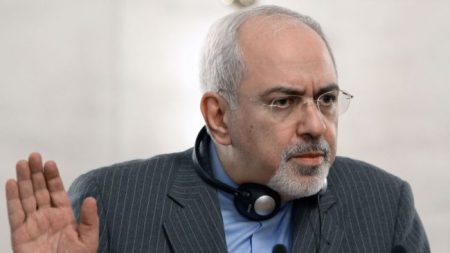
Instead of repeating accusations against Iran, the US should fulfil its obligations under the 2015 nuclear deal, Iranian Foreign Minister Mohammad Javad Zarif said in response to US Secretary of State Rex Tillerson’s comments on the review of the lifting of sanctions.
In his letter to the Congress on Wednesday, US Secretary of State Rex Tillerson, acknowledged that Iran was compliant to the accord, but blasted the country as “the world’s leading state sponsor of terrorism.”
Tillerson claimed that Tehran has been fueling various military conflicts in the Middle East, undermining US interests in countries such as Syria, Yemen, Iraq and Lebanon.
It was the first time that the Congress was informed on how Iran was fulfilling its obligations under the Joint Comprehensive Plan of Action (JCPOA), usually referred to as the Iran nuclear deal, under the Trump administration. The State Department must update US senators on the issue every 90 days.
Zarif took to Twitter to respond to Tillerson’s claims, stressing that Washington should “fulfill its own commitments” as part of the deal.
“Worn-out US accusations can’t mask its admission of Iran’s compliance w/ JCPOA,” the Foreign Minister added as cited by Reuters.
Moscow commented on Tillerson’s claim by saying that secretary of state should have separated the allegations of terrorism and the nuclear deal as they “have nothing in common,” according to Mikhail Ulyanov, the head of the Russian Foreign Ministry’s Department for Non-Proliferation and Arms Control.
“If the deal does not work, then specific complaints should be made regarding its functioning. The Americans can’t do this. The IAEA [International Atomic Energy Agency], an independent participant in this process, confirms that the Iranians are implementing everything. Therefore, any claims are irrelevant here, it seems to me,” Ulyanov said.
Washington blames Tehran for supporting various groups that it views as terrorist organizations, including Lebanese Hezbollah, Palestinian Hamas and the Houthis in Yemen.
Iran has also been backing the Syrian government of President Bashar Assad, also sending military advisers and fighters to Iraq to help fight Islamic State (IS, formerly ISIS/ISIL) there.
The Iranian nuclear deal, which took years to negotiate, restricted the nuclear ambitions of Tehran in exchange for lifting financial and oil sanctions.
The accord signed between Iran and the P5+1 (China, France, Russia, United Kingdom, the US, plus Germany) and the EU was touted as one of the main foreign policy achievements of the Obama administration.
However, Donald Trump called it “the worst deal ever negotiated” during his campaign for the White House.
A special inter-agency review of policy towards Iran will now look into if the lifting of sanctions against Tehran was in the interest of the US.
Several Palestinians hospitalized over multiple settler attacks in Nablus area
Ma’an – April 22, 2017
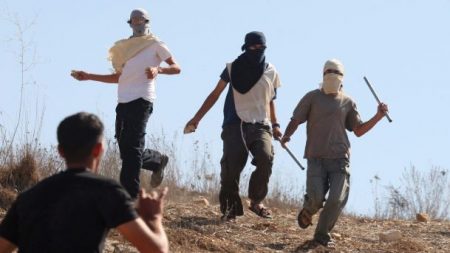
NABLUS – Israeli forces shot and injured four Palestinians with rubber-coated steel bullets, after residents in a Palestinian village south of Nablus in the northern occupied West Bank gathered to defend their homes from a mob of Israeli settlers that stormed the community. Hours later, two Palestinians were hospitalized when a group of settlers attacked Palestinians in a nearby village.
Ghassan Daghlas, an official who monitors settler activities in the northern West Bank, told Ma’an that some 100 “extremist settlers” from the illegal Yitzhar settlement entered the village of Urif from its east side and proceeded to smash windows of houses, included one belonging to resident Munir al-Nouri.
He added that the settlers were about to break into the house before Palestinian villagers gathered and forced them away.
According to a Facebook group for Urif, loudspeakers from the village’s mosque were used to inform residents of the incident and to urge them to help defend the homes from the “herds of settlers” attacking the village.
Minutes later, Daghlas said, a number of Israeli military vehicles stormed the village to protect the Israelis.
Clashes erupted between Palestinians youth and Israeli forces who “haphazardly” fired tear gas canisters, stun grenades, and rubber-coated steel bullets at Palestinians, according to Daghlas.
Daghlas said that four Palestinians were shot with rubber-coated steel bullets, one of whom was hit in the head. Medical sources said that Adel al-Safadi, Jihad Saad, Mustafa Fawzi, and Sharif Abd al-Hafith were taken to Rafidiya hospital to be treated for the gunshot injuries.
An Israeli army spokesperson told Ma’an that a “violent dispute erupted between Israelis and Palestinians” who she said were “mutually throwing rocks at each other in an area around the village.” When Israeli forces arrived to “disperse the dispute, several Palestinians shot flares at (Israeli) forces.”
In response, Israeli forces used “riot dispersal means,” she said. No Israeli were reported injured
Later Saturday afternoon, Daghlas said that another group of Israeli settlers attacked Palestinian homes in the town of Huwwara, just a few kilometers away from Urif, on the southeastern edge of Yitzhar.
Daghlas said that dozens of settlers attacked Palestinians and their homes with stones and “sharp objects.” A 72-year-old woman, Badiah Muhammad Hamdan, and a young man identified as Ahmad Yousif Udah were hospitalized. Daghlas said Hamdan sustained head injuries.
A video shared on social media showed the woman, bloodied and incapacitated, being evacuated in an ambulance.
Separately, a young Palestinian man was run over by an Israeli settler later Saturday afternoon in al-Masoudiyya west of Nablus city, Daghlas said.
Daghlas told Ma’an that 19-year-old Asim Salim from Nablus city was evacuated to Rafidiya hospital, where doctors said he sustained moderate wounds. Daghlas added that Salim was trying to cross the road in al-Masoudiyya when a settler’s vehicle hit him and fled the scene.
An Israeli border police spokesperson could not be reached for comment on the reported hit and run.
According to the Applied Research Institute – Jerusalem (ARIJ), since the state of Israel confiscated land from Urif and other Palestinian villages to establish the illegal Yithzar settlement in the 1980s, “attacks and violence perpetrated by settlers has had a profoundly negative impact on Palestinian residents and their property,” stressing that Yitzhar “poses a daily threat to residents of the neighboring Palestinian villages.”
Settlers have also been known to steal crops, damage and burn trees and other plants, and attack places of worship in the area, in an attempt to intimidate Palestinian villagers and farmers from using their land.
On Friday, a video was released showing 15 masked Israeli settlers attacking Israeli activists in the central West Bank, throwing rocks and hitting the activists with clubs.
Many Palestinian activists and rights groups have meanwhile accused Israel of fostering a “culture of impunity” for Israeli settlers and soldiers committing violent acts against Palestinians.
In March, Israeli NGO Yesh Din revealed that Israeli authorities served indictments in only 8.2 percent of cases of Israeli settlers committing anti-Palestinian crimes in the occupied West Bank in the past three years.
Between 500,000 and 600,000 Israelis live in Jewish-only settlements across occupied East Jerusalem and the West Bank in violation of international law, with recent announcements of settlement expansion provoking condemnation from the international community.
According to the United Nations Office for the Coordination of Humanitarian Affairs (OCHA), there were a total of 221 reported settler attacks against Palestinians and their properties in the West Bank and occupied East Jerusalem in 2015, and 107 in 2016.
Iran’s presidential election takes predictable turn
By M K Bhadrakumar | Indian Punchline | April 22, 2017
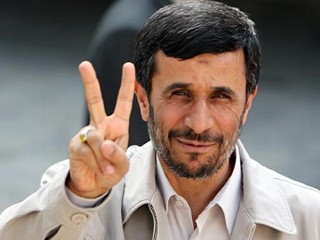 The ‘known unknown’ in the fateful decision handed down on Thursday by Iran’s Guardian Council on the approved list of candidates for the forthcoming presidential election on May 19 was as regards the candidacy of former president Mahmoud Ahmedinejad. That was for three main reasons. First, he is a colorful personality who occupies a unique spot in Iran’s political spectrum, which qualifies to be called ‘leftist’. Iran’s politics needs such a platform, given the nature of its problems of development.
A contestation between the Conservative Right and the Moderate Right detracts from the authenticity of the electoral arena. The paradox is that while there is a faction known as ‘reformists’ in Iran, it serves the same class interests as the conservative religious establishment. The 1978 revolution had leftist moorings, given its genesis as a popular democracy movement, but ended with the establishment of the world’s first Islamic state. And in a bitter struggle within the revolution, progressives got eliminated. It remains a hugely controversial chapter in Iran’s modern history and keeps popping up every now and then, reopening old wounds.
Second, Ahmedinejad was a rare ‘non-cleric’ president. Highly educated, intelligent, articulate and a self-confident intellectual credited with progressive outlook, he showed that a politician can have mass appeal in Iran sans the patronage of the religious establishment. Although deeply religious in his private beliefs and Spartan lifestyle, he lighted up a potential path in Iran’s evolution as a practising democracy that lay unexplored. Indeed, Iran’s progress as a modern state stands to gain if the religious establishment also becomes accountable to the people – not only to god. Did the religious establishment feel challenged by him? It seems so.
Third, in world politics today, we need a Bolivarian leader and therefore if there is no Ahmedinejad, it is a poorer world. Someone should speak up when a mother of all bombs is dropped on a hapless nation which is already at the end of its tether after years of occupation and ransacking and savagery, or when a color revolution is being insidiously fostered in faraway Venezuela. Multipolarity in world politics cannot be a fig-leaf for a concert of big powers to cover their back side.
Ahmedinejad was genuinely an internationalist who dared to punch above his weight and almost got away with it. The world needs him in the era of Donald Trump. The alternative is to settle for Kim Jong Un, which is of course bizarre.
However, in its wisdom, Iran’s Guardian Council has debarred Ahmedinejad from contesting next month’s election. Six candidates have been short-listed, but no official reason has been given. And there is no higher appeal, either.
What explains it? To be sure, there will be myriad conspiracy theories. To my mind, it is a highly political decision that the Guardian Council took. Some time back, Supreme Leader Ayatollah Ali Khamenei had reportedly asked Ahmadinejad not to put his name forward for this year’s election, so as to avoid “polarising” the country. But the latter displayed strategic defiance. If so, it was a hopeless act.
If an analogy is drawn from Indian politics, it was as if LK Advani had projected himself as the prime ministerial candidate of the BJP in the run-up to the 2014 poll, even after figuring out the RSS’s game plan. Advani showed prudence, while Ahmedinejad needed to be restrained. But then, that is also what makes Ahmedinejad adorable – to fight and lose rather than to shy away.
Ahmedinejad’s exit improves the chances of re-election for President Hassan Rouhani, whose performance on the economic front has been dismal with high unemployment (12.5%) despite the impressive 6.6% growth rate. Rouhani’s main opponent is likely to be the conservative cleric with a background in the judiciary (and Iran’s alleged extra-judicial killings) who heads the prestigious and powerful (and incredibly wealthy) religious foundation known as Astan Quds Razavi with responsibility for overseeing the country’s holiest Shia shrine in the city of Mashhad — Ebrahim Raisi.
It is an “in-house” affair, with a level playing field available for two conformist figures of the religious establishment – one far-right and the other moderate-reformist – testing their popularity. For neither, of course, this is the end of the road in their career. Ahmedinejad would have given an existential dimension to the election, and elevated it as the occasion for a great battle of ideas and roads taken and not taken. Put differently, Iran’s establishment is opting for cautious policies.
How did al-Qaeda know in advance about the Syrian air strike?
By Paul Larudee | Dissident Voice | April 21, 2017
There is an anomaly among the evidence that the Syrian chemical weapons attack at Khan Sheikhoun in Idlib province on April 4, 2017 was a “false flag” operation, designed to provoke a US attack on Syria. The evidence is otherwise quite strong, as put forth by former Pentagon consultant and MIT professor Theodore Postol in his three part analysis of the declassified White House Report on the Syrian chemical weapons attack of April 4, 2017. Postol’s analysis has been widely cited as disproving the White House contention that the Syrian Air Force bombed the “rebel” controlled village with chemical weapons.
Indeed, Dr. Postol’s analysis pokes quite a few gaping holes in the White House Report, concluding that the crushed gas canister and the “crater” shown in open source videos and photographs from the site demonstrate that it could not have been delivered by air. Postol also concludes that the report is, in fact, fraudulent and was produced by the National Security Agency without the input or review of impartial intelligence professionals.
Nevertheless, Postol begs a couple of questions, the most compelling of which is how the “false flag” imposters on the ground would have known how to time their operation with the Syrian air strike that everyone admits actually took place (the Syrians and Russians alleging that only conventional weapons were used, and the Americans alleging the use of chemical weapons). In order to do this, they would have had to have advance knowledge of the attack. How would they have gotten this information?
A clue to this comes from the suspension of the Russian-American “deconfliction” agreement. Under a September, 2015, memorandum of understanding, information about all military flights by forces in the area would be shared in order to prevent dangerous and unintended confrontations. In this case, Russia informed its US counterparts of the intended Syrian strike twenty-four hours in advance.
That would be plenty of time to prepare a “false flag” operation of the type shown in the videos and photographs and described in the Postol analysis. But in that case, the information would have to have been conveyed by US sources to operatives on the ground in Idlib, which is headquarters for al-Qaeda’s Syrian affiliates.
Russia seems to think that this is exactly what happened. Their unilateral suspension of the agreement has been widely interpreted as a reaction to the US attack on the al-Sha’yrat airstrip, but it may be more than that. Military actions are often calculated to appear to be a justifiable reaction to an earlier action from the other party. Thus, for example, the US chose to attack the Sha’yrat airstrip at least partly because that is where the aircraft that attacked Khan Sheikhoun had originated.
Similarly, Russia reacted to the US strike by authorizing increased anti-aircraft defenses in Syria and dispatching a frigate to its Mediterranean base in Tartus. These moves can be considered reactions to the fact that Russian anti-aircraft missile systems are known to be able to shoot down Tomahawk missiles of the type used in the US attack, and that the Tomahawks were fired from US vessels in the Mediterranean, off the coast of Syria.
But what about the suspension of the deconfliction agreement? How is that a specific response to the something done by the US? Perhaps Russia suspects that the information that they gave to the US in compliance with the agreement was leaked. Does Russia think that the US has al-Qaeda operatives at the highest and most secure levels of the U.S. government? That is a bit far-fetched, especially when there is a simpler and more plausible explanation.
The explanation is that al-Qaeda does not need operatives to get such information. The US has been strategically in bed with al-Qaeda, ISIS and their permutations for quite some time. US policy makers do not speak with a unified voice on this matter, but many – especially those of the neoconservative school of strategic policy – have cultivated the use of violent groups like al-Qaeda and ISIS as alternatives or supplements to the use of US forces on the ground.
Furthermore, many of the same policy makers were the ones who led the US into the disastrous wars in Iraq and Libya, and are committed to do the same in Syria. False flag operations and faulty intelligence are part of their stable, as they showed with their tall tales of WMD and Viagra-fueled black mercenaries. They have been influential in the US government since at least the Reagan administration, and groomed Hillary Clinton for the White House for decades.
Since the loss of their horse in the last presidential election, these policy makers have been trying to turn the Trump government against its campaign rhetoric of leaving Syria and letting Russia and the Syrian government put an end to ISIS and al-Qaeda in Syria. That is not part of their playbook. Their plan therefore uses false flag operations, false intelligence and working with terrorists, in order to control US foreign and military policy through subterfuge when they cannot control it directly.
But how can they do this? What sorts of connections make it possible for them to undermine the White House, State Department and intelligence services to achieve their ends? We don’t have to look far for examples.
An obvious one is the US attack on the Syrian army at Deir ez-Zour on September 17, 2016, killing scores of Syrian soldiers and wounding many more. Critically, this happened only five days into a trial ceasefire and only two days before the trial period was to end and the ceasefire to become permanent. Needless to say, this had the effect of scuttling the ceasefire, but interestingly, ISIS troops were apparently standing by to overrun Syrian army positions almost immediately after the US aircraft completed their bombing mission (and how would they have known when it was completed?).
US military officials said it was unintentional, but an excellent investigative report by Gareth Porter demonstrates that, in fact, this was a purposeful choice by high ranking US military officers to prevent the ceasefire from forcing them to cooperate with Russian counterparts on target coordination in Syria. These officers had allies in the administration, including Defense Secretary Ashton Carter, who effectively undermined the policies of President Barack Obama and Secretary of State John Kerry and their Russian counterparts, President Vladimir Putin and Foreign Minister Sergei Lavrov. As Kerry admitted to the Boston Globe, “…we had people in our government who were bitterly opposed to [the agreement].”
There is plenty of circumstantial evidence of US collusion with al-Qaeda, as well. Hillary Clinton’s foreign policy advisor Jake Sullivan even went so far as to admit that “AQ [al-Qaeda] is on our side in Syria.” Is it coincidence that most of the weapons delivered to “moderate rebels”, including TOW anti-tank guided missiles that turned the tide against the Syrian army in 2014-15 were almost immediately transferred or put under the control of al-Qaeda? Or that when US forces evacuated Falujah and other territories conquered by ISIS in the same period, it left behind huge quantities of arms, vehicles and other resources, contrary to standard military policy of destroying whatever could be of use to the enemy? Or that, more recently, when retaking Mosul, US forces left the way to Syria open for ISIS to flee to Syria and use its forces to retake Tadmur (Palmyra) from the Syrian army?
Typically, the US has created intermediaries such as the quasi-mythical “moderate rebels” between them and the most extreme terrorist organizations. However, the mythical quality of these emissaries is sometimes exposed, as when an audio recording was released of a conversation between John Kerry and twenty representatives from four “moderate” Syrian organizations in September, 2016, at the United Nations.
In the recording, a Syrian woman, Marcell Shehwaro, threatens Kerry that if the US doesn’t do more to help, they will join forces with al-Nusra (the al-Qaeda affiliate in Syria). Another man (unidentified) repeats the threat later in the recording. Shehwaro later argues that more support should go to al-Nusra; i.e., that “we are not arming the right people” and “there is not enough political and arms support to those who consider [al-Nusra] moderate. I wish we had these friends.”
Such admissions show that the veneer of “moderation” is very thin in these groups. They are, in fact, little more than a public relations front for al-Qaeda and ISIS, providing whatever the west needs – and especially news feeds – needed to keep support flowing.
The four groups represented at the meeting clearly have access to the highest levels of the US government and vice versa. It would be a simple matter for a US government official in the Pentagon, NSA or other agency to pass the information about Syrian aircraft movements to someone like White Helmets leader Raed Saleh, who was present at the Kerry meeting, with assurance that it would reach the al-Nusra leadership in Idlib. In effect, Kerry (and other government officials) are speaking directly to al-Qaeda.
Obama and Kerry learned their lesson. They understood the degree to which their decisions could be undermined, so to preserve their limited power, they sometimes went along with the powers that they could not control, and sometimes partly thwarted those powers. Obama was gifted with a Director of National Intelligence, James Clapper, who famously told him that the alleged 2013 Syrian army use of chemical weapons was “not a slam dunk,” which led the President to back off his plan to attack Syria.
Does Trump have such people? His replacement of noninterventionist Michael Flynn with war hawk H.R. McMaster is an ominous sign that neoconservative influence is reasserting itself. And the success of the Khan Sheikhoun false flag chemical weapons attack in inciting a US attack on Syria is a clear encouragement for more such false flag operations.
Paul Larudee is one of the founders of the Free Gaza and Free Palestine Movements and an organizer in the International Solidarity Movement.
Iran opens up petrochemicals to world investors
Press TV – April 22, 2017
Executives of oil and gas companies from about 18 countries are attending an international conference on petrochemical industry in Tehran to explore Iran’s emerging role in global markets.
The international Iran Petrochemical Forum (IPF) opened Saturday with the participation of industry experts, traders, petrochemical producers, refiners, shipping and logistics companies as well as technology solution providers and engineering companies.
France’s oil and gas company Total and Germany’s industrial gases group Linde are leading the pack of more than 70 companies which have their nose on the ground for business in Iran.
They are coming from as diverse countries as the UK, Italy, Denmark, Belgium, Switzerland, Singapore, Japan, Turkey, India, Romania, Bahrain and Lebanon.
Their participation at the two-day conference raised the prospects of new deals being signed for investment in Iran’s massive petrochemical sector which aims to attract some $55 billion in the next 10 years.
No match for feedstock
Minister of Petroleum Bijan Zangeneh told the conference that no country possesses as much feedstock for petrochemical development as Iran. “This claim is based on the realities and our known oil and gas reserves,” he said.
Iran’s proven oil reserves of 157 billion barrels are the world’s third largest, while its gas reserves are the biggest. Taken together, the country owns the biggest hydrocarbon reserves in the world.
According to Managing Director of the National Petrochemical Company (NPC) Marzieh Shahdaei, Iran needs $55 billion for 60 projects in the petrochemicals sector over a period of 10 years.
Addressing the forum, she lauded Iran’s achievements in 2016 as “dazzling” during which the country’s petrochemical output hit 50 million tonnes.
“Net sales of petrochemical products last year reached 28 million tonnes worth $15 billion,” Shahdaei said, explaining that 21 million tonnes were sold to foreign clients at a value of $9.4 billion.
The official said raising this figure to 72 million tonnes in the current year was “not out of reach”, given “appropriate infrastructures and adequate feedstocks” which exist following Iran’s conclusion of nuclear talks.
LPG markets
The country seeks to more than double this capacity in the next decade, which requires between $7 billion to $10 billion of annual investment.
The forum comes on the heels of another event, titled the 2nd Argus Iran LPG and Petrochemicals Conference, held in Tehran on Tuesday and Wednesday, during which Tehran signed its first LPG contract with India, according to the Shana news agency.
The conference was held “to explore the growing importance of Iran’s role in the global LPG and petrochemicals markets and develop new relationships to navigate the evolving landscape,” its organizers wrote on their website.
Foreign investment
Iran currently accounts for 17 percent of the LPG trade in the Middle East, with the share expected to grow to 40 percent by 2020. Three new LPG separation units at Phase 19 of Iran’s South Pars development project came on stream last week.
Among foreign companies, Linde has said it had revived plant-engineering contracts in Iran that lay dormant for years under sanctions but could not act on them until there was a way to transfer money out of the country.
“We have already signed engineering contracts to resuscitate projects from years ago but the banking system has to be fixed first before we can start performing on these contracts,” Reuters quoted Chief Executive Aldo Belloni as saying last month.
In February 2016, the NPC announced that Linde and Japan’s Mitsui Chemicals were planning to invest $4 billion in Iran’s petrochemical industry.
Financial Times: Russia’s oil and gas industry booming BECAUSE of sanctions
By Alexander Mercouris | The Duran | April 22, 2017
The sectoral sanctions the Western powers imposed on Russia in July 2014 because of the conflict in the Donbass continue to have paradoxical results.
The financial sanctions, which effectively prevented Russian companies from borrowing in Western financial markets, instead of causing the Russian economy to implode, have caused it to deleverage at an unprecedented rate, hugely strengthening Russia’s financial sector and the balance sheets of Russia’s companies, setting the scene for a coming investment boom.
The counter-sanctions Russia imposed prohibiting the importation of Western foodstuffs into Russia have led to a huge boom in Russia’s agriculture sector, as even the Financial Times was recently forced to admit, making Russia almost completely self-sufficient in food, and making it a major food exporter.
However perhaps the most paradoxical result of all has been in Russia’s oil and gas industry.
Western sanctions were supposed to cripple this industry – wrongly assumed in the West to be existentially important for Russia’s very existence – by depriving it of the technology it needed to develop the huge untapped oil and gas reserves Russia is known to have in the Arctic, and making development of its huge shale reserves, which are known to dwarf those of the US, impossible.
In the event the Financial Times has now admitted in a lengthy article that within less than three years of the sanctions being imposed the Russian oil and gas industry is in the throes of a technological boom, as Russian companies forge ahead with Arctic drilling, successfully replicating the very same Western technologies which were supposed to be beyond them:
… a drill began its 5,000m journey downwards, in search of oil deposits that the country is banking on to provide more than a quarter of its future output. Perched on the edge of a peninsula deep in the Arctic Circle, Tsentralno- Olginskaya-1 will be Russia’s northernmost oil well. Closer to the North Pole than to any city, it is a feat of engineering that uses equipment shipped 3,600km through icy waters navigable only for two months of the year.
The well is one of the most technologically challenging ever attempted in Russia. With the deposits located beneath the icy, frequently frozen waters of the Laptev Sea, cutting-edge horizontal drilling techniques will be used to reach up to 15,000m from the main site.
But it was also a moment of triumph for Mr Putin, who was beamed in via video conference from St Petersburg as Mr Sechin braved the frigid elements and who celebrated the start of drilling as an act of homegrown ingenuity.
Three years ago, when the US and EU imposed sanctions on the country that restricted companies such as Rosneft from foreign capital and technology, complex wells were exactly the kind of ambitious projects that were supposed to be rendered impossible. Western governments hoped that pressure on Russia’s main energy companies would help change Mr Putin’s political calculations. But as projects like Tsentralno-Olginskaya-1 attest, Russia’s oil and gas majors have found ways to carry on regardless.
“Horizontal drilling is a complex and high-tech operation. This is just the first well. There is much more work ahead,” Mr Putin told Mr Sechin in the heavily scripted conversation.
It seems according to the same article that the Russians are forging ahead with shale technology as well:
… 2,000km south-west of Tsentralno-Olginskaya-1 in western Siberia, Gazprom Neft, Russia’s third-largest oil producer, is showing few ill effects. Late last year, it became the first Russian company to demonstrate shale oil fracking expertise with a 1km-long horizontal well 2.3km below ground at a site in the vast Bazhenov field, estimated to be the world’s largest shale oil deposit.
Gazprom Neft was able to use homegrown technology that it was forced to develop after the sanctions prompted its international partners to walk away from the project.
“We are like a snowball,” says Sergey Vakulenko, head of strategy and innovation at the company, a unit of gas giant Gazprom. “The harder you squeeze, the harder we get.” …
“Sure, in terms of shale technology, we are a little behind the Americans. But in time, and definitely before we absolutely need to, we will get to where we need to be, sanctions or no sanctions,” says Mr Vakulenko.
“We could do it now, but we don’t need to,” he adds, referring to even more complex fracking techniques that will be required to fully exploit the Bazhenov field’s 75bn barrels of estimated reserves. “Why go after the high-hanging fruit when there is lower stuff available right now?”
The point about Russia not needing to go after the high-hanging fruit when there is an abundance of lower-hanging fruit for it to exploit is not bragging or propaganda. It was made to me a few months ago in person by a Russian scientist who is an expert in hydraulic fracking.
Perhaps even more striking than this news of technological advances is the Financial Times’ admission that the effect of the sanctions has been to make the Russian oil and gas industry financially stronger and more efficient:
“In terms of today’s projects, we are not at all affected [by the sanctions],” [Yakulenko] says in an interview at the company’s St Petersburg offices, where engineers use vast computer screens to remotely control drills at more than 600 wells across the country. “At their current configuration, they aren’t and won’t be painful, irrelevant of how long they are in place.”
Between 2013 and 2016, Russian crude oil production rose almost 6 per cent, more than twice as much as the rise in combined output from the Opec group of countries. Revenues at the country’s three largest producers have risen 11 per cent in that period.
The curtailment of foreign cash forced many to restructure their balance sheets with the help of domestic lenders, cut loss-making or costly new projects, and increase their efficiency.
Acquisitions and international expansion projects have followed. “The accepted narrative is that there is only upside risk from sanctions [being lifted] as the majority of the companies affected have shown few ill effects,” says the head of a western bank in Moscow. “In fact, lots of them have been forced to be smarter and have increased their competitiveness.”
Articles such as this one in the Financial Times are still comparatively rare. The orthodoxy amongst Western governments and in the Western media is that Russia is suffering badly from the sanctions. That is one reason why there is still so much resistance to any move whether by the Trump administration or by anyone else to lift them.
The truth is that though the sanctions caused the Russian economy genuine difficulties in late 2014, when Russian companies had to repay debts they struggled to finance because of the sanctions and the oil price fall, once Russia got through those initial difficulties the effect of the sanctions on the Russian economy has been entirely beneficial, and is becoming more so.
The West seriously underestimated Russia in 2014. It failed to realise to what extent the country had advanced beyond the disastrous times of the 1990s.
Whereas the sort of sanctions the West imposed on Russia in 2014 would have crushed the Russian economy if they had been imposed in say 2000, today Russia is fully capable of developing its economy by drawing on its own financial resources and its own technology, both of which it has in abundance.
What the West did in 2014, by imposing the sanctions at a time when there was an oil price fall, was force the Russians to do this more efficiently and more quickly than they would have done if they had been left alone.
Westerners always seem to cling on to their idea of Russia as a poor, technologically backward, ill-governed, irredeemably corrupt, ‘third world’ country (“Upper Volta with missiles”). This is what leads them to make foolish decisions, such as the decision to impose sectoral sanctions, which they took in July 2014.
On the subject of Russia being ill-governed, the Financial Times quotes Apurva Sanghi, lead economist for Russia at the World Bank in Moscow, as having this to say:
There is a pretty uniform consensus that the oil price shock dwarfed the sanctions. If you look at what the authorities have done over the past few years for macro stability, it has been pretty outstanding and the results are there to be seen.
On the macro-economic facts, it is impossible to disagree with this assessment, and on the oil and gas industry facts as described in the Financial Times article, it is impossible to say anything different.
On 27th May 2016, when I discussed the West’s failed attempt to stop Russia floating a eurobond, I made this point in relation to how the West’s actions had actually strengthened Russia’s financial system
Truly Western governments when it comes to Russia seem intent on proving Nietzsche’s dictum true: that which does not break us makes us stronger. Certainly that has been true of Russia’s eurobond sale. By trying and failing to sabotage it the West has only managed to make Russia stronger.
The same it turns out is true of Russia’s oil and gas industry.
Featured Video

The Most Important Bet You’ve Never Heard Of
or go to
Aletho News Archives – Video-Images
From the Archives
The Occupied Mentality Syndrome
Saudi Arabia on the American chessboard – Part 2
By B. J. Sabri | American Herald Tribune | April 19, 2016
Since the Korean War, but particularly since the Iranian Revolution of 1979 until today, the United States has been steadily escalating its military presence in the Persian Gulf. Taking advantage of many colossal events of the past 36 years, [1] the hyper-empire has institutionalized its massive presence on land and sea, and expanded its objectives to include the unambiguous physical control of the area, as well as the clear understanding that local Arab governments should abide by them. The pretext is always the same: in “defense” of the national interests and security of the United States. From observing how the United States has been interacting with the governments of the region, and by judging from the size of its expeditionary force, we could reach a basic conclusion. The United States is occupying, de facto, the entire Arabian Peninsula. (Yemen, devastated by Saudi and American jets is yet to be conquered. Oman? Britain returned not as colonial ruler but as a soft occupying power.)
Under this articulation, Saudi Arabia, Qatar, Kuwait, and the United Arab Emirates are virtually occupied countries. If we compare this type of occupation to the mandate and protectorate regimes of the past, the results might be identical—the nations affected by it lose sovereignty. When Arab governments comply with the objectives of a foreign power that station military forces on their national milieu, then that power controls them in multiple ways including how they react to policy deliberations and what decisions they intend to take on specific issues. A good method to verify the concept of effective occupation is this: take notice of what the United States says and wants, and then compare it to what the gulf rulers do in response. (I shall discuss this detail at some point in the upcoming parts.)
If the presence of US forces or other means of political pressure are a factor in Saudi Arabia’s interventionist Arab wars, then we need to debate this issue. However, from the history of resistance to colonialism, we learnt: if a powerful state imposes its order on a nation by military means or other forms of coercion, and if this nation does not resist that imposition, then a mental subordination to the powerful state will ensue. This is especially true in the case of Saudi Arabia. One single event, 9/11, has transformed it from a US “ally” into an instant political hostage of the American Empire. … continue
Blog Roll
 Aletho News
- Britain’s Lebanon surveillance network: A digital map for war
- Bahrain faces scrutiny for opposition crackdown after detainee killed
- Hegseth’s Pentagon Purge Designed to Prevent a Mutiny: Karen Kwiatkowski
- Greek shipping firms secretly transporting oil, weapons to Israel
- UN vote on Hormuz force delayed as Iran issues warning
- Trump and the debris of Iran war
- IRGC hits US tech giant Oracle’s data center, computing site in UAE over new assassinations
- Bombing Iran Back Into the Stone Age /Lt Col Daniel Davis & Jim Jatras
- UAE rejects report claiming it is ready to join war on Iran to reopen Hormuz
- A New Resistance Front: How Does Syria Factor into the Regional War?
- If Americans Knew
- Israel-US kill negotiators, destroy civilian structures, but Iran’s military capabilities still largely intact – Daily Update
- ‘War crime’: Global condemnation as Israeli ministers celebrate death penalty law targeting Palestinian prisoners
- 7 Ways Israel Is Turning Lebanon Into Gaza
- World’s Leading Football Bodies Under Fire Over Israel Policies
- Experts warn of possible use of nukes against Iran
- Israeli invasion of Lebanon could be worse than 1982, warn European officials
- Passover: Liberation and collective punishment
- Trump says the quiet part out loud: (Israel’s) war on Iran > Americans’ health – Daily Update
- Gaza families reunite years after babies evacuated amid Israel’s war
- International Rescue Committee warns Gaza’s children face grave protection risks
- No Tricks Zone
- Low Intensity Tornado Wrecks Major Solar Farm, Creating A Potential Toxic Dump
- New Study Finds Warming Saves Lives…Cold Temperatures 12 Times More Deadly Than Excess Heat
- German Science Blog Accuses PIK Climate Institute Of Hallucinating Climate Tipping Points
- Devastating Assessment Of Comirnaty Vaccine By Former Senior Pfizer Europe Toxicologist
- New Study: CO2 Is ‘Effectively Negligible’ As An Explanatory Climate Change Factor Since 2000
- Former Pfizer Toxicologist Dr. Helmut Sterz Tells Bundestag Hearing Pfizer Vaccine Should Have Never Been Approved
- Energy Expert: Germany’s Nuclear Phaseout Was A “500 Billion Euro Mistake”
- New Research: South Australia’s Mid-Holocene Sea Surface Temperatures Were 4°C Warmer Than Today
- Storing Green Energy To Last Germany 10 Days Would Require A 60-Million Tonne Battery
- New Studies: UK Sea Levels Were 4 Meters Higher Than Today During The Mid-Holocene
 Aletho News