It’s time the international community stood up for Palestinian children
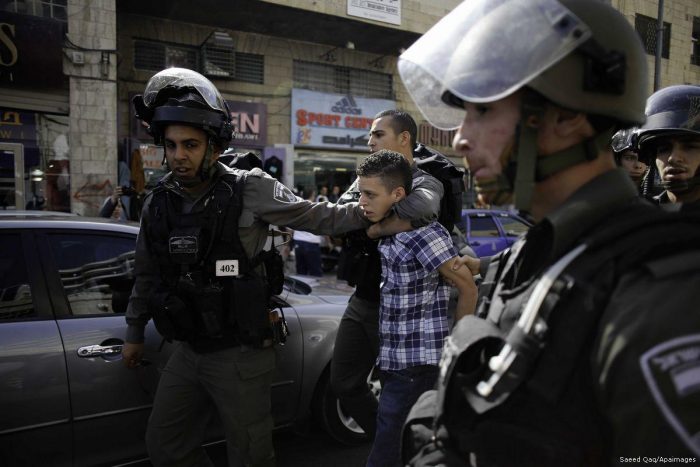
A Palestinian child can be being arrested by Israeli security forces [Saeed Qaq/Apaimages]
By Professor Kamel Hawwash | MEMO | December 4, 2107
Israel’s mistreatment of Palestinian children is not a new development but rather one example of its many breaches of international law and international humanitarian law. While it has in the past faced criticisms for its maltreatment of Palestinian children, particularly in relation to minors that are taken into custody and brought before its military courts, this has not been matched with solid action.
It is therefore encouraging that this may be about to change, and in the United States of all places. The Promoting Human Rights by Ending Israeli Military Detention of Palestinian Children Act requires the Secretary of State to certify annually that funds obligated or expended in the previous year by the United States for assistance to Israel “do not support military detention, interrogation, abuse, or ill-treatment of Palestinian children, and for other purposes”. The legislation leaves financial assistance already committed to Israel in place.
The bill notes that Israel ratified the Convention on the Rights of the Child on 3 October 1991, which states— (A) in article 37(a), that “no child shall be subject to torture or other cruel, inhuman or degrading treatment or punishment”. It states that “In the Israeli-occupied West Bank, there are two separate legal systems, with Israeli military law imposed on Palestinians and Israeli civilian law applied to Israeli settlers”.
It further notes that the Israeli military detains around 500 to 700 Palestinian children between the ages of 12 and 17 each year and prosecutes them before a military court system which the bill says “lacks basic and fundamental guarantees of due process in violation of international standards”.
Defence for Children International Palestine (DCIP) notes that “Israel has the dubious distinction of being the only country in the world that systematically prosecutes an estimated 500 to 700 children each year in military courts that lack fundamental fair trial rights and protections”. It further states that in 590 cases documented by DCIP between 2012 and 2016, 72 per cent of Palestinian child detainees reported physical violence and 66 per cent faced verbal abuse and humiliation.
According to Khaled Quzmar, General Director of DCIP, “despite ongoing engagement with UN bodies and repeated calls to abide by international law, Israeli military and police continue night arrests, physical violence, coercion, and threats against Palestinian children”.
The recent introduction of the bill in the US Congress aims to prevent US tax dollars from paying for human rights violations against Palestinian children during the course of Israeli military detention. It aims to establish, as a minimum safeguard, a US demand for basic due process rights for and an absolute prohibition against torture and ill-treatment of Palestinian children arrested and prosecuted within the Israeli military court system.
In 2012 the UK’s Foreign and Commonwealth Office commissioned a report by nine lawyers on the issue of Palestinian children. Among its conclusions it found that “Israel is in breach of articles 2 (discrimination), 3 (child’s best interests), 37(b) (premature resort to detention), (c) (non-separation from adults) and (d) (prompt access to lawyers) and 40 (use of shackles) 111 of the United Nations Convention on the Rights of the Child”. It further concluded that based on its findings “Israel will also be in breach of the prohibition on cruel, inhuman or degrading treatment in article 37(a) of the Convention. Transportation of child prisoners into Israel is in breach of article 76 of the Fourth Geneva Convention. Failure to translate Military Order 1676 from Hebrew is a violation of article 65 of the Fourth Geneva Convention”.
The report made four core recommendations and 40 specific recommendations. The sheer volume of the recommendations highlights the extent of the breaches that need to be addressed by the Israeli authorities. Rather than work to address the recommendations of the report in 2016, Israel refused to cooperate with a team making a follow-up visit to review the extent to which the recommendations had been addressed. This led to the cancelation of the visit and the British FCO failed to convince the Israelis to reinstate it.
Responding to a question from the Chair of the Britain-Palestine All Party Parliamentary Group, then Foreign Office Minister Tobias Ellwood said: “I expressed my strong disappointment at Israel’s unwillingness to host this follow-up visit with Deputy Foreign Minister Tzipi Hotovely during my visit to Israel on 18 February. Officials from the British Embassy in Tel Aviv, including the ambassador, also lobbied the Israeli Ministry for Foreign Affairs to cooperate with the visit, and will continue to follow up. We remain committed to working with Israel to secure improvements to the practices surrounding children in detention in Israel.”
The UK parliament has recently been considering the issue of Palestinian children and their treatment by Israel. This was initially expressed through a parliamentary instrument called the Early Day Motion (EDM). EDM 563 was issued on 20 November and states that “this House notes with concern that hundreds of Palestinian children continue to be arrested, detained and tried in Israeli military courts, despite the practice involving widespread and systematic violations of international law and being widely condemned”.
The motion “notes the disparity between the treatment of Israeli and Palestinian children by Israeli authorities and calls for those authorities to treat Palestinian children in a way that is not inferior to the way they would any Israeli child”.
EDM 563 notes with concern “that the recommendations of Unicef’s 2013 Children in Israeli Military Detention Report remain largely unmet and calls on the government to urgently engage with the Israeli government to end the widespread and systemic human rights violations suffered by Palestinian children in Israeli military custody”.
At the time of writing 65 members of parliament had signed the motion (out of 650). This includes support from individual MPs from all political parties in England Scotland and Wales.
The recent moves in Congress and the UK parliament to highlight Israel’s abuse of the rights of Palestinian children have been welcomed by Palestinians and their supporters. It has taken decades for the rights of children to gain any real attention. If the bill in the US passes then it would signal a real change in policy in that it will condition some funding to Israel on respect for human rights and specifically for Palestinian children. If it fails then the message to Palestinian children will be that America is willing for the bar to be set lower for them than for Israeli children. A well supported EDM in the UK Parliament will highlight the issue and that will allow its sponsors to seek real action from government to pressure Israel to change its unacceptable treatment of Palestinian children, both morally and legally.
It is time Palestinian children were finally protected from abuse by their occupiers. Israel is comfortable in its abuse and will only change when the international community acts to help them. As for Israel, a state without a moral compass, when it comes to Palestinians it could at least apply the same law and practices of dealing with Palestinian children as it does its own children.
Israel law allows prosecution of those revealing army violations against Palestinians
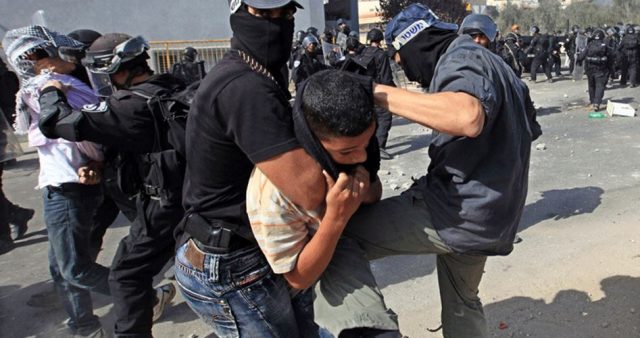
MEMO | December 4, 2017
Israeli media sources revealed that the Israeli Ministerial Committee for Legislation was due to discuss a draft bill yesterday that allows the army to sue anyone who “offends” its soldiers.
The bill, which is aimed at organisations including Breaking the Silence which works to expose the occupation’s violations against Palestinian citizens, has the backing of Justice Minister Ayelet Shaked and Minister Yariv Levin, Israeli newspaper Israel Hayom reported.
According to the bill’s details, the draft law would allow soldiers to file defamation suits against anyone who tried to harm their reputation or spread information harmful to their image.
The newspaper quoted Likud MK Yoav Kish, who presented the draft bill, saying: “After the Ministerial Committee approves the draft bill, it will be presented next Wednesday for approval during a preliminary reading in the Knesset.”
Kish claimed that the “testimonies” published by Breaking the Silence are “lies”.
He added: “Whoever defames the army, whether it is Break the Silence, or any other party, must pay the price.”
Breaking the Silence is an organisation of veteran combatants who have served in the Israeli military since the start of the Second Intifada and who expose the Israeli public to the reality of everyday life in the Occupied Territories.
Netanyahu calls on US ‘policy community’ to revise Iran deal
Press TV – December 4, 2017
Israel’s Prime Minister Benjamin Netanyahu has called on the “policy community” in the United States to push decision makers in Washington and European countries to revise the 2015 nuclear agreement with Iran.
“I urge you, in the policy community, to help decision makers in the capitals of Europe and Capitol Hill, to take advantage of this opportunity,” the Israeli premier said.
By the “policy community”, the Israeli leader apparently means powerful lobbyists such as the Israeli American Council and the American Israel Public Affairs Committee (AIPAC) which are central to all anti-Iran motions.
Netanyahu, whose regime is believed to possess the only nuclear arsenal in the Middle East, has repeatedly made unfounded accusations that Iran was seeking to develop nuclear weapons.
His new call came in a taped message that focused primarily on Iran to the Brookings Institute – Saban Forum meeting in Washington.
The annual conference is funded by the Israeli-born business mogul Haim Saban who said in November 2014 that “I would bomb the living daylights out of these [expletive],” if former US President Barack Obama struck a “bad deal” with Iran and Netanyahu assessed it as putting Israel at risk.
American Jewish billionaire Sheldon Adelson, a powerful casino magnate and another funder, suggested then that the US detonate a nuclear bomb in the Iranian desert before negotiations with Tehran.
Netanyahu hailed President Donald Trump for refusing in October to certify the Iran deal, known as the Joint Comprehensive Plan of Action (JCPOA).
The Israeli premier said the decision “has created an opportunity to fix the great flaws” of the JCPOA after the US president warned he might ultimately terminate the agreement.
Trump is required by law to certify every 90 days whether or not Iran is complying with the nuclear deal. If he argues that Iran is not in compliance, that could cause an American withdrawal from the international pact.
While Trump did not pull Washington out of the nuclear deal in October, he gave the US Congress 60 days to decide whether to reimpose economic sanctions against Tehran that were lifted under the pact.
Clinton mega-donor Saban thanks Kushner for collusion on Israel’s behalf
RT | December 3, 2017
Jared Kushner, President Donald Trump’s senior advisor – and the man who allegedly ordered Gen. Michael Flynn’s “collusion” calls to Russia – has appeared at pro-Israeli donor Haim Saban’s event where he has been thanked for his lobbying on behalf of Israel.
Speaking at the three-day conference, prominent Clinton Foundation donor Saban thanked Kusher for “taking steps to try and get the UN Security Council to not go along with what ended up being an abstention by the US against a 50-year-old tradition.”
The multibillionaire was referring to Flynn’s admission that he had been told to ask Russia to delay a December 2016 UN Security Council vote on Israeli settlements. It has since been reported that Flynn was acting on Kushner’s orders, and that Israeli officials had contacted Trump’s team to ask for their help to veto the resolution, Reuters reports.
Kushner allegedly told Flynn to lobby multiple countries on behalf of Israel, which included speaking to then-Russian UN Ambassador Sergei Kislyak.
The efforts failed and the UN voted to pass a resolution demanding an end to Israeli settlements being built on Palestinian land in which the outgoing Obama administration abstained, rather than its usual vetoing.
“To be honest with you, as far as I know there’s nothing illegal there,” Saban said. “But I think that this crowd and myself want to thank you for making that effort, so thank you very much.”
Saban’s words put allegations of the Trump campaign’s alleged “colluding with the Russians” into perspective.
Although news that Flynn had spoken to Kislyak exploded across the media, claimed to be evidence of alleged Russian meddling in US politics, and prompted Flynn’s resignation last year, his charge sheet reveals the Trump transition team was doing the bidding of an entirely different government.
Newsweek reported Saturday that Kushner also failed to disclose his role as co-director of the Charles and Seryl Kushner Foundation between 2006-15, during which time it funded an illegal Israeli settlement. This could have been seen as a conflict of interest in his appointment as the Trump advisor tasked with bringing peace to the Middle East.
Saban, an Israeli-American businessman and massive donor to the Clintons, funded the three-day Saban Forum event, which included a televised speech from Israeli Prime Minister Benjamin Netanyahu. Saban has said in the past, “I’m a one issue guy, and that issue is Israel.”
He appeared sceptical at Kushner’s team’s ability to solve the Israel-Palestine issue, calling the team “a bunch of Orthodox Jews who have no idea about anything.”
The extent of Saban’s influence in US politics was illuminated in the WikiLeaks release of emails from Clinton campaign chair John Podesta, including one in which he told the campaign to “not allow them to steel [sic] the Jewish vote from us.”
Politico reports he raised over $11 million for the Clinton campaign in 2016, along with his contributions to the Clinton Foundation of between $10-25 million, and the $7 million he put towards a new headquarters for the Democratic National Committee.
During his talk with Kushner, Saban revealed how he met Trump’s son-in-law, explaining Kushner had written him an admiring letter in 2010 after he had read a profile on him in the New Yorker. Saban never read the letter and only learned of it when it was passed on to him during the election. “We became friends and we exchange ideas on an ongoing basis,” Saban said. “He advises me and I advise him.”
Kushner recalled assuring Saban during the election that Trump would be the best person for the Israeli-US relationship. “You should hope that Trump wins if you care about the US-Israel relationship.” he said.
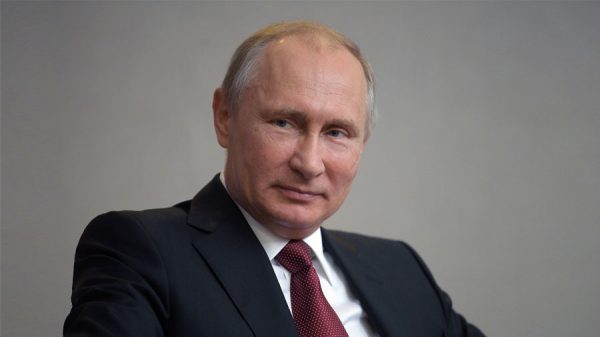
11 quotes that show how Vladimir Putin sees world
RT | November 23, 2017
Populist, pragmatist, authoritarian, cunning tactician – years after he rose to the top of Russian politics Western observers still wonder about Vladimir Putin’s true motivations. In fact, behind the Kremlin’s decision-making is a set of consistently expressed beliefs.
On the United States
“The USA is a great power. Probably the only superpower in existence today. We accept that and we are ready to work together with them.
What we don’t need is for them to get involved in our affairs, tell us how to live our lives, and prevent Europe from building a relationship with us.”
St. Petersburg International Economic Forum, June 2016
On allegations of Russia’s foreign meddling
“There is constant US propaganda, and direct funding of US NGOs… Is that not interference, which continues year in, year out? Take a globe, spin it, and randomly put your finger on any spot – I can guarantee that there are American interests and meddling there.
What do the Americans want? For everyone to just bow their heads in deference? We have our own opinion and we express it openly. It is not some form of undercover sabotage.”
Direct Line with Vladimir Putin, June 2017
On Europe
“Does it benefit European states to simply service Washington’s foreign and even domestic policy aims? I am not sure. Is this the purpose of serious politics, and is this the role countries take on if they desire to call themselves great powers?”
Russia Calling! Investment Forum, October 2016
On Catalonia’s independence crisis
“At one time, the EU welcomed the collapse of a whole range of states in Europe, not bothering to hide their glee. Why did they need to so thoughtlessly – for the sake of short-term interests and to please ‘Big Brother’ in Washington – unconditionally support the secession of Kosovo, provoking similar processes on the continent and beyond?”
Valdai Discussion Club, October 2017
On NATO
“There is no more Soviet Union, no Eastern Bloc. In my view, NATO needs an external enemy to justify its existence, so there is a constant search for one, and provocations to create adversaries where there are none.
…Today it is an instrument of American foreign policy. There are no partners in it, only vassals.”
Oliver Stone interview, June 2017
On the Middle East
“There has been an attempt to reformat the region, to impose an outside model on it, either through regime change, or outright use of force. Instead of fighting extremism, instead of imitating such a fight, some of our peers want chaos to become a permanent state of affairs.”
Valdai Discussion Club, October 2017
On North Korea
“Of course we condemn North Korea’s nuclear tests and comply with all UN Security Council resolutions without exception.
But to solve this problem you must use dialog, not by trying to corner North Korea with military threats, and not resort to name-calling and public exchanges of insults. Whether you like the regime in Pyongyang or hate it, you have to recognize that DPRK is a sovereign state.”
Valdai Discussion Club, October 2017
On the toppling of Viktor Yanukovich in Ukraine
“What happened in Kiev is an armed and unconstitutional seizure of power – a coup. No one is arguing with that.
The question is – why did it need to be done like that? Viktor Yanukovich had already given up his power, and had no chance of re-election. Why plunge the country into chaos? As a demonstration of power? This was a stupid decision and had the reverse effect. I believe it was these actions that destabilized the situation in the east of the country.”
Media briefing in Novo Ogarevo, March 2014
On the government in Kiev
“The interests of the Russian and the Ukrainian peoples are the same. What isn’t the same is the aims of the Ukrainian government and elites.
… They have only one good left to export for international consumption – Russophobia. And the politics of division between the two countries. Some in the West believe that these two states should never be allies, and so Ukraine has been successful exporting that idea.”
Hamburg G20 Summit, June 2017
On Russia’s political system
“Monarchy was a legacy passed down from the Empire to Soviet times, even though the plaque on the building changed. Only at the beginning of the 1990s, events came to pass which laid the foundation for a new stage of Russian development.
Certainly, you cannot imagine that we can instantaneously get the same government model, the same structures, as in the United States, in Germany, in France. Society, just as every living organism, has to develop stage-by-stage, organically. That’s the normal development process.”
Oliver Stone interview, June 2017
On Russia’s role in the world
“Russia is a country with a thousand-year history and has almost always enjoyed the privilege of a sovereign foreign policy.
We are not going to betray this tradition today. At the same time, we are well aware of how the world has changed and we have a realistic understanding of our own opportunities and potential. We would like to interact with responsible and independent partners with whom we could work together in constructing a fair and democratic world order that would ensure security and prosperity not only for a select few, but for all.”
Munich speech, February 2007
No, The US Didn’t Abandon The Syrian Kurds
By Andrew KORYBKO – Oriental Review – 02/12/2017
Trump has ostensibly compromised by promising Turkish President Erdogan that he’ll stop arming the Syrian Kurds.
The US and Turkish leaders spoke by phone last Friday, during which time Trump allegedly gave his counterpart his word that he will stop giving arms to the Syrian Kurds. The Turkish side reported that Trump called the previous policy of arming the YPG “nonsense” and promised to end it, while the official White House readout was more ambiguous and said that he “informed President Erdogan of pending adjustments to the military support provided to our partners on the ground in Syria”.
The discrepancy between both side’s interpretation of the conversation prompted the Turkish Deputy Prime Minister to state that the US “would be deceiving the whole world” if it went back on its pledge, while the Pentagon reiterated that it is “reviewing pending adjustments to the military support provided to our Kurdish partners in as much as the military requirements of our defeat-ISIS and stabilization efforts will allow to prevent ISIS from returning.”
In addition, it should be reminded that reports have been circulating that the US might officially acknowledge that up to 2000 of its troops are in Syria, which would be around 4x more than what it previously admitted, and that the Pentagon is moving towards more of an “open-ended” mission in the war-torn country now that Daesh – it’s supposed reason for being there – is defeated. What all of this means is that the US will probably not withdraw from Syria, and there’s a chance that arms shipments to the Kurds might continue.
No matter what Trump may or may not have said to President Erdogan, he’s on record in early April saying that he’s given the US military “total authorization” to do what it wants, so if the Pentagon decides that there’s a need to continue arming the Syrian Kurds, then that’s exactly what the US will likely end up doing. Furthermore, nobody knows the exact terminology that Trump might have used during his phone call, so there’s a chance that he might try to employ a “technical loophole” by selling weapons to the Syrian Kurds instead of “loaning” them like the US is presently doing.
In any case, the unlikelihood of the US military withdrawing from Syria means that the Pentagon could still extend a defense umbrella to its on-the-ground allies, thus staving off a Turkish military intervention and creating the pretext for forming a so-called “air bridge” in the event that the neighboring states attempt to blockade this region like they did to Iraqi Kurdistan. The key difference between the Iraqi Kurds and the Syrian ones is that the former didn’t have 2000 US troops and reportedly 10 American bases on their territory, hence why Washington “betrayed” them.
In addition, Iraq is already an internally partitioned country for the most part due to its “federal” status, while Syria has yet to formally follow in its footsteps, so the indefinitely prolonged US military presence there is designed to advance Washington’s preferred “political solution” by pressuring Damascus, while Trump’s talk about supposedly discontinuing weapons shipments to the Syrian Kurds is meant to give Turkey a “face-saving” excuse for passively accepting what they had previously said would be a clear red line for them.
How A Dubious BBC Report Gave Israel The “Green Light” For Last Night’s Attack On Syria
Zero Hedge | December 2, 2107
Syrian state television has confirmed that Israel attacked a military base outside of Damascus overnight on Friday, which Israeli media reports involved both surface-to-surface missiles and airstrikes, while Syria says its air defense systems were engaged and intercepted two missiles. Like other recent strikes inside Syria, the Israeli jets reportedly fired from over Lebanese airspace, in order to avoid both Syrian anti-aircraft missile systems and provoking a Russian response. Though the extent of the damage or casualties is not yet known, Syrian media has confirmed material damage to the base, and other reports indicate mass power outages in some of parts of Damascus occurred immediately after the attack, which SANA says happened at 12:30am local time.
It appears the base is likely the same one featured in a November BBC report which showed satellite images detailing the purported construction and renovation of an “Iranian military base” near El-Kiswah, which lies 14 km (8 miles) south of Damascus. As we’ve noted before, the BBC report was dubiously sourced to “a Western intelligence source” and the story was quickly utilized by Israeli leaders to ratchet up rhetoric in preparing its case before the international community for further attacks on the supposed Iranian targets. Israel has long justified its attacks inside Syria by claiming to be acting against Hezbollah and Iranian facilities and arms depots.
Indeed, BBC itself used ambiguous language in saying the satellite images “seem to show” construction activity at the site referenced by the intelligence source between January and October this year. However, the images don’t actually show much at all related to an Iranian military presence, but merely a series of two dozen large low-rise buildings – likely for housing soldiers and vehicles, which would be expected of any state army or sovereign nation.
Furthermore, the very title of the November piece – “Iran building permanent military base in Syria – claim” – underscores the complete lack of evidence for such a claim, which the BBC notes in the article is “impossible to independently verify.”
Yet in reporting last night’s Israeli strike on Syria, the BBC uncritically referenced its own prior unconfirmed “claim” to paint a picture that Israel is actually taking action against Iran and Hezbollah: “Israel has hit weapons sites before, in a bid to prevent arms being transferred to Syria’s Lebanese ally Hezbollah. Arms convoys in particular have been singled out by the Israeli air force.”
And the BBC followed this with:
Last month the BBC revealed a claim that Iran was building a permanent military base near the town. A series of satellite images showed construction at the location of the alleged base, which was made known to the BBC by a western intelligence source.
Israeli Prime Minister Benjamin Netanyahu has previously warned that Israel would not allow Iran to establish any military presence in Syria.
So it appears the BBC is playing war propagandist for Israel, instead of including any level of critical inquiry regarding Israel’s unprovoked act of aggression against its neighbor. In short, the BBC spread what it acknowledged to be a mere “claim” based solely on an unnamed “Western intelligence source”. Then Israel used that claim to attack Syria, after which the BBC in circular fashion justified the attack based on its own original dubious “claim”.

Israeli media and politicians are currently using BBC published satellite images as “proof” that Israel attacked an “Iranian base” in Syria last night. Image source: BBC
Meanwhile, just about every major Israeli newspaper in today’s reporting is prominently featuring the prior BBC report as justification for the latest attack on Syria. The Times of Israel provides one such example among many when it says:
The alleged Israeli attack came three weeks after the BBC reported that Iran was building a permanent military base in Syria just south of Damascus. The British broadcaster commissioned a series of satellite pictures that showed widespread construction at the site.
Or see this op-ed in the Jerusalem Post today which references the BBC report as a watershed moment:
The attack raises several questions. Why wait so long to strike the Iranian base? What did “western intelligence sources” hope to accomplish by publishing information on the Iranian base? Why were the Iranians at the site given time to leave by their base becoming so public? The month’s activity appear to be part of a complex game being waged by Iran to entrench itself in Syria and Israel’s attempts to warn the Iranians off. Whatever was taking place at El-Kiswah had plenty of time to be wrapped up and moved if the Iranians were concerned about it being struck. If the reports about Israel’s threats to target sites between 40-60km from the Golan are accurate then it would indicate that the warnings have been manifested.
And nearly every major Israeli media source is also republishing the BBC satellite images as part of their reporting on the overnight strikes.
As we’ve long pointed out, anytime that Israel carries out acts of aggression against Syria, it can just blame Iran or Hezbollah and escape international criticism or condemnation. International media and Western governments have already demonstrated a penchant for towing the Israeli line whenever Iran can be conceivably blamed as a culprit – evidence or no evidence – this as Prime Minister Benjamin Netanyahu has made it official Israeli policy to oppose Iranian presence in Syria.
Yet what key facts do the BBC and others leave out?
On Tuesday Israel’s own Defense Minister Avigdor Lieberman said that there are no Iranian military forces in Syria, but instead merely stuck to acknowledging “Iranian experts and advisers”. In comments to Israel’s Ynet news, Lieberman admitted, “It is true that there are a number of Iranian experts and advisers, but there is no Iranian military force on Syrian land.”
Clearly, Defense Minister Lieberman’s statement flies in the face of claims made by Netanyahu in his speech before the UN General Assembly this year when Netanyahu said, “We will act to prevent Iran from establishing permanent military bases in Syria for its air, sea and ground forces. We will act to prevent Iran from producing deadly weapons in Syria… And we will act to prevent Iran from opening new terror fronts against Israel along our northern border.”
In other words, Israel’s top military chief very publicly contradicted both Netanyahu’s and the BBC’s claims of Iranian military bases on Syrian soil, yet the BBC neglected to mention such essential information. Thus, it appears that the mainstream media is preparing us for war… but sadly, this is nothing new.
Honduras: Teenage Girl Killed as Army Enforces Curfew
teleSUR | December 2, 2017
Three people – including a teenaged girl – have so far been killed in violent clashes following the disputed Honduran elections, as the armed forces opened fire on unarmed opposition supporters while enforcing a 10-day curfew imposed by the government late Friday.
One man was killed in the port city of La Ceiba on Friday and 19-year-old Kimberly Dayana Fonseca was shot in the head early Saturday in Tegucigalpa as soldiers busted up protesters’ blockades, a spokesman for the national police said, bringing the total death toll to three.
In a brief statement to the press, the head of the Supreme Electoral Tribunal (TSE) David Matamoros announced late Saturday that the scrutiny of more than 1,000 disputed ballots would resume Sunday 9:30am local time.
He also noted that screening more than 5,000 ballots, as requested by the Opposition Alliance, would have taken 12 to 15 days. “We appreciate your presence, but there will be nothing else here today, I reiterate that we will call for tomorrow at 09h30 local time,” the magistrate said.
In response, Opposition Alliance leader Salvador Nasralla accused the TSE of deliberately excluding the towns of Lempira, La Paz and Intebuca after he requested they be reviewed when the turnout was abnormally high (75 percent) compared with the rest of the country (50 percent).
Nasralla insisted it was mathematically impossible that Hernandez could win the election with 30 percent of the votes still uncounted before the electronic system collapsed.
“We want what the Honduran people want,” he told teleSUR in a televised interview. “If the people want, we will run for another election. If they want, I won’t participate if Juan Orlando Hernandez doesn’t either.
“If (electoral authorities) refuse to recount, let’s hold the elections again, but with an international tribunal: that’s our position,” he concluded, describing the situation as “a coup d’etat.”
He also said the leadership of the armed forces had “sold themselves” in shirking their constitutional duties “against a tyrant who forcefully wants to stay in power,” and accused the government of infiltrating opposition protests in order to loot local stores and discredit the movement.
Human rights organizations have denounced the curfew, blaming “excessive force” by state troops. The U.S.-based Action Network has sent an open letter to the U.S: Congress and State Department, expressing “deep concern about reports of fraud and state violence” and calling for the immediate suspension of all U.S. police and military aid to Honduras.
The Venezuelan government firmly condemned on Saturday the “latest attempted blow against democracy from sectors of the Honduran oligarchy. The people’s will and human rights of the people of Honduras must be respected,” said Jorge Arreaza on Twitter.
In a communique, Venezuela’s Foreign Ministry also slammed the “repression and the excessive use of force by State security forces,” accusing “the same actors” responsible for the 2009 coup against the constitutional President Manuel Zelaya.
The Honduran Ministry of Justice ordered the suspension of citizens’ constitutional rights shortly before 11pm Friday. On Saturday, the Committee of the Relatives of the Disappeared in Honduras (Dodafeh) confirmed 11 people have been injured in Tegucigalpa since late Saturday and 41 arrested, six of whom are minors.
The government, controlled by current president and electoral candidate Juan Orlando Hernandez, claims the move is to counter what they call “violent protests” by supporters of presidential candidate and Opposition Alliance leader Nasralla.
The Honduran Roundtable for Human Rights (HRHR) said “excessive force” is being used by Honduran military and state security forces. Nasralla said the suspension of constitutional guarantees is part of a Supreme Electoral Tribunal (TSE) plan to “steal” his “victory,” claiming the electrobal body has committed electoral fraud since polls closed Sunday night.
The HRHR, in a formal statement, said the Armed Forces are creating a “terrorist state” against peaceful protesters, killing at least two people with rubber bullets and injuring dozens. National police forces have “arbitrarily arrested” citizens, intimidated media and thrown tear gas at marchers.
Bolivian President Evo Morales reprimanded the United States and Organization of the American States (OAS) for their alleged complicity: “Nearly a week since the Honduran elections. Why are the U.S. and OAS silently complicit regarding the elections and death of citizens in Honduras? Democracy is in danger in a neighboring country?”
Official election results on the TSE website have remained unchanged since Friday morning, with Hernandez leading by less than one percentage point over Nasralla. Over 94 percent of ballots are counted.
The decree now in effect until Dec. 11 says that people can move about freely only from 6am until 6pm. Outside of that time, they are not allowed to be on highways or in any public space, otherwise they are “putting their lives in danger.” The decree gives the military the right to patrol the streets and detain anyone “violating” the curfew.
The Intercept Withheld NSA Doc That May Have Altered Course Of Syrian War
If this document had been published sooner, it could have dramatically changed the course of the war by exposing the true face of the “moderate rebels” — and potentially saved tens of thousands of lives. That didn’t happen, and no reason has been given by the Intercept for its delay.
By Whitney Webb | Mint Press News | October 30, 2017
On Tuesday, the Intercept published a hitherto unknown document from the trove of National Security Administration (NSA) documents leaked by Edward Snowden over three years ago. The document was notable as it shed light on the early days of the Syrian conflict and the fact that, for the past six years, so-called “revolutionary” groups aimed at toppling Syrian President Bashar al-Assad have largely acted as proxies for foreign governments pushing regime change.
The document explicitly reveals that an attack led by the Free Syrian Army (FSA), which was intended to mark the anniversary of the 2011 “uprising” that sparked the Syrian conflict, was directed by a Saudi prince. The document proves, in essence, that the armed opposition in Syria – from the earlier years of the conflict – was under the direct command of foreign governments pushing for regime change.

An NSA graphic released by The Intercept outlines Saudi involvement in organizing and supplying Syrian opposition forces for attacks on Syria’s civilian infrastructure.
According to the document, Saudi Prince Salman bin Sultan had ordered the FSA to “light up Damascus” and “flatten” the city’s civilian airport. The Saudis had also “sent 120 tons of explosives/weapons to opposition forces” for the operation. The Saudis, as the document notes, were “very pleased” with the outcome, which claimed at least 60 lives.
The implications of the NSA document are significant. It offers the clearest proof, in the form of official U.S. government documents, detailing the direct relationship between the armed Syrian opposition and foreign governments, and exposing the fact that this relationship existed much earlier than the mainstream narrative on the conflict had previously suggested.
However, the Intercept article regarding the document is unusual for several reasons. First, the report inaccurately claims that the attack launched at the Saudis’ behest did not result in any confirmed casualties. Second, it states that the 2011 uprising in Syria was an organic, “peaceful” movement that led the Syrian government to wage “an open war against their own people” — a narrative that has since been debunked.
Yet, the largest oversight of all is the article’s failure to mention the U.S.’ role in funding the Free Syrian Army, as well as the CIA’s well-documented role in training the FSA and pumping tons of weapons into Syria in order to foment and exacerbate the conflict in its early days. In light of the NSA document’s revelation that the U.S. had been given advance notice of the planned FSA attack – on a civilian target, no less – Washington’s decision to let it proceed clearly suggests that the U.S. was involved in and well aware of the Saudi directives to the FSA. However, the Intercept piece chooses not to mention this crucial context.
Intercept’s three-plus year delay in releasing document
Perhaps even more troubling than the article’s failure to mention the CIA’s well-documented role in backing the Free Syrian Army, now exposed as a proxy force following orders from the Saudi royal family, is the fact that the Intercept had access to this document for nearly three-and-a-half years – deciding to publish only now that the Syrian conflict is effectively over and those pushing for regime change have lost. If this document had been published sooner, it could have dramatically changed the course of the war by exposing the true face of the “moderate rebels” — and potentially saved tens of thousands of lives.
That didn’t happen, however, and no reason has been given by the publication for its notable delay. The Intercept has exclusive publishing rights and an exclusive hold on the content of the Snowden leaks, of which this newly released document is a part. Indeed, the Intercept was founded after the Snowden leaks were made public and its first hires were Glenn Greenwald and Lauren Poitras, the only journalists possessing the full Snowden cache. Those documents now belong to the Intercept’s founder — billionaire eBay founder, — and his for-profit media company, First Look Media.
Examining Omidyar’s connections to the U.S. political establishment offers a plausible reason for the Intercept’s delay in publishing documents so crucial to understanding the situation in Syria. Omidyar was a frequent guest of the Obama White House from 2009 to 2013, garnering more face-to-face visits with Obama during his two terms than did Google’s Eric Schmidt, Facebook’s Mark Zuckerberg, New York Times owner Arthur Sulzberger and even fellow tech billionaire turned major media owner, Jeff Bezos.
Omidyar also directly co-invested with the U.S. State Department, via USAID and the National Endowment for Democracy (NED), in opposition groups that played a key role in overthrowing Ukraine’s democratically elected government in 2014 – a U.S.-brokered regime-change operation that shares some notable similarities with the Syrian conflict. His investments with USAID have continued since the Intercept’s founding, helping fund the NGO’s more recent overseas programs aimed at “advancing U.S. national security interests” abroad.
Also worth noting is the fact that PayPal, of which Omidyar is a major owner, has allegedly been implicated in several of the still-withheld NSA documents for its business relationship with the NSA and its role in the agency’s mass spying program. In addition, former Intercept writers have asserted that Omidyar was “shockingly disinterested in the actual journalism” of the paper, suggesting that the Intercept was created explicitly to delay the release of damaging documents from the Snowden cache until deemed acceptable to the U.S. political establishment and others who stood to lose face were the entire cache to have been made public.
Indeed, another interesting coincidence supporting this thesis is the fact that the Intercept published this latest piece only after the U.S. State Department itself began to report more honestly on the nature of these so-called “rebels.” A day before the Intercept’s story on Syrian “rebels” and the Saudis, the U.S. State Department – for the first time – admitted that “moderate” rebels in Syria had previously used chemical weapons, a charge it had categorically denied for years in order to facilitate laying the blame for any and all chemical weapons attacks in Syria on the Syrian government.
In other words, the Intercept released the document, which effectively destroys Washington’s “moderate rebels” narrative with its own internal documents, only after the U.S. government itself began to unravel that very same narrative.
The Intercept did not respond to MintPress News’ request for comment regarding the timing of the document’s release.
Founder’s connections shape Intercept’s journalism
Omidyar’s connection to U.S. regime-change efforts abroad may also explain why the Intercept – until now, that is – has consistently given voice to journalists who have echoed the U.S. establishment regarding the Syrian conflict.
For instance, Murtaza Hussain – the author of this latest Intercept piece – has written numerous stories downplaying the terrorist and Wahhabist elements of the Syrian “rebels.” In the last two years, Hussain has written pieces portraying known Al-Qaeda propagandists, such as Bilal Abdul Kareem, and Al-Qaeda-linked organizations, such as the White Helmets, in an overwhelmingly positive light, failing to mention in both cases the significant evidence tying these entities to known terrorist groups. In another piece, published last August, Hussain gave voice to al-Nusra Front leadership in a lengthy interview that largely whitewashed the group’s Wahhabist leanings and links to terrorist acts in Syria.
Last September, on Twitter, Hussain asserted that Saudi Arabia’s funding of armed factions was not necessarily “good” but that “there is little to indicate they contribute to terrorism.” That last statement has been thoroughly debunked for years, but most recently by Hussain’s own piece on the newly released NSA document.
Hussain is by no means the only Intercept writer who has taken such a pro-opposition stance regarding Syria. A recent Intercept piece on Syria, published in September, committed glaring factual errors on basic facts about the war, while also mistranslating a speech given by Assad so as to link him to American white nationalists. In addition, the paper recently hired Maryam Saleh, a journalist who has called Shia Muslims “dogs” and has taken to Twitter in recent months to downplay the role of the U.S. coalition in airstrikes in Syria. She also has ties to the U.S.-financed propaganda group Kafranbel Media Center, which has close relations with the terrorist group Ahrar al-Sham.
For a paper ostensibly dedicated to “fearless, adversarial” journalism, it is strange that the Intercept gives voice to journalists who echo the U.S. position regarding the Syrian war while rarely publishing the work of journalists who have challenged prevailing Western narratives on that war — journalists who, as the Intercept itself recently revealed, have been right all along regarding the myth of the Syrian “moderate rebel.” Yet, given Omidyar’s political connections and the paper’s handling of the Snowden cache, this unfortunate decision is unsurprising.
Russia & China could set international gold price based on physical gold trading
RT | December 3, 2017
Since Russia, China, India, Brazil & South Africa are all either large producers or consumers of gold, or both, it is highly likely that the BRICS bloc they constitute could focus its cross-border gold trading network on trading physical gold.
Gold pricing benchmarks from such a system would be based on physical gold transactions, which is a departure from the way the international gold price is currently established.
Such a system would also be a threat to “gold” trading markets in London and New York. The London Over-the-Counter (OTC) and the New York COMEX futures exchange currently set the international gold price.
OTC and COMEX are really trading synthetic derivatives on gold, and are completely detached from the physical gold market. In London, the derivative is fractionally-backed unallocated gold positions which are predominantly cash-settled. In New York the derivative is exchange-traded gold future contracts which are predominantly cash-settled and backed by very little real gold.
The major gold producers Russia, China and other BRICS nations could change the way the international gold prices are set currently – in a synthetic trading environment which has very little to do with the physical gold market.
BRICS cooperation in the gold market was first unveiled in April by the First Deputy Chairman of Russia’s Central Bank, Sergey Shevtsov, during a visit to China.
“We (the Central Bank of the Russian Federation and the People’s Bank of China) discussed gold trading,” he said. “The BRICS countries (Brazil, Russia, India, China and South Africa) are major economies with large reserves of gold and an impressive volume of production and consumption of the precious metal. In China, gold is traded in Shanghai, and in Russia in Moscow. Our idea is to create a link between these cities so as to intensify gold trading between our markets.”
Even Russian Dissidents Say Americans Have Gone Crazy Over Putin
By Glen Ford | Black Agenda Report | November 30, 2017
The New York Times last week opened its pages to critics of the U.S. corporate media’s obsession with Vladimir Putin’s endlessly alleged, but never proven, campaign to subvert “American democracy.” After a year of unrelenting anti-Kremlin propaganda, the Times briefly lifted its curtain of censorship to allow a counter-narrative on “Russiagate” – but only for one discreet group: Russian “dissidents.” (See “Why Putin’s Foes Deplore U.S. Fixation on Election Meddling,” November 23.)
These “pro-Western liberals who look to the United States as an exemplar of democratic values and journalistic excellence,” as the Times describes them, are dismayed, insulted and angry at the non-stop lunacy churned out by U.S. media. If the Times, the Washington Post, CNN and most of the Democratic Party are to be believed, President Putin is a superman, “an almighty force from a James Bond saga,” said Leonid M. Volkov, chief of staff for anti-Putin politician Aleksei A. Navalny . How could the Russian opposition ever hope to overcome such a titan — a man who can wreck the political order in the world’s reigning superpower with the expenditure of only $100,000 on Facebook? “This image is very bad for us,” Volkov told the Times. “Putin is not a master geopolitical genius.”
Putin has been made to look “invincible,” said Michael Idov, a Russian-American screenwriter (the closest the Times got to giving a fellow American the opportunity to challenge the corporate Russiagate obsession).
The New York Times has cultivated a cabal of pro-western Russian politicians ever since Bill Clinton’s presidency, when U.S. bankers helped to create the Russian oligarchy with assets stolen from the wreckage of the Soviet state. Vladimir Putin is credited with taming the oligarchs, who nevertheless remain embedded in the nation’s infrastructure. The politicians the Times calls “dissidents” hate Putin, but they are also proud to be Russian, and cannot abide U.S. scape-goating of their nation. The Americans sound crazy. “What is happening with ‘the investigation into Russian interference,’ is not just a disgrace but a collective eclipse of the mind,” said Volko.
It is obvious to every politically aware Russian that Donald Trump and his team of incompetents met with hardly any Russians of consequence on his trips to that country — mostly wannabes and hustlers. But, U.S. audiences can’t distinguish one Russian from the other, and know only one Russian face: Putin’s.
Journalist Oleg V. Kashin, a Kremlin critic, said: “The image of Putin’s Russia constructed by Western and, above all, American media outlets over the past 18 months shocks even the most anti-Putin reader in Russia.” Times correspondent Higgins reports that Kashin “complained that the American media has consistently misconstrued the way Russia works, presenting marginal opportunists and self-interested businessmen with no real link to the Kremlin as state-controlled agents working on orders from Mr. Putin.”
The New York Times and the Washington Post know their way around Moscow — and if they don’t, the CIA will give them directions. Indeed, their friends, the Russian “dissidents,” would have been glad to advise the U.S. media on Russiagate, but that would have made a boring story about small time sleaze in a cold climate. What the U.S. War Party needed was a new cold war to accompany Washington’s global military offensive.
U.S. “liberals” and “progressives” hate Trump more than they value peace, and are not nearly as smart as they think they are. Professor of history Ivan I. Kurilla, who specializes in American studies at the European University in St. Petersburg, said anti-Trump Americans want to foist him on Russia — politically exiling the Orange Menace to somebody else’s country. “American liberals are so upset about Trump that they cannot believe he is a real product of American life,” said Kurilla. “They try to portray him as something created by Russia. This whole thing is about America, not Russia.”
The Times’ Russian dissident friends despise RT, the state-supported Russia news agency, but are worried about Washington’s demand that RT register as a foreign agent. Until only a few years ago, U.S. NGOs were hyper-active in Russia, spending millions to create and subsidize opposition to Putin’s United Russia party, hoping to foment a “color” revolution. Western-oriented political actors in Russia fear that Russiagate will provoke a Kremlin crackdown on activists that are too closely identified with the U.S. The truth is, the “dissidents” interviewed by the New York Times are dependent on western corporate media for legitimacy and visibility. The real opposition in Russia is the Communist Party, which is the second largest party in the country but gets almost no coverage in the U.S. press, while the western-allied opposition hardly shows up in the polls.
Thus, even the nature of “dissent” in Russia is grossly distorted by the U.S media, which commits a similar crime against truth on its home turf. The New York Times went all the way to Moscow and St. Petersburg to solicit critiques of Russiagate coverage (“propaganda” is a better term), but rigidly censors American skeptics.
In so doing, they create a bubble of fear and ignorance that envelops the country — while everything inside, shrinks.
Glen Ford can be contacted at Glen.Ford@BlackAgendaReport.com
Featured Video
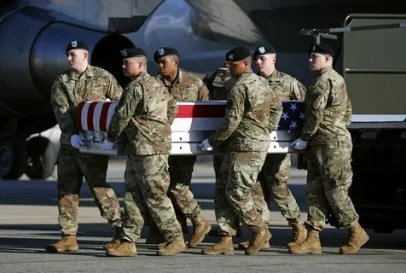
American Military Failure in Afghanistan
or go to
Aletho News Archives – Video-Images
Frlom the Archives
The Fiction of the Jewish History in Palestine
By Hasan Afif El-Hasan | The Palestine Chronicle | April 8, 2011
Prime Minister Benjamin Netanyahu told NNC Pierce Morgan on March 18, 2011 that he might agree to a Palestinian state through negotiations. And he added, “We will make territorial concessions although it is very painful to do that in our ancestral land.” Netanyahu was not talking about Poland where his ancestors lived. He was talking about Palestine where generations of its indigenous population ancestors lived, cultivated the land and are buried.
By the end of the nineteenth century, Zionism created a new Jewish identity of blood and soil. To mobilize their followers and supporters and appeal to their emotions, the Zionists created myths. Zionism started as a tribal religion without god, but in order to fulfill its function as a unifying force, Zionism required external religious and race symbols, not inner content. Its leaders regarded metaphysical religious belief and purity of race as having value in itself. They created a divine paradisiacal state of merger with the gods. Despite his non-religious ideology, Herzl’s writings were replete with religious references. The Jews should settle in Palestine because, in his words, “the Temple will be visible from long distance, for it is only our ancient faith that has kept us together”.
The Zionists and their supporters have invested tremendous financial and scholarly resources to work within the Hebrew Bible historical narratives to affirm the links between the intrusive Zionist population and the ancient Israelite past, and by doing so assert the right of that population to the land. The political end-game shaped the investigation and the outcome. Tracing the roots of Israel’s ethnic state in biblical antiquity is effectively to silence the indigenous Palestinian claim to the past and therefore to the land. The Biblical scholarship employs a bewildering array of terms for the region: “the Holy Land”, “the Land of the Bible”, “Eretz Israel”, “the Land of Israel”, or “Judah and Samaria.” To the casual reader these names appear interchangeable, but they all imply connection to ancient Israel.
Biblical narratives or poems that cannot be supported by archeology and common sense are treated by the Zionists and their supporters as historical language. … continue
Blog Roll
 Aletho News
- CIA Assessment: The Resistance Cannot Be Crushed
- Hezbollah Returns: It Didn’t Start a War, It Is Ending One
- EU states seek ‘talks’ with Iran for access to Strait of Hormuz: Report
- Trump on Hormuz: “Others must take care of it” after US falters
- Who Is closer to collapse?
- A War that Backfired: Why the US-Israeli Campaign Is Strengthening Iran
- How Zionist Control Is Hurting US Interests
- Iran warns it may target US missile launch sites in UAE cities
- American Military Failure in Afghanistan
- Friendly Skies of Georgia: Are Israeli-Linked Drones Launching False Flags from Georgian Territory?
- If Americans Knew
- As US-Israel war on Iran rages, Gaza faces massive dust storm – Not a ceasefire Day 156
- No let-up in attacks on Gaza as Israel takes on Iran, Lebanon – Not a ceasefire Day 155
- ‘Of Course’: IDF Drops Case Against Soldiers Accused of Raping Palestinian Prisoner
- Don’t Fall for the Regime Change Talk. Israel Is ‘Mowing the Lawn’ in Iran
- Will Israel and the US wreck the Gulf States along with Iran?
- US so far burned through ‘years’ of munitions in Iran war: Report
- How the Israeli Tail Wags the American Dog
- Outdated intel likely led to deadly U.S. strike on Iranian elementary school, sources say
- Pentagon insider says high U.S official Douglas Feith reported to Netanyahu
- In fond memory of Walid Khalidi, the historian of Palestine
- No Tricks Zone
- Storing Green Energy To Last Germany 10 Days Would Require A 60-Million Tonne Battery
- New Studies: UK Sea Levels Were 4 Meters Higher Than Today During The Mid-Holocene
- Destructive Green New Deal: German Energy And Metal Group Warns Of Drastic Crisis
- New Study Documents A 20-Year Pause In Arctic Sea Ice Decline – Driven By Internal Variability
- Wake-up Call: Survey Shows Majority Of Germans Now Favor Postponing Climate Targets!
- Televised! Leading German Political Candidate Tells Schoolchildren CO2 Makes Sun Hotter!
- New Study: A Century Warming Of 1.1°C Is ‘Commonplace’ And ‘Not Unusual’ During This Interglacial
- New Study: ‘Internal Noise’ And Volcanic Forcing Can Trigger 10-15°C Warming Within Decades
- Glaciers Worldwide Are Suddendly Surging, Experts Blame Warming!
- Surprising Discovery: Sahara Is Greening…Billions Of Trees Where Once Thought To Be Barren
 Aletho News