Venezuela: The Next Move and the Final Word
By Maximilian C. Forte | Zero Anthropology | February 17, 2019
Almost a month after Donald Trump recognized Juán Guaidó as the “interim president” of Venezuela, and the imperial media started to label Nicolás Maduro as the “disputed” president of Venezuela (as if that were a universally accepted statement of fact), nothing has happened to unseat Maduro. The intended coup does not appear to be advancing. Meanwhile the US continues its sanctions, only now they are sanctioning a country they claim is led by someone who is not Maduro. If one mistook rhetoric for reality, US foreign policy would appear to have been conceived in some sort of Twilight Zone. Back in the real world, the US tacitly recognizes that Maduro is in fact the head of government and state in Venezuela, and both the threats of US military intervention and the sanctions themselves prove that point.
Far from a wave of popular condemnation of the Maduro government, Venezuela instead experiences something of a “slow coup,” mostly based on support from foreign right-wing governments. Following ZA’s sketch of the models used for this intended coup, ranging from Ukraine to Libya and Syria, others warned that we should look out for the “7 rules of regime change” that typically constitute the US’ campaigns of foreign destabilization. Libya was actually an appropriate analogy in some key regards, one of them being that the US was actively inciting chaos by trying to create a situation where more than one government claimed legitimacy. As for Ukraine, it was the Ukrainian Foreign Minister himself who drew the analogy between the Maidan protests and events in Venezuela. Also indicative of this approach is the fact that Trump hired the infamous Elliot Abrams (an ardent “Never Trumper” but an even bigger opportunist), one of the original neocons who played a role not just in the 2002 coup attempt against Hugo Chávez in Venezuela—and has now been called back for an encore—but was also tied to the covert war against Nicaragua, lying to Congress, and providing cover for the notorious death squads in El Salvador during the 1980s. In the US Congress, Democrats in charge of the House Foreign Affairs Committee put together a “team” to deal with Venezuela, including one Debbie Wasserman Schultz, who was guilty of rigging electoral processes within the DNC to the disadvantage of Bernie Sanders in 2016—worthy coup experience. (Yet, on that same committee there have been some outstanding exceptions, namely Ilhan Omar.)
Venezuela and the Problem for Trump’s White House

Nicolás Maduro, President of Venezuela
However the problem is that the “slow coup” approach seems to be increasing frustration in the ranks of both the Venezuelan opposition and the White House. How much longer can the US government tolerate its commands being ignored and “defied”? The longer this goes on, the greater the chance that Trump will lose face, at a delicate political time of upcoming US presidential elections and when he has lost so much face already. This is a person who has long boasted that his administration would always be “winning,” winning so much that his supporters would tire of all the winning. What has Trump won with Venezuela? If Trump just lets things continue, Venezuela could learn to survive sanctions the way several other states have also learned to survive them. Venezuela still has some powerful friends: China, India, and Russia chief among them. Venezuela is not under a UN-approved international sanctions regime, the kind imposed on Iraq, North Korea, and Iran. Venezuela still has room for manoeuvre, and even an IOU can carry a lot of weight if it’s based on possession of the world’s largest proven oil reserves. In addition, Venezuela’s armed forces declared their loyalty to President Maduro. The opposition made feeble, legalistic efforts to win over the military’s support (basically promising only to not “prosecute” the military for supporting the legitimate government), but this failed from the outset. Meanwhile the military held prominent exercises under the direction of Maduro’s government. The military continued to hold extensive exercises from February the 10th to the 15th, in practice for a counter-invasion. At this rate, Trump could enter the 2020 electoral campaign with Maduro still in power in Venezuela, and Trump’s opponents lampooning him as a failure: all sound and fury and nothing more than promises made of hot air.
The other option of course, the one that Trump frequently repeats is always “on the table,” is US military intervention in Venezuela. This would then be Trump’s first new war added to the list of the US’ current wars. There now appears to be a straight line of seamless continuity running from George W. Bush to Barack Obama and now Donald Trump, especially where regime change in Venezuela is concerned. Trump, who sometimes feigns awful annoyance at the “Obama legacy,” which he pretends to want to destroy, is only too keen to shore it up in Venezuela. The one “national emergency” about which no one is threatening to sue the White House, a “national emergency” decreed by Obama and still in force, is the one that classes Venezuela as an “unusual and extraordinary threat to the national security and foreign policy of the United States”. On his way out the door, Obama renewed and extended that same “national emergency”—and Trump loyally picked up the baton. Yet Venezuela has never threatened the US, and the US Congress has not authorized any military action in Venezuela. Will Trump be reticent about usurping authority by continuing to expand the executive power of the imperial presidency? If he does, another charge will then stick during the 2020 campaign: that he is authoritarian. Not just authoritarian, but one also responsible for starting a new, unpopular and costly war, an illegal war. Far from ending the US’ “foreign entanglements” and “nation building” crusades, Trump will have added to them. This would then become the final word on the Trump presidency.
Trailing a long line of failures and broken promises, Trump would be entering the 2020 presidential campaign (if his administration can survive that long), with a brand new war to place on the shoulders of Americans. Tired of all the “winning” yet?
Trump has engineered quite the situation for himself. If he does nothing more, and Maduro survives, Trump loses face. More than that, he has already lost Venezuelan oil for a whole range of US-based oil refineries and transnational shipping firms, not to mention countless billions bypassing the US financial system, and there is already talk of tapping the national oil reserve. It would be a situation where Trump ends up with less than if he had said nothing at all about the Maduro presidency—an indisputable defeat. On the other hand, if Trump chooses the military option, besides the US facing eventual defeat like it has done regularly since Vietnam, the political backlash at home would be devastating. So which is the way out for Trump?
Trump’s Next Move
There are two significant clues that suggest Trump will choose to go to war with Venezuela. One is a foreign clue, and the other is domestic. The first clue is that February 23 is likely to be the turning point. The US and its Venezuelan force multipliers are constructing a situation that could be used to provoke armed intervention by the US: an innocent humanitarian aid convoy, embraced by democracy-loving innocent civilians in Venezuela, fired upon mercilessly by the forces of the “brutal dictatorship”. Not only is the US ready to sacrifice Venezuelan lives, it is likely ready to sacrifice the lives of the US AID personnel currently in Cucuta, Colombia (poor saps, they had better get their life insurance policies in order). It has to be the kind of event that makes most Americans gasp in shock, and demand immediate justice. I don’t know if this can work, or will happen, especially because the Venezuelan government has so far excelled at playing it cool, and outsmarting the opposition.
The second clue, domestic in focus, is that Trump has recently decided to declare a war on socialism at home, with the aid of Fox News, Breitbart, and various alternative right-wing media. The only way for Trump to sell his war in Venezuela is by simultaneously linking it to a war at home. That way Trump can parade himself among diminished groups of supporters and pretend that his policy in Venezuela is what they want, and what they need: a world free of socialism.
The image of “Venezuela” is thus being instrumentalized for use against “domestic enemies,” suggestively linking the two, and the evidence for that comes directly from Trump himself. In his “State of the Union” speech of February 5, 2019, Trump stated the following about Venezuela just before turning back to the US:
“Two weeks ago, the United States officially recognized the legitimate government of Venezuela—(applause)—and its new President, Juan Guaidó. (Applause.) We stand with the Venezuelan people in their noble quest for freedom, and we condemn the brutality of the Maduro regime, whose socialist policies have turned that nation from being the wealthiest in South America into a state of abject poverty and despair. (Applause.)
Here in the United States, we are alarmed by the new calls to adopt socialism in our country….”
When one heard the speech, the flow from Venezuela to socialism in the US was both smooth and rapid—it was unmistakable that the suggestive link between the two was deliberately planned. To further applause, including from some Democrats, Trump added: “Tonight, we renew our resolve that America will never be a socialist country”. What they did not hear, and they should have if they truly listened, was Trump’s declaration of war on Venezuela.
Venezuela: The Final Word on Trump
In reviewing Trump’s foreign policy positions over the past three decades, there was one vital piece of evidence that I either overlooked or whose significance I simply did not realize (and since I have not seen the analysis that follows anywhere else, it seems everyone missed this too). While Trump may sound like he is against “endless wars,” “foreign entanglements,” “nation building” and the overthrow of foreign regimes that involves the US in affairs that do not concern it, and while he preaches respect for “sovereignty” and vows not to impose “American values” on other nations—all seemingly exceptional positions for an American president, enough to get him branded an “isolationist”—all of this is conditional on one key factor: distance/proximity.
If a potential target nation is “far away”—for example, Afghanistan and Syria—then it is wrong for the US to get involved. However, if the nation is “close” to the US—i.e., all the nations of the Western Hemisphere—then it is right for the US to intervene because in areas close to home, the US has a “special responsibility”. It’s a claim to ownership, and it’s a return to the classic neocolonial geopolitics of the Monroe Doctrine (and Trump formally cited Monroe in his 2018 address to the UN General Assembly).
The evidence for this notion of a “special responsibility” tied to proximity, comes from Trump himself. While at a golf course in August of 2017, Trump told reporters:
“We have many options for Venezuela, this is our neighbor. We’re all over the world and we have troops all over the world in places that are very, very far away. Venezuela is not very far away and the people are suffering and dying. We have many options for Venezuela including a possible military option if necessary”.
Vice President Mike Pence reiterated this explanation to Fox News, answering a question about why Trump is withdrawing troops from Syria and Afghanistan while intervening in Venezuela:
“President Trump has always had a very different view of our hemisphere… He’s long understood that the United States has a special responsibility to support and nurture democracy and freedom in this hemisphere and that’s a longstanding tradition”.
Not speaking out of turn (for a change), national security adviser John Bolton offered further confirmation: “The fact is Venezuela is in our hemisphere. I think we have a special responsibility here, and I think the president feels very strongly about it”.
Trump views Latin America as the US’ “backyard,” sovereignty thus does not apply to the Western Hemisphere’s states. But if Trump does not respect the sovereignty of Latin Americans, then why should they in turn respect the sovereign borders of the US? If sovereignty does not apply in relations between states in the Americas, then Latin Americans should dismiss US sovereignty, and freely pour across the US’ southern border. Where there is no equality and reciprocity, then invasion and counter-invasion will have to do.
If distance/proximity is one factor limiting, even reversing the scope of Trump’s putative anti-interventionism, civilization is another. On a trip to Poland in July of 2017, Trump delivered a controversial speech that many justifiably understood to be a classic defence of “White, Western, Christian civilization”:
“…. we will never forget who we are…. Americans will never forget. The nations of Europe will never forget. We are the fastest and the greatest community. There is nothing like our community of nations. The world has never known anything like our community of nations. We write symphonies. We pursue innovation. We celebrate our ancient heroes, embrace our timeless traditions and customs, and always seek to explore and discover brand-new frontiers. We reward brilliance. We strive for excellence, and cherish inspiring works of art that honor God. We treasure the rule of law and protect the right to free speech and free expression…. That is who we are. Those are the priceless ties that bind us together as nations, as allies, and as a civilization”.
Reflecting on this, I argued elsewhere that “Trump respects sovereignty only for those who are qualified to possess it : White Western Christian nations, in loose terms”. I noted that Trump evidenced the most respect for nations that are linked to the US through cultural parentage—“but where cultural affinity is lacking, Trump chooses the American materialist’s preferred substitute for culture: money, and lots of it”. Trump thus has respect for European nations plus Israel (i.e., Euro-America in the Middle East), but also China, Japan, and Saudi Arabia—that is the map of Trump’s world of sovereign states. The rest of the world is inhabited by what he freely calls “animals,” and “monsters,” shit-hole nations usually ruled by “brutal dictators”—this is the wild neocolonial frontier: it is the world beyond the pale, and beyond the pallid.
It is outside of the domain of Trump logic where we find Trump’s supposed anti-interventionist stance on Syria and Afghanistan directly collides with his actions against Venezuela and Iran, a fact noted by many others besides myself. (Except Iran does not fit within Trump’s logic as described above, which shows that it’s not much of a logic at all.) In the world of the critically rational, where people struggle to understand reality and not deny it, where contradictions need to be explained even if they cannot be reconciled, then this is how Venezuela will be the final word on Trump, especially if a war happens—read each sentence on the left, and then interject the word on the right as a corrective:
| Donald Trump’s Explicit Position (Myth) | The Final Word (Reality) |
| “We will seek friendship and goodwill with the nations of the world”… | Venezuela |
| “We do not seek to impose our way of life on anyone”… | Venezuela |
| “each nation of the world must decide for itself what kind of future it wants to build for its people”… | Venezuela |
| “America will always choose independence and cooperation over global governance, control, and domination”… | Venezuela |
| “I honor the right of every nation in this room to pursue its own customs, beliefs, and traditions. The United States will not tell you how to live or work or worship”… | Venezuela |
| “Around the world, responsible nations must defend against threats to sovereignty not just from global governance, but also from other, new forms of coercion and domination”… | Venezuela |
| “Here in the Western Hemisphere, we are committed to maintaining our independence from the encroachment of expansionist foreign powers”… | Venezuela |
| “Sovereign and independent nations are the only vehicle where freedom has ever survived, democracy has ever endured, or peace has ever prospered. And so we must protect our sovereignty and our cherished independence above all”… | Venezuela |
| “Strong, sovereign nations let diverse countries with different values, different cultures, and different dreams not just coexist, but work side by side on the basis of mutual respect”… | Venezuela |
| “…you, as the leaders of your countries will always, and should always, put your countries first”… | Venezuela |
| “The United States of America has been among…the greatest defenders of sovereignty”… | Venezuela |
| “We are going to have to stop being the policemen of the world”… | Venezuela |
| “the United States cannot continue to be the policeman of the world. We don’t want to do that”… | Venezuela |
| “it is now time to bring our troops back home. Stop the ENDLESS WARS!”… | Venezuela |
Before being elected president, Trump spoke specifically about Venezuela and Hugo Chávez in brief comments to the Miami Herald, saying: “Their leaders are not very friendly to our leaders. But, of course, our leaders don’t get along with too many people….” On Chávez he said, “He had some feelings, some very strong feelings, and he did represent a lot of people, and he represented a lot of people that had been left behind”. However, even then, Trump made comments that suggested he wanted to become involved in Venezuela’s affairs. His wish has come true, but it’s Venezuela that will have the final word.
Elliott Abrams ‘Cabaled Quietly’ to Spring a CIA-Connected Drug Trafficker
By Jefferson Morley | The Deep State | February 15, 2019
Surely, this is just another “loony left” headline about Elliott Abrams, the administration’s point man on Venezuela, whom some say has been unfairly pilloried on Capitol Hill.
If you read this September 1986 National Security Council email, written by NSC staffer Oliver North, you’ll see the headline is not over-stated but factually precise and faithful to the conspiratorial tone of the original source.
When U.S. policymakers needed to spring a convicted CIA-connected drug trafficker from doing hard time in federal prison, who did they call?
Trump’s appointed special envoy to Venezuela, Elliott Abrams.
On Thursday, Rep. Ilhan Omar (D-MN) scorched Abrams for his covering up the infamous El Mozote massacre and lying to Congress during the Iran-Contra conspiracy in the 1980s.
Her interrogation drew rebuke from Max Boot, the apostate conservative, and a chorus of right-wing media commentators. Boot described Omar’s comments as a “disgraceful ad hominem attack.”
Actually the impertinent Congresswoman from Minneapolis could have gone much further about Abrams’ untrustworthy behavior. One of the most revealing stories about Abram’s hypocrisy comes from an impeccably right-wing source, Oliver North, former Republican senatorial candidate and Fox News talking head.
Bagman
The year was 1986. Abrams served as assistant secretary of state for Latin America under President Reagan. He was a 39 year old lawyer and foreign policy polemicist. Even then his perennial scowl and crooked grin managed made him look furtive and self-righteous at the same time.
The Iran-Contra conspiracy was in full swing. The conspiracy, permissively labelled “a scandal,” was a Reagan White House plot to subvert the U.S. Congress’s powers of the purse. North was the coordinator of what can fairly be described as an unconstitutional covert operation, while Abrams played the role of bagman.
To bypass the so-called Boland Amendment, Abrams took payments from the Sultan of Brunei, a petroleum potentate from South Asia, and passed them to the leaders of Reagan’s counterrevolutionary army in Nicaragua. When questioned under oath, Abrams lied. He later pleaded guilty to two counts of deceiving Congress.
As part of the conspiracy, Abrams also put in a good word for a convicted drug trafficker, General Jose Bueso Rosa. He was a Honduran general who had helped the U.S. government with “sensitive operations” in Central America. As Murray Waas and I wrote in the Washington Post, North did “a favor for a felon.”
So did Abrams.
‘Sensitive Operations’
As an episode of CIA-sanctioned drug trafficking, the Bueso story was typical. Bueso, it turns out, had helped put together a CIA-trained military intelligence unit known as Battalion 316, which served as death squad for U.S. policymakers. A Honduran government investigation found that Battalion 316 had captured, tortured and executed some 200 suspected leftists.
Bueso had also trafficked multi-kiloton shipments of cocaine. As CIA Inspector General Frederick Hitz documented in Volume 2 of his report on contra drug trafficking, the agency did business with more than 50 suspected drug traffickers in the 1980s.
(Lazy reporters sometimes say that the CIA was cleared of the allegation. They didn’t bother to read the Sections 800-1148 of Hitz’s report which detail how the agency took no action against four dozen suspected traffickers who aided Reagan’s–and Abrams’–anticommunist crusade.)

(Credit: CIA)
Investigating the story for the Post, I spoke on background with law enforcement officials familiar with Bueso’s case. A wiretap had picked up Bueso repeatedly talking about shipments of “flour” into central Florida, they said.
Given Bueso’s connections, no one in the Reagan Justice Department cared to make a big deal of his cocaine shipments, no matter how hefty. They just wanted a conviction that would put him out of business. Bueso got a generous plea bargain. He would only have to serve five years.
Bueso, however, was led to believe his American friends would save him from serving any time all.
In his September 1986 email, later uncovered by Iran-contra investigators, North worried Bueso might “break his long standing silence.” He might, in other words disclose unpleasant truths about death squads and CIA drug trafficking that might taint professed U.S. ideals of human rights.
So North “cabaled quietly” with Abrams, as well as top Pentagon, CIA and Justice Department officials. A presidential pardon was out of the question but transfer to a comfortable “Club Fed” facility was arranged.
At a time when U.S. prosecutors meted out ten-year sentences to young black men for the possession of a few ounces of cocaine, Abrams was part of a gang that thought a multi-kiloton trafficker should be treated leniently. Such was his subtle advocacy of human rights.
Bueso got out of prison early–for “good behavior.” Abrams went on to a long career in U.S. foreign policy. Hundreds of thousands of black men remained in jails for years, if not decades.
Question
Rep. Omar could have asked an even tougher question of Abrams, namely, “Does Trump’s policy toward Latin America today involve protection of drug traffickers as Reagan’s policy did in the 1980s?”
She was certainly justified in questioning his veracity.
“I fail to understand why members of this committee or the American people should find any testimony you give today to be truthful,” she said.
————————
Here’s the Omar-Abrams exchange.
‘What Are They Hiding?’ Amesbury Victim’s Parents Want Justice From UK Government
Sputnik – February 16, 2019
On 30 June 2018, UK couple Dawn Sturgess and Charlie Rowley, was rushed to a hospital after collapsing at their home in Amesbury, located several miles away from Salisbury where former Russian GRU agent Sergei Skripal and his daughter were found in a similar condition in March.
The parents of Dawn Sturgess, who died last July after allegedly being poisoned with the Novichok nerve agent in Amesbury, told The Guardian that they want justice from the UK government.
Stan and Caroline Sturgess said that they didn’t blame the death of their daughter on Russia, which British authorities have accused of being behind the toxin’s development and carrying out an attack on ex-GRU agent Sergei Skripal four months prior to the Amesbury incident in neighbouring Salisbury.
“I want justice from our own government. What are they hiding? I don’t think they have given us all the facts. If anyone, I blame the government for putting Skripal in Salisbury”, Stan said.
Back in late June-early July, UK police believed that Sturgess and her boyfriend, Charlie Rowley, had taken contaminated drugs, but later they claimed that they were exposed to a nerve agent, the same that was ostensibly used against Skripal and his daughter. While the Skripals and Rowley survived, Sturgess died on 8 July.
Rowley later claimed that he had picked up a perfume bottle and gave it as a gift to his girlfriend, who immediately sprayed the liquid over her skin.Dawn’s family told The Guardian that they believed Rowley when he said that the perfume bottle was in a sealed box, which is at odds with London’s claims that the alleged toxic substance Sturgess came into contact with was the same as in Salisbury.
“I think Charlie would remember that. I do believe it was sealed. I think he stumbled on it. I believe he had only just found it. If Charlie had found it in a bin in March he would have given it to Dawn straight away”, Caroline Sturgess said.
Skripal and his daughter Yulia were found unconscious in Salisbury on 4 March last year after allegedly being exposed to what the UK authorities later claimed was the Novichok nerve agent. London accused Moscow of orchestrating the purported attack, while failing to present any proof.
Russia, for its part, has consistently denied the allegations, offering assistance in the investigation of the case – something which the UK refused to accept.Four months later, the UK police reported a “serious incident” in the city of Amesbury, in which Sturgess and Rowley were believed to have handled an item allegedly contaminated by the same military-grade nerve agent that was purportedly used against the Skripals.
UK Home Secretary Sajid Javid accused Russia of using Britain as a “dumping ground” for poison, while Moscow has strongly denied any involvement in both the Salisbury and Amesbury incidents, stressing that no evidence had been presented to corroborate the claims.
In addition, the Russian Embassy in the UK pointed out that a hurried cremation of Dawn Sturgess confirmed that the British government was continuing to destroy evidence related to the Skripal case.
READ MORE:
Moscow Notes New Inconsistencies in Amesbury Incident Probe
‘Terrified’: Amesbury Survivor Fears He’ll Be Dead in 10 Years Due to ‘Novichok’
‘Run Down by Novichok’: Amesbury Survivor Charlie Rowley Reportedly Battleing Deadly Disease
Guaido Gives Pro-Maduro Military 7 Days to ‘Take Side of Constitution’
Sputnik – 16.02.2019
Venezuelan opposition leader Juan Guaido, who has declared himself the country’s interim president, called on the Venezuelan Armed Forces, supporting President Nicolas Maduro, to change sides, giving the military seven days to do so, in the anticipation of humanitarian aid arrivals to the crisis-hit country.
“February 23 is coming, gentlemen from the Armed Forces. It is a very important date for the Venezuelan society not only because we have an opportunity to stop this emergency, which is directly and indirectly killing people, but also to open the doors of change for Venezuela. You have this opportunity, you have eight days to take the side of the constitution,” Guaido said during a forum dedicated to national oil industry.
Guaido suggested that “usurpation” of power by Maduro and his supporters should be ended in order to leave poverty, facing the country, behind.
23 February is the day when humanitarian aid, coordinated by Guaido, is expected to reach Venezuela. Earlier in February, Guaido warned the military that blocking the aid from entering the country would be a “crime against humanity.”
The government of President Nicolas Maduro has been refusing to take in the aid saying it would justify foreign interference in the country’s internal affairs.
Christoph Harnisch, the head of the International Committee of the Red Cross (ICRC) in Columbia, has said his organization would not assist in delivering the goods to Venezuela because the ICRC does not consider the US assistance to be humanitarian aid. Earlier this month, the ICRC warned US officials against politicizing humanitarian assistance and delivering aid without the consent of local authorities.
On 23 January, Guaido, who is the speaker of the opposition-controlled National Assembly, proclaimed himself an interim president until election is held in the country, saying that an article of the Venezuelan constitution allowed him to do this. This claim was subsequently denied by supporters of Maduro.
Guaido was almost immediately recognized by the United States and its allies. Russia, China, Mexico, among other nations, voiced support for constitutionally elected Maduro, who, in turn, accused Washington of orchestrating a coup in the country.
The First Rule of AIPAC Is: You Do Not Talk about AIPAC
By Thomas L. Knapp | Garrison Center | February 15, 2019
Washington’s political establishment went berserk when US Representative Ilhan Omar (D-MN) publicly noted that US-Israel relations are “all about the Benjamins” — slang for $100 bills, referring to money shoveled at American politicians by the American Israel Public Affairs Committee (AIPAC).
Omar was accused of antisemitism — immediately by Republicans, shortly after by members of her own party — and bullied into apologizing. She may or may not be prejudiced against Jews, but even if she is, that wasn’t her real offense.
Her real offense was publicly mentioning the irrefutable fact that many members of Congress take their marching orders from a foreign power’s lobbying apparatus (an apparatus not, as required by law, registered under the Foreign Agents Registration Act), at least partly because those marching orders come with promises of significant donations to those politicians’ campaigns.
AIPAC itself doesn’t make direct donations to political campaigns. But AIPAC and other pro-Israel lobbying groups like Christians United For Israel punch well above their weight in American politics, largely by motivating their supporters to financially support and work for “pro-Israel” candidates in general elections and help weed out “anti-Israel” candidates in party primaries.
By the way, “pro-Israel” in this context always means “supportive of the jingoism of Benjamin Netanyahu’s Likud Party,” and never “supportive of the many Israelis who’d like peace with the Palestinian Arabs.”
One AIPAC supporter alone, casino magnate Sheldon Adelson, spent $65 million getting Republicans elected, including $25 million supporting Donald Trump, in 2016. But that $25 million was only put into action after Trump retreated from his early position of “neutrality” in the Israeli-Palestinian conflict, publicly prostrated himself to AIPAC in a speech at one of its events, and pronounced himself “the most pro-Israel presidential candidate in history.”
But: We’re not supposed to talk about that. Ever. And it’s easy to see why.
If most Americans noticed that many members of Congress (as well as most presidents) are selling their influence over US policy to a foreign power, we might do something about it.
For decades, howling “antisemitism” any time the matter came up proved an effective tactic for shutting down public discussion of the “special relationship” under which Israel receives lavish foreign aid subsidies, effective control of US foreign policy in the Middle East, and lately even state (and pending federal) legislation requiring government contractors to sign loyalty oaths to Israel’s government.
The Israeli lobby’s power to prevent that discussion seems to be slipping, however. Why? In part because the lobby’s money and political support, which used to be spent buying both sides of the partisan aisle, has begun tilting heavily Republican in recent years, freeing some Democrats to not “stay bought.” And in part because the newest generation of politicians includes some like Ilhan Omar who aren’t for sale (to Israel, anyway).
Decades of unquestioning obedience to the Israel lobby has drawn the US into needless and costly conflicts not even remotely related to the defense of the United States. We’ll be better off when the “special relationship,” and the corruption underlying it, ends.
Thomas L. Knapp (Twitter: @thomaslknapp) is director and senior news analyst at the William Lloyd Garrison Center for Libertarian Advocacy Journalism (thegarrisoncenter.org). He lives and works in north central Florida.
And now, a word from the Jewish Democratic Council of America
Jewish Democratic Council of America
Friends,
Events of the past week demonstrated that words matter. The Jewish Democratic Council of America (JDCA) immediately condemned Representative Ilhan Omar’s tweet for what it was – an anti-Semitic trope. We followed-up with a statement, denouncing Rep. Omar’s tweet because it represented a form of anti-Semitism that has historically been used to target Jews. We expressed deep concern that a member of Congress would express such incendiary views, and asserted that her constituents and the American people deserved better.
Within 24 hours, House Democratic leadership, as well as dozens of Democratic members of Congress, condemned Rep. Omar’s statement and expressed similar concerns. Facing immense pressure, Rep. Omar “unequivocally” apologized for her tweet. JDCA responded by welcoming Rep. Omar’s recognition that her words were offensive and her willingness to learn. We expressed hope that this would be last time she repeats dangerous stereotypes targeting Jews and said we look forward to engaging with her to voice our deep concerns. We also expressed concern that her apology was in fact equivocal because it repeated some of the same references she had originally tweeted about. JDCA is committed to ensuring that all members of Congress understand the gravity of these issues and calling out anti-Semitism wherever we see it.
JDCA has spoken out against Rep. Omar and other Democrats with whom we disagree before, and we will continue to speak out against anyone who engages in anti-Semitism irrespective of their party affiliation. Speaking truth to power, even within your own party, is consistent with our values. Words matter. But hypocrisy matters too.

That is why JDCA will continue to call out the hypocrisy of Republicans who are quick to criticize anti-Semitism when it’s politically expedient, but refuse to denounce anti-Semitism in their own ranks and at the highest levels of power.There is no question that insinuations of Jewish money controlling American politics is an anti-Semitic canard. So where was the Republican outrage when House Minority Leader Kevin McCarthy insinuated just four months ago that Jews were attempting to buy the midterm election? In the last election, Republican state parties and candidates ran attack ads in six states featuring Jews clutching cash. Where was the outrage over the GOP’s widespread use of this anti-Semitic trope? Unfortunately, it wasn’t there. Instead, we have seen Republicans selectively condemn anti-Semitism when it suits their political interests but remain silent when it comes from the highest ranks of power.
Republicans were silent as Donald Trump ran a presidential campaign in which he frequently used anti-Semitic tropes. His final campaign ad – which was explicitly condemned by at least five Jewish groups, including the Anti-Defamation League (ADL) – referred to the same anti-Semitic trope Rep. Omar invoked this week. But that wasn’t the first time, nor would it be the last. In 2015, Trump told a crowd of Jews that “you’re not going to support me because I don’t want your money.” More recently, he promoted an anti-Semitic conspiracy theory on Twitter. And we will never forget that the President of the United States publicly created a moral equivalence between neo-Nazis and those protesting them in Charlottesville.
Again, where is the Republican outrage? There has been none. Just silence.
Republicans have been quick to point to their recent condemnation of Rep. Steve King for his alignment with white supremacy, but as Speaker Nancy Pelosi reminded us on Wednesday, Republicans’ decision to finally take action against King – who has long been known to hold anti-Semitic views – took Republicans 13 years.
Even this past week, 177 House Republicans voted against a bill containing language condemning anti-Semitism. All Democrats – including Rep. Omar – voted for it, but Republicans chose party over principle, and nearly all of them voted “no.” JDCA spoke out after this vote, affirming that it was “blatant hypocrisy on the part of Republicans, plain and simple, and we condemn them for it in the strongest possible terms.”
This hypocrisy is simply unacceptable.
We’ve had enough. Anti-Semitism cannot be tolerated, and we must uniformly hold elected officials to the highest standards. If you are committed to calling out anti-Semitism only when it’s politically expedient, then you are just dedicated to partisanship not principles. That’s why we’re encouraging the GOP to commit to calling out anti-Semitism whenever and wherever it emerges. As JDCA stated on Wednesday in a message to Republicans – “enough of the willful blindness, hypocrisy, and double standards.”
Words matter, but hypocrisy matters too, and if you agree with the work JDCA is doing, please consider supporting our efforts today. Please also check out more of JDCA’s work from this past week on our website, including our response to the breaking news of President Trump’s emergency declaration at our border, an op-ed by Executive Director Halie Soifer published in the Times of Israel, and a letter to the editor published in the Jewish Journal by JDCA Board Member Ada Horwich and Halie Soifer.

Shabbat Shalom,
Ron Klein
Chair, Jewish Democratic Council of America
Halie Soifer
Executive Director, Jewish Democratic Council of America
Ní Riada Calls on EU to End Funding to Israel
IMEMC News & Agencies – February 16, 2019
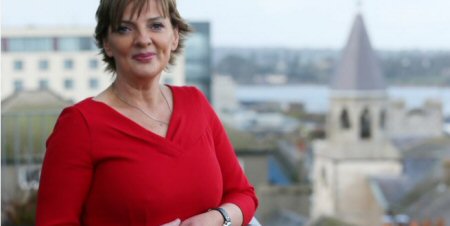
Sinn Féin MEP Liadh Ní Riada has called for the ending of all EU funding to Israel.
The Ireland South MEP made the call as she tabled an amendment designed to close the loophole allowing Israel to use EU funds for military purposes.
“Israel must be completely excluded from receiving any funding for research and development,” she said.
“Every penny that they have received under the research and development scheme, which they have egregiously abused, makes the EU complicit in each and every murder Israel has carried out since 2000.
“That’s over 10,000 Palestinians. More than 2,000 of them children.
“The EU’s Horizon 2020 is the biggest research and development program in the world, with €80 billion dedicated to it since 2014”.
“Israel is allowed to take part in the program on the basis of the EU-Israel association agreement, signed in 2000. An outrageous agreement that we warned two decades would only give legitimacy to Israel’s campaign of genocide.
“We have been proved depressingly right. In that time, in addition to their usual litany of human rights abuses, they have launched no less than five major assaults and invasions on Palestinian territory, started a war in Lebanon and hijacked an international peace flotilla carrying humanitarian aid, massacring those on board.
“EU treaties do not allow any spending on military or defense to be charged to the EU budget. However, the European Commission has been continuously undermining this clear rule for many years now through a blatant loophole made for ‘dual-purpose’ technologies.
“Dual-purpose technology, is any technology that can also be used for military purposes. This allows Israeli arms manufacturers and military companies to apply for EU funding.
“It has been well documented that Israel systematically uses dual-purpose technology for military purposes once it is through the research and development stage.
“Today, I tabled an amendment that calls for the EU to stop funding dual-purpose technology under this program. This would immediately stop taxpayer’s money from subsidizing the Israeli arms industry, and by extension, wholesale murder, under the guise of civilian innovation.
“This, however, is only a start. The EU needs to stop all funding to Israel until we see an end to human rights violations by Israeli forces in the Occupied Palestinian Territories.”
Hamas: Warsaw summit serves Israel only
Hazem Qasem
Palestine Information Center | February 15, 2019
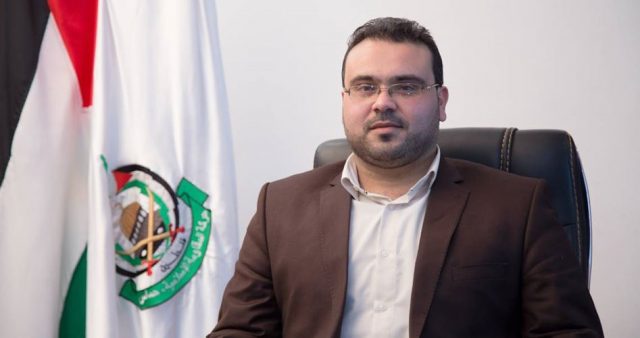
GAZA – Hamas’s spokesman Hazem Qasem on Thursday said that the US-led Warsaw conference serves the interests of Israel only.
Qasem said in a brief statement that the US administration seeks to integrate Israel into the regional community and liquidate the Palestinian cause.
“Warsaw conference portrays Iran as the most dangerous enemy instead of the Israeli occupation, which will lead to more divisions in the Middle East. All this is a free service offered by the US administration to Netanyahu,” he added.
Qasem pointed out that Warsaw conference is a thinly-veiled attempt by Israel and the US to pass the so-called Deal of the Century.
The conference will be attended by representatives from dozens of countries including Arab countries like Bahrain, Saudi Arabia, Morocco, and the UAE.
US Top General Takes to CNN to Dispute Syria Withdrawal
Sputnik – 15.02.2019
US General Joseph L. Votel, who has presided over stagnant results in America’s wars since being named commander of US Central Command last year, recently publicly disagreed with US President Donald Trump’s decision to pull US troops from Syria.
“It would not have been my military advice at that particular time,” Votel told CNN of the plan to withdraw troops. Of course, the advice of US generals has brought the country 18 years of war with nothing to show for it except the Pentagon’s expanded budget. The United States now spends about 40 percent more on the military per year than it did during the height of the Iraq War in 2005.
“I would not have made that suggestion, frankly,” said Votel, referring to the decision to bring the troops back home to the US — a process that’s evidently ongoing and also a source of mystery. Exits are notoriously dangerous military maneuvers, so the US has kept quiet on the precise number of forces it has maintained across Syria, Iraq and Afghanistan.
Some analysts have suggested that the military’s consistent refusal over the years to be transparent about troop numbers in the above-mentioned countries has backfired, leaving them with little evidence for their assertions that Trump is killing a critical mission.
The US Constitution, of course, leaves final military decisions up to the president and not the generals, who are subordinate to the office.
Trump has advocated withdrawing US personnel from costly foreign military engagements that lack clear objectives, but his administration has waffled on putting those desires into motion for about two years, variously saying Daesh has been defeated, calling out the need to prevent a Daesh resurgence and combat Iran and plainly admitting that there is nothing in Syria for the US military except “sand and death.”
On Friday, Votel was back on the Pentagon’s message that Daesh is not actually defeated, even though the terrorists’ land holdings have been reduced from the size of Britain to less than a square mile. Daesh “still has leaders, still has fighters, it still has facilitators, it still has resources, so our continued military pressure is necessary to continue to go after that network,” said Votel to CNN, as reported by The Hill.
In any event, achieving the top post in US Central Command (CENTCOM) is often seen as a boon for the careers of military officers. Former CENTCOM chiefs include retired generals David Petraeus and James Mattis, who would go on to become the head of the Central Intelligence Agency and US Secretary of Defense, respectively, after their stints as CENTCOM commanders.
Former UK Ambassador to Syria Peter Ford tells Sputnik not to read too much into Votel’s comments but instead to observe the “continuing efforts of the media and political establishment to undermine Trump,” who has expressed far more anti-interventionist sentiments than his predecessor both during his campaign and while in office.
Featured Video

Iran Is Not Our Enemy
or go to
Aletho News Archives – Video-Images
Frlom the Archives
The 52 Major Jewish American Organizations and Israel Celebrate Passover with the Slaughter of 25 Muslim, Christian and Secular Palestinians
By James Petras • Unz Review • April 8, 2018
Introduction
As of April 7, nearly three thousand unarmed Christian, Muslim and secular Palestinians have been wounded, over three dozen are in critical condition and at least twenty-five unarmed protestors, including children have been assassinated by hundreds of Israeli snipers and heavily armed troops shooting tank shells into crowds of civilians protesting their decades of incarceration by the racist Israeli state.
The Israeli government praised the ‘restraint and morality’ of the IDF, as did the fifty-two Major Jewish American Organizations (MJAO) who largely control the US Congress. These grotesque massacres began during the Christian Holy Week on Good Friday and Easter, coinciding with the Jewish Passover. The self-righteous officials of the MJAO and their relatives and friends broke matzos at joyful Seders as the blood of Palestinians soaked into ground at the fence containing the largest open-air prison camp in history, Gaza.
While tribal loyalties bonded the Israeli and Jewish American leaders, the politicians of the Western oligarchic electoral regimes refrained from criticizing the shocking display of brute force and even defended Israel’s cold blood mass killings of Palestinian civilians in their Gaza prison.
This paper will discuss and analyze the reasons for Israel’s willing Western accomplices and the centrality of its fifth column in the United States. … continue
Blog Roll
 Aletho News
- Israeli Journalist Demands Tucker Carlson and Candace Owens Be Placed in WWII-Style Internment Camps
- No Liability, No Studies, No Accountability: The Vaccine System Aaron Siri Exposed in Federal Court
- No time for losers: Why the war meant to save Israel may destroy it
- Top US Counterterrorism Official Resigns in Protest of Operation Against Iran
- Just Get Out! Now!
- Unpacking glaring contradictions in US-Zionist justifications for war against Iran
- Iranian model of warfare bleeds US dry while Persian Gulf states watch and learn: Analyst
- IRGC orders ‘defeated’ US to evacuate industrial facilities in region
- Hegseth’s call for ‘no mercy’ to Iranians deemed war crime
- Iran War Exposes Limits of US Military Power – Journalist
- If Americans Knew
- Trump’s counterterrorism chief, whose own wife was killed by ISIS, quits over Iran War saying Tehran posed ‘no imminent threat’
- Here’s what US could fund instead of Bibi’s war on Iran
- Israel Killed Over a Dozen Lebanese Paramedics in Three Days, Now Claiming That Ambulances Are “Hezbollah” Targets
- War on Iran: These are the heritage sites devastated by US and Israeli attacks
- Four news stories from Israeli media that illustrate Israeli “justice”
- CIA Prepares Criminal Referral of Tucker Carlson, as Israel and Its Loyalists Demand His Arrest
- Top US counterterror advisor resigns in protest of “war manufactured by Israel” – Not a ceasefire Day 157
- ‘I Liked the House’: When Israeli Soldiers Turn Palestinian Homes into Barracks
- ‘They Were All I Had’: Lebanese Father Buries Parents, 4 Daughters Killed by Israeli Bombing
- Israel and its supporters are causing attacks on Jewish institutions. Case in point: Michigan synagogue tragedy.
- No Tricks Zone
- New Research: South Australia’s Mid-Holocene Sea Surface Temperatures Were 4°C Warmer Than Today
- Storing Green Energy To Last Germany 10 Days Would Require A 60-Million Tonne Battery
- New Studies: UK Sea Levels Were 4 Meters Higher Than Today During The Mid-Holocene
- Destructive Green New Deal: German Energy And Metal Group Warns Of Drastic Crisis
- New Study Documents A 20-Year Pause In Arctic Sea Ice Decline – Driven By Internal Variability
- Wake-up Call: Survey Shows Majority Of Germans Now Favor Postponing Climate Targets!
- Televised! Leading German Political Candidate Tells Schoolchildren CO2 Makes Sun Hotter!
- New Study: A Century Warming Of 1.1°C Is ‘Commonplace’ And ‘Not Unusual’ During This Interglacial
- New Study: ‘Internal Noise’ And Volcanic Forcing Can Trigger 10-15°C Warming Within Decades
- Glaciers Worldwide Are Suddendly Surging, Experts Blame Warming!
 Aletho News