The Unbearable Hypocrisy of US Sanctions on Iran
By Daniel McAdams | Ron Paul Institute | January 26, 2020
On November 22nd of last year, the US government announced it would impose sanctions on Iran’s information minister for his alleged role in limiting domestic Internet access while protests raged in that country over increases in gas prices.
At the time, US Treasury Secretary Steven Mnuchin condemned the Iranian government for censoring information that Iranian citizens could view online, stating that, “Iran’s leaders know that a free and open internet exposes their illegitimacy, so they seek to censor internet access to quell anti-regime protests.”
The Iranians were evil, said the US government official in charge of economic sanctions, because it restricted what its citizens could read in the international press.
Our government would never do that… right?
Wrong. Yesterday, the US government knocked Iran’s state news agency, FARS, off of the Internet entirely, citing US sanctions against the country.
What that means is the Iranian news service is being censored by the United States government and that Americans will therefore no longer be able to see anything from this foreign media outlet.
Exactly what Mnuchin accused Iran of doing back in November.
Zero Hedge writes, “as Iran’s Press TV describes further“:
The news agency said that it had received an email from the server company, which explicitly said that the blockage is due to an order by the Treasury’s Office of Foreign Assets Control (OFAC) and its inclusion in the list of Specially Designated Nationals (SDN).
The agency attached to its post a screenshot of its website with the message “www.farsnews.com’s server IP address could not be found.”
This latest US censorship of Iranian media is nothing new. Iran’s Press TV has been removed from YouTube and other US social media with “US sanctions on Iran” being given as the reason.
Americans are not allowed to see the Iranian perspective on the Middle East because the Beltway bombardiers and their bosses in the military-industrial complex depend on successfully demonizing all Persians so that Americans will accept their annihilation in another neocon war. If Americans are allowed to see the Iranian perspective they might not be so supportive of the slaughter the neocons are cooking up.
The bottom line is this: the US Administration cites Iran’s restricting of outside media as evidence of the evil nature of the Iranian government, all the while scrambling to restrict American citizens’ access to Iranian media outlets.
Pot. Kettle. Black. Hypocrisy.
Copyright © 2020 by RonPaul Institute.
Veterans of Foreign Wars urges Trump to apologize over downplaying brain injuries
Press TV – January 25, 2020
Veterans of Foreign Wars, an American organization advocating for military veterans, has called on President Donald Trump to apologize for downplaying brain injuries that were inflicted on the country’s soldiers during Iran’s retaliatory strikes at a US base in Iraq.
“TBI is a serious injury and one that cannot be taken lightly. TBI is known to cause depression, memory loss, severe headaches, dizziness and fatigue — all injuries that come with both short- and long-term effects,” VFW said in a statement.
Over 30 US service members have suffered traumatic brain injuries (TBI) after Iran attacked the Ain al-Assad air base in response to assassination of Major General Qassem Soleimani.
“The VFW expects an apology from the president to our service men and women for his misguided remarks. And, we ask that he and the White House join with us in our efforts to educate Americans of the dangers TBI has,” read the statement by Veterans of Foreign Wars National Commander William “Doc” Schmitz.
The Pentagon made the announcement on Friday over three weeks after the January 8 attack.
Nine service members are reportedly being treated in Germany while some have already been sent home for additional treatment.
Tensions have been rising between the US president and former commanders as well as active duty senior officers in the wake of General Soleimani’s assassination following his order.
Trying to memory-hole ‘climate hysteria’ will only create more climate change skeptics
1984 was not an instruction manual
By Helen Buyniski | RT | January 25, 2020
Germany’s literary establishment has declared a moratorium on the phrase “climate hysteria.” No wonder “climate denial” is epidemic – there’s no better way to convince people something’s not real than making belief mandatory.
An annual ritual by German linguists and journalists to exile a term from the language subjected the term “klimahysterie” (“climate hysteria”) to the linguistic equivalent of burning at the stake earlier this month, naming it the “un-word of the year” because it “defames climate protection efforts and the climate protection movement, and discredits important discussions about climate protection.”
One might think that painting the climate debate in black and white – evil “climate deniers” versus saintly Greta Thunberg and her Extinction Rebellion carbon cult – would be more discrediting to the climate protection movement than begging for some realism from a narrative that is rapidly taking on religious trappings. Implying the keening end-of-timers gluing themselves to trains at rush hour are just as rooted in clear-eyed science as legitimate climatologists is frankly insulting to the latter, and implying both are too sacred to be described with a term like “hysteria” harms the environmental cause far more than any slick oil industry PR.
By trying to shame the concept of “climate hysteria” out of existence, the establishment is simply drawing more attention to it. Smearing those who are merely pointing out an unscientific tendency in a supposedly scientific movement only encourages more people – including those who were on the fence about the climate issue before – to question the entire narrative. With Thunberg herself at Davos for a second year in a row, testily reminding the international ruling class that “our house is still on fire,” it’s impossible not to notice that there’s a bit of irrationality in the air. While she herself once said “listen to the science,” a multi-billion-dollar hysteria-driven vaporware economy has arisen at the same time, proclaiming “listen to Greta.” Carbon offset firms, green branding agencies, “sustainability consultants,” the notorious ‘green social network’ We Don’t Have Time that shot Thunberg herself to stardom – none of these would exist without “climate hysteria,” as they provide no value to a society not in its grip. An official diktat declaring it doesn’t exist merely adds weight to all criticisms of the climate change movement, whether or not they have merit.
There’s no faster way to convince someone a narrative is false than to make belief in it mandatory. And carbon-centric anthropogenic climate change is quickly taking on this level of gravitas – Soros-funded nonprofit Avaaz has declared war on so-called “climate denial,” releasing a report accusing YouTube of “driving its users to climate misinformation” that attempts to shame advertisers into pulling their money from the platform until it starts de-platforming (or at least hiding videos from) those pesky “deniers.”
The use of the word “denier” is deliberately meant to elicit an emotional response. Many of the wrongthink-perpetrators Avaaz takes issue with don’t deny the climate is changing, and some would agree that human activity plays a role in this change.
However, the slightest difference of opinion is framed as heretical, and the perpetrator placed in the “climate denier” camp. Such a divisive approach naturally makes people more curious about those who have been smeared as “deniers.” If the narrative managers are trying to shame us for questioning the wisdom of prosecuting meat-eaters for “ecocide,” or stamping global corporations like Bayer-Monsanto as “net zero” carbon emitters as a reward for their voracious appetite for carbon offsets, the reasoning goes, what else are they lying to us about?
Independent-minded individuals wonder why so much energy is being spent to discredit people who find fault with the prevailing climate change orthodoxy. Most wrong ideas are merely ignored – no one wastes time campaigning against flat-earth videos, for example – so surely, they reason, “climate deniers” must be a threat to the status quo. From the crumbling Douma gas attack narrative, still defended in the mainstream media – to Russiagate, to ‘weapons of mass destruction,’ flimsy establishment narratives have been shored up by demonizing their opponents (as “Assad apologists,” “useful idiots,” and “Saddam apologists,” respectively) because the narrative managers know they cannot win an argument with their critics. If climate change proponents are making a conscious decision to throw their lot in with these epistemologically bankrupt charlatans, they shouldn’t be surprised when “climate change denial” becomes epidemic.
In case there was any doubt that the climate narrative is being imposed from above, “climate hysteria” wasn’t even the most popular choice to be given the ‘un-wording’ treatment for 2019. “Old white men,” “flight shame,” and, yes, “climate deniers” all got more votes – the ritual is open to public comment in the spirit of democracy – but all three were mysteriously disqualified by the five-person linguistic-journalistic panel for violating the selection criteria. Receiving almost twice as many votes as “climate hysteria” was “environmental pig”, the newly minted pejorative at the center of a controversy over a “green” children’s song last month – but that, too, was disqualified. Democracy, it seems, has its limits.
Helen Buyniski is an American journalist and political commentator at RT. Follow her on Twitter @velocirapture23
Also on rt.com:
‘My grandma is old environmental pig’: German broadcaster in hot water over brazen children’s song
Unlike Hezbollah Fighters, Israeli Soldiers Lack Combat Motivation: Zionist Military Analyst

Al-Manar | January 25, 2020
The Israeli military analyst Alon bin David said that the Chief of Staff Aviv Kochavi has prepared a plan to develop the army over several years, stressing that it suffers from shortage of manpower and lack of combat motivation.
The Zionist military expert, Benjamin Amidor, on Saturday also said that Hezbollah and Hamas fighters are more skillful, experience and trained that the Israeli army soldiers, adding that the Resistance members undergo more drills than the Israeli army soldiers and have more field experience.
Amidor, who is a former army officer, added that the Zionist army is not reinforcing the commitment to the military instructions, adding that it is trying to follow an approach that minimizes human losses during wars.
“No One Has Suggested My Son Did Anything Wrong”: Joe Biden Doubles Down On Denial
By Jonathan Turley | January 24, 2020
We have previously discussed the denials of former Vice President Joe Biden that his son did anything wrong in Ukraine. As I have written, not only did Hunter Biden clearly enter into a corrupt (but arguably lawful) contract but Joe Biden did not do enough to confirm that his son was not engaging in influence peddling. Nevertheless, this week, Joe Biden continued this indefensible position and declared bizarrely that “no one has suggested my son did anything wrong.”
According to the Washington Post, Joe Biden declared on the campaign trail that “There’s nobody that’s indicated there’s a single solitary thing that he did that was inappropriate, wrong … or anything other than the appearance. It looked bad that he was there.” He then curiously added “He acknowledges that he in fact made a mistake going on the board.” So, in other words, he did nothing wrong but he apologized for it.
Joe Biden continues to maintain that “no one” has accused his son of wrongdoing when there is a chorus of such allegations. He seems to be drawing a distinction between what is criminal and what is not — as if the criminal code is the only measure of wrongdoing or unethical conduct.
Hunter Biden not only clearly engaged in influence peddling but he is clearly a relevant witness.
Ukraine was a virtual gold rush for Washington’s elite and Hunter Biden was one of the first in line to cash in. Biden’s quest for a Ukrainian windfall took him to one of Ukraine’s most controversial and corrupt associates, Mykola Zlochevsky, who leveraged his post as minister of ecology and natural resources to build a fortune. Before fleeing Ukraine, Zlochevsky paid Hunter Biden and several other Americans to be directors of his energy company, Burisma Holdings. Hunter Biden had no experience in the field — but he did have a notable connection to the vice president, who publicly has bragged about making clear to the Ukrainians that he alone controlled U.S. aid to the country. A stepson of former Secretary of State John Kerry also was asked to serve as a director but reportedly declined and warned Hunter Biden not to do it; Biden didn’t listen. He later told The New Yorker that “the decisions that I made were the right decisions for my family and for me.” His decisions certainly were profitable, but they were not “right” as an ethical matter for himself or his father.
The use of spouses or children in influence peddling schemes is a tried and true technique in Washington. You find some kid of a powerful politician and give them a windfall salary or contract. There is no direct bribe or criminal violation, just influence with the politician. Joe Biden seems to believe that, so long as it does not violation the criminal code, it makes it “right” or curiously somehow “not wrong.”
Netflix, Iran and the Documentary as Geopolitical Weapon

By Brian Mier | FAIR | January 21, 2020

Netflix‘s Nisman: The Prosecutor, the President and the Spy
Like The Mechanism before it, Netflix’s new series Nisman: The Prosecutor, the President and the Spy is an entertainment product that advances US interests through character assassination of a popular left-wing Latin American leader.
“Try saying this,” the director said: “‘In the ’80s, Rio de Janeiro was a land of the haves and the have nots. I was a have not.’” In 2016, I was working as a fixer on an episode of a Netflix documentary crime series, and the main character was not cooperating with the script.
He was Afro-Brazilian, but he was not the stereotype they had imagined while preparing the story in England. He had never lived in a favela, was educated in elite private schools, and was an Army special forces captain before entering a life of crime. “In the ’80s,” he said, “Rio de Janeiro was a land of the haves and the have nots. I was a have.”
To the production team’s credit, after half an hour of trying to get him to say he was a “have not,” they changed the story to better fit what really happened. But this episode illustrates an important point that most casual viewers are unaware of: Nearly all documentaries are highly manipulated.
As I learned on the set of various TV documentaries, if an important character refuses to give an interview, their importance to the “narrative thread” of the documentary is minimized, and the script is adjusted accordingly. Characters are prone to get more airtime and scripts are likewise adjusted if they have expressive facial features, good eyebrow control and appear pretty, handsome or humorous on camera. All of this makes sense if the end product is entertainment, but what happens when the program involves real people in positions of power?
Furthermore, if documentarians regularly manipulate narratives and script dialogue for entertainment purposes, wouldn’t it be reasonable to think that they may also do this to advance the geopolitical interests of the companies that hire them? The Capital Group, for example, is the largest investor in both Netflix and Shell, a corporation that has made billions of dollars through petroleum privatizations by right-wing governments in South America. Could it be that it and the other big mutual funds that invest in both Netflix and the oil industry, such as Blackrock, use their power to influence content in a manner similar to how governments influence the TV and film industry in accord with their geopolitical interests?

Netflix‘s The Mechanism
During Brazil’s 2018 election year, Netflix launched a dramatic series called The Mechanism, which portrayed a thinly disguised character based on former Brazilian President Luiz Inácio Lula da Silva—who in real life was leading all polls for a return to the presidency, with double the popularity of his nearest rival, the neofascist Jair Bolsonaro—as a criminal mastermind behind a multi-billion dollar corruption scheme. This led to a boycott drive in Brazil, international media attention, an apology by director José Padilha, and probably influenced Netflix’s purchase of transmission rights to Edge of Democracy, an Oscar-nominated documentary about the 2016 Brazilian parliamentary coup that was less biased against Lula’s center-left PT party.
On January 1, four days before the US assassinated Iranian General Soleimani, Netflix launched a six-part documentary series called Nisman: The Prosecutor, the President and the Spy, about the death of conservative prosecutor Alberto Nisman. He was found dead in his bathroom five days after accusing President Cristina Fernández de Kirchner and four of her aides of treason, in connection to an alleged cover up of Iranian involvement in the 1994 AMIA Jewish cultural center bombings that killed 85 people.
The documentary makes it clear that the treason charges are frivolous. Treason can only take place, according to Argentinian law, during a time of war. Nisman accused Kirchner and her aides of covering up for Iran in exchange for a bilateral agreement between the two nations which was never ratified. Finally, as the documentary painstakingly shows, despite 20 years of joint investigations between the police, intelligence services, the FBI and the US Department of Justice, nobody has ever been able to provide any material evidence linking Iran to the bombing (FAIR.org, 11/3/15).
But this is what series director Justin Webster refers to as “cinematic non-fiction,” and the facts do not seem as important as the tone and the mood. It spends a lot more time with the Prosecutor and the Spy characters than it does with former President Kirchner, who averages about one minute of airtime per episode.

Alberto Nisman in Nisman
Nisman, coming to life through old footage and stories from friends and family, gets the lion’s share of attention. The week before his death, he appears nervous about having to defend his treason accusations in front of Congress, initially saying he will only appear to members of the sympathetic and conservative Republican Proposal party, and if there are no reporters. When he is told it will be a public hearing, he asks his friend, Congressmember Laura Alonso, to postpone it for a week.
The night before the hearing, his body is found in his bathroom, in what is initially ruled a suicide. As sad music plays in the background, Alonso talks about the dark mood that was sweeping over the country and her worries about her friend.
We are not told that Alonso is former Argentine director of Transparency International, the ostensibly “anti-corruption” NGO which is funded by the US and British governments, Exxon Mobil and Shell (Guardian, 5/22/08). We are not told that Alonso was the most vocal public critic of Kirchner’s nationalization of the petroleum industry, or that she directly benefited from the charges filed against Kirchner, assuming the position of Anti-Corruption Minister in the Mauricio Macri government. In the doc, she is just a concerned friend.

Nisman‘s Jaime Stiuso
According to Webster, the other two main characters in the series, the Spy and the President, are “Shakespearean.” The Spy is Antonio “Jaime” Stiuso, a 42-year veteran of Argentina’s State Intelligence Secretariat (SIDE) with close ties to the CIA and the Mossad. He was in the agency during the Argentine military junta’s Dirty War, when it participated in the notorious “disappearances” of leftists, 30,000 of whom were machine-gunned down, or drugged and pushed out of airplanes into the South Atlantic. He was corrupt and dangerous but, like the FBI’s J. Edgar Hoover, apparently too powerful to fire, until Cristina Kirchner did it in December 2014, one month before his partner Alberto Nisman filed treason charges against her.
In terms of entertainment value, Stiuso is a fantastic character, and he gets more airtime than any other living person in the documentary. With a boyish gleam in his eye and a quick, mysterious grin, he is the type of subject documentary-makers dream about, and is already showing himself to be a favorite of the critics—“charming and evasive,” according to Variety (9/23/19).

President Cristina Kirchner is not seen much in Nisman.
The third main character, President Kirchner, in office from 2007–15, is a center-left politician who rejected Washington consensus economic policies in favor of Keynesian developmentalism, and reached out to Washington bete noires like Fidel Castro, Evo Morales and Hugo Chávez. She set an example for leaders around the world by strengthening labor unions, initiating large minimum wage hikes and by renationalizing strategic companies that had been privatized during the disastrous IMF-imposed structural adjustment period of the 1990s, including the train system, the water system, the Aerolinas airline company and the YPF oil company. Her government was marked by high growth rates and innovative redistributive policies that reduced inequality. Consequently, she became extremely popular with the poor and working class.
After Nisman died, Alonso’s right-wing Republican Proposal party capitalized on the frivolous treason charges against Kirchner, spread conspiracy theories about his death and catapulted party leader Mauricio Macri to the presidency. Praised by Barack Obama and English-language corporate media, Macri used presidential decrees to immediately gut the public health and education systems, lay off tens of thousands of public sector workers, reestablish a relationship with the IMF and implement privatization.
As had happened during the IMF structural-adjustment period, poverty skyrocketed and widespread hunger led to food riots. As Macri’s popularity plummeted, fellow Nisman character Alberto Fernandez won the presidential election by 7 percentage points, with Cristina Kirchner as his VP; they took office on December 10, 2019. You would have no idea that any of this had happened by watching Nisman.
Cristina Kirchner is one of the most fascinating political characters of the 21st century, but all we see of her in Nisman are short speech fragments and soundbites, peppered with unflattering photos and ominous background music.
During her 50 seconds of airtime in episode 5, for example, she says, “This isn’t an issue that started here in Argentina, it is a political, judicial and communications matrix that extends throughout the entire region.” Kirchner is talking about “lawfare,” the weaponized use of legal tactics to destroy political enemies. This has indeed been applied to left and center-left politicians across Latin America, often with the support of the US Department of Justice, as happened to her friend and former Brazilian President Lula, who was arrested on frivolous charges with no material evidence in order to bar him from the 2018 presidential elections.
The frivolous treason accusation against her, also apparently prepared in partnership with the US DOJ, is another clear example of lawfare. Taking a small fragment of a speech on this subject out of context, however, makes her look like a paranoid conspiracy theorist. This is ironic to see in a six-part documentary that is entirely built upon two conspiracy theories which, as is shown in the series itself, do not have any material evidence to back them up.
This is not to say that the documentary is totally one-sided. Throughout, there are moments in which members of Kirchner’s party and journalists—all men—defend her. Importantly, however, Webster chose not to let her defend herself, despite the widespread availability of archival footage in which she does so eloquently.

Audiences “may well come to a conclusion, one open to interpretation,
though it not for me to say,” director Justin Webster, Variety (9/23/19).
In Variety (9/23/19), Webster says:
The rules with fiction and non-fiction are completely different in a sense of the relationship with the truth. A good non-fiction story is showing you “this much is true,” uncovering the details, the evidence…. It’s not like there is one version of the truth and another version of the truth, there is only one truth.
The problem is, a television director is not a judge or a prosecutor, and normally has little knowledge of the law. The proper venue for deciding whether the president of a foreign nation is guilty is a court of law, not a television channel controlled by corporate investors who have a vested interest in privatizations in the nation presided over by that president. In a court of law, defendants have the right to to defend themselves, normally through a final argument. In a documentary, the director can arbitrarily decide to limit someone they’re accusing of a crime to one minute of airtime per episode.
Given the long history of US-backed right-wing coups in Latin America, most recently in Argentina’s neighbor Bolivia, given the rising tensions between the US and Iran, and given the fact that neocon Foundation for Defense of Democracies vice president Toby Dershowitz, who appears in the documentary, began associating Fernandez and Kirchner with Iranian terrorists as soon as they took office last month, it would be reasonable to suspect that the US and its integral state allies in the corporate media are going to use this nonexistent Iran story from 1994 as justification for a coup attempt in Argentina in the near future.
Nisman is beautifully filmed and entertaining, and director Justin Webster does a good job uncovering the relationship between the FBI, CIA and Argentinian intelligence services. But the bottom line is that he casts suspicion on Cristina Kirchner even though he knows that there is no proof against her.
Iranian news agency says its website has GONE DOWN ‘due to US sanctions’

RT | January 24, 2020
The website of Iran’s Fars News Agency, often described as semi-state operator, has gone offline worldwide, with the agency claiming its server company blocked the site on orders from Washington.
Internet users trying to access farsnews.com on Friday found only a blank screen, along with a message stating “farsnews.com’s server IP address could not be found.” Fars News announced on Twitter that its server company had blocked the site because of US sanctions.
It is unclear where the server company is based, but several multinational tech firms have withdrawn service to Iranian users in the past, for fear of violating Washington’s ban on doing business with the Islamic republic. GitHub limited access to Iranian users last year, while Apple removed Iranian apps from its App Store two years earlier, as did Google.
Google, YouTube, Facebook, Instagram and Twitter have all removed accounts they claim were linked to the Iranian government.
As Fars News remained inaccessible through Friday evening, state outlets Mehr News Agency, Press TV, and Islamic Republic News Agency were seemingly unaffected, and were, at the time of writing, accessible.
Iran is not the only country whose state media have been affected by US sanctions. Economic penalties on Venezuela led the Latin American country’s TeleSUR network to cut back on its programming in 2018. TeleSUR’s Facebook page was also repeatedly taken offline that year, with the network accusing the Silicon Valley company of targeted censorship.
We have legal age limits for driving, voting, and having sex, why not for transgender treatment?
By Tomasz Pierscionek | RT | January 23, 2020
Vulnerable children and adolescents are being influenced by PC culture that elevates rights over responsibilities, teaches children there are over 100 genders, and where a fear of offending others trumps common sense.
Western democracies preach tolerance and require its citizens to accept progressive ideas; the more unconventional the better. A particular idea or course of action may even go against common sense and lead to harm, yet an overriding fear of causing offence or being labelled a [insert blank]-phobe thwarts open discussion about important issues.
There are, however, those who speak out and remind us to think carefully about embarking down a slippery slope from which it is difficult to return.
Susan Evans, a mental health professional and former employee of the UK’s only Gender Identity Development Service (GIDS), is asking the High Court to undertake a judicial review and raise the age at which individuals can consent to receiving puberty blockers and cross-sex hormones to 18. Ms Evans is joined by the parent of a 15-year-old adolescent on the GIDS waiting list.
Although individuals in the UK cannot undergo gender reassignment surgery until the age of 18, children and teenagers suffering from gender dysphoria (uncomfortable feelings brought on by a person’s gender identify differing from their birth sex) may receive medications to slow the onset of puberty and thus delay development of physical characteristics associated with their undesired sex. Later, from the age of 16, either testosterone or oestrogen (cross-sex hormones) are given to help an individual’s physical characteristics better align with those of their preferred gender identity.
Evans wants to raise the age of consent for children with gender identity issues receiving puberty blockers and other cross-sex hormones on the basis that under 18s are unable to provide informed consent for potentially life changing procedures. The former nurse expressed concerns that children, some aged as young as nine, are too hastily prescribed puberty blockers, reportedly the first step on the path towards gender reassignment.
Evans commented: “It’s about informed consent. Under [18s], we don’t think, are sufficiently mature enough to consent to a treatment that is going to potentially affect their adult life, because they go on a pathway. They start the blockers and then they go on the cross-sex hormones. [The trust’s] own research shows that virtually 100% of children they started on the blockers go on to the cross-sex hormones.”
She added“My experience with staff is that they’ve become fearful of doing anything that disagrees with a patient. The important thing in mental health work is to keep an open mind, it’s not to jump to the same conclusion that your patient comes to.”
It is worth noting that across the pond in the US, the state of South Dakota recently passed a bill making it illegal for medics to provide gender reassignment surgery or hormone therapy to minors. Similar bills could also be introduced across a number of other US states.
Puberty is confusing at the best of times, we’ve all been there. No one doubts that children and teenagers are more susceptible to external influence than adults and are less capable of considering the future impact of major decisions. Granted, there are exceptions to the rule but it’s safe to say that on the whole adolescents lack knowledge, life experience, forward planning, and an awareness of consequences in contrast to adults. That is partly why we have legal age limits for driving, voting, and having sex. The frontal lobes of the brain – those parts responsible for planning, self-regulation, exercising good judgement, and preventing unwise decisions – are not fully developed in children and adolescents. Evidence even suggests that the frontal lobes may not fully mature until the mid 20s.
An adult has the right to take cross-sex hormones after weighing up the pros and cons, and coming to an informed decision. Part of that right involves accepting the risks and possible regrets that may accompany their decision. Adolescents typically lack the maturity to commence treatments that interfere with their natural development, a decision they may later regret when they find themselves less physically and sexually developed than their peers. Those suffering from gender dysphoria should indeed be supported and offered psychotherapy to help them manage their distress. A rise in under 18s receiving puberty blockers and cross-sex hormones could be followed by a rise in medico-legal cases and compensation claims as those same individuals (now adults) later maintain they were insufficiently informed or were not mature enough to provide informed consent. In such cases lawyers would be the only winners.
There has been an explosion in the number of under 18s referred to the GIDS, rising from 94 in 2009-2010 to around 2500 in 2018-2019. Of particular concern are reports that children as young as five have been referred. It is also likely that vulnerable children and adolescents are being influenced by a culture that elevates rights over responsibilities, teaches children that there are over a 100 genders, and where a fear of offending others trumps common sense. As it happens, due to the growing number of referrals, a child or teenager referred to GIDS today might have to wait until early 2024 for their first appointment, giving them plenty of time and opportunities to change their mind.
In the US the gender reassignment industry is now worth over $1.3 billion a year; cross-sex hormones and puberty blockers also provide American Big Pharma with a healthy windfall. It seems that both identity politics advocates and the pharmaceutical industry have a common interest; they wish to exert greater (socio-ideological or financial) influence over future generations. In the battle for profits and minds, neither group is going to step aside without a fight.
Tomasz Pierscionek is a medical doctor and social commentator on medicine, science, and technology. He was previously on the board of the charity Medact and is editor of the London Progressive Journal.
Voting for World Zionist Congress heats up
If Americans Knew | January 23, 2020
Israel’s Jerusalem Post newspaper reports that “the stakes are extremely high” in the current election for members of the World Zionist Congress (WZC).
Elections are held every five years. Voting began Jan. 21 and will end in two months.
The Jerusalem Post explains that the WZC is “the legislative body that determines the policies of the world’s leading Jewish organizations – the World Zionist Organization (WZO), the Jewish Agency of Israel (JAFI), the Jewish National Fund (JNF) and Keren Hayesod.
“The WZC is the body that makes major policy decisions concerning the future of Zionism, Aliyah [‘ascending’ to Israeli citizenship] and absorption, Israeli advocacy worldwide, Jewish education and the war against antisemitism, settlement in Israel and other vital issues for Israel and the Jewish people’s future.”
According to the WZC website: “The Zionist Congress is the supreme ideological and policy-making body of the World Zionist Organization. It convenes once every five years in Jerusalem and brings together over 2,000 Zionist activists from around the world (750 delegates and twice as many alternates). This gathering represents the entire political and religious spectrum of the Zionist movement.”
The Jewish Forward reports that voting surged in the first day of voting. It reports: “Voting is open on the American Zionist Movement website until March 11. It will determine the American delegation — 152 of the 500 total participants — to the World Zionist Congress in Jerusalem in October, which will in turn determine $5 billion in spending on Jewish causes over the next five years.”
Mondoweiss reports that “over 1,500 candidates from 15 slates are running for the U.S.-held seats. Approximately 56,000 US Jews voted in the last election.”
Any permanent resident of the US who is Jewish, pays the the $7.50 voter fee, and signs a statement affirming that they believe “a Jewish, Zionist, democratic and secure State of Israel to be the expression of the common responsibility of the Jewish people for its continuity and future” may vote.
The election has drawn a heated response as Israel partisans from the left and the right battle for influence.
The Forward reports: “The Orthodox party Eretz HaKodesh warns on its website that high Orthodox turnout could “prevent values of the liberal movements from infiltrating the Torah atmosphere of Eretz Yisrael,” and the Zionist Organization of America warned in an email that if they don’t win, other parties “will turn the World Zionist Congress into the anti-Zionist Congress.”
The head of the American Forum for Israel urges conservatives to vote, warning that “extreme-Left figures” like Peter Beinart and Jeremy Ben-Ami, the president of J Street, “have entered the fray to move the balance of power even further Left.”
While some may view J Street as almost pro-Palestinian, blogger Richard Silverstein reports that “J Street endorsed Israeli invasions of Gaza; attacked international investigations of Israeli war crimes, such as the Goldstone report; rejected the boycott, divestment and sanctions movement (BDS) and Hamas; and urged the Obama administration to reject a UN resolution demanding an end to illegal Israeli settlements.”
According to the WZC and its members, the land that used to be named Palestine belongs to Jews worldwide; the Palestinians who live there (or used to live there before they were forced out) are to have minimal say in matters that control their lives.
What Palestinians?
Author Donna Nevel points out in Mondoweiss that the WZC holds “that Israel belongs to the Jews of the world and that, therefore, Jews outside of Israel deserve the right to determine policies, sit on boards, and direct funding and resources that, among other things, control the day to day lives of Palestinians.
“Israel, together with the WZO and other Zionist institutions, have a long history of privileging Jews at the extreme expense of Palestinians.
“Beginning with the Nakba, when 750,000 Palestinians were forced out of their land and homes during Israel’s creation, Palestinian citizens of Israel have continued to be treated as third-class citizens subjected to racism and anti-democratic policies and actions, as well as ongoing intimidation and harassment. Palestinians in the occupied territories have routinely endured ongoing land theft, home demolitions, military checkpoints, arbitrary arrests, torture, and administrative detentions without trial or charge, and have no say in what happens to them.
Nevel emphasizes that participating in the WZC elections “violates the Palestinian-led, global call for Boycott, Divestment, and Sanctions (BDS), which is one of the most effective and ethical ways to join with Palestinians in the struggle for justice. Participating in these elections doesn’t begin to tackle Israel’s unjust, apartheid system and its underlying Zionist ideology, but, rather, feeds that system and ideology and gives them more roots.”
Below is a promotional video for the election:
Featured Video
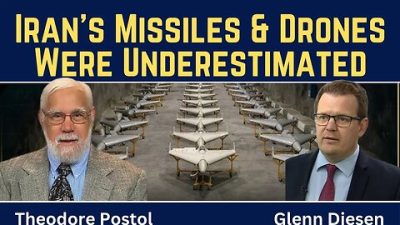
Theodore Postol: Iran’s Missiles & Drones Were Underestimated
or go to
Aletho News Archives – Video-Images
From the Archives
What is the Israeli Lobby in Australia Doing in Interfaith Dialogue?
By Ali Kazak | Dissident Voice | October 11, 2015
For years Israel and its lobby around the world have been trying to normalise their relations with Arabs and Muslims without solving the Palestine Question.
One of the methods they resorted to in the last few years is using human rights and community organizations such as interfaith dialogue and Multiculturalism to achieve this objective and to: isolate the Palestinians, marginalise the Palestine question, end Israel’s isolation, and prevent criticism of Israel, knowing that these organisations will be the first to stand against Israel’s violations, racial and religious discrimination.
The group responsible for this task in Australia is The Australia/Israel & Jewish Affairs Council (AIJAC); its Director of International & Community Affairs, Jeremy Jones is in charge of lobbying religious community organizations, specifically Muslims and Christians. Consequently he convened the Faith Communities for Reconciliation, founding participant in the Australian Partnership of Religious Organisations and the Australian National Dialogue of Christians, Muslims & Jews.
AIJAC is a private political propaganda group. It is recognised as the main Israeli lobby in Australia. It coordinates its activities and works intimately with the Israeli embassy in Canberra and different institutions in Israel. It is privately funded by some Jewish businessmen. It monitors closely Australian politicians, the media, ethnic and religious groups, (especially Arabs and Muslims), unions and academics on their stands towards Israel and the Palestine question. … continue
Blog Roll
 Aletho News
- The killing of three Indonesian soldiers in Lebanon should remind Jakarta that Israel does not want peace
- Defeated and delusional: Netanyahu’s remarks reveal $80bn war failure, says analyst
- Iran’s friends are about to make life much more difficult for Israel and the US
- The war of liberation of the Arab and Islamic peoples expands across the Gulf
- Envoy warns UN on Trump’s threat to ‘obliterate’ Iran’s civilian infrastructure
- The Larak Corridor: Iran’s Rial Gate With No US, No Israel, and No Way Around
- ‘Economic terrorism’: Steel facilities hit again in US-Israeli strike
- ‘War Crime’: Iran condemns attacks on Arak, Ardakan nuclear sites
- Two-thirds of Americans want quick end to Iran war even if goals unmet
- Trump to Give “Important Update on Iran” Wednesday in Prime-Time Speech
- If Americans Knew
- Gaza families reunite years after babies evacuated amid Israel’s war
- International Rescue Committee warns Gaza’s children face grave protection risks
- Iran’s Alleged 47-Year War on America: Debunking the 1,050 American Deaths Canard
- Israel wants US to bomb more of Iran’s civilian structures (113,000 is not enough) – Not a ceasefire Day 173
- Ann Coulter Rips Into Fox News for Iran War Coverage
- Joe Kent Urges Americans To Call White House and Congress To Object To Sending Troops Into Iran
- DNC Resolution to Reject AIPAC Funding Puts Democratic Leaders in the Hot Seat
- Swedish foundation to build 400 schools as over 650,000 Gaza children remain without education for 2 years
- Israeli army admits photshopping image of slain Lebanese journalist
- This is how Israel is systematically killing health workers under the cover of war in Lebanon
- No Tricks Zone
- New Study Finds Warming Saves Lives…Cold Temperatures 12 Times More Deadly Than Excess Heat
- German Science Blog Accuses PIK Climate Institute Of Hallucinating Climate Tipping Points
- Devastating Assessment Of Comirnaty Vaccine By Former Senior Pfizer Europe Toxicologist
- New Study: CO2 Is ‘Effectively Negligible’ As An Explanatory Climate Change Factor Since 2000
- Former Pfizer Toxicologist Dr. Helmut Sterz Tells Bundestag Hearing Pfizer Vaccine Should Have Never Been Approved
- Energy Expert: Germany’s Nuclear Phaseout Was A “500 Billion Euro Mistake”
- New Research: South Australia’s Mid-Holocene Sea Surface Temperatures Were 4°C Warmer Than Today
- Storing Green Energy To Last Germany 10 Days Would Require A 60-Million Tonne Battery
- New Studies: UK Sea Levels Were 4 Meters Higher Than Today During The Mid-Holocene
- Destructive Green New Deal: German Energy And Metal Group Warns Of Drastic Crisis
 Aletho News