Did Obama Defense Deputy Lie To Protect Her Fraudulent Russiagate Sources?
By Tyler Durden | Zero Hedge | May 9, 2020
Newly declassified congressional transcripts from the Russia investigation include testimony from former Obama administration defense official, Evelyn Farkas, who testified under oath that she lied in an MSNBC interview when she claimed to have evidence of “the Trump staff dealing with Russians,” and said that the Obama administration was “trying to also get information to the hill” because the incoming Trump administration would try to hide the (nonexistent) evidence.
Former Obama DoD Deputy Evelyn Farkas reveals White House gathered intel on Trump campaign staff and then leaked it! https://t.co/W6FG4IFe5Q pic.twitter.com/VwaF2CnZzn
— ZeroPointNow (@ZeroPointNow) March 29, 2017
During closed-door testimony on June 26, 2017, however, Farkas – who was the Clinton campaign’s senior foreign policy adviser – admitted she had nothing.
In an exchange with former Rep. Trey Gowdy (R-SC), Farkas is pressed on why she said ‘we’ when she said ‘if they found out how we knew what we knew about their staff dealing with Russians.’
Farkas’ response: I didn’t know anything.
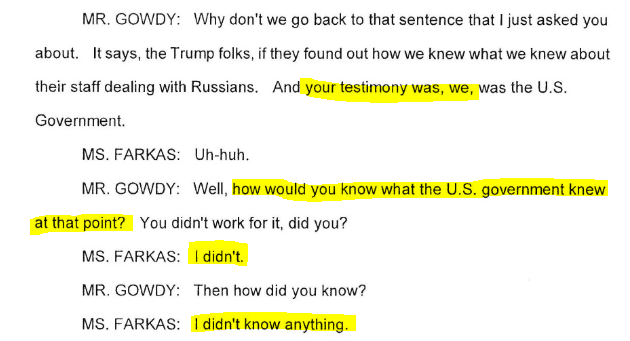
In fact, Farkas – who is currently running for a Housee seat in the 17th congressional district of New York – shouldn’t have known anything, because she resigned from the Obama administration in September 2015.
… how did this non-resident fellow at the Atlantic Council, member of the Council on Foreign Relations, and former deputy assistant secretary of defense for Russia, Ukraine and Eurasia, gain knowledge of intelligence regarding members of Trump’s team and their relations with Russia, when she was the senior foreign policy advisor for Presidential candidate Hillary Clinton?
Farkas was the prime driver behind the anti-Russia phobia inside the Pentagon during the Obama years — shilling hard for the Ukraine — requesting that the President send them anti-tank missiles — which, essentially, would mean outright war with Russia. – iBankCoin
Given all we now know, Occam’s razor suggests that Farkas, while working for the Clinton campaign, was fully aware of the work of Christopher Steele – the former UK spy paid by the Clinton campaign (through their lawyers and Fusion GPS) to fabricate the infamous dossier used by US intelligence to paint Donald Trump as an agent of Russia.
That said, who exactly did she mean by “we” during that interview? And who was scrambling to leak evidence to the hill?
Based on the MSNBC interview, Farkas obviously knew something. But instead of going down that particular rabbit hole during congressional testimony, she thought the best option was to simply say she lied.
US to recognise Israel’s annexation of 30% of West Bank area
MEMO | May 9, 2020
US Ambassador to Israel David Friedman has confirmed that the US is ready to recognise 30 per cent of Israel’s annexation of the occupied Palestinian West Bank, Israel Hayom reported.
In an interview published on Friday, Friedman announced that the Israeli Prime Minister Benjamin Netanyahu must negotiate with Palestinian Authority (PA) President Mahmoud Abbas over the establishment of a Palestinian state in 70 per cent of the occupied West Bank, and the US will recognise Israel’s annexation of the other 30 per cent.
“There’s really three things left that have to get done,” Friedman expressed, stating that: “The mapping has to get done. The [Israeli] government has to agree to the freeze on half of Area C, and most importantly, the government of Israel has to declare sovereignty.”
He stressed: “We are not declaring sovereignty – the government of Israel has to declare sovereignty. And then we’re prepared to recognise it… So, you have to go first.”
Regarding the reason as to why Israel has to take the lead, he explained: “The primary task belongs to the Israeli side because they’re the ones that have to come up with what’s best for the state of Israel.”
On the issue of timing, he added: “We’re talking and listening, and everyone understands that come July, certainly, people on the Israeli side, want to be ready to go on 1 July.”
US lowers threat perception on Iran
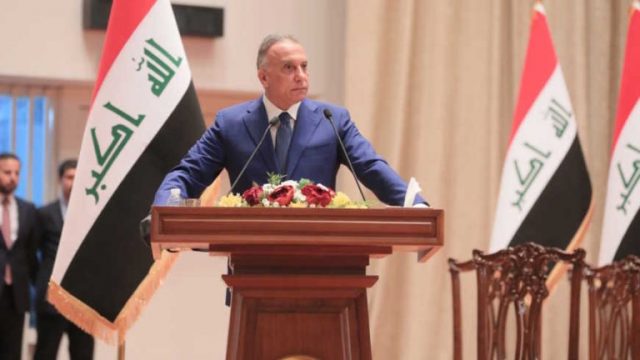
Iraq’s new Prime Minister Mustafa al-Kadhimi won vote of confidence in the parliament in Baghdad on May 7, 2020
By M. K. BHADRAKUMAR | Indian Punchline | May 9, 2020
The drawdown of US military presence in the Middle East, especially from Saudi Arabia, may not be an automatic open sesame — to borrow the magical phrase in the story of “Ali Baba and the Forty Thieves”— leading to the hidden treasure of regional peace and stability, but it does open up a tantalising vista that is seamless in its possibilities.
Speculations are galore about the Pentagon announcement Thursday that the US military will withdraw two Patriot batteries, which have been deployed to protect Saudi oil facilities, along with two jet fighter squadrons.
US President Donald Trump added an ambiguous explanation: “We’re making a lot of moves in the Middle East and elsewhere. We do a lot of things all over the world, militarily we’ve been taken advantage of all over the world… This has nothing to do with Saudi Arabia.” Trump seems to suggest there is a ‘big picture’.
Nonetheless, the move is seen as a showdown between the US and Saudi Arabia, where Washington says to Riyadh that if you do not follow our oil advice, we will throw you under the bus. The fluctuations in the oil market have put strains on the ties binding the two staunch allies and the US oil industry has been hit doubly hard, since even after the recent OPEC+ deal, oil prices continue to fluctuate at the expense of American producers even as Saudi oil tankers reach the US, selling their commodity at lower prices to American buyers, which Washington’s oil industry cannot possibly compete with.
With the storage capacity in the US industry dwindling, the highest ever number of Saudi oil tankers in years are on their way to American shores. Riyadh appears to be flooding the market to drown the shale industry. The mood in Washington has turned ugly, as Trump’s allies in the Congress whose states have been hurt by the price crash, sought a mitigation measure — the Strained Partnership Act — which threatened to punish the Saudis by way of pulling troops and reducing other military commitments unless Riyadh reduced its oil output.
Without doubt, the American oil crash in the wake of the pandemic has taken its toll on US-Saudi relations. But, having said that, Trump cannot be unaware that any US-Saudi friction at this juncture can only work to Iran’s advantage insofar as the coronavirus pandemic is providing an opening to challenge the US presence in Iraq and other places in the Middle East. Top Iranian military officials have openly said in recent weeks that they see the US at its weakest in a while.
Tehran seems to settle for a ‘wait-and-see’ approach until the November election in the US is over, refraining from escalating tensions. Tehran can afford to wait, since the US’ Gulf allies — the UAE, Kuwait, Oman, Qatar — are no longer pushing the US into a confrontationist policy but instead engaging with Iran. There is growing disenchantment in the region regarding the consistency of the US policies.
What lends enchantment to the view is that some easing of US-Iran confrontation is also discernible. Most certainly, the establishment of a new government in Baghdad under Prime Minister Mustafa al-Kadhimi harks back to a priori history of tacit US-Iranian co-habitation in Iraq.
Al-Kadhimi is a secular-minded figure who does not belong to any of the Shi’ite political parties and yet he won with the votes of the Fateh Coalition, the second largest in the Parliament, made up of Shiite political parties that have close ties to Iran.
He briefly lived in Iran as a dissident but moved on to life in exile in UK and the US — and yet, he’s an acceptable choice to Tehran. He is close to the Washington establishment, which is open to making deals with him, and also enjoys personal rapport with the Saudi Crown Prince Mohammed bin Salman, but Tehran is unperturbed and seems to estimate that he is both pragmatic and can also be tough with the US in a way that no Iranian-backed candidate can be.
Above all, Al-Kadhimi is smart enough know Iran’s support is vital if his government is to perform effectively. The hugely sensitive post of Interior Minister in his cabinet has gone to Othman Ali Farhood Musheer Al Ghanimi, an ally of Iran, while the key post of Finance Minister will be held by Ali Allawi, a pro-western figure and nephew of late Ahmed Chalabi. (Chalabi helped the Bush administration to topple Saddam Hussein in 2003.)
Significantly, no sooner than Al-Kadhimi’s government got parliamentary approval on May 7, Washington announced yet another waiver of sanctions against Tehran by allowing Iraq to continue to buy electricity from Iran. Now, unlike previous monthly waivers, Washington has given a 120-day waiver up to September. Tehran is sure to take note.
And this has happened while Washington and Tehran are working out arrangements for another ‘win-win’ prisoner swap. There are four Americans imprisoned in Iran, while Tehran claims “around 20” Iranians are in US custody. Then, there is also the case of a fifth American often thought to be imprisoned in Iran — Robert Levinson, a former FBI and CIA contractor.
Prisoner swaps are a low-cost way of easing tension and Trump places high priority on winning the freedom of Americans imprisoned abroad, and is quick to boast that he is doing better than Barack Obama.
Clearly, neither the US nor Iran is spoiling for a fight. Tensions will spike if the US presses ahead to get the UN Security Council to extend the arms embargo on Iran beyond October (failing which to invoke the ‘snapback’ clause of the 2015 nuclear deal to reimpose UN sanctions against Iran.)
But then, for want of support from the EU or UK, Britain and Germany — and Russia and China’s opposition — Washington may not press ahead. Trump may discuss Iran with Russian President Vladimir Putin, if the frequency of their phone conversations — six times in as many weeks already — is kept up and the range of topics broadens.
Moscow is counselling Tehran to show strategic patience in the face of US provocations. In the final lap of Trump’s term, Russia is keenly seeking an improvement of relations with the US and a showdown over Iran would spoil the climate.
Thus, there is a lull in the fighting in Syria and Iraq. A pause is noticeable in militia attacks on US troops in Iraq in recent weeks. Talks are due in June in Baghdad between Pentagon and Iraqi government regarding US deployments. Israeli officials speak of signs of an Iranian retrenchment in Syria.
Some US officials have also openly acknowledged that Tehran no longer poses an immediate threat to US strategic interests. In this backdrop, the partial drawdown of US forces in Saudi Arabia can also be regarded as a trimming of the US belligerence toward Iran.
Bolivia’s Public Companies Are Being Dismantled, Morales Says
teleSUR | May 8, 2020
Bolivia’s former President Evo Morales denounced that the coup-born regime led by Jeanine Añez is dismantling state-owned companies such as Yacimientos Petroliferos Fiscales Bolivianos (YPFB), Bolivian Airlines (BoA), and Bolivian Telecommunications (Entel).
“Jeanine Áñez’s trusted men, Herland Soliz and Elio Montes, embezzled from the Bolivian Oil Company and the Bolivian Telecommunications enterprises… A similar fate awaits to Bolivian Aviation Company (BOA)” Morales tweeted.
In February, the Entel director Elio Montes was arrested at a U.S. airport because he was carrying a high amount of money. Under his management, the Bolivian authorities investigated unjustified expenses in the telecommunications company.
“The Bolivian people fought for their natural resources and against plundering and privatization. In 2006, we nationalized the petroleum industry… Today it is at risk because of mismanagement and corruption,” the Movement Towards Socialism (MAS) presidential candidate Luis Arce tweeted.
“We, Bolivians, along with our social organizations, have the duty to defend strategic companies,” Morales said and warned that “if we don’t protect them, it will be tough to get out of the crisis.”
In late 2019, the Santa Cruz’s Parliamentary Group president Erick Moran denounced that the Añez regime had appointed private entrepreneurs as managers of the aviation company.
Even though the self-proclaimed president said that the capital of this company would increase, its financial sustainability has worsened.
“The de facto government is destroying what Bolivians had a hard time recovering,” Morales added.
Venezuela’s Guaido says US mercenary contract is fake, even after own allies give full doc to US media
RT | May 9, 2020
Opposition leader Juan Guaido continues to deny any link to a failed armed incursion into Venezuela, despite his own allies handing over a lengthy contract to American media naming him as the commander of the operation.
The opposition figurehead and self-declared “interim president” of Venezuela denied again on Friday that he had anything to do with the ill-fated mission, which by most accounts was set up by a Florida-based security company, Silvercorp USA, and its American CEO, Jordan Goudreau.
“We reiterate once again that the interim government has no link, commitment or responsibility to Silvercorp or its actions, as well as deny that President Guaido has signed an assumption contract with [the company],” Guaido’s office said in a statement.
Earlier this week, however, the Washington Post published a 41-page document it alleged to be the full multi-million-dollar contract between Silvercorp and Guaido, even noting the document was “provided by Venezuelan opposition officials on the condition that one of the attachments be redacted.” Among its many revelations, the leaked contract clearly lists Guaido as the operation’s “commander in chief,” directly at odds with his repeated claims to the contrary.
While the complete contract does not contain Guaido’s signature, top adviser Juan Rendon has admitted to Reuters that he negotiated the deal, and his name does appear on the contract alongside other senior opposition members. Guaido did apparently sign a shorter “general services agreement,” though that document does not specify what the deal was for.
The failed mission, launched on May 3, saw several dozen armed mercenaries attempt to storm the Venezuelan coast from Colombia in speedboats. The operation fell apart before it could get off the ground, with security forces intercepting the boats and killing eight of the fighters before arresting some 13 more – two of them US citizens and employees of Silvercorp. One of those Americans, Luke Denman, has since stated the mission sought to capture Venezuelan President Nicolas Maduro and bring him back to the US, where he is wanted on “narco-terrorism” charges.
Guaido has offered a very different version of events, however, insisting Maduro fabricated the entire story while calling the leaked contract a fake, meant to generate a “false positive” justification to “kidnap and arrest” members of the opposition. The alternative account, if true, would mean the Washington Post is either working hand-in-glove with Maduro, or was fooled by his operatives posing as opposition figures. Goudreau and Rendon – Guaido’s own adviser – would also have to be in on the conspiracy, as both have corroborated that there was, in fact, a deal with Silvercorp.
US President Donald Trump has rejected claims of American involvement in the incursion plot, stating he would have sent in the military had he wanted to carry out such a mission, though Maduro has repeatedly accused Washington of ordering the operation. Other critics have also voiced suspicions about the timing of the attempted mercenary raid, which came only weeks after the US indicted Maduro on drug trafficking and launched a militarized anti-narcotics mission in the Caribbean Sea – on Venezuela’s doorstep.
Now that Michael Flynn is free, Trump may be tempted to punish the Russiagate conspirators
By Robert Bridge | RT | May 8, 2020
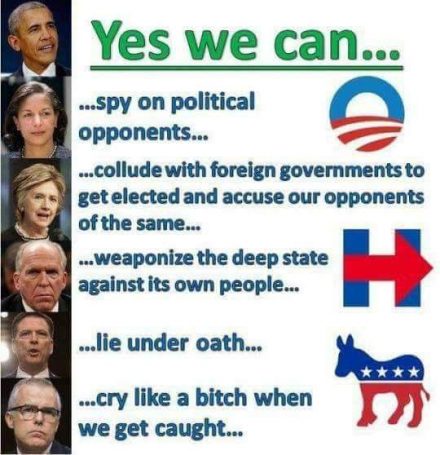
As the Justice Department drops all charges against the former White House adviser, many are hoping the final chapter on Russiagate is closed. However, as the probe against Trump rivals wraps up, the saga is just beginning.
May 7 may go down in the American history books as the day when Donald Trump began to turn the tide against his Democrat opponents and their relentless efforts to have him removed from office. That was the day when the Justice Department declared there was no “legitimate investigative basis” for FBI agents to interview Gen. Michael Flynn over his contacts with Russian diplomats, coming as they did at a time when the lame-duck Obama administration was sabotaging US-Russia relations on its way out the door.
Incidentally, Thursday was notable for another bit of news as well. The House Intelligence Committee released its Russiagate interviews, in which the former director of national intelligence, James Clapper, admitted he “never saw any direct empirical evidence that the Trump campaign… was plotting/conspiring with the Russians to meddle with the election.”
No wonder Intel chief Adam Schiff demanded absolute secrecy during his closed-door inquisition.
Among Trump’s circle of colleagues brought down in the Democrats’ big-game hunting expedition, such as former campaign adviser Roger Stone and businessman Paul Manafort, Michael Flynn was by far the most prized trophy. In hindsight, Trump may have believed that, by firing Flynn just days into his job, the Russia-collusion story would just magically disappear as the Democrats gave up the hunt. If that was the plan, it backfired in spectacular fashion: the Democrats sensed blood and doubled down on their impeachment efforts.
What came next was a three-year political witch hunt against Trump that was never seriously challenged by the predominantly left-leaning mainstream media – even after the US$30 million Mueller probe finally put the conspiracy theory to bed. Today, although the media headlines conceal it, the narrative is slowly beginning to swing in Trump’s favor, as Flynn’s release strongly suggests.
As I discussed in a recent column, many Americans are blissfully ignorant of the fact that, back in May 2019, Trump launched an investigation into the origins of Russiagate. Tracking the scandal leads one into a labyrinthine rabbit hole of intrigue, where it is believed that the Obama-led FBI misled the Foreign Intelligence Surveillance Act court to spy on the Trump campaign. The potential list of individuals who may eventually be forced to testify for their actions extends to the highest echelons of the Democratic Party. And that would include even ‘untouchables,’ such as former president Barack Obama and his secretary of state, Hillary Clinton. In fact, it is not beyond the realms of possibility that has-been politicians like Joe Biden and Hillary Clinton are still being considered as presidential material simply to escape prosecution.
Anyone who doubts the severity of the possible charges would do well to consider recent comments by Attorney General William Barr. In an interview last month with Fox News, Barr said the FBI counterintelligence against Trump served to “sabotage the presidency… without any basis.” That is about as close to the legal definition of sedition as one can get, and I am sure there are many powerful people who have arrived at the same conclusion.
It should be remembered that Donald Trump was voted into office largely because of his pledge to “drain the swamp.” In other words, the Manhattan real-estate developer turned rabble-rousing populist had a very negative attitude about the career politicians who make up Washington, DC long before he entered the Oval Office. Now, after being hounded and harassed for the entirety of his first term, while watching colleagues such as Michael Flynn, Roger Stone and Paul Manafort have their lives and careers senselessly upended, Trump may be expected to take full advantage of Flynn’s exoneration to make those responsible pay a hefty legal penalty. If ever there were a time for such a move, now would certainly be it.
Exactly what the charges against the architects of Russiagate will be, if there are any, will probably be revealed in the next days and weeks, when William Barr and his assistant, John Durham, are expected to make the findings of their year-long investigation public.
I am guessing we have not heard the end of the Russiagate drama yet with the freeing of Michael Flynn, but, instead, are heading into Part II. Fasten your seatbelts – things could get interesting.
Robert Bridge is an American writer and journalist. He is the author of the book, ‘Midnight in the American Empire,’ How Corporations and Their Political Servants are Destroying the American Dream. @Robert_Bridge
Britain Overtakes Italy with Highest Death Toll in Europe
By Johanna Ross | May 8, 2020
They said that it was because of the aged Italian population. They hypothesised that it was the tendency to have extended families, in which the elderly live together with their children and grandchildren. They suggested Italians weren’t used to social distancing, and couldn’t resist a kiss and cuddle. You name it, every reason under the sun was found for why Italy, a month ago, had such a high death rate to coronavirus; in particular in comparison with China, where the outbreak began.
The commentariat now has to think again, for Britain has overtaken Italy as the worst nation in Europe to be afflicted by Covid-19. The Department of Health on Tuesday announced a rise of 693 to 29,427, which then surpassed Italy’s official figure of 29,315. The total since has risen to 30,076. Dr Chaand Nagpaul, council chair of the British Medical Association, said the figures gave cause for concern, particularly “given that the UK was originally affected by the outbreak later than many other nations, and with the government initially saying that a death toll of 20,000 would be a ‘good outcome’.”
There has also been an alarming number of deaths caused, it seems, indirectly by the pandemic. Experts, including Prof James Naismith, director of the Rosalind Franklin Institute at the University of Oxford, are calling for an inquiry to establish just how these other deaths came about. In the week ending 24th April, for example, there were an additional 3,312 deaths to causes other than Covid-19. It has been suggested that they could be due to general disruption to NHS services, as a result of the pandemic, meaning delayed hospital admissions for life-threatening conditions. In many instances, regular medical appointments were cancelled and patients themselves have avoided going to the doctor or hospital for fear of catching the disease.
For weeks we watched events unfold in China and then Italy, as if it was some hollywood disaster movie. Not till Boris Johnson uttered the words in his press conference of 12th March “I must level with you. Families are going to lose loved ones before their time” did the reality of what the UK was about to face really sink in. And yet even as the horror scenes in Italian hospitals were being played out, it was not until 23rd March that the Prime Minister announced that lockdown would commence.
The analysis has long begun of what went wrong in the UK’s pandemic planning. Scientists had warned the government as early as 26th February that as many as 33 million UK citizens could be affected in a coronavirus epidemic. They were told that as many as 541,200 people could be placed on ventilators. And yet, the pace at which the government acted was painfully slow – as Labour leader Sir Keir Starmer has highlighted. The opposition leader has accused the government of being ‘slow into lockdown, slow on testing, slow on protective equipment’ and is concerned that an exit strategy out of lockdown is not being prepared quickly enough. Starmer is calling for an inquiry into Downing Street’s handling of the crisis as he says the high death rate is a ‘real cause for concern’.
The Prime Minister has hinted that some lifting of restrictions may be announced on Monday, now that Britain has reached the peak of the epidemic, and is officially on the downward curve. Johnson has set a new target of 200,000 Covid-19 tests a day by the end of May, but with the country struggling to meet the current goal of 100,000 tests a day, it’s not clear how achievable this is. Testing in general is deemed to be one of the key reasons why nations such as South Korea dealt so swiftly and effectively with the virus. Its strategy of ‘test, trace, contain’ paid off. Almost as soon as the outbreak had began, the country had organised hundreds of drive-through testing centres which were assessing up to 20,000 people a day. The tests were carried out in the space of 10 minutes, and the results were sent to patients’ mobile phones within 24 hours. The country’s technological advancement and quick reaction time has set it apart in the competition of who has best dealt with this pandemic.
But even closer to home, there is another country putting Britain to shame in its handling of the crisis – Germany. Angela Merkel has announced that the first phase of the pandemic is now over, and having lifted some lockdown restrictions recently, the Chancellor has gone further to say that all shops of up to 800 square metres may open from now on. The Bundesliga has also been given the green light to start up again and schools will open from the summer term. Social distancing is to be observed, but two households will be able to meet and eat together, and elderly people in care homes can have visits from one person at a time. The number of cases currently sits at 168,575 in Germany and continues to rise, but the country has experienced far fewer deaths than France, Spain, Italy and Britain – 7,190 to date. This has also been put down to their efficient testing programme which was aided by a distributed network of testing through individual hospitals, clinics and laboratories, instead of relying on tests from a single government resource, as in the UK and US.
Comparisons are being made – although Boris Johnson doesn’t like it. He said at Prime Minister’s questions on Wednesday that it was too early to make such international comparisons, but Keir Starmer hit back, saying that that was exactly what the government had being doing from the outset with its charts and graphs showing different countries’ trajectories. The reality is that questions will continue to be asked about the UK’s response to coronavirus. In what has been one of the worst pandemics ever, the British people have a right to know why the world’s 5th largest economy has struggled to cope. The case continues…
Johanna Ross is a journalist based in Edinburgh, Scotland.
Swiss humanitarian channel yet to process a single deal for Iran: Report
Press TV – May 8, 2020
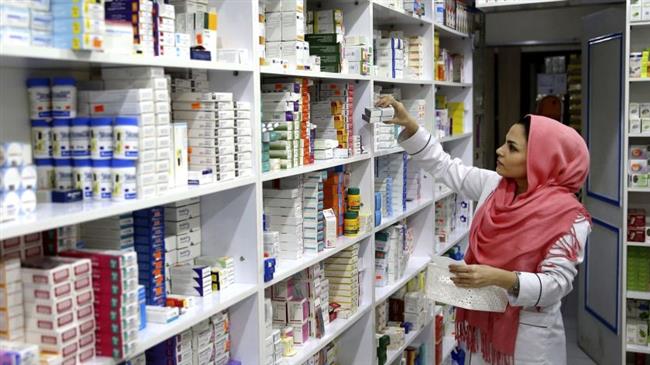
A new report published in the American media shows a Swiss trade channel much publicized by Washington as a secure way of delivering humanitarian assistance to Iran at a time of sanctions has failed to process any single deal on Iranian medicine imports.
The Daily Beast reported that Iranians have got almost nothing from the Swiss Humanitarian Trade Agreement (SHTA) since it was launched in January with the support and consent of the US.
The channel was meant to find a way around the US sanctions to use Iranian funds deposited abroad to buy food and medicine for the country via the Swiss bank BCP.
However, companies seeking to participate in the scheme have found it very difficult to comply with the criteria set by the US government to avoid violating the general rules governing the sanctions, said the report.
Fabian Maienfisch, a spokesman for Switzerland’s State Secretariat for Economic Affairs (SECO), which oversees the channel, admitted in comments made to the Daily Beast that the initiative had effectively failed to meet its objectives.
“No transactions have yet been carried out. Unfortunately, this whole process has been slower than expected…,” said Maienfisch.
The comments prove statements by the Iranian government saying that US officials have been disingenuous in claiming that Iran’s humanitarian needs are exempt from the harsh regime of sanctions imposed on the country.
Iran has made it clear that the sanctions have not affected its robust response to a new coronavirus pandemic that has infected more than 100,000 people and led to over 6,000 deaths in the country.
However, governments and rights organizations have criticized the US for its refusal to lift the sanctions at the time the Iranian health system is under pressure, saying the bans violate the most basic principles of human rights.
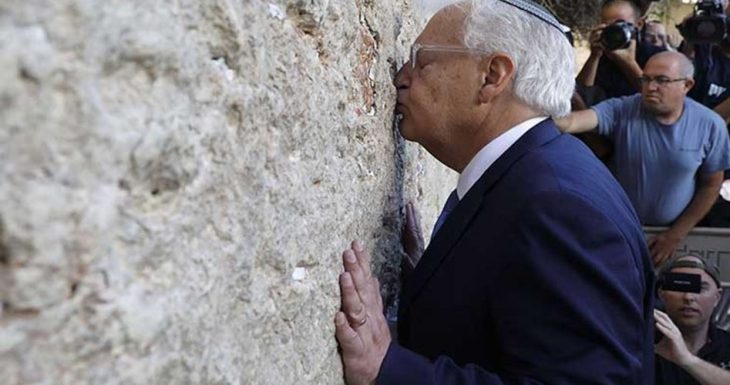
Hamas slams Friedman over West Bank annexation remarks
Palestine Information Center – May 8, 2020
GAZA – Hamas’s spokesman Hazem Qasem on Friday strongly denounced recent statements by the US ambassador to Israel David Friedman in which he recognized Israel’s “right” to annex the West Bank settlements.
Qasem described Friedman’s statements as a “violation of the Palestinian people’s legitimate rights”.
Qasem said that Friedman’s remarks fall in line with the US administration policy of falsifying facts to serve the Israeli right wing’s vision.
He stressed that the Palestinian people are the real owners of the land and they will continue their legitimate struggle until they end the occupation and establish their independent state with Jerusalem as its capital.
In recent statements Friedman expressed the US readiness to recognize Israel’s sovereignty in the occupied West Bank and the Jordan Valley within the coming weeks.
Israel is expected to carry out the annexation plan on 1 July as agreed between Prime Minister Benjamin Netanyahu and head of Blue and White party Benny Gantz.
Featured Video

Iran Is Not Our Enemy
or go to
Aletho News Archives – Video-Images
Frlom the Archives
The 52 Major Jewish American Organizations and Israel Celebrate Passover with the Slaughter of 25 Muslim, Christian and Secular Palestinians
By James Petras • Unz Review • April 8, 2018
Introduction
As of April 7, nearly three thousand unarmed Christian, Muslim and secular Palestinians have been wounded, over three dozen are in critical condition and at least twenty-five unarmed protestors, including children have been assassinated by hundreds of Israeli snipers and heavily armed troops shooting tank shells into crowds of civilians protesting their decades of incarceration by the racist Israeli state.
The Israeli government praised the ‘restraint and morality’ of the IDF, as did the fifty-two Major Jewish American Organizations (MJAO) who largely control the US Congress. These grotesque massacres began during the Christian Holy Week on Good Friday and Easter, coinciding with the Jewish Passover. The self-righteous officials of the MJAO and their relatives and friends broke matzos at joyful Seders as the blood of Palestinians soaked into ground at the fence containing the largest open-air prison camp in history, Gaza.
While tribal loyalties bonded the Israeli and Jewish American leaders, the politicians of the Western oligarchic electoral regimes refrained from criticizing the shocking display of brute force and even defended Israel’s cold blood mass killings of Palestinian civilians in their Gaza prison.
This paper will discuss and analyze the reasons for Israel’s willing Western accomplices and the centrality of its fifth column in the United States. … continue
Blog Roll
 Aletho News
- No time for losers: Why the war meant to save Israel may destroy it
- Top US Counterterrorism Official Resigns in Protest of Operation Against Iran
- Just Get Out! Now!
- Unpacking glaring contradictions in US-Zionist justifications for war against Iran
- Iranian model of warfare bleeds US dry while Persian Gulf states watch and learn: Analyst
- IRGC orders ‘defeated’ US to evacuate industrial facilities in region
- Hegseth’s call for ‘no mercy’ to Iranians deemed war crime
- Iran War Exposes Limits of US Military Power – Journalist
- Even The Neo-Cons Admit The Iran War Is Failing
- Inside the Caucasus Drone Corridor Fueling Tensions With Iran
- If Americans Knew
- Four news stories from Israeli media that illustrate Israeli “justice”
- CIA Prepares Criminal Referral of Tucker Carlson, as Israel and Its Loyalists Demand His Arrest
- Top US counterterror advisor resigns in protest of “war manufactured by Israel” – Not a ceasefire Day 158
- ‘I Liked the House’: When Israeli Soldiers Turn Palestinian Homes into Barracks
- ‘They Were All I Had’: Lebanese Father Buries Parents, 4 Daughters Killed by Israeli Bombing
- Israel and its supporters are causing attacks on Jewish institutions. Case in point: Michigan synagogue tragedy.
- These are the casualties and cost of the war in Iran 2 weeks into the conflict
- Chicago Teachers Union accuses AIPAC of swaying elections with ‘dark money’
- Predictions of another 9/11, amid Israel-US killing spree – Not a ceasefire Day 157
- As US-Israel war on Iran rages, Gaza faces massive dust storm – Not a ceasefire Day 156
- No Tricks Zone
- Storing Green Energy To Last Germany 10 Days Would Require A 60-Million Tonne Battery
- New Studies: UK Sea Levels Were 4 Meters Higher Than Today During The Mid-Holocene
- Destructive Green New Deal: German Energy And Metal Group Warns Of Drastic Crisis
- New Study Documents A 20-Year Pause In Arctic Sea Ice Decline – Driven By Internal Variability
- Wake-up Call: Survey Shows Majority Of Germans Now Favor Postponing Climate Targets!
- Televised! Leading German Political Candidate Tells Schoolchildren CO2 Makes Sun Hotter!
- New Study: A Century Warming Of 1.1°C Is ‘Commonplace’ And ‘Not Unusual’ During This Interglacial
- New Study: ‘Internal Noise’ And Volcanic Forcing Can Trigger 10-15°C Warming Within Decades
- Glaciers Worldwide Are Suddendly Surging, Experts Blame Warming!
- Surprising Discovery: Sahara Is Greening…Billions Of Trees Where Once Thought To Be Barren
 Aletho News