Hungary probed over fuel subsidies
Samizdat | July 16, 2022
The European Commission announced on Friday the launch of a so-called infringement procedure against Hungary for its locals-only cap of fuel prices.
According to the report, Hungary imposes different fuel prices for vehicles with foreign and local license plates.
“Vehicles with Hungarian number plates, including tractors and agricultural machinery with Hungarian documents, are entitled to lower official fuel prices by 60 to 70%. In contrast, all other vehicles with a foreign number plate cannot benefit from such reduced prices,” the statement reads.
Hungary restricted its 480 forint per liter ($1.20) price cap for gasoline and diesel to locals only in May following an influx of drivers from neighboring countries who were coming to take advantage of the European Union’s cheapest gas. The cap was originally introduced as a measure to help shield consumers from inflation, which is at its highest level in two decades. The price cap is currently in place until October.
The Commission requested that the Hungarian authorities comply with EU law provisions pertaining to “the free movement of goods and services including transport services, the freedom of establishment, the free movement of citizens and workers, the principle of non-discrimination as well as rules on notifications under the Single Market Transparency Directive.”
More Deaths, Injuries Revealed in Latest Pfizer Vaccine Trial Document Dump
By Michael Nevradakis, Ph.D. | The Defender | July 14, 2022
This month’s release of Pfizer-BioNTech COVID-19 vaccine documents by the U.S. Food and Drug Administration (FDA) reveals three more reports of deaths among vaccine trial participants and further instances of Pfizer downplaying serious adverse events sustained by participants and listing the injuries as “not related” to the vaccine.
Of the approximately 80,000 pages released this month, the most revelatory is a 3,611-page “confidential” document with no title — only the file name “fa_interim_narrative_sensitive.”
The document contains information about vaccine trial participants who died, who sustained adverse events during the trial or who contracted COVID-19 during the trial.
All participants listed in the document received the 30 μg dose of the BNT162b2 candidate vaccine, which the FDA in August 2021 granted Emergency Use Authorization.
The FDA on July 1 released the documents as part of a court-ordered disclosure schedule stemming from an expedited Freedom of Information Act (FOIA) request filed in August 2021.
Public Health and Medical Professionals for Transparency, a group of doctors and public health professionals, initially submitted the FOIA request.
Document details deaths of three trial participants
The “interim narrative” document contains reports of three clinical trial participants who died — and in all cases, the investigator ruled out the possibility the deaths were related to Pfizer’s vaccines.
One instance pertains to a 56-year-old white female in the U.S. (unique Subject ID C4591001 1007 10071101), who suffered cardiac arrest on Oct. 18, 2021, and died three days later. She was vaccinated on July 30, 2020, and Aug. 20, 2020.
The “narrative comments” accompanying the report on the woman’s death stated her death could not have been related to the vaccine, due to the amount of time that had elapsed following her second dose:
“In the opinion of the investigator, there was no reasonable possibility that the cardiac arrest was related to the study intervention or clinical trial procedures, as the death occurred 2 months after receiving Dose 2.”
The woman’s medical history did not indicate any cardiovascular problems, although ongoing obesity, gastroesophageal reflux disease and sleep apnea syndrome were listed.
The second report of a death was that of a 60-year-old white male in the U.S. (unique Subject ID C4591001 1162 11621327), who received one dose of the vaccine (on Sept. 10, 2020) and died sometime in the following three days of atherosclerotic disease.
According to the document:
“The study site received a police report indicating that the police visited the subject’s home to perform a welfare check on 13 Sep 2020 (Day 4) and found him dead.”
The participant’s medical history indicated ongoing autoimmune thyroiditis, obesity and depression, and a prior craniocerebral injury and prior hip arthroplasty.
According to the report:
“It was reported that the subject’s body was cold and had visible lividity. According to the medical examiner, the probable cause of death was progression of atherosclerotic disease. Relevant tests were unknown. Autopsy results were not available at the time of this report.
“In the opinion of the investigator, there was no reasonable possibility that the arteriosclerosis was related to the study intervention, concomitant medications, or clinical trial procedures, but rather it was related to suspected [emphasis added] underlying disease. Pfizer concurred with the investigator’s causality assessment.”
In other words, the participant’s death was attributed to a “suspected” cause, while the possibility that it was vaccine-related in any way, was dismissed.
The third death listed in the “fa_interim_narrative_sensitive” documents was listed under the section in the document listing reports from trial participants who withdrew, not those who died.
The report pertained to a 72-year-old Hispanic/Latino male in the U.S. (unique Subject ID: C4591001 1152 11521497) who received one dose of the vaccine, on Oct. 7, 2020.
The subject sustained vasovagal syncope (a fainting incident) on Oct. 26, 2020, and was admitted to the hospital, causing him to miss his scheduled follow-up vaccination appointment on Oct. 28, 2020.
According to the document:
“The subject was transferred to the intensive care unit. Family medical history relevant to the syncope was unknown.
“On an unspecified date, the syncope resolved and the subject was discharged from the hospital.”
He was withdrawn from the study on Nov. 6, 2020. However, according to the subject’s sister, he died of “unknown” causes on Nov. 11, 2020.
As stated by the document (dated Nov. 22, 2020):
“The cause of death was reported as unknown. It was not reported if an autopsy was performed. A death certificate might be available at a later date.”
Nevertheless, this lack of information did not prevent the study investigator or Pfizer from dismissing the possibility that the participant’s death was vaccine-related. The document states:
“In the opinion of the investigator, there was no reasonable possibility that the syncope was related to the study intervention, concomitant medications, or clinical trial procedures.
“Pfizer concurred with the investigator’s causality assessment. Per Pfizer, the syncope was most likely coincidental and associated with underlying clinical conditions.”
The document contained no reports of deaths among trial participants who received the placebo.
Investigators attribute 4 serious adverse events to vaccine, Pfizer disagrees
According to the latest document release, investigators attributed the vaccine to serious adverse events in four cases, however, Pfizer disagreed with the investigators’ conclusions in three out of the four cases.
The incidents are:
• A 53-year-old white female in the U.S. (unique Subject ID: C4591001 1018 10181159), who developed “lower back pain and bilateral lower extremity pain with radicular paresthesia” on Oct. 20, 2020, which was ongoing as of the date of the document (Nov. 22, 2020).
She was vaccinated on Aug. 14 and Sept. 4, 2020.
The woman’s medical history did not indicate lower back or lower extremity pain, just ongoing migraines and a prior history including a right shoulder dislocation, fibrocystic breast disease and Vitamin D deficiency.
The study investigator and Pfizer disagreed on whether the serious adverse event she experienced was related to the vaccination. As stated in the document:
“In the opinion of the investigator, there was a reasonable possibility that the lower back pain and bilateral lower extremity pain with radicular paresthesia were related to the study intervention, but not related to concomitant medications or clinical trial procedures.
“Pfizer did not concur with the investigator’s causality assessment and considered that there is not enough evidence to establish a causal relationship with the study vaccine apart from a chronological association at this time of the report.
“Based on the information currently available, it was more likely that the lower back pain and bilateral lower extremity pain with radicular paresthesia was associated with the subject’s underlying known neurological condition.”
• A 71-year-old white female in the U.S. (unique Subject ID: C4591001 1142 11421247) sustained ventricular arrhythmias on Oct. 14, 2020 — the same day she received the second dose of the vaccine — and which continued until Oct. 21, 2020.
The woman received her first dose on Sept. 21, 2020. Her medical history indicated she was wearing a cardiac pacemaker and was experiencing ongoing atrioventricular block (complete), atrial fibrillation and supraventricular tachycardia.
Again, the study investigator and Pfizer could not agree as to whether this adverse event was related to the vaccination. The document states:
“In the opinion of the investigator, there was a reasonable possibility that the ventricular arrhythmia was related to the study intervention based on the temporal relationship since the arrhythmias began within 24 hours of Dose 2, but not related to concomitant medications or clinical trial procedures.
“Pfizer did not concur with the investigator’s causality assessment. Additionally, Pfizer commented that there was not enough evidence to establish a causal relationship with the study intervention apart from a chronological association at this time of the report.
“In absence of evidence for an inflammatory response to study intervention, it was more likely that the ventricular arrhythmia was associated with the subject’s underlying known cardiac conditions.”
Pfizer dismissed the possibility that the vaccine may have exacerbated the subject’s existing cardiac conditions.
• A 48-year-old white female in the U.S. (unique Subject ID: C4591001 1178 11781107), who received one dose of the vaccine on Sept. 4, 2020, and withdrew from the study on Sept. 25, 2020.
In the interim, the participant sustained right axilla lymphadenopathy, with “at least four enlarged lymph nodes” — a condition that was still ongoing as of the document date of Nov. 22, 2020.
Her medical history indicated ongoing positional vertigo, osteoarthritis, eczema, sinus headaches, seasonal allergies and a Pitocin allergy, as well as prior menorrhagia, uterine fibroids and a past hysterectomy. In addition, her body mass index (BMI) was listed as being 36.9.
Pfizer also in this case did not agree with the study investigator’s assessment:
“In the opinion of the investigator, there was a reasonable possibility that the lymphadenopathy was related to the study intervention. Pfizer did not concur with the investigator’s causality assessment.”
• A 30-year-old Asian female in the U.S. sustained a shoulder injury related to vaccine administration (SIRVA).
The documents did not list any severe adverse events occurring in anyone outside the U.S., even though the documents contain reports from trials in Argentina, Brazil and South Africa.
‘Unrelated’ adverse event reports habitually dismiss possibility injuries were vaccine-related
The documents reveal a large discrepancy between the number of adverse events deemed to be related to the vaccination (four) compared to those reported to be “not related” (113 non-placebo participants).
The reports associated with each incident reveal an ongoing tendency to dismiss any possibility injuries were vaccine-related — even in instances where no alternative cause was identified or where patients had no relevant prior medical history.
In still other instances, the cause of the adverse event was attributed to itself, while in several other cases, pre-existing conditions worsened following vaccination.
A significant number of accidents and falls — and subsequent injuries — also were reported.
Instances where severe adverse events were brushed over as being “not related” to the vaccination, despite no relevant medical history, include:
• A 75-year-old white male in the U.S. (unique Subject ID: C4591001 1013 10131176), who was vaccinated on Aug. 13 and Oct. 7, 2020, sustained 13 adverse events between Aug. 29 and Sept. 16, 2020, many of which were ongoing as of the document date of Nov. 22, 2020.
These adverse events included congestive heart failure, acute hypoxic respiratory failure, acute renal failure, aspiration pneumonia, anemia, hypokalemia, hyponatremia, leukopenia, sepsis, small bowel obstruction and mild concentric left ventricular hypertrophy.
The participant had ongoing gastroesophageal reflux disease, hiatus hernia, hypercholesterolemia, hypertension and constipation, in addition to prior small intestinal and knee surgery.
The report attributed the patient’s adverse events to his prior surgical history. The document stated:
“In the opinion of the investigator, there was no reasonable possibility that the abdominal adhesions, small intestinal obstruction, pneumonia aspiration, and acute respiratory failure were related to the study intervention, concomitant medications, or clinical trial procedures, but were rather likely related to subject’s previous surgery.
“Pfizer concurred with the investigator’s causality assessment.”
• A 73-year-old white female in the U.S. (unique Subject ID: C4591001 1079 10791246) sustained a “cerebrovascular accident” (stroke), as well as expressive aphasia, on Oct. 22, 2020. She was vaccinated on Sept. 4 and Sept. 25, 2020.
Her medical history listed osteoarthritis, seasonal allergies and being postmenopausal. Nevertheless, her stroke and aphasia were deemed to be “not related” to the vaccine, although no cause was listed. Instead, the document stated, “pending medical records” with regard to the cause of her adverse events.
• A 66-year-old white female in the U.S. (unique subject ID: C4591001 1021 10211190) suffered a stroke on Nov. 2, 2020, with ongoing symptoms as of the document date on Nov. 22, 2020. She was vaccinated on Sept. 10 and Oct. 1, 2020.
Her medical history indicated ongoing gastroesophageal reflux disease, seasonal allergies and postmenopause, as well as a BMI of 28.5.
Her stroke was dismissed as being “not related” to the vaccine, although no alternative cause was listed.
• A 68-year-old white male in the U.S. (unique Subject ID: C4591001 1092 10921015) sustained arrhythmia atrial fibrillation and elevated troponin on Aug. 26, 2020. He received his first dose on Aug. 19, 2020, and his second dose on Oct. 6, 2020, as it required “clearance from his cardiologist.”
His medical history did not specifically indicate heart conditions. Instead, it indicated ongoing basal cell carcinoma on his nose, as well as hypersensitivity, seasonal allergies, myopia, dyslipidemia, hypertension, actinic keratosis and gastroesophageal reflux disease.
Although the study investigator wrote, in reference to the cause of his injuries, that “medical records [are] being reviewed not able to answer at this time,” the report dismissed possibility that his adverse events were related to the vaccine.
• A 45-year-old Black male in the U.S. (unique Subject ID: C4591001 1156 11561006) with ongoing Type 1 diabetes sustained deep vein thrombosis and a pulmonary embolism on Aug. 31, 2020. He received one dose of the vaccine, on Aug. 20, 2020, and was discontinued from the study on Sept. 8, 2020, “because he no longer met the eligibility criteria.”
Both adverse events were deemed as being “not related” to his vaccination, and were instead indicated as being “related to medical history of Type 1 diabetes mellitus.”
• A 67-year-old white male in the U.S. (unique Subject ID: C4591001 1178 11781015) sustained several adverse events on Oct. 10-11, 2020, including ascending aorta ectasia, diastolic dysfunction of the left ventricle and transient global amnesia. These conditions were ongoing as of the document date of Dec. 4, 2020. He was vaccinated on Aug. 25 and Sept. 15, 2020.
The patient’s medical record indicated ongoing depression, attention deficit hyperactivity disorder, hypertension, insomnia and neck pain.
While the cause of his adverse events was deemed as being “not related” to the vaccination, the study did state a cause, listing it as “possibly” having been hypertension.
• A 58-year-old Hispanic/Latino female from Argentina (unique Subject ID: C4591001 1231 12313674) sustained adverse events including panlobular emphysema, pneumonitis, and left submaxillary sialadenitis beginning on Sept. 29, 2020. The first two conditions were indicated as continuing as of the document date of Dec. 4, 2020.
She was vaccinated on Aug. 24 and Sept. 13, 2020. Her medical record indicated ongoing Sjogren’s syndrome and insomnia.
The cause of these adverse events was deemed as being “not related” to the vaccines, although for the first two adverse events, the stated cause was listed as “unknown,” while for the third, the cause was listed as Sjogren’s syndrome.
• A 56-year-old Hispanic/Latino female from Argentina (unique Subject ID: C4591001 1231 12314001) was diagnosed with acute coronary syndrome on Nov. 8, 2020, which was still ongoing as of the document date of Dec. 4, 2020. She was vaccinated on Aug. 25 and Sept. 15, 2020.
Her medical history consisted of ongoing hypothyroidism, allergic rhinitis and asthma — but no coronary troubles.
Nevertheless, according to the study investigator, her condition was determined to be “not related” to the vaccination, although the cause was listed as “unknown.”
‘Cause unknown’ but no chance the vaccine was to blame
In other examples, adverse events were assigned no specific cause or only a “probable” cause, but investigators dismissed the possibility the vaccines may have caused the injuries.
For example:
• A 34-year-old Hispanic/Latino male from Brazil (unique subject ID: C4591001 1226 12261745) developed a Leydig cell tumor in his left testicle on Sept. 23, 2020. He received the first dose of the vaccine on Sept. 16, 2020, and second dose on Oct. 7, 2020.
His medical history listed only ongoing allergic rhinitis.
While the study investigator claimed that the adverse event was “not related” to the vaccination, the cause was listed as “unknown.”
• A 19-year-old Hispanic/Latino female from Brazil (unique Subject ID: C4591001 1231 12311281) with no indicated medical history was diagnosed with acute appendicitis and QT interval prolongation — a heart condition — on Sept. 18, 2020. She was vaccinated on Aug. 15 and Sept. 4, 2020.
These conditions were deemed to be “not related” to the vaccination, although the causes were indicated as “unknown.”
• A 41-year-old Hispanic/Latino female from Argentina (unique Subject ID: C4591001 1231 12311315) was diagnosed with anemia and malignant melanoma on Sept. 25, 2020, with symptoms continuing as of the document date of Dec. 4, 2020.
She was vaccinated on Aug. 15 and Sept. 3, 2020.
The adverse events were indicated as being “not related” to the vaccination, but instead due to a “probable relationship with [a] vaginal tumor under study.”
• A 44-year-old Hispanic/Latino male from Argentina (unique Subject ID: C4591001 1231 12312854) was diagnosed with supraventricular arrhythmia on Sept. 17, 2020. He received the two vaccine doses on Aug. 21 and Sept. 11, 2020.
His medical history listed only ongoing sleep apnea syndrome and a BMI of 50.4.
According to the study investigator, the arrhythmia was “not related” to the vaccines, but instead “probably” corresponded “to an accessory intraventricular line.”
• A 56-year-old mixed-race male from Brazil (unique subject ID: C4591001 1241 12411825) was diagnosed with acute pyelonephritis on Nov. 2, 2020, and hypochromic anemia two days later. Both conditions were still listed as ongoing as of the document date of Dec. 4, 2020.
The participant was vaccinated on Sept. 17 and Oct. 8, 2020. His medical history listed ongoing hypertension.
According to the study investigator, these adverse events were “not related” to the vaccination. Instead, his acute pyelonephritis was due to a “possible” bacterial urinary tract infection, while the hypochromic anemia cause was “to be clarified.”
Worsening of pre-existing conditions ‘not related’ to vaccine
In other instances, participants experienced a worsening of pre-existing conditions. However, in all instances, no relation to the COVID-19 vaccine was determined.
For instance:
• A 72-year-old white male in the U.S. (unique Subject ID: C4591001 1092 10921187) sustained congestive heart failure on Oct. 1, 2020. He received his first dose of the vaccine on Sept. 15, 2020, and his second dose on Oct. 6, 2020.
The participant’s medical history included ongoing coronary artery disease, atrial fibrillation, type 2 diabetes, asthma, obesity, dyslipidemia, hypertension, insomnia and seasonal allergies. Moreover, he had previously had a defibrillator installed.
The cause of his adverse event was simply indicated as “progression of cardiovascular disease” unrelated to the vaccine. The possibility that the vaccine may potentially have precipitated the worsening of his heart condition was not considered.
• A 73-year-old white female in the U.S. (unique Subject ID: C4591001 1111 11111095) was reported as having sustained an “undiagnosed mental disorder” on Sept. 25, 2020, which was still ongoing as of the document date of Dec. 4, 2020. She was vaccinated on Aug.11 and Sept. 1, 2020.
The participant’s medical history did not indicate any prior mental disorders or conditions. Nevertheless, the cause of the adverse event was indicated by the study indicator as being “not related” to the vaccination and instead simply due to “mental instability.”
• A 58-year-old white male from the U.S. (unique Subject ID: C4591001 1109 11091387), who sustained worsening osteoarthritis of the right knee on Oct. 14, 2020, and later also experienced deep vein thrombosis on Oct. 20, 2020, which was still ongoing as of the document date of Dec. 4, 2020.
The participant’s medical history indicated ongoing osteoarthritis, ongoing hypercholesterolemia, hypothyroidism, sleep apnea syndrome, rosacea and an enlarged prostate. A prior knee surgery was also listed.
Both adverse events were deemed to be “not related” to the vaccination and instead attributed to the patient’s prior knee surgery and “previous medical history.”
• A 70-year-old white female from the U.S. (unique subject ID: C4591001 1127 11271023) experienced a worsening of her asthma on Oct.1, 2020. She later also developed malignant invasive ductal carcinoma in her left breast, on Nov. 5, 2020. Both cases were still ongoing as of the document date of Dec. 4, 2020.
She received her two doses of the vaccine on July 30 and Aug. 18, 2020. Her medical history, aside from ongoing asthma, also indicated a recurrent urinary tract infection and ongoing bronchitis, seasonal allergies, myopia, migraines, hypothyroidism, hypertension, insomnia, hyperlipidemia, osteoarthritis, bilateral deafness and postmenopause.
According to the document, both adverse events were “not related” to the vaccination, and instead were attributed to an “allergy” and to a “malignancy,” respectively.
Reports of multiple adverse events ignored
Other examples include cases where patients sustained multiple adverse events, many of which were entirely ignored by the study investigators’ assessments.
These include:
• A 61-year-old white male from the U.S. (unique Subject ID: C4591001 1114 1114108), who sustained 10 vaccine injuries beginning on Sept. 12, 2020, after he received the first dose of the vaccine on Aug. 24, 2020, and his second dose on Sept. 30, 2020.
The adverse events he experienced included acute kidney injury, atrial fibrillation, chest pain, left ventricular hypertrophy, mitral valve regurgitation, bilateral hand pain, pulmonary hypertension, skin avulsion on his left finger, a Staphylococcal infection and tricuspid regurgitation. Several of these conditions were still ongoing as of the document date of Dec. 4, 2020.
The patient’s medical history indicated ongoing peripheral neuropathy, type 2 diabetes, anxiety, depression, asthma, Staphylococcal infection, hypertension, hyperlipidemia and a prior leg amputation.
According to the study investigator, “the staphylococcal infection” was “not related” to the vaccine, but instead was connected to the patient’s hypertension, musculoskeletal causes and an “infection.” No mention was made in this assessment as to the probable causes of the other adverse events.
Some adverse events ‘caused’ by … the adverse event
In still other cases, the “cause” of participants’ adverse events was indicated as being the same as the adverse event itself.
Examples include:
• A 68-year-old white male from the U.S. (unique Subject ID: C4591001 1095 10951204), who was diagnosed with bladder cancer on Nov. 2, 2020. He was vaccinated on Sept. 2 and Sept. 21, 2020.
According to the document, the participant’s ongoing medical history included hypertension, benign prostatic hyperplasia, hypercholesterolemia, angina pectoris, coronary arterial stent insertion, coronary artery disease, erectile dysfunction and osteoarthritis.
However, the cause of his bladder cancer was attributed as “cancer” and deemed to be “not related” to the vaccination and “most likely coincidental and associated with the underlying clinical conditions.”
• A 48-year-old white male from the U.S. (unique Subject ID: C4591001 1124 11241106) sustained an acute myocardial infarction on Sept. 27, 2020. He previously received two doses of the vaccine, on Aug. 26 and Sept. 16, 2020.
His medical history indicated ongoing high cholesterol, gastroesophageal reflux disease and back pain.
According to the study investigator, the adverse event sustained by the participant was “not related” to the vaccination, but instead “related to cardiovascular risk,” with no further elaboration provided.
• A 73-year-old white female in the U.S. (unique Subject ID: C4591001 1223 12231159) was found to have a pancreatic mass on Nov. 5, 2020. She was vaccinated on Sept. 10 and Oct. 1, 2020.
Her medical records indicated ongoing osteoarthritis, menopause, gastroesophageal reflux disease, hypertension, dyslipidemia, hypothyroidism, Eustachian tube dysfunction, prophylaxis, irritable bowel syndrome, osteoporosis and benign monoclonal hypergammaglobulinemia.
The cause of her adverse event, which was indicated to be “not related” to the vaccination, was listed as “new development of pancreatic mass” without any elaboration as to the factors that may have caused it to appear.
‘Cause unknown’ but no chance the vaccine was to blame
In other examples, adverse events were assigned no specific cause or only a “probable” cause, even as the possibility that they were related to the vaccination was dismissed.
For example:
• A 34-year-old Hispanic/Latino male from Brazil (unique Subject ID: C4591001 1226 12261745) developed a Leydig cell tumor in his left testicle on Sept. 23, 2020. He received the first dose of the vaccine on Sept. 16, 2020, and second dose on Oct. 7, 2020.
His medical history listed only ongoing allergic rhinitis.
While the study investigator claimed that the adverse event was “not related” to the vaccination, the cause was listed as “unknown.”
• A 19-year-old Hispanic/Latino female from Brazil (unique Subject ID: C4591001 1231 12311281) with no indicated medical history was diagnosed with acute appendicitis and QT interval prolongation — a heart condition — on Sept. 18, 2020. She was vaccinated on Aug. 15 and Sept. 4, 2020.
These conditions were deemed to be “not related” to the vaccination, although the causes were indicated as “unknown.”
• A 41-year-old Hispanic/Latino female from Argentina (unique Subject ID: C4591001 1231 12311315) was diagnosed with anemia and malignant melanoma on Sept. 25, 2020, with symptoms continuing as of the document date of Dec. 4, 2020.
She was vaccinated on Aug. 15 and Sept. 3, 2020.
The adverse events were indicated as being “not related” to the vaccination, but instead due to a “probable relationship with [a] vaginal tumor under study.”
• A 44-year-old Hispanic/Latino male from Argentina (unique Subject ID: C4591001 1231 12312854) was diagnosed with supraventricular arrhythmia on Sept. 17, 2020. He received the two vaccine doses on Aug. 21 and Sept. 11, 2020.
His medical history listed only ongoing sleep apnea syndrome and a BMI of 50.4.
According to the study investigator, the arrhythmia was “not related” to the vaccines, but instead “probably” corresponded “to an accessory intraventricular line.”
• A 56-year-old mixed-race male from Brazil (unique Subject ID: C4591001 1241 12411825) was diagnosed with acute pyelonephritis on Nov. 2, 2020, and hypochromic anemia two days later. Both conditions were still listed as ongoing as of the document date of Dec. 4, 2020.
The participant was vaccinated on Sept. 17 and Oct. 8, 2020. His medical history listed ongoing hypertension.
According to the study investigator, these adverse events were “not related” to the vaccination. Instead, his acute pyelonephritis was due to a “possible” bacterial urinary tract infection, while the hypochromic anemia cause was “to be clarified.”
Other explanations for participants’ vaccine injuries include:
• A 78-year-old white male from the U.S. (unique Subject ID: C4591001 1097 10971011), who suffered from pneumonia between Sept. 20 and Oct. 5, 2020. He had previously received two doses of the vaccine, on Aug. 20 and Sept. 9, 2020.
According to the document, the cause of his pneumonia was “not related” to the vaccines. Instead, the listed cause was “pt [patient] contracted pneumonia from somewhere.”
• An 84-year-old white male from the U.S. (unique Subject ID: C4591001 1097 10971084) contracted pneumonia on Oct. 7, 2020, symptoms of which were still ongoing as of the document date of Dec. 4, 2020. He had previously been vaccinated on Sept. 1 and Sept. 23, 2020.
Similar to the patient above, the cause of the participant’s pneumonia was indicated as being “not related” to the vaccination. The narrative comment instead stated that “Pt [patient] contracted pneumonia from unknown source.”
Very few severe adverse events — and no deaths — were reported in other countries, although Argentina, for instance, was home to the largest of the Pfizer vaccine trials in 2020.
The next 80,000-page cache of FDA documents pertaining to the FDA’s authorization of the vaccine is set to be released on Aug. 1.
Michael Nevradakis, Ph.D., is an independent journalist and researcher based in Athens, Greece.
© 2022 Children’s Health Defense, Inc. This work is reproduced and distributed with the permission of Children’s Health Defense, Inc. Want to learn more from Children’s Health Defense? Sign up for free news and updates from Robert F. Kennedy, Jr. and the Children’s Health Defense. Your donation will help to support us in our efforts.
Russia comments on deadly strike on Ukrainian city
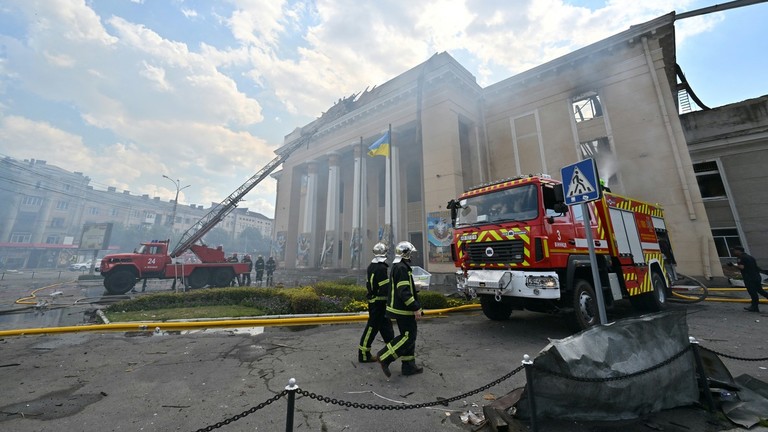
Firefighters extinguish fire in the city of Vinnytsia, west-central Ukraine on July 14, 2022. © AFP / Sergei SUPINSKY
Samizdat | July 15, 2022
The Russian military has confirmed launching a missile attack at a target in the city of Vinnitsa in Ukraine. It denied claims that it was a deliberate strike on civilians, stating that it hit Ukrainian military commanders as they negotiated with foreign arms suppliers.
Russia attacked the House of Military Officers in Vinnitsa with sea-launched Kalibr cruise missiles, the Defense Ministry said on Friday during a daily briefing. The statement claimed that the attack happened when a group of Ukrainian senior military officers were holding a meeting with foreign arms suppliers. The discussion was about the “transfer of more warplanes and weapons systems as well as the repair of the Ukrainian military air fleet,” the ministry said. The Russian strike killed all participants at the gathering.
According to Ukrainian officials, the Russian strike killed 23 civilians and injured scores of others, 80 of whom had to be hospitalized for treatment. President Volodymyr Zelensky claimed that Moscow attacked the city center deliberately and accused it of terrorism.
The head of Vinnitsa Region, Sergey Borzov, reported that Ukrainian air defenses engaged Russian missiles over the city and claimed they intercepted four of them.
Kiev has accused Russia of waging a genocidal war, claiming that Russian forces have a policy of killing Ukrainians. Moscow has rejected such allegations, saying its forces only attack legitimate military targets.
Russia sent troops into Ukraine on February 24, citing Kiev’s failure to implement the Minsk agreements, designed to give the regions of Donetsk and Lugansk special status within the Ukrainian state. The protocols, brokered by Germany and France, were first signed in 2014. Former Ukrainian President Petro Poroshenko has since admitted that Kiev’s main goal was to use the ceasefire to buy time and “create powerful armed forces.”
In February 2022, the Kremlin recognized the Donbass republics as independent states and demanded that Ukraine officially declare itself a neutral country that will never join any Western military bloc. Kiev insists the Russian offensive was completely unprovoked.
Hamas: “Jerusalem Declaration” will not give Israel legitimacy
MEMO | July 15, 2022
Palestinian factions have categorically rejected the Jerusalem Declaration signed by US President Joe Biden and Israeli Prime Minister Yair Lapid, saying it represents “an aggression” against Palestinian people and their rights.
In its statement after Biden and Lapid signed the declaration on the strategic partnership between the two sides, Hamas explained that the agreement comes to further “consolidate Washington’s approach of siding with and supporting the occupation’s aggression against our Palestinian people and their Islamic and Christian lands and holy sites and a continuation of the US’ suspicious attempts to liquidate the Palestinian cause by integrating this Zionist entity into our Arab and Islamic Ummah [nation].”
“This declaration expresses the blatant and unacceptable bias of the US administration toward the Zionist entity and its occupying agendas. It makes the US administration a partner in the Israeli occupation’s aggression and terrorism against our Palestinian land, people, and sanctities,” it added.
In turn, the Popular Front for the Liberation of Palestine considered the deal a continuation of the aggression against the Palestinian people and their national rights and said it gives Israel more freedom to expand and deepen its colonial project in Palestine and its expansion abroad.
It called for “the escalation of all forms of resistance” against the “aggressive colonial and Zionist policies.”
For its part, the Democratic Front for the Liberation of Palestine said the Jerusalem Declaration is an open invitation to ignite regional wars and to reinforce Israel’s aggressive role at the expense of the interests of the peoples of the region under the pretext of Israel’s “right to defend itself”.
It warned of the repercussions of the plans of the United States and Israel to drown the region in “seas of blood and many problems such as impoverishment, starvation, waste of wealth and mass destruction”.
The four-page Jerusalem Declaration includes an American commitment to Israel’s security and its military superiority in the region.
Emirati official: We oppose anti-Iran coalition in region

Anwar Gargash, the UAE president’s diplomatic adviser
Press TV – July 15, 2022
An Emirati official has dismissed the idea of forming a NATO-like military alliance in the region, saying the United Arab Emirates does not intend to form a regional coalition against any country, in particular Iran.
Speaking to reporters on Friday, the UAE president’s diplomatic adviser said a Middle East NATO was merely a “theoretical” concept and that confrontation was not an option for Abu Dhabi.
“We are open to cooperation, but not cooperation targeting any other country in the region and I specifically mention Iran,” Anwar Gargash said. “The UAE is not going to be a party to any group of countries that sees confrontation as a direction.”
He also said that the UAE was in the process of sending an ambassador to the Islamic Republic of Iran.
“Our conversation is ongoing … we are in the process of sending an ambassador to Tehran. All these areas of rebuilding bridges are ongoing,” Gargash maintained.
“We have an open eye. We are very clear if something is defending the UAE and its civilians, of course we are open to these ideas, but not to the idea of creating any axes against this or that country,” he added.
In recent months, Iran and the UAE have intensified their efforts to rebuild relations affected by the years-long war in Yemen and other regional issues.
Last August, Iran’s President Ebrahim Raeisi said that the Islamic Republic is determined and open to the expansion of relations with the UAE, stressing that Tehran sees no boundaries to the promotion of such ties, particularly trade and economic ones.
Iranian Foreign Minister Hossein Amir-Abdollahian said after a May visit to the UAE that warm relations among neighbors disappoint the enemies.
“A new page was opened in the relations between the Islamic Republic of Iran and the UAE,” the top Iranian diplomat tweeted after meeting Mohammed bin Zayed Al Nahyan, the newly-appointed president of the UAE, in Abu Dhabi on May 16.
“We warmly shake hands with our neighbors. The warmth of the neighbors’ relations disappoints the enemies of the region,” he added.
Israeli Generals Urge Political Command to Make Concessions to Lebanon in Maritime Conflict to Avoid Hezbollah War
Al-Manar – July 15, 2022
In light of the threats made by Hezbollah Secretary General Sayyed Hasan Nasrallah over the Zionist infringement on the Lebanese maritime borders, the Israeli media reflected calls on the government to eliminate Hezbollah pretexts to escalate the confrontation.
The US officials accompanying President Joe Biden during his visit to the occupied Palestinian territories stressed that they support the efforts exerted to reach a solution.
In this regard, the US National Security Council spokesman John Kirby said, “We listened to the ‘threats’, and we support reaching a solution.”
The US mediator, Amos Hochestein, told the Israeli media that he was still optimistic about achieving a solution, adding that his target concentrates on facilitating the negotiations.
Hochestein also revealed that he would visit Lebanon to meet the senior officials in the context of resuming the negotiations soon.
Meanwhile, the Zionist media reflected the Israeli circles frustration with Biden’s remarks which did not voice a clear support to ‘Israel’ pertaining the maritime border demarcation.
The Israeli army generals urged the Zionist government to avoid any escalation with Hezbollah by making concessions to Lebanon in the negotiations in order to avoid any military escalation with Hezbollah.
Sayyed Nasrallah warned on Wednesday the Israeli enemy and the United States that if Lebanon is prevented from extracting its maritime resources, none will be able to extract or sell gas and oil.
In a televised speech, Sayyed Nasrallah indicated that Hezbollah military forces are monitoring all the Zionist platforms across the occupied Palestinian coast, adding that the Resistance may resort to ground, maritime or air capabilities in order to attack the enemy and secure Lebanon’s rights.
According to Sayyed Nasrallah, the new equation is Karish, what’s beyond Karish and what’s far beyond Karish.
Iran’s petrochemical output capacity to rise by 54% in 2025

Press TV – July 14, 2022
Iran will increase its production capacity for petrochemical products by more than a half in the next three years as the country moves ahead with plans to increase added value in its petroleum sector.
A Thursday report by the official IRNA news agency said Iran will launch a total of 35 new petrochemical plants by 2025 to increase the output capacity in the sector by 54% to 140 million metric tons per annum (mtpa).
It said petrochemical output capacity in Iran had increased by 7% in the calendar year to March 2022 to reach nearly 91 million mtpa thanks to the completion of seven new petrochemical projects across the country.
Iran’s sales of petrochemicals, including exports to other countries, also rose by 4.4% in the calendar year to late March with government figures showing that exports proceeds from the sector reached nearly $12.5 billion over that period.
Iran has relied on petrochemicals as a major source of earning hard currency in recent years as the country has been facing a series of tough American sanctions targeting its direct exports of crude oil.
China has been the top customer of Iranian petrochemical shipments in recent years while exports to countries in the region have also surged since the United States imposed its sanctions on Iran in 2018.
The expansion of the Iranian petrochemical sector has also led to a significant rise in the number of jobs in the country. Estimates suggest the number of direct jobs in the sector is more than 920,000 compared with a total of 107,000 direct jobs registered in the upstream sector of the oil and gas industry in Iran.
Russia Continues To Earn More By Exporting Less Oil
By Tyler Durden | Zero Hedge | July 14, 2022
Russian export revenues in June rose by $700m to the $20 billion mark, despite that oil exports fell by 250k b/d m/m to 7.4m b/d, the lowest since August 2021, Bloomberg’s Sherry Su reports citing the IEA’s latest Oil Market Report.
Compared to a post-war peak level in April, total Russian oil exports in June were down 530k b/d, Or 7%, but export revenues were up by $2.3 billion, or 13%.
Crude oil exports were down by 250k b/d in June to just above 5m b/d, still slightly higher than the pre-war average level according to Su. Shipments to the EU fell below 3m b/d for the first time since November 2020, bringing the EU share of Russian oil exports to 40%, compared to 49% in January-February.
Crude oil loadings to EU destinations fell 190k b/d m/m to 1.8m b/d, partly because of lower offtake on the Druzhba pipeline due to maintenance at a Hungarian refinery in June. Meanwhile, product loadings to the European Union fell by 135k b/d to 1.13m b/d, the IEA said.
The fall in crude oil volumes came mostly from lower loadings on the Black Sea, as Rosneft’s 240k b/d Tuapse refinery reportedly came back online in June after a three-month shutdown.
Total product exports out of Russia were relatively unchanged in June. Diesel exports increased slightly m/m to 825k b/d, 300k b/d lower than the pre-war average. Diesel Loadings to EU countries ticked up to 650 kb/d, returning to January-February average levels.
“Made in America” Mini-nukes to be used in a “Nuclear First Strike” coming soon to Italy, Belgium, Germany, Netherlands.

By Manlio Dinucci – byoblu – July 15, 2022
“Production of the B61-12 nuclear bomb begins,” Sandia National Laboratories announced from the United States. The B61-12, which replaces the previous B61 deployed by the U.S. at Aviano and Ghedi and other European bases, is a new type of weapon. It has a nuclear warhead with four power options, selectable depending on the target to be destroyed. It is not dropped vertically, but at a distance from the target on which it is directed guided by a satellite system. It can penetrate underground, exploding deep to destroy command center bunkers in a nuclear first strike.
The B61-12s, classified as “non-strategic nuclear weapons,” are deployed in Europe — in Italy, Germany, Belgium, the Netherlands, Britain and probably other countries — at distances far enough to strike Russia. They thus have offensive capabilities similar to those of strategic weapons.
Another nuclear weapon system, which the United States is preparing to install in Europe against Russia, is ground-based intermediate-range missiles. They can also be launched from “anti-missile shield” installations, deployed by the U.S. at bases in Deveselu in Romania and Redzikowo in Poland, and aboard five warships cruising in the Mediterranean, Black Sea and Baltic Sea close to Russia.
That such installations have offensive capabilities is confirmed by Lockheed Martin itself. Outlining the characteristics of the Mk 41 vertical launch system, used in both land and naval installations, it specifies that it is capable of launching “missiles for all missions, both defense and long-range attack, including Tomahawk cruise missiles.” These can be armed with nuclear warheads.
Europe is thus being turned by the U.S. into the front line of a nuclear confrontation with Russia, even more dangerous than that of the Cold War.
Starving Italians storm town hall
Free West Media | July 15, 2022
Are these the kind of conditions that we will soon see more often in Europe? In an Italian city, angry citizens stormed the city hall because they had no more money to afford groceries. The mayor refused to receive the angry crowd.
Italian citizens stormed La Spezia City Hall after the mayor refused to receive them: “I have no money to buy bread, what will my daughter eat tonight?” cried a disappointed mother at the official residence of the city. The incident is said to have taken place in the Italian city on Wednesday.
The mayor Pierluigi Peracchini decided to ignore the problems that his constituents have been facing. He is said to have even denied the citizens access to the town hall for a discussion. Rather, as video recordings show, police officers from the local municipality prevented the angry people from penetrating further into the building.
Mayor Peracchini (58) ran for the Coraggio Italia party, a centre-right party. In Italy, the ruthless hammer of inflation has been brought down on citizens. Just recently, shocking video footage of a never-ending line of people circulating outside a food bank in Milan surfaced on Twitter.
Draghi government implode
Many blame Italy’s prime minister, ex-ECB boss Mario Draghi (74). In German-speaking countries, Draghi is however often referred to as a “blessing” (Neue Zürcher Zeitung), a “moderniser” or “Super Mario” (Frankfurter Allgemeine Zeitung). Italians, on the other hand, who have been on the receiving end of his policies, have strongly criticized the social and economic direction of the Prime Minister, who has been in office since February 2021.
In the meantime, Draghi is facing the collapse of his government, because the Five Star Movement [Cinque Stelle] is planning to withdraw from the multi-party coalition over Italian arms deliveries to Ukraine.
In Rome this week, workers, taxi drivers, farmers, fishermen, street vendors and truckers are on the hunt for politicians and masses of angry people have besieged parliament for the second consecutive day.
The Uber Files scandal – leading to the liberalization of taxi licenses imposed by Mario Draghi – has stirred up citizens in particular. At the seat of government, a crowd was seen chanting on Friday: “Come down or we will go up!” A heavy police presence has been noted in the Italian capital.
After the fall of Boris Johnson
After the demise of Boris Johnson the implosion of the Draghi government in Italy is not formally connected to the situation in Ukraine, but it was most certainly this that ruined his tenure. The economic consequences of this war for Italy were such that the ruling coalition could not agree on measures to support the Italian economy due to the economic crisis generated by the war.
Draghi’s resignation, coupled with Johnson’s resignation, now makes it clear that European politicians do not have the opportunity to cover the growing economic crisis and falling living standards with cries of “Putin is to blame”. According to Italian pundit Lorenzo Vita, the premier was “recognized in the EU, NATO and major international circuits” as an important leader, but certainly not at home.
The likely defeat of the Democrats in the midterm congressional elections in the US, for the same reasons, will most probably confirm this trend.
The refusal of the President of Italy to accept Draghi’s resignation in the conditions of the collapse of the coalition does not change much – Italy will most likely move towards new elections.
Featured Video

Matt Bracken: US Plans Massive MOAB Strike on Iran?
or go to
Aletho News Archives – Video-Images
From the Archives
Confronting the Threat of Ethnic Bioweapons
By Tony Cartalucci – New Eastern Outlook – 29.11.2017
The United States Air Force’s 59th Medical Wing’s molecular biology branch recently was revealed to have been collecting specifically Russian RNA and synovial (connective) tissue samples, prompting fears in Russia of a possible US directed ethnic-specific bioweapons program. … continue
Blog Roll
 Aletho News
- Matt Bracken: US Plans Massive MOAB Strike on Iran?
- Russia accuses France of ‘piracy’ over tanker seizure
- Why Yemen Is Bombing Saudi Arabia’s Airports: The War Behind the Headlines
- Sally Rooney’s books pulled from UK over support for Palestine Action
- Bombs for Tel Aviv, Promises for Riyadh
- Israeli ad agency conducted vast global espionage campaign using online ads: Report
- Oct. 7 Forever Marks The Big Reveal: ‘We See You, Israel, We Revile You, We Reject You!’
- Meet the US generals and admirals advancing Israeli policy
- Israel’s Straw Widow Protocol: The Kill Zones Where Civilians Were Labelled ‘Terrorists’
- Leading Israeli Think Tank Publishes Psychotic Israeli ‘National Security’ Doctrine
- If Americans Knew
- Israeli firm used online ads to run vast spy operation, researchers say
- No, the world zionist movement is not an antisemitic conspiracy theory
- Hundreds of IDF investigations into killings still have no public outcome, BBC Verify finds
- After Ashley Moody Epstein Probe, Donors Linked to Him Poured Money Into her Senate Campaign
- Worried about Russian meddling in UK politics? Wait till you see what Israel is up to
- Israeli settlers attack West Bank center for disabled children, church leader calls for int’l action
- Pulling Out Teeth Just to Live: How Israel Has Devastated Dental Care in Gaza
- Gaza’s “ceasefire” death toll passes 1,500 – Daily Update
- Activists Abused By Israel Return to New Freedom Flotilla Mission
- 60 Minutes won’t tell the full truth about Israeli settler violence
- No Tricks Zone
- New Study Suggests Large Regions Of The Pacific Ocean Have Been Cooling For The Last 80 Years
- Germany’s Green Energy Debacle: High Energy Costs Force Kahla Porzellan to Close After 182 Years!
- New Study: 50 Years Of The Most Aggressive ‘Net Zero’ Policies Can Only Affect The Global Climate By 0.03°C
- US September “Heat” Was No Record…Many Records Set Decades Ago
- Latest European Green Energy Debacle; Portugal’s Largest Flagship Solar Park Insolvent!
- Green Energy Debacle: German Expert Professor Fritz Vahrenholt Warns Of Severe Economic And Social Consequences
- Two More Paleo Reconstructions Affirm Meters-Higher Sea Levels Across Ireland, Brazil 7000-6000 Years Ago
- New Study: Earth And Venus Surface Warmth Largely Explained By Convection And Lapse Rate, Not CO2 Or Radiation
- 2025 Nature Paper Claiming Worsening Global Drought Gets RETRACTED …Heavily Flawed
- New Study: ‘Global Drought Shows No Detectable Recent Acceleration Under Climate Warming’

