CDC Admits It Never Monitored VAERS for COVID Vaccine Safety Signals
By Josh Guetzkow, Ph.D. | The Defender | June 21, 2022
In a stunning development, the Centers for Disease Control and Prevention (CDC) last week admitted — despite assurances to the contrary — the agency never analyzed the Vaccine Adverse Event Reporting System (VAERS) for safety signals for COVID-19 vaccines.
The admission was revealed in response to a Freedom of Information Act (FOIA) request submitted by Children’s Health Defense (CHD).
In September 2021, I published an article in The Defender in which I used the CDC’s published methodology to analyze VAERS for safety signals from COVID-19 vaccines.
The signals were loud and clear, leading me to wonder “why is nobody listening?”
Instead, I should have asked, “Is anybody even looking for them?”
After that article was published, I urged CHD’s legal team to submit a FOIA request to the CDC about its VAERS monitoring activities.
Since CDC officials stated publicly that “COVID-19 vaccine safety monitoring is the most robust in U.S. history,” I had assumed that at the very least, CDC officials were monitoring VAERS using the methods they described in a briefing document posted on the CDC website in January 2021 (and updated in February 2022, with minor changes).
I was wrong.
The lynchpin of their safety monitoring was to mine VAERS data for safety signals by calculating what are known as proportional reporting ratios (PRR’s).
This is a method of comparing the proportion of different types of adverse events reported for a new vaccine to the proportion of those events reported for an older, established vaccine.
If the new vaccine shows a significantly higher reporting rate of a particular adverse event relative to the old one, it counts as a safety signal that should then trigger a more thorough investigation.
The briefing document states, “CDC will perform PRR data mining on a weekly basis or as needed.”
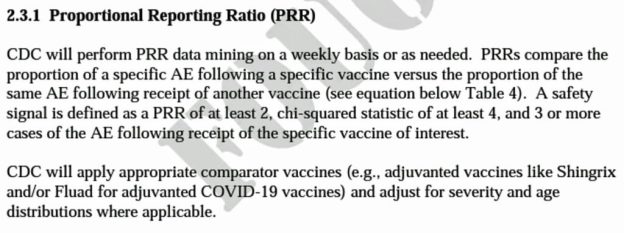
And yet, in the agency’s response to the FOIA request, it wrote that “no PRRs were conducted by CDC. Furthermore, data mining is outside of the agency’s purview.”
The agency suggested contacting the U.S. Food and Drug Administration (FDA), which was supposed to perform a different type of data mining, according to the briefing document.

CDC officials repeatedly claimed they have not seen safety signals in VAERS.

For example, on April 27, 2021, CDC Director Dr. Rochelle Walensky stated the CDC did not see any signals related to heart inflammation.
But a PRR calculation I did using the number of myo/pericarditis reports listed in the first table produced by the CDC obtained via the FOIA request reveals clear and unambiguous safety signals relative to the comparator vaccines mentioned in the briefing document (i.e., flu vaccines, FLUAD and Shingrix).
The table is dated April 2, 2021, almost four weeks before she made those remarks.
In fact, among the 15 adverse events for adults included in that week’s tabulations, PRRs I calculated also show loud-and-clear safety signals for acute myocardial infarction, anaphylaxis, appendicitis, Bell’s palsy, coagulopathy, multisystem inflammatory syndrome in adults (MIS-A), stroke and death.
The actual monitoring the CDC did diverges from the one promised in the briefing document in other ways.
For example, the CDC never created tables of the top 25 adverse events reported in the previous week, tables comparing different vaccine manufacturers, or tables of auto-immune diseases.
And it only began monitoring in early April 2021, even though reports from COVID-19 vaccines had been flooding VAERS since mid-December of the previous year.
To be clear, VAERS is not the only database the CDC uses to monitor COVID-19 vaccine safety.
For example, the CDC sponsored several studies of COVID-19 safety using the Vaccine Safety Datalink (VSD), which is comprised of millions of medical records from HMO’s across several states.
Those studies do not raise many safety concerns. However, they make many questionable methodological choices.
To give one example, a major safety study based on VSD data published in September 2021, in “JAMA,” compares adverse event rates that occur within 1-21 days of vaccination to the rate of occurrence from 22 to 42 days after vaccination.
It makes no comparison between vaccinated and unvaccinated individuals, or before vaccination versus after in the same individuals.
Moreover, the VSD is far from infallible, having failed initially to detect the increase in myocarditis rates.
In contrast, although calculating PRR’s is a blunt pharmacovigilance tool and far from perfect, it nevertheless has the advantage of being straightforward and difficult to manipulate with statistical sleight of hand.
PRRs are one of the oldest, most basic and most well-established tools of pharmacovigilance. The calculations are so straightforward that the CDC automated it several years ago, so it could have been done at the press of a button.
It simply beggars belief that the CDC failed to do this simple calculation. Even now, a paper published by CDC staff in March on the safety of the mRNA COVID-19 vaccines remains purely descriptive with no PRR calculation.
Meanwhile, a study published by a researcher not affiliated with the CDC in February in “Frontiers in Public Health” analyzes VAERS and EudraVigilance data using a method similar to PRRs, revealing clear and concerning safety signals.
And while it is true that VAERS is not the only database the CDC can use to monitor COVID-19 vaccine safety, it is of critical importance because it can reveal signals much faster than any other method — if anybody cares to look for them.
It remains to be seen if the FDA was properly monitoring VAERS. That will be the subject of a future FOIA request.
But even if it was, it doesn’t change the fact that the CDC completely failed in its promise to monitor VAERS for safety signals.
© 2022 Children’s Health Defense, Inc. This work is reproduced and distributed with the permission of Children’s Health Defense, Inc. Want to learn more from Children’s Health Defense? Sign up for free news and updates from Robert F. Kennedy, Jr. and the Children’s Health Defense. Your donation will help to support us in our efforts.
India’s weapon diversification not a “humiliating blow for Putin”
By Paul Antonopoulos | June 22, 2022
India for decades has had a close cooperation with Moscow, which extends into the defence industry. With India attempting to rise to Great Power status in the context of the current multipolar system, it has also engaged in an ambitious effort to achieve a thriving indigenous military industrial complex through joint productions, which includes Russia. However, according to Western media, India’s diversification of its defence systems is a “humiliating blow” for Russian President Vladimir Putin.
Britain’s Express newspaper, with the title “India turns on Russia and strikes major deal with West in humiliating blow for Putin”, wrote on June 20 that India is beginning talks with the US, Israel and European countries for a new arms deal.
The article explains that “India is not a major importer of Russian oil and gas” but omits, according to Bloomberg, that the South Asian country has bought more than 40 million barrels of Russian oil between late-February and early-May, which comes to about 20% more than flows for all of 2021.
India imports 80% of its oil but usually only buys about 2% to 3% from Russia. With oil prices increasing following the Russian military operation in Ukraine, New Delhi has increased its intake from Moscow, taking advantage of the major discounts. In this way, India is rapidly becoming a major market for Russian energy, so-much-so that the country has overtaken Saudi Arabia to become India’s second biggest supplier of oil – only behind Iraq.
The article’s author writes: “Russia’s ability to influence European decisions due to its energy dependence has sparked concerns about relying too heavily on a single supplier.” However, there is no evidence or indication from New Delhi that Europe’s energy dependence on Russia has motivated India’s weapon diversification.
In fact, Javin Aryan in his March 2021 paper titled “The evolving landscape of India’s arms trade”, stated that: “defense transfers from the US to India declined by 46% as well. India’s goal, thus, seems to have been to cut its dependence on other countries for defence systems across the board rather than to pivot from one supplier to the other. This underlines New Delhi’s resolve to promote indigenous defence manufacturing and export.”
He then stresses that “India should find ways of becoming self-reliant that would not adversely affect relations with its partner countries”, naming Russia, France and Israel, as they are countries which New Delhi find “operationally, diplomatically, and politically unviable to sever” from.
In this way, India’s weapons diversification and indigenous programs is not a “humiliating blow to Putin” as the Express leads readers to believe, but rather a years-long stated goal that has been worked on, and even with assistance from Russia. More importantly, it is certainly not a reaction to the war in Ukraine and Europe’s energy dependence on Russia.
Rather, it is a lazy attempt to coverup the fact that the West has been humiliated time and again in their incessant demand that India ends its decades long cooperation with Moscow to impose sanctions and end energy imports.
“Furthermore, Putin’s invasion of Ukraine has deepened relations between Russia and China, a neighboring country that India is continually in a border conflict with,” the Express article added.
Although the strategic relationship between Moscow and Beijing has certainly strengthened over the course of the war in Ukraine, the statement alludes that this has affected Russia-India ties. Moscow, New Delhi and Beijing, unlike most of the West, operate on principles of bilateral relations not being beholden by third parties. In this way, despite tensions that may exist between India and China, it will not spill over into their relations with Russia.
As the Express was alluding to Putin’s “humiliation” from India, Indian banks met with Russian banks, that are not under Western sanctions, on June 15 to facilitate bilateral payments. According to the Economic Times, these Indian banks will likely open accounts at their Russian counterparts and vice versa without violating the economic sanctions on Russia over the Ukraine war.
If these banks from both sides start engaging bilaterally, banking transactions can take place in any currency, including the dollar, euro, rupee or the rouble. A proposal of paying Russians in rupees was also discussed.
The British tabloid alludes that there is a crisis, or at least a looming crisis, in Russian-Indian relations. However, despite these allusions, deceiving Western readers does not change the facts on the ground that Moscow-New Delhi ties and cooperation is only expanding and not contracting just because India is pursuing its years-long stated goal of diversification and indigenisation of its defence systems.
Paul Antonopoulos is an independent geopolitical analyst.
Covid vaccines more likely to put you in hospital than keep you out: BMJ editor’s analysis of Pfizer and Moderna trial data
BY WILL JONES | THE DAILY SCEPTIC | JUNE 22, 2022
A new paper by BMJ Editor Dr. Peter Doshi and colleagues has analysed data from the Pfizer and Moderna Covid vaccine trials and found that the vaccines are more likely to put you in hospital with a serious adverse event than keep you out by protecting you from Covid.
The pre-print (not yet peer-reviewed) focuses on serious adverse events highlighted in a WHO-endorsed “priority list of potential adverse events relevant to COVID-19 vaccines”. The authors evaluated these serious adverse events of special interest as they were observed in “phase III randomised trials of mRNA COVID-19 vaccines”.
A serious adverse event was defined as per the trial protocols as an adverse event that results in any of the following conditions:
- death;
- life-threatening at the time of the event;
- inpatient hospitalisation or prolongation of existing hospitalisation;
- persistent or significant disability/incapacity;
- a congenital anomaly/birth defect;
- medically important event, based on medical judgement.
Dr. Doshi and colleagues found that the Pfizer and Moderna mRNA COVID-19 vaccines were associated with an increased risk of serious adverse events of special interest of 10.1 events per 10,000 vaccinated for Pfizer and 15.1 per 10,000 for Moderna (95% CI -0.4 to 20.6 and -3.6 to 33.8, respectively). When combined, the mRNA vaccines were associated with a risk increase of serious adverse events of special interest of 12.5 per 10,000 vaccinated (95% CI 2.1 to 22.9).
The authors note that this level of increased risk post-vaccine is greater than the risk reduction for COVID-19 hospitalisation in both Pfizer and Moderna trials, which was 2.3 per 10,000 participants for Pfizer and 6.4 per 10,000 for Moderna. This indicates that the Pfizer vaccine results in a net increase in serious adverse events of 7.8 per 10,000 vaccinated and the Moderna vaccine of 8.7 per 10,000 vaccinated.
Addressing the difference between their findings and those of the FDA when it approved the vaccines, the authors note that the FDA’s analysis of serious adverse events “included thousands of additional participants with very little follow-up, of which the large majority had only received one dose”. The FDA also counted people affected rather than individual events, despite there being twice as many individuals in the vaccine group than the placebo group who experienced multiple serious adverse events.
The authors wonder where the U.S. Government’s own studies of adverse events are. They note that in July 2021 the FDA reported detecting four potential adverse events of interest following Pfizer vaccination – pulmonary embolism, acute myocardial infarction, immune thrombocytopenia and disseminated intravascular coagulation – and stated it would further investigate the findings. However, no update has yet appeared.
They also note that “while CDC published a protocol in early 2021 for using proportional reporting ratios for signal detection in the VAERS database, the agency has not yet reported such a study”.
Their results are compatible, they point out, with a recent pre-print analysis of COVID-19 vaccine trials by Benn et al., which found “no evidence of a reduction in overall mortality in the mRNA vaccine trials”, with 31 deaths in the vaccine arms versus 30 deaths in the placebo arms (3% increase; 95% CI 0.63 to 1.71).
Noting that their study is limited by the fact that the raw data from COVID-19 vaccine clinical trials are not publicly available, they stress that “given the global public health implications, there is an urgency to make all COVID-19 trial data public, particularly regarding serious adverse events, without any further delay”.
They conclude that there is a need for formal harm-benefit analyses for Covid vaccines, taking into account the different levels of risk of serious Covid and adverse events that exist between demographic groups. Ideally, this would be based on individual participant data, they add, though such data remain frustratingly unavailable.
Washington supports blockade of Russian exclave by NATO member Lithuania
Samizdat | June 22, 2022
The US says that it “appreciates” anti-Russian sanctions imposed by EU nations and that its military is committed to the defense of Lithuania, after the country banned some Russian goods from passing through its territory to the Russian exclave of Kaliningrad.
Ned Price, the spokesman for the US state department, dismissed Moscow’s displeasure with the Lithuanian blockade of its territory as “saber-rattling” and “bluster.” Speaking at a daily briefing, he said he didn’t want to “give it additional time.”
“We, of course, appreciate the unprecedented economic measures that many countries around the world… including in this case Lithuania, have joined us in taking against Russia for its unprovoked war in Ukraine,” he said.
Price said that the US would protect Lithuania from any military attack, as is due under its NATO obligations.
“Lithuania has been a stalwart partner in this. We stand by NATO. We stand by our NATO Allies, and we stand by Lithuania,” he said.
The row between Russia and its Baltic neighbor erupted last week after Lithuania started blocking the transit of goods between mainland Russia and Kaliningrad region. The partial restrictions came into force last Saturday, with Vilnius claiming it was a natural part of enforcing EU sanctions against Russian trade. Roughly half of the traffic is estimated to be affected. The banned items include coal, metals, and construction materials.
Moscow said the restrictions were crossing every line and warned that there would be serious consequences for what it described as a Lithuanian blockade of its exclave. The decision clearly violated international law, the Russian government noted. Some experts suggested that it could even amount to a casus belli – a cause to start a war over.
Kaliningrad region is sandwiched between Poland and Lithuania and has access to the Baltic Sea, which technically allows Russia to ferry goods to it. The relatively small exclave also hosts a significant number of Russian troops and weapon systems, making it a key component in the country’s national security.
Biden predicts ‘second pandemic’

Samizdat – June 22, 2022
The US needs more money to plan for “the second pandemic,” President Joe Biden said during a press briefing on Tuesday, as he praised his government’s efforts to ensure children under five can get Covid-19 vaccines.
Biden also hailed as “a very historic milestone” that the US has become the first country in the world to offer “safe and effective” Covid-19 vaccines for children as young as six months old.
When asked about how long the administration could keep up the new vaccine campaign, Biden suggested that the current budget would be enough to “get through at least this year” but stressed that “we do need more money.”
He went on to insist that he needed even more money for an unspecified “second pandemic.” “We need more money to plan for the second pandemic. There’s going to be another pandemic,” the president warned, without going into detail about what this new wave might entail.
Biden also took the opportunity to take a swipe at his predecessor, implying that Donald Trump’s lack of preparation increased the impact of the Covid pandemic. “We have to think ahead. That’s not something the last outfit did very well and that’s something we’ve been doing fairly well. That’s why we need the money,” surmised Biden.
Some health experts and agencies such as the World Health Organization have also warned of the likelihood of future pandemics. The WHO had previously announced that it plans to confirm a global pandemic treaty at the 2024 World Health Assembly, which it hopes will help “set out the objectives and fundamental principles in order to structure the necessary collective action to fight pandemics.”
The agreement, which heavily focuses on increased surveillance, vaccinations and “restoring trust in the international health system,” would legally bind its members under international law, superseding regulations of individual countries in an effort to get all nations to act as one in the face of a future outbreak.
Most African countries support Russia
By Lucas Leiroz | June 22, 2022
Apparently, Volodymir Zelensky’s popularity in Ukraine is very low. The Ukrainian leader called for a virtual diplomatic meeting with African heads of state, but the event failed completely. Almost all African leaders declined to participate, hampering Zelensky’s plans to make the meeting a pro-Kiev propaganda stage. Meanwhile, the Russian government’s popularity is growing in Africa, where citizens take the streets in support for the special military operation in Ukraine and ask for Russian help in combating terrorism.
On June 20, the Ukrainian president met with representatives of the African Union in order to discuss matters concerning the current conflict situation in Eastern Europe and the role of Africa on the world arena. Of the fifty-five heads of state invited to the meeting, only four attended. The other countries sent only diplomats or ministers, with the heads of state and government not willing to attend, even with the meeting being virtual.
The heads of state who attended the meeting were Macky Sall of Senegal, Alassane Ouattara of Côte d’Ivoire, Mohammed el-Menfi, President of the Libyan Council, and Denis Sassou Nguesso of Congo. It is important to note that Sall is the current president of the African Union, which is why his presence was essential for the event to take place. Therefore, his attendance does not necessarily mean an expression of his real desire – even more considering his recent conversations with Russian President Vladimir Putin and the effort to increase Russia-Africa cooperation.
The virtual meeting was operated in secret, behind closed doors. According to official sources, Zelensky reiterated the Ukrainian position on the conflict, calling the Russian operation an unjustified “aggression”. He also commented on the current food crisis affecting Africa as a result of the conflict’s impact on the grain market. According to Zelensky, the African continent is Russia’s “hostage” because food shortages would be the result of such “aggression” and would only end when Russia decided to retreat.
Commenting on the event, Macky Sall took the most neutral and impartial stance possible, demonstrating that the Africa Union did not adhere to Zelensky’s appeals, but was concerned only with African states’ interests and the proper functioning of international law.
“Africa remains committed to respecting the rules of international law, the peaceful resolution of conflicts and the freedom of trade”, he said in a publication in his Twitter account.
It is interesting to note how Zelensky’s attempt to convince African leaders to adhere to the Kiev-Western narrative absolutely failed. Not only did most African heads of state refuse to listen to the Ukrainian leader, but there was no adherence to the pro-Kiev speech on the part of those who attended the conference. For the African Union, the meeting was just a diplomatic formality, with no real gains or changes in position – which reveals that Zelensky’s plans did not work as expected.
This failure, however, was predictable for any realistic analyst. For African leaders, it is really hard to believe the fallacious narrative that Ukraine is a simple “victim” of an “unjustified aggression”. African countries are used to centuries of Western interventionism and violence and the peoples of this continent react to this with strong distrust of everything that Western nations support. As Zelensky is the ally of the US and Europe, he will likely be viewed with suspicion by countries that suffer so much from Western colonialist mentality and praxis.
In addition, there are other factors that need to be mentioned. Zelensky’s arguments that the food crisis is caused exclusively by Russia are no longer able to convince public opinion and state authorities. It is evident that, more than the conflict itself, the crisis has been caused by the sanctions against Russia, which motivates emerging countries to be enthusiastic about the end of these sanctions. Also, there are many reports that Kiev is exporting grain to the US and Europe in exchange for weapons, which is unacceptable.
Furthermore, there has recently been a strong wave of popular support for the operation in Ukraine from citizens of several African countries, especially in the regions most affected by terrorism. After the abandonment that Africa has suffered from the West in terms of security policies and defense cooperation, seeking Russian support has become the greatest hope for the members of the African Union, which is why recently there have been popular demonstrations in support of all Moscow’s actions, alongside requests for help to solve Africa’s internal problems.
In fact, in international relations, nothing matters more than cooperation. Zelensky will not be able to garner African support if he does not show interest or conditions to cooperate with Africa. Kiev currently has nothing to offer African countries, as it is economically broken and militarily virtually neutralized. On the other hand, Russia shows itself as a pillar for African food security and as a hope against terrorism in the continent. It is absolutely expected that in this context the African Union will decline its ties with Kiev and seek to approach the side that offers the best opportunities for cooperation.
Lucas Leiroz is a researcher in Social Sciences at the Rural Federal University of Rio de Janeiro; geopolitical consultant.
Millions Face New Fluoridation Threats
By Stuart Cooper | Fluoride Action Network | June 21, 2022
The published science over the past decade has taught us a lot about water fluoridation, about both the very real and significant side effects inflicted on the public, but also about the credibility of those who continue to vouch for its safety.
At this point, the question we must ask isn’t whether the overwhelming risks outweigh the theoretical scant benefits, or whether more research is needed to draw strong conclusions. No, the only appropriate question now is: How much more harm will the promoters and regulators of fluoridation allow the practice to inflict on the public?
Without the Fluoride Action Network, our coalition partners, and people like you taking a stand, their answer will be a resounding, “a lot more harm!” With their credibility and influence at stake after defending fluoridation for more than 75 years, they’ve sadly shown that they’ll not only be the last to act, but that they plan to double down until we stop them.
As we speak, tens of millions of residents currently living on community water systems with no added fluoride throughout the United States, Canada, the United Kingdom, Australia and New Zealand are facing the imminent threat of having their water dosed with hazardous fluoridation chemicals.
The CDC has announced a new strategy and helped develop a new technology to fluoridate an addition 19+ million Americans, which will also eventually expand to Canadians, Australians and likely others.
Meanwhile, the governments in the U.K. and New Zealand have exploited the recent pandemic to pass sweeping health care reform bills that effectively include nationwide fluoridation mandates due to decades of strong pushback from residents and elected officials at the local level, keeping fluoridation at bay.
Fluoride Has Already Damaged the Teeth of Millions
The U.S. Centers for Disease Control’s own data taken from the National Health and Nutrition Examination Surveys (NHANES) has repeatedly found that our children in the United States are significantly overexposed to fluoride, evidenced by skyrocketing rates of dental fluorosis.
Fluorosis is a biomarker of toxicity from ingested fluoride, and is a permanent tooth defect, causing unsightly discoloration and mottling of the teeth, weakening the enamel and resulting in increased dental decay.
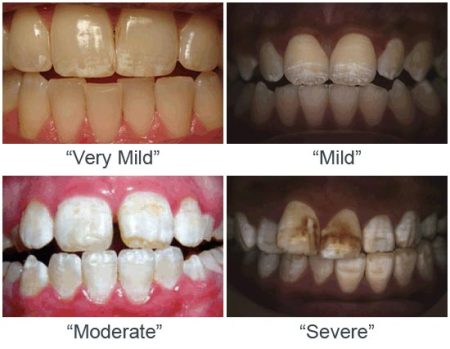
Ingesting fluoridated water — particularly in reconstituted infant formula — and processed foods made with fluoridated water are recognized as the primary sources of exposure, though swallowing toothpaste and fluoride prescriptions also contribute.
A 2015 review of the practice of fluoridation by the Cochrane Collaboration, the gold standard for evidence-based reviews of health interventions, found that “there is a significant association between dental fluorosis (of aesthetic concern or all levels of dental fluorosis) and [water] fluoride level.”
The CDC reported that 41% of adolescents (12 to 15) had dental fluorosis in 2004. At the time this was an increase of over 400% from the rates found 60 years prior. Then the 2012 survey found that the rate jumped significantly to 65+% of adolescents with dental fluorosis.
Now, according to a recent study (Yang, June 2021) published in the journal Ecotoxicology and Environmental Safety using the data from the NHANES 2015-16 survey, the “prevalence of dental fluorosis was 70% in the U.S. children.”
This means that the teeth of millions of children, teens and adults have already been damaged by overexposure to fluoride during development, and the CDC, along with the other promoters of fluoridation are fully aware. However, the teeth are not the only tissues in the body that are harmed by or accumulate fluoride. There is no apparent reason, therefore, why fluoride’s effects on the body would be limited to the teeth. As noted by renowned dentist and researcher Dr. Hardy Limeback:
… it is illogical to assume that tooth enamel is the only tissue affected by low daily doses of fluoride ingestion.
NHANES data has been used in recent published and peer-reviewed studies to link fluoridated water with a number of additional side-effects, including earlier onset of menstruation for black teens, sleep disorders in adolescents, increase uric acid levels in the blood, and kidney and liver impairment in adolescents.
Additional studies on fluoridation have also recently found higher rates of hip fractures, disruption of the endocrine system, and increased rates of hypothyroidism.
Fluoride Is the New Lead
There is now a large body of government-funded research indicating that fluoride is neurotoxic, and is associated with lowered IQ in children and a significant increase in ADHD diagnosis and related behaviors in children at doses experienced in fluoridated communities. Experts in the toxicology have likened the size of the effect to that from lead.
To date, 69 human studies, most from endemic fluorosis areas in China, have associated lowered IQ with fluoride exposure. The highest quality fluoride brain studies have been published since 2017, when the first of five NIEHS-NIH (National Institutes of Health) funded prospective-cohort studies was published (Bashash et al., 2017) finding an association between fetal exposure to fluoride and lowered IQ in Mexico.
A year later, another NIH-funded study found an increase in ADHD symptoms associated with in utero exposure to fluoride (Bashash et al., 2018).
Over the next two years, two more of these government-funded studies found similar results, linking fetal exposure to fluoridated water in Canada to lowered IQ (Green et al., 2019), and finding that bottle-fed infants in fluoridated communities in Canada had a significantly lowered IQ compared to bottle-fed infants in non-fluoridated communities (Till et al., 2020).
And just last year, the fifth NIH-funded study (Cantoral et al, 2021), found that for every 0.5 mg increase in dietary fluoride intake during pregnancy was associated with a 3.10 to 3.46-point lower cognitive score in boys. The authors stated:
“Fluoride is not an essential nutrient and … fluoride ingestion in pregnancy does not strengthen enamel during tooth formation in the fetus but has been associated with increased risk of neurotoxicity, even at optimal exposure levels …
These findings suggest that the development of nonverbal abilities in males may be more vulnerable to prenatal fluoride exposure than language or motor abilities, even at levels within the recommended intake range.”
I strongly urge you to watch and share this recent 20-minute PowerPoint presentation by professor Christine Till, Ph.D., lead author of some of these landmark fluoride studies, explaining her team’s research and findings.
In 2021, the first benchmark dose analysis conducted on maternal fluoride exposure and neurotoxicity to the fetus was published in the journal Risk Analysis (Grandjean, 2021). Benchmark doses analyses are used by the EPA and toxicologist to determine at what level a substance starts to cause harm. It is well established that a loss of one IQ point leads to a reduced lifetime earning ability of $18,000.
The analysis confirmed that extremely low fluoride exposure during pregnancy impairs fetal brain development, finding that a maternal urine fluoride concentration of only 0.2mg/L — which coincides with the level in water (0.2ppm) — was enough to lower IQ by at least 1 point.
This is four times lower than the current government “recommended” level of 0.8ppm in fluoridated communities. It’s also six times lower than the level that was recommended as “safe” by the CDC, HHS, and the American Dental Association for over 60-years up until 2011 (1.2ppm).
For perspective, A urinary fluoride (UF) concentration of 0.2mg/L is far below what a pregnant woman in a fluoridated community would have, as confirmed by two recent studies. A recent study of pregnant women in fluoridated San Francisco, California, found a mean UF concentration of 0.74mg/L. A second study with participants in fluoridated communities across Canada found a mean UF concentration of 1.06mg/L.
Both studies also found that the UF levels were significantly lower for the participants living in the non-fluoridated communities. The authors of the benchmark dose analysis stated:
“These findings suggest that fetal brain development is highly vulnerable to fluoride exposure … and provide additional evidence that fluoride is a developmental neurotoxicant (i.e., causing adverse effects on brain development in early life).
Given the ubiquity of fluoride exposure, the population impact of adverse effects from fluoride may be even greater than for other toxic elements like lead, mercury, and arsenic … and the benchmark results should inspire a revision of water fluoride recommendations aimed at protecting pregnant women and young children.”
These authors are hardly alone in comparing fluoride’s neurotoxic impact to the well-established harm of lead:
- Dr. Dimitri Christakis, MPH, and Dr. Frederick Rivara, MPH, editors for the Journal of the American Medical Association (JAMA) on their podcast (around 4:25): “[The 4.5 IQ loss is] An effect size which is sizeable — on par with lead.”
- Christine Till, PhD, co-author of several landmark fluoride/neurotoxicity studies, on Canada’s CTV: “4.5 points is a dramatic loss of IQ, comparable to what you’d see with lead exposure.”
- David Bellinger, Ph.D., MSc, Harvard professor of neurology, on NPR: “It’s actually very similar to the effect size that’s seen with childhood exposure to lead.”
Other experts, including Linda Birnbaum PhD, former Director of the National Toxicology Program, stress the need to avoid fluoride:
“Given the weight of evidence that fluoride is toxic to the developing brain, it is time [to] protect pregnant women and their children [and recommend they] reduce their fluoride intake.”
There are now nine fluoride mother-offspring studies linking fluoride exposure to harm, and 23 studies published on the association between fluoride exposure and reduced IQ since 2017.
How FAN Responded to the Science
Because of the growing list of published fluoride-IQ studies, and the downplaying of their importance by pro-fluoridation advocates such as the Division of Oral Health at the CDC and the American Dental Association, FAN embarked on two initiatives in 2016.
First, we requested the National Toxicology Program undertake a systematic review of ALL the studies (animal, human and cellular) pertaining to fluoride’s potential to damage the brain. The NTP agreed with our request, and they plan to publish the final results of their multiyear review of fluoride neurotoxicity any day now. In the two first drafts the NTP concluded, “that fluoride is presumed to be a cognitive neurodevelopmental hazard to humans …”
The review drafts identified over 100 studies showing adverse effects including IQ loss and increased ADHD. Among 27 studies designated as high quality, 15 show fluoride injury at the same exposure levels found in community fluoridation programs.
Second, we petitioned the EPA under provisions in the Toxic Substances and Control Act to ban the deliberate addition of fluoridation chemicals to the drinking water supply because it poses an unreasonable risk to the developing brains of children. The EPA’s lack of action led to FAN suing them in federal court.
The initial phase of the trial was held in June 2020, concluding with the judge saying, “I don’t think anyone disputes that fluoride is a hazard.” However, the court is awaiting the final NTP report before moving forward with the final phase of the trial. Here is a short video update on the lawsuit from FAN’s attorney.
This past year, FAN embarked on a two more initiatives. We communicated with the U.S. surgeon general about the risk posed by fluoridation to developing children, and asked that he take action to warn parents.
We also initiated a dialogue with CDC officials (see initial letter signed by 112 professionals) that ultimately led to them organizing presentations for their leadership from several fluoride/neurotoxicity study authors, Dr. Bruce Lanphear, Christine Till, Ph.D., and Dr. Philippe Grandjean on their research.
How Promoters Have Responded to the Science: A New Threat
It has been six months since the CDC heard the presentations on neurotoxicity from the three veteran researchers, and it’s been over a decade since the CDC acknowledged that fluoridation has damaged the teeth of millions.
Yet, the CDC, along with the EPA, World Health Organization, American Academy of Pediatrics, American Dental Association and their state level peers not only have failed to warn residents about the dangers posed by fluoridation, but have continued advocating for fluoridation expansion in spite of the science.
The CDC has partnered with the chemical industry to target 19 million residents in 32,000 small and medium sized communities across the United States that do not add fluoridation chemicals to the public drinking water. Using your tax dollars, the CDC provided upward of $2 million dollars in funds to private business to develop a fluoridation delivery product for water systems serving between 50 and 10,000 people.
The widespread sale and promotion of this new product began in January throughout the U.S., but is also planned for Canada and Australia in the near future. The American Dental Association has joined the CDC in pushing this new strategy.
In July of 2021, the CDC held a “Public Health Grand Rounds” presentation on fluoridation. While there was no mention of the large number of new studies linking low levels of fluoridated water to neurotoxicity, it was an infomercial for a new technology that the CDC and ADA were calling “a game changer” in their efforts to expand fluoridation.
Below is a slide from that presentation, where you can see they intend to increase the percentage of fluoridated water systems from 73% to 77% — representing 19 million people on 32,000 water systems — by 2030.

This goal isn’t exactly new. The CDC and ADA have utilized a number of strategies over the past decade to expand the practice, but largely due to FAN and our network of local volunteers and professionals, the number of fluoridating communities has actually decreased, while the population served has increased slightly due to urban growth.
To accomplish this significant increase over the next eight years, they intend to utilize a new fluoridation system specifically designed to be simple and cheap enough for even the smallest water systems, which could include private systems, or even colleges and public schools.
They’re calling it the “New Wave Fluoridation System.” It utilizes compacted sodium fluorosilicate in a tablet form designed to dissolve over time in a small amount of water, much like the deodorizer tablets used in urinals.

We have learned that this process started in 2013, when CDC’s chief fluoridation engineer, Kip Duchon, suggested that the CDC help develop a product that was feasible for small and rural communities. Soon thereafter the CDC announced a Small Business Innovation Research grant opportunity — providing upward of $2 million — for private business to develop and test the idea.
KC Industries, of Mulberry, Florida, was awarded at least two large grants, one to develop the tablet and the other to develop the injection/feeder system.
KC Industries is a small chemical manufacturer with a handful of employees. According to their website, “The plant was built by Kaiser Aluminum & Chemical Corporation and began producing Sodium Fluorosilicate in 1957 as a raw material to manufacture aluminum.”
KC Industries purchased the facility in 1999 and appears to have focused heavily on the “dry” fluoride drinking water additive market with sodium fluoride. Here is their page on their sodium fluoride product; it’s worth a quick look.
Over the past 20 years, more communities have switched their additive to fluorosilicic acid, which is an incredibly dangerous and corrosive liquid, but is cheaper. This led to a massive decline in sales of dry additives, and KC Industries’ profits.
According to their press release, they were struggling until the CDC’s grant, which they say provided “a new lease on life” for the chemical company. They’re expecting “an immediate return on investment” as communities clamor for the new system.
KC Industry representatives have said that interest in the system has come from around the world. The first community to use the product as part of a free pilot project is Cleveland, Georgia. Other communities that have signed on include Marathon, Wisconsin; Center, Colorado; and Aulander, North Carolina. The Missouri state legislature has also included nearly $4 million in funding over the next few years to go toward grants to expand the program in their state.
The CDC employee who initiated this process, Kip Duchon, has retired from the CDC and is now a consultant to the ADA’s National Fluoridation Advisory Committee.
The ADA has already called it a “game-changer” and lobbied Congressional members to include taxpayer funding for this technology in the recent infrastructure bill intended to help economy out of the pandemic.
Meanwhile, the CDC also continues to give very large taxpayer-funded grants to states to pay for public relations campaigns to promote fluoridation.
Pandemic Exploited to Mandate Fluoridation in UK, New Zealand
Even worse than what is happening in North America with the new tablet fluoridation system, is the recent passage of legislation in both the United Kingdom and New Zealand, transferring authority over fluoridation from local officials (and indirectly the public) to unelected public health bureaucrats who have vowed to mandate the practice throughout their respective nations without concern for what the public wants.
Both nations include fluoridation resolutions as part of a much broader legislative effort to centralize public health decisions in response to the pandemic. The U.K. and New Zealand will now join Ireland and Singapore as the four public health outliers in a world that has overwhelmingly rejected fluoridated water.
Last year, the New Zealand government revived, amended and passed a bill that was introduced in 2016, but lacked enough support for passage. As introduced, the bill would have moved fluoridation decisions from local councils — where they reside presently — to district health boards.
However, the current government amended the language to centralize fluoridation authority even further, by giving full control to the director-general of health, Dr. Ashley Bloomfield. Using this process defied the normal democratic process, with no select committee, community consultation or public input. Local councils (and local taxpayers) will be responsible for all capital and operational costs.
Like the CDC, government officials and public health officials were warned in advance of the harm their decision would cause, yet they ignored it.
Some local leaders have quickly made their opposition to this proposal heard, including the mayor of Whangarei, Sheryl Mai, who said, “People who drink water from the tap will be mass medicated whether they want to be or not.”
Mayor Greg Lang of Carterton, and Mayor Alex Beijen of South Wairarapa, both opposed the measure because it took councils, consumers and ratepayers out of the decision. Officials in Christchurch and Southland have also recently voiced opposition, saying safety is a greater priority than fluoride. Clearly, there is still a chance for those communities that push back against this proposal.
In the U.K., decades of efforts by the government to expand fluoridation stalled having reached only 10% of the population. Efforts to fluoridate Northern Ireland failed miserably with 22 councils voting against the measure. Scotland too remained unfluoridated. Efforts over the last two decades to fluoridate Southampton, Manchester, and Hull also failed.
As a result, Prime Minister Boris Johnson proposed an addition to the large Health and Care Act that would effectively mandate fluoridation by giving the health secretary, Sajid Javid, unilateral power to force communities throughout the country to add fluoridation chemicals to the public water supplies.
FAN coordinated with locals to mount opposition to this proposal, including a series of public letters from British scientists accusing public health officials of ignoring the science. The opposition culminated on the floor of the House of Lords, where a number of members spoke out against the proposal, including Lord Reay, who warned of the dangers posed to developing children.
Since passage into law, FAN has made an official submission to the government urging the Department of Health and Social Care to perform a health risk assessment on the effects of fluoridated water on the pregnant woman, the fetus and the formula-fed infant, before implementing fluoridation into the U.K. No regulatory agency in any fluoridating country has ever done this.
However, as the U.K. is contemplating expanding fluoridation to the whole country, it is essential that this is done before they embark on this program.
The Last Line of Defense
I want to conclude by asking the same question I asked at the beginning of this article, but rephrased: How much more harm will YOU allow the promoters and regulators of fluoridation to inflict on the public?
As I write this, millions of developing babies and infants are being overexposed to fluoride from their fluoridated tap water. The research has shown that there is no safe amount of fluoride for the fetus or infant. All will be impacted, some significantly more than others.
Please help us defend these vulnerable children and give them the gift of normal brain development. Help us also protect other vulnerable subpopulations, including those with hypersensitivities, dental fluorosis, bone brittleness and kidney, liver, or thyroid impairment.
The Fluoride Action Network is a nonprofit advocacy group set up in 2000 to broaden awareness among citizens, scientists and policymakers on the toxicity of fluoride compounds. It maintains the largest online database for fluoride toxicity studies, and has helped many of the 300+ communities that have ended or rejected fluoridation chemicals since 2010.
We’re amplifying the voices of a growing chorus of renowned international experts in toxicology, neurology and environmental toxins, warning the public about fluoridation, and educating and recruiting more to speak out.
We’ve captured the surgeon general’s and the CDCs’ attention, made progress with our federal lawsuit against the EPA, helped communities come together to fight fluoridation, and worked with state legislators to defeat mandate bills and support prohibition efforts.
Can you help us continue defend our water and our health, and expand our efforts as new threats arise here in North America and around the world in the United Kingdom and New Zealand? Will you stand with FAN?
Fluoride Awareness Week – Your Help Is Needed
On June 20 to June 26, we launch Fluoride Awareness Week. We set aside an entire week dedicated to ending the practice of fluoridation. There’s no doubt about it: Fluoride should not be ingested. Even scientists from the Environmental Protection Agency’s (EPA) National Health and Environmental Effects Research Laboratory have classified fluoride as a “chemical having substantial evidence of developmental neurotoxicity.”
The only real solution is to stop the archaic practice of artificial water fluoridation in the first place. Fortunately, the Fluoride Action Network (FAN), has a game plan to END fluoridation worldwide.
Clean pure water is a prerequisite to optimal health. Industrial chemicals, drugs and other toxic additives really have no place in our water supplies. So please, protect your drinking water and support the fluoride-free movement by making a tax-deductible donation to the Fluoride Action Network today.
If you don’t want to have a Covid vaccine, get a job enforcing vaccine mandates.
The Naked Emperor’s Newsletter | June 21, 2022
Last week the Centers for Medicare & Medicaid Services (CMS) quietly sent round a memo exempting officials from vaccine mandates. Why is this so hypocritical? Well, because the officials they were exempting from the vaccine mandate were officials hired to enforce the very same vaccine mandate.
So it seems the easiest way to get around the vaccine mandate is to get a job enforcing the vaccine mandate.
I’ve probably said vaccine mandate a few too many times now, so here is the memo itself.
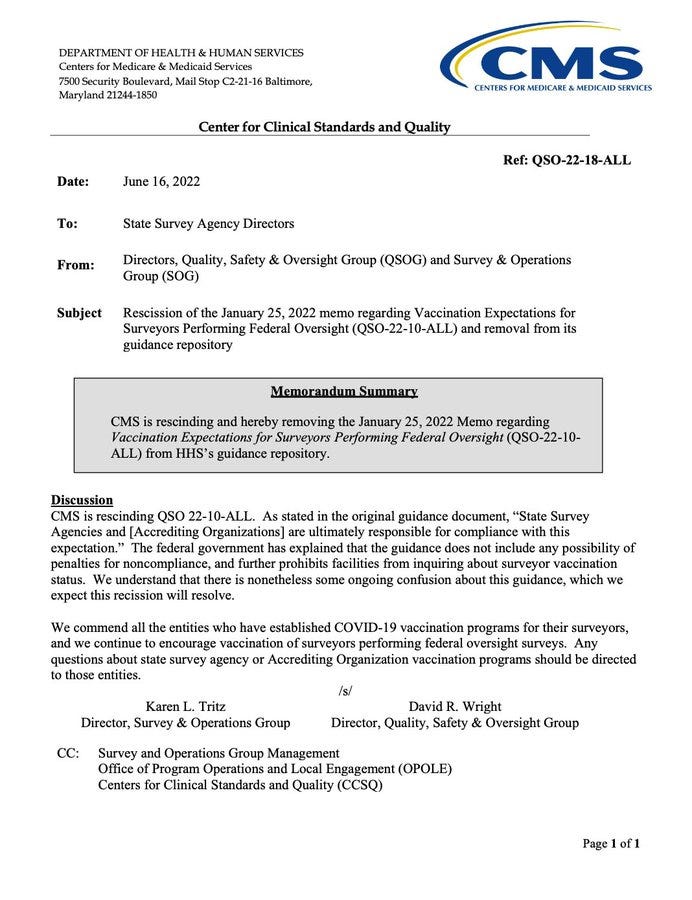
The Biden administration first announced the mandates back in August 2021, stating that healthcare and nursing home staff must be COVID-19 vaccinated or lose funding. After legal challenges, different deadlines were imposed with the final deadline occurring on 21 March 2022.
Vaccine mandate deadlines encouraged/forced (take your pick) employees to get vaccinated with uptake rising from 63% to 88% in a number of months. Doctors, nurses and staff who still decided that vaccination was not for them, lost their jobs.
In February, the CMS warned state survey agencies that they must enforce all federal health and safety requirements or lose federal financial support. Although it didn’t explicitly say so, this was widely recognised as a warning to Florida and other states that had said they would not enforce vaccine mandates. Furthermore, the CMS said they would bring in outside surveyors if states did not comply with their directives.
CMS surveyors were given the role of evaluating whether healthcare workers were complying with federal vaccine mandates. They stated that staff vaccination under 100% would constitute non-compliance. However, the extremely reasonable CMS (sarcasm) said that any facility with over 80% of its staff vaccinated would be given 60 days to reach 100% without further action being taken.
Brian Harrison, state representative of Texas and former chief of staff for the Department of Health and Human Services under the Trump administration, said in an interview with Newsmax “This shows that the Biden administration is truly authoritarian and these mandates never had anything to do with public health in the first place, but sadly and tragically, they had much more to do with giving the federal government more control over our lives. These mandates must end.”
Harrison thinks that after the CMS enforced the mandates on its own surveyors, they were unable to live under the same rules. “They couldn’t take it. So instead of taking down the mandate, which would have been the normal common sense solution, they just exempted their own government contractors instead of all the Americans.”
Rules for thee, not for me.
Von Der Leyen’s Proposal to Reduce Heating Temperature by 2 Degrees ‘Naive’, Analysts Say
Samizdat – 21.06.2022
BRUSSELS – The proposal voiced by European Commission President Ursula von der Leyen to lower domestic thermostats in Europe by 2 degrees Celsius to replace gas supplies from Russia’s Nord Stream 1 is “incredibly naive,” energy experts said on Tuesday.
On Monday, the EC head said that Europeans can replace gas supplies coming via Russia’s Nord Stream 1 pipeline by lowering the heating or air conditioner temperatures by 2 degrees, adding that the EU has comprehensive emergency plans in place, including energy savings.
Samuele Furfari, a professor of geopolitics of energy at ULB university in Brussels, believes that von der Leyen’s proposal is “ridiculous,” as a two-degree reduction in heating cannot replace energy demand of 194 million European households.
“It is incredibly naive of the President of the European Commission to present a 2-degree reduction in domestic heating, for more than 194 million households in the Europe at 27 [countries], as a solution to the end of the supply of Russian gas by Nord Stream 1. It is moreover only the capacity of Nord Stream 1 which would be ‘covered’ by this theoretical and simplistic reduction. There are other gas pipelines delivering Russian gas. She even specifies, since the commission seems to have thought about this ridiculous idea, that it would also apply to air conditioning. We navigate in a pure dream,” Furfari said.
Gas demand is inelastic, so Europe cannot lower the heating in hospitals or schools, and it is “a dream” to believe that EU residents will simply comply with von der Leyen’s proposal, which will “hit people hard” in their comfort zone, he added.
“How are we going to apply this theoretical measure seriously? By installing ‘limited’ room thermostats, such as for car or motorcycle engines? Are we being prepared for Orwell’s society? No EU government is going to accept that Brussels gives them temperature reduction instructions or face sanctions. I am not even talking about the electricity market, which does not work in Europe, with the emphasis wrongly put on pseudo-renewable energies. Obviously, the European Commission is totally stuck, and Brussels does not know what to do. There is no other solution than that of Russian gas supplies for a long time to come. We are waiting for the next ‘brilliant’ idea from the European Commission,” Furfari said.
According to the professor, 70% of the gas consumed in Europe is allocated to the production of heat, and even when Germany relaunches its coal power stations, which emit large amounts of CO2, it will be far too little to compensate for the loss of gas.
Damien Ernst, a Liege university professor in Belgium and a specialist of electromechanical engineering and energy, said that von der Leyen’s proposal shows how much the EU is “at a loss.”
“Europe will suffer terribly in terms of energy prices and scarcity. This astonishing reaction from Ursula von der Leyen is even scary, as she is so naive, and shows how much the EU is at a loss. The EU is not going to send armies of controllers to check the ambient temperature in people’s homes. At best, Europe can only carry out awareness campaigns on the need to save energy,” Ernst said.
If there is a signal that the price will become “astronomically high,” people and businesses will spontaneously reduce their consumption, causing a sharp decrease in demand and reducing the competitiveness of European producers compared to those from Asia and the US, Ernst explained.
“Europe has it all wrong,” he lamented.
AfD spokesman in the Bundestag Economic Affairs and Energy Committee Steffen Kotre, in turn, said that the EC head should advise her German colleagues to immediately open the Nord Stream 2 pipeline, instead of proposing to reduce domestic heating.
“Mrs von der Leyen, the head of the European Commission, should advise Germany to open Nord Stream 2 immediately to compensate for the loss of throughput of Nord Stream 1, and to restart German nuclear power plants for electricity production, rather than make ridiculous statements about the energy savings Europeans should make by reducing their thermostat to compensate for Europe’s misguided policy in the Ukrainian conflict. It would impose a loss of comfort to all the citizens of the union,” Kotre said.
According to the expert, the German federal government is endangering the country’s future with its “energy policy narrow-mindedness,” and the six nuclear power plants, which were shut down at the end of 2021, or scheduled to be shut down at the end of 2022, could replace a significant part of Russia’s natural gas, which is converted into electricity. To cover the rest, the phase-out of Russian gas must be halted.
“Minister [Robert] Habeck’s energy policy is driving our country against a wall,” the professor concluded.
EU Commission comments on Lithuania’s restrictions
Samizdat | June 21, 2022
The EU Commission reiterated its support for Lithuania’s decision to heavily restrict the transit of goods to Kaliningrad Region, Russia. At a regular press conference on Tuesday, European Commission chief spokesman Eric Mamer said the country has merely implemented the EU sanctions on Russia rather than imposing an economic blockade.
“We’re not talking about the Commission giving a recommendation to a country. This is a member state implementing decisions that they have taken when it comes to the sanctions against Russia. And Lithuania is basically doing what it is supposed to do under the sanctions regime,” Mamer stated, noting that the bloc’s stance was “extensively” explained by top EU diplomat Josep Borrell a day before.
Speaking at a press conference on Monday, Borrell insisted that Vilnius’ move does not constitute a blockade against the small exclave sandwiched between Poland and Lithuania, but was merely the implementation of the EU’s sanctions on Moscow, imposed over the ongoing conflict in Ukraine. On Saturday, Lithuania’s national railway operator banned the flow of sanctioned goods between the region and the rest of Russia, citing instructions from the European Commission.
“Lithuania has not taken any unilateral national restrictions. But, in accordance with European Union sanctions, there are import and export restrictions that apply in relation with certain goods, including the prohibition of transit from those goods through European Union territory. Lithuania is doing nothing else than implementing the guidelines provided by the Commission,” Borrell stated.
A similar take on the situation was given by senior Lithuanian officials. Earlier on Tuesday, Lithuanian PM Ingrida Simonyte told public broadcaster LRT that the decision was based on the sanctions imposed by the EU, and not an attempt to escalate tensions with Russia. The flow of non-sanctioned goods and passenger transit will continue uninterrupted, she said.
The Russian government labeled the move an “economic blockade” of Kaliningrad Region, saying it violates the country’s international obligations to ensure the uninterrupted transit of goods to the exclave. Kremlin spokesperson Dmitry Peskov said on Monday that Vilnius’ decision was unprecedented, and in “violation of anything and everything.”
The head of Russia’s Security Council, Nikolay Patrushev, warned that the ongoing “blockade” will trigger a response from Moscow that will “have a serious negative impact on the people of Lithuania.”
“Of course, Russia will respond to hostile actions. Appropriate measures are in the works, and will be adopted in the near future,” Patrushev told reporters during a visit to Kaliningrad on Tuesday.
Featured Video

Death Spikes & Rising Cancer In Our Youth Explained
or go to
Aletho News Archives – Video-Images
From the Archives
Politicians lie
By Mazin Qumsiyeh | Popular Resistance | August 18, 2013
There is no way to say this truth nicely: Politicians lie. That includes Japanese, American, Egyptian, Israeli, and Palestinian politicians! Is there something more common sense than that? Yet, so many citizens around the world believe their own politicians or wistfully acknowledge lies but think it is part of the job needed to run things. They believe even when politicians contradict themselves blatantly. This phenomenon is rather remarkable. It is a dissonance and disconnect from reality that many seem oblivious to. It is very dangerous because it can lead to accepting rationales for going to war. These can be deadly wars that lead to millions of lives lost as happened in what was called World War 1 and WW2. Even when incredible and declassified evidence abound, politicians continue to lie and old mythologies refuse to die. Here are just a few of the countless lies told to us over the past few decades… continue
Blog Roll
 Aletho News
- RSF military group defects, joins Sudanese army: State media
- Ireland goalkeeper refuses to play ‘Israel’ as squad weighs boycott
- China pushes back against US on Cuba, Iran
- Ukrainian Soldiers, Potential Mercenaries: Have Gun, Will Travel!
- Burnham’s UN debut… A masterclass in British disinformation
- Iran flights continue despite US aviation sanctions
- Global Tipping Points Lead the World Into a State of Entropy
- The day-after at the White House: USA and Xi Jinping
- The Geopolitical Balance in the Red Sea: The UAE Being Displaced by New Players
- Iraqi resistance group vows to stage airport sit-ins over Iran aerial blockade
- If Americans Knew
- Deconstructing Netanyahu’s pants-on-fire UN rant – Daily Update
- Trump betrayed voters with his campaign lies and prioritized a foreign country once he took office
- Netanyahu calls Israel’s war in Gaza ‘opposite of genocide’ in UN speech to near-empty hall
- Settler Kidnappings: Torture, Sexual Abuse and Terrorisation of Palestinian Abductees as Israel Deepens Annexation of West Bank
- Gaza winter nears as 162,000 tents become unusable, raising fears of humanitarian crisis
- Netanyahu says, “It’s the opposite of genocide”; UN says Gaza economy is world’s ‘most severe crisis on record’ – Daily Update
- Israel’s US-Backed Assault on Gaza Has Created the ‘World’s Most Severe Economic Crisis on Record’: UN
- ‘Protecting U.S. Citizens’… From Israel
- ‘This is where I live now, the back of a truck’: a day in the life of a grandmother in Gaza
- In UN Speech, Iran’s President Displays Pictures of Children Killed by US, Brings Attention to Israel’s Nuclear Arsenal
- No Tricks Zone
- New Study: Earth And Venus Surface Warmth Largely Explained By Convection And Lapse Rate, Not CO2 Or Radiation
- 2025 Nature Paper Claiming Worsening Global Drought Gets RETRACTED …Heavily Flawed
- New Study: ‘Global Drought Shows No Detectable Recent Acceleration Under Climate Warming’
- Economic Masterminds: German Socialists Suggest Taxing Productivity Gains Stemming From Using AI
- The South China Sea Has Not Been Cooperating With The Climate Change Narrative
- Energy Crisis: Germany Enters Heating Season With Historically Low Gas Reserve Fill Levels
- New Study: The Antarctic Ice Sheet Gained Mass From 2020-2024 Due To Staggering Snow And Ice Accumulation
- Study: Ocean Heating Rates From Thousands Of Years Ago ‘Dwarf’ Modern Ocean Heating Rates
- Climate Extremists Target, Attack Large-Scale Power Grid Infrastructure In Germany!
- New Study: Antarctic Ice Melt Has Contributed Less Than 1 Centimeter To Sea Level Rise In The Last 30 Years

