THE World Health Organisation’s Global Vaccine Action Plan (GVAP) was developed to help GAVI (the Global Alliance for Vaccines and Immunisation) achieve its ‘decade of vaccines’ from 2010, helping ‘all individuals and communities enjoy lives free from vaccine-preventable diseases’.
All countries were to make immunisation a strategic priority, requiring more surveillance to ‘strengthen national capacity to formulate evidence-based policies’. There was no aversion to financially incentivising either individuals or healthcare workers to encourage vaccination, despite the potential for conflict of interest.
The primary success metric in the GVAP was that by 2020 there should be at least 90 per cent national vaccination coverage ‘with at least 80 per cent vaccination coverage in every administrative unit for all vaccines in the national immunisation programme’ for the target populations.
Immunisation Information Systems (IIS), national registries to record the who, what and when of vaccination, were established.
The European Centre for Disease Control (ECDC) led a scoping exercise for this in 2016. Systems which would be interoperable with other databases were to be formulated with ‘a heavy design emphasis on generating evidence to support decisions that need to be made at the population level’.
Vaccination coverage is mentioned 81 times in the ECDC report, twice as many times as vaccine safety. The ECDC claims that ‘IIS can help mitigate potential rumours and unfounded concerns through the provision of evidence, including on adverse events following immunisation’.
That may be so, but the only safety signal likely to emerge from an IIS is evidence of secondary vaccine failure – that is, breakthrough disease outbreaks amongst those inoculated against a given disease, requiring a booster vaccination campaign.
The IIS do not exist for safety monitoring (the technical term for which is pharmacovigilance) of the vaccines once they are deployed on the population at large. Pharmacovigilance is the remit of the regulators who license them, not of the public health authorities who monitor vaccination coverage.
In fact, only seven European countries record adverse events to vaccines in their IIS. The UK is not amongst them. Of the seven that do, only Sweden automatically reports them to the regulator who has the power to withdraw unsafe products from use.
Dr David Sencer is the former director of the US government agency the Centres for Disease Control and Prevention (CDC), who lost his job after America’s ill-fated 1976 swine flu vaccination campaign.
He has pointed out that some adverse effects from vaccines become apparent only once the clinical trials conclude and after the vaccine is administered to very large numbers of people.
Sencer’s swine flu program had an active surveillance system for adverse events which he later called a trojan horse as the scale of death and injury led to the vaccination campaign being terminated after three months. Having indemnified the manufacturers because their insurers balked at covering them, the US government paid $135m for swine flu vaccines and an additional $90m in compensation for death or injury – almost as much in compensation over the swine flu vaccine programme as it did rolling it out.
The size of the US government’s 1976 compensation bill perhaps explains why no pharmaceutical regulator in the world has a system that actively monitors for post authorisation adverse events. Instead all regulators rely on passive surveillance through voluntary reports to systems like the Yellow Card system operated by the Medicines and Health Care Products Regulatory Authority (MHRA) in the UK.
A vaccine is deemed safe if it passes Phase 1 clinical trials without any ‘unscheduled’ animal deaths or untimely deaths of human subjects and effective if it passes Phase 2 clinical trials.
Products such as the ill-fated Pandemrix flu vaccine – hit by adverse effects in 2009 – may on occasion be withdrawn after licensing. But as a rule, regulators make no active effort to protect consumers at large that might necessitate a product being withdrawn once it is in use.
To facilitate GAVI’s efforts to monitor vaccination coverage rates reliably, the GVAP asks for each individual to be assigned a unique identification number so that the respective health authority can ensure everyone gets every vaccine in ‘time-monitored’ adherence with the vaccine schedules.
In 2013, the Bill and Melinda Gates Foundation (BMGF) funded a fingerprint identification system to track vaccinated children in Africa. GAVI, the Rockefeller Foundation and Microsoft subsequently formed the ID2020 alliance in 2016 to promote the global need for secure digital identity.
‘We are currently in the middle of a global identity crisis: Tens of millions of children – especially those living in most remote, impoverished communities – have no formal record of their existence,’ said Dr Seth Berkley, associate director of health sciences at the Rockefeller Foundation, and one of the instigators of GAVI.
‘That represents an enormous impediment to GAVI’s mission of ensuring that every child worldwide receives the essential vaccines they need to survive and thrive.’
He said the pacesetters of GAVI’s initiative called INFUSE (Uptake, Scale and Equity in Immunisation) ‘are on the cutting edge of technologies that might help us overcome that challenge’.
Covid-19 has presented another opportunity to fulfil GAVI’s vaccination monitoring mission. Dr Rebecca Weintraub, a board member of Simprints, one of the companies working with it to develop biometric identification solutions for immunisation registries, said: ‘We have a narrow opportunity to set the stage for such fair and sustainable infrastructure across the globe. If done well, we can ensure the promise of the Covid-19 vaccine portfolio leads to future widespread vaccination – and protection – for global populations.’ https://gatesopenresearch.org/articles/4-182/v2
However, biometric identification for developing immunisation registries is beginning to morph into something else. The Ada Lovelace Institute, which was set up by partners including the Wellcome Trust in 2018 to ‘ensure that data and AI work for people and society’, calls vaccine passports and Covid status apps ‘systems for verifiably sharing private health data relevant to Covid-19 which could be used to stream society and impose differential lockdown restrictions.
‘This might mean limiting individual access to work, insurance, hospitality and leisure, and other parts of life, based on an individual’s health or risk of Covid-19 infection or transmission.’ In other words, universal vaccination means universal control.
Covid-19 may have brought these passports to public attention, but the idea is not new. In December 2017, the European Commission published a Roadmap on Vaccination.
The first action on the roadmap is to ‘examine the feasibility of developing a common vaccination card/passport for EU citizens (that takes into account potentially different national vaccination schedules and) that is compatible with electronic immunisation information systems and recognised for use across borders, without duplicating work at national level.’
In 2018, the European Health Parliament, a lobby organisation that develops health policy recommendations to ‘rethink European health care’ and whose sponsors include Johnson & Johnson and Pfizer, recommended that electronic vaccination passports be established in order to ‘ensure people know and act in their best interests on vaccination’.
The very day the MHRA authorised the use of the Pfizer-BioNTech vaccine, the WHO put out a call for experts to develop a so-called Smart Vaccine Certificate programme.
Pharmaceutical revenue growth has been stimulated not only by measures to increase inoculation coverage, but by raising the number of vaccines put on national immunisation schedules.
The ‘child survival revolution’ promoted by the United Nations agency UNICEF began in 1982 with six vaccines. At the time of the first GAVI board meeting in 1999, there were 11 routinely recommended vaccines on the US national immunisation schedule.
GAVI immediately identified a vaccine gap that the developing world needed to close, and its ambition is for immunisation schedules around the world to mirror that of the US.
The goalposts keep moving. When it was updated again in 2013, the US immunisation schedule comprised a total of 52 injections of 17 different vaccines over the course of a person’s lifetime.
Gone are the days when the promise made to parents was that with a single injection their children could avoid infections and be protected for life. The number of boosters continues to increase and now includes a recommendation for adults to have an additional measles, mumps and rubella (MMR) vaccine.
A footnote to the MMR recommendation says: ‘Documentation of (healthcare) provider-diagnosed disease is not considered acceptable evidence of immunity for measles, mumps or rubella.’
The very idea that someone might have acquired lifelong immunity after recovering from an infectious disease is now anathema, unless proven by a laboratory test.
The current UK immunisation schedule is marginally more conservative, both in terms of the total number of vaccines recommended and the number of doses. The most recently updated version, as of November 23, 2021, appeared on the website of the Oxford Vaccine Knowledge Project.
It recommends only three vaccines for adults – flu, pneumococcal and shingles. The three are recommended by Public Health England only for over-65s, or 70 in the case of the shingles vaccine. Despite the controversial mandate for NHS staff to have the Covid-19 vaccine – now withdrawn – the jab is not listed on the schedule.
The Oxford Vaccine Knowledge Project’s medical information is reviewed by Professor Andrew Pollard, chair of the UK’s Joint Committee on Vaccination and Immunisation, and a member of the WHO’s Scientific Advisory Group of Experts Committee.
February 10, 2022
Posted by aletho |
Civil Liberties, Deception, Science and Pseudo-Science | GAVI |
Leave a comment
In an article published Feb. 7, The Exposé reported Pfizer’s COVID-19 vaccine “increases children’s risk of death 5100%,” based on data recorded by the UK’s Office for National Statistics (ONS).
The ONS is the UK’s largest independent producer of official statistics that include COVID vaccine uptake and mortality by age group.
The ONS data cited by The Exposé is found in table 9 of the dataset, labeled “Deaths occurring between 1 January 2021 and 31 October 2021 edition of this dataset.” It can be downloaded directly from the ONS website here.
The Exposé accurately plotted some of the ONS data in its article:
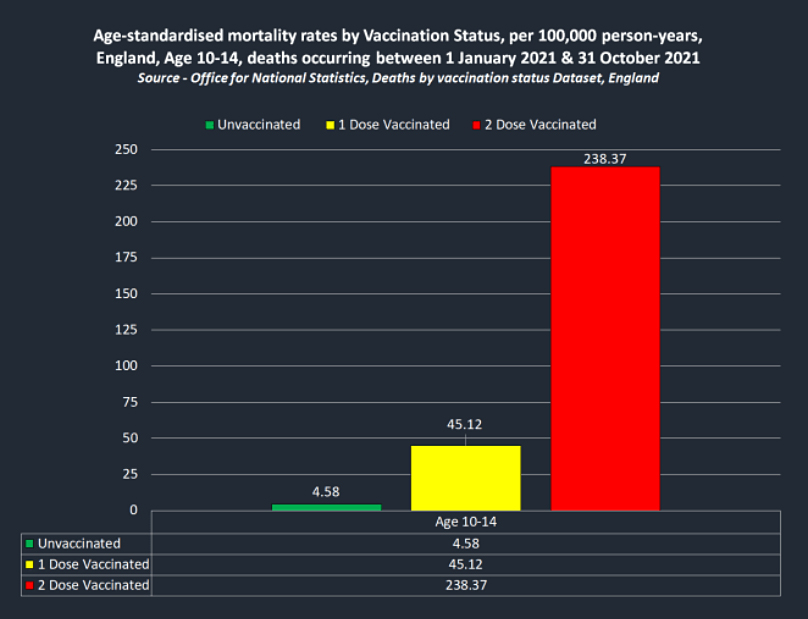
Figure 1. Mortality rates by vaccination status (ages 10-14)
As the above table shows, the all-cause mortality rate in the doubly vaccinated is in fact 238.7/4.58 = 52 times larger, or 5,100% higher than in the unvaccinated.
However, before drawing any conclusions it is imperative to examine the actual ONS data more closely.
First, we must consider the total number of deaths in each population. There were 96 total deaths among nearly 2.1 million unvaccinated children in the 10- to 14-year-old age group compared to four deaths among 1,678 children in that age group who had received their second dose 21 days or more prior to their demise.
Children who received only one dose or who were inside the 21-day window were not included in the subgroup with the highest mortality.
The Exposé chose to compare the most extreme subset of the vaccinated to support its provocative headline. Moreover, although the specific cause of death is not given (the ONS only separates cause of death into COVID or non-COVID-related), none of the four deaths were related to COVID.
This poses important questions. What if the four perished in an automobile accident? What if they were all suffering from a debilitating chronic condition that led to a predictable fatality?
We arrive at a major confounder: These two populations of children are not necessarily matched.
It is likely parents with children with significant comorbidities would have more readily sought the vaccine for their kids compared to parents with healthy children.
According to actuarial tables from the U.S. Social Security Administration, the risk of death in a 10- to 14-year-old is about 1 to 1.7 in 10,000 in a given year.
These numbers are 2 to 4 times higher than the mortality rate in the unvaccinated group in the ONS dataset, further indicating that this group is healthier than the average.
Nevertheless, taking all children who had received at least one dose of the vaccine as a whole, we find that 11 deaths occurred in 27,359 person-years. This mortality rate is still significantly higher (nearly 9 times) than the unvaccinated.
Based on the Fisher Exact Test — a standard statistical test used to determine if the proportions of categories in two group variables significantly differ from each other — there is less than a 1 in 100,000 probability this difference could have happened at random.

What do ONS data reveal about vaccine effectiveness?
As stated above, though a large difference in mortality between the vaccinated and unvaccinated exists, it is impossible, based on ONS data, to come to any definitive conclusions about the safety of these vaccines because of the mismatched cohorts and the small number of unclassified deaths in one of the groups.
Let us now examine what this data may tell us about the effectiveness of the shots. How good are the vaccines at preventing deaths from COVID in this age group?
There were two COVID deaths in 2,121,963 unvaccinated person-years. There were also two COVID deaths in 27,359 vaccinated person-years.
This means the vaccine effectiveness (VE) = -7,557%. This is because the unvaccinated group is 76.57 times larger and had the same number of deaths due to COVID.
However, the deaths in the vaccinated group occurred before the child had received a second dose.
By Pfizer’s methodology, blessed by the U.S. Food and Drug Administration (FDA), its product is 100% effective. This is a direct result of only counting deaths 14 days after the second dose.
With “zero” deaths in the vaccinated and two in the unvaccinated, the vaccine is 100% effective in preventing death from COVID.
On the other hand, if we compare the two groups of adolescents aged 15-19, we find that there was one COVID death in the 127,842 person-years of the fully vaccinated group and 18 in the 1,587,072 person-years of the unvaccinated group. This results in a calculated vaccine effectiveness of only 31%.
Where does that leave us?
The ONS data give us much to be concerned about. There seems to be an undeniable safety signal emerging from England which must be monitored closely over time.
Strangely enough, the subsequent data set from the ONS, which includes data through the end of December 2021, conspicuously excludes children in these age groups.
Where else, then, can we look? The Centers for Disease Control and Prevention has chosen not to report on deaths by vaccination status in this age group.
We are in the same predicament that Pfizer’s severely flawed and underpowered pediatric trial left us in. With fewer than 2,200 children involved and only 1,450 receiving the vaccine, the trial did not answer any questions about safety or efficacy.
Dr. Eric Rubin, editor-in-chief of the New England Journal of Medicine and member of the FDA’s vaccine advisory panel, acknowledged the trial did not offer any information by succinctly and notoriously stating during an FDA hearing, “We are never going to learn how safe this vaccine is until we start giving it. That’s just the way it is.”
Rubin is not completely correct. We could learn how safe this vaccine is if he and his fellow advisory panel members demanded that a properly powered and designed trial were conducted prior to deploying the vaccine to tens of millions of children.
In any case, we have started giving it. When will we learn how safe this vaccine is?
More importantly, what should we do in the meantime? Pause childhood vaccinations until data can be collected and deaths investigated?
Or carry on while testing it on infants 6 months of age and older?
© 2022 Children’s Health Defense, Inc. This work is reproduced and distributed with the permission of Children’s Health Defense, Inc. Want to learn more from Children’s Health Defense? Sign up for free news and updates from Robert F. Kennedy, Jr. and the Children’s Health Defense. Your donation will help to support us in our efforts.
February 10, 2022
Posted by aletho |
Science and Pseudo-Science, War Crimes | COVID-19 Vaccine |
Leave a comment
Elon Musk’s brain-chip company Neuralink has caused horrific damage to test monkeys, according to a complaint filed by the Physicians Committee for Responsible Medicine (PCRM) on Thursday and seen by the New York Post. The complaint, filed with the US Department of Agriculture (USDA), concerns Neuralink testing on the monkeys carried out at the University of California at Davis from 2017 to 2020.
The group has accused Neuralink and its host university of nine violations of the US federal Animal Welfare Act, noting in their complaint that “many, if not all, of the monkeys experienced extreme suffering as a result of inadequate animal care and the highly invasive head implants during the experiments.” It reportedly goes on to claim that the Neuralink implant procedure “produced recurring infections in the animals, significantly compromising their health, as well as the integrity of the research.”
They have also sued UC Davis to obtain more photos, videos, and information about the test monkeys, saying that the only such material that has been made public has been heavily curated by Musk’s company, showing a healthy-looking monkey playing a video game, supposedly with its mind. The university has denied any wrongdoing.
Aside from publicizing the clip of the monkey gamer, Musk has remained silent about the results of the animal Neuralink trials. In December, he suggested human trials will begin this year, and even went so far as to post a job listing seeking a clinical trials director last month. However, the project has experienced delays before – Musk declared last March that human trials would begin within months, even though the Tesla tycoon has yet to move beyond pigs and (non-human) primates.
While it’s not clear if the suffering the monkeys allegedly experienced is related to the delay in entering the human test phase, the degree of trauma cited in the complaint suggests Musk and his researchers may have to make some design improvements before testing their invention on humans.
One monkey reportedly described in the complaint was found missing extremities “possibly from self-mutilation or other unspecified trauma,” and was later killed during a “terminal procedure.” Another monkey had holes drilled in its skull in order to implant the Neuralink electrodes directly into its brain – only to develop a “bloody skin infection” and be put down. And a third appeared to survive the electrode implantation, only to be overcome with “vomiting, retching and gasping.” Days later, it allegedly “appeared to collapse from exhaustion/fatigue” and finally died, revealing it had suffered a brain hemorrhage.
The primates described by the Post were just three of the 15 experimental subjects – out of 23 test monkeys in total – that died or were euthanized during the three year period covered by the complaint.
Musk initially sold the idea of Neuralink as a brain-boosting implant to help humanity keep pace with the development of artificial intelligence, warning that otherwise we would be relegated to the status of “house cats” ruled by computers.
However, he has more recently scaled back that rhetoric, claiming that its primary use will be to help paralyzed people and others with brain injuries improve their quality of life.
He hasn’t stopped touting the ease with which a Neuralink can supposedly be implanted into the user’s brain, however, insisting it can be done in an hour without general anesthesia. He also described a future where Neuralink implanting centers are as ubiquitous as ear-piercing kiosks were in American malls.
February 10, 2022
Posted by aletho |
Science and Pseudo-Science, Timeless or most popular | United States |
Leave a comment
By Lucas Leiroz | February 10, 2022
Another European country appears to be taking different paths from NATO’s central plans. In a recent official statement, the Hungarian foreign minister stated that his country will not allow the arrival of more NATO troops on its territory. The case demonstrates further evidence of the crisis in the legitimacy of the anti-Russian discourse of the Western alliance, which is increasingly convincing fewer people.
Peter Szijjarto, Hungarian foreign minister, during an interview to Euronews on February 9, stated that Hungary is unwilling to receive NATO troops on its territory in the midst of the current Ukrainian crisis. For him, the Hungarian armed forces are sufficiently well prepared and equipped to deal with any threat of war in the region, so there is no need to import more foreign troops.
These were some of his words: “No, we have not agreed to that and we will not agree because we have already NATO’s troops on the territory of the country, which is the Hungarian army and the Hungarian armed forces, [they] are in the proper shape to guarantee the security of the country. So we don’t need additional troops on the territory of Hungary”. Szijjarto also commented that the current Ukrainian situation recalls the Cold War times, which were “many decades where we [the Hungarian people] suffered (…) That’s why we don’t want these times to come back. We ask, we urge the international community to do its best in order to avoid the Cold War to return, avoid even the psyche of the Cold War to return because we learned it from history, unfortunately have very clearly, that whenever there is an East-West conflict , the countries of Central Europe lose and we don’t want to be losers anymore”.
In addition to ruling out the possibility of receiving troops and taking a stance against a “new cold war”, the minister also expressed skepticism about the efficiency of the implementation of coercive measures against Moscow: “If you look at the sanctions themselves, it’s a failure. They don’t work out. They are unsuccessful. Trade between Germany and the Russian Federation has increased since the sanctions have been in place. (…) We have to invest in diplomacy, we have to invest in dialogue. That’s why we urge the Russian Federation and our Western allies, the big countries, the strong countries, not to give up hope of peaceful settlement, to the contrary, to talk to each other because once again, I want to underline that for us, rather small Central European countries, it can be extremely dangerous if violent action take place”.
Szijjarto’s speech comes as a Hungarian response to recent American pressure for all European countries to accept that new NATO troops are deployed on their territories. Earlier, US Defense Department spokesman John Kirby said Washington would send a new group of troops to Europe, including a squad of about 1,000 men to Romania, a country that borders Hungary and already has more than 900 American soldiers installed. On February 8, the first soldiers of the new American squadron for Romania arrived in Bucharest, which increased pressure during this week for Budapest to give a definitive answer on the reception of the troops, but the Hungarian government seems really willing not to follow the trends in neighboring nations.
In fact, this kind of attitude is being taken simply because Budapest no longer believes in the existence of a Russian invasion plan. And it is very likely that other European governments will soon abandon this narrative as well. This is a natural consequence of the recent events. NATO has been talking about such an invasion for a long time, but it never happened and is unlikely to happen, so there is no reason to accept that European countries are passively filled with thousands of American soldiers. There is no threat to justify this.
Furthermore, regarding the opinion against sanctions and in favor of bilateral dialogue, we can see that the Hungarian government is forming a solid pro-diplomacy stance. This position is a consequence of the friendly ties that Viktor Orban has been trying to develop in recent times – which is why he suffers so much criticism within the European Union. In early February, the prime minister visited Moscow and spoke with Putin on various strategic topics in bilateral relations, including security issues in Europe, gas trade, among others. In the West, Orban’s attitude has been seen with criticism due to the moment of tensions, but it was an opportunity to make it clear that the Hungarian position is anti-war, anti-sanctions and pro-diplomacy one. Now, Szijjarto’s words corroborate this thesis.
It is possible that it will take time, but at some point other European countries will start to take the same attitude as Hungary. There is no possibility that the narrative about “Russian invasion” will endure, considering that it is unsubstantiated and fallacious. If there is no threat of war, there will be no reason for these governments to want their territories occupied by foreign troops and this will inevitably generate a NATO retreat in Europe.
Lucas Leiroz is a researcher in Social Sciences at the Rural Federal University of Rio de Janeiro; geopolitical consultant.
February 10, 2022
Posted by aletho |
Economics, Militarism | Hungary, NATO, Ukraine, United States |
Leave a comment
Police will keep the Canada-inspired trucker demonstration out of the Belgian capital, its mayor says
Brussels Mayor Philippe Close announced on Thursday that a protest convoy of truckers will be barred from entering the city. Inspired by an ongoing demonstration against vaccine mandates in Canada, the truckers are set to reach the Belgian capital early next week.
“We have taken the decision to ban the ‘Freedom Convoy’ which has not been authorized to demonstrate because no request has been sent,” Close wrote on Twitter, noting that he made the decision along with Interior Minister Annelies Verlinden and Brussels region Minister President Rudi Vervoort.
Local and federal police “will divert motorized vehicles coming towards the capital despite the ban,” Close added.
Drawing participants from across the continent, the protest is inspired by a similar demonstration in the Canadian capital of Ottawa. Traffic in parts of Ottawa has been brought to a standstill for nearly two weeks by truckers demanding the immediate lifting of Covid restrictions, including a mandate that requires them to be vaccinated to re-enter the country from the US.
As host to key EU institutions, Brussels is a natural focal point for the European protest. While individual nations in the bloc have begun rolling back their vaccine pass systems at home, vaccination or proof of a negative Covid test is required to cross national borders within the union, and the EU recently proposed extending this system until 2023.
Truckers en route to Brussels have planned some stops along the way, with a major protest set to hit Paris this weekend. Authorities in the French capital issued a similar ban on Thursday, and threatened protesters with stiff fines should they block traffic in the city. Paris police said that a “specific device” would be used by the authorities to prevent the convoy from entering the city.
February 10, 2022
Posted by aletho |
Civil Liberties | Brussels, COVID-19 Vaccine, European Union, France, Human rights |
Leave a comment
Comedian Heather McDonald, 51, has posted a video showing her collapsing mid-set during a stand-up routine in Tempe, Arizona earlier this week.
In the video McDonald collapses just moments after saying she is vaccinated, boosted, and still has her period, proclaiming that she still hasn’t contracted Covid and that “clearly, Jesus loves me the most. Seriously. So nice, so nice.” The next moment she stumbles, rolls her eyes and falls unconscious, hitting her head on the stage floor. The audience can be heard laughing as apparently everyone assumed it was all part of the act.
Her sister had her rushed to the hospital, where it was revealed she had fractured her skull. The reason for her collapse is still unknown, but her publicist has stated that it may have been “because of dehydration.” … Full article
The family of Bob Saget has revealed the comedian died of “head trauma” in his Florida hotel room
RT | February 10, 2022
Comedian Bob Saget’s death last month was caused by “head trauma” sustained in his Florida hotel room, according to a statement released by his family that shared the conclusion from the medical examiner’s office investigation into the passing of the ‘Full House’ star.
“Now that we have the final conclusions from the authorities’ investigation, we felt it only proper that the fans hear those conclusions directly from us,” the statement said. “The authorities have determined that Bob passed from head trauma. They have concluded that he accidentally hit the back of his head on something, thought nothing of it and went to sleep.” … Full article
February 10, 2022
Posted by aletho |
Timeless or most popular, War Crimes | COVID-19 Vaccine, United States |
Leave a comment
In the two weeks since the Freedom Convoy of Canadian truckers and their supporters began rallying in Ottawa to demand an end to all pandemic-related mandates and restrictions nationwide, it has become clear that this movement isn’t like other protest movements. And that’s a scary proposition for those in charge who thought that they’d manage and exploit this crisis on their own sweet time and schedule regardless of the actual science and reality on the ground.
There has long been an agenda to corral as many humans as possible unwittingly into a global dragnet through technological adoption. That’s what the revelations of National Security Agency whistleblower Edward Snowden were about back in 2013. A technological panopticon provides those in charge with the ability to monitor and ultimately control or sanction dissidents or outliers as the state pursues the self-serving agenda of a select few. Algorithms that exploit this massive online presence enable the state to accurately craft propaganda to be deployed to vilify them in the eyes of the general population, while portraying the state as the great protector — all while selling citizens out to the interests of a select few elites. Essentially, people are manipulated into arguing against their own good.
For those citizens who aren’t seduced by the mere convenience of technology or the narcissistic allure of social media, the fear of terrorism or of Covid-19 more actively encouraged onboarding to these dragnets. And that was before it was flat-out mandated with government-issued QR code health and vaccine passes that linked directly to your identity.
But then a bunch of truckers noticed that the threat of authoritarianism in Canada and elsewhere was closer than it may appear in their mirrors. And these essential workers decided to park their essential tools until officials stopped treating essential freedoms like they were negotiable.
Because Canadian mainstream media is so severely lacking in truly contradictory debate and diversity of thought, the protests risked sparking an unprecedented new awareness for those who had been force-fed government talking points while they may have already been starting to wonder why their entourage was triple-jabbed and still catching the virus. They were probably beginning to question the real value of the sacrifices that they were forced by government into making over the past two years under the illusion of safety.
Into this mix comes a group of people who aren’t paid activists or troublemakers, but rather everyday people with real jobs — and ‘essential’ ones at that, as previously hailed by the governments themselves. This makes the truckers a different breed of dissenters from Black Lives Matters, Antifa, or French Yellow Vest protesters. And that explains why the rhetorical big guns are now being deployed against them. The truckers, by demanding that life go back to exactly the way it was before governments started instrumentalizing the pandemic, could undermine any agenda to exploit the crisis for globalist advancement. This would especially be the case if the Freedom Convoy movement spread around the world, as it’s beginning to do. Here in France, for example, convoys departing from various cities are reportedly scheduled to arrive in Paris beginning on February 11.
Former Bank of Canada and Bank of England governor, Mark Carney, a dual citizen of Ottawa and Globalistan, wrote in a recent Globe and Mail newspaper opinion piece: “[B)y now anyone sending money to the convoy should be in no doubt: You are funding sedition. Foreign funders of an insurrection interfered in our domestic affairs from the start. Canadian authorities should take every step within the law to identify and thoroughly punish them. The involvement of foreign governments and any officials connected to them should be identified, exposed and addressed.”
Unlike previous environmental protests that have raged in Canada to the detriment of the country’s future energy independence, and been backed by US-based think-tanks funded by American business interests close to Washington elites — all of which have apparently escaped Carney’s attention or interest — truckers don’t actually require ‘foreign funding’. They have actual jobs that pay quite well.
You’d think he’d know that, given his illustrious background as an expert in money. But good luck trying to exploit the ‘foreign bogeyman’ trope and attempting to find the scapegoat that you’re looking for. Carney is concerned about the ‘occupation’ by protesters, who are merely fighting against the government blockade of citizens’ lives for the past two years. And a bonus L-O-L for his effort to portray protests to regain basic freedoms as some kind of attempt to overthrow the government of Canada. Perhaps someone could provide him with a paper bag before he passes out?
Here’s your ground truth in Ottawa: “More than 100 Highway Traffic Act and other ‘Provincial Offence Notices’ were issued for offenses including excessive honking, driving the wrong way, defective muffler, no seat belt, alcohol readily available and having the improper class of driving license,” according to a Fox News report.
Well, you know what they say. Every hardcore coup d’état starts with a seat belt offense, right?
Meanwhile, US Homeland Security, already apparently attempting to ward off any potential future pushback against its own unpopular agenda, issued an advisory on February 7 conflating terrorism with “the proliferation of false or misleading narratives, which sow discord or undermine public trust in U.S. government institutions.” Would that include dissent against any government-approved narrative around the pandemic and related liberticidal measures?
Restrictions, mandates, and ‘vaccine passports’ in two Canadian provinces — Alberta and Saskatchewan — are now ending, premiers of both jurisdictions announced on February 7.
The rest of the world now runs the risk of these trucker movements gaining momentum, before the restrictions and mandates can allow for the full implementation of a lasting solution of tracking and surveillance capable of monitoring populist blowback to government insanity.
The rally race between truckers and globalists is on! And with nothing less than democracy and freedom at stake.
Rachel Marsden is a columnist, political strategist and host of an independently produced French-language program that airs on Sputnik France.
February 10, 2022
Posted by aletho |
Civil Liberties, Full Spectrum Dominance, Malthusian Ideology, Phony Scarcity, Russophobia | Canada, Covid-19, COVID-19 Vaccine, Human rights |
Leave a comment
The New York Times reports on the growth of ‘climate therapy’ for leftists suffering from ‘eco-anxiety’, including people who are having panic attacks over perceived environmental catastrophes and their friends going on holiday.
In an article titled ‘Climate Change Enters the Therapy Room’, the newspaper reports, “Eco-anxiety, a concept introduced by young activists, has entered a mainstream vocabulary. And professional organizations are hurrying to catch up. Though there is little empirical data on effective treatments, the field is expanding swiftly.”
According to Portland psychologist Dr. Thomas J. Doherty, who has built an entire practice catering for the treatment of climate anxiety, people are being triggered into mental breakdowns by things as simple as their friends discussing future vacations.
“An 18-year-old student who sometimes experiences panic attacks so severe that she can’t get out of bed; a 69-year-old glacial geologist who is sometimes overwhelmed with sadness when he looks at his grandchildren; a man in his 50s who erupts in frustration over his friends’ consumption choices, unable to tolerate their chatter about vacations in Tuscany,” states the report.
Instead of accurately describing this for what it is, hysterical nonsense based on the maniacal delusion that the earth is dying, the NYT describes such therapy as “rational.”
Surveys show that people who hold left-wing beliefs are more likely to suffer from a mental health condition.
A major contributing factor to this is undoubtedly their gullibility in believing all the contrived global crises and neurotic moral panics relentlessly spoon fed to them by the legacy media.
“Rather than help these people by shattering their delusions, the Times is encouraging their mental illness for political gain,” notes Chris Menahan.
No doubt the mass hysteria generated by COVID-19 will also be weaponized in future to amplify calls for climate lockdowns in the name of saving the planet.
February 10, 2022
Posted by aletho |
Progressive Hypocrite, Science and Pseudo-Science, Timeless or most popular | New York Times |
Leave a comment
 From the 1950s through the 1980s the CIA overthrew democratically elected governments and assassinated leaders in the U.S. and around the world in the name of fighting communism.
After the fall of communism, the CIA pivoted to fighting terrorism. After 9/11 their mission expanded considerably to include a global network of black sites where they conducted torture. They also engage in covert military operations on the ground inside a wide range of countries.
More recently, the CIA has expanded their mission yet again. We have evidence of coordination between the U.S. Department of Defense, Fauci, the EcoHealth Alliance, bioweapons labs in the U.S., and the Wuhan Institute of Virology (a Chinese bioweapons lab) to conduct gain-of-function research. This has all of the hallmarks of a CIA operation.
One could make the case that the CIA is now fighting viruses/pandemics in the name of national defense. But this effort CREATED the chimera virus that has killed more Americans than all foreign wars combined. Since the chimera virus was released, governments across the developed world, Pharma, and Big Tech have all worked together to control the message, surveil and censor the population, and smash any dissent. Again this reeks of CIA involvement.
So my question is, who/what exactly is the CIA fighting these days? My hunch is that the answer is us. Not just the medical freedom movement (although we are certainly targeted) but the general public. This seems like a class war and the CIA’s new mission is not to defend the U.S. per se but rather to defend the global ruling class from the peasants who might overthrow them.
February 10, 2022
Posted by aletho |
Militarism, Timeless or most popular, War Crimes | CIA, Covid-19, United States |
Leave a comment
South Koreans go to the polls on March 9 to elect a new president, who will assume office two months later. At a time when U.S.-North Korean relations are at an impasse, and the Biden administration is building an aggressive anti-China alliance, much may rest on the outcome.
The two candidates, who are currently running neck-and-neck in opinion polls, present a stark contrast. Lee Jae-myung of the ruling Democratic Party advocates South Korea taking the lead on inter-Korean relations, in contrast to President Moon Jae-in’s unwillingness to adopt any measure that would elicit Washington’s disapproval. “In succeeding the Moon Jae-in administration, the Lee Jae-myung government should act as a more independent and active mediator and problem solver,” Lee announced late last year. [1] That will come as a welcome change in direction if it comes to fruition.
Lee is also disinclined to accede to U.S. demands to join the anti-China campaign, questioning why South Korea should be forced to choose between China, its leading trading partner, and the U.S., with whom it has a military alliance. “I think the situation is coming where we can make decisions independently, putting our national interests first. Any thinking that we have to choose between the two is a very disgraceful approach,” Lee argues. [2]
If Lee is serious about changing course, he will be steering into strong headwinds. South Korea is such a politically polarized society that Lee cannot count on broad-based domestic support. Furthermore, his party will need to win a substantial majority in the National Assembly for Lee to adopt a more independent policy. In addition, the nation’s security and military establishments are hardly likely to countenance a change in the relationship with Washington. The United States, for its part, has an arsenal of economic and diplomatic weapons at its disposal to keep a wayward nation in line. Only time will tell if Lee has the inclination and determination to try and overcome such obstacles.
Lee’s conservative opponent, Yoon Seok-youl of the inaptly-named People Power Party, takes a hardline position on the Democratic People’s Republic of Korea (DPRK – the official name for North Korea), including talking about the option of launching a preemptive strike. [3] Yoon also prioritizes the military alliance with the United States and favors joining Washington’s “global coalition” confronting China. [4] “The U.S. is our ally,” Yoon asserts, “while China is a partner. And a partnership is based on mutual respect. China is North Korea’s key ally. Isn’t North Korea our main enemy? We cannot make an alliance with a country that is allied with our main enemy.” [5]
It is no mystery which candidate the Biden administration would prefer to deal with. Yoon’s stated policies align perfectly with those of Washington.
President Moon Jae-in missed opportunities to improve inter-Korean relations by continually deferring to the United States. In regard to reducing U.S.-DPRK tensions, Moon advocates an end-of-war declaration. Combat in the Korean War came to a halt in 1953 with an armistice agreement, so technically speaking, a state of war still exists. Moon regards that unfinished business as a destabilizing situation that can be resolved by all parties signing an end-of-war declaration to “mark a pivotal point of departure,” which would lead to “irreversible progress in denuclearization and usher in an era of complete peace.” [6]
South Korean officials have been engaged in talks with their counterparts in the United States, China, and North Korea on the subject of a peace declaration for some time now. Moon believes “in principle” that “everybody agrees to the declaration,” although he noted that the DPRK needs to see the U.S. withdraw its hostile policy. [7] In other words, no party has explicitly rejected the proposal outright, although South Korea has yet to come to an agreement with the United States on its wording.
According to Moon, “If North Korea takes certain measures, the end-of-war declaration would be a political statement that would announce that the longstanding hostile relations between Pyongyang and Washington had ended.” [8] Note that action is required from only one side, while no change in behavior is asked of the United States.
Moon has also stated that an end-of-war declaration would be “the starting point to discuss the peace treaty.” [9]However, a peace treaty is a nonstarter in the current U.S. political environment, as it would require approval by a two-thirds majority in the Senate and ratification by President Biden.
The protracted wrangling over the declaration’s wording suggests that American officials have taken note of Yoon’s strong showing in the South Korean opinion polls and concluded that they need only drag their feet until getting a partner more to their liking. At the very least, it indicates that the Biden administration is intensely focused on wordsmithing to ensure that nothing in the final draft of a peace declaration could be misconstrued to suggest that anything should change.
Too much can be made of the claim that a technical state of war is automatically destabilizing. Failure to sign a peace treaty is not a unique historical phenomenon. In a more recent example, the Soviet Union and Japan never signed a peace treaty after World War II. However, a peace declaration was agreed to in 1956 as an interim measure. Technically, then, Russia and Japan remain in a state of war yet are hardly likely to engage in combat. Talks are currently underway regarding a peace treaty. [10]
Conversely, there is nothing inherently transformative in being officially at peace with a hostile party. Cuba and Venezuela, for example, are formally at peace with the United States yet are subjected to unrelenting sanctions, economic blockade, and destabilization campaigns aimed at regime change.
The risk in placing so much emphasis on an end-of-war declaration alone is that Moon may inadvertently be reinforcing the already entrenched U.S. view that it need not offer North Korea anything substantive in exchange for denuclearization.
It is difficult to imagine what mechanism could metamorphose a piece of paper acknowledging that combat ended in 1953 into Moon’s envisioned “era of complete peace.” Moreover, U.S. hostility toward the DPRK is driven by regional geopolitical objectives, which a peace declaration cannot alter.
As a purely symbolic measure, a peace declaration is not worthless, but it would need to be accompanied by a change in U.S. attitude to hold any value. Otherwise, a symbol at variance with action is drained of any meaning. Indeed, what significance would such a symbol have as the United States continues to wage siege warfare against North Korea in the form of sanctions designed to impose economic ruin, hardship, and hunger?
Asia specialist Tim Beal believes the number one problem with an end-of-war declaration is “that the U.S. is still waging war – sanctions, military exercises, practicing invasion, and so forth. And it gives no indication of actually wanting to stop any of these.” [11]
The sustained effort that Moon has invested in promoting a peace declaration may have been better spent on advocating real change as a path to peace. However, it must be noted how so much of the Washington elite recoils at the prospect of granting North Korea even a symbolic diplomatic crumb. There is a deeply ingrained belief that the only acceptable formula for negotiations is for the DPRK to surrender everything while getting nothing in return. Perhaps Moon’s devotion to a peace declaration is based partly on the realization that the United States is unwilling to offer North Korea anything meaningful in exchange for denuclearization, so more cannot be expected.
While South Korean officials have discussed the subject of a peace declaration with their counterparts in the north, the impetus and enthusiasm for the proposal essentially come from the former side. Indeed, Moon’s narrow focus on a peace declaration resolutely ignores what North Koreans say they need.
The DPRK is under siege, and consequently, its officials are looking for something more concrete from the United States. They certainly have not minced words on the subject. Kim Myong Gil, North Korea’s chief negotiator during talks with Trump administration officials, was quite direct: “If the U.S. believes that it can lure us to the table with secondary issues, such as an end-of-war declaration – which can instantly end up as garbage depending on the political situation – and the establishment of a liaison office, instead of presenting fundamental solutions to withdraw its hostile policy against North Korea, which interferes with our right to survival and development, there will never be any hope for a solution.” [12]
Last September, North Korean Vice Foreign Minister Ri Thae Song reiterated that position when he termed an end-of-war declaration premature. “Nothing will change as long as the political circumstances around the DPRK remain unchanged and the U.S. hostile policy is not shifted, although the termination of the war is declared hundreds of times.” Ri added, “We have already clarified our official stand that the declaration of the termination of the war is not a ‘present’ and it can become a mere scrap of paper in a moment upon changes in situations.” [13]
Biden administration officials repeatedly announce that the U.S. has no hostile intent toward the DPRK while showering that nation with invective and strangling it economically. U.S. State Department spokesperson Ned Price says that “specific proposals” have been made to North Korea. [14] Although nothing is publicly known about the nature of the proposals, the lack of response from the North Koreans would seem to reveal that the U.S. is sticking to its customary approach of offering diplomatic trinkets in exchange for demanding unilateral disarmament.
Chinese Foreign Ministry spokesperson Hua Chunying advocates a more viable approach to resuming talks. “We believe under the current circumstances, the key to breaking the stalemate and restarting dialogue is taking seriously the DPRK’s legitimate concerns. The U.S. should avoid repeating empty slogans, but rather show its sincerity by presenting an appealing plan for dialogue. It is imperative to invoke the rollback terms of the Security Council’s DPRK-related resolutions as soon as possible and make necessary adjustments to relevant sanctions, especially those relating to provisions on the humanitarian and livelihood aspects.” [15]
In October, China and Russia submitted a draft resolution at the United Nations to drop economic sanctions that target North Korea’s population, in recognition of the nation’s continued adherence to its self-imposed moratorium on nuclear and long-range ballistic missile tests. [16] Chinese U.N. envoy Wang Qun explained, “Obviously, the crux of the deadlock in the DPRK-U.S. dialogue is that the denuclearization measures taken by the DPRK have not received due attention and the legitimate and reasonable concerns of the DPRK have not been properly addressed.” [17] Predictably, the U.S. side reacted with outrage, and U.S. Ambassador to the UN Linda Thomas-Greenfield instead called upon U.N. member states to “ramp up the implementation of the sanctions.” [18]
Rather than signal a softer attitude, on December 10, the Biden administration piled on more sanctions, targeting several individuals and North Korea’s animation firm SEK Studio. Also sanctioned was a Chinese animation company for doing business with SEK Studio. [19] According to Go Myong-hyun, a research fellow at the Asan Institute for Policy Studies, the Biden administration “is sending a very strong message to North Korea and the rest of the world that the U.S. government is going to really not leave any stone unturned and make sure that the North Koreans don’t get even a single cent of profit by trading with the outside world.” [20]
The Biden administration followed that action by naming Philip Goldberg as ambassador to South Korea. His selection appears to indicate that Washington remains wedded to the punishment approach. During the Obama administration, Goldberg served as coordinator for implementing sanctions on North Korea. That position led him to travel abroad and meet with foreign political and banking officials to eliminate trade and financial operations with North Korea. Philosophically, he aligns well with an aggressive foreign policy. As ambassador to Bolivia, he was expelled from the country for meeting with the right-wing opposition. [21] In his nomination hearing for ambassador to Colombia at the Senate Foreign Relations Committee in 2019, Goldberg promised to support the U.S. campaign to overthrow the government of Venezuela: “If confirmed, I will work with Colombia on efforts to restore democracy to Venezuela.” He added that “the United States government has made clear that all options remain on the table while it continues to engage on all diplomatic and economic fronts to support Interim Venezuelan President Juan Guaido and the Venezuelan people’s pursuit of freedom.” [22] The new ambassador is not a man who can be expected to challenge conventional thinking regarding the DPRK.
The DPRK has evidently concluded that the United States is unwilling to abandon its hostile policy and has recently stepped up weapons testing. Its demolition of the Punggye-ri nuclear test site and a self-imposed moratorium on long-range ballistic missile testing yielded no corresponding measure from the United States, aside from a temporary reduction in the size of military exercises that rehearse the bombing and invasion of the DPRK and infiltration of commando teams to assassinate North Korean officials.
Meanwhile, the South Korean military is accelerating technological upgrades and has seen its budget increase by an average of 7.4 percent each year of the Moon administration. [23] The United States, for its part, is expanding its military presence in the Asia-Pacific, and regularly launches intercontinental ballistic missiles, most recently on two occasions last year. [24]
The North Koreans feel compelled to modernize their military capability in response to U.S. and South Korean arms advancements. As a result, an arms race is underway, in which the targeted side’s efforts are deemed illegitimate. DPRK leader Kim Jong Un emphasizes that “recourse to arms against the fellow countrymen must not be repeated on this land.” He adds, “We are not talking about a war with someone,” but “are building up war deterrent… to prevent the war itself and to safeguard the sovereignty of our state.” [25] And that is the crux of U.S. concern. A small targeted nation able to defend itself sets a bad precedent and limits options.
Western media and officials habitually characterize each North Korean missile test as a “threat” or “provocation,” uniquely so, in that other nations performing similar tests prompt no condemnation. India, like North Korea, is a non-member of the Nuclear Non-Proliferation Treaty, and its launch of an intercontinental ballistic missile on October 27 last year was greeted by silence. [26] No doubt, the Times of India’s description of the launch as “a stern signal to China” came as a welcome development in Washington. [27] The two other nuclear powers that are non-NPT members are Israel and Pakistan, both of which have ballistic missile programs that are deemed of no concern by U.S. officials and media. [28]
There is a double standard at play. Only North Korea is forbidden by the United Nations from testing and is punished by economic sanctions so crushing as to amount to a war on the entire population. Even military tests that are not prohibited, such as the recent cruise missile and hypersonic missile launches, are denounced. Using inflammatory language, U.S. Ambassador to the UN Linda Thomas-Greenfield recently described North Korea’s tests as “attacks” and promised to “continue to ramp up the pressure on the North Koreans.” [29] U.N. Secretary-General Antonio Guterres rebuked the DPRK for its recent launch of a Hwasong-12 intermediate-range ballistic missile, charging that it not only violated U.N. sanctions but also “the DPRK’s announced moratorium.” [30] That was an outright falsehood, as North Korea’s self-imposed moratorium on testing applies only to long-range ballistic missiles.
Why is North Korea singled out for punishment? According to Thomas-Greenfield, it is because that nation is “a serious threat to our peace and security and to the globe.” [31] That language is echoed by U.S. Secretary of State Antony Blinken, who called the DPRK “a source of danger and obviously a threat to us and our partners.” [32] That American officials can make such pronouncements without being met by derision is a tribute to the efficacy of U.S. propaganda. Since the Korean War came to a halt nearly seven decades ago, the DPRK has been at peace. Yet, in the decades that followed the Second World War, the United States has bombed and invaded numerous countries, undermined and toppled foreign governments, spread its military bases across the globe to threaten other nations, and performed drone strike murders of thousands of civilians. And the U.S. is currently trying to stoke war fever against Russia. Yet, the common perception in the West turns reality on its head.
Regardless of whether or not a peaceful end to the Korean War is declared, the United States has broader plans for South Korea. The Biden administration’s central foreign policy objective is to build alliances with Asian nations to ensure U.S. domination over China.
South Korea’s geographical location places it on the frontline of the Biden administration’s fanatical anti-China project, and the Koreans are assigned the role of “force multiplier” in that effort. The South Koreans are not regarded as having a choice in the matter. Koreans are expected to support the U.S. confrontation with China and any military adventure in the Asia-Pacific that the U.S. may choose to undertake. According to an American military official, the Republic of Korea (ROK) will act as “a net provider of security not just on the peninsula but across the region.” [33]
Last May, Biden and Moon issued a joint statement, which pledged that “the U.S.-ROK alliance will play an increasingly global role” and claimed that the two nations’ relationship “extends far beyond the Korean Peninsula.” Moon also promised to align his country’s policy with “the United States’ vision for a free and open Indo-Pacific.” [34]
In December, U.S. Secretary of Defense Lloyd Austin met in Seoul with his South Korean counterpart, Suh Wook. Austin announced that “we discussed ways to broaden our alliance’s focus to address issues of regional concern.” Using the familiar code words for anti-China hostility, Austin stated that “we emphasize our shared commitment to the rules-based order in the Indo-Pacific.” In addition, Austin reported that he and Suh “agreed to explore ways to expand and enhance regional security cooperation and capacity building.” [35]
If an end-of-war declaration is made the vehicle for bringing peace to the peninsula, the main roadblock, as Korea specialist Simone Chun sees it, is U.S. containment policy and the practice of “pressuring allies for U.S. strategic interests.” Under the Moon administration, “South Korea’s security policy has been subordinated to the United States” and “South Korea does not have strategic insight to properly respond to the U.S. policy of containment with respect to China.” Chun proposes supplementing an end-of-war declaration with a revival of the Sunshine Policy as offering a potentially more promising path to reducing tensions on the Korean Peninsula. [36] The Sunshine Policy, launched during the presidential term of Kim Dae-jung and continued by his successor Roh Moo-hyun, redirected inter-Korean relations from confrontation to cooperation. However, since Roh’s term ended in 2008, no subsequent South Korean president has followed suit. In Chun’s proposal, South Korea does not need to play a passive role and defer to U.S. intransigence. Instead, it can initiate its own program.
It cannot be overlooked that South Korean progressives and U.S. imperialism have divergent goals. Their class and national interests are at opposite poles. If positive change comes, it will be driven by Koreans. As Tim Beal points out, “Peace undercuts the rationale for U.S. forward position in East Asia. It undercuts the rationale for all those bases, the bases in South Korea, the bases in Japan, and so forth. And it undercuts the rationale for their utilization of [South Korean] military power.” The problem is “that peace in Korea would hamper the containment of China. That’s how they look at it.” [37]
A lot may ride on the next presidential election in South Korea. A conservative victory would automatically give the Biden administration everything it wants. Yoon has explicitly stated his intention to ally closely with U.S. militarism. A win by Lee Jae-myung offers more hope.
Lee promises to chart a more independent path than Moon. It remains to be seen if he can follow through, given the certainty of fierce opposition by Washington. Progressives in South Korea face a twofold struggle in the months ahead: pressing their government to improve inter-Korean relations and blocking being dragooned into the U.S. anti-China military machine. At the heart of both issues is resistance to U.S. encroachment upon South Korean sovereignty. It will not be an easy struggle, but it is a necessary one.
Notes
[1] Thomas Maresca, “South Korea Presidential Hopeful Seeks Closer Ties with Pyongyang,” UPI, November 25, 2021.
[2] Kang Seung-woo, “’Choosing Between US, China is Disgraceful,’ Ruling Party’s Presidential Candidate Says,” Korea Times, December 30, 2021.
[3] Jung Da-min, “Controversy Rises Over Yoon’s Preemptive Strike Remarks,” Korea Times, January 13, 2022.
[4] Lee Haye-ah, “Yoon Says Firm S. Korea-U.S. Alliance Ever More Important,” Yonhap, November 12, 2021.
[5] Lee Ji-yoon, “Yoon Seok-youl Hints at Possibility of Ditching Inter-Korean Military Agreement,” Korea Herald, November 18, 2021.
[6] https://english1.president.go.kr/BriefingSpeeches/Speeches/1068
[7] https://www.pm.gov.au/media/press-conference-canberra-act-32
[8] “South Korea’s Moon Optimistic About End to Korean War,” BBC News, October 12, 2018.
[9] Lee Ji-yoon, “Moon Holds Rare Inflight News Briefing,” Korea Herald, September 24, 2021.
[10] “Future Russia-Japan Peace Treaty Must Reflect Outlook for Cooperation – Lavrov,” TASS, January 14, 2022.
[11] “A Geopolitical Perspective of Biden’s North Korea Policy,” JNC TV, January 2, 2022.
[12] Jeong Je-hyug, “NK Kim Myong-gil, “Beigun Conveyed Wish to Meet for Talks in December. Willing to Sit with the U.S.,” Kyunghyang Shinmun, November 15, 2019.
[13] “Press Statement of Vice Foreign Minister Ri Thae Song,” KCNA, September 24, 2021.
[14] Chaewon Chung, “US Made ‘Specific Proposals’ to the DPRK in Latest Attempt to Engage Regime,” NK News, October 14, 23021.
[15] “Foreign Ministry Spokesperson Hua Chunying’s Regular Press Conference on September 30, 2021,” Ministry of Foreign Affairs of the People’s Republic of China, September 30, 2021.
[16] Chad O’Carroll, “China and Russia Submit Proposal to Ease UN Sanctions on North Korea: Sources,” NK News, October 30, 2021.
Michelle Nichols, “China, Russia Revive Push to Lift U.N. Sanctions on North Korea,” Reuters, November 1, 2021.
[17] “Invoking Rollback Terms of DPRK-related Resolutions at Early Date Effective to Break Deadlock: Chinese Envoy,” Xinhua, September 25, 2021.
[18] https://usun.usmission.gov/remarks-by-ambassador-linda-thomas-greenfield%e2%80%afat-the-un-security-council-stakeout-on-the-dprk/
[19] https://home.treasury.gov/news/press-releases/jy0526
[20] Chad O’Carroll, “US to Impose New Sanctions Against North Korea for First Time Under Biden,” NK News, December 10, 2021.
[21] “Bolivian Leader Doesn’t Regret Expelling U.S. Ambassador,” CNN, April 22, 2009.
[22] https://www.foreign.senate.gov/hearings/nominations-062019
[23] Lami Kim, “A Hawkish Dove? President Moon Jae-in and South Korea’s Military Buildup,” War on the Rocks, September 15, 2021.
Sang-Min Kim, “South Korea Boosts Military,” Arms Control Association, September 21.
Hiroshi Minegishi, “South Korea Beefs Up Military Muscle to Counter Threat from North,” Nikkei Asia, September 14, 2021.
[24] “Minuteman III Test Launch Demonstrates Safe, Reliable Deterrent,” United States Air Force (Air Force Global Strike Command Public Affairs), February 24, 2021.
“Minuteman III Test Launch Showcases Readiness of U.S. Nuclear Force’s Safe, Effective Deterrent,” United States Air Force (Air Force Global Strike Command Public Affairs), August 11, 2021.
[25] “Respected Comrade Kim Jong Un Makes Commemorative Speech at Defence Development Exhibition,” KCNA, October 12, 2021.
[26] Kelsey Davenport, “India Tests Missile Capable of Reaching China,” Arms Control Association, December 2021.
[27] Rajat Pandit, “In Stern Signal to China, India Tests 5,000-km Range Agni-V”, Times of India, October 28, 2021.
[28] https://www.iiss.org/blogs/analysis/2021/08/israel-ballistic-missile-programme
https://missilethreat.csis.org/country/pakistan/
[29] “Transcript: ‘Capehart’ with Linda Thomas-Greenfield, U.S. Ambassador to the United Nations,” Washington Post Live, January 18, 2022.
[30] “DPR Korea, UN Chief Condemns Missile Launch as ‘Clear Violation,’ UN News, February 1, 2022.
[31] “Remarks by Ambassador Linda Thomas-Greenfield at a Press Conference on the March Program of Work and the U.S. Presidency of the UN Security Council,” United States Mission to the United Nations, March 1, 2021.
[32] Hyung-jin Kim and Kim Tong-hyung, “Blinken Urges China to Convince North Korea to Denuclearize,” Associated Press, March 18, 2021.
[33] Jeff Seldin, “US, South Korea Updating War Plans for North Korea,” Voice of America, December 1, 2021.
[34] https://www.whitehouse.gov/briefing-room/statements-releases/2021/05/21/u-s-rok-leaders-joint-statement/
[35] https://www.defense.gov/News/Transcripts/Transcript/Article/2859519/secretary-of-defense-lloyd-j-austin-iii-and-south-korean-defense-minister-suh-w/
[36] “A Geopolitical Perspective of Biden’s North Korea Policy,” JNC TV, January 2, 2022.
[37] “A Geopolitical Perspective of Biden’s North Korea Policy,” JNC TV, January 2, 2022.
Gregory Elich is a Korea Policy Institute associate and on the Board of Directors of the Jasenovac Research Institute. He is a member of the Solidarity Committee for Democracy and Peace in Korea, a columnist for Voice of the People, and one of the co-authors of Killing Democracy: CIA and Pentagon Operations in the Post-Soviet Period, published in the Russian language. He is also a member of the Task Force to Stop THAAD in Korea and Militarism in Asia and the Pacific. His website is https://gregoryelich.org
February 10, 2022
Posted by aletho |
Militarism | Korea, United States |
Leave a comment
The U.S. Food and Drug Administration (FDA) and Centers for Disease Control and Prevention (CDC) did it again.
The FDA last week granted its seal of approval for a ghost vaccine that is unavailable in the United States — and it did so using a preordained process that made a mockery of “science” and of “regulation.”
Days later, the CDC backed the FDA’s decision, using similarly flawed data and reasoning.
The approval of Moderna’s Spikevax COVID-19 vaccine was an even greater travesty than the FDA’s approval last August of Pfizer’s Comirnaty shot.
That’s because Moderna has been even more secretive than Pfizer about its trial data, and because Moderna’s shot is linked to an even higher rate of heart disease than Pfizer’s.
The FDA’s approval of the Pfizer Comirnaty vaccine led people to believe they would get a fully licensed, FDA-approved vaccine — when in fact they were still getting the Pfizer-BioNTech vaccine distributed under Emergency Use Authorization (EUA).
People can ask for the Comirnaty vaccine as often as they like — but it is not being distributed in the U.S. The Comirnaty vaccine is supposed to be the same formulation as the old Pfizer-BioNTech vaccine, but the vials labeled “Comirnaty” are in a legal class of their own.
Why this Kabuki theater?
Because any adult who is harmed or killed as a side effect of an “FDA-approved” vaccine can sue the manufacturer. But if you are harmed in exactly the same way by an EUA vaccine, you are out of luck — the manufacturer and everyone in the chain of delivery has full immunity from lawsuits. The law depends on the label.
Now Moderna has the same legal advantage as Pfizer. Its “Spikevax” is the same formula as the old Moderna vaccine, but only if you are dosed with a vial bearing the “Spikevax” label can you sue for bodily harm. So, of course, the Moderna vaccine continues to be distributed, but Spikevax is not available in the U.S.
The approval of Spikevax is not just a legal sham. It’s also a scientific sham. FDA approval is supposed to include long-term safety testing, but there is no long-term data available for a product that has been in existence less than a year.
The FDA hearings on the licensing of Spikevax were one-sided and dominated by self-congratulatory rhetoric. They also raised more questions than answers.
Questions for the FDA
- Besides offering publicity to the manufacturer and sowing confusion in the public mind, why would the manufacturers want FDA approval for a vaccine that is not available in the U.S.?
- Neither Pfizer nor Moderna explicitly specified the content of their placebos, but a published review claims they were simple saline. If this is the case, why is the rate of medical problems following injection with a “placebo” so much higher with Moderna’s placebo compared to Pfizer’s placebo?
For example, 18 people out of 15,000 in the Moderna placebo group died before the start of the trial (2 weeks from the second vaccination), while only 4 people out of 22,000 who received Pfizer’s placebo dose died in a comparable period. There were 31 “severe adverse events” in the placebo group of the Moderna trial, and zero in the (larger) Pfizer placebo group. What was in that “placebo” that killed 18 people and sent 31 to the hospital?
- The FDA relies on the Vaccines and Related Biological Products Advisory Committee (VRBPAC) to help assess the safety of vaccines before approval. There was an animated debate at the VRBPAC meeting for the Pfizer vaccine. Why was VRBPAC not invited to convene for the Moderna vaccine? The answer is given in this letter of approval from the FDA to Moderna (January 31, 2022):
“We did not refer your application to the Vaccines and Related Biological Products Advisory Committee because our review of information submitted in your BLA [Biologics License Application], including the clinical study design and trial results, did not raise concerns or controversial issues that would have benefited from an advisory committee discussion.”
- The FDA plainly states that it limited the scope of its analysis to the trial data alone. Why isn’t the FDA interested in the enormous amount of data that has become available in the last year?
Safety: Did FDA cook the books?
Deaths and disabilities associated with the mRNA “vaccines” have occurred with shocking frequency, 90 times as many as the worst vaccine in the past. There have been more than 1 million COVID vaccine reactions reported to the Vaccine Adverse Event Reporting System (VAERS), compared to 11,000 for the worst vaccine in 2020 (Shingrix).
There were more than twice as many deaths related to the COVID vaccines this year as the sum total of all vaccine deaths in the 30-year history of VAERS.
To rig the approval process in favor of such a product, the FDA needed to rewrite the rule book. The agency did this with a new statistical criterion, masking murder with mathematics. I am grateful to Matthew Crawford for having decoded the algebra and sounded the alarm.
The safety criterion chosen by the FDA is an obscure computation called PRR, which stands for Proportional Reporting Ratio. As the name implies, it is based on RATIOS of different event types and is utterly blind to the ABSOLUTE RATE of such events.
PRR measures the distribution of different kinds of adverse events, e.g. blood clots, heart attacks and deaths. If those ratios are severely out of line with the great variety of vaccine reactions in the past, PRR would detect that.
For example, if the new vaccines caused an extraordinary risk of myocarditis, but everything else was low, then PRR would flag that. But if myocarditis was just one risk among many that have been reported from past vaccines, then PRR would not pick that up.
The real scandal is that PRR is blind to the absolute risk numbers. PRR is defined in such a way as to look for unusual PATTERNS of adverse events, but it is completely insensitive to unusual RATES of adverse events.
Of course, it is the rates and not the patterns that are of primary concern, and the PRR is designed NOT to reflect that.
For example, suppose we have two vaccines:
- Vaccine A has 1 reported death per million vaccinations, 3 reported heart attacks per million, and 20 reported headaches per million.
- Vaccine B has 1 reported death per hundred vaccinations, 3 reported heart attacks per hundred, and 20 reported headaches per hundred.
Vaccine A is quite safe, and vaccine B is extremely dangerous. And yet the formula for PRR will produce the same result for vaccine A and B!
Clearly, PRR is not an appropriate criterion for evaluating the safety of any particular vaccine. Did the FDA use PRR in order to cook the books?
In Moderna’s own trials, 1.3% of vaccine recipients had a reaction to the vaccine that was severe enough to require medical attention. The following possible side effects were listed in information given to doctors:
“Anaphylaxis and other severe allergic reactions, myocarditis, pericarditis, and syncope have been reported following administration of the Moderna COVID-19 Vaccine during mass vaccination outside of clinical trials.”
Off with his head! — the CDC’s ACIP hearings
In Alice’s Wonderland, the Red Queen’s justice began with the execution, then there was a verdict — and finally a trial.
The FDA hearing was followed by a meeting of the Advisory Committee on Immunization Practices (ACIP), which reports to the CDC.
The committee on Feb. 4 voted to recommend the Moderna Spikevax. Only after that action step had been secured did the committee hear testimony from the Public Health Agency of Canada that Moderna’s vaccine was associated with a myocarditis risk five times higher than Pfizer’s.
Questions for the CDC
- All-cause mortality was equal in both placebo and vaccine groups (16 deaths in each). In the midst of a pandemic, Moderna’s vaccine demonstrated no survival benefit. This should have been enough to end any further consideration of approval.
- We have detailed data on myocarditis from decades of past history. One-fourth of myocarditis patients are dead within 5 years, but the same study reports that if the myocarditis is caused by human immunodeficiency virus, then three-fourths die in the same 5 years.
We have no long-term data on vaccine-induced myocarditis, but we do have some 6-month data, which show 39% of cases still had their activity restricted by their doctors, 20% were still on heart medication, 32% still reported chest pain, 22% still had shortness of breath, 22% had palpitations and 25% still reported fatigue. Thirteen vaccine recipients died. (All these numbers were presented at the ACIP hearing on Feb. 4.)
Why should we have confidence that the course of vaccine-induced myocarditis will be much less severe than other forms of the disease?
- The Moderna trial, like the Pfizer trial, was limited to healthy people, mostly young, with no pre-existing problems. Pregnant women were explicitly excluded. Why is the vaccine being approved as safe for everyone, including diabetics and immune-compromised, elderly and pregnant women?
- When mRNA vaccines were approved on an emergency basis, the FDA promised to track all safety concerns with a new cell phone app called V-Safe. Why are the results of V-Safe being withheld from the public?
- The FDA was considering approval of Moderna’s vaccine in January 2022. There was a full year’s experience with side effects reported from nearly 200 million doses of the Moderna vaccine in the U.S. alone. But the FDA limited its consideration to the 15,000 subjects who were in the Moderna trial, ending March 26, 2021. Why was this huge trove of data on vaccine safety not reviewed by the FDA?
- Yes, we understand that the vaccine doesn’t become fully effective until 2 weeks after the second shot. But is that a reason to exclude from consideration the damage that is inflicted by enhanced vulnerability to disease during those two weeks, or, for that matter, the four weeks between shots? These have been counted as diseases of the “unvaccinated,” but in fact, people in this stage of treatment are much more vulnerable than the truly unvaccinated.
- France and Germany do not recommend Moderna’s vaccination for young people, presumably because the Moderna vaccine is associated with a higher rate of myocarditis than the Pfizer vaccine. How did our FDA come to a different conclusion?
- Anaphylaxis following vaccination is an immediate, life-threatening and an undeniable consequence of the vaccine. The CDC claimed the rate of anaphylaxis is 6 per 1 million.
However, in March of 2021, an examination of anaphylaxis following mRNA vaccines revealed a much higher incidence of this adverse event. In fact, 9 of 38,971 Moderna vaccine recipients suffered documented anaphylaxis. This equates to 230 per million, or 38 times higher than the CDC estimate.
Efficacy — but at what cost?
The proper measure of the efficacy of any medication is how it affects all aspects of a patient’s health. But in evaluating the Moderna vaccine, the FDA looked only at its effect on COVID.
There are early but disturbing indications that vaccination worldwide has had dramatic effects on other aspects of health, unrelated to COVID. Insurance company trade journals report that they are paying life insurance claims for adults 18-64 years of age at a rate 40% higher than during any normal year.
This number from OneAmerica (Indianapolis) has been echoed by other studies in Europe. A leaked spreadsheet from the Defense Medical Epidemiological Database showed that incidences of many medical problems in the U.S. military surged in this year of vaccination. For example, heart attacks were up 343%, cancers up 218%, among many other disorders.
Could it be that the vaccines have had a small benefit for COVID severity and disastrous impact on other aspects of human health?
We now have some real-world experience with the efficacy of vaccines. For example, we know the virus mutated to a more contagious, less lethal form. Omicron is now the dominant form of the virus in the U.S. and most other parts of the world today.
The Omicron mutations are concentrated in the spike protein — the only part of the virus to which the vaccinated population has immunity. This suggests the virus is mutating in response to the vaccine, and mutations are an important factor affecting efficacy in the long run.
Nevertheless, the FDA considered efficacy data predominantly from the first five months of data (through March 26, 2021) in making its decision to fully license Spikevax, with an absolute cutoff in November, before Omicron became dominant.
More questions
- Almost all subjects in the original Moderna trial who received placebo initially were subsequently given the vaccine. How will we ever know the long-term effects of the vaccine if we have no controls with which to compare?
- Why do CDC studies of death rates based on vaccination status differ so markedly from the same question asked by independent groups in other countries?
Here, for example, is a report from Public Health Scotland stating that vaccination increases vulnerability to Omicron. Here is a similar report from England. This study shows countries with higher vaccination rates tend to have higher rates of COVID, and this one confirms the same result for U.S. states.
- We are now in an era dominated by the Omicron variant, against which all the vaccines seem much less effective. But even “follow-up data” was analyzed only through March 26, 2021, nine months before Omicron took over. Why did the FDA base its decision on data only from older variants?
- The secondary efficacy endpoint was the prevention of severe COVID-19. Now that it is accepted that there is little, if any, protective effect of mRNA vaccines from infection, the prevention of severe disease should be the primary focus of approval determination.
Moderna claims its vaccine efficacy is an astonishing 98.2% in preventing severe COVID-19 (Table 8). Pfizer’s was 96.7% (Table S6).
The reason for the calculated difference in efficacy between these two products was not from a lower incidence of severe disease in the vaccine arm of Moderna’s trial (it was lower in Pfizer’s trial). It was because the incidence of severe disease in Moderna’s placebo group was much higher than in Pfizer’s.
Severe COVID-19 in Pfizer’s placebo group occurred in 30 participants out of 23,0379. In Moderna’s, severe disease occurred in 106 participants out of 14,164 that received a placebo. Why was the incidence of severe COVID-19 nearly six times higher in Moderna’s placebo group than Pfizer’s?
Postscript: Failure was never an option
In America, why are clinical trials for new drugs run by the same companies that own the drugs, and will profit from them if the trial is successful?
It’s a glaring conflict of interest, but necessary within a capitalist system. Since the trials cost, typically, hundreds of millions of dollars, only the company that will profit from the drug is motivated to invest such huge sums in testing.
In the case of the COVID vaccines, however, the development and the trials were both publicly funded. There was no excuse for contracting the same organization both to develop and test their own product.
Moderna’s development cost was funded through Operation Warp Speed in the U.S. and Pfizer through the German government. Now, the companies are reaping windfall profits, though they risked no money of their own.
This leaves us wondering, did our government ever want a fair and unbiased evaluation of the COVID vaccines? Or — after a full year of telling the public that vaccines were the only path out of the COVID crisis — did NIH feel they could not risk the possibility that the trials might fail?
There were no animal tests. There was no time to experimentally optimize dosage and delivery. They had to guess right the first time.
Maybe they thought this is what the exigency of a pandemic required — but please don’t call it “science.”
Josh Mitteldorf, Ph.D., has a background in theoretical physics. Since the 1990s, he is best known for his contributions to the biology of aging, including many articles and two books.
© 2022 Children’s Health Defense, Inc. This work is reproduced and distributed with the permission of Children’s Health Defense, Inc. Want to learn more from Children’s Health Defense? Sign up for free news and updates from Robert F. Kennedy, Jr. and the Children’s Health Defense. Your donation will help to support us in our efforts.
February 10, 2022
Posted by aletho |
Corruption, Deception, Science and Pseudo-Science, Timeless or most popular | CDC, COVID-19 Vaccine, FDA, United States |
Leave a comment
IN the 1984 Unicef State of the World’s Children report, its director general James Grant talked of how the developing world was lagging 50 years behind the industrialised world in terms of child mortality rates. Explaining how the industrialised world had succeeded in reducing its own child mortality rates, he acknowledged that ‘the mainspring of this great leap forward was rising living standards – better food, water, housing, sanitation, education and income’.
Although the spread of maternal and child health care undoubtedly played an important role, health technology and medical services played only a secondary part, and the report stated that effective vaccines for measles became available only ‘after child deaths from measles had been reduced to almost zero by better nutrition’.
Yet despite malnutrition being the spectre that loomed large in the Unicef reports, Grant was quick to explain vaccines could help with that as well: ‘All infections are nutritional setbacks. Often the climb back to normal weight and growth takes several weeks. Immunisation against the six main infectious diseases of childhood would therefore be a partial “immunisation” against malnutrition itself.’
It was not long after the retirement of Dr Halfdan Mahler, WHO’s director general from 1973-1988, that Unicef, the Rockefeller Foundation (RF) and other ‘partners’ launched the Children’s Vaccine Initiative (CVI) to encourage developing countries to self-finance their Child Survival Revolution vaccination programmes. This was a significant change of direction. No longer would vaccines be interim aid schemes: they were to be elevated to a strategic priority and meagre health budgets would be redirected to pay for them. The justification made was ‘that the development, introduction, and widespread use of vaccines in industrialised and developing countries have resulted in considerable progress against some of the most devastating infections of humankind.’
Today, the US Centers for Disease Control (CDC), contrary to the admission in the 1984 Unicef report that vaccines had only a secondary impact on child mortality, claims that the improved socio-economic conditions in industrialised countries only had an indirect impact on disease.
It is more than 20 years since the RF and the Bill and Melinda Gates Foundation (BMGF) joined forces, using the World Bank to create the Global Alliance for Vaccines and Immunization (GAVI), now known as GAVI, The Vaccine Alliance. In the mid-1990s, with new leaders at the helm of both Unicef and the WHO, Dr Seth Berkley, the RF’s associate director of health sciences, proposed to James Wolfensohn, the Rockefeller Foundation trustee appointed to the Presidency of the World Bank (WB) in 1995, that the WB and the RF stage ‘a coup’.
Berkley wanted to replace the CVI, which was failing to live up to the expectations of the vaccine manufacturers: ‘We will have an outside body that can bring in industry [which the World Health Organisation cannot legally do], do advocacy and build a truly international alliance’.
GAVI was officially created ‘to save children’s lives and protect people’s health through the widespread use of safe vaccines, with a particular focus on the needs of developing countries’. Structured as a public-private partnership, largely funded by BMGF and vaccine manufacturers, GAVI’s purpose was reverse the stagnation of the vaccine market, shaping it so more new and underused vaccines could be sold to the developing world.
Until 2017, the WHO modelled vaccine impact estimates for GAVI. However as Gavi’s questions became more strategy and policy-oriented, with a need ‘to better account for uncertainty’ and to be able ‘to estimate the vaccine impact more accurately striving for the highest level of scientific rigour’, GAVI and the Gates Foundation outsourced this modelling work to a consortium led by Professor Neil Ferguson.
The unique selling point of vaccines is that, as products targeted at healthy people, virtually every person on the planet becomes a potential customer and, even better, a repeat customer. Vaccines represent opportunities for continuous growth and profit, unrivalled in the pharmaceutical sector even before Covid-19.
In 2011 when Seth Berkley left the RF to become GAVI’s CEO to oversee the implementation of its ‘Decade of the Vaccine’, vaccines accounted for only 3 per cent of all pharmaceutical sales. But they stood apart from all other pharmaceuticals in one significant way: their sales were growing at twice the rate of any other pharmaceutical product, at 10-15 per cent per annum compared with 5-7 per cent for other products.
A 2013 survey of industry trends prepared by WHO health economist Miloud Kaddar predicted that the global market for vaccines would become an engine of growth for the industry, increasing in market value to $100billion by 2025. In a single year the Covid-19 vaccines alone have eclipsed those projections, generating $150billion revenue for the financial year 2021-2022 according to the World Economic Forum (WEF).
The revenue growth that Kaddar’s survey found didn’t, however, come from developing countries. It came from persuading all countries, whether industrialised or developing, to target 90 per cent coverage rates for all vaccines on their national immunisation schedules. When he conducted his survey Kaddar found 82 per cent of all sales were in fact to the 15 per cent of the global population living in industrialised countries where living standards are highest and where well-nourished populations have the lowest disease burden. The portion of the world GAVI was meant to be targeting remained a largely untapped market.
GAVI’s first task was to increase surveillance of vaccination coverage, which is the number of people in a population who have been inoculated with specific vaccines as recommended in the immunisation schedules. In 2004, for example, in an effort to hit coverage targets, the UK introduced financial incentives to encourage GP practices to increase vaccination rates for three childhood vaccines and seasonal influenza for four at-risk groups.
Additional financial incentives were offered to NHS Hospital Trusts in 2016 to increase influenza vaccine uptake by frontline staff. Unlike the threatened Covid vaccine mandate, flu vaccination is not compulsory but strongly encouraged as evidenced by NHS England’s suggested incentives: ‘Staff appreciate recognition for their contributions to the health of others and including an incentive or reward aspect to a staff flu vaccination programme can be effective. A small threat can have a big impact. Even something as simple as a sticker to show they have had their jab can be worn as a sign of pride and signal to others that they should have the flu vaccination.’
It heralded the bribery and coercion to come with the Government’s determination to achieve population level Covid vaccine take up.
February 9, 2022
Posted by aletho |
Science and Pseudo-Science, Timeless or most popular | CDC, Gates Foundation, GAVI, Rockefeller Foundation |
Leave a comment


 Aletho News