Jive Talking Journals: Why the conclusions sometimes don’t match the data in scientific papers

By a Biomedical Scientist | The Exposé | April 13, 2022
Biomedical research papers are being published in which the abstract, the discussion section, and even the title contradict the content within the paper.
This is unlikely to be happening because the authors don’t understand their own data. It’s more likely that the authors are being pressured by their financial backers and the editorial staff of journals to reach conclusions that advance the prevailing narrative.
It’s a well thought out deception that uses seemingly intellectual analysis to lead the undiscerning reader into believing the wrong conclusion. Skewing statistics is easy to accomplish simply by using the wrong statistical test, using a weak test when a stronger one should apply or just about any other trick to misrepresent the data.
Medical journals have become financially dependent on their advertisers, which are almost exclusively the big pharmaceutical companies. With enough money, they can buy a scientific study that says what they want it to say.
Sometimes these studies are “ghost” written by people working for industry with credentialed unscrupulous scientists and doctors names misattributed as authors when in fact they did none of the writing.
The pharmaceutical industry uses its profits to control biomedical science at every level, from researchers to journal editors, to government regulatory agencies, and to the media who are supposed to interpret science for the public.
Pressure is being placed on independent researchers by the journal editors and peer reviewers, many of whom have ties to Big Pharma. Valid studies, honestly reported, can be rejected for publication if they convey a message that threatens corporate profits. Many scientific authors know how difficult it is to get a paper through peer review at most “reputable” medical journals when the results are not in line with the official narrative.
Many biomedical scientists have become shills for the pharmaceutical companies. Rigging clinical trials the old-fashioned way is expensive, time-consuming, uncertain, and recent legislation makes it more difficult. Sometimes the truth emerges even if a study is designed to hide it. Even a study that is designed to fail might succeed when the inconvenient truths are stubborn enough.
It’s easier to report the actual results and then tack on an abstract and a discussion section that convey the right message, regardless of the data in the main body of the article. This can then be used in the “citation bluff” fraud, that depends on people not carefully reading supposed supportive evidence, to perpetuate the false narrative.
Often the cited evidence in support of a particular narrative doesn’t really support the narrative being advanced. In fact, the supposed supportive evidence can sometimes even completely contradict the narrative being pushed.
This is something to bear in mind the next time you get into an argument with someone demanding to see peer-reviewed evidence and rejecting any evidence that has not been peer-reviewed regardless of its merits.
Journals and the peer review process have been corrupted by powerful vested interests.
Western Dissent from US/NATO Policy on Ukraine is Small, Yet the Censorship Campaign is Extreme
Preventing us from asking who benefits from a protracted proxy war, and who pays the price, is paramount. A closed propaganda system achieves that.
By Glenn Greenwald | April 13, 2022
If one wishes to be exposed to news, information or perspective that contravenes the prevailing US/NATO view on the war in Ukraine, a rigorous search is required. And there is no guarantee that search will succeed. That is because the state/corporate censorship regime that has been imposed in the West with regard to this war is stunningly aggressive, rapid and comprehensive.
On a virtually daily basis, any off-key news agency, independent platform or individual citizen is liable to be banished from the internet. In early March, barely a week after Russia’s invasion of Ukraine, the twenty-seven nation European Union — citing “disinformation” and “public order and security” — officially banned the Russian state-news outlets RT and Sputnik from being heard anywhere in Europe. In what Reuters called “an unprecedented move,” all television and online platforms were barred by force of law from airing content from those two outlets. Even prior to that censorship order from the state, Facebook and Google were already banning those outlets, and Twitter immediately announced they would as well, in compliance with the new EU law.
But what was “unprecedented” just six weeks ago has now become commonplace, even normalized. Any platform devoted to offering inconvenient-to-NATO news or alternative perspectives is guaranteed a very short lifespan. Less than two weeks after the EU’s decree, Google announced that it was voluntarily banning all Russian-affiliated media worldwide, meaning Americans and all other non-Europeans were now blocked from viewing those channels on YouTube if they wished to. As so often happens with Big Tech censorship, much of the pressure on Google to more aggressively censor content about the war in Ukraine came from its own workforce: “Workers across Google had been urging YouTube to take additional punitive measures against Russian channels.”
So prolific and fast-moving is this censorship regime that it is virtually impossible to count how many platforms, agencies and individuals have been banished for the crime of expressing views deemed “pro-Russian.” On Tuesday, Twitter, with no explanation as usual, suddenly banned one of the most informative, reliable and careful dissident accounts, named “Russians With Attitude.” Created in late 2020 by two English-speaking Russians, the account exploded in popularity since the start of the war, from roughly 20,000 followers before the invasion to more than 125,000 followers at the time Twitter banned it. An accompanying podcast with the same name also exploded in popularity and, at least as of now, can still be heard on Patreon.
What makes this outburst of Western censorship so notable — and what is at least partially driving it — is that there is a clear, demonstrable hunger in the West for news and information that is banished by Western news sources, ones which loyally and unquestioningly mimic claims from the U.S. government, NATO, and Ukrainian officials. As The Washington Post acknowledged when reporting Big Tech’s “unprecedented” banning of RT, Sputnik and other Russian sources of news: “In the first four days of Russia’s invasion of Ukraine, viewership of more than a dozen Russian state-backed propaganda channels on YouTube spiked to unusually high levels.”
Note that this censorship regime is completely one-sided and, as usual, entirely aligned with U.S. foreign policy. Western news outlets and social media platforms have been flooded with pro-Ukrainian propaganda and outright lies from the start of the war. A New York Times article from early March put it very delicately in its headline: “Fact and Mythmaking Blend in Ukraine’s Information War.” Axios was similarly understated in recognizing this fact: “Ukraine misinformation is spreading — and not just from Russia.” Members of the U.S. Congress have gleefully spread fabrications that went viral to millions of people, with no action from censorship-happy Silicon Valley corporations. That is not a surprise: all participants in war use disinformation and propaganda to manipulate public opinion in their favor, and that certainly includes all direct and proxy-war belligerents in the war in Ukraine.
Yet there is little to no censorship — either by Western states or by Silicon Valley monopolies — of pro-Ukrainian disinformation, propaganda and lies. The censorship goes only in one direction: to silence any voices deemed “pro-Russian,” regardless of whether they spread disinformation. The “Russians With Attitude” Twitter account became popular in part because they sometimes criticized Russia, in part because they were more careful with facts and viral claims that most U.S. corporate media outlets, and in part because there is such a paucity of outlets that are willing to offer any information that undercuts what the U.S. Government and NATO want you to believe about the war.
Their crime, like the crime of so many other banished accounts, was not disinformation but skepticism about the US/NATO propaganda campaign. Put another way, it is not “disinformation” but rather viewpoint-error that is targeted for silencing. One can spread as many lies and as much disinformation as one wants provided that it is designed to advance the NATO agenda in Ukraine (just as one is free to spread disinformation provided that its purpose is to strengthen the Democratic Party, which wields its majoritarian power in Washington to demand greater censorship and commands the support of most of Silicon Valley). But what one cannot do is question the NATO/Ukrainian propaganda framework without running a very substantial risk of banishment.
It is unsurprising that Silicon Valley monopolies exercise their censorship power in full alignment with the foreign policy interests of the U.S. Government. Many of the key tech monopolies — such as Google and Amazon — routinely seek and obtain highly lucrative contracts with the U.S. security state, including both the CIA and NSA. Their top executives enjoy very close relationships with top Democratic Party officials. And Congressional Democrats have repeatedly hauled tech executives before their various Committees to explicitly threaten them with legal and regulatory reprisals if they do not censor more in accordance with the policy goals and political interests of that party.
But one question lingers: why is there so much urgency about silencing the small pockets of dissenting voices about the war in Ukraine? This war has united the establishment wings of both parties and virtually the entire corporate media with a lockstep consensus not seen since the days and weeks after the 9/11 attack. One can count on both hands the number of prominent political and media figures who have been willing to dissent even minimally from that bipartisan Washington consensus — dissent that instantly provokes vilification in the form of attacks on one’s patriotism and loyalties. Why is there such fear of allowing these isolated and demonized voices to be heard at all?
The answer seems clear. The benefits from this war for multiple key Washington power centers cannot be overstated. The billions of dollars in aid and weapons being sent by the U.S. to Ukraine are flying so fast and with such seeming randomness that it is difficult to track. “Biden approves $350 million in military aid for Ukraine,” Reuters said on February 26; “Biden announces $800 million in military aid for Ukraine,” announced The New York Times on March 16; on March 30, NBC’s headline read: “Ukraine to receive additional $500 million in aid from U.S., Biden announces”; on Tuesday, Reuters announced: “U.S. to announce $750 million more in weapons for Ukraine, officials say.” By design, these gigantic numbers have long ago lost any meaning and provoke barely a peep of questioning let alone objection.
It is not a mystery who is benefiting from this orgy of military spending. On Tuesday, Reuters reported that “the Pentagon will host leaders from the top eight U.S. weapons manufacturers on Wednesday to discuss the industry’s capacity to meet Ukraine’s weapons needs if the war with Russia lasts years.” Among those participating in this meeting about the need to increase weapons manufacturing to feed the proxy war in Ukraine is Raytheon, which is fortunate to have retired General Lloyd Austin as Defense Secretary, a position to which he ascended from the Raytheon Board of Directors. It is virtually impossible to imagine an event more favorable to the weapons manufacturer industry than this war in Ukraine:
Demand for weapons has shot up after Russia’s invasion on Feb. 24 spurred U.S. and allied weapons transfers to Ukraine. Resupplying as well as planning for a longer war is expected to be discussed at the meeting, the sources told Reuters on condition of anonymity. . .
Resupplying as well as planning for a longer war is expected to be discussed at the meeting. . . The White House said last week that it has provided more than $1.7 billion in security assistance to Ukraine since the invasion, including over 5,000 Javelins and more than 1,400 Stingers.
This permanent power faction is far from the only one to be reaping benefits from the war in Ukraine and to have its fortunes depend upon prolonging the war as long as possible. The union of the U.S. security state, Democratic Party neocons, and their media allies has not been riding this high since the glory days of 2002. One of MSNBC’s most vocal DNC boosters, Chris Hayes, gushed that the war in Ukraine has revitalized faith and trust in the CIA and intelligence community more than any event in recent memory — deservedly so, he said: “The last few weeks have been like the Iraq War in reverse for US intelligence.” One can barely read a mainstream newspaper or watch a corporate news outlet without seeing the nation’s most bloodthirsty warmongering band of neocons — David Frum, Bill Kristol, Liz Cheney, Wesley Clark, Anne Applebaum, Adam Kinzinger — being celebrated as wise experts and heroic warriors for freedom.
This war has been very good indeed for the permanent Washington political and media class. And although it was taboo for weeks to say so, it is now beyond clear that the only goal that the U.S. and its allies have when it comes to the war in Ukraine is to keep it dragging on for as long as possible. Not only are there no serious American diplomatic efforts to end the war, but the goal is to ensure that does not happen. They are now saying that explicitly, and it is not hard to understand why.
The benefits from endless quagmire in Ukraine are as immense as they are obvious. The military budget skyrockets. Punishment is imposed on the arch-nemesis of the Democratic Party — Russia and Putin — while they are bogged down in a war from which Ukrainians suffer most. The citizenry unites behind their leaders and is distracted.
Russia’s Ukraine operation has no deadline
BY M. K. BHADRAKUMAR | INDIAN PUNCHLINE | APRIL 13, 2022
In his first extended remarks in nearly a month about the conflict in Ukraine, Russian President Vladimir Putin said on Tuesday that peace talks had reached a “dead end” and pledged that Russia’s “military operation will continue until its full completion.”
Putin defined a more limited aim for the war, focusing on control of the Donbass — and not all of Ukraine. Putin reiterated that Russia’s actions so far in several regions of Ukraine were intended only to tie down enemy forces and carry out missile strikes with the purpose of destroying the Ukrainian military’s infrastructure, so as to “create conditions for more active operations on the territory of Donbass.”
In his words, “Our goal is to provide aid to the people of Donbass, who feel an unbreakable bond with Russia and have been the subjects of genocide for eight years.”
Asked why the operation cannot be speeded up, Putin told reporters: “I often get these questions, ‘can’t we hurry it up?’ We can. But it depends on the intensity of hostilities and, any way you put it, the intensity of hostilities is directly related to casualties.”
He made it clear that “our task is to achieve the set goals while minimising these losses. We will act rhythmically, calmly, and according to the plan that was initially proposed by the General Staff.” He added, “The operation is going according to plan.”
Clearly, Mariupol port city in the south of Donbass could have been conquered with brute force. But that would have caused horrific casualties. Instead, the enemy forces — Ukrainian military, neo-Nazi Azov battalion and foreign mercenaries — have been steadily cornered and entrapped in two main locations, namely, Azovstal steel mills and the city’s main port.
The Russian forces have gained control of the port, while in Azovstal, about 3000-strong enemy forces have been surrounded, who include possibly dozens or hundreds of military officers from the NATO countries — and, surprisingly, Sweden. The experts estimate that the fall of the city into Russian hands is imminent. The Russian Ministry of Defence announced on Wednesday that over 1,000 Ukrainian troops, including 162 officers, surrendered earlier in the day in Mariupol.
In retrospect, the main purpose behind the frantic diplomatic efforts by some of the NATO countries (France and Germany, in particular) to sponsor “humanitarian corridors” out of Mariupol had a nefarious agenda to exfiltrate the Western officers trapped in the city. The heart of the matter is, NATO forces are de facto deployed in Ukraine, as foreign volunteers or as military instructors, and, equipped with heavy military equipment, they are fighting the Russian Army.
A French journalist who managed to sneak in with French “volunteers” has since come out with a video showing that American military personnel coordinate the foreign military in Ukraine and are directly handling the training and enrolment of the foreign “volunteers” in the Ukrainian forces.
In such conditions, quite obviously, peace talks between Moscow and Kiev cannot progress. The big question is: Does the Biden administration want the conflict to end and a peace agreement to be negotiated? The answer seems ‘no’. In fact, the US is fuelling this conflict.
The US Senate has approved a draft law on lend-lease, which will greatly simplify supplies to Ukraine. The Wall Street Journal reported that the US will provide Ukraine with heavy equipment, including Soviet air defence systems. The Biden administration is said to be preparing to announce more than $700 million in additional military assistance to Ukraine, which is likely to include heavy ground artillery systems, helicopters and armoured vehicles. The US had provided more than $2.4 billion in military assistance to Ukraine during Biden’s presidency, including $1.7 billion since Russia began its special operation in Ukraine in late February.
Interestingly, Putin confirmed yesterday the reports that British intelligence had stage-managed the so-called Bucha killings to pillory Russian military and create an international ruckus. The Pentagon had ostentatiously distanced itself from the controversy riveted on what turned out to be fake news. Putin said:
“There is a lot of commotion, but they (EU and US) just needed to adopt a new package of sanctions, as we know very well. Today, we discussed their special operation, the psychological operation carried out by the British.
“If you want to know the addresses, the secret meeting places, the licence plate numbers, the brands of vehicles they used in Bucha, and how they did it, the FSB of Russia can provide this information. If not, we can help. We exposed that ugly, disgusting position of the West together with our Russian friends, in full and from the beginning to the end.”
The Russian and Ukrainian forces have been regrouping and strengthening their positions in Eastern Ukraine through the past fortnight in preparation for a decisive battle for the Donbass. The Russian forces are preparing to encircle a huge concentration of Ukrainian troops, estimated to be in the region of 100,000 servicemen drawn from the best units of the armed forces. Kiev is also transferring all available forces to the eastern front in order to stop the Russian offensive.
Putin’s remarks yesterday suggest that Russia is not looking for a quick victory at any cost. Putin said on Tuesday that Moscow “had no other choice” and that the operation aimed to protect people in parts of eastern Ukraine and to “ensure Russia’s own security”. He vowed it would “continue until its full completion and the fulfilment of the tasks that have been set.”
To be sure, fighting in eastern Ukraine will intensify over the next two to three weeks but the final outcome will take time. The Ukrainian forces and the foreign fighters who have flocked to the eastern region are well-equipped and will not only put up stiff resistance but may even carry the fight into Russian territory.
This grim scenario is fraught with the real danger that NATO may increasingly be finding itself at war with Russia in Ukraine. According to Western media reports, elite British and US special forces units are deployed in Ukraine, including servicemen of the British Special Air Service (SAS) and soldiers of the First Operational Unit of Special Forces “Delta” of the US Army.
There have been reports that the operations in Mariupol were under the command of an American general who attempted to escape by helicopter sent to rescue him a week ago, but was intercepted by the Donetsk militia involved in the operation alongside the Russian forces, and was taken into their custody. It is entirely conceivable that the Austrian Chancellor Karl Nehammer’s Moscow mission on Monday and his “very direct, open and tough” talks with Putin at a one-to-one meeting at the latter’s Novo-Ogaryovo residence near Moscow was in coordination with Washington. There has been no readout of the 75-minute meeting from the Kremlin.
Hamas Says Animal Sacrifice at Al-Aqsa ‘Red Line’, Gaza Resistance Meets to Discuss Israeli Escalation

Al-Manar | April 13, 2022
Hamas movement warned on Wednesday that the Jewish so-called animal sacrifice at Al-Aqsa holy mosque is considered a red line, as Resistance factions in Gaza are scheduled to meet in a bid to discuss the latest escalation by Israeli occupation in Al-Quds and the West Bank.
In a statement, Hamas Resistance group said the animal sacrifice at the holy compound of Al-Aqsa “is a dangerous escalation that crosses all red lines,” stressing that Palestinian people won’t allow such violation “whatever it costs.”
The group called on Arab and Muslim state to prevent such desecration of the holy mosque, urging Palestinian people to mobilize in a bid to defend Al-Aqsa and Al-Quds against Israeli violations.
Meanwhile on Wednesday, Palestinian Resistance factions in Gaza are to meet at Hamas leader Yahya Sinwar’s office in a bid to discuss the latest escalation by the Israeli occupation in Al-Quds and the West Bank.
Both Islamic Jihad and Hamas officials, Khaled Al-Batesh and Mohammad Hamade, said all Palestinian factions in Gaza will attend the meeting at Sinwar’s office.
“The meeting will tackle the Resistance’s response to Israeli violations. It represents a clear message that the Resistance in Gaza won’t abandon its people in Al-Quds and the West Bank.”
Chinese energy major quits West – report
Samizdat | April 13, 2022
China’s state-owned oil and gas corporation China National Offshore Oil Corporation (CNOOC) is reportedly preparing to exit from the US, UK and Canada due to mounting concerns about sanctions, regulations and rising costs.
Relations between China and Western countries have soured over the past several years. Beijing’s ties with Washington were shattered after former US President Donald Trump launched a large-scale trade war, hitting a wide range of Chinese goods with import levies. Tensions have been mounting recently after China refused to condemn Russia’s military operation in Ukraine.
CNOOC, China’s top offshore oil and gas producer, is currently seeking to leave the West by selling “marginal and hard to manage” assets in the three nations, according to unnamed industry sources quoted by Reuters.
The sources, who spoke on condition of anonymity because of the sensitivity of the issue, told the agency that the company’s top management found it “uncomfortable” to manage its Western assets because of regulations and high operating costs.
CNOOC, which entered the three countries by a $15 billion acquisition of Canadian energy major Nexen in 2013, was delisted from the New York Stock Exchange after Trump’s anti-China campaign was launched. Prior to that the company had been listed on the NYSE for two decades. Joe Biden’s administration removed the firm from the blacklist about a year ago.
In the US, the Chinese energy major owns onshore assets in the Eagle Ford and Niobrara shale basins and also has offshore stakes in the Stampede and Appomattox fields in the Gulf of Mexico. In Britain, the company operates three sites in northeast Scotland, and has oil sands and shale gas assets in Canada.
“Assets like Gulf of Mexico deepwater are technologically challenging and CNOOC really needed to work with partners to learn, but company executives were not even allowed to visit the US offices,” a senior industry source said, as quoted by media.
“It had been a pain all along these years and the Trump administration’s blacklisting of CNOOC made it worse,” he explained.
Moreover, the latest sanctions imposed by the US on Russia may hit CNOOC’s assets, the sources also said. The company, which is getting ready to list on the Shanghai stock exchange in April, is reportedly planning to purchase assets in Latin America and Africa.
CNOOC reportedly produced some 1.57 million barrels of oil equivalent per day in 2021, of which 62,000 were from sites in Canada and 80,000 were from sites elsewhere in North America. Altogether, its assets in the US, UK and Canada produce nearly 220,000 barrels of oil equivalent per day, according to Reuters’ calculations.
Rallying Round the False Flags
By Finian Cunningham | Strategic Culture Foundation | April 12, 2022
Another day, another provocation, and Western leaders are frothing at the mouth with denunciations of Russian “barbarity”. U.S. President Joe Biden signs off on more weapons to Ukraine while European counterparts slap more economic warfare sanctions on Russia.
Just when the Western media had saturated “reports” of Russian troops executing civilians and leaving their bodies to rot on the streets of Bucha, then we read of more horror from accusations that Russian forces fired a missile at a train station in Kramatorsk killing over 50 people, including women and children.
Last week the Western media were telling us about Russian forces bombing a theatre in Mariupol and killing people sheltering in the basement. The week before it was an alleged Russian airstrike on a maternity hospital in the same city.
The onslaught of the reports of these alleged atrocities is itself telling. There is hardly any time for the Western public to think critically about the reports and whether they are credible. We are being bombarded with sensation and disgust and forced to rally around the flag of supposed Western values such as democracy and morality. That means sending more weapons to Ukraine to “defend” that country from Russian “barbarity”.
Let’s take the latest incident in Kramatorsk on April 8. The New York Times and other Western media reported that a Russian missile hit a train station and killed at least 50 people who were trying to evacuate the city. The impression conveyed in the reporting is that civilians are fleeing as Russian troops advance on more of the Donbass territory.
Russia denied that its forces fired on Kramatorsk. It described the incident as a provocation, or what others would call a false flag operation. The Russians said the missile was fired by the NATO-backed Ukrainian military some 45 kilometres from Kramatorsk.
So, who’s right?
One important fact that all media reported, including the New York Times, is that the explosion was caused by a Tockha-U short-range ballistic missile. Fragments of the munition were identified and photographed near the scene of carnage at the train station.
The Soviet-era weapon is no longer used by the Russian military as of 2019. It is, however, widely used by the Ukrainian military.
Indeed, the Ukrainian military has been firing Tockha-U missiles into the pro-Russian Donbass territory for years, killing civilians indiscriminately. Last month, a missile killed over 20 people when it struck Donetsk city.
Western media have not been reporting that. They have hardly reported that the NATO-backed Kiev Ukrainian forces have been waging a war on the pro-Russian people of Donbass for eight years since the CIA-sponsored coup in Kiev in 2014. The Western media don’t tell you that the NATO bloc has been weaponizing and training Ukrainian regiments like the Azov Battalion that are infested with Nazi supporters who view the killing of Russians as a noble mission. The Western media don’t tell you why Russia views Ukraine and its NATO ambitions as a national security threat and that Moscow went into Ukraine on February 24 because of mounting attacks on civilians in the Donbass.
The Kramatorsk “crime against humanity” that Biden, Johnson, Macron and Von Der Leyen have been denouncing as “cynical” and “abominable” was in all probability carried out by the Ukrainian military that the United States, NATO and the European Union are supporting and sending weapons to.
The same goes for the reported killings in Bucha. Western media and leaders have roundly condemned Russia for allegedly carrying out the atrocity. The Western media have relied totally on Ukrainian claims concerning Bucha, as they have for Kramatorsk and other alleged atrocities.
But if you can withstand the hype and hyperbole, the shock and awe of the media blitz, the claims don’t stand up to scrutiny. The alleged Bucha atrocity came to light in Western media four days after Russian troops withdrew from that city on March 30, and the freshly dead corpses on the streets were filmed by the Ukrainian military. The alleged Russian atrocity has been convincingly debunked, just as Moscow has been saying, blaming it on a provocation.
The earlier bombing of the maternity hospital and the theater in Mariupol were also false-flag attacks carried out by the NATO-backed Ukrainian military. So too was the alleged killing of dozens of Ukrainian soldiers on Snake Island. Remember how Western media reported Ukrainian defenders on the island radioing the Russian forces to “go fuck themselves” before they were blasted to death. Turns out the Russians safely evacuated the surrendering Ukrainians under normal laws of war having afforded them safe passage from the island.
The Western media are playing the public like an organ-grinder. The U.S. media have even admitted to spinning false information in the cause of an “information war” against Russia.
And so we see people like Pope Francis kissing the flag and praying for Ukraine and condemning Russia, we see Biden and European leaders calling for war crimes prosecution of Russian President Vladimir Putin and ordering up more weapons to Ukraine. We see American actors like Sean Penn going into hysterics threatening to “melt down” his Academy Awards in protest over Russian barbarity. Maybe Sean’s next project will be starring in a movie about fighting to the death to defend Snake Island!
Ukrainian comedian-actor-president Vladimir Zelensky (a Jewish frontman for a Nazi regime) said of the Kramatorsk atrocity – and it was an atrocity, but one carried out by his military: “Lacking the strength and the courage to stand up to us on the battlefield, they [Russia] are cynically destroying the civilian population. This evil knows no limits. And if it is not punished it will never stop.”
Cue the anguished tears, condemnations, and billions of dollars/euros of taxpayer-funded aid and lethal weapons to the Ukrainian regime – because we are all supposed to rally around the flag of Western democratic and moral virtue. Even that latter claim is one big false flag.
Russia will find buyers for its oil – Putin
Samizdat | April 13, 2022
Russia can easily redirect exports of its vast energy resources away from the West to countries that really need them, while increasing domestic energy consumption, President Vladimir Putin said on Wednesday.
“When it comes to Russian oil, gas and coal, we will be able to increase their consumption on the domestic market and stimulate the deep processing of raw materials,” Putin said speaking at a meeting on the development of the Russian Arctic.
“We will also increase the supply of energy resources to other regions of the world where they are really needed,” he added.
The statement comes amid the latest ban on Russian oil imports imposed by the US, Canada, Britain and Australia in response to Moscow’s military operation in Ukraine. The ban on energy imports was part of broader anti-Russian sanctions that are aimed at cutting the country’s economy off from the global trade and financial system.
Putin attributed the current energy crunch in Europe to the refusal by countries to “cooperate with Russia normally, thus, hitting millions of Europeans.”
“Of course we are also facing problems but this opens up new opportunities,” he said.
Putin added that “hostile countries” had destroyed supply chains in Russia’s Arctic regions and some nations were not fulfilling their contractual obligations, creating issues for Moscow.
On Wednesday, Russian Energy Minister Nikolai Shulginov said Moscow was ready to sell oil and oil products to “friendly nations” as traditional importers are shunning Russian energy supplies, forcing the country to reduce crude production.
India key to alternative payment mechanism for Russia
By Paul Antonopoulos | April 13, 2022
The war in Ukraine has focussed attention on Russia’s global exports as sanctions on the country have led to sharp rises in various commodity prices. As Russia is a key supplier of not just oil and gas, but also wheat, metals and fertilizers, the problem is further aggravated due to Russia’s exclusion from the Society for Worldwide Interbank Financial Telecommunication (SWIFT) mechanism, which means that payments for trade with Russia are not permissible in dollars.
Indian exporters have payments of around $400-500 million pending in Russia due to the war in Ukraine and the subsequent economic ban on the country and its exclusion from the SWIFT mechanism by the western powers. In 10 months of FY22, India’s exports to Russia totalled $2.85 billion against $7.90 billion of imports, according to Bank of Baroda Economic Research data.
Discussions on a Rupee-Ruble trade mechanism is an inevitability after Russia’s exclusion from SWIFT. As economic sanctions against Russia are used as a weapon of war by the western powers, the countries trading with the Eurasian Giant need to have an alternative mechanism for payments. Some experts have suggested to identify an Indian bank in which Russia would deposit rubles, while India will deposit rupees. Russia would use all the rupees it gets from Indian importers to buy goods; Indian exporters would use the rubles to pay for imports from Russia.
This is especially crucial for India as sanctions on Russia have adverse effects on Indo-Russian trade. Amidst the uncertainties, there has been a substantial depreciation in the Rupee (Rs. 77/Dollar), making Indian imports more expensive. However, India’s non-weapon non-oil trade with Russia is miniscule, and so the effect would be minimal.
None-the-less, the exclusion of Russia from SWIFT as part of sanctions meant that millions of dollars in payments for Indian tea, steel, chemicals and pharmaceuticals have been held up. Tea exporters say that the necessity of rupee payment has come if the dollar payment has become impossible. This is significant when considering that India is the largest exporter of tea to Russia, amounting to 43-45 million kilograms.
The rupee-ruble trade mechanism will likely open an alternative channel for the Global South to continue trading with Russia. This would be possible because many Russian banks are already present in India. Large Russian banks with a presence in India include VTB, Sberbank and Gazprombank. Russia’s state-owned development bank VEB is also engaged in such trade.
VEB and the Reserve Bank of India are in the process of finalising an alternative transaction platform to facilitate bilateral trade. Apart from facilitating India-Russia bilateral trade, the Rupee-Ruble platform might facilitate the Global South’s alternative financial transactions with Russia.
Increasing economic sanctions have created problems in other currency zones as well, particularly Iran, demonstrating why many countries are entering into currency swap deals to continue trading without depending on the dollar.
The post-World War western dominated financial architecture is a skewed global financial system. In view of this, the Rupee-Ruble mechanism may open an era of trade without dollars. The global financial system should not be leveraged as a weapon of war by any group of countries, otherwise it would lose trust.
The biggest problem for developing countries arises from the fact that Russia exports significant quantities of grains and has imposed a halt on grain shipments to its neighbours in the Eurasian Economic Union until the end of August. This is to “maintain stability on the Russian market”. The two largest buyers of wheat from Russia, Egypt and Turkey, have seen disruptions in supply due to closure of Black Sea ports as the war in Ukraine rages on. As Russia and Ukraine supply one-third of the total global supplies of wheat, the disruption in supply has pushed prices up.
What the West has not considered though is that the problem might be complicated further due to Russia’s exclusion from the SWIFT mechanism. In such cases, Rupee-Ruble trade will be another step towards the de-dollarization of the global economy as countries seek safety from potential sanctions and economic attacks from the West. As the Global South suffers from a war being waged in far off eastern Europe, it is inevitable that they will explore an alternative payment system as they do not want to lose their economic relations with Russia and will use the Indian model as a guiding principle.
Paul Antonopoulos is an independent geopolitical analyst.
Washington warns against ‘preserving’ ties with Moscow
Samizdat | April 13, 2022
US Treasury Secretary Janet Yellen will issue a stark warning to countries “sitting on the fence” when it comes to sanctions against Russia in a speech to be delivered on Wednesday, saying that such “short-sighted” policies would not go unnoticed.
In a speech at an Atlantic Council event amid Moscow’s ongoing military offensive in Ukraine, Yellen will say that the US government remains fully committed to pushing Russia “further towards economic, financial, and strategic isolation,” according to an excerpt quoted by the media.
“And let’s be clear, the unified coalition of sanctioning countries will not be indifferent to actions that undermine the sanctions we’ve put in place,” Yellen will say.
In her opinion, the measures being imposed on Russia by the US and its allies are necessary because the future of the international order, “both for peaceful security and economic prosperity,” is now at stake. However, she will emphasize that some countries are still “sitting on the fence, perhaps seeing an opportunity to gain by preserving their relationship with Russia and backfilling the void left by others.”
Such behavior, the US Treasury Secretary will stress, is “short-sighted.”
The warning comes two days after US President Joe Biden called on India, which has not introduced sanctions against Moscow, not to increase its energy imports from Russia. In a meeting with Indian Prime Minister Narendra Modi, Biden offered assistance in the search for other sources of energy supply, explaining that it is not in India’s interests to increase its dependence on Russia.
Another big international player – China – has also been the subject of US criticism for its ‘neutral’ position on the Ukrainian conflict. Last month, the US administration went even further by warning Beijing of “the implications and consequences” which would follow if China decided to provide any material support for Russia.
There are also increasing tensions in the EU. Hungary and Poland, which were staunch allies prior to the conflict in Ukraine, had moved away from each other even before current events due to their very different relationships with Russia.
The events of the past six weeks have apparently driven them even further apart, with Warsaw announcing that it would freeze bilateral relations until Hungary aligns itself with Kiev. The European Commission also warned Hungary against fulfilling Moscow’s request and paying for the Russian gas in rubles, saying it would violate the sanctions regime.
Britain’s military facilities being enhanced to host new US nukes: Report
Press TV – April 13, 2022
British underground military facilities are being upgraded for use in storing US nuclear weapons as part of an extensive nuclear arms modernization program pursued by Washington, US military budget documents show.
In the Biden administration’s 2023 military budget request, the UK was added to the list of countries where infrastructure investment is under way at “special weapons” storage sites, alongside Turkey, Belgium, Germany, Italy, and the Netherlands – all countries where the US stores an estimated 100 B61 atomic bombs, the UK-based The Guardian daily reported Tuesday.
The report cites Hans Kristensen, the director of the nuclear information project at the Federation of American Scientists (FAS), as saying that the British site being upgraded to host the nukes is the US airbase at RAF Lakenheath, located 100 kilometers northeast of London.
As part of the US nuclear arms modernization bid, the report says, “The B61 has been given a new lease of life with a guidance system, the B61-12 variant, due to go into full production in May.”
Washington’s 2023 budget request states that NATO “is wrapping up a 13-year, $384m infrastructure investment program at storage sites in Belgium, Germany, Italy, the Netherlands, the UK, and Turkey to upgrade security measures, communication systems, and facilities.”
This is while Britain has become anxious to assume a more assertive role when it comes to its own nuclear deterrent, according to the report, which noted that London announced last year that it would boost its own stockpile of Trident nuclear warheads by 40 percent to 260 – the first such increase since the end of the cold war.
It further cited British government sources as saying that the UK has “a clearer appreciation” of its role as a nuclear weapons state in a renewed era of state competition with Russia and China.
According to the daily, the British Defense Ministry did not comment on the upgrade mentioned in the US budget, though one official said, “We won’t provide anything on this as it relates to the storage of nuclear weapons.”
It then underlined that the development comes “just four months after the arrival in Lakenheath of the first of a new generation of nuclear-capable US combat aircraft, the F-35A Lightning II, the first such deployment in Europe.”
The report further cited Daryl Kimball, the executive director of the Arms Control Association, as saying that the upgrade of the British storage facilities is “an early sign that the US and NATO are preparing to engage in a protracted and maybe heightened standoff with Putin’s Russia.”
“The administration should provide some clarity about the military necessity and goals of possibly bringing nuclear weapons back to the UK,” Kimball emphasized.
The developments in Europe are part of a broader retreat from arms control, the daily also noted, adding that the Biden administration’s nuclear posture review – which has been sent to Congress but not yet declassified – reportedly do not include the changes the US president pledged during his campaign.
In 2020, Biden claimed he would formally declare the sole purpose of nuclear weapons to be deterrence of a nuclear attack against the US or its allies. But the review leaves open the option of using nuclear arms to respond to non-nuclear threats as well.
However, the nuclear disarmament group CND said the “quiet announcement” by the US amounted to more militarization at a time of growing risk and would add to the risks faced by the British public. CND’s General Secretary Kate Hudson said she feared it could lead to US warheads being redeployed in Britain, insisting, “Nuclear weapons don’t make us safe – they make us a target.”
The US withdrew its B61 munitions from Lakenheath in 2008, marking the end of more than half a century of maintaining a US nuclear stockpile in Britain. At the time of the withdrawal, the gravity bombs were widely considered as militarily obsolete and hopes were higher for further disarmament by major holders of nuclear weapons.
In the 1990s, RAF Lakenheath had 33 underground storage vaults, where 110 B61 bombs were stored, according to the FAS. Since their withdrawal, the vaults have been dormant. Kristensen said he believed the vaults are now being upgraded so the new B61-12 bombs can be stored there.
According to Kristensen, when the new B61-12 bombs are delivered – expected next year – they will replace older models already there, noting that the Lakenheath upgrade is intended to provide more flexibility to move the nuclear weapons around Europe.
“One of the things they have talked about is protecting the deterrent against Russia’s improved cruise missiles capabilities,” Kristensen asserted. “So they could be trying to beef up the readiness of more sites without them necessarily receiving nukes, so that they have the options to move things around in a contingency if they need to.”
Featured Video
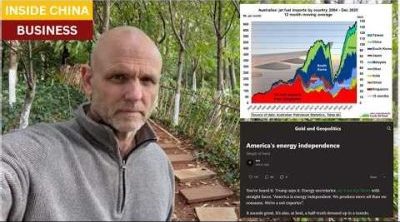
Chinese jet fuel and the myth of energy independence
or go to
Aletho News Archives – Video-Images
Book Review
Former Insiders Criticize Iran Policy as U.S. Hegemony
By GARETH PORTER | CounterPunch | February 27, 2013
“Going to Tehran” arguably represents the most important work on the subject of U.S.-Iran relations to be published thus far.
Flynt Leverett and Hillary Mann Leverett tackle not only U.S. policy toward Iran but the broader context of Middle East policy with a systematic analytical perspective informed by personal experience, as well as very extensive documentation.
More importantly, however, their exposé required a degree of courage that may be unparalleled in the writing of former U.S. national security officials about issues on which they worked. They have chosen not just to criticise U.S. policy toward Iran but to analyse that policy as a problem of U.S. hegemony. … continue
Blog Roll
 Aletho News
- What is fueling unrest across the EU?
- Why no power can undermine Iran’s eternal dominance over the Strait of Hormuz
- Is The War Against Iran Over?
- Iran war will leave long-term ‘scar’ on Wall Street, investors warn
- How Iran decimated US power projection in West Asia: Military lessons of 40-day war
- Iran’s report details US-Israeli war crimes in targeting schools, hospitals, livelihoods
- NATO’s Slow Fracture: How Trump’s Iran War Exposed the Instrument of Hegemony
- Chinese jet fuel and the myth of energy independence
- Ukraine Sea Drone Fired From Libya Hit Russian Tanker in Mediterranean
- IRGC: Iranian forces launched no attacks during ceasefire hours
- If Americans Knew
- Military aid to Israel emerges as the latest political litmus test for Democrats
- The only Palestinian children’s rights organization closes following years-long Israeli campaign against it
- ‘I Can’t Forget the Smell’: Lebanese Reel After Israel Kills Over 300 in Single Day
- DNC Shoots Down Resolutions Calling Out AIPAC and Limiting Arms to Israel
- TCN: Is Israel Blackmailing President Trump?
- Israel killed at least 303 Lebanese yesterday – who were they? Daily Update
- Amnesty: Urgent – Protect Lebanese civilians from brutal escalation in Israeli attacks
- Is The War Against Iran Over?
- Inside the Israeli army’s propaganda wing
- Hundreds of Gaza Amputees Stranded in Legal Limbo
- No Tricks Zone
- An Inconvenient Tree: Uncovered In Alps… Europe Much Warmer Than Today 6000 Years Ago
- New Study Reports A 60% Slowdown In Greenland’s Ice Loss Rate In The Last Decade
- Low Intensity Tornado Wrecks Major Solar Farm, Creating A Potential Toxic Dump
- New Study Finds Warming Saves Lives…Cold Temperatures 12 Times More Deadly Than Excess Heat
- German Science Blog Accuses PIK Climate Institute Of Hallucinating Climate Tipping Points
- Devastating Assessment Of Comirnaty Vaccine By Former Senior Pfizer Europe Toxicologist
- New Study: CO2 Is ‘Effectively Negligible’ As An Explanatory Climate Change Factor Since 2000
- Former Pfizer Toxicologist Dr. Helmut Sterz Tells Bundestag Hearing Pfizer Vaccine Should Have Never Been Approved
- Energy Expert: Germany’s Nuclear Phaseout Was A “500 Billion Euro Mistake”
- New Research: South Australia’s Mid-Holocene Sea Surface Temperatures Were 4°C Warmer Than Today
 Aletho News