EU to pay Ukraine’s budget
Samizdat | May 18, 2022
European Commission President Ursula von der Leyen on Wednesday proposed an aid package of 9 billion euros ($9.5 billion) to keep Ukraine’s government running, and said that the EU would lead reconstruction efforts in Ukraine after hostilities cease. Her announcement came a day after the US called on Europe to open its coffers for Kiev.
Money for the aid package would be borrowed by the Commission on global financial markets and would be repayable by Kiev. As per the EU’s rules on macro-financial assistance, the Ukrainian government would be free to use the cash as it sees fit.
Ukrainian President Volodymyr Zelensky has claimed that Ukraine needs around $7 billion per month to pay its soldiers, civilians and pensioners, and to keep essential services running. The proposed EU package will therefore keep Ukraine functioning for just over a month.
Hours before von der Leyen’s announcement, US Treasury Secretary Janet Yellen told the Brussels Economic Forum that “the bilateral and multilateral support announced so far will not be sufficient to address Ukraine’s needs, even in the short term.”
“I sincerely ask all our partners to join us in increasing their financial support to Ukraine,” she continued, adding that aside from keeping the country afloat in the short term, “massive support” would be needed to rebuild Ukraine once the fighting ends.
Von der Leyen said on Wednesday that the EU will lead this reconstruction effort, but would not be the sole contributor.
“That is why we propose a reconstruction platform as part of this plan jointly led by Ukraine and the Commission and bringing together EU Member States, other bilateral or international donors, international financial institutions, and other like-minded partners,” she said.
While von der Leyen’s aid package is in line with what Yellen requested, it must still be approved by both the European Parliament and European Council. However, none of the Commission’s aid packages to Ukraine thus far – which include four consecutive €500 million ($520 million) packages of military aid and €1.2 billion ($1.26 billion) worth of emergency loans – have faced any resistance from either body.
Russian President Vladimir Putin has accused EU leaders of acting on behalf of their “American overlord” with regard to Ukraine, and committing economic “suicide” by cutting themselves off from Russian energy resources amid inflation and record high fuel costs.
Google Initiates Its Own Bankruptcy In Russia
Samizdat | May 18, 2022
MOSCOW – The Russian branch of IT giant Google has initiated its own bankruptcy in connection with non-fulfillment of financial obligations, according to the data on the Fedresurs federal registry of subjects of economic activity on Wednesday.
“[Google] applies with a notice of intent to file for insolvency (bankruptcy) … since from March 22, 2022, it foresees its own bankruptcy and the impossibility of fulfilling monetary obligations,” the registry read.
As of now, Google need to pay a turnover fine of more than 7.2 billion rubles ($113.3 million), according to claims filed by Russian media regulator Roskomnadzor.
The company was supposed to pay the specified amount by March 19, but it failed to comply with the requirement, prompting another case in early May for the forced recovery of funds.
Western military strategy for Ukraine changes for conciliatory tone
By Uriel Araujo | May 18, 2022
According to Western authorities and media reports Ukraine has been winning the war, but, notwithstanding all the weapon’s shipments from the West, this narrative can only be described as propaganda, for a number of reasons. Amid this triumphalist rhetoric, the US-led West seems to have chosen the path of full-spectrum conflict with Moscow, as one can see in the recent G7 joint statement.
And yet, strangely, French President Emmanuel Macron’s own remarks during Europe Day contained a conciliatory tone about not “humiliating” Moscow should Kiev win. The US Secretary of Defense, Lloyd Austin, in turn has asked May13 for a conversation with his counterpart, Russian Minister of Defense Sergei Shoigu, to talk about “an immediate ceasefire”. This was the very first talk the two officials had since the beginning of the Russian military operations in February. Thus, we are seeing contradictory signs.
Moreover, Austin also showed he is interested in keeping lines of communication open with the Kremlin. The one-hour long phone call was requested by Washington. This is the same Lloyd Austin who, in April 26, stated he believed Kiev would win the war, with American help.
Echoing Austin’s change of tone, Macron reportedly has asked Ukraine to make some “concessions”, to which President Volodymir Zelensky replied in a May 13 interview with Italian TV channel RAI that “we won’t help Putin save face by paying with our territory”. This has generated some embarrassment and has prompted a reply from the French presidency, stating that Macron in fact has never “asked President Zelenskyy for any concession.” The same day the G7 announced its intentions to further contain and isolate Moscow, Macron stated, during his address to the European Parliament, on May 9, that “we are not at war with Russia”, adding that Europe’s duty is to “stand with Ukraine to achieve a ceasefire, then build peace.”
Macron and Austin are not alone. German Chancellor Olaf Scholz during a long talk with Russian President Vladimir Putin on May 13 over the telephone, according to a recent Twitter publication of his, stated that there must be a “ceasefire” in Ukraine “as quickly as possible”. Interestingly there was no talk of Russia immediately retreating, which would be a strange thing if it were true that Kiev is “winning” the war.
Italian Prime Minister Mario Draghi in turn has also echoed the same theme about a ceasefire. The fact that the speeches of leaders from the three EU largest countries are thus aligned is a clear sign that something is changing. This reflects popular opinion also: according to a recent survey across 27 Western countries (conducted by polling company Ipsos), support for diplomatic talks with Russia has increased precisely in France, Germany and Italy.
These are certainly not the only problems that should worry the US. Turkish President Recep Tayyip Erdoğan, for example, has threatened to block Sweden and Finland NATO bids. With Turkey being such a relevant NATO member, this is yet another sign of the contradictions within the alliance.
In spite of the aforementioned Austin statements, the American take on this is still somewhat more complicated, though. According to the Politico website, a high-ranking Washington official has admitted the US worries about a “fracture”, considering these recent European developments. Within American society itself, however, concerned voices, even in the conservative camp, are increasingly more skeptical about the current US policy regarding the Russo-Ukrainian war. As inflation rises, the 40 billion-dollar package to help Kiev, which is being discussed in Congress, is under a lot of criticism.
While Western officials are starting to change their tone and are apparently willing to start some dialogue with Moscow, the Ukrainian President in turn is maintaining his triumphalist uncompromising tone. Kiev, however, is largely dependent on the West, and in the long run would have no choice, but to play along.
The problem is that any “appeasement” endeavors will face a harsh internal reaction from the very extremist forces the West has been supporting. One should recall Dmytro Yarosh’s 2019 threatening remarks about Zelensky “losing his life” and ending up “hanging on a tree on Khreshchatyk (in the Kiev’s center)” if he “betrayed” Ukrainian nationalists. Yarosh, a far-right activist, is nowadays an adviser to Valerii Zaluzhny, the Commander-in-Chief of the Armed Forces of Ukraine.
This also explains why countries such as Germany are increasingly reluctant to further arm Kiev – the risk of weapons ending up in the hands of unpredictable extremist groups is too high.
By now, it has become abundantly clear that today’s conflict in Ukraine is a proxy Western war against Russia. The attitude of the United States and EU leaders regarding the crisis has been one of open confrontation without compromise – and of fueling tensions. However, as we can see, there are signs that this approach could be starting to decline.
In early May, referring to the former US President, Noam Chomsky, stated, in an interview, that only one “Western statesman” is advocating “a diplomatic solution to the war in Ukraine, instead of looking for ways to encourage and prolong it”, namely “Donald Trump”. Chomsky’s remark seemed accurate back then, but this might be changing now.
Bill Gates wants to build a dystopia

By Toby Green | UnHerd | May 9, 2022
It’s not easy being a regular multi-billionaire. Bill Gates used to be the simple guy-in-the-mansion next door, worried about virus outbreaks and global warming. Then, during the pandemic he became the point at which all conspiracy theories met.
Ever since March 2020, the memes have spread. Was Gates a mass murderer with a global depopulation agenda? Was he a “biofascist” seeking control over the world’s population through vaccine passports and microchips?
It didn’t stop there. Was the Covid-19 pandemic actually “plandemic”? Did the Microsoft founder and his acolytes create it through funding “gain of function” research in a biosecurity lab in Wuhan? Was it all war-gamed at Event 201 in October 2019?
Bill Gates has not much enjoyed being the focus of these stories for the past 18 months. He just wants to help out. He wants to solve problems so badly, he tells us early on in How To Prevent the Next Pandemic, that in February 2020, he flew from Seattle to South Africa to participate in a charity tennis match, no doubt on one of his four personal jets.
It was in South Africa that he first began to join the Covid-19 dots. The tech entrepreneur delivers the story with characteristic flair: “A couple of days after returning from South Africa, I sent an email about scheduling something for the coming Friday night: ‘We could try and do a dinner with the people involved with coronavirus work to touch base.’” Gates is happy, “everyone was nice enough to say yes — despite the timing and their busy schedules”. His work on the pandemic begins.
Now Gates is tired of all the conspiracies. He asks his critics to judge him by his actions. And the best way to do so is by reading the book: does Gates have anything sensible to say about the best way to combat future pathogenic outbreaks?
His model for the future is built on what he feels has worked over the past two years: isolate contacts, close borders, lockdown as quickly as possible, then remove restrictions slowly and cautiously. He cites Dr Anthony Fauci, who Gates says he spoke to once a month during the pandemic: “Not only should you appear to overreact at first, as Tony Fauci said, but you also have to be careful about relaxing all NPIs [non-pharmaceutical interventions] too soon.” Meanwhile, you should invest enormous sums in boosting global public health systems, vaccine production in poor and rich countries, and fund a Global Pandemic Emergency Response Unit to monitor potential outbreaks. The aim, says Gates, is to vaccinate the entire world — twice if necessary — within six months while lockdown measures restrict the spread of the new pathogen.
It all sounds so reasonable, doesn’t it? Or it might do to those who haven’t seen the footage of Shanghai’s lockdown circulating on social media, to those who can work online in relative comfort, or indeed to billionaires with comfortable gardens and libraries in which to while away those six months. With the Gates model, a little translation is in order.
The massive investment required to make this vision happen is a good starting point. Where will it come from? Gates is a well-known philanthropist, and makes much of the more than US$2 billion which the Bill and Melinda Gates Foundation have ploughed into fighting Covid-19. Yet this is a small amount compared to the US$6 billion that the US government has invested in the Moderna vaccine alone. As Gates points out, “Most of the world’s greatest talent for translating research into commercial products is in the private sector… It’s the government’s role to invest in the basic research that leads to major innovations, adopt policies that let new ideas flourish.”
Translation: taxpayers invest in developing products through government agencies, and private companies and their shareholders reap the profits. How does this work in practice? Gates does not give what we might call full disclosure. He offers the example of the antiviral Molnupiravir which “Merck and its partners developed”. It was authorised to great fanfare as a Covid treatment in November 2021.
Yet Merck did not develop this drug. It was initially developed as a veterinary drug for horses at Emory University, with a US$19 million grant from Fauci’s NIAID and funding from other sectors of the US government. Molnupiravir costs US$17.74 per dose to manufacture, according to an estimate from researchers at Harvard and King’s College London, but is being retailed to the US government for US$712 per course — a profit of 4,000%.
Another example of Gates’s eye for detail is his discussion of Remdesivir, which was approved as “Standard of Care” for Covid in the US by the Federal Drug Agency. Again, like Molnupiravir, much of the funding and institutional support for the drug originally came from the US government. Remdesivir was the baby of the drug company Gilead.
Gates describes how one study showed that “it may have a major impact in patients who aren’t yet sick enough to be in the hospital”. But other details are ignored. He doesn’t tell us that in an earlier, peer-reviewed study from China, published in the Lancet in May 2020, “Remdesivir was not associated with statistically significant clinical benefits”, and that the trial was “stopped early because of adverse events in 18 (12%) patients versus four (5%) patients who stopped placebo early”. All the same, the profits were good: while the drug cost Gilead just US$10 per dose to manufacture, it was being retailed to US taxpayers at US$3,120.
Maybe Gates knows nothing about the Lancet study. Perhaps he doesn’t know that in both of these cases, public investment has funded enormous private profits — and that in the case of one of the drugs, there’s little evidence that this was to any benefit. He’s just a software engineer after all.
For Gates, technology really does provide all the answers, as it certainly has in his own life. He believes humanity belongs online: “once people learn the digital approach, they generally stick to it”. Post-Covid, he envisages a world of flexible working, in which regular guys like him with large mansions and decent living space can languidly choose between going into the office on Wednesdays or Thursdays. The problem with Gates’s digital utopia — full of virtual spaces where 3D avatars attend business meetings — is that I suspect many of us will not want to live in it.
Gates tries to show in this book that he gets it, while at the same time demonstrating on every page that he just doesn’t. As he draws up his elaborate plans for global governance, Gates writes that he does so knowing that he hasn’t been elected. He tells us he wouldn’t want to be anyway (after all, we can surmise, if he were elected, he might be accountable).
Gracefully, Gates understands that people are angry at the huge increases in wealth disparities during the pandemic, and pledges to return his profits to “make the world a fairer place”. He recognises that poor people across the world have suffered, and are far less able to deal with lockdowns, and even acknowledges that harsh measures might not be a good idea for some of them… And yet he recently went on record as saying that “if every country does what Australia did, then you wouldn’t be calling it a pandemic”. We can, in fact, judge him by his actions, and his words: he says one thing, and funds and promotes others.
Looking forward, the outlook is bleak. Preventing pandemics in Gates-World means shutting down immediately at the “next major outbreak” — a favourite, and alarming turn of phrase. Future semi-permanent global lockdowns are baked-in as the new normal, something I warned of in the conclusion to my book The Covid Consensus. As Gates notes, the WHO have identified 1,500 new pathogens in the past 50 years, and thus the “next major outbreak” surely cannot be far off. In the past 20 years, pre-Covid, there were already three of note (SARS — 2003; Avian Flu — 2005; Swine Flu — 2009). In each case enormous fatalities were falsely predicted, and would surely have led to six month shutdowns in the Gates model.
Gates-World is one where citizens make sacrifices for his model to work. And it’s also one where class is totally ignored. Does Gates know what it was like for Angolan children to be forced to stay at home for seven months in 2020? He admits that internet connections need to be improved to make digital schooling possible — but does he understand that no IT in the world can help children of sex workers in Mumbai slums with their homework? Can he comprehend what it is like to be incarcerated in a flat with small children for months on end in New York, Shanghai or London?
Gates wants to be respected, and understood. His world is one of innovative scientists having dinner with one another. They solve the world’s problems by the pool, or near the barbecue. It’s what he likes doing best, because “I’ve had some of the best conversations of my working life with a fork in my hand and a napkin in my lap” (p4). He wants to fund more and more work leading to experiences like this, and meanwhile turn the rest of human society into a digital avatar of itself.
No doubt he means well. But you don’t need to indulge the conspiracy theories to realise that the road to hell is paved with good intentions.
Toby Green is a Professor of History at King’s College, London.
American Airlines Captain Robert Snow speaks out about his vaccine injury
Steve Kirsch | May 14, 2022
Ever wonder why so many flights are delayed or canceled? A lot of it is due to injuries caused by the vaccine mandates.
Today, there are many pilots who are vaccine injured and not saying anything, endangering the public.
Here’s what happened to one vaccine injured pilot who now has to retire because he’s unable to fly anymore.
He speaks freely, right after being released from the hospital.
And no, the CEO of American Airlines, working just 10 minutes away didn’t call or come visit him. That’s the way they treat “family” at American Airlines.
Other articles about the vaccine and pilots
I wonder if the vaccine is causing all these incidents. I’m told they are safe and effective. But that’s not what the data says.
THREE KILLED, AS PLANE CRASHES INTO MEXICAN SUPERMARKET
PLANE CRASHES ONTO A STREET IN SAN DIEGO
PILOT SUFFERS MID-AIR HEART ATTACK
CO-PILOT LANDS PLANE AFTER PILOT HAS HEART ATTACK:
TRAFFIC CONTROL HELPS PASSENGER LAND PLANE, AFTER PILOT HAS HEART ATTACK
We’re fighting a ruinous proxy war – but for which ‘sort’ of Ukrainians?
By Frank Wright | TCW Defending Freedom | May 18, 2022
SINCE the invasion of Ukraine, we have seen how effective our free world is in marketing. The art of attaching emotions to symbols is the basic method of propaganda, be that to sell products or policies, which was created by people such as American political commentator Walter Lippmann and public relations guru Edward Bernays in the 1920s.
A frenzy of outrage has been conjured over a country and on behalf of its people. Yet this is how the Ukrainian government sees its own people …

The poster reads: Ukraine – open your eyes! Yes – they look like Ukrainians. Sort I, II, III.
In case you were not aware, according to the Ukrainian regime, there are three sorts of Ukrainian. When we speak of ‘the people of Ukraine’ and their rights, bear that in mind.
The red ‘Sort 1’ on the poster are in Galicia, which may be about to be occupied by the Polish army. There is a statue of Ukrainian nationalist and wartime Nazi collaborator Stepan Bandera in Lvov, the regional capital and the base for most Western journalists.
Sort 1 Ukrainians are not native Russian speakers. In Sort 2, there is a minority (less than 25 per cent) who speak native Russian. Sort 3 is the worst offender, because every area here is populated by a majority of native Russian speakers.
In 2010, Sorts 1 and 2 voted for Yulia Tymoshenko. Sort 3 voted for Viktor Yanukovich, who was president until the 2014 coup.
Interestingly, the sorts are also careful to indicate in the second order some of the minority ethnic groups on the Western border. Ethnic Hungarians, Romanians and Moldovans are not Sort 1 either.
One emotional basis for the proxy war the US and NATO are fighting is the right of the Ukrainian people to decide their own fate. Which people – which Sort?
This right was not relevant in 2014 when the US, through its then Assistant Secretary of State for European and Eurasian Affairs, Victoria Nuland, deposed the Yanukovich government and replaced it with one of its choosing.
You can now see why they did this. Yanukovich was not overly friendly with Russia, yet the fact that his base was concentrated in the Russian-speaking population was enough to convince the neoconservative faction that he had to go.
The proxy war is being promoted by this neoconservative faction, which dominates US foreign policy. The founder of their main pressure group, Robert Kagan, is the husband of Victoria Nuland. Kagan admits that US actions provoked Russia. His wife is the architect of many of these provocations, so he would know.
The view of the faction which controls US foreign policy is that Russia and its interests must be broken by any means. This is the reason for the cancellation of the Nordstream 2 gas pipeline, for the overturning of the election in Ukraine in 2014, for the concentration of arms and military training in Ukraine’s disputes Donbass region for the past eight years.
US policy – as directed by a faction that destroys nations with no regard for the costs, nor consequences for the populations concerned – is to break Russia. Yet there is a problem with this plan. The strategy is failing.
Russia is not collapsing at home. Its economy is resilient and looks to be capable of surviving. The wider world is not sanctioning Russia. Ukraine is not winning the war. A global food crisis looms. This makes escalation likely and the situation ever more perilous. It explains the insane Plan B – destroying Europe.
The sanctions – applied by the Anglosphere, the EU and Japan – are not weakening Russia. The EU seems determined to halt all gas and oil supply from Russia. Hungary, Croatia and Slovakia have indicated this would mean a severe economic collapse. The multinational chemical company BASF warned of the same regarding German industry, saying production will cease with no Russian hydrocarbons.
Many German firms are preparing to litigate the German government owing to the ‘dramatic repercussions’ of cutting off Russian gas and oil. This means whole industries will halt and Germany will deindustrialise. Europe will face food shortages and stagflation – a toxic mixture of economic stagnation and inflation.
You may have missed the fact that Ukraine shut down one (of two) gas transit nodes last week, instantly reducing gas supply. This obviously cannot happen without US direction and approval, as it endangers the ability of German industry to continue to operate. One explanation of US policy is to bleed Europe in order to blame Russia, which in turn builds support for war.
The difficulty here is in finding a rational explanation for the removal of the fuel, grain, fertiliser and raw materials without which European industry and food production cannot continue to function. Gas stores are 37 per cent full across Europe. We have no food mountains any more, and Britain is poised to be the worst hit with stagflation.
It looks as though the collapse of the EU economies might be the plan for the US administration, as there is no other rational explanation for the removal of gas, oil, grain, copper and fertiliser from that market.
There are no replacements. There is no agreement with Qatar to replace pipeline gas with liquefied natural gas (LNG). There is no other source of commercial fertiliser. Added to this, Russian sweet crude oil isn’t the same as every other type of oil, which matters when your refinery is geared to process a specific type of oil.
That is the argument of Hungary, whose intransigence is explained by the simple fact that even if a replacement could be found for Russian oil, and even if it weren’t more expensive (it will be) – it can’t be processed in its country’s plants.
It is noteworthy that the Hungarian government will speak for the national interests of Hungary rather than cheerlead its own economic ruin.
Yet ruin is what we all face, after two years’ money-printing combined with a sanctions policy that will push the European economies off a cliff. This is a strange way to save Sort 1 – and some of Sort 2 – of the Ukrainian people.
This, however, is the price of a failed US initiative to weaken Russia, whose rouble is higher now than it was when the war began, and whose gas and oil is more valuable than ever. Is it a price we are willing to pay? Perhaps it is time to ask who is selling us this future, and for what purpose.
US recruits ISIS terrorists to fight in Ukraine: Russian Intelligence
Samizdat | May 17, 2022
The US has been “actively recruiting” terrorists to fight in Ukraine, Russia’s Foreign Intelligence Service (SVR) claimed on Tuesday, saying that it illustrates Washington’s readiness “to use any means to achieve its geopolitical goals.”
The SVR revealed in a statement that, according to the intelligence it is receiving, “the United States is actively recruiting even members of international terrorist organizations, including the Islamic State (ISIS) group banned in the Russian Federation, as mercenaries to participate in hostilities in Ukraine.”
The Russian intelligence service points to the American military base in Syria called al-Tanf, which is located close to the borders with Jordan and Iraq. According to its sources, this base and the surrounding area have turned into a kind of terrorist “hub,” where up to 500 ISIS and other jihadists can be “retrained” simultaneously. SVR claimed that last month 60 ISIS militants, who had been released from prisons controlled by the Syrian Kurds, were transferred to al-Tanf “with a view to subsequent transfer to Ukrainian territory.”
The SVR specified that during a training course at al-Tanf the militants are instructed on how to use anti-tank missile systems, reconnaissance and strike drones, advanced communications and surveillance equipment.
In the SVR’s opinion, this data confirms that “the United States is ready to use any means to achieve its geopolitical goals, not excluding sponsoring international terrorist groups.”
The intelligence service concluded by saying that the American administration does not consider the consequences of such actions, “even when it comes to threats to the security of European allies and even to the lives of the Americans.”
Washington has insisted that “there are no US soldiers in Ukraine.”
Meanwhile, the presence of American troops on Syrian territory at al-Tanf base, which the SVR mentions in its statement, has long been considered by both Moscow and Damascus as illegal. The previous US administration pledged that American forces would leave northeastern Syria but only after ISIS militants are defeated and the Kurds protected.
Then-National Security Advisor John Bolton made it clear that another task of the US forces at al-Tanf was to counter Iranian influence in the region.
In October 2021, there were reports that, according to Israeli defense sources, about 350 military members and civilians were still using al-Tanf, including some British and French forces that were described as “intelligence experts.”
Russia moves to withdraw from WTO, WHO
Samizdat | May 17, 2022
Russia’s lower house of parliament, the State Duma, is planning to discuss the potential withdrawal of the country from the World Trade Organization (WTO) and the World Health Organization (WHO), according to Pyotr Tolstoy, the vice speaker of the parliament.
“The Ministry of Foreign Affairs sent a list of such agreements to the State Duma, and together with the Federation Council [upper house of parliament] we are planning to evaluate them and then propose to withdraw from them,” Tolstoy said on Tuesday.
The vice speaker said that Russia had already canceled its membership in the Council of Europe, and that leaving the WTO and WHO is next.
“Russia withdrew from the Council of Europe, now the next step is to withdraw from the WTO and the WHO, which have neglected all obligations in relation to our country,” he said.
Tolstoy added that the government is expected to revise Russia’s international obligations and treaties that do not currently bring any benefit but directly damage the country.
In April, Russian President Vladimir Putin said that the “illegal” restrictions placed on Russian companies by Western states run counter to WTO rules, and told the government to update Russia’s strategy in the organization by June 1.
The decision came amid the sweeping Western sanctions imposed on Moscow over its military operation in Ukraine launched in late February. Since then, Russia has been subjected to around 10,000 targeted restrictions, making it the world’s most sanctioned country.
EU Introducing ‘Suicidal’ Sanctions on Russian Oil and Gas Under Pressure From US Overlords: Putin
By Ilya Tsukanov | Samizdat | May 17, 2022
The European Union is introducing sanctions against the Russian oil and gas sector for “absolutely political reasons” and under pressure from the bloc’s American overlords, notwithstanding the impact on its collective economic competitiveness, Russian President Vladimir Putin has said.
“Rejection of Russian energy resources means that Europe will systemically become the region with the highest energy costs in the world. Yes, of course prices will rise and resources will go to this region, but it will not be possible to radically alter the situation. This will seriously – and according to some experts irrevocably – undermine the competitiveness of a significant part of European industry, which is already losing the competition to companies in other regions of the world,” Putin said, speaking at a meeting with officials devoted to energy issues on Tuesday.
Putin suggested that the Western political class had speculated “on the absolutely natural concerns of many people on the planet with climate issues,” downplaying the importance of traditional, hydrocarbon sources of energy, while simultaneously overestimating the effectiveness of alternative energy in filling the gap.
This, he said, helped to spark the current energy crunch that Western officials are now trying to blame on Russia.
“Today we see that for absolutely political reasons, due to their own ambitions and under pressure from their American overlords, European countries are imposing more and more sanctions on the oil and gas market. All of this causes inflation, and instead of admitting their mistakes, they are looking for the guilty party in another place,” Putin said.
“One gets the impression that our Western colleagues, politicians and economists have simply forgotten the foundations of the elementary laws of economics, or, to their detriment, prefer to deliberately ignore them,” Putin suggested.
“Obviously, together with Russian energy resources, economic activity will also be leaving Europe for other regions of the world. Such an economic auto-da-fe, or suicide, is of course the internal affair of European countries. We must proceed pragmatically and proceed primarily from our own economic interests,” he added.
Putin called on authorities to “act proactively” in light of the “ill-conceived and chaotic” decisions being taken by some of Russia’s Western “partners,” and to use them to Moscow’s advantage. He also warned that Russia should not expect the West to make such mistakes “endlessly.”
Putin promised that the Russian state would do “everything that depends on us” to create the proper conditions for the work of domestic energy companies, ranging from improving logistical capabilities to providing a system of payment in national currencies and improving the availability of credit and insurance services, to stimulating the processing of raw materials and the creation of new domestic technologies.
He urged Russian oil companies not to sit on their assets – including revenues gained from rising energy prices, and said that the changes currently being experienced by the global oil market have a “tectonic nature,” and that “doing business as before, according to the old model, of course, seems unlikely. In the new conditions, it is important not only to extract oil, but to build the entire vertical chain up to the end consumer.”
Countries worldwide have experienced economic shocks associated with rising energy costs over the past year, with the United States and the the European Union bearing the brunt of the burden, particularly after regional leaders began slapping sanctions and other restrictions on Russian oil and gas amid the crisis in Ukraine starting in February. Many EU countries depend on Russian gas for more 40 percent or more of their natural gas needs and a similar amount of oil. In the wake of the Russian military operation in Ukraine, the bloc has promised to replace supplies from Russia with fuel sourced from the US, Africa and the Middle East, and to ramp up investments in alternative energy. However, economists, businesses and opposition leaders have warned that these measures won’t save the region from a recession, a depression, or worse – its deindustrialization amid the intensifying global economic competition between China and the United States.
West conducting war against Russia – Kremlin
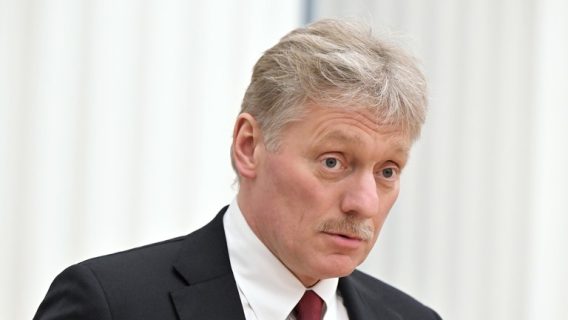
Kremlin spokesman Dmitry Peskov © Sputnik / Sergey Guneev
Samizdat | May 17, 2022
Western powers opposing Russia in Ukraine could be considered enemies waging a war against the state, Kremlin spokesman Dmitry Peskov said on Tuesday. He pointed out that economic sanctions, the arming of Ukrainian nationalists, and giving them intel to attack Russian troops all amounted to acts of war.
“Sure, we are still using the mild term ‘unfriendly states’ when referring to them,” Peskov told an educational forum.
“But I would say they are hostile states, because what they do is war.”
He cited the decision to freeze Russian foreign reserves that the country kept in Western financial institutions and discussions about giving the money to Ukraine as an obvious attack on property rights, the cornerstone of Western civilization. “That was money that you and I own,” Peskov told the audience. “It was stolen from us, it is being stolen from us.”
Russia’s opponents are playing a more direct role in their attempts to hurt Russia in their “hybrid war,” the official said. “Not only American but also British military advisers are telling armed Ukrainian nationalists what they should do and provide intelligence to them,” he explained.
Foreigners are also helping Ukrainians smear Russia’s reputation amid the hostilities, Peskov added. “They stage provocations that are on occasion so bloodthirsty that a human conscience cannot imagine them,” he insisted. He explained that he was referring to the town of Bucha and Kiev’s claims that Russian troops had committed war crimes while they controlled it. Moscow has accused Kiev of fabricating the evidence. “It’s clear that Ukrainian ‘specialists’ would not be able to do it with such professionalism. An army of PR companies, TV crews, and information warfare advisers are working for them,” he said.
The conflict didn’t come out of the blue, Peskov noted, citing that as early as 2005, when Russia created an English-language news outlet meant to air alternative viewpoints to Western audiences, it was met with resistance. “If you compare RT to the Anglo-Saxon media empire, you’ll see how small it is. But its effectiveness grew because of the alternative viewpoint,” he said. Western dissidents “were not given a platform” in Western media, because “if you go outside the margins there and voice a different opinion, the inquisition comes, just like in medieval times,” according to Peskov.
“It seems sometimes that the very existence of Russia is a significant irritant to the West and they would do anything not to let us develop in the way we want and live the way we want.”
The time the world is experiencing now is “a perfect storm and a moment of truth,” he said.
The event that Peskov was attending was organized for teachers and their students. The official’s speech was named “Information warfare: a game without rules” and was addressed to a younger audience.
America the Feckless
How low can we go?
BY PHILIP GIRALDI • UNZ REVIEW • MAY 17, 2022
There have been several particularly disturbing stories in the media over the past week even if one chooses to tune out the US Congress’s pending astonishing overwhelming approval of a grant of $39.8 billion to Ukraine to continue the war to “weaken” Russia. Even so-called progressives in the Democratic Party voted for the war. So now the United States will be at war with Russia through proxy, like it or not, and the consequences could be devastating, particularly if NATO member Poland intervenes directly, as it has been threatening, but few in Washington seem to be awake to that reality. And only Senator Rand Paul, who is asking for an inspector general to supervise the cash flow, is seriously wondering how much of the “aid” will be stolen by President Volodymyr Zelensky and his cronies. Ukraine has long been distinguished as the most corrupt country in Europe.
Another revolting story concerns the murder of a Palestinian Christian journalist Shireen Abu Akleh, who also happens to be an American citizen. She was shot dead by an Israeli sniper who hit her in the neck in the small gap between a protective helmet and vest. She was covering Israeli Army violence directed against protesting Palestinians in the West Bank town of Jenin for al-Jazeera and the vest was labelled “Press” in large letters. Israel initially sought to blame her death on Palestinian “gunmen” who allegedly were in the area, but that story would not wash when confronted with the eyewitness testimony of others who were on the scene and it was eventually conceded that an Israeli soldier “might have” fired the fatal shot. Last Friday, preceding Shireen’s funeral at the Cathedral of the Annunciation of the Virgin in occupied East Jerusalem, Israeli police providing “security” were seen kicking and using batons to beat mourners seeking to carry the coffin from the hospital to the church. The police also hurled stun and smoke grenades into the crowd after several plastic water bottles were allegedly thrown in their direction. Abu Akleh’s home was also searched by police and it will no doubt be claimed that she was a “terrorist,” standard Israeli practice for many of those whom they murder.
Whenever an American citizen is killed under questionable circumstances overseas it is the responsibility of the local US Embassy to demand an investigation and explanation of what occurred. To be sure, the ardently Zionist US Ambassador Thomas Nides in Jerusalem has called for an inquiry, but let’s see what happens in this case as the mainstream media conspires to make the story disappear even though a number of Democratic congressmen (and no Republicans) have called for a response. Former Israeli army spokesman Avi Benayahu has already opined that “Let’s assume Shireen Abu Akleh was shot dead by IDF. No need to apologize for that.” Nevertheless, some form of inquiry acceptable to Israel will no doubt take place, but the Israeli government and the country’s courts have a history of exonerating soldiers and armed settlers when they kill Palestinians. Recently, a Palestinian was sentenced to nine months in prison for slapping an armed settler who was threatening his family while Israeli soldiers and settlers who have killed non-threatening Palestinians, including children, rarely receive any punishment at all.
And being an American citizen makes no difference. History tells us that Israel can kill Americans with impunity judging from the massacre of 34 American sailors on board the USS Liberty in 1967 and the Rachel Corrie murder-by-bulldozer in 2003. A Turkish-American boy Furkan Dogan who was on an aid ship to Gaza in 2010 was also murdered by Israeli soldiers who boarded the vessel, also killing eight others. No Israeli has been punished for any of the deaths.
This has to stop but the problem is in Washington, not in Jerusalem. Israel kills and kills because it knows it can get away with it due to American enabling of the process. It is an embarrassment that a series of US Ambassadors to Israel have been little more than apologists for the Jewish state. And we have House Speaker Nancy Pelosi declaring “I have said to people when they ask me if this Capitol crumbled to the ground, the one thing that would remain is our commitment to our aid…and I don’t even call it aid… our cooperation with Israel. That’s fundamental to who we are.” Meanwhile President Joe Biden has self-declared as a “Zionist” while Senate Majority Leader Chuck Schumer calls himself in Hebrew the “shomer yisroel” or defender of Israel in the Senate. And then there is House Intelligence Committee head Adam Schiff’s son sporting a Mossad t-shirt. And what about the regular mass “pilgrimages” by groups of Congressmen to Israel during recesses, an exercise in obtaining the approval of whichever unindicted felon is in charge of that rogue country that pretends to pass for a “democracy”?
As much as one would like to see all the traitors in Congress and the White House who give Israel a free pass on its monstrous behavior held accountable, such an outcome is unimaginable because enough of them have been bought or intimidated to such an extent that they remain silent or chant like a chorus in a Greek tragedy that “Israel has a right to defend itself.” And there is also the Jewish dominated mainstream media: the NY Times report on this latest murder had a headline reading that Shireen Abu Akleh had somehow “Died,” not that she was murdered by the Israelis, to whom the American taxpayer gives $10 million every single day! It is shameful and disgusting!
A related tale also concerns Israel and the United States. David Brog is running for Congress from Nevada. Brog is the former executive director of Pastor John Hagee’s Texas-based Christians United For Israel even though he is Jewish. Indeed, he has made Israel the focal point of his campaign based on his contention that “he brings a lifetime of dedication and a depth of knowledge to lead on pro-Israel causes.” He has said “I don’t just want to be a friend of Israel. I want to be a leader on Israel and a champion of Israel… We have to be very quick to reach out and broaden our coalition to all people of goodwill who love Israel and hate antisemitism.”
Brog, who is not from Nevada, has not surprisingly raised considerably more money than other GOP candidates vying for the position and he has also received the backing of former Trump administration Jewish officials, including David Friedman, the ex-US Ambassador to Israel, and Elan Carr, the special envoy to monitor and combat antisemitism. Friedman and Carr co-hosted a virtual fundraiser for Brog two weeks ago.
Brog is a one trick pony and his trick is to keep saying Israel over and over again to bring in the Shekels from the likes of Israel born Miriam Adelson, who inherited her husband’s casino fortune and lives in Las Vegas. It is disconcerting to see a politician running for national office in the United States so he can advance the interests of a foreign country, yet that is what Brog is doing openly. One would hope a lot of Nevada voters will see the issue in the same fashion, but Brog will have big bucks and the pro-Israel media supporting him. In any event, I have to wish the “malocchio” or evil eye on Brog and I hope he loses in his run and loses big. The United States does not need yet another ardent Israel booster in Congress or anywhere else in the public space!
Another tale that is developing surrounds the publication of the latest tell-all book by a survivor of the Donald Trump administration. Former Defense Secretary Mark Esper, who was fired by Trump after the 2020 election, has described a series of catastrophic proposals by the president relating to national security and defense, including using missiles fired from the US to take on Mexican drug cartels. Another idea floated by Trump, if Esper is not lying, was to use soldiers to shoot protesters in Washington in the wake of the George Floyd death in Minneapolis in May 2020. Other former senior Trump officials have also been claiming that Trump often asked whether China had developed a top-secret hurricane gun that could be firing storms at the United States. And John Bolton, in his book, asserts that Trump asked if Finland were part of Russia.
But to my mind the most interesting revelation made by Esper is the back story, also set in the Middle East, relating to the assassination of Iranian General Qassem Soleimani in January 2020, which illustrates much that is wrong with the national security state that the United States has evolved into. According to Esper, Trump lied after the assassination was criticized by saying that Soleimani was actively preparing attacks on four American Embassies in the Mideast region. Esper confirms that there was no intelligence to back up that claim, but interestingly goes beyond that to make clear that there was no specific intelligence at all suggesting that such an attack was imminent or even being planned. There were only generic regional security threats that many embassies in the world respond to and make preparations to defend against.
One recalls the back story at the time, with the Iraqi government claiming that Soleimani, widely regarded as the second most powerful official in Iran after the Ayatollah, was in Baghdad to discuss peace arrangements and that the US Embassy had been informed of his planned trip and had raised no objection to it. Instead, the US used the opportunity to launch an armed drone to kill him and nine Iraqi militia members that were accompanying him from the airport. In other words, there was no imminent threat, nor even a plausible threat, and the US went ahead anyway and killed a senior Iranian government official. That is unambiguously a war crime. Will anyone be held accountable? Of course not!
But finally there is also a bit of good news. The White House press secretary who is replacing Jen Psaki is Karine Jean-Pierre. She is a woman, black and lesbian, so clearly she passes the Democratic Party template for such a position but she lacks the mandatory Israel connection. It turns out that she once criticized the American Israel Public Affairs Committee (AIPAC) and even called for it to be boycotted. She is already being attacked by the usual groups and individuals, so let’s see how long she lasts!
Philip M. Giraldi, Ph.D., is Executive Director of the Council for the National Interest, a 501(c)3 tax deductible educational foundation (Federal ID Number #52-1739023) that seeks a more interests-based U.S. foreign policy in the Middle East. Website is councilforthenationalinterest.org, address is P.O. Box 2157, Purcellville VA 20134 and its email is inform@cnionline.org.
Why Did Rand Paul Delay Washington’s $40 Billion Ukraine Giveaway?
By Ron Paul | May 16, 2022
Even by Washington standards, the Biden Administration’s recent request for $33 billion for military aid to Ukraine was shocking. Surely a coalition of antiwar progressives and budget-hawk Republicans would oppose the dangerous and expensive involvement of the US in the Russia/Ukraine conflict? No! Not only did Congress not object: they added nearly seven billion MORE dollars to the package!
In the end, not a single House Democrat voted against further US involvement in the war, and just 57 Republicans said “no” to funding yet another undeclared war.
On the Senate side, Majority Leader Chuck Schumer (D-NY) and Minority Leader Mitch McConnell (R-KY) both demanded immediate passage of the huge giveaway to Ukraine. That’s Washington’s bipartisanship for you.
Then the junior Senator from Kentucky came to the Senate Floor and did the unthinkable in Washington: he delayed the vote.
“My oath of office is to the national security of the United States of America,” Sen. Rand Paul said. “We cannot save Ukraine by dooming the US economy.” He went on to point out that the US has spent nearly as much on Ukraine’s military as the entire military budget of Russia and that the US government has sent more military money to Ukraine than it spent in the entire first year of the US war in Afghanistan.
Sen. Paul put the package into perspective: this massive giveaway to Ukraine equals nearly the entire yearly budget of the US State Department and is larger than the budget of the Department of Homeland Security!
Schumer was furious with Paul, accusing him of “preventing swift passage of Ukraine aid because he wants to add at the last minute his own changes directly into the bill.”
What was he trying to add to the bill? In his own words, “All I requested is an amendment to be included in the final bill that allows for the Inspector General to oversee how funds are spent.”
He wanted at least a bit of oversight on the nearly $50 billion in total that Washington has sent to what Transparency International deems one of the most corrupt countries on earth. Is that really too much to ask?
For Washington, the answer is “yes.” The Special Inspector General for Afghanistan Reconstruction (SIGAR) was an endless thorn in Washington’s side, because he actually did his job and reported on the billions of dollars that were stolen in Afghanistan.
In its final report on the 20 year Afghanistan war, SIGAR reviewed approximately $63 billion of the total $134 billion appropriated to Afghanistan and found that nearly $19 billion of the amount was lost to waste, fraud, and abuse. Nearly one third of the funds they reviewed were outright wasted or stolen by corrupt Afghan officials. Does anyone think it would be any different in Ukraine?
Maybe that’s why they were so furious that Sen. Paul proposed that we perhaps keep track of this $40 billion to make sure it’s not wasted: Washington doesn’t want to know. And, more importantly, Washington doesn’t want us to know.
The temporary pause is important. It gives Americans a little time to let their Senators know that they do not support this ridiculous and wasteful giveaway to Ukraine. Inflation is ripping through the country. Gas prices are through the roof. Our infrastructure is crumbling. The dollar is teetering. And we’re giving money away?
The vote appears set for Wednesday. Time to let your Senators know what you think about it!
Copyright © 2022 by RonPaul Institute
Featured Video
Prof. Ted Postol: Iran Already Achieved Nuclear Deterrence Against Israel
or go to
Aletho News Archives – Video-Images
From the Archives
How the occupied mentality syndrome works
Saudi Arabia on the American chessboard – Part 3
By B. J. Sabri | American Herald Tribune | June 27, 2016
Read part 2: “The occupied mentality Syndrome“
Previously I argued whether Saudi Arabia’s repeated involvements in U.S. interventions and wars stem from free national will or in response to a specific condition. For starters, in Saudi Arabia there is no national will. In Saudi Arabia, the national will is the will of the Al Saud clan. Still, when a major Arab state allies itself with a superpower that committed unspeakable crimes against humanity in almost every Arab country, then something is wrong. This fact alone should compel us to examine the U.S.-Saudi relation for one exceptional reason. As a result of the U.S.-Saudi wars, hundreds of thousands of people in Afghanistan, Iraq, Iran, Libya, Syria, Yemen, and Somalia have lost their lives. Millions became displaced in their own homelands. And millions more rendered refugees.
Attributing the Saudi policies to the bonds of “partnership” with the U.S. is frivolous. There are no bonds between these two thugs except those of business, military deals, secret plots, and wars. Proving this point, bonds such as these have no space for the American and Saudi peoples to share significant cultural or societal exchanges. If partnership is not the reason for the Saudi contribution to the U.S. strategy of empire and imperialism, then another reason must exist.
This leads to three possibilities. … continue
Blog Roll
 Aletho News
- REWRITING THE RISK? INSIDE THE GOVERNMENT’S VACCINE SAFETY MESSAGING
- “Davos Can Really Replace the UN”
- NIAID/NIH and USDA Fund Bioengineered Chimeric Influenza Viruses Built Using Pandemic H1N1 Components: Journal ‘Science Advances’
- Hezbollah hits Israeli warship off Lebanon’s coast, sets it aflame
- Iran slams US strikes on B1 bridge, Mahshahr petrochemical plants as ‘blatant acts of state terrorism’
- In letter to UN chief, Araghchi warns of dire consequences of US-Israeli attacks on Iran’s nuclear facilities
- Why the CIA conspiracy to invade Iran with Kurdish militias failed
- Why Are Upbeat US Claims About Mission to Rescue Pilot ‘Highly Questionable’?
- Aircraft destroyed during US ‘rescue’ of downed F-15 pilot cost more than $100 million each
- Washington University removes professor who condemned US-Israeli war on Iran
- If Americans Knew
- In Iran, Israel-US take aim at “reason, research, and freedom of thought” – Daily Update
- US loses planes over Iran, Israel downgrades Lebanon war goals – Daily Update
- Israel Is Blocking Palestinians from Easter at Church Where Jesus Resurrected
- Plot to assassinate Palestinian activist follows harassment campaign promoted by Zionist groups and elected officials
- Prominent New York synagogue hosts presentation on why U.S. Jews should support the ethnic cleansing of Gaza
- Tapper vs. Piker: Is the CNN Anchor Auditioning for David Ellison?
- Shouldn’t Democrats Be Able to Condemn Genocide?
- Israel-US kill negotiators, destroy civilian structures, but Iran’s military capabilities still largely intact – Daily Update
- ‘War crime’: Global condemnation as Israeli ministers celebrate death penalty law targeting Palestinian prisoners
- 7 Ways Israel Is Turning Lebanon Into Gaza
- No Tricks Zone
- An Inconvenient Tree: Uncovered In Alps… Europe Much Warmer Than Today 6000 Years Ago
- New Study Reports A 60% Slowdown In Greenland’s Ice Loss Rate In The Last Decade
- Low Intensity Tornado Wrecks Major Solar Farm, Creating A Potential Toxic Dump
- New Study Finds Warming Saves Lives…Cold Temperatures 12 Times More Deadly Than Excess Heat
- German Science Blog Accuses PIK Climate Institute Of Hallucinating Climate Tipping Points
- Devastating Assessment Of Comirnaty Vaccine By Former Senior Pfizer Europe Toxicologist
- New Study: CO2 Is ‘Effectively Negligible’ As An Explanatory Climate Change Factor Since 2000
- Former Pfizer Toxicologist Dr. Helmut Sterz Tells Bundestag Hearing Pfizer Vaccine Should Have Never Been Approved
- Energy Expert: Germany’s Nuclear Phaseout Was A “500 Billion Euro Mistake”
- New Research: South Australia’s Mid-Holocene Sea Surface Temperatures Were 4°C Warmer Than Today
 Aletho News