Russia claims it destroyed US-made Harpoon launchers in Ukraine
Samizdat | July 12, 2022
The Russian military says it has destroyed more US-made weapons in Ukraine. Several Harpoon anti-ship missile units were targeted by a ground-launched Iskander missile strike in Odessa Region, the defense ministry claimed on Tuesday during a daily briefing.
The report identified the location as being near the village of Berezan, some 20km northwest of the port city of Odessa. It offered no further details about the strike.
Last week, Russia claimed it destroyed two Harpoon missile systems near the village of Liman in the same region with a sea-launched missile strike.
The Harpoon is an anti-ship missile system made by Boeing. Several Western nations have supplied them to Ukraine. Officials in Kiev claimed that the weapon was a game-changer for the balance of military power in the Black Sea.
Some credited the threat posed by Western weapons, including the Harpoon, for Russia’s decision to withdraw from Snake Island two weeks ago. Moscow said it was a goodwill gesture meant to counter Ukrainian allegations that Russia was blocking grain exports from the country.
Ukraine frees warlord sentenced for torture

Samizdat | July 12, 2022
Ruslan Onishchenko, former commander of the notorious Ukrainian Tornado battalion, whose fighters were convicted of torturing people in Donbass, has reportedly been released from jail and may join the fight against Russia.
Ukraine began selectively releasing inmates who want to serve on the frontline shortly after Moscow attacked the neighboring state in late February.
The now-disbanded Tornado unit was formed in 2014 to fight for Kiev during the conflict in Donbass. Despite the unit’s designation as a volunteer police battalion, former felons were allowed to become members. Onishchenko had three prior convictions before joining the unit.
In 2017, a Kiev court sentenced Onishchenko to 11 years in prison for kidnapping and torture. Several of his fellow fighters also received jail sentences for kidnapping, torture, rape, and looting.
On Monday, Roksolana Khmara, the wife of former MP Stepan Khmara, wrote on Facebook that Onishchenko was released under the guarantees of her and her husband.
Khmara posted a photo of Onishchenko in a Kiev courtroom, while claiming his sentence had been politically motivated.
Newspaper ‘KP v Ukraine’ said that Onishchenko had asked to be allowed to join the fight against Russia.
According to the paper, Onishchenko’s original sentence had been commuted in accordance with a 2015 law that says one day spent in pre-trial detention counts as two days in jail. However, the former commander remained behind bars while awaiting trial for a 2018 prison riot.
“Nearly all of the battalion’s members are now back on the frontline, fighting in various units of the Ukrainian Armed Forces,” Viktor Pandzhakidze, the ex-spokesman for Tornado, told the paper.
US plans to build diplomatic compound on Palestinian land in East Jerusalem: Rights group
MEMO | July 12, 2022
The US is planning to build a diplomatic complex on private property confiscated from Palestinians in occupied East Jerusalem, a rights organisation said Sunday, Anadolu News Agency reports.
In a statement, the Legal Center for Arab Minority Rights in Israel (Adalah) said they have found new evidence that the land on which the diplomatic compound is to be built under a joint US-Israeli plan is located on private property taken from Palestinians.
“The land on which the US Diplomatic Compound is to be built is registered in the name of the State of Israel, but it was confiscated illegally from Palestinian refugees and internally displaced Palestinians using the 1950 Israeli Absentees’ Property Law,” it noted.
Recalling an upcoming visit by US President Joe Biden to Israel, Adalah said the descendants of the original owners of the property, including US citizens and Palestinian residents of East Jerusalem, demand the “immediate cancellation of the plan”.
“If built, the US embassy compound will be located on land that was seized from Palestinians in violation of international law,” the statement added.
Biden is scheduled to arrive in Israel on 13 July, as part of a tour that will also include the West Bank city of Ramallah and Saudi Arabia.
Are angry Dutch farmers spearheading an uprising against the elites?
By Kathy Gyngell | TCW Defending Freedom | July 12, 2022
Ignored in the media feeding frenzy over Johnson’s resignation were no less than 30,000 Dutch farmers who last week rose up in protest against new nitrogen emission limits set by their government and who are fast bringing their country to a halt. You would think it would be a lead new story, but no.
Only yesterday did any British mainstream newspaper pay attention to this huge story. The Independent took time out to tell its readers that ‘Anger simmers for Dutch farmers who oppose pollution cuts’.
That is not however how social and alternative news media outlets have been reporting this drama. The Dutch government’s new edict will require farmers to so radically to curb their nitrogen emissions, by up to 70 per cent in the next eight years, that it will mean a massive reduction in the number of livestock they can maintain resulting in the loss of their livelihoods and, some say, a State take-over of their farms. It’s for this reason they have been blocking supermarkets, distribution centres and roads, a protest to which, shamefully, the police have responded with brutality, opening fire on tractor-riding farmers and arresting others.
Maybe large farming companies could, at least hypothetically, meet these (climate) goals but for smaller farms, often family-owned over several generations, these new environmental regulations are so extreme they’ll be forced out of business.
That’s why farmers are blockading roads and refusing to deliver their products to supermarket chains, and why the Netherlands is starting to suffer serious shortages of eggs and milk. The global impact is not without significance either. Just as so many people remained unaware until recently how dependent the world is on Ukraine for wheat and fertiliser, enlightenment is yet to dawn about global food dependency on the Netherlands.
In a rare (mainstream) article on the subject last week in Newsweek, Ralph Schoellhammer, an Austrian assistant professor of economics, explains that the Netherlands is the world’s second largest agricultural exporter after the United States, a country of barely 17million inhabitants, a food superpower. Given global food shortages and rising prices, the role of Dutch farmers in the global food chain, he writes, has never been more important: ‘But if you thought the Dutch government was going to take that into account and ensure that people can put food on the table, you would be wrong; when offered the choice between food security and acting against “climate change,” the Dutch government decided to pursue the latter.’
It appears to be an extraordinary own goal, given post Lockdown supply chain problems and the impact of the Ukraine war, but such is the zealotry of these political climate ideologues that they are prepared to attack their own people, just as Pierre Trudeau did with the Truckers. Like Mao, they seem to have little regard for the cost in human lives and suffering in order to achieve their revolutionary goals. And a revolution it is, driven by global elites who can afford high food and energy prices.
Schoellhammer believes that ‘there is a growing resistance by the middle and lower classes against . . . the “luxury beliefs” of the elites, as everyday folks realise the harm it causes them and their communities’. Let’s hope there is.
Rebel News reporter Lincoln Jay, embedded with the farmers since last week, reporting back to Laura Ingraham of Fox News last Friday said ‘the farmers genuinely believe that this is going to destroy their livelihoods’. He believes ‘these new environmental policies are going to make it practically impossible for the younger generation here in the Netherlands to get into farming’.
You can watch the interview here.
In a more recent Rebel News report with Lewis Brackpool he says that the Dutch farmers are not backing down against ‘the authoritarian climate agenda of Prime Minister Mark Rutte’ who they describe as a World Economic Forum insider; and that the farmers’ rebellion is now countrywide, and has brought parts of it to a halt. In the northern town of Drachten, not far from the German border, they watched waves of farm tractors form a convoy along the A7 highway. In Leeuwarden, tractors blockaded government buildings, and farmers tried to confront provincial government officials.
Elsewhere it’s been alleged that that the Dutch minister who pushed the nitrogen law that grants the government the power to expropriate the farmers’ land has a brother whose online supermarket is one in which Bill Gates invested $600million. The Epoch Times reported yesterday that the Dutch Government’s strategy is even more invidious; that the plan is to take the farmers’ land and convert it into housing.
Rutte of course is not the only example of a government’ leveraging ‘climate change concern’ against specific segments of the economy and working people at a time when it will inflict maximum damage. The Western Canadian Wheat Growers have warned that Trudeau’s proposed fertiliser emissions reduction will devastate Canadian prairie farmers, with serious implications for the country’s food security. These also are the heartlands of conservatism in Canada that are targeted.
Whether the Dutch farmers will be the spearhead of what Schoellhammer predicts will be a ‘popular uprising of working-class people against the elites and their values that started with the Canadian Truckers and is crossing the globe’, only time will tell. He says the sympathies of the Dutch are not with their government; they are solidly with their farmers that polls indicate that the Farmers Political Party, formed just three years ago in response to the new regulations, would gain 11 seats in Parliament if elections were held today (it currently holds just one seat out of 150).
The real worry he notes is that the ‘elites are behaving much as they did in Canada and the US, and not just those in government. He points to mainstream media outlets refusing to even report the protests, or when they do, ‘casting the farmers as extremists’; acting as in effect as government mouthpiece.
That, so far, is the problem here too. At the time of writing the main print and broadcast media outlets are still ignoring the Dutch farmers protest – with the honourable exception of guess who but Mark Steyn on GB News.
You can read the full Newsweek article here.
The (almost) unbelievable story of an Israeli killer – and the lies that are protecting him
By Kathryn Shihadah | Israel-Palestine News | July 10, 2022
After Ali Harb’s gruesome death last month, the chronicle of events that followed was unsurprising to Palestinians living under Israeli occupation, but mind-boggling to most of the rest of the world.
Eyewitnesses to the incident on June 21 describe what began as a fairly routine episode: Israeli settlers (illegal under international law), spurred on by radical ideology, often show up on Palestinian private property to harass or provoke the indigenous Palestinians. Sometimes the settlers come with the intention to pitch a tent – creating an illegal “outpost” which can be the first step in annexing a piece of property.
These incidents sometimes play out with the Palestinians hiding in their homes for safety; at other times, they confront the settlers and tell them to go away. Often, Israeli soldiers accompany the settlers, protect them, and arrest (or shoot at) the Palestinians who refuse to give in.
In this case, a crowd of about 15 settlers – with Israeli soldiers watching – began constructing an outpost on the Harb family land. “When we tried to prevent them,” explained Harb’s cousin Naim, “one of the settlers took a knife and stabbed Ali in the chest.”
Another relative, Zaid, added, “The police and army were just a few meters away from us, but they did not do a thing to the stabber.”
Eyewitnesses maintain that the Palestinians’ actions before the stabbing had been nonviolent.
As Ali Harb lay bleeding on the ground, “the military pointed their weapons at us and fired in the air,” according to another relative, Firas.
Eventually, bystanders were permitted to move Ali. Firas explained, “We carried him for a distance of approximately two kilometers [about 1 ¼ miles)…while he bled, until we got to the ambulance.” Ali was pronounced dead at the hospital.

Family of Ali Harb mourn his death after a settler stabbed him in the heart. (ajplus/Twitter)
Official Israeli version
The official Israeli version of the incident differs, as is often the case.
A spokesperson for the Israeli military claims that a “violent confrontation” between settlers and Palestinians had already taken place when the soldiers arrived – the account emphasized that the confrontation had taken place before they arrived.
Soldiers allegedly noted a wounded Palestinian, and offered to put him in a military ambulance and take him to a hospital so he could get “the necessary medical treatment.” The official narrative asserts that the Palestinians refused.
Aftermath
A few days later, Israeli soldiers arrested members of the Harb family in a 2 am raid that included stun grenades.
One of those arrested described the interrogation: “They concentrated on the fact that we had said the army and police were present when the incident occurred – they tried to tell us they weren’t there when it happened…That was all they asked about.”
He added, “I maintained my testimony that the settler stabbed Ali in front of the soldiers, just as I had said in my declaration to the Israeli police just after the killing happened.”
Israeli intelligence arrested a 44-year-old Israeli settler; hundreds of Israelis, among them far-right members of the parliament, protested the arrest, demanding the killer be set free.
“Self-defense”
In fact, on Tuesday, July 5th, the settler who killed Ali Harb was released to house arrest.
The Israeli newspaper Ha’aretz reports: “Police are now regarding the case as one of reckless homicide… rather than a more serious charge of murder.” If convicted, the maximum sentence would be 12 years. (Reckless homicide is a form of involuntary manslaughter.)
The settler, who was trespassing on private Palestinian property and being asked to leave, has claimed that the stabbing was in “self-defense,”
Shin Bet investigators do not regard the incident as “deliberate” or “terrorism.”
Outpost violence
While all of Israel’s settlements in the Palestinian West Bank are illegal under international law, outposts are not even officially recognized by Israel; nevertheless outposts receive funding and military support from the state.
The violence used to intimidate and ultimately ethnically cleanse the Palestinians from the land has been practiced since the founding of Israel, and even before – and generally goes unacknowledged and unpunished by the state.
Palestinian activist Ghassan Daghlas explains,
The Israeli government has given the settlers a green light to take over any land they can take by force.
In the Salfit region alone [where Ali Harb was killed], there are 24 settlements and settler outposts, and they are among the most violent settlers in the West Bank.
Palestinians in the region have no protection, and they have to come out to protect their lands, risking their safety and lives.
Settlers come out to establish new outposts on Palestinian land because they know that they have the army and the government’s protection, and that’s why they attack Palestinian farmers and villagers as well.
Palestinian leaders stress that killing of Ali Harb is yet another outcome of Israeli impunity – including Israeli settlers – in the international community.
Of the 650,000 Israeli settlers living on Palestinian land in the West Bank and East Jerusalem, not all seek to expand further, as did those who were involved in the killing of Ali Harb. The Israeli government encourages Israelis to settle, and offers incentives to get them to move to the occupied territories. Their presence impacts Palestinian lives in the form of the government appropriating land for the settlements, Jewish-only roads to the settlements, and space for expansion – all carved out of Palestinian property without Palestinian consent.
The ideological settlers go beyond this disruption and squat on additional Palestinian property besides what they already have. Both types of settlers are in breach of international law.
17 killed, injured in Saudi attack on Yemen’s Sa’ada Province
Press TV – July 11, 2022
The Saudi-led coalition has once again broken the terms of a United Nations-mediated truce, killing and injuring as many as 17 people in a cross-border attack on the impoverished country.
The casualties were caused on Sunday after Saudi forces opened fire on a border area in Yemen’s Sa’ada Province, which lies to Yemen’s extreme northwest, a security source told Yemen’s official Saba Net news agency.
Most of the wounded, who have been transferred to a hospital in the city of Razih in the western part of the province, are in a life-threatening condition, the source said.
Elsewhere in the province, the coalition targeted the Shada’a District, killing one person and injuring seven others.
Saudi Arabia launched the devastating war on Yemen in March 2015 in collaboration with its Arab allies and with arms and logistical support from the United States and other Western states.
The objective was to reinstall the Riyadh-friendly regime of former president Abd Rabbuh Mansur Hadi and crush Yemen’s Ansarullah popular resistance movement, which has been running state affairs in the absence of a functional government in Yemen.
While the Saudi-led coalition has failed to meet any of its objectives, the war has killed hundreds of thousands of Yemenis and spawned the world’s worst humanitarian crisis.
The UN-brokered truce between the coalition and Ansarullah, which came into effect in April, was extended for another two months on June 2.
As part of the ceasefire, commercial flights have resumed from Sana’a International Airport to Amman and Cairo, while oil tankers have been able to dock at the port city of al-Hudaydah.
The elusive truce has provided a rare let-up in the Saudi-led coalition’s attacks on the Arab country, even though the coalition has been accused of a series of ceasefire violations.
Also on Sunday, the Yemeni National Salvation Government’s health ministry said a total of 31 people had been killed and 356 others injured as a result of the invaders’ violations of the make-or-break ceasefire.
We’re “losing the fight against monkeypox”… apparently
By Kit Knightly | OffGuardian | July 11, 2022
According to the New York Times the US is currently “losing the fight with Monkeypox”. That’s probably news to you.
After all, given the fact the US has around 700 cases of Monkeypox (around 0.0002% of the population), that the entire world only 8000 “cases” (about 0.0001%), and that there have been just 3 reported deaths… well, you’d be forgiven for not realising there was a fight at all, let alone that we were losing.
It’s really more of a kerfuffle. At worst. Perhaps a fracas.
That is – of course – assuming there is any monkeypox “outbreak” at all, something we should never take on faith, especially in the post-Covid world.
Nevertheless, the NYT is sure…
There probably will be many more infections before the outbreak can be controlled, if at this point it can be controlled at all.
The US isn’t the only place getting a fresh batch of monkeypox fear porn this week.
Five days ago it was reported that Australia had recorded its first “case”, with the under-stated headline…
KILLER VIRUS SUDDENLY SPREADS IN AUSTRALIA
… clearly this went too far, even for the mainstream media, who quietly reworded the title a few hours later.
Not to be outdone, two days later New Zealand announced their first monkeypox case was isolating at home.
And just 15 minutes ago, at the time of writing, The Guardian published a news story headlined:
Efforts to curb UK monkeypox outbreak inadequate, warn experts
So, what is the cause of mankind’s imminent loss to the monkeypox peril? Well they really couldn’t be clearer about that – we’re not testing enough.
The NYT goes on about this at length:
the response in the United States has been sluggish and timid, reminiscent of the early days of the Covid pandemic, experts say, raising troubling questions about the nation’s preparedness for pandemic threats.
[…] The first cases of monkeypox were reported in May, but tests will not be readily available until sometime this month.
[…] The first missteps in the U.S. response to monkeypox were in testing. As in the early days of the coronavirus pandemic, samples from monkeypox patients are being funneled to the CDC for final diagnosis, a process that can take days.
Slate agrees, headlining “We Need to Keep Better Track of Monkeypox” and quoting on “expert”:
Testing is the key piece in getting answers to these questions, and currently we simply are not doing enough of it.”
We’ve seen this movie before, we know how it goes from here.
Since, as the NYT points out, Monkeypox tests will be “readily available sometime this month”, we can expect a BIG spike in cases coming up.
Far from being recognised for what it is – a huge number of false positives caused by PCR tests – this increase in cases will be sold as the “true size of the outbreak” after weeks of calling current “case” numbers “likely underestimates”.
The solution, we know, will be “increasing vaccine coverage” or “helping immunize the most vulnerable” or some buzz phrase like that.
But oh no! We don’t have enough vaccines!
At least, according the New York Times, and LA Times, and CBS, and Science and New York Magazine and NPR and NBC and the New York Post and…
… it’s the prevalent message, is what I’m trying to say.
Don’t worry though, a VERY familiar hero is about to ride over the horizon on a white horse:
Moderna is investigating potential monkeypox vaccines at a preclinical level, using its mRNA platform,”
Yes, Moderna started working on a new mRNA monkeypox vaccine back in May… so by Covid rules they’re probably nearly done by now.
Just inject in precisely one person, and if they don’t die instantly on the spot then it’s safe.
… and if they DO then they were already sick and the trial data is compromised and monkeypox is such an emergency we should grant it approval anyway. You can read the trial data in 2097.
We know how this works.
Tests to create the “problem”, vaccines to “solve” the “problem”. Both of them result in vast amounts of public money disappearing into bottomless private pockets.
There’s a lot of fog around monkeypox – we don’t know, in a lot of ways, where it’s going or what it’s even for. The narrative is only half-formed. First growing, then shrinking, then growing again.
It had a name change that never really materialised, and the decision to focus it on sexual transmission – especially among “men who have sex with men” (I don’t know why they ALL use that phrase and not “gay men”) – is one I just can’t puzzle out yet.
But while it’s yet to take definitively pick a size, direction or speed, it’s taking a very familiar shape: Tests and vaccines.
It’s always tests and vaccines.
Top climate scientists slam global warming “so-called evidence” as “misrepresentation, exaggeration & outright lying”
By Chris Morrison | The Daily Sceptic | July 11, 2022
Two top-level American atmospheric scientists have dismissed the peer review system of current climate science literature as “a joke”. According to Emeritus Professors William Happer and Richard Lindzen, “it is pal review, not peer review”. The two men have had long distinguished careers in physics and atmospheric science. “Climate science is awash with manipulated data, which provides no reliable scientific evidence,” they state.
No reliable scientific evidence can be provided either by the Intergovernmental Panel on Climate Change (IPCC), they say, which is “government-controlled and only issues government dictated findings”. The two academics draw attention to an IPCC rule that states all summaries for policymakers are approved by governments. In their opinion, these summaries are “merely government opinions”. They refer to the recent comments on climate models by the atmospheric science professor John Christy from the University of Alabama, who says that, in his view, recent climate model predictions “fail miserably to predict reality”, making them “inappropriate” to use in predicting future climate changes.
The ’miserable failure’ is graphically displayed below. Since the observations cut-off, global temperatures have again paused.

Particular scorn is poured on global surface temperature datasets. Happer and Lindzen draw attention to a 2017 paper by Dr. James Wallace and others that elaborated on how over the last several decades, “NASA and NOAA have been fabricating temperature data to argue that rising CO2 levels have led to the hottest year on record”. The false and manipulated data are said to be an “egregious violation of scientific method”. The Wallace authors also looked at the Met Office HadCRUT database and found all three surface datasets made large historical adjustments and removed cyclical temperature patterns. This was “totally inconsistent” with other temperature data, including satellites and meteorological balloons, they said. Readers will recall that the Daily Sceptic has reported extensively on these issues of late and has attracted a number of somewhat footling ‘fact checks’.
Happer and Lindzen summarise: “Misrepresentation, exaggeration, cherry picking or outright lying pretty much covers all the so-called evidence marshalled in support of the theory of imminent catastrophic global warming caused by fossil fuels and CO2.”
Professors Happer and Lindzen’s comments are included in a submission to the U.S. Securities and Exchange Commission, which is seeking to impose massive and onerous ‘climate change’ reporting requirements on public companies. But they form part of a wider scientific revolt by many scientists alarmed at the corruption of science to promote the command-and-control Net Zero agenda. Needless to say, these debates are largely ignored by mainstream media. Opponents of Net Zero politicised science are denounced as ‘cranks’ and ‘deniers’, labels at odds with their distinguished scientific achievements. Between them, Happer from Princeton and Lindzen from MIT have around 100 years of involvement in atmospheric science. Richard Lindzen was an early lead author for the IPCC, while William Happer was responsible for a groundbreaking invention that corrected the degrading effects of atmospheric turbulence on imaging resolution.
In their submission, Happer and Lindzen supply a basic lesson in science: “Reliable scientific theories come from validating theoretical predictions with observations, not consensus, peer review, government opinions or manipulated data”.
In the U.K., it will be interesting to see if Net Zero will feature as a major issue in the battle to find a new Prime Minister. At the moment, candidates seem to be steering a widish berth – something that can happen with virtuous green policies when actual votes are at stake. Happer and Lindzen state firmly that “science demonstrates there is no climate-related risk caused by fossil fuels and CO2, and therefore no reliable scientific evidence supporting the proposed rule”. The rule in this case refers to the SEC climate requirement, but it could equally apply to Net Zero. Many people now accept that a rigid Net Zero policy will lead to massive falls in living standards that will disproportionately affect the poorer in society, both in the U.K. and particularly in the developing world. Contrary to the incessant attack on fossil fuels, write Happer and Lindzen, “affordable, abundant fossil fuels have given ordinary people the sort of freedom, prosperity and health that were reserved for kings in ages past”.
Such prosperity, of course, has left the building in the case of Sri Lanka, where the prospect of famine and civil breakdown face 22 million people following (among other things) the decision of the Government to ban fertiliser in the interests of climate change and saving the planet. Such a collapse, with the President hastily fleeing the country, is likely to face any modern Net Zero society that seeks to tamper with reliable and affordable energy supply, restrict diet and try to grow enough food using ‘organic’ methods. Happer and Lindzen state that reducing CO2 and the use of fossil fuels would have “disastrous consequences” for the poor, people worldwide and future generations.
Both Happer and Lindzen have long held out against the current demonisation of atmospheric CO2, pointing out that the current 415 parts per million (ppm) is near a record low and not dangerously high. They note that 600 million years of CO2 and temperature data “contradict the theory that high levels of CO2 will cause catastrophic global warming”. Omitting unfavourable data is an egregious violation of scientific method. Facts omitted by those who argue there is a climate emergency include that CO2 levels were over 1,000 ppm for hundreds of millions of years and have been as high as over 7,000 ppm; CO2 has been declining for 180 million years from about 2,800 ppm to today’s low; and today’s low is not far above the minimum level when plants die of CO2 starvation, leading to all other life forms perishing for lack of food.
Finally, the authors note that the logarithmic influence of CO2 means its contribution to global warming is “heavily saturated”. The scientists calculate that a doubling of current CO2 levels would only reduce the heat escaping to space by about 1.1%. This suggests warming of around 1°C or less. The saturation hypothesis explains, they say, the disconnect between CO2 and temperature observed over 600 million years.
The Administrative State Moves To Show Who’s Boss On Energy Policy
By Francis Menton | Manhattan Contrarian | July 08, 2022
Last Thursday, June 30, the Supreme Court issued its decision in West Virginia v. EPA, holding that, absent a further explicit statute from the Congress, the EPA did not have the authority to orchestrate its planned fundamental restructuring of the electric power generation sector of the economy. More generally, the Supreme Court stated that in cases involving “major questions,” including regulations that affect large portions of the economy, the government must demonstrate “clear congressional authorization” to support a sweeping effort to regulate.
Do you think that such a Supreme Court decision might cause the various regulatory bureaucracies to slow down and reconsider a little before plowing ahead with other dubious plans for fundamental economic restructurings? That’s not how these bureaucracies work. And such is most particularly the case with regard to regulators of the energy sector, sometimes known as “climate change” arena, where the bureaucrats are burning with a righteous religious fervor that they believe entitles them to cast the evil sinners into the fires of hell.
And thus, contemporaneous with the Supreme Court’s decision, several agencies promptly doubled down on efforts to strangle the oil and gas industries with regulatory restrictions, essentially daring the courts or anyone else to stop them. Thousands of pages of statutes give them thousands of arguments to claim they have the “clear congressional authorization,” any one of which arguments might stick. They are now out to show who’s boss.
EPA Administrator Michael Regan wasted no time in getting a statement out on the afternoon of June 30. Excerpt:
[W]e are committed to using the full scope of EPA’s authorities to protect communities and reduce the pollution that is driving climate change. . . . EPA will move forward with lawfully setting and implementing environmental standards that meet our obligation to protect all people and all communities from environmental harm.
In other words, we will just have to find other ways to implement the restrictions that we want to implement. The very next day, July 1, David Blackmon at Forbes reported that “EPA Targets Permian Basin, Widening Biden’s War On Oil And Gas.” The Permian Basin is currently the most productive oil and gas region in the United States, providing about 40% of the oil production and 15% of the gas of the entire country. The Permian Basin is also the site of about 40% of the nation’s active drilling rigs. And so it seems that EPA is gearing up to declare the Permian Basin a so-called “non-attainment area” with respect to ozone. Blackmon:
[T]he Environmental Protection Agency (EPA) announced [this week that] it may soon issue a ruling declaring that vast parts of the Permian Basin are in “non-attainment” status under the agency’s ozone regulations. If such a declaration is made, it will constitute a direct governmental assault on what is by far America’s most active and productive oil-producing region and its second most-productive natural gas area.
What would be the effect of such a declaration on current and future U.S. domestic oil and gas production? Blackmon again:
Placing the Permian Basin in non-attainment status would force a significant reduction in the region’s rig count, severely limiting the domestic industry’s efforts to increase U.S. oil production at a time when the global oil market is already severely under-supplied.
Texas Governor Greg Abbott promptly called on the Biden Administration to back off, saying that an EPA “non-attainment declaration “could interfere in the production of oil in Texas which could lead to skyrocketing prices at the pump by reducing production, increase the cost of that production, or do both.” But Blackmon notes that the plan comes from an office headed by a Biden-appointed anti-fossil-fuel activist, and thus is likely a core element of the administration’s program:
Mr. Biden appointed Joe Goffman, another of the many anti-fossil fuel activists that now hold senior posts at his various agencies, to head up EPA’s Office of Air and Radiation on an acting basis. That appointment might have been made with this specific policy action in mind.
Meanwhile, over at the Interior Department, July 1 was also the day for issuance of a statutorily-mandated five-year off-shore oil and gas leasing plan. Nicholas Groom at Reuters has a summary here. The bottom line is, we’re going to completely shut down leasing off both the Atlantic and Pacific coasts, but maybe we’ll allow a little in the Gulf of Mexico or the Cook Inlet (Alaska). The number of auctions over the five-year period will be in the range of “zero to eleven,” and supposedly we’ll take public input as to which way to go. But Interior Secretary Deb Haaland in a statement left no doubt as to where she wants and expects this to come out:
“From Day One, President Biden and I have made clear our commitment to transition to a clean energy economy,” Haaland said in a statement. “Today, we put forward an opportunity for the American people to consider and provide input on the future of offshore oil and gas leasing. The time for the public to weigh in on our future is now.”
There is a 90 day period for public comment. You can be sure that environmental activist groups will flood the zone with thousands of comments to support the approach of the “zero” option of ceasing all further off-shore leases.
Other agencies were eerily silent in the aftermath of the Supreme Court’s June 30 decision. Notable among those were the SEC and the Federal Reserve, both of which have recently ventured into adding “climate change” to their missions with only the most questionable of statutory support. Neither has given any indication of an intention to slow down.
And then on July 2, President Biden issued his now-famous tweet blaming the rising price of gas at the pump on gas station owners:
My message to the companies running gas stations and setting prices at the pump is simple: this is a time of war and global peril. Bring down the price you are charging at the pump to reflect the cost you’re paying for the product. And do it now.
A bureaucracy-wide campaign is ongoing under this guy’s direction to suppress oil and gas production in any way they can think of, and yet he has the gall to blame high prices on “companies running gas stations,” the majority of which are small independent businesses. At this point Biden has become malicious.
WHO Wants To Run the World?
By Paul Frijters, Gigi Foster, Michael Baker | Brownstone Institute | July 11, 2022
In Geneva in late May at the 75th meeting of the WHO’s decision-making body, the World Health Assembly (WHA), amendments to its International Health Regulations (IHRs) were debated and voted upon. If passed, they would grant the WHO the right to exert unconscionable pressure on countries to accept the WHO’s authority and health policy actions if the WHO decides that there is a public health threat that might spread beyond a country’s borders.
As Ramesh Thakur, the second man at the UN for years, noted, the amendments would mean “the rise of an international bureaucracy whose defining purpose, existence, powers and budgets will depend on outbreaks of pandemics, the more the better.”
This is the first clear instance of a globalist coup attempt. It would subvert national sovereignty worldwide by putting real power into the hands of an international group of bureaucrats. It has long been suspected that the authoritarian elites arisen during covid times would try to strengthen their positions by undermining nation states, and the this 75th jamboree is the first solid evidence of this being true.
What an opportunity then to see who is in the conspiring club. Who drafted the amendments? What was in them? Which individuals supported them or spoke out against them?
WHO were the conspirators?
The amendments on the table at the May WHA meeting had been transmitted to the WHO by the US Department of Health and Human Services on January 18, circulated by WHO to its member states (‘States Parties’) on January 20 and formally introduced to the WHA on April 12.
The proposals, according to an announcement on January 26, were co-sponsored by 19 countries plus the European Union. Even if some co-sponsors had little direct involvement in drafting them, they all would have approved in principle the overarching goal of tightening up the WHO’s authority over member states in the face of a public health event.
Loyce Pace, the HHS’s Assistant Secretary for Global Affairs – the leading US official nominally responsible for the proposed amendments – arrived at the Biden administration fresh from a stint as executive director of an advocacy organization called the Global Health Council.
That council receives funding from the Bill & Melinda Gates Foundation and its members include Eli Lilly, Merck, Pfizer, Abbott Labs, and Johnson & Johnson. You get the idea. Via one of the foxes-turned-chicken-guard, it appears the HHS ‘worked closely’ on these amendments with large pharmaceutical companies, who will be chomping at the bit for a more proactive (read: profitable) response to any public health emergency, real or imagined.
So the conspiring club consists primarily of the US government and its Western allies in lockstep with Big Pharma, and they are looking to undermine both the sovereignty of their own governments and that of other countries, presumably with the idea that the Western elites would do the running.
What was in them? A blizzard of acronyms and euphemisms
To understand what the US proposed at the WHA, we need first to understand how things have worked in the WHO to this point.
The IHRs in their current form have been in force as international law since June 2007. Among other things, they impose requirements on countries to detect, report and respond to ‘public health events of international concern,’ or PHEICs. The WHO Director-General consults with the state where a possible public health event has occurred, and within 48 hours they are meant to come to a mutual agreement on whether or not it actually is a PHEIC, whether or not it needs to be announced to the world as such, and what counter-measures, if any, should be taken. It’s essentially an early-warning system on major health crises. This is a good thing if it’s run by people you can trust and if it has checks and balances to rein in expansionary tendencies.
The proposed amendments would greatly strengthen the power of the WHO relative to this baseline, in a number of ways.
First, they lower the threshold for the WHO to declare a public health emergency by empowering its Regional Directors to declare a ‘public health event of regional concern’ (PHERC, italics ours) and for the WHO to put out a new thing called an ‘intermediate public health alert.’
Second, they permit the WHO to consider allegations about a public health event from non-official sources, meaning sources other than the government of the state concerned, and allow that government only 24 hours to confirm the allegations and a further 24 hours to accept the WHO’s offer of ‘collaboration.’
Collaboration is essentially a euphemism for on-site assessment by teams of WHO investigators, and concomitant pressure at the whim of WHO personnel to enact potentially far-reaching measures such as lockdowns, movement restrictions, school closures, consumption of medicines, administration of vaccines and any or all of the other social, economic, and health paraphernalia that we have come to associate with the covid circus.
Should the state’s government acceptance of the WHO’s ‘offer’ not be forthcoming, the WHO is empowered to disclose the information it has to the other 194 WHO countries, while continuing to pressure the state to yield to the WHO’s invitation to ‘collaborate.’ A non-collaborating country would risk becoming a pariah.
Third, the proposal includes a new Chapter IV, which would establish a ‘Compliance Committee’ consisting of six government-appointed experts from each WHO region tasked with permanently nosing around to ensure the member states are complying with IHR regulations.
There are more crossings-out of the existing IHR language and new language added in, but the flavour of what the US-led alliance is shooting for is a WHO that can unilaterally decide whether there is a problem and what to do about it, and can isolate countries that disagree.
Compliant WHO member states could act as a supporting cast in the isolation effort, through the distribution of their own health budgets and their ‘health-related’ policies, which would include travel and trade restrictions. The WHO would become a kind of command-and-control center for globalist agendas, pushing the produce of (Western) Big Pharma.
Why and how would this work?
We learned during covid times why it would make sense that the US and its allies are insisting on these amendments.
Lowering the bar for declaring a global (or regional) public health threat triggers a huge opportunity for Western pharmaceutical companies. As legal experts have observed: “WHO emergency declarations can trigger the fast-track development and subsequent global distribution and administration of unlicensed investigational diagnostics, therapeutics and vaccines.
This is done via the WHO’s Emergency Use Listing Procedure (EULP). The introduction of an ‘intermediate public health alert’ in particular will also further incentivise the pharmaceutical industry’s move to activate domestic fast-track emergency trial protocols as well as for advance purchase, production and stockpile agreements with governments before the existence of a concrete health threat to the world’s population has been detected, as is already the case under WHO’s EULP via the procedures developed for a ‘pre-public health emergency phase’.”
You can bet that the WHO ‘expert teams’ sent in to make on-the-ground assessments, under the banner of ‘collaboration’ with the host country experiencing the health event, will be chock-a-block with operatives from the CDC and who knows what other Western agencies, all poking around potentially sensitive facilities that a host government might justifiably claim a sovereign right to keep to itself. Likewise with the ‘Compliance Committee’ proposed by the US under the new Chapter IV of the IHRs: its government-appointed members have an open-ended brief, enshrined in international law, to be busybodies.
In layman’s terms, the WHO would be turned into an international thug, with its member states offered the role of backyard gang members.
As a bonus for Western elites, the proposals are a sneaky form of rewriting history. By cementing authority within an international organisation to determine the existence of public health crises and direct potentially draconian emergency responses, Western governments would get to enshrine and legitimise their own extreme responses to the covid outbreak, as we have pointed out previously. Their backsides would thereby be given some protection from legal challenges.
The refusniks: Developing countries
The proposals were pushed primarily by Western countries: the US was joined by Australia, the UK and the EU in arguing for passage. The resistance was led by developing countries who saw it as a colonialist ambush in which their ability to set policy and respond to health threats in a manner commensurate with their domestic situations would be overridden.
Brazil reportedly went so far as to threaten to withdraw from the WHO, and the African group of almost 50 countries, along with India, argued that the amendments were being rushed through without adequate consultation. Russia, China and Iran also objected.
Failure on the first try, but the US and its allies in the West will get more shots to push it through.
How do we expect them to do this? Well, when a proposal gets bogged down inside a giant bureaucratic machine like the WHO, the inevitable response is to set up committees to work in the background and circle back with a new set of proposals to be presented at a future meeting. True to form, a ‘working group’ and ‘expert committee’ are being assembled to accept member state proposals on IHR reform by the end of September this year. These will be ‘sifted through’ and reports will be prepared for review by the WHO’s executive board in January next year. The objective is to have a fresh set of proposals on the table when the WHA convenes for the 77th time in 2024.
Not all was lost
Salvaging something from the fact that the WHA failed to get a consensus around its biggest agenda item, the US and its allies got a small victory on the point of when they can try again – though in their desperation they needed to violate the IHRs’ own rules to accomplish it. Article 55 of the IHRs states unambiguously that a four-month notice period is required for any amendments.
In this instance, revised amendments were presented on May 24, the same day that the first lot were rejected. These were discussed, further amended on May 27 and then adopted on the same day. The approved amendments halve the two-year period for any (further) approved amendments to the IHRs to take effect. (The IHRs that came into force in 2007 were agreed to in 2005 – but under the new resolution, anything agreed to in 2024 would come into effect in 2025 rather than 2026.)
Yet, what was achieved in terms of fast-tracking the force of new amendments was lost in slow-tracking their implementation. Nations would have up to 12 months – double the previous suggestion of six months – to implement any IHR amendments that newly enter into force of law.
State of play
Where is all this going?
If the WHO takes the reins on decisions about what constitutes a health crisis, and can pressure every country into a one-size-fits-all set of responses that it, the WHO, also determines, that’s bad enough. But what about if its invitation to ‘collaborate’ with countries is backed up with teeth, such as sanctions against those who demur? And what about if it then broadens the definition of ‘public health’ by, for example, declaring that climate change falls under that definition? Or racism? Or discrimination against LBTQIA+ people? The possibilities thereby opened up for running the world are endless.
A global ‘health’ empire would bring huge harms to humanity, but a lot of power and money is pushing for it. Don’t think it can’t happen.
Paul Frijters is a Professor of Wellbeing Economics at the London School of Economics: from 2016 through November 2019 at the Center for Economic Performance, thereafter at the Department of Social Policy
Vast majority of Swiss citizens don’t buy into vaccine PR
Free West Media | July 11, 2022
Corona is still dividing society to a considerable extent. This was shown by a recent survey from Switzerland. The Lucerne University of Applied Sciences wanted to find out how the Swiss rate communication regarding the “pandemic” – and to what extent they trust the authorities.
The results make one sit up and take notice: 17 percent of those surveyed were dissatisfied with the government, the media and the communication of the authorities during the “pandemic”.
They believe the campaign had been a targeted control of the population by “powerful people”. Another 24 percent were satisfied with the communication from the federal government and the media, but could imagine that “there was a larger secret plan behind the global events surrounding the pandemic”.
Notably, another 24 percent were not satisfied with the crisis communication of the authorities and the media. They did not rule out the possibility that the government had deliberately concealed information in some cases.
Only the remaining 35 percent apparently had no worries, were basically satisfied and did not believe that certain issues had been kept secret. Some 65 percent, on the other hand, were suspicious and considered that secret intentions on the part of those in government were at least conceivable.
This survey is a resounding slap in the face for the state and the media.
Over 300 Trucks From Kaliningrad Region Queue at Border With Lithuania
Samizdat – 11.07.2022
KALININGRAD, Russia – More than 300 trucks are queuing at the Russian-Lithuanian border attempting to exit the Russian exclave region of Kaliningrad, with another 200 trucks awaiting entry into the region, Kaliningrad customs service said on Monday.
“As of 9 a.m. on July 11, in the past 24 hours employees of Chernyshevskoe checkpoint processed 200 heavy trucks heading to the Republic of Lithuania and 298 trucks arriving to the territory of the Kaliningrad region. Departure from the Russian Federation is expected by 310 vehicles, entry – by 200 trucks,” the custom said.
Kaliningrad trucker drivers complain about spending days in queues, while lacking access to basic necessities.
“People [truck drivers] basically have no food, not everyone can buy it in stores, and you still have to drive to them, not everyone has euros. No toilets, no showers, they just stand in the woods in Lithuania and wait,” one of the truck drivers told Sputnik.
Queues of trucks at the Russian-Lithuanian border in Kaliningrad region at Chernyshevskoye checkpoint appeared in late June and since then their intensity has been escalating. On June 23, 150 trucks were waiting to leave the region, on June 25 their number increased to 250 trucks. Kaliningrad custom service said that the number of trucks allowed out of the region decreased because of the breakdown at Lithuanian customs.
The European Union banned Russia-registered trucks in early April but made an exemption for those transiting to Kaliningrad, which is located on the Baltic Sea coast. The current restrictions on the transit of Russian goods, announced by Lithuania, apply to all transit of goods sanctioned by the EU. Lithuanian Railways notified the Kaliningrad region’s railway of halting the transit of a number of goods subject to EU sanctions on June 18.
Kremlin spokesman Dmitry Peskov said that Russia is considering various options for responding to Lithuania’s “unfriendly” move. Kaliningrad Region Governor Anton Alikhanov said that the restrictions would not affect transit of oil products at least until August 10 and that the region would mobilize its ferry fleet to compensate for railroad cargo cuts.
Featured Video

Seyed M. Marandi: U.S. Military DIVIDED? Iran’s Secret Defense EXPOSED
or go to
Aletho News Archives – Video-Images
From the Archives
‘Israel sees Iran as obstacle to its policies’
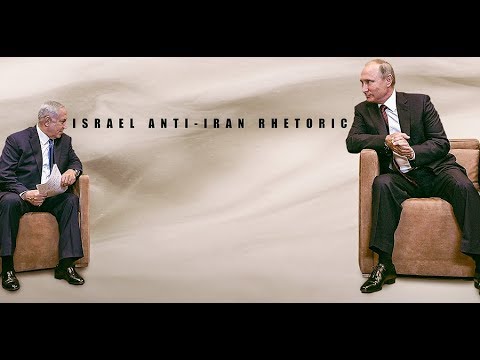
Press TV – August 25, 2017
Prime Minister Benjamin Netanyahu has said that Israel felt threatened by Iran’s growing influence in the Middle East. Netanyahu expressed his Iranophobic view in a meeting with Russian President Vladimir Putin in Russia’s Black Sea resort of Sochi on Wednesday. Press TV has asked Scott Rickard, former American intelligence linguist from Tampa, Florida, and Brent Budowsky, a columnist at The Hill from Washington, to give their thoughts on the issue.
Rickard said Tel Aviv is concerned about the fact that the regime could not carry out its old project to spread sectarian divisions and pave the way for dismemberment of the countries in the Middle East region because of the Iranian-led resistance against Israeli policies, not only in the occupied territories of Palestine but also in the whole region.
“Iran is not a threat to Israel whatsoever. The threat that Israel sees is the fact that their Oded Yinon Plan is being put to a hold by Iran,” the intelligence linguist said on Thursday night.
“They (the Israelis) look at Iran as a threat only because they have no influence on their governments and Iran is autonomous and is not under the Zionist influence,” he added.
Since the victory of the Islamic Republic of Iran in 1979, Tehran has been critical of Israel’s policies in the region, whereas “no leaders [of other states] even dared to speak out against Zionism,” Rickard argued. … continue
Blog Roll
 Aletho News
- IRGC commander declares ‘new phase’ of reprisal attacks against aggressors
- Israel’s air defenses overwhelmed by cluster-warhead Iranian missiles: Reports
- Striking Iran’s Infrastructure Would Have Little Military Impact – Report
- What’s Behind U.S./Israeli Strikes On Iranian Pistachio Factories?
- Seyed M. Marandi: U.S. Military DIVIDED? Iran’s Secret Defense EXPOSED
- How I fell foul of the BBC thought police
- The End of NATO
- 37 days of war on Iran cost US staggering $42bln, tracker shows
- Baghdad tells Asian refiners, traders to begin loading Iraqi crude amid Iranian exemption
- Under fire, Moscow and Tehran close ranks
- If Americans Knew
- Trump says Iranians appreciate bombs, WHO warns of nuclear risks – Daily Update
- U.N. experts demand Israel release prominent Gaza doctor after reports of ‘severe torture’
- Israel’s Latest Genocide Is Against the Shias of Lebanon. Why Is the World Silent?
- How Eliot Cohen’s influence over U.S. war-making paved the way for Trump’s war crimes in Iran
- Israelis don’t pay for the weapons we ‘sell’ to them — US taxpayers do
- While Distancing from AIPAC, Most 2028 Democratic Hopefuls Are Still Embracing Israel
- A brief history of the Israeli nuclear program, the open secret at the heart of the Iran war
- Israeli Settlers Killed a Palestinian Farmer on His Own Land, in Front of His Father. Yes, Again
- The US-Israeli War on Science is an Assault on our Future
- 100+ International Law Experts Say US Strikes on Iran Violate UN Charter, Could Be War Crimes
- No Tricks Zone
- An Inconvenient Tree: Uncovered In Alps… Europe Much Warmer Than Today 6000 Years Ago
- New Study Reports A 60% Slowdown In Greenland’s Ice Loss Rate In The Last Decade
- Low Intensity Tornado Wrecks Major Solar Farm, Creating A Potential Toxic Dump
- New Study Finds Warming Saves Lives…Cold Temperatures 12 Times More Deadly Than Excess Heat
- German Science Blog Accuses PIK Climate Institute Of Hallucinating Climate Tipping Points
- Devastating Assessment Of Comirnaty Vaccine By Former Senior Pfizer Europe Toxicologist
- New Study: CO2 Is ‘Effectively Negligible’ As An Explanatory Climate Change Factor Since 2000
- Former Pfizer Toxicologist Dr. Helmut Sterz Tells Bundestag Hearing Pfizer Vaccine Should Have Never Been Approved
- Energy Expert: Germany’s Nuclear Phaseout Was A “500 Billion Euro Mistake”
- New Research: South Australia’s Mid-Holocene Sea Surface Temperatures Were 4°C Warmer Than Today
 Aletho News