UK Culture Minister Claims More Arms to Ukraine Will Cut Energy Bills
Samizdat – 20.09.2022
The UK’s embargo on energy imports has helped send the price of oil and natural gas soaring, with a knock-on effect on the broader inflation rate, now at 10 percent. Businesses face a harsh winter, with almost three-quarters of British pubs saying they will have to shut their doors.
A British cabinet minister has claimed the government’s pledge of £2.3 billion in military aid to Ukraine next year will cut soaring energy bills at home.
Digital, Culture, Media and Sport (DCMS) Secretary Michelle Donelan told Sky News’ Kay Burley on Tuesday morning that arming President Volodymyr Zelensky’s regime was key to reducing “dependence” on Russian energy exports.
“We believe it is fundamentally important that we’re standing up for democracy, that we’re continuing to protect Ukraine in their fight, that we’re standing up for the rest of the world who needs to end their global dependence on Russia, which is one of the factors behind the increasing price in fuel,” Donelan said.
“So this is actually going to help the cost of living of people, not just in the UK, but across the globe as well,” the cabinet minister claimed. “And we hope that other countries will see what we’re doing and follow our example.”
Western sanctions on Russia, including the UK’s embargo on energy imports, have backfired, helping send the price of oil and natural gas soaring to levels five or six times those at the start of 2021. That has had a knock-on effect on the prices of other goods, with general inflation hitting 10 percent.
Household bills have more than doubled as regulator Ofgem has raised its price cap. Businesses, which are not protected by that limit, face a harsh winter, with almost three-quarters of British pubs surveyed saying they expect to have to shut their doors.
Donelan could not clarify how new Chancellor of the Exchequer Kwasi Kwarteng would fund the latest splurge on arms, saying only: “We will outline exactly where that money is coming from.”
New Prime Minister Liz Truss has promised to reverse tax increases made by former chancellor Rishi Sunak — her rival in this summer’s Conservative Party leadership election — to pay for the COVID-19 lockdown furlough scheme and to clear the resulting backlog of cases in the National Health Service (NHS).
The culture secretary rejected the notion that the inflationary crisis would undermine the government’s backing for Kiev’s war on the Donbass republics.
“We are not re-evaluating our support in Ukraine, we are doubling down on our support in Ukraine,” Donelan insisted.
Authorities in the Donetsk and Lugansk Peoples’ Republics, which Russia launched its special military operation to defend, have repeatedly stressed that the West has knowingly been giving Ukrainian troops and neo-Nazi militias heavy artillery and other weapons used to kill civilians.
Ukrainian forces again shelled the centre of Donetsk city on Monday, killing 13 people at a bus stop and shop — including two children, according to Mayor Alexei Kulemzin.
Images from the scene showed human bodies torn to pieces. The DPR mission to the Joint Centre for Control and Coordination (JCCC) said nine shells, of the 155mm calibre fired specifically by NATO-standard howitzers such as the US M777, hit the site of the massacre.
Five more people were killed and six injured in the front-line city on Tuesday when shells hit a theatre where a memorial service was being held for a female officer in the Donetsk People’s Militia.
Kiev vows to use force against breakaway regions
Samizdat | September 20, 2022
Senior officials in Kiev have dismissed as irrelevant plans for a number of current and former Ukrainian regions to hold referendums on whether to join Russia.
Andrey Yermak, President Vladimir Zelensky’s chief of staff, described the proposed votes as “blackmail” by Moscow.
“This is what fear of defeat looks like. The enemy is afraid and uses primitive manipulations,” he said in a post on social media on Tuesday.
Yermak added that “Ukraine will solve the Russian question,” insisting this could be done “only by force.”
Foreign Minister Dmitry Kuleba also downplayed news of the upcoming referendums, dismissing the move as a “sham.”
“Ukraine has every right to liberate its territories and will keep liberating them whatever Russia has to say,” he tweeted.
The condemnations and threats came in response to bids by the Donetsk and Lugansk People’s Republics, as well as Ukraine’s Kherson and Zaporozhye regions, to hold referendums on the question of joining the Russian Federation. The votes could take place as early as this week.
Kiev previously threatened any person who takes part in such a plebiscite with criminal prosecution. Ukrainian Deputy Prime Minister Irina Vereshchuk said participants could be sent to prison for up to 12 years.
EU Threatens To Suspend €7.5BN In Hungary Funding Amid Charges Of ‘Cozying Up’ To Putin
By Tyler Durden – Zero Hedge – September 19, 2022
The EU’s patience with Viktor Orban’s Hungary is running extremely thin after years of wrangling and threats from Brussels of triggering the “rule of law” mechanism, despite recently announced efforts of Budapest to establish an anti-graft agency.
It seems Russia’s war in Ukraine is hastening a confrontational and fractured ending to the standoff, with the EU on Sunday threatening to freeze 7.5 billion euros which had been earmarked for Hungary, citing persisting corruption and fraud.
It’s been no secret that Orban has been a thorn in the side of European efforts to punish and isolate Putin’s Russia. While Hungary has demanded exemptions from EU energy sanctions on Russia, and has meanwhile enjoyed cheap gasoline and other energy at a moment prices in the rest of Europe have gone steadily up over the course of the war – and into what’s sure to be a tough winter – the belief among leading EU states is that joint bloc anti-Russia actions have been largely blunted. The timing of the fresh EU threats is not going unnoticed.
Bloomberg in a fresh report has put the dilemma as follows: “But while most member states have been engaged in a desperate scramble to secure alternative gas supplies ahead of the winter, Orban has deepened his country’s ties to the Kremlin, exploiting the exemptions he demanded from EU sanctions to secure increased imports of gas from Russia.”
Poland has remained a powerful impediment thus far to Brussels triggering any significant rule of law penalties, despite Warsaw remaining at the forefront of denunciations of Russia’s invasion.
“During years of frustration at the Hungarian government, Orban has been shielded from the EU’s main disciplinary machinery, known as the article 7 procedure, by the support of the nationalist government in Warsaw — because that mechanism too requires the endorsement of all the other members,” Bloomberg recounts. “The war in Ukraine has soured Orban’s relationship with the Polish government, which has been among the most ardent supporters of firm action against Putin, but for now the Poles are standing by Orban.”
Orban has cast efforts to “punish” his country in terms of a war on traditional values. For now, Poland seems to agree… the vast divergence in rhetoric on the Russia-Ukraine conflict notwithstanding.
Prime Minister Mateusz Morawiecki said Sunday, “Poland will strongly oppose any action of European institutions that intend to unduly deprive any member states of funds, in this case Hungary.”
Interestingly (given the timing of the EU’s threat to freeze funds), just days ago PM Orban reportedly told a closed-door meeting of officials from his ruling Fidesz party that he would fight efforts to extend EU sanctions on Russia:
Hungarian Prime Minister Viktor Orban expects European Union leaders to start talks on extending sanctions on Russia in the autumn but Budapest would try to block the move, Radio Free Europe/Radio Liberty reported, citing unidentified sources.
Orban, a harsh critic of EU sanctions on Moscow over its invasion of neighbouring Ukraine, made the remarks at a closed meeting to party members in the western village of Kotcse last week, RFE/RL said on its Hungarian website on Friday.
He also appeared to once again blame the West for the Ukraine conflict spiraling out of control, and continued his theme of anti-Russia sanctions ultimately blowing back on populations at home, or shooting the European economy in the foot.
Russian media too has been featuring recent quotes of Orban’s lambasting collective Western policy: “The Hungarian leader allegedly told his supporters that he believed Ukraine may end up losing between one third and one half of its territory due to the conflict with Russia, RFE/RL reported on Friday, citing participants of the meeting in the village of Kotcse.”
Budapest has meanwhile lashed out at the European Parliament’s (EP) recent move to approve a resolution stating that Hungary is no longer a “full democracy.” That nonbinding EP vote from last week cited Hungary’s failures to uphold “respect for human dignity, freedom, democracy, equality, the rule of law, and respect for human rights, including the rights of persons belonging to minorities” – as the text reads, in repetition of prior EP statements.
A Fidesz statement said in response: “It is unforgivable that, while people are suffering from the severe economic effects of wartime inflation and misguided sanctions, the European Parliament is attacking Hungary again.”
Iran to buy, swap 15 mcm per day of Russia’s gas via Azerbaijan
Press TV – September 19, 2022
Iran will import Russian gas through pipelines from Azerbaijan under arrangements agreed in a major deal between Tehran and Moscow two months ago, according to a report published in the local media.
The semi-official Fars news agency said in a Monday report that Iran will buy some 9 million cubic meters (mcm) per day of gas from Russia and will take delivery of another 6 mcm per day under a swap deal for the purpose of delivery to Russian gas customers to the south of Iran.
The report cited data from an internal report of the Iranian Oil Ministry and said the purchase and swap arrangements are related to a $40 billion deal signed in July between Iran’s state oil company the NIOC and Russia’s Gazprom.
Earlier reports had indicated that Iran could take delivery of Russian gas from Turkmenistan for the purpose of swap delivery to Turkey and Iraq.
However, the new data suggest Iran will use the 15 mcm per day of gas supply from Russia to strengthen its domestic supply network in the densely populated regions in the northwest while being able to export increased amounts of natural gas to Turkey and Iraq through pipelines in the west of the country.
Iran is already in a gas swap arrangement with Turkmenistan and Azerbaijan under which it consumes gas received from Turkmenistan in its northeastern regions and delivers the same amount of gas to Azerbaijan.
The Fars report said Iran will deliver the equivalent of 6 mcm per day of gas to Russian customers in the south in the form of liquefied natural gas (LNG). It added that Gazprom will be a partner in the liquefaction process.
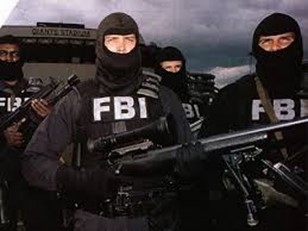
A Danger of Giving FBI Agents Quotas on Domestic Terrorism and White Supremacy Related Crime
By Adam Dick | Ron Paul Institute | September 15, 2022
Sometimes police will be given quotas for ticketing drivers. Results of the pressure put on cops to meet their ticket targets tend to include that many drivers are pulled over and ticketed for minor infractions that would be better overlooked or based on dubious or fabricated grounds. Is a similar quota system, with expectable similar results, developing now in regard to “domestic terrorism” and “white supremacy” related crime at the Federal Bureau of Investigation (FBI)?
A Wednesday Washington Times article by Kerry Picket and Joseph Clark, referencing information provided by current and former FBI agents, suggests that is the case. Picket and Clark write:
Current and former FBI agents tell The Washington Times that the perceived threat has become overblown under the administration. They say bureau analysts and top officials are pressuring FBI agents to create domestic terrorist cases and tag people as White supremacists to meet internal metrics.
“The demand for White supremacy” coming from FBI headquarters “vastly outstrips the supply of White supremacy,” said one agent, who spoke on the condition of anonymity. “We have more people assigned to investigate White supremacists than we can actually find.”
The agent said those driving bureau policies “have already determined that White supremacy is a problem” and set agencywide policy to elevate racially motivated domestic extremism cases as priorities.
“We are sort of the lapdogs as the actual agents doing these sorts of investigations, trying to find a crime to fit otherwise First Amendment-protected activities,” he said. “If they have a Gadsden flag and they own guns and they are mean at school board meetings, that’s probably a domestic terrorist.”
The Gadsden flag is a historical American flag with a yellow field showing a timber rattlesnake and the words: “Don’t Tread on Me.” It is often used as a symbol of liberty.
Read the complete article here.
Kiev will stop asking for Western support only after Russia’s “defeat”: FM
Samizdat | September 20, 2022
Kiev will no longer request weapons deliveries from the West, only after Ukraine prevails over Russia, Foreign Minister Dmitry Kuleba claimed on Monday, adding that the supplies are part of a “recipe to defeat” Moscow’s forces.
Speaking to Bloomberg TV, Kuleba indicated that despite a constant flow of Western armaments into the country, Kiev needs even more of them, given that it is now fighting such an “enemy” as Russia.
“Sometimes I’m being asked when there is enough of weapons that we have received. And I always say… it will be enough only after Ukraine wins. Until then, we will be asking for more,” he stated.
The Foreign minister also noted that Kiev’s recent counter-offensive in Kharkov region has shown that the combination of Ukrainian forces’ “stamina” and Western-supplied weapons, most of which come from the US, are “the recipe to defeat Russia on the ground.” Moscow, however, insisted that it pulled its troops back from some areas to “regroup” and to strengthen the Russian forces in the Donetsk region.
At the same time, Kuleba admitted that sustainability of Western weapon deliveries is an issue, which needs to be constantly raised by Kiev authorities as they talk with their Western colleagues.
NATO has been supporting Ukraine since 2014, but has significantly ramped up its military assistance after Russia launched its military operation in the neighboring country in late February.
However, the delays in weapons deliveries have been quite frequent. Last week, Die Welt reported that while Germany has agreed to provide Ukraine with 18 self-propelled RCH-155 howitzers in addition to the military hardware already supplied, the guns would not arrive for at least another 30 months.
Earlier this month, Germany’s defense minister, Christine Lambrecht, claimed that Berlin has handed over “an unbelievable amount” of weaponry from its reserves to Ukraine, adding that the country has “reached the limit” in terms of what it can send to Kiev.
Moreover, earlier this month, NATO secretary general Jens Stoltenberg acknowledged that the bloc’s members have significantly depleted their weapons stockpiles, urging the Western defense industry to ramp up arms production.
Japan maintains sanctions but boosts its LNG imports from Russia
Japan’s economic woes are compounded by anti-Russia sanctions
By Ahmed Adel | September 20, 2022
Despite being one of the very few non-Western countries to join the US-led sanctions against Moscow, Japan has suddenly tripled the amount of liquefied natural gas (LNG) imported from Russia to solve its energy problem. Although the Japanese government plans to reduce its dependence on Russian gas supplies, it appears that Tokyo cannot immediately give up gas and fuel from the Eurasian country.
According to the Japanese Ministry of Finance, Japan in August increased the amount of LNG imported from Russia by 211.2% compared to last year. It is noted though that crude oil imports in the same period year-on-year decreased by 20.3%. According to the data, coal imports from Russia in August decreased by 32.6% compared to the same period last year.
In the opposite direction, iron ore imports increased by 44.9%. In addition, Japan increased the number of vegetables and fruits imported from Russia by 154%, but reduced the amount of grain and soybean imports by 94-95%. While the total volume of goods exported from Japan to Russia in August decreased by 24.3% compared to the same period last year, reaching $384 million, the amount of Japanese goods imported from Russia recorded an increase of up to 67.4%, with a value of up to $1.15 billion.
The Japanese want to gradually reduce imports of Russian coal and oil, but Tokyo does not want to cut the amount LNG because this is a gas supply that plays an extremely important role in maintaining the country’s economy.
At the end of June 2022, the G7, the group of leading industrialised countries in the world, which includes Japan in its ranks, announced a plan to reduce dependence on the supply of gas, oil, and fuel from Russia. However, the sharp increase in LNG imports from Russia to Japan seems to indicate a different truth. Not only Tokyo, but also many Western countries, will find it difficult to end their dependence on Russian gas in the short and medium term.
It is recalled that Japan’s energy self-sufficiency rate is only 11%, much lower than the US’s 106%, Canada’s 179%, and the UK’s 75%. Therefore, if Russia stops selling oil and gas to Japan, Tokyo will face a great risk of energy insecurity.
This month, G7 countries also announced their intention to impose a price cap on Russian oil. However, the EU itself cannot find a common voice on this issue, especially as Moscow has warned that “unfriendly” countries will not have the opportunity to import oil, gas and fuel from Russia if they impose a cap. This is a scenario that Japan wants to avoid.
According to the Ministry of Economy, Trade and Industry (METI), Japan’s total energy consumption in 2019 is equivalent to 247 million tons of oil, of which natural gas accounts for nearly 8.7%. Renewable energy (other than electricity) accounts for only a very small part, about 0.1% and even tends to decrease slightly over time. In recent years, Japan has not discovered any more natural gas fields of major commercial value. Japan, for its part, only produces about 2 million tons per year.
To meet domestic demand, Japan imported 82.9 million tons in 2018 – from Australia 34.6%, the Middle East 21.7%, and Malaysia 13.6%, but also from host of other countries. In fact, Japan uses LNG mainly for power generation through 37 LNG terminals, with the highest proportion belonging to JERA (42%) and Tokyo Gas (17%).
After the Fukushima nuclear power plant meltdown, Japan changed its energy development strategy, focusing on the issue of safety and energy security. Along with that, Japan also strives to further enhance energy efficiency.
In the context of Japan’s limited potential to exploit renewable energy, the use of nuclear power is opposed by many domestic organisations. For this reason, LNG imports became a key strategy for Japan. By 2030, the share of LNG in Japan’s power generation capacity is forecast to reach 27%.
It is noted though that August marked the thirteenth month in a row that Japan has been importing products more than it has been exporting, with about half of the deficit coming from energy imports from the Middle East.
“The weaker yen is boosting (the cost of) imports at a time of surging energy prices. Energy and grain prices have shown signs of stabilizing recently, but the impact of the sharp drop in the yen will continue for a while with a lag,” one analyst told Japanese daily Mainichi.
In this way, Japan’s anti-Moscow sanctions are also affecting its economy, just as it is all across Europe. There is little evidence either that Tokyo is planning to reverse its sanctions, suggesting that its economic woes will continue to be compounded by the self-sabotaging sanctions imposed against Russia.
Ahmed Adel is a Cairo-based geopolitics and political economy researcher.
Bombshell court filing suggests the FBI knew ‘Russiagate’ was a fraud in January of 2017, but it kept up its pressure on Trump
Igor Danchenko’s confession appears to reveal the bureau’s true intentions
By Felix Livshitz | Samizdat | September 20, 2022
Lawyers for Igor Danchenko, the primary source of the notorious and utterly discredited “Trump-Russia|” dossier compiled by former British spy Christopher Steele, have filed a motion to dismiss the charges brought against their client by special counsel John Durham.
In the process, they have revealed another startling and potentially criminal dimension to the FBI’s probe of potential collusion between the campaign of former President Donald Trump and the Kremlin.
Danchenko’s case
Durham charged Danchenko in November 2021 with five counts of lying to the bureau. Four of those relate to statements he made in a February 2017 interview, in which he repeatedly claimed to have met and had conversations with Sergey Millian, a Belarusian-born businessman who claimed ties with the Trump campaign.
Danchenko, and thus Steele, claimed Millian was a key source of the dossier’s most explosive allegations – namely, that there was a “well-developed conspiracy of cooperation” between Trump and the Kremlin, that Russia’s GRU had hacked the Democratic National Convention email server and provided the content for WikiLeaks for the purposes of “plausible deniability,” and the then-Presidential candidate had received a “golden shower” from prostitutes while in Moscow years earlier, which was filmed by Russian intelligence and could be used as “kompromat.”
In his FBI interview, conducted between February 9 and 12, 2017, Danchenko claimed to have received this incendiary intelligence through telephone conversations and email exchanges with Millian, who also suggested they discuss matters further in person in New York City. However, Durham charges that Danchenko fabricated these calls, repeatedly emailed Millian without response, and was never invited to any meeting anywhere.
The new court filing shows that to buttress these claims, Danchenko provided the Bureau with a synopsis of a mid-August email he sent to Millian, a month prior to his sit-down interview series. Yet, as the filing notes, the communication makes no mention of the phonecalls they’d purportedly engaged in previously, or the prospect of meeting in person.
Danchenko’s lawyers now argue that this email in fact proves he wasn’t lying about having had direct contact with Millian, and made clear they’d never spoken to his interviewers. Problematically for all involved, though, Danchenko, and as a result Steele, both attributed wild charges against the Trump campaign to Millian before this email.
FBI vs the truth
In turn too, this means the FBI had concrete reasons to believe at least some of the Steele dossier was bogus on January 25, 2017 at the very latest. But the Bureau, undeterred, continued to not only “assess” the dossier’s veracity, but to use it as a justification for further surveillance of Trump 2016 presidential campaign adviser Carter Page, and intensifying its investigation of the campaign.
The FBI’s questionable use of the dossier in court submissions to secure FISA warrants against Page is well-known, and was a key criticism of a December 2019 Justice Department Inspector General review, which determined the Bureau made 17 errors or omissions in its FISA applications.
Even more damningly though, just two days after Danchenko presented the discrediting email to the FBI, Trump privately met with then-FBI director James Comey, and the President specifically raised the Steele dossier.
According to Comey’s account of the dinner, as retold in the Mueller report: “the President… stated that he was thinking about ordering the FBI to investigate the [Steele] allegations to prove they were false. Comey responded that the President should think carefully about issuing such an order because it could create a narrative that the FBI was investigating him personally, which was incorrect.”
In other words, Comey played Trump, appealing to his ego and feigning concern for his reputation, when he knew better than anyone bar Steele and Danchenko themselves that the FBI was already investigating the former MI6 operative’s “allegations” and knew them to be meritless. Had he told the truth, perhaps the entire Russiagate fraud would’ve collapsed before it had even properly erupted publicly.
If he’d known, the President may not have been successfully pressured into demonstrating his anti-Russian credentials with an increasingly hostile and belligerent stance towards Moscow, which saw Trump go to dangerous lengths the previous administration had deliberately avoided, such as arming and legitimizing the Neo-Nazi Azov Battalion, and shredding vital Cold War arms control treaties, brinksmanship that brought us to where we are today.
Hate of Bureau
In any event, while the filing is in many ways useful confirmation of top-level FBI knowledge of the dossier’s inherent worthlessness at an early stage, it could pose problems for Danchenko’s prosecution.
His conviction hangs on the ability of Durham’s team to prove his lies to the FBI materially influenced its investigation, and it can be easily argued that the Bureau’s evident determination to investigate Trump’s non-existent Russia ties meant no disclosure, true or false, would’ve convinced the agency to stop.
That the FBI was utterly determined irrespective of facts to damage Trump, first as a candidate, then as leader, has long-been clear, yet it has largely faded from public memory. One might argue it’s quite incredible that even the former president’s supporters have not invoked this dubious history in the wake of the Bureau’s raid on Mar-a-Lago, which bears clear hallmarks of being likewise politically motivated.
Evidence of the FBI’s anti-Trump agenda is amply available in black and white – so too the agency’s surging Russophobia. Two of the key Bureau figures central to the Trump-Russia probe, one-time lovers Peter Strzok and Lisa Page, spelled this out both in public testimony and private text messages.
On the latter front, Strzok texted Page in July 2016 – right when the Trump-Russia probe was launched – to declare, “f*** the cheating motherf***ing Russians… bastards… I hate them… I think they’re probably the worst. F***ing conniving cheating savages.” He also pledged that the pair would together “stop” Trump from winning. Page was only slightly less foul-mouthed when she testified to Congress in July 2018:
“It is my opinion that with respect to Western ideals and who it is and what it is we stand for as Americans, Russia poses the most dangerous threat to that way of life.”
Quite why Strzok and Page, along with many other Bureau operatives, haven’t been prosecuted for their role in arguably the biggest US national security scam since the Iraq War isn’t clear.
Hospital Runs Myocarditis In Kids Awareness Commercial As If It’s A Common Illness
“Suri had a bad stomach ache that turned out to be myocarditis”
By Steve Watson | Summit News | September 16, 2022
The New York-Presbyterian Hospital is running a commercial in an effort to raise awareness of myocarditis in children, seemingly suggesting that inflammation of the heart in children is a common condition.
The video, titled “Pediatric Patient Story – Suri” tells the story of a child who “had a bad stomach ache that turned out to be myocarditis, a serious inflammation of the heart.”
The video caption states that “Our multidisciplinary pediatric critical care team worked to regulate her heartbeat – and got her back to feeling like herself.”
Watch:
Myocarditis cases in children are rare, with studies indicating that in children there are 1 to 2 per 100,000, usually stemming from cold viruses. The majority of those cases resolve on their own or with treatment.
So why the sudden need to raise awareness?
Likely because data from the Vaccine Adverse Event Reporting System (VAERS) shows how reports of myocarditis and pericarditis related to vaccines exploded in 2021 and 2022.
Report: Pentagon Orders Review of US Clandestine Ops After Social Media Takedowns of Fake Accounts
Samizdat – 19.09.2022
Internet researchers Graphika and the Stanford Internet Observatory revealed in late August that over 150 false personas and media websites formed in the United States had been removed in recent years by Twitter and Facebook.
Major social media firms discovered and removed phony accounts believed to be operated by the US military in violation of the platforms’ policies, prompting the Pentagon to request a thorough examination of how it conducts clandestine information warfare, the Washington Post reported on Monday.
According to the report, after the White House and some federal agencies expressed growing concerns over the Defense Department’s attempted manipulation of audiences abroad, Colin Kahl, the undersecretary of defense for policy, reportedly instructed the military commands that engage in psychological operations online last week to provide a complete accounting of their activities by next month.
The US Central Command (CENTCOM) is one of the agencies whose operations are under investigation, the undisclosed sources claimed, despite the fact that the researchers from Graphika and Stanford did not link the phony accounts to the military.
The takedowns of bogus accounts happened during the last two or three years, per the report. The researchers did not specify when the takedowns happened. They claimed several were recent and involved articles from the summer that promoted anti-Russian narratives by referencing the Kremlin’s “imperialist war” in Ukraine and announcing the conflict’s direct effects on Central Asian nations.
Importantly, they discovered that overt accounts actually drew more followers, and that false personas, which used strategies allegedly popular in nations like Russia and China, did not acquire much traction. With its headquarters in Tampa, CENTCOM oversees military operations in 21 Middle Eastern, North African, Central Asian and South Asian nations.
At a virtual meeting called by the National Security Council, Kahl reportedly announced his review and said he wanted to know what operations had been conducted, who they were targeting, what tools were being used, why military commanders had chosen those tactics, and how successful they had been, according to the report.
One defense official reportedly stated that essentially the message was: “You have to justify to me why you’re doing these types of things.”
However, the Pentagon’s press secretary, Air Force Brig. Gen. Patrick Ryder is quoted in the report as saying that the military’s information operations “support our national security priorities,” and that they must be carried out in accordance with applicable laws and procedures.
“We are committed to enforcing those safeguards,” he added.
Inflammatory Posts From Fake Accounts That Violate Rules
The accounts that were deleted, per the report, included one for a fictitious Persian-language media outlet that disseminated posts that were copied from Radio Free Europe and Voice of America Farsi, which are supported by the US government. Another, it alleged, was connected to a Twitter account that previously claimed to operate from CENTCOM.
According to the article, one bogus account tweeted an emotional message saying relatives of deceased Afghan refugees had informed them that bodies had been returned from Iran with missing organs. The tweet reportedly contained a link to a video included in an article published on a website with ties to the US military.
While CENTCOM has not confirmed or denied the existence of such accounts under its control, according to a defense official, it would “absolutely be a violation of doctrine and training practices” if the tweet about organ harvesting is proven to be connected to the military.
Officials familiar with the situation indicated that Facebook disabled in 2020 fictitious personas purportedly developed by CENTCOM to combat “misinformation” spread by China that the coronavirus responsible for COVID-19 was developed at a US Army lab in Fort Detrick, Maryland.
The fake profiles were reportedly used to spread “truthful” information from the US Centers for Disease Control and Prevention regarding the virus’ origin in China, according to the officials. They were active in Facebook groups where people conversed in Arabic, Farsi and Urdu.
Despite being permitted by law and policy, the US government’s use of fictitious social media accounts has reportedly caused controversy inside the Biden administration, with the White House urging the Pentagon to explain and defend its procedures.
Several US officials quoted in the report revealed that the White House and officials within the State and Defense departments are worried policies are too open-ended, and could allow for strategies that, even if they are used to spread accurate information, run the risk of undermining American credibility.
“Our adversaries are absolutely operating in the information domain,” one of the sources said. “There are some who think we shouldn’t do anything clandestine in that space. Ceding an entire domain to an adversary would be unwise. But we need stronger policy guardrails.”
‘You Got Caught, That’s the Problem’
Pentagon doctrine and policy forbid the military from spreading lies, but there are purportedly no regulations requiring the use of accurate information in psychological operations. For instance, the military occasionally uses fiction and humor to persuade people, but normally communications are expected to stick to the facts, according to officials.
Officers from Facebook and Twitter contacted the Pentagon in 2020 to voice their concerns about the fake accounts they were being forced to delete because they appeared to be connected to the military. That summer, Christopher Miller, the assistant director for Special Operations/Low Intensity Conflict, who is in charge of overseeing influence operations policy, had a conversation with David Agranovich, Facebook’s director for global threat disruption, in which the latter cautioned him that if Facebook could detect them, so could US adversaries.
“His point was ‘Guys, you got caught. That’s a problem,'” one of the sources said.
According to the report, Miller failed to take adequate action due to the fact that the Trump administration’s term was already approaching its end.
Kahl requested a study of Military Information Support Operations, or MISO — the Pentagon’s term for psychological operations — in response to concerns from the Biden White House. According to the report, a draft detailed that communication with other agencies, like the State Department and the CIA, needed to be strengthened, and that regulations, training, and monitoring all needed to be tightened.
The unnamed officials claimed that while there have been instances when the military has promoted false information, these were due to insufficient control over contractors and staff training rather than systemic issues. The same officials stated the Pentagon leadership did not do anything with the review before Graphika and Stanford released their findings on August 24.
Covert Psy Ops to Counter Washington’s Rivals
Military leaders have long sought to counter – including online – the rise of Russia and China as their strategic rivals. Congress has also agreed with that goal; in fact, congressional lawmakers passed legislation in late 2019 confirming the military could conduct operations in the “information environment” to defend the US and combat foreign disinformation aimed at undermining its interests.
This was done in response to frustration with what was perceived as legal barriers preventing the Defense Department from carrying out covert activities in cyberspace. The law, known as Section 1631, reduces some of the friction that previously prevented such operations by allowing the military to conduct covert psychologic operations without infringing on what the CIA claims to be their covert power.
“Combatant commanders got really excited,” one of the defense sources stated. “They were very eager to utilize these new authorities. The defense contractors were equally eager to land lucrative classified contracts to enable clandestine influence operations.”
The insider added that military officers lacked necessary skills to supervise “technically complex operations conducted by contractors” or coordinate such endeavors with other interested parties within the US government.
Moreover, an unnamed US diplomat told the Washington Post that the US “shouldn’t be employing the same kind of tactics that our adversaries are using because the bottom line is we have the moral high ground.”
“We are a society that is built on a certain set of values,” they asserted. “We promote those values around the world and when we use tactics like those, it just undermines our argument about who we are.”
Military psychological operations to advance American narratives abroad are surely nothing new, but the widespread use of Western social media has led to an expansion of strategies, including the employment of manufactured personalities and images often known as “deep fakes.”
According to the argument, opinions given by someone who looks like, for example, an Afghan woman or an Iranian student, may be more convincing than if the US government were overtly promoting them.
However, the majority of the military’s influence activities are open, supporting American policies in the Middle East, Asia, and other regions under its own name. Officials have noted there are legitimate reasons to employ covert methods, such as attempting to eavesdrop on a closed terrorist discussion group.
Is It Even Worth It?
Currently, determining whether the military’s clandestine influence efforts are producing outcomes is a critical concern for senior politicians.
“Is the juice worth the squeeze? one person reportedly said. “Does our approach really have the potential for the return on investment we hoped or is it just causing more challenges?”
According to the report by Graphika and Stanford, the covert operation had little effect. It stated that only 19% of the fabricated accounts had more than 1,000 followers, and that the “vast majority of posts and tweets” examined got “no more than a handful of likes or retweets.” The two most-followed assets in the data provided by Twitter were accounts that openly declared a connection to the US military, according to the report.
Featured Video

The Most Important Bet You’ve Never Heard Of
or go to
Aletho News Archives – Video-Images
From the Archives
Wars for Israel: A reminder of who’s giving the marching orders
By Damian Lataan | February 7, 2012
As the West prepares to march off to yet another war in the Middle East, we should perhaps remind ourselves of who is giving the West their marching orders.
In February 2003, just weeks before the US and their allies launched their attack on Iraq and her peoples, a delegation of US congressmen, together with the US Ambassador to the United Nations, John Bolton, a well known pro-Zionist and neoconservative war-hawk, were in Israel at the invitation of the Israeli government then led by Israeli Prime Minister Ariel Sharon.
Addressing the congressmen, Sharon told them ‘that Iran, Libya and Syria should be stripped of weapons of mass destruction after Iraq’. Later, Sharon told John Bolton ‘that Israel was concerned about the security threat posed by Iran, and stressed that it was important to deal with Iran even while American attention was focused on Iraq’. … continue
Blog Roll
 Aletho News
- UAE rejects report claiming it is ready to join war on Iran to reopen Hormuz
- A New Resistance Front: How Does Syria Factor into the Regional War?
- Gulf states weigh pipeline expansion plans, hoping to bypass Hormuz
- Iran sets up ‘tollbooth’ system in Strait of Hormuz
- Wave 90: IRGC strikes US-linked industrial sites in Gulf
- Iran Says US-Israeli Claims of Its Military Strength Are Wrong
- Trump’s April Fools’ Address to the nation
- The Most Important Bet You’ve Never Heard Of
- The killing of three Indonesian soldiers in Lebanon should remind Jakarta that Israel does not want peace
- Defeated and delusional: Netanyahu’s remarks reveal $80bn war failure, says analyst
- If Americans Knew
- ‘War crime’: Global condemnation as Israeli ministers celebrate death penalty law targeting Palestinian prisoners
- 7 Ways Israel Is Turning Lebanon Into Gaza
- World’s Leading Football Bodies Under Fire Over Israel Policies
- Experts warn of possible use of nukes against Iran
- Israeli invasion of Lebanon could be worse than 1982, warn European officials
- Passover: Liberation and collective punishment
- Trump says the quiet part out loud: (Israel’s) war on Iran > Americans’ health – Daily Update
- Gaza families reunite years after babies evacuated amid Israel’s war
- International Rescue Committee warns Gaza’s children face grave protection risks
- Iran’s Alleged 47-Year War on America: Debunking the 1,050 American Deaths Canard
- No Tricks Zone
- Low Intensity Tornado Wrecks Major Solar Farm, Creating A Potential Toxic Dump
- New Study Finds Warming Saves Lives…Cold Temperatures 12 Times More Deadly Than Excess Heat
- German Science Blog Accuses PIK Climate Institute Of Hallucinating Climate Tipping Points
- Devastating Assessment Of Comirnaty Vaccine By Former Senior Pfizer Europe Toxicologist
- New Study: CO2 Is ‘Effectively Negligible’ As An Explanatory Climate Change Factor Since 2000
- Former Pfizer Toxicologist Dr. Helmut Sterz Tells Bundestag Hearing Pfizer Vaccine Should Have Never Been Approved
- Energy Expert: Germany’s Nuclear Phaseout Was A “500 Billion Euro Mistake”
- New Research: South Australia’s Mid-Holocene Sea Surface Temperatures Were 4°C Warmer Than Today
- Storing Green Energy To Last Germany 10 Days Would Require A 60-Million Tonne Battery
- New Studies: UK Sea Levels Were 4 Meters Higher Than Today During The Mid-Holocene
 Aletho News