Sweden’s Psychological Defense Agency: Good disinformation is “basically true”

By Didi Rankovic | Reclaim The Net | September 6, 2022
There is no doubt that Russia, like any other major – and minor – power uses some form of propaganda and disinformation to further its goals, especially in wartime.
What’s difficult to gauge, at least at this time, is how applicable that may be in the current crisis: is Russia really trying to “exploit polarization and sow division,” in countries like Sweden, for example?
But what the fear of Russian disinformation – or apparent fear of it – has clearly managed is to make some state bodies, like Sweden’s Psychological Defense Agency, part ways with basic logic – and not be afraid to admit it to the world.
Hence, some of what is labeled as “disinformation” by this agency whose goal is to bolster the Swedes’ “moral fortitude” includes information that “is actually not false” and is even, “basically true.”
“War is peace. Freedom is slavery. Ignorance is strength,” Orwell wrote.
Psychological Defense Agency head Henrik Landerholm, meanwhile, has as recently as last week been quoted by The Times as coming up with this:
“Good disinformation is actually not false. Good disinformation is basically true and only somewhat tweaked.”
Any arbiter of “good and bad disinformation” operating on such nuance is entering the dangerous territory of becoming the judge and jury of truth, and producing bias that can be used and abused beyond any one crisis and political circumstance.
And it soon becomes clear that the Times piece – even though putting “highly clickable” terms like “Russian” and “disinformation” right in the headline – actually has to do with Sweden’s internal politics and a looming election.
The premise with Sweden is that the society is “plagued by polarization and mistrust.” It has nothing to do with policy on Russia or the war – it’s that the Swedes are apparently fed up with rising crime, and unhappy with the authorities’ policy on immigration.
The “theory” here is that Russians, even if ostensibly quite busy elsewhere, will dedicate resources to exploit what already exists in Swedish society – namely, divisions over these burning issues.
Reuters decides to make it seem Russia is interested in making Sweden Democrats the second biggest party in parliament – and this party is denounced by the agency as having “neo Nazi roots.” But, “center-left” Social Democrats are still projected to win, we are reassured.
Dancing with the Politicians
US Foreign policy has become a full-time comedy routine

BY PHILIP GIRALDI • UNZ REVIEW • SEPTEMBER 6, 2022
If the non-stop dancing duo Biden and Blinken is seriously seeking to validate its view that the United States of America is and should be the world’s hegemon, they are going about it the wrong way. They should be taking their lead from Ukraine’s President Volodymyr Zelensky by turning their press conferences into entertainments with dancing bears and scantily clad chanteuses pirouetting and singing across the stage. They would benefit from recalling how Zelensky rose to power through his performances of comedy routines in which he would be prancing around on high heels with three colleagues who appeared to be mocking what might be construed as gay mannerisms to amuse the audience? Or perhaps the rather more outre performance where Zelensky would play a piano with his penis? If one can remember all that it would most definitely help to understand the foreign policy that is somehow playing out in Ukraine, where Zelensky has transitioned into a serious, unsmiling guy who is adept at solicitations for money and weapons. His pleading has become a shameless full-time endeavor as he now appears on thousands of screens via video link all over the world, saturating the airwaves and dropping in on both major and minor gatherings. Australian journalist Caitlin Johnstone recalls how he has appeared on “the Grammy Awards, the Cannes Film Festival, the World Economic Forum and probably the Bilderberg group as well, [while also] having meetings with celebrities like Ben Stiller, Sean Penn, and Bono and the Edge from U2. It’s as busy a PR tour as he could possibly have without having a discussion about the strategic importance of long-range artillery with Elmo on Sesame Street.”
Elmo might in fact be coming next as NPR is clearly one of Zelensky’s biggest fans. One also suspects that before the Ukrainian President is finished, he will be addressing a rotary meeting in Sioux Falls South Dakota. And Zelensky has even turned begging into a family affair, with his wife Olena welcomed by the President and First Lady at the White House while also going on to address the US Congress, entreating America’s Solons to provide plenty of cash and things that go bang to thwart the ambitions of one Vladimir Putin. As she put it, she is concerned lest her son and daughter be unable to return to school and university in the fall. She then observed that “We would have answers if we had air defense systems” which would enable a “joint victory in the name of life, freedom and the pursuit of happiness.”
Indeed, a high point of the recent antics has to be the unique cover photo shoot by Vogue magazine, in which the lovey-dovey couple Volodymyr and Olena grin and hug before the cameras. Zelensky declares his undying affection. Vogue aside, the entire Zelensky performance, choreographed as it is by neocons inside and outside the administration, is perfectly color and image coordinated. Zelensky has an endless supply of olive drab t-shirts and he entertains in Kiev a steady stream of statesmen and even heads of government from Europe and the US, including the US Attorney General Merrick Garland, who has appointed a seasoned Justice Department “Special Investigations”, i.e. “Nazi hunter” investigator, named Eli Rosenbaum to look into possible Russian war crimes.
The Garland/Rosenbaum dynamic duo will not be looking into possible Ukrainian war crimes like the recent assassination of Darya Dugina in Moscow as it is not part of the mandate from Biden/Blinken and besides which the Ukes are America’s friends, just like the Israelis who are such great friends that they also get a pass on whatever they inflict on the Palestinians, including shooting or blowing up civilians. Indeed, Zelensky’s White House approved message is always the same: “give us money and guns and we will defeat the Russkies.” So Honest Joe Biden gives them the cash and the things that go bang in the night and in return they get a hearty hand shake when the bundles of Benjamins get transferred into the trunk of someone’s car. All of which leads one to wonder if Mr Z is the best reliable source for anything having to do with himself and the corrupt toadies that adhere to him, given the recurring reports that some donated weapons are already making their way into the black market just as quickly as the money goes into officials’ pockets. Zelensky has reacted to criticism by shutting down opposition parties and media, assassinating dissident politicians and firing or imprisoning any other official who might be inclined to disagree with him.
Apart from that, there is allegedly a war going on, which may not be evident from all the horse trading taking place at the presidential palace. It also would appear to be counter-intuitive that the Russians, blamed without much in the way of evidence for atrocity after atrocity, have apparently proven willing to let Zelensky entertain all his guests undisturbed. If you are truly committing a lot of war crimes, why not add one more to the list by blowing up the Kiev presidential palace and both killing Zelensky and probably ending the war at a stroke?
There are, in fact, two wars taking place simultaneously. There is, to be sure, fighting going on around Donbas, but the more important conflict is the phony war being waged by the Biden Administration and a number of European Chancelleries in support of whatever is actually taking place in Ukraine. This latter aspect of the war consists of perhaps the most stifling – and effective – propaganda effort the world has ever seen. It includes Joe Biden and his brigade of clowns, but it also has a supporting cast consisting of NATO, a number of European heads of state and virtually the entire western media. Social media has also joined in the struggle, banning Russian originating news stories and opinion, and using algorithms and other forms of manipulation to make reporting favorable to Moscow go away. The allied effort to defeat and destroy Russia relies on lies, half-truths, and out-and-out deception. But why bother to do it? It is because the war was preventable and avoidable, which is what the White House and other governments cannot admit to the public. It makes absolutely no sense and will benefit no one when it is over, and “over” might mean “really over” as nuclear weapons are on the table.
But what about the good old American exceptionalism which Biden-Blinken and that stalwart warrior Merrick Garland are supposed to be defending? Well, that seems to have taken a hit as much of the world, watching the fiasco unfold in Ukraine, apparently doesn’t appreciate the Anglo-Saxon sense of humor. To them, the war in Ukraine would never have started if the US and Europeans had invested in the tiniest effort as mediators to come to a negotiated solution. They have given up on the United States as a “force for good” and have rather concluded that Washington is a global bully and a regular aggressor.
Former US Air Force colonel and PhD Karen Kwiatkowski has an interesting tale to tell about how far the mighty have fallen. She writes “… I saw that the Solomon Islands refused (ignored really, which is even better) a US Coast Guard request to come to port, to buy fuel, like with real American dollars, y’all! Why was the US Coast Guard floating around the South Pacific – were they lost? After getting a fuller picture – they were looking for lawbreaking fishermen and that’s where their mission took them…” So what was the US response to this outrage, which was immediately blamed on interference by the Chinese? We need “a new embassy in the Solomon Islands… along with a new five year engagement plan in the Pacific.”
During the Cold War before the Soviet Union collapsed in 1991, a commonly heard comment was that the country had become economically and politically an “Upper Volta with rockets,” which implied that the USSR spent so much on weapons that the civilian economy was starved of resources. Well, welcome to the former United States of America. As the nation’s decline and fall will no doubt be facilitated due to the millions of mostly Latino “asylum seekers” flowing over America’s southern border, the US as a “Bolivia with nukes” might be more appropriate. The world is tired of Washington and its pretenses and the walls will inevitably come tumbling down when the Biden unsustainable trillions of dollars of added debt-surge brings on bankruptcy Argentina style. A sharp change in course might be able to fix some of the problems, but there is an election coming up which the White House is keen to win by flooding its cherished constituencies with funny money in exchange for votes, a practice which once upon a time would have been seen as corruption. Come to think of it, the US has become a banana republic run by an essentially criminal gang that alternates every few years to pretend to be a democracy. Can’t get much lower than that, but Biden sure is trying!
Philip M. Giraldi, Ph.D., is Executive Director of the Council for the National Interest, a 501(c)3 tax deductible educational foundation (Federal ID Number #52-1739023) that seeks a more interests-based U.S. foreign policy in the Middle East. Website is councilforthenationalinterest.org, address is P.O. Box 2157, Purcellville VA 20134 and its email is temporarily pmgiraldi@gmail.com.
Biden speech is ‘dangerous escalation,’ most Americans say – poll

Samizdat | September 6, 2022
More than half of Americans believe that President Joe Biden’s September 1 speech in Philadelphia was a “dangerous escalation” of political rhetoric, designed to “incite conflict” in the US. Republicans and independents are overwhelmingly alarmed by Biden’s words, and even 18% of Democrats agree, according to a poll published Tuesday by the Trafalgar Group.
Standing before Independence Hall in Philadelphia, Biden used Thursday’s televised speech to claim that “equality and democracy are under assault” by “MAGA Republicans” led by his predecessor Donald Trump.
According to the Trafalgar survey, 56.8% of the Americans saw the speech as “a dangerous escalation in rhetoric and is designed to incite conflict amongst Americans,” while 35.5% said it was “acceptable campaign messaging that is expected in an election year.”
Broken down by party affiliation, 89.1% of Republicans, 18.7% of Democrats and 62.4% of independents considered Biden’s speech dangerous and divisive. Only 4.7% of Republicans and 31.2% of independents thought it was normal, along with 70.8% of Democrats.
“When voters tell you they think that the prepared remarks of a sitting president of the US is a dangerous escalation and was designed to incite conflict, we are living in terrifying times,” said Mark Meckler of Convention of States, the group that commissioned the poll.
“Perhaps even more terrifying is the fact that a huge majority of Democrats think this was just a routine, election year stump speech,” he added.
Biden, who repeatedly promised to unify the country, “has become the most divisive President in American history,” added Meckler, whose group advocates a constitutional convention to further limit the power of the US government.
In the speech critics have branded the “red sermon,” Biden claimed that Republicans “embrace anger… thrive on chaos… live not in the light of truth but in the shadow of lies,” and have no respect for the Constitution, the rule of law, or the results of a free election.
Trafalgar conducted the survey between Friday and Monday, on a sample of 1,084 likely general election voters. A quarter of those surveyed were independents, while the sample skewed Democrat at 39.3% versus 35.6% for Republicans.
Prague: 100,000 citizens protest against government’s energy policy
Free West Media | September 6, 2022
In the Czech capital of Prague up to 100,000 people demonstrated on Saturday against the government policy, which has been leading to skyrocketing energy prices and an impending energy emergency in the Czech Republic. Immediately prior to this, there had already been a motion of no confidence in the government under Prime Minister Fiala in the Czech parliament.
In Prague, as in many European capitals, the government refused to see the protests as a political warning signal, but tried to blame Russian “trolls” for the increasingly irritable mood among the population. Another indication of the development in the country is the fact that a broad alliance of conservatives, right-wingers and communists called for the large rally on Saturday.
In the Czech Republic, the very existence of industry is threatened due to the lack of Russian gas supplies. Despite this, the government fully supports the EU’s sanctions course – and, needless to say, is now feeling the consequences.
The government is pretending to see Russian machinations behind the protests: “It is clear that Russian propaganda and disinformation campaigns repeatedly appear on our territory, and some simply succumb to them,” Prime Minister Fiala declared. Interior Minister Rakušan also saw “Putin” behind the protest: “Dividing society is one of the goals of the hybrid warfare we are dealing with. We can’t let him do that. That is why we are working on solutions that will reduce people’s fears about the future.”
According to the ideas of the organizers of the rally, every Czech household should be entitled to three megawatt hours of free electricity. In addition, one of the demands of the alliance was that its representatives should be authorized to conclude energy supply contracts.
“We’re taking our country back,” they said at the beginning of the three-hour rally. The call for this also included military neutrality and the loss of sovereignty to supranational structures. “The Czech Republic must free itself from direct political subordination to the EU, the WHO and the UN,” it said.
But that’s not all: “If the government doesn’t resign by September 25,” the organizers say, “in accordance with the Czech Republic’s constitution, we will declare the right to protest at a nationwide demonstration and announce measures to force the resignation. We are already negotiating with unions, companies, farmers, mayors, transport companies and other organizations to declare a strike,” they warned.
The same scenario is also possible in Germany. It was not for nothing that Federal Foreign Minister Baerbock warned of “popular uprisings” in the autumn.
In Leipzig left and right unite
The “Hot Autumn” proclaimed by the Left Party was reflected at least in the temperatures as the thermometer rose to 25 degrees on Monday evening in Leipzig’s historic city center. Both left-wing and right-wing parties and alliances have called for rallies at this historic site, based on the Monday demonstrations of 1989/90.
A total of 10,000 participants were expected, but in the end, Augustusplatz was flooded with people. The federal government had presented its new relief package on Sunday to absorb the economic consequences of the sanctions policy against Russia – and to prevent protests like this Monday evening.
The Federal Chair of the Left Party, Janine Wissler, recently expressed doubts on Deutschlandfunk that measures like these could alleviate the displeasure of the population. And the politician defended herself against accusations that her party also offered a platform to “right-wing ideologues” during the Monday demonstrations.
Leipzig’s Greens, for example, recently complained that the Left Party was “damaging Leipzig’s historical heritage” and thwarting “the commitment of Leipzig’s city society for democracy and cosmopolitanism and against right-wing marches in the heart of the city”. Wissler countered that social protests were needed against the “dramatic injustice” in the country. “We will not let the right take the high road. Not on Mondays and not on any other day either.”
Thousands of Germans in Magdeburg also opposed Olaf Scholz’s irrational policy by shouting: “Nord Stream! Nord Stream!” EU sanctions were supposed to weaken Russia’s economy, instead they are destroying Europe’s economy.
Media blackout in France regarding anti-Macron protests
“I almost fell off my chair!” said Florian Philippot, leader of the political party Les Patriotes. Philippot commented on the fact that news outlet LCI fraudulently reported that the demonstration on Saturday in Paris against Macron’s harsh energy policy “did not take place”. LCI further claimed that they were only “fake images” of the protests and “hijacking by Russian television”.
Philippot accused the outlet of lying. “It did take place. There were people there. LCI was informed and invited.”
Macron’s energy repression is the fourth threat that comes on top of the jihadist threat, the police threat (which hovers over the Yellow Vests), and the health threat, said his critics.
“The ecologists who applaud this deindustrialization do not understand that the destructive neoliberalism of the Great Reset is advancing behind a green mask. Even if it is true that overfishing is destroying the seabed and fish stocks, the climate crisis is a sham. The programmed destruction of production in Europe by Schwab and his friends leads inexorably to mass unemployment, impoverishment of the middle class and the extinction of our countries,” noted a critic of the French administration.
“The parasitic system is ready to destroy the societies that host it in order to survive.”
Is Russia “weaponizing” natural gas against the EU?
By Drago Bosnic | September 6, 2022
For years, the political West has been accusing Russia of so-called “weaponization” of its natural resources, particularly gas and oil. Moscow is being blamed for using these essential resources to supposedly “blackmail” the European Union, while Brussels, partly pushed by US imperialist belligerence, partly by its own (neo)colonialist ambition, kept creeping up to Russia’s geopolitical backyard, creating ever-escalating tensions with the Eurasian giant. Moscow would never allow the repeat of the Nazi invasion which took tens of millions of Russian lives, in addition to the unprecedented devastation left in its wake. To make matters worse, “Barbarossa” was yet another on the long list of attempts by the political West to destroy Russia. For over a thousand years, many in Europe have tried to neutralize the Eurasian giant. Russia prevailed each and every time, but it had to do it with the force of arms.
However, in recent decades, Moscow has been trying hard to establish mutually beneficial cooperation with the political West, especially its European portion. This included making long-term deals with the EU, particularly those concerning the supply of essential commodities such as natural gas, oil, food and other raw materials which were helping fuel the growth of entire industries in Europe and elsewhere. Russia’s hope was to establish long-standing ties with the EU and make sure the strategic security on its western borders would be ensured through economic cooperation, not military might. However, Washington DC had other plans and the compliant elites in Brussels followed suit, making sure NATO military infrastructure (especially the strategically impactful US military facilities) kept expanding eastwards, getting ever closer to Russia’s heartland.
Even in this situation, Moscow tried de-escalating. Although it still kept working on ways to counter this crawling encroachment militarily, especially through the development and fielding of strategically unrivaled capabilities, Russia was hopeful that “cooler heads” would eventually prevail in Brussels and other major EU capitals, particularly Paris and Berlin. This hope still somewhat held on even after the disastrous 2014 Maidan coup which brought the Neo-Nazi junta to power in Kiev. For nearly a decade, Moscow kept trying to bring the political West to its senses. Unfortunately, to no avail, since this approach was seen as a weakness in Washington DC and Brussels. On February 24, Russia decided to put a stop to it all.
Now, after months of a failed economic siege of the Eurasian giant, especially after the sanctions boomerang started ravaging Western economies, the political West is trying to play a rather comical blame game, accusing Moscow of “weaponizing” its own natural resources. Faced with the prospect of a disastrous winter, the EU is now caught between its suicidal subservience to Washington DC and the need to simply survive. While the US keeps importing Russian commodities (at a volume of approximately $1 billion per month), it is forcing Brussels to effectively enforce a self-imposed embargo which is causing untold damage to the EU’s already dwindling production sector, causing a cascading effect of economic devastation on other seemingly unrelated industries.
Instead of trying to make a deal with Moscow, Brussels joined the economic war on Russia, prompting the Eurasian giant to respond. Now, when natural gas prices are upwards of 400% higher than just a year ago, EU powers, particularly Germany, are faced with the prospect of a near-complete industrial shutdown. And the burning issue isn’t only coming from soaring natural gas prices, but also the shortages. For months, high prices were bleeding the EU economies dry of cash, but after the Nord Stream stopped pumping natural gas altogether, the issue is exponentially worse, as entire industries are at risk of collapsing completely.
In addition to the production sector shutdown, many EU members are faced with soaring energy prices, which is putting a tremendous amount of pressure on households, which are faced with the prospect of not just bankruptcy, but also freezing, as the cold season in the EU is starting with natural gas storage facilities at their lowest level ever. Thus, the pressure on Brussels is both economic and social. With many EU member states’ governments collapsing, the political instability in the troubled bloc is bound to get much worse in the coming months. In addition to natural gas shortages, there is also the problem of soaring food prices, which also might turn into shortages soon, causing even more social and political instability across the EU.
The question is what will the EU do? Should it ask for help from its overlords in Washington DC? And will the US send food, oil, gas and other essential commodities? Does the US even have enough of those for itself? How will the “moral high ground of sticking it to Putin“ help heat homes, feed hundreds of millions of hungry (and angry) citizens and power entire economies and countries? How will the EU governments explain to their voters that all this is “worth doing“ so that the “young, vibrant democracy in Kiev“ can survive? What will Europe look like in 2023 after it goes through a complete political and social unraveling? Will the EU ever become sovereign enough to realize that whatever happens, the US will continue importing essential commodities from Russia while pressuring others not to do so? The coming winter will be a perfect litmus test of sovereignty and an excellent indicator of who will get the privilege of joining the new multipolar world of sovereign nations.
Drago Bosnic is an independent geopolitical and military analyst.
Moscow accuses West of breaking ‘grain deal’ pledge
Samizdat – September 6, 2022
Western countries have not fulfilled their promise to lift sanctions on Russian grain and fertilizers to allow them reach world markets, the country’s foreign minister, Sergey Lavrov, said on Tuesday.
The commitment was part of a deal brokered by the UN and Turkey and signed in Istanbul in July to unblock Ukraine’s grain exports and ease a looming global food crisis.
Lavrov stressed that “artificially inflated” Western claims that Russian actions in Ukraine had undermined the stability of the global food market are “absolutely not the case.”
“On the contrary, our Western colleagues are not doing what we were promised by the UN secretary general, namely, they are not making a decision to remove logistical sanctions that prevent free access of Russian grain and fertilizers to world markets,” the minister pointed out at a joint press conference with his Thai counterpart, Don Pramudwinai.
Lavrov added that Russia continues to work with UN Secretary-General Antonio Guterres and his team to ensure the organization fulfills its obligations under the Istanbul agreements.
Wheat deliveries from Ukraine, a major producer, were disrupted after Russia launched its military operation in the neighboring state in late February. The two sides traded accusations over who was responsible for the stoppage of cargo traffic out of Ukrainian ports. Since August 1, however, when shipments from the ports resumed, 92 vessels have departed, bringing more than 2 million tons of food goods to global markets.
IAEA chief contradicts Kiev’s politicisation of visit to Zaporizhzhia nuclear power plant
By Ahmed Adel | September 6, 2022
The head of the International Atomic Energy Agency (IAEA), Rafael Grossi, contradicted Ukrainian authorities on August 31 by stressing that his visit to the Zaporizhzhia nuclear power plant was a “technical mission” that aimed to prevent a nuclear accident. His comments came as Kiev claimed his visit was a step towards “de-occupying” the power plant from Russian control.
Grossi, who led the mission, arrived on August 31 to the Ukrainian city of Zaporizhzhia, near the powerplant. Asked about whether the plant could become a demilitarised zone, he said that “this is a matter of political will”, adding: “But my mission – I think it’s very important to establish (this) with all clarity – my mission is a technical mission.”
“It’s a mission that seeks to prevent a nuclear accident. And to preserve this important (nuclear power plant),” he said.
On August 31, Ukrainian Energy Minister German Galushchenko told Reuters that the IAEA mission to the Russian-held Zaporizhzhia nuclear plant was a step towards “deoccupying and demilitarising” the site, prompting Grossi to stress that it was just purely a “technical mission”.
The nuclear power plant, the largest in Europe, was captured by Russian forces in March but is still operated by Ukrainian staff. The site is less than 10 km away from Ukrainian positions across the Dnipro River and has come under repeated shelling over the past month, with Ukraine and Russia accusing each other of being responsible.
Many are finding it hard to believe that Russia is responsible for the shelling as it has nothing to gain by destroying vital infrastructure that it already controls. Meanwhile, Ukraine could be motivated to shell the plant as it can continue manipulating Western audiences via its intense media campaign by denying such attacks and claiming that Russia will soon be responsible for a nuclear catastrophe.
Arriving at the site, Grossi said “The difference between having the IAEA at the site and not having us there is like day and night. I remain gravely concerned about the situation at the Zaporizhzhya Nuclear Power Plant – this hasn’t changed – but the continued presence of the IAEA will be of paramount importance in helping to stabilise the situation. I’m immensely proud of the critically important and courageous work the IAEA team is now able to perform at the ZNPP.”
Although Kiev attempted to manipulate such statements to mean that Russia will soon abandon the site, it also means that there will be neutral observers to any future attack against the power plant. Despite it not being the IAEA’s mission to hold anyone accountable for attacks as their focus is purely technical, they will be eyewitnesses to any strikes, and Kiev might want to avoid another fiasco like the uncovering of the “Ghost of Kiev” and “Snake Island” myths.
Explaining the nature of his trip, Grossi said: “Our team on the ground received direct, fast and reliable information about the latest significant development affecting the plant’s external power situation, as well as the operational status of the reactors. We already have a better understanding of the functionality of the reserve power line in connecting the facility to the grid. This is crucial information in assessing the overall situation there.”
With Zaporizhzhia nuclear power plant working at limited capacity, it also means that Ukraine misses out on potential new opportunities for revenue, especially at a time when Europe hopes nuclear energy can help offset the loss of oil and natural gas imports from Russia that were imposed through self-destructive sanctions, which are now massively backfiring.
Although Germany planned to close all of its nuclear reactors by the end of the year, there is debate on whether to keep them open as the country faces an economic crisis not seen since last century’s two world wars. Neighbouring Belgium, which was planning to close two reactors by 2025, has decided to keep them operating until at least the 2030’s. France, going in the complete opposite direction to Germany and Belgium, is looking to build an additional 14 reactors over the coming decades, as are the United Kingdom, Czech Republic, Poland and others.
None-the-less, Kiev’s attempt to politicise the IAEA mission completely failed as the agency made it clear that its only intentions are technical in nature. This will not deter Kiev from continuing such attempts of politicising the agency, and it remains to be seen whether the IAEA will go down the path of the Organisation for the Prohibition of Chemical Weapons (OPCW), which was humiliatingly caught-out covering up a damning report regarding Syria and lost its credibility.
Ahmed Adel is a Cairo-based geopolitics and political economy researcher.
374,705 NYC kids EXCLUDED from public school athletics
Restore Childhood | August 2022
1,172 views Premiered Aug 18, 2022 For a fourth year, public school kids in New York City will have their programming disrupted. 374,705 NYC students will be excluded from the Public School Athletic League (PSAL) and other “high-risk” after-school activities like music because they do not have 2 doses of the COVID-19 vaccine. This policy is forcing families like lifetime Harlem residents, the Hicks, to flee the city.
This work is not possible without your generous support. Make a donation today at: RestoreChildhood.com
Restore Childhood, Inc. is a Section 501(c) (3) charitable organization. All donations are deemed tax-deductible absent any limitations on deductibility applicable to a particular taxpayer.
OPEC+ agrees on oil output cut
BY M. K. BHADRAKUMAR | INDIAN PUNCHLINE | SEPTEMBER 6, 2022
The OPEC+ meeting at Vienna on Monday came amidst two events affecting the oil market — the G7 finance ministers decision to endorse the US proposal regarding price cap on Russia’s oil exports with effect from December 5 and secondly, Gazprom’s announcement on cutting off all gas supplies to Europe indefinitely.
Although notionally these are unrelated events, the fact remains that the energy scene is increasingly fraught with uncertainties and there are many variables at work such as fears of a global recession, the continuing difficulty to conclude a US-Iran deal on JCPOA that would have lifted the sanctions against Iran’s oil exports.
The statement by the OPEC secretariat on Monday’s meeting in Vienna has sent out a powerful message that not only is there not going to be any increased oil production but a token cut of 100,000 bpd has been agreed upon in September to bolster prices that have slid on recession fears. Oil prices jumped after the announcement. US crude rose 3.3%, to $89.79 per barrel, while international benchmark Brent was up 3.7%, to $96.50, after the decision.
This is in the face of attempts by the Biden Administration to push through a decision on an additional increase in production so that oil prices would go down. Saudi Arabia and the UAE did not agree to the US suggestion, saying that it was outside the scope of the OPEC + agreement.
The cut in oil production by 100,000 bpd is largely symbolic because OPEC+ members are estimated to be some 2.9 million bpd behind the collective quotas allotted to them. But the point is, this is the first OPEC+ oil supply cut in more than a year and it shows that the OPEC+ will not hesitate to take preemptive action.
Russian Deputy Prime Minister Alexander Novak said on Monday that expectations of weaker global economic growth were behind the decision by Moscow and its OPEC allies to cut oil output. Novak said the global energy market is characterised by heightened uncertainty at the moment. “We are not talking about price formation, but about the adequacy of supply on the market, so that on the one hand there is no excess, and on the other there is no shortage.”
The Saudi Energy Minister Prince Abdulaziz bin Salman has been more forthright, saying, “This (OPEC+) decision is an expression of will that we will use all of the tools in our kit. The simple tweak shows that we will be attentive, preemptive and proactive in terms of supporting the stability and the efficient functioning of the market to the benefit of market participants and the industry.”
The Saudi Minister was implying that the OPEC+ also faces a market where concerns about the strength of demand have started to outweigh supply fears. In fact, crude futures have lost about 20% in the past three months on the threat of a global economic slowdown.
Besides, OPEC+ weighs in on the likelihood that the negotiations to revive a nuclear accord and remove US sanctions on Iran’s petroleum sales might result in a successful agreement in which case, more than 1 million barrels a day will enter world markets shortly, according to the International Energy Agency.
However, the latest indications are that the Biden Administration may find it politically expedient to postpone the future of the JCPOA (2015 Iran nuclear deal) to the post-midterm election period in the US beyond November 7. Of course, both the US and Iran (as well as the European Union) are interested in reaching an agreement and want to restore the JCPOA on favourable terms.
At any rate, the OPEC+ move on Monday can only be seen as a rebuke from Saudi Arabia, the leading member of OPEC, to the Biden administration’s call for its Middle Eastern ally to increase production at a time of rising inflation and western sanctions on Russia’s energy industry. The OPEC+ decision comes less than two months after US President Joe Biden’s visit to Saudi Arabia when he said he expected the kingdom to take “further steps” to increase the supply of oil in the “coming weeks”.
After the OPEC+ decision, the White House said Biden is committed to shoring up energy supplies and lowering prices. “The president has been clear that energy supply should meet demand to support economic growth and lower prices for American consumers and consumers around the world,” White House press secretary Karine Jean-Pierre said in a statement.
But beyond asking Gulf states to boost production and unleashing crude from emergency stockpiles, western countries have no leverage in the matter, since industry investment and new drilling have lagged behind demand and a significant increase in output is not to be expected.
The OPEC+ has scheduled its next meeting for October 5 but signalled it may hold talks even before that “to address market developments, if necessary.” According to Reuters, Saudi Energy Minister Prince Abdulaziz bin Salman, half-brother of Crown Prince Mohammad Bin Salman, has been empowered to intervene whenever necessary to stabilise crude markets by calling for a meeting at any time.
Quite obviously, things are moving in a direction where the G7 decision to impose a price cap on Russian oil is likely becoming the business of the OPEC+ as well, albeit indirectly. Russia has said it will stop supplying oil to countries that support the G7 idea. Signals from the physical market suggest that supply remains tight and many OPEC states are producing below targets even as fresh Western sanctions are threatening Russian exports following up on the G7 idea.
An unspoken factor is that the G7 move sets a precedent that is a cause of concern for all OPEC countries. Today, the G7 is cracking the whip on Russia over Ukraine, which has technically nothing to do with the oil market. Tomorrow, it could as well be on, for example, democracy deficit in the Gulf states. Simply put, the western powers are straying onto turf that OPEC has jealously guarded as its preserve for the past 62 years since the cartel was established — and it is doing so by politicising the core issue of oil prices by introducing extraneous geopolitical considerations.
At any rate, while speaking on the OPEC meeting’s outcome on Monday, Russian minister Novak said, “We shall examine how the market situation will evolve because there are many uncertainties” not least regarding “the declaration by G7 leaders regarding capping of the price of Russian oil” which will sow “uncertainty” on the global market. (Interestingly, Chinese Foreign Ministry has called on the G7 to reconsider its move: “Oil is a global commodity. Ensuring global energy supply security is vitally important. We hope relevant countries will make constructive efforts to help ease the situation through dialogue and consultation, instead of doing the opposite.”)
The bottom line is that the US entreaties to disband the OPEC+ are getting nowhere. The OPEC meeting in Vienna on Monday underscored in its final statement that “OPEC+ has the commitment, the flexibility, and the means within the existing mechanisms of the Declaration of Cooperation to deal with these challenges (higher volatility and increased uncertainties) and provide guidance to the market.”
The message is loud and clear: Saudi Arabia and Russia who form the axis of the OPEC+ are closely coordinating on shaping the world oil market even as they could be competing for market share.
Featured Video
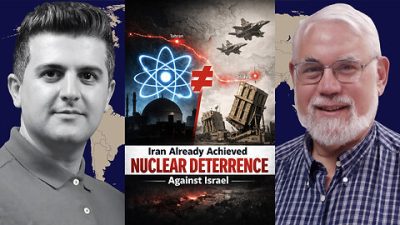
Prof. Ted Postol: Iran Already Achieved Nuclear Deterrence Against Israel
or go to
Aletho News Archives – Video-Images
From the Archives
How the occupied mentality syndrome works
Saudi Arabia on the American chessboard – Part 3
By B. J. Sabri | American Herald Tribune | June 27, 2016
Read part 2: “The occupied mentality Syndrome“
Previously I argued whether Saudi Arabia’s repeated involvements in U.S. interventions and wars stem from free national will or in response to a specific condition. For starters, in Saudi Arabia there is no national will. In Saudi Arabia, the national will is the will of the Al Saud clan. Still, when a major Arab state allies itself with a superpower that committed unspeakable crimes against humanity in almost every Arab country, then something is wrong. This fact alone should compel us to examine the U.S.-Saudi relation for one exceptional reason. As a result of the U.S.-Saudi wars, hundreds of thousands of people in Afghanistan, Iraq, Iran, Libya, Syria, Yemen, and Somalia have lost their lives. Millions became displaced in their own homelands. And millions more rendered refugees.
Attributing the Saudi policies to the bonds of “partnership” with the U.S. is frivolous. There are no bonds between these two thugs except those of business, military deals, secret plots, and wars. Proving this point, bonds such as these have no space for the American and Saudi peoples to share significant cultural or societal exchanges. If partnership is not the reason for the Saudi contribution to the U.S. strategy of empire and imperialism, then another reason must exist.
This leads to three possibilities. … continue
Blog Roll
 Aletho News
- Hezbollah hits Israeli warship off Lebanon’s coast, sets it aflame
- Iran slams US strikes on B1 bridge, Mahshahr petrochemical plants as ‘blatant acts of state terrorism’
- In letter to UN chief, Araghchi warns of dire consequences of US-Israeli attacks on Iran’s nuclear facilities
- Why the CIA conspiracy to invade Iran with Kurdish militias failed
- Why Are Upbeat US Claims About Mission to Rescue Pilot ‘Highly Questionable’?
- Aircraft destroyed during US ‘rescue’ of downed F-15 pilot cost more than $100 million each
- Washington University removes professor who condemned US-Israeli war on Iran
- Russia Warns of Retaliation as UK Authorizes Seizure of Vessels
- Serbia thwarts plot to bomb Russia-Hungary gas pipeline – Vucic
- Al Mayadeen voices solidarity with Dr. Marandi amid death threats
- If Americans Knew
- In Iran, Israel-US take aim at “reason, research, and freedom of thought” – Daily Update
- US loses planes over Iran, Israel downgrades Lebanon war goals – Daily Update
- Israel Is Blocking Palestinians from Easter at Church Where Jesus Resurrected
- Plot to assassinate Palestinian activist follows harassment campaign promoted by Zionist groups and elected officials
- Prominent New York synagogue hosts presentation on why U.S. Jews should support the ethnic cleansing of Gaza
- Tapper vs. Piker: Is the CNN Anchor Auditioning for David Ellison?
- Shouldn’t Democrats Be Able to Condemn Genocide?
- Israel-US kill negotiators, destroy civilian structures, but Iran’s military capabilities still largely intact – Daily Update
- ‘War crime’: Global condemnation as Israeli ministers celebrate death penalty law targeting Palestinian prisoners
- 7 Ways Israel Is Turning Lebanon Into Gaza
- No Tricks Zone
- An Inconvenient Tree: Uncovered In Alps… Europe Much Warmer Than Today 6000 Years Ago
- New Study Reports A 60% Slowdown In Greenland’s Ice Loss Rate In The Last Decade
- Low Intensity Tornado Wrecks Major Solar Farm, Creating A Potential Toxic Dump
- New Study Finds Warming Saves Lives…Cold Temperatures 12 Times More Deadly Than Excess Heat
- German Science Blog Accuses PIK Climate Institute Of Hallucinating Climate Tipping Points
- Devastating Assessment Of Comirnaty Vaccine By Former Senior Pfizer Europe Toxicologist
- New Study: CO2 Is ‘Effectively Negligible’ As An Explanatory Climate Change Factor Since 2000
- Former Pfizer Toxicologist Dr. Helmut Sterz Tells Bundestag Hearing Pfizer Vaccine Should Have Never Been Approved
- Energy Expert: Germany’s Nuclear Phaseout Was A “500 Billion Euro Mistake”
- New Research: South Australia’s Mid-Holocene Sea Surface Temperatures Were 4°C Warmer Than Today
 Aletho News