Israel occupation forces bulldoze Greek Orthodox land in occupied Jerusalem
MEMO | January 16, 2023
The Israeli occupation authorities yesterday started to bulldoze a 5,000 square metre plot of land owned by the Greek Orthodox Church in occupied Jerusalem’s Silwan neighbourhood, the Wadi Hilweh Information Centre has reported. The operators of the bulldozers were protected by a large number of Israeli occupation security forces and police.
According to the centre, the Israeli Nature and Parks Authority as well as settler organisations commissioned the bulldozers to uproot fruit-bearing trees and level the land. Illegal settlers and police seized the land on 22 December. The Jewish settlers fenced it off and installed surveillance cameras under police protection.
When Silwan residents rushed to the scene to stop the land theft, they were assaulted by security forces, said the centre, which monitors Israeli violations in the area. The land is owned by the Greek Orthodox Monastery in Silwan, which is part of the city’s Greek Orthodox Patriarchate.
Silwan is home to more than 60,000 Palestinians and is located strategically to the south of Al-Aqsa Mosque. The area has been the target of Israeli settler expansion for years, with hundreds of Palestinian families facing the threat of expulsion, either through lawsuits by powerful settler groups or administrative eviction orders by the Israeli-run Jerusalem municipality.
Middle East Eye has reported that the Greek Orthodox Church has been criticised heavily by Palestinian groups for its dealings with settlers and allegations of bribery and fraud. In 1951, church-owned land in West Jerusalem was rented to the Jewish National Fund for a period of 99 years. Today, the land houses most Israeli state institutions, including Israel’s parliament, the Knesset.
China urges Israel to stop ‘incitement’ to avoid escalation
MEMO | January 16, 2023
China’s Minister of Foreign Affairs, Qin Gang, urged Israel on Sunday to stop its “incitement” in order to avoid escalation with the Palestinians, news agencies have reported.
In a joint press conference with his Egyptian counterpart Sameh Shoukry in Cairo, the Chinese minister called on Israel to “stop incitements and provocations, and to refrain from taking uniliteral actions that could worsen the situation.”
Referring to the recent provocative incursion at Al-Aqsa Mosque by Israel’s far-right Minister of National Security, Itamar Ben-Gvir, Qin Gang reiterated the importance of “maintaining the status quo” in Jerusalem.
He also reiterated China’s longstanding position on resolving the Israeli-Palestinian conflict based on the “the two-state-solution and the land-for-peace principle.” The international community, he added, should find a “just” solution for the Palestinian people through a return to the negotiation table and resumption of the peace process.
Ukrainian Syndrome. Anatomy of a Modern Military Confrontation
By Viktor Medvedchuk, former Ukrainian opposition leader – Izvestia – 16.01.2023
Listening to many Western politicians, it seems completely impossible to understand the sense and mechanisms of the conflict in modern Ukraine. Take US President Biden. He denies the direct involvement of US troops in the conflict but at the same time he mentions on every occasion the billions in weapons the US supplies to the country.
If billions are spent for military purposes in Ukraine, it means Ukrainian interests are extremely important for the US. But the US army does not want to fight there. So probably they are not so important, after all. And what about these weapon supplies worth billions of dollars? Are they donations? Is it a profitable business? Investments? Some political combination? No answers, only smoke.
Or take the most recent revelations by German ex-Chancellor Merkel that the Minsk Agreements were just an attempt to give Ukraine time. Which means no one was ever going to establish peace in Ukraine. So, Russia was deceived. But what was the purpose? To protect Ukraine or to invade it themselves? Why did they need this deception if they could simply implement what was recommended by Germany? Or did Germany deliberately recommend something that could never be implemented? We could go as far as asking if political swindlers could be drawn to accountability, but it seems much more relevant today to start clearing the smoke around the current situation. That is how it has played out, anyway. But what were the root causes? And how can we get out of this situation, that is getting ever more dangerous? So let us begin our analysis by looking at the origins.
What Was the Outcome of the Cold War?
The beginning of a new war usually finds its origin in the end of a previous one. The Ukraine conflict was preceded by the Cold War. The answer to the question about its outcome will bring us closer to understanding of the essence of the current conflict, one which extends beyond Ukraine and affects many countries. The thing is that Western countries and the countries of the post-Soviet space, primarily Russia, have different perceptions of the outcome of this war.
The West definitely considers itself as a winner and Russia as a defeated party. Since, in their eyes, Russia was defeated, then the territories of the former USSR and the Eastern Bloc are the legitimate prey of the US and NATO and are subject to control by the West under the motto “Woe to the Conquered!” Hence Ukraine is in the zone of influence of the US and NATO, and certainly not Russia. So, any of Russia’s claims to at least any influence on Ukrainian politics and protection of its interests in the region are “groundless” and a clear infringement on the interests of the US and NATO. “We no longer have to view the world through a prism of East-West relations. The Cold War is over” – declared Margaret Thatcher in the early 1990s. It means the position of the East, of Russia, is no longer relevant. There is one victor, one master of the universe, one winner.
Russia has a completely different view of this process. In no way does it consider itself as a defeated party. The end of the Cold War was brought about by democratic reforms of political and economic life, and military confrontation was replaced by trade and integration with the West. So, if one’s former foe becomes a friend today, is it not a victory? Besides, the USSR and then the Russian Federation never had the goal of winning the Cold War but rather exiting the military confrontation between East and West that could have ended with a nuclear catastrophe. Moscow, together with Washington, found this way out, having reached the goals not so much for themselves as for the whole world.
This way out by no means implied that the West would take over the East and subordinate the post-Soviet space in economic, legal and cultural respects. Quite the contrary: it implied equal cooperation and joint work to build a new political and economic reality. So, there are clearly two different attitudes to the outcome of the Cold War: the triumph of the winners, on the one part, and building a new world and a new civilization, on the other. The difference between these two attitudes would predetermine the developments that followed.
New World or New Western Colonies?
In 1991 the Soviet Union collapsed, but in 1992 the European Union was established – something the post-Soviet space including Russia associated big hopes with. Here, at last, there seemed to be a new world, a new supranational body, a new turn in the history of Western civilization. Russia, just like other states of the former Eastern Bloc and the USSR, saw itself in the future as an equal member of this Union. The vision of “Europe from Lisbon to Vladivostok” was born.
In this context, Russia welcomed not only the reunification of Germany but also the accession of its former allies and even former Soviet republics to the EU. In the 1990s, economic integration with the West was a priority for Russia; Moscow considered it as key to its success as a modern state. The Russian leadership had no particular desire to bind to itself the former Soviet republics, including Ukraine. Most of the Soviet republics had lived off subsidies from the central government, in other words, Russia. So, the leaders of these countries were given a friendly pat on the shoulder while Moscow sought to get rid of their economic burden as soon as possible.
Faster than Ukraine, Russia began to integrate into the European market. Russia had vast volumes of energy resources that are in demand in Europe, while Ukraine, on the contrary, couldn’t afford to buy energy resources at European prices. Ukrainian independence could well have ended with an economic meltdown but for the South-East, where heavy fighting is going on right now. With its vast production facilities and advanced industry, the South-East helped Ukraine find its place in the international division of labor. One would not normally mention this fact, but in the 1990s it was the Russian-speaking South-East that saved the economic and hence political independence of Ukraine.
Now let us turn to something different. Since the 1990s, a series of major ethnic conflicts and wars involving millions of people emerged in Europe and close to its borders. Until 1991, there had not been such a big number of ethnic clashes. All of this led to the break-up of Yugoslavia and loss by Georgia, Moldova and Syria of their territorial integrity. This does not make any sense if we look at it from the perspective of European integration. The goal of this union was not the fragmentation of Europe into a multitude of small states, but quite the contrary: the creation of a huge supranational union of nations, and these nations would not have to exterminate each other, nor to multiply the borders, but rather build a new world together. So, what was wrong here?
It only seems wrong if one relies on the concept that Russia used to stick to. And if one proceeds from the concept of the victory of the West in the Cold War, then ethnic conflicts acquire a completely different meaning. The latter was articulated on numerous occasions, e.g., at the meeting of the Joint Chiefs of Staff on October 24, 1995, when US President Bill Clinton said: “Using the blunders of Soviet diplomacy, the extreme arrogance of Gorbachev and his entourage, including those who openly took a pro-American position, we achieved what President Truman was going to do with the Soviet Union through the atomic bomb.”
It suggests that far from all Western politicians wanted to build a new and just world. Their goal was to defeat the adversary – the USSR, Yugoslavia and other states. In this sense, the escalation of interethnic conflicts seems only logical, as they weaken the adversary and in the case of a victory, they help to dismember the country to make it easier for the winner to take over.
Under these circumstances, the real state of affairs does not play any role. The situation is being deliberately escalated. On the one hand, representatives of the titular nation are being declared as organizers of the genocide, annihilating the foreign language and culture and performing ethnic cleansing. On the other hand, representatives of the national minority living in communities in certain parts of the country are being declared separatists and a threat to the state. This tactic dates back to ancient times and was used by the Roman Empire. But the building of a new slaveholding empire is not something we are witnessing these days, is it? Or probably Washington, for example, does consider the post-Soviet space as some provinces of a greater empire that already have their metropole and should be protected from Barbarians who do not want to be under the control of this empire?
So, there are two political strategies: the economic and political integration of the countries with mutual benefit at the cornerstone, and the take-over of some countries by the others, with zero respect for the interests of the states that are being taken over. Such countries can be dismembered, declared rogue states or conquered.
Speaking of the Russian Federation, as it emerges from the crisis provoked by the dramatic change of its political and economic orientation, it is increasingly being faced with clear attempts to weaken it, humiliate it and put it at a disadvantage; increasingly often, is it being declared a rogue state despite its growing economic potential. Growing economic potential should normally increase the influence of the country and be welcomed in the Western world. But exactly the opposite happens. Not only is the Russian influence not welcomed – it is being declared wrong, criminal and corrupt.
Let us elaborate on this in more detail. Russia has taken Western democracy as a model, carried out reforms and begun to integrate into the Western world. From the point of view of building a common European house, this should be welcomed and encouraged. Europe gets a peaceful and economically reliable partner along with its markets and resources, which certainly makes it even stronger. But if one is guided by colonial thinking, one would not tolerate the economic growth and independence of a distant colony. Provinces should not overtake the metropole, neither financially, nor politically, nor culturally.
There is the EU that was engaged in building a new economic reality. And there is the NATO established in 1949 that confronted the East, primarily the USSR and later Russia. Remember the words by the first Secretary-General of the NATO Hastings Ismay: the bloc was intended “to keep the Americans in, the Russians out and the Germans down.” Thus, the NATO ideology implies that the US is in Europe, and in a dominating position, and Russia is not.
But how should Russia take it? It ended the Cold War in good faith, while it seems that the US and the NATO have not. Which means that unification with the West intended for Russia will not happen on equal terms, but rather take the form of an economic and political take-over. Hence Moscow’s requirement to stop the enlargement towards Russia’s borders and revise the attitudes and the agreements. What we see now is that the NATO concept has not only derailed Russia’s integration into Europe but closed the door to Europe’s expansion and development. Of the two concepts mentioned in this article, one has clearly defeated the other.
Russia and Ukraine – the Tragedy of Relationships
Let us move on from the general picture directly to relations between Russia and Ukraine. Let us start from the fact that the relations between these countries have their own specific history. These relationships are closer than the collaboration between England and Scotland, or the Northern and Southern States of the US. Ukraine was part of Russia for more than three hundred years, which influenced its culture, ethnic composition and mentality. Ukraine’s independence in 1991 was gained through an agreement with Moscow, not as a result of a national struggle for liberation. The new economic and political reality prompted the Russian elite not only to grant independence to Ukraine, but also to push for it. At that time, no one could have imagined an armed clash between the two new states, even in a nightmare. The Ukrainians saw Russia as a friendly state, and the Russians as a fraternal nation, and these sentiments were shared by Russians.
In Russia, for a long time, the concept of “Another Russia” prevailed with respect to Ukraine, which supposes much closer relations than, for example, those between Britain and Canada. There was a popular saying in everyday life: “We have one people, but different states.” Ukrainians and Russians were very interested in the political life of their respective neighbors. A suitable example is the current President of Ukraine Zelensky, who made a living from political satire, usually based on the politics of both states.
However, the example of Ukraine clearly demonstrates how the concept of creating a common political and economic space was defeated by the concept of squeezing Russia out of Europe. In the wake of the first ‘Maidan’ color revolution in 2005, Ukraine started building anti-Russian policy at the level of state ideology. In this, one can see clearly that this policy follows the templates of the Cold War. That is, psychologically, the Ukrainians were turned against the Russians through the support of certain politicians, changes in the educational system, in culture and in national media broadcasting. All of this came under the guise of democratic reforms and positive changes supported by all sorts of Western and international organizations.
It is difficult to call it a democratic process. It was simply the dictate of pro-Western forces in politics, media, the economy and civil society. Western democracy was established through totally undemocratic methods. And today, more than ever, the most important question is: is Ukraine’s political regime a democracy?
Within Ukraine itself, two countries had existed since 1991: Anti-Russia, and Ukraine as another Russia. While one does not think itself without Russia, the other does not think of itself with Russia. However, this division is quite artificial. Ukraine has spent most of its history with Russia, and it is tied to it culturally and mentally.
Ukraine’s integration with Russia is definitely dictated by the economy. After all, if there is such a huge market and resources nearby, only a very shallow power could not use it, or go so far as to block it. Anti-Russian sentiments have brought Ukraine nothing but grief and poverty. Therefore, all pro-Western nationalist movements consciously or unconsciously preach poverty and destitution to the Ukrainian people.
We have already mentioned that it was the South-East with its production potential that helped the country find its footing in the international division of labor. It turned out that most of the money was earned by the East, a large Russian-speaking region. Naturally, this could not but effect its political representation in the Ukrainian government. The South-East had more human resources and financial tools, which did not fit into the pro-Western picture of Ukraine. The people who lived there were too proud, too free, and too rich.
Both the first and second Maidans were directed against Viktor Yanukovych, the former governor of Donetsk, the leader of Donbass and non-nationalist centrist political forces. Electoral support for such forces was very significant, and Ukraine did not want to be ‘Anti-Russia’ for a very long time. President Yushchenko, who arrived with the first Maidan, very quickly lost the confidence of the people, for the most part because of his anti-Russian policies.
Then an interesting trend emerged in Ukrainian politics. The elections after the second Maidan are won by President Poroshenko, who promised peace with Russia in one week. So, he was elected as a peacemaker president. Nevertheless, he became the president of the war, failed to implement the Minsk Agreements, and miserably lost the following election. He was replaced by Vladimir Zelensky, who also promised peace, but became the personification of war. So, the Ukrainian people are promised peace and then they are deceived. Having gained power under the rhetoric of peacemaking, he becomes the second Ukrainian leader to have taken an extremely radical position. If he had such a position at the beginning of the election campaign, no one would have elected him.
And now let us return to the general concept of this article. If one says that one is going to build a new world with the neighbors but simply pushes one’s own interests, regardless of anything, even war, even the threat of nuclear conflict, then obviously one is not going to build anything. This is what the ex-president of Ukraine Poroshenko did and this is what the current president Zelensky is doing, but not only them. This is what the NATO leadership and many American and European politicians are doing.
Before the armed conflict, Zelensky simply crushed any opposition, pushing through the interests of his party; he did not build any peace. In Ukraine, politicians, journalists, and public activists who spoke about peace and good-neighborly relations with Russia were repressed before the military clash, their media were closed without any legal grounds, and their property was plundered. When the Ukrainian authorities were reproached for violating the rule of law and freedom of speech, the answer was that the peace party was “a bunch of traitors and propagandists.” And the democratic West was satisfied with this answer.
In reality, the situation was not so simple and straightforward. “Traitors and propagandists” represented, including in the parliament, not just the lion’s share of the electorate, but also the basis of the country’s economic potential. So, the blow fell not only on democracy, but also on the well-being of the citizens. Zelensky’s policy has led to a situation where people began to leave Ukraine en masse due to adverse economic and social conditions, repression, and political persecution. Among them were a lot of Ukrainian politicians, journalists, businessmen, and cultural and religious figures who had done a lot for this country. These people have been excluded from politics and public life by the Ukrainian authorities, although they have the right to have their own position, no less than Zelensky and his team.
The business of the South-East of the country is largely tied to Russia and its interests; that is why the conflict has ceased to be an exclusively internal matter. Russia was faced with the need to protect not only its economic interests, but also international honor and dignity, which, as was shown above, had been systematically denied. There was no one to rectify the situation. The Ukrainian peace party was declared to be treacherous and power was seized by the war party. The conflict dragged on, and took on an international dimension.
It would seem that politics still mean something in Europe, but the politicians massively support Zelensky, dragging Europe into the war and towards the bloc’s economic downfall. It is no longer Europe that teaches Ukraine politics, but Ukraine that teaches Europe how to achieve economic decline and poverty with the help of a policy of hatred and intransigence. If Europe continues to support this policy, it will be dragged into a war, possibly into a nuclear one.
And now let us get back to where we started. The Cold War ended with a political decision to build a new world with no wars. It is clear that such a world has never been built, that current global politics has returned to where it started: with detente. Now there are only two ways out: to slide into a world war and a nuclear confrontation, or to restart the process of detente, for which it is necessary to take into account the interests of all parties. But for this to happen, it is necessary first to acknowledge that Russia has its own interests and that they must be taken into account in the creation of a new detente. And, most importantly, to play honestly, not to deceive anyone, not to blow smoke, and not to make money on someone else’s blood. But if the global political system is not capable of elementary decency; if it is blinded by pride and its own mercantile interests, then even harder times await us.
The Ukraine conflict will either grow further, spilling over to Europe and other countries, or it will be localized and resolved. But how can it be resolved if the party of war reigns supreme in Ukraine, escalating military hysteria that has already gone beyond the borders of the country, and the West for some reason stubbornly calls it democracy? This party of war has declared an infinite number of times that it does not need any peace: what it needs is more weapons and money for the war. These people have built their politics and business on the war, they have rapidly upgraded their international ratings. In Europe and in the US they are greeted with applause, they should not be asked uncomfortable questions, there should be no doubt in their sincerity and truthfulness. The Ukrainian party of war keeps delivering triumph after triumph, while no military breakthrough is observed.
But the Ukrainian party of peace is favored neither in Europe nor in the US. This eloquently suggests that most US and European politicians do not want any peace for Ukraine. But this does not mean at all that the Ukrainians do not want peace, or that Zelensky’s military triumph is more important to them than their lives and destroyed homes. It is just that those who stood for peace were slandered, intimidated and repressed following the incitement of the West. The Ukrainian party of peace simply did not fit into Western democracy.
And here the question arises: if the party of peace and civil dialogue does not fit into some kind of democracy, then is it a democracy? Perhaps, in order to save their country, the Ukrainians have to now start building their own democracy and open their civil dialogue without Western curators, the result of their governance of which is harmful and destructive. If the West does not want to listen to the point of view of the Other Ukraine, then this is its own business, but for Ukraine such a point of view is important and necessary, otherwise this nightmare will never end. This means that it is necessary to create a political movement composed of those who have not given up, who have not renounced their beliefs on pain of death and imprisonment, who do not want their country to become a place of geopolitical showdowns. The Ukrainian situation is catastrophically complex and dangerous, but it has nothing to do with what Zelensky says every day.
NATO waging ‘proxy war’ against Russia – Croatian president
RT | January 16, 2023
Croatian President Zoran Milanovic has claimed NATO, a military bloc of which Zagreb is a member, is waging a “proxy war” against Moscow in Ukraine. He also dismissed sanctions against Moscow as “nonsense,” adding that he does not want to be an “American slave.”
Speaking to Croatian reporters in the city of Vukovar on Sunday, Milanovic said, among other things: “Washington and NATO are waging a proxy war against Russia through Ukraine,” as quoted by media outlet Istra24.
He went on to argue that “The plan cannot be to remove Putin. The plan cannot be sanctions,” adding that such punitive measures are “nonsense and we will not achieve anything with them.”
“They go from war to war. And what should I be? An American slave?” Croatia’s president asked rhetorically.
Milanovic voiced his frustration with the US-led military bloc’s policies in the same interview in which he tore into Croatia’s prime minister, Andrej Plenkovic, over his latest Ukraine-related remark.
Speaking to news channel France 24 on Saturday, Plenkovic said the Balkan nation’s lawmakers, who in mid-December didn’t support the EU’s program to train Ukrainian military personnel in member states, have “failed to be on the right side of history.”
Commenting on the remark, Milanovic, in turn, slammed the premier for bringing “disgrace” to his country “and to its democratic representatives in front of others.” The Croatian president argued that this kind of behavior reaches a low that is “the bottom of the bottom.”
As for the EU’s mission, the Croatian president warned that it effectively means that “for the first time in its history, the EU is participating in a war.” This, according to Milanovic, is “against the Treaty on the Functioning of the EU.”
In December 2022, Milanovic argued that having Ukrainian service members train on Croatian soil would “bring war” to the Balkan nation.
He also insisted at the time that “Ukraine is not an ally,” criticizing Brussels’ decision last June to grant Kiev candidate status as “cynical.”
Ukraine is Test Lab for Western Weapons ‘In Every Sense’, US Media Says
By Oleg Burunov – Samizdat – 16.01.2023
Ukraine has become a “testbed” for western weapons which do not always live up to expectations and may finally become a thing of the past, a US media outlet has reported.
The outlet claimed that the Ukrainian conflict “offered the United States and its allies a rare opportunity to study how their own weapons systems perform under intense use.”
An unnamed source familiar with western intelligence was cited by the outlet as saying Ukraine is “absolutely a weapons lab in every sense because none of this equipment has ever actually been used in a war between two industrially developed nations.” According to the source, “This is real-world battle testing.”
Another insider told the outlet that some sophisticated systems delivered to Kiev, including the Switchblade 300 drone and a missile designed to target enemy radar systems, have turned out to be less effective on the battlefield than anticipated.
The insider argued that one lesson that Washington may take from the Ukrainian conflict is that towed artillery – like the M777 howitzer system supplied to Kiev – may be never used in the future due to the fact that the system is “harder to move quickly to avoid return fire.”
Since the beginning of the year, the US and its allies have delivered more than $40 billion in military assistance to Kiev. Moscow has repeatedly warned against providing Kiev with arms, something that the Kremlin says contributes to further escalation of the Ukraine conflict.
Russian Defense Minister Sergey Shoigu, for his part, underlined that the Ukrainian conflict had become another pretext for the US and its allies to unleash an economic and information war against Moscow in order to deplete it strategically.
“Ukraine has been picked [by the West] as an instrument of a hybrid war against Russia,” Shoigu added, stressing that western arms supplies to Kiev add to prolonging the conflict and cause more casualties.
Russia launched its special military operation in Ukraine on February 24, 2022, following a request from the Donbass republics to protect them from Kiev attacks.
US Senator says training Ukrainian soldiers in Oklahoma poses risk to civilians
By Ahmed Adel | January 16, 2023
Nathan Dahm, a Republican Member of the Oklahoma Senate, has introduced a resolution for Ukrainian soldiers to not be trained in operating the Patriot air defence system in his state. There is a great concern that inexperienced Ukrainian soldiers will be responsible for killing innocent civilians by misfiring missiles.
“I just filed SCR2 to reject foreign soldiers on Oklahoma soil. The pentagon is planning on sending Ukrainian troops to Oklahoma to train on U.S. missile systems. The last thing we need is them misfiring a missile into Oklahoma…,” the senator wrote on Twitter.
Of particular concern is the fact that the Ukrainian soldiers will undergo training in an accelerated program that will reportedly only go on for two months instead of the minimum six. It is unrealistic to expect a soldier to learn this weapon system in such a short period of time, thus ensuring that the quality of the training will be substandard.
More dangerously though, at the end of their extremely short training, real live fire exercises must be held. This poses a significant risk for Oklahoma’s citizens. American military instructors will obviously monitor the training of the Ukrainian soldiers, but this is not a guarantee of safety. Although the probability of an accident is small, it still exists, so-much-so that Dahm had to highlight it.
In his resolution, Dahm stressed: “Recent reports indicate the Ukrainian military launched a rocket that landed in Poland, killing innocent Polish citizens, and the citizens of Oklahoma need not be under threat of a similar failure impacting our people.”
None-the-less, Dahm’s desire to prevent the training of Ukrainian soldiers in Oklahoma is unlikely to succeed. Although there are many Republicans who are against supporting Ukraine, in essence, there are more who support the Ukrainian state.
Given his position as a state senator, it is unlikely that he will be able to reverse Washington’s foreign policy. In addition, all military training grounds and special centres in the US are subordinated directly to the Pentagon. The senator does not have any rights or powers in terms of limiting the performance of military exercises.
It is unlikely that the training will have a major impact on the battlefield as the Ukrainians will not be able to handle these systems properly without American or European instructors. This certainly carries the risk of further escalation. Therefore, for the Patriots to have an impact, they not only need to arrive safely in Ukraine, but American and European militaries will need to risk their instructors who will be facing Russian missile strikes.
It is recalled that Deputy Assistant Secretary of Defense Laura Cooper stated that the training of Ukrainian forces on the American air defence system will begin at the end of January and will last for several months. The training itself will take place at Fort Sill – a huge training ground to the southwest of Oklahoma City.
As for the actual incident in Poland mentioned by Dahm, Polish media reported on November 15 that two rockets fell in the Lublin Voivodeship on the border with Ukraine, killing two people. Although Ukrainian President Volodymyr Zelensky initially stated that he was certain that Kiev was not involved in the incident, he said shortly after that he was not 100 percent sure what happened. US Secretary of State Antony Blinken said the US has not seen any evidence to dispute Warsaw’s preliminary report that the missile was Ukrainian.
It is this very scenario that Dahm is desperately trying to avoid in Oklahoma.
“We must put the people of Oklahoma first,” Dahm said. “We shouldn’t be allowing the unaccountable spending, corruption, and potential money laundering to now flow through Oklahoma with the presence of foreign troops on our land.”
The US announced it was sending Ukraine the Patriot in late December when Zelensky visited Washington to meet with President Joe Biden. Despite the Patriot being an advanced air defence system, Tom Karako, director of the Missile Defense Project at CSIS, said that the Patriot is “not a game-changer” because it is “still only able to defend a relatively small piece of dirt.”
“These systems don’t pick up and move around the battlefield,” explained retired Army Lt. Gen. Mark Hertling, former commander of US Army Europe. “You put them in place somewhere that defends your most strategic target, like a city, like Kyiv. If anyone thinks this is going to be a system that is spread across a 500-mile border between Ukraine and Russia, they just don’t know how the system operates.”
In this way, the US is not only wasting taxpayers’ money by transferring Patriots to Ukraine and training its crew, but is also exposing American citizens to danger, all for the sake of a weapon that most experts unanimously agree will not change the course of the war in Ukraine’s favour.
Ahmed Adel is a Cairo-based geopolitics and political economy researcher.
WHO Sneak Attack
CHD.TV: “This is the big one. They’re going for broke… I think we may only have potentially until May before one or both of these documents gets voted on” — Meryl Nass, M.D. and James Corbett continue their discussion on the WHO’s proposed International Health Regulation Amendments + potentially legally-binding ‘Zero Draft Treaty’ currently being drawn up in secret meetings behind closed doors. As the WHO touts the solution to worldly problems as possible through their ‘One Health’ approach — one wonders if a world in which humans, animals, agriculture, and weather are dominated by state depicted notions of the highest attainable standard of ‘health’ may secretly be a trojan horse to dominate as much of the sovereign world as possible — usurping power from individual countries and thrusting it into the hands of a mad-with-power agency which seeks to control Earth’s resources, ecosystems, food, animals, and plants.
VIDEO COURTESY Bitchute CHD.TV / RUMBLE
SHOW NOTES:
PREVIOUS TALK: The Weaponization of the WHO on CHD TV
WHO Member States Agree To Develop Zero Draft Of Legally Binding Pandemic Accord In Early 2023
Review Committee Regarding Amendments To The International Health Regulations (2005)
CDC’s One Health Office: What We Do
One Health Joint Plan Of Action Launched And Presented By WHO And The Quadripartite Partners
One Health Joint Plan Of Action Launched And Presented By WHO And The Quadripartite Partners
Please Stop The Ride To A Biotech Food Takeover – Transcript
James Roguski Substack — THE TOP 100 REASONS TO #StopTheTreaty, #StopTheAmendments, And #ExitTheWHO.
“A New System” – Inside the Davos Summit 2023
WEF conference looks set to focus on what the globalist elite can learn from the failures of their “pandemic” narrative
OffGuardian | January 15, 2023
The World Economic Forum’s annual meet-up kicks off tomorrow. Politicians, corporate giants, “philanthropists” and all manner of elite monstrosities gather for a weekend of telling each other how smart they are and making the world generally worse.
But what’s on the menu this year?
Well, here are the five main items up for discussion, according to the WEF’s website:
See if you can notice a pattern:
- Addressing the Current Energy and Food Crises in the context of a New System for Energy, Climate and Nature
- Addressing the Current High Inflation, Low Growth, High Debt Economy in the context of a New System for Investment, Trade and Infrastructure
- Addressing the Current Industry Headwinds in the context of a New System for Harnessing Frontier Technologies for Private Sector Innovation and Resilience
- Addressing the Current Social Vulnerabilities in the context of a New System for Work, Skills and Care
- Addressing the Current Geopolitical Risks in the context of a New System for Dialogue and Cooperation in a Multipolar World
Now, none of this is news. A “new system” for energy is a “green new deal”, a “new system” for international cooperation is some type of global governance, and a “new system” for investment and trade covers a lot of topics, including digital currency.
Like I said, nothing new, but it’s always refreshing to see it in print, with no effort to hide it.
It’s also interesting that they don’t use the phrases “new normal”, “great reset” or “build back better” anywhere on the page, despite the fact it’s obviously what they’re talking about.
A little victory for the alternate media, who have clearly raised enough awareness that those phrases are now considered too tainted to use.
In fact, the WEF brotherhood is clearly concerned about losing control of the narrative, as this article from a few days ago highlights:
The world’s biggest problem solvers need to craft better narratives
It argues:
People are more persuaded by the information presented within a narrative because a good narrative helps to ease information processing. Those trying to solve the world’s most pressing challenges must take notice of this.
The whole article is essentially a very long-winded way of saying “we need to tell better lies”.
We must name the real antagonists: irresponsible politicians, bought scientists and some companies failing to live up to the needs of the transition to net-zero.
We must also stop pretending that there is a debate over the facts of climate change. A false balance is a phenomenon that occurs when a news organization or other media outlet presents an issue as being the subject of a debate, even when there is no actual debate or disagreement among experts on the matter.
The author is talking about climate change, but his points about shifting blame and shutting down debate apply across the board.
Look for a shift of narrative “villains” this year, as well as increased emphasis on positivity and “unity”. Unity likely means attempting to woo back some of the fringe-mainstream elements pushed further to the alternative by the Covid narrative (as they did with Ukraine).
Elsewhere – and on a related note – there is likely to be talk of censorship – or, sorry, “countering misinformation” – as discussed in this WEF article from 6 days ago, headlined:
Digital safety: Applying human rights in the digital world
The article details the “challenges” facing the WEF’s “Global Coalition for Digital Safety” in their efforts to tackle…
the likes of child sexual abuse and exploitation, terrorism and hate speech, misinformation and content related to self-harm and suicide.
Notice how “hate speech” and “misinformation” are thrown in there with the actual crimes? To quote Sesame Street, “one of these things is not like the other”. But that’s no surprise in the age of “legal but harmful”.
To be clear, these people do not care about any of those things. Not at all.
Their businesses exploit children, their state agencies fund terrorism, and their media outlets spit out misinformation at 50 words a minute.
They only really care about control. In this instance that means controlling the internet – more specifically, controlling what you are allowed to say and hear on the internet.
Another potential focus for discussion, highlighted in a couple of places, will be a push for more direct action. What they seem to be calling “tangible solutions”.
The head of Amnesty International – who will be in attendance – has called for Davos attendees to focus on:
tangible solutions that we already know work, rather than opting to protect the existing global economic system at any cost.
Underlining that “now is the time for action” not “empty gestures”, and simultaneously echoing the “new system” messaging.
The “tangible solutions” line is repeated in the “narratives” article mentioned earlier, by financial consultancy giant Mercer on their page about Davos, a WEF “expert panel”, and by Forbes in their article on young leaders at Davos.
Of course “solutions-based thinking” has been corporate talk for decades, and “now is the time for action” is a cliche which does the rounds at every meeting, summit or conference.
Nobody in history has ever said “now is not the time for action, now is the time for gestures”.
So, of course, it could be empty words designed to make the speakers (and their meeting) feel important.
But it could be something else, perhaps a sign that the propaganda stage of the “great reset” is over, and now we transition to the next stage. Signalling a move away from passive manipulation and psychology-driven control mechanisms and toward more direct enforcement.
I guess we’ll just have to wait and see.
Either way, you can broadly define the Davos agenda as four main themes:
- “A new system”: Reforming the global systems of politics and finance
- “controlling the narrative”: Telling more believable lies & limiting public debate
- “countering misinformation”: Censorship, especially of the internet
- “tangible solutions”: Taking more direct action via enforcement and policy.
The Davos talking points, it seems, will be a retrospective focusing on what they can learn from the shortcomings of their “pandemic” narrative.
One final thought, an (unconfirmed) story doing the rounds is both hilarious and telling…if true:
Apparently, DAVOS attendees are deliberately seeking out unvaccinated pilots. Make of that what you will.
Stranded Assets
By Don Dears | Power For USA | January 10, 2023
There has been considerable conjecture that billions of dollars worth of assets in the fossil fuel industry will be stranded when fossil fuels are no longer needed because of the energy transition.
But what about the billions being spent by the automobile industry to build factories for the manufacture of batteries and battery-powered vehicles (BEVs)?
What if the market for BEVs doesn’t materialize?
The battery factories and factories to build BEVs won’t be needed. They will become stranded assets.
According to the WSJ, the automobile industry has committed, over the past two years, to invest $70 billion in factories to build batteries and BEVs.
According to the Center for Automotive Research, over half of this investment will be for battery factories.
Here is a chart from the Center of Automotive Research that provides another view of the investments being made for manufacturing BEVs.

It’s also been reported that the automobile industry worldwide will spend $526 billion on factories to build batteries and BEVs.
As noted in the WSJ article:
The capital outlays amount to a collective bet by the car industry that buyers will embrace battery-powered models in numbers large enough to support these investments.
What happens if the market for BEVs in the United States is only one-third the size being predicted?
Or, if it’s even less, say 10% of the predicted market size?
How will the automobile companies pay off their debt? Will they have losses?
Will these factories be stranded investments, unable to pay for themselves?
There is a herd mentality that’s gripped the automobile industry. As one CFO said,
You have to invest now, or you’re going to be left behind in the transition.
Toyota isn’t so sure.
Could Toyota have been right all along?
When anyone considers the volume of materials that must be mined and processed it must raise doubts about the stampede to build these factories.
The book, Clean Energy Crisis has estimated the number of new mines that must be developed to support the worldwide BEV market. One look at this aspect of the BEV market should give anyone pause.
The stranded assets may be in the automobile industry, not the fossil fuel industry.
The Lancet has become a laughing stock
By Norman Fenton and Martin Neil | Where are the numbers? | January 14, 2023
In summary:
- On 6 May 2021 The Lancet published a blatantly flawed study of the effectiveness of the Pfizer covid vaccine on the population of Israel, claiming it was 95% effective.
- On 17 May 2021 we submitted a rapid response 250 word letter explaining why the study was flawed.
- After an initial response saying they would ask the authors for a response to our letter we heard nothing until 20 months later.
- On 8 January 2023 we got an email out of the blue from The Lancet Senior Editor Josefine Gibson apologising for never having got back to us about the letter, saying that they had asked the lead author Dr Sharon Alroy-Preis (SA-P) to respond to our letter but, because she did not provide any formal response, they have decided not to publish our letter.
- We tweeted The Lancet’s response and within 24 hours it got over one million impressions. We also published a substack article highlighting the fact we were now aware of additional problems with the paper relating to SA-P’s relationship with Pfizer.
- On 10 January 2023 we got an unsolicited email from Josefine Gibson (which we can only assume was a result of the reputation hit they got from our tweet) saying “Thank you for bringing your letter from May 2021 back to our attention. We are looking into next steps and will get back to you as soon as we can.”
- On 11 January 2023 (at 10:58) we sent an email to The Lancet’s Editor-in-Chief Richard Horton directing him to our substack article (which highlighted these new problems relating to SA-P’s relationship with Pfizer) stating that The Lancet was clearly taking a credibility hit surrounding the publication of the Israel-Pfizer study and its response to criticisms of it.
- On 11 January 2023 (at 11:21) we got an email from Josefine Gibson apologising for the ‘sub standard experience’ we had with The Lancet. She said that, after discussing it with Horton, they were now inviting us to publish the original letter or an update to it, suggesting the update ‘reflect more current experience with the vaccine’.
- On 12 January 2023 we submitted our updated letter (of an agreed 350 words).
- On 13 January 2023 we got a response from Josefine Gibson saying they had decided against publishing the letter.
Here is the full narrative and January 2023 correspondence in date order (personal details redacted)… continue
Insider reveals truth about Covid-19 pandemic from within the National Health Service
How the misdiagnosis of deaths occurred and was due to changes from 2016
The Naked Emperor’s Newsletter | January 15, 2023
An ex-director at one of the largest hospital trusts in the UK decided they wanted to reveal what really happened during the pandemic. They have kindly allow me to reproduce their thoughts. The catalyst for this revelation, according to the insider, was Dr. Malhotra speaking out about cardiac problems post vaccination.
This is an interesting take on what happened inside the National Health Service (NHS) and confirms, with more details, what we already knew and suspected.
Introduction (Long but important to understand the rest)
In 2016, the British Government proposed & piloted a change to the process of how deaths were certified across all hospitals in the UK. I have attached a link to this Department of Health (DoH) document.
The DoH document proposed a switch to the “Medical Examiner” (ME) System and was sent to a number of different audiences for feedback and consultation. The ME system was already being piloted at two hospitals up north. The results of the consultation are here.
Prior to the Covid-19 Pandemic, the death certification process involved treating doctors of a patient to attend Bereavement Services/Patient Affairs to discuss the death and either:
a) refer the death to the Coroner or
b) write a Medical Certificate of Cause of Death (MCCD).
The MCCD states the cause of death. Whereby a direct cause (1a) or contributing causes (1b) (1c) (1d) are stated along with co-morbidities (not directly causing the death) being written in (2) on the MCCD. The MCCD is only ever a probable cause of death, it is not definitive.
The only definitive way of determining an accurate and plausible cause of death is to refer the deceased patient to HM Coroner (if certain criteria is met), for HM Coroner to accept and take on the case, resulting in a Post Mortem (PM) being conducted by a Histopathologist. When a death is seen as natural and there is nothing untoward, the MCCD is written by the treating doctor of a deceased patient. Usually this is an F1, F2, SHO or Registrar that attends. It is rare for a treating Consultant to attend, but they will finalise the cause of death.
A strict hospital hierarchy exists within the NHS for doctors. It is as follows – from lowest to highest rank: Foundation Year 1 (FY1), Foundation Year 2 (FY2), Senior House Officer (SHO), Registrar (Reg), Consultant, Clinical Lead, Medical Director. Junior doctors will very rarely speak up or challenge their seniors. A senior decision is seen as final and it will be carried out and executed without any hesitance or questioning. In my 5.5 years of experience in End of Life Care, I have only ever seen one junior doctor disagree with a proposed cause of death and challenge their consultant.
With the number of deaths that occur in a hospital, as you can imagine, there is a great deal of variation with regards to causes of death, as we have numerous different doctors writing an MCCD and coming up with various different potential diseases in different orders.
The proposed ME system would change this, as the government would now hire and pay one Medical Examiner, to sit in every hospital and write all MCCD’s for all deceased patients. This would effectively eliminate any variation in causes of death.
In 2016, when I heard of this proposal, I worked as a Bereavement Officer at a hospital in Central London. My mentor/line manager at the time was a former Chief Nurse who managed Bereavement Services and all hospital deaths would be controlled by her and the department.
We essentially carried a huge amount of power with regards to decision making, as we would go through all patient notes following the death of a patient, and essentially guide and advise doctors on what would need to be written with regards to an MCCD or Coroners Referral.
In my personal opinion, our role was to sit on the fence and act in the best interests of a deceased patient (and their families), but also protect the hospital and our doctors from any potential negligence. As you can imagine many battles were fought over decisions about a cause of death of a patient or a referral to the coroner with a vast amount of doctors over the years.
F2’s and SHO’s were particularly the worst with regards to carrying an arrogance of knowing what should be written on an MCCD or stating that a patient didn’t need to be referred to the Coroner (often stating that their Consultant had given them instructions). It is worth noting that Consultants are also only human and can be incorrect at times too. We have to remember that they are succeeded in hierarchy by a Clinical Lead and beyond that a Medical Director. Who have far more experience and knowledge.
When I asked my mentor in 2016, how the ME system would change things, I was told that Bereavement Services/Patient Affairs would become purely administrative and that the clinical judgement would fall to the Medical Examiner.
The power and decision making with regards to MCCD/Coroners Referrals was being taken away not only from treating doctors but also from Bereavement Services/Patient Affairs/Bereavement Officers/Bereavement Service Managers/Directors of End of Life Care.
This decision making power was being handed solely to the Medical Examiner, who has not been involved in the treatment of a patient during an admission. I took all this information in at the time and acquired as much knowledge as I could from my mentor/line manager.
In 2016, I also happened to make a move and take up an opportunity to manage my own Bereavement Services at one of the largest hospital trusts in the whole of the UK. On average, I would oversee MCCD/Coroner Referrals for approx 1750 deaths on an annual basis. I developed a very close working relationship and friendship with one of the Medical Directors (a doctor with the highest ranking in a hospital). This was especially helpful when having to challenge doctors with regards to MCCDs/Coroners Referrals.
Progressing to Director of End of Life Care, I became involved with the reporting of mortality rates, conducting mortality reviews and writing hospital policies. I had also developed an excellent working relationship with the HM Coroner who oversaw our Trust. HM Coroner holds the power to investigate any hospital or trust with regards to a death or a number of deaths. A slight problem may arise, in that HM Coroner has an allegiance to the Crown and the Government.
When a death is reported to the Coroner. This was previously reported via telephone call by the treating doctor. A discussion was had with the Coroners Office and a direct outcome and instruction would come from the Coroner’s Office, by way of HM Coroner (via a phone call).
There is a fundamental flaw to this system, as there is no documentation of the decision and instruction from the Coroner’s. It comes via word of mouth. There is always room for error without any electronic documentation. Every Hospital/Trust & HM Coroner will have a different system of reporting deaths. I personally made a decision to safeguard my hospital and the trust, by developing an electronic coroners referral form, which I proposed to our Coroner and developed after their agreement. We now had documentation of every death being reported and every outcome.
When reporting a death, the Coroner will look at a proposed cause of death and accept it, or reject the cause of death and take on the case (death of the patient), leading to an Inquest or a PM.
In 2019, our Medical Director, came into my office one morning and stated that the Board of Directors at the Hospital had made a decision to switch to the Medical Examiner System. Hearing the words ME system was a massive case of Déjà vu (conversation with my mentor in 2016). I knew exactly what the ME system was, but I chose instead, to play the fool and enquire what exactly the ME system was and what it meant for our service, my staff and our roles. Everything the Medical Director mentioned to me that day was a carbon copy of what I already knew
I knew that my time in End of Life Care had come to an end. I’d reached the top and there was no more progress for me. Losing all power and decision making to any ME coming into the hospital did not appeal to me. I’d already made up my mind that I needed to leave. Seeking a new challenge and experience, I made a move in 2019 to another major hospital in Central London, this time side tracking into operational management. I was in charge of the operational management of Nephrology, Rheumatology, Dermatology and Diabetes & Endocrinology.
2020 – Covid Arrives
In Jan 2020, I remember hearing about the first case of Covid-19 at our hospital, with a patient arriving from China and walking into our A&E. A&E was shutdown and steam cleaned that day, I recollect the moment I heard about this. In my mind, I saw the reporting of Covid-19 in the media as nothing more than Bird Flu or Ebola, which had caused panic but yet passed. I wasn’t worried in the slightest bit.
Things began to escalate around in Feb 2020, around the time I was going on holiday. Due to the reporting by the media, I bought N95 masks as a precaution for my trip and to give to my parents and younger sister. I was blessed to have had an opportunity to spend a few days in Sri Lanka for a wedding and then nearly a whole month in Australia (March 2020). I watched as the narrative of a deadly infectious disease continued to grow with every day that passed. I made a decision to cut my holiday short by a couple of days so that I could make sure I got back to my family and not end up being stranded in Australia.
Upon returning to the UK in late March 2020. One of the immediate things that struck me was the lack of any temperature monitoring or questioning at Heathrow Airport. This seemed odd for a potentially deadly infectious disease that was spreading around the world. This was especially odd, as Sri Lanka & Australia had questioned me/checked temperatures upon arrival, with even Singapore monitoring temperatures during transit.
My mother had just recovered from Cancer, my father was over 70 and my younger sister was born with Down’s Syndrome alongside having multiple other conditions. I had three high risk individuals to Covid-19 in my family and I was scared/fearful of giving them Covid-19. I asked my hospital to allow me to work from home. They refused. I wasn’t deemed high risk, although I lived with my parents at the time. I needed to help my mum and my sister. The hospital held no regard for the safety of it’s employees. They forced me to come into work. I spent two months isolating in my bedroom, I barely came out of my room, for fear of spreading an infectious disease. Never once did I think about the situation or my prior experience or knowledge, I was just reacting to the media frenzy. I was full of panic and stress.
The first irregularity I noticed, was the government and media stating that Covid-19 was an infectious disease. However just before the first lockdown was implemented, I noted that the government had downgraded the status of Covid-19 stating it was no longer infectious. This made no sense to me. Why would we need to isolate if they downgraded the status? My circle of friends contained many medics and dentists. They were all panicking at the time, saying they had inadequate surgical masks and that they needed N95 masks.
N95 masks were seen as the only way to prevent medical professionals from becoming infected with Covid-19. The public being asked to wear surgical masks made no sense to me. The virus would be able to go straight through. Something didn’t seem right.
I ended up meeting and dating an FY1 doctor (my ex gf) around October 2020. We clicked because she was different from every other doctor, I had previously spoken to about Covid-19. She also had her suspicions and believed it wasn’t as infectious as it was made out to be. We both started to slowly realise that Covid-19 was a real disease (as it was showing up on X-rays in patients) but that it wasn’t infectious at all [NE – I have since confirmed with them that they mean not as infectious as was being made out], despite all the reporting in the media.
I needed to experience working in a Covid-19 hotspot and see all the action for myself. In March 2021, I quit my job at the hospital in Central London and took up an opportunity to manage A&E and AMU (Acute Medical Unit) at a hospital in South London. The 6 months that I spent working in A&E/AMU confirmed all my suspicions and culminated in my decision to end my career in the NHS.
The entire 6 months, I was not tested once with a PCR Test, despite walking into wards full of Covid-19 Positive patients on a daily basis. Yet we were required to test multiple times when visiting another country.
The PCR Test that the NHS was using to test patients, is known to have false-positive results. This is shown in numerous studies which can be found online, an example of which is:
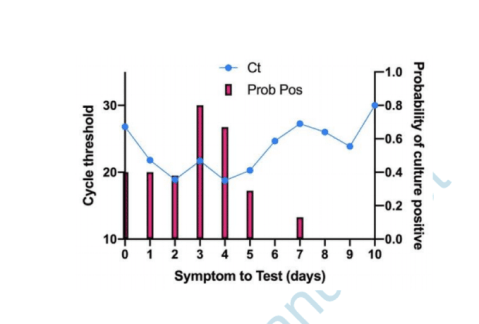
Are you infectious if you have a positive PCR test result for COVID-19? – The Centre for Evidence-Based Medicine.
If a patient tests positive for Covid-19 with a PCR Test, this doesn’t mean they are infected. If tested again, they may well turn out with a negative test. However in the NHS, patients are only tested once and this stays on their record throughout their admission. Hospital policies were changed alongside the implementation of the Medical Examiner System, to ensure that any patient who died within 30 days of positive test, would have to have Covid-19 as their primary cause of death. This was regulated by the Medical Examiner.
The highest cause of death at every hospital per annum pre Covid-19 is Pneumonia. Pneumonia is a Respiratory Disease like Covid-19. Pneumonia can be broken down into 4 different causes of death: Bronchopneumonia, Aspiration Pneumonia, Community Acquired Pneumonia & Hospital Acquired Pneumonia.
These four causes when added together kill the largest number of people on an annual basis prior to the pandemic.
The Medical Examiner (one individual in each hospital), was certifying all these Pneumonia deaths as Covid-19 deaths. When 4 different diseases being grouped and now being called Covid-19, you will inevitably see Covid-19 with a huge death rate.
The mainstream media was reporting on this huge increase in Covid-19 deaths due to the Medical Examiner system being in place. Patients being admitted and dying with very common conditions such as Old Age, Myocardial Infarctions, End Stage Kidney Failure, Haemorrhages, Strokes, COPD & Cancer etc were all now being certified as Covid-19 via the Medical Examiner System.
Hospitals were switching to and from the Medical Examiner system and the Pre Pandemic System as when they pleased. When Covid-19 deaths needed to be increased, the hospital would switch to the Medical Examiner System. Doctors were one week being told they needed to complete an MCCD, to then be told the following week that they weren’t required to fill out an MCCD, as the Medical Examiner was handling this.
Hospitals were incentivised to report Covid-19 deaths over normal deaths, as the government was paying hospitals additional money for every Covid-19 death that was being reported. The Medical Examiner system ensured that Covid-19 was being put down as the cause of death. The government sends out the annual NHS budget to Primary Care Trusts. This is split to fund Hospitals and GP Surgeries. A clinical coding team at each hospital will assign codes to each treatment or death, so that money is paid out to the hospitals.
Any doctor who argued against Covid-19 as a cause of death was bullied and vilified. The General Medical Council maintains a register of all doctors within the UK. This ensures that there is a fear of being struck off for speaking out against an agenda. The GMC effectively controls all doctors in the UK. Even if a doctor realises what is going on and wants to speak out. They will think twice about talking, as they would be risking their entire career and everything that they’ve worked so hard for.
Doctors essentially have their hands tied, many have families, kids, mortgages and mouths to feed. If I was in their situation, I would think twice about speaking out, for fear of being struck off by the GMC and losing everything.
The NHS Track & Trace App, which was introduced to try and control the spread of the virus, did not apply to medical professionals. We were all asked to turn this off, as Doctors and staff isolating for 14 days disrupted patient flow, beds and the discharge of patients.
Any doctor that I spoke to regarding taking the Covid-19 vaccine, were insistent that they were going to wait for a period of time, before taking it themselves, to ensure that it was safe. How is it ethical to give a vaccine to your patients, but not want to take it yourself? In my 12 years of NHS service, never has a doctor pushed or influenced the public to take a vaccine. Yet on social media, I was seeing close friends who were doctors, starting to post on social media that they have taken the vaccine and that the public should. I wouldn’t be surprised if doctors were being forced to promote the vaccine by their superiors or if they were receiving monetary gain in doing so.
I have no doubt in my mind, that the Government has planned the entire pandemic since 2016, when they first proposed the change to medical death certification. Stress leads to disease and illness. Panic leads to people following whatever orders and instructions that are given to them by authority, such as prolonged mask use, which leads to an increase in admissions in to the NHS system due to hypoxia and bacterial pneumonia.
The NHS treatment pathway involved patients being placed onto ventilators. There is a 50% chance of death from this clinical decision alone. How many innocent people have died from the clinical decision to place them onto a ventilator.
During boardrounds (where every admitted patient is discussed), we were seeing patients on a daily basis being admitted due to suffering from adverse affects of taking the vaccine. Patients were blacking out after taking the vaccine or suffering from clots or strokes.
The NHS is all about money and making money. The safety of a patient didn’t seem like the most important thing. It was more about how do we make more beds available so that another patient can be treated. Patients with no next of kin are discharged to nursing homes with care packages. I can’t comment on what happened to these patients in nursing homes, during the pandemic, as I have no experience of their inner workings.
Patients are seen as money, even upon death, hospitals receive money for each death. Is there an actual concern for patient health and safety? I know numerous doctors who are driven primarily by money and monetary gain.
THE REASON WHY I LEFT THE NHS in 2021
56 yr old male, admitted into A&E with end stage kidney failure, has a previous history of regular dialysis treatment for this. No respiratory symptoms on admission and no temperature. However when tested with a PCR Test he unfortunately tests positive. This stays on his record throughout his admission. Our hospital is relatively small in comparison to others I have worked at, we have no dialysis machine as a result. We urgently need to transfer this patient to another hospital otherwise this patient will die. Our treating doctor calls up larger hospitals with a dialysis machine to organise his transfer. All doctors pick up the phone and request the Covid-19 status of the patient. A transfer is declined due to a Covid-19 infection protocol. Our doctors again reiterate the point that this patient will die without dialysis. We are told there is nothing that can be done and that the patient cannot be accepted for transfer.
This gentleman ended up dying without dialysis. Now please tell me what goes on the MCCD….
1a) Covid-19
2) End Stage Kidney Failure
Not written by the treating doctor who disagreed with this cause of death, but by a medical examiner, put in place by the government and the hospital.
When innocent people are being killed by a corrupt organisation and system, for pure monetary gain, I can’t stand by and be part of this anymore. My conscience was clear and I no longer wanted to be a part of this anymore. I am very blessed and lucky that I was in a position to walk away. I’ve been able to speak out, because my hands are not tied and I am not regulated by any organisation or governing body. I believe in speaking the truth and in doing so, I am only just an instrument for God.
I joined the NHS, 12 years ago because I had a desire to help those in need, but the moment I realised that I was not doing this anymore was the time for me to walk away. I apologise to you all if the above thread is confusing with regards to terminology or you cannot understand it’s contents. I’m hoping that at the very least, it can be understood by my fellow medical professionals or by journalists who would like to report the truth.
Authorities want to grab/jab our kids and are trying to legalize 11 year old vaccine consent
It was beaten down in DC but that did not stop these criminals
By Meryl Nass | January 15, 2023
I have the documents showing that kids in Philadelphia, San Francisco and Kings County, WA were given COVID vaccines without parental permission. I have been told this happened elsewhere. So the perps are doing what makes sense for them: trying to legalize the process so they can’t be penalized for this crime.
Why are their efforts so focused on HS and college kids? To give kids access? ‘Access’ my A—-ss.
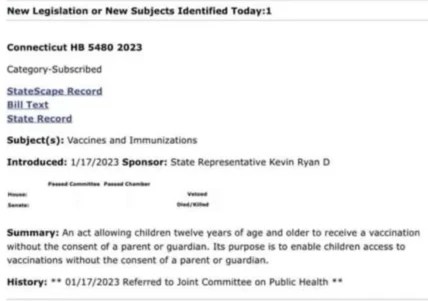
The age of ‘self-consent’ was lowered to 11 from 12 by Philadelphia’s health authorities. Presumably CDC came up with this brilliant idea.
Now, In order to give itself cover regarding the fig leaf that children can in fact provide a legal informed consent without a parent or guardian, the Health Commissioner of Philadelphia, PA claimed that handing a totally inadequate EUA “Fact Sheet” to an 11 year old at the time of vaccination would substitute for informed consent.
However, we know that the Fact Sheets that were used in lieu of a package insert omitted known information on health risks of the vaccine and incorrectly stated the benefits of the vaccine. So how could there be informed consent?
WHEREAS, on April 21, 2021, the Health Commissioner issued an Emergency Order
Concerning COVID-19 Vaccine Information Statements, which clarified that an FDA-issued COVID-19 Fact Sheet for Recipients and Caregivers is an appropriate substitute for a VIS for purposes of Section 4 of the Board of Health’s Regulations Governing the Immunization and Treatment of Newborns, Children, and Adolescents; and
WHEREAS, on May 10, 2021, the FDA authorized a COVID vaccine for use in people twelve years of age or older pursuant to an EUA; and
WHEREAS, the Board of Health hereby reaffirms, consistent with Section 4 of its Regulations Governing the Immunization and Treatment of Newborns, Children, and Adolescents, that minors eleven (11) years of age and older are typically capable of providing informed consent on their own behalf to be vaccinated for a reportable disease, subject to a vaccine provider’s individual determination that the minor is able to and does provide such informed consent, and the Board hereby clarifies that an FDA-issued COVID-19 Fact Sheet for Recipients and
Caregivers is an appropriate substitute for a VIS; and
NOW, THEREFORE, the Board of Health hereby adopts the following emergency regulation, effective upon delivery to the Department of Records, while the remaining procedures and formalities of Section 8-407 are followed to promulgate this as a formal regulation:
Section 1. Temporary Emergency Supplement to Board of Health Regulations
Governing the Immunization and Treatment of Newborns, Children, and
Adolescents
With respect to a minor eleven (11) years of age or older, the Emergency Use
Authorization Fact Sheet for Recipients and Caregivers for a COVID-19 vaccine authorized by the U.S. Food and Drug Administration for use in persons of the age of the vaccine recipient, if and when such an authorization exists, may be provided for the purposes of Section 4 of the Board of Health’s Regulations Governing the Immunization and Treatment of Newborns, Children, and Adolescents, when a Vaccine Information Statement does not exist for the COVID-19 vaccine being administered…https://vax.phila.gov/wp-content/uploads/2021/05/BOH-reg-VIS-substitution-1-2.pdf
Featured Video

Rewriting the risk? Inside the government’s vaccine safety messaging
or go to
Aletho News Archives – Video-Images
Book Review
“Davos Can Really Replace the UN”
Inside the book that maps the architecture behind global governance — from the Epstein files to the Pact for the Future
Lies are Unbekoming | April 1, 2026
On June 13, 2019, the United Nations and the World Economic Forum signed a partnership deal to “accelerate the implementation of the 2030 Agenda for Sustainable Development.” That same evening, WEF president Börge Brende — Norway’s former Foreign Minister — had dinner with Jeffrey Epstein at Epstein’s Manhattan townhouse. The Epstein files, released January 2026, contain an exchange between the two from the previous year. Epstein to Brende: “Davos can really replace the UN. C21, cyber, crypto . genetics… intl coordination.” Brende back to Epstein: “Exactly — we need a new global architecture. World Economic Forum (Davos) is uniquely positioned — public private.”
The next day, the UN General Assembly adopted the framework for restructuring global governance.
That sequence — the partnership signing, the Epstein dinner, the candid admission about replacing the UN with a public-private architecture, and then the formal adoption — opens Jacob Nordangård’s The Digital World Brain. Pages two and three. Footnoted to the UN resolution number, the Epstein files, and the General Assembly record.
I keep coming back to it because it captures what this book does that almost nothing else in the independent research space manages. I’ve followed Jacob’s work for years now and interviewed him about his research. Each book peels back another layer of the same institutional architecture, and each time I think he’s reached the limit of what can be documented, the next one goes further. Nordangård doesn’t speculate. He doesn’t editorialize much. He lays institutional actions next to each other in chronological order and lets the pattern announce itself. … continue
Blog Roll
 Aletho News
- REWRITING THE RISK? INSIDE THE GOVERNMENT’S VACCINE SAFETY MESSAGING
- “Davos Can Really Replace the UN”
- NIAID/NIH and USDA Fund Bioengineered Chimeric Influenza Viruses Built Using Pandemic H1N1 Components: Journal ‘Science Advances’
- Hezbollah hits Israeli warship off Lebanon’s coast, sets it aflame
- Iran slams US strikes on B1 bridge, Mahshahr petrochemical plants as ‘blatant acts of state terrorism’
- In letter to UN chief, Araghchi warns of dire consequences of US-Israeli attacks on Iran’s nuclear facilities
- Why the CIA conspiracy to invade Iran with Kurdish militias failed
- Why Are Upbeat US Claims About Mission to Rescue Pilot ‘Highly Questionable’?
- Aircraft destroyed during US ‘rescue’ of downed F-15 pilot cost more than $100 million each
- Washington University removes professor who condemned US-Israeli war on Iran
- If Americans Knew
- In Iran, Israel-US take aim at “reason, research, and freedom of thought” – Daily Update
- US loses planes over Iran, Israel downgrades Lebanon war goals – Daily Update
- Israel Is Blocking Palestinians from Easter at Church Where Jesus Resurrected
- Plot to assassinate Palestinian activist follows harassment campaign promoted by Zionist groups and elected officials
- Prominent New York synagogue hosts presentation on why U.S. Jews should support the ethnic cleansing of Gaza
- Tapper vs. Piker: Is the CNN Anchor Auditioning for David Ellison?
- Shouldn’t Democrats Be Able to Condemn Genocide?
- Israel-US kill negotiators, destroy civilian structures, but Iran’s military capabilities still largely intact – Daily Update
- ‘War crime’: Global condemnation as Israeli ministers celebrate death penalty law targeting Palestinian prisoners
- 7 Ways Israel Is Turning Lebanon Into Gaza
- No Tricks Zone
- An Inconvenient Tree: Uncovered In Alps… Europe Much Warmer Than Today 6000 Years Ago
- New Study Reports A 60% Slowdown In Greenland’s Ice Loss Rate In The Last Decade
- Low Intensity Tornado Wrecks Major Solar Farm, Creating A Potential Toxic Dump
- New Study Finds Warming Saves Lives…Cold Temperatures 12 Times More Deadly Than Excess Heat
- German Science Blog Accuses PIK Climate Institute Of Hallucinating Climate Tipping Points
- Devastating Assessment Of Comirnaty Vaccine By Former Senior Pfizer Europe Toxicologist
- New Study: CO2 Is ‘Effectively Negligible’ As An Explanatory Climate Change Factor Since 2000
- Former Pfizer Toxicologist Dr. Helmut Sterz Tells Bundestag Hearing Pfizer Vaccine Should Have Never Been Approved
- Energy Expert: Germany’s Nuclear Phaseout Was A “500 Billion Euro Mistake”
- New Research: South Australia’s Mid-Holocene Sea Surface Temperatures Were 4°C Warmer Than Today
 Aletho News