Israel and its US lobby Dealt Major Blow by China Saudi Iran Peace Initiative
By Grant F. Smith | Institute for Research: Middle Eastern Policy | March 12, 2023
On Thursday the New York Times ran yet another report about Saudi Arabia’s entry into an “Abraham Accord,” but if only certain conditions could be met. It quoted longtime Israel lobby heavyweight Martin Indyk and reported on the American Israel Public Affairs Committee’s think tank the Washington Institute for Near East Policy “expert” delegation’s visit to Riyadh to finalize a deal. Then on Friday explosive news broke that China had successfully concluded a secret peace agreement between Iran and Saudi Arabia.
The plan aims to restore diplomatic relations by reopening embassies within two months. They also agree to restart their April 2001 Security Cooperation. Also back on the front burner is a 1998 General Agreement covering economic, trade, investment, technology, science, culture, sports and youth ties. It is well worth reading the entire statement.
As it often does, the New York Times quickly updated its March 9 story in an attempt not to look foolish having given too much credence to Israel lobby guidance.
Too late.
Israel and its lobby have for decades attempted to steer the United States into attacking Iran. The neocon policy coup of 2001 was not only a plan to get the U.S. to attack Israel’s arch enemy Iraq, it was also designed to steer the U.S. into attacking seven countries in seven years, most prominently Iran.
When the U.S. invasion of Iraq quickly turned into a quagmire, two American Israel Public Affairs Committee executives tried to place stolen classified Department of Defense information incriminating to Iran into circulation at the Washington Post. The operation failed, the Pentagon colonel leaking classified information was prosecuted, while the longtime AIPAC officials were dismissed.
Israel’s foreign influence operation AIPAC has steadily lobbied against Iran on behalf of Israel including punishing economic warfare from the U.S. Treasury’s OTFI unit, which AIPAC lobbied to set up for just this purpose in the aftermath of 9/11.
The Trump era “Abraham Accords” were yet another attempt to isolate Iran while harnessing Arab countries to Israel’s undue foreign influence and war on Iran machine. Under the scheme, the U.S. sacrifices its remaining international reputation to compel Arab governments to sign diplomatic and commercial accords with Israel their populations overwhelmingly reject. Target governments get access to advanced U.S. weapons, or recognition of illegal land grabs in exchange for normalization.
Saudi Arabia was always the toughest prospect for sticking its head into the yoke of an Abraham Accord. The Saudi Initiative, or Arab Peace Initiative endorsed by the Arab League in 2002, re-endorsed in 2007 and 2017 was a legitimate path toward a somewhat just settlement through the creation of a Palestinian state with East Jerusalem as its capital in exchange for Arab normalization.
Under constant Israel lobby pressure, there was never any serious U.S. consideration of the Saudi led plan. Instead, Israel surrogates Jared Kushner and former real estate lawyer turned ambassador to Israel David M. Friedman among others pushed the so-called “Deal of the Century” that offered tenuous promises of economic development to Palestinians in exchange for relinquishing their rights under international law. A 2019 IRmep poll revealed that 68 percent of Americans would have rejected a similar deal if they were in Palestinians’ shoes, and the deal collapsed.
The Abraham Accords then attempted to “transcend” the Palestine question by making Palestinian claims under international law and the Arab Peace Plan irrelevant.
The new Joint Trilateral Statement signals a rejection of the Abraham Accords and yoking Saudi Arabia to Israel and its lobby’s foreign policy intrigues and domestic meddling. Saudi Arabia may not want to become as subject to Israeli prerogatives as America and has obviously been learning how to avoid it. Saudi Arabia skillfully cushioned the bad news by end-running AIPAC and placated the American military industrial congressional complex by simultaneously agreeing to purchase $35 billion in Boeing passenger jets. That is nearly the same amount as military aid the US agreed to give to Israel gratis over ten years under the Obama administration.
Israel and its lobby will not take this bad news lying down and still have many levers to pull in the region, establishment U.S. media, Congress, the State Department, and the White House. But for now, the Saudi rejection of the Abraham Accords could signal the way out for UAE, squeezed by Israel and AIPAC to invest in sketchy Israeli schemes such as “Project Jonah,” and get into a war footing with Iran. UAE may be inspired and try to disentangle themselves from the Israeli undue influence and Palestine justice minimization machine.
© 2002-2023 Institute for Research: Middle Eastern Policy, Inc.
Indigenous Rebellion Continues as Post-Coup Peruvian Government Flounders
BY W. T. WHITNEY | COUNTERPUNCH | MARCH 10, 2023
Revived democratic struggle in Peru is well along into a second act. There was the parliamentary coup December 7 that removed democratically elected President Pedro Castillo and the “First Taking of Lima” in mid-January, embittered and excluded Peruvians occupied Lima and faced violent repression. Then on March 1 protests renewed as the indigenous inhabitants of Peru’s extreme southern regions prepared once more to demonstrate in Lima and would shortly be protesting in their own regions. The resistance’s make-up was fully on display.
Protesters throughout Peru were rejecting a replacement president and an elite-dominated congress and calling for early elections and a new constitution. They belonged for the most part belonged to Aymara communities in districts south of Lima extending from Lake Titicaca both west and northeast, into the Andes region.
Their complaints centered on wealth inequities, rule by a Lima-based elite, inadequate means for decent lives, and non-recognition of their cultural autonomy. Their support and that of other rural Peruvians had brought about the surprise election to Peru’s presidency in 2021 of the inexperienced Pedro Castillo. He had defeated Keiko Fujimori, daughter of a now imprisoned dictator and favorite of Peru’s neo-liberal enablers.
By March 1, residents of provinces close to the city of Puno were arriving in Lima to carry out the so-called “Second Wave of the Taking of Lima.” Demanding the de facto President Dina Boluarte resign, as of March 4 protesters had not been able to break through police lines surrounding key government buildings. The main action, however, was going on in the epicenter of police and military repression ever since Boluarte had taken office on December 7.
That would be the Puno area where most of the 60 deaths caused by violent repression have occurred, with 19 protesters having been killed on January 9 in Juliaca, a town 27 miles north of Puno city.
On March 5, violence was again playing out in Juli, a town 58 miles south of Puno, also on the shore of Lake Titicaca. Demonstrations along with roadblocks were in progress throughout the extended region, all in sympathy with the concurrent protests in Lima. Involved were indigenous groups, small farmer organizations, and social movements.
In Juli the demonstrators, confronted by military units and police in civilian dress, set fire to judicial office buildings and the police headquarters. The troops fired, shots came from open windows, and tear gas was released from a helicopter; 18 demonstrators were wounded.
Demonstrators blocking a bridge over a river prevented the entry of troops into the nearby town of Llave. Rains had caused flooding and in the process of swimming across the river, one of them drowned and five others disappeared.
Protesters captured 12 soldiers; community leader Nilo Colque indicated they were released after they admitted to trying to break the “strikes” but that they too opposed the military’s actions. Coolque predicted that soon 30,000 Aymaras would be descending on Juli and nearby population centers.
Aymara activists in Ilave announced a strike of indefinite duration. A “Committee of struggle” in Cusco announced the beginning as of March 7 of an indefinite strike in 10 provinces. The president of the national “Rondas Campesinas” (peasant patrols), said to represent two million Peruvians in all, announced a big march on Lima from all regions set for March 13.
Meanwhile Peru’s chief prosecutor has embarked upon an investigation of President Boluarte and other officials for crimes of “genocide, homicide resulting from circumstances, and causing serious injury,” that allegedly took place mostly in southern regions in the weeks immediately after her taking office.
There are these other developments:
* Peru’s Supreme Court on March 3 heard a proposal that the “preventive imprisonment of ex-President Castillo be extended from 18 to 36 months. Another court had previously denied his appeal for habeas corpus.
* The Congress as of March 6 looked to be on the verge of, for the fourth time, refusing to advance new presidential elections from April 2024 to sometime in 2013.
* The UN High Commissioner for Human Rights has released a preliminary report accusing the new Peruvian government of excessive use of force against protesters.
* Polling results currently go one way: 77% of Peruvian reject the Dina Boluarte government, 70% say she should resign, 90% denounce Peru’s Congress. 69% favor moving general elections ahead to 2023, and 58% support the demonstrations. Most of those making up these majorities live in rural areas, according to the report.
The opposed sides in the Peruvian conflict are stalemated. Powerbrokers presently lack a government capable – willing though it may be – of providing structure and organization adequate for protecting their political and economic interests. Marginalized Peruvians are without an historical experience from which revolutionary leadership and strategies might have developed, such that now they might have direction and focus. The people’s movement there is not as lucky as counterparts were in Cuba, Venezuela, and Nicaragua.
Now the U.S. government meddles with this state of precarious balance in Peru. And not surprisingly: it has long intervened militarily and is competing with China economically.
Speaking on March 1, State Department Ned Price did insist that in Peru, “our diplomats do not take sides in political disputes … They recognize that these are sovereign decisions.” He added that the United States backs “Peru’s constitution, and Peru’s constitutional processes.”
Even so, there is active interest hinting at more to come. Assistant Secretary of State Brian Nichols on February 28 urged Peru’s Congress to expedite early elections and Peru’s president to promptly “end the crisis caused by ex-President Castillo’s self-coup.”
China comments on ‘Ukrainian theory’ of Nord Stream sabotage

RT | March 15, 2023
Chinese Foreign Ministry spokesman Wang Wenbin found it unusual that major outlets in the West uncritically embraced the claim by unnamed US officials that a “pro-Ukrainian group” was responsible for the bombing of Nord Stream natural gas pipelines.
At the press briefing on Wednesday, Wang described the pipelines as “vital cross-border infrastructure projects,” whose destruction had a “serious impact on the global energy market and ecological environment.” China wants “an objective, impartial and professional investigation” into the bombing and those responsible held to account, the sooner the better, he added.
Asked to comment on the so-called “Ukrainian theory,” first put forth by anonymous US officials in the New York Times last week, Wang noted the sudden change of behavior by Western media, after they spent a month ignoring the report by journalist Seymour Hersh that blamed the US and Norway.
“We have noted that some Western media have been mysteriously quiet after Hersh reported that the US was behind the Nord Stream blast. But now these media are unusually simultaneous in making their voice heard. How would the US account for such abnormality? Is there anything hidden behind the scene?” Wang said.
Nord Stream 1 and 2, pipelines built under the Baltic Sea to carry Russian natural gas to Germany and onward to Western Europe, were damaged in a series of explosions in September 2022.
In early February, Hersh published a report detailing how Washington had the pipelines destroyed, describing how US divers planted the explosives and a Norwegian airplane sent the detonation signal. The US government denied all accusations, labeling Hersh’s report “utterly false and complete fiction,” while Russia and China called for an independent and transparent investigation.
The Times report quoted unnamed US officials who suggested that the saboteurs were “most likely Ukrainian or Russian nationals, or some combination of the two,” citing unspecified new intelligence. The anonymous officials insisted no US or British nationals were involved, and that there was no evidence President Vladimir Zelensky or any other Ukrainian official directed the attack, either. Kiev has officially denied any responsibility for the Nord Stream blasts.
When he was shown the Times article during an interview, Hersh laughed and asked “Are they that stupid?” referring to the outlet’s anonymous sources. Nonetheless, the story was dutifully repeated by all major Western outlets.
Russian president Vladimir Putin was likewise unconvinced. During an interview with Rossiya-1 on Tuesday, he dismissed as “complete nonsense” the notion that non-state actors could be behind the complex act of sabotage. The attacks could have only been “carried out by specialists, and supported by the entire power of a state possessing certain technologies,” he said.
AUKUS deal ‘worst in history’ – former Australian PM
RT | March 15, 2023
Former Australian Prime Minister Paul Keating has fired a broadside against the current government for its endorsement of the AUKUS security bloc and the purchase of American submarines. It doesn’t help protect the country and drags it into the US attempt to preserve its hegemony by containing China, he has argued.
Keating, who chaired the Australian government in the 1990s, reiterated his negative view of the purchase of Virginia-class nuclear-powered boats in a lengthy rebuke this week. He branded it the “worst international decision” by an Australian Labor government since conscription in World War I. Speaking to journalists from the National Press Club of Australia on Wednesday to make the case for his position, he added “it must be the worst deal in all history.”
Prime Minister Anthony Albanese formally confirmed the acquisition on Monday during a visit to California, where he and British Prime Minister Rishi Sunak were hosted at a naval base by US President Joe Biden. The plan was first announced in 2021, with Keating blasting the then-Conservative government in Canberra.
Figures in the British government were “looking around for suckers,” the famously acerbic Aussie politician said of the prelude to the announcement two years ago. “And they found – whoo! – here is a bunch of accommodating people in Australia.” The Albanese cabinet was just as eager to push the deal forward, he added.
The Australian Royal Navy is buying up to five attack submarines from the US and possibly building three more with the UK’s help. The deal is estimated to cost 360 billion Australian dollars ($240bn).
With that investment, Australia could have 40 to 50 domestically-built Collins-class diesel-electric submarines instead, Keating suggested.
A larger fleet would be far better at protecting Australia from a possible invasion, which would require an “armada of troops ships” reaching its coast, he believes. Meanwhile, the nuclear subs would be sent to the Chinese coast to potentially take part in a US-Chinese conflict, the former prime minister suggested.
“It’s a strange way to defend Australia to have your submarines sunk on the Chinese continental shelf chasing Chinese submarines,” Keating mused.
“We are part of a [US] containment policy against China,” he added. “It’s about one matter only: the maintenance of US strategic hegemony in Southeast Asia.”
The politician dismissed as “rubbish” the idea that China poses a military threat to Australia in the first place and shamed national journalists peddling it.
Pakistan’s Fascist Post-Modern Coup Regime Risks Replicating The East Pakistan Tragedy
By Andrew Korybko | March 15, 2023
The fascist authorities who were installed in Pakistan following last April’s US-orchestrated but superficially “democratic” post-modern coup against former Prime Minister Imran Khan risk replicating the East Pakistan tragedy if they don’t immediately stop shooting at their own people. The ousted leader’s supporters are rallying around his residence to prevent the local police from serving him an arrest warrant on a trumped-up graft charge that was concocted against him as “lawfare”.
Instead of reconsidering the wisdom of clashing with unarmed and purely peaceful civilians, the fascist authorities ordered their goons to assault them all with tear gas, rubber bullets, and reportedly even live ammunition that was shot into the air according to some accounts. This de facto declaration of war by the fascist post-modern coup regime on its own people could dangerously place the country’s political-security trajectory on the irreversible path towards civil war.
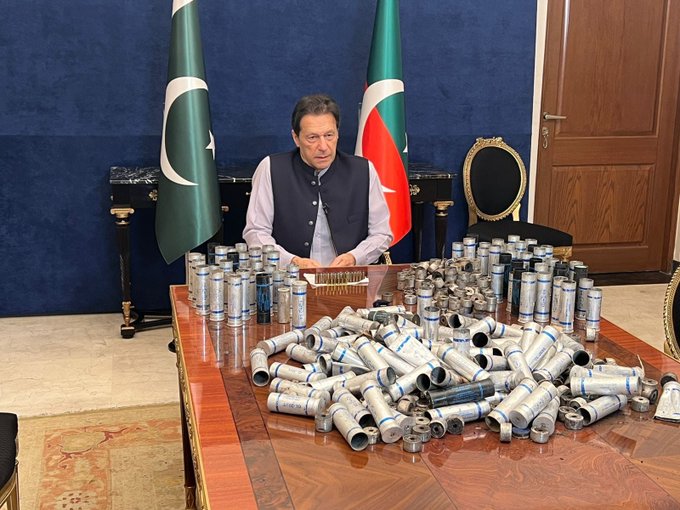
Former Prime Minister Khan warned as much in a tweet on Wednesday that he shared alongside a photo of himself sitting down in front of a pile of tear gas canisters that were shot at his home the other day. He wrote that “My house has been under heavy attack since yesterday afternoon. Latest attack by Rangers, pitting the largest pol party against the army. This is what PDM and the enemies of Pakistan want. No lessons learnt from the East Pakistan tragedy.”
The military-intelligence establishment must urgently rescind their de facto declaration of war on the Pakistani people, do whatever’s required behind the scenes to have the fascist post-modern coup’s leading figures resign as the first step towards national reconciliation, and then hold early elections. It’s only through this three-step process that the worst-case scenario of replicating the East Pakistan tragedy can potentially be avoided since anything less than that makes this more likely by the hour.
One of the most populous countries in the world is being pushed towards civil conflict by those conspirators who illegally usurped power with the US’ help last April and subsequently crashed the economy. This factual framing of Pakistan’s latest political-security dynamics proves that the increasingly violent clashes provoked by the fascist post-modern coup regime against its own people could lead to a global crisis in the event that they soon spiral even further out of control.
If the military-intelligence establishment continues waging war on the Pakistani people, then their victims should consider publicly calling on their iron brothers in China to urgently rein them in as a last resort to avert the worst-case scenario that former Prime Minister Khan just warned about. China’s diplomatic miracle in brokering the Iranian–Saudi rapprochement last week proves that it has the political capabilities to peacefully resolve the Pakistani Crisis if the people request for it to do so.
After all, the People’s Republic also stands to geostrategically lose if that neighboring nation descends into civil war. The China-Pakistan Economic Corridor (CPEC), which is the flagship project of Beijing’s Belt & Road Initiative (BRI) that’s aimed at creating a Community of Common Destiny for Mankind, would practically become inoperable should that happen. Not only could that block off China’s shortcut to the Indian Ocean, but it would deal an immense blow to its soft power and BRI’s reputation as well.
Without intending to come off as “conspiratorial”, observers can’t preclude the possibility that the fascist post-modern coup regime’s US backers encouraged them to provoke a civil war partially for the purpose of advancing America’s anti-Chinese “containment” strategy via unconventional means. At the very least, its military-intelligence establishment wouldn’t so publicly violate its people’s human rights and possibly even countenance war crimes against them without the US’ advance approval.
This means that the latest escalation of the nearly year-long Pakistani Crisis is connected to the US just like its origin is, thus extending credence to the preceding concerns that the events which Washington set into motion last April are actually part of its larger Hybrid War on China. This South Asian state was knocked out of the geostrategic game at the most sensitive moment in the global systemic transition shortly after this process accelerated following the start of Russia’s special operation.
That outcome hasn’t just proven disastrous for the Pakistani people who’ve suffered as a result of the crippling economic crisis that followed, but it also unexpectedly offset a key pillar of China’s grand strategy related to its reliance on CPEC as a non-US-controlled shortcut to the Indian Ocean. Furthermore, both the political and especially economic dimensions of the US-provoked Pakistani Crisis also raised serious doubts about CPEC’s future as well as that of BRI more broadly.
Nobody can therefore deny that the US’ regime change in Pakistan last year had very serious consequences for China that are becoming worse by the hour as that country’s fascist post-modern regime risks pushing it into civil war after de facto declaring war on its own people. China might already be working behind the scenes to try and de-escalate the latest and thus far most dangerous phase of this nearly year-long crisis on its borders, but it would still help a lot if Pakistanis publicly requested this.
That’s because this could compel China into taking urgent action behind close doors if it hasn’t already done so, not to mention creating the optics of Pakistan’s US-backed fascist post-modern coup regime literally shooting at Chinese-friendly peaceful protesters, which would force China to get involved. No other party apart from the US has the influence to peacefully resolve this crisis, and seeing as how Washington’s interests are perversely advanced by exacerbating it, the onus thus falls on Beijing.
Practically speaking, China has a credible chance of brokering peace and thus averting another Pakistani Civil War, but this best-case scenario can only happen if the fascist post-modern coup regime has the political will to save their country from this US-engineered collapse. If they do, then China can simply propose the previously suggested three-step peace plan related to immediately ceasing fire against unarmed peaceful protesters, creating a caretake government, and holding early elections.
The coup regime might agree to this in exchange for a Chinese bailout that could replace the IMF’s continually delayed one that’s full of strings and has thus far been withheld by that body’s US leader for the purpose of keeping its proxies in check in case they consider “defecting”. That last-mentioned observation is precisely what China would be tempting them to do, basically “defect” from the US in exchange for much-needed aid and thus averting the seemingly impending civil war.
The latest and thus far most dangerous phase of the nearly year-long Pakistani Crisis is rife with unpredictability since everything is moving so rapidly right now so it’s difficult to predict what might come next. In any case, it would greatly help the cause of peace and preventing a replication of the East Pakistani tragedy that former Prime Minister Khan just warned about if his unarmed peaceful protesters publicly called on China to diplomatically intervene and prevent this from becoming a global crisis.
Is France going to be able to maintain its position in Africa?
By Pogos Anastasov – New Eastern Outlook – 15.03.2023
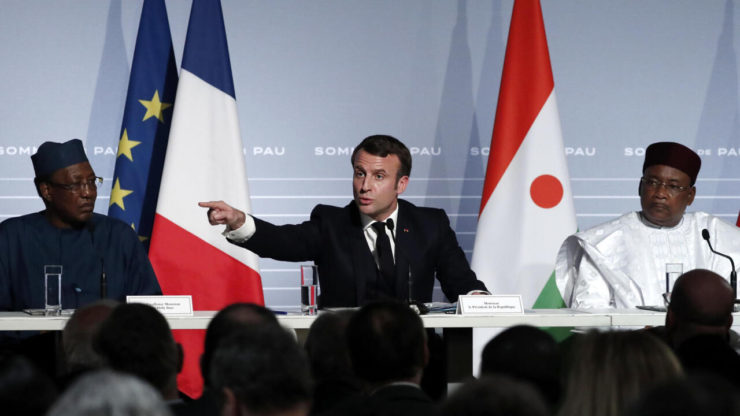
On March 1-5, French President Macron visited a number of African countries, leaving observers with a bitter taste in their mouths. Conceived with great fanfare as a presentation of Paris’ ostensibly new course aimed at “equal cooperation” with the African continent, it was remembered only for scandals, public spats with African presidents, and taunts from them that reflected the obvious disadvantage in bilateral relations.
Overall, the visit did not boost Paris’ credibility or strengthen its ties with Africa. Following the significant losses that France has suffered in Africa in recent years, the Elysée Palace should focus on preserving the African diamonds that remain in its crown rather than expanding its influence. And there aren’t many of them anymore. After Mali and Burkina Faso defected from Paris, Morocco is now gradually but steadily shifting from the French to the American camp, further narrowing the maneuvering field for Paris, which must look around and consider how to save what is left. What does it have in its piggy bank?
The richest “chest” in which the French keep the wealth looted from Africans is … the French treasury itself. The scheme of collecting money through the sub-regional economic cooperation organization of West Africa, ECOWAS (almost all its 15 members are former French colonies) is well established and allows almost half their economic potential to be at the service of the French economy.
ECOWAS itself was founded in 1975 on the basis of the Lagos Treaty and initially included 16 countries, but later the only Arab country in its composition, Mauritania, withdrew from it, remaining an associate member. When the organization was founded, the most noble goals were declared – the economic integration of the region, its self-sufficiency with the subsequent transition to a federation, a single citizenship and a single currency. But somehow it so happened that the most advanced element of integration was the creation of its own single currency – the West African CFA franc, which combines the currencies of the eight countries of this association, members of the West African Economic and Monetary Union, formed in 1994 (a number of other countries also use this currency). And “quite by chance” this currency is pegged to the euro, and 50% of foreign exchange reserves of these countries are stored in the French Central Bank, which completely deprives these countries of economic independence. Moreover, attempts by some of these countries to transfer their gold reserves to other jurisdictions are repeatedly unsuccessful, which naturally causes discontent among member countries.
Paris is forced to respond to this and in 2020 proposed a bill to this effect in the French National Assembly, according to which the CFA franc should be replaced by the “eco” already without being tied to the mandatory deposit in France. The draft was approved and ratified. However, it turned out that the pandemic buried it for a long time. In June 2021, ECOWAS revisited it, and a summit of member countries agreed on a five-year “currency convergence” pact, as well as a road map to launch a new monetary unit, now a region-wide one, by 2027.
More recently, on 24 January 2023, the President of Guinea-Bissau, who as of June 2022 is the current President of ECOWAS, pledged to revive the project, while also strengthening internal trade among ECOWAS countries, which currently represents less than 10% of total trade. To what extent this will work is not yet clear. Many suspect Paris that the reform of the CFA franc will be cosmetic and will not change the essence of economic relations between the member countries of the association and France, which actively uses the West African currency in the interests of French and multinational corporations based in its territory, which hold the markets of these states under their control and pump them for profit, including natural resources. Paris’ “Trojan horse” in ECOWAS is Côte d’Ivoire and the puppet regime put there by Paris, which implements French interests in the organization under the guise of African interests.
Whether or not Paris can pull off another trick with currency “reform” is not yet clear. Again, at the instigation of Paris, the membership of ECOWAS member countries where there have been recent coups, such as Guinea, Mali and Burkina Faso, is suspended, and important reforms that affect their core national interests can be carried out by regional organizations without their participation and taking their position into account by allies or, rather, satellites of France, such as Côte d’Ivoire. We can hardly believe that the Elysée Palace will not take advantage of these opportunities.
The other two countries where Paris will try by all means to maintain its influence are Chad and Niger, where strategic reserves of uranium, gold and other minerals are concentrated. In addition, Chad occupies an important strategic position, bordering Libya in the north and Sudan in the east, which makes it an important transit zone involved in both arms and migrant traffic. Chad, too, has a leadership that is questionable in terms of Western democracy — the son of President Idriss Déby, killed two years ago, Mahamat Déby, who heads the Transitional Military Council. But Paris, so sensitive to the issue in Mali and Burkina Faso, pays little attention in this case, because it is “our son of a bitch.”
Even more important for Paris is Niger, where uranium reserves, critical for the French nuclear industry, are being actively exploited. Paris is covered there by Washington, which has a chain of military bases, airfields and reconnaissance centers with UAVs. Of course, Paris will fight for this strategic region of Africa to the end, which, however, does not guarantee success.
In fact, Paris now has only one direction to go in Africa – to further lose its weight and influence. There are more and more reasons for this. France is increasingly uninterested in African states. Its military capabilities are shrinking, the effectiveness of its participation in solving the security problems of the continent is extremely low, which leads more and more states to refuse its assistance. France’s socio-political model is also losing its attractiveness against the background of increasing economic problems of the country, and with them the protests against the internal political and economic line of the Rothschild-appointed Macron. Constant arrogant lectures about the need to comply with democratic norms on the background of the suppression of citizens’ rights and the increasingly police nature of the French state, hits the eyes of Africans, as well as the growing propaganda of LGBT values. In this light, the storage of West African reserves in the Paris treasury looks increasingly anachronistic.
In Africa, they cannot fail to see Paris’s almost complete loss of sovereignty in European affairs, where it has demonstrated its absolute servility and dependence on the course of Washington, in particular with regard to the conflict in Ukraine. In this context, the attempts of Paris to fix the situation by loud slogans about “change of course”, belated repentance for the sins of the times of colonialism, as well as blaming the Wagner PMC for its problems look rather pathetic. The day is not far when France, like other colonialists, will be kicked off the continent as unable to cope with the challenges of the new era. In their place will come other forces that advocate real equal cooperation and its mutually beneficial nature based on the principles of a multipolar world, as well as unambiguously interpreted norms of international law.
Germans’ Support for Kiev May Wane Amid ‘Contrived’ Nord Stream Reports, Ex-US Official Says
Sputnik – 15.03.2023
Chancellor Olaf Scholz may fail to maintain public support in Germany for arming Kiev amid hardly credible reports blaming Ukraine for the Nord Stream attack, former Pentagon analyst Karen Kwiatkowski told Sputnik.
In early February, Pulitzer Prize-winning journalist Seymour Hersh reported that US navy divers planted explosives on the Nord Stream pipelines. Just a few days after Scholz held talks with President Joe Biden at the White House on March 3, American and German media reports surfaced placing the blame for the attack on a pro-Ukraine group.
In an interview aired earlier on Monday, Russian President Vladimir Putin called the version of the involvement of Ukrainian activists in the explosion at Nord Stream “complete nonsense.” Putin told the Rossiya 1 broadcaster that the explosion was carried out by specialists supported by all the might of a state with certain technologies.
Kwiatkowski suggested Germans opposed to continued war aid could use the stories to blame Ukraine for Germany’s economic challenges, or they could use the “contrived” story as another example of US and NATO lies.
“Overall, the ‘story’ is an insult to the intelligence of the average German, and as such it will both weaken German support for [Ukrainian President Volodymyr] Zelensky, and increasingly show German voters that Scholz himself is a tool of Washington, DC, putting US desires for war on the continent above the needs and the sovereignty of actual Germans,” Kwiatkowski said.
“That support has been declining due to cost, economic turmoil in Germany, and the pressure and stress of hosting and supporting over a million Ukrainians, most of whom intend to stay there.”
The amateur statesmen and spymasters in Washington, Kwiatkowski added, barely conceived of this story in time for Scholz’s visit, she said.
“And it appears they may have needed the German Chancellor’s advice and consent, before providing the unsubstantiated and vague storyline to friendly media,” the former Pentagon analyst said.
If the report itself were more believable, Kwiatkowski explained, or was accompanied by arrests, actual evidence and data, it perhaps would not be as damaging.
Kwiatkowski said it is unlikely that German intelligence has not known the basic facts of the pipeline attacks for many months, but until Hersh’s reporting Scholz and his party could simply remain silent, “as they did.”
The pipeline sabotage was an act of war by the United States, Kwiatkowski argued, as documented by Hersh, but it remains to be seen whether this was an act of war against Russia, against Germany, “or horrifyingly, both.”
“It is most certainly a ploy to shift the focus, because if an act of war were to be committed by the dominant NATO member against the next strongest NATO member, the entire NATO construct would collapse,” she added. “This possibility must not only be denied, it must be suppressed and eliminated.”
Former CIA station chief and analyst Phil Giraldi told Sputnik the new reports do not seem credible versus what Hersh revealed from sources involved in the actual destruction of Nord Stream. He also said the timing of the new narrative is suspicious coming after the “nothing-happened” meeting between Biden and Scholz.
Eurasia Group Vice President Earl Rasmussen said the stories emerging in the wake of Scholz’s visit to Washington are obviously no coincidence and the entire embarrassing affair will diminish Germany’s respect world-wide.
Russia Had The UN-Enshrined Right To Direct The US Drone Away From Crimea
By Andrew Korybko | March 15, 2023
The over year-long NATO-Russian proxy war in Ukraine just saw its first semi-kinetic engagement between those two on Tuesday after Moscow directed an allegedly armed US drone away from Crimea. Washington claims that its opponent’s jets dumped fuel on its drone that was supposedly in international waters prior to somehow or another damaging its propeller in order to force it into the Black Sea. The Kremlin, however, claims that the drone was in restricted airspace and denies hitting it.
Regardless of whatever the truth might be, Russia had every right to intercept that hostile object. The US drone, irrespective of whether or not it was armed, was obviously conducting reconnaissance on the peninsula that this Eurasian Great Power reunified with nine years ago in preparation of Kiev attempting yet another attack against it. US-Ukrainian intelligence cooperation is well-known and the former regularly helps the latter calibrate its strikes against Russian forces.
Even in the unlikely event that the US is telling the truth about its drone supposedly being in international waters, this doesn’t change the abovementioned military calculation related to Russia directing that hostile object away from Crimea in order to preempt forthcoming attacks from Kiev. All countries have the UN-enshrined right to self-defense, which is what Russia would have been applying in that scenario, even if it did allegedly dump fuel on that drone and subsequently damage its propeller.
About those last two claims, they’d actually show that Russia was behaving responsibly if they did indeed transpire despite its denial, unlike the US’ description of them as irresponsible. There’s no doubt that Russia could have simply shot down that drone if it really wanted to, but that could have dramatized its right to self-defense, thus inadvertently running the risk of a serious crisis that could easily be exploited by Washington’s warmongers.
Instead, it either directed the US drone away from Crimea or damaged its propeller in some uncertain way, either version of which resulted in that hostile object plummeting into the Black Sea. The indisputable outcome is that this mission didn’t succeed in helping Kiev calibrate whatever forthcoming strike it was planning against Crimea, thus saving lives at the expense of an unmanned aerial vehicle. It also sent the message that Russia isn’t weak and will defend its military red lines against anyone.
The average Westerner was under the false information warfare-driven perception that the entirety of Russia’s armed forces are in crisis as a result of the special operation, though the truth is that they’re still extremely strong and have only been holding back in that campaign for political reasons. President Putin only authorized a special operation and not an official “war”, hence why he ordered the former to be fought with comparative restraint, at least for the time being.
Even so, Kiev is still losing and its forces are actually at serious risk of collapse according to the Washington Post’s surprisingly truthful report about that crumbling former Soviet Republic’s true state of military affairs that was published earlier this week. This places the drone incident in context since it suggests that the US wanted to help Kiev score a symbolic success through a forthcoming strike against Crimea in order to distract from this “politically inconvenient” reality.
Segueing back to the direct subject of this analysis, it should now therefore be completely understandable to all observers why Russia either directed the US drone away from Crimea after it trespassed in restricted airspace or employed semi-kinetic means to down it in international waters. No matter the version of events that one ascribes to, the fact of the matter is that Russia had the UN-enshrined right to preemptively defend itself from Kiev’s US-facilitated imminent attack.
What Was US Doing Flying a Combat Drone Off Russia’s Coast?

By James Tweedie – Sputnik – 15.03.2023
Tuesday’s alleged downing of a US Air Force drone over the Black Sea by Russian fighters raised fears of military escalation between the nuclear powers. International affairs and security analyst Mark Sleboda pointed out the MQ-9 Reaper was an armed UAV, flying near Russian territory.
A statement from the US European Command late on Tuesday said two Russian Su-27 jet fighters had intercepted a US Air Force MQ-9 Reaper drone over the Black Sea.
The statement claimed the drone, of the same model used in armed attacks on civilians in Afghanistan and Pakistan, was on an “Intelligence, Surveillance, and Reconnaissance” mission over “international waters.”
It alleged that the Russian planes buzzed the drone, dumped fuel in its path and finally clipped its rear-mounted propeller, causing it to crash into the sea.
Mark Sleboda told Sputnik on Tuesday that the US military’s protests over the incident glossed over the drone’s offensive role.
“There’s a big question of what the US is doing flying a Reaper drone in the Black Sea, which is a combat drone,” Sleboda pointed out. “It is not an air intelligence surveillance and reconnaissance platform.”
The Russian Ministry of Defence said the Reaper was detected near the Crimean Peninsula, which voted to reunite with Russia in 2014 after the Euromaidan coup d’etat in Ukraine.
The drone was flying “in the direction of the state border of the Russian Federation” with its identification transponders turned off, the MoD said, “violating the boundaries of the temporary airspace regime established for the special military operation.” It said the unmanned combat air vehicle lost control and crashed after making radical manoeuvres.
“The Russian aircraft did not use on-board weapons, did not come into contact with the unmanned aerial vehicle, and returned safely to their home airfield,” the ministry clarified.
The analyst stressed that Ukraine had already launched a series of attacks on the Crimea with both aerial and underwater drones, provided by the US and UK and guided by intelligence gathered by those countries’ surveillance aircraft.
“Numerous drone attacks that have been launched against Crimea in the past four weeks, all of which have been brought down through a combination of air defense, and Russia’s excellent electronic warfare systems,” Sleboda said. “But there is always a U.S. surveillance drone flying over the Black Sea coordinating these activities at the time.”
He said that while Russia still acknowledges that the US is not “actively participating” in the attacks, it is telling the US: “We know what you’re doing” and to “knock off the bull faeces.”
West blasts Balkan region’s plan to replicate US law
RT March 14, 2023
US and EU authorities have come out in opposition against a Bosnian Serb proposal to copy American legislation on foreign agents, by linking it to Russian influence. They have added claims that it endangers human rights and democracy.
Milorad Dodik, the president of Republika Srpska (RS) – the Serb half of Bosnia-Herzegovina – has proposed to copy the Foreign Agents Registration Act (FARA) of 1938, using “Republika Srpska” instead of the US. The “identical” law would protect the RS from meddling by foreign-funded organizations, including those of George Soros, Dodik told local media on Friday.
The US and EU reaction to Dodik’s proposal mirrored their opposition to a foreign agents registration bill in Georgia. Last week, thousands of protesters besieged the parliament for days, incited by accusations that the government had advanced a “Russian law” on foreign activity. Tbilisi officially backed down on Friday.
A foreign agents law would “significantly reduce the space for civic engagement” in Bosnia, the EU mission to Sarajevo said. “Any unfounded limitation of the effective exercise of fundamental rights and freedoms, including the right to association (and expression), is in itself contrary to the aspirations of Bosnia and Herzegovina to progress on the European path,” the mission’s spokesman Ferdinand Koenig told the CNN affiliate N1.
The US embassy in Sarajevo also chimed in, saying FARA “does not ban or restrict any activities, and it does not apply to independent media or civil society organizations,” merely allowing Americans “to be informed” about activities of foreign agents “without limiting freedom of speech or association in any way.”
“We have seen this movie before, and we know how it ends,” the embassy said, calling Dodik’s proposal a copy of the Russian “repressive legislation to suppress dissent, eviscerate civil society, and eradicate free media.”
USAID head Samantha Power joined the chorus, accusing Dodik of “trying to pass Kremlin-inspired draft laws that rob residents of their basic rights, silence dissent and allow corruption to flourish unchecked.”
Dodik responded to both claims over the weekend, tweeting that Republika Srpska is “copying the American model that made the US one of the world’s great powers,” which is inspired by “the highest standards in the protection of human rights and freedoms, among which is freedom of speech, which implies responsibility, which is the case in the most developed Western societies.”
He also noted it was “interesting” that Power was butting into the discussion, since so many “projects” in Bosnia are “financed through USAID.”
Under the 1995 peace treaty brokered by the US, Bosnia-Herzegovina consists of Republika Srpska and the Bosniak-Croat Federation. While it is technically independent, the ultimate authority in the country is a Western-appointed “high representative” who claims near-dictatorial powers.
I Read Richard Haass’ New Book (So You Don’t Have To!)
Corbett • 03/13/2023
Podcast: Play in new window | Download | Embed
Have you ever thought that the Bill of Rights was a bit lacking? Did you ever wish there was a list of obligations detailing those things we owe to the government for the privilege of being born into a certain political jurisdiction? Then, boy, do I have the perfect book for you! Join James for today’s dissection of The Bill of Obligations, the latest turgid tome of trash from Richard Haass, the outgoing president of the Council on Foreign Relations.
Watch on Archive / BitChute / Odysee / Rokfin / Rumble / Substack / Download the mp4
For those with limited bandwidth, CLICK HERE to download a smaller, lower file size version of this episode.
For those interested in audio quality, CLICK HERE for the highest-quality version of this episode (WARNING: very large download).
DOCUMENTATION
| Episode 188 – Listening to the Enemy | |
| Time Reference: | 00:30 |
| Episode 225 – Still Listening to the Enemy | |
| Time Reference: | 00:36 |
| Episode 412 – I Read The Great Narrative (So You Don’t Have To!) | |
| Time Reference: | 00:41 |
| Episode 418 – I Read Bill Gates’ New Book (So You Don’t Have To!) | |
| Time Reference: | 00:48 |
| The Bill of Obligations: The Ten Habits of Good Citizens | |
| Time Reference: | 01:06 |
| Richard Haass: “No,” CFR members are not New World Order architects (Feb 11, 2021) | |
| Time Reference: | 01:21 |
| Richard Haass on ‘The Bill of Obligations’ | |
| Time Reference: | 04:23 |
| Wall Street and FDR by Antony Sutton | |
| Time Reference: | 07:48 |
| FLASHBACK: You Are Being Programmed to Accept Global ID | |
| Time Reference: | 08:15 |
| Corbett Report Radio 050 – Deconstructing Pearl Harbor with Robert Stinnett | |
| Time Reference: | 08:22 |
| What Is The Average Global Temperature? | |
| Time Reference: | 17:24 |
| Episode 430 – The Media Are the Terrorists | |
| Time Reference: | 27:30 |
| Episode 382 – Your Body, Their Choice | |
| Time Reference: | 32:06 |
| Jacobsen v. Massachussetts | |
| Time Reference: | 32:20 |
| Buck v. Bell | |
| Time Reference: | 32:26 |
| How & Why Big Oil Conquered the World | |
| Time Reference: | 32:30 |
Featured Video

or go to
Aletho News Archives – Video-Images
From the Archives
Israel Would Have No Qualms About USS Liberty-Style FALSE FLAG If Iran Campaign Falters – Analysts
By Ilya Tsukanov – Sputnik – 18.06.2025
Donald Trump is mulling whether or not to join Israel’s aggression against Iran as Tel Aviv faces problems sustaining its defenses against growing counterstrikes, and apparently lacks a realistic game plan for an end to hostilities after failing to achieve its goals. Analysts told Sputnik how the US could be ‘nudged’ into the conflict.
“The US is already assisting Israel with supplies, intel, refueling support, etc. One of the many US posts in the region could be attacked for a casus belli,” former Pentagon analyst Karen Kwiatkowski explained.
“If Trump doesn’t comply with Israel’s demand” and join its aggression voluntarily, “a false flag may be needed” to drag the US in, Kwiatkowski, retired US Air Force Lt. Col.-turned Iraq War whistleblower, fears.
Netanyahu has a diverse array of options at his disposal, according to the observer, including:
- a false flag against US assets abroad blamed on Iran or one of its Axis of Resistance allies, like the Houthis
- a US domestic attack or assassination blamed on Iran
- Iranian air defenses ‘accidentally’ hitting a civilian jetliner carrying Americans
- use of a dirty bomb or nuclear contamination somewhere in the region blamed on Iran
- even blackmailing by threatening to use nukes against Iran if the US doesn’t join the fight
Kwiatkowski estimates that Israel probably has “enough blackmail power” against President Trump and Congress to avoid the necessity of a false flag operation, but a “USS Liberty-style” attack, targeting the soon-to-be-retired USS Nimitz supercarrier that’s heading to the Middle East, for example, nevertheless cannot be ruled out entirely, she says. … continue
Blog Roll
 Aletho News
- Embarrassing Pivot: U.S. considers dropping Iran oil sanctions amid war
- US has 2 months of rare earths left to replenish weapons amid Iran war: Report
- Strait Of Hormuz closure brings Empire to brink
- Iran controls Strait of Hormuz, dictates terms of war and peace as US excursion backfires
- Outlasting the Superpower: The Reasons Why Iran is Beating uhe US and Israel
- Top PMU commander, over a dozen fighters killed in new US strikes on Iraq
- Is Netanyahu’s war gamble threatening the future of ‘Israel’?: FT
- Smotrich calls for annexation of South Lebanon to Litani River
- Echos of Gallipoli? Hormuz and the Geography of Hubris
- Pakistan PM backs Iran’s right to self-defense amid tensions
- If Americans Knew
- UN’s special rapporteur on human rights says Israel is systematically torturing Palestinians
- Trump White House plagiarized Iran war manifesto from Israel-aligned think tank
- Gaza says 6–10 patients die daily waiting for treatment abroad as Israel blocks medical evacuations
- ‘Substantial evidence’ of double-tap strike in killing of Gaza’s Hind Rajab
- ‘Do Not Want To Die For Israel’: Doubts About Trump’s Iran Strategy Spread Among Troops
- Instead of taking Joe Kent’s claims seriously, the media is disregarding him as an antisemite
- Joe Kent’s Explosive Interviews about his Resignation over the Iran War
- Israel poised to take over southern Lebanon; settlers wreak havoc in West Bank – Not a ceasefire Day 165
- From Sde Teiman, the truth about Israel’s military justice system has been set free
- Child denied life-saving bone marrow transplant by Israel ‘because he is from Gaza’
- No Tricks Zone
- Devastating Assessment Of Comirnaty Vaccine By Former Senior Pfizer Europe Toxicologist
- New Study: CO2 Is ‘Effectively Negligible’ As An Explanatory Climate Change Factor Since 2000
- Former Pfizer Toxicologist Dr. Helmut Sterz Tells Bundestag Hearing Pfizer Vaccine Should Have Never Been Approved
- Energy Expert: Germany’s Nuclear Phaseout Was A “500 Billion Euro Mistake”
- New Research: South Australia’s Mid-Holocene Sea Surface Temperatures Were 4°C Warmer Than Today
- Storing Green Energy To Last Germany 10 Days Would Require A 60-Million Tonne Battery
- New Studies: UK Sea Levels Were 4 Meters Higher Than Today During The Mid-Holocene
- Destructive Green New Deal: German Energy And Metal Group Warns Of Drastic Crisis
- New Study Documents A 20-Year Pause In Arctic Sea Ice Decline – Driven By Internal Variability
- Wake-up Call: Survey Shows Majority Of Germans Now Favor Postponing Climate Targets!
 Aletho News