Here’s Why The US Is Trying To Pin The Blame For Sudan’s “Deep State” War On Russia
BY ANDREW KORYBKO | APRIL 21, 2023
Debunking The Latest Fake News Narrative
CNN published an exclusive piece on Thursday alleging that “Evidence emerges of Russia’s Wagner arming militia leader battling Sudan’s army”. They claim that satellite imagery shows increased Russian military transport activity between Libya and Syria in the run-up to Sudan’s “deep state” war. According to CNN, this confirms rumors that General Haftar is supplying Rapid Support Forces’ (RSF) leader General Mohamed Hamdan Dagalo (“Hamedti”) with surface-to-air missiles (SAM) on behalf of Wagner.
The Wall Street Journal published their own exclusive piece the day prior on Wednesday alleging that “Libyan Militia and Egypt’s Military Back Opposite Sides in Sudan Conflict”, so these two stories complement one another. Both Hamedti and Wagner have denied these claims, however. The Sudanese Ambassador to Russia also confirmed that “Russia is a friendly country to us so we have been in direct contact with [the] Russian Foreign Ministry since the very beginning of those events last Saturday.”
That diplomat’s reaffirmation of Sudan’s close ties with Russia is especially important since he represents the government that’s internationally recognized as being led by Chief General Abdel Fattah Al-Burhan, who commands the Sudanese Armed Forces (SAF) and is one of the two figures vying for power. At present, Khartoum therefore doesn’t extend credence to the emerging US-led Western Mainstream Media (MSM) narrative that Russia is arming the RSF via Haftar-Wagner, but that could soon change.
Preconditioning The Public For Another Proxy War
Unless the present three-day Eid ceasefire holds and leads to the start of peace talks that ultimately end this “deep state” war, which is unlikely since both sides made clear their intent to completely destroy the other, then this conflict is expected to resume in the near future. Should the SAF fail to defeat the RSF and possibly even be placed on the backfoot, then Burhan might gamble that it’s in his best interests to parrot the MSM’s anti-Russian accusations in an attempt to receive direct Western military support.
That scenario isn’t all that far-fetched either considering that the Associated Press and Politico both cited unnamed officials on Thursday to report that the US is assembling additional troops in nearby Djibouti to prepare for the possible evacuation of Americans from Sudan. This pretext could easily be exploited to arm the SAF and/or attack the RSF, especially if the Pentagon claims that the latter tried stopping its operation by building upon last week’s claim that its forces shot at an armored US diplomatic vehicle.
In the event that Burhan repeats the MSM’s emerging anti-Russian narrative and promises to rubbish Sudan’s naval base deal with Moscow upon defeating the RSF, then the Biden Administration can “justify” its military intervention on the basis of “defending Sudanese democracy from a Kremlin coup”. The public would then be told that the latest conflict was sparked by Russia’s support for the “insurgent” RSF, which the MSM would attribute to its interests in defending Wagner’s mining operations there.
American Meddling In Russian-Egyptian Relations
This would predictably precede an unprecedented but preplanned information warfare campaign painting Russia as a “destabilizing” force in Africa, which would be aimed at counteracting its hitherto highly successful efforts at presenting itself as a force of stability in support of legitimate governments. The purpose of this aforesaid operation would be to erode Russia’s newfound “Democratic Security” appeal across the continent with a view towards reversing the decline of Western influence there.
Furthermore, Burhan’s potentially opportunistic piggybacking on the earlier described emerging anti-Russian narrative could have serous implications for Moscow’s ties with Cairo due to the perception of them backing opposite sides in Sudan’s “deep state” war. Russian-Egyptian relations have recently been beset by scandal upon the latest Pentagon leaks alleging that Cairo abandoned its supposedly secret plan to supply rockets to Moscow under pressure from Washington and agreed to arm Kiev instead.
Considering this context, the scenario of Egyptian-backed Burhan blaming Russia for sparking the latest conflict could therefore lead to the rapid deterioration of Russian-Egyptian ties, especially if Cairo decides to indirectly retaliate against Moscow by curtailing its investment rights in Port Said. Those two signed an additional agreement on this industrial zone last month, which was first approved in 2018 and is supposed to help Russia expand its economic engagement with the broader region.
Punishing The Emirates For Its Close Relations With Russia
That goal could be jeopardized if Egypt decides to punish Russia through these means in response to Burhan opportunistically piggybacking on the MSM narrative in an attempt to obtain direct Western military support against the RSF. Furthermore, the UAE’s ties with Egypt and the US could also become much more complicated in that event too since Abu Dhabi is accused of backing reportedly RSF-allied Haftar, being favorable disposed to that armed Sudanese group, and secretly allying with Russia.
The last-mentioned accusation was brought to the public’s attentions as a result of the previously mentioned Pentagon leaks, which were denied by the UAE but coincided with the weakening of its ties with Washington that are partially over that Gulf country’s growing ones with Moscow. There are more factors at play than just the Russian-Emirati relationship, but the point is that the UAE’s problems with the US could be amplified by the MSM if Burhan accuses Russia of arming the RSF via Haftar-Wagner.
It also deserves mentioning that America’s other ulterior interest in its incipient propaganda campaign against Russia in Sudan is to complicate its geopolitical opponent’s logistical connections with the Central African Republic (CAR), which owes its continued existence as a state to Moscow’s military support. The Kremlin largely relies on transit across Sudan in order to supply its forces and its ally’s there, but this could be cut off if Burhan jumps on the anti-Russian bandwagon and revokes Moscow’s privileges.
The Chadian Connection
Lastly, another strategic factor behind this latest information warfare offensive against Russia is that it could ruin that country’s surprisingly solid relations with regional military heavyweight Chad. As explained in this recent analysis here, N’Djamena ended up expelling the German Ambassador earlier this month for meddling instead of the Russian one despite the US telling its counterparts in late February that Moscow is using Wagner in the CAR and Libya to arm anti-government rebels against it.
The Associated Press cited an African analyst from a Western risk assessment firm in their article on Thursday about 320 SAF troops fleeing to Chad to claim that this development could prompt N’Djamena into taking those forces’ side in Sudan’s “deep state” war. According to Benjamin Hunter, “N’Djamena is likely to oppose (Dagalo) due to fears that RSF dominance in Darfur could empower Chadian Arabs to unseat the (president’s) regime. Many within (Dagalo’s) Rizeigat tribe live across the border in Chad.”
If Chad becomes embroiled in Sudan’s “deep state” war on Burhan’s side, then it might be susceptible to Western suggestions that jumping on the anti-Russian bandwagon like he would have already done in this scenario could lead to them suspending their regime change campaign against N’Djamena. Should that happen, then this regional military heavyweight might also support any potentially forthcoming rebel/terrorist offensive that its historical French partner could soon plot against Russia in the CAR.
Concluding Thoughts
Putting everything together, the US plans to achieve the following strategic objectives by introducing the narrative that Russia is arming the RSF:
1. Entice Burhan to extend credence to these claims in exchange for US military support;
2. Demand that he also rescinds Russia’s naval base rights and cuts off its overflight access to the CAR;
3. Consider direct support to the SAF on the pretext of commencing an “evacuation operation” in Sudan;
4. Discredit Russia and the UAE’s African engagement policies by framing both as “destabilizing forces”;
5. Attempt to provoke a crisis in Russia’s relations with Sudan’s Chadian and Egyptian neighbors;
6. Exploit the above scenario to assemble a regional coalition for pushing back against Russia in Africa;
7. Encourage Chad to support a French-backed rebel/terrorist offensive in the Russian-allied CAR;
8. Plot a copycat proxy war in Russian-allied Mali in order to crush the Kremlin’s influence in the Sahel;
9. Perfect this new Hybrid War method prior to employing it all across the continent;
10. And thus turn Africa into the top proxy war battleground of the New Cold War.
The US therefore has many reasons to push this fake news campaign, though it’s unclear whether it’ll ultimately achieve any of its envisaged objectives or not.
Iran Praises Robert F. Kennedy Jr. for Admitting US is the ‘Godfather of Daesh’
By Ilya Tsukanov – Sputnik – 21.04.2023
Iran has spent years accusing the US of helping to create and nurture Daesh. In 2018, Revolutionary Guards Quds Force Commander Qasem Soleimani urged Iranian diplomats to go to the UN and “slap” the West “in the face” with evidence of US collusion with the terrorist group. Soleimani was later killed [assassinated] in a US missile strike in Baghdad in 2020.
Iranian Foreign Ministry spokesman Nasser Kanaani waded into the US presidential politics on Friday, offering praise for Democratic hopeful Robert F. Kennedy Jr. for confirming Tehran’s long-stated view that the Daesh/ISIS terror group was created by Washington.
“There was no doubt the US is the creator of #ISIS, but for those who deliberately closed their eyes to the truth, the statement of Robert F. Kennedy, the nephew of John F. Kennedy saying ‘WE created ISIS’ reaffirms the fact that the American regime is the godfather of Daesh/ISIS,” Kanaani tweeted.
The spokesman followed up the message with a Farsi-language tweet featuring a video excerpt from RFK Jr.’s speech in Boston, Massachusetts on Wednesday in which the politician pointed out how US intelligence agencies have repeatedly lied Americans into pointless foreign wars, destroyed nations and given rise to terrorism, including Daesh.
“My uncle came into office, two months later he was fighting his intelligence apparatus and his military because they wanted to invade – they wanted to do the Bay of Pigs. He was totally against it [but] he let them roll over them. And in the middle of the Bay of Pigs he realized they were lying to them and he realized that the function of the intelligence agencies had become to provide the military-industrial complex with a constant pipeline of war. And he came out during the middle of the night during the Bay of Pigs catastrophe and he said ‘I wanna take the CIA and shatter it into a thousand pieces and scatter it to the winds’,” RFK Jr. said.
“And George W. Bush had the same problem. George W. Bush says the worst mistake he made as president was listening to CIA director George Tenet telling him it was a ‘slam dunk’ that Saddam Hussein had weapons of mass destruction. And so the neocons and the CIA got to go into Iraq and… do regime change. Now we’ve spent $8 trillion and what did we get for that $8 trillion? Nothing. Worse than nothing. Iraq is now much worse off than it was when we went in there. We killed more Iraqis than Saddam Hussein ever did. We may have killed a million Iraqis, nobody knows the number… We created ISIS. We drove two million refugees up into Europe, they destabilized democracy for a generation in Europe, they caused Brexit. This is the cost of the Iraq War,” the politician said.
RFK Jr. is not the first candidate for president to accuse the United States of “creating” the terrorist group. In 2016, then-Republican candidate Donald Trump repeatedly called then-President Barack Obama literally the “founder of ISIS,” and dubbed former Secretary of State “‘Crooked’ Hillary Clinton” the “cofounder.”
Iran has spent years blaming the United States for creating the regional instability which gave rise to Daesh, and has accused Washington of using its battle against the Sufi jihadist group as an excuse to justify its illegal occupation of Iraq and Syria. Some Iranian officials have gone further, accusing the US military of providing Daesh with weapons and funding and even facilitating the transportation of jihadist leaders aboard US military helicopters. Iran’s Syrian allies have made similar allegations. Pentagon officials have vociferously denied these claims.
Will The Republic Of Korea Dispatch Lethal Aid To Ukraine?
BY ANDREW KORYBKO | APRIL 22, 2023
Republic of Korea (ROK) President Yoon Suk-yeol told Reuters on Wednesday that his country was considering the dispatch of lethal aid to Ukraine if the humanitarian situation descends into a deeper crisis as a result of alleged Russian war crimes. In his words, “If there is a situation the international community cannot condone, such as any large-scale attack on civilians, massacre or serious violation of the laws of war, it might be difficult for us to insist only on humanitarian or financial support.”
Kremlin spokesman Dmitry Peskov warned that “any weapons supplies would imply a certain involvement in this conflict.” That same day, former Russian President and incumbent Deputy Chair of the National Security Council Dmitry Medvedev wrote the following on social media: “I wonder what the residents of this nation would say when they see the newest example of Russian weapons in possession of their closest neighbors, our partners from the DPRK [Democratic People’s Republic of Korea]?”
The ROK’s Yonhap News Agency then cited an unnamed senior presidential official on Thursday to report that “Decision on lethal aid to Ukraine depends on Russia’s actions”. According to their source, “The reason we are not taking such action voluntarily is because we want to simultaneously and in a balanced manner fulfill the task of stably maintaining and managing South Korea-Russia relations while actively joining the ranks of the international community in defending the freedom of the Ukrainian people.”
The larger context within which the latest ROK-Russian spat is playing out concerns President Yoon’s upcoming trip to the US next week, during which time it’s expected that US President Joe Biden will request that his country participate in some sort of arrangement for dispatching lethal aid to Ukraine. NATO Secretary-General Jens Stoltenberg declared in mid-February that his US-led military bloc is in a so-called “race of logistics”/“war of attrition” with Russia in Ukraine, and it’ll struggle to win without help.
Its members have already depleted a considerable amount of their stockpiles over the past 14 months, yet the conflict still continues raging on. Without maintaining the pace, scale, and scope of their lethal aid to Ukraine, that country might soon be at a major disadvantage vis-à-vis Russia, which could further delay its planned NATO-backed counteroffensive and possibly create the conditions for a ceasefire if Moscow is able to then consolidate its on-the-ground gains in the territories that Kiev claims as its own.
This explains the urgency with which the US is searching across the world for additional ammunition to arm Ukraine. Considering the ROK’s enormous shell stockpile that it’s built up over the decades in preparation of possibly fighting the DPRK once again, it makes sense why the US is approaching it. Nevertheless, Seoul’s compliance with Washington’s request could lead to Moscow arming Pyongyang with “the newest example of Russian weapons” exactly as Medvedev warned on social media.
For that reason, ROK officials remain divided on this ultra-sensitive issue as proven by the latest Pentagon leaks, yet they’ll ultimately have to do something since the resultant dilemma is unsustainable. President Yoon will probably be forced to make a choice during his upcoming trip to the US. On the one hand, directly arming Ukraine per the US’ wishes could prompt Russia to arm the DPRK, yet declining to dispatch lethal aid to that Eastern European country could lead to Seoul falling out of Washington’s favor.
Objectively speaking, the second scenario is much more aligned with the ROK’s national interests than the first, though President Yoon might end up trying to reach a so-called “compromise” under heavy US pressure. Polish Prime Minister Mateusz Morawiecki proposed precisely that in an interview with the New York Times earlier this month where he suggested that Biden convince his ROK counterpart to indirectly supply Ukraine with much-needed artillery shells via Poland.
Poland and the ROK signed a $5.8 billion artillery and tank deal last summer, and the latter’s Defense Acquisition Program Administration’s (DAPA) technology control bureau already approved a license for the export of partially ROK-built Krab howitzers to Ukraine last year according Kim Hyoung-cheol. He’s the director of the Europe-Asia division of the International Cooperation Bureau and confirmed this fact when talking to Reuters last month.
The precedent is therefore established at least in principle for the ROK to ship shells to Poland prior to their re-export to Ukraine under US supervision, but the relevant license would obviously first have to be approved, which will likely be discussed during President Yoon’s upcoming meeting with Biden. If that happens, however, then Russia might react furiously and even possibly arm the DPRK because these shell shipments would be much more strategically significant in the present context than the Krabs were.
It was certainly an unfriendly move for the ROK to approve the export of those systems that it partially built, but that development’s importance in shaping the dynamics of the present conflict pales in comparison to what could occur if it facilitates the massive re-export of artillery shells at this time. Doing so would enable Ukraine to remain in the so-called “race of logistics”/“war of attrition” with Russia, while declining to participate in this scheme could create the conditions for a ceasefire with time.
Assessed from this perspective, it can therefore be concluded that President Yoon’s decision could be a game-changer since his country can either contribute to perpetuating this conflict by keeping Ukraine in its aforesaid military-industrial competition with Russia or play a decisive role in drawing it to a close. He’s clearly under immense pressure from the US to do the first-mentioned so it would be an impressive display of strategic autonomy if the ROK ends up doing the second by refusing to send shells to Ukraine.
The False Messaging on Vaccines Given to Pregnant Women
By David Bell | Brownstone Institute | April 19, 2023
The mRNA vaccines were released globally in early 2021 with the slogan ‘safe and effective.’ Unusually for a new class of medicine, they were soon recommended by public health authorities for pregnant women.
By late 2021, working-age women, including those who were pregnant, were being thrown out of employment for not agreeing to be injected. Those who took the mRNA vaccines did so based on trust in health authorities – the assumption being that they would not have been approved if the evidence was not absolutely clear. The role of regulatory agencies was to protect the public and, therefore, if they were approved, the “vaccines” were safe.
Recently, a lengthy vaccine evaluation report sponsored by Pfizer and submitted to the Australian regulator, the Therapeutic Goods Administration (TGA) dated January 2021 was released under a Freedom of Information request.
The report contains significant new information that had been suppressed by the TGA and by Pfizer itself. Much of this relates directly to the issue of safety in pregnancy, and impacts on the fertility of women of child-bearing age. The whole report is important, but four key data points stand out;
- The rapid decline in antibody and T cells in monkeys following second dose,
- Biodistribution studies (previously released in 2021 through an FOI request in Japan)
- Data on the impact of fertility outcomes for rats.
- Data on fetal abnormalities in rats.
We focus on the last three items as, for the first point, it is enough to quote the report itself “Antibodies and T cells in monkeys declined quickly over 5 weeks after the second dose of BNT162b2 (V9), raising concerns over long term immunity…”.
This point indicates that the regulators should have anticipated the rapid decline in efficacy and must have known at the outset that the initial two-dose “course” was unlikely to confer lasting immunity and would, therefore, require multiple repeat doses. This expectation of failure was recently highlighted by Dr Anthony Fauci, former director at the US NIH.
The three remaining items should be a major cause for alarm with the pharmaceutical regulatory system. The first, as revealed in 2021, involved biodistribution studies of the lipid nanoparticle carrier in rats, using a luciferase enzyme to substitute for the mRNA vaccine.
The study demonstrated that the vaccine will travel throughout the body after injection, and is found not only at the injection site, but in all organs tested, with high concentration in the ovaries, liver, adrenal glands, and spleen. Authorities who assured vaccinated people in early 2021 that the vaccine stays in the arm were, as we have known for two years, lying.
Lipid concentration per gram, recalculated as percentage of injection site.
| ORGAN | 28 HOURS µg lipid equiv/g | TOTAL | CONC VS INJECTION SITE |
| ADRENAL | 18.21 | 164.9 | 11.04% |
| MARROW | 3.77 | 164.9 | 2.29% |
| SITE | 164.9 | 164.9 | 100.00% |
| LIVER | 24.29 | 164.9 | 14.73% |
| OVARIES | 12.26 | 164.9 | 7.43% |
| SPLEEN | 23.35 | 164.9 | 14.16% |
In terms of the impact on fertility and fetal abnormalities, the report includes a study of 44 rats and describes two main metrics, the pre-implantation loss rate and the number of abnormalities per fetus (also expressed per litter). In both cases the metrics were significantly higher for vaccinated rats than for unvaccinated rats.
Roughly speaking, the pre-implantation loss ratio compares the estimated number of fertilised ova and the ova implanted in the uterus. The table below is taken from the report itself and clearly shows the loss rate for vaccinated (BNT162b2) is more than double the unvaccinated control group.

In a case control study, a doubling of pregnancy loss in the intervention group would represent a serious safety signal. Rather than take this seriously, the authors of the report then compared the outcomes to historical data on other rat populations; 27 studies of 568 rats, and ignored the outcome because other populations had recorded higher overall losses; this range is shown in the right hand column as 2.6 percent to 13.8 percent. This analysis is alarming as remaining below the highest previously recorded pregnancy loss levels in populations elsewhere is not a safe outcome when the intervention is also associated with double the harm of the control group.
A similar pattern is observed for fetal malformations with higher abnormality rate in each of the 12 categories studied. Of the 11 categories where Pfizer confirmed the data is correct, there are only 2 total abnormalities in the control group, versus 28 with the mRNA vaccine (BNT162b2). In the category which Pfizer labeled as unreliable (supernumerary lumbar ribs), there were 3 abnormalities in the control group and 12 in the vaccinated group.
As with the increased pregnancy losses, Pfizer simply ignored the trend and compared the results with historical data from other rat populations. This is very significant as it is seen across every malformation category. The case control nature of the study design is again ignored, in order to apparently hide the negative outcomes demonstrated.
These data indicate that there is NO basis for saying the vaccine is safe in pregnancy. Concentration of LNPs in ovaries, a doubled pregnancy loss rate, and raised fetal abnormality rate across all measured categories indicates that designating a safe-in-pregnancy label (B1 category in Australia) was contrary to available evidence. The data implies that not only was the Government’s “safe and effective” sloganeering not accurate, it was totally misleading with respect to the safety data available.
Known unknowns and missing data:
Despite the negative nature of these outcomes, the classification of this medicine as a vaccine appears to have precluded further animal trials. Historically, new medicines, especially in classes never used in humans before, would require a very rigorous assessment. Vaccines, however, have a lower burden of proof requirement than ordinary medicines. By classifying mRNA injections as “vaccines,” this ensured regulatory approval with significantly less stringent safety requirements, as the TGA itself notes.
In fact, mRNA gene therapies function more like medicines than vaccines in that they modify the internal functioning of cells, rather than stimulating an immune response to presence of an antigen. Labelling these gene therapy products as vaccines means that, as far as we are aware, even today no genotoxicity or carcinogenicity studies have been carried out.
This report, which was only released after a FOI request, is extremely disturbing as it shows that authorities knew of major risks with mRNA Covid-19 vaccination while simultaneously assuring populations that it was safe. The fact that mainstream media has (as far as we are aware) completely ignored the newly released data should reinforce the need for caution when listening to the advice of public health messaging regarding Covid-19 vaccination.
Firstly, it is clear that regulators, drug companies and the government would have known that vaccine-induced immunity tails off very rapidly with this being observed in real world data with efficacy against infection falling to zero. Accordingly, the single point in time figures of 95 percent and 62 percent efficacy against cases quoted for Pfizer and ChAdOx1 (AstraZeneca) respectively meant almost nothing since a rapid decline was to be expected.
Similarly, the concept of a two-dose “course” was inaccurate as endless boosters would likely have been required given the rapid decline in antibodies and T-cells observed in the monkeys.
Most importantly, the data does not in any way support the “safe” conclusion with respect to pregnancy; a conclusion of dangerous would be more accurate. The assurances of safety were, therefore, completely misleading given the data disclosures in the recent freedom of information release.
Regulatory authorities knew that animal studies showed major red flags regarding both pregnancy loss and fetal abnormalities, consistent with the systemic distribution of the mRNA they had been hiding from the public.
Even in March 2023, it is impossible to give these assurances, given the fact that important studies have not, to the best of our knowledge, been done.
Pfizer elected not to follow up the vast majority of pregnancies in the original human trials, despite high miscarriage rates in the minority they did follow. Given all of the problems with efficacy and safety, the administration of these products to women of childbearing age, and administration to healthy pregnant women is high-risk and not justified.
Assisting in co-authorship for this essay is Alex Kriel, a physicist and was one of the first people to highlight the flawed nature of the Imperial COVID model, and he is a founder of the Thinking Coalition which comprises a group of citizens who are concerned about Government overreach.
David Bell, Senior Scholar at Brownstone Institute, is a public health physician and biotech consultant in global health. He is a former medical officer and scientist at the World Health Organization (WHO), Programme Head for malaria and febrile diseases at the Foundation for Innovative New Diagnostics (FIND) in Geneva, Switzerland, and Director of Global Health Technologies at Intellectual Ventures Global Good Fund in Bellevue, WA, USA.
Canadian Medical Association Journal article calls for governments to “address the risks of misinformation” online
By Didi Rankovic | Reclaim The Net | April 21, 2023
An article published by the Canadian Medical Association Journal (CMAJ) has undertaken a formidable task: to engage in lockdown revisionism – while stating that it is fighting lockdown revisionism.
The lockdown here refers to the radically restrictive, invasive and long-lasting measures the authorities put in place during the Covid pandemic, but the article believes that the very word “lockdown” has now gained not only a powerful, but also “perverted” meaning.
Talk about “perverted” use of language – this development which worries CMAJ has taken place not only during the pandemic, but during “the infodemic.”
For those not in the know, “infodemic” is a pandemic-era neologism pushed by the likes of the World Health Organization (WHO) et al., meant to signify “an overabundance of information – some accurate and some not – that makes it hard for people to find trustworthy sources and Access to the right reliable guidance when they need it.”
In other words, people don’t know what’s good for them, and in come all sorts of “trustworthy sources” to sort “the truth” out for them; the CMAJ article in particular wants to deal with “misinformation on lockdowns” and calls that – “lockdown revisionism.”
It is this – rather than any actions taken by governments – that has eroded trust in public health initiatives over the past three years, the journal is convinced.
The article’s authors also curiously insisted on peppering it with the mention of “democratic governments” engaging in these initiatives, possibly to bolster the “trustworthiness” of their own argument here (in reality, all sorts of governments did this – and some viewed as democratic then, did not emerge from the pandemic with that image unscathed.)
The CMAJ wants these “good” governments to now do more controversial things, such as, put euphemistically, “address the risks” of what is seen as misinformation amplification on social media.
Some of this “misinformation,” specifically regarding lockdowns as a tool of repression, not only physical, but also intellectual (considering censorship faced by those expressing their skepticism on those social sites), is defined pretty well – although, clearly from CMAJ’s point of view, as a negative phenomena (“elements of outlandish conspiracies”).
Things like this: “Lockdowns have been framed as reckless and unscientific, as junk science, as an excuse to permanently oppress populations, as gaslighting with ever-shifting goalposts.”
If that sounds about right, the CMAJ considers you a misinformation peddler with possibly a knack for outlandish conspiracies.
And now, how to fix that?
“Governments could consider strategies — including increased regulatory scrutiny — to address the risks of misinformation being amplified on social media,” is one of the ideas presented in the article.
‘Sophisticated naval forces’ bombed Nord Stream – Danish navy veteran
RT | April 21, 2023
Whoever sabotaged the Nord Stream pipelines likely had access to fast-moving underwater drones, one of Denmark’s most “experienced navy divers” told Bloomberg on Thursday. NATO forces trained with these unmanned underwater vehicles near the blast site prior to the explosions.
The diver said that “finding the pipelines without precise coordinates or tracking technology, then transporting and placing the explosives, would’ve challenged diver-saboteurs,” in the newspaper’s words.
“The diver estimates the operation, including a safe ascent, would’ve taken an individual diver several hours. He surmises that whoever carried out the attack had access to a fast-moving autonomous submersible vehicle, like the ones employed by sophisticated naval forces,” the report continued, adding that “a surface vessel remaining relatively static for hours…would’ve attracted unwanted attention.”
The Danish navy described the diver’s hypothesis as sound, while the country’s intelligence agency, defense ministry, and foreign affairs ministry offered no comment.
The Nord Stream 1 and 2 pipelines – which were built to deliver Russian natural gas directly to Germany – lost pressure abruptly on September 26, following a series of underwater explosions off the Danish island of Bornholm, within the economic zones of Denmark and Sweden. Denmark is one of five countries independently investigating the incidents but has not shared any conclusions.
The diver’s hypothesis seems to disprove the theory – promulgated by US and German spies in the New York Times and Washington Post – that a “pro-Ukrainian group” used a rented yacht to ferry explosives to the blast site. The intelligence officials quoted by both newspapers made no mention of the supposed group having at their disposal underwater drones.
NATO militaries do, however, have access to these unmanned subs. During last June’s BALTOPS exercises, the US navy’s Sixth Fleet trained with underwater “mine-hunting” drones for ten days off the coast of Bornholm, according to a NATO statement. The Ukrainian government has also received six of these drones from the UK, and although the Sixth Fleet trained Kiev’s forces in operating them, no evidence has emerged placing Ukrainian operators near Bornholm last summer.
According to a report by American journalist Seymour Hersh, US navy divers used the BALTOPS drills as cover to plant the explosives, aided by their Norwegian counterparts. Citing a source with “direct knowledge of the operational planning,” Hersh said that the sabotage mission was planned by the CIA under the direct orders of President Joe Biden.
Multiple US officials have denied Hersh’s version of events, and a former CIA operative told Bloomberg that, in his opinion, someone involved in the planning would have stepped in and said “this is the dumbest thing I’ve ever heard.” However, Hersh wrote that this exact scenario happened – with State Department and CIA officials deeming the plan “stupid” – but the skeptics were overruled and the pipelines destroyed with explosives triggered remotely three months after they were planted.
Russian President Vladimir Putin said last month that he “fully agrees” with Hersh’s conclusions, blaming the sabotage on “US intelligence.” The Kremlin has dismissed the “pro-Ukrainian group” theory, calling it “a coordinated media hoax campaign.”
Missile Buildup by US, Allies Aimed at Achieving Global Superiority Over Russia, China – Moscow
By Ilya Tsukanov – Sputnik – 21.04.2023
Russia suspended its participation in the New Strategic Arms Reduction Treaty in late February in the wake of Ukrainian drone attacks on an airbase used by Russian strategic aviation. Before that, Washington unilaterally scrapped multiple agreements designed to ensure strategic stability, including the ABM and INF treaties.
The global arms race, including in the area of strategic missile weaponry, is spinning out of control, with the US and its allies seeking to achieve superiority over Russia and China, Russian Foreign Ministry Ambassador-at-Large Grigory Mashkov has said.
Mashkov, the former chairman of the Missile Technology Control Regime, a multilateral grouping of nations seeking to limit the proliferation of missiles and missile technology, warned in a Friday interview with Russian media that in today’s world, “in essence, we are witnessing a missile arms race with consequences that are very difficult to predict.”
“Tens of billions of dollars are being invested in improving missile technologies. This process is becoming uncontrollable,” the diplomat said.
At the same time, he noted, efforts are being made by some states to redistribute the strategic balance of power related to intercontinental ballistic missiles. “The buildup of weapons, primarily missiles, by the United States and its allies is aimed at achieving global superiority over potential rivals – China and Russia. Two vectors of a long-term military confrontation with a consolidated Western world have already clearly emerged – the European and the Asian,” Mashkov said.
“Strategic offensive weapons are being modernized at a rapid pace. The People’s Republic of China is actively building up its missile capabilities. The Democratic People’s Republic of Korea has recently broken into the club of ICBM powers. The ‘threshold’ countries – Israel, India, Pakistan – have not abandoned the idea of creating missiles with a range beyond 5,500 km,” Mashkov said.
According to the strategic weapons specialist, Moscow needs to be prepared for “any scenarios” after the expiration of the New START Treaty in 2026, including the possibility that a new agreement is not reached to replace it. “It cannot be ruled out that after the expiration of the New START Treaty in February 2026, a vacuum could form over the long term when it comes to international legal instruments designed to maintain stability.”
On top of that, Mashkov said, given the security challenges Russia is facing, Moscow has an obvious need to build up its missile potential, including tactical and intermediate-range weapons. The diplomat pointed out that in the wake of the US decision to rip up the Intermediate-Range Nuclear Forces Treaty (INF) in 2019, a logical question arose about “how far we have fallen behind other countries which possess this type of weapon over the 30 years of our participation in the treaty, and what needs to be done first and foremost to eliminate the imbalance that exists here.”
“There is an obvious need for Russia to build up its tactical missile potential and further increase the effectiveness of its use and stockpiling of missile weaponry in order to effectively respond to any challenges to national security, including in Kaliningrad, where NATO has set out to threaten Russian territory using American MLRS weapons,” Mashkov added.
The diplomat also warned that Moscow may have to rethink its voluntary commitment not to be the first to deploy medium and long-range missiles in western Russia, given the potential challenges to the country’s strategic security by the US and NATO. Russia, he noted, is also forced to “remain vigilant” on its eastern frontiers, given that it cannot be ruled out that the West will try to draw Russia into new conflicts against its will.
“Another area where questions arise relates to tactical missile systems, their preemptive and reactive potential for solving problems on the battlefield,” Mashkov said. “Therefore, it’s important to understand what kinds of threats are forming in this direction, how to counter them, as well as what we expect from our international partners in this regard, what kinds of compromises they may be prepared to make. It’s important to approach this not only from the perspective of resolving the current problems in Ukraine, but also ensuring long-term national security in the post-conflict period,” the diplomat said.
The past two decades have witnessed the dismantling of almost the entirety of the post-Cold War security architecture. In 2002, the Bush administration unilaterally scrapped the Anti-Ballistic Missile Treaty – a major weapons agreement restricting the number and types of anti-missile missile defenses the nuclear superpowers could develop. In 2019, the Trump administration pulled out of the Intermediate-Range Nuclear Forces Treaty, which prohibited the creation of ground-based nuclear-capable missile systems in the 500-5,500 km range. In 2020, the US pulled out of the Treaty on Open Skies – a major post-Cold War agreement with Russia and nearly three dozen other countries which provided for military aerial surveillance flights over treaty party nations, and designed to facilitate confidence in one another’s peaceful intentions. All of this proceeded as NATO engaged in an eastward expansion, swallowing up every former member of the former Warsaw Pact, plus over half a dozen members of the former Soviet Union and Yugoslavia, and setting its sights on expanding into Ukraine and Georgia, which Moscow warned constituted its “red lines.”
Earlier this year, Russia suspended its participation in the New Strategic Arms Reduction Treaty (but committed to continue to abide by its limitations on missiles and nuclear weapons), citing Washington’s creation of new strategic weapons, as well as attacks by America’s client state – Kiev, on a base hosting elements of the aerial prong of Russia’s strategic nuclear deterrent. Biden Secretary of State Antony Blinken called Moscow’s decision “really unfortunate and very irresponsible.”
NATO Expansion versus OPEC+ Oil Shock
By Salman Rafi Sheikh – New Eastern Outlook – 19.04.2023
Finland’s inclusion in, and the consequent expansion of, the North Atlantic Treaty Organisation (NATO), has supposedly brought much joy to the Western world supposedly fighting Russia for the protection of democracy and human rights. The real purpose of this fight, as we already know, is to preserve the West – mainly, the US-led – dominated post-Second World War world order, which assumed the shape of unilateral US hegemony after the fall of the Soviet Union in the early 1990s. With Russia – and China – delivering the hitherto clearest shock to this unilateral hegemony of the US, the latter is doing all it can to win more and more allies to augment its position against a very formidable threat. NATO’s expansion is one of the many steps the West – again, mainly the US – has recently taken to preserve the world order. But the ongoing Russia-Ukraine (NATO) military conflict has changed the world in many significant ways. For one thing, NATO’s expansion notwithstanding, the US cannot possibly even hope to successfully “isolate” Russia globally. As far as China is concerned, the US can neither “decouple” from China without facing a heavy cost, nor will be doing so without geopolitical consequences.
More than anything else, the recent decision of the OPEC+ countries to cut their production levels – and consequently raise oil prices – shows that the world’s most powerful oil producers continue to stand with Russia. This unanimous decision is not just an economic matter. In fact, the ability of the OPEC countries to reject US pressure and follow an autonomous approach – and support Russia – shows how these countries are actually following the Russian and Chinese vision of a multipolar world where countries – or blocks – can act according to their own national interests and without compromising them to appease the US. For the US hegemony, this irresistible drift toward multipolarity is much more damaging for its future than the expansion of NATO. NATO’s expansion means the organisation now has one more country with no significant military power from within Europe as its member, but the consolidation of alternative – and counter-hegemonic – power blocks outside of Europe/NATO means a fast shrinking space across the rest of the world for the US and its allies to force advantageous foreign policy outcomes.
Now, whereas the decision to cut oil production is going to hurt the US and its allies in Europe already facing an economic crunch and a cost of living crisis, the decision also shows an acute indifference to how it will hurt the Biden administration directly both geopolitically and domestically.
Consider this: since the start of the Russia-Ukraine (NATO) conflict, the US has been selling expensive oil to Europe. In March, the US oil sales to Europe hit an all-time high. But this enhanced supply has also led to about a 50 per cent increase in prices. Now, with OPEC deciding to cut its production and raise oil prices, Washington’s European allies – and indeed consumers in the US itself – will now be buying even more expensive oil and gas, which could add to the cost of living crisis they’re already facing.
Domestically, therefore, the Biden administration’s decision to force Europe to cut back their sale of Russian oil and/or put a price cap and thus start an economic war against Russia will become even more sensitive. Politically speaking, the Biden administration’s policy to release oil regularly from the US Strategic Petroleum Reserve in attempts to micromanage the oil prices and keep them abnormally low in the interests of American consumers will become even more difficult to implement in the next few weeks.
For the Biden administration – which is jubilant over NATO’s expansion – its decreasing inability to permanently micromanage oil prices coincides with the start of what many see as Donald Trump’s aggressive presidential campaign.
There are, as such two shocks. The fact that Russia has OPEC on its side means the US and NATO have so far failed to defeat Russia in any meaningful sense at all. Joe Biden cannot claim a victory over Russia for his re-election due next year. On the other hand, Washington’s inability to influence OPEC means drastic foreign policy failure, indicating a Russian success. In geopolitical terms, the OPEC+ move came after a meeting between Russian Deputy Prime Minister Alexander Novak and Saudi Energy Minister Prince Abdulaziz bin Salman in Riyadh on March 16 that focused on oil market cooperation. Therefore, it is widely seen as the tightening of the bond between Russia and Saudi Arabia.
The failure to manage the cost of living crisis and the fact that the Biden administration has lost allies, such as Saudi Arabia, combine to become very crucial rallying points for an assertive Donald Trump, who is already framing hurdles against his come-back in terms of the Biden administration’s “conspiracy” to have him convicted and eventually arrested.
Within Europe, this oil shock will complicate domestic politics and foreign policy even further. Recent large-scale protests in France against pension reform or the widespread strikes in Britain for higher wages will become a recurrent scene. Replication of such protests across Europe could force many of the European countries to reconsider the extent of their support for the US war on Russia (and China).
The oil shock delivered by Russia and Saudi Arabia, therefore, outweighs the shock the US expected to deliver to Russia via NATO’s expansion – which is unlikely to have any effect on the ground in Ukraine, and which Russia has other means to counter.
Salman Rafi Sheikh is a research-analyst of International Relations and Pakistan’s foreign and domestic affairs.
NATO member questions Stoltenberg’s stance on Ukraine
RT | April 21, 2023
Hungarian Prime Minister Viktor Orban has cast doubt on NATO’s purportedly universal support for accepting Ukraine into the US-led bloc.
Orban took to Twitter on Friday to share an article by Politico on NATO Secretary-General Jens Stoltenberg’s visit to Kiev, where he proclaimed Ukraine had a “rightful place” within the bloc.
Commenting on the article, Orban simply wrote: “What?!”
Stoltenberg made a surprise appearance in Kiev on Thursday, in a first visit to the country since the beginning of hostilities between Russia and Ukraine in February 2022.
During a joint press conference with Ukrainian President Vladimir Zelensky, Stoltenberg praised the continuous military aid flowing from NATO member states to Ukraine. He also insisted a multi-year support initiative for Kiev was “testament to NATO’s long-term commitment” to the country.
“Allies are now delivering more jets, tanks, and armored vehicles, and NATO’s Ukraine fund is providing urgent support… All of this is making a real difference on the battlefield today,” Stoltenberg asserted. He further claimed that Kiev has a “rightful” place within the bloc.
Ukraine’s rightful place is in the Euro-Atlantic family. Ukraine’s rightful place is in NATO. And over time, our support will help to make this possible.
However, the secretary-general failed to provide a specific timeframe for Ukraine’s potential accession into the alliance. Zelensky, for his part, urged Stoltenberg to “overcome the reluctance” of some NATO members to supply long-range rockets and modern fighter jets to Ukraine.
Hungary has repeatedly said it will not support Ukraine’s applications to either NATO or the EU. Budapest has refrained from providing military aid to Kiev, as well as refusing to allow such shipments to travel through its territory and onto Ukraine.
Budapest and Kiev have long been at odds over the latter’s attitude towards the ethnic Hungarian minority in Ukraine. Some 150,000 ethnic Hungarians live in modern Ukraine, primarily in the Transcarpathian region. Kiev’s efforts to crack down on Russian speakers following the 2014 Maidan coup have affected other minorities as well, including Hungarians. Kiev, meanwhile, has repeatedly accused Budapest of meddling in its internal affairs, particularly by granting citizenship to Ukraine’s ethnic Hungarians.
Featured Video
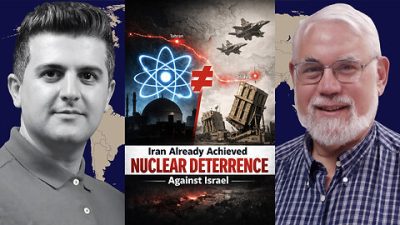
Prof. Ted Postol: Iran Already Achieved Nuclear Deterrence Against Israel
or go to
Aletho News Archives – Video-Images
From the Archives
How the occupied mentality syndrome works
Saudi Arabia on the American chessboard – Part 3
By B. J. Sabri | American Herald Tribune | June 27, 2016
Read part 2: “The occupied mentality Syndrome“
Previously I argued whether Saudi Arabia’s repeated involvements in U.S. interventions and wars stem from free national will or in response to a specific condition. For starters, in Saudi Arabia there is no national will. In Saudi Arabia, the national will is the will of the Al Saud clan. Still, when a major Arab state allies itself with a superpower that committed unspeakable crimes against humanity in almost every Arab country, then something is wrong. This fact alone should compel us to examine the U.S.-Saudi relation for one exceptional reason. As a result of the U.S.-Saudi wars, hundreds of thousands of people in Afghanistan, Iraq, Iran, Libya, Syria, Yemen, and Somalia have lost their lives. Millions became displaced in their own homelands. And millions more rendered refugees.
Attributing the Saudi policies to the bonds of “partnership” with the U.S. is frivolous. There are no bonds between these two thugs except those of business, military deals, secret plots, and wars. Proving this point, bonds such as these have no space for the American and Saudi peoples to share significant cultural or societal exchanges. If partnership is not the reason for the Saudi contribution to the U.S. strategy of empire and imperialism, then another reason must exist.
This leads to three possibilities. … continue
Blog Roll
 Aletho News
- NIAID/NIH and USDA Fund Bioengineered Chimeric Influenza Viruses Built Using Pandemic H1N1 Components: Journal ‘Science Advances’
- Hezbollah hits Israeli warship off Lebanon’s coast, sets it aflame
- Iran slams US strikes on B1 bridge, Mahshahr petrochemical plants as ‘blatant acts of state terrorism’
- In letter to UN chief, Araghchi warns of dire consequences of US-Israeli attacks on Iran’s nuclear facilities
- Why the CIA conspiracy to invade Iran with Kurdish militias failed
- Why Are Upbeat US Claims About Mission to Rescue Pilot ‘Highly Questionable’?
- Aircraft destroyed during US ‘rescue’ of downed F-15 pilot cost more than $100 million each
- Washington University removes professor who condemned US-Israeli war on Iran
- Russia Warns of Retaliation as UK Authorizes Seizure of Vessels
- Serbia thwarts plot to bomb Russia-Hungary gas pipeline – Vucic
- If Americans Knew
- In Iran, Israel-US take aim at “reason, research, and freedom of thought” – Daily Update
- US loses planes over Iran, Israel downgrades Lebanon war goals – Daily Update
- Israel Is Blocking Palestinians from Easter at Church Where Jesus Resurrected
- Plot to assassinate Palestinian activist follows harassment campaign promoted by Zionist groups and elected officials
- Prominent New York synagogue hosts presentation on why U.S. Jews should support the ethnic cleansing of Gaza
- Tapper vs. Piker: Is the CNN Anchor Auditioning for David Ellison?
- Shouldn’t Democrats Be Able to Condemn Genocide?
- Israel-US kill negotiators, destroy civilian structures, but Iran’s military capabilities still largely intact – Daily Update
- ‘War crime’: Global condemnation as Israeli ministers celebrate death penalty law targeting Palestinian prisoners
- 7 Ways Israel Is Turning Lebanon Into Gaza
- No Tricks Zone
- An Inconvenient Tree: Uncovered In Alps… Europe Much Warmer Than Today 6000 Years Ago
- New Study Reports A 60% Slowdown In Greenland’s Ice Loss Rate In The Last Decade
- Low Intensity Tornado Wrecks Major Solar Farm, Creating A Potential Toxic Dump
- New Study Finds Warming Saves Lives…Cold Temperatures 12 Times More Deadly Than Excess Heat
- German Science Blog Accuses PIK Climate Institute Of Hallucinating Climate Tipping Points
- Devastating Assessment Of Comirnaty Vaccine By Former Senior Pfizer Europe Toxicologist
- New Study: CO2 Is ‘Effectively Negligible’ As An Explanatory Climate Change Factor Since 2000
- Former Pfizer Toxicologist Dr. Helmut Sterz Tells Bundestag Hearing Pfizer Vaccine Should Have Never Been Approved
- Energy Expert: Germany’s Nuclear Phaseout Was A “500 Billion Euro Mistake”
- New Research: South Australia’s Mid-Holocene Sea Surface Temperatures Were 4°C Warmer Than Today
 Aletho News